20. Invention of Wheel – Chapter Notes

What is a Wheel?

Think about all the things around you that use wheels—cars, bikes, even shopping carts! How would life be without them? Moving things would be much harder, right? The wheel has made it much easier to transport things quickly and with less effort. Let’s explore how this simple invention has helped shape the world.
Wheel is a circular object that helps in moving things across the ground. The invention of the wheel is one of the most important developments in human history, as it has greatly impacted transportation and trade. Wheels are commonly found in various everyday items, such as cars, bicycles, carts, and toys.Early Inventions

Before the Invention of Wheels

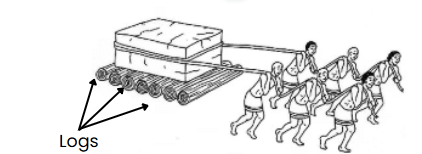
  • Before wheels were created, people used various methods to move heavy objects.
  • One such method involved rolling logs under items, which made the process slow and challenging.
  • People also utilized simple wooden carts, which were flat platforms that glided on the ground.
  • Additionally, they sometimes dragged items directly along the ground, requiring a lot of effort.
The Invention of the First Wheels

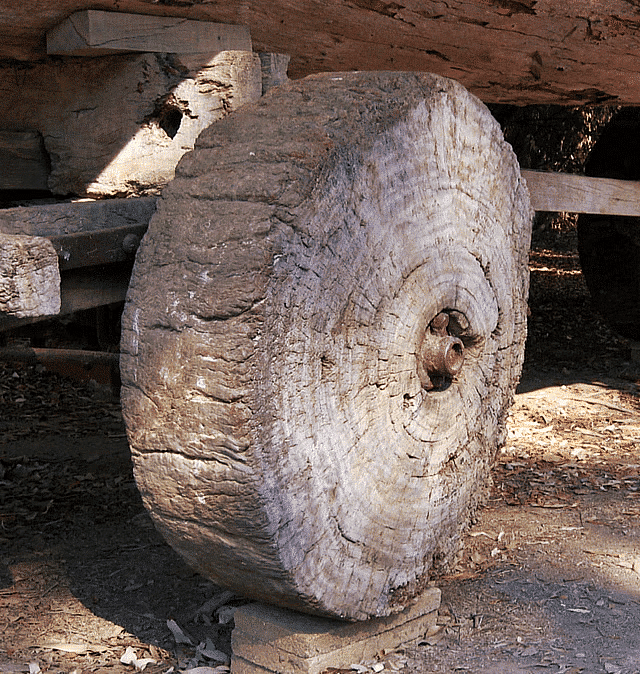
  • The earliest wheels were crafted for pottery over 5,000 years ago.
  • In those ancient times, these wheels were heavy and not as functional as the wheels we have today.
  • The creation of the wheel marked a significant technological advancement.
  • It facilitated easier movement of objects, boosted trade, and sparked a wave of new ideas and inventions.
Try yourself:

What is the main purpose of the invention of the wheel?

  • A.To make pottery
  • B.To facilitate easier movement of objects
  • C.To create toys
  • D.To build carts

View SolutionHow Wheels Work?

(i) Round Shape

  • The round shape of a wheel is fundamental because it enables smoother rolling. Rolling is inherently easier than sliding, which enhances the movement of objects.
  • This design feature not only conserves energy but also reduces effort, making it more manageable to transport heavy loads.
(ii) Axle and Wheel

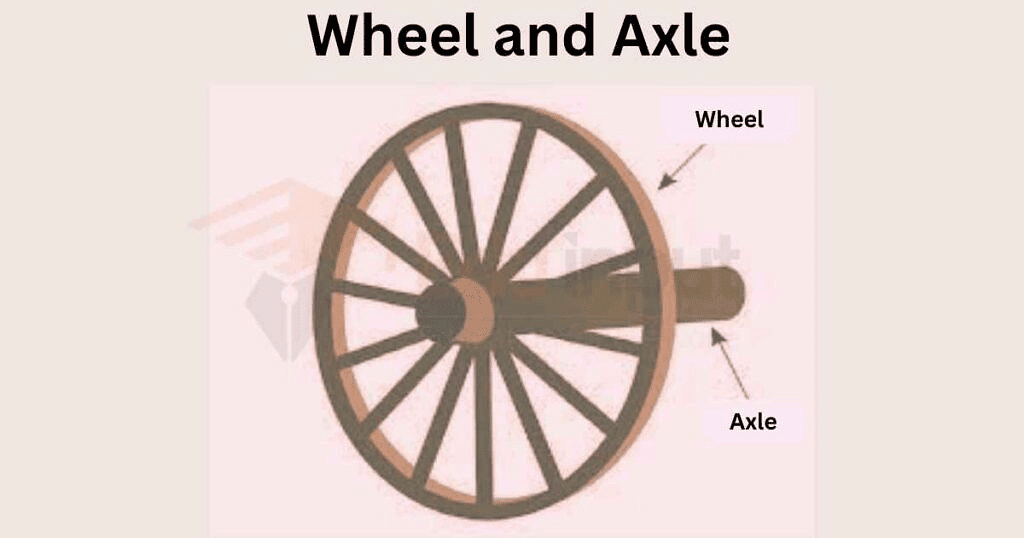
  • The wheel is firmly attached to a central rod called the axle, which facilitates the wheel’s rotation.
  • Wheels are instrumental in the movement of various vehicles, playing a vital role in transportation.

Importance of Wheels

  • Wheels made travel faster and easier, helping people go longer distances and carry more things.
  • This improvement helped in trade, talking to others, and building better cities.
  • The invention of the wheel led to the making of carts, cars, and bicycles, making life simpler.
  • These vehicles helped people move quickly and transport goods easily.
  • Because of wheels, people from faraway places could connect and trade with each other.
Evolution of the Wheel

The wheel is a crucial invention in history that greatly facilitated travel and the movement of goods.

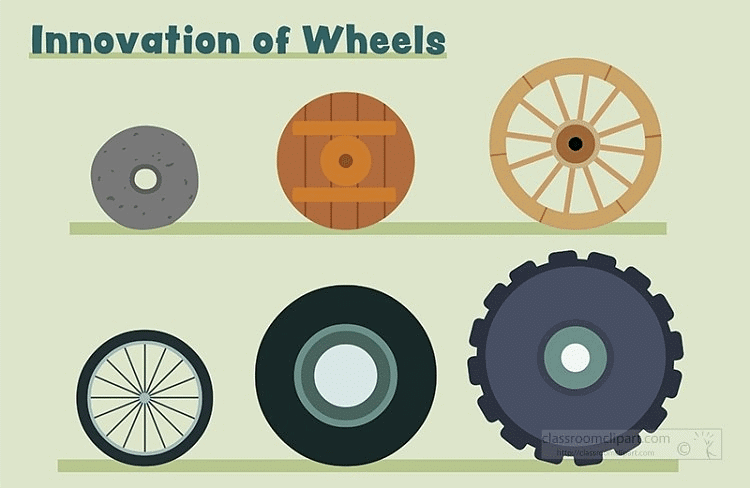
Early Developments: Initially, wheels were made of solid wood, which made them heavy. Over time, they were improved by adding spokes, making them lighter and stronger.

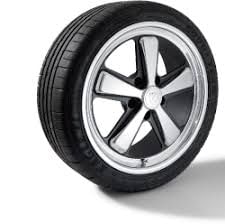
Modern Advancements: Today, wheels are used in a wide range of applications, from small toys to large machinery. They are designed to be durable and operate smoothly, significantly impacting daily life and trade.

Try yourself:

What is the purpose of the round shape of a wheel?

  • A.To make it easier to slide.
  • B.To enable smoother rolling.
  • C.To make it heavier.
  • D.To prevent movement.

View SolutionSummary

  • The invention of the wheel was a significant advancement that greatly facilitated travel for people.
  • It not only made travel faster but also enabled the transportation of heavier loads with greater ease.
  • With the introduction of wheels, moving large and heavy objects became significantly simpler and more efficient.
19. Safety & First Aid – Chapter Notes

Introduction

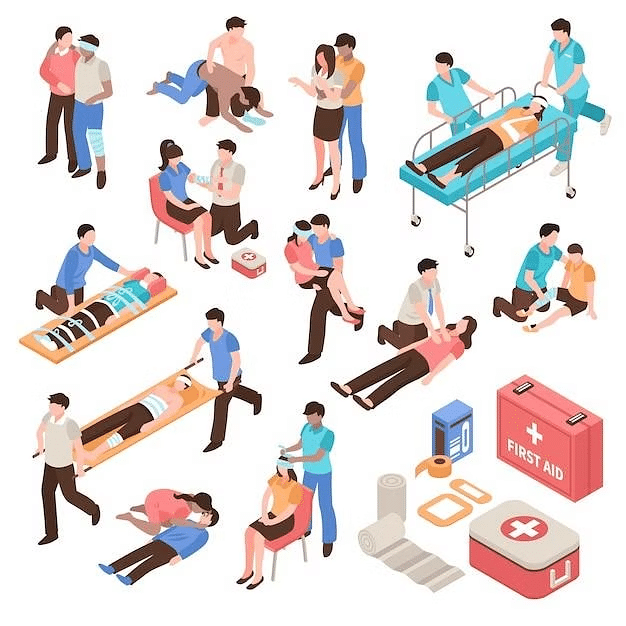
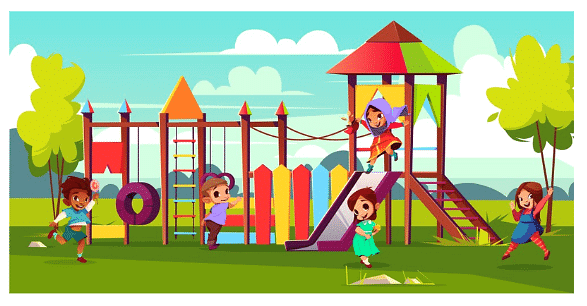
One day, Aman and his friends were playing in the park when suddenly, his friend Tina had an accident and hurt her knee. She started crying in pain. Without wasting any time, Aman rushed to get some first aid supplies. He carefully cleaned the wound on Tina’s knee and applied a bandage to help her feel better. Their teacher noticed Aman’s quick response and smiled, saying, “Good job, Aman!You provided first aid and made Tina feel better.” Tina, feeling relieved, thanked Aman, saying, “Thank you, Aman! I’m feeling much better now.” Aman’s heart swelled with happiness as he realized the importance of knowing first aid and how it can help others in times of need.

Basic Safety Precautions

Let’s explore more about basic safety precautions and how to stay safe while helping others during accidents!

  • Understand why first aid is crucial in emergencies.
  • Learn how to treat small injuries like cuts and bruises.
  • Always keep a first aid kit handy.
  • Practice staying calm during an accident.
  • Know when to call for help if the injury is serious.

Try yourself:

What is the importance of first aid in emergencies?

  • A.To make people feel better emotionally.
  • B.To provide immediate assistance before professional help arrives.
  • C.To avoid getting in trouble with authorities.
  • D.To show off your medical skills to others.

View SolutionWhy is Safety Important?

Safety is crucial because it shields us from harm and accidents. Here are some reasons why safety is essential:

  • To Avoid Danger: Safety rules help us steer clear of risky situations that could lead to harm.
  • To Prevent Accidents: Following safety regulations ensures we stay injury-free in our daily activities.
  • To Protect Ourselves and Others: Being cautious keeps not only us safe but also those around us.
  • To Understand the Importance of Safety: Safety is vital for preventing injuries and promoting well-being.

Safety rules vary depending on the places we visit, such as school, home, roads, and playgrounds. By following these rules, we can stay safe no matter where we are.Safety at Home

Following a few simple safety rules can keep us safe at home.

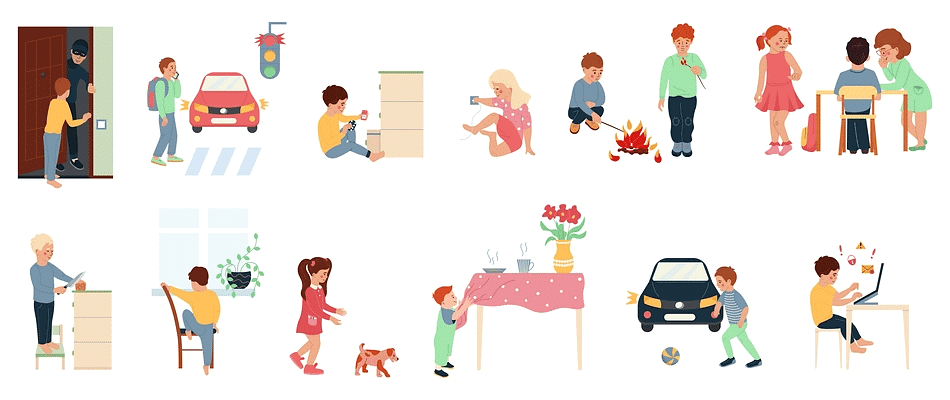
  • Fire and Electrical Safety: Never play with fire or light firecrackers by yourself. Always use matchsticks in the presence of an adult, and make sure to put them out before throwing them in a bin. Do not try to put your fingers into a plug point. Avoid touching damaged electric wires and tell an adult so they can replace them.
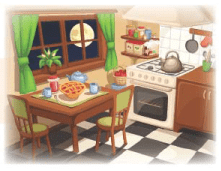
  • Kitchen Safety: In the kitchen, always be cautious of the stove, hot utensils, and the food cooking. Stay away from the stove when it is on.
  • Sharp Objects Safety: Knives, scissors, and tools are sharp and can cause cuts. They should be used very carefully, and do not play with sharp objects.
  • Poisonous Substances: Do not taste anything you are not sure about. Many items, including some medicines, may be harmful for you.

Safety at School

You can save yourself from accidents at school by behaving responsibly and following the rules.

Important Safety Tips

  • Running inside the classroom and climbing on desks can lead to accidents. The corners of desks are sharp and can cause serious injuries.
  • Be careful when using the stairs. Never run or push anyone. Falling on the stairs can result in serious injuries.
  • When entering the science laboratory, exercise extreme caution. Never touch, taste, or smell anything without your teacher’s permission.
  • Blades are not for your use. Do not use them to sharpen pencils.

Basic First Aid Knowledge

Knowing basic first aid for common injuries is important. Schools should have essential first aid supplies, including:

  • Adhesive bandages
  • Gauze pads and adhesive tape
  • Antiseptic wipes
  • Scissors
  • Tweezers
  • Cold packs
  • Emergency contact numbers

Try yourself:

What should you do when you see damaged electric wires at home?

  • A.Touch them to see if they are really damaged.
  • B.Ignore them and continue using electrical appliances.
  • C.Inform an adult so they can replace them.
  • D.Play with them to see what happens.

View SolutionSafety on the Road

  • Playing on the roads is very risky and dangerous.
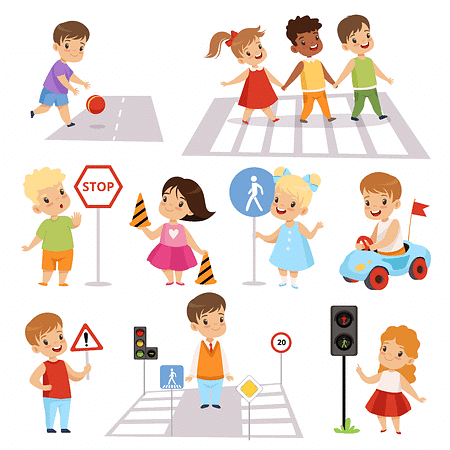
  • Footpaths are for walking. If there is no footpath, walk on the edge of the road and be careful of traffic.
  • If you ride a bicycle, always ride on the left side of the road. Use hand signals to show when you are turning. If you are in a car, always wear your seat belt.
  • Cross the road only at the zebra crossing for pedestrians. Before crossing, look to your right, then to your left, and then to your right again. Only cross when it is clear. Be extra careful when there is no zebra crossing.
  • Follow the traffic signals. A green light means go, a red light means stop, and a yellow light means get ready to stop.
  • Always stand in line when getting on a bus to stay safe and avoid accidents.
  • Many accidents happen when people try to get on or off. moving bus. Never try to do this.
  • When riding a bicycle, always wear a helmet to protect your head.

Safety on the Playground

  • Sometimes, to win a match, players may start breaking the rules and playing roughly.
  • It is important to always follow the rules of a game. They are important for safety and fair play.
  • Playing games fairly and safely helps prevent accidents and makes the game fun for everyone.
  • Do not push or trip others while playing to keep everyone safe.

First Aid

  • Stay Calm: When an accident happens, it’s important to stay calm. You can help the injured person by following some simple steps. The help they need right away is called first aid.
  • Find an Adult: Immediately try to find an adult to assist you.
  • Keep People Away: Never let a crowd gather around the injured person.
  • Don’t Move The Injured Person: Avoid moving the injured person, especially if you suspect a broken bone, as this could cause more harm.
  • Make Them Comfortable: Make sure the injured person is either seated or lying down comfortably.
  • Treat Bleeding Wounds: If there is a bleeding wound, wash it with clean water.
  • Bandage The Wound: Properly bandage the wound to stop the bleeding.
  • Treat Burns: If someone has a burn, hold the burnt area under cold running water.
  • Call For Help: Always call for medical help as soon as possible.

Try yourself:

What should you do if you see someone with a bleeding wound?

  • A.Wash the wound with clean water.
  • B.Apply pressure to stop the bleeding.
  • C.Move the injured person to a different location.
  • D.Ignore the wound and continue playing.

View SolutionHome is Best

A home offers us safety from various things like weather, animals, and harmful things. Some features are important for a healthy life. So, our home should be made and taken care of with these important things in mind.

A Good Home

  • Sunlight is important because it kills germs. There should be windows placed in a way that allows sunlight to come in.
  • It’s important to have windows and ventilators to bring in fresh and clean air.Also, planting trees and plants around the house helps to clean the air.
  • Open spaces like verandas or balconies are needed for getting sunshine and fresh air.
  • Wire netting on doors and windows can keep insects like flies and mosquitoes out while allowing air and sunlight to come in.
  • Cleanliness and hygiene are important in all parts of the house. A proper drainage system is important to keep bathrooms clean and dry by removing dirty water.
  • Dirty water and garbage should not collect inside or outside the house, as this can bring insects and germs.

Care of the House

  • Germs mainly grow in the kitchenbathroom, and rubbish bins. These places should be cleaned properly every day.
  • The rest of the house should also be cleaned daily.
  • Flies and cockroaches should be kept out of the kitchen because they can spread diseases. 
  • Always make sure the food is covered.
  • Make sure fresh air and sunlight can enter the kitchen and bathroom.
  • Rubbish bins should be kept covered.

Conclusion

  • Safety is a fundamental aspect of our lives that applies to various settings, including home, school, on the road, and during play.
  • Adhering to simple safety rules is crucial for preventing accidents and ensuring the well-being of ourselves and others.
  • First aid plays a vital role in providing assistance to others during emergencies.
  • Remaining calm, acting swiftly, and seeking help from adults can significantly impact life-saving situations.
  • A clean and well-maintained home environment is essential for safeguarding our health and safety.
  • Maintaining proper hygiene and cleanliness is essential to protect ourselves from diseases caused by germs.
  • By being responsible, cautious, and mindful of safety measures, we can foster a secure environment for ourselves and those around us.
  • It is important to remember that safety should always be a top priority!

17. Understanding Directions – Chapter Notes 

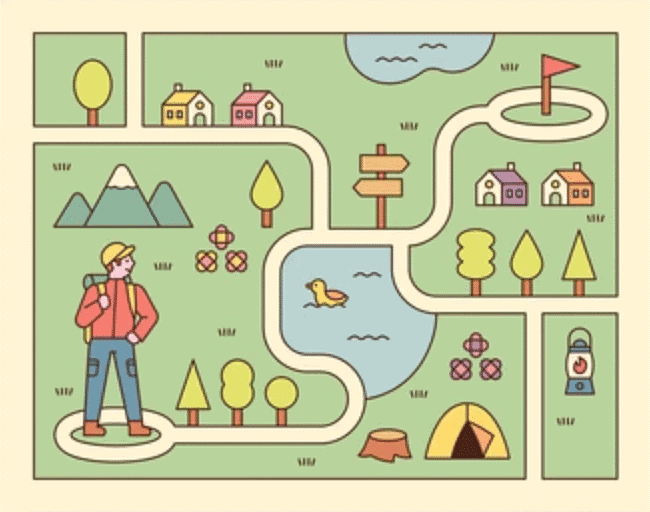
What are Directions?Imagine you are playing a fun treasure hunt in a big park. You have a map in your hand, but how will you find the treasure?

Map

  • That’s when direction helps you!
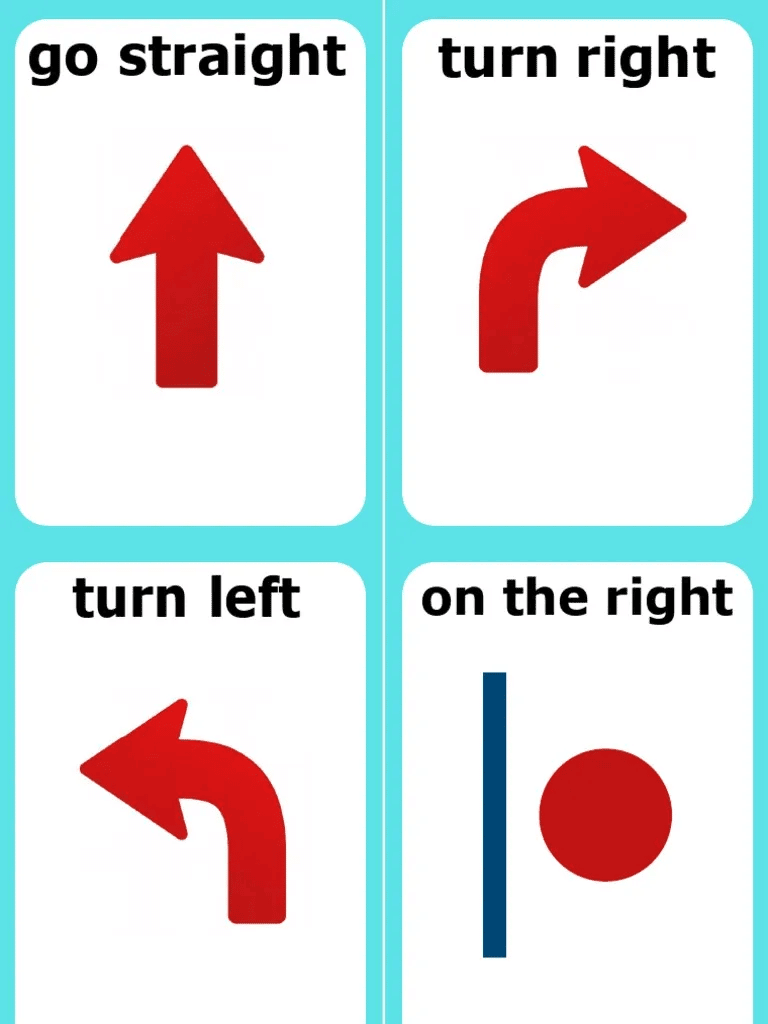
  • Directions tell us which way to go, like leftrightstraight, or back.
  • They help us understand where things are and how to reach a place easily.
  • For example, if your teacher says, “Turn right and go to the blackboard,” she is using directions!

Directions

Try yourself:

What are directions used for?

  • A.Helping us find hidden treasure in a park
  • B.Showing us which way to go
  • C.Playing games and navigating
  • D.Understanding where things are in relation to us

View Solution

Understanding Our Body Sides
Before learning big directions like North and South, let’s learn about our body directions:

  • Front: The way you are facing.
  • Back: Behind you.
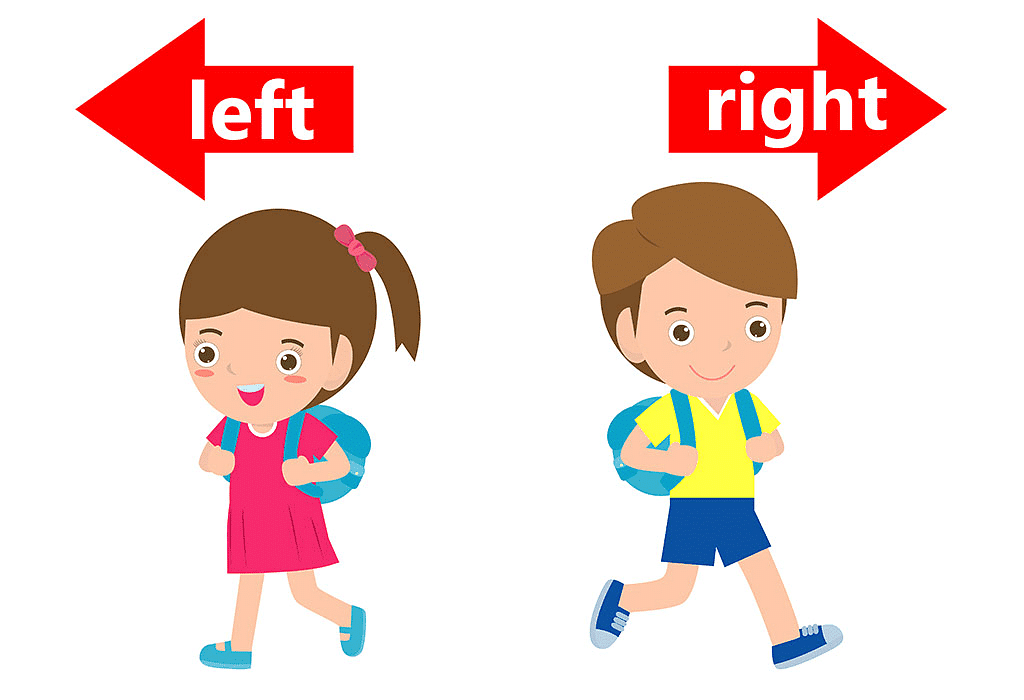
  • Left: The side of your left hand.
  • Right: The side of your right hand.

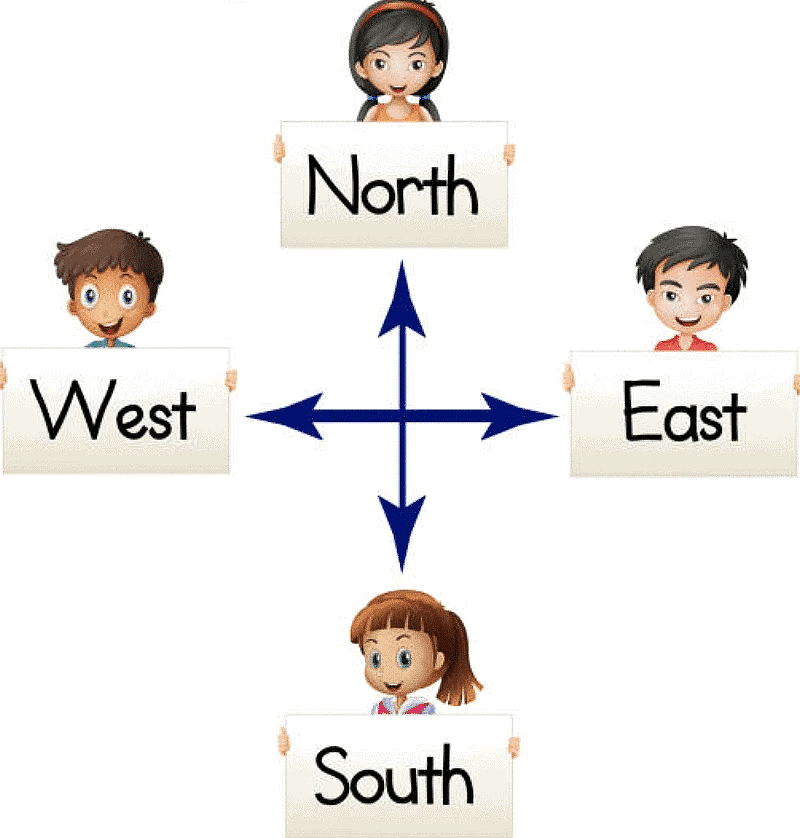
Four Main DirectionsOn maps and in the real world, we use four main directions:

  1. North – It is at the top of a map.
  2. South – It is at the bottom of a map and opposite of North.
  3. East – The sun rises in the East. You can remember:
    East comes with the Early sun!”
  4. West – The sun sets in the West. You can remember:
    West is where the day rests!”

These directions are like invisible arrows that guide us when we travel or use a map.

Try yourself:

Which direction is where the sun rises in the morning?

  • A.North
  • B.South
  • C.East
  • D.West

View Solution

What is a Map?

map is a drawing of a place — it could be a city, a school, or even the world!

MapA map shows:

  • Where things are (like buildings or roads)
  • Which way to go using directions

Maps use the four directions:

  • Top = North
  • Bottom = South
  • Right = East
  • Left = West

Next time you see a map, try pointing to where North is!

How to Use Directions to Find a PlaceTo locate a place with the help of directions, we use landmarks and follow specific instructions.

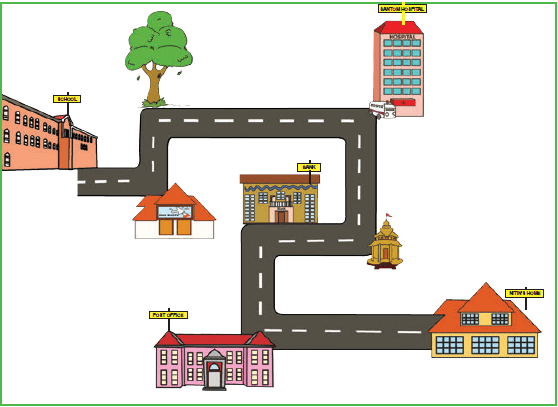
Route Map​Let’s understand with an example:
Imagine Rohan wants to go to his friend Nitin’s house to play. 
He follows the directions carefully from his school:

  1. Start at the school.
  2. Walk straight to the milk booth.
  3. Turn left after the milk booth.
  4. Walk straight until he sees a big tree.
  5. At the tree, turn right.
  6. Walk ahead to Santom Hospital.
  7. Turn right again.
  8. Walk straight to the temple.
  9. Turn right at the temple.
  10. Walk a little and see a bank.
  11. Turn left at the bank.
  12. Reach the post office.
  13. Turn left again.
  14. Finally, Rohan reaches Nitin’s house!

Each turn and place helped Rohan move in the right direction.
He used landmarks like trees, hospitals, and banks to remember where to go.

Summary: Directions

Directions are very helpful in real life.

  • They help you find places like a friend’s home or a shop.
  • They help postmen deliver letters.
  • Pilots and drivers also use directions to travel safely.

Learning directions is like learning to be your own explorer!

16. Seasons and Weather – Chapter Notes

What is Weather?

Weather is what the sky and air are like outside. It can be sunny, cloudy, windy, rainy, or cold. What we wear, eat, and do can change depending on the weather outside.

Types of Weather

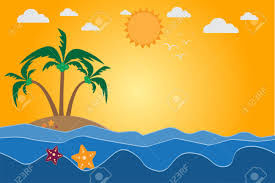
1. Sunny Days

Sunny days occur when the sun is shining brightly in the sky. During these days, the weather feels warm and nice, making it a great time for activities outside, such as playing, going for a walk, or having a picnic.

  • On sunny days, it’s common to:
    • Wear light and comfortable cotton clothes to stay cool.
    • Enjoy cold drinks and ice creams to beat the heat.

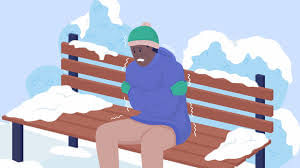
2. Cold Days

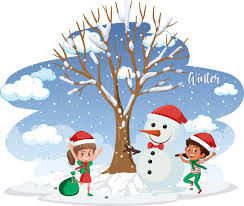
Cold days are when it feels chilly outside. You might see frost or snow, depending on where you live. It’s a time to wear warm clothes like sweaters and coats, and maybe enjoy some hot chocolate or soup to stay cozy.

  • Woolen Clothes: When it’s cold, wear warm woolen clothes to keep yourself cozy.
  • Hot Drinks and Snacks: Enjoy hot beverages like tea, coffee, and soup, along with warm snacks.
  • Quilts and Heaters: Use quilts and heaters to stay warm indoors during very cold days.

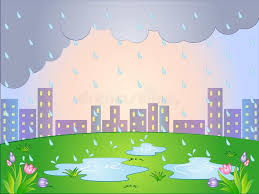
3. Rainy Days

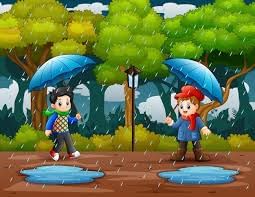
Rainy days are when it rains a lot. The sky gets cloudy, and water falls from the clouds. It’s a good time to stay indoors, listen to the sound of rain, and maybe even splash in puddles if it’s safe.

  • Rain Gear: Wear raincoats or carry umbrellas to protect yourself from rain.
  • Going Out: It can be difficult to go outside when it’s pouring heavily.
  • Rainbows: Rainbows form when sunlight shines through water droplets in the air.

Try yourself:

What should you wear on a cold day to stay warm?

  • A.Light cotton clothes
  • B.Woolen clothes
  • C.Swimsuit
  • D.Shorts

View Solution

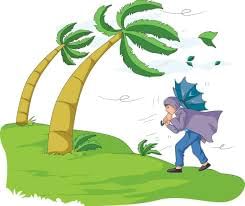
4. Windy Days

Windy days are when there’s a lot of wind blowing around. You might see trees swaying and hear the sound of the wind rushing by. It’s fun to fly kites or watch the leaves dance in the breeze.

  • Strong Winds: On windy days, the wind blows quickly and can carry things away.
  • Staying Indoors: It’s best to stay inside with doors and windows closed during windy weather. Avoid flying kites near power lines for safety.

Seasons

Seasons refer to different times of the year, each characterized by its own distinct weather conditions. In India, there are four primary seasons: Summer, Monsoon, Autumn, and Winter. Each of these seasons brings with it a unique set of weather experiences.

1. Summer

  • During the summer season, people generally opt for light and breathable clothing to stay comfortable in the heat.
  • To cope with the high temperatures, it is common for individuals to seek ways to cool down, such as by drinking cold beverages or staying indoors during the hottest parts of the day.

2. Winter

  • In India, winter is especially chilly in the northern parts of the country.
  • During this season, people commonly wear sweaters and jackets to stay warm.
  • Winter is also a popular time for enjoying hot beverages such as tea and coffee.

3. Spring

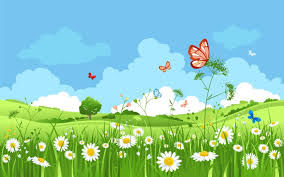
  • Spring marks the time when nature stirs awake from its winter slumber.
  • During this season, flowers start to bloom, and trees begin to sprout fresh leaves.
  • The weather in spring is usually mild and pleasant, falling between the extremes of hot and cold.

Try yourself:

What season is characterized by flowers blooming and trees sprouting fresh leaves?

  • A.Summer
  • B.Monsoon
  • C.Winter
  • D.Spring

View Solution

4. Monsoon

  • The monsoon season in India spans from June to September.
  • This period is characterized by heavy rainfall, which is crucial for farmers as it provides the necessary water for crops.
  • However, the intense rainfall can also lead to flooding in certain areas.
  • To protect themselves from the rain, people often use umbrellas or raincoats.

5. Autumn

Overview:

  • Autumn is one of the four seasons in India.
  • This season is characterized by windy weather.
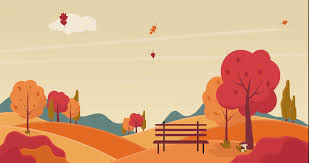
  • During autumn, leaves start to fall from the trees.

Characteristics:

  • In autumn, the weather begins to cool down after the hot summer months.
  • Trees shed their leaves, which change to vibrant colours like redyellow, and orange.
  • Autumn is a great time for outdoor activities such as picnics and nature walks.

Summary

  • Weather is the condition of the sky and air at a particular time.
  • Sunny days are warm and bright.
  • Cold days are chilly and require warm clothing.
  • Rainy days are cloudy with rain.
  • Windy days have strong winds.
  • Seasons in India include SummerWinterSpringMonsoon, and Autumn.

Try yourself:

Which season in India is characterized by heavy rainfall and is crucial for farmers?

  • A.Summer
  • B.Winter
  • C.Monsoon
  • D.Autumn

View Solution

15. Means of Communication – Chapter Notes

Understanding Communication

Communication is how we share our thoughts, feelings, and ideas with each other. It involves talking, listening, and making sure we understand one another.

Communication is essential for exchanging information and ideas. It can happen through speaking, writing, gestures, or even facial expressions. The aim of communication is to ensure that others grasp what we mean while we also try to understand them.

Why Communication is Important

  • To express our thoughts and ideas.
  • To comprehend the feelings and perspectives of others.
  • To foster relationships and connect with people.
  • To address issues and work together.
  • To acquire new knowledge and grow.

Try yourself:

Why is communication important?

  • A.To express our thoughts and ideas.
  • B.To bake a cake.
  • C.To fly a kite.
  • D.To race a car.

View SolutionTypes of Communication

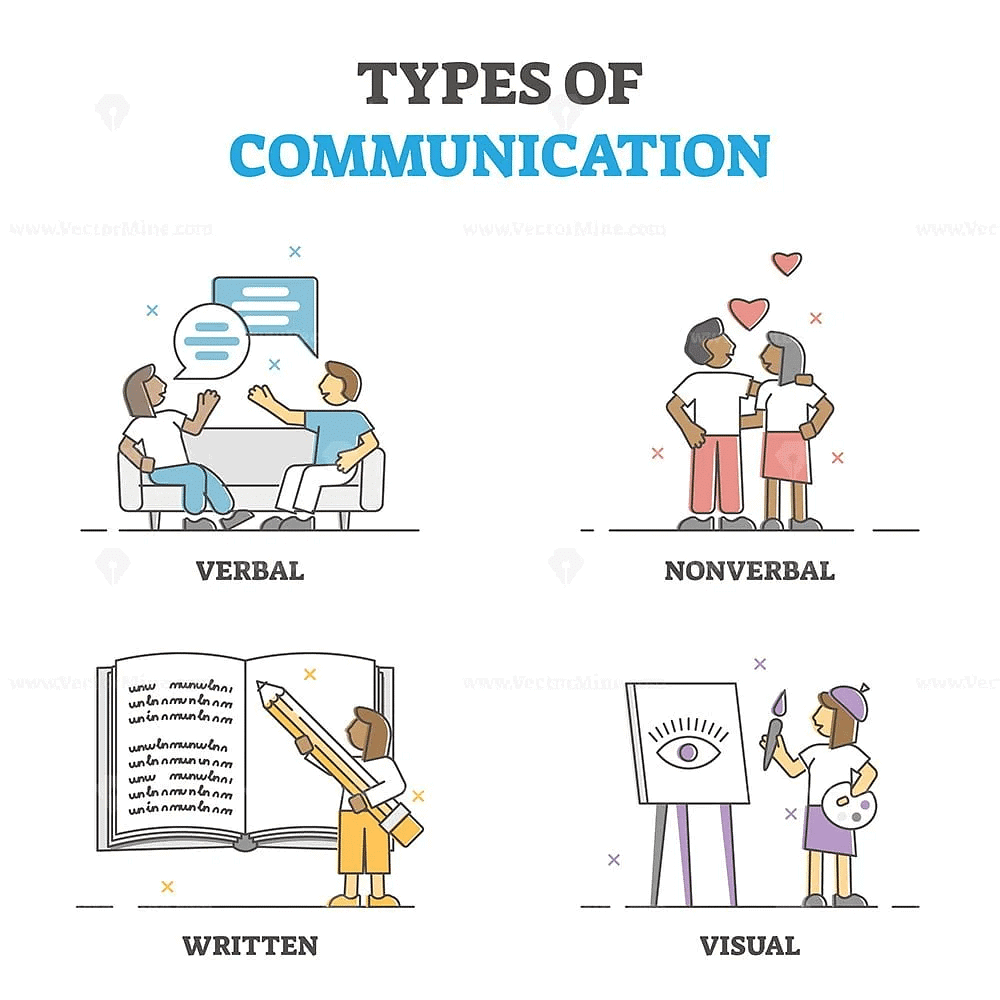
  1. Verbal Communication: This type involves sharing our ideas through spoken words, either face-to-face or over the phone.
  2. Non-Verbal Communication: Non-verbal cues play a crucial role in communication. This includes gestures, facial expressions, and body language, which can convey messages without the use of words.
  3. Written Communication: This form involves expressing information through written words, such as letters, notes, emails, or text messages. Written communication is often used when a permanent record is needed or when communicating over long distances.
  4. Visual Communication: Visuals can be powerful tools for communication. This includes the use of images, drawings, charts, or infographics to convey messages or information. Visual communication can often make complex information easier to understand.

Importance of Different Forms of Communication

Each type of communication plays an important role in helping us share our thoughts and feelings effectively. Depending on the context and the message we want to convey, we may choose one form of communication over another, or even combine several forms to enhance understanding. For example, in a presentation, a speaker might use verbal, visual, and even non-verbal communication to ensure the audience grasps the message clearly.

Means of Communication

Means of communication are ways or tools that help us send and receive messages or information.These can range from traditional methods to modern digital platforms.Different Means of Communication

1. Telephones

  • Telephones are devices that allow people to communicate by voice over distances.
  • They can also be used to send text messages.
  • Telephones have evolved from landline models to mobile phones, which offer additional features like internet access and various applications.

2. Computers/Laptops

  • Computers and laptops are used for various forms of communication, including: emails, instant messaging, video conferencing, social media platforms and accessing online resources.

3. Social Media

  • Social media platforms like FacebookInstagramTwitterLinkedInSnapchat, and TikTok are popular for connecting with others and sharing content.
  • These platforms allow users to share updates, photos, videos, and messages with a wide audience, making them a vital part of modern communication.

4. Email

  • Email is a commonly used method for electronic communication, enabling users to send messages, documents, and files to individuals or groups over the internet.
  • It plays a crucial role in both personal and professional communication.

5. Video Conferencing 

  • Video conferencing tools such as ZoomMicrosoft TeamsGoogle Meet, and Skype facilitate virtual meetings, allowing for both video and audio communication.
  • These tools are commonly used for conferences, online classes, and remote collaboration.


6. Messaging Apps

  • Besides instant messaging on smartphones, messaging apps like TelegramSignal, and Viber offer secure and private communication channels.

7. Blogs and Vlogs

  • Platforms like WordPress and Blogger facilitate blogging, allowing individuals to share their thoughts and ideas.
  • Video-sharing platforms such as YouTube and Vimeo empower users to share their experiences with a global audience through vlogs.

Try yourself:Which form of communication involves the use of gestures, facial expressions, and body language to convey messages?

  • A.Non-Verbal Communication
  • B.Verbal Communication
  • C.Written Communication
  • D.Visual Communication

View Solution

Summary

  • Communication helps us share thoughts, feelings, and ideas.
  • It is important for expressing ourselves and understanding others.
  • Types of communication include verbal, non-verbal, written, and visual.
  • Communication helps in learning, solving problems, and building relationships.
  • Means of communication include telephones, television, social media, emails, and video calls.
  • Messaging apps, blogs, and vlogs are modern ways to communicate.
  • Traditional communication includes letters, radio, and landline telephones.

14. Services In Neighbourhood – Chapter Notes

What is a Neighborhood?

neighbourhood is the area around our home.

The area around our house is our neighborhood

  • It has houses, parks, shops, schools, hospitals, and other places.
  • Many people live in a neighbourhood. They help and care for each other.

A good neighbourhood is:

  • Clean
  • Safe
  • Friendly
  • We meet our neighbours in parks, shops, or during festivals.
  • A neighbourhood is like a big family!

Neighbours

What are the Places in a Neighborhood?

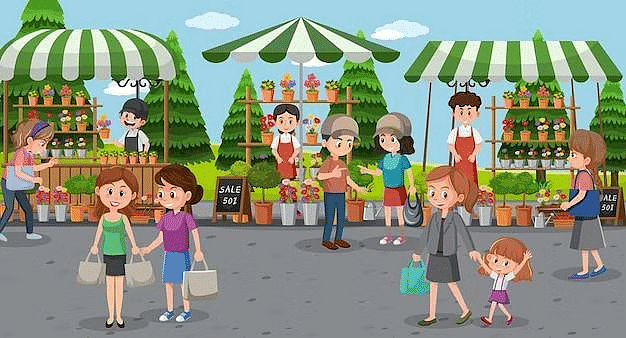
(i) Market

market is a place where we can buy things like food, clothes, and toys.

  • The shop owner is called a shopkeeper.

A Market

Different types of shops-

  • Grocery shop – for food and daily items
  • Medical shop – for medicines
  • Stationery shop – for pencils, erasers, notebooks
  • Milk booth – for milk, ice creams, and milk products

Try yourself:

What can you buy from a grocery shop?

  • A.Medicines
  • B.Food items
  • C.Stationery items
  • D.Milk and milk products

View Solution

(ii) Park

park is a green place with trees and playgrounds.

  • People go there to play, walk, or relax.
  • Parks have swings, slides, and see-saws.
  • We get fresh air and meet friends in the park.
  • We should keep the park clean.

A Park

(iii) Post Office

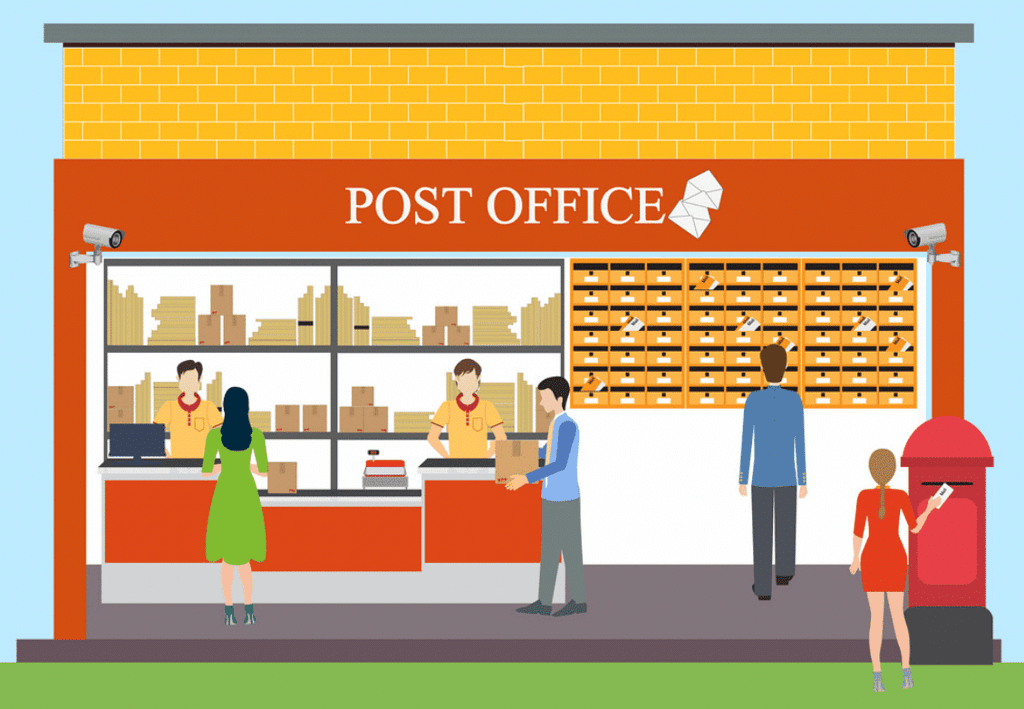
post office is where we send and receive letters and parcels

  • We can buy stamps, postcards, and envelopes here.
  • Letters are posted in stamped envelopes.A Post Office

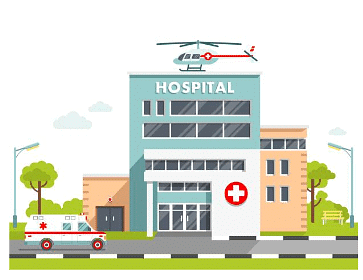
(iv) Hospital

hospital is where sick or injured people are treated.

  • Doctors and nurses help patients feel better.
  • hospital has ambulances for emergencies.
    A Hospital

Try yourself:

What is the purpose of a hospital?

  • A.To maintain law and order in the area.
  • B.To teach children good manners and good habits.
  • C.To provide a place for people to pray and connect with their religion or beliefs.
  • D.To take care of sick and injured people.

View Solution

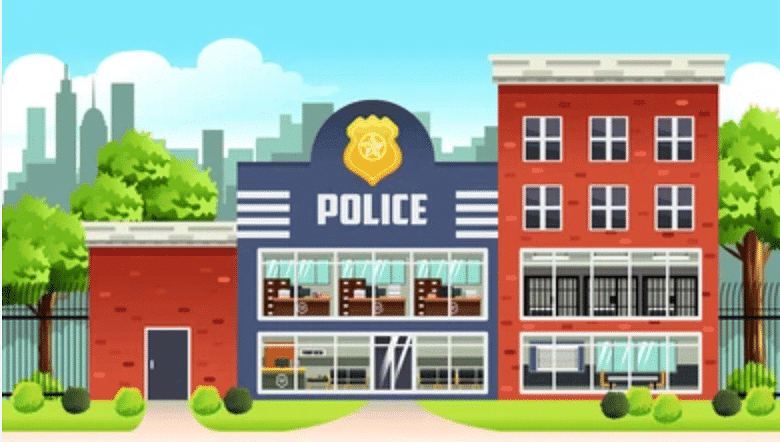
(v) Police Station

police station is where police officers work.

  • They protect people and keep the neighbourhood safe.
  • Traffic police help control traffic on roads.

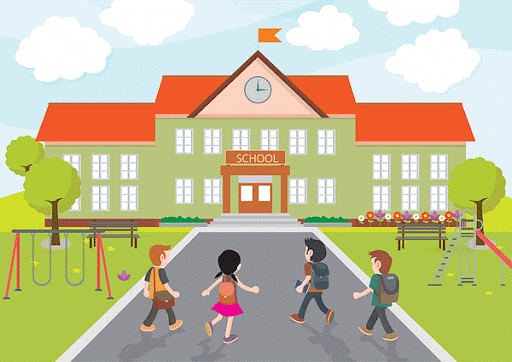
A Police Station(vi) School

school is a place where children learn and play.

  • Teachers teach us subjects, good habits, and manners.
  • Schools have classrooms, playgrounds, and many students.

A School

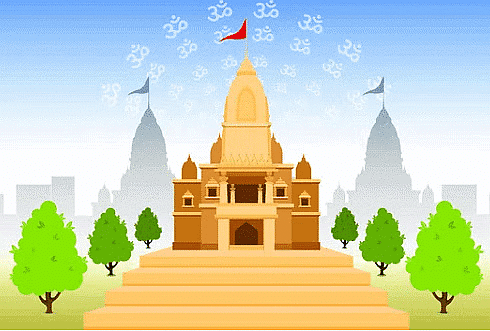
(vii) Place of Worship

place of worship is where people pray and show respect to their religion.

  • It could be a temple, mosque, church, or gurudwara.
  • These places bring people together in peace and love.

A Temple

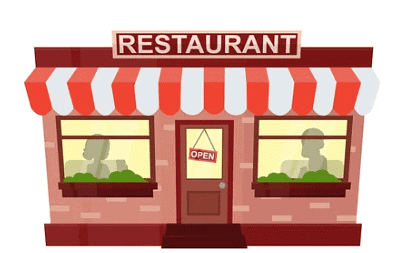
(viii) Restaurant 

restaurant is where people eat delicious food.

  • Chefs cook the food, and servers bring it to the table.
  • People enjoy meals with family and friends in a restaurant.

Let’s now watch a fun video to learn more about our neighbourhood and the places around us! 

13. Houses – Chapter Notes

What is a House?

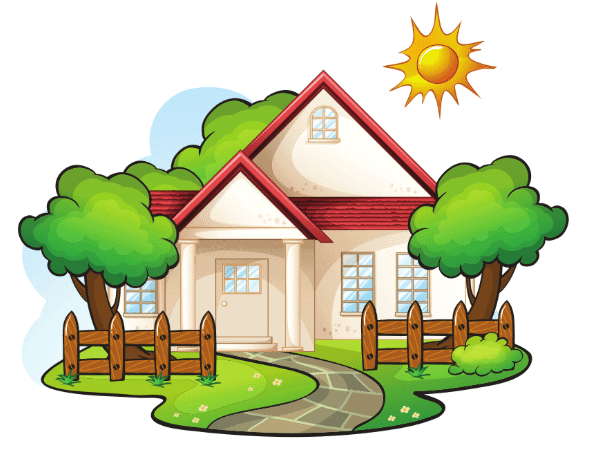
house is a place where we live with our family.

House

  • It keeps us safe, warm, and comfortable.
  • A house has rooms for sleeping, eating, and playing.
  • It also has doors, windows, walls, and a roof.
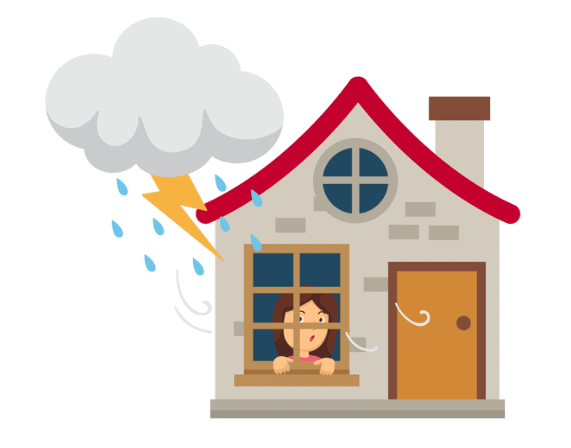
  • Our house protects us from rain, heat, cold, animals, and dust.
  • It is our happy and safe space!

House protects us from rain 

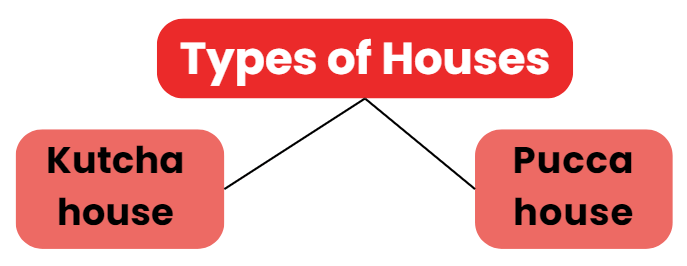
Types of Houses

Houses are of different types. Many years ago, when there were no homes, people lived in caves.
There are two types of houses:

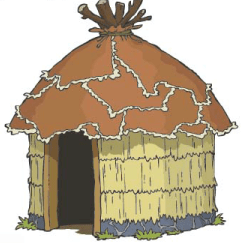
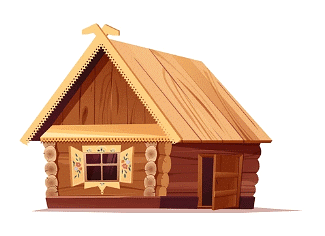
1. Kutcha houses

  • They are found in some villages. 
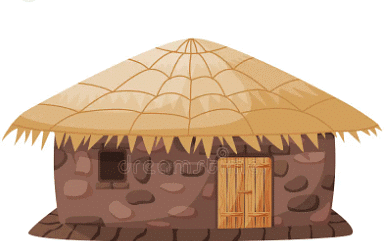
  • These houses are made of straw, bamboo, mud, clay and leaves. 
  • These houses are not very strong.

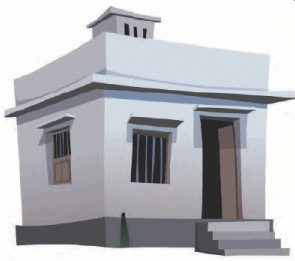
2. Pucca houses

  • They are found in cities and towns. 
  • These houses are made of bricks, cement, iron, steel and glass. 
  • They are strong.
    Some houses have straight roofs while some have slanting or sloping roofs. Slanting roofs do not let snow or water collect. That is why people build houses with slanting roofs in the hills.

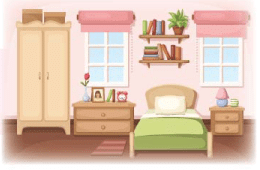
Try yourself:What are the two types of houses?

  • A.Straw and bamboo houses
  • B.Pucca and kutcha houses
  • C.Brick and mud houses
  • D.Steel and glass houses

View Solution

Parts of a House 

We sleep, bathe, study, eat, play and do many other activities in our houses. A house has different rooms for different activities.

1. Living Room or Drawing Room 

This is the room where the family members sit together and watch television. We also receive our guests in our living room.

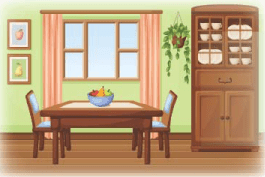
2. Dining Room 

This is the room where we eat our meals.
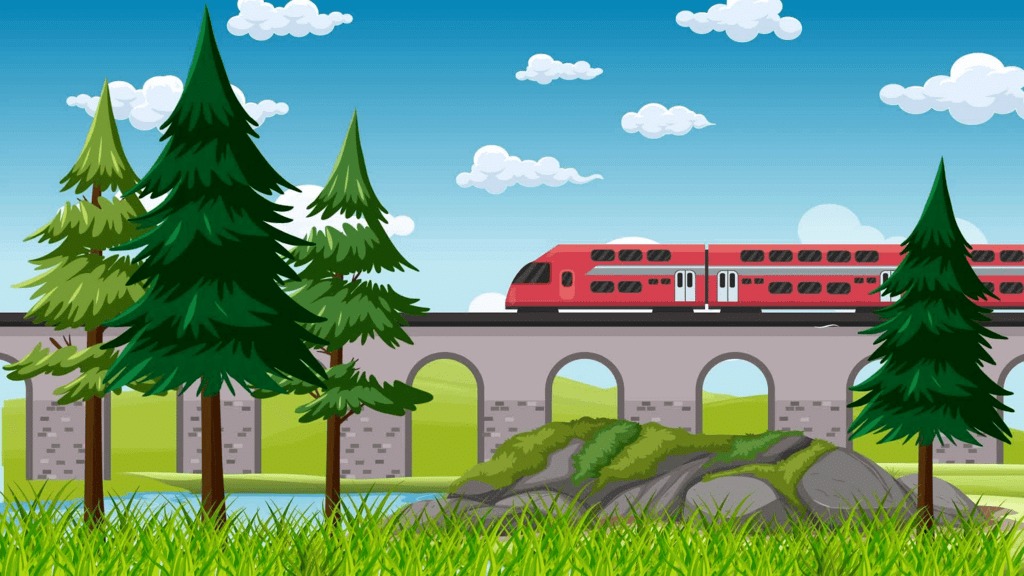
3. Bedroom 

This is the room where we sleep.

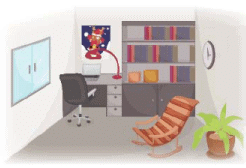
4. Study Room

This is the room where we study.

5. Kitchen 

This is the room where we cook food.

Try yourself:

What is the room in a house where we cook food?

  • A.Living Room
  • B.Dining Room
  • C.Bedroom
  • D.Kitchen

View Solution

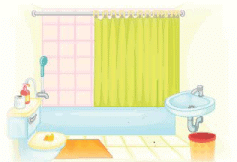
6. Bathroom 

This is the room where we bathe.

Big houses have many rooms whereas small houses have one or two rooms only. 

Other things a house have:

  • Windows: Every house needs windows to allow fresh air and light to come inside.
  • Address: Each house has a unique name or number called an address. This address helps identify the house and includes the house number, the name of the road, the colony, and the city. People use this address to find our house.
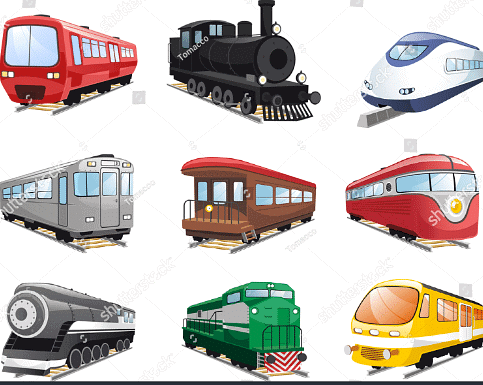
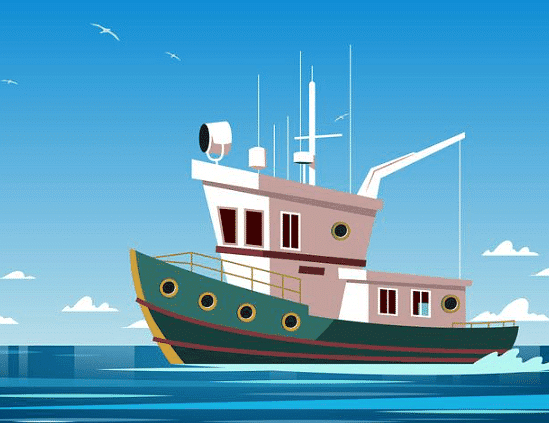
Different Types of Houses

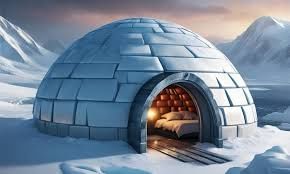
1. Igloo

  • Material: Igloos are made from snow.
  • Location: They are built in polar regions, where there is plenty of snow.
  • Shape: Igloos have a dome-shaped design, which helps them withstand harsh weather conditions.

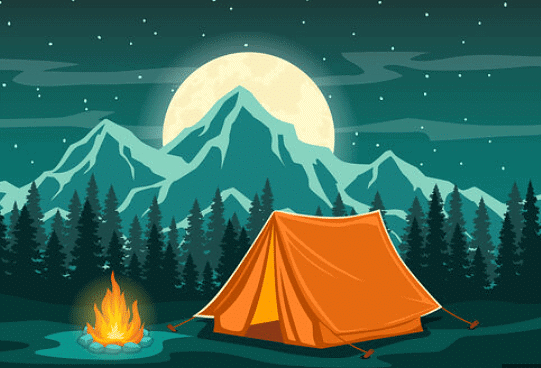
2. Tents

  • Material: Tents are made from fabric.
  • Location: They are mostly found in deserts, where they provide shelter from the sun and wind.

3. Mud House

  • Material:Made from straws and mud
  • Location: Formed mostly in villages

Try yourself:

Which type of house is built mostly in villages using mud and straws?

  • A.Igloo
  • B.Bungalow
  • C.Tent
  • D.Mud House

View Solution

4. Huts

  • Material:Formed of mud and straws
  • Location: Made in villages
  • Keeps temperature cool

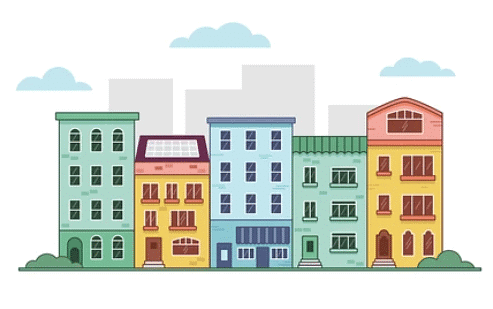
5. Apartments

  • Small houses in tall buildings
  • Location: Built in cities

6. Bungalow

  • These are big houses
  • Location: Made outside cities
  • Requires enough space

Qualities of a Good House

good house is a nice place to live. It should have:

  • Fresh Air – Windows let in fresh air and sunlight.
  • Clean Rooms – A clean house keeps us healthy.
  • Safe Doors and Walls – It should keep us safe from bad weather and animals.
  • Enough Space – We need space to play, sit, and sleep comfortably.
  • Everything is Working Well – Taps, doors, lights, and fans should all work properly.

11. Animals – Chapter Notes

Who are Animals?

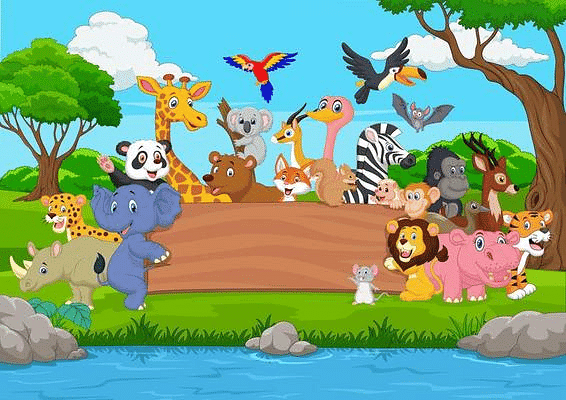
Animals are living things like your pets, birds, and bugs. They can move around, eat food, and some even make sounds. Animals are living beings that can move, eat, and grow. They come in many shapes and sizes, from tiny insects to massive whales.

Types of Animals Based on Size

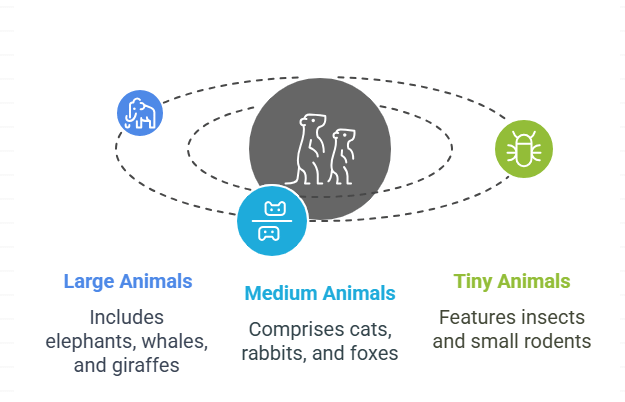
  1. Large Animals: Large animals are those that are big, like elephants, whales, and giraffes. They can be as tall as buildings or weigh as much as several cars. Examples include rhinos, giraffes, and elephants.
  2. Medium Animals: Medium animals are larger than very small creatures but smaller than large animals. Examples include cats, rabbits, and foxes.
  3. Tiny Animals: Tiny animals are very small creatures, often so small that you might need a magnifying glass to see them clearly! These include insects like ants, bees, and butterflies, as well as tiny rodents like mice and shrews.

Different Kinds of Animals

Animals can be classified into different types based on where they live and how they interact with humans. Here are the main types of animals:

1. Domestic Animals

  • Domestic animals are those that live with humans.
  • They are often kept as pets or for various tasks.
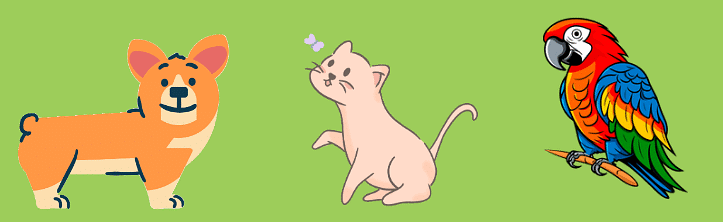
  • Examples of domestic animals include dogscats, and parrots.

2. Wild Animals

  • Wild animals are those that live freely in nature, such as in jungles or forests.
  • They are not usually kept as pets because they are adapted to live in the wild.
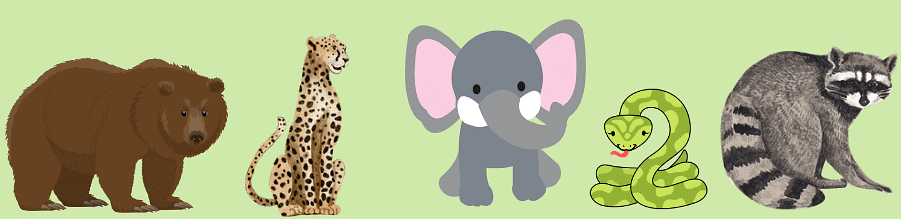
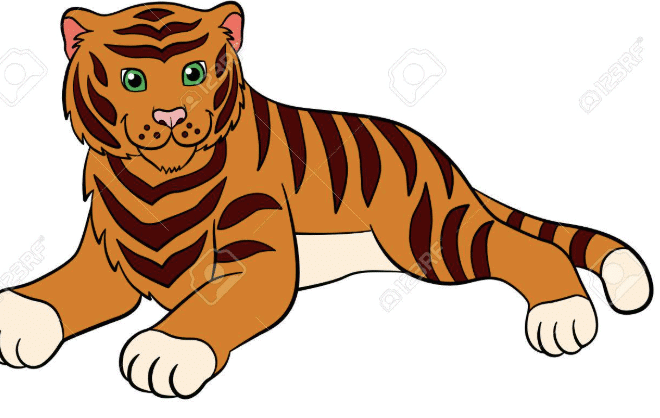
  • Examples of wild animals include lionstigers, and elephants.

3. Farm Animals

  • Farm animals are those that live on farms and in fields.
  • They are often raised by people for various purposes, such as for food, labor, or other products.
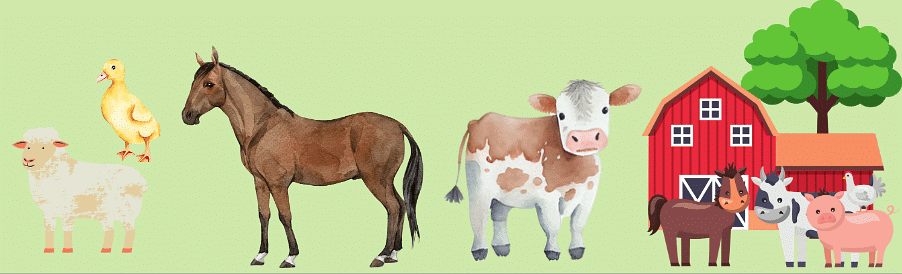
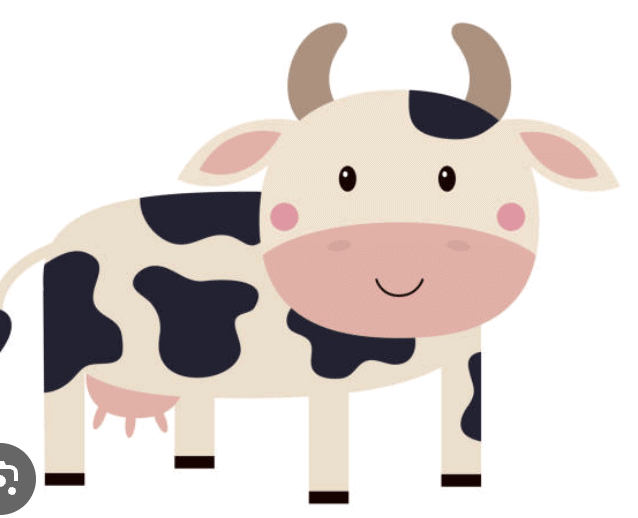
  • Examples of farm animals include goatscows, and hens.

4. Aquatic Animals

  • Aquatic animals are those that live in water for their entire life.
  • These animals have specialized organs called gills that allow them to breathe underwater.
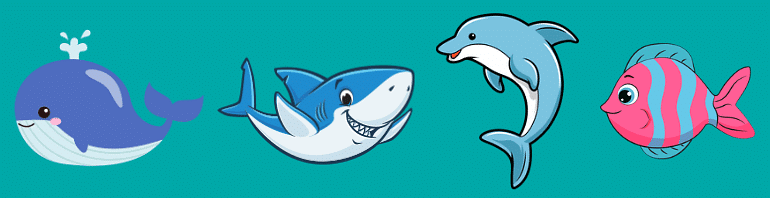
  • Some common examples of aquatic animals include: Whale, Shark, Dolphin, Seahorse, Fish, Octopus etc.

5. Birds

  • Birds are animals characterized by feathers, wings, and two legs.
  • All birds have a beak, which is an essential part of their anatomy.
  • While most birds are capable of flight, some species are also proficient swimmers.
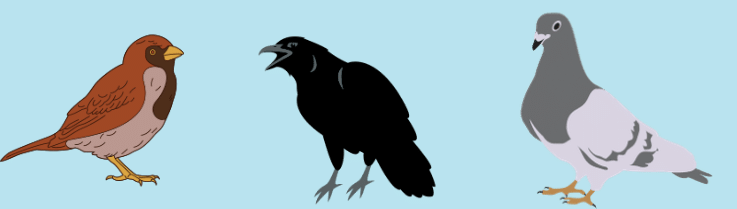
  • Examples of common birds include: sparrow, crow, pigeon etc

6. Insects

  • Insects are animals that have six legs.
  • On the other hand, arachnids, such as spiders, have eight legs.
  • Insects may have one or two pairs of wings, depending on the species.
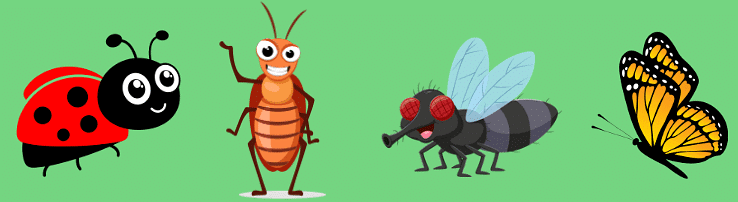
  • Examples of insects include: ladybird, cockroach, housefly, butterfly,  grasshopper etc.

Try yourself:

Which type of animal has specialized organs called gills to breathe underwater?

  • A.Domestic Animals
  • B.Wild Animals
  • C.Farm Animals
  • D.Aquatic Animals

View SolutionFood of Animals

Different animals have different food habits. For example: Cows, buffalos and goats eat grass. Lions and tigers eat the flesh of other animals. Let us study the different eating habits of animals.

1. Herbivorous Animals

Those animals which eat grass and other plants are called herbivorous animals. 

For example: Cow, buffalo, goat, deer, giraffe, donkey, elephant etc.

2. Carnivorous Animals

Those animals that eat only the flesh of other animals are known as carnivorous animals. 

For example: Lion, Tiger, Leopard, Hawk, Whale etc.

3. Omnivorous Animals

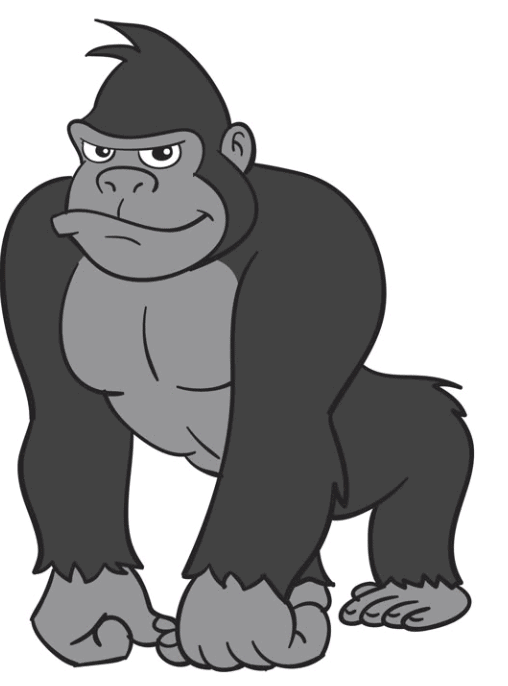
Some animals like crows, bear, jackal, gorilla etc eat both plants as well as the flesh of other animals. These type of animals are known as Omnivorous animals.

Summary of Animals

    •    Animals are living creatures that can move, eat, and make sounds.

    •    They come in different sizes like big, medium, and small.

    •    Some animals live with humans, while others live in the wild, on farms, or in water.

    •    Birds have feathers, wings, and a beak, while insects are small creatures with six legs.

    •    Animals eat different kinds of food – some eat plants, some eat meat, and some eat both.

    •    Herbivores eat plants, carnivores eat meat, and omnivores eat both plants and meat.

    •    Animals are important for nature and help keep the environment balanced.

10. Plants –

Chapter notes

IntroductionPlants and Trees

Plants are living things that grow in the soil.

  • You can find plants everywhere: in gardens, parks, farms, and even on windowsills at home or school.
  • Plants come in different sizes. Some are very tall, like big trees, and some are very small, like tiny herbs.

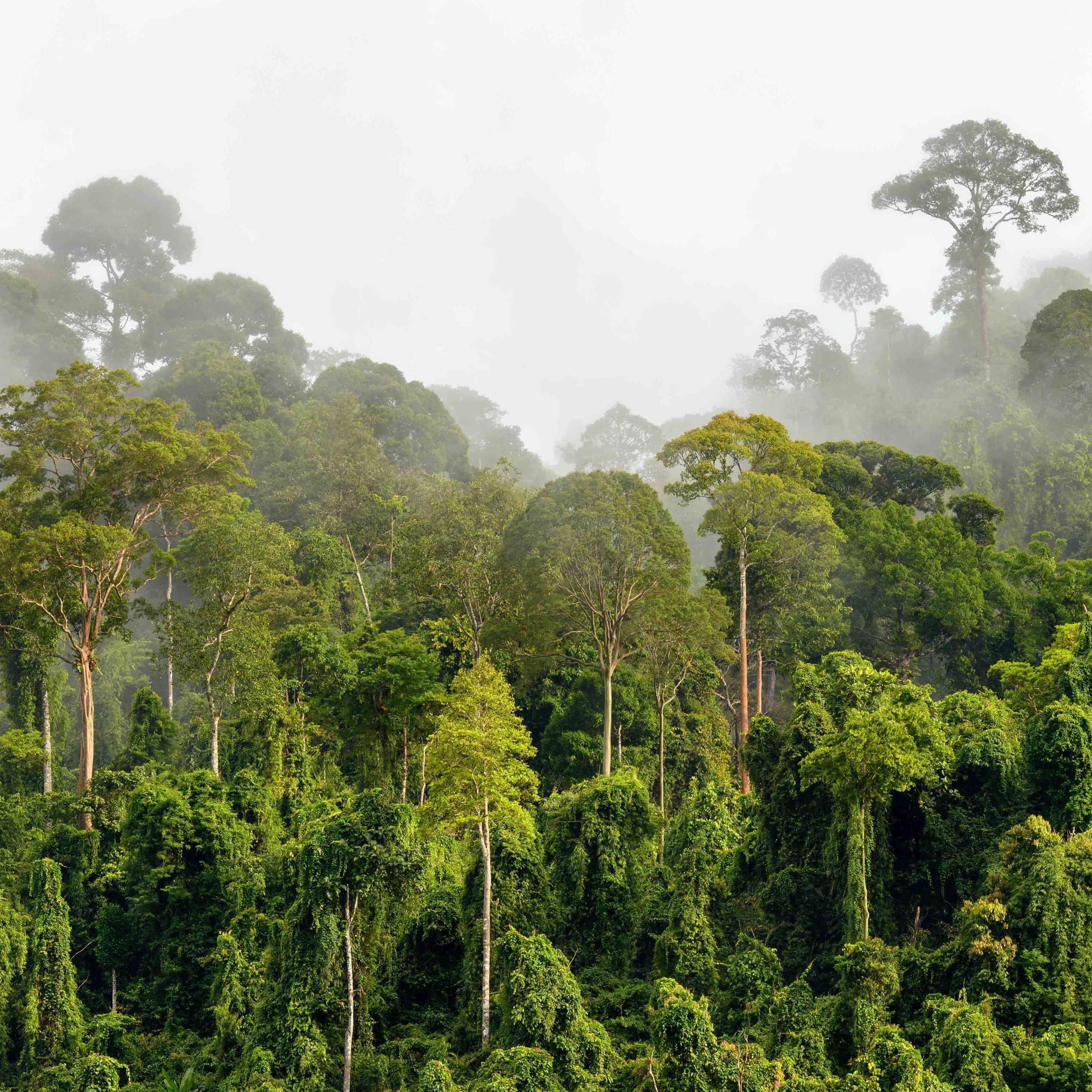
Types of Plants1. Trees

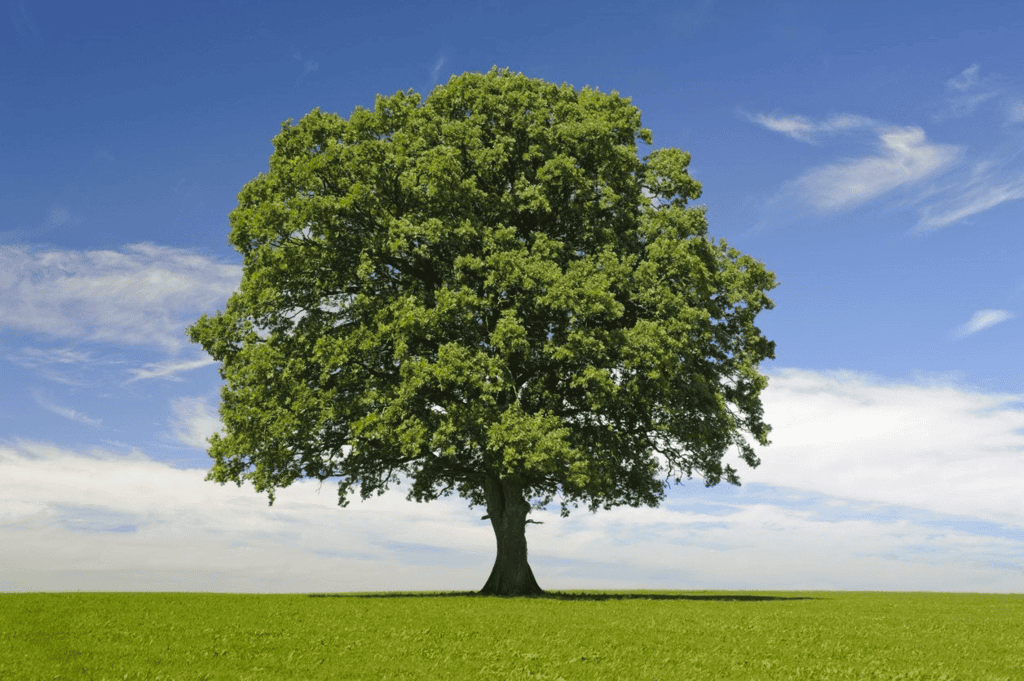
  • Trees are the tallest and strongest plants.
  • They have a thick, hard stem called a trunk that holds the tree up straight.
  • Trees have many branches and leaves.
  • Trees are very important because they give us shade, fresh air, and fruits.

Different trees look different:

  • The banyan tree has a big, thick trunk and strong roots that grow above the ground.
  • The pine tree has a tall, thin trunk and cone-shaped leaves called needles.

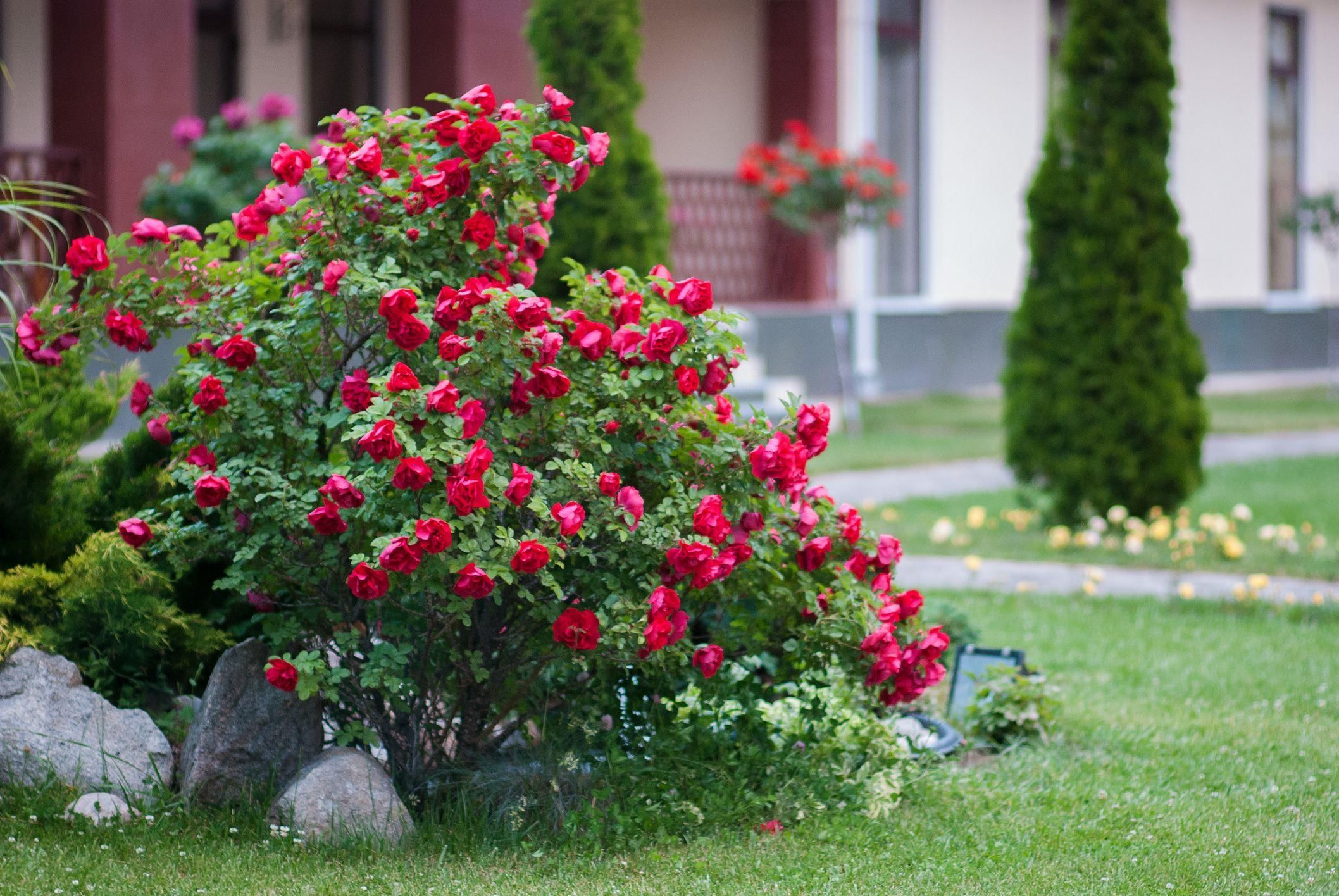
2. ShrubsShrubs

  • Shrubs are smaller than trees but bigger than herbs.
  • They have hard stems but are not as tall as trees.
  • Shrubs look like bushes and usually have many branches close to the ground.
  • Examples of shrubs are the rose plant which has beautiful flowers, and the cotton plant which gives us cotton to make clothes.

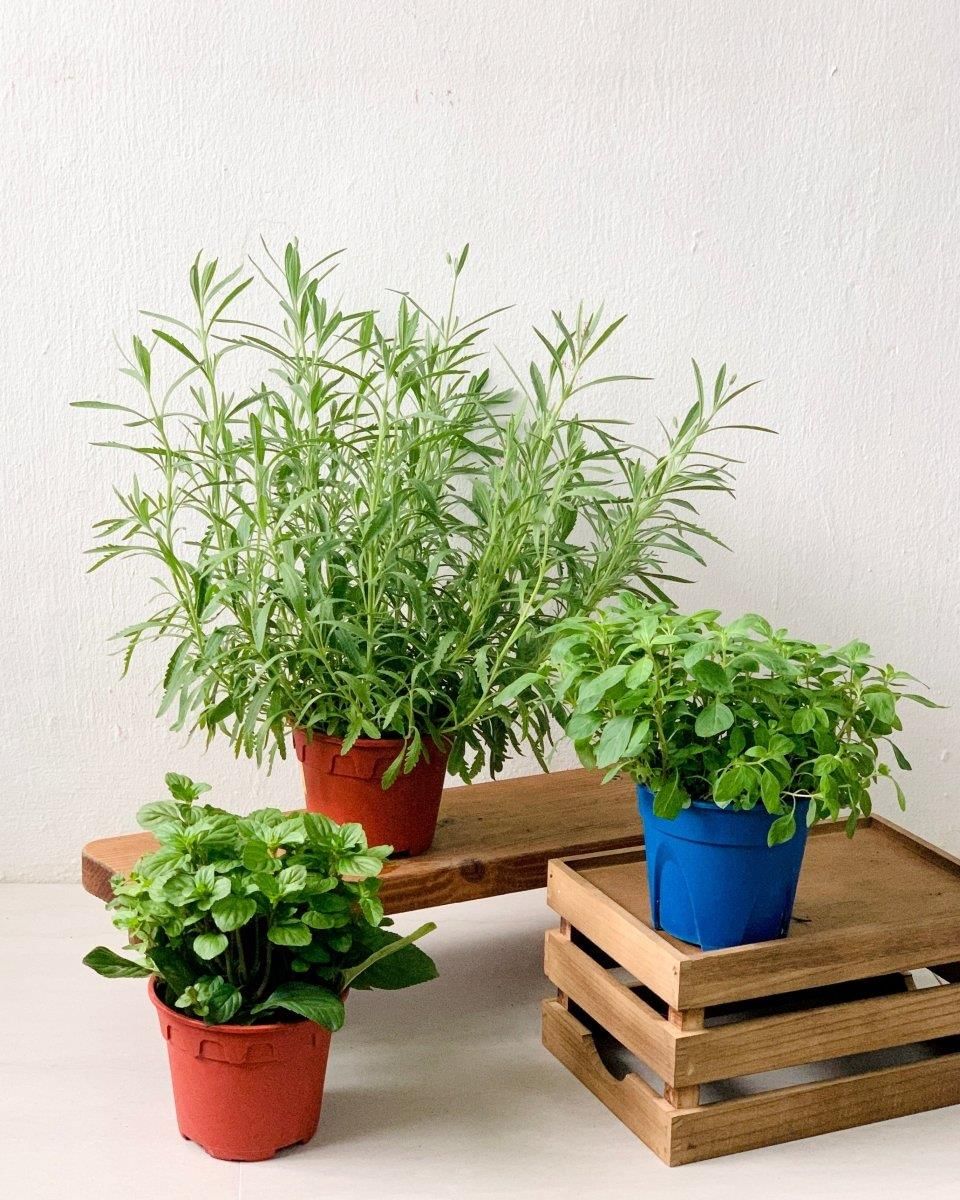
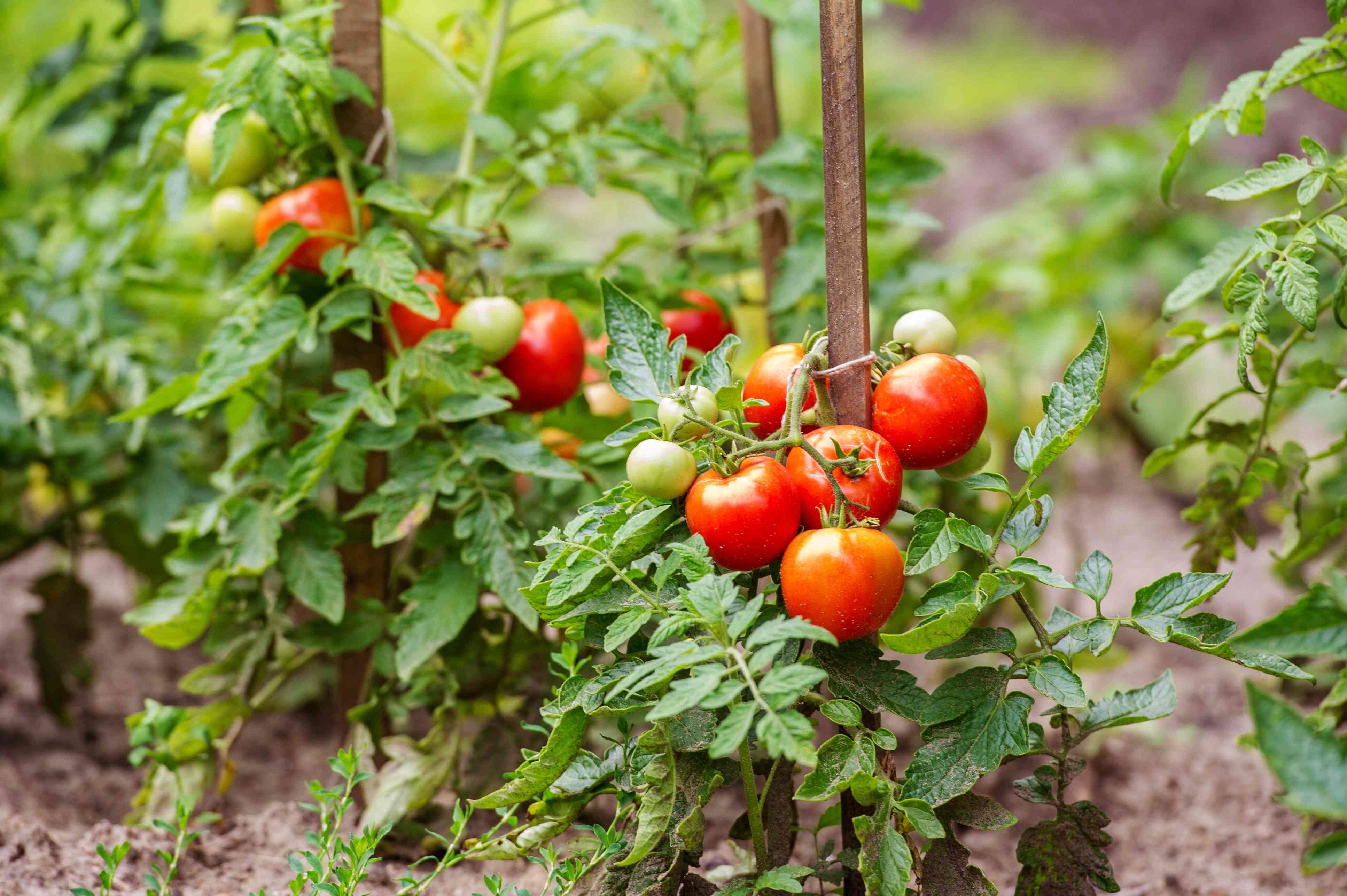
3. HerbsHerbs

  • Herbs are small plants with soft, green, and bendable stems.
  • Their stems are easy to break if you try.
  • Herbs usually live for a short time, like one season or one year.
  • Examples include tomato plants that give us tomatoes, and coriander plants which we use to add flavor to our food.

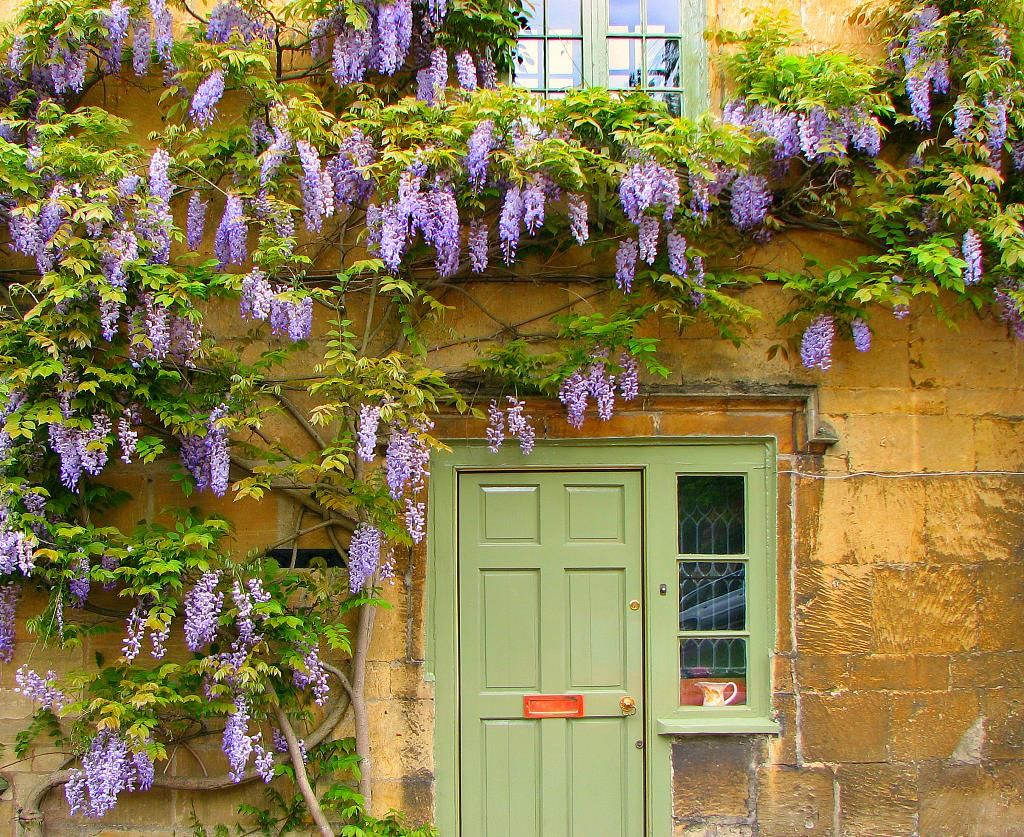
4. ClimbersClimbing Plants

  • Climbers are special plants that have weak stems.
  • They cannot stand straight on their own.
  • They climb on walls, trees, or fences by holding on with their tendrils or stems.
  • Some climbers spread on the ground too.
  • An example is the money plant which often climbs on walls or sticks.

Plants That Give Us FoodVegetablesVegetables

  • Many plants give us vegetables that we eat every day.
  • Vegetables grow in different parts of plants like roots, stems, or leaves.
  • Examples:
    • Potatoes grow underground as roots.
    • Onions also grow underground.
    • Brinjals (eggplants) grow above the ground on plants.
  • Potatoes grow underground as roots.
  • Onions also grow underground.
  • Brinjals (eggplants) grow above the ground on plants.

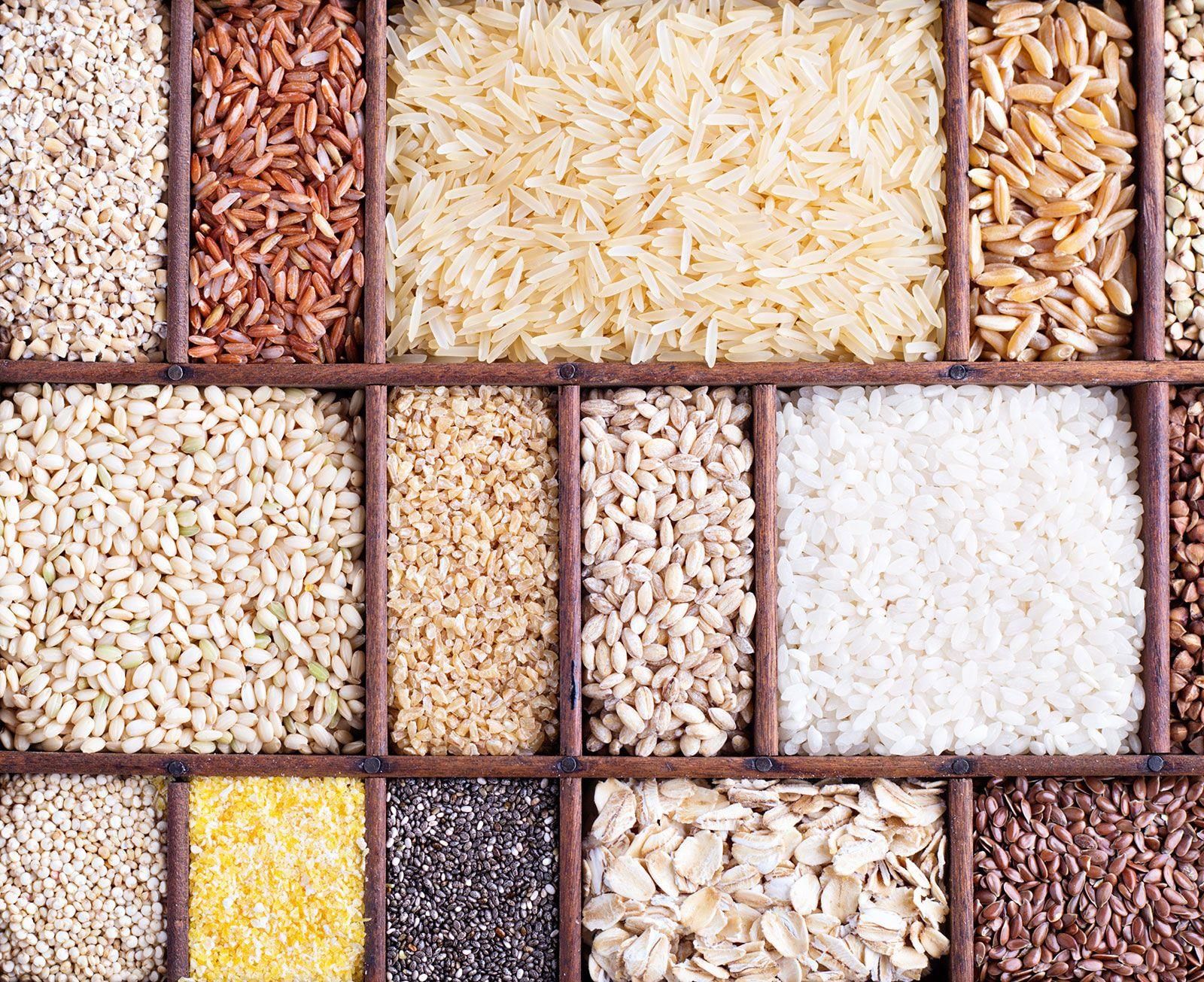
GrainsGrains

  • Grains are seeds from plants that we use to make our daily food like bread and rice.
  • Some common grains are:
    • Rice. grown in wet fields called paddies.
    • Wheat. used to make flour for roti, bread, and cakes.
    • Pulses (dal). small seeds like lentils and beans that are full of protein.
  • Rice. grown in wet fields called paddies.
  • Wheat. used to make flour for roti, bread, and cakes.
  • Pulses (dal). small seeds like lentils and beans that are full of protein.

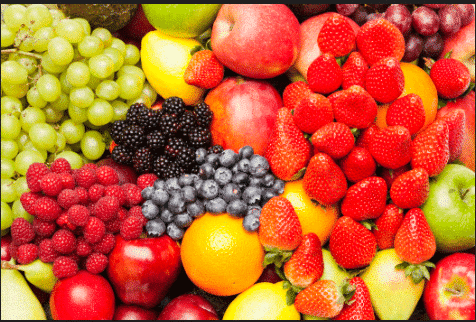
Fruits

  • Fruits grow from flowers on plants or trees.
  • They are usually sweet and juicy and are good for our health.
  • Examples of fruits are:
    • Apples. grow on apple trees.
    • Bananas. grow on banana plants.
    • Watermelons. grow on vines on the ground.
    • Pineapples. grow from the center of a spiky plant.
  • Apples. grow on apple trees.
  • Bananas. grow on banana plants.
  • Watermelons. grow on vines on the ground.
  • Pineapples. grow from the center of a spiky plant.

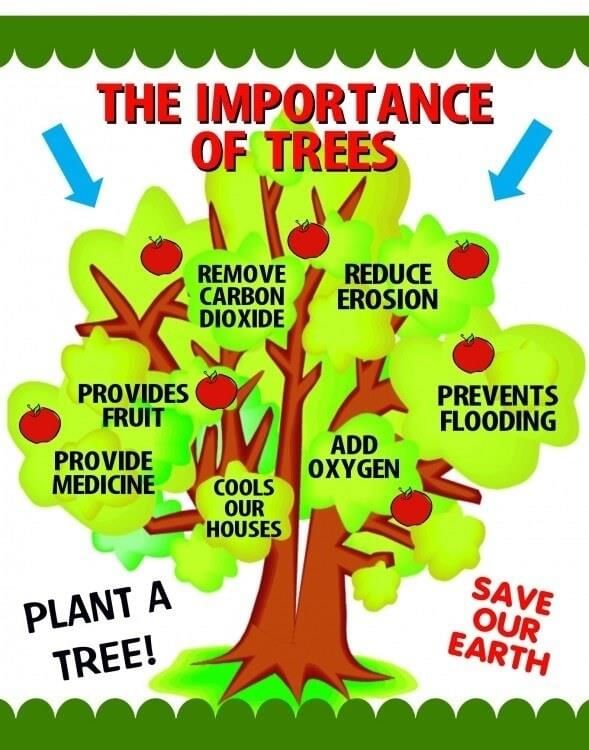
Why Are Plants Important?Essential Plant Benefits

  • Plants give us food to eat every day.
  • They give us fresh air to breathe by making oxygen.
  • Plants help keep the soil healthy and stop it from washing away.
  • Many animals live in plants or use them for food and shelter.
  • We also get medicines, clothes (like cotton), and wood from plants.

09. Means of Transport – Chapter Notes

What is Transportation?

Transportation means moving people or things from one place to another.

Different Modes of Transport

  • It helps us go to school, visit family, or send gifts to different places.
  • We use different types of transport on land, water, and air!

What are the different Means of Transport?

Means of transport or modes of transport are the various ways by which people and goods can travel.

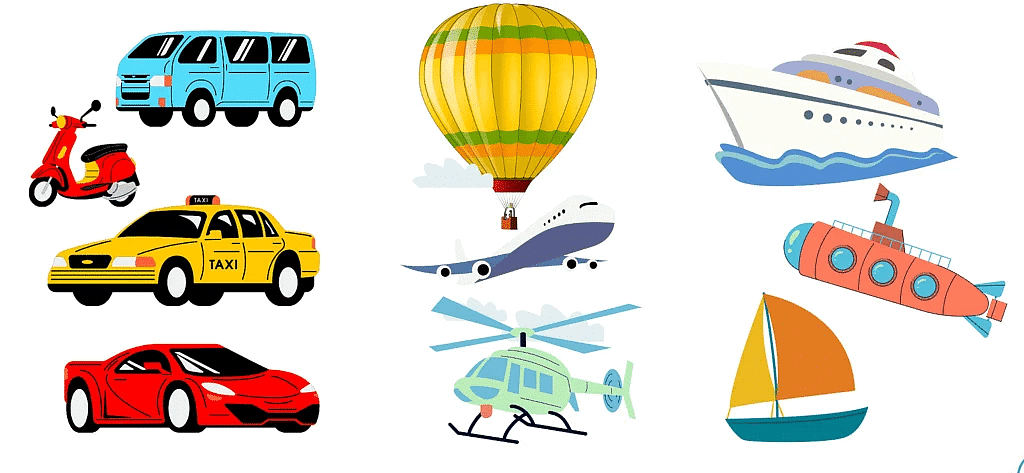
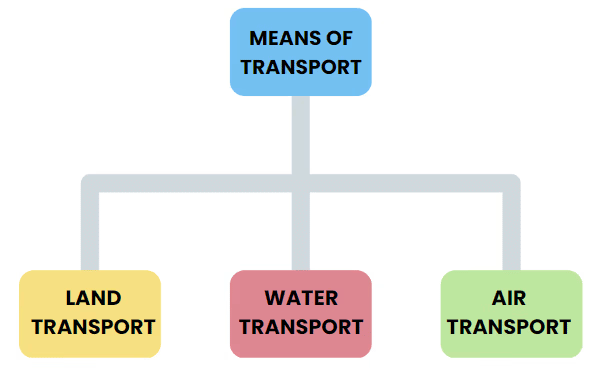
There are three main types:

  • Land Transport – like cars, buses, trains, bicycles, and bullock carts.
  • Water Transport – like boats, ships, and ferries that move on rivers, lakes, and oceans.
  • Air Transport – like aeroplanes and helicopters that fly in the sky.

No matter where we go—by road, water, or air—transport helps us reach our destination!

Let’s learn more about each type of transport!

Try yourself:

What is one type of water transport?

  • A.Boat
  • B.Aeroplane
  • C.Car
  • D.Bicycle

View SolutionLand Transport

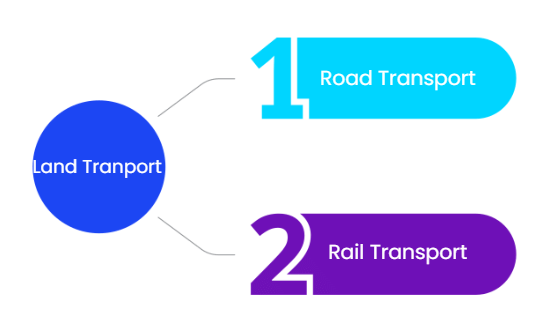
The transport that runs only on land is called land transport. This mode of transport is divided into two types: roadways and railways.

1. Road Transport

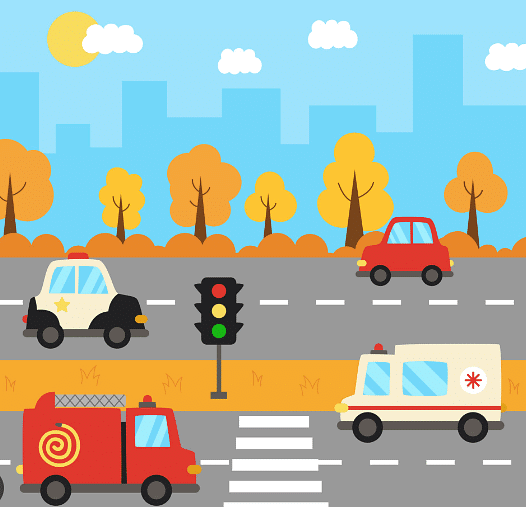
  • Roads are like wide paths made of solid ground.
  • Carsbuses, and bicycles use these roads to travel.
  • Just like how we walk on sidewalks, cars and buses drive on roads to take us to school, the park, or to visit our friends.

Road Transport

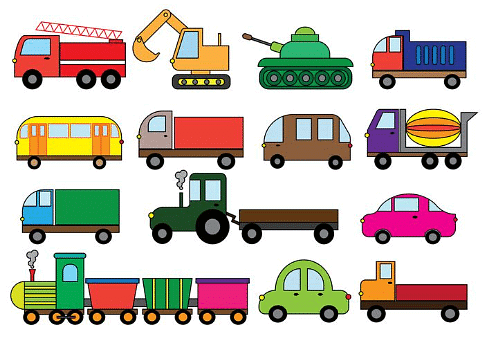
  • Trucksbusescarsbicyclesrickshawsmotorcyclestongasbullock-carts, etc., are means of roadways.
  • There is a large network of roads in our country.

Different modes of land transport

2. Rail TransportRailways are like long strips of metal tracks laid on the ground. Trains run on these tracks. 

Rail Transport

  • When we have to travel long distances within the country, we use railways.
  • Trains run on railway tracks.
  • Indian Railways is one of the largest rail networks in the world.

Different modes of rail transport

Try yourself:

What are the two main types of land transport?

  • A.Roadways and railways
  • B.Trains and boats
  • C.Airways and waterways
  • D.Cars and bicycles

View Solution

Water Transport

Water transport is a way of moving people or goods by water.

Water Transport

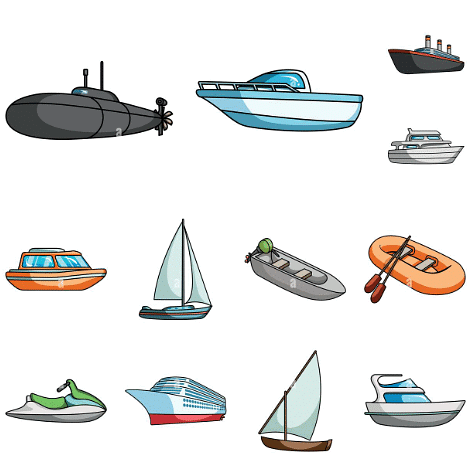
  • It includes different types of vessels like boats, ships, and ferries. These vessels travel across oceans, rivers, lakes, and canals. 
  • Water transport is important for tradetravel, and recreation
  • It allows us to transport large quantities of goods over long distances efficiently and is often used for activities like fishing, tourism, and transportation of goods between countries.

Different modes of water transport

Air Transport

Some means of transport move in the air only. Air travel is the most expensive but the fastest way to travel.

Air Transport

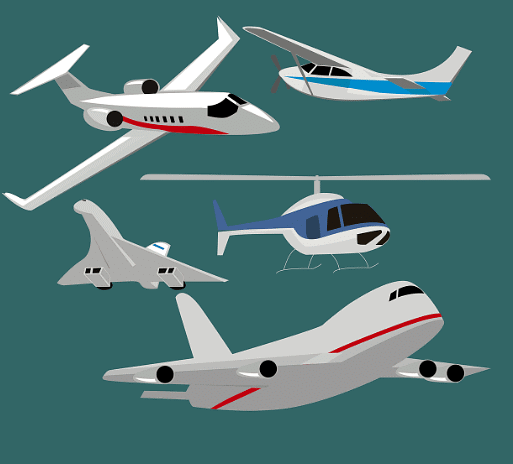
  • Aeroplanes and helicopters are some common means of air transport.
  • We can travel by an aeroplane when we have to travel to another country or to another city.
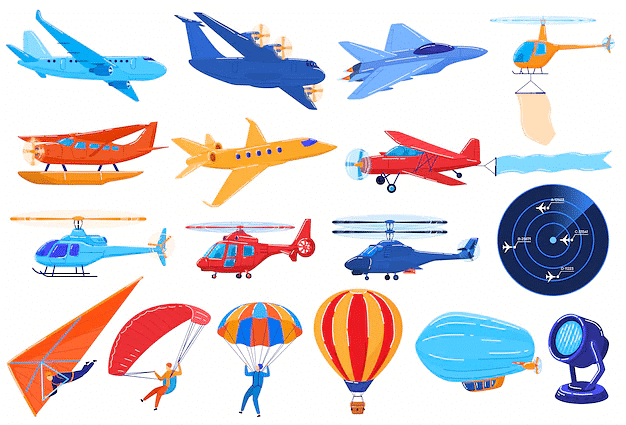
  • Airplanesjet aircrafthelicoptershot air balloonsblimpsglidershang glidersparachutes, etc., are the means of air transport

Different modes of air transportSummary: Transportation

  • Transportation moves people and goods from one place to another.
  • There are three main types of transportation: land, water, and air.
  • Land transport includes road vehicles like cars and buses and rail transport like trains.
  • Water transport includes boats, ships, and ferries.
  • Air transport includes airplanes and helicopters.
  • Transportation helps people travel and move things easily.