Very Short Answer Questions: Different Lands, Different Lives

Q1. What are some different types of landforms found in our country?
Ans: Plains, deserts, coastal regions, and mountains. These are different shapes of land found on the Earth’s surface in many parts of the country.

Q2. What does the Sun provide us with?
Ans: Light and heat. We need them to see, to keep warm and for plants to grow.

Q3. What are two main foods of Punjab mentioned in the lesson?
Ans: Makki di roti and sarson da saag. Makki di roti is made from maize and sarson da saag is made from mustard leaves; both are popular Punjabi dishes.

Q4. What is the community kitchen in the Golden Temple called?
Ans: Langar sewa. It is a kitchen where free meals are cooked and served to everyone, without any distinction.

Q5. Name two plants found in the desert.
Ans: Cactus and khejri. These plants can live with very little water and help animals and people in the desert.

Q6. What is the camel called in the desert?
Ans: The ship of the desert. Camels carry people and goods across sandy places and can go a long time without water.

Q7. What are houses in desert regions made of?
Ans: Mud with thatched roofs. These materials keep the inside of the house cooler during the hot days.

Q8. What festival of Odisha involves pulling large chariots?
Ans: Rath Yatra. During this festival people pull huge chariots that carry deities through the streets.

Q9. Name two dishes from Odisha.
Ans: Dalma and Chhena poda. Dalma is a dish of lentils and vegetables, and chhena poda is a sweet made from cheese.

Q10. What natural disaster often affects coastal regions?
Ans: Cyclones. Cyclones bring very strong winds and heavy rain which can cause damage along coasts.

Q11. Which state won awards for cyclone management?
Ans: Odisha. The state worked to protect people and reduce the harm caused by cyclones.

Q12. Name one famous mountain seen from Sikkim.
Ans: Mount Kangchenjunga. It is one of the highest mountains and can be seen from Sikkim.

Q13. What is the traditional dress worn in Sikkim?
Ans: Bakhu. This is the traditional robe worn by people in Sikkim during festivals and special occasions.

Q14. What is the famous New Year festival of Sikkim?
Ans: Loosong and Namsoong. These festivals mark the New Year and are celebrated with songs, dances and feasts.
Q15. Which coastal city in Odisha is known for its sea beach and the Jagannath Temple?
Ans: Puri.
Very Short Answer Questions: How Things are Made

Q1. What is paper made from?
Ans: Paper is made from trees. Wood from trees is turned into pulp and then processed into sheets of paper.

Q2. What is used as a binding material while making recycled paper?
Ans: Fenugreek (methi) seeds. The sticky gel from soaked methi seeds helps bind the paper fibres together.

Q3. What is the first step in making recycled paper?
Ans: Tear old newspapers into small pieces and soak them in water. This makes the paper soft so it can be mashed into a paper paste.

Q4. What tool can be used to mash soaked paper and seeds?
Ans: A grinder or hands. A grinder makes the job quicker, while you can also mash the paper by hand.

Q5. What should be done after spreading the paper paste?
Ans: Let it dry to make recycled paper. Once the paste dries, it becomes a sheet of recycled paper.

Q6. What gives colour to paper in the natural dye experiment?
Ans: Natural ingredients like turmeric, spinach, or beetroot. Turmeric gives yellow, spinach gives green and beetroot gives red or pink colours.

Q7. Which parts of plants are used to make natural dyes?
Ans: Leaves, flowers, roots, seeds, and stems. For example, flowers and leaves give bright colours, and roots like turmeric give strong colour.

Q8. What did Pihu gift her mother?
Ans: 
A greeting card made of recycled paper. Pihu made it by reusing old paper and colouring it with natural dyes.

Q9. What is the main raw material for machine-made paper?
Ans: Wood pulp. Machines use wood pulp from trees to make large quantities of paper.

Q10. Why should we use paper responsibly?
Ans: Because making paper requires many trees, water, and energy. Using paper carefully saves trees and protects the environment.

Q11. What was used in ancient India for writing instead of paper?
Ans: Palm leaves (talapatra). People wrote on dried palm leaves using a pointed tool and kept them safe.

Q12. Name one eco-friendly material used to make paper.
Ans: Banana fibre. Fibres from banana plants are used to make paper that is kinder to the environment.

Q13. Which type of paper is thin, soft, and absorbs water?
Ans: Tissue paper. It is thin, soft and soaks up water quickly.

Q14. Which type of paper is thick and used for making boxes?
Ans: Cardboard. It is thick and strong, so it is used to make boxes and packaging.

Q15. What helps visually challenged people to read and write?
Ans: The Braille system. It uses raised dots that people read by touching with their fingers.

Q16. What do the 5Rs of waste management stand for?
Ans: Refuse, Reduce, Reuse, Repurpose, Recycle. These five actions help us create less waste and protect nature.

Q17. What does “Refuse” mean in waste management?
Ans: Saying no to things that create waste. For example, refusing single-use plastic bags helps reduce waste.

Q18. What does “Reuse” mean?
Ans: Using an item multiple times before throwing it away. For example, cleaning and using a jar again instead of throwing it out.

Q19. What does “Recycle” mean?
Ans: Turning waste materials into something new. For example, old paper can be recycled to make new paper or cards.

Q20. Why should we follow the 5Rs rule?
Ans: To save resources and protect the environment. Following the 5Rs reduces pollution, saves trees and water, and keeps our surroundings clean.

Very Short Answer Questions: How Things Work

Q1. Name one object that can spin easily.
Ans: Coin.

Q2. Name one object that does not spin properly.
Ans: Eraser.

Q3. What does a charkha do?
Ans: It spins cotton fibre into thread for making cloth.

Q4. Who used the charkha for making handmade clothes?
Ans: Mahatma Gandhi.

Q5. What happens when a square spinner is spun?
Ans: It appears circular when it spins.

Q6. What Indian toy is similar to a spinning top?
Ans: Lattu.

Q7. What material was used to make tops in earlier times?
Ans: Clay.

Q8. What happens to an iron nail when placed in water?
Ans: It sinks to the bottom of the water.

Q9. What happens to a leaf when placed in water?
Ans: It floats on the water.

Q10. What factor, besides weight, affects floating and sinking?
Ans: The shape of the object.

Q11. What happens when aluminium foil is pressed into a tight ball?
Ans: It sinks to the bottom of the water.

Q12. Name one object that floats on water.
Ans: Empty plastic bottle.

Q13. Name one object that sinks in water.
Ans: Coin.

Q14. What should be used to make paper boats?
Ans: Paper, cardboard, or ice-cream sticks.

Q15. What kind of toy helps us learn about floating and sinking?
Ans: Paper boat.

Very Short Answer Questions: Happy and Healthy Living

Q1. What makes us feel happy while eating?
Ans: Eating our favourite foods.

Q2. What is the main ingredient of our staple food like rice and wheat?
Ans: Grains.

Q3. Who grows food grains for us?
Ans: Farmers.

Q4. Name one natural element needed for plant growth.
Ans: Sunlight.

Q5. Which animals help in farming by ploughing fields?
Ans: Cattle.

Q6. What do earthworms do in the soil?
Ans: They make the soil fertile.

Q7. Whom should we thank for bringing food to our plates?
Ans: Farmers, cattle, shopkeepers, and family members.

Q8. Name one Indian festival where people thank nature for food.
Ans: Makar Sankranti.

Q9. What does mindful eating mean?
Ans: Paying attention to the food we eat and enjoying each bite.

Q10. What helps us taste food?
Ans: The tongue.

Q11. What do teeth do to the food while eating?
Ans: They chew the food into smaller pieces.

Q12. Why should we avoid wasting food?
Ans: Because many people and animals work hard to produce it.

Q13. Name one physical activity that keeps us healthy.
Ans: Running.

Q14. What does yoga help us improve?
Ans: Our posture and balance.

Q15. What happens if we don’t get enough sleep?
Ans: We feel tired, sleepy, and irritable.

Q16. What does rest help our body do?
Ans: It helps our body recover and feel fresh.

Q17. What is a safe touch?
Ans: A touch that makes us feel happy and comfortable.

Q18. What should you do if someone’s touch feels uncomfortable?
Ans: Say “No” and tell a trusted adult.

Q19. What are the three essentials for happy and healthy living?
Ans: Eating right, exercising, and resting well.

Q20. Name one daily habit for staying healthy.
Ans: Eating a balanced diet on time.

Very Short Answer Questions: Food for Health

​​​​​Q1. What is Ugadi Pachadi?
Ans: A traditional food made with six different tastes.

Q2. Name the six tastes described in Ayurveda.
Ans: Sweet, sour, salty, pungent, bitter, and astringent.

Q3. What are the six tastes called in Ayurveda?
Ans: Shad Rasa.

Q4. What type of food helps build our muscles?
Ans: Body-building foods.

Q5. Name one example of an energy-giving food.
Ans: Rice.

Q6. Name one example of a body-building food.
Ans: Pulses or milk.

Q7. Name one example of a protective food.
Ans: Fruits or vegetables.

​​​Q8. What happens if we eat only one type of food?
Ans: Our body does not get all the nutrients it needs.

Q9. What are foods high in oil, salt, and sugar called?
Ans: Junk foods.

Q10. Give one example of junk food.
Ans: Chips or pizza.

Q11. Why should we avoid junk food?
Ans: Because it is unhealthy if eaten regularly.

Q12. What is a balanced food plate?
Ans: A plate containing all three food groups in the right amounts.

Q13. Name one water-rich fruit.
Ans: Watermelon.

Q14. What does water help us do in the body?
Ans: It helps in digestion and removes waste.

Q15. What method of cooking uses steam?
Ans: Steaming.

Q16. What is a solar cooker used for?
Ans: Cooking food using sunlight.

Q17. What does the term ‘Chef’ mean in French?
Ans: Head or director of the kitchen.

Q18. Why should we check food labels before eating packaged food?
Ans: To know the ingredients and expiry date.

Very Short Answer Questions: Growing up with Nature

Q1. What was special about Reena and Amit’s village?
Ans: It became a fully solar-powered village.

Q2. What tree is called the “Flame of the Forest”?
Ans: The Palash tree.

Q3. What is Palash known as in Gujarat?
Ans: Kesuda.

Q4. What materials are used to make traditional village houses?
Ans: Clay, hay, cow dung, and other natural materials.

Q5. What was Reena and Amit’s grandmother painting with?
Ans: Natural dyes made from flowers, leaves, and stones.

Q6. What is Gond art?
Ans: A traditional painting form using natural colours to depict nature.

Q7. What are earthen pots lined with to protect grains?
Ans: Neem leaves.

Q8. What are bamboo baskets coated with for storage?
Ans: Cow dung.

Q9. Who are the Jenu Kurubas?
Ans: A tribe from Karnataka known for collecting honey.

Q10. What does the word “Jenu” mean?
Ans: Honey.

Q11. What natural mixture did Dada ji use to repel mosquitoes?
Ans: Neem oil.

Q12. Name one medicinal plant.
Ans: Indian basil (Tulsi).

Q13. What should be kept in a first-aid box?
Ans: Basic medicines, bandages, and antiseptic cream.

Q14. What are Sacred Groves?
Ans: Small forest patches protected by local communities.

Q15. What are Sacred Groves important for?
Ans: Protecting trees, wildlife, and cultural traditions.

Q16. What tree is worshipped during Vat Purnima?
Ans: Banyan tree.

Q17. Name the festival associated with elephants in Kaziranga.
Ans: Kaziranga Elephant Festival.

Q18. What are two ways to protect nature?
Ans: Say no to plastic and plant more trees.

Q19. What happens if we overuse wood from forests?
Ans: Forests get depleted.

Q20. What simple activity can help birds?
Ans: Keep food and water for them.

Very Short Answer Questions: Nature Trail

Q1. What does “Vasudhaiva Kutumbakam” mean?
Ans: It means “the world is one family.”

Q2. Where did the nature trail take the students?
Ans: Pachmarhi, Madhya Pradesh.

Q3. Who guided the students on the nature trail?
Ans: Abha Didi, a nature scientist.

Q4. What should you not do to animals in a forest?
Ans: Do not tease or feed them.

Q5. Name the state animal of Tripura.
Ans: The Spectacled Monkey.

Q6. What special feature does a hornbill have?
Ans: A horn-like headgear on its forehead.

Q7. What do bird beaks and claws help with?
Ans: Eating and catching food.

Q8. How many pairs of legs does an insect have?
Ans: Three pairs of legs.

Q9. What pair of sensory organs do insects have?
Ans: One pair of antennae.

Q10. Name one animal that lives both on land and in water.
Ans: Frog.

Q11. What feature helps fish to swim?
Ans: Fins.

Q12. What is special about a gharial’s snout?
Ans: It is long, narrow, and pointed for catching fish.

Q13. What protective part does a turtle have?
Ans: A strong shell.

Q14. What activity uses a crayon and paper to reveal a leaf’s veins?
Ans: Leaf autograph (rubbing).

Q15. What is the purpose of the ‘Web of Life’ game?
Ans: To show how plants, animals, and elements are connected.

Q16. What happens in the web when one part disappears?
Ans: The web weakens or collapses.

Q17. Name one insect that students saw on the trail.
Ans: Grasshopper.

Q18. Why should we follow safety rules in forests and zoos?
Ans: To protect animals, plants, and people.

Q19. What simple craft is suggested to make in class from old paper?
Ans: A paper turtle.

Q20. What should students collect for nature activities?
Ans: Leaves, seeds, flowers, and other natural samples.

Very Short Answer Questions: Exploring Our Neighbourhood

Q1. Who went to pick up Navya from school?
Ans: Her grandfather (Dada ji).

Q2. What did Navya and Dada ji see at the corner while going home?
Ans: A red postbox.

Q3. What is the function of a post office?
Ans: A post office sends and receives letters and parcels.

Q4. What does ATM stand for?
Ans: Automated Teller Machine.

Q5. Why do people keep money in banks?
Ans: To keep it safe and save for future needs.

Q6. What helps us take out money anytime?
Ans: An ATM machine.

Q7. What did people use to send money before ATMs and online transfers?
Ans: Money Orders.

Q8. Name one fast mode of communication used today.
Ans: Mobile phones.

Q9. What mode of communication was used in ancient times?
Ans: Drumbeats and carvings on rocks.

Q10. What invention made communication faster and easier?
Ans: The internet.

Q11. What are flyovers built for?
Ans: To help vehicles move above busy roads and crossings.

Q12. Name a modern transport that travels very fast in cities.
Ans: Metro train.

Q13. What is the role of a doctor in a hospital?
Ans: A doctor treats patients and prescribes medicines.

Q14. What does a nurse do in a hospital?
Ans: A nurse helps doctors and cares for patients.

Q15. What is the barter system?
Ans: Exchanging goods and services without using money.

Q16. What tool helps us locate directions on a map?
Ans: Compass or directional signs (N, S, E, W).

Q17. Which direction is shown at the top of a map?
Ans: North.

Q18. Why is it important to save money?
Ans: To use it for future needs and emergencies.

Q19. What do public places like hospitals, banks, and post offices provide?
Ans: Services for the health, safety, and welfare of people.

Q20. Who helps maintain safety in the community?
Ans: Police officers and constables.

Very Short Answer Questions: Living Together

Q1: What is a community?
Ans: A community is a group of people living close to each other, sharing resources, culture, and helping one another.

Q2: What is the name of the festival celebrated in India for planting trees?
Ans: Van Mahotsav

Very Short Answer Questions: Living Together

Q3: When is Van Mahotsav celebrated?
Ans: Van Mahotsav is celebrated from July 1 to July 7 during the rainy season.

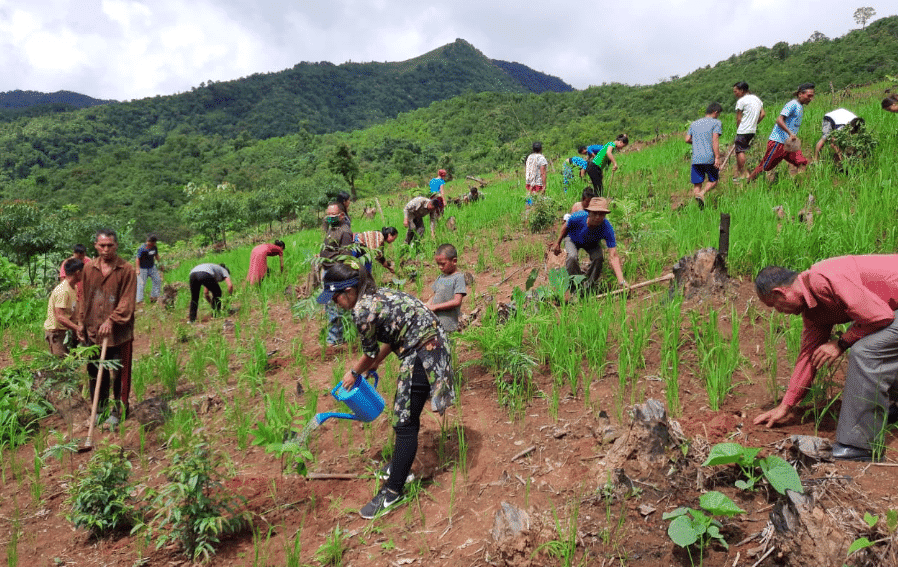
Q4: Why do people plant trees during Van Mahotsav?
Ans: People plant trees to protect the environment and make the Earth greener.

Q5: Name one public place where people can play and relax.
Ans: Playground

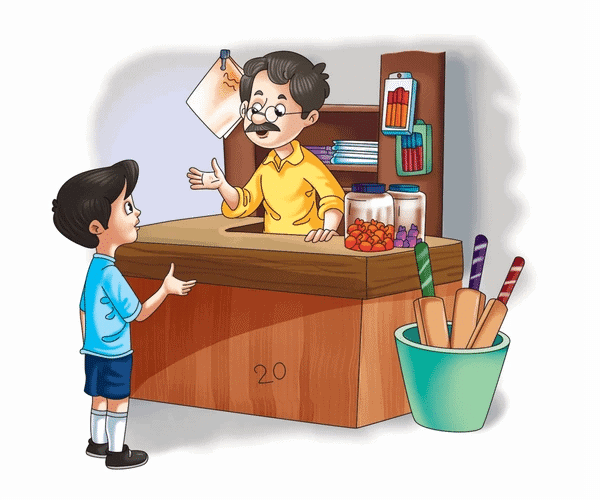
Q6: What does a shopkeeper do in a community?
Ans: A shopkeeper sells goods like food, clothes, and daily need products.

Very Short Answer Questions: Living Together

Q7: What is the job of a mason?
Ans: A mason mends walls using bricks and cement.

Q8: What tool does a mason use?
Ans: A mason uses a trowel.

Q9: Why are roads important in a community?
Ans: Roads connect people living in different areas and allow easy movement of goods and services.

Q10: What happens to leaves when they are buried in a pit?
Ans: Leaves turn into manure and improve the soil quality.

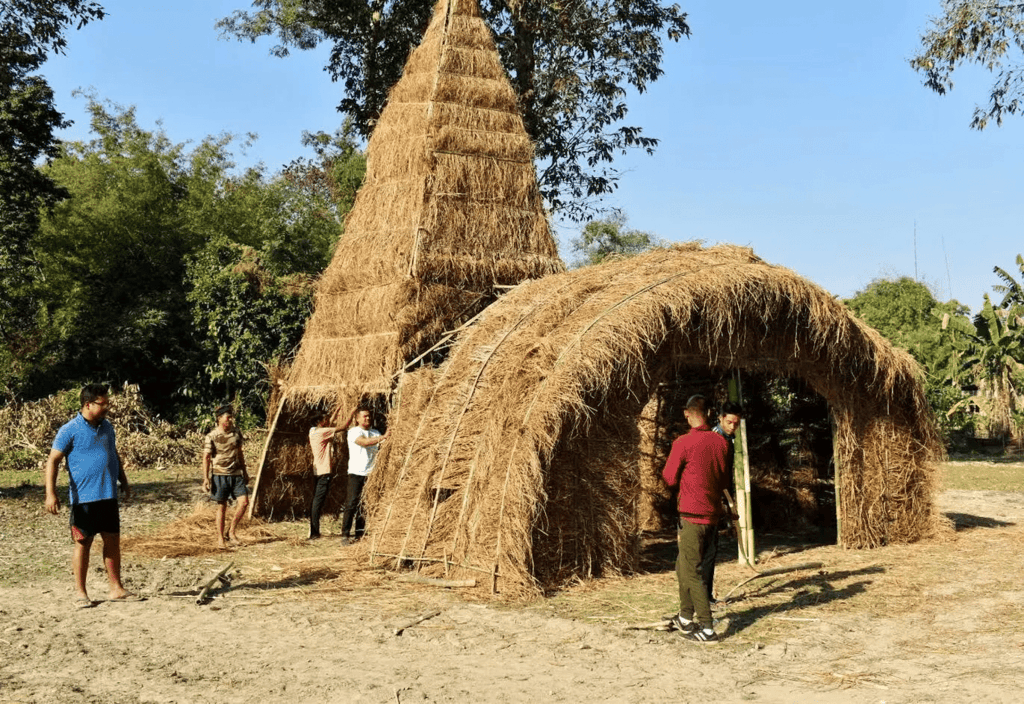
Q11: What is Bhela Ghar?
Ans: Bhela Ghar is a hut made of bamboo and hay built during the Magh Bihu festival in Assam.

Very Short Answer Questions: Living Together

Q12: When is Uruka celebrated?
Ans: Uruka is celebrated on January 14, the first day of Magh Bihu.

Q13: Who are Khetala in Sikkim?
Ans: Khetala are people who are experts in farming and help each other during crop harvesting.

Q14: Why is a health centre important in a community?
Ans: A health centre provides treatment for illness.

Q15: What is a sapling?
Ans: A sapling is a young tree in the early stages of growth.

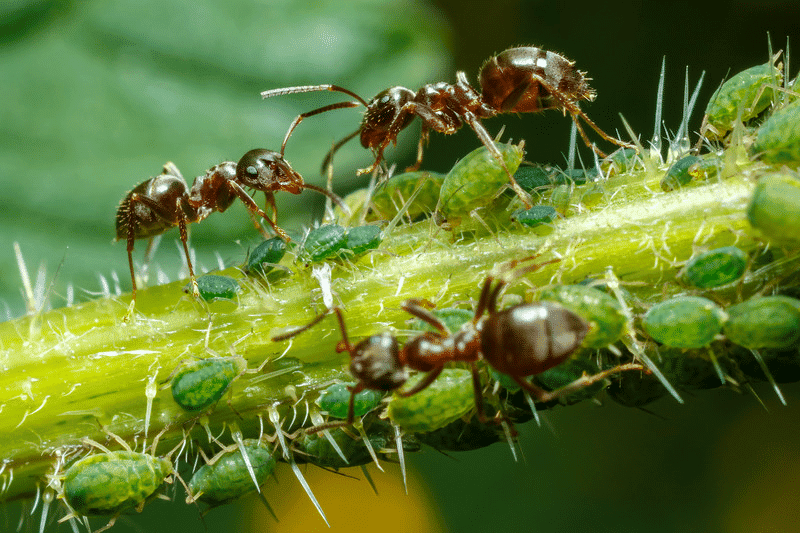
Q16: How do ants work in their community?
Ans: Ants work together, with some collecting food, others caring for baby ants, and some protecting their home.

Very Short Answer Questions: Living Together

Q17: Why do people come together to clean and decorate public places?
Ans: People clean and decorate public places to bond and create beautiful memories.

Q18: What is the role of a police officer in a community?
Ans: A police officer provides safety and security.