10 Earth — Our Shared Home – Short and Long Answer Questions

Short Answer Questions

Q1: What does Earth look like from space?
Ans: From space, Earth appears as one blue planet without borders. Astronauts like Rakesh Sharma noted its unity, calling it the best.

Q2: How do rosy starlings benefit Indian farmers?
Ans: They migrate from Russia to India in winter, eating pests like locusts. This natural pest control helps crops without chemicals.

Q3: What is Vasudhaiva Kutumbakam?
Ans: An ancient Indian saying meaning ‘the world is one family’. It promotes global unity, respect, and shared care for nature.

Q4: How did yoga spread globally?
Ans: Originating in India over 3,000 years ago for harmony, it spread via travellers. Now, International Yoga Day unites millions worldwide.

Q5: Trace the journey of chillies to India.
Ans: From South America, Portuguese traders brought chillies 400-500 years ago. They became essential in Indian cuisine, replacing pepper.

Q6: What is the origin of sugar?
Ans: Discovered in India from sugarcane, turned into jaggery, then sugar. It spread globally via trade, sweetening foods worldwide.

Q7: How did marigolds come to India?
Ans: From Mexico, marigolds travelled to festivals. Their bright colours fit Indian celebrations like Diwali, becoming temple staples.

Q8: What Indian cows were taken to Brazil?
Ans: Gir, Kankrej, and Ongole breeds, strong and milk-rich, adapted well. Now, they provide most of Brazil’s milk, even on stamps.

Q9: Name some Indian inventions shared globally.
Ans: Zero for math, chess for strategy, ayurveda for medicine, indigo for dyes. These influenced global knowledge and culture.

Q10: What does the MoEFCC logo represent?
Ans: It shows a balance between nature and humans, with the motto ‘Nature Protects if She is Protected’. It urges harmony and conservation.

Long Answer Questions

Q1: Explain how the migration of birds like rosy starlings shows nature’s connections.
Ans: The migration of birds like rosy starlings in India vividly illustrates nature’s interconnected cycles, linking seasons, ecosystems, and human life in a harmonious web.

  • Rosy starlings fly from Russia to India’s warmth, eating pests to aid farmers.
  • This migration highlights the borderless nature, with winds and currents helping journeys.
  • It teaches interdependence, as protecting habitats ensures their survival.
  • Human actions like conservation support these links, reminding us of global family ties in Vasudhaiva Kutumbakam.

Q2: Discuss the global spread of Indian practices like yoga and their benefits.
Ans: India’s ancient practices, particularly yoga, have transcended cultural boundaries to become global phenomena, promoting holistic well-being while fostering cross-cultural exchanges.

  • Yoga, practised in India for 3,000 years, promotes health and peace, now global via International Yoga Day.
  • It harmonises body and mind with nature.
  • Similarly, Ayurveda offers ancient medicine.
  • These share wisdom, improving well-being worldwide.
  • They embody India’s contributions, fostering unity and respect for shared human heritage.

Q3: Trace the journeys of foods like chillies and sugar between countries.
Ans: Here’s a traced journey of each:

  • Chillies from South America reached India via Portugal, spicing cuisine.
  • Sugar from Indian sugarcane spread to sweeten global foods.
  • Marigolds from Mexico enhance festivals.
  • These exchanges blend cultures, showing interconnectedness.
  • They highlight trade’s role in enriching lives, encouraging appreciation for origins and sustainable sharing.

Q4: How do animal and plant exchanges reflect world connections?
Ans: Animal and plant exchanges reflect world connections because they show how regions are linked through trade, migration, colonisation, and cultural interaction.

  • Indian Gir cows thrive in Brazil, providing milk and featured on stamps.
  • Dates from Arabs and paper from China enriched India.
  • These movements show nature’s borderless flow, like migrating birds.
  • They teach Vasudhaiva Kutumbakam, urging protection of shared resources for mutual benefit and global family harmony.

Q5: What does ‘Earth as our shared home’ mean, with examples from the chapter?
Ans: “Earth as our shared home” means that the planet belongs to all living beings — humans, animals, and plants — and we are all interconnected. It stresses the idea that resources, environments, and ecosystems are not owned by one person, nation, or species, but are shared and need to be cared for collectively.

  • It means viewing the world as one family, per Vasudhaiva Kutumbakam, with shared nature and ideas.
  • Examples include yoga’s global practice, chillies’ journey, and bird migrations.
  • Protecting Earth, as in MoEFCC’s logo, ensures harmony.
  • Stories of exchanges inspire care, recognising interconnected lives and the need for collective responsibility.
09 Rhythms of Nature – Short and Long Answer Questions

Short Answer Questions

Q1: What causes day and night?
Ans: Earth’s rotation on its axis creates day when facing the sun and night when away. This cycle repeats daily.

Q2: How many seasons are there in India?
Ans: India has six seasons: vasanta (spring), grishma (summer), varsha (monsoon), sharad (autumn), hemant (pre-winter), shishir (winter). They shape nature and activities.

Q3: What covers three-fourths of Earth?
Ans: Water covers most of Earth, as seen on globes. It’s vital for life, with oceans connected globally.

Q4: Name festivals linked to seasons.
Ans: Holi in spring, Pongal for harvest in autumn, Nag Panchami in monsoon, honouring snakes. They celebrate nature’s cycles.

Q5: What is Mawsynram known for?
Ans: It’s the wettest place on Earth in Meghalaya, receiving heavy monsoon rains. This contrasts with the dry Thar desert.

Q6: How do animals predict rain?
Ans: Ants carry eggs to higher ground, and koels sing in Odisha before rains. These natural signs help farmers prepare.

Q7: What model represents Earth?
Ans: A globe shows Earth’s shape, with blue for water and land for countries. It helps understand geography.

Q8: Why do seasons differ across India?
Ans: Geography, like Kashmir’s cold winters versus Kerala’s mild ones, causes variations. Monsoons vary from wet Assam to dry Rajasthan.

Q9: What repeats every year in nature?
Ans: Seasons repeat annually, influencing plant growth, animal behaviour, and human activities like farming and festivals.

Q10: Which village sees India’s first sunrise?
Ans: Dong in Arunachal Pradesh, known as the ‘First Village of the Sunrise’. It highlights India’s eastern extent.

Long Answer Questions

Q1: Explain how day and night occur and their representation on a globe.
Ans: Day and night occur due to Earth’s rotation on its axis, and their representation on a globe illustrates the division of light and dark areas across the planet.

  • Earth’s rotation causes day on the sun-facing side and night on the opposite.
  • A globe demonstrates this with light showing illuminated areas.
  • This cycle affects sleep, work, and nature.
  • In India, it is tied to festivals and daily rhythms.
  • Understanding via activities like throwing light from a torch on a globe teaches planetary movement and time zones.

Q2: Describe India’s six seasons and their impact on life.
Ans: India’s six seasons, rooted in its traditional calendar, shape daily life, agriculture, culture, and festivals, reflecting a deep connection between nature and society.

  • Vasanta brings flowers, grishma heat, varsha rains, sharad harvests, hemant coolness, shishir cold.
  • They influence crops, festivals like Holi in spring, and animal behaviours.
  • Regional differences, like wet monsoons in Assam, shape agriculture and culture.
  • Observing changes in journals fosters appreciation for nature’s repeating patterns.

Q3: How do natural signs and places reflect seasonal rhythms?
Ans: Natural signs and places in India vividly reflect seasonal rhythms, showcasing the cyclical changes of the six seasons through distinct environmental cues and cultural connections.

  • Birds like koels signal rain, and ants move eggs pre-monsoon.
  • Wettest Mawsynram contrasts with driest Thar, showing diversity.
  • Festivals like Pongal celebrate harvests, and Nag Panchami respects snakes in the rains.
  • These connect humans to nature, teaching adaptation and respect for cycles in varied Indian landscapes.

Q4: Discuss the role of journaling in understanding seasonal changes.
Ans: Journaling plays a vital role in understanding seasonal changes by enabling individuals to observe, record, and reflect on natural and cultural patterns, fostering a deeper connection with India’s six seasons.

  • Journals track plant growth, animal behaviours, weather, and activities over periods like April-June.
  • Class charts and posters analyse patterns, revealing six seasons’ impacts.
  • This builds observation skills, linking nature to human life.
  • Sharing stories from elders highlights long-term changes, encouraging environmental awareness.

Q5: Why are seasons connected to festivals and agriculture in India?
Ans: In India, seasons are deeply connected to festivals and agriculture due to the country’s six-season cycle, which shapes cultural traditions and agricultural practices, reflecting a harmonious relationship with nature.

  • Seasons dictate planting and harvesting, with summer crops differing from winter ones.
  • Festivals like Baisakhi mark new years and harvests, and Holi in spring.
  • This harmony sustains food and culture.
  • Regional variations, like Odisha’s koel songs, integrate nature’s rhythms into daily life, promoting sustainable farming and celebrations.

08 Clothes — How Things are Made – Short and Long Answer Questions

Short Answer Questions

Q1: How do birds like the baya weaver make nests?
Ans: Baya weavers weave grass into pouch-shaped nests hanging from trees. This criss-cross pattern strengthens the structure.

Q2: What is weaving and its tools?
Ans: Weaving interlaces threads into fabric using looms. Handlooms create traditional cloth, employing millions in India.

Q3: Explain spinning and its importance.
Ans: Spinning twists fibres like cotton into yarn using charkhas. It’s key for making strong threads for weaving clothes.

Q4: Name natural fibres and their sources.
Ans: Cotton from plants, silk from silkworm cocoons, wool from sheep or goats, like pashmina from Ladakh.

Q5: What are synthetic fibres?
Ans: Man-made like nylon (stretchy) or polyester, used for durable clothes. They differ from natural ones in origin and properties.

Q6: Describe Chikankari embroidery.
Ans: From Lucknow, it’s delicate thread work on fabric. It showcases regional artistry and provides livelihoods.

Q7: What is bandhani?
Ans: A tie-dye from Gujarat, where cloth is tied and dyed for patterns. It’s eco-friendly and cultural.

Q8: How is a running stitch done?
Ans: Thread a needle, knot, and go up and down in a line to join fabrics. It’s basic for sewing.

Q9: Why is handloom important in India?
Ans: It employs over 45 lakh people, preserving traditions like patola sarees. It supports rural artisans sustainably.

Q10: What is phulkari?
Ans: Embroidery from Punjab using flower patterns. It’s vibrant and part of the cultural heritage, often on clothing.

Long Answer Questions

Q1: Explain the process of making cloth from fibres to fabric.
Ans:  Process of making cloth from fibres:

  • Start with fibres like cotton spun into yarn via twisting on charkhas.
  • Yarn is woven on looms, interlacing vertical and horizontal threads.
  • Natural fibres from plants or animals, and synthetic fibres from chemicals.
  • Embroidery like chikankari adds designs.
  • Handlooms preserve culture, employing millions. This process creates diverse textiles, blending tradition and utility.

Q2: Discuss animal inspirations in cloth-making, like birds.
Ans: Animal inspirations, particularly from birds, have significantly influenced cloth-making, inspiring patterns, textures, and sustainable techniques in textile design.

  • Baya weavers inspire weaving with grass nests, tailorbirds stitch leaves.
  • Humans mimic in looms and stitches.
  • Natural fibres like silk from cocoons show animal roles.
  • These teach sustainable methods, reducing waste.
  • Cultural embroideries like phulkari reflect nature’s patterns, connecting human crafts to biodiversity.

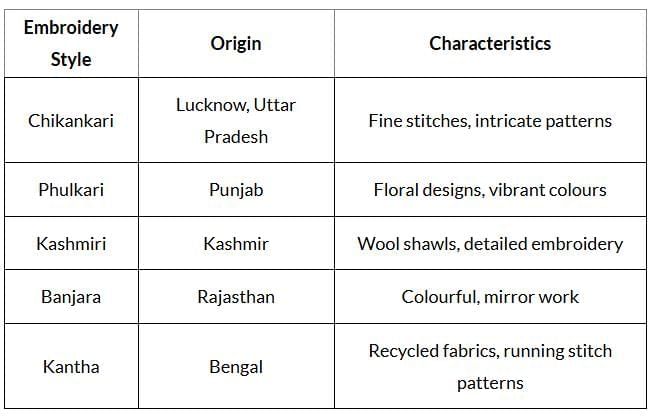
Q3: Describe traditional Indian embroideries and their regions.
Ans: Traditional Indian Embroideries:

  • Chikankari from Lucknow uses fine stitches, phulkari from Punjab floral designs, and Kashmiri for wool shawls.
  • Banjara from Rajasthan is colourful, and kantha from Bengal recycles fabrics.
  • Each employs locals, preserves heritage, and uses local materials.
  • They add value to handlooms, supporting economies and cultural identity.

Q4: How does recycling and reuse apply to clothes in India?
Ans: Recycling and reuse of clothes in India promote sustainability by reducing waste, conserving resources, and supporting traditional practices that align with environmental and cultural values.

  • Old clothes are passed to siblings or remade into quilts, reducing waste.
  • Sectors like handloom employ lakhs sustainably.
  • Kala cotton from Gujarat is chemical-free.
  • Traditions encourage mending with stitches, like running.
  • This promotes eco-friendliness, dignity of labour, and cultural continuity in resource use.

Q5: What is the significance of handloom in the Indian economy and culture?
Ans: Handloom holds immense significance in India’s economy and culture, serving as a source of livelihood, preserving heritage, and promoting sustainable craftsmanship.

  • Handloom employs over 45 lakh people, especially women, as a cottage industry.
  • It produces unique items like six-month woven patola sarees.
  • Regional styles like bandhani preserve arts.
  • It supports self-sufficiency, as Gandhi promoted khadi.
  • Economically, it boosts rural incomes; culturally, it ties to festivals and identities, fostering pride and sustainability.

07 Energy — How Things Work – Short and Long Answer Questions

Short Answer Questions

Q1: What is energy and its everyday uses?
Ans: Energy makes things move, light up, or heat. It’s used in cooking, vehicles, and lights, coming from sources like food or the sun.

Q2: How does food provide energy?
Ans: Food fuels living things for movement and growth. Skipping meals causes tiredness, while eating restores activity.

Q3: Explain solar energy with an example.
Ans: Solar energy from sunlight powers panels for electricity. It dries clothes or warms water naturally, being clean and renewable.

Q4: What are fuels and their types?
Ans: Fuels like petrol for vehicles or gas for cooking provide energy. They burn to release heat, but can pollute if overused.

Q5: How is wind energy generated?
Ans: Wind spins windmills to produce electricity. It’s clean, used historically in sails for ships across seas.

Q6: What is Vaastu Shastra?
Ans: An ancient Indian system of designing buildings with nature for natural light and wind, reducing energy needs.

Q7: Why are LED bulbs energy-efficient?
Ans: LEDs use less electricity for the same light as older bulbs. They save resources and reduce bills.

Q8: How do batteries store energy?
Ans: Batteries hold chemical energy for devices like torches. They provide portable power without constant electricity.

Q9: What is kinetic energy?
Ans: It’s energy from movement, like running water turning mills or wind spinning turbines for grinding grains.

Q10: How do animals provide heat energy in Ladakh?
Ans: Cattle kept on ground floors warm homes above with body heat, a natural way to stay cosy in cold winters.

Long Answer Questions

Q1: Describe different sources of energy and their importance.
Ans: Energy is essential for human civilisation, powering homes, industries, transportation, and technology.

  • Sources include sun (solar for panels), wind (for mills), water (for hydropower), food (for living beings), and fuels (for vehicles).
  • They enable movement, light, and heat essential for life.
  • Clean sources like solar reduce pollution, while fuels like gas aid cooking.
  • Understanding storage in batteries promotes efficiency.
  • Wise use ensures sustainability for future needs.

Q2: Explain the benefits of clean energy sources like solar and wind.
Ans: Clean energy sources like solar and wind offer numerous benefits, contributing to environmental, economic, and social advancements. Below is a concise explanation of their key advantages, written in clear and accessible language:

  • Solar panels generate electricity from sunlight without smoke, powering homes cleanly.
  • Windmills use air movement for power, reducing fossil fuel dependence.
  • Both are renewable, cutting pollution and costs.
  • In India, they support rural areas and ancient practices like Vaastu for natural harmony.
  • Adopting them combats climate change and promotes eco-friendly living.

Q3: Discuss safety rules for using electricity.
Ans: Following safety rules for using electricity is essential to prevent accidents and ensure a secure environment.

  • Avoid touching plugged wires or sockets, report broken poles, and never play near transformers.
  • Efficiency, like using LEDs, saves energy.
  • Dangers include shocks or fires, so unplug during storms.
  • Education on these prevents accidents, ensuring safe use in homes and schools.
  • Following the rules protects lives and conserves resources.

Q4: How does energy from nature work in daily life, with examples?
Ans: Energy from nature, such as solar, wind, and hydropower, powers daily life by providing sustainable electricity and supporting essential activities.

  • Sun provides heat for drying and solar power, wind for pinwheels or mills, and water for wheels grinding grains.
  • In Ladakh, animal heat warms houses.
  • These natural sources are clean and ancient, like ships using the wind.
  • Activities show vibration for sound or focus for burning, teaching sustainable uses without harming the environment.

Q5: What is the role of stored energy, and how can we save it?
Ans: Stored energy plays a crucial role in powering daily life by providing a reliable supply when natural sources like sunlight or wind are unavailable, and saving it involves efficient use and conservation strategies.

  • Stored in batteries for torches or bodies from food for activity, it ensures availability without constant sources.
  • Saving involves turning off lights, using LEDs, and natural designs like Vaastu.
  • Efficiency reduces waste, like the brain using energy even at rest.
  • Small actions like unplugging devices conserve energy for the future, promoting responsible global energy use.

06 Some Unique Places – Short and Long Answer Questions

Short Answer Questions

Q1: What is Indira Point?
Ans: It’s India’s southernmost tip in the Andaman and Nicobar Islands. Surrounded by sea, it’s part of a chain with unique forests and wildlife.

Q2: Describe the living root bridges in Northeast India.
Ans: Made from tree roots grown across streams, they are natural and strong. Local people maintain them, showcasing harmony with nature.

Q3: What makes the Sundarbans unique?
Ans: It’s the world’s largest mangrove forest where the Ganga meets the sea. Mangroves grow in salty water, protecting against erosion and hosting tigers.

Q4: Name an animal unique to the Western Ghats.
Ans: The lion-tailed macaque, a monkey found only here. It lives in rich forests with diverse wildlife and medicinal plants.

Q5: What is the Silent Valley National Park known for?
Ans: A silent rainforest in Kerala, home to rare species. The ‘Save Silent Valley’ movement protected it from a dam, preserving its biodiversity.

Q6: How do the Andaman Islands support unique wildlife?
Ans: Isolated forests host birds like the Andaman hornbill. Roots support trees, and corals shelter marine life, making it a biodiversity hotspot.

Q7: What is Bhut Jolokia?
Ans: The hottest chilli from Northeast India, used in food and to deter elephants. It reflects the region’s spicy cuisine and agriculture.

Q8: Describe the Kailasanatha Temple.
Ans: Carved from a single rock in Maharashtra, it’s the world’s largest such structure. It showcases ancient Indian architecture and craftsmanship.

Q9: Why are mangroves important?
Ans: Their roots hold soil, prevent erosion, and grow in salty water. They protect coasts and support fish and birds.

Q10: What is Chandrayaan-3’s achievement?
Ans: It made India the first to land on the lunar south pole. This highlights India’s space exploration and scientific progress.

Long Answer Questions

Q1: Explain the unique features of the Andaman and Nicobar Islands.
Ans: Unique features of the Andaman and Nicobar Islands:

  • These islands in the Bay of Bengal have unique trees with supporting roots and endemic birds like the Andaman hornbill.
  • Coral reefs shelter marine life, while tribes like the Sentinelese live traditionally.
  • Forests are biodiversity hotspots, but tsunamis pose risks.
  • Ecotourism and protection efforts preserve this isolated paradise, teaching nature’s wonders and human-nature harmony.

Q2: Discuss the importance of mangroves in the Sundarbans.
Ans:  Importance of mangroves in the Sundarbans:

  • Sundarbans’ mangroves thrive in salty mud, with breathing roots preventing erosion from waves.
  • They host tigers and birds, supporting local livelihoods like fishing.
  • People depend on forests for honey and wood, living harmoniously.
  • Conservation protects against climate change, as mangroves act as natural barriers, sustaining ecosystems and communities in this delta region.

Q3: Describe the biodiversity and cultural aspects of Northeast India.
Ans: Northeast India, also known as Seven Sisters, is culturally very rich.

  • The ‘Seven Sisters’ states feature root bridges, the hottest chillies like Bhut Jolokia, and festivals with dances.
  • Rich wildlife includes Hargila storks protected by locals.
  • Bamboo houses suit hilly terrain, and markets sell unique crafts.
  • This diversity fosters traditions like weaving, blending nature and culture, making it a vibrant, eco-conscious region.

Q4: What makes the Western Ghats a biodiversity hotspot?
Ans: The Western Ghats, a mountain range running parallel to India’s western coast, is considered one of the world’s eight “hottest hotspots” of biological diversity. This exceptional status is attributed to a combination of factors:

  • This mountain range spans six states, with rare animals like lion-tailed macaques and over 200 mango varieties.
  • Rivers originate here, supporting tribes using medicinal plants.
  • Forts like Kumbhalgarh and temples like Kailasanatha add historical value.
  • Protection through parks like Silent Valley conserves wildlife, emphasising sustainable living and community efforts in preserving India’s natural heritage.

Q5: How do unique places in India reflect human-nature connections?
Ans: India is home to many places that beautifully show the strong bond between people and nature. These sites reveal traditional ways of life, sacred beliefs, and sustainable practices that have respected the environment for generations.

  • Places like Andamans with corals, Sundarbans’ mangroves, and Northeast’s root bridges show adaptations to environments.
  • Tribes in Sentinel Island use nature signs for safety, while Western Ghats’ surveys protect fruits.
  • These highlight traditional knowledge, biodiversity, and conservation movements.
  • They teach respect for nature, inspiring protection of India’s diverse landscapes for future generations.

05 Our Vibrant Country – Short and Long Answer Questions

Short Answer Questions

Q1: What does Republic Day celebrate?
Ans: It marks the adoption of India’s Constitution on January 26, 1950. Parades, tableaux, and cultural events showcase unity and diversity.

Q2: Explain the colours and symbols on the Indian flag.
Ans: Saffron for courage, white for peace with the Ashoka Chakra for duty, and green for growth. It represents national pride and values.

Q3: What is the national emblem and its meaning?
Ans: It features three lions on a platform, symbolising strength and confidence. The Ashoka Chakra below represents dharma and unity.

Q4: Name India’s national animal, bird, and fruit.
Ans: The tiger is the national animal for strength, the peacock the bird for beauty, and the mango the fruit for prosperity and culture.

Q5: How does diversity strengthen India like a forest?
Ans: Like a forest with varied plants thriving together, India’s languages, foods, and traditions make it resilient and self-sufficient.

Q6: What are some traditional headgears in India?
Ans: Rajasthan’s pagri for honour, Himachal’s topi for warmth. They reflect regional identity, culture, and protection.

Q7: Describe some Indian musical instruments.
Ans: Drums like dhol from Punjab and mridangam from the south vary in sound. They accompany dances and festivals, showcasing diversity.

Q8: What is Vasudhaiva Kutumbakam?
Ans: It’s an ancient saying meaning ‘the world is one family’. It promotes unity, respect, and shared care for Earth.

Q9: How has India contributed to the world?
Ans: Inventions like zero, yoga, and ayurveda originated here. Modern feats include UPI and space missions, inspiring global progress.

Q10: Why is the Constitution important?
Ans: It’s the longest written one, providing rules for equality and justice. It unites diverse people under shared laws.

Long Answer Questions

Q1: Discuss the significance of national symbols in fostering unity.
Ans: National symbols, such as flags, anthems, emblems, and other icons, play a critical role in fostering unity within a diverse population by providing a shared identity and promoting patriotism.

  • Symbols like the flag (saffron for courage, green for growth) and emblem (lions for strength) instil pride and shared identity.
  • The tiger, peacock, and mango represent nature’s bounty.
  • They remind us of freedom struggles and values like peace.
  • During events like Republic Day, they unite diverse regions, promoting harmony and respect for India’s heritage.

Q2: How does India’s diversity in languages and culture contribute to its strength?
Ans: India’s vibrant tapestry of languages and cultures, rather than being a source of weakness, contributes significantly to the nation’s strength in several ways: 

  • Over 1,000 languages enrich stories and traditions, like Kashmiri embroidery or Punjabi dhol.
  • This variety fosters innovation and resilience, like a forest’s self-sufficiency.
  • Unity in diversity strengthens society, as seen in festivals and foods.
  • It encourages tolerance, making India vibrant and adaptable to changes while preserving its cultural roots.

Q3: Explain the role of music and dance in Indian culture with examples.
Ans: Music and dance are deeply woven into the fabric of Indian culture, serving not just as entertainment but also as profound expressions of spirituality, storytelling, social bonding, and the preservation of traditions. 

  • Music and dance celebrate life, from Punjab’s bhangra with dhol to the south’s Carnatic mridangam.
  • Instruments like sitar and tabla tell regional stories.
  • They unite people in festivals, preserving heritage.
  • Diversity in forms like Kathak or Bharatanatyam reflects geography and history, promoting creativity and community bonds across the nation.

Q4: Describe modern achievements of India and their global impact.
Ans: India has made significant strides in various fields in recent decades, contributing to both its domestic progress and global development. These achievements span areas like science and technology, economy, and healthcare, with far-reaching impacts. 

  • India leads in UPI for digital payments, inspiring worldwide adoption.
  • The Statue of Unity and Narendra Modi Stadium showcase engineering.
  • Aadhaar’s digital ID system aids governance.
  • These blend tradition with innovation, like yoga’s global popularity.
  • They position India as a leader in technology, sports, and culture, fostering international collaboration.

Q5: How does the spirit of togetherness manifest in India’s society?
Ans: The “spirit of togetherness” in India’s society, despite its immense diversity, manifests in several interconnected ways, often rooted in its ancient cultural values and traditions.

  • Despite diverse languages, religions, and traditions, Indians support each other, as in Vasudhaiva Kutumbakam.
  • Shared history, like the freedom struggle, unites.
  • Modern tools like fast trains and digital payments connect people.
  • Practices like Ayurveda and festivals promote well-being.
  • This harmony drives progress, making India a model of inclusive growth.

04 Our School — A Happy Place – Short and Long Answer Questions

Short Answer Questions

Q1: What is a green school?
Ans: A green school manages waste, saves water, uses electricity wisely, and plants trees. It creates a safe, happy environment for learning and nature.

Q2: How can students help in waste management?
Ans: Separate dry and wet waste into blue and green bins. Reduce litter, reuse items, and give recyclables to collectors to keep the school clean.

Q3: Why is water conservation important in schools?
Ans: It prevents wastage from leaks and ensures availability. Methods like fixing taps and rainwater harvesting recharge groundwater for future use.

Q4: What role do trees play in keeping schools cool?
Ans: Trees provide shade, reducing heat and making areas cooler. They also attract birds and clean air, improving the school environment.

Q5: Explain the importance of traffic safety near schools.
Ans: Following the rules prevents accidents during arrival and exit. Signboards and pedestrian crossings ensure safe movement for students and vehicles.

Q6: How can kindness improve the school environment?
Ans: Kind actions like sharing and respecting others create a welcoming space. It reduces bullying and makes everyone feel happy and included.

Q7: What is the Swachh Vidyalaya campaign?
Ans: It’s part of Swachh Bharat, focusing on clean schools with toilets, water, and hygiene education. It promotes health and a better learning space.

Q8: Why should schools have fire drills?
Ans: Drills teach safe evacuation during fires, like crawling under smoke and assembling at points. Preparation saves lives and reduces panic.

Q9: How do white roofs help in schools?
Ans: White roofs reflect sunlight, keeping buildings cooler and reducing electricity for fans. This saves energy and combats heat.

Q10: What is the Jal Shakti campaign?
Ans: It promotes water saving through tree planting and wise usage. Schools teach fixing leaks and rainwater collection for conservation.

Long Answer Questions

Q1: Describe ways to manage waste in schools effectively.
Ans: Separate wet (green bin) and dry (blue bin) waste, compost food scraps, and recycle paper or plastics. Involve teams like Waste Warriors to monitor litter.

  • Educate on reducing waste by reusing items.
  • Invite recyclers to explain processes, fostering the dignity of labour.
  • These steps keep schools clean, reduce pollution, and teach sustainability for a greener future.

Q2: Explain how schools can stay cool and energy-efficient.
Ans: Schools can be energy efficient and cool at the same time by doing the following:

  • Plant trees for shade, paint roofs white to reflect heat, and use natural light to save electricity.
  • Teams like Electricity Savers monitor usage.
  • In hot areas, avoid black surfaces that absorb heat.
  • These methods lower temperatures, reduce fan needs, and promote eco-friendly habits.
  • Combining with water conservation creates a comfortable, sustainable learning space.

Q3: Discuss traffic and fire safety measures for schools.
Ans: Discussion points:

  • For traffic, install signboards, crossings, and monitor gates to prevent speeding.
  • Educate on rules for safe arrivals.
  • Fire safety includes drills, extinguishers, and evacuation plans, like crawling under smoke.
  • Assembly points ensure accountability.
  • Regular practice builds confidence, while awareness prevents accidents, creating a secure environment for students and staff.

Q4: How can positive behaviour and kindness make schools happier?
Ans: The idea that positive behaviour and kindness contribute to a happier school environment is well-supported by research and educational practice.

  • Respectful actions like waiting turns and helping others reduce conflicts and foster inclusion.
  • Address issues like bullying through discussions.
  • Activities like a ‘happiness tree’ encourage kind deeds.
  • Extending to communities builds welcoming spaces.
  • This creates emotional safety, boosts learning, and teaches values for life beyond school.

Q5: What steps can students take to make their school greener and safer?
Ans: Students can play a crucial role in transforming their schools into greener and safer environments. Here’s how they can take initiative: 

  • Form teams for water checks, waste sorting, and planting.
  • Conserve by fixing leaks and using natural light.
  • Promote kindness to prevent discomfort.
  • Extend to homes by surveying improvements.
  • Surveys and role-plays raise awareness. Collective efforts ensure a healthy, happy school, inspiring broader community changes.

03 The Mystery of Food – Short and Long Answer Questions

Short Answer Questions

Q1: What are microbes, and how do they spoil food?
Ans: Microbes are tiny living things invisible without a microscope. They grow on food with moisture, air, and warmth, causing mould and bad smells, making food unsafe.

Q2: Why does some food spoil faster than others?
Ans: Foods with high moisture, like bread or uttapam, spoil quickly as microbes thrive. Dry or preserved foods like pickles last longer by removing moisture or air.

Q3: Explain the drying method of food preservation.
Ans: Drying removes moisture from foods like chillies or mangoes under the sun. Without water, microbes cannot grow, allowing storage for months or years.

Q4: How does oil help in preserving pickles?
Ans: Oil creates a barrier that keeps air out, preventing microbial growth. This is why pickles covered in oil, like mango pickle, stay fresh for long periods.

Q5: What role does refrigeration play in food preservation?
Ans: Refrigeration lowers temperature, slowing microbe activity. It keeps items like milk or vegetables fresh longer than at room temperature.

Q6: How do spices like pepper preserve food?
Ans: Spices like pepper have natural properties that inhibit microbes. They were used historically to keep food from spoiling during long journeys.

Q7: What are good microbes and their benefits?
Ans: Good microbes help in digestion, like those in curd for upset stomachs. They also ferment idli batter, making it fluffy and aiding nutrient absorption.

Q8: Why is chewing food important?
Ans: Chewing breaks food into smaller pieces and mixes it with saliva for better digestion. Different teeth (incisors, canines, molars) help in cutting, tearing, and grinding.

Q9: What causes cavities, and how can they be prevented?
Ans: Cavities are holes from bacteria feeding on food particles. Prevent by brushing regularly, rinsing after meals, and eating fewer sweets.

Q10: How do traditional practices preserve seasonal fruits?
Ans: Methods like making aam papad from mangoes or drying lychees extend shelf life. Waiting for seasons increases enjoyment and preserves nutrition.

Long Answer Questions

Q1: Describe various methods of food preservation with examples.
Ans: Preservation methods include 

  • Drying (chillies for powder), oiling (pickles to block air), refrigeration (milk to slow microbes), and heating (butter to ghee).
  • Salting or sugaring draws out moisture, while canning seals food airtight.
  • These prevent spoilage by removing water, air, or warmth needed for microbes.
  • Traditional spices like pepper add flavour and inhibit growth, ensuring food lasts longer.

Q2: Explain the role of microbes in food spoilage and digestion.
Ans: Harmful microbes cause spoilage by growing on moist food, forming mould and bad odours, leading to indigestion if eaten.

  • Good microbes in curd aid digestion and upset stomachs.
  • They ferment idli batter for fluffiness.
  • Balancing microbes through hygiene prevents illness, while beneficial ones support health.
  • Understanding this helps in safe food storage and consumption.

Q3: Discuss the importance of oral hygiene and the function of different teeth.
Ans: Oral hygiene prevents cavities from bacteria on unbrushed teeth.

  • Brushing, rinsing, and dental check-ups maintain health.
  • Incisors cut, canines tear, premolars crush, and molars grind food.
  • Proper chewing releases saliva for digestion, avoiding choking.
  • Neglecting hygiene leads to pain and tooth loss, while good habits ensure strong teeth for life.

Q4: How do home remedies and habits help with indigestion?
Ans: Indigestion from bad eating or spoiled food can be eased with curd’s good microbes aiding stomach flora.

  • Chewing slowly prevents choking and improves digestion.
  • Remedies like buttermilk restore balance.
  • Habits like eating seasonal fruits and avoiding gulping reduce issues.
  • Consulting doctors for severe cases ensures safety, promoting overall well-being through mindful eating.

Q5: What lessons can be learned from traditional food practices in families?
Ans: Traditions like drying spices or pickling teach preservation without waste, using natural methods.

  • Selecting fresh produce in markets ensures quality.
  • Seasonal eating, like enjoying lychees yearly, builds appreciation.
  • Sharing meals fosters family bonds.
  • These practices promote sustainability, health, and cultural heritage, encouraging mindful consumption and reducing reliance on processed foods.

02 Journey of a River – Short and Long Answer Questions

Short Answer Questions

Q1: Where does the Godavari River begin and end?
Ans: The Godavari starts at Trimbakeshwar in the Western Ghats of Maharashtra. It flows 1,465 km eastward, ending in the Bay of Bengal, forming a delta at Coringa Mangrove Forests.

Q2: What are tributaries, and how do they affect a river?
Ans: Tributaries are small streams that join a larger river, like Manjira and Indravati joining Godavari. They increase the river’s water volume, making it wider and stronger.

Q3: Why is Godavari called a perennial river?
Ans: Godavari flows year-round due to consistent water from rain and tributaries. Unlike seasonal rivers, it doesn’t dry up, supporting life and agriculture continuously.

Q4: How do dams on rivers like Godavari help people?
Ans: Dams store water for drinking, irrigation, and electricity. They prevent floods and provide water during dry seasons, but can displace people and animals.

Q5: What causes river pollution and its effects?
Ans: Waste, plastics, and factory chemicals pollute rivers, harming fish and making water unsafe. It affects health, ecosystems, and livelihoods dependent on clean water.

Q6: Explain the impact of floods on riverside communities.
Ans: Floods overflow banks, damaging homes, crops, and roads. They spread diseases and displace people, but trees and dams can reduce severity by slowing water.

Q7: How do people depend on rivers for livelihoods?
Ans: Rivers support fishing, farming, boating, and ecotourism. They provide water for crops like rice and occupations like ferry services or wildlife guiding.

Q8: What is a delta and where is Godavari’s delta?
Ans: A delta is where a river spreads into streams before meeting the sea. Godavari’s delta is at Coringa Mangrove Forests, rich in wildlife.

Q9: Why do rivers sometimes run dry?
Ans: Low rainfall, overuse, or pollution can dry rivers, causing water shortages. This affects drinking, farming, and forces migration for water access.

Q10: How can individuals help protect rivers?
Ans: Reduce waste, fix leaks, plant trees, and use eco-friendly products. Avoid littering and support clean-up programs like Namami Gange.

Long Answer Questions

Q1: Describe the journey of the Godavari River and its significance in Indian culture.
Ans: Godavari begins at Trimbakeshwar, flows through Maharashtra, Telangana, and Andhra Pradesh, and ends in the Bay of Bengal.

  • It receives tributaries like Indravati, supporting forests and wildlife.
  • Culturally, it’s called Dakshina Ganga, sacred for events like Godavari Pushkaram.
  • Stories from Ramayana link it to heritage.
  • It sustains livelihoods in farming and fishing, but faces pollution. Protecting it preserves cultural and ecological value.

Q2: Discuss the benefits and challenges of building dams on rivers.
Ans: Dams like Polavaram on Godavari store water for irrigation, drinking, and power, preventing droughts and floods.

  • They create reservoirs for fishing and tourism.
  • However, they flood lands, displacing communities and wildlife, altering ecosystems.
  • Solutions include rehabilitation and environmental planning.
  • Balancing benefits with impacts ensures sustainable development for people and nature.

Q3: Explain how pollution affects river ecosystems and suggest prevention methods.
Ans: Pollution from waste and chemicals kills fish, birds, and plants, making water unsafe and disrupting food chains.

  • Excess fertilisers cause algal blooms, choking life.
  • Prevention includes reducing plastic use, treating factory waste, and community clean-ups.
  • Programs like Namami Gange promote awareness.
  • Planting trees along banks filters pollutants, while eco-friendly soaps help. Collective efforts restore river health.

Q4: What are the causes and safety measures for river floods?
Ans: Heavy rain, deforestation, and dam failures cause floods, damaging homes, crops, and spreading diseases.

  • Safety includes preparing emergency kits, evacuating early, and avoiding floodwaters.
  • Post-flood, clean surfaces to prevent illness.
  • Planting trees slows water, and early warnings help.
  • Communities can build embankments and follow evacuation plans to minimise loss and ensure safety.

Q5: How do rivers support biodiversity and human life, with examples from Godavari?
Ans: Rivers like Godavari host tigers, deer, and mangroves, providing habitats and food chains.

  • They support human life through water for farming rice, fishing hilsa, and transport.
  • Deltas like Coringa foster unique wildlife.
  • Challenges like drying or pollution threaten this.
  • Conservation via reduced waste and programs ensures rivers sustain biodiversity and livelihoods for generations.

01 Water — The Essence of Life – Short and Long Answer Questions

Short Answer Questions

Q1: What are the different forms of water mentioned in the chapter?
Ans: Water exists in three forms: liquid (like rain or river water), solid (like ice or snow), and vapour (like steam or clouds). These forms change based on temperature, such as ice melting into liquid or water evaporating into vapour.

Q2: Why is freshwater important for living beings?
Ans: Freshwater is essential for drinking, growing crops, and daily activities. It supports life for people, animals, birds, and plants, as most of Earth’s water is salty and unfit for these purposes.

Q3: Explain the water cycle briefly.
Ans: The water cycle is the constant movement of water where heat turns liquid water into vapour, forming clouds. When cooled, it falls as rain or snow, returning to rivers, lakes, and oceans.

Q4: What is groundwater, and how is it accessed?
Ans: Groundwater is water stored deep underground after rain seeps through soil and rocks. It is accessed by digging wells, borewells, tube wells, or handpumps for human use.

Q5: How does the shape of the land affect river flow?
Ans: Rivers flow from higher to lower ground, following the land’s slopes and curves. They may spread out or collect in areas, forming lakes or valleys, as shown in activities like the mustard seed experiment.

Q6: Name some animals adapted to live in freshwater.
Ans: Animals like the fishing cat with webbed paws, the water scorpion with a breathing tube, and the pond heron with long legs are adapted to freshwater. They have features for swimming, breathing, or catching prey.

Q7: What are the types of plants found in water bodies?
Ans: Water plants include edge plants like reeds, rooted floating plants like lotus, and free-floating plants like water hyacinth. These adaptations help them survive in aquatic environments.

Q8: Why do some areas have less groundwater recharge?
Ans: In cities with cemented surfaces, rainwater cannot seep into the soil easily, reducing recharge. Open areas, trees, and soak pits help water return underground.

Q9: Describe an activity showing water forms.
Ans: Place ice in a steel glass; droplets form on the outside from air moisture condensing. This shows solid ice melting to liquid and vapour turning back to liquid.

Q10: How do aquatic plants like lotus stay healthy?
Ans: Aquatic plants have waxy coatings on leaves to make them waterproof, preventing excess water entry. This protects them from damage in wet environments.

Long Answer Questions

Q1: Explain the importance of the water cycle and how it sustains life on Earth.
Ans: The water cycle is crucial as it recycles water continuously through evaporation, condensation, and precipitation.

  • Heat from the sun turns water into vapour, forming clouds that release rain or snow, replenishing rivers and lakes.
  • This process provides freshwater for drinking, agriculture, and ecosystems.
  • Without it, water sources would dry up, affecting plants, animals, and humans.
  • It also helps in weather patterns and prevents droughts or floods.

Q2: Discuss the challenges of freshwater availability and ways to conserve it.
Ans: Most Earth water is salty, leaving limited freshwater for all life.

  • Overuse, pollution, and cemented cities reduce groundwater recharge, leading to shortages.
  • Conservation methods include rainwater harvesting, fixing leaks, and planting trees to allow soil absorption.
  • Using soak pits and avoiding waste helps recharge groundwater.
  • Communities can build small dams or ponds to store rainwater, ensuring sustainable use for future generations.

Q3: Describe adaptations of animals and plants in freshwater habitats.
Ans: In freshwater, animals like fishing cats have webbed paws for swimming, while pond herons use long legs to catch fish.

  • Insects like water scorpions breathe via tail tubes.
  • Plants adapt with floating leaves (lotus) or waxy coatings to stay waterproof.
  • Rooted plants anchor in pond beds, and free-floating ones like hyacinth spread on surfaces.
  • These features help them thrive in water, maintaining balance in ecosystems.

Q4: How does water shape the land and influence river paths in India?
Ans: Water flows from mountains to seas, carving valleys and forming deltas.

  • Rivers like Godavari follow land slopes, eroding soil and creating features like waterfalls or dunes.
  • In India, rivers flow east to the Bay of Bengal or west to the Arabian Sea, guided by mountains like the Western Ghats.
  • This shapes landscapes, supports agriculture, and creates habitats, but can cause floods if not managed.

Q5: What role do human activities play in affecting water bodies, and how can we protect them?
Ans: Human actions like pollution, deforestation, and concretisation reduce water quality and recharge, harming aquatic life.

  • For example, cemented areas prevent rainwater absorption, causing shortages.
  • Protection involves planting trees, creating soak pits, and avoiding waste dumping.
  • Community efforts like building johads in Rajasthan recharge groundwater.
  • Educating on conservation ensures clean water for ecosystems and future use.