Worksheet Solutions: Coconut Farm

Multiple Choice Questions

Q1: What is the number to be divided called?

(a) Divisor
(b) Quotient
(c) Dividend
(d) Remainder

Ans: (c) Dividend

Multiple Choice QuestionsThe number to be divided in a division operation is called the Dividend. For example, in 114 ÷ 8, the number 114 is the dividend.

Q2: What is the result of the division called?

(a) Dividend
(b) Divisor
(c) Quotient
(d) Remainder

Ans: (c) Quotient Multiple Choice QuestionsThe result of a division operation is called the Quotient. For example, in 114 ÷ 8, the number 14 is the quotient.

Q3: Which of the following statements is true about dividing a number by itself?

(a) The result is the number itself.
(b) The result is always 1.
(c) The result is zero.
(d)The result is the dividend.

Ans: (b) The result is always 1
When a number is divided by itself (except zero), the result is always 1. For instance, 8÷8 = 1.

Q4: What happens when you divide zero by a non-zero number?

(a) The result is 1.
(b) The result is 0.
(c) The result is undefined.
(d) The result is the divisor.

Ans: (b) The result is 0.
When zero is divided by any non-zero number, the result is always 0. For example, 0÷5 = 0.

Q5: What is the remainder when 10 is divided by 3?

(a) 1
(b)  2
(c) 3
(d) 0

Ans: (a) 1
When 10 is divided by 3, the division gives a quotient of 3 and a remainder of 1. This is because 10 = (3×3) + 1.

Fill in the Blanks

Q1: The number left after division is called __________.

Ans: “Remainder”

Q2: When dividing a number by 1, the quotient is __________.

Ans: “The number itself”

Q3: The formula to verify division is __________.

Ans: “Divisor × Quotient + Remainder = Dividend”

Q4: The quotient of any number divided by itself is __________.

Ans: “1”

Q5: If you divide zero by a number, the result is __________.

Ans: “0”

True or False

Q1: Division by zero is defined. 

Ans: “False”
Division by zero is not defined because no number can be divided by zero in mathematics. It leads to an undefined result. Hence, the statement is False.

Q2: The remainder can be equal to the divisor. 

Ans: “False”
The remainder in a division operation is always less than the divisor. For example, in 10÷3, the remainder is 1, which is less than 3. Hence, the statement is False.

Q3: Division of a number by 1 always results in the number itself. 

Ans: “True”

Q4: The quotient of any number divided by itself is always greater than one. 

Ans: “False”
When a number is divided by itself (except zero), the quotient is always 1. For instance, 5÷5=1, which is not greater than one. Hence, the statement is False.

Q5: To divide by 10, you remove the last digit. __________

Ans: “True”

Answer the following questions

Q1: I want to distribute Rs 3,600 among 8 persons. How many rupees will each person get?
Ans:
Total Rs. = 3600
To be distributed among = 8 persons
3600 ÷ 8 = 450Answer the following questions450 Rs. per person

Q2: In a division, divisor = 100, quotient = 25 and remainder = 75, find the dividend.
Ans:
Divisor = 100, Quotient = 25 and Remainder = 75
Dividend = Quotient x Divisor + Remainder.
Dividend = 25 x 100 + 75 = 2575

Q3: In a division, remainder is always ______ than the divisor.
Ans: The remainder is always less than the divisor. If the remainder is greater than the divisor, it means that the division is incomplete. It can be greater than or lesser than the quotient.

Q4: 6308 ÷ 100 gives quotient = ______ and remainder = ______.
Ans: 6308 ÷ 100 gives quotient = 63 and remainder = 8.Answer the following questions
Q5: Manish has Rs 84. The cost of one pencil box is Rs 14. How many pencil boxes can Manish buy for Rs 84?
Ans:

  • Total money = RS 84
  • Cost of 1 pencil box = RS 14
  • Then cost of x pencil boxes is = 84 ÷ 14 = 6Answer the following questions
  • So, x = 6
Answer the following questions

Worksheet: Coconut Farm

Multiple Choice Questions

Q1: What is the number to be divided called?

(a) Divisor
(b) 
Quotient
(c) 
Dividend
(d) 
Remainder

Q2: What is the result of the division called?

(a) Dividend
(b) 
Divisor
(c) 
Quotient
(d) 
Remainder

Q3: Which of the following statements is true about dividing a number by itself?

(a) The result is the number itself.
(b) 
The result is always 1.
(c) 
The result is zero.
(d) 
The result is the dividend.

Q4: What happens when you divide zero by a non-zero number?

(a) The result is 1.
(b) 
The result is 0.
(c) 
The result is undefined.
(d) 
The result is the divisor.

Q5: What is the remainder when 10 is divided by 3?

(a) 1
(b) 
2
(c) 
3
(d) 
0

Fill in the Blanks

Q1: The number left after division is called __________.

Q2: When dividing a number by 1, the quotient is __________.

Q3: The formula to verify division is __________.

Q4: The quotient of any number divided by itself is __________.

Q5: If you divide zero by a number, the result is __________.

True or False

Q1: Division by zero is defined.

Q2: The remainder can be equal to the divisor.

Q3: Division of a number by 1 always results in the number itself.

Q4: The quotient of any number divided by itself is always greater than one.

Q5: To divide by 10, you remove the last digit.

Answer the following questions

Q1: I want to distribute Rs 3,600 among 8 persons. How many rupees will each person get?

Q2: In a division, divisor = 100, quotient = 25 and remainder = 75, find the dividend.

Q3: In a division, remainder is always ______ than the divisor.

Q4: 6308 ÷ 100 gives quotient = ______ and remainder = ______.

Q5: Manish has Rs 84. The cost of one pencil box is Rs 14. How many pencil boxes can Manish buy for Rs 84?

Answer the following questions

Worksheet Solutions: Weight and Capacity

Multiple Choice Questions

Q1: What is weight?
(a) The measure of space an object occupies
(b) The force with which Earth attracts an object
(c) The amount of liquid in a container
(d) The measure of distance between two points
Ans: (b)

Weight is the force with which the Earth attracts an object. It is usually measured in kilograms or grams.

Q2: Which unit is used to measure capacity?
(a) Gram
(b) Litre
(c) Kilogram
(d) Meter
Ans: (b)

Capacity is measured in litres. It indicates the volume of liquid a container can hold.

Q3: How many grams are there in 1 kilogram?
(a) 10
(b) 100
(c) 1000
(d) 1
Ans: (c)

There are 1000 grams in 1 kilogram.

Q4: Which unit is used to measure very small weights?
(a) Milligram
(b) Gram
(c) Kilogram
(d) Litre
Ans: (a)

Very small weights are measured in milligrams (mg).

Q5: How is liquid measured using a measuring jug?
(a) By its colour
(b) By pouring and comparing
(c) By reading the scale marked on the jug
(d) By weighing the liquid
Ans: (c)

A measuring jug has a scale marked in litres or millilitres to measure the quantity of liquid.

Short Questions

Q1: Name two units used to measure weight.
Ans: Kilogram and gram.

Q2: How many millilitres are there in 1 litre?
Ans: There are 1000 millilitres in 1 litre.

Q3: Name three units used to measure capacity.
Ans: Litre, millilitre, and kilolitre.

Q4: What is the standard SI unit of weight?
Ans: Kilogram (kg).

Fill in the Blanks

Q1: The SI unit of weight is _______________.
Ans: kilogram (kg)

Q2: Capacity is the measure of _______________ a container can hold.
Ans: liquid/volume

Q3: 1 kilogram is equal to _______________ grams.
Ans: 1000

Q4: 1 litre is equal to _______________ millilitres.
Ans: 1000

Q5: Very small weights are measured in _______________.
Ans: milligrams (mg)

Match the Column

A. 1 kilogram → (i) 1000 millilitres
B. 1 litre → (ii) 1000 grams
C. 1 gram → (iii) 1000 milligrams
D. 1 millilitre → (iv) 1 cubic centimetre

Ans:
A – (ii)
B – (i)
C – (iii)
D – (iv)

True or False

Q1: The SI unit of weight is kilogram. 
Ans: True

Q2: 1 litre is equal to 1000 grams. 
Ans: False

Q3: Capacity is measured in litres and millilitres.
Ans: True

Q4: 1 millilitre of water is equal to 1 cubic centimetre of water. 
Ans: True

Q5: Weight is measured in litres. 
Ans: False

Worksheet: Weight and Capacity

A. Multiple Choice Questions

Q1: What is weight?
(a) The measure of space an object occupies
(b) The force with which Earth attracts an object
(c) The amount of liquid in a container
(d) The measure of distance between two points

Q2: Which unit is used to measure capacity?
(a) Gram
(b) Litre
(c) Kilogram
(d) Meter

Q3: How many grams are there in 1 kilogram?
(a) 10
(b) 100
(c) 1000
(d) 1

Q4: Which unit is used to measure very small weights?
(a) Milligram
(b) Gram
(c) Kilogram
(d) Litre

Q5: How is liquid measured using a measuring jug?
(a) By its colour
(b) By pouring and comparing
(c) By reading the scale marked on the jug
(d) By weighing the liquid

B. Short Questions

Q1: Name two units used to measure weight.

Q2: How many millilitres are there in 1 litre?

Q3: Name three units used to measure capacity.

Q4: What is the standard SI unit of weight?

C. Fill in the Blanks

Q1: The SI unit of weight is _______________.

Q2: Capacity is the measure of _______________ a container can hold.

Q3: 1 kilogram is equal to _______________ grams.

Q4: 1 litre is equal to _______________ millilitres.

Q5: Very small weights are measured in _______________.

D. Match the Column

A. 1 kilogram → (i) 1000 millilitres
B. 1 litre → (ii) 1000 grams
C. 1 gram → (iii) 1000 milligrams
D. 1 millilitre → (iv) 1 cubic centimetre

E. True or False

Q1: The SI unit of weight is kilogram. 

Q2: 1 litre is equal to 1000 grams. 

Q3: Capacity is measured in litres and millilitres.

Q4: 1 millilitre of water is equal to 1 cubic centimetre of water. 

Q5: Weight is measured in litres. 

Worksheet Solutions: Shapes and Patterns

Multiple Choice Questions (MCQs)

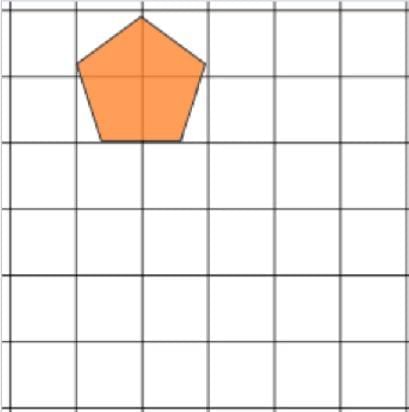
Q1. Regular pentagons do not tessellate because:
a) Their sides are unequal
b) They leave gaps when fitted
c) They are not polygons
d) They have unequal angles
Answer: b) They leave gaps when fitted

Q2. Which of these shapes tessellates without leaving gaps?
a) Pentagon
b) Hexagon
c) Octagon
d) Circle
Answer: b) Hexagon

Q3. A rectangle is a special type of:
a) Square
b) Parallelogram
c) Rhombus
d) Trapezium
Answer: b) Parallelogram

Q4. In a kite, which sides are equal?
a) Opposite sides
b) Adjacent sides
c) Diagonal sides
d) No sides
Answer: b) Adjacent sides

Q5. Which triangle has all three sides equal?
a) Isosceles triangle
b) Equilateral triangle
c) Scalene triangle
d) Right triangle
Answer: b) Equilateral triangle

Q6. A dodecahedron has faces in the shape of:
a) Triangles
b) Squares
c) Pentagons
d) Hexagons
Answer: c) Pentagons

Fill in the blanks 

Q1. A shape with all sides equal and all angles equal is called a __________.
Answer: Square

Q2. A triangle with no equal sides is called a __________ triangle.
Answer: Scalene

Q3. Regular __________ tessellate because they can fit exactly around a point without gaps.
Answer: Triangles (equilateral triangles)

Q4. A quadrilateral whose opposite sides are equal is called a __________.
Answer: Parallelogram

Q5. A shape with six equal sides is called a __________.
Answer: Hexagon

Q6. A cube has __________ faces, __________ edges, and __________ vertices.
Answer: 6 faces, 12 edges, 8 vertices

Q7. In an isosceles triangle, __________ sides and __________ angles are equal.
Answer: two sides, two angles

Q8. A tangram is made up of __________ pieces.
Answer: seven

Solve the Following Questions

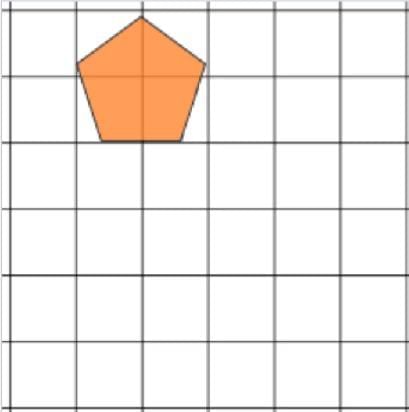
Q1:  Draw and color the next shape to complete the pattern 
(i) 
Ans:

(ii) 
Ans:

Q2: Make a pattern using following blocks:
(i)

Ans:

(ii)
Ans:

Q3: Draw the next figures that follow the patterns:
(i)
Ans:

(ii)
Ans:

Q4: Complete the pattern:

(a)

(b)

(c)

(d)

Ans: 
(a)

Worksheet: Shapes and Patterns

Multiple Choice Questions (MCQs)

Q1. Regular pentagons do not tessellate because:
a) Their sides are unequal
b) They leave gaps when fitted
c) They are not polygons
d) They have unequal angles

Q2. Which of these shapes tessellates without leaving gaps?
a) Pentagon
b) Hexagon
c) Octagon
d) Circle

Q3. A rectangle is a special type of:
a) Square
b) Parallelogram
c) Rhombus
d) Trapezium

Q4. In a kite, which sides are equal?
a) Opposite sides
b) Adjacent sides
c) Diagonal sides
d) No sides

Q5. Which triangle has all three sides equal?
a) Isosceles triangle
b) Equilateral triangle
c) Scalene triangle
d) Right triangle

Q6. A dodecahedron has faces in the shape of:
a) Triangles
b) Squares
c) Pentagons
d) Hexagons

Fill in the blanks 

Q1. A shape with all sides equal and all angles equal is called a __________.

Q2. A triangle with no equal sides is called a __________ triangle.

Q3. Regular __________ tessellate because they can fit exactly around a point without gaps.

Q4. A quadrilateral whose opposite sides are equal is called a __________.

Q5. A shape with six equal sides is called a __________.

Q6. A cube has __________ faces, __________ edges, and __________ vertices.

Q7. In an isosceles triangle, __________ sides and __________ angles are equal.

Q8. A tangram is made up of __________ pieces.

Solve the Following Questions

Q1:  Draw and color the next shape to complete the pattern 
(i) 

(ii) 
Solve the Following Questions

Q2: Make a pattern using following blocks:
(i)

Solve the Following Questions

(ii)

Q3: Draw the next figures that follow the patterns:
(i)

(ii)

Q4: Complete the pattern:
(a)
(b)
(c)
(d)

Worksheet Solutions: The Dairy Farm – 2

Q1. What is 36 × 7?
(a) 242
(b) 252
(c) 246
(d) 232

Ans: (b) 252

Q2. If one pen costs ₹28, what will be the cost of 15 pens?
(a) ₹320
(b) ₹420
(c) ₹390
(d) ₹280

Ans: (b) ₹420

Q3. 125 × 20 = ?
(a) 2000
(b) 2250
(c) 2500
(d) 3000

Ans: (c) 2500

Q4. A box has 48 chocolates. How many chocolates are there in 25 boxes?
(a) 1000
(b) 1200
(c) 1100
(d) 1250

Ans: (b) 1200

Q5. 1001 × 9 = ?
(a) 9009
(b) 9090
(c) 9910
(d) 9100

Ans: (a) 9009

Q6. If a student reads 45 pages every day, how many pages will he read in 31 days?
(a) 1395
(b) 1385
(c) 1405
(d) 1415

Ans: (a) 1395

Q7. Multiplying by 10, 100, 1000

a) 5 × 10 = _____
b) 30 × 20 = _____
c) 10 × 600 = _____
d) 40 × 10 = _____
e) 25 × 1000 = _____

Sol: Quick trick:

  • Multiplying by 10 → add one zero.
  • Multiplying by 100 → add two zeros.
  • Multiplying by 1000 → add three zeros.

a) 5 × 10 = 50
b) 30 × 20 = 600
c) 10 × 600 = 6000
d) 40 × 10 = 400
e) 25 × 1000 = 25000

Q8. Find the products using the nearest multiple of 10:

1) 7 × 52
Sol: Take 52 = 50 + 2
7 × 52 = 7 × (50 + 2)
= (7 × 50) + (7 × 2)
= 350 + 14 = 364

2) 12 × 28
Sol: Take 28 = 30 – 2
12 × 28 = 12 × (30 – 2)
= (12 × 30) – (12 × 2)
= 360 – 24 = 336

3) 75 × 31
Sol: Take 31 = 30 + 1
75 × 31 = 75 × (30 + 1)
= (75 × 30) + (75 × 1)
= 2250 + 75 = 2325

Q9. Multiply the following 

(a) 347 by 3

Sol: 

(b) 411 by 31

Sol: 

(c) 573 by 46

Sol: 

(d) 123 by 456.

​Sol: 

Q10. Observe and Complete the Pattern:

(a) 2 × 5 = 10
20 × 5 = 100
200 × 5 = ?
2000 × 5 = ?

Sol:

2 × 5 = 10

20 × 5 = 100

200 × 5 = 1000

2000 × 5 = 10,000

Answer: 200 × 5 = 1000, 2000 × 5 = 10,000

​(b) 2 × 3 = 6
22 × 3 = 66
222 × 3 = 666
2222 × 3 = ?

Sol:

2 × 3 = 6
22 × 3 = 66
222 × 3 = 666
2222 × 3 = 6666

Answer: 2222 × 3 = 6666

​(c) 1 × 1 = 1
11 × 11 = 121
111 × 111 = 12321
1111 × 1111 = ?

Sol: 

1 × 1 = 1
11 × 11 = 121
111 × 111 = 12321
1111 × 1111 = 1234321

Answer: 1111 × 1111 = 1234321

​(d) 2 × 2 = 4
22 × 22 = 484
222 × 222 = 49284
2222 × 2222 = ?

Sol: 

2 × 2 = 4
22 × 22 = 484
222 × 222 = 49284
2222 × 2222 = 4937284

Answer: 2222 × 2222 = 4937284

Worksheet: The Dairy Farm – 2

Q1. What is 36 × 7?
(a) 242
(b) 252
(c) 246
(d) 232

Q2. If one pen costs ₹28, what will be the cost of 15 pens?
(a) ₹320
(b) ₹420
(c) ₹390
(d) ₹280

Q3. 125 × 20 = ?
(a) 2000
(b) 2250
(c) 2500
(d) 3000

Q4. A box has 48 chocolates. How many chocolates are there in 25 boxes?
(a) 1000
(b) 1200
(c) 1100
(d) 1250

Q5. 1001 × 9 = ?
(a) 9009
(b) 9090
(c) 9910
(d) 9100

Q6. If a student reads 45 pages every day, how many pages will he read in 31 days?
(a) 1395
(b) 1385
(c) 1405
(d) 1415

Q7. Multiplying by 10, 100, 1000

a) 5 × 10 = _____
b) 30 × 20 = _____
c) 10 × 600 = _____
d) 40 × 10 = _____
e) 25 × 1000 = _____

Q8. Find the products using the nearest multiple of 10:

1) 7 × 52

2) 12 × 28

3) 75 × 31

Q9. Multiply the following 

(a) 347 by 3

(b) 411 by 31

(c) 573 by 46

(d) 123 by 456.

Q10. Observe and Complete the Pattern:

(a) 2 × 5 = 10
20 × 5 = 100
200 × 5 = ?
2000 × 5 = ?

(b) 2 × 3 = 6
22 × 3 = 66
222 × 3 = 666
2222 × 3 = ?

(c) 1 × 1 = 1
11 × 11 = 121
111 × 111 = 12321
1111 × 1111 = ?

(d) 2 × 2 = 4
22 × 22 = 484
222 × 222 = 49284
2222 × 2222 = ?

Worksheet Solutions: The Dairy Farm – 1

Q1: Find the following products

(i) 38 x 9 
Ans: 38 x 9 = 342
(ii) 80 x 5
Ans: 80 x 5 = 400

(iii) 53 x 8
Ans: 53 x 8 = 424

Q2: Multiply

(i) 4,032 by 198
Ans: 
=  4,032 x 198 = 798336

(ii) 3,647 by 245
Ans: 
3,647 x  245 = 893515

(iii) 501 by 123
Ans:
= 501 x 123 = 61623

Q3: Fill in the blanks

(i) 2,586 x ______ = 2,586
Ans: 2,586 x = 2,586
(Identity Property: The product of any number with 1 is as same as the number itself.)

(ii) 624 x ______ = 38 x 624
Ans: 624 x 38 = 38 x 624
(Commutative property of multiplication is a math rule that says you can multiply numbers in any order, and the result will be the same.)

(iii) 600 x ______ = 0.
Ans: 600 x 0 = 0
(Zero property of multiplication is a fundamental rule in mathematics that states that any number multiplied by zero is equal to zero.)

Q4: Round off the following numbers to the nearest tens

(i) 13,528
Ans: Here’s the general rule for rounding:

  • Number >= 5: If the number you are rounding is followed by 5, 6, 7, 8, or 9, round the number up. Example: 38 rounded to the nearest ten is 40.
  • Number < 5: If the number you are rounding is followed by 0, 1, 2, 3, or 4, round the number down. Example: 33 rounded to the nearest ten is 30.

Therefore, applying these rules, we get:
13,528 = 13,530

(ii) 3,542
Ans: Here’s the general rule for rounding:

  • Number >= 5: If the number you are rounding is followed by 5, 6, 7, 8, or 9, round the number up. Example: 38 rounded to the nearest ten is 40.
  • Number < 5: If the number you are rounding is followed by 0, 1, 2, 3, or 4, round the number down. Example: 33 rounded to the nearest ten is 30.

Therefore, applying these rules, we get:
3,542 = 3,540

(iii) 174
Ans: Here’s the general rule for rounding:

  • Number >= 5: If the number you are rounding is followed by 5, 6, 7, 8, or 9, round the number up. Example: 38 rounded to the nearest ten is 40.
  • Number < 5: If the number you are rounding is followed by 0, 1, 2, 3, or 4, round the number down. Example: 33 rounded to the nearest ten is 30.

Therefore, applying these rules, we get:
174 = 170

Q5: Estimate Products by rounding each number to the nearest Tens

(Find an approximate answer for each multiplication problem by rounding both numbers to the nearest tens place first, then multiplying the rounded numbers.
(i) 52 x 43
Ans: Here’s the general rule for rounding:

  • Number >= 5: If the number you are rounding is followed by 5, 6, 7, 8, or 9, round the number up. Example: 38 rounded to the nearest ten is 40.
  • Number < 5: If the number you are rounding is followed by 0, 1, 2, 3, or 4, round the number down. Example: 33 rounded to the nearest ten is 30.

Therefore, applying these rules, we get:
52 x 43 = 50 x 40 = 2000

(ii) 63 x 52
Ans: Here’s the general rule for rounding:

  • Number >= 5: If the number you are rounding is followed by 5, 6, 7, 8, or 9, round the number up. Example: 38 rounded to the nearest ten is 40.
  • Number < 5: If the number you are rounding is followed by 0, 1, 2, 3, or 4, round the number down. Example: 33 rounded to the nearest ten is 30.

Therefore, applying these rules, we get:
63 x 52 = 60 x 50 = 3000

Q6: Answer the following Questions

(i) Calculate the product of the place values of the two 6s in the number 6,965.

Ans: The place value of 1st 6 in 6,965 is at thousand’s place.
=> First place value of 6 = 6000
The place value of 2nd 6 in 6,965 is at ten’s place.
=> Second place value of 6 = 6000
Product of the place values of 6 in the number 6,965 = 6000 x 60 = 360000

(ii) Find the product of the greatest 2-digit number and the smallest 4-digit number ______.
Ans: Greatest 2-digit no. = 99
Smallest 4-digit no. = 1000
Therefore, the product of the greatest 2-digit number and the smallest 4-digit number = 1000 x 99 = 99000.

(iii) A transistor costs Rs. 1,642. Find the cost of 95 such transistors. 

Ans: Cost of one Transistor = Rs 1,642
Total number of transistors = 95
Cost of 95 Transistors = 1642 x 95 = 155,990

(iv) A candle factory produced 814 candles in a day. How many candles will this factory produce in a year?

Ans: A candle factory produces candles in a day = 814
Total  number of days in a leap year = 365
Candles this factory will produce in one year = 814 x 365 = 2,97,110

(v) A farmer produced 735 quintals of rice. He sold it at the rate of Rs 1525 per quintal. How much money did he get?
Ans: A farmer produced rice = 735 quintals
Cost per quintal = Rs. 1525
Money he got = 1525 x 735 = Rs. 1,120,875

(vi) The cost of a pack of Ghee is Rs. 308 Find the cost of 97 such packs.
Ans: The cost of 1 pack of Ghee = Rs. 308
Total number of packs = 97
Therefore, Total Cost of 97 packs of Ghee = 308 x 97 = 29,876

Worksheet: The Dairy Farm – 1

Q1: Find the following products

(i) 38 x 9 ______.

(ii) 80 x 5 ______.

(iii) 53 x 8 ______.
Take the help of this example to solve the questions above:
Q1: Find the following products

Q2: Multiply

(i) 4,032 by 198

(ii) 3,647 by 245

(iii) 501 by 123

Take the help of this example to solve the questions above:

Q2: Multiply

Q3: Fill in the blanks

(i) 2,586 x ______ = 2,586

(ii) 624 x ______ = 38 x 624

(iii) 600 x ______ = 0.

Q4: Round off the following numbers to the nearest tens

(i) 13,528

(ii) 3,542

(iii) 174
You can solve the questions of rounding off with the help of these examples: Q4: Round off the following numbers to the nearest tens

Q5: Estimate Products by rounding each number to the nearest Tens

Instruction: Find an approximate answer for each multiplication problem by rounding both numbers to the nearest tens place first, then multiplying the rounded numbers.
(i) 52 x 43
(ii) 63 x 52

Q6: Answer the following Questions

(I) Calculate the product of the place values of the two 6s in the number 6,965.

(ii) Find the product of the greatest 2-digit number and the smallest 4-digit number ______.

(iii) A transistor costs Rs. 1,642. Find the cost of 95 such transistors.

(iv) A candle factory produced 814 candles in a day. How many candles will this factory produce in one year?

(v) A farmer produced 735 quintals of rice. He sold it at the rate of Rs. 1525 per quintal. How much money did he get?

(vi) The cost of a pack of Ghee is Rs. 308 Find the cost of 97 such packs.