Chapter Notes: Measurement

Measurement

Measurement helps us find out how longhow heavyhow big, or how much time something takes. It is useful in our daily life and in science. When we measure, we can compare things and talk about them correctly.

For example:

  • A ruler helps us measure length.
  • A weighing scale helps us measure weight.
  • A clock helps us measure time.
Measurement

Different Ways to Measure Things

  • Length: We use a ruler or a tape measure to find out how long something is. Different Ways to Measure Things
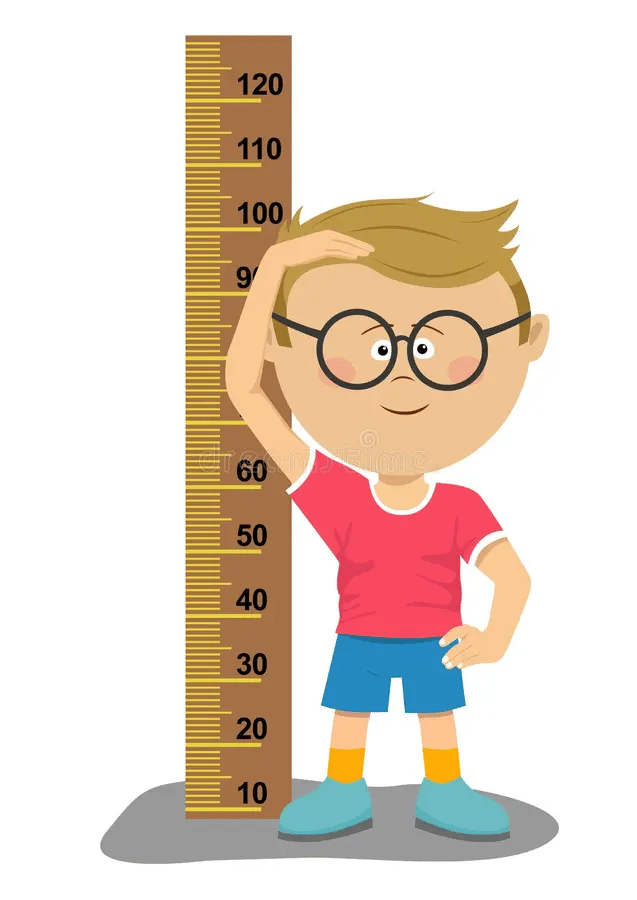
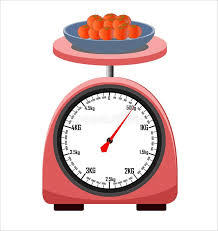
  • Weight: We use a scale to check how heavy something is.Different Ways to Measure Things
  • Volume: We use a measuring cup to see how much liquid something can hold. We measure volume in millilitres (ml) or litres (L).  Different Ways to Measure ThingsMeasuring helps us understand the size, weight, and amount of things around us.
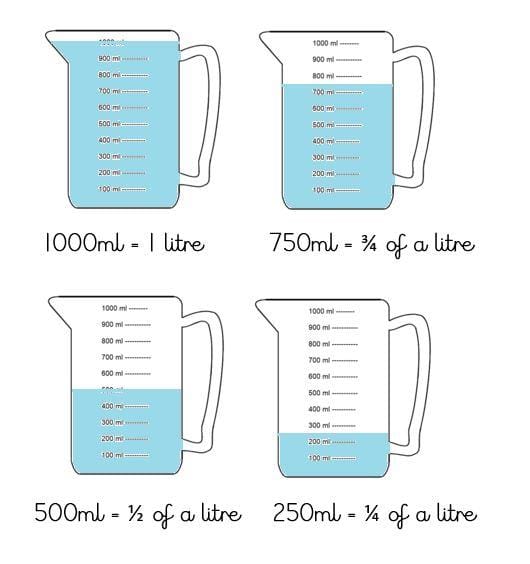
Need of Measurement

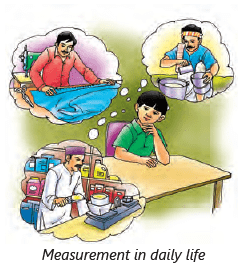
Measurement is an important part of our daily lives, helping us understand and compare various aspects of the world around us. Whether it’s the length of cloth for a dress or the weight of fruits and vegetables, measuring allows us to make sense of different things correctly.

Examples of Measurement in Daily Life

  • The length of cloth required for a dress
  • Height and weight to see how much you have grown
  • The weight of fruits and vegetables you buy
  • The amount of petrol put in a car
  • The time taken by you to reach schoolNeed of Measurement
Get additional INR 200 off today with EDUREV200 coupon.

Understanding Measurement Units

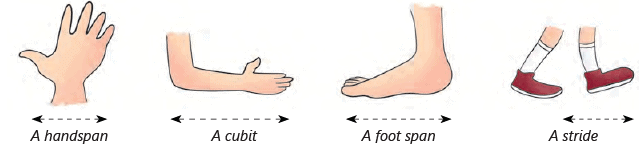
  • Imagine you ask your tailor to make pants that are 5 handspans long. When you try them on, they turn out to be too long. Can you figure out why?
  • Your handspan is different from that of an adult. If everyone uses their own handspan to measure, it can lead to confusion!
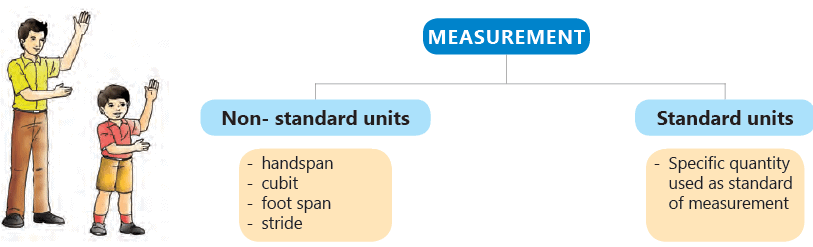
  • In the past, people used parts of their bodies like handspan, cubit, foot span, and stride length to measure length. These are called non-standard units of measurement.Understanding Measurement Units
  • For example, you might use a mug to measure how much water a bucket can hold, but mugs come in different sizes. So, a mug is also a non-standard unit for measuring liquids.
  • To avoid confusion, it is important for everyone to use the same measurement units. This way, measurements will be the same no matter who takes them. Such units are called standard units.Understanding Measurement Units

Units of Measurement

What is a Unit?

  • unit is a fixed quantity that is used as a standard for measuring various things.
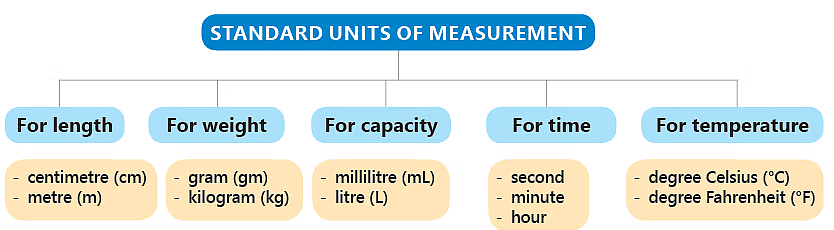
Units of MeasurementMeasuring Length

For small lengths, such as those of a pencil or an eraser, we use a standard unit called a centimetre (cm).

To measure the length of a line using a ruler:

  • Place the ruler along the line, ensuring one end is at the 0 cm mark.
  • Read the length where the other end of the line meets the ruler. 

Example: In the given image, the length of the line is measured to be 10 cm.

Units of Measurement

For longer distances, such as the length of a room or the height of a tree, we use a larger unit called a metre (m).

Tools for Measuring Length in Metres:

  • Metre Scale:. A metre scale is 1 m or 100 cm long and works similarly to a ruler, allowing for correct measurements in metres.
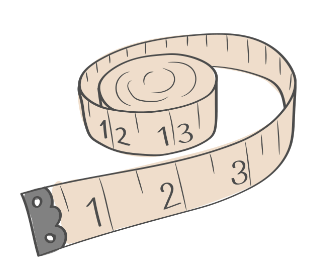
  • Measuring Tape:. A measuring tape can be bent and commonly used for measuring around objects, such as by tailors to measure around the chest. It is also effective for measuring lengths in metres.
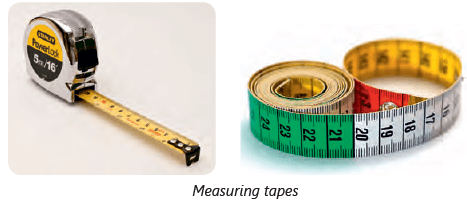
Units of Measurement
Also read: Worksheet: Measurement

Measuring Weight

  • Weight measurement tells how heavy an object is. The gram (g) and kilogram (kg) are the standard units for measuring weight.
  • Grams are used for lighter items, while kilograms are used for heavier objects, such as the weight of fruits or for measuring body weight.
  • Shopkeepers usually use balances or electronic weighing scales to measure the weight of products.
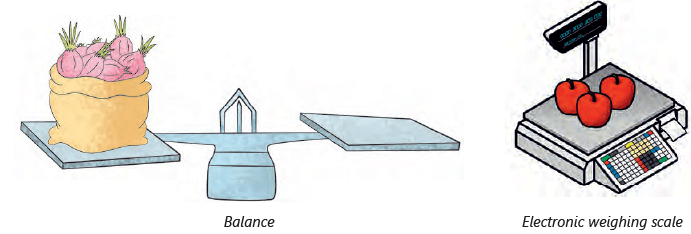
Measuring Weight

Measuring Capacity

  • Capacity refers to the amount of liquid a container can hold. For instance, a bucket can hold more liquid than a mug, so the bucket’s capacity is larger.
  • The standard unit for measuring capacity is the litre (L). Smaller quantities of liquid are measured in millilitres (mL).
  • One teaspoon is approximately 5 mL, while a glass can hold around 250 mL of liquid. A normal medium-sized mineral water bottle has a capacity of 1 litre.
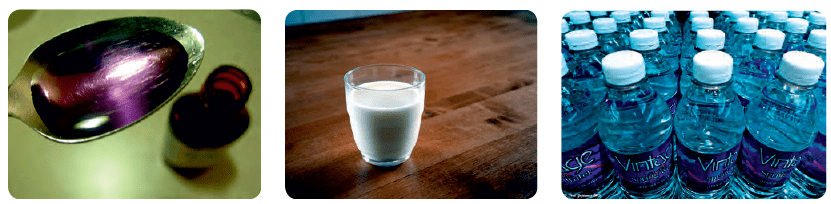
Measuring Capacity
  • We use tools like measuring cylindersbeakersspoons, and cups to measure capacity correctly.
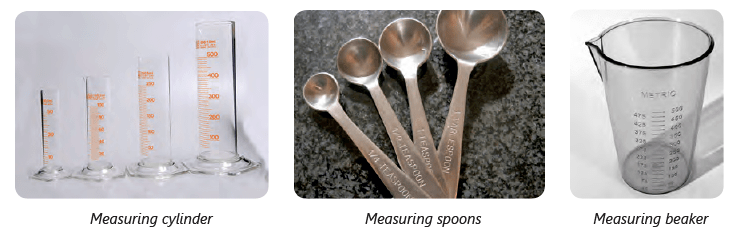
Measuring Capacity
Attention!Sale expiring soon, act now & get EduRev Infinity at 40% off!

Measuring Time

The period between two events is called time. In ancient times, people used sundials to measure time.
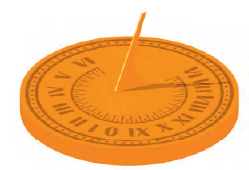
Measuring Time
  • Nowadays, we mainly use clocks to measure time, which is expressed in hours and minutes. An hour consists of 60 minutes, and a minute is made up of 60 seconds.
  • It is easier to read the time on a digital clock.
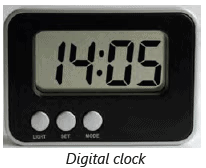
Measuring Time

Temperature Measurement  

Also read: Worksheet: Measurement

What is Temperature?

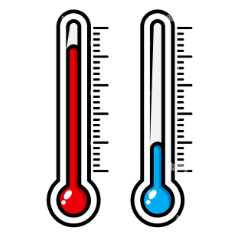
  • Temperature is a basic concept in science that tells us how hot or cold something is.
  • It is measured in degrees Celsius (°C) or degrees Fahrenheit (°F).
  • The normal body temperature is 37°C.
What is Temperature?

Measurement of Temperature?

  • Being able to measure temperature is really important in our everyday lives.
  • Temperature measurement is also helpful in various scientific fields.

Try yourself:

Which unit is commonly used to measure the weight of fruits or body weight?

  • A.Grams (g)
  • B.Kilograms (kg)
  • C.Litres (L)
  • D.Millilitres (mL)

Conclusion

Measurement helps us in many ways. It tells us how long, heavy, big, or hot something is. It also helps us know how much time something takes. Using the same units for measurement makes sure that everyone understands things the same way. Whether we are buying fruits, checking the time, or measuring our height, measurement helps us in daily life.
Chapter Notes: Soil

Introduction

One day, Meera and her little brother Rohan were playing in the garden. Meera was planting a small flower when Rohan asked, “Why do we put plants in the soil?” Meera smiled and said, “Because soil gives food and water to plants. Without soil, plants cannot grow!” Just then, their grandfather came and said, “Soil is not just for plants. It also gives homes to insects, worms, and even some small animals!” Rohan looked at the ground and saw an earthworm crawling. “Wow! Soil is so important!” he said excitedly. Let’s learn more about soil and why it is so useful!

What is Soil?

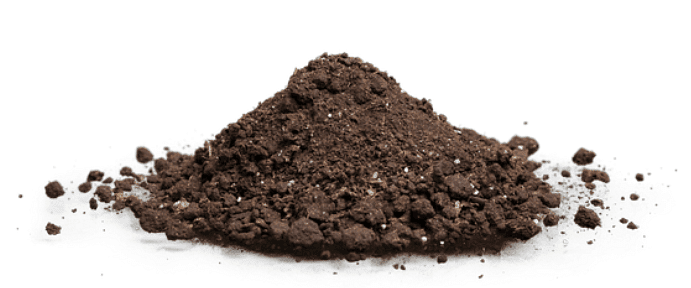
Soil is the thin layer of material covering the Earth’s surface where plants grow. It is made of tiny pieces of rocks, dead plants and animals, airwater, and small living things like insects and bacteria. Soil helps plants grow by giving them the nutrients they need.

Soil

Get additional INR 200 off today with EDUREV200 coupon.

Formation of Soil

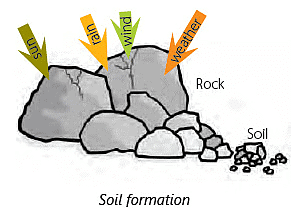
Soil takes a very long time to form. It does not happen in one day but over many, many years.

  • Weathering of Rocks: Soil formation starts when rocks are exposed to elements like sunlight, rain, and wind. These forces break down the rocks into smaller and smaller pieces over time.
  • Moving of Soil Particles: Wind and water carry these small rock pieces, called sediments, to different places. As they’re transported, they rub against each other, further breaking down into tiny particles.
  • Mixing with Dead Plants and Animals: Over time, these tiny particles mix with organic matter like fallen leaves and animal remains. This mixture, along with some water, forms what we call soil.
  • Continual Process: Soil formation is an ongoing process in nature, but it happens very slowly. It can take millions of years for just an inch of soil to form.

Try yourself:

What are the components of soil?

  • A.Organic matter, minerals, air, water, and living organisms
  • B.Rocks, sediments, sunlight, rain, and wind
  • C.Fallen leaves, animal remains, water, and rocks
  • D.Sunlight, air, water, and tiny living organisms
Also read: PPT: Soil

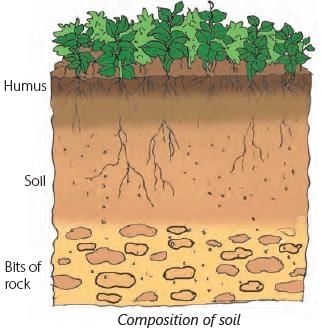
What Does Soil Contain?

Soil is made up of different things that help plants grow.

  • Small Rock Pieces – Big rocks break into tiny pieces over time and mix with the soil.
  • Humus – This comes from dead plants and animals. It makes the soil rich and helps plants grow. Dark soil has more humus.
  • Water – Water fills small spaces in the soil. Plants need this water to grow.
  • Air – Tiny air spaces in the soil help plant roots breathe.

All these things together make soil important for life!

Attention!Sale expiring soon, act now & get EduRev Infinity at 40% off!

Types of Soil

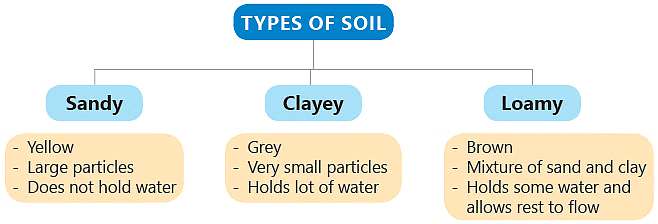
On the basis of the quantity of sand, clay, and humus present in the soil, we can divide soil into three main types:

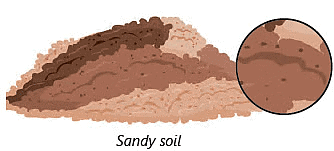
  • Sandy Soil: This soil has lots of sand. It is dry and does not hold water well. However, it allows water to drain quickly, which can be good for some plants. Sandy soil warms up quickly in the spring, making it suitable for early planting.
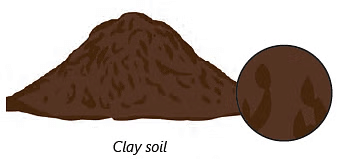
  • Clayey Soil: Clayey soil has a high proportion of clay particles. It’s sticky when wet and hard when dry. Clayey soil holds water well but drains slowly, which can lead to waterlogging. It’s nutrient-rich but can be difficult to work with, especially when wet, and may need amendments to improve drainage and aeration.
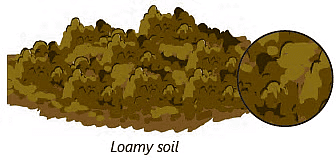
  • Loamy Soil: Loamy  soil is a mix of sand, clay, and humus(organic matter). It holds water but also drains extra water. It’s often considered the ideal soil for gardening because it has good drainage, holds moisture well, and is nutrient-rich. Loamy soil is easy to work with and provides an excellent environment for plant roots to grow.

Try yourself:

What is the main component that makes soil fertile and provides nutrients for plant growth?

  • A.Tiny bits of rock
  • B.Rotted plant and animal parts
  • C.Water trapped in pore spaces
  • D.Air trapped between soil particles
Also read: PPT: Soil

Importance of Soil

  • Helps Plants Grow: Soil holds plant roots, gives them nutrients, and stores water.
  • Keeps Water Clean: Healthy soil helps keep water fresh and safe.
  • Controls Climate: Soil stores and releases carbon, which affects the air and weather.
  • Home for Small Creatures: Earthworms, bacteria, and fungi live in the soil and help nature.
  • Supports Buildings and Roads: Soil gives a strong base for houses, roads, and other structures.
  • Used for Fun Activities: Soil is used for gardening, farming, and outdoor fun.

Overall, soil is essential for sustaining life, supporting ecosystems, and providing resources.

Soil and Crops

Soil is very important for growing crops. Farmers depend on soil to grow the food that we eat every day. Different types of soil are suitable for different crops:

  • Sandy Soil – This soil is light and drains water quickly. It is good for crops like groundnut, watermelon, and coconut, which do not need too much water.
  • Clayey Soil – This soil is heavy and can hold a lot of water. It is good for crops like rice and paddy, which need plenty of water to grow.
  • Loamy Soil – This is the best soil for farming because it has the right balance of sand, clay, and humus. It is good for crops like wheat, sugarcane, cotton, and vegetables.

Healthy soil helps crops grow strong by giving them water and nutrients. At the same time, crops also help the soil. When leaves, stems, and old plants fall to the ground, they mix with the soil and make it richer and more fertile.

That is why farmers always say, “Healthy soil means healthy crops.”

Chapter Notes: Safety And First Aid

Introduction

One day, Aman and his friends were playing in the park when suddenly, his friend Tina had an accident and hurt her knee. She started crying in pain. Without wasting any time, Aman rushed to get some first aid supplies. He carefully cleaned the wound on Tina’s knee and applied a bandage to help her feel better. Their teacher noticed Aman’s quick response and smiled, saying, “Good job, Aman!IntroductionYou provided first aid and made Tina feel better.” Tina, feeling relieved, thanked Aman, saying, “Thank you, Aman! I’m feeling much better now.” Aman’s heart swelled with happiness as he realized the importance of knowing first aid and how it can help others in times of need.
Basic Safety Precautions

Let’s explore more about basic safety precautions and how to stay safe while helping others during accidents!

  • Understand why first aid is crucial in emergencies.
  • Learn how to treat small injuries like cuts and bruises.
  • Always keep a first aid kit handy.
  • Practice staying calm during an accident.
  • Know when to call for help if the injury is serious.

Try yourself:

What is the importance of first aid in emergencies?

  • A.To make people feel better emotionally.
  • B.To provide immediate assistance before professional help arrives.
  • C.To avoid getting in trouble with authorities.
  • D.To show off your medical skills to others.

Why is Safety Important?

Safety is crucial because it shields us from harm and accidents. Here are some reasons why safety is essential:

  • To Avoid Danger: Safety rules help us steer clear of risky situations that could lead to harm.
  • To Prevent Accidents: Following safety regulations ensures we stay injury-free in our daily activities.
  • To Protect Ourselves and Others: Being cautious keeps not only us safe but also those around us.
  • To Understand the Importance of Safety: Safety is vital for preventing injuries and promoting well-being.
Why is Safety Important?

Safety rules vary depending on the places we visit, such as school, home, roads, and playgrounds. By following these rules, we can stay safe no matter where we are.

Safety at Home

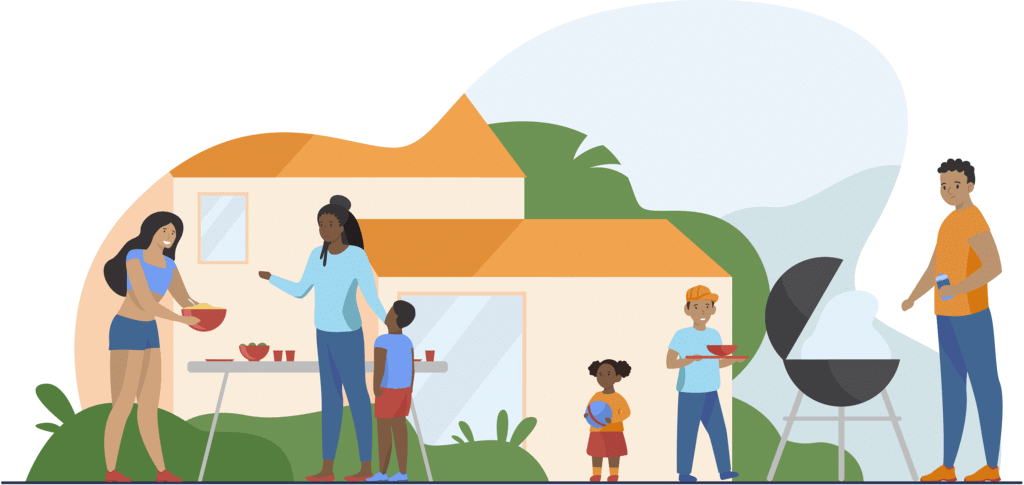
Following a few simple safety rules can keep us safe at home.

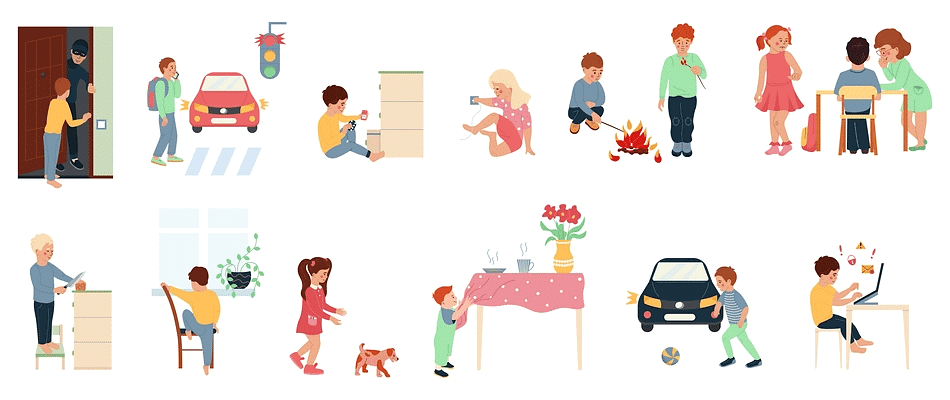
  • Fire and Electrical Safety: Never play with fire or light firecrackers by yourself. Always use matchsticks in the presence of an adult, and make sure to put them out before throwing them in a bin. Do not try to put your fingers into a plug point. Avoid touching damaged electric wires and tell an adult so they can replace them.
  • Kitchen Safety: In the kitchen, always be cautious of the stove, hot utensils, and the food cooking. Stay away from the stove when it is on.
  • Sharp Objects Safety: Knives, scissors, and tools are sharp and can cause cuts. They should be used very carefully, and do not play with sharp objects.
  • Poisonous Substances: Do not taste anything you are not sure about. Many items, including some medicines, may be harmful for you.
Safety at Home

Safety at School

You can save yourself from accidents at school by behaving responsibly and following the rules.

Important Safety Tips

  • Running inside the classroom and climbing on desks can lead to accidents. The corners of desks are sharp and can cause serious injuries.
  • Be careful when using the stairs. Never run or push anyone. Falling on the stairs can result in serious injuries.
  • When entering the science laboratory, exercise extreme caution. Never touch, taste, or smell anything without your teacher’s permission.
  • Blades are not for your use. Do not use them to sharpen pencils.

Basic First Aid Knowledge

Knowing basic first aid for common injuries is important. Schools should have essential first aid supplies, including:

  • Adhesive bandages
  • Gauze pads and adhesive tape
  • Antiseptic wipes
  • Scissors
  • Tweezers
  • Cold packs
  • Emergency contact numbers
Get additional INR 200 off today with EDUREV200 coupon.

Try yourself:

What should you do when you see damaged electric wires at home?

  • A.Touch them to see if they are really damaged.
  • B.Ignore them and continue using electrical appliances.
  • C.Inform an adult so they can replace them.
  • D.Play with them to see what happens.

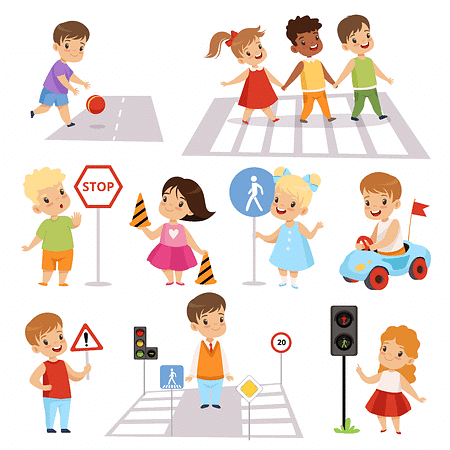
Safety on the Road

  • Playing on the roads is very risky and dangerous.
  • Footpaths are for walking. If there is no footpath, walk on the edge of the road and be careful of traffic.
  • If you ride a bicycle, always ride on the left side of the road. Use hand signals to show when you are turning. If you are in a car, always wear your seat belt.
  • Cross the road only at the zebra crossing for pedestrians. Before crossing, look to your right, then to your left, and then to your right again. Only cross when it is clear. Be extra careful when there is no zebra crossing.
  • Follow the traffic signals. A green light means go, a red light means stop, and a yellow light means get ready to stop.
  • Always stand in line when getting on a bus to stay safe and avoid accidents.
  • Many accidents happen when people try to get on or off. moving bus. Never try to do this.
  • When riding a bicycle, always wear a helmet to protect your head.Safety on the Road
Also read: Worksheet: Safety And First Aid

Safety on the Playground

  • Sometimes, to win a match, players may start breaking the rules and playing roughly.
  • It is important to always follow the rules of a game. They are important for safety and fair play.
  • Playing games fairly and safely helps prevent accidents and makes the game fun for everyone.
  • Do not push or trip others while playing to keep everyone safe.
Safety on the Playground

First Aid

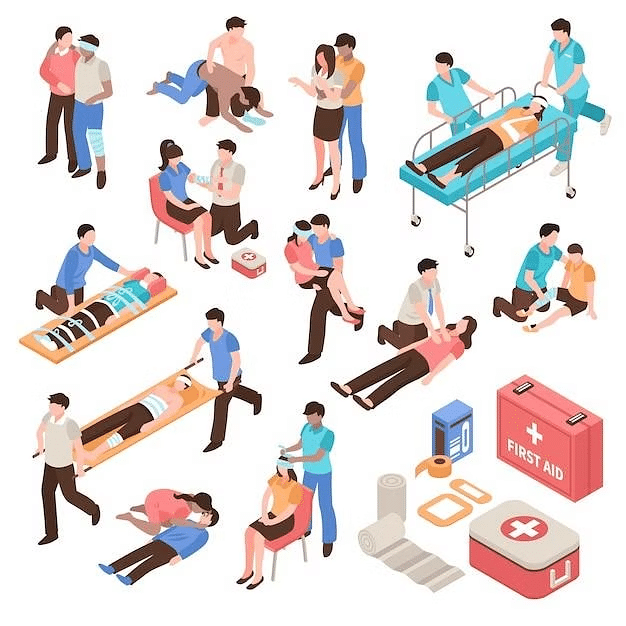
  • Stay Calm: When an accident happens, it’s important to stay calm. You can help the injured person by following some simple steps. The help they need right away is called first aid.
  • Find an Adult: Immediately try to find an adult to assist you.
  • Keep People Away: Never let a crowd gather around the injured person.
  • Don’t Move The Injured Person: Avoid moving the injured person, especially if you suspect a broken bone, as this could cause more harm.
  • Make Them Comfortable: Make sure the injured person is either seated or lying down comfortably.
  • Treat Bleeding Wounds: If there is a bleeding wound, wash it with clean water.
  • Bandage The Wound: Properly bandage the wound to stop the bleeding.
  • Treat Burns: If someone has a burn, hold the burnt area under cold running water.
  • Call For Help: Always call for medical help as soon as possible.
First Aid

Try yourself:

What should you do if you see someone with a bleeding wound?

  • A.Wash the wound with clean water.
  • B.Apply pressure to stop the bleeding.
  • C.Move the injured person to a different location.
  • D.Ignore the wound and continue playing.

Home is Best

A home offers us safety from various things like weather, animals, and harmful things. Some features are important for a healthy life. So, our home should be made and taken care of with these important things in mind.

A Good Home

  • Sunlight is important because it kills germs. There should be windows placed in a way that allows sunlight to come in.
  • It’s important to have windows and ventilators to bring in fresh and clean air.Also, planting trees and plants around the house helps to clean the air.
  • Open spaces like verandas or balconies are needed for getting sunshine and fresh air.
  • Wire netting on doors and windows can keep insects like flies and mosquitoes out while allowing air and sunlight to come in.
  • Cleanliness and hygiene are important in all parts of the house. A proper drainage system is important to keep bathrooms clean and dry by removing dirty water.
  • Dirty water and garbage should not collect inside or outside the house, as this can bring insects and germs.
Attention!Sale expiring soon, act now & get EduRev Infinity at 40% off!

Care of the House

  • Germs mainly grow in the kitchenbathroom, and rubbish bins. These places should be cleaned properly every day.
  • The rest of the house should also be cleaned daily.
  • Flies and cockroaches should be kept out of the kitchen because they can spread diseases. 
  • Always make sure the food is covered.
  • Make sure fresh air and sunlight can enter the kitchen and bathroom.
  • Rubbish bins should be kept covered.
Also read: Worksheet: Safety And First Aid

Conclusion

  • Safety is a fundamental aspect of our lives that applies to various settings, including home, school, on the road, and during play.
  • Adhering to simple safety rules is crucial for preventing accidents and ensuring the well-being of ourselves and others.
  • First aid plays a vital role in providing assistance to others during emergencies.
  • Remaining calm, acting swiftly, and seeking help from adults can significantly impact life-saving situations.
  • A clean and well-maintained home environment is essential for safeguarding our health and safety.
  • Maintaining proper hygiene and cleanliness is essential to protect ourselves from diseases caused by germs.
  • By being responsible, cautious, and mindful of safety measures, we can foster a secure environment for ourselves and those around us.
  • It is important to remember that safety should always be a top priority!

Chapter Notes: Birds: Food and More

Introduction

One day, Riya saw a little bird picking up seeds. She asked, “Do all birds eat the same food?” Grandpa smiled and said, “No! Some birds eat seeds, some eat insects, and some even eat fish. Their beaks help them eat different foods.” Riya was surprised and started watching birds closely. She saw a parrot eating fruits, a duck searching for food in water, and a crow picking up grains. “Birds are so special!” she thought. Let’s learn more about these birds and their wonderful world!

What are Birds?

Birds are animals that have feathers, wings, and beaks. They use their wings to fly and their beaks to eat different types of food, like seeds, insects, or fish.

Special Features of Birds

Let us discuss some special features that help birds in flying.

  • Light Body – Their bodies are very light, so they can stay in the air for a long time.
  • Hollow Bones – Their bones are filled with air, making them strong yet light.
  • Boat-shaped Body – Their body shape helps them move smoothly through the air.
  • Strong Wings – Their wings help them fly by catching air.
  • Flight Muscles – These help birds move their wings up, down, forward, and backward while flying.
  • Tail for Balance – Their tails help them turn and balance in the air.

These features make birds great flyers!

Flying Abilities of Different Birds

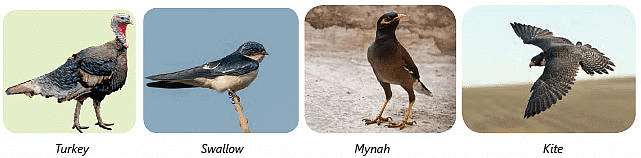
  • Short-distance flyers – Hens, turkeys, and peacocks can only fly for a short time because they have heavy bodies.
  • Long-distance flyers – Pigeons, crows, and swallows can fly very far.
  • High-altitude flyers – Eagles, vultures, and kites fly very high. They have sharp eyesight to find food on the ground.

Try yourself:What is the function of a bird’s tail while flying?

  • A.To help them catch their prey
  • B.To keep their body light
  • C.To provide extra lift during flight
  • D.To steer and change direction

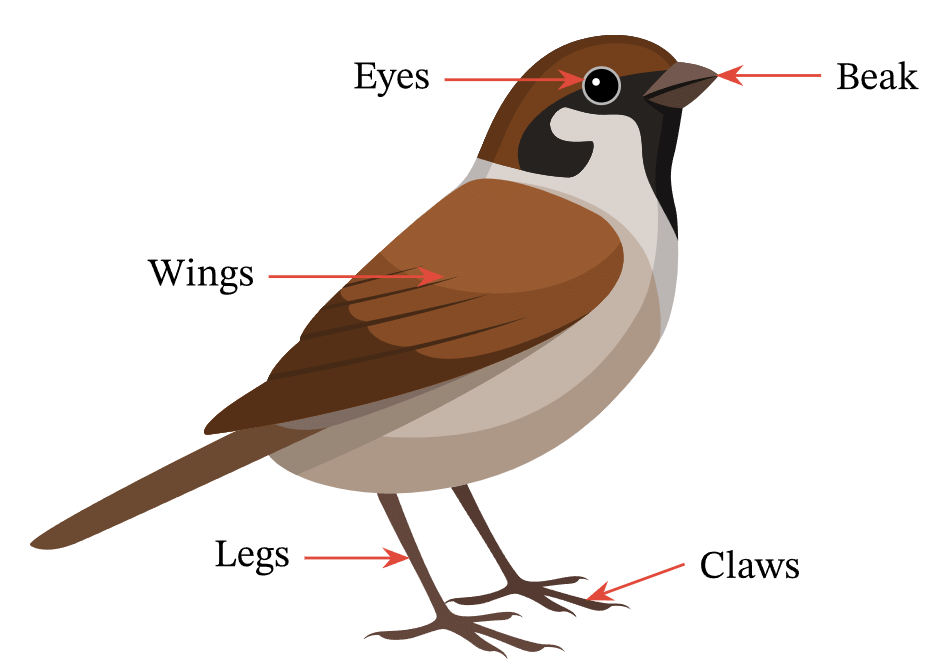
Important Body Parts of Birds

Like human body parts, birds also have different body parts as:

  1. Beak: Birds use their beaks to eat. Different birds have different beaks. For example, Eagles have sharp beaks for eating meat, and parrots have strong beaks for cracking nuts.
  2. Wings: Birds fly with their wings. Wings have feathers that help them go up in the air and stay there. Different birds have different wings for flying.
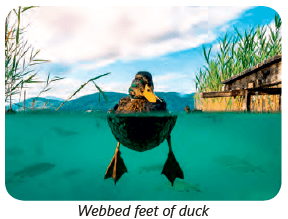
  3. Feet: Birds have special feet for their needs. Ducks have webbed feet to swim, and eagles have strong feet with claws to catch food.
  4. Tail: A bird’s tail helps it balance and turn while flying. It helps them change direction easily.
  5. Feathers: Feathers help birds fly, keep them warm, and protect them from rain. Soft feathers keep heat in, and outer feathers keep water away.

Body parts of a bird

 Let us now discuss them in detail:

Get additional INR 200 off today with EDUREV200 coupon.

1. Feathers 

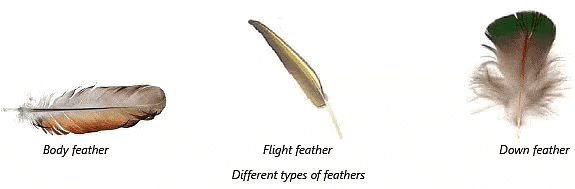
Birds have these tiny, soft feathers covering their bodies. These feathers help keep them warm when it’s cold and cool when it’s hot, and they’re important for flying. There are three types of feathers. 

  • Down feathers are soft and fluffy, keeping birds warm. 
  • Flight feathers are strong and help birds fly in the sky.
  • Body feathers are smooth feathers that cover the bird’s body and protect it, giving shape and color.
Also watch: Birds: Food and More

2. Feet and Claws

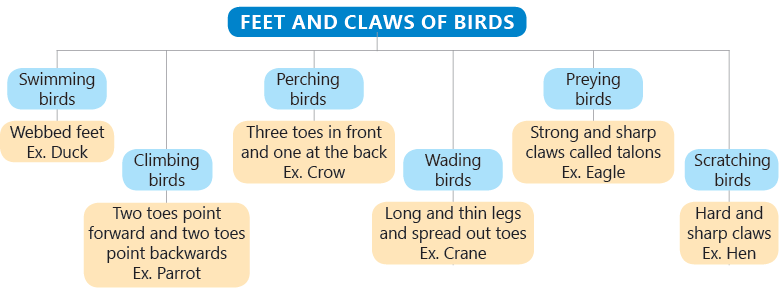
Birds use their claws to do many things. They hold branches, catch food, and stay safe from other animals. Claws help birds just like hands help us.

1. Swimming Birds
Water birds such as ducks and swans have three toes in front and one toe at the back. The front toes are joined together by skin called a web. Such feet are called webbed feet. They help the bird to swim by pushing the water backwards.

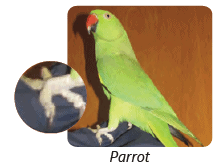
2. Climbing Birds
Birds such as parrots and woodpeckers have two toes that point forward and two toes that point backwards. Such toes help them climb trees.

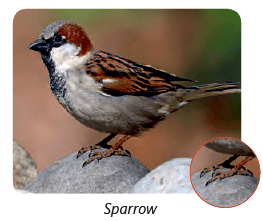
3. Perching Birds
The feet of birds such as crows, sparrows, and mynahs have three toes in front and one at the back. Birds use their toes to sit on high branches without falling, even when they sleep.

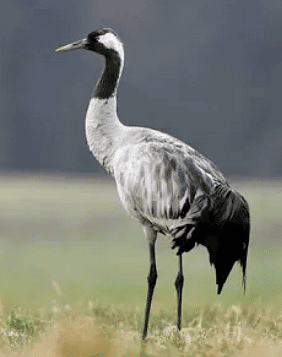
4. Wading Birds
Water birds such as cranes and herons have long and thin legs. They have wide toes that save them from sinking into the muddy water. These help them to walk through water in search of food. This movement is called wading.

Crane

5. Scratching Birds
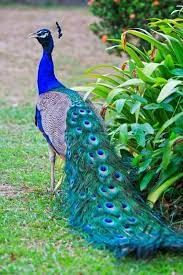
Hen, rooster, and peacock have hard and sharp claws. Their hard claws help them to scratch and dig the ground and pull out insects and worms.

Peacock

6. Preying Birds (Flesh-Eating Birds)
Eagles, hawks, and vultures are flesh-eating birds. They have strong and sharp claws called talons. They use their claws to catch live rats, toads, and other small animals and hold their prey between their claws while flying.

Try yourself:

What is the function of feathers in birds?

  • A.To help birds swim in water.
  • B.To protect birds from predators.
  • C.To help birds climb trees.
  • D.To provide warmth and assist in flight.
Attention!Sale expiring soon, act now & get EduRev Infinity at 40% off!

3. Beak

Just like we use forks and spoons to eat, birds use their beaks for grabbing, holding, and eating food. Some beaks are sharp for picking things, and some are curved for tearing food.

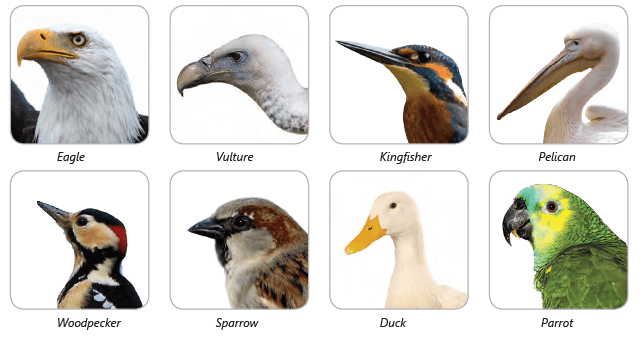
Beaks of Different Birds

The size and shape of beaks vary based on the type of food birds eat.

  • Eagle/Vulture: These birds eat meat and have strong, sharp beaks to tear food.
  • Kingfisher/Pelican: They have long, scissor-like beaks to catch small fish.
  • Woodpecker: It has a long, sharp beak to tap trees and find insects.
  • Swallow: It has a short, wide beak to catch insects while flying.
  • Parrot: It eats seeds, nuts, and fruits using its strong, curved beak to break them open.
  • Duck: Its beak has small holes to remove mud while eating plants and insects.
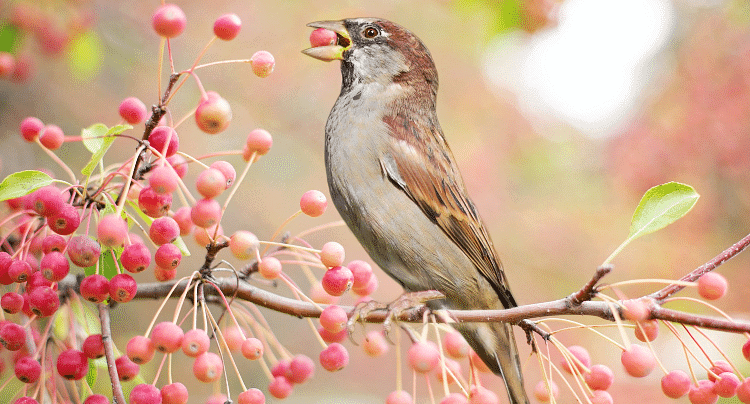
  • Sparrow: It has a short, strong beak to crack seeds and eat insects.

Different types of beaks

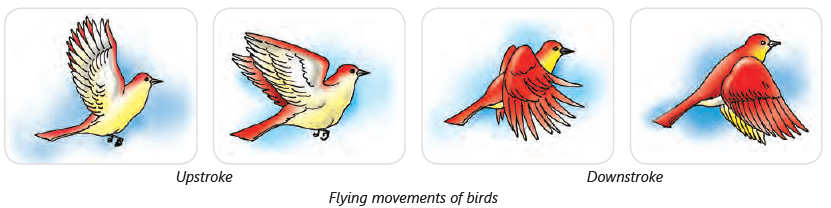
How Does A Bird Fly?

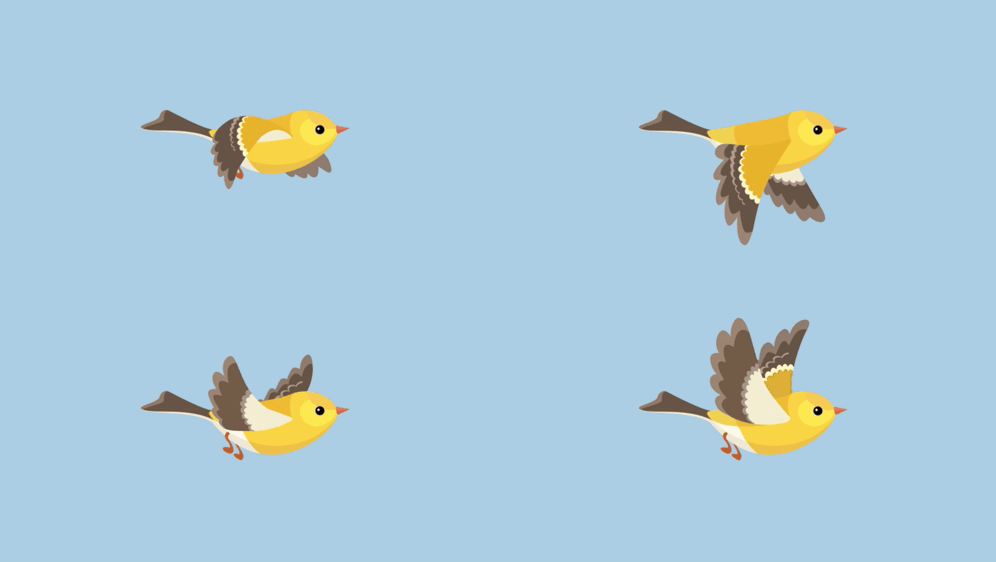
A bird flies by moving its wings up and down to go up in the air. When it reaches the right height, it stops flapping and smoothly moves in the air. The flapping of birds includes:

  • Upstroke: When the wings move upward and backward.
  • Downstroke: When the wings move downward and forward.

Nesting Habits Of Birds

Birds make nests using small sticks, grass, feathers, cotton, wool, leaves, and sometimes mud. These nests give shelter for the birds.

  • Nests protect birds from bad weather.
  • They protect birds from their enemies.
  • Birds lay their eggs in these nests.

Inside the nests, birds care for their young ones until they are ready to fly. After the young birds grow and fly away, the parents do not reuse the nests. Most birds make a new nest each year.

Try yourself:

How do birds fly?

  • A.By using their beaks to push off the ground.
  • B.By flapping their wings up and down.
  • C.By jumping off cliffs and gliding through the air.
  • D.By using their tails to propel themselves forward.

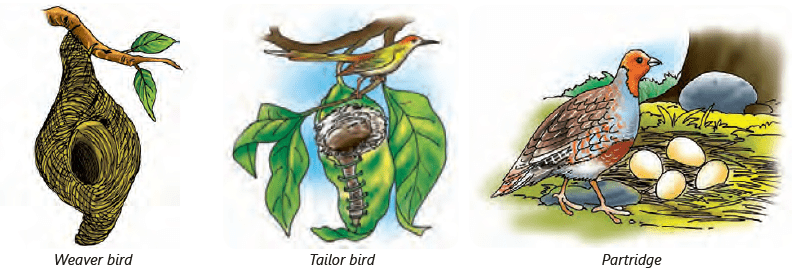
Types of Nests

  • Hole Nests: Woodpeckers make holes in tree trunks with their beaks to build nests.
  • Rock Nests: Eagles make nests on high tree branches or rocky places.
  • Woven Nests: Weaver birds make nests with grass, small sticks, and leaves. They weave them on tree branches, and the nests hang down with a tunnel-shaped entrance.
  • Stitched Nests: Tailor birds sew big leaves together using their beaks like needles with cotton threads or spider silk. That’s why they are called tailor birds.
  • Ground Nests: Penguins and partridges make nests on the ground using stones to stop their eggs from rolling away.

How Do Birds Help Us?

Birds offer a number of benefits that help to maintain ecological balance and environment health. Here are some of the key ways in which birds help us:

  • Pest Control: Birds eat insects, helping to reduce the number of harmful bugs.
  • Seed Dispersal: Birds eat fruits and drop seeds in different places, helping new plants grow.
  • Environmental Health: Birds show if a place is clean and healthy. Many birds in an area mean the environment is good.
  • Inspiration: Birds look beautiful, sing sweet songs, and amaze us with their flying skills.

In summary, birds help nature by eating insects, spreading seeds, and showing if the environment is healthy. They also inspire us with their beauty and talents. 

Also watch: Birds: Food and More

Conclusion

Birds are wonderful creatures with unique features that help them fly, find food, and survive in different environments. Their feathers, wings, beaks, and claws are specially designed for their way of life. Birds also play an important role in nature by helping with seed dispersal, controlling insects, and keeping the environment balanced.

By watching birds around us, we can learn a lot about their habits, movements, and importance in nature. So next time you see a bird, take a moment to observe it—What is it eating? How is it flying? Where is it building its nest? Every bird has a story to tell! 

Chapter Notes: The Earth

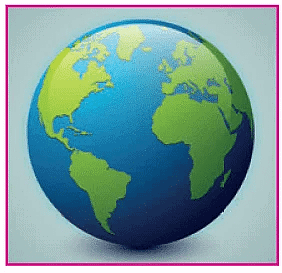
Have you ever wondered where we live? We live on a big, round planet called Earth! It is like a giant home for all of us, including animals, plants, and even tiny insects. Earth has land, water, air, and everything we need to live. If you look at Earth from space, it looks like a beautiful blue and green ball. That’s because most of it is covered with water, while land has mountains, forests, and deserts. The Earth also moves around the Sun, giving us day and night and different seasons.
In this chapter, we will explore the shape of the Earth, why it looks different from place to place, and how it gives us everything we need to live. Get ready for an exciting journey to learn more about our amazing planet! Let’s begin by learning about our Solar System and where Earth fits in.

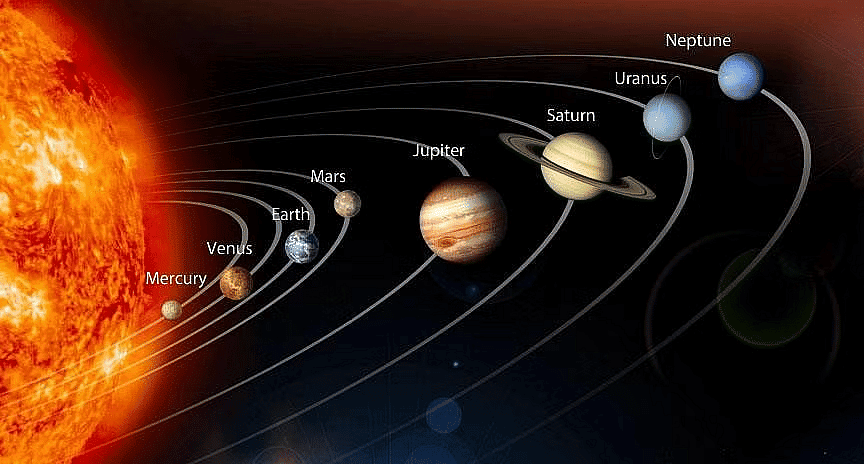
Solar System

  • The solar system consists of the suneight planets, and their moons.
  • The eight planets are Mercury, Venus, Earth, Mars, Jupiter, Saturn, Uranus, and Neptune.
  • All these planets revolve around the sun.

Solar System

Among all these planets, Earth is the only one that supports life. This is because of the presence of air, water, and land. Let’s learn more about our home planet!

Try yourself:Which is the smallest planet in our solar system?

  • A.Venus
  • B.Mercury
  • C.Earth
  • D.Saturn
Get additional INR 200 off today with EDUREV200 coupon.

The Earth

  • A long time ago, Earth was made from tiny pieces of dust and gas that came together to form our planet.
  • It is the third planet from the Sun in our solar system.
  • The Earth is also the fifth largest planet in terms of size.
  • Earth is the only planet that can support life.
  • The planet is made up of land, water, and air. About two-thirds of its surface is covered by water, while the remaining part is land.
  • Surrounding the Earth is a layer of air called the atmosphere.
  • Earth does not make its own light like some other space objects. It shines because it reflects light from the Sun.

EarthBut what does Earth look like? Is it perfectly round? Let’s find out!
Also read: Worksheet: The Earth

Shape of the Earth

The Earth is not a perfect round ball. It is a little flat at the top and bottom (poles) and slightly bigger in the middle (equator), like an orange. But overall, it still looks mostly round.

Here are some proofs that show the earth is spherical:

  • When the shadow of the earth falls on the moon, it is called the eclipse of the moon. This shadow is round in shape. This shows that the earth is spherical in shape.
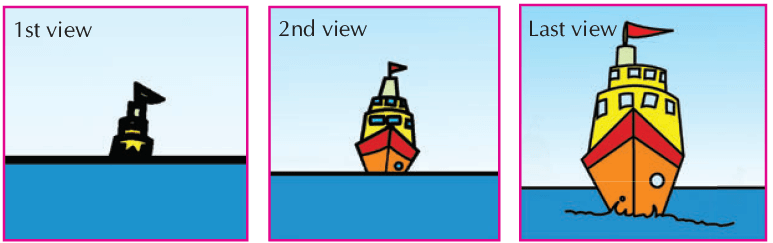
  • When we look at a ship far away in the sea, we see the top part first, and then the rest of the ship appears slowly.

Viewing of ship

  • Pictures taken from space by satellites and astronauts show that the Earth is round like a ball. These pictures help us see the real shape of our planet from high above.

Now that we know what Earth looks like, let’s explore how it moves!

Attention!Sale expiring soon, act now & get EduRev Infinity at 40% off!

Movement Of The Earth

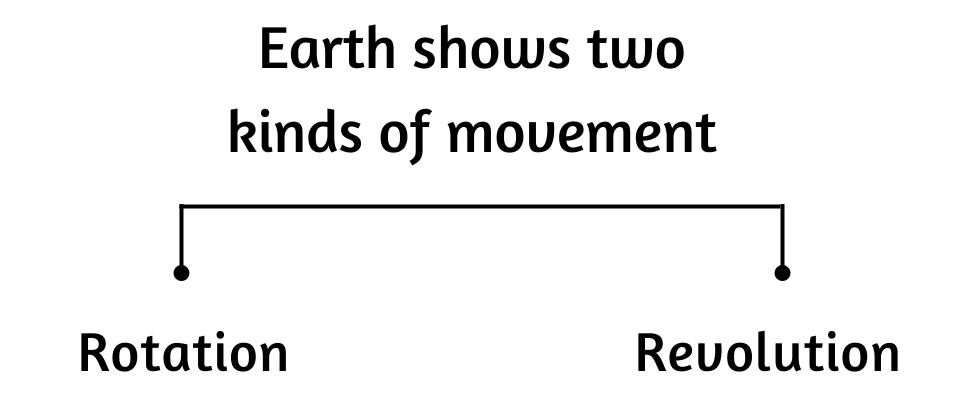
The Earth is never still! It moves in two main ways:

  1. Rotation – Spinning on its own axis (causes day and night).
  2. Revolution – Moving around the Sun (causes seasons).

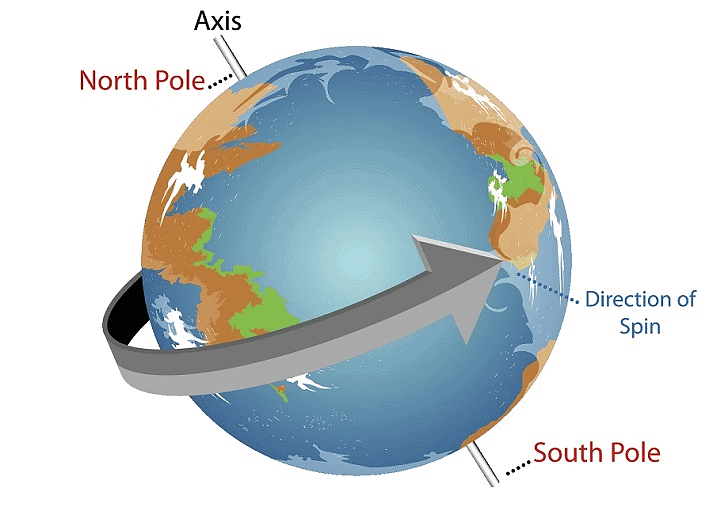
1. Rotation of the earth

  • The earth moves round just like a top. 
  • It spins about an imaginary line passing through its centre called its axis
  • The spinning of the earth on its own axis is called rotation

Rotation of the Earth

  • The earth rotates from West to East and completes one rotation in 24 hours
  • The rotation of the earth results in day and night.

Formation of day and night

  • The earth rotates from West to East. 
  • Half of the earth always faces the sun. 
  • The part of the earth that faces the sun experiences day. 
  • The other half, which does not get light from the sun, experiences night.

But Earth doesn’t just spin in place—it also moves around the Sun! Let’s see how this affects our seasons.

Try yourself:Axis is an actual line on Earth.

  • True
  • False

2. Revolution of the Earth
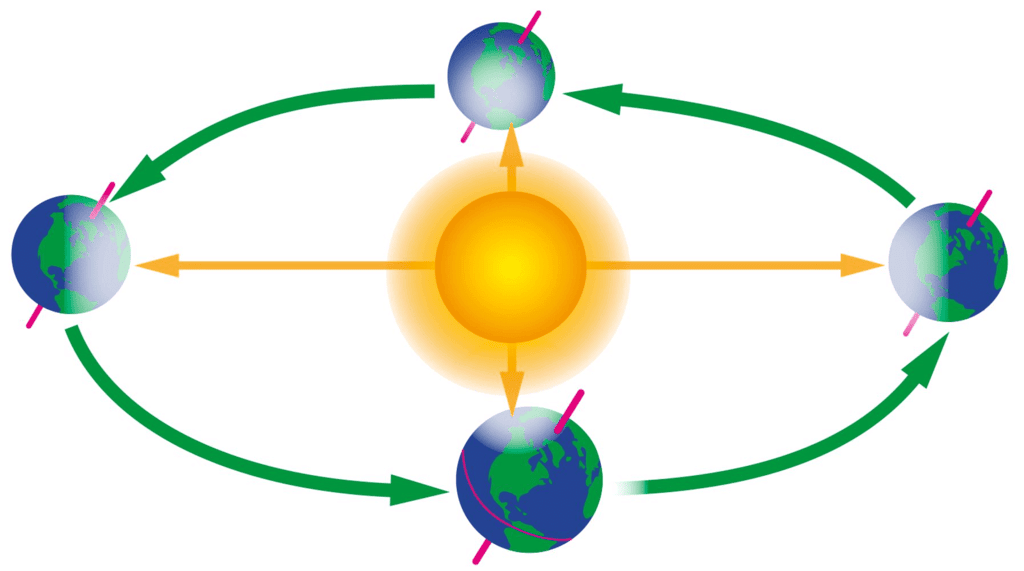
  • The Earth also moves around the Sun in a path called an orbit
  • This movement is known as revolution.
  • It takes the Earth about 365 days and 6 hours to complete one full revolution around the Sun, which is known as one year.Revolution of the Earth
  • The Earth’s movement around the Sun causes different seasons like summer, winter, spring, and autumn.
Also read: Worksheet: The Earth

Conclusion

The Earth is a wonderful planet that gives us everything we need to live. It is part of the Solar System and moves in two ways—rotation (causing day and night) and revolution (causing seasons). By understanding the shape and movement of Earth, we can appreciate how our planet works and why life exists on it!

Chapter Notes: Living & Non-Living Things

Introduction 

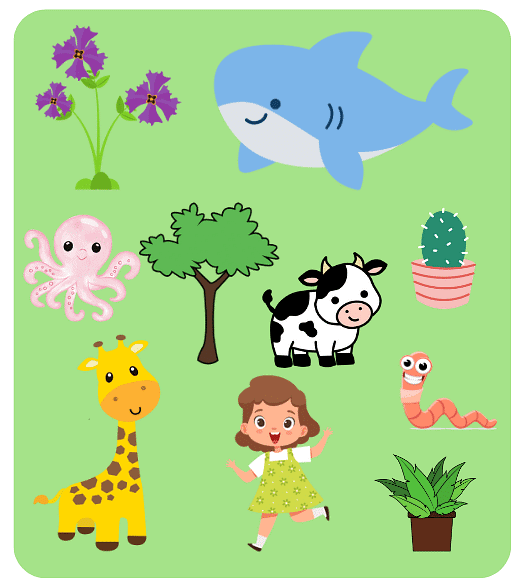
Look around you! You can see trees, birds, toys, books, and even your friends. But do you know that some of these things are living and some are non-living? How can we say if something is living or non-living? Let’s learn about these in detail. 

What are Living Things?

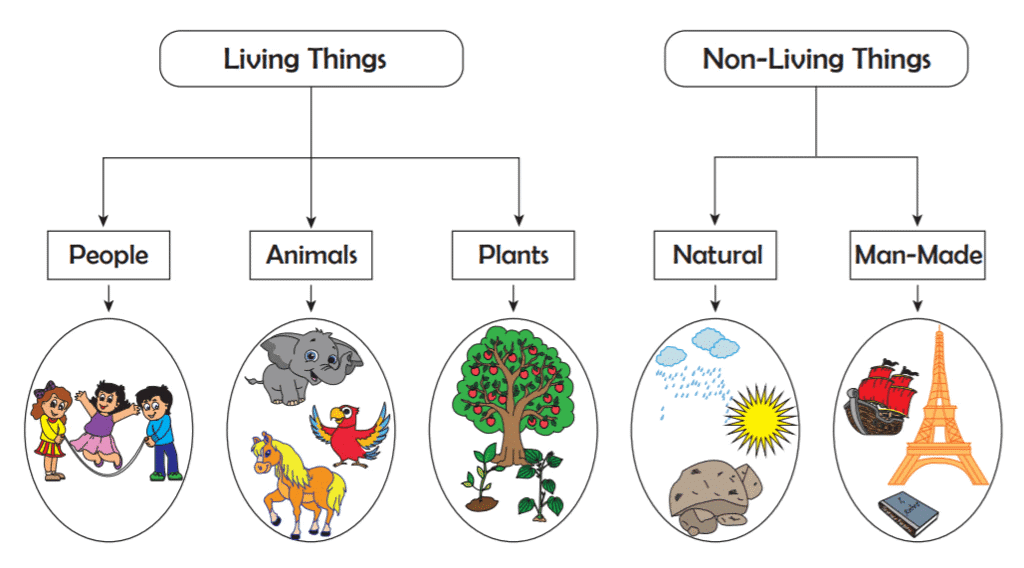
Living things are anything that can grow, move, and respond to their surroundings. They eat, breathe, reproduce, and can change over time. Animals, plants, fungi, and even small bacteria are examples of living things.

What are Living Things?

Living things are alive. They are made by nature, not by humans. Plants and animals are examples of living things.

Get additional INR 200 off today with EDUREV200 coupon.

What are Non-Living Things?

Non-living things are objects that don’t have life. They don’t grow, move on their own, or react to their environment like living things do. Things like rocks, water, air, and even your toys or books are non-living. They are very important because they help all living things stay alive, just like water and air!

What are Non-Living Things?

Types of Non-Living Things

Non-living things can be categorized as either natural or man-made.

  • Natural non-living things are found in nature, like the sun, moon, stars, rivers, oceans, and mountains.
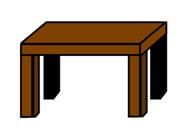
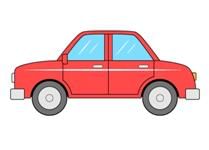
  • Man-made non-living things are things people make, like airplanes, cars, books, tables, and chairs!
Types of Non-Living Things

Try yourself:Choose the living things from the pictures shown below.

  • A.Types of Non-Living Things
  • B.Types of Non-Living Things
  • C.Types of Non-Living Things
  • D.Types of Non-Living Things
Also read: Worksheet: Living and Non-Living Things

Characteristics of Living Things

1. Living Things Move

Animals move from place to place to find food, water, shelter and to stay safe from enemies. This movement is called locomotion.

Characteristics of Living Things

Different animals move in different ways:

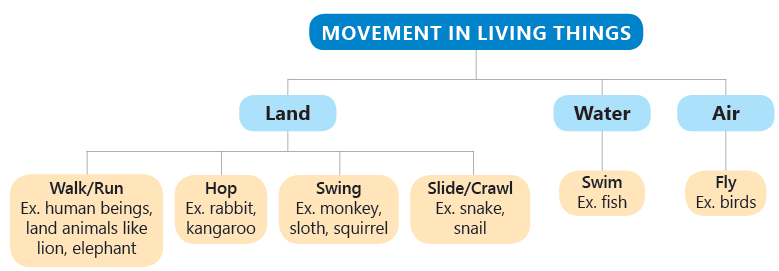
  • Humans walk, run, jog, and skip.
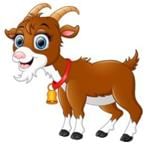
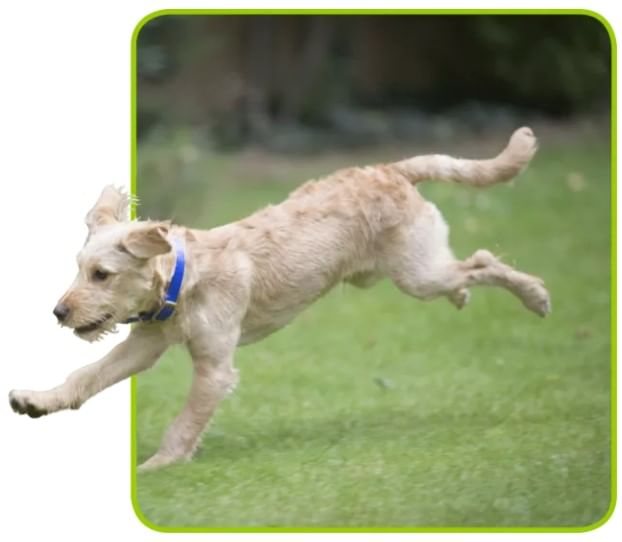
  • Deer, leopards, and buffaloes walk and run with the help of their legs.
  • Kangaroos and rabbits hop using their body parts.
  • Most of the insects and birds move by flying using their wings and legs.
  • Fish swim with the help of their fins and tails. Birds like ducks and geese use their webbed feet to swim in water.
  • Some animals, which do not have limbs, use other parts of the body to move. Snails, snakes, and earthworms can slide/crawl on the ground using their muscles.
  • Monkeys swing from tree to tree using their limbs and tails.Characteristics of Living Things

Various plants also show movement in different ways:

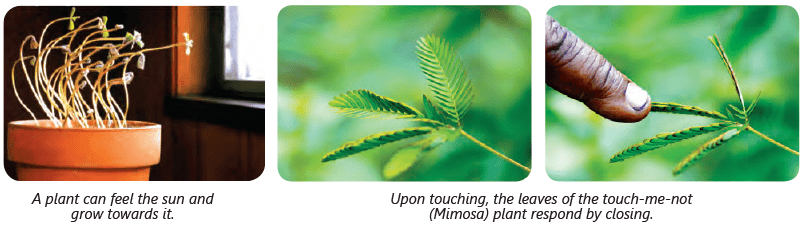
Sunflowers turn towards light

  • A sunflower turns to face the sun.
  • The tips of young plants bend towards light.
  • Climbers grow with support.
  • Plant roots move down into the ground to absorb water.

Try yourself:Living things can ____ from one place to the other.

  • A.water
  • B.air
  • C.move
  • D.non-living

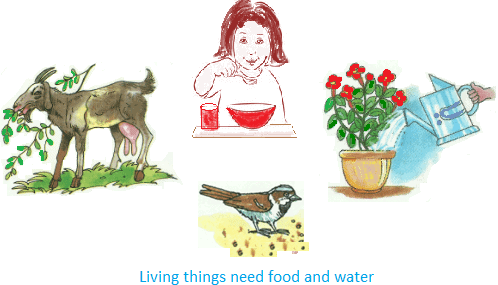
2. Living Things Need Food And Water

All living things need food and water to live. Food gives the energy to do different life activities.

Characteristics of Living Things
  • Animals get their food directly or indirectly from plants. Animals like cows, deer, sheep, and elephants eat leaves and grass, while others like lions, tigers, and bears eat other animals.
  • Plants cannot move from one place to another like animals for food. They make their own food. Green plants are the only living things that can make their own food using water, air, and sunlight.

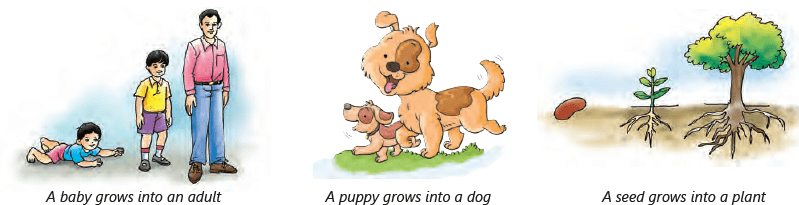
3. Living Things Grow

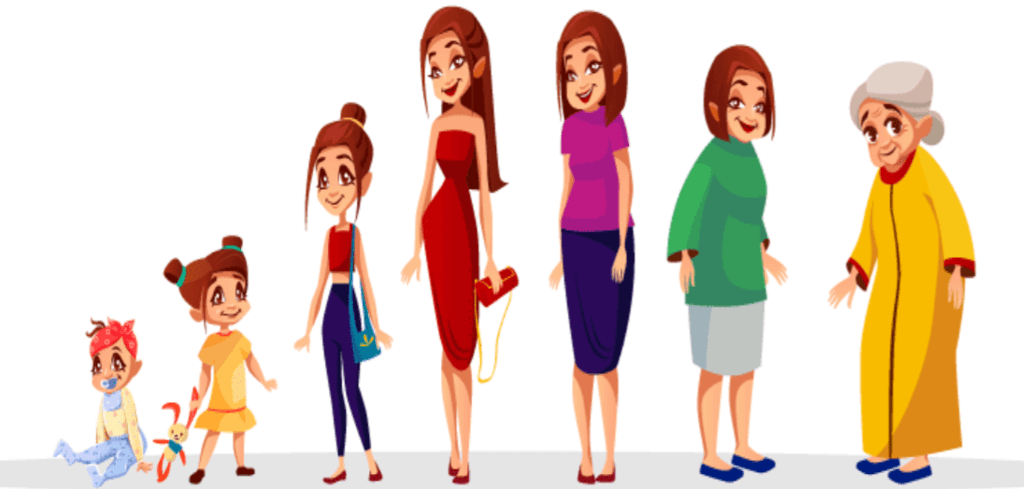
All animals are born small but as time passes they become bigger. Look at your childhood pictures. You have grown from a baby to a child. All animals also grow

  • baby chick comes out of an egg and grows into a henor rooster.
  • tadpole grows and becomes a frog.
  • caterpillar changes into a butterfly.
  • seed grows into a small baby plant that further grows into a big plant.
  • Living things grow and change in height, size, and shape. When they get old, they die.Characteristics of Living Things

4. Living Things Breathe

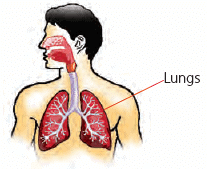
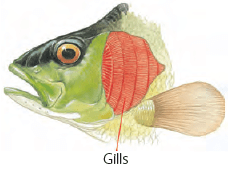
Place your hand on your chest. What do you feel? We feel our chest moving up and down. This is due to breathing. Animals breathe by different means

  • Animals like cows, cats, and dogs that live on land have lungs to breathe.
    Characteristics of Living Things
  • Fish and some other animals that live in water use gills to breathe.Characteristics of Living Things
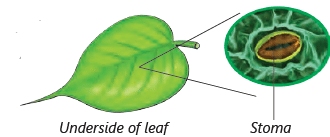
  • We cannot observe breathing in plants but they also take in air from tiny holes present on leaves called stomata (Stoma: singular)
    Characteristics of Living Things

5. Living Things Can Feel

All living things can feel. When we feel cold, we cover ourselves with woolen clothes.

  • Ants come to find out sugar (if kept in an open place) no matter how far off they are. 
  • We are able to feel because of our sense organs
  • We have five sense organs—eyes, nose, ears, tongue, and skin.
  • Just like humans and animals, plants can also feel. They do feel changes around them, but they do not have sense organs.
Characteristics of Living Things

6. Living Things Reproduce

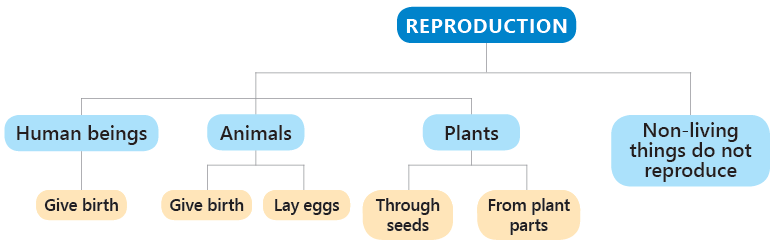
All living thingsreproduce, that is, they produce other living beings of their own kind. This is called reproduction.

Different ways of reproduction are:Characteristics of Living Things

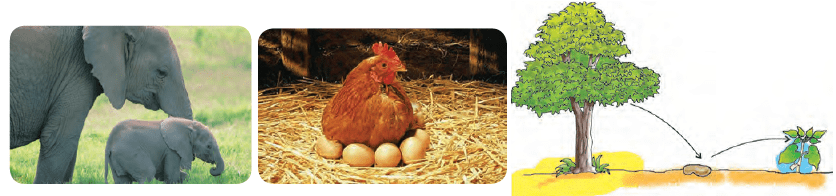
  • Animals that Give Birth: Some animals, like cows, monkeys, dogs, tigers, elephants, and rabbits, give birth to their young ones.
  • Animals that Lay Eggs: Some animals like birds, snakes, crocodiles, and lizards lay eggs, and their babies come out of them.
  • Plants and Seeds: Most plants grow new plants by making seeds. Some plants can also grow from parts like stems, roots, or leaves. 

Reproduction is crucial for the survival and continuation of species.

Characteristics of Living Things

7. Living Things Go Through A Life Cycle

Living things are born, grow, reproduce, get old and die after some time. However, non-living things do not show such life cycle. 

Characteristics of Living Things

Characteristics of Non-Living Things

These are the following characteristics of non-living things:

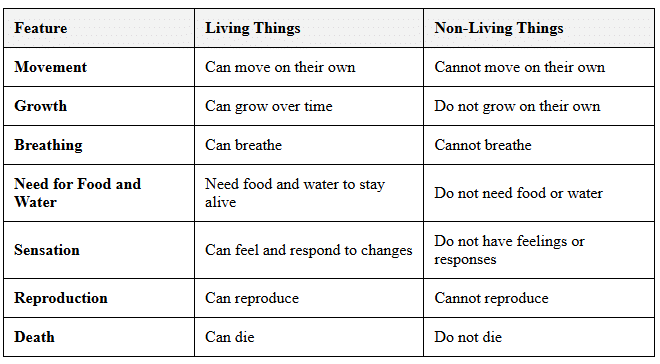
1. Non-living things cannot move.
2. They do not need food and water.
3. They cannot grow.
4. Non-living things cannot breathe.
5. They cannot feel.
6. They cannot reproduce.
7. They cannot go through a lifecycle.

We can see that non-living things are just opposite of living things in their characteristics.

Attention!Sale expiring soon, act now & get EduRev Infinity at 40% off!

Differences Between Living Things and Non-living Things

Differences Between Living Things and Non-living Things

Try yourself:Which one is a characteristic of a living thing?

  • A.Living things do not grow.
  • B.Living things cannot move from place to place.
  • C.Living things need food to live.
  • D.None of the above.
Also read: Worksheet: Living and Non-Living Things

Summary

  • Everything is either living or non-living.
  • Plants and animals are living because they grow, breathe, need food, respond to changes, make babies, and can die.
  • Plants can feel changes around them but don’t have special body parts for it.
  • Female animals can give birth to babies either by giving birth or laying eggs that grow into babies.
  • Non-living things don’t grow, breathe, eat, or make babies. They can’t feel anything.

Chapter Notes: Parts of a Plant

Have you ever wondered how plants help us every day? From the food we eat to the air we breathe, plants are all around us, supporting life in many ways. Think about the trees, flowers, and even the grass under your feet—how do you think they help the environment? Let’s take a closer look at how plants play an essential role in our lives. We’ll explore how they give us oxygen, provide food, and even help us stay healthy. Ready to discover the amazing ways plants make the world a better place? Let’s dive in!

Importance of Plants

Plants are one of the most important living organisms on earth. They are very helpful to both animals and human beings

Plants are very important to usPlants are very important to us

  • Plants are important for our survival because they produce oxygen, which is necessary for all living organisms.
  • Leaves and roots of plants are used to make medicines that can be used for various treatments.
  • Different parts of a plant have specific functions: roots absorb water and nutrients from the soil, stems provide support and transport water and nutrients, and leaves are responsible for photosynthesis, where plants convert sunlight into energy.
  • Plants are a major source of food and oxygen and play an important role in maintaining the ecological balance of the environment.

Different Parts of Plants & Their Role

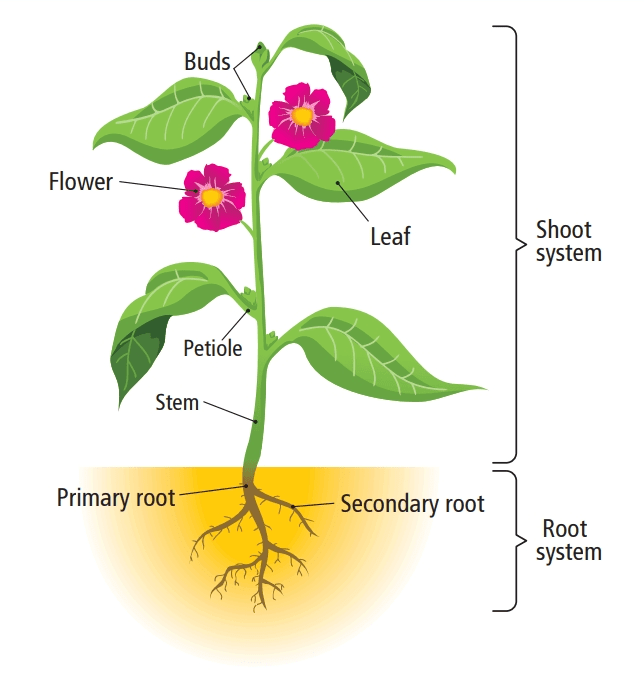
The part of the plant which grows below the soil is called the root and the part which grows above the soil is called the shoot. The shoot has stems, branches, leaves, fruits, and flowers.

  • Each part of the plant plays an important role in helping the plant to live and grow.
  • Let us discuss the various parts of a plant and the functions they perform.
Different Parts of Plants & Their Role
  • Root: The root is the part of the plant that grows underground. Its main function is to absorb water and nutrients from the soil.
  • Shoot: The shoot is the part of the plant that grows above the ground. 
  • Stem: The stem supports the plant and acts as a mode for transporting water, nutrients, and food between the roots and other parts of the plant.
  • Branches: Branches extend from the stem and provide a structure for the plant, allowing it to spread out and capture more sunlight.
  • Leaves: Leaves capture sunlight and, along with water and carbon dioxide, produce food for the plant.
  • Fruits: Fruits develop from flowers and contain seeds. 
  • Flowers: Flowers are the attractive parts of the plants.
  • Each part of the plant has a specific and important role that contributes to the overall health and growth of the plant.

Parts of a Plant

Let us now discuss all parts in detail.

1. Roots of a Plant

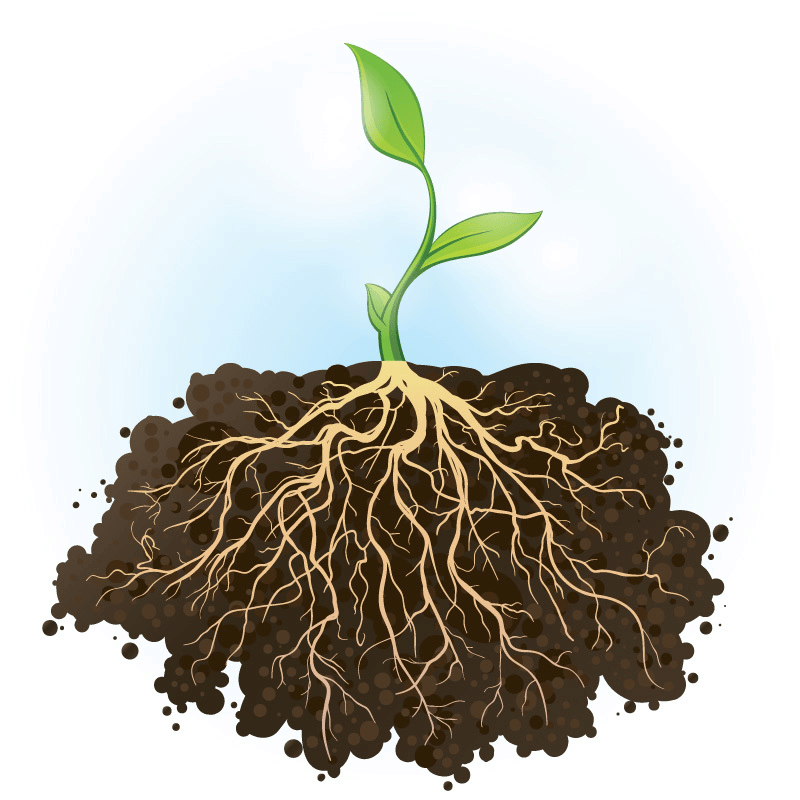
  • Roots are an important part of all plants, and they grow underground.
  • They are responsible for absorbing water and nutrients from the soil, which are important for the plant’s growth and health.

Roots of a PlantRoots of a Plant

Different Types of Roots

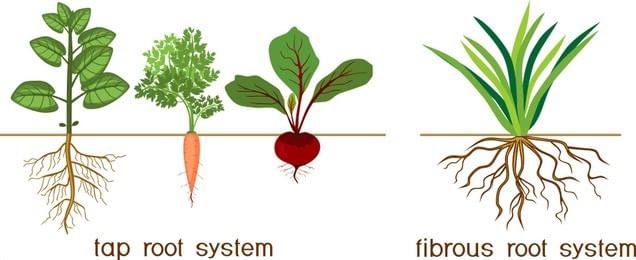
Plants have different types of roots. The two main types are taproots and fibrous roots.

Taproot

  • A taproot has a thick main root that is connected to the stem, with several thinner roots or branches coming out of it.
  • These branches have tiny, thin, white hair-like structures called root hairs.
  • Examples of plants with taproots include carrotspulsesbeetroot, and mustard.

Fibrous Root

  • Fibrous roots are made up of many thin threads that are all about the same size. These roots grow from the bottom of the stem.
  • Unlike taproots, there is no single main root in fibrous root systems.
  • Examples of plants that have fibrous roots include grasswheatrice, and onion.
Fibrous Root

Chapter Notes: Human Body: Organ Systems

Our body is like a big machine that works all the time. It helps us walk, talk, eat, breathe, and do many other things. But do you know how our body does all this?

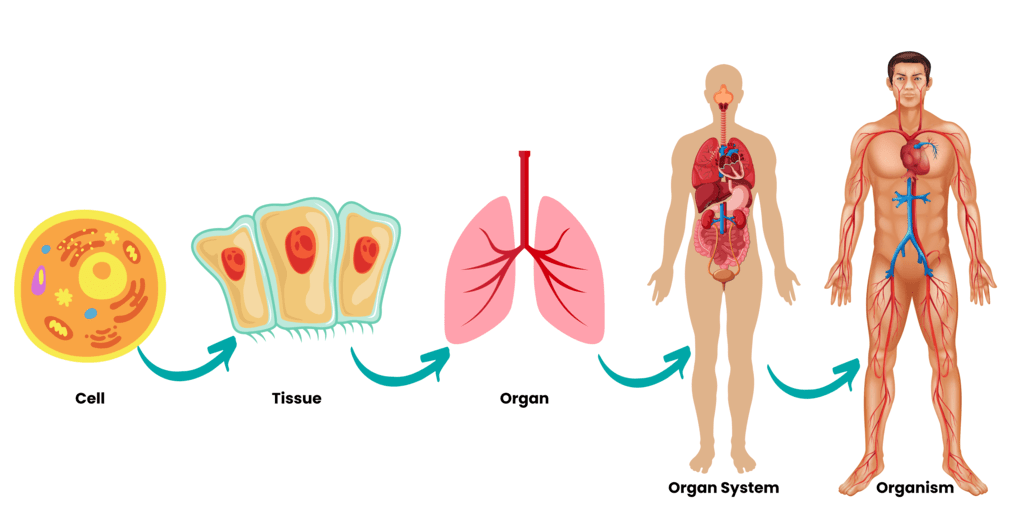
Inside our body, there are many parts that work together. These parts are called organs. Some important organs are the heart, brain, lungs, and stomach. When many organs work together to do a special job, they form an organ system.

For example:

  • The digestive system helps us eat and digest food.
  • The respiratory system helps us breathe.
  • The circulatory system carries blood all over the body.

Just like a team, all organ systems work together to keep us healthy and strong. In this chapter, we will learn about different organ systems and how they help us every day!

Structure of the Human Body

The human body is made up of many tiny building blocks called cells. When similar types of cells come together, they form a tissue. Different tissues work together to create organs.

  • Organs like the stomachliverskin, and lungs are made up of different types of tissues.
  • The human body is an amazing collection of different systems. Each system is made up of several organs that are connected to perform a specific function.
  • These different systems work together to carry out essential functions that are important for our living and well-being.

The Skeletal System

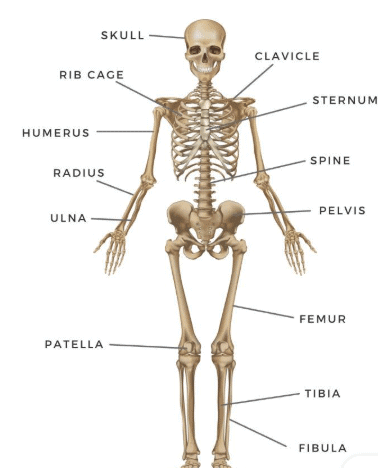
The skeletal system is made up of bones that are connected to form a skeleton.

  • Adults have 206 bones in their bodies, but some bones join together as we grow older.
  • Bones are the hard and strong parts of our body, which helps in giving shape and support to our body.

Functions of the Skeletal System

  • The skeletal system gives our body its shape and support. Without bones, our body would be shapeless.
  • Our bones keep important body parts like the brain, heart, and lungs safe by covering them with a hard shell.
  • The skull protects the brain, the ribcage keeps the heart and lungs safe, the backbone supports our body, and our arms and legs help us move.

Skeletal System

The Muscular System

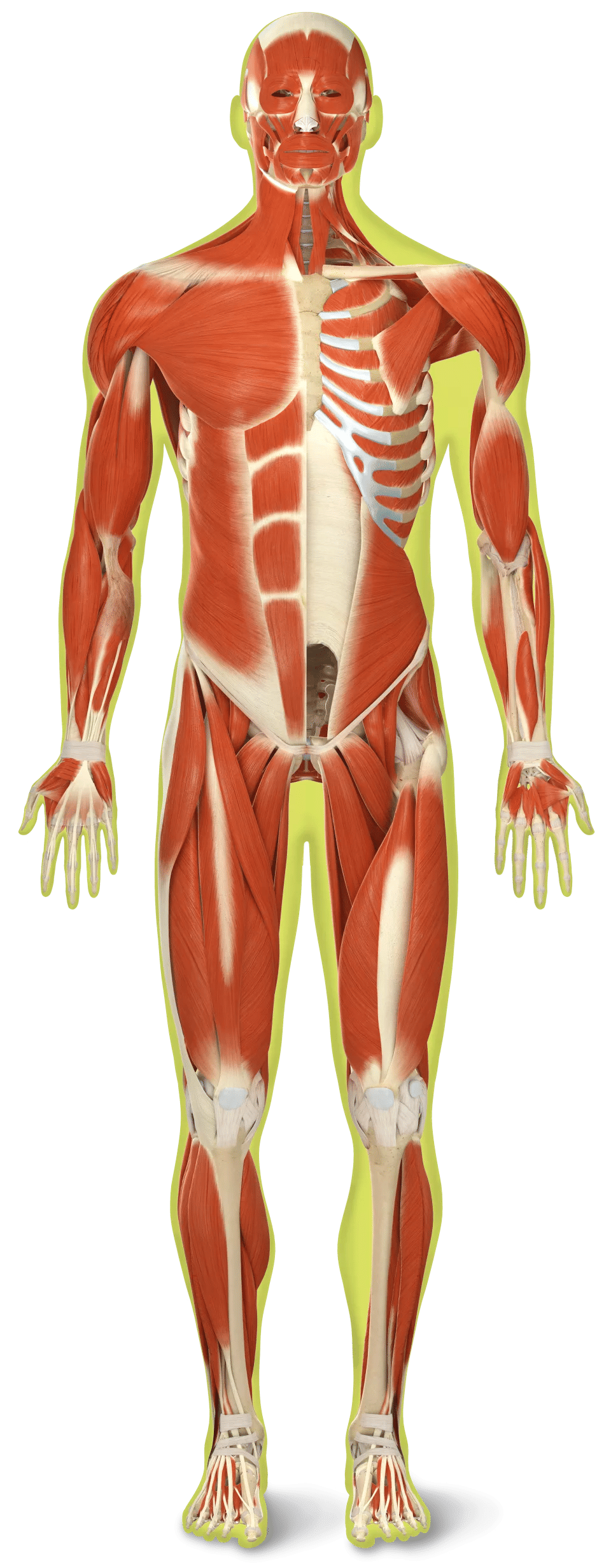
The system that helps us to move different parts of our body is called the muscular system.

Functions of the Muscular System

  • Muscles are soft parts that connect to bones and help us move, like blinking, walking, or jumping.
  • Muscles also work inside our body – they make our heart beat and help move food in our stomach.
  • Even our eyes and face move because of muscles. There are more than 600 muscles in our body!

Muscular System