13. Our Home: Earth, a Unique Life Sustaining Planet – Very Short Answer Questions

Q1. Which planet is known as the only one in the universe that supports life as we know it?
Earth is the only known planet that supports life as we know it.

Q2. What layer of Earth do all living things exist on?
All living things exist on the Earth’s crust.

Q3. Which Indian organisation built the Earth Observation Satellite that captured the image in the chapter?
ISRO built the Earth Observation Satellite.

Q4. What type of image was created by combining nearly 3,000 smaller images of Earth?
A false colour image was created.

Q5. Name the four layers found beneath the Earth’s crust.
They are the upper mantle, lower mantle, outer core, and inner core.

Q6. Which planets in our solar system are rocky planets?
Mercury, Venus, Earth, and Mars are rocky planets.

Q7. Why is Venus hotter than Mercury?
Venus is hotter due to its thick carbon dioxide atmosphere causing a strong greenhouse effect.

Q8. What is the term for the distance range from a star where liquid water can exist?
It is called the habitable zone or Goldilocks zone.

Q9. Why is Earth called the “Blue Planet”?
Earth is called the Blue Planet because over 70% of its surface is covered with water.

Q10. What shape is Earth’s orbit around the Sun?
Earth’s orbit is nearly circular.

Q11. What does the ozone layer protect us from?
The ozone layer protects us from harmful ultraviolet rays from the Sun.

Q12. What creates Earth’s magnetic field?
The movement of molten iron in Earth’s core creates its magnetic field.

Q13. Which harmful particles from space does Earth’s magnetic field repel?
It repels cosmic rays and solar wind particles.

Q14. What is the blanket of air surrounding Earth called?
The blanket of air surrounding Earth is called the atmosphere.

Q15. What percentage of Earth’s surface is covered by water?
About 70% of Earth’s surface is covered by water.

Q16. What term is used for all water on Earth, including oceans, rivers, lakes, and groundwater?
This is called the hydrosphere.

Q17. Name two essential nutrients found in soil that plants need to grow.
Nitrogen and potassium are essential nutrients found in soil.

Q18. What is the zone on Earth where all life exists called?
It is called the biosphere.

Q19. Which process in plants uses sunlight, water, and carbon dioxide to make food?
Photosynthesis is the process.

Q20. What ensures the continuation of life by producing new individuals?
Reproduction ensures the continuation of life.

Q21. In asexual reproduction, are offspring identical to the parent or different?
In asexual reproduction, offspring are identical to the parent.

Q22. What is the fusion of male and female gametes called?
The fusion of gametes is called fertilisation.

Q23. In which type of animals does fertilisation happen inside the female’s body?
It happens in birds and mammals.

Q24. Name one global treaty that helped the ozone layer recover.
The Montreal Protocol helped the ozone layer recover.

Q25. What is the main goal of the Paris Agreement on climate change?
Its main goal is to keep global warming below 1.5°C.
12. How Nature Works in Harmony – Very Short Answer Questions

Q1. What is a habitat?
A habitat is the place where an organism lives and finds the conditions it needs to survive.

Q2. What are biotic components of a habitat?
Biotic components are the living things in a habitat, such as plants, animals, and microbes.

Q3. What are abiotic components of a habitat?
Abiotic components are the non-living things in a habitat, such as air, water, soil, sunlight, and temperature.

Q4. Why do different habitats have different organisms?
Different habitats have different conditions, so organisms adapt to survive in the specific conditions of their habitat.

Q5. What is a population in ecology?
A population is a group of organisms of the same species living in a specific area at a given time.

Q6. What is a community in ecology?
A community is all the different populations of living organisms that live and interact in the same habitat.

Q7. Why is diversity important in a habitat?
Diversity reduces competition and helps maintain balance by giving different organisms different roles.

Q8. What is pollination?
Pollination is the transfer of pollen from the stamen to the carpel of the same or another flower to help form fruits and seeds.

Q9. What is an ecosystem?
An ecosystem is a system made of living and non-living components in an area and all the interactions among them.

Q10. Who are producers in an ecosystem?
Producers are organisms, mainly plants, that make their own food by photosynthesis.

Q11. Who are consumers in an ecosystem?
Consumers are organisms that obtain energy by eating plants or other animals.

Q12. What are decomposers?
Decomposers are organisms like fungi and bacteria that break down dead matter and recycle nutrients into the soil.

Q13. What is a food chain?
A food chain is a simple sequence that shows who eats whom in an ecosystem.

Q14. What is a food web?
A food web is a network of interconnected food chains showing complex feeding relationships.

Q15. What is a trophic level?
A trophic level is the position an organism occupies in a food chain, such as producer, herbivore, or carnivore.

Q16. Why is the ecological pyramid wider at the base?
The pyramid is wider at the base because producers are most numerous and energy decreases at higher levels.

Q17. How do organisms interact with abiotic components?
Organisms use abiotic components like sunlight, water, air, and soil for processes such as photosynthesis, respiration, and growth.

Q18. What is mutualism?
Mutualism is a relationship where both organisms benefit, like bees getting nectar while helping flowers pollinate.

Q19. What is commensalism?
Commensalism is a relationship where one organism benefits and the other is unaffected.

Q20. What is parasitism?
Parasitism is a relationship where one organism benefits while the other is harmed.

Q21. How can removing fish affect pollination around ponds?
Removing fish can increase dragonflies that eat pollinators, reducing pollination of nearby plants.

Q22. What is one effect of deforestation on animals like elephants?
Deforestation can force elephants to move into farms and villages in search of food and shelter.

Q23. Why are decomposers important for nature’s balance?
Decomposers recycle nutrients and prevent the buildup of dead materials and waste.

Q24. What are protected areas and why are they important?
Protected areas are regions set aside to conserve wildlife and habitats, helping save biodiversity for the future.

Q25. Why are mangroves like the Sundarbans valuable?
Mangroves like the Sundarbans protect coasts from storms, store carbon, support unique wildlife, and provide vital ecosystem services.

11. Keeping Time with the Skies – very short answer Questions

Q1. What are the changing shapes of the Moon’s bright portion called?
Ans: They are called the phases of the Moon.

Q2. What is the Indian term for the waning period of the Moon?
Ans: It is called Krishna Paksha.

Q3. On which day is the Moon not visible at all?
Ans: On the new Moon day (Amavasya) the Moon is not visible.

Q4. What is the Indian term for the waxing period of the Moon?
Ans: It is called Shukla Paksha.

Q5. How long does it take the Moon to complete one full cycle of phases?
Ans: It takes about one month.

Q6. What is the term for a Moon that is more than half but not fully lit?
Ans: Such a Moon is called a gibbous Moon.

Q7. What is the term for a Moon that is less than half lit?
Ans: Such a Moon is called a crescent Moon.

Q8. On a full Moon day, where is the Moon when the Sun rises in the east?
Ans: It is almost setting in the west.

Q9. When is a waxing Moon best seen?
Ans: A waxing Moon is best seen at sunset.

Q10. By how much does the moonrise time change each day?
Ans: Moonrise occurs about 50 minutes later each day.

Q11. Why can we sometimes see the Moon during the daytime?
Ans: Because the Moon can rise in the afternoon before sunset.

Q12. Does the Moon produce its own light?
Ans: No, it reflects sunlight.

Q13. At any moment, what fraction of the Moon is illuminated by sunlight?
Ans: Half of the Moon is illuminated by sunlight at any moment.

Q14. What actually causes the phases of the Moon?
Ans: They are caused by the changing positions of the Moon, Earth, and Sun.

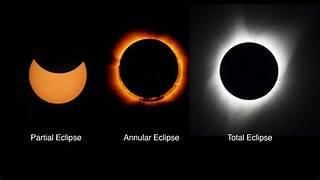
Q15. When can a lunar eclipse occur?
Ans: It can occur only on a full Moon day.

Q16. When can a solar eclipse occur?
Ans: It can occur only on a new Moon day.

Q17. Why don’t eclipses happen every month?
Ans: Because the Moon’s orbit is tilted compared to Earth’s orbit.

Q18. What is a mean solar day?
Ans: It is the time from one noon to the next, about 24 hours.

Q19. How long is one lunar month?
Ans: About 29.5 days.

Q20. How many days does Earth take to revolve once around the Sun?
Ans: About 365¼ days.

Q21. How many days are there in a lunar year of 12 months?
Ans: About 354 days.

Q22. What is the first month in the Indian National Calendar?
Ans: The first month is Chaitra.

Q23. On which date does the Indian National Calendar begin in a normal year?
Ans: It begins on 22 March.

Q24. Who headed the Calendar Reform Committee that designed the Indian National Calendar?
Ans: It was headed by Meghnad Saha.

Q25. Who is known as the Father of the Indian Space Programme?
Ans: Vikram Sarabhai is known as the Father of the Indian Space Programme.

10. Light: Mirrors and Lenses – Very Short Answer Questions

Q1. What type of mirror is the inner side of a spoon?
Ans: The inner side of a spoon is a concave mirror.

Q2. What type of mirror is the outer side of a spoon?
Ans: The outer side of a spoon is a convex mirror.

Q3. Define a spherical mirror.
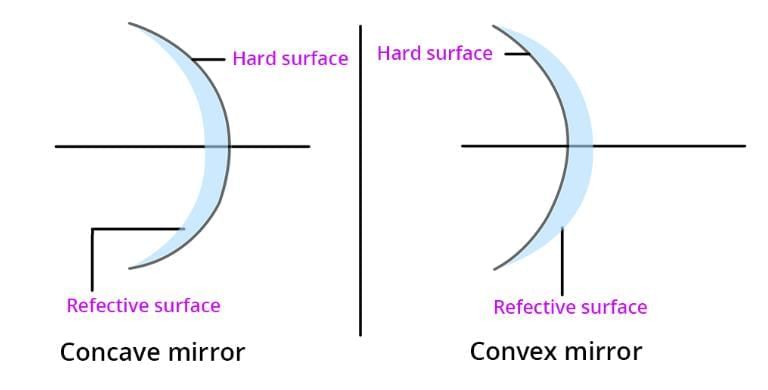
Ans: A spherical mirror is a mirror whose reflecting surface is a part of a hollow sphere.

Q4. In a concave mirror, is the center curved inward or outward?
Ans: In a concave mirror, the center is curved inward.

Q5. In which type of mirror is the reflecting surface curved outward?
Ans: In a convex mirror, the reflecting surface is curved outward.

Q6. What is placed on the glass surface to make a mirror reflective?
Ans: A thin reflective coating like aluminum is placed on the glass surface.

Q7. How does a concave mirror form an image when the object is very close?
Ans: A concave mirror forms an erect and enlarged image when the object is very close.

Q8. How does the image in a convex mirror appear at any distance?
Ans: In a convex mirror, the image is always erect and smaller than the object.

Q9. What type of image does a plane mirror always form?
Ans: A plane mirror always forms an erect image of the same size as the object.

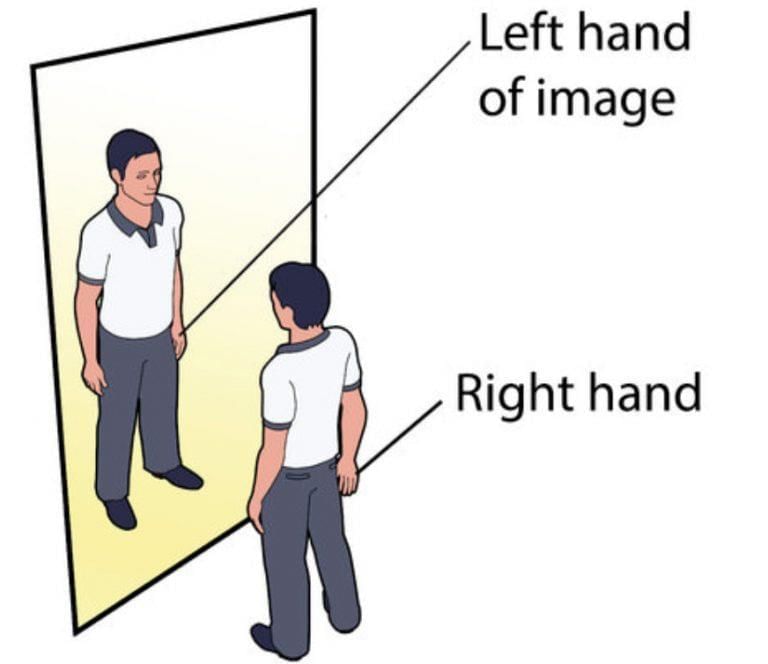
Q10. What is lateral inversion?
Ans: Lateral inversion is the left-right reversal of an image in a mirror.

Q11. Which mirror is used as a reflector in torches and headlights?
Ans: A concave mirror is used as a reflector in torches and headlights.

Q12. Why is a convex mirror used as a vehicle’s side-view mirror?
Ans: A convex mirror gives a wider view and forms smaller, erect images.

Q13. What type of mirror is used in modern telescopes?
Ans: Modern telescopes use a large concave mirror.

Q14. What is the First Law of Reflection?
Ans: The First Law of Reflection states that the angle of incidence equals the angle of reflection.

Q15. What is the Second Law of Reflection?
Ans: The Second Law of Reflection states that the incident ray, normal, and reflected ray all lie in the same plane.

Q16. Name the type of mirror that converges parallel light rays.
Ans: A concave mirror converges parallel light rays.

Q17. Why can a concave mirror burn paper in sunlight?
Ans: A concave mirror focuses sunlight to a small point, increasing heat enough to burn paper.

Q18. What is a lens made of?
Ans: A lens is made of transparent material like glass or plastic.

Q19. Which lens is thicker in the middle than at the edges?
Ans: A convex lens is thicker in the middle than at the edges.

Q20. Which lens is thicker at the edges than in the middle?
Ans: A concave lens is thicker at the edges than in the middle.

Q21. How does a convex lens change an image when the object is very close?
Ans: A convex lens forms an erect and enlarged image when the object is very close.

Q22. How does a concave lens form an image at any distance?
Ans: A concave lens always forms an erect and smaller image than the object.

Q23. What type of lens is called a converging lens?
Ans: A convex lens is called a converging lens.

Q24. What type of lens is called a diverging lens?
Ans: A concave lens is called a diverging lens.

Q25. Which part of the human eye acts as a convex lens?
Ans: The eye’s natural crystalline lens acts as a convex lens.

9. The Amazing World of Solutes, Solvents, and Solutions – Very Short Answer Questions

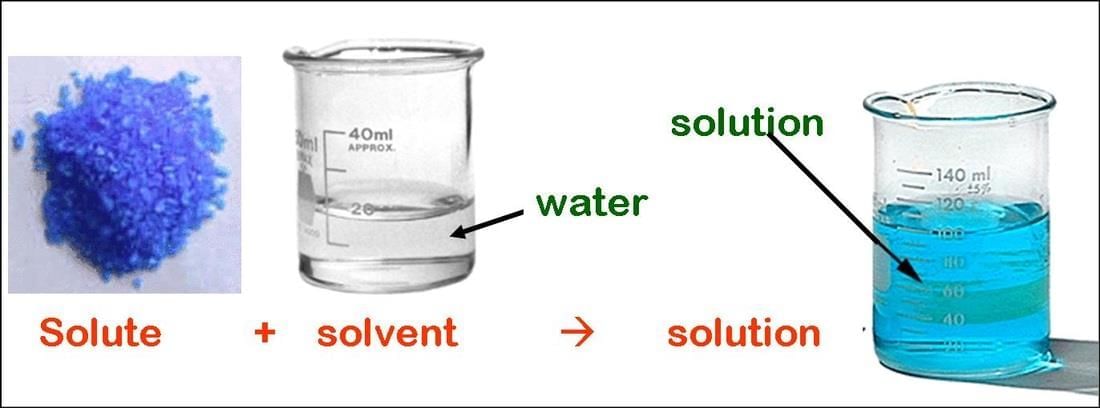
Q1. What is a solution in science?
Answer: A solution is a uniform mixture in which the solute is evenly distributed in the solvent.

Q2. What is a solute in a solid–liquid solution?
Answer: A solute is the solid substance, like salt or sugar, that dissolves in a liquid.

Q3. What is a solvent in a solid–liquid solution?
Answer: A solvent is the liquid, like water, that dissolves the solute.

Q4. What is the basic formula for making a solution?
Answer: The basic formula is solute plus solvent equals solution.

Q5. Why does sugar in water form a clear mixture but sand does not?
Answer: Sugar dissolves to form a homogeneous solution, while sand does not dissolve and settles.

Q6. In air as a gaseous solution, which gas is the solvent?
Answer: In air, nitrogen is the solvent because it is present in the largest amount.

Q7. In vinegar, which component acts as the solute?
Answer: In vinegar, acetic acid is the solute and water is the solvent.

Q8. What does “saturated solution” mean?
Answer: A saturated solution has dissolved as much solute as possible at a given temperature.

Q9. What does “unsaturated solution” mean?
Answer: An unsaturated solution can still dissolve more solute at that temperature.

Q10. What is meant by concentration of a solution?
Answer: Concentration tells how much solute is present in a fixed amount of solution or solvent.

Q11. How does heating usually affect the solubility of most solids in liquids?
Answer: Heating usually increases the solubility of most solids in liquids.

Q12. How does temperature affect the solubility of gases in water?
Answer: The solubility of gases in water generally decreases as temperature increases.

Q13. Why is dissolved oxygen in water important?
Answer: Dissolved oxygen is vital because it allows aquatic plants and animals to breathe and live.

Q14. What is the definition of density?
Answer: Density is the mass per unit volume of a substance.

Q15. What is the formula for density?
Answer: The formula for density is Density = Mass / Volume.

Q16. Which has higher density: water at 4 °C or ice at 0 °C?
Answer: Water at 4 °C has higher density than ice at 0 °C.

Q17. Why does ice float on water?
Answer: Ice floats because it is less dense than liquid water.

Q18. What are the SI units of density?
Answer: The SI unit of density is kilogram per cubic metre (kg/m³).

Q19. Which units are commonly used for liquid density in labs?
Answer: Common lab units for liquid density are g/mL or g/cm³.

Q20. What instrument is used to measure mass in the lab?
Answer: A weighing balance is used to measure mass.

Q21. What instrument is used to measure liquid volume accurately?
Answer: A measuring cylinder is used to measure liquid volume accurately.

Q22. How should you read the water level in a measuring cylinder?
Answer: You should read the bottom of the meniscus at eye level.

Q23. How can you find the volume of an irregular solid like a stone?
Answer: You can find it by water displacement using a measuring cylinder.

Q24. What happens to density when a substance is heated?
Answer: On heating, volume usually increases and density generally decreases.

Q25. How does increasing pressure affect the density of a gas?
Answer: Increasing pressure compresses the gas, decreasing its volume and increasing its density.

8. Nature of Matter: Elements, Compounds, and Mixtures – Very Short Answer Questions

Q1: Name the process by which pure copper sulphate can be obtained from its impure sample.
Ans:
 Crystallisation is the process used to obtain pure copper sulphate from an impure sample.

Q2: What is a homogeneous mixture of two or more substances called?
Ans:
 A solution is a homogeneous mixture of two or more substances.

Q3: What is the component of a solution that is present in a smaller proportion called?
Ans: 
Solute is the component of a solution that is present in a smaller proportion.

Q4: Naphthalene and sand can be separated by the process of
Ans: 
The separation of naphthalene from sand can be achieved through the process of sublimation.

Q5: What is an element made up of?
Ans:
 An element is made up of only one type of atom. For eg: Carbon (C), Iron (Fe), etc.

Q6: What type of mixture is Milk of Magnesia?
Ans:
 Milk of Magnesia is a suspension, not a true solution.

Q7: Give two examples of colloids from your daily life.
Ans:
 Milk and fog.

Q8: Name the constituents of German silver.
Ans: 
German silver is made of copper, zinc, and nickel.

Q9: What is the meaning of the ‘concentration of a solution’?
Ans:  
Concentration of a solution refers to the amount of solute dissolved in a specific amount of solvent or solution. More the solute dissolved in the solvent, more is the concentration of the solution.

Q10: Name the process used to separate liquids which have a difference in boiling points of less than 25°C.
Ans:
 Fractional distillation is the process used to separate liquids that have a boiling point difference of less than 25°C.

Q11: Name two categories of pure substances.
Ans: 
Element and compound.

Q12: Define the term Solvent.
Ans:
 A solvent is the component of a solution present in a larger amount that dissolves the solute.

Q13: What are two types of matter on the basis of composition?
Ans: 
Pure substances and mixtures are the two main types of matter based on composition.

Q14: Name the types of mixtures.
Ans: 
The two types of mixtures are homogeneous and heterogeneous mixtures.

Q15: Give natural examples of a mixture.
Ans: 
Examples of natural mixtures include seawater, mineral ores, and soil.

Q16: Name a metal that is liquid at room temperature.
Ans: 
Mercury is the only metal that is liquid at room temperature.

Q17: What is the principle of separation?
Ans:
 The principle of separation is based on differences in physical or chemical properties such as boiling point, solubility, or particle size.

Q18: Give an example of a liquid and a liquid-type solution.
Ans: 
Vinegar is a solution made from a mixture of acetic acid and water.

Q19: Define dispersion medium.
Ans:
 It is the component which is present in excess and acts as a medium in which colloidal particles are dispersed.

Q20: Define the term heterogeneous mixture.
Ans:
 A mixture where components are not uniformly distributed and properties vary is called heterogeneous.

7. Particulate Nature of Matter – Very Short Answer Questions

Q1: A rubber band is a solid, but it can change its shape. Why?
Ans:
 A rubber band changes shape under force and regains the shape when the force is removed, this is due to less intermolecular force of attraction between the particles.

Q2: When salt or sugar is poured into different kinds of vessels, why do they take the shape of vessel as they are solid?
Ans: 
Salt or sugar takes the shape of containing vessel, but does not change its individual shape. For example : Sugar crystal is cubical and they remain cubical in any vessel.

Q3: We can easily move our hand in the air but to do the same through a solid block of wood. We need a karate expert. Why?
Ans: 
In air, the inter-particle attractive forces are negligible and hence, it is easy to separate the particles in air and we can easily move our hand in air. The interparticle forces are very strong in solids. So, it is not easy to separate the particles and it is not easy to move our hand through a solid block of wood.

Q4: Express the boiling point of water in Celsius as well as Kelvin scale.
Ans: 
100°C and 373 K.

Q5: What is dry ice?
Ans:
 Solid carbon dioxide obtained by cooling and applying pressure on carbon dioxide gas. It does not melt so it is called dry ice.

Q6: What is normal atmospheric pressure?
Ans: 
The atmospheric pressure at sea level is 1 atmosphere and taken as the normal atmospheric pressure.

Q7: Give the temperature at which water exists in two different phases/states.
Ans: 
(i) At 0°C water can be in solid or in liquid state. (ii) At 100°C water can be in liquid or in gaseous state.

Q8: Define matter.
Ans:
 Anything that occupies space and has mass and is felt by senses is called matter.

Q9: Give state of a matter if this substance has neither a fixed shape nor a fixed volume.
Ans:
 Gas.

Q10: What do you mean by vapour?
Ans:
 A substance that is found in gaseous state only at room temperature is called vapour.

Q11: Name any two substances which sublime.
Ans: 
Camphor and naphthalene.

Q12: Which is the slow process, evaporation or boiling?
Ans: 
Evaporation.

Q13: Write the SI unit of temperature?
Ans:
 Kelvin.

Q14: Convert 10°C into Kelvin scale.
Ans:
 273 + 10 = 283 K

Q15: Name two processes from which it may be concluded that the particles of a gas move continuously.
Ans: 
Compressibility and Brownian movement.
Zig-Zag movement of ParticlesQ16: What is common among the three states of matter?
Ans:
 They all contain molecules.

Q17: A substance x is highly compressible and could easily be liquefied. It can also take the shape of the container. Guess the nature of the substance.
Ans:
 Gas.

Q18: Is it possible to turn a liquid into vapour without heating?
Ans:
 Yes, by the process of evaporation as evaporization of water occur below the boiling point under atmospheric pressure.

Q19: When we put CuSO4 in water, after some time we find the solution turns blue. Why? Also, on heating it, what change will occur?
Ans:
 The solution turns blue because of diffusion. On heating the solution, nothing will happen.

Q20: The boiling point of alcohol is 78°C. What is this temperature on Kelvin scale?
Ans: 
K = °C + 273 = 78 + 273 = 351 K

Q21: Why are light and sound not considered as matter?
Ans:
 Light and sound are not considered as matter because they have no mass and do not occupy space.

Q22: We can get the smell of perfume sitting several metres away, why?
Ans: 
This is because perfumes diffuse very fast and can reach to people sitting several metres away.

Q23: Sponge is a solid, yet we are able to compress it. Why?
Ans: 
Sponge has very small holes throughout its structure. These holes are filled with air. When it is compressed, the air in the holes is squeezed out. Thus, we are able to compress it.

Q24: What is plasma?
Ans:
 Plasma is a state of matter consisting of super excited particles of very high energy level.

Q25: Define melting point.
Ans:
 The temperature at which a solid melts to become liquid at the atmospheric pressure is called its melting point.

Q26: What is humidity?
Ans:
 The air holds water vapour, this air with water is called humid air and the amount of water vapour present in the air is called humidity.

6. Pressure, Winds, Storms, and Cyclones – Very Short Answer Questions

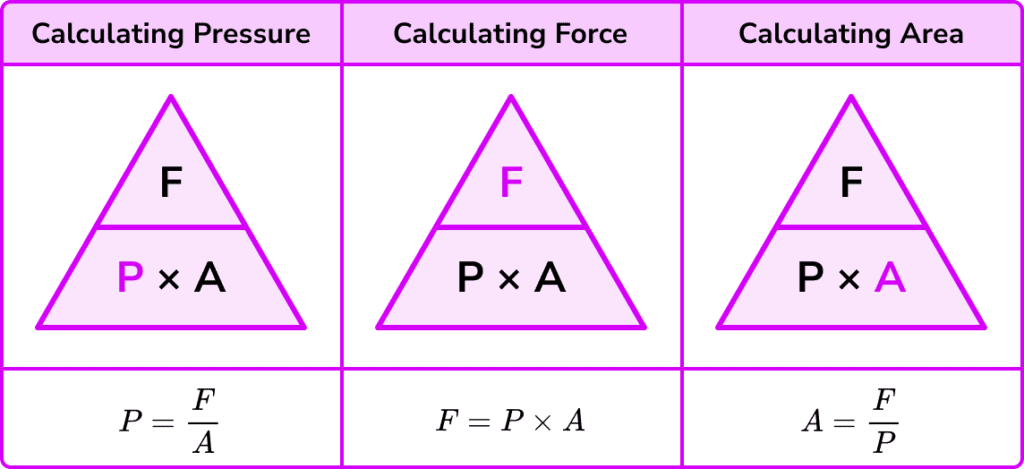
Q1. What is pressure in science?
Answer: Pressure is the force applied per unit area.

Q2. Which component of force is used to calculate pressure on a surface?
Answer: Only the force perpendicular to the surface is used to calculate pressure.

Q3. Why do broad bag straps feel more comfortable than narrow ones?
Answer: Broad straps spread the same force over a larger area, reducing pressure on the shoulders.

Q4. Why does a sharp nail pierce wood more easily than a blunt one?
Answer: A sharp nail has a smaller area at the tip, creating higher pressure for the same force.

Q5. What is the SI unit of pressure?
Answer: The SI unit of pressure is the pascal (Pa), which is N/m².

Q6. How does the height of a water column affect liquid pressure at the bottom?
Answer: Greater height of the water column increases the liquid pressure at the bottom.

Q7. Do liquids exert pressure only downward?
Answer: No, liquids exert pressure in all directions, including sideways on container walls.

Q8. Why are dams built broader at the base?
Answer: Dams are broader at the base to withstand the higher water pressure at greater depths.

Q9. What is atmospheric pressure?
Answer: Atmospheric pressure is the pressure exerted by the air in the atmosphere on all objects.

Q10. Why does a rubber sucker stick to a smooth surface?
Answer: It sticks because outside air pressure is greater than the pressure under the sucker.

Q11. Why aren’t we crushed by atmospheric pressure?
Answer: We aren’t crushed because the pressure inside our bodies balances the outside atmospheric pressure.

Q12. In which units is air pressure commonly reported in weather reports?
Answer: Air pressure is commonly reported in millibar (mb) or hectopascal (hPa).

Q13. In which direction does air move to form wind?
Answer: Air moves from a region of high pressure to a region of low pressure.

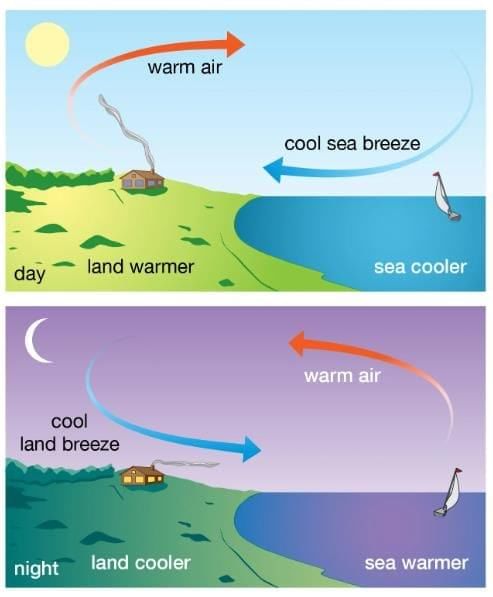
Q14. What causes a sea breeze during the day?
Answer: A sea breeze occurs when cooler air from the sea moves toward warmer low-pressure air over land.

Q15. What causes a land breeze at night?
Answer: A land breeze occurs when cooler air from land moves toward the warmer low-pressure air over the sea.

Land and Sea Breeze

Q16. How do high-speed winds affect air pressure in an area?
Answer: High-speed winds lower the air pressure in the area where they flow rapidly.

Q17. Why can strong winds blow off a weak roof?
Answer: Strong winds create low pressure above the roof, and higher inside pressure can push the roof up.

Q18. What is a thunderstorm?
Answer: A thunderstorm is a storm with lightning and thunder caused by charged clouds and rapid air movement.

Q19. How is lightning formed in a cloud?
Answer: Lightning forms when charge buildup breaks air’s resistance, causing a sudden flow of charges as a bright flash.

Q20. What safety action should you take during lightning outdoors?
Answer: You should avoid tall objects and crouch in a low, open area without lying flat.

Q21. What is the function of a lightning conductor on a building?
Answer: A lightning conductor safely carries electric charges from lightning into the ground.

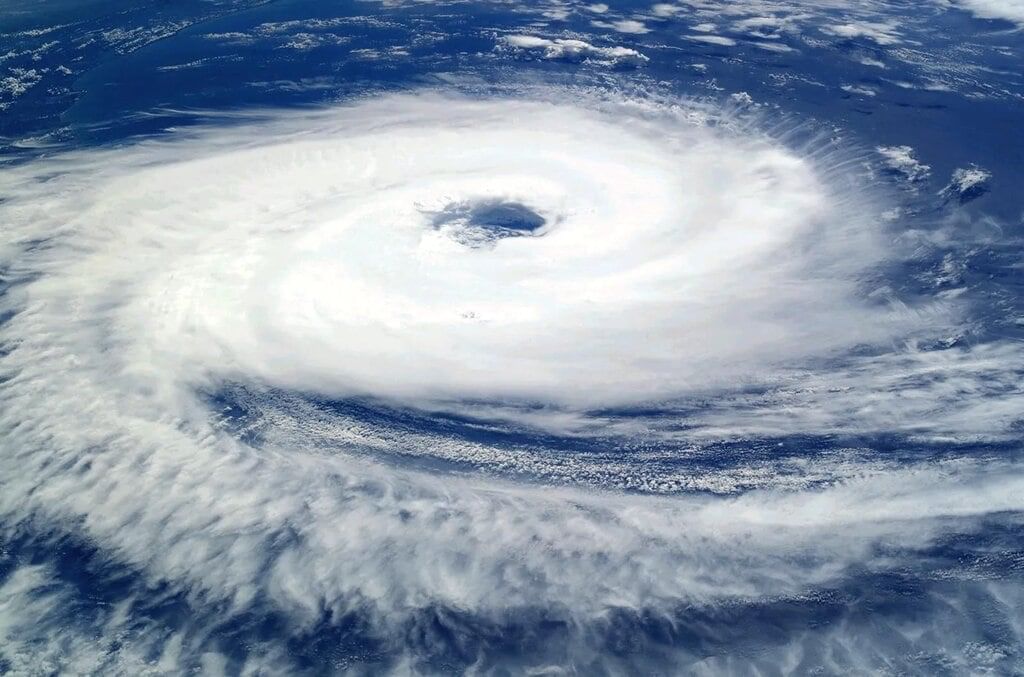
Q22. What is a cyclone?
Answer: A cyclone is a large spinning storm over warm oceans with very low pressure at the center and high-speed winds.

Cyclone

Q23. What provides energy to a cyclone over the ocean?
Answer: Warm, moist air and heat released during condensation provide energy to a cyclone.

Q24. What is a storm surge?
Answer: A storm surge is a high wall of seawater pushed toward land by strong cyclone winds, causing coastal flooding.

Q25. Why do cyclones weaken after landfall?
Answer: Cyclones weaken after landfall because they lose their supply of warm, moist air from the ocean.

5. Exploring Forces – Very Short Answer Questions

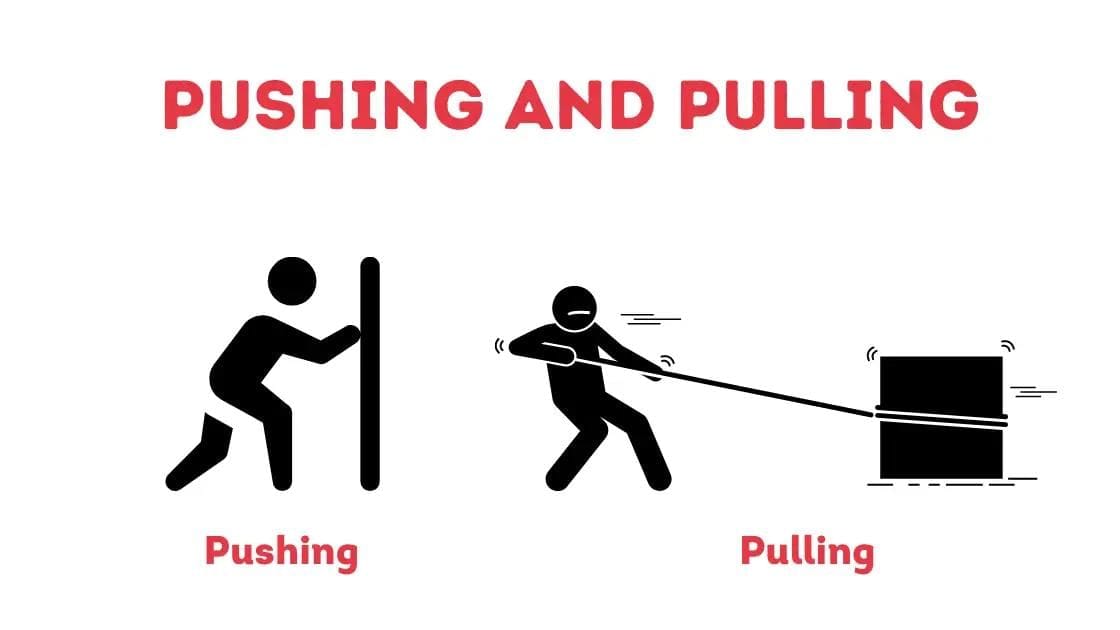
Q1. What is a force in science?
Answer: A force is a push or a pull applied to an object.
Force

Q2. What two basic actions show the presence of force on a box?
Answer: Pushing and pulling a box show the presence of force.

Q3. What can a force do to a stationary object?
Answer: A force can start the motion of a stationary object.

Q4. How can a force change a moving object’s motion?
Answer: A force can speed up, slow down, or stop a moving object.

Q5. How can a force change the direction of an object?
Answer: A force can change direction, like a bat hitting a ball to send it another way.

Q6. How can a force change the shape of an object?
Answer: A force can change shape by squeezing, stretching, rolling, or twisting an object.

Q7. What is the SI unit of force?
Answer: The SI unit of force is the newton (N).

Q8. What does it mean that forces are interactions?
Answer: It means a force arises when two objects interact, like a hand pushing a table.

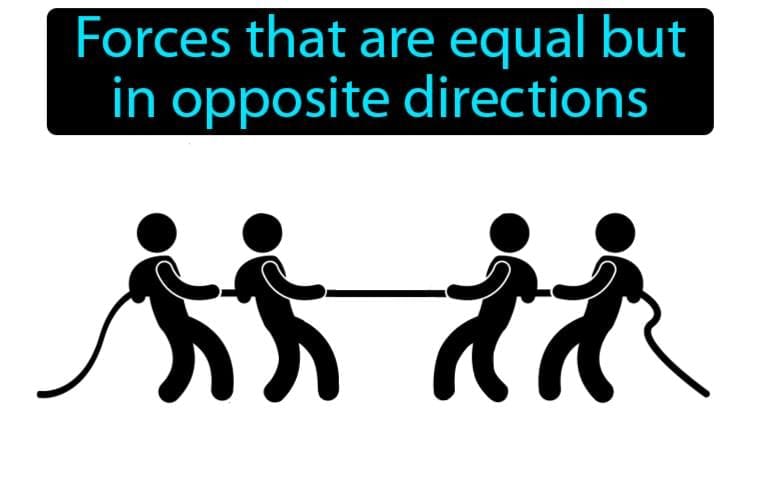
Q9. When do balanced forces occur?
Answer: Balanced forces occur when forces cancel out so there is no change in motion.
Balanced Forces

Q10. What happens to the force when the interaction stops?
Answer: The force disappears as soon as the interaction stops.

Q11. What is a contact force?
Answer: A contact force acts only when two objects touch each other.

Q12. What is muscular force?
Answer: Muscular force is the force produced by muscles during actions like lifting or kicking.

Q13. What is friction?
Answer: Friction is a contact force that opposes motion between surfaces in contact.

Q14. How does surface roughness affect friction?
Answer: Rough surfaces produce more friction than smooth surfaces.

Q15. What are drag and air resistance?
Answer: Drag and air resistance are frictional forces from air or water that oppose motion.

Q16. What is a non-contact force?
Answer: A non-contact force acts without physical contact between objects.

Q17. What is magnetic force?
Answer: Magnetic force is the attraction or repulsion between magnets or magnetic materials at a distance.

Q18. What is electrostatic force?
Answer: Electrostatic force is the attraction or repulsion between charged objects without contact.

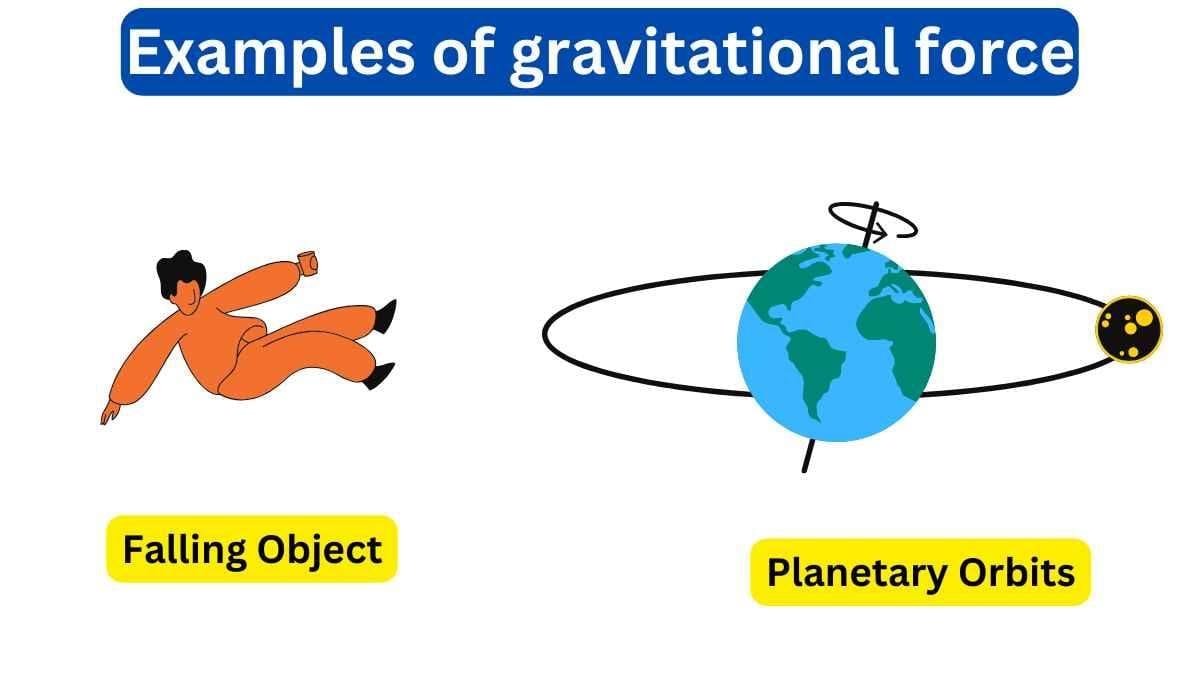
Q19. What is gravitational force?
Answer: Gravitational force is the pull with which Earth attracts objects towards itself.

Q20. What is weight?
Answer: Weight is the force with which Earth pulls an object due to gravity.

Q21. Does mass change from place to place?
Answer: Mass does not change from place to place.

Q22. Does weight change from place to place?
Answer: Weight can change from place to place if gravity changes.

Q23. What instrument measures weight as a force?
Answer: A spring balance measures weight in newtons.

Q24. What is upthrust or buoyant force?
Answer: Upthrust is the upward force a liquid exerts on an immersed object.

Q25. What does Archimedes’ principle state about floating?
Answer: Archimedes’ principle states that an object experiences an upward force equal to the weight of the displaced liquid.

4. Electricity: Magnetic and Heating Effects – Very Short Answer Questions

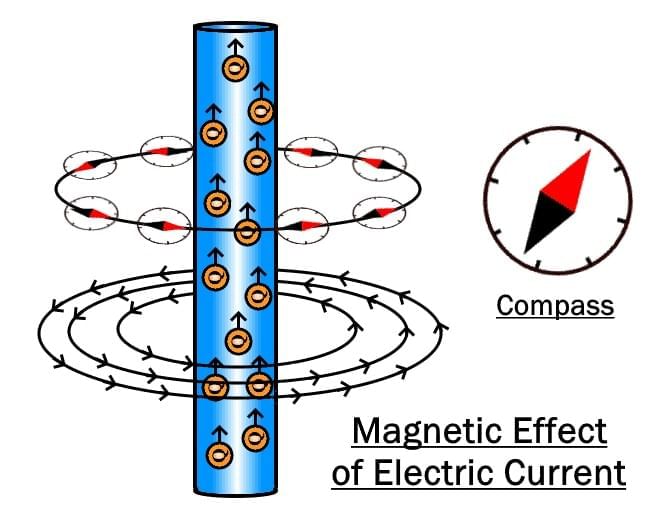
Q1. What happens around a wire when electric current flows through it?
Answer: A magnetic field is produced around the wire.

Q2. How can you detect the magnetic effect of a current-carrying wire?
Answer: By using a magnetic compass to see the needle deflect.

Q3. Who discovered the magnetic effect of electric current?
Answer: Hans Christian Oersted discovered it in 1820.

Q4. What is an electromagnet?
Answer: An electromagnet is a coil of wire around an iron core that becomes magnetic when current flows.

Q5. What happens to an electromagnet when the current is switched off?
Answer: It loses its magnetism.

Q6. How can you increase the strength of an electromagnet?
Answer: By increasing current, adding more coil turns, or using an iron core.

Q7. How can you reverse the poles of an electromagnet?
Answer: By reversing the direction of the current.

Q8. Where are lifting electromagnets commonly used?
Answer: In factories and scrap yards to move heavy metal objects.

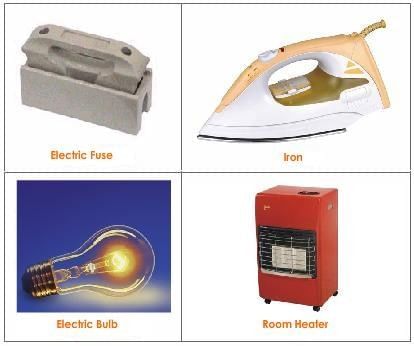
Q9. What causes a current-carrying wire to heat up?
Answer: Resistance in the wire converts electrical energy into heat.

Q10. Which material is commonly used as a heating element?
Answer: Nichrome is commonly used.

Q11. Name one device that works on the heating effect of electric current.
Answer: An electric iron works on the heating effect.

Q12. What safety step helps prevent overheating in household wiring?
Answer: Using correctly rated wires, plugs, and safety devices.

Q13. What is resistance?
Answer: Resistance is the property of a material that opposes the flow of electric current.

Q14. Which wire heats more: long thin or short thick, for the same material?
Answer: A long thin wire heats more.

Q15. What is an electric cell?
Answer: An electric cell is a device that produces electricity through a chemical reaction.

Q16. What are the two terminals of a cell called?
Answer: Positive terminal and negative terminal.

Q17. What acts as the electrolyte in a lemon battery?
Answer: Lemon juice acts as the electrolyte.

Q18. What are the electrodes in a simple lemon cell example?
Answer: A copper strip and an iron nail.

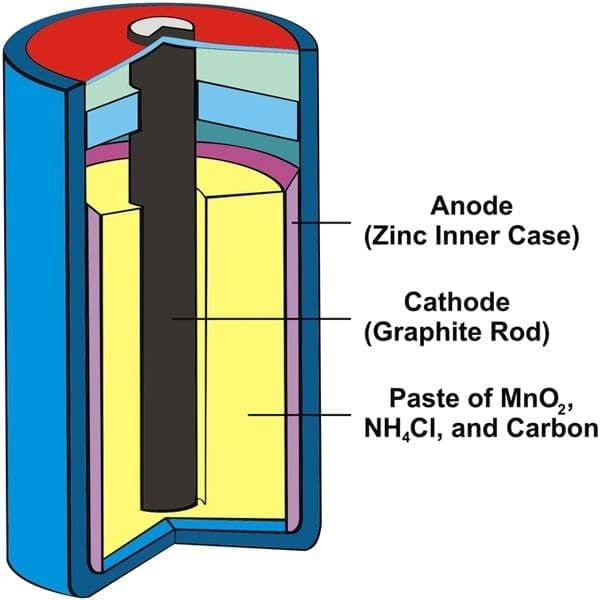
Q19. What is a dry cell?
Answer: A dry cell is a common single-use battery with a moist paste electrolyte.

Q20. Which part of a dry cell is the negative terminal?
Answer: The zinc container is the negative terminal.

Q21. Which part of a dry cell is the positive terminal?
Answer: The carbon rod at the center is the positive terminal.

Q22. What is a rechargeable battery?
Answer: A battery that can be recharged and used many times.

Q23. Name a commonly used rechargeable battery type today.
Answer: Lithium-ion battery.

Q24. What is an electrolyte?
Answer: A substance that conducts electricity by the movement of ions.

Q25. What two main effects can electric current produce besides lighting a bulb?
Answer: It can produce magnetism and heat.