13. Our Home: Earth, a Unique Life Sustaining Planet – Worksheet Solutions

Multiple Choice Questions (MCQs)

Instruction: Select the correct option for each question.

  1. If Earth had never known life, which change in its atmosphere would most likely be true?
    a) High oxygen from photosynthesis
    b) Thick ozone layer formed naturally without oxygen
    c) Very low oxygen and no biologically produced ozone
    d) Same composition as today
    Answer: c) Very low oxygen and no biologically produced ozone
    Without life (photosynthesis), atmospheric O₂ and the ozone layer would not build up.
  2. Which surface feature would most likely be less abundant without life-driven soil formation?
    a) Thick, organic-rich soils
    b) Basaltic rocks
    c) Impact craters
    d) Volcanoes
    Answer: a) Thick, organic-rich soils
    Soils on Earth are greatly enriched and structured by organisms; without life, organic-rich soils would be scarce.
  3. In a lifeless Earth, which gas would most likely be higher due to unbalanced volcanic emissions?
    a) Oxygen (O₂)
    b) Carbon dioxide (CO₂)
    c) Ozone (O₃)
    d) Methane (CH₄) from microbes
    Answer: b) Carbon dioxide (CO₂)
    Without biological carbon sinks, volcanic CO₂ would accumulate more.
  4. Without plants and microbes, the long-term carbon cycle would be mainly controlled by:
    a) Photosynthesis and respiration
    b) Weathering, volcanism, and ocean chemistry
    c) Pollination and seed dispersal
    d) Decomposition by fungi
    Answer: b) Weathering, volcanism, and ocean chemistry
    Abiotic processes would dominate cycles in a lifeless world.
  5. Which color would Earth most likely appear from space without life?
    a) Deep blue with green land patches
    b) Mostly brown/grey rocks with blue oceans and white clouds
    c) Entirely green
    d) Mostly white
    Answer: b) Mostly brown/grey rocks with blue oceans and white clouds
    No vegetation means no green “biosignature” on land.
  6. On a lifeless Earth, the nitrogen cycle would be missing its main conversion by:
    a) Lightning only
    b) Microbes (nitrogen fixation/denitrification)
    c) Volcanoes
    d) Wind erosion
    Answer: b) Microbes (nitrogen fixation/denitrification)
    Biological N-fixation and denitrification are central today; without life they vanish.
  7. Which landform signal would likely be more preserved without life?
    a) Rapid soil-covered slopes
    b) Stable, sharp rock outcrops and more exposed craters
    c) Dense root-bound riverbanks
    d) Organic peat bogs
    Answer: b) Stable, sharp rock outcrops and more exposed craters
    No bioturbation or vegetation cover means less soil, more exposed bedrock/craters.
  8. Absent life, which ocean characteristic would most likely differ?
    a) Abundant dissolved oxygen from phytoplankton
    b) Strong biological pump transporting carbon to deep ocean
    c) No plankton blooms; chemistry set by abiotic processes
    d) High biodiversity reefs
    Answer: c) No plankton blooms; chemistry set by abiotic processes
    No marine life means no biological pump or blooms.
  9. Which protective system would be weaker or absent without life?
    a) Planetary magnetic field
    b) Ozone layer sustained by O₂ from photosynthesis
    c) Plate tectonics
    d) Ocean tides
    Answer: b) Ozone layer sustained by O₂ from photosynthesis
    O₃ depends on O₂; without life, UV shielding by ozone declines strongly.
  10. On a lifeless Earth, seasonal changes would mainly be due to:
    a) Migration and leaf fall
    b) Tilt-driven insolation patterns only
    c) Flowering cycles
    d) Plankton blooms
    Answer: b) Tilt-driven insolation patterns only
    No biosphere responses; only physical solar-angle seasons remain.

Fill in the Blanks

Instruction: Fill in the blanks with the correct word based on the chapter.

  1. Without photosynthesis, atmospheric __________ would remain very low and ozone would be weak.
    Answer: oxygen (O₂)
    O₃ forms from O₂; both depend on life today.
  2. In a lifeless world, carbon would build up as __________ from volcanic emissions.
    Answer: carbon dioxide (CO₂)
    Biological sinks would be absent.
  3. Soils would be thin and largely mineral because there is no input of __________ matter.
    Answer: organic
    Humus and structure come from life.
  4. Ocean chemistry would lack a biological __________ that moves carbon to the deep sea.
    Answer: pump
    The biological pump is driven by plankton.
  5. Lightning would be one of the few natural sources converting atmospheric nitrogen, in the absence of __________ fixation by microbes.
    Answer: biological (nitrogen)
    No N-fixing bacteria means far less bioavailable nitrogen.
  6. Land surfaces would show more visible impact __________ without rapid biological weathering and soil cover.
    Answer: craters
    Less erosion by roots/biota means more preserved craters.
  7. Without forests and phytoplankton, Earth’s surface would lack the green __________ of life.
    Answer: biosignature
    Vegetation color is a life indicator.
  8. Climate would be set mainly by orbital position, volcanism, oceans, and the greenhouse effect, not by __________ feedbacks.
    Answer: biological
    No vegetation or microbial feedback loops.
  9. The atmosphere, hydrosphere, geosphere, and magnetosphere would still interact, but the __________ would be missing.
    Answer: biosphere
    Life is the missing sphere.
  10. Satellite images would show bare rock, deserts, ice, clouds, and oceans, but no __________ patterns from crops or forests.
    Answer: vegetation
    No green canopies or agricultural mosaics.

Very Short Answer Questions

Instruction: Answer the following questions in one line.

  1. What key atmospheric layer would be weaker without life?
    Answer: The ozone layer, because it depends on oxygen from photosynthesis.
  2. How would continents look from space without life?
    Answer: Mostly brown/grey bare rock and sand, lacking green vegetation.
  3. Which major biogeochemical cycles would be missing their main drivers?
    Answer: The carbon and nitrogen cycles would lack biological processes.
  4. Would Earth still have plate tectonics without life?
    Answer: Yes; tectonics is driven by internal heat, not biology.
  5. What would replace forests in shaping land surfaces?
    Answer: Physical processes like wind, water erosion, volcanism, and impacts.

Short Answer Questions

Instruction: Answer the following questions in 2–3 lines.

  1. Explain why oxygen would be scarce on a lifeless Earth.
    Answer: Free O₂ on Earth is mainly produced by photosynthesis. Without life, oxygen would react with rocks and gases and not accumulate, leaving a thin or negligible O₂ atmosphere.
  2. How would oceans differ without marine life?
    Answer: No plankton blooms, coral reefs, or biological pump; carbon cycling would be set by chemistry and physics alone, and dissolved oxygen patterns would be purely abiotic.
  3. What visual signatures used by satellites to track ecosystems would disappear?
    Answer: Vegetation greenness (NDVI), crop patterns, algal blooms, and deforestation scars would be absent; images would be dominated by rock, sand, ice, water, and clouds.
  4. Would weather and climate still vary in a lifeless world?
    Answer: Yes. Seasons, winds, clouds, and rainfall would still occur due to solar heating, rotation, and ocean–atmosphere physics, but without biological feedbacks.
  5. How would the carbon cycle be balanced without photosynthesis and respiration?
    Answer: By slow abiotic processes: volcanic outgassing adding CO₂, silicate weathering and ocean chemistry removing CO₂, and carbonate rock formation over geologic timescales.

Match the Following

Instruction: Match Column A with the correct option in Column B.

  1. Column A:
    1) Ozone layer
    2) Biological pump
    3) Nitrogen fixation
    4) Humus-rich soil
    5) Green vegetation signal
  2. Column B:
    a) Satellite NDVI/green cover from plants
    b) Deep-ocean carbon transport by plankton
    c) Thicker, organic topsoil maintained by decomposers
    d) UV shield formed from atmospheric O₂
    e) Conversion of N₂ to usable forms by microbes

Correct Matches:

  1. Ozone layer — d) UV shield formed from atmospheric O₂
    Explanation: O₃ derives from O₂; both depend on life today.
  2. Biological pump — b) Deep-ocean carbon transport by plankton
    Explanation: Marine life moves carbon into the deep sea.
  3. Nitrogen fixation — e) Conversion of N₂ to usable forms by microbes
    Explanation: Key biological pathway for bioavailable nitrogen.
  4. Humus-rich soil — c) Thicker, organic topsoil maintained by decomposers
    Explanation: Decomposition builds and sustains fertile soils.
  5. Green vegetation signal — a) Satellite NDVI/green cover from plants
    Explanation: The “green” biosignature indicates living plant cover.
12. How Nature Works in Harmony – Worksheet Solutions

Multiple Choice Questions (MCQs)

Instruction: Select the correct option for each question.

  1. What is a habitat?
    a) Only the place where animals hunt
    b) The place and conditions where an organism lives and survives
    c) A community of only plants
    d) Only the climate of an area
    Answer: b) The place and conditions where an organism lives and survives
    A habitat provides food, water, shelter, space, and suitable abiotic conditions.
  2. Which pair correctly shows biotic and abiotic components?
    a) Soil (biotic), fish (abiotic)
    b) Sunlight (biotic), bacteria (abiotic)
    c) Tree (biotic), sunlight (abiotic)
    d) Frog (abiotic), air (biotic)
    Answer: c) Tree (biotic), sunlight (abiotic)
    Living organisms are biotic; non-living factors like light, air, water are abiotic.
  3. A population is best defined as:
    a) All living and non-living things in an area
    b) Different species living together
    c) Members of the same species in a given area and time
    d) All plants in all habitats
    Answer: c) Members of the same species in a given area and time
    Population counts individuals of one species in a defined space and time.
  4. Pollination is the transfer of:
    a) Seeds from fruit to soil
    b) Pollen from stamen to carpel
    c) Roots to shoots
    d) Water to leaves
    Answer: b) Pollen from stamen to carpel
    Pollination enables fruit and seed formation.
  5. Which sequence correctly shows a food chain?
    a) Snake → Eagle → Grasshopper
    b) Grass → Hare → Tiger
    c) Eagle → Snake → Frog → Grasshopper
    d) Frog → Grass → Grasshopper
    Answer: b) Grass → Hare → Tiger
    Energy flows from producer to herbivore to carnivore.
  6. Decomposers like mushrooms and bacteria are important because they:
    a) Produce seeds
    b) Make sunlight
    c) Break down dead matter and recycle nutrients
    d) Stop plant growth
    Answer: c) Break down dead matter and recycle nutrients
    They return nutrients to soil, preventing waste buildup.
  7. In the pond example, removing fish can lead to less plant pollination because:
    a) Fish pollinate flowers directly
    b) Fish eat pollinators
    c) Dragonflies increase and reduce pollinators, lowering pollination
    d) Plants stop growing without fish
    Answer: c) Dragonflies increase and reduce pollinators, lowering pollination
    This shows cascading effects in a community.
  8. Producers in an ecosystem are:
    a) Animals that hunt
    b) Plants that make food by photosynthesis
    c) Fungi that decompose
    d) Humans only
    Answer: b) Plants that make food by photosynthesis
    Producers form the base of food chains and pyramids.
  9. Which interaction benefits both partners?
    a) Parasitism
    b) Competition
    c) Mutualism
    d) Predation
    Answer: c) Mutualism
    Example: bees and flowers; both gain.
  10. Why are mangroves like the Sundarbans valuable?
    a) Only for tourism
    b) They reduce floods, store carbon, and support biodiversity
    c) They increase storms
    d) They have no role in fisheries
    Answer: b) They reduce floods, store carbon, and support biodiversity
    Mangroves protect coasts and are rich ecosystems.

Fill in the Blanks

Instruction: Fill in the blanks with the correct word based on the chapter.

  1. The living parts of a habitat are called __________ components.
    Answer: biotic
    Include plants, animals, and microbes.
  2. The non-living parts like air, water, soil, and light are __________ components.
    Answer: abiotic
    They influence survival and distribution.
  3. A group of different populations living and interacting in one area is called a __________.
    Answer: community
    Includes all biotic components.
  4. Plants are called __________ because they make their own food.
    Answer: producers (autotrophs)
    They convert sunlight into chemical energy.
  5. Organisms that eat both plants and animals are called __________.
    Answer: omnivores
    Example: fox, mouse (depending on diet).
  6. Interconnected feeding relationships form a __________.
    Answer: food web
    More realistic than a single chain.
  7. Organisms like fungi and bacteria that break down dead matter are called __________.
    Answer: decomposers (saprotrophs)
    They recycle nutrients back to the soil.
  8. The position of an organism in a food chain is its __________ level.
    Answer: trophic
    Producers are first trophic level.
  9. Cutting too many trees and pollution can disturb __________ balance.
    Answer: ecological (ecosystem)
    Large disruptions harm stability.
  10. Areas like national parks and sanctuaries are set aside as __________ areas.
    Answer: protected
    They conserve habitats and wildlife.

Very Short Answer Questions

Instruction: Answer the following questions in one line.

  1. Define habitat.
    Answer: The place and set of conditions where an organism lives and survives.
  2. What is pollination?
    Answer: Transfer of pollen from stamen to carpel to enable seed and fruit formation.
  3. Name the three main consumer types.
    Answer: Herbivores, carnivores, and omnivores.
  4. Who are decomposers? Give one example.
    Answer: Organisms that break down dead matter; example: mushrooms (fungi) or bacteria.
  5. What is one role of migratory birds?
    Answer: They act as pollinators and seed dispersers linking distant habitats.

Short Answer Questions

Instruction: Answer the following questions in 2–3 lines.

  1. How are biotic and abiotic components linked in an ecosystem?
    Answer: Abiotic factors like sunlight, water, and soil enable plants to grow; plants feed animals; decomposers return nutrients to soil—forming a continuous cycle linking living and non-living parts.
  2. Why does diversity in a habitat help maintain balance?
    Answer: Many species use resources differently (time, place, food), reducing competition and stabilizing populations through food webs and checks and balances.
  3. Explain the pond cascade when fish are removed.
    Answer: Fewer fish → more dragonflies (their larvae survive) → fewer pollinators (eaten by dragonflies) → less pollination → reduced plant seed set and growth.
  4. How do mangroves protect coasts and climate?
    Answer: Their roots slow waves and storm surges, reducing floods, and their trees store carbon and support rich biodiversity.
  5. Why can overuse of pesticides harm farms long-term?
    Answer: It kills helpful soil organisms and natural predators, reduces humus and soil fertility, can create resistant pests, and harms pollinators needed for crops.

Match the Following

Instruction: Match Column A with the correct option in Column B.

  1. Column A:
    1) Producer
    2) Decomposer
    3) Mutualism
    4) Trophic level
    5) Protected area
  2. Column B:
    a) Relationship where both partners benefit (e.g., bees–flowers)
    b) Position of an organism in a food chain
    c) National park/sanctuary conserving habitats
    d) Plant making food via photosynthesis
    e) Mushroom/bacteria recycling nutrients

Correct Matches:

  1. Producer — d) Plant making food via photosynthesis
    Explanation: Plants form the base of energy flow.
  2. Decomposer — e) Mushroom/bacteria recycling nutrients
    Explanation: They break down dead matter and return nutrients to soil.
  3. Mutualism — a) Relationship where both partners benefit (e.g., bees–flowers)
    Explanation: Pollinators get nectar; plants get pollinated.
  4. Trophic level — b) Position of an organism in a food chain
    Explanation: Indicates step in energy transfer.
  5. Protected area — c) National park/sanctuary conserving habitats
    Explanation: Legal protection helps biodiversity survive.

11. Keeping Time with the Skies – Worksheet Solutions

Multiple Choice Questions (MCQs)

Instruction: Select the correct option for each question.

  1. Why can we sometimes see the Moon in the daytime?
    a) The Moon produces its own light
    b) The Moon is closer than the Sun
    c) Moonrise can occur in the afternoon and the Moon reflects sunlight
    d) The Sun is off during the day
    Answer: c) Moonrise can occur in the afternoon and the Moon reflects sunlight
    The Moon reflects sunlight and rises ~50 minutes later each day, so it can be above the horizon in daylight.
  2. What causes the phases of the Moon?
    a) Earth’s shadow falling on the Moon every night
    b) Changing relative positions of the Sun, Earth, and Moon
    c) Clouds covering the Moon
    d) Changes in Moon’s shape
    Answer: b) Changing relative positions of the Sun, Earth, and Moon
    We see different portions of the Moon’s sunlit half as it orbits Earth.
  3. Which day corresponds to no visible Moon in the sky?
    a) Full Moon (Purnima)
    b) Half Moon
    c) New Moon (Amavasya)
    d) Gibbous Moon
    Answer: c) New Moon (Amavasya)
    On new Moon day, the non-illuminated side faces Earth.
  4. In India, the waxing period of the Moon is called:
    a) Krishna Paksha
    b) Shukla Paksha
    c) Dakshinayana
    d) Uttarayana
    Answer: b) Shukla Paksha
    Shukla Paksha is the brightening phase from new Moon to full Moon.
  5. Which statement about eclipses is correct?
    a) Lunar eclipses happen every full Moon
    b) Phases are caused by eclipses
    c) Lunar eclipses can occur only on full Moon day
    d) Solar eclipses can occur only on full Moon day
    Answer: c) Lunar eclipses can occur only on full Moon day
    Eclipses need special alignment; lunar on full Moon, solar on new Moon.
  6. The length of time from one full Moon to the next is about:
    a) 7 days
    b) 14 days
    c) 29.5 days
    d) 365 days
    Answer: c) 29.5 days
    This synodic month defines the lunar month.
  7. The Gregorian calendar keeps the year aligned with seasons by:
    a) Adding a month every year
    b) Subtracting a week in winter
    c) Adding a leap day every 4 years with century rules
    d) Ignoring the extra quarter day
    Answer: c) Adding a leap day every 4 years with century rules
    Leap rule: divisible by 4; skip century years unless divisible by 400.
  8. Which calendar combines lunar months with solar-year adjustments?
    a) Pure lunar calendar
    b) Solar calendar
    c) Luni-solar calendar
    d) Sidereal-only calendar
    Answer: c) Luni-solar calendar
    It inserts an extra month (e.g., Adhika Maasa) to sync with seasons.
  9. Convex mirrors on vehicles carry the warning because they:
    a) Invert the image
    b) Magnify the image
    c) Show diminished images that seem farther
    d) Block sunlight
    Answer: c) Show diminished images that seem farther
    (Context link to earlier optics is fine) Convex mirrors give a wider view with smaller images.
  10. Which ISRO mission is for studying the Sun?
    a) Chandrayaan-2
    b) Mangalyaan
    c) Aditya L1
    d) AstroSat only studies Earth
    Answer: c) Aditya L1
    Aditya L1 observes the Sun from a special orbit near L1.

Fill in the Blanks

Instruction: Fill in the blanks with the correct word based on the chapter.

  1. The changing bright shapes of the Moon seen from Earth are called its __________.
    Answer: phases
    Phases are waxing/waning shapes like crescent, gibbous, full, new.
  2. The period from full Moon to new Moon is called __________ Paksha.
    Answer: Krishna
    Krishna Paksha is the waning fortnight.
  3. The Moon does not emit light; it __________ sunlight.
    Answer: reflects
    Its surface reflects the Sun’s light.
  4. The time from one noon (shortest shadow) to the next is about 24 hours and is called a __________ solar day.
    Answer: mean
    Mean solar day standardizes daily timekeeping.
  5. A lunar month is about __________ days long.
    Answer: 29.5
    Full Moon to full Moon is ~29.5 days.
  6. The Indian National (Saka) Calendar begins on __________ March in a normal year.
    Answer: 22
    In leap years, it begins on 21 March.
  7. Years divisible by 4 are leap years, with exceptions for century years not divisible by __________.
    Answer: 400
    Century years must be divisible by 400 to be leap years.
  8. Artificial satellites are human-made objects placed into __________ around Earth.
    Answer: orbit
    They circle Earth to provide services like communication and weather data.
  9. Space junk from old satellites and rockets is called space __________.
    Answer: debris
    Debris can collide with working satellites.
  10. Vikram Sarabhai is known as the Father of the Indian __________ programme.
    Answer: space
    VSSC is named in his honor.

Very Short Answer Questions

Instruction: Answer the following questions in one line.

  1. Why don’t eclipses happen every month?
    Answer: The Moon’s orbit is tilted, so Sun–Earth–Moon don’t align perfectly most months.
  2. Which phase shows more than half illuminated but not full?
    Answer: Gibbous.
  3. How much later does the Moon rise each successive day on average?
    Answer: About 50 minutes later.
  4. Name one festival linked to the new Moon.
    Answer: Diwali (new Moon of Kartika).
  5. Give one use of artificial satellites.
    Answer: Weather monitoring (also communication, navigation, disaster management).

Short Answer Questions

Instruction: Answer the following questions in 2–3 lines.

  1. Explain why the Moon appears to change shape.
    Answer: Half the Moon is always sunlit; as the Moon orbits Earth, we see varying fractions of the lit half. This changing view creates phases like crescent, gibbous, full, and new.
  2. Differentiate waxing and waning phases.
    Answer: Waxing (Shukla Paksha): illuminated portion grows from new to full. Waning (Krishna Paksha): illuminated portion decreases from full to new.
  3. How do lunar, solar, and luni-solar calendars differ?
    Answer: Lunar calendars track Moon phases (≈354 days/year). Solar calendars track Earth’s revolution and seasons (≈365 days). Luni-solar calendars use lunar months with periodic extra months to match the solar year.
  4. What is the Indian National (Saka) Calendar and when does it start?
    Answer: A solar calendar used officially in India; it has 365 days and starts on 22 March (21 March in leap years).
  5. List two ISRO missions and their focus.
    Answer: Chandrayaan (Moon exploration) and Aditya L1 (studying the Sun); also AstroSat (space observatory) and Mangalyaan (Mars).

Match the Following

Instruction: Match Column A with the correct option in Column B.
Correct Matches:

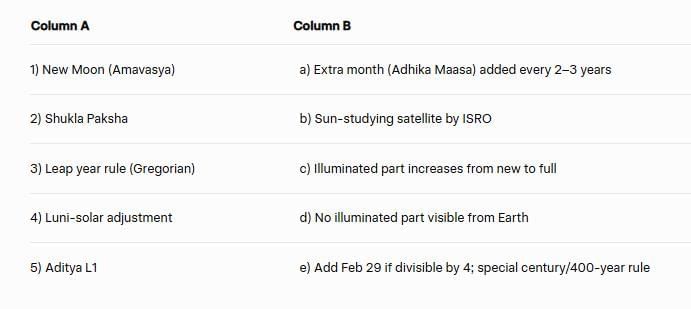
  1. New Moon (Amavasya) — d) No illuminated part visible from Earth
    Explanation: The dark side faces Earth on new Moon day.
  2. Shukla Paksha — c) Illuminated part increases from new to full
    Explanation: Waxing fortnight in Indian tradition.
  3. Leap year rule (Gregorian) — e) Add Feb 29 if divisible by 4; special century/400-year rule
    Explanation: Keeps calendar aligned with seasons.
  4. Luni-solar adjustment — a) Extra month (Adhika Maasa) added every 2–3 years
    Explanation: Synchronizes lunar months with the solar year.
  5. Aditya L1 — b) Sun-studying satellite by ISRO
    Explanation: Observes the Sun from the L1 point region.

10. Light: Mirrors and Lenses – Worksheet Solutions

Multiple Choice Questions (MCQs)

Instruction: Select the correct option for each question.

  1. Which mirror makes objects appear smaller but gives a wider field of view?
    a) Plane mirror
    b) Concave mirror
    c) Convex mirror
    d) Two-way mirror
    Answer: c) Convex mirror
    Convex mirrors always form erect, diminished images and cover a wider area—used as side-view mirrors.
  2. Looking at the inner (curved inward) side of a shiny spoon, your face appears:
    a) Erect and diminished
    b) Inverted (upside down)
    c) Erect and same size
    d) Erect and magnified at all distances
    Answer: b) Inverted (upside down)
    The inner side behaves like a concave mirror, forming inverted images when the object is farther.
  3. The warning “Objects in mirror are closer than they appear” is written because a convex mirror:
    a) Inverts images
    b) Forms enlarged images
    c) Forms diminished images
    d) Does not follow reflection laws
    Answer: c) Forms diminished images
    Diminished (smaller) images make objects seem farther than they are.
  4. Which statement about a concave mirror is correct?
    a) Always forms erect images
    b) Always forms diminished images
    c) Can form enlarged erect images when object is close
    d) Never focuses light
    Answer: c) Can form enlarged erect images when object is close
    Concave mirrors give enlarged erect images at small distances; inverted images when farther.
  5. First law of reflection states:
    a) i + r = 90°
    b) i = r
    c) i > r
    d) i < r
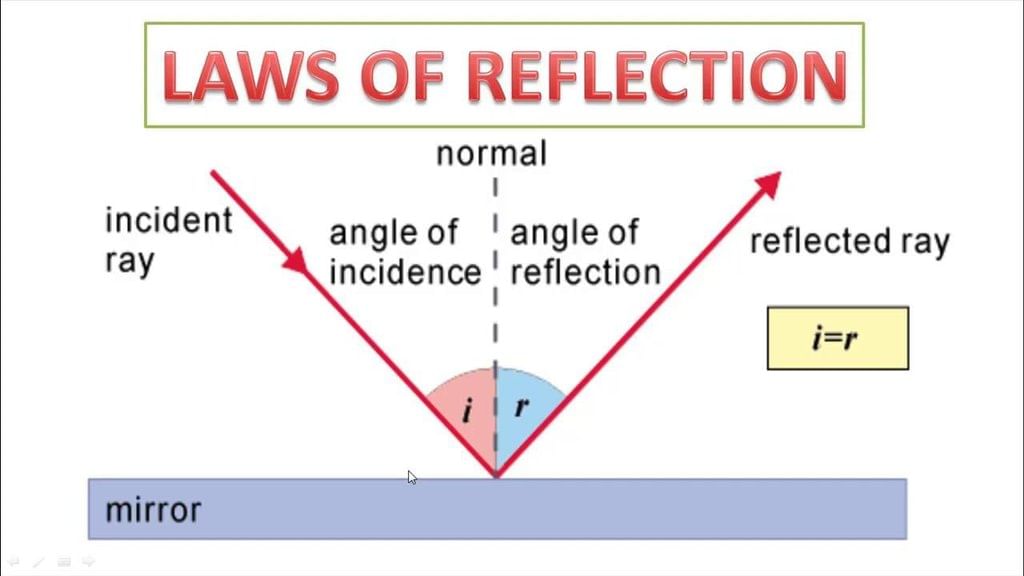
    Answer: b) i = r
    Angle of incidence equals angle of reflection for all mirrors.

Fill in the Blanks

Instruction: Fill in the blanks with the correct word based on the chapter.

  1. A concave mirror can form an __________ image when the object is very close.
    Answer: enlarged (erect)
    Close objects appear bigger and upright.
  2. A convex mirror always forms an __________ and __________ image.
    Answer: erect; diminished
    Hence its use in vehicle mirrors for wider view.
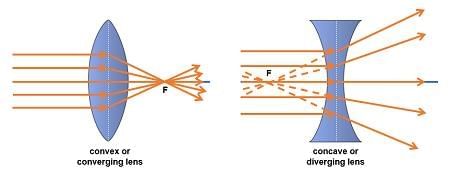
  3. A convex lens is thicker at the __________ than at the edges.
    Answer: middle
    Convex lenses converge light.
  4. A concave lens is a __________ lens because it spreads light rays apart.
    Answer: diverging
    Rays move away after passing through it.
  5. The human eye contains a __________ lens that changes shape to focus.
    Answer: convex
    It accommodates to view near and far objects.

Very Short Answer Questions

Instruction: Answer the following questions in one line.

  1. Why do vehicle side-view mirrors use convex mirrors?
    Answer: They give a wider field of view and form erect, smaller images.
  2. What is lateral inversion?
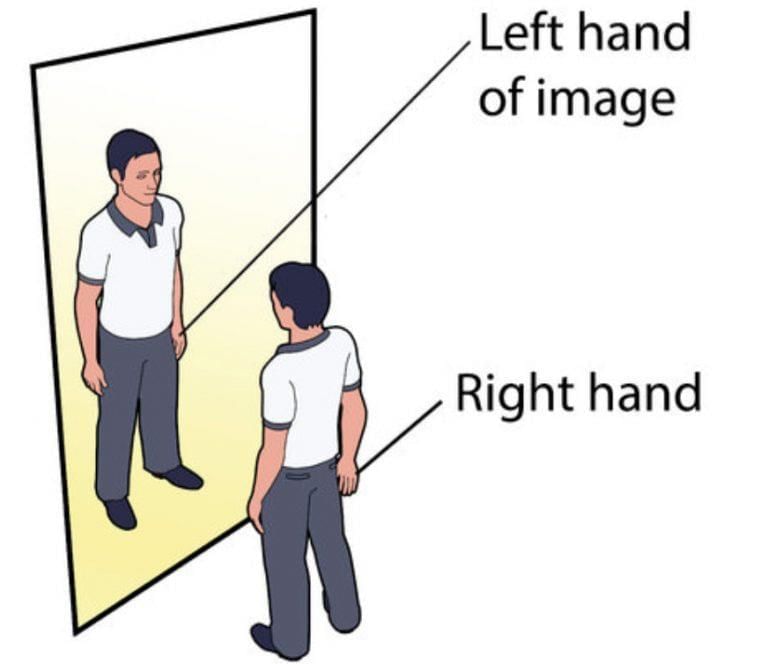
    Answer: Left–right reversal seen in mirror images.
  3. State the two laws of reflection in words.
    Answer: i = r; and incident ray, normal, reflected ray lie in the same plane.
  4. Which mirror can focus sunlight onto paper?
    Answer: Concave mirror (it converges parallel rays).
  5. Which lens always gives an erect and diminished image?
    Answer: Concave lens.

Lateral Inversion

Short Answer Questions

Instruction: Answer the following questions in 2–3 lines.

  1. How does a concave mirror’s image change as the object moves away?
    Answer: Very close: image is erect and enlarged. Farther away: image becomes inverted and its size decreases with distance.
  2. Why do convex mirrors make objects seem farther away?
    Answer: They form diminished images, so objects look smaller and therefore appear farther—hence the safety warning on vehicle mirrors.
  3. Explain why a convex lens can burn paper but a concave lens cannot.
    Answer: A convex lens converges sunlight to a sharp, hot point; a concave lens diverges light and cannot focus it to ignite paper.
  4. How do we know the laws of reflection apply to spherical mirrors?
    Answer: Each incident ray still reflects with i = r and stays in the same plane; the curvature only changes the overall direction (convergence/divergence) of reflected rays.
  5. What images do concave and convex lenses form at various distances?
    Answer: Convex lens: erect enlarged when close; inverted and varying size when farther. Concave lens: always erect and diminished.

Match the Following

Instruction: Match Column A with the correct option in Column B.Column AColumn B1) Concave mirrora) Erect, diminished image at any distance (diverges rays)2) Convex mirrorb) i = r3) Convex lensc) Converges parallel rays to a point; can burn paper4) Concave lensd) Erect, diminished image; wider field of view5) First law of reflectione) Enlarged erect image when close; inverted when far

Correct Matches:

  1. Concave mirror — e) Enlarged erect image when close; inverted when far
    Explanation: Image nature depends on object distance.
  2. Convex mirror — d) Erect, diminished image; wider field of view
    Explanation: Hence used in vehicle mirrors and at turns.
  3. Convex lens — c) Converges parallel rays to a point; can burn paper
    Explanation: Acts as a converging lens focusing sunlight.
  4. Concave lens — a) Erect, diminished image at any distance (diverges rays)
    Explanation: Always produces smaller, upright images.
  5. First law of reflection — b) i = r
    Explanation: Angle of incidence equals angle of reflection.

9. The Amazing World of Solutes, Solvents, and Solutions – Worksheet Solutions

Multiple Choice Questions (MCQs)

Instruction: Select the correct option for each question.

  1. Which of the following forms a true (clear) solution with water?
    a) Sand
    b) Sawdust
    c) Sugar
    d) Chalk powder
    Answer: c) Sugar
    Sugar dissolves uniformly in water to give a clear, homogeneous solution; sand/sawdust/chalk do not.
  2. In a salt-water solution, which is the solvent?
    a) Salt
    b) Water
    c) Both are solvents
    d) Neither is solvent
    Answer: b) Water
    The component present in larger amount and determining the state (liquid) is the solvent.
  3. Air is a gaseous solution in which the major component (solvent) is:
    a) Oxygen
    b) Nitrogen
    c) Carbon dioxide
    d) Argon
    Answer: b) Nitrogen
    Nitrogen is about 78% of air and acts as the solvent; other gases are solutes.
  4. As more salt is added to a fixed amount of water, undissolved salt starts settling. The solution has become:
    a) Dilute
    b) Unsaturated
    c) Saturated
    d) Concentrated but unsaturated
    Answer: c) Saturated
    At saturation, no more solute dissolves at that temperature and excess settles.
  5. Which statement about dilute vs. concentrated is correct?
    a) They are absolute, fixed terms
    b) They are comparative terms for amount of solute
    c) They depend only on solvent type
    d) They only apply to gases
    Answer: b) They are comparative terms for amount of solute
    “Dilute” and “concentrated” compare relative amounts of solute in solutions.
  6. For most solid solutes in water, increasing temperature generally:
    a) Decreases solubility
    b) Increases solubility
    c) Has no effect
    d) Makes solution non-uniform
    Answer: b) Increases solubility
    Heating often turns a saturated solution into an unsaturated one so more dissolves.
  7. The solubility of gases in water generally:
    a) Increases with temperature
    b) Decreases with temperature
    c) Is unaffected by temperature
    d) Is highest at boiling point
    Answer: b) Decreases with temperature
    Cold water holds more dissolved oxygen; warm water holds less.
  8. If in a syrup (chashni) sugar amount is more than water, the solvent is still:
    a) Sugar, because it is more
    b) Water, because it is liquid and determines state
    c) Both are solvents
    d) Neither is solvent
    Answer: b) Water, because it is liquid and determines state
    Even in large solute amounts, the liquid remains the solvent.
  9. Density is defined as:
    a) Volume per unit mass
    b) Mass per unit volume
    c) Weight per unit mass
    d) Weight per unit volume
    Answer: b) Mass per unit volume
    Density = Mass / Volume; units include g/cm³ or kg/m³.
  10. Which statement explains why ice floats on water?
    a) Ice has more mass
    b) Ice has higher density
    c) Ice has lower density than liquid water
    d) Ice has no mass
    Answer: c) Ice has lower density than liquid water
    On freezing, water expands, increasing volume and lowering density.

Fill in the Blanks

Instruction: Fill in the blanks with the correct word based on the chapter.

  1. A solution is a __________ mixture in which components are evenly distributed.
    Answer: homogeneous
    All parts of a true solution have the same composition.
  2. In a solid–liquid solution, the solid is the __________ and the liquid is the __________.
    Answer: solute; solvent
    The solute dissolves; the solvent does the dissolving.
  3. When no more solute can dissolve at a given temperature, the solution is __________.
    Answer: saturated
    Extra solute remains undissolved at the bottom.
  4. The maximum amount of solute that can dissolve in a fixed quantity of solvent at a given temperature is called __________.
    Answer: solubility
    It indicates dissolving capacity.
  5. Oxygen dissolves only in __________ quantities in water, yet it is vital for aquatic life.
    Answer: small (minute)
    Even small dissolved oxygen is essential for fish and plants.
  6. For gases, solubility generally __________ with increase in temperature.
    Answer: decreases
    Warm water holds less dissolved gas than cold water.
  7. Density = __________ / __________.
    Answer: Mass / Volume
    It is a measure of how much mass is packed into a given volume.
  8. The SI unit of density is __________.
    Answer: kg/m³
    Liquids are often expressed in g/mL or g/cm³ for convenience.
  9. When temperature increases, volume tends to increase and density tends to __________ (if mass stays same).
    Answer: decrease
    Density falls because Density = Mass / Volume.
  10. Reading liquids in a measuring cylinder is done at the bottom of the __________ for water and colorless liquids.
    Answer: meniscus
    Keep eyes level with the meniscus for accuracy.

Very Short Answer Questions

Instruction: Answer the following questions in one line.

  1. Define solute and solvent with an example.
    Answer: In salt water, salt is the solute (dissolves) and water is the solvent (does the dissolving).
  2. What happens when a saturated salt solution is heated?
    Answer: It becomes unsaturated, allowing more salt to dissolve.
  3. Name the major component of air that acts as the solvent.
    Answer: Nitrogen.
  4. State the formula for density.
    Answer: Density = Mass / Volume.
  5. Which has higher dissolved oxygen: cold water or warm water?
    Answer: Cold water.

Short Answer Questions

Instruction: Answer the following questions in 2–3 lines.

  1. Why does sugar dissolve in water but sand does not form a solution?
    Answer: Sugar breaks into tiny particles that occupy interparticle spaces in water, forming a homogeneous solution. Sand does not dissolve; its particles remain separate and settle, so no true solution forms.
  2. Explain dilute vs. concentrated solutions with an example.
    Answer: These are relative terms. For 100 mL water, 1 spoon of salt makes a dilute solution compared to 3 spoons making a concentrated solution.
  3. How does temperature affect solubility of solids vs. gases in water?
    Answer: Most solids become more soluble on heating, while gases become less soluble as temperature increases.
  4. How do you measure the volume of an irregular solid using a measuring cylinder?
    Answer: Note initial water level, immerse the object, note final level; volume of object = final − initial (in mL = cm³).
  5. Why does ice float on water and why is this important for aquatic life?
    Answer: Ice is less dense than liquid water due to expansion on freezing, so it floats and insulates water below, helping aquatic life survive in cold climates.

Match the Following

Instruction: Match Column A with the correct option in Column B.

Correct Matches:

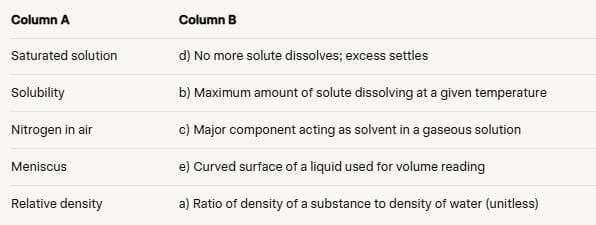
  1. Saturated solution — d) No more solute dissolves; excess settles
    Explanation: At saturation, added solute remains undissolved.
  2. Solubility — b) Maximum amount of solute dissolving at a given temperature
    Explanation: Measures dissolving capacity.
  3. Nitrogen in air — c) Major component acting as solvent in a gaseous solution
    Explanation: Nitrogen (~78%) is the solvent; others are solutes.
  4. Meniscus — e) Curved surface of a liquid used for volume reading
    Explanation: Read bottom of meniscus for water/colorless liquids.
  5. Relative density — a) Ratio of density of a substance to density of water (unitless)
    Explanation: It is a pure number with no units.

8. Nature of Matter: Elements, Compounds, and Mixtures – Worksheet Solutions

Multiple Choice Questions

Q.1. Kerosene and Petrol are miscible liquids. The difference between their boiling points is more than 25°C. The two liquids can be separated from each other by _____. 
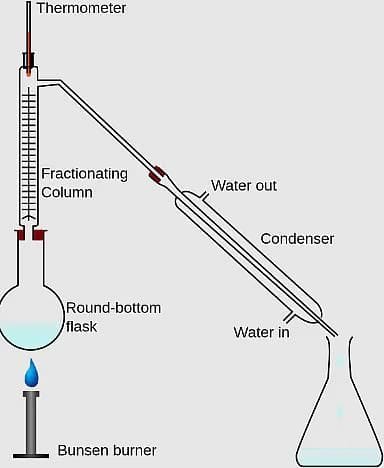
(a) Simple distillation
(b) Steam distillation
(c) Fractional distillation
(d) Any of these

Correct Answer is Option (a)
By simple distillation. Vapours of the liquid which has low boiling point will be formed first and collected. The liquid having higher boiling point will remain in the vessel.


Q.2. How can a saturated solution be made unsaturated?
(a) By heating the solution
(b) By cooling the solution
(c) By increasing the amount of solute
(d) By centrifugation of the solution

Correct Answer is Option (a)
A saturated solution can be made unsaturated by increasing the temperature of solution by heating it or by increasing the amount of solvent in the solution i.e. diluting it.


Q.3. The cause of Brownian movement is:
(a) Heat changes in liquid state
(b) Convection currents
(c) Impact of molecules of dispersion medium on on dispersed phase
(d) Attractive forces between the particles of dispersed phase and dispersion medium.

Correct Answer is Option (c)
Zig-zag path of colloidal particles is called Brownian Movement. Zig-zag path of particles is due to collision of particles of dispersed phase and dispersion medium.


Q.4. In which of the following, dispersed phase is a liquid and dispersion medium is a gas? 
(a) Cloud
(b) Smoke
(c) Gel
(d) Soap bubble

Correct Answer is Option (a)

  • In a cloud, tiny water droplets are suspended in air.
  • This makes it an example of a liquid dispersed phase in a gas dispersion medium.


Q.5. At room temperature, a non-metal which is a liquid is: 
(a) Sulphur
(a) Bromine
(a) Chlorine
(a) Nitrogen 

Correct Answer is Option (b)

Bromine is the only non-metal that exists in liquid form at room temperature. Here are some key points:

  • It is a reddish-brown liquid.
  • Bromine has a strong, unpleasant odour.
  • It is used in various applications, including flame retardants and pesticides.

Fill in the Blanks

1. Common salt is _________.

Ans: Compound
Common salt, chemically known as sodium chloride (NaCl), is a compound formed from the chemical combination of sodium and chlorine.

2. A mixture contains more than ______ substance mixed in ______ proportion.

Ans:  One, any
A mixture is defined as a combination of two or more substances that can be present in any proportion.


3. Properties of a __________ are different from its constituent elements, whereas a _______

 shows the properties of its constituting elements.

Ans: Compound, mixture
A compound has distinct properties that differ from those of its individual elements, while a mixture retains the properties of its components.


4. A solution is defined as a mixture that is_________

Ans: Homogeneous
A homogeneous mixture has a uniform composition throughout, meaning the components are evenly distributed.


5. We can remove salts from a solution by using the process of _________

Ans: Evaporation
Evaporation is a method used to separate a solute from a solvent by heating the solution until the solvent turns into vapor.


6. A pure substance has a fixed__________ or ______ at constant temperature.

Ans: Melting Point, Boiling Point
A pure substance has specific melting and boiling points that do not change under constant temperature conditions.


7. An element is made up of only one kind of _________.

Ans: Atoms
Elements consist of only one type of atom, which defines their unique properties.


8. Miscible liquids are separated by ________ .

Ans: Fractional distillation
Fractional distillation is a technique used to separate miscible liquids based on their different boiling points.

 
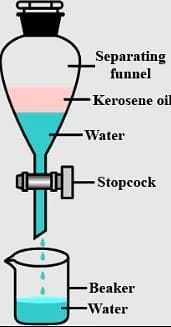
9. Immiscible liquids are separated by using a _______.

Ans: Separating funnel
A separating funnel is used to separate immiscible liquids based on their different densities.

10. Filtered tea is a _________ mixture.

Ans: Homogeneous
Filtered tea is homogeneous because it has a uniform composition throughout after the solid tea leaves are removed.


11. Alloy is a _______.

Ans: Solid solution
An alloy is a solid solution of two or more metals, which results in improved properties compared to the individual metals.


12. Sublimation of camphor is a _________ change.

Ans: Physical
Sublimation is a physical change where a substance transitions directly from solid to gas without passing through the liquid state.


13. Most common chemical change we observe in our routine life is rusting of______.

Ans: Iron
Rusting is a chemical reaction that occurs when iron reacts with oxygen and moisture, forming iron oxide.

Very Short Answer Question 

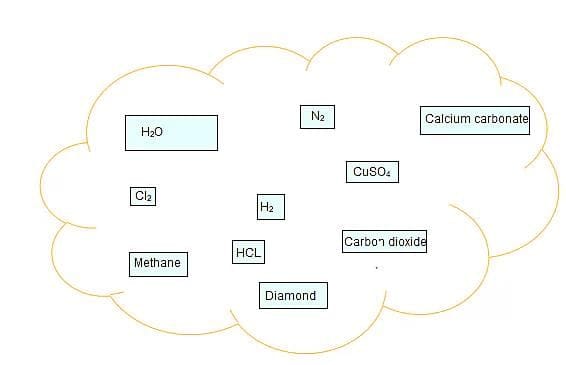
Q.1. Classify the substances given in below figure into elements and compounds

Ans: 

Q.2. Give one example each of homogeneous and heterogeneous mixture.

Ans:  Homogeneous mixture: An example is brass, which is a uniform mixture of metals. Heterogeneous mixture: An example is sand and water, where the components remain distinct and easily separable.


Q.3. Name the apparatus by which mixture of oil and water can be separated.

Ans: Separating funnel is the apparatus used to separate a mixture of oil and water.

Q.4. Is brass a mixture or a compound?

Ans: Brass is classified as a mixture rather than a compound. This is due to the following reasons:

  • Brass is made up of approximately 30% zinc and 70% copper.
  • In a mixture, the individual components retain their own properties.
  • Brass can vary in composition, which is characteristic of mixtures.
  • It cannot be separated into its components through physical methods.


Q.5. What type of solution is an alloy? Liquid solution or solid solution

Ans: Alloy is a type of solid solution. Key points:

  • An alloy consists of two or more metals or a metal and a non-metal.
  • It cannot be separated into its components by physical methods.
  • Alloys exhibit the properties of their constituent materials.
  • For example, brass is made of approximately 30% zinc and 70% copper.


Q.6. A mixture consisting of two miscible liquids ‘A’ and ‘B’ whose boiling points differ by
 50 C can be separated by which process?

Ans: Fractional distillation is the process used to separate a mixture of two miscible liquids, ‘A’ and ‘B’, when their boiling points differ by 50°C.

 
Q.7. Give one example of solid- liquid homogeneous mixture.

Ans:  Salt in water solution


Q.8. What is a Aqua regia?

Ans: Aqua regia is a highly-corrosive mixture of – nitric acid and hydrochloric acid. The mixture is formed by freshly mixing concentrated nitric acid and hydrochloric acid, usually in a volume ratio of 1:3


Q.9. Which method is used to separate two immiscible liquids?

Ans: Separating two immiscible liquids can be effectively achieved using a separating funnel.

  • The separating funnel allows the two liquids to separate based on their density.
  • Each liquid forms a distinct layer, making it easy to pour out one layer while leaving the other behind.
  • This method is commonly used in laboratories for liquid-liquid extractions.


Q.10. Name two elements which are in liquid state at room temperature?

Ans: The only liquid elements at standard temperature and pressure arebromine (Br) and mercury (Hg). Although, elements caesium (Cs),rubidium (Rb), Francium (Fr) and Gallium (Ga) become liquid at or just above room temperature.

Short Answer Types Questions
Q.1. Try segregating the things around you as pure substances or mixtures.

You can separate materials around you into pure substances or mixtures by performing simple experiments. Here’s how:

  • Mix chalk powder with water.
  • Observe that the chalk powder does not dissolve.
  • Let the mixture settle; the chalk will form a layer at the bottom.
  • Carefully pour off the water to separate the chalk.

This method demonstrates how mixtures can be separated into their individual components.


Q.2. What is meant by a substance? 

substance is a type of matter that consists of particles that cannot be separated by any physical process. Key characteristics include:

  • All particles have similar chemical properties.
  • Substances can be classified as either elements or compounds.
  • Elements cannot be broken down into simpler substances.
  • Compounds consist of two or more different elements chemically combined.

In summary, a substance is a pure form of matter with consistent properties throughout.


Q.3. What type of mixtures are separated by the technique of crystallisation? 

From impure samples of solids, pure solid crystals can be obtained by the method of crystallization for eg to obtain pure sugar from impure sample of the same.


Q.4. What is tyndall effect? Which kinds of solution show it?

The Tyndall effect is the scattering of light by particles in a solution. This effect occurs when light passes through a medium containing small particles, making the path of the light visible. Solutions that exhibit the Tyndall effect include:

  • Colloidal solutions: These contain particles that are larger than those in true solutions but smaller than those in suspensions.
  • Examples: Milk and fog show the Tyndall effect due to their dispersed particles.


Q.5. What is centrifugation? Where it is used?

Centrifugation is a technique used to separate components of a mixture based on their density. It works by spinning the mixture rapidly, causing denser particles to settle at the bottom while lighter ones rise to the top.

  • Commonly used to separate cream from milk.
  • Also applied in laboratories for separating blood components.
  • Used in various industries, including pharmaceuticals and biotechnology.


Q.6. What is crystallization? Where is it used? Why is this better than simple evaporation technique?

Crystallization is a process that separates a pure solid in the form of crystals from its solution. It is used to purify solids. For e.g. salt from sea water is purified using crystallization.
It is a better technique than simple evaporation because:
(a) Some solid may decompose or get charred on heating to dryness during evaporation.
(b) On evaporation, some of the impurities still remain dissolved in the solution.


Q.7. What is a colloid? What are its various properties?

Colloids are heterogeneous mixtures where the particles are too small to be seen with the naked eye. Their properties include:

  • Heterogeneous mixture: Although they are heterogeneous, they often appear homogeneous.
  • Particle size: The particles are too small to be individually visible.
  • Tyndall effect: They scatter light, making the path of a beam visible.
  • Stability: The particles do not settle when left undisturbed.


Q.8. Write a method to separate different gases from air.

Air is a homogeneous mixture of various gases. It can be separated into its components using fractional distillation. The process involves the following steps:

  • Compress and cool the air by increasing pressure and decreasing temperature.
  • This produces liquid air. Allow the liquid air to warm up slowly in a fractional distillation column.
  • The gases will separate according to their boiling points at different heights in the column.


Q.9. Explain the following giving examples. 
(a) saturated solution 
(b) pure substance 
(c) colloid 
(d) suspension 

(a) saturated solution: It is a solution in which no more solute particles can be dissolved at a particular temperature.
(b) pure substance: Such substance that has a uniform composition i.e. has particles with identical properties is called pure substance eg sugar, salt, water, nitrogen etc.
(c) colloid: It is a kind of heterogeneous mixture/solution in which particle size is between 1nm and 1000nm. Colloids have dispersion medium and dispersed phase.eg smoke, milk, shaving cream, jelly, cheese etc.
(d) suspension: It is a kind of heterogeneous mixture in which insoluble solid particles remain suspended in the medium and dispersion particles are visible to the unaided eyes.eg muddy river water, chalk powder in water, dust storm, sand in water etc.


Q.10. Write the steps you would use for making tea. Use the words solution, solvent, solute, dissolve, soluble, insoluble, filtrate and residue.

To make tea, follow these steps:

  • Start by heating a sufficient amount of solvent (water) in a pan.
  • Once heated, add a small amount of solute (sugar) to the water. The sugar will dissolve completely, forming a true solution.
  • Add tea leaves, which are insoluble, along with a soluble liquid (milk).
  • Boil the mixture to enhance flavour.
  • After boiling, use a sieve to filter the mixture. The liquid that passes through is the filtrate, which is your tea.
  • The leftover tea leaves in the sieve are the residue and should be discarded.

Crossword Puzzle

Across
1. hydrogen ______ is a color gas with a smell of rotten eggs
5. The major components in solution
6. Melting point and boiling point are _______ properties
7. Two elements are liquid at room temperature are mercury and _______
Down
2. In colloids ,The particles are called the ______ phase and the medium in which they are distributed is called the dispersion medium.
3. amount of solute present per unit volume or mass of the solution or solvent
4. denser particles are forced to the bottom and the lighter particles stay at the top when spun rapidly

Ans: 
1. sulphide
2. dispersed
3. concentration
4.centrifugation
5. solvent
6. physical
7. bromine

7. Particulate Nature of Matter – Worksheet Solutions

Multiple Choice Questions

Q.1. According to ancient philosophers matter consists of: 
(a) Three constituents 
(b) Four constituents 
(c) Five constituents 
(d) Six constituents.

Correct Answer is Option (c)
Matter is made up of five constituents also called tatvas (air, water, earth, fire and sky).


Q.2. Dry ice is:
(a) Solid ammonia
(b) Solid carbon dioxide
(c) Solid sulphur dioxide
(d) Normal ice

Correct Answer is Option (b)
Dry ice is solid carbon dioxide (CO2).


Q.3. Which of the following statements is not correct for liquid state?
(a) Particles are loosly packed in the liquid state
(b) Fluidity is the maximum in the liquid state
(c) Liquids can be compressed
(d) Liquids take up the shape of any container in which these are placed

Correct Answer is Option (b)
Fluidity is maximum in the gaseous state and not in the liquid state.


Q.4. Which of the following will sublime? 
(a) Common salt 
(b) Sugar 
(c) Camphor 
(d) Potassium nitrate

Correct Answer is Option (c)
Camphor, ammonium chloride, Phenophthelene sublimes i.e. change from solid to gaseous state directly without passing through liquid state upon heating.


Q.5. When the liquid starts boiling, the further heat energy which is supplied: 
(a) Is lost to the surrounding as such 
(b) Increases the temperature of the liquid 
(c) Increases the kinetic energy of the particles in the liquid 
(d) Is absorbed as latent heat of vaporisation by the liquid

Correct Answer is Option (d)
Heat is absorbed as latent heat of vapourisation. As long as liquid is not boiled, the heat energy which is supplied increases the kinetic energy of particles present in water. Once the liquid starts boiling the heat energy is used to brinchange in the state (liquid-gas). It is known as latent heat of vapourisation.

Fill in the Blanks
1. Matter is made up of small_________.

Correct Answer is Particles

2. The forces of attraction between the particles are _______ in solids, ______ in liquids and _________ in gases.

Correct Answer is Maximum, intermediate, minimum

3. __________ is the change of gaseous state directly to solid state without going through liquid state, and vice-versa.

Correct Answer is Deposition or Desublimation. 

4. Evaporation causes __________.

Correct Answer is Cooling

5. Latent heat of fusion is the amount of heat energy required to change 1 kg of solid into liquid at its ________.

Correct Answer is Melting point

6. Solid, liquid and gas are called the three _______ of matter.

Correct Answer is States

7. The smell of perfume gradually spreads across a room due to ______.

Correct Answer is Diffusion

8. Rapid evaporation depends on the ______ area exposed to atmosphere.

Correct Answer is Surface

9. As the temperature of a system increases, the pressure of the gases ______.

Correct Answer is Increases

10. As the volume of a specific amount of gas decreases, it’s pressure _______.

Correct Answer is Increases

11. As the temperature of a gas decreases, It’s volume ______.

Correct Answer is Decreases

12. Gas molecules at higher temperatures have more _______ than at cooler temperatures.

Correct Answer is Kinetic energy

13. A sponge has minute ________, in which ________ is trapped.

Correct Answer is holes, air.

14. The pressure inside of a sealed tube if you raise the temperature go ______

Correct Answer is Up

15. Forces of attraction in liquids are _______ than in solid.

Correct Answer is Weaker

16. Latent heat of ________ is the amount of heat energy required to change 1 kg of solid into liquid at its melting point.

Correct Answer is fusion

Very Short Answer Questions

Q.1. Name one property which is shown by naphthalene and not by sodium chloride.

Naphthalene undergoes sublimation upon heating i.e. it directly changes into vapours. Whereas Sodium chloride (common salt) does not undergo sublimation. It melts on strong heating.


Q.2. A rubber band changes its shape when stretched. Can it be regarded as solid?

Rubber is a solid. It has elastic property due to which it undergoes change in shape when pressure is applied and regains its original shape when pressure is released.


Q.3. Gases can be compressed but solids cannot. Explain.

In gases, interparticle spaces are quite large. On applying pressure, these spaces decrease and the molecules of gas come closer. As a result, the gases can be compressed. Whereas in solids, particles are compactly packed leaving negligible interparticle space thus solids cannot be compressed.


Q.4. Define latent heat of vaporization.

Latent heat of vaporization is the heat energy required to change 1 kg of a liquid to gas at atmospheric pressure at its boiling point.


Q.5. What happens to the heat energy which is supplied to the solid once it has started melting?

Once the solid has started melting heat energy absorbed is consumed in bringing about the change in state from solid to liquid (overcoming the force of attraction between the particles of solids). The heat absorbed is known as latent heat of fusion.


Q.6.The freezing point of water is 0°C. What is the corresponding temperature on the Kelvin scale?

Temperature on Kelvin scale = 0°C+273 = 273K.


Q.7. Are the melting point temperature of the solid state and the freezing point temperature of the liquid state of a substance different?

No, these are the same. For example, melting point of ice and freezing point of water are both 0°C or 273 K.


Q.8. A substance is in liquid state at room temperature and changes into gas upon heating. What will you call its gaseous state?

The gaseous state of the substance is called vapour. Gaseous state of a substance which exists as liquid also is known as vapour.


Q.9. When a crystal of copper sulphate is placed at the bottom of a beaker containing water, the colour of water slowly becomes blue, why?

Copper sulphate on dissolution in water releases (Cu2+ ions) and SO42– ions. Due to diffusion of Cu2+ ions the colour of water slowly becomes blue.


Q.10. The boiling point of ethyl alcohol is 78°C. What is the corresponding temperature on kelvin scale?

Temperature on kelvin scale = 78 + 273 = 351 K

Crossword Puzzle

Across
1. 
BEC stands for Bose-Einstein-______
3. The state consists of super energetic and super excited particles
8. Conversion of solid to vapour is called ______
Down
2. 
This is the phenomenon of change of a liquid into vapours at any temperature below its boiling point
4. 
SI unit of Temperature
5. 
CNG stands ____ natural gas
6.
 It is the amount of water vapour present in air.
7. 
LPG stands for ______petroleum gas.

Answer: 

1. Condensation
2. evaporation
3. plasma
4. kelvin
5. Compressed
6. Humidity
7. liquefied
8. sublimation

6. Pressure, Winds, Storms, and Cyclones – Worksheet Solutions

Multiple Choice Questions (MCQs)

Instruction: Select the correct option for each question.

  1. Pressure is defined as:
    a) Force × area
    b) Force / area
    c) Area / force
    d) Mass × acceleration
    Answer: b) Force / area
    Pressure is the force applied per unit area (only the perpendicular component counts).
  2. Why do broader bag straps feel more comfortable than narrow ones for the same load?
    a) They reduce the force
    b) They increase pressure
    c) They decrease pressure by increasing area
    d) They change the weight
    Answer: c) They decrease pressure by increasing area
    Same force spread over a larger area gives lower pressure.
  3. SI unit of pressure is:
    a) Newton (N)
    b) Joule (J)
    c) Pascal (Pa)
    d) Watt (W)
    Answer: c) Pascal (Pa)
    1 Pa = 1 N/m².
  4. Liquid pressure at a point depends mainly on:
    a) Shape of container
    b) Color of liquid
    c) Height (depth) of the liquid column
    d) Total volume of liquid
    Answer: c) Height (depth) of the liquid column
    Greater height above the point means greater pressure.
  5. Which activity shows that liquids exert pressure on the walls?
    a) Balloon inflating
    b) Water jetting sideways from holes in a bottle
    c) Magnet attracting iron
    d) Ice melting
    Answer: b) Water jetting sideways from holes in a bottle
    Sideways jets show lateral pressure on walls.
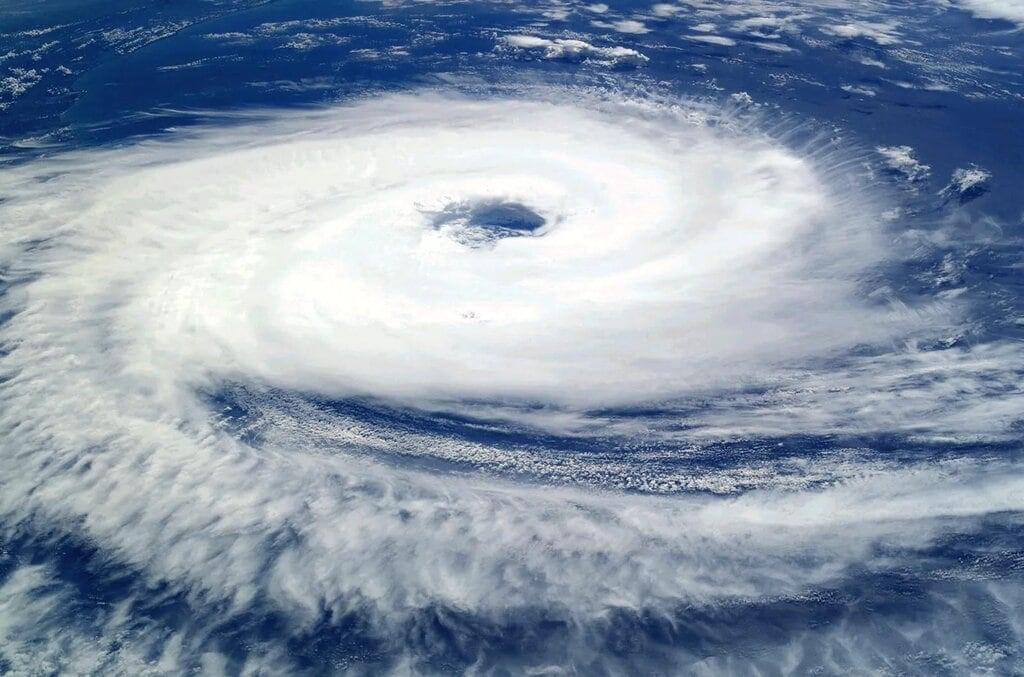
  6. Atmospheric pressure is the pressure exerted by:
    a) Water only
    b) Rocks of Earth
    c) Air around us in all directions
    d) Only wind
    Answer: c) Air around us in all directions
    Air molecules press on surfaces from every side.
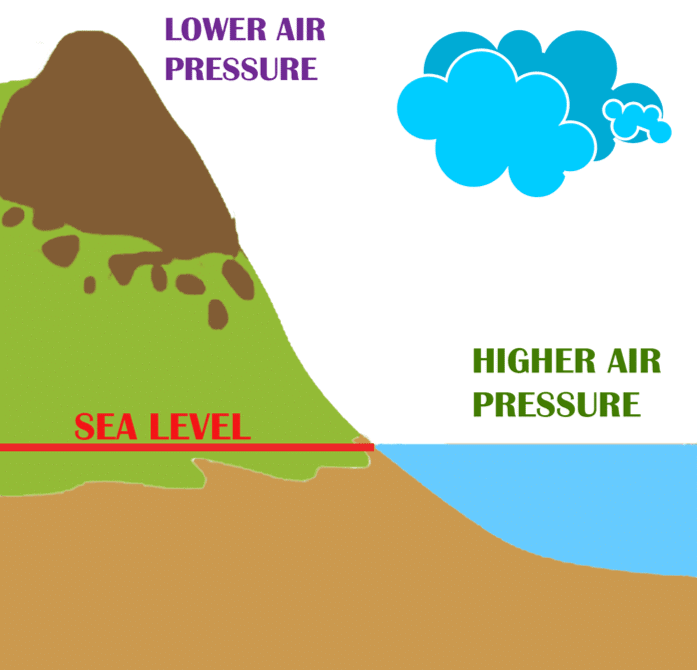
    Atmospheric Pressure
  7. Air moves from a region of:
    a) Low pressure to high pressure
    b) High pressure to low pressure
    c) High temperature to low temperature only
    d) Low density to high density only
    Answer: b) High pressure to low pressure
    Wind is air flowing from high to low pressure.
  8. During the day at the coast, a sea breeze blows because:
    a) Sea heats faster than land
    b) Land heats faster; air rises over land creating low pressure
    c) Air pressure over sea is always low
    d) Earth stops rotating
    Answer: b) Land heats faster; air rises over land creating low pressure
    Cooler, high-pressure air from sea flows toward land.
  9. High-speed winds between two hanging balloons make them move closer because:
    a) Gravity increases
    b) Pressure between them increases
    c) Pressure between them decreases due to fast air
    d) They gain electric charge
    Answer: c) Pressure between them decreases due to fast air
    Outside higher pressure pushes them together.
  10. Lightning is produced when:
    a) Sun heats clouds
    b) Charges in clouds and ground discharge suddenly
    c) Wind speed becomes zero
    d) Air becomes very cold
    Answer: b) Charges in clouds and ground discharge suddenly
    Charge separation in clouds leads to a bright discharge (lightning).

Fill in the Blanks

Instruction: Fill in the blanks with the correct word based on the chapter.

  1. Pressure = __________ / area.
    Answer: force
    Only the perpendicular (normal) force is used for pressure.
  2. Overhead water tanks are placed high to increase water __________ in the pipes.
    Answer: pressure
    Greater height of water column gives higher outlet pressure.
  3. 1 pascal (Pa) equals 1 __________ per square metre.
    Answer: newton
    1 Pa = 1 N/m².
  4. Liquids exert pressure at the bottom and also on the __________ of a container.
    Answer: walls
    Pressure acts in all directions.
  5. At sea level, typical atmospheric pressure is about 1,013 __________ or 1,013 __________.
    Answer: mb; hPa
    1 mb = 1 hPa = 100 Pa.
  6. Air flows from regions of high pressure to regions of __________ pressure.
    Answer: low
    This movement is wind; it stops when pressures equalize.
  7. Daytime coastal wind from sea to land is called a __________ breeze.
    Answer: sea
    Nighttime reverse flow is land breeze.
  8. Lightning conductors safely carry electric charge into the __________.
    Answer: ground
    They protect buildings by providing a safe path.
  9. The calm, low-pressure center of a cyclone is called the __________.
    Answer: eye
    Surrounded by a ring of strongest winds and rain.
  10. A sudden rise of sea water pushed by cyclone winds onto land is called a storm __________.
    Answer: surge
    It can flood coastal areas severely.

Cyclone

Very Short Answer Questions

Instruction: Answer the following questions in one line.

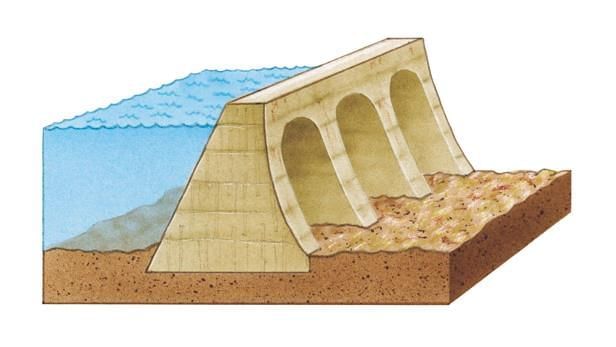
  1. Why are dam walls broader at the base?
    Answer: Because water pressure increases with depth, so the base must withstand greater sideways pressure.
  2. Why aren’t we crushed by atmospheric pressure?
    Answer: Internal body fluids and gases exert equal pressure outward, balancing outside pressure.
  3. What causes a sea breeze?
    Answer: Low pressure over warmer land draws in cooler, high-pressure air from the sea.
  4. What simple safety rule helps prevent roofs from blowing off in storms?
    Answer: Keep some doors/windows open to equalize inside and outside pressure.
  5. What is a thunderstorm?
    Answer: A storm with thunder and lightning due to charge separation in tall clouds.

Dams are build borader at Base

Short Answer Questions

Instruction: Answer the following questions in 2–3 lines.

  1. Explain, with an example, how area affects pressure in daily life.
    Answer: Narrow bag straps exert higher pressure (same force on smaller area) causing discomfort, while broad straps reduce pressure and feel comfortable.
  2. How does height of a liquid column affect pressure? Mention one application.
    Answer: Greater height gives greater pressure at the bottom (P ∝ depth). Overhead tanks are placed high to supply good water pressure.
  3. Describe briefly how winds are formed.
    Answer: Uneven heating creates pressure differences; air flows from high to low pressure. Larger pressure differences produce stronger winds.
  4. How does lightning form inside storm clouds?
    Answer: Updrafts and downdrafts make ice and water drops rub and separate charges; a sudden discharge between regions (or to ground) produces lightning.
  5. Why are cyclones dangerous? Give two reasons.
    Answer: They bring high-speed winds that damage structures and a storm surge that floods coasts; heavy rains also cause floods and landslides.

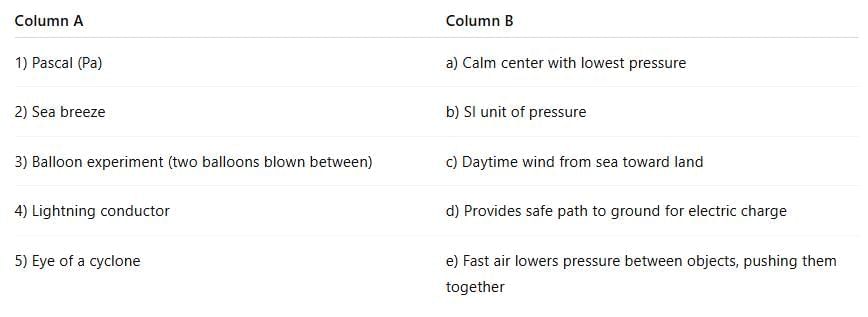
Match the Following

Instruction: Match Column A with the correct option in Column B.

Correct Matches:

  1. Pascal (Pa) — b) SI unit of pressure
    Explanation: 1 Pa = 1 N/m².
  2. Sea breeze — c) Daytime wind from sea toward land
    Explanation: Due to lower pressure over warm land.
  3. Balloon experiment — e) Fast air lowers pressure between objects, pushing them together
    Explanation: High-speed air reduces pressure; outside pressure moves balloons inward.
  4. Lightning conductor — d) Provides safe path to ground for electric charge
    Explanation: Protects buildings during lightning strikes.
  5. Eye of a cyclone — a) Calm center with lowest pressure
    Explanation: Surrounding eyewall has strongest winds and rain.

5. Exploring Forces – Worksheet Solutions

Q1. Multiple Choice Questions (MCQs)

Instruction: Select the correct option for each question.

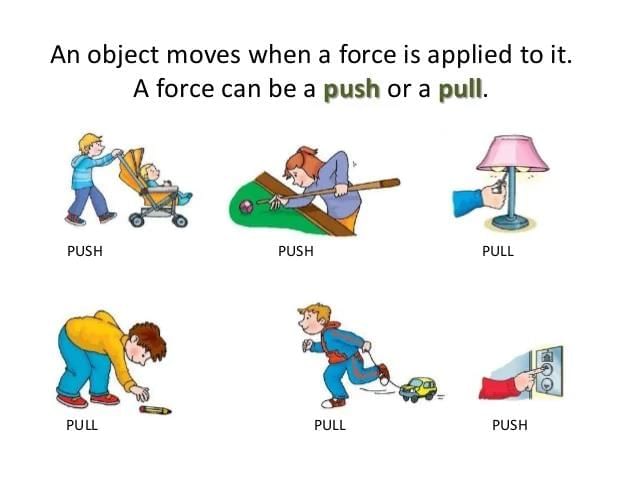
  1. In science, a force is defined as:
    a) Only a push
    b) Only a pull
    c) A push or a pull
    d) Energy of motion
    Answer:
     c) A push or a pull
    Any push or pull on an object is called a force.
  2. Which of these is NOT an effect of force?
    a) Change of shape
    b) Change of direction
    c) Production of light
    d) Start/stop motion

    Answer: c) Production of light
    Force changes motion or shape; producing light is not a direct effect of force.
  3. Forces always involve:
    a) Only one object
    b) Interaction between two objects
    c) Only moving objects
    d) Only heavy objects

    Answer: b) Interaction between two objects
    A force arises from interaction (e.g., hand and table).
  4. The SI unit of force is:
    a) Joule (J)
    b) Watt (W)
    c) Newton (N)
    d) Pascal (Pa)

    Answer: c) Newton (N)
    Force is measured in newtons.
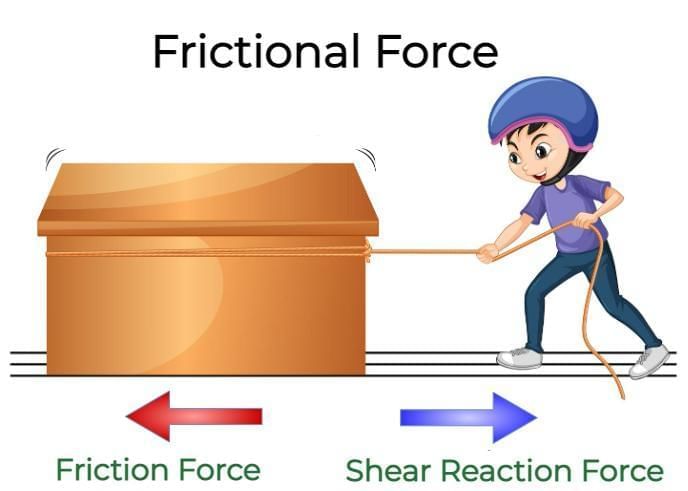
  5. Friction is a force that:
    a) Aids motion
    b) Always increases speed
    c) Opposes motion between surfaces in contact
    d) Acts only in liquids

    Answer: c) Opposes motion between surfaces in contact
    Friction resists motion; rough surfaces give more friction.
  6. Which is a non-contact force?
    a) Muscular force
    b) Friction
    c) Magnetic force
    d) Push with a stick

    Answer: c) Magnetic force
     It acts without physical contact.
  7. Gravity is:
    a) Sometimes attractive, sometimes repulsive
    b) Always repulsive
    c) Always attractive
    d) Only acts on Earth

    Answer: c) Always attractive
    Gravitational force only attracts.
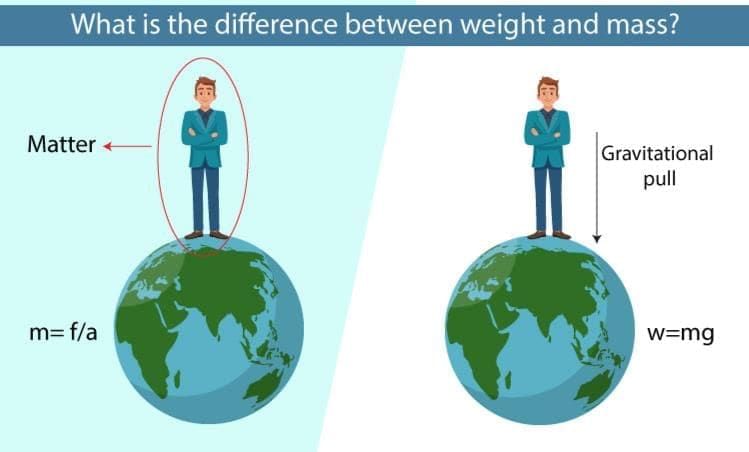
  8. Weight is measured in:
    a) Kilogram (kg)
    b) Newton (N)
    c) Meter (m)
    d) Joule (J)

    Answer: b) Newton (N)
    Weight is a force; its SI unit is newton.
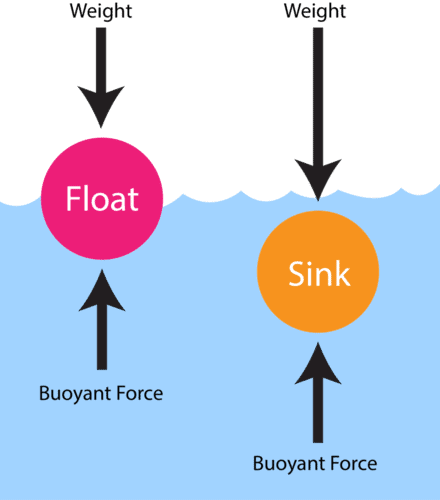
  9. An object floats in a liquid when:
    a) Weight > buoyant force
    b) Weight = buoyant force
    c) Weight < buoyant force
    d) There is no gravity

    Answer: b) Weight = buoyant force
    Floating occurs when upthrust equals weight.

Q2. Fill in the Blanks

Instruction: Fill in the blanks with the correct word based on the chapter.

  1. A force is a __________ or a __________.
    Answer: 
    push; pull
    Both pushes and pulls are forces.
  2. If an object’s speed or direction changes, a __________ has acted.
    Answer: force
    Explanation: Force causes change in motion or shape.
  3. The SI unit of force is the __________ (symbol: N).
    Answer: newton
    Standard unit for force.
  4. Friction always acts in a direction __________ to motion.
    Answer: opposite
    It resists motion between surfaces.
  5. Forces that act without contact are called __________ forces.
    Answer: non-contact
    Examples: magnetic, electrostatic, gravitational.
  6. The force with which Earth pulls objects is called __________.
    Answer: gravity (or gravitational force)
    Gravity attracts objects to Earth.
  7. Weight is a __________ and is measured in newtons.
    Answer: force
    Weight = mass × gravitational acceleration.
  8. The device used to measure weight (force) in newtons is a __________ balance.
    Answer: spring
    Stretch of the spring indicates force.
  9. The upward force exerted by a liquid on an immersed object is called __________ force.
    Answer: buoyant (or upthrust)
    It acts opposite to weight.
  10. An object sinks when its __________ is greater than the buoyant force.
    Answer: weight
    If weight > upthrust, the object sinks.

Q3. Short Answer QuestionsInstruction: Answer the following questions in 2–3 lines.

  1. How does friction depend on the nature of surfaces?
    Answer:
     Rough surfaces have more tiny irregularities, leading to higher friction; smooth surfaces have fewer irregularities, so friction is less.
  2. Explain why cycling uphill feels harder than cycling downhill.
    Answer: 
    Uphill, you work against gravity and friction, requiring greater muscular force. Downhill, gravity aids motion, so you need little or no pedaling.
  3. What does “forces work in pairs” mean?
    Answer: 
    When you push an object, it exerts an equal and opposite force on you. The interaction ends when contact ends.
  4. How do we find the least count of a spring balance?
    Answer: 
    Divide the value between two major marks by the number of small divisions between them.
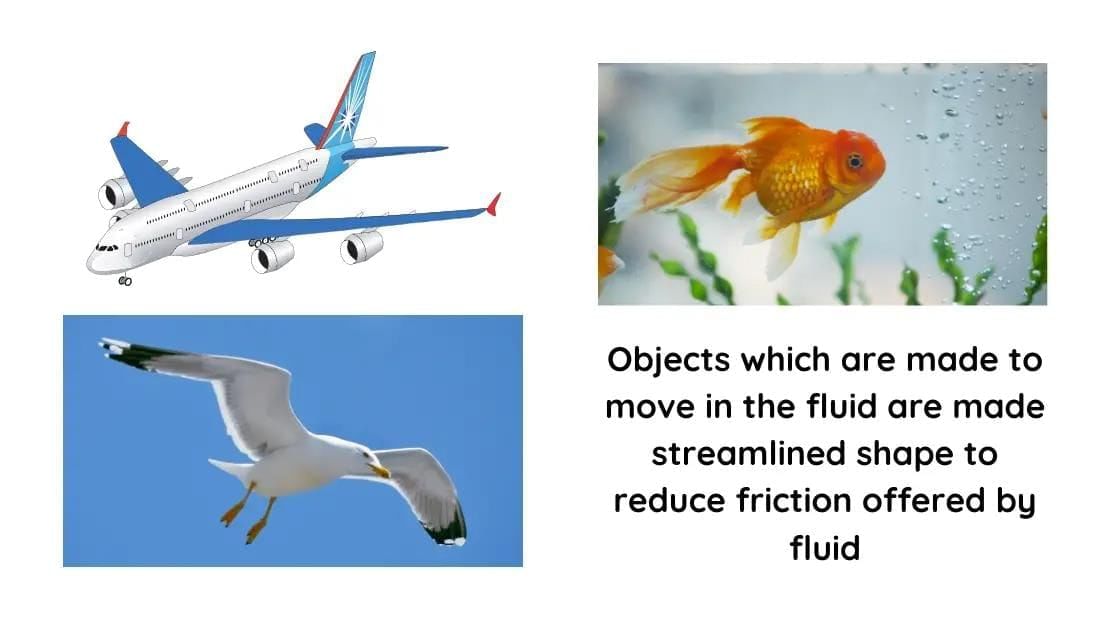
  5. Why do streamlined shapes help in air or water?
    Answer: 
    They reduce fluid friction (drag), allowing objects like cars, planes, and boats to move more easily.

Q4. Match the Following

Instruction: Match Column A with the correct option in Column B.

Correct Matches:

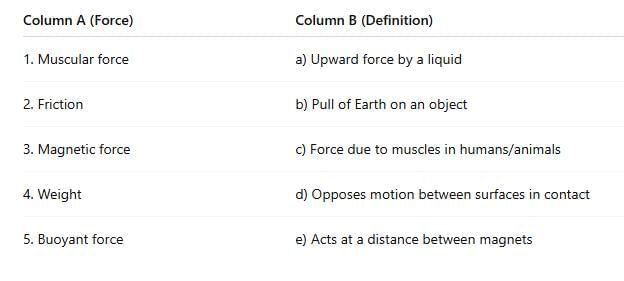
  1. Muscular force — c) Force due to muscles in humans/animals
    Explanation: Movements like lifting, pushing, and pulling use muscles.
  2. Friction — d) Opposes motion between surfaces in contact
    Explanation: It resists sliding/rolling and depends on surface roughness.
  3. Magnetic force — e) Acts at a distance between magnets
    Explanation: Magnets attract/repel without contact.
  4. Weight — b) Pull of Earth on an object
    Explanation: Weight is gravitational force; measured in newtons.
  5. Buoyant force — a) Upward force by a liquid
    Explanation: Liquids push up on immersed objects; this is upthrust.

Q5. Application/Reasoning (Short Problems)

Instruction: Answer the following briefly in 2–3 lines.

  1. A wooden block is pushed on a rough table and stops after some distance. Why?
    Answer: Friction between the block and table opposes motion and converts kinetic energy to heat, bringing the block to rest.
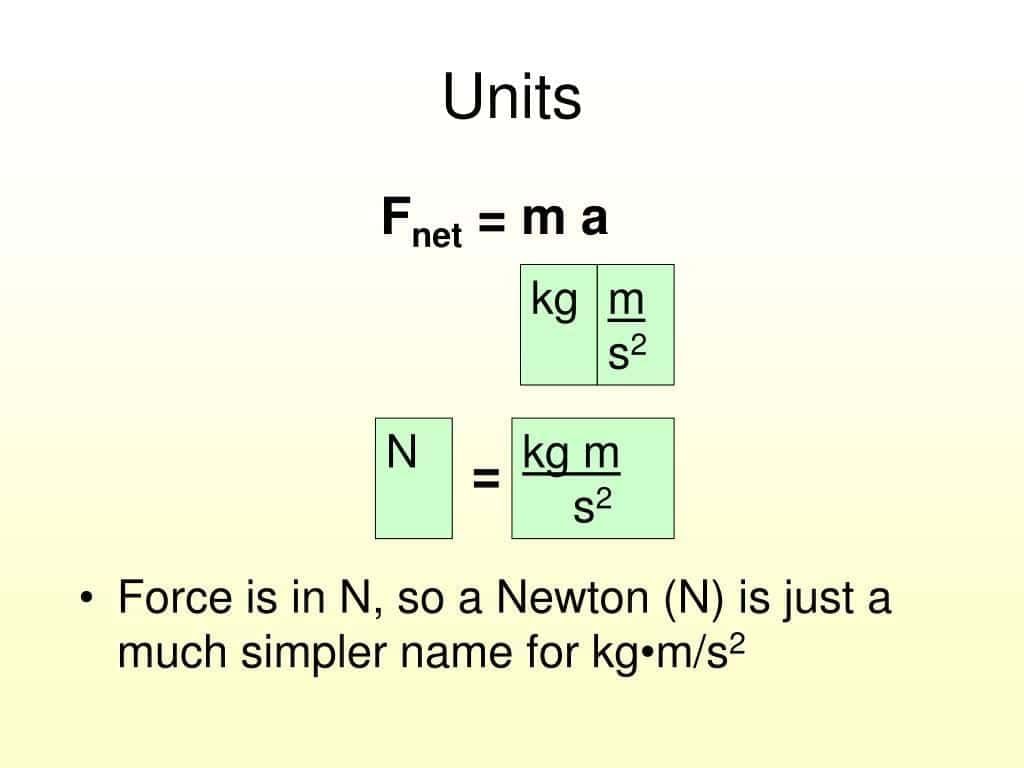
  2. A 1 kg object has a weight of about 10 N on Earth. What will be its weight on the Moon (g ≈ 1.6 m/s²)?
    Answer: About 1.6 N. Explanation: Weight = mass × g = 1 kg × 1.6 m/s².
  3. A spring balance has marks 0 to 5 N with 10 equal divisions between each newton. What is its least count?
    Answer: 0.1 N per division. Explanation: 1 N ÷ 10 divisions = 0.1 N.
  4. Two balloons rubbed with wool repel each other. Which force is acting and why?
    Answer: Electrostatic force; both balloons have like static charges, so they repel.
  5. A stone sinks in water but a sealed empty plastic bottle floats. Why?
    Answer: The stone’s weight is greater than buoyant force, so it sinks. The bottle’s average density is less and upthrust balances its weight, so it floats.

4. Electricity: Magnetic and Heating Effects – Worksheet Solutions

Q1. Multiple Choice Questions (MCQs)

Instruction: Select the correct option for each question.

  1. What did Oersted discover in 1820?
    a) Heating effect of current
    b) Electric charge of Earth
    c) Magnetic effect of electric current
    d) Structure of dry cell

    Answer: c) Magnetic effect of electric current
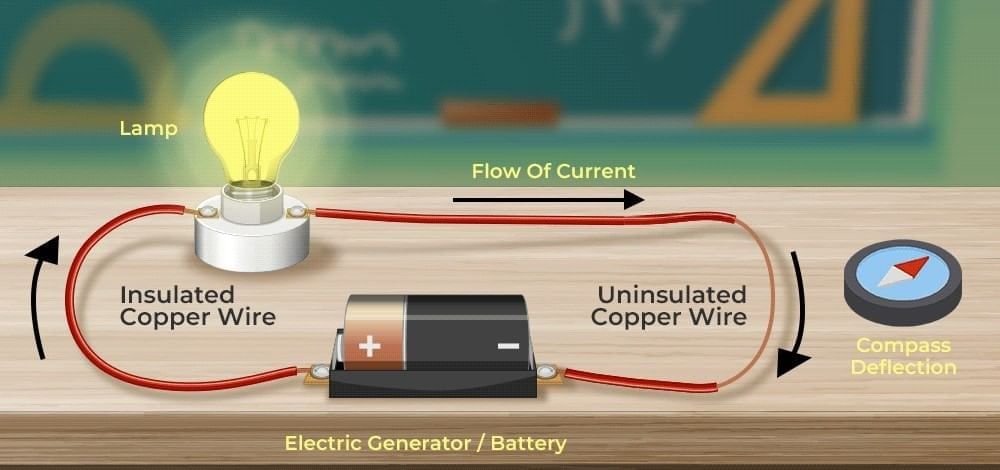
    Oersted observed that a current-carrying wire deflects a compass needle, proving current creates a magnetic field.
  2. Which instrument can detect the magnetic field around a current-carrying wire?
    a) Vernier caliper
    b) Magnetic compass
    c) Thermometer
    d) Barometer

    Answer: b) Magnetic compass
    The compass needle deflects when near a current-carrying conductor.
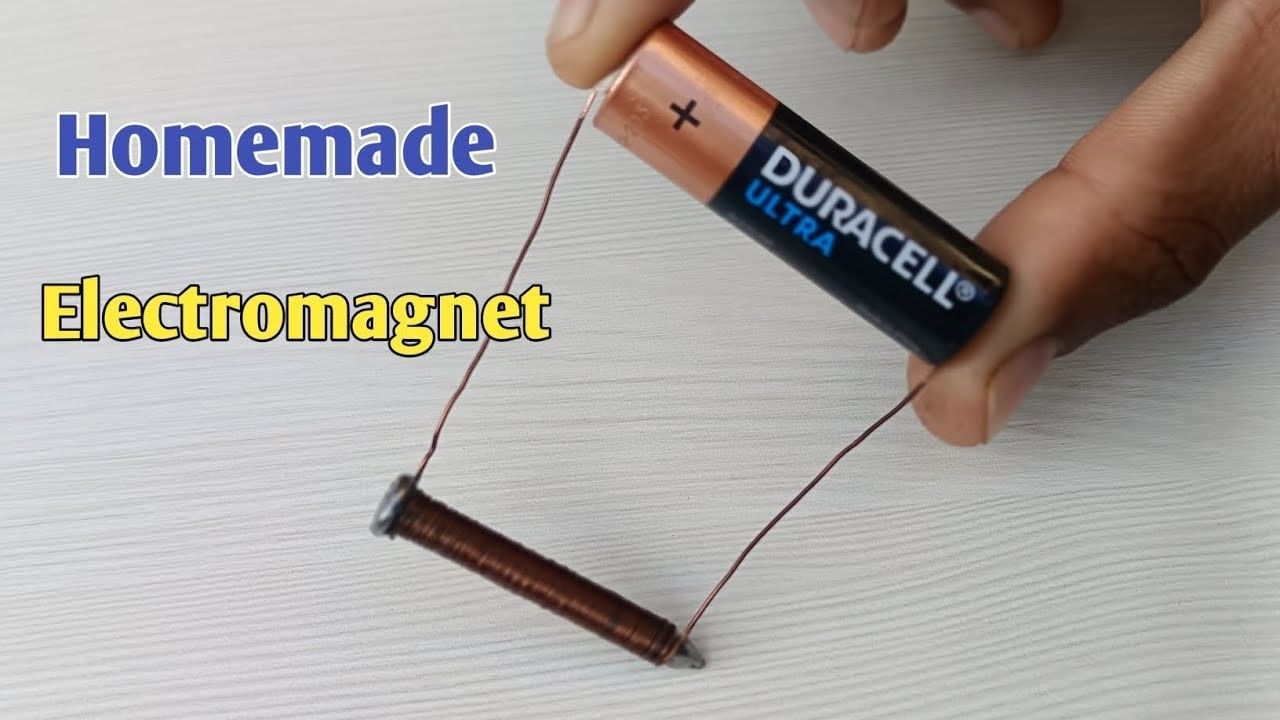
  3. An electromagnet is:
    a) A permanent magnet made of steel
    b) A coil with an iron core that becomes a magnet when current flows
    c) A bar magnet with fixed poles
    d) A coil without any core

    Answer: b) A coil with an iron core that becomes a magnet when current flows
    Electromagnets work only when current is ON.
  4. Which change will increase the strength of an electromagnet?
    a) Using fewer turns of wire
    b) Reducing current
    c) Inserting a soft iron core
    d) Removing the battery

    Answer: c) Inserting a soft iron core
    Strength increases with iron core, more turns, and higher current.
  5. Lifting electromagnets are used mainly to:
    a) Measure current
    b) Lift and move heavy steel in scrap yards
    c) Store electrical energy
    d) Heat metals

    Answer: b) Lift and move heavy steel in scrap yards
    They can be switched ON to lift and OFF to release.
  6. When current passes through a nichrome wire, it becomes hot due to:
    a) Absence of resistance
    b) Magnetic shielding
    c) Cooling effect of current
    d) Heating effect of electric current
    Answer:
     d) Heating effect of electric current
    Electrical energy converts to heat because nichrome has high resistance.
  7. Which factor increases heat in a wire for the same time?
    a) Thicker wire and less current
    b) Shorter wire and less current
    c) Longer, thinner wire with more current
    d) No resistance in wire
    Answer: 
    c) Longer, thinner wire with more current
    Heat increases with resistance, current, length, and time.
  8. In a simple voltaic (galvanic) cell, electricity is produced by:
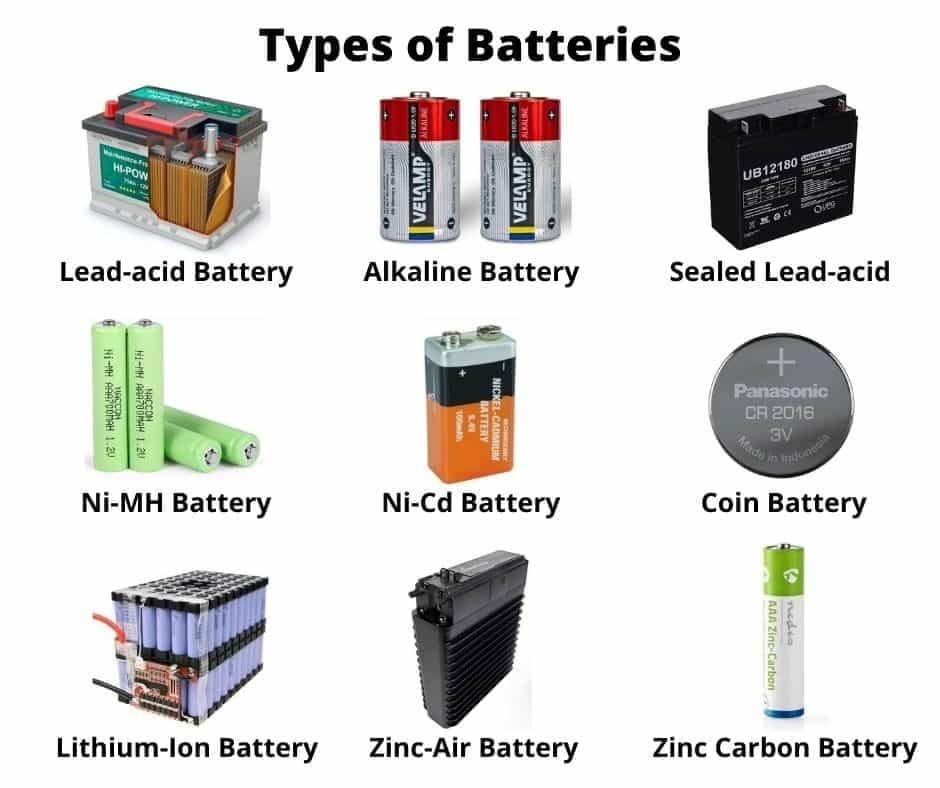
    a) Chemical reactions between metals and electrolyte
    b) Friction 
    c) Magnetic induction
    d) Solar energy
    Answe
    r: a) Chemical reactions between metals and electrolyte
    The reaction releases energy as electrical current.
  9. In a dry cell, the negative terminal is the:
    a) Zinc container
    b) Carbon rod 
    c) Electrolyte paste
    d) Air gap
    Answer:
     a) Zinc container
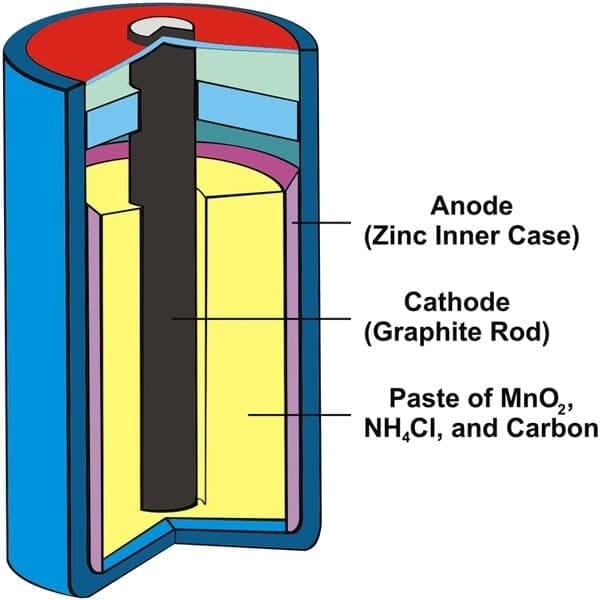
    The zinc can acts as the negative electrode; carbon rod is positive.
  10. Lithium-ion batteries are:
    a) Single-use only
    b) Not suitable for recharging
    c) Only for torches and clocks
    d)  Rechargeable and used in phones/laptops
    Answer: d) Rechargeable and used in phones/laptops
     Li-ion batteries are common rechargeable batteries in modern devices.

Q2. Fill in the Blanks

Instruction: Fill in the blanks with the correct word based on the chapter.

  1. A current-carrying conductor produces a __________ field around it.
    Answer: 
    magnetic
    Current generates a magnetic field.
  2. The deflection of a __________ needle shows the presence of current nearby.
    Answer: 
    compass
    The compass detects magnetic fields.
  3. An iron nail wrapped with a current-carrying coil becomes an __________.
    Answer:
     electromagnet
    It behaves like a magnet only when current flows.
  4. Reversing the direction of current reverses the __________ of an electromagnet.
    Answer: 
    polarity (poles)
    North and South poles swap when current direction changes.
  5. The heating of a wire due to current is called the __________ effect of electric current.
    Answer: 
    heating
    Electrical energy changes to heat energy.
  6. __________ wire is used as a heating element because it has high resistance.
    Answer:
     Nichrome
    High resistance produces more heat.
  7. A device that produces electricity by a chemical reaction is called an electric __________.
    Answer: 
    cell
    Cells convert chemical energy to electrical energy.
  8. In a dry cell, the electrolyte is a moist __________.
    Answer: 
    paste
    Hence called a “dry” cell.
  9. In the lemon battery, the lemon juice acts as an __________.
    Answer: 
    electrolyte
    The conducting liquid enables the reaction.
  10. Multiple cells connected together form a __________.
    Answer: 
    battery
    A battery supplies higher voltage/current than a single cell.

Q3. Very Short Answer Questions (1 line)

Instruction: Answer the following questions in one line.

  1. What simple observation shows the magnetic effect of current?
    Answer: A compass needle deflects near a current-carrying wire.
  2. Name any one factor that increases the strength of an electromagnet.
    Answer: Increasing the number of turns in the coil.
  3. What happens to an electromagnet when the current is switched off?
    Answer: It loses its magnetism.
  4. What is resistance?
    Answer: The opposition offered by a material to the flow of electric current.
  5. Which terminal is at the center of a dry cell?
    Answer: The carbon rod (positive terminal).

Q4. Short Answer Questions

Instruction: Answer the following questions in 2–3 lines.

  1. State Oersted’s finding and its importance.
    Answer: Oersted found that a current-carrying wire deflects a compass needle, proving that electric current creates a magnetic field. This linked electricity and magnetism and led to electromagnetism-based technologies.
  2. How can you make a simple electromagnet at home?
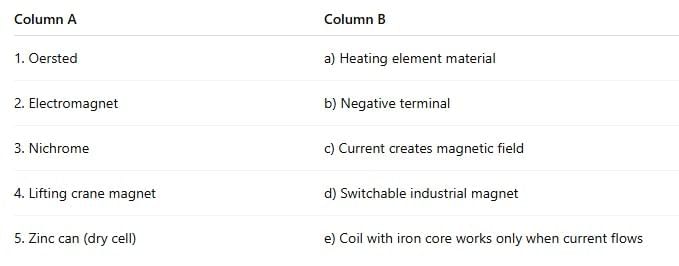
    Answer: Wrap insulated wire around a soft iron nail, connect the wire ends to a cell, and switch ON. The nail attracts iron objects while current flows; it stops when switched OFF.
  3. Mention two ways to increase the heat produced in a wire.
    Answer: Use a longer/thinner high-resistance wire (like nichrome) and increase the current (more cells). Heat also increases with time of current flow.
  4. What is the basic structure of a dry cell?
    Answer: A zinc container (negative) filled with electrolyte paste and a central carbon rod (positive). It is a commonly used single-use cell.
  5. How can you light an LED with lemons?
    Answer: Insert a copper strip and an iron nail into each lemon (electrodes). Connect several lemon cells in series to increase voltage; ensure correct LED polarity.

Q5. Match the Following 

Instruction: Match Column A with the correct option in Column B.

Ans: 

  1. Oersted — c) Current creates magnetic field
    He discovered the magnetic effect of electric current.
  2. Electromagnet — e) Coil with iron core works only when current flows
    It becomes magnetic only when powered.
  3. Nichrome — a) Heating element material
    Nichrome’s high resistance makes it ideal for heaters.
  4. Lifting crane magnet — d) Switchable industrial magnet
    Used to lift/drop heavy steel by switching current ON/OFF.
  5. Zinc can (dry cell) — b) Negative terminal
    In a dry cell, the zinc container acts as the negative electrode.