7. Life Lines of National Economy – Chapter Notes

Introduction

The pace of development of a country depends upon the production of goods and services as well as their movement over space. Therefore, efficient means of transport are pre-requisites for fast development.

The development of a nation relies on producing goods and services and their efficient movement. Key elements include:

  • Efficient Transport: Essential for moving raw materials to factories and finished products to consumers.
  • Seamless Communication: Vital for the flow of information, supporting economic activities.
  • Global Connectivity: India’s integration with the world boosts trade and enriches the economy.
  • Trade Networks: Dense transport and communication networks are crucial for local, national, and global trade.

Transport

  • Transport plays an important role in the economy. We rely on various materials and services, some available locally, others brought from distant places.
  • Goods and services require transportation to move from supply locations to demand locations. Traders facilitate this movement, bringing products to consumers.
  • Types of Transport:
    – Transport occurs over three main domains: land, water, and air.
    – These correspond to the three types of transport: land transport, water transport, and air transport.
  • Expansion of Trade and Transport:
    – Initially, trade and transport were limited to small areas.
     Advances in science and technology have expanded trade and transport globally.
    – Today, the world functions like a large village, thanks to fast and efficient transport systems.
  • Integration with Communication:
    – Transport is closely linked with communication systems, making them complementary.
    – Together, they enable the smooth functioning of trade and economic activities.
  • India’s Connectivity:
    – Despite its vast size and diversity, India is well-connected with the world.
    – Various modes of transport and communication, such as railways, airways, waterways, newspapers, radio, TV, cinema, and the internet, contribute to India’s socio-economic progress.
  • Impact on the Economy:
    – Trade, from local to international levels, boosts the economy and enhances the quality of life.
    – The growth of amenities and facilities has significantly improved living standards.

Roadways

Second Largest Network: India has the second largest road network in the world, totaling about 62.16 lakh km (2020–21).
Historical Precedence: Roadways preceded railways in India and still maintain an edge due to ease of construction and maintenance.

Advantages Over Railways:

  1. Lower Construction Cost: Roads are cheaper to build compared to railway lines.
  2. Adaptability to Terrain: Roads can navigate more dissected, undulating topography and higher slopes, including mountainous regions like the Himalayas.
  3. Economical for Short Distances: Ideal for transporting a few people and small quantities of goods over short distances.
  4. Door-to-Door Service: Provides direct access, reducing loading and unloading costs.
  5. Feeder to Other Modes: Roads connect to railways, airports, and seaports, enhancing overall transport efficiency.

In India, roads are classified into the following six classes according to their capacity:

1. Golden Quadrilateral Super Highways

  • The government has launched a major road development project linking Delhi-Kolkata- Chennai-Mumbai and Delhi by six-lane Super Highways
  • The North-South corridors linking Srinagar (Jammu & Kashmir) and Kanyakumari (Tamil Nadu), and East-West Corridor connecting Silcher (Assam) and Porbander (Gujarat) are part of this project. 
  • Aims to reduce travel time and distance between major cities.
  • Implemented by the National Highway Authority of India (NHAI).

2. National Highways

  • Primary road systems connecting extreme parts of the country.
  • These are the primary road systems and are laid and maintained by the Central Public Works Department (CPWD)
  • Major National Highways run in North-South and East-West directions.

India: Highways

3. State Highways

  • Roads linking a state capital with different district headquarters are known as State Highways.
  • These roads are constructed and maintained by the State Public Works Department (PWD) in State and Union Territories.

4. District Roads 

  • Connect the district headquarters with other places of the district. 
  • The Zila Parishad maintains these roads.

5. Other Roads 

  • Rural roads, which link rural areas and villages with towns, are classified under this category.
  • These roads received special impetus under the Pradhan Mantri Grameen Sadak Yojana.
  • Under this scheme, special provisions are made to link every village in the country to a major town in the country by an all-season motorable road.

6. Border Roads

  • Apart from these, the Border Roads Organisation a Government of India undertaking constructs and maintains roads in the bordering areas of the country.
  • This organisation was established in 1960 for the development of roads of strategic importance in the northern and northeastern border areas. 
  • These roads have improved accessibility in areas of difficult terrain and have helped in the economic development of these areas.
  • The Indian Railways is the largest public sector undertaking in the country. 
  • The first train steamed off from Mumbai to Thane in 1853, covering a distance of 34 km. Concrete or even bitumen of coal, therefore, these are all-weather roads. Unmetalled roads go out of use in the rainy season.

Try yourself:Which organisation constructs and maintains roads in the border areas?

  • A.NHAI
  • B.BRO
  • C.Pradhan Mantri Grameen Sadak Yojana
  • D.BSF

View Solution

Road Density:

  • The length of road per 100 sq. km of area is known as the density of roads.
  • Distribution of road is not uniform in the country.
  • The density of all roads varies from only 10 km in Jammu & Kashmir to 375 km in Kerala with the national average of 75 km (1996-97). 
  • Road transportation in India faces a number of problems. Keeping in view the volume of traffic and passengers, the road network is inadequate. 
  • About half of the roads are unmetalled, and this limits their usage during the rainy season.
  • The National Highways are inadequate too. 
  • Moreover, the roadways are highly congested in cities, and most of the bridges and culverts are old and narrow.

Railways

Railways are the principal mode of transportation for freight and passengers in India. 

  • Railways also make it possible to conduct multifarious activities like business, sightseeing, pilgrimage, and transportation of goods over longer distances.
  • Apart from an important means of transport, the Indian Railways have been a great integrating force for more than 150 years. 
  • Railways in India bind the economic life of the country as well as accelerate the development of industry and agriculture.

Rail Network: The Indian Railways have a network of 7, 031 stations spread over a route length of 63, 221 km. with a fleet of 7817 locomotives, 5321 passenger service vehicles, 4904 other coach vehicles and 228, 170 wagons as on 31.

Rail Gauge and Length of Routes in India

Development of Railways:

– Reorganized into 16 Zones: Indian Railways is divided into 16 zones, influenced by various factors.

– Distribution Influences:

  • Northern Plains: Favorable due to vast level land, high population density, and rich agricultural resources, though river bridges posed challenges.
  • Peninsular Region: Railway tracks laid through low hills, gaps, or tunnels due to hilly terrain.
  • Himalayan Region: Unfavorable for railway construction due to high relief, sparse population, and limited economic opportunities.
  • Challenging Terrains: Sandy plains of western Rajasthan, swamps of Gujarat, and forested areas of Madhya Pradesh, Chhattisgarh, Orissa, and Jharkhand posed difficulties.
  • Sahyadri Range: Railway lines cross through gaps or passes (Ghats).

– Konkan Railway Development:

  • Facilitated movement along the west coast, boosting economic activity.
  • Faced issues like track sinking and landslides.

– Importance & Challenges:

  • Railways play a crucial role in the national economy, surpassing other transport modes.
  • Problems: Ticketless travel, theft, property damage, unnecessary train stops, and chain pulling cause significant issues and damages.

Pipelines

  • The pipeline transport network is a new arrival on the transportation map of India.
  • In the past, these were used to transport water to cities and industries. 
  • These are used for transporting crude oil, petroleum products and natural gas from oil and natural gas fields to refineries, fertilizer factories and big thermal power plants.
    Oil Pipeline
  • Solids can also be transported through a pipeline when converted into the slurry.
  • The far inland locations of refineries like Barauni, Mathura, Panipat and gas-based fertilizer plants could be thought of only because of pipelines. 
  • The initial cost of laying pipelines is high, but subsequent running costs are minimal.
  • It rules out trans-shipment losses or delays.
  • There are three important networks of pipeline transportation in the country:
    (i) From oil field in upper Assam to Kanpur (Uttar Pradesh), via Guwahati, Barauni and Allahabad. It has branches from Barauni to Haldia, via Rajbandh, Rajbandh to Maurigram and Guwahati to Siliguri.
    (ii) From Salaya in Gujarat to Jalandhar in Punjab, via Viramgam, Mathura, Delhi and Sonipat. It has branches to connect Koyali (near Vadodara, Gujarat) Chakshu and other places.
    (iii) Gas pipeline from Hazira in Gujarat connects Jagdishpur in Uttar Pradesh, via Vijaipur in Madhya Pradesh. It has branches to Kota in Rajasthan, Shahajahanpur, Babrala and other places in Uttar Pradesh.

Waterways

  • Waterways are the cheapest means of transport.
  • They are most suitable for carrying heavy and bulky goods. It is a fuel-efficient and environment-friendly mode of transport.

Waterways

  • India has inland navigation waterways of 14,500 km in length.
  • Out of these, only 3,700 km are navigable by mechanised boats.
  • National Waterways:– N.W. No.1: Ganga River (Allahabad to Haldia, 1620 km).– N.W. No.2: Brahmaputra River (Sadiya to Dhubri, 891 km).– N.W. No.3: West-Coast Canal in Kerala (Kottapuram-Kollam, Udyogamandal, and Champakkara canals, 205 km).– N.W. No.4: Stretches of Godavari and Krishna rivers with Kakinada-Puducherry canals (1078 km).– N.W. No.5: Brahmani River, Matai River, Mahanadi-Brahmani delta channels, and East Coast Canal (588 km).
  • Other Important Waterways: Mandavi, Zuari, Cumberjua, Sunderbans, Barak, and Kerala backwaters also see substantial transport activity.
  • Foreign Trade95% of India’s trade volume (68% by value) is conducted via sea ports along the coast.

Try yourself:National Waterway No. 1 is navigable between which of the following places?

  • A.Sadiya and Dhubri
  • B.Allahabad and Haldia
  • C.Udyogamandal and Champakkara
  • D.Kottapuram and Komman

View Solution

Major Sea Ports

  • With a long coastline of 7,516.6 km, India is dotted with 12 major and 181 medium and minor ports.
  • These major ports handle 95 per cent of India’s foreign trade.
  • Kandla (Deendayal Port):– First port developed post-Independence to reduce pressure on Mumbai after losing Karachi to Pakistan.
    – A tidal port serving a vast hinterland, including Jammu and Kashmir, Himachal Pradesh, Punjab, Haryana, Rajasthan, and Gujarat.
  • Mumbai Port:– Largest port with a spacious natural harbor.
    – Jawaharlal Nehru Port (Nhava Sheva) was developed to decongest Mumbai and act as a hub for the region.
  • Marmagao port (Goa): Premier iron ore exporting port, handling about 50% of India’s iron ore exports.
  • New Mangalore port:  Located in Karnataka, it primarily exports iron ore concentrates from the Kudremukh mines.
  • Kochchi Port: Located in the extreme southwest, it is a natural harbor at the entrance of a lagoon.
  • Tuticorin Port:– Extreme southeastern port in Tamil Nadu with a natural harbor and rich hinterland.
    – Handles diverse cargo, including trade with neighboring countries like Sri Lanka and Maldives.
  • Chennai Port: One of the oldest artificial ports in the country. It is ranked next to Mumbai in terms of the volume of trade and cargo.
  • Vishakhapatnam Port:  Deepest landlocked and well-protected port, initially developed for iron ore exports.
  • Paradip Port: Located in Orissa specialises in the export of iron ore.
  • Kolkata Port: 
    – Inland riverine port serving the Ganga-Brahmaputra basin.
    – Requires constant dredging of the Hoogly River due to its tidal nature.
    – Haldia Port was developed to ease the pressure on Kolkata.

Airways

  • Air transport was nationalised in 1953. On the operational side, Indian Airlines, Alliance Air (a subsidiary of Indian Airlines), private scheduled airlines and non-scheduled operators provide domestic air services. 
  • Fastest and Most Comfortable Transport: Air travel is the quickest, most comfortable, and prestigious mode of transport today.
  • Versatility in Terrain: Capable of covering difficult terrains such as high mountains, deserts, dense forests, and long oceanic stretches with ease.
  • Northeastern India: Air travel is particularly crucial for the northeastern region, which is characterized by big rivers, dissected relief, dense forests, frequent floods, and international borders, enhancing accessibility.
  • Pawanhans Helicopters Ltd.:– Provides helicopter services for Oil and Natural Gas Corporation’s offshore operations.
    – Serves inaccessible areas and challenging terrains, including the northeastern states, and the interior regions of Jammu and Kashmir, Himachal Pradesh, and Uttarakhand.

Communication

Personal communication and mass communication, including television, radio, press, films, etc., are the major means of communication in the country.

Indian Post

  • The Indian postal network is the largest in the world. It handles parcels as well as personal written communications. 
    Indian Post
  • Cards and envelopes are considered first-class mail and are airlifted between stations covering both land and air. 
  • The second–class mail includes book packets, registered newspapers and periodicals. 
  • They are carried by surface mail, covering land and water transport. 
  • To facilitate quick delivery of mails in large towns and cities, six mail channels have been introduced recently. 
  • They are called Rajdhani Channel, Metro Channel, Green Channel, Business Channel, Bulk Mail Channel and Periodical Channel.

Try yourself:Which one of the following is considered as the first-class mail by the Indian postal network?

  • A.Cards and envelopes
  • B.Registered periodicals
  • C.Book packets
  • D.Registered newspapers

View Solution

Telephone

  • India has one of the largest telephone networks in Asia. 
  • In order to strengthen the flow of information from the grassroots to a higher level, the government has made special provision to extend twenty-four hours STD facility to every village in the country. 
  • There is a uniform rate of STD facilities all over India. It has been made possible by integrating the development in space technology with communication technology.

Mobile Telephones

  • India is one of the fastest-growing mobile networks in the world. Mobile phones have changed the way Indians conducted business.
  • Now even low-income group people like vegetable vendors, plumbers and carpenters get better business because they are connected through mobile phones.

Mass Communication

  • Mass communication provides entertainment and creates awareness among people about various national programmes and policies. It includes radio, television, newspapers, magazines, books and films. 
  • All India Radio (Akashwani) broadcasts a variety of programmes in national, regional and local languages for various categories of people, spread over different parts of the country. 
  • Doordarshan, the national television channel of India, is one of the largest terrestrial networks in the world. It broadcasts a variety of programmes from entertainment, education to sports, etc. for people of different age groups.

Newspapers 

  • India publishes a large number of newspapers and periodicals annually. They are of different types depending upon their periodicity.
  • Newspapers are published in about 100 languages and dialects. The largest number of newspapers published in the country are in Hindi, followed by English and Urdu.

Films

  • India is the largest producer of feature films in the world. It produces short films; video feature films and video short films.
  • The Central Board of Film Certification is the authority to certify both Indian and foreign films.

International Trade

Trade between the two countries is called international trade. It may take place through sea, air or land routes. The advancement of international trade of a country is an index to its economic prosperity. It is, therefore, considered the economic barometer for a country.

Export: When the goods are sent to other countries for sale, it is called export.

Import: When the goods come from other countries to be sold in India, it is called import.

Balance of Payment

  • This is the difference between the export and import of a country.
  • When the export is higher than import, then this is a situation of a favourable balance of payment.
  • On the other hand, when the import is higher than export, then this is a situation of an unfavourable balance of payment.
  • Indian Commodities Witnessing growth in share in Export:
  • Major Imports to India:
  • Bulk imports as a group registered a growth accounting for 39.09 per cent of total imports.
  • This group includes fertilizers (67.01 per cent), cereals (25.23 per cent), edible oils (7.94 per cent) and newsprint (5.51 per cent).
    International trade has undergone a sea change in the last fifteen years.
  • The exchange of commodities and goods have been superseded by the exchange of information and knowledge.
  • India has emerged as a software giant at the international level, and it is earning large foreign exchange through the export of information technology.

Tourism as a Trade

  • Foreign tourist’s arrivals in the country witnessed an increase of 23.5 per cent during the year 2004 as against the year 2003, thus contributing Rs 21,828 crore of foreign exchange.
  • Over 2.6 million foreign tourists visit India every year. More than 15 million people are directly engaged in the tourism industry.
  • Tourism also promotes national integration, provides support to local handicrafts and cultural pursuits.
  • It also helps in the development of international understanding of our culture and heritage.

6. Manufacturing Industries – Chapter Notes

Introduction

Manufacturing is the process of producing goods in large quantities after processing raw materials into more valuable products.

  • For Example: Paper is manufactured from wood, sugar from sugarcane, iron and steel from iron ore, and aluminium from bauxite.

Sugar is produced from Sugarcane

  • Some types of clothes are manufactured from yarn, which itself is an industrial product.
  • People employed in secondary activities are responsible for manufacturing primary materials into finished goods.
  • Examples of workers in the secondary sector include those in steel factories, car, breweries, textile industries, and bakeries.
  • A country’s economic power is measured by the growth and advancement of its manufacturing industries.

Try yourself:

What is manufacturing?

  • A.The process of producing goods in large quantities after processing raw materials into more valuable products.
  • B.The process of growing raw materials to be used in the production of goods.
  • C.The process of selling finished goods to consumers.
  • D.The process of importing goods from other countries.

View Solution

Importance of Manufacturing

  • The backbone of Development: Manufacturing is crucial for both general development and economic progress. 
  • Modernizing Agriculture: Manufacturing industries play a key role in modernizing agriculture, which is the foundation of the economy. They also reduce the heavy reliance on agricultural income by creating jobs in the secondary and tertiary sectors. 
  • Eradicating Unemployment and Poverty: Industrial development is essential for eliminating unemployment and poverty. This was the primary reason for establishing public sector industries and joint sector ventures in India. It also aims to reduce regional disparities by setting up industries in tribal and backward areas. 
  • Expanding Trade and Commerce: Exporting manufactured goods expands trade and commerce, bringing in necessary foreign exchange. 
  • Transforming Raw Materials: Countries that convert their raw materials into a wide range of finished goods with higher value are more prosperous. India’s future prosperity depends on increasing and diversifying its manufacturing industries as quickly as possible. 

Classification of Industries

1. Based on source of raw materials used:

  • Agro-based: cotton, woollen, jute, silk textile, rubber and sugar, tea, coffee, edible oil.
  • Mineral-based: iron and steel, cement, aluminium, machine tools, petrochemicals.

2. According to their main role:

  • Basic or key industries that supply their products or raw materials to manufacture other goods. Example: iron and steel and copper smelting, aluminium smelting.
  • Consumer industries that produce goods for direct use by consumers. Example: sugar, toothpaste, paper, sewing machines, fans etc.

3. Based on capital investment:

  • A small scale industry is described based on the maximum investment allowed on its assets, which currently stands at rupees one crore. If the investment exceeds this amount in any sector, it is classified as a large scale industry.

Try yourself:What is the importance of manufacturing industries?

  • A.All of these
  • B.They help in modernising agriculture.
  • C.They eradicate unemployment and poverty.
  • D.They reduce dependence on agricultural income.  

View Solution

4. Based on ownership:

  • Public sector, owned and operated by government agencies– BHEL, SAIL etc.
  • Private sector industries owned and operated by individuals or a group of individuals–Reliance, TATA, Bajaj Auto Ltd., Dabur Industries.
  • Joint sector industries are jointly run by the state and individuals or a group of individuals. Oil India Ltd. (OIL) is jointly owned by the public and private sectors. 
  • Cooperative sector industries are those owned and operated by the producers or suppliers of raw materials, workers, or both. They gather resources together and divide profits or losses accordingly, like the sugar industry in Maharashtra and the coir industry in Kerala. Examples include Amul and Lijjat Papad.

5. Based on the bulk and weight of raw material and finished goods:

  • Heavy industries such as iron and steel
  • Light industries that use light raw materials and produce light goods such as electrical industries.

Agro-Based Industries

Cotton, jute, silk, woollen textiles, sugar and edible oil, etc. industries are based on agricultural raw materials.

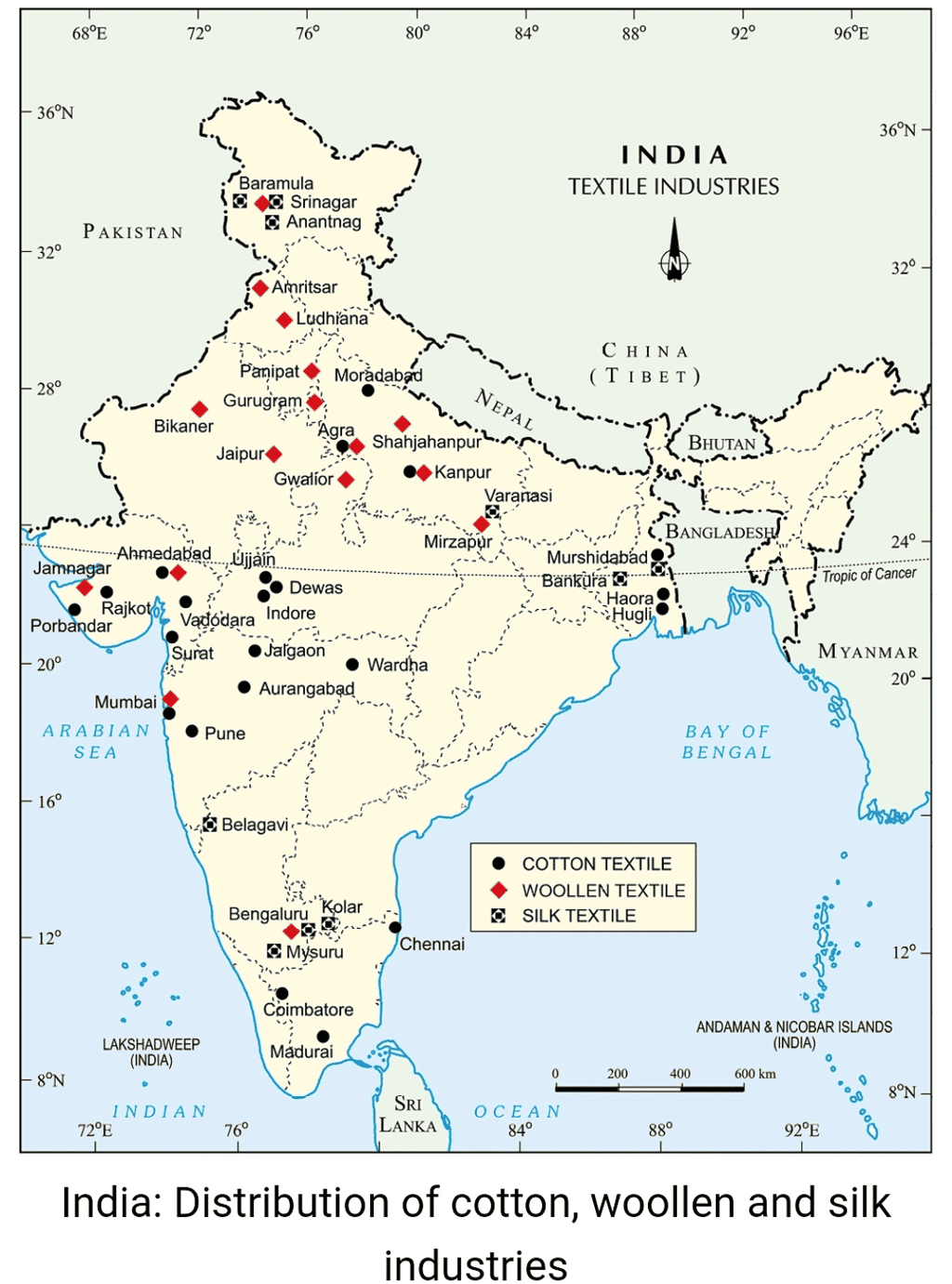
1. Textile Industry

  •  The textile industry holds a special place in the Indian economy because it plays a crucial role in industrial production, job creation, and foreign exchange earnings
  •  This industry is unique in being self-reliant and having a complete value chain within the country, from raw materials to the highest value-added products

Value addition in the textile industry

2. Cotton Textiles

  • Cotton textiles were made in ancient India using hand spinning and handloom weaving techniques.
  • Power looms were popular after the 18th century.
  • During the colonial period, our traditional businesses experienced a setback since they couldn’t compete with England’s mill-made textiles.

Cotton Industry in 18th Century

  • The cotton textile industry initially developed in the cotton-growing regions of Maharashtra and Gujarat due to factors such as the availability of raw cotton, suitable climate, accessible market and transport facilities, and labour.
  • This industry is closely connected to agriculture and provides livelihoods to farmers, cotton boll pluckers, and workers involved in various stages of production, such as ginning, spinning, weaving, dyeing, designing, packaging, tailoring, and sewing.
  • The industry’s growth also supports other sectors like chemicals and dyes, packaging materials, and engineering works.
  • While spinning is still concentrated in MaharashtraGujarat, and Tamil Nadu, weaving is decentralized to incorporate traditional skills and designs in cotton, silk, zari, embroidery, etc.
  • India excels in spinning production but struggles to produce high-quality fabrics due to limitations in weaving technology and the inability to fully utilize the high-quality yarn produced in the country.
  • Weaving is carried out through handloom, powerloom, and mills.
  • The handspun khadi industry, which involves weaving in homes as a cottage industry, provides significant employment opportunities for weavers.

The first successful textile mill was established in Mumbai in 1854.  The two world wars were fought in Europe, India was a British colony. There was a demand for cloth in U.K. hence, they gave a boost to the development of the cotton textile industry.

3. Jute Textiles

  • India is the largest producer of raw jute and jute goods.
  • It is the second largest exporter of jute after Bangladesh.

Jute Industry

  • Most of the jute mills are located in West Bengal, along the banks of the Hugli river.
  • The proximity of jute-producing areas is a factor that determines their location in the Hugli basin.
  • The availability of inexpensive water transport is another factor supporting their location.
  • A good network of railwaysroadways, and waterways facilitates the movement of raw materials to the mills.
  • The Hugli River provides abundant water for processing raw jute.
  • Cheap labour from West Bengal and neighbouring states such as BiharOdisha, and Uttar Pradesh are available.
  • Kolkata, being a large urban centre, provides bankinginsurance, and port facilities for the export of jute goods.

The first jute mill was set up near Kolkata in 1855 at Rishra.

Try yourself:

Where are most of the jute mills located in India?

  • A.Along the banks of the Ganges river
  • B.In the state of West Bengal
  • C.In the southern and western states of India
  • D.In the state of Bihar

View Solution

4. Sugar Industry

  • India is the second-largest producer of sugar in the world, but it holds the first position in the production of gur and khandsari.
  • The raw material used in this industry is bulky, and its sucrose content reduces during transportation.

Sugar Mill

  • The sugar mills are located in Uttar PradeshBiharMaharashtraKarnatakaTamil NaduAndhra PradeshGujaratPunjabHaryana, and Madhya Pradesh.
  • Sixty percent of the mills are in Uttar Pradesh and Bihar.
  • The seasonal nature of the industry makes it suitable for the cooperative sector.
  • In recent years, there has been a shift and concentration of mills in the southern and western states, particularly in Maharashtra.
  • This is because the cane produced in these states has a higher sucrose content and the cooler climate allows for a longer crushing season.
  • The cooperatives are more successful in these states.

Mineral-based Industries
1. Iron and Steel Industry

India: Iron and Steel Plants

  • The steel industry is considered to be the backbone of other industries as they rely on it for machinery.
  • Steel is necessary for the production of various engineering goods, construction materials, defence equipment, medical devices, telephonic equipment, scientific equipment, and consumer goods.
  • The production and consumption of steel are often seen as indicators of a country’s development.
  • Iron and steel are classified as a heavy industry because both the raw materials (iron ore, coking coal, limestone) and finished products are heavy and bulky, leading to high transportation costs.
  • The raw materials are needed at a ratio of approximately 4:2:1, with manganese also required to harden the steel.
  • The ideal location for steel plants should have an efficient transport network for distribution to markets.
  • The Chhotanagpur plateau region is the most suitable location for iron and steel industries due to its advantages, such as low-cost iron ore, high-grade raw materials in close proximity, cheap labour, and a large domestic market with growth potential.

Process and Manufacture of Steel

Try yourself:

Which industry is considered the backbone of other industries, as they rely on it for machinery?

  • A.Iron and Steel Industry
  • B.Aluminium Smelting
  • C.Chemical Industries
  • D.None of the above

View Solution

2. Aluminium Smelting

  • Aluminium smelting is the second most important metallurgical industry in India.
  • It is known for its lightweightresistance to corrosiongood heat conductivitymalleability, and strength when mixed with other metals.
  • It is commonly used in the manufacturing of aircraftutensils, and wires.
  • It has gained popularity as a substitute for steelcopperzinc, and lead in various industries.
  • Aluminium smelting plants are located in OdishaWest BengalKeralaUttar PradeshChhattisgarhMaharashtra, and Tamil Nadu.
  • Bauxite, a bulky dark reddish-colored rock, is the raw material used in the smelting process.
  • The availability of regular electricity supply and affordable raw materials are key factors for the location of aluminium smelting plants.

Manufacturing in Aluminium Industry

3. Chemical Industries

  • The chemical industry in India is experiencing rapid growth and diversification.
  • It consists of both large and small-scale manufacturing units.
  • Significant growth has been observed in both the inorganic and organic sectors.
  • Inorganic chemicals such as sulphuric acidnitric acidsoda ash, and caustic soda are widely produced and used in various industries, including fertilizers, synthetic fibres, plastics, adhesives, paints, dyes, glass, soaps, detergents, and paper.
  • These industries are spread across the country.
  • Organic chemicals, particularly petrochemicals, are used in the manufacturing of synthetic fibers, rubber, plastics, dyes, drugs, and pharmaceuticals.
  • Organic chemical plants are usually located near oil refineries or petrochemical plants.
  • The chemical industry is a major consumer of its own products.
  • Basic chemicals are processed to produce other chemicals that are used in industrial applicationsagriculture, or directly for consumer markets.

4. Fertilizer Industry

Fertiliser Industry

  • The fertilizer industry in India primarily focuses on producing nitrogenous fertilizersphosphatic fertilizersammonium phosphate (DAP), and complex fertilizers.
  • Nitrogenous fertilizers, particularly urea, are the main products of the industry.
  • Complex fertilizers contain a combination of nitrogen (N)phosphate (P), and potash (K).
  • Potash, or potassium, is entirely imported as India does not have any commercially usable reserves of potash or potassium compounds.
  • The industry expanded to various parts of the country after the Green Revolution.
  • Gujarat, Tamil Nadu, Uttar Pradesh, Punjab, and Kerala contribute to half of the fertilizer production in India.
  • Other significant fertilizer producers include Andhra Pradesh, Odisha, Rajasthan, Bihar, Maharashtra, Assam, West Bengal, Goa, Delhi, Madhya Pradesh, and Karnataka.

Try yourself:

Which industry in India primarily focuses on producing nitrogenous fertilizers, phosphatic fertilizers, ammonium phosphate (DAP), and complex fertilizers?

  • A.Cement Industry
  • B.Fertiliser Industry
  • C.Automobile Industry
  • D.Information Technology and Electronics Industry

View Solution

5. Cement Industry
Cement Industry

  • Cement is necessary for various construction activities, including building houses, factories, bridges, roads, airports, dams, and commercial establishments.
  • The cement industry requires large and heavy raw materials such as limestone, silica, and gypsum.
  • It also relies on coal and electric power, as well as rail transportation.
  • Plants have been strategically located in Gujarat, India, to have convenient access to the Gulf countries’ market.

6. Automobile Industry

  • Automobiles in India are used for quick transportation of goods and passengers.
  • Various types of vehicles, such as trucks, buses, cars, motorcycles, scooters, three-wheelers, and utility vehicles, are manufactured in India.
  • The liberalization of the economy led to the introduction of new and modern vehicle models, which increased the demand for vehicles in the market.
  • This resulted in a healthy growth of the automobile industry, including the production of passenger carstwo-wheelers, and three-wheelers.
  • The automobile industry is mainly located around major cities like Delhi, Gurugram, Mumbai, Pune, Chennai, Kolkata, Lucknow, Indore, Hyderabad, Jamshedpur, and Bengaluru.

7. Information Technology and Electronics Industry

  • The electronics industry in India encompasses a wide range of products, such as transistor sets, televisions, telephones, cellular telecom, telephone exchanges, radars, and computers.
  • Bengaluru has emerged as the electronic capital of India, but other important centres for electronic goods include Mumbai, Delhi, Hyderabad, Pune, Chennai, Kolkata, Lucknow, and Coimbatore.
  • The major industry concentration is found in Bengaluru, Noida, Mumbai, Chennai, Hyderabad, and Pune.
  • One of the significant impacts of this industry is the generation of employment opportunities.
  • Growth in both the hardware and software sectors is crucial to the success of India’s IT industry.

Industrial Pollution and Environmental Degradation

Although industries contribute significantly to India’s economic growth and development, the increase in pollution of land, water, air, noise and the resulting degradation of the environment that they have caused cannot be overlooked. 
Industries are responsible for four types of pollution:
(a) Air
(b) Water 
(c) Land
(d) Noise
The polluting industries also include thermal power plants. 1. Air pollution 

  • Causes: High levels of sulphur dioxide and carbon monoxide; particulate matter from smoke and industrial activities.
  • Sources: Factories, chemical plants, and fossil fuel burning.
  • Effects: Harm to health, animals, plants, and buildings and contribute to climate change.

2. Water pollution 

  • Causes: Discharge of industrial wastes, including dyes, detergents, heavy metals, and pesticides.
  • Sources: Textile, chemical, petroleum refineries, and tanneries.
  • Effects: Thermal pollution affects aquatic life; nuclear waste causes severe health issues; soil contamination impacts groundwater.

3. Thermal pollution 

  • Cause: Thermal pollution of water occurs when hot water from factories and thermal plants is drained into rivers and ponds before cooling.
  • Effect: Disrupts aquatic life by altering water temperature.

4. Noise pollution 

  • Causes: Industrial activities, machinery, and construction work. Industrial and construction activities, machinery, factory equipment, generators, saws and pneumatic and electric drills also make a lot of noise. 
  • Effects: Hearing impairment, increased heart rate, blood pressure, and stress.

Try yourself:

What are the main types of pollution caused by industries?

  • A.Air, water, land, noise
  • B.Water, soil, noise, light
  • C.Air, water, noise, light
  • D.Air, soil, noise, waste

View Solution

Control of Environmental Degradation

To reduce industrial pollution and manage environmental impact, consider the following measures:

1. Reduction of Freshwater Pollution:

  • Minimize Water Use: Reuse and recycle water in multiple stages.
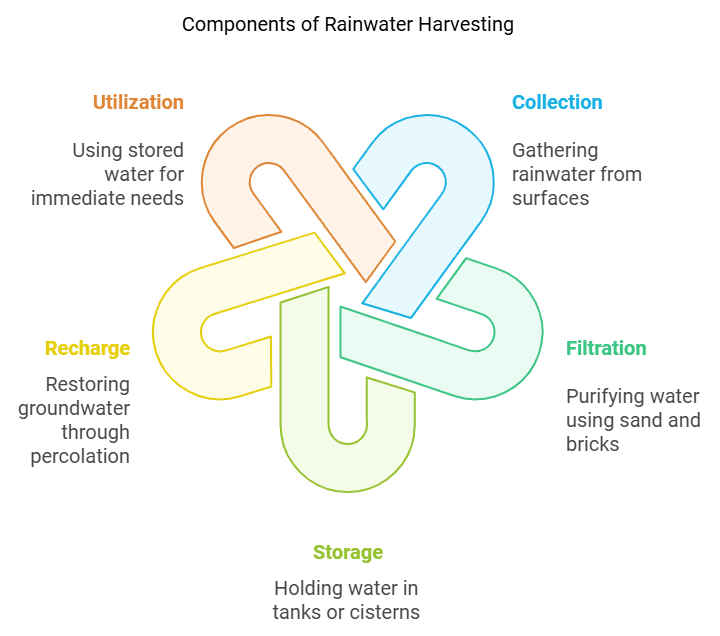
  • Rainwater Harvesting: Collect and use rainwater for various needs.
  • Effluent Treatment: Treat hot water and effluents before releasing into water bodies.

2. Industrial Effluent Treatment:

  • Primary Treatment: Mechanical processes such as screening, grinding, flocculation, and sedimentation.
  • Secondary Treatment: Biological processes to further clean the water.
  • Tertiary Treatment: Advanced biological, chemical, and physical processes for recycling wastewater.

Groundwater Management

  • Regulate Withdrawal: Legally control excessive groundwater extraction to protect resources.

Air Pollution Control

  • Reduce Particulate Matter: Install electrostatic precipitators, fabric filters, scrubbers, and inertial separators in smoke stacks.
  • Switch Fuel: Use oil or gas instead of coal to lower smoke emissions.
  • Noise Reduction: Equip machinery with silencers, use noise-absorbing materials, and redesign machinery for efficiency.

Sustainable Development: Integrate economic development with environmental concerns to achieve long-term sustainability.

NTPC Shows the Way

NTPC’s Environmental Initiatives

NTPC, a major power corporation in India, is committed to environmental management with ISO 14001 certification. It focuses on:

  1. Optimizing Equipment: Using advanced techniques and upgrading machinery.
  2. Minimizing Waste: Enhancing ash utilization.
  3. Maintaining Green Belts: Supporting ecological balance and afforestation.
  4. Reducing Pollution: Managing ash ponds, recycling ash water, and handling liquid waste.
  5. Monitoring: Conducting ecological reviews and managing data for power stations.

5. Minerals and Energy Resources – Chapter Notes

Introduction

Minerals are integral to our daily lives, forming the backbone of the modern world. Everything around us, from the simplest household items to complex machinery and towering structures, is made from metals and minerals extracted from the earth’s crust. 

Minerals & Energy ResourcesThese essential resources are embedded in rocks and are refined to produce the metals we rely on.

  • Daily Use: From vehicles to roads and buildings, minerals are crucial in creating the infrastructure we use daily.
  • Industrial Importance: Minerals are vital for manufacturing cars, buses, trains, airplanes, and the machinery that drives our industries.
  • Energy Resources: Beyond their physical uses, minerals are also the source of the energy resources that power our world. They fuel our vehicles and generate electricity, making them indispensable in our daily lives.

Throughout history, minerals have been essential not only for industrial and construction purposes but also for cultural practices, including decoration, religious rituals, and ceremonial rites. This chapter explores the significance of minerals and energy resources in our lives, examining their types, distribution, and importance in shaping our modern world.

What is a Mineral?

Minerals are “homogeneous, naturally occurring substances with a definable internal structure.” 

  • They are formed through geological processes over millions of years.
  •  Rocks are combinations of homogenous substances called minerals. 
  • Minerals can be found in rocks, soil, and water. 
  • They serve various purposes, including providing nutrients for plants and animals, forming the building blocks of rocks, and being used in manufacturing various products like electronics, jewellery, and construction materials. 
  • Examples of minerals include quartz, feldspar, diamond, and calcite.

Minerals

Mode of Occurrence of Minerals

Minerals are usually found in “ores”. The term ore is used to describe an accumulation of any mineral mixed with other elements.

Where are these minerals found? 

  • For an ore to be commercially viable, the mineral content must be in sufficient concentration to justify extraction.
  • The type of geological formation in which ores are found affects how easily they can be mined.
  • The formation also influences the cost of extraction, with some structures being more expensive to mine than others.

Let’s Revise: What is a mineral? Give few examples of Mineral.

View Answer  

Types of Mineral Formations

1. In Igneous and Metamorphic Rocks: 

  • Minerals can crystallize from magma (molten rock) as it cools and solidifies underground or on the Earth’s surface. 
  • Minerals can occur in cracks, crevices, faults, or joints.
  • Veins: Smaller occurrences.
  • Lodes: Larger occurrences.
  • Formation: Minerals in liquid/molten and gaseous forms are forced upward, cooling and solidifying as they rise.
  • Example: Tin, copper, zinc, and lead are obtained from veins and lodes.

2. In Sedimentary Rocks: 

  • Minerals can be deposited from water, often in layers, and form sedimentary rocks.
  • They can precipitate from solution (e.g., salt deposits), accumulate from the remains of plants and animals (e.g., coal), or be transported and deposited by water, wind, or ice (e.g., sandstone, shale).
  • Formation: Often under long periods of great heat and pressure.
  • Example: Coal, iron ore, gypsum, potash salt, and sodium salt.
  • Special Formation: Evaporation in arid regions leads to certain sedimentary minerals.

Let’s Revise: How do minerals in igneous and metamorphic rocks differ in formation from those in sedimentary rocks?

View Answer  

3. Decomposition of Surface Rocks:

  • Some ores are formed through the decomposition of surface rocks.
  • As surface rocks break down, soluble elements are removed, leaving behind a residual mass of weathered material.
  • Bauxite, an important ore for aluminum, is formed through this process of residual formation.

Bauxite

4. Alluvial Deposits (Placer Deposits):

  • Certain minerals may occur as alluvial deposits in sands of valley floors and the base of hills. 
  • Typically contains minerals not corroded by water.
  • Example: Gold, silver, tin, and platinum.

5. Ocean Waters and Beds:

  • Ocean waters contain vast quantities of minerals, though many are too diffused for economic extraction.
  • Common salt, magnesium, and bromine are derived from ocean waters.
  • Manganese nodules are found in ocean beds.

Manganese Nodules

Let’s Revise

Q: How is bauxite formed?

View Answer  

Q: What are placer deposits, and what types of minerals are typically found in them?

View Answer  

Distribution of Mineral Resources in India:

  • Peninsular Rocks: Contain most reserves of coal, metallic minerals, mica, and many other non-metallic minerals.
  • Sedimentary Rocks: Found on the western and eastern flanks of the peninsula, particularly in Gujarat and Assam, containing most of the petroleum deposits.
  • Rajasthan: With rock systems of the peninsula, has reserves of many non-ferrous minerals.
  • Alluvial Plains of North India: Almost devoid of economic minerals.

The distribution of minerals in India is uneven due to differences in geological structures, processes, and time involved in the formation of minerals.

Ferrous Minerals

Ferrous minerals are minerals that contain iron. 

  • They are an essential raw material for the iron and steel industry, which is one of the key industries driving industrial development worldwide. 
  • Ferrous minerals constitute about three-fourths of the total value of metallic mineral production.
  • They provide a robust foundation for the development of metallurgical industries.
  • India not only meets its internal demands but also exports significant quantities of ferrous minerals.

Some common ferrous minerals include:

Iron Ore

Iron ore is the primary source of iron.

  • It is found in various forms, such as magnetite and hematite, and typically contains high levels of iron, ranging from 50% to 70% or more.
  • Iron ore is a fundamental mineral and the backbone of industrial development.
  • India possesses abundant resources of high-quality iron ores.

Iron Ore

Magnetite: The finest iron ore with up to 70% iron content and excellent magnetic qualities, especially valuable in the electrical industry.
Hematite: The most significant industrial iron ore in terms of usage, with 50-60% iron content.
Production (2018-19): Odisha, Chhattisgarh, Karnataka, and Jharkhand accounted for 97% of iron ore production. The remaining 3% was produced by other states.

Major Iron Ore Belts in India:
1. Odisha-Jharkhand belt: 
– High-grade hematite ore found in Badampahar mines in Mayurbhanj and Kendujhar districts of Odisha.
– Gua and Noamundi (Singbhum district, Jharkhand) are known for hematite iron ore mining.
2. Durg-Bastar-Chandrapur belt: 
– Very high-grade hematites found in the Bailadila range of hills in Bastar district, Chhattisgarh.
– Iron ore from these mines is exported to Japan and South Korea via Vishakhapatnam port.
3. Ballari-Chitradurga-Chikkamagaluru-Tumakuru belt in Karnataka: 
– Large reserves, Kudremukh deposits are known to be one of the world’s largest.
– Kudremukh mines (Western Ghats, Karnataka) is a 100% export unit, known for one of the largest ore deposits globally.
– The ore is transported as slurry through a pipeline to a port near Mangaluru.
4. Maharashtra-Goa belt: 
– Includes Goa and Ratnagiri district of Maharashtra.
– Though the ore quality is moderate, it is efficiently exploited, and iron ore is exported through Marmagao port.

ii. Manganese: 

  • Manganese is often considered a ferrous mineral because it is frequently found alongside iron ores. 
  • While manganese itself is not ferrous, its presence in iron ore deposits is significant. 
  • Approximately 10 kg of manganese is required to produce one tonne of steel.

Uses:
1. Manufacturing steel and ferromanganese alloys.
2. Making bleaching powder, insecticides, and paints.

Try yourself:Which mineral is often considered a ferrous mineral due to its frequent presence alongside iron ores?

  • A.Copper
  • B.Gold
  • C.Manganese
  • D.Zinc

View Solution

Non-Ferrous Minerals

  • India’s reserves and production of non-ferrous minerals is not very satisfactory. 
  • Non-ferrous minerals do not contain iron as a primary constituent. 
  • These minerals are important for various industrial applications and are often used in alloys, electronics, and other specialized industries. 

Here are two examples of non-ferrous minerals:

Copper

  • Copper is a versatile metal known for its excellent conductivity, corrosion resistance, and malleability. 
  • It is widely used in electrical wiring, plumbing, roofing, and industrial machinery. 
  • Copper alloys, such as brass and bronze, are also valuable materials in various applications. 
  • Distribution: Found in Balaghat mines in Madhya Pradesh, Khetri mines in Rajasthan, and Singhbhum district of Jharkhand.

Bauxite

  • Aluminium Extraction: Although several ores contain aluminium, bauxite—a clay-like substance—is the primary source from which alumina and subsequently aluminium is obtained.
  • Formation of Bauxite Deposits: These deposits are formed by the decomposition of various rocks that are rich in aluminium silicates.
  • Combines the strength of metals like iron with extreme lightness.
  • Exhibits good conductivity and great malleability.
  • Due to these properties, aluminium is a highly significant metal in various industries.
  • Bauxite Deposits in India: Major deposits are found in the Amarkantak plateau, Maikal hills, and the Bilaspur-Katni plateau region.
  • In 2016-17, Odisha was the largest bauxite-producing state in India, with the Panchpatmali deposits in Koraput district being the most significant.
  • Major bauxite-producing countries include Australia, Guinea, Brazil, and China.

Let’s Revise

Q: What are non-ferrous minerals?

View Answer  

Q: Name two important copper mining areas in India.

View Answer  

Non-Metallic Minerals

 Non-metallic minerals are minerals that do not contain metals as their primary constituents. These minerals have diverse applications in industry, construction, agriculture, and other sectors. Here are some examples of non-metallic minerals:

Mica

Mica is a mineral made up of thin, sheet-like structures. It is valued for its electrical insulation properties, heat resistance, transparency, and flexibility. Mica is used in electrical and electronic industries for insulating components, in the production of paints, cosmetics, and plastics, and as a filler material in construction materials like cement and asphalt.
Mica deposits are found primarily in the Chota Nagpur plateau (Koderma-Gaya-Hazaribagh belt in Jharkhand), around Ajmer in Rajasthan, and in the Nellore mica belt of Andhra Pradesh.

Rock Minerals

Limestone

Limestone is a sedimentary rock composed mainly of calcium carbonate. It is one of the most abundant non-metallic minerals and is widely used in various industries. Limestone is a key raw material for the production of cement, as it provides the necessary calcium component. It is also used in the construction industry for building materials like aggregate, dimension stone, and as a flux in steelmaking.

Limestone

These non-metallic minerals contribute significantly to the global economy and are essential for the production of a wide range of goods and materials.

Try yourself:Which non-metallic mineral is primarily used in the production of cement?

  • A.Copper
  • B.Bauxite
  • C.Mica
  • D.Limestone

View Solution

Hazards of Mining

Minning

  • The dust and noxious fumes inhaled by miners make them vulnerable to pulmonary diseases.
  • The risk of collapsing mine roofs, inundation, and fires in coalmines are a constant threat to miners.
  • The water sources in the region get contaminated due to mining.
  • Dumping of waste and slurry leads to degradation of land, and soil, and increases in stream and river pollution.

Conservation of Minerals

The total volume of workable mineral deposits is an insignificant fraction i.e. one per cent of the earth’s crust. We are rapidly consuming mineral resources that require millions of years to be created and concentrated. 

  • The geological processes of mineral formation are so slow that the rates of replenishment are infinitely small in comparison to the present rates of consumption.
  • Mineral resources are, therefore, finite and non-renewable. Rich mineral deposits are our country’s extremely valuable but short-lived possessions.
  • Continued extraction of ores leads to increasing costs as mineral extraction comes from greater depths along with a decrease in quality.
  • A conscious effort needs to be made to use our mineral resources in a planned and sustainable manner.
  • Improved technologies need to be constantly evolved to allow the use of low-grade ores at low costs. Recycling metals, and using scrap metals and other substitutes are steps in conserving our mineral resources for the future.

Try yourself:

Which of the following is a conventional energy resource?

  • A.Solar energy
  • B.Wind energy
  • C.Natural gas
  • D.Geothermal energy

View Solution

Energy Resources

Energy resources are substances or systems that can be harnessed to produce energy in various forms, such as heat, electricity, or mechanical work. These resources are essential for powering human activities, industries, transportation, and infrastructure.

Energy resources can be classified as:

  • Conventional Sources: These include firewood, cattle dung cake, coal, petroleum, natural gas and electricity.
  • Non-conventional Sources: These includes solar, wind, tidal, geothermal, biogas and atomic energy

1. Conventional Sources of Energy

Coal:

CoalCoal, the most abundant fossil fuel, serves various purposes including power generation, industrial energy supply, and domestic usage.

  • Lignite, characterized by its softness and high moisture content, represents a lower-grade brown coal.
  • Bituminous coal, formed under high temperature and pressure, constitutes a higher-grade variant.
  • Anthracite, the highest quality hard coal, is prized for its purity.
  • Key coalfields in India include Jharia, Raniganj, and Bokaro.
  • The major resources of Gondwana coal, which are metallurgical coal, are located in Damodar valley (West Bengal-Jharkhand).
  • Tertiary coals occur in the north eastern states of MeghalayaAssamArunachal Pradesh, and Nagaland.

Petroleum:Petroleum

  • Petroleum, a versatile resource, fuels heating and lighting, provides lubricants for machinery, and serves as raw material for multiple manufacturing sectors.
  • Most petroleum deposits in India are found in anticlines and fault traps within rock formations from the tertiary age. Oil is typically trapped in the crests of upfolds (anticlines or domes) and is found in porous limestone or sandstone layers.
  • Petroleum refineries play a central role, supporting synthetic textilefertilizer, and various chemical industries.
  • Major petroleum production areas in India encompass Mumbai High, Gujarat, and Assam.

Natural Gas:

  • Natural Gas is found with petroleum deposits and is released when crude oil surfaces.
  • Used as fuel for electricity generationindustrial heating, and as a raw material in chemicalpetrochemical, and fertilizer industries.
  • Emerging as a preferred transport fuel (CNG) and cooking fuel (PNG).
  • Major reserves in India are in Mumbai High and Krishna-Godavari basin.
  • The Hazira-Vijaipur-Jagdishpur (HVJ) gas pipeline, built by GAIL, was the first major gas infrastructure, linking Mumbai High with key industrial areas.
  • India’s gas infrastructure has expanded to 18,500 km and is expected to reach 34,000 km, forming a nationwide Gas Grid.

Let’s Revise

Q: What are the three main types of coal, and how do they differ in quality?

View Answer  

Q: Which are the major petroleum-producing areas in India?

View Answer  

Electricity:

  • Electricity generation primarily occurs through two methods:
    • Hydroelectricity, derived from water-driven hydro turbines, stands as a renewable energy source, with India boasting numerous multipurpose projects like Bhakra Nangal and Damodar Valley Corporation.
    • Thermal Power, generated by burning coal, petroleum, and natural gas to power turbines, relies on non-renewable fossil fuels.

Try yourself:

Which form of energy is generated by tapping into the heat from the Earth’s interior?

  • A.Nuclear Energy
  • B.Solar Energy
  • C.Wind Power
  • D.Geo-Thermal Energy

View Solution

2. Non-conventional Sources of Energy 

i. Nuclear or Atomic Energy: Nuclear Energy is acquired by modifying the structure of atoms, with Uranium and Thorium serving as key elements for generating atomic or nuclear power.

ii. Solar Energy: Solar energy is harnessed from the Sun’s light, and photovoltaic technology directly converts sunlight into electricity.

Solar Energy

iii. Wind Power: Wind Energy, or Wind Power, involves utilizing the force of wind to generate electricity, commonly achieved through the use of wind turbines. Tamil Nadu hosts the largest cluster of wind farms, spanning from Nagercoil to Madurai.

iv. Biogas: Biogas, a form of biofuel, naturally results from the decomposition of organic waste. It is notably efficient when produced from cattle dung and enhances the quality of manure. Gobar gas plants (using cattle dung) offer dual benefits: energy production and improved manure quality, reducing deforestation and dung cake burning.

v. Tidal Energy: Tidal energy, a hydropower form, transforms the energy derived from tides into usable power, primarily electricity. Ideal conditions for utilizing tidal energy are found in the Gulf of Khambhat, the Gulf of Kachchh in Gujarat on the western coast, and the Gangetic Delta in the Sunderban regions of West Bengal in India.

vi. Geo-Thermal Energy:   Geothermal energy is the heat and electricity generated from the Earth’s internal heat. The Earth’s temperature increases with depth, creating high geothermal gradients in certain areas. In these areas, groundwater absorbs heat from rocks and becomes extremely hot. The heated groundwater rises to the surface as steam, which can be used to drive turbines and produce electricity. India has several hundred hot springs that could be utilized for generating electricity through geothermal energy. Two experimental geothermal energy projects in India: Parvati Valley near Manikaran, Himachal Pradesh and Puga Valley, Ladakh.

Let’s Revise: What are Gobar gas plants, and what are their two main benefits?

View Answer  Conservation of Energy Resources

  • Energy is crucial for all sectors of the economy, including agriculture, industry, transport, and domestic use. 
  • The rising demand for energy has been driven by economic development since Independence.
  • The increasing energy consumption highlights the urgent need for a sustainable energy development path, focusing on energy conservation and renewable energy sources.
  • India’s Energy Efficiency: India is currently among the least energy-efficient countries. A cautious and judicious use of limited energy resources is essential.

Here are some key strategies for conserving energy resources:

  • Using public transport systems instead of individual vehicles
  • Switching off electricity when not in use
  • Using power-saving devices.
  • Using non-conventional sources of energy

4. Agriculture – Chapter Notes

Introduction

India, with its vast agricultural landscape, stands as a significant player in the realm of agriculture. This sector is fundamental to the nation’s economy, engaging two-thirds of its population in various agricultural activities.

Agriculture in India is crucial for:

  • Food Production: It provides the majority of the food consumed across the country.
  • Raw Materials: It supplies essential raw materials for numerous industries.

Agriculture is a primary activity that provides most of our food and supplies raw materials for many industries.

Agriculture

Types of Farming

  • Agriculture has been a key activity in our country for a long time. 
  • Farming methods have changed a lot due to the environment, technology, and social practices. 
  • There are different types of farming, from small-scale to commercial, practiced across India.

The various types of farming systems in different parts of India are: 

Primitive Subsistence Farming

  • Primitive subsistence farming is still practiced in some regions of India.
  • Conducted on small patches of land using basic tools like hoe, dao, and digging sticks.
  • Relies on family or community labor and depends on the monsoon, natural soil fertility, and favorable environmental conditions.
  • Also known as “slash and burn” farming, where farmers clear a patch of land to grow cereals and food crops.
  • When soil fertility declines, farmers move to a new patch, allowing the land to naturally regain its fertility over time.
  • Productivity is low due to the lack of fertilizers and modern inputs.
  • Regional Names:
    – Known as “jhumming” in the northeastern states (Assam, Meghalaya, Mizoram, Nagaland).
    – Called “Pamlou” in Manipur, “Dipa” in Bastar district of Chhattisgarh, and practiced in the Andaman and Nicobar Islands.

Primitive Subsistence Farming

  • It is jhumming in north-eastern states like Assam, Meghalaya, Mizoram, and Nagaland; Pamlou in Manipur, Dipa in Bastar district of Chhattishgarh, and in Andaman and Nicobar Islands.
  • Jhumming: The ‘slash and burn’ agriculture is known as ‘Milpa’ in Mexico and Central America, ‘Conuco’ in Venezuela, ‘Roca’ in Brazil, ‘Masole’ in Central Africa, ‘Ladang’ in Indonesia, ‘Ray’ in Vietnam.
  • In India, this primitive form of cultivation is called ‘Bewar‘ or ‘Dahiya‘ in Madhya Pradesh, ‘Podu‘ or ‘Penda‘ in Andhra Pradesh, ‘Pama Dabi‘ or ‘Koman‘ or ‘Bringa‘ in Odisha, ‘Kumari‘ in Western Ghats, ‘Valre‘ or ‘Waltre‘ in South-eastern Rajasthan, ‘Khil‘ in the Himalayan belt, ‘Kuruwa‘ in Jharkhand, and ‘Jhumming‘ in the North-eastern region.

Intensive Subsistence Farming

This type of farming is labour-intensive farming, where high doses of biochemical inputs and irrigation are used to obtain higher production. This method is commonly used where less landholding is available.

Intensive Subsistence Farming

Pressure on Agricultural Land

  • Division of Land: The right of inheritance often results in land being divided among successive generations, leading to smaller, less economical landholdings.
  • Maximizing Output: Despite the reduction in land size, farmers strive to maximize output from their limited land due to the lack of alternative livelihoods.
  • Resulting Pressure: This situation creates significant pressure on agricultural land as farmers work intensively to make the most of the available space.

Try yourself:

What is the characteristic feature of primitive subsistence farming?

  • A.Use of high doses of biochemical inputs
  • B.Dependence on monsoon and natural fertility of the soil
  • C.Use of modern tools and machinery
  • D.Reliance on irrigation for higher production

View Solution

Commercial Farming

This type of farming is done using higher doses of modern inputs, e.g. high yielding variety (HYV) seeds, chemical fertilisers, insecticides and pesticides in order to obtain higher productivity.
Variation in Commercialization: Agriculture’s commercial level differs by region. For instance, rice is commercial in Haryana and Punjab but subsistence in Odisha.

  • Examples of Crop Variation: Some crops are commercial in one area but subsistence in another.
  • Examples: Tea, coffee, rubber, sugarcane, banana.
  • Plantation Farming: Growing a single crop on extensive land, combining agriculture and industry. Plantations cover large tracts of land, using capital intensive inputs, with the help of migrant labourers. All the produce is used as a raw material in industries.
  • Plantation Crops in India: Tea in Assam and North Bengal, and coffee in Karnataka are important plantation crops.
  • Development of Plantations: Well-established transport and communication networks are crucial for plantation growth.

Commercial Farming

Cropping Pattern

Cropping pattern changes are seen in the way farming is done and the crops that are grown. In India, important crops include various types of food and fiber crops, vegetables, fruits, spices, and condiments.

India has three cropping seasons:
1. Rabi: 

  • Rabi crops are sown during the winter, from October to December, and are harvested in summer, from April to June.
  • Important rabi crops include wheatbarleypeasgram, and mustard.
  • These crops are mainly grown in various parts of India, with states in the north and north-west such as PunjabHaryanaHimachal PradeshJammu and KashmirUttarakhand, and Uttar Pradesh playing crucial roles in wheat and rabi crop production.
  • The presence of winter precipitation, brought by western temperate cyclones, is beneficial for these crops.
  • The success of the green revolution in regions like Punjab, Haryana, western Uttar Pradesh, and parts of Rajasthan has significantly contributed to the growth of these rabi crops.

Rabi Crop 

2. Kharif: 

  • Kharif crops are planted when the monsoon begins in various parts of the country and are harvested between September and October.
  • Major crops grown during this time include paddymaizejowarbajratur (arhar)moonguradcottonjutegroundnut, and soyabean.
  • Important regions for rice cultivation include Assam, West Bengal, coastal areas of Odisha, Andhra Pradesh, Telangana, Tamil Nadu, Kerala, Maharashtra (especially the Konkan coast), Uttar Pradesh, and Bihar.
  • In Punjab and Haryana, paddy has also become significant recently.
  • In states like Assam, West Bengal, and Odisha, three types of paddy crops are grown each year: AusAman, and Boro.

Kharif Crop 

3. Zaid: 

  • In between the rabi and kharif seasons, there is a short season during the summer months known as the Zaid season.
  • Some of the crops grown during the ‘Zaid’ season include watermelonmuskmeloncucumbervegetables, and fodder crops.
  • Sugarcane takes nearly a year to mature.

Watermelon
( A Zaid Crop)

Try yourself:

What is the main characteristic of commercial farming?

  • A.It uses traditional farming techniques and practices.
  • B.It focuses on obtaining higher productivity using modern inputs.
  • C.It primarily grows multiple crops on a small area of land.
  • D.It relies on organic fertilizers and natural pest control methods.

View Solution

Major Crops

Major crops grown in India are rice, wheat, millets, pulses, tea, coffee, sugarcane, oilseeds, cotton and jute, etc.Rice

  • Staple food crop
  • Our country is the second-largest producer of rice in the world after China.
  • It is a kharif crop that requires high temperature, (above 25°C) and high humidity with annual rainfall above 100 cm.
  • It is grown in the plains of north and north-eastern India, coastal areas and the deltaic regions.
  • Development of dense network of canal irrigation and tubewells have made it possible to grow rice in areas of less rainfall such as Punjab, Haryana and western Uttar Pradesh and parts of Rajasthan.

Distribution of Rice

Wheat

  • The second most important cereal crop.
  • It is the main food crop, in the north and north-western part of the country.
  • This rabi crop requires a cool growing season with 50 to 75 cm of annual rainfall and bright sunshine at the time of ripening.
  • Wheat growing regions are the Ganga-Satluj plains in the northwest and black soil region of the Deccan.
  • There are two important wheat-growing zones in the country – the Ganga-Satluj plains in the north-west and black soil region of the Deccan. 
  • The major wheat-producing states are Punjab, Haryana, Uttar Pradesh, Madhya Pradesh, Bihar and Rajasthan.

Millets

  • Jowar, bajra, and ragi are significant millets cultivated in India.
  • Even though they are categorized as coarse grains, they possess high nutritional value.
  • Ragi is notably abundant in iron, calcium, other essential nutrients, and fiber.
  • Jowar ranks as the third most crucial food crop in terms of cultivation area and yield.
  • Primarily rain-fed, it thrives in moist regions, requiring minimal irrigation.
  • Key Jowar producing states include Maharashtra, Karnataka, Andhra Pradesh, and Madhya Pradesh.
  • Bajra thrives in sandy and shallow black soils.
  • Major Bajra producing states encompass Rajasthan, Uttar Pradesh, Maharashtra, Gujarat, and Haryana.
  • Ragi flourishes in arid areas, thriving in red, black, sandy, loamy, and shallow black soils.
  • Key ragi producing states consist of Karnataka, Tamil Nadu, Himachal Pradesh, Uttarakhand, Sikkim, Jharkhand, and Arunachal Pradesh.

A Pearl Millet ( Bajra)

Maize

  • It is a Kharif crop.
  • It requires a temperature between 21°C to 27°C and grows well in old alluvial soil.
  • It is used both as food and fodder.
  • Use of modern inputs such as HYV seeds, fertilisers and irrigation have contributed to the increasing production of maize.
  • Major maize-producing states are Karnataka, Madhya Pradesh, Uttar Pradesh, Bihar, Andhra Pradesh and Telangana.

Pulses

  • India is the largest producer as well as the consumer of pulses in the world.
  • Pulses are a major source of proteiin vegetarian diets. Tur (Arhar), Urad, Moong, Masur, Peas, and Gram.
  • Pulses require less moisture and can thrive in dry conditions.
  • Except for arhar, all pulses are leguminous and help in restoring soil fertility by fixing nitrogen from the air.
  • Pulses are often grown in rotation with other crops to maintain soil health.
  • Major producing states in India are Madhya Pradesh, Uttar Pradesh, Rajasthan, Maharashtra and Karnataka.

Food Crops other than Grains

Sugarcane

  • It is a tropical as well as a subtropical crop.
  • It grows well in a hot and humid climate with a temperature of 21°C to 27°C and an annual rainfall between 75 cm and 100 cm.
  • India is the second largest producer of sugarcane only after Brazil. 
  • It is the main source of sugar, gur (jaggary), khandsari and molasses.
  • Major producing states are Uttar Pradesh, Maharashtra, Karnataka, Tamil Nadu, Andhra Pradesh, Bihar, Punjab and Haryana.

Oil Seeds

  • In 2018, India was the second biggest producer of groundnut globally, following China.
  • Regarding rapeseed production in 2018, India ranked as the third top producer worldwide, after Canada and China.
  • Around 12% of India’s total cropped area is dedicated to cultivating various oil seeds.
  • The primary oil seeds grown in India include groundnut, mustard, coconut, sesame (til), soybean, castor seeds, cotton seeds, linseed, and sunflower.
  • Most of these oil seeds are edible and commonly used for cooking purposes. However, some are also utilized in the manufacturing of soap, cosmetics, and ointments.
  • Groundnut is a summer crop and contributes to about half of the major oil seeds produced in India.
  • In 2019-20Gujarat led as the largest producer of groundnut, followed by Rajasthan and Tamil Nadu.
  • Linseed and mustard are winter crops, while sesame is grown in summer in the north and winter in the south of India. Castor seed is cultivated in both winter and summer seasons.

Different Oilseeds

Tea

Tea PlantationsPlantation Agriculture: 

  • Tea cultivation is a form of plantation agriculture and an important beverage crop introduced to India by the British. 
  • Today, most tea plantations are owned by Indians.

Growing Conditions: 

  • Tea plants thrive in tropical and subtropical climates with deep, fertile, well-drained soil rich in humus and organic matter. 
  • They require a warm, moist, and frost-free climate throughout the year. 
  • Frequent, evenly distributed showers are essential for the continuous growth of tender leaves.

Labour Intensity: 

  • The tea industry is labour-intensive, requiring abundant, cheap, and skilled labour. 
  • Tea is processed within the garden to maintain its freshness.

Major Tea-Producing States: 

  • Key tea-producing states in India include Assam, the hills of Darjeeling, Jalpaiguri districts, West Bengal, Tamil Nadu, and Kerala. 
  • Additionally, Himachal Pradesh, Uttarakhand, Meghalaya, Andhra Pradesh, and Tripura also contribute to tea production.

Global Standing: In 2018, India was the second-largest producer of tea globally, following China.

Try yourself:

Which crop is the staple food crop in India?

  • A.Rice
  • B.Wheat
  • C.Maize
  • D.Jowar

View Solution

Coffee

  • Indian coffee is renowned globally for its high quality. The Arabica variety, originally brought from Yemen, is particularly sought after worldwide.
  • Coffee cultivation in India began with the introduction of the Arabica variety on the Baba Budan Hills.
  • Today, coffee cultivation is primarily concentrated in the Nilgiri region, encompassing parts of KarnatakaKerala, and Tamil Nadu.

Horticulture Crops

  • In 2018, India was the second-largest producer of fruits and vegetables in the world, after China. 
  • The country produces a wide range of tropical and temperate fruits. 
  • Notable fruits include mangoes from Maharashtra, Andhra Pradesh, Telangana, Uttar Pradesh, and West Bengal; oranges from Nagpur and Cherrapunjee (Meghalaya); bananas from Kerala, Mizoram, Maharashtra, and Tamil Nadu; lichi and guava from Uttar Pradesh and Bihar; pineapples from Meghalaya; and grapes from Andhra Pradesh, Telangana, and Maharashtra. 
  • Additionally, apples, pears, apricots, and walnuts are grown in Jammu and Kashmir and Himachal Pradesh, and these fruits are highly sought after globally.

Horticulture Crops

Non-Food CropsRubber

  • It is an equatorial crop, but under special conditions, it is also grown in tropical and sub-tropical areas.
  • It requires a moist and humid climate with rainfall of more than 200 cm and a temperature above 25°C.
  • It is mainly grown in Kerala, Tamil Nadu, Karnataka and Andaman and Nicobar islands and Garo hills of Meghalaya.

Natural Rubber (Latex)

Fibre Crops

  • Cotton, jute, hemp and natural silk are the four major fibre crops grown in India.
  • The rearing of silkworms for the production of silk fibre is known as sericulture.

Cotton ( A Fibre Crop)

Cotton

  • It is a kharif crop that grows well in drier parts of the black cotton soil of the Deccan plateau.
  • It requires high temperature, light rainfall or irrigation, 210 frost-free days and bright sunshine for its growth.
  • Major producing states are – Maharashtra, Gujarat, Madhya Pradesh, Karnataka, Andhra Pradesh, Tamil Nadu, Punjab, Haryana and Uttar Pradesh.

Cotton Cultivation 

Jute

  • It grows well on well-drained fertile soils in the flood plains where soils are renewed every year.
  • Major jute-producing states West Bengal, Bihar, Assam, Odisha and Meghalaya.
  • It is used in making gunny bags, mats, ropes, yarn, carpets and other artefacts.

A Jute Crop

Try yourself:

Which region in India is known for the cultivation of coffee?

  • A.Nilgiri
  • B.Deccan plateau
  • C.Garo hills
  • D.Andaman and Nicobar islands

View Solution

Technological and Institutional Reforms

  • Historical Context:
    – Agriculture has been practiced in India for thousands of years.
    – Lack of compatible technological and institutional changes has slowed agricultural development.
  • Current Challenges:
    – Despite advances in irrigation, many farmers still rely on monsoon and natural soil fertility.
    – This reliance poses challenges for feeding a growing population, with agriculture supporting over 60% of the population.
  • Initial Reforms:
    – Post-Independence reforms included collectivisation, consolidation of holdings, cooperation, and abolition of zamindari.
    – The First Five-Year Plan focused on land reforms to address fragmentation of land holdings.
  • Implementation Issues: Although land reform laws were enacted, their implementation was often inadequate.
  • Agricultural Reforms of the 1960s and 1970s:
    – Introduction of the Green Revolution and the White Revolution (Operation Flood) aimed to boost agricultural productivity.
    – These strategies led to development concentration in a few areas.
  • Comprehensive Reforms of the 1980s and 1990s: Focus on both institutional and technical reforms.
  • Key initiatives included:
    – Crop insurance for drought, flood, cyclone, fire, and disease.
    – Establishment of Grameen banks, cooperative societies, and banks for providing low-interest loans.
    – Introduction of Kissan Credit Card (KCC) and Personal Accident Insurance Scheme (PAIS).
    – Special weather bulletins and agricultural programs on radio and TV.
    – Announcement of minimum support price, remunerative prices, and procurement prices to protect farmers from exploitation.
  • Ongoing Efforts: Continued focus on improving agricultural practices and providing financial and informational support to farmers.

3. Water Resources – Chapter Notes

Understanding Earth’s Water Resources

Earth’s surface is primarily covered by water, with approximately three-fourths of the planet’s surface covered by it.  However, only a small fraction of this vast water resource is freshwater that can be utilized by humans for various purposes.

Water covers 71% of Earth’s Surface. Of that 97% is salt water, and only 3% is fresh water.

  • Sources of Freshwater: The main sources of freshwater are surface runoff and groundwater, both of which are part of the Earth’s hydrological cycle. Water’s presence in the hydrological cycle means that it is a resource that can be naturally restocked over time.
  • Hydrological Cycle: The hydrological cycle is a continuous natural process where water evaporates from various water bodies (like oceans, lakes, and rivers), forms clouds, falls as precipitation, and flows back into these water bodies. This cycle ensures that water is constantly renewed and recharged, making it a renewable resource.
  • Water Scarcity Concerns: Despite the vast amount of water on Earth and its renewability, many regions and countries worldwide face water scarcity issues.

Try yourself:How much of earth’s surface is covered with water?

  • A.One-fourth
  • B.Half
  • C.Three-fourth
  • D.Two-third

View Solution

Water Scarcity and the Need for Water Conservation and Management

  • Despite water’s apparent abundance and renewability, the threat of water scarcity exists.
  • Commonly, water shortages are associated with regions of low rainfall or those prone to drought, like the deserts of Rajasthan.
  • However, water scarcity is often due to over-exploitation, excessive use, and unequal access among different societal groups rather than availability alone.
  • Freshwater can be obtained from precipitation, surface runoff, and groundwater as per the hydrological cycle.

Groundwater Movement

  • The growing population requires more water for domestic use and food production, leading to over-exploitation of water resources for irrigated agriculture.
  • The need for increasing food-grain production has led to the expansion of irrigated areas for dry-season agriculture, with irrigated agriculture being the biggest consumer of water.
  • There is a need to revolutionize agriculture by developing drought-resistant crops and dry farming techniques to mitigate water scarcity.
  • Also, Post-Independence India has experienced significant industrialization and urbanization, leading to abundant opportunities.
  • The rapidly growing number of industries is putting pressure on existing freshwater resources, as industries use much water and power.
  • Hydroelectric power, a significant energy source for industries, accounts for about 22% of the total electricity produced in India.
  • Increasing urban centers with dense populations have also increased the demand for water and energy, intensifying the problem.
  • Despite the quantitative aspects of water scarcity, there are situations where water is available in sufficient quantities. Still, its quality is poor due to pollution from domestic and industrial waste, chemicals, pesticides, and fertilizers.
  • The Indian government has prioritized improving people’s quality of life and ease of living, especially in rural areas, through initiatives like the Jal Jeevan Mission (JJM).
  • JJM aims to provide every rural household with a regular supply of potable piped water.
  •  Lately, there is a rising worry that although there is enough water for people’s needs, much of it might be contaminated by household and industrial waste, chemicals, pesticides, and fertilizers used in farming, making it dangerous for human consumption.
  • The Government of India has given top priority to enhancing the quality of life and improving living conditions, especially for individuals in rural areas, through the introduction of the Jal Jeevan Mission (JJM).
  • The aim of JJM is to ensure that each rural household receives a reliable supply of clean piped water at a level of 55 liters per person per day consistently over the long term by guaranteeing the functionality of the tap water connections. 
  • JJM aims to provide every rural household with a regular supply of potable piped water.

Multi-Purpose River Projects and Integrated Water Resources Management

Archaeological and historical records demonstrate that since early days, humans have been creating advanced water systems such as sturdy stone dams, water storage areas like lakes, raised banks, and channels for watering crops.

 Hydraulic Structures in Ancient India

  • In ancient times, Sringaverapura near Allahabad had a clever system for collecting water from the river Ganga when it flooded.
  • Chandragupta Maurya’s era saw the construction of dams, lakes, and irrigation systems on a large scale.
  • Advanced irrigation structures have been discovered in various places like Kalinga (Odisha), Nagarjunakonda (Andhra Pradesh), Bennur (Karnataka), and Kolhapur (Maharashtra).
  • The 11th Century witnessed the creation of Bhopal Lake, one of the biggest artificial lakes at that time.
  • In the 14th Century, Iltutmish built the tank in Hauz Khas, Delhi, to provide water to the Siri Fort area.

1. Dams

Dams are built not just for irrigation but for electricity generationwater supply for domestic and industrial uses, flood control, recreation, inland navigation and fish breeding. 
Hence, dams are now referred to as multi-purpose projects where the many uses of the impounded water are integrated with one another. 
For example, in the Sutluj-Beas river basin, the Bhakra – Nangal project water is being used both for hydel power production and irrigation. Similarly, the Hirakund project in the Mahanadi basin integrates water conservation with flood control.

Structure of Dams

  • A dam is a wall built across a river or stream to block, control, or slow down the flow of water. This often creates a reservoir or lake behind it. “Dam” refers to the reservoir rather than the structure. 
  • Most dams have a section called a spillway or weir over which or through which it is intended that water will flow either periodically or continuously. Dams are classified according to structure, intended purpose or height. 
  • Based on the structure and the materials used, dams are classified as timber dams, embankment dams or masonry dams, with several subtypes. According to the height, dams can be categorised as large dams and major dams or alternatively as low dams, medium height dams and high dams.

Hirakud Dam

Uses of Dams 

  1. It is used in Irrigating the fields. 
  2. Used in Electricity Generation: In the Sutlej-Beas River Basin, The Bhakra- Nangal Dam is used widely for hydel power production and irrigation. 
  3. Used as a Water supply for domestic purposes. 
  4. Used to Supply water for industries and manufacturers. 
  5. Used in Flood Control:- The Hirakud Dam in the Mahanadi basin is used for flood control. 
  6. Used for Recreational purposes like water parks.
  7. Used in Inland Navigation. 
  8. Used in Fish Breeding. 

Disadvantages of Dams 

  1. Construction of the Dam interrupted the flow of water, which caused the irregular flow of sediments, increasing the sedimentation in the reservoir, which made the livelihood of aquatic animals quite difficult. The dam led to fragmented rivers, which made the migration of aquatic organisms difficult. 
  2. Local People started getting displaced from their land. 
  3. Due to high water availability, all farmers preferred commercial crops, which caused an ecological imbalance
  4. There was an increase in the social gap as they caused disputes among the people wanting their water needs to get prioritized. Even inter-state disputes became common. 
  5. Flood control dams triggered floods as well because of the sedimentation in the reservoir. When excessive rainfall occurred, dams failed to control floods. The release of water from dams caused floods many times. 
  6. Land degradation: Other than the loss of lives and properties, the flood also eroded soil.

2. Change in Cropping Pattern

  • Irrigation has also changed the cropping pattern of many regions, with farmers shifting to water-intensive and commercial crops
  • This has great ecological consequences like salinisation of the soil. 
  • At the same time, it has transformed the social landscape i.e. increasing the social gap between the rich landowners and the landless poor. 
  • As we can see, the dams created conflicts between people who wanted different uses and benefits from the same water resources.

Pradhan Mantri Krishi Sinchaee Yojana

  • Some of the main goals of this program aim to improve the access to water on farms and increase the area available for farming with reliable irrigation (every field getting water).
  • Enhance the efficiency of water usage on farms to reduce waste and make water more accessible for longer periods and larger areas.
  • Implement irrigation techniques and other technologies that save water (more crops per drop).
  • Introduce sustainable methods for conserving water.

Try yourself:What are the main sources of freshwater on Earth?

  • A.both B and C
  • B.Groundwater
  • C.Rivers
  • D.Oceans and lakes  

View Solution

Rainwater Harvesting

Rainwater harvesting (RWH) is the collection and storage of rainwater rather than allowing it to run off.
Rainwater is collected from a roof-like surface and redirected to a tank, cistern, deep pit (well, shaft, or borehole), aquifer, or reservoir with percolation so that it seeps down and restores the groundwater. 

Rooftop rainwater is collected using a PVC pipe.

  • Filtered using sand and bricks
  • Underground pipe takes water to sump for immediate usage
  • Excess water from the sump is taken to the well
  • Water from the well recharges the underground
  • Take water from the well (later)

In the semi-arid and arid regions of Rajasthan, particularly in Bikaner, Phalodi and Barmer, almost all the houses traditionally had underground tanks or tank for storing drinking water. The tanks could be as large as a big room; one household in Phalodi had a tank that was 6.1 metres deep, 4.27 metres long and 2.44 metres wide. 

Rainwater Harvesting

  • The tanks were part of the well-developed rooftop rainwater harvesting system and were built inside the main house or the courtyard.
  • They were connected to the sloping roofs of the houses through a pipe. 
  • Rain falling on the rooftops would travel down the pipe and be stored in these underground ‘tankas’. 
  • The first spell of rain was usually not collected as this would clean the roofs and the pipes. 
  • The rainwater from the subsequent showers was then collected. 
  • The rainwater can be stored in the tanks till the next rainfall making it an extremely reliable source of drinking water when all other sources are dried up, particularly in the summers. 
  • Rainwater, or palar pani, as commonly referred to in these parts, is considered the purest form of natural water.
  • Many houses constructed underground rooms adjoining the ‘tanka’ to beat the summer heat as it would keep the room cool. 
  • Roof top rainwater harvesting is the most common practice in Shillong, Meghalaya
  • It is interesting because Cherapunjee and Mawsynram situated at a distance of 55 km from Shillong receive the highest rainfall in the world, yet the state capital Shillong faces an acute shortage of water
  • Nearly every household in the city has a rooftop rainwater harvesting structure. Nearly 15-25 per cent of the total water requirement of the household comes from rooftop water harvesting.

Try yourself:Rooftop rainwater harvesting is a technique to recharge

  • A.ground water
  • B.river water
  • C.lake water
  • D.sea water

View Solution

Bamboo Drip Irrigation System

  • In Meghalaya, a 200-year-old system of tapping stream and spring water by using bamboo pipes is prevalent. 
  • About 18-20 litres of water enters the bamboo pipe system, gets transported over hundreds of metres, and finally reduced to 20-80 drops per minute are the site of the plant.Bamboo Drip Irrigation System
  • Tamil Nadu is the first and the only state in India which has made the rooftop rainwater harvesting structure compulsory to all the houses across the state. 
  • There are legal provisions to punish the defaulters rainwater harvesting system which is adapted here. 
  • Gendathur receives annual precipitation of 1,000 mm, and with 80 per cent of collection efficiency and of about 10 fillings, every house can collect and use about 50,000 litres of water annually. 
  • From the 20 houses, the net amount of rainwater harvested annually amounts to 1,00,000 litres.

2. Forest and Wildlife Resources – Chapter Notes

Introduction

Earth is the residence of many life forms, ranging from microorganisms, bacteria, and lichens to majestic banyan trees, elephants, and colossal blue whales.

  • We inhabit Earth with various living creatures, ranging from tiny organisms to giant trees and animals like elephants and whales.
  • Our environment is rich in biodiversity, forming a complex ecological system where all organisms, including humans, play a crucial role.
  • Our survival is intricately linked to this ecosystem. For instance, plants, animals, and microorganisms contribute to the quality of the air we breathe, the water we drink, and the soil that yields our food.
  • Without these elements, our existence would be impossible.
  • Forests are vital components of this ecosystem as they serve as primary producers, sustaining the life of all other organisms in the chain.

Flora and Fauna in India

  • With its extensive biological diversity, India ranks among the world’s most affluent nations, hosting almost 8 percent of the global species count, estimated at 1.6 million.
  • However, concerning India’s documented wild flora, 10 percent, and mammals, 20 percent, face the threat of endangerment.
  • A notable portion of these species, including iconic ones like the cheetah and pink-headed duck, are classified as ‘critical,’ hovering on the brink of extinction.

Biodiversity, or Biological Diversity, encompasses the vast variety of wildlife and cultivated species on Earth. This diversity includes a wide range of forms and functions, all interconnected through intricate networks of interdependencies within ecosystems.  

Try yourself:

What percentage of India’s documented wild mammals are facing the threat of endangerment?

  • A.5%
  • B.10%
  • C.15%
  • D.20%

View Solution

Conservation of Forest and Wildlife in India

Conservation plays a crucial role in safeguarding ecological diversity and our essential life support systems—water, air, and soil.

  • In response to the demands of conservationists, the Indian Wildlife (Protection) Act was enacted in 1972, incorporating various provisions to safeguard habitats.
  • The primary objective was to protect the remaining populations of endangered species by prohibiting hunting, legally safeguarding their habitats, and restricting wildlife trade.
  • The central government also announced several projects for protecting specific animals, which were gravely threatened, including the tiger, the one-horned rhinoceros, the Kashmir stag or hangul, three types of crocodiles – fresh water crocodile, saltwater crocodile, and the Gharial, the Asiatic lion, and others.
  • Most recently, the Indian elephant, black buck (chinkara), the great Indian bustard (godawan), and the snow leopard, etc. have been given full or partial legal protection against hunting and trade throughout India.
  • The Government of India launched Project Tiger in 1973 to rescue the endangered tiger species in the country. Amendments to the Wildlife Act in 1980 and 1986 expanded the list of protected species to include several hundred butterflies, moths, beetles, and one dragonfly. In 1991, a landmark development occurred as plants were included in the protected list for the first time, starting with six species.

Project Tiger

  • The tiger population has significantly declined over the years, from an estimated 55,000 at the turn of the century to only 1,827 in 1973.
  • The main threats to tiger population include poaching, habitat loss, depletion of prey species, and growing human population.
  • The trade of tiger skins and bones for traditional medicines, particularly in Asian countries, has pushed the tiger population to the brink of extinction.
  • India and Nepal are home to about two-thirds of the remaining tiger population, making them prime targets for poaching and illegal trading. 
  • In 1973, “Project Tiger” was launched as a well-publicized wildlife campaign to conserve and protect tigers.
  • Tiger conservation is not only important for saving an endangered species but also for preserving significant biotypes.
  • India has several tiger reserves including Corbett National Park, Sunderbans National Park, Bandhavgarh National Park, Sariska Wildlife Sanctuary, Manas Tiger Reserve, and Periyar Tiger Reserve.

Try yourself:What was the main objective of the Indian Wildlife (Protection) Act enacted in 1972?

  • A.To protect the remaining populations of endangered species.
  • B.To conserve and protect only tigers.
  • C.To improve wildlife trade.
  • D.None of the above

View Solution

Types and Distribution of Forest and Wildlife Resources

  • In India, a significant portion of its forest and wildlife assets is under the ownership or management of the government, overseen by entities like the Forest Department and other government departments.

Forests in the country are categorized as follows:

  1. Reserved Forests: More than half of the total forest land has been declared as reserved forests. Reserved forests are considered the most valuable for conserving forest and wildlife resources. 
  2. Protected Forests: Around one-third of the total forest area is classified as protected forests by the Forest Department. These forest lands are shielded from further depletion. 
  3. Unclassed Forests: These are other forests and wastelands that belong to both the government and private individuals and communities. 
  • Reserved and protected forests are areas set aside for growing trees and other forest products, as well as for safeguarding purposes.
  • Madhya Pradesh has the most significant portion of its land dedicated to permanent forests, making up 75% of its total forest coverage.
  • Jammu and Kashmir, Andhra Pradesh, Uttarakhand, Kerala, Tamil Nadu, West Bengal, and Maharashtra also have substantial areas designated as reserved forests within their overall forested regions.
  • Bihar, Haryana, Punjab, Himachal Pradesh, Odisha, and Rajasthan primarily have their forests classified as protected forests.
  • In the North Eastern states and parts of Gujarat, a large proportion of forests are categorized as unclassed forests managed by local communities.

Community and Conservation

  • Conservation strategies aren’t a new concept in our country. 
  • In India, forests also serve as homes to some traditional communities.
  • Local communities in certain regions of India are facing challenges in preserving habitats alongside government authorities because only by doing so can they ensure their own future livelihood.
  • In Sariska Tiger Reserve, Rajasthan, residents have opposed mining activities by referencing the Wildlife Protection Act.
  • In numerous areas, villagers themselves are safeguarding habitats and explicitly refusing government intervention.
  • People from five villages in the Alwar district of Rajasthan have designated 1,200 hectares of forest as the Bhairodev Dakav ‘Sonchuri’. They have established their own set of rules that prohibit hunting and are safeguarding the wildlife from external intrusions.
  • The Chipko movement in the Himalayas successfully stopped cutting down trees in many places and proved that planting trees with local species can work well.
  • Efforts to bring back old ways of protecting nature or create new ways of farming without harmful chemicals are becoming more common.
  • Farmers and groups like the Beej Bachao Andolan in Tehri and Navdanya have demonstrated that growing a variety of crops without synthetic chemicals is feasible and profitable.
  • In India, the Joint Forest Management (JFM) initiative showcases how local communities can help in looking after and reviving damaged forests.
  • The program started officially in 1988 after Odisha became the first state to support Joint Forest Management.
  • JFM relies on local groups in villages that work on protecting mostly worn-out forest areas overseen by the forest authority. In exchange, these community members receive benefits like forest goods other than wood and a portion of the wood harvested from areas they’ve safeguarded successfully. 

Try yourself:

Which trees are considered sacred by the Mundas and Santhal tribes?

  • A.Peepal and banyan trees
  • B.Mahua and kadamba trees
  • C.Tamarind and mango trees
  • D.Oak and pine trees

View Solution

Sacred Groves – A Wealth of Diverse and Rare Species

  • Nature worship is a tribal belief that has been practiced for a long time. It is based on the idea that all creations of nature should be protected.
  • Sacred Groves, which are pristine forests, have been preserved by these beliefs. 
  • Local people have left these forests untouched and any interference with them is prohibited.
  • Some societies revere specific trees and have protected them for generations.
  • For example, the Mundas and Santhal tribes worship mahua and kadamba trees.
  • Tribals in Odisha and Bihar worship tamarind and mango trees during weddings.
  • Peepal and banyan trees are considered sacred by many.
  • Indian society has various cultures, each with its own methods of conserving nature.
  • Springs, mountain peaks, plants, and animals are often considered sacred and protected.
  • Macaques and langurs are found around many temples and are treated as devotees.
  • In Bishnoi villages in Rajasthan, animals like blackbuck, nilgai, and peacocks are an integral part of the community and are not harmed.

1. Resources and Development – Chapter Notes

Resources

A resource is defined as anything in our environment that can satisfy our needs, provided it meets three key criteria:

  • Technological Accessibility: It must be reachable through existing technology.
  • Economic Feasibility: It must be cost-effective to utilize.
  • Cultural Acceptability: It must align with cultural norms and values.

The transformation of resources involves a relationship between nature, technology, and institutions. People interact with nature through technology and form institutions to boost economic growth.

  • Resources depend on human activities. People play a vital role as resources themselves.
  • They change materials from the environment into resources and use them.

Thus, resources come from human actions. People are key to resources because they turn raw materials into useful assets to satisfy their needs. This illustrates the teamwork between the natural world and human creativity.

Classification of Resources


The resources can be classified as

1. On the Basis of Origin

  • Biotic Resources: These are obtained from the biosphere and have life, such as human beings, flora and fauna, fisheries, livestock etc.
  • Abiotic Resources: All those things that are composed of non-living things are called abiotic resources. Example: rocks and metals.

2. On the Basis of Exhaustibility

  • Renewable Resources: The resources that can be renewed or reproduced by physical, chemical, or mechanical processes are known as renewable resources. 
    Example – solar and wind energy, water, forests and wildlife, etc.
  • Non-Renewable Resources: The resources that, once consumed, cannot be replaced are known as non-renewable resources. These resources take millions of years to form. Non-renewable resources are recyclable, such as metals and non-recyclable. 
    Example – Fossil fuels.

Renewable and Non- Renewable Energy Sources

Try yourself:Which one of the following type of resource is iron ore? 

  • A.Renewable
  • B.Biotic
  • C.Flow
  • D.Non-renewable

View Solution

3. On the Basis of Ownership

  • Individual Resources: These are owned privately by individuals.
  • Community Owned Resources: Resources that are available to all community members.
  • National Resources: These belong to the nation as a whole. All resources technically belong to the nation.
  • International Resources: Resources found beyond 200 km of the Exclusive Economic Zone in oceans. Accessing these requires permission from international institutions.

4. On the Basis of the Status of Development

  • Potential Resources: These are found in a region but are not yet used.
  • Developed Resources: Resources that have been assessed for their quality and quantity and are ready for use.
  • Stock: Resources that have been identified but cannot be used due to a lack of technology.
  • Reserves: These are resources that are assessed and can be used with current technology, but their use has not yet started.

Development of Resources

Resources are vital for human survival. It was believed that resources are free gifts of nature, so, human beings used them indiscriminately, and this has led to the following major problems:

(a) Depletion of resources to satisfy the greed of a few individuals.
(b) Accumulation of resources in a few hands divides society into rich and poor.
(c) Indiscriminate exploitation of resources has led to global ecological crises such as global warming, ozone layer depletion, environmental pollution, and land degradation.

  • For a sustained quality of life and global peace, an equitable distribution of resources has become essential. 
  • To use resources judiciously, we need to adopt sustainable economic development.
  • Sustainable economic development means development should take place without damaging the environment, and development in the present should not compromise with the needs of future generations.

Rio de Janeiro Earth Summit, 1992

  • Took place in June 1992 in Rio de Janeiro, Brazil.
  • Addressed global environmental and socio-economic challenges.
  • Adopted the Declaration on Global Climatic Change and Biological Diversity.
  • Supported global Forest Principles.

Agenda 21

  • Approved at the 1992 Earth Summit.
  • Concentrated on global sustainable development.
  • Aims to achieve worldwide sustainable development.
  • A key goal of Agenda 21 is for each local government to create its own local Agenda 21.

Resource Planning

– Resource planning is essential for the efficient and sustainable use of resources.
– India’s diverse regions have varying availability of resources—some rich in certain resources but lacking in others.
 Example regions:

  • Jharkhand, Chhattisgarh, Madhya Pradesh: Rich in minerals and coal.
  • Arunachal Pradesh: Abundant in water resources, but underdeveloped infrastructure.
  • Rajasthan: Rich in solar and wind energy, but water-scarce.
  • Ladakh: Culturally rich but lacks water, infrastructure, and minerals.

– Balanced resource planning is needed at national, state, regional, and local levels to address these disparities.

Resource Planning in India

  • Resource planning is a detailed processthat includes:1. Identifying and listing resources across different regions. This involves surveying and mapping to assess the quantity and quality of these resources.
    2. Establishing a planning system that employs suitable technology, skills, and organisations for resource development.
    3. Ensuring that these resource development plans align with the broader national development goals.
  • Simply having resources isn’t enough; we need technological and institutional progress for development.
  • Many resource-rich regions are economically backward.
  • Historically, the exploitation of these regions shows the need for technology and institutional growth.
  • Since Independence, India has focused on resource planning for balanced development, integrating technologyhuman resources, and historical experiences.
  • Resource planning has been a focus since the First Five-Year Plan. Resources alone do not guarantee development; technology and institutions are key.
  • For instance, Jharkhand, Chhattisgarh, and Madhya Pradesh are rich in minerals and coal, while some areas with fewer resources are economically developed.
  • The cold desert of Ladakh is isolated, rich in culture, but lacks water, infrastructure, and essential minerals.

Conservation of Resources

  • Resources are essential for any development activity. Irrational consumption and over-utilization of resources can cause socio-economic and environmental issues. Resource conservation at various levels is crucial to prevent these problems.
  • Historical Concern:
    – Past leaders, like Gandhiji, highlighted the importance of conserving resources.
    – Gandhiji believed there is enough for everyone’s needs, but not for greed, and saw greed and exploitative technology as major causes of resource depletion.
    – He advocated for production by the masses as a way to ensure sustainable resource use

Land Resources

  • Land is a natural resource of great importance. It supports vegetation, wildlife, human life, economic activities, transport, and communication.
  • However, land is a limited resource, so careful planning is essential for its various uses.

Land under Important Relief Features in India

  • About 43 per cent of the land area is plain, which provides facilities for agriculture and industry.
  • About 30 per cent of the total surface area of the country is mountainous which ensure the perennial flow of some rivers and provide facilities for tourism and ecological aspects.
  • About 27 per cent of the area of the country is the plateau region that possesses rich reserves of minerals, fossil fuels and forests.

Land Utilisation 

Land resources are used for the following purposes:

  • Forests: Large areas of land are set aside as forests.
  • Land not available for cultivation: This includes barren land, wasteland, and land used for buildings, roads, and factories.
  • Other uncultivated land (excluding fallow land): This consists of permanent pastures, grazing lands, and land with miscellaneous tree crops and groves, as well as culturable waste land that has remained uncultivated for over 5 years.
  • Fallow lands:
    • Current fallow: Land that has not been cultivated for up to one year.
    • Other than current fallow: Land that has remained uncultivated for 1 to 5 years.
  • Net sown area: This refers to the land where crops are sown and harvested.
  • Gross cropped area: This is the total area sown, including areas that are sown more than once in a year, plus the net sown area.

Land Use Pattern in India
The use of land is determined by:

  • Physical factors: include topography, climate, and soil types.
  • Human factors: cover population density, technology, culture, and traditions.

Geographical Overview

  • Total area of India: 3.28 million sq km.
  • Land use data is available for only 93% of this area, as many northeastern states, except Assam, have not fully reported their data. Additionally, certain regions of Jammu and Kashmir under Pakistan and China remain unsurveyed.
  • The area of permanent pasture has decreased, raising concerns about feeding India’s large cattle population.
  • Most lands classified as current fallow are of low quality or too expensive to cultivate, leading to cultivation only once or twice every two to three years.
  • If these lands are included, the Net Sown Area (NSA) in India is about 54%of the total reporting area.
  • Net Sown Area varies greatly by state: over 80% in Punjab and Haryana, but below 10% in Arunachal Pradesh, Mizoram, Manipur, and the Andaman & Nicobar Islands.
  • Forest area is significantly lower than the desired 33% of geographical area, as stated in the National Forest Policy (1952). Many people rely on forests for their livelihoods.
  • Waste land includes rocky, arid, and desert regions; non-agricultural land is used for settlements, roads, railways, and industry.

Land Degradation and Conservation Measures

  • Land degradation is a serious problem caused by human activities such as deforestationovergrazingmining, and quarrying.
  • About 95% of our basic needs for food, shelter, and clothing rely on land, highlighting the importance of conserving it for future generations.
  • Human actions have not only led to the degradation of land but have also sped up the damage caused by natural forces.
  • In regions like JharkhandChhattisgarhMadhya Pradesh, and Odisha, mining has resulted in significant land degradation due to deforestation.
  • In areas such as GujaratRajasthanMadhya Pradesh, and Maharashtra, overgrazing is a major contributor to land degradation.
  • Excessive irrigation in PunjabHaryana, and Western Uttar Pradesh causes waterlogging, increasing salinity and alkalinity in the soil.
  • Mineral processing, such as grinding limestone for the cement industry and calcite for ceramics, produces a large amount of dust that hampers water absorption into the soil.
  • Industrial waste is a significant source of land and water pollution in many regions.

Soil as a Resource

Soil is the most important renewable natural resource. It is the medium of plant growth and supports different types of living organisms on the earth.

Factors responsible for Soil Formation

  1. It takes millions of years to create just a few centimetres of soil.
  2. Factors such as relief, parent rock, climate, vegetation, and time play significant roles in soil formation.
  3. Temperature changes, the movement of water, wind, and glaciers all help shape the soil.
  4. Chemical and organic changes occurring in the soil are also vital for its development.

Based on these factors, soils in India are classified into different types according to their colour, thickness, texture, age, and chemical and physical properties.

Classification of Soils

On the basis of the factors responsible for soil formation, color, thickness, texture, age, chemical and physical properties, the soils of India can be classified in different types:

India: Major Soil Types

1. Alluvial Soils

  • Alluvial soil is the most widespread and vital type of soil found in India, mainly located in the northern plains.
  • It is formed by the deposits from the IndusGanga, and Brahmaputra rivers, and is also seen in RajasthanGujarat, and the eastern coastal plains (deltas of MahanadiGodavariKrishna, and Kaveri rivers).
  • The soil consists of sandsilt, and clay in different amounts, with coarser particles near the piedmont areas like DuarsChos, and Terai.
  • Alluvial soils are divided by age into old alluvial (Bangar) and new alluvial (Khadar):
    1. Bangar: Contains more kanker nodules, is coarser, and less fertile.
    2. Khadar: Finer particles, more fertile, and better suited for farming.
  • These soils are very fertile, rich in potashphosphoric acid, and lime, making them ideal for growing sugarcanepaddywheat, and pulse crops.
  • Regions with intensive cultivation and high population density often feature alluvial soils.
  • Alkaline soils in drier areas can become productive with appropriate treatment and irrigation.

Alluvial Soil

2. Black Soil

  • Black Soil, also known as regur soil, is identified by its black colour.
  • This soil is excellent for cultivating cotton, which is why it is often referred to as black cotton soil.
  • The formation of black soil is affected by the climate and the parent rock material, primarily derived from lava flows.
  • It is commonly found in the Deccan trap region, which includes areas like MaharashtraSaurashtraMalwaMadhya Pradesh, and Chhattisgarh.
  • This type of soil extends southeast through the Godavari and Krishna valleys.
  • Black soil is made up of clayey material and is known for its ability to retain moisture.
  • It is rich in essential nutrients like calcium carbonatemagnesiumpotash, and lime, but is typically low in phosphoric content.
  • In hot weather, this soil develops deep cracks, which helps with aeration.
  • When wet, it becomes sticky and is challenging to work with, unless tilled after the first shower or during the pre-monsoon period.

Black Soil

Try yourself: In which of the following States is black soil found? 

  • A.Jammu & Kashmir
  • B.Gujarat
  • C.Rajasthan
  • D.Jharkhand

View Solution3. Red and Yellow Soils

Red Soil

  • Red soil develops on crystalline Igneous rocks.
  • Found in areas with low rainfall in the eastern and southern parts of the Deccan plateau, as well as in parts of Odisha, Chhattisgarh, the southern parts of the middle Ganga plain, and along the piedmont zone of the Western Ghats.
  • These soils acquire a reddish color due to iron diffusion in crystalline and metamorphic rocks, appearing yellow in hydrated form.

4. Laterite Soils

Laterite Soil

  • Laterite Soil derives its name from the Latin word ‘later’, meaning brick.
  • Develops under tropical and subtropical climates with alternating wet and dry seasons.
  • Result of intense leaching due to heavy rainfall.
  • Typically deep to very deep, acidic (pH < 6.0), and generally deficient in plant nutrients.
  • Found predominantly in southern states, Western Ghats region of Maharashtra, Odisha, parts of West Bengal, and North-east regions.
  • In areas with deciduous and evergreen forests, lateritic soils are humus-rich; in sparse vegetation or semi-arid environments, they are humus-poor.
  • Prone to erosion and degradation due to landscape position.
  • Useful for growing tea and coffee, especially in Karnataka, Kerala, and Tamil Nadu with proper soil conservation techniques.
  • Red laterite soils in Tamil Nadu, Andhra Pradesh, and Kerala are particularly suitable for crops like cashew nut.

5. Arid Soils

  • Arid soils can be red or brown in colour.
  • They are mostly sandy and contain salt.
  • In certain regions, high salt levels allow common salt to form through evaporation.
  • The dry climate and high temperatures lead to quick evaporation, resulting in low levels of humus and moisture.
  • As calcium increases, the Kankar layer forms in the lower soil, making it hard for water to seep in.
  • These soils tend to have low levels of phosphoric content.
  • During hot weather, they develop deep cracks that help aerate the soil.
  • With proper irrigation, these soils can support farming, as seen in western Rajasthan.

Arid Soil

6. Forest Soils

  • These soils are found in hilly and mountainous areas with plenty of rainfall and forests.
  • The texture of these soils differs depending on the mountainous region where they develop.
  • They are typically loamy and silty on valley sides and coarse-grained on the upper slopes.
  • In the snow-covered regions of the Himalayas, these soils undergo denudation and are acidic with low humus content.
  • The soils located in the lower parts of the valleys, especially on river terraces and alluvial fans, are quite fertile.

Forest Soil

Soil Erosion and Soil Conservation

  • Soil Erosion: This is the process of losing soil cover and having it washed away. Soil formation and erosion usually happen together, keeping a balance. However, this balance can be disrupted by human actions, like deforestation, over-grazing, construction, mining, and natural forces such as wind, glaciers, and water.
  • Gully Erosion: When water flows over clay-rich soils, it cuts deep channels, making the land unsuitable for farming. Such areas are often called bad land or ravines, particularly in the Chambal basin.
  • Sheet Erosion: This occurs when water spreads over large areas, washing away the topsoil.
  • Wind Erosion: Wind can blow loose soil off flat or sloped land, taking away the top layer of soil.
  • Defective Farming Methods: Poor farming practices can lead to soil erosion. For instance, ploughing up and down slopes creates channels that allow water to flow quickly, causing erosion.
  • Contour Ploughing: This method involves ploughing along the contours of the land to slow down water flow and reduce erosion.
  • Terrace Cultivation: This technique involves cutting steps into slopes to create terraces, which help to limit erosion. It is commonly found in the Western and Central Himalayas.
  • Strip Cropping: This involves dividing large fields into strips with grass sections between them to reduce wind impact and erosion.
  • Shelter Belts: Rows of trees are planted to act as barriers, stabilising sand dunes and desert areas. This is especially effective in western India, where these belts have significantly helped in stabilising the landscape.

Try yourself:Materials in the environment which have the potential to satisfy human needs but human beings do not have appropriate technology to access them are called:

  • A.Potential resource
  • B.Stock
  • C.Developed resource
  • D.Reserves

View Solution