7. Life Lines of National Economy – Very Short Questions Answer

Q1: Why do we need transportation?
Ans: Goods and services do not move from their supply locations to demand locations on their own. The movement of these goods and services necessitates the need for transport.

Q2: Why is an efficient means of transport considered as a pre-requisite for fast development?
Ans: 
The pace of development of a country depends upon the production of goods and services as well as their movement over space. Therefore, an efficient means of transport is a pre-requisite for fast development.

Q3: How are transport, communication and trade complimentary to each other?
Ans:
 For a long time, trade and transport were restricted to a limited space. Today the world has been converted into a large village with the help of efficient and fast moving transport. Transport has been able to achieve this with the help of equally developed communication system.

Q4: What has contributed to the socio-economic progress of India?
Ans: 
Today, India is well linked with the rest of the world despite its vast size, diversity and linguistic and socio-cultural plurality. Railways, airways, waterways, newspaper, radio, television, cinema, internet, etc., have been contributing to its socio-economic progress in many ways.

Q5: Classify roads on the basis of their capacity.
Ans:
 (i) North-South Corridors
(ii) East-west Corridors
(iii) Golden Quadrilateral
(iv) National Highways
(v) State Highways
(vi) District Roads
(vii) Rural Roads
(viii) Border Roads

Q6: What is the extent of North-South Corridor of India?
Ans: 
North-South Corridor links Srinagar (Jammu and Kashmir) to Kanyakumari (Tamil Nadu).

Q7: Name the southern terminal station of the ‘North-South Corridor.’ [CBSE Delhi 2017]
Ans:
 Kanyakumari

Q8: Name the river which is related to ‘National Waterways’ No. 1. [CBSE Delhi 2017]
Ans: 
Ganga

Q9: How is East-West Corridor connected?
Ans:
 East-West Corridor is connecting Silchar (Assam) in the East to Porbandar (Gujarat) in the west.

Q10: What do you know about Golden Quadrilateral?
Ans: 
The government has launched a major road development project linking Delhi-Kolkata, Chennai, Mumbai and Delhi by six lane super highway. It is looked after by National Highway Authority of India.

Q11: Who looks after the National Highways of India?
Ans:
 National highways link extreme parts of the country. These are the primary road systems and are laid and maintained by Central Public Works Department (CPWD).

Q12: What do you know about National Highway 1?
Ans:
 The historical Sher Shah Suri Marg is called National Highway 1. It is located between Delhi and Amritsar.

Q13: Which places are linked by National Highway 2 and 3?
Ans: National Highway 2 links Delhi to Kolkata and National Highway 3 links Gwalior to Jhansi.

Q14: What do you know about National Highway 7?

Ans: National Highway 7 is the longest and traverses 2369 kms between Varanasi and Kanyakumari via Jabalpur, Nagpur, Hyderabad, Bangalore and Madurai.

Q15: How is Mumbai and Delhi connected by road?
Ans: Delhi and Mumbai is well connected by National Highway 8.

Q16: What do you know about National Highway 15?
Ans: National Highway 15 covers most of the Rajasthan.

Q17: Who looks after State Highways of India?
Ans: State Highways are constructed and maintained by the State Public Works Department (PWD) in states and union territories.

Q18: Name the river related to National Waterways No. 2. [CBSE (AI) 2017]
Ans: The river related to National Waterway No.2 is River ‘Brahmaputra’.

Q19: What do you know about District Roads?
Ans: District Roads connect the district headquarters with other places of the district. These roads are maintained by Zila Parishad.

Q20: What is ‘Pradhan Mantri Gram Sadak Yojana’?
Ans: Rural roads connecting villages to the towns received special impetus under Pradhan Mantri Gram Sadak Yojana. Under this scheme, special provisions are made so that every village in the country is linked to a major town in the country by all season motorable road.
6. Manufacturing Industries – Very Short Questions Answer

Q1: Define manufacturing.
Ans: Production of goods in large quantities after processing from raw materials to more valuable products is called manufacturing.

Q2: How do manufacturing industries help agriculture?
Ans: Manufacturing industries not only help in modernizing agriculture, which forms the backbone of our economy, but also reduce the heavy dependence of people on agriculture income by providing them jobs in secondary and tertiary sectors.

Q3: What was the main philosophy behind public sector industries?
Ans: Public sector helps in eradication of unemployment and poverty. It also aimed at bringing down disparities by establishing industries in tribal and backward areas.

Q4: How does manufacturing help in earning foreign exchange?
Ans: Export of manufactured goods expands trade and commerce and brings in much needed foreign exchange.

Q5: What is the idea behind prosperity of the country?
Ans: Countries that transform their raw materials into a wide variety of furnished goods of higher value are prosperous.

Q6: What is the contribution of industries to national economy?
Ans: Over the last two decades, the share of manufacturing sector has stagnated at 17 per cent of GDP—out of a total of 27 per cent for mining, quarrying, electricity and gas.

Q7: How does industrialisation and urbanisation go hand in hand?
Ans: Cities provide markets and also provide services such as banking, insurance, transport, labour, consultants and financial advice, etc., to industry.

Q8: What are agglomeration economies?
Ans: Many industries tend to come together to make use of the advantages offered by the urban centres are known as agglomeration economies.

Q9: Where were manufacturing units located in Pre-independence period?
Ans: In the Pre-independence period, most of the manufacturing units were located in places from the point of view of overseas trade such as Mumbai, Kolkata, Chennai, etc.

Q10: What are consumer industries?
Ans: Consumer industries are the industries that produce goods for direct use by consumers, e.g., sugar, toothpaste, paper, sewing machines, etc.

Q11: Classify industries on the basis of ownership.
Ans: (i) Public Sector
(ii) Private Sector
(iii) Joint Sector
(iv) Cooperative Sector

Q12: Give one difference between public and private sectors.
Ans: (i) Public sector is owned and operated by government agencies, e.g., BHEL and SAIL, etc.
(ii) Private Sector – These industries are owned and operated by individuals or a group of individuals, e.g., TISCO, Bajaj Auto Ltd., Dabur Industries.


Q13: Which twin states of India are known for cotton production?
Ans: Maharashtra and Gujarat are the twin states of India known for cotton production.

Q14: Why are more cotton textile mills located in Gujarat and Maharashtra?
Ans: Availability of raw cotton, market, transport including accessible port facilities, labour, moist climate, etc., contributed towards its localisation.

Q15: Name the people who are provided employment opportunities by cotton textile industries.
Ans: Cotton farmers, cotton boll pluckers, workers engaged in ginning, spinning, weaving, dyeing, designing, packaging, tailoring and sewing. People who have industries of chemical and dyes, mill stores, packaging materials and engineering works.

Q16: What standard is India maintaining in weaving and spinning processes in India?
Ans: India has world class production in spinning, but weaving supplies low quality of fabric as it cannot use much of the high quality yarn produced in the country.

Q17: What are the main problems faced by cotton textile industries?
Ans: Power supply is erratic; machinery needs to be upgraded, low output of labour and stiff competition with the synthetic fibre industry.

Q18: What is India’s status in jute production?
Ans: India is the largest producer of raw jute and jute goods and stands at the second place as an exporter after Bangladesh.


Q19: Where was the first jute mill set up?
Ans: The first jute mill was set up in 1859 at Rishra near Kolkata.

Q20: What happened to jute production after partition?
Ans: After partition in 1947, the jute mills remained in India but three-fourth of the jute producing area went to Bangladesh.

5. Minerals and Energy Resources – Very Short Questions Answer

Q1: What are rocks?
Ans: Rocks are the combinations of homogenous substances called minerals.

Q2: What is the role of a geologist in studying about a mineral?
Ans: 
A geologist is interested in the formation of minerals, their age and physical and chemical composition.

Q3: What is an ‘ore’?
Ans:
 The term ‘ore’ is used to describe an accumulation of any mineral mixed with other elements. The mineral content of the ore must be in sufficient concentration to make its extraction commercially viable.

Q4: What are ‘veins’ and ‘lodes’?
Ans:
 In igneous and metamorphic rocks, minerals may occur in the cracks, crevices, faults or joints. The smaller occurrences are called veins and the larger are called lodes.

Q5: How are minerals formed in veins and lodes?
Ans:
 In most cases, they are formed when minerals in liquid molten and gaseous forms are forced upwards, through cavities towards the earth’s surface. They cool and solidify as they rise.

Q6: Name the minerals obtained from veins and lodes.
Ans: 
Major metallic minerals like tin, copper, zinc and lead, etc. are obtained from veins and lodes.

Q7: In what form do minerals occur in sedimentary rocks?
Ans:
 In sedimentary rocks, minerals occur in the form of ‘beds’ and ‘layers’.

Q8: How are minerals formed in sedimentary rocks?
Ans: 
They are formed as a result of deposition, accumulation and concentration in horizontal states.

Q9: Name the minerals formed in beds and layers.
Ans:
 Sedimentary minerals include iron ore, coal, gypsum, potash salt and sodium salt.

Q10: What are ‘placer deposits’?
Ans:
 When minerals occur as alluvial deposits in sands of valley floors and the base of hills, then deposits are called ‘placer deposits’.

Q11: Name minerals formed as ‘placer deposits’.
Ans: 
Gold, silver, tin and platinum are the most important ones among minerals formed as ‘placer deposits’.

Q12: Which minerals are derived from oceanic waters?
Ans:
 Common salt, magnesium and bromine are largely derived from ocean waters.

Q13: Which factors affect the economic viability of a reserve?
Ans: 
The concentration of minerals in the ore, the ease of extraction and closeness to the market play an important role in affecting the economic viability of a reserve.

Q14: What are ferrous minerals?
Ans: 
Minerals which contain iron-content in it are called ferrous minerals.

Q15: What is Magnetite?
Ans: 
Magnetite is the finest iron ore with a very high content of iron upto 70 per cent. It has excellent magnetic qualities, especially valuable in the electrical industry.

Q16: What is Haematite?
Ans: 
Haematite ore is the most important industrial iron ore in terms of the quantity used, but has a slightly lower iron content than magnetite, i.e., 50-60 per cent.

Q17: Name the two types of iron-ore found in India.
Ans: 
Magnetite and Haematite.

Q18: In which places of Odisha-Jharkhand belt is iron ore found?
Ans:
 High grade Hematite iron ore is found in Badampahar mines in Mayurbhanj and Kendujhar district and in Singhbhum District of Jharkhand, iron-ore is mined in Gua and Noamundi.

Q19: Where are Bailadila hills located and why are they called so?
Ans:
 Bailadila hills are located in the Bastar District of Chattisgarh. These Bailadila hills look like the ‘hump of an ox’, hence they are called so.

Q20: Name the countries to which iron-ore is exported from Bailadila hills.
Ans:
 Iron-ore from these mines is exported to Japan and South Korea via Vishakhapatnam port.

4. Agriculture – Very Short Questions Answer

Q1: What is agriculture?
Ans: 
The art and science of cultivating soil, raising crops and rearing livestock including animal husbandry and forestry.

Q2: Name any two farming system (agriculture type) which are practised in India.
Ans: 
(a) Primitive subsistence 
(b) Commercial farming

Q3: Name any four agricultural products exported by India.
Ans: 
(a) Tea
(b) Coffee
(c) Spices
(d) Jute

Q4: What is primitive subsistence farming [CBSE 2014]
Ans:
 It is a type of farming which is practised on small patches of land with the help of primitive tools like hoe, doa, digging sticks and community labour.

Q5: What is slash and bum agriculture?
Ans:
 Under slash and bum agriculture, farmers clear a patch of land and produce cereals and other food crops to sustain their family.

Q6: Which type of agriculture is practised on small patches of land with the help of primitive tools?
Ans:
 Primitive subsistence farming.

Q7: What is intensive subsistence farming?
Ans:
 It is a type of farming practised in areas with a high density of population using modem inputs

Q8: Name any two states where commercial farming is practised.
Ans:
 Punjab and Haryana.

Q9: Mention any four plantation crops produced in India.
Ans:
 Tea, coffee, rubber and sugarcane.

Q10: Mention any two factors which play an important role in the development of plantations.
Ans:
 (i) Developed a network of transport and communication connecting the plantation areas.
(ii) Developed market.

Q11: Name the cropping seasons of India with examples.
Ans: 
(i) Rabi – wheat
(ii) Kharif – paddy
(iii) Zaid – watermelon

Q12: What are rabi crops Give four examples. 
Ans:
 The crops are grown in winter from October to December and harvested in summer from April to June. Wheat, barley, peas, gram are some examples of rabi crops.

Q13: What is the period of Kharif crop [CBSE 2014]
Ans: 
Kharif season starts with the onset of the monsoon i.e., June-July and continues till the beginning of winter i.e., October-November. For example, rice, millet etc.

Q14: What are zaid crops?
Ans:
 These are crops which are sown between the rabi and kharif crops. Watermelon, muskmelon, cucumber and vegetables are some examples of zaid crops.

Q15: Mention any two important factors responsible for the success of rabi crops. 
Ans:
 (i) Availability of precipitation during winter months due to the western temperate cyclone.
(ii) The success of Green Revolution in Punjab, Haryana and Western Uttar Pradesh.

Q16: Name any four states which are the main producers of kharif crops.
Ans:
 (a) Assam (b) West Bengal (c) Andhra Pradesh (d) Tamil Nadu

Q17: Name any two kharif crops. [CBSE 2014]
Ans:
 Rice, millet, maize, groundnut, jute, cotton.

Q18: Name any two states where three crops of paddy are grown in a year.
Ans:
 Assam and West Bengal.

Q19: Which is the staple crop of a majority of the people in India.
Ans: 
Rice.

Q20: Which country is the largest producer of rice in the world?
Ans:
 China.

3. Water Resources – Very Short Questions Answer

Q1: How is freshwater obtained
Ans: 
The freshwater is obtained from precipitation, surface run off and groundwater that is continually being renewed and recharged through the hydrological cycle.

Q2: What is hydrological cycle
Ans:
 The continuous movement of water on, above and below the surface of earth.

Q3: What is the importance of hydrological cycle
Ans:
 The freshwater is mainly obtained from surface run off and groundwater that is continually being renewed and recharged through the hydrological cycle. All water moves within the hydrological cycle ensuring that water is renewable resource.

Q4: What is water scarcity [CBSE 2014]
Ans:
 Water scarcity is the lack of sufficient available water resources to meet the demand.

Q5: “The availability of water resources varies over space and time”. Give reasons.
Ans:
 Water resources varies over space and time due to the variation in seasonal and annual precipitation.

Q6: What percentage of the total volume of world’s water is estimated to exist as oceans
Ans: 
96.5%

Q7: How much per cent of the total volume of world’s water is estimated to exist as fresh water
Ans:
 2.5

Q8: What are the sources of fresh water?
Ans: 
Precipitation, surface run off and groundwater.

Q9: How is freshwater being renewed
Ans:
 The freshwater is being renewed through the hydrological cycle.

Q10: Mention any two regions which are expected to face water shortage.
Ans:
 (i) Regions having low rainfall
(ii) Regions which are drought prone.

Q11: What is a dam
Ans:
 ‘A dam’ is a barrier across the flowing water that obstructs dissects or retards the flow, often creating a reservoir, lake or impoundment.

Q12: What is a multipurpose project
Ans:
 A multipurpose project is that which fulfils a . variety of purposes at the same time, for example – irrigation, generation of electricity, flood control, fish breeding, soil conservation etc.

Q13: Who proclaimed dams as the temples of modem India
Ans:
 Jawaharlal Nehru.

Q14: Why were the multipurpose river projects considered as temples of modem India by Jawaharlal Nehru
Ans:
 These would integrate development of agriculture and the village economy with rapid industrialisation and growth of the urban economy.

Q15: Name any two social movements which have been launched against the multipurpose projects.
Ans:
 Narmada Bachao Andolan and ‘Tehri Dam’ Andolan.

Q16: What was considered as a viable alternative to the multipurpose projects and why [CBSE 2013]
Ans: 
The. disadvantages and rising resistance against the multipurpose projects, has lead us to conclude that water harvesting system is a viable alternative, both socio-economically and environmentally.

Q17: Irrigation has changed the cropping pattern of many regions with farmers shifting to water intensive and commercial crops”. Mention its ecological consequence.
Ans: 
Salinisation of the soil

Q18: What was the primary reason for launching ‘Narmada Bachao Andolan’
Ans: 
Narmada Bachao Andolan was launched due to the large scale displacement of local communities.

Q19: What is silt?
Ans: 
A fine soil which is formed in flood plains.

Q20: How people used to conserve or harvest water in hills and mountainous regions
Ans:
 By building diversion channels like the ‘guts’ or ‘kuls’.

2. Forest and Wildlife Resources – Very Short Questions Answer

Q1: What is biodiversity?
Ans: 
It is the sum total of all the varieties of species of plants, animals, and microorganisms living on the earth.

Q2: What is flora?
Ans:
 Plants of a particular region or period are referred to as flora.

Q3: What is fauna?
Ans:
 The species of animals of a particular region or period are referred to as fauna.

Q4: “India is one of the world’s richest countries in terms of its vast array of biological diversity”. Justify.
Ans:
 India has nearly 8% of the total number of species in the world.

Q5: What are endangered species?
Ans: 
The species which are in danger of extinction are called endangered species.

Q6: What are vulnerable species?
Ans: 
The species whose population has declined to levels from which it is likely to move into the endangered category shortly if the negative factors continue to operate.

Q7: What are extinct species?
Ans:
 The species that are not found after searches of known or likely areas where they may occur.

Q8: Give two examples of rare species.
Ans:
 (i) Wild Asiatic buffalo (ii) Hornbill

Q9: Categorise the following as endangered or vulnerable species: Asiatic elephant, Indian Rhino.
Ans: 
(i) Asiatic elephant – Vulnerable species.
(ii) Indian Rhino – Endangered species.

Q10: Categorise the following as endemic and endangered species- Lion-tailed macaque, Nicobar Pigeon.
Ans:
 (i) Lion-tailed macaque – Endangered.
(ii) Nicobar pigeon – Endemic.

Q11: Mention any two factors responsible for depleting our forests and wildlife.
Ans:
 Factors responsible for depleting forests and wildlife:

  • Expansion of agriculture: Increased land use for farming leads to deforestation.
  • Mining: Extraction of minerals disrupts ecosystems and destroys habitats.


Q12: Name the Tiger Reserve which is seriously threatened by dolomite mining activity.
Ans: The Bauxa Tiger Reserve in West Bengal is currently facing serious threats due to dolomite mining activities. This mining poses significant risks to the reserve’s ecosystem and wildlife.

Q13: Mention the social impact of deforestation.
Ans: 

  • In many communities, women are primarily responsible for gathering essential resources such as fuelfodder, and water.
  • As deforestation progresses, these resources become scarce, leading to increased hardship for women.
  • Women may have to travel over 10 km to collect these vital resources, adding to their daily burdens.

Q14: Mention any wildlife protection program.
Ans: The Indian Wildlife Act 1972.

Q15: What are permanent forests?
Ans: Reserved and protected forests are known as permanent forests.

1. Resources and Development – Very Short  Questions Answer

Q1: What is a Resource? Give two examples.
Ans: 
Everything available in our environment which can be used to satisfy our needs, provided, it is technologically accessible, economically feasible and culturally acceptable can be termed as a resource. Coal, water, air, minerals etc. are some examples of resources.

Q2: What is the role of humans in resource development?
Ans: 
(i) Human beings interact with nature through technology and create institutions to accelerate their economic development.
(ii) Human beings transfer material available in our environment into resources and use them.

Q3: How can the resources be classified on the basis of origin? 
Ans: 
Biotic and Abiotic.

  • Resources obtained from the biosphere, like forests, wildlife, fisheries, livestock, human beings, etc., which have life, are called biotic resources.
  • Resources which are obtained from non-living things are called abiotic resources. Iron, copper, gold and lead are abiotic resources.

Q4: What are abiotic resources? 
Ans:
 All those things which are composed of non–living things are called abiotic resources.
Q5: A gas reserve has been discovered in an Ocean. The reserve is 19 km from the coast of the nation. Will it be considered an international resource or a national resource?
Ans:
 Resources within 12 nautical miles (22.2 km) from a nation’s coast are considered national resources. Since the gas reserve is 19 km (approximately 10.3 nautical miles) from the coast, it is a national resource.


Q6: “There is enough for everybody’s need and not for anybody’s greed”. Who said these words?
Ans:
 Mahatma Gandhi
Gandhi believed that Mother Nature offers enough resources for everyone, but human greed leads to unequal distribution, causing socio-economic disparities. He suggested that sharing resources equally could eliminate hunger and thirst for all.


Q7: It is important to use the available land for various purposes with careful planning”. Give reason.
Ans:
 It is important to use the available land for various purposes with careful planning because land is an asset of a finite resource.

Q8: How can the resources be divided on the basis of exhaustibility?
Ans:
 Renewable and Non-renewable.
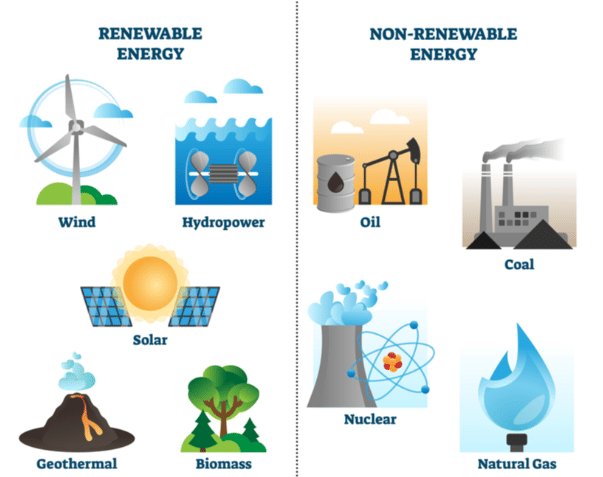
Renewable resources: These resources are unlimited. They are not going to get exhausted, for example, air, light, and wind. These resources get renewed quickly.
Non-renewable resources: The resources which have a limited stock and which take thousands of years to renew or replenish are called non-renewable resources.
Q9: Classify the following resources as biotic and abiotic.
(i) Metals
(ii) Fauna
Ans:
 (i) Metals – abiotic (ii) Fauna – biotic

Q10: Give a single word for the following :
(i) Materials which have the potential to satisfy human needs but human beings do not have the appropriate technology.
(ii) The resources which can be renewed or reproduced by physical, chemical or mechanical processes.
Ans: 
(i) Stock
(ii) Renewable

Q11: Name any two states of India which are well endowed with solar energy.
Ans:
 Gujarat and Rajasthan.

Q12: Name any two factors on which resource development depends.
Ans: 
(i) Technology
(ii) Quality of human resources.

Q13: What is the total geographical area of India?
Ans: 
3.28 million s km.

Q14: Mention any two factors which determine the land use pattern of a nation.
Ans: 
(i) Topography (ii) Population
Others can be Soil type, Climate

Q15: What is wasteland?
Ans: 
An unused area of land, like rocky, arid and desert areas.

Q16: What is net sown area? 
Ans:
 The Area sown once a year is known as the net sown area.

Q17: What is gross sown area?
Ans:
 This represents the total sown area once/or more than once in a particular year, i.e. the area is counted as many times as there are sowings in a year.

Q18: Name any two states which have a high percentage of net sown area.
Ans:
 Punjab and Haryana

Q19: Name any two states Which have a very low percentage of net sown area.
Ans:
 Arunachal Pradesh and Mizoram

Q20: How much degraded land is present in India ? 
Ans: 
130 million hectares.