05. Forest Society and Colonialism – Short Questions answer

Q1. What is deforestation? Why is it considered harmful?
Ans: Deforestation means cutting down or clearing forests, usually for farming, building industries, or using wood for fuel.

It is harmful because:

  • Forests give us paper, wood, spices, oil, and medicinal plants.
  • They are home to many animals and birds.
  • Forests prevent soil erosion and help maintain the balance of nature.
  • They help in maintaining ecological diversity and clean air.

So, deforestation damages the environment and harms wildlife and humans.


Q2. Describe scientific forestry.
Ans: Scientific forestry was a method used by the British to manage forests in a planned way.

  • Old trees were cut and new ones were planted by the forest department.
  • Natural forests with many species were replaced with only one type of tree (monoculture), planted in straight rows.
  • Forest officials made working plans to decide how much forest could be cut each year.
  • Forest areas were surveyed and managed carefully.
  • Cleared areas were replanted for future use.

This system focused only on timber production, not on the needs of forest dwellers.


Q3. What were the different forest acts made by the British to control the forests?
Ans: The British made several laws to control forests:

  • 1864: The Indian Forest Service was established.
  • 1865: The Indian Forest Act was passed to regulate forest use.
  • 1878: The Act was amended. Forests were divided into three categories:
    – Reserved Forests: Most restricted, people were not allowed to take anything.
    – Protected Forests: Some limited use was allowed.
    – Village Forests: Forests for local village use.
  • 1927: The Indian Forest Act was revised again to strengthen British control.

These acts reduced the rights of villagers over forest resources.


Q4. What is shifting agriculture? Why was it regarded as harmful by the British?
Ans: Shifting agriculture (also called jhum, podu, etc.) is a traditional farming method where:

  • Forests are cleared by cutting and burning trees.
  • Seeds are sown in the ash-rich soil after the monsoon.
  • After a few years, the land is left fallow for the forest to grow back.

The British thought it was harmful because:

  • It could not grow trees needed for railway timber.
  • Burning trees might cause forest fires.
  • It made tax collection difficult.

So, they banned shifting cultivation and displaced many forest communities.

Q5. Explain why the Dutch adopted the ‘scorched earth policy’ during the war.
Ans: The Dutch used the scorched earth policy in Java before the Japanese invasion during World War II.

  • They burnt sawmills and huge teak log piles to stop the Japanese from using them.
  • It was done to deny timber, a key war resource, to the enemy.
  • After the Dutch left, the Japanese used forest villagers to cut down trees.
  • Many villagers also used this time to increase farming, leading to later conflicts with the forest department.


Q6. How did the forest rules affect cultivation?
Ans: Forest rules significantly impacted cultivation practices, particularly shifting cultivation.

  • Shifting cultivation involves clearing forest areas, burning them, and planting seeds in the ashes.
  • This method relies on rain for irrigation and allows the land to rest for several years.
  • Colonial governments viewed this practice as harmful, complicating tax assessments.
  • As a result, they imposed bans on shifting cultivation, leading to the displacement of communities.
  • Many communities were forced to change their livelihoods or resist through rebellions.


Q7. Why did land under cultivation increase during colonial rule?
Ans: The increase in land under cultivation during colonial rule can be attributed to several factors:

  • The British promoted the growth of cash crops such as jute, indigo, and cotton to meet economic demands.
  • Food crop cultivation was encouraged to ensure food security for the population.
  • Forests were viewed as unproductive, leading to significant clearing for agricultural use.
  • This expansion aimed to enhance revenue and economic output for the colonial government.


Q8. What did Dietrich Brandis suggest for the improvement of forests in India?

Ans: Dietrich Brandis, a German forester, made several suggestions to manage Indian forests better:

  • Protect forests from over-cutting and grazing.
  • Start a trained forest service – the Indian Forest Service was formed in 1864.
  • Introduce forest laws – the Indian Forest Act was passed in 1865.
  • Promote scientific forestry to ensure careful cutting and replanting of trees.


Q9. What was taught at the Imperial Forest Research Institute? How was this system carried out?
Ans: At the Imperial Forest Research Institute (established in 1906 in Dehradun), officials were trained in scientific forestry. This system included:

  • Replacing natural forests with monoculture plantations (only one type of tree, like teak).
  • Forest officers planned cutting cycles and measured tree types and areas.
  • The cut area was replanted, so it could be used again after a few years.
  • The aim was to increase timber production for railways and ships.


Q10. Differentiate between the customary practice of hunting and hunting as a sport in India, after the Forest Acts were passed.
Ans: 

Before the Forest Acts:

  • Local communities hunted birds and small animals for sustenance.
  • This customary practice was prohibited by the new forest laws.
  • Those caught hunting faced punishment for poaching.

After the Forest Acts:

  • Hunting big game became a recreational sport.
  • Colonial authorities promoted large-scale hunting, leading to the extinction of many species.
  • Exclusive hunting areas were created, with rewards for killing predators seen as threats to humans.
  • Over 80,000 tigers, 150,000 leopards, and 200,000 wolves were killed between 1875 and 1925.
  • The tiger evolved into a sporting trophy, with notable figures like the Maharaja of Sarguja shooting over 1,157 tigers.


Q11. With the help of an example, show how new opportunities of work did not always mean improved conditions of the people during colonial times.
Ans: New jobs under British rule often made people’s lives harder. For example:

  • In Assam, people from tribal communities like SanthalsOraons, and Gonds were recruited to work in tea plantations.
  • They were paid very low wages and had to live in poor conditions.
  • They had no freedom to return to their villages easily.
  • So, even though they had jobs, their lives did not improve.


Q12. How did the spread of railways from the 1850s in India create a new demand for timber?

OR

Why was the railway network spread by the British in India from 1850s onwards? Why was there a need for forest timber spread for railways?
Ans: The railway network created a huge demand for forest timber because:

  • Timber was used as fuel for steam engines.
  • Wooden sleepers were needed to hold the tracks in place – about 2,000 sleepers per mile.
  • As railways expanded quickly, more trees were cut to meet the timber needs.
  • The British gave contracts to private suppliers, who cut down trees in large numbers.

For example, in the Madras Presidency, about 35,000 trees were cut every year in the 1850s for railway sleepers.

Train transporting teak out of the forest

Q13. Why were the people of Bastar dissatisfied with the forest policies of the British?
Ans: The people of Bastar were unhappy with British forest policies because:

  • Two-thirds of the forests were declared reserved, and people lost access.
  • Shifting cultivation, hunting, and collecting forest produce were banned.
  • Many villagers were displaced without any compensation.
  • Rents were increased, and people were forced to give free labour and goods.
  • The region also faced famines in 1899–1900 and 1907–1908, worsening their situation.


Q14. Who were the Kalangs? Why did they attack the Dutch forts at Joana?
Ans: 

  • The Kalangs were a skilled forest community in Java, known for cutting trees and shifting cultivation.
  • They were important for teak harvesting used in building ships and houses.
  • In 1770, when the Dutch tried to control them and force them into labour, the Kalangs rebelled and attacked the Dutch fort at Joana.


Q15. What were the consequences of the forest laws which the Dutch enacted in Java?
Ans: The Dutch forest laws in Java had the following effects:

  • Villagers could only cut wood from selected forests for specific purposes.
  • Grazing cattle, transporting wood, or using forest roads without permission led to punishment.
  • Traditional practices like shifting cultivation and free forest use were restricted, causing hardship for local people.


Q16. Discuss the link between war and deforestation. 

OR

 Give three ways in which forests in India and Java were affected by the first and second world wars.
Ans: Wars led to large-scale deforestation in India and Java:

  • In India, forests were cut freely to meet British war needs during World Wars.
  • In Java, the Dutch followed a scorched earth policy, burning sawmills and teak logs before Japanese occupation.
  • The Japanese exploited forests heavily for military use, and many villagers cut trees to expand cultivation.


Q17. Mention any three causes of deforestation in India under colonial rule.
Ans: Three major causes of deforestation under British rule were:

  1. Commercial farming: Forests were cleared to grow cash crops like jute, sugar, and cotton for export.
  2. Railway expansion: Wood was needed for sleepers and fuel, leading to massive tree cutting.
  3. Plantations: Natural forests were cleared to set up tea, coffee, and rubber plantations by European planters.


Q18. What were the three categories of the forest that were divided after the amendment of the Forest Act in 1878 in India?
Ans: The three categories of forests established after the amendment of the Forest Act in 1878 were:

  • Reserved forests: These were the best forests, where villagers were not allowed to take any resources.
  • Protected forests: Villagers could use resources from these forests for their needs.
  • Village forests: Similar to protected forests, villagers could collect wood and other materials for personal use.

In summary, villagers could only take wood from protected and village forests for building houses or fuel.


Q19. Discuss in brief the Saminist movement of Indonesia.
Ans: 

  • The Saminist movement was started by Surontiko Samin in Java in the late 19th century.
  • He opposed Dutch control over forests, saying that natural resources should not belong to the state.
  • Many villagers joined him, refusing to pay taxes or follow forest laws.
  • Though the Dutch tried to suppress it, the movement became a symbol of resistance against colonial rule.


Q20. What was the impact of the regulation of trade in forest products by the British government in India?
Ans: The British regulation of forest trade had several negative effects on local communities:

  • Strict control was imposed over the use and sale of forest products.
  • Grazing, hunting, and collecting forest produce were restricted.
  • Communities like the Korava, Karacha, and Yerukula in the Madras Presidency lost their traditional livelihoods.
  • Many were unfairly labelled as ‘criminal tribes’ and forced into low-paying jobs in factories, mines, and plantations.
  • In Assam, forest groups like the Santhals, Oraons, and Gonds were forced to work on tea plantations under poor conditions and low wages.
  • These workers found it difficult to return to their home villages.


Q21. In what ways did the development of railways and shipbuilding during colonial rule affect the forests in India?
Ans: 

Railways:

  • Deforestation: The construction of railways required clearing large areas of forest.
  • Land Clearing: Forests were removed to lay railway tracks across India.
  • Timber Demand: Locomotives needed wood for fuel and sleepers.
  • Indiscriminate Logging: Contractors cut down trees without considering sustainability.

Shipbuilding:

  • Wooden Ships: In the early 19th century, ships were mainly made from wood, especially oak.
  • British Naval Needs: The Royal Navy required wooden ships to maintain colonial power.
  • Impact on Oak Forests: Extensive oak forests in England were depleted to meet naval demands.
  • Colonial Exploitation: To address timber shortages, the British exploited forests in India.
  • Massive Deforestation: Colonial policies led to significant loss of forest areas.


Q22. What was the Blandongdiensten system?
Ans: The Blandongdiensten system was introduced by the Dutch in Java to get free labour for timber extraction. Its features:

  • Villagers in forest areas had to pay land rent.
  • They could avoid paying rent by giving free labour and buffaloes for cutting and transporting timber.
  • Later, instead of rent exemption, small wages were given.
  • However, villagers lost their rights to freely use forest land.
  • It helped the Dutch get large amounts of timber for ships and railways.


Q23. What are the new developments in forestry?
Ans: Since the 1980s, forestry has shifted from control to conservation:

  • Scientific forestry is being re-evaluated to include local community participation.
  • Focus has shifted from just cutting timber to conserving forests.
  • In areas like Mizoram and Kerala, communities protect forests through sacred groves (called sarnas, devarakudu, kan, rai, etc.).
  • In many villages, people take turns patrolling forests to protect them.
  • Environmentalists and villagers now work together to find better forest management methods.
04. Pastoralists in the Modern World – Short Questions answer

Q1. Name any four states/regions in India where pastoral nomadism is practiced.
Ans: (i) Jammu and Kashmir,
(ii) Himachal Pradesh,
(iii) Maharashtra,
(iv) Uttar Pradesh,
(v) Rajasthan.

Q2. Name any five important pastoral nomadic communities found in India in the mountains, plains, plateau and desert regions.
Ans: (i) Mountains: Gujjars Bakarwala, Gaddi’s.
(ii) Plains and Plateau: Dhangars, Banjaras.
(iii) Desert Region: Raikas.

Q3. Give names of anyone in the pastoral community of
(i) Himachal Pradesh
(ii) Jammu and Kashmir.
Ans: (i) Himachal Pradesh: Gaddi Shepherds
(ii) Jammu and Kashmir: Gujjar Bakarwals

Q4. Name the pastoral communities of Karnataka and Andhra Pradesh.
Ans: Pastoral communities that lived in Karnataka and Andhra Pradesh were:
(i) Gollas
(ii) Kurumas, and
(iii) Kurubas.

Q5. What was the occupation of the pastoral communities of Karnataka and Andhra Pradesh?
Ans: The pastoral communities of Andhra Pradesh and Karnataka herded cattle, raised sheep and goats, and sold woven blankets. Of them, the Kurumas and Kurubas lived near the woods, cultivated small patches of land, and indulged in various petty trades.

Q6. Gujjar herders originally belonged to which state?
Ans: The Gujjar herders originally came from the state of Jammu and Kashmir. In the 19th century, the search for pastures brought them to the hills of Uttar Pradesh.

Q7. What is the pattern of migration of Gujjar herders?
Ans: The Gujjar herders, in winters, came down to the dry, forests of the bhabar, and in summers, they went up to the high meadows, i.e., the bugyals.

Q8. Where were the Banjaras found, and what were their occupations?
Ans: Banjaras, a well-known group of graziers, were found in
(i) U.P.
(ii) Punjab
(iii) Rajasthan
(iv) Madhya Pradesh, and
(v) Maharashtra

Occupation:
They were nomadic and mainly graziers and sold plough, cattle, and other goods to villagers in exchange for grain and fodder.

Q9. Who are Raikas, and where are they found?
Ans:(i) Raikas are a nomadic community found in the deserts of Rajasthan.
(ii) They are pastoralists and cultivators.

Q10. Why are the Raika community both pastoralists and cultivators?
Ans: The uncertainty and meager rainfall in the desert region leading to fluctuating harvests made the Raikas combine both cultivation and pastoralism as means of occupation.

Q11. Why did pastoral communities move from place to place?
Ans: Pastoral communities moved from place to place in search of pastures for their cattle.

Q12. Give any one change that occurred in Maasai society during colonial rule.
Ans: During colonial rule, the traditional difference based on age between elders and warriors was disturbed, and a new distinction between wealthy and poor pastoralists developed.

Q13. How did the British seek to administer the affairs of the Maasai?
Ans: To administer the Maasai, the British appointed chiefs of different sub-groups of Maasai. They were made responsible for tribal affairs and imposed restrictions on warfare and raids.

Q14. Give names of any two pastoral communities of Africa.
Ans: (i) Bedouins (ii) Berbers.

Q15. Give two factors for pastoral communities being nomadic.
Ans: Pastoral communities are nomadic because:
(i) It enables them to survive bad times and avoid crises in difficult terrain.
(ii) Continuous movement is also because of the exhaustion of pasture and their insurability.

Q16. What does the word Maasai mean? Where are they found?
Ans: The word Maasai means ‘My People’. It is derived from the word ‘Maa. Maasai are found primarily in East Africa: 3,00,000 in Southern Kenya and 1,50,000 in Tanzania.

Q17. Define the term Pastoral Nomadism.
Ans: Pastoral Nomadism is a form of subsistence agriculture based on herding of domesticated animals. Under this, people do not live in one place but move from one place to another along with their animals in search of fresh grazing areas.

Q18. Give names of one game reserve in 
(i) Kenya 
(ii) Tanzania.
Ans: 
(i) Kenya: Samburu National Park/Maasai Mara
(ii) Tanzania: Serengeti Park

Q19. What was the Grazing Act? Or why did the pastoralists hate the Grazing Act?
Ans: By the Grazing Act, the British levied tax on the pastoralists on every animal they took to pastures to graze. It was hated by the impoverished pastoral community for it’s was contrary to their customary rights.

Q20. Give one reason why the British passed the Criminal Tribes Act.
Ans: The British considered traders, craftsmen, and pastoralists to be criminal by nature. The Criminal Tribes Act was passed so that they could identify and control these communities.

03. Nazism and the Rise of Hitler – Short Questions answer

Q1: Describe the events that happened during the Great Economic Depression in the USA.

Ans: 

  • The Wall Street Exchange crashed in 1929 and due to fear of a fall in prices, people made frantic efforts to sell their shares. 
  • Over the next three years, between 1929 and 1932, the national income of the USA fell by half. 
  • Factories shut down, exports fell, farmers were badly hit, and speculators withdrew their money from the market.

Q2: Describe any three inherent defects in the Weimar Constitution that made it vulnerable to dictatorship.
OR
Mention three reasons responsible for the failure of the Weimar Republic.
OR
State any three factors that made the Weimer Republic politically fragile.

Ans:

  • The constitution provided that government must be based on proportional representation, which made achieving a majority by any one party impossible.
  • The coalition governments were not stable and kept changing.
  • The constitution had Article 48, which gave the president the power to impose emergency, suspend civil rights, and rule by decree.

Q3: ‘In my state, the mother is the most important citizen.’ Discuss this statement made by Hitler.

Ans: Though Hitler said that in my state the mother is the most important citizen, it was not true. In Nazi Germany, all mothers were not treated equally. Women who bore racially desirable children were awarded, while those who bore racially undesirable children were punished. Women who bore ‘desirable’ children were entitled to privileges and rewards. They were given special treatment in hospitals and concessions in shops and on theatre tickets and railway fares.

Q4: What promises did Hitler make to the Germans when he came to power?

Ans:

  • He promised to build a strong nation and undo the justice of the Treaty of Versailles and restore the dignity of the German people.
  • He promised employment for those looking for work.
  • He promised to remove all foreign influences and resist all foreign conspiracies against Germany.

Q5: Explain any three effects of the Treaty of Versailles over Germany.

Ans:

  • Germany lost its overseas colonies.
  • It was demilitarized.
  • The allied armies occupied resource-rich Rhineland.
  • It lost 75 percent of its iron and 26 percent of its coal to France, Poland, Denmark & Lithuania.

Q6: Describe the main provisions of the Treaty of Versailles.

Ans: The Treaty of Versailles was a harsh and humiliating peace for the Germans.

  • Germany lost all its overseas colonies, a tenth of its population.
  • 13 percent of its territories, 75 percent of its iron, and 26 percent of its coal to France.
  • Germany was demilitarised to weaken its power.
  • The war guilt clause held Germany responsible for war and damages the Allied countries suffered. It was forced to pay compensation amounting to £6 billion.
  • The Allied forces occupied the resource-rich Rhineland till the 1920s.

Q7: How did the ordinary Germans react to Nazism? 

Ans: 

  • Many saw the world through Nazi eyes and spoke their mind in the Nazi language. 
  • They felt hatred and anger even when someone they thought looked like a Jew. 
  • They reported against suspected Jews and marked their houses. 
  • They believed Nazism would make them prosperous and happy. 
  • A large number of Germans were passive onlookers, too scared to act, to differ, or to protest. 
  • They preferred to keep away. Only a few organized active resistance to Nazism.

Q8: Describe the political impact of the defeat of Imperial Germany.

Ans:

  • The defeat of Imperial Germany and the abdication of the emperor gave an opportunity to recast German polity.
  • A National Assembly met at Weimar and established a democratic constitution with a federal structure.
  • Deputies were now elected to the German Parliament or Reichstag on the basis of equal and universal votes cast by all adults, including women.

Q9: What was the verdict of the Nuremberg Tribunal? Why did the Allies avoid harsh punishment on Germany?

Ans:

  • The Nuremberg Tribunal sentenced only eleven leading Nazis to death for the mass murder of selected groups of innocent civilians in Europe.
  • Many others were imprisoned for life.
  • The Allies did not want to be as harsh on defeated Germany as they had been after the First World War, which led to the rise of Nazi Germany.

Q10: Describe what happened to Germany after its defeat in the First World War. 

Ans: 

  • World War I, ended with the Allies defeating Germany and the Central powers in November 1918. 
  • The Peace Treaty at Versailles with the Allies was a harsh and humiliating treaty. 
  • Germany lost its overseas colonies, a tenth of its population, 13 percent of its territories, 75 percent of its iron, and 26 percent of its coal to France, Poland, Denmark, and Lithuania. 
  • The Allied Powers demilitarised Germany to weaken its power. 
  • Germany was forced to pay compensation amounting to 6 billion. 
  • The Allied armies also occupied the resource-rich Rhineland for much of the 1920s.

Q11:  From whom did Hitler borrow his racist ideology? Explain.

Ans: 

  • Hitler borrowed his racist ideology from thinkers like Charles Darwin and Herbert Spencer. 
  • Darwin was a natural scientist who tried to explain the creation of plants and animals through the concept of evolution and natural selection. 
  • Herbert Spencer, later on, added the idea of survival of the fittest. 
  • According to this idea, only those species that survived on earth could adapt themselves to changing climatic conditions. 
  • Darwin never advocated human intervention in what he thought was a purely natural process of selection. 
  • However, his ideas were used by racist thinkers and politicians to justify imperial rule over conquered peoples.


Q12:  Why did Germany suffer from ‘‘Hyperinflation” in 1923? Who bailed her out from this situation?

Ans: 

  • Germany had fought the war largely on loans and had to pay war reparations in gold. 
  • This depleted gold reserves at a time when resources were scarce. 
  • In 1923, Germany refused to pay and the French occupied Ruhr to claim their coal. 
  • Germany retaliated with passive resistance and recklessly printed paper currency. 
  • With too much-printed money in circulation, the value of the German mark fell. 
  • In April, the US dollar was equal to 24,000 marks, in July 353,000 marks, and at 98,860,000 marks by December, the figure had run into trillions. 
  • As the value of the marks collapsed, prices of goods soared. This crisis came to be known as hyperinflation, a situation when prices rise phenomenally high.

Q13:  Explain the role of women in Hitler’s Germany.
OR

What responsibilities did the Nazi state impose on women?

Ans: 

  • According to Hitler’s ideology, women were radically different from men. 
  • The democratic idea of equal rights for men and women was wrong and would destroy society. 
  • While boys were taught to be aggressive, masculine, and steel-hearted, girls were told that they had to become good mothers and rear pure-blooded Aryan children.
  • Girls had to maintain the purity of the race, distance themselves from Jews, look after the home, and teach their children Nazi values. 
  • They had to be the bearers of the Aryan culture and race. 
  • Hitler said, ‘‘In my state, the mother is the most important citizen.’’ But in Nazi Germany, all mothers were not treated equally.


Q14: Explain the main views of Hitler as expressed in his book ‘Mein Kampf’.

Ans: 

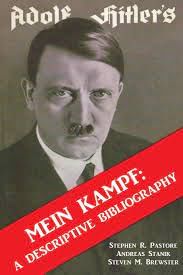
  • Adolf Hitler wrote a book entitled ‘Mein Kampf’. Its literal meaning is ‘My Struggle’. 
  • This book expresses some of the most monstrous ideas of the Nazi movement. 
  • He glorified the use of force and brutalities and the rule by a great leader and ridiculed internationalism, peace, and democracy. 
  • These principles were accepted by all followers of Hitler. 
  • Throughout Germany, an atmosphere of terror was created. 
  • Hitler glorified violent nationalism and extolled war. 
  • He wrote this book at the age of 35, it is an autobiographical book; in this book, Hitler has poured out his hatred for democracy, Marxism and the Jews. 
  • He also revealed his bitterness over German surrender in World War I.

Q15:  Why is Nazism considered a calamity not only for Germany but for entire Europe?
OR

How did Hitler destroy democracy in Germany? Explain.

Ans: 

  • Nazi ideology specified that there was a racial hierarchy and no equality between people. 
  • The blond, blue-eyed Nordic German Aryans were at the top, while the Jews were located somewhere on the lowest rung of the ladder. 
  • The number of people killed by Nazi Germany was 6 million Jews, 200,000 Gypsies, 1 million Polish civilians, 70,000 Germans. 
  • Nazism glorified the use of force and brutality. 
  • It ridiculed internationalism, peace, and democracy. 
  • Nazi Germany became the most dreaded criminal state. 
  • Hitler chose war as the way out of approaching the economic crisis. 
  • Germany invaded Poland. 
  • This started a war with France and England in September 1940.

Q16:  What happened in schools under Nazism?
OR

How were the schools in Germany ‘cleansed’ and ‘purified’ under Nazi rule?

Ans: 

  • All schools were cleansed and purified. 
  • This meant that teachers who were Jews or seen as politically unreliable were dismissed. 
  • Children were segregated — Germans and Jews could not sit together or play together. 
  • Later on the undesirable children — the Jews, the physically handicapped, gypsies — were thrown out of schools. 
  • In the 1940s, they were taken to gas chambers. 
  • Children in school were taught to be loyal and submissive, hate Jews, and worship Hitler. 
  • Sports was given great importance. 
  • The function of sports was to nurture a spirit of violence and aggression among children. 
  • Stereotypes of Jews were propagated through all classes. 
  • Schooling was a prolonged period of ideological training.


Q17:  What were the steps taken by Hitler as Chancellor to deal with the economic difficulties? Which two things symbolised the economic recovery of Germany? 

Ans:

  • First, Hitler assigned the responsibility of economic recovery to the economist Hjalmar Schacht, who aimed at full production and full employment through a state-funded work creation programme.
  • Hitler chose was as the way out of the approaching economic crisis. Resources were to be accumulated through the expansion of territory. The famous German highways and the people’s car, the Volkswagen became the symbols of Germany’s economic recovery.


Q18:  Examine any three features of racial hierarchy that were promoted by Hitler in Germany under his Nazi ideology. 

Ans: 

  • According to Nazi ideology, there was no equality between people, but only a racial hierarchy. In this view blond, blue-eyed, Nordic German Aryans were at the top, while Jews were located at the lowest rung.
  • Hitler’s racism borrowed from thinkers like Charles Darwin and Herbert Spencer. Darwin believed in the theory of natural selection. Herbert Spencer added the idea of survival of the fittest.
  • The Nazis believed that the strongest race would survive and the weak would perish. The Aryan race was the finest. It had to retain its purity, become stronger and dominate the world.

02. Socialism in Europe and the Russian Revolution – Short Questions answer

Q1. Differentiate between the ideas of the liberals and radicals in Europe (take the time period after the French Revolution).
Ans: The liberals did not believe in the universal franchise. In contrast, radicals wanted a government that represented the majority of the population. Liberals felt men of prosperity mainly should have the vote. They did not want the vote for women. 

On the other hand, the radicals supported women’s suffragette movements and opposed the privileges of great landowners and wealthy factory owners. They were not against the existence of private property but disliked the concentration of property in the hands of a few.

Q2. Why do we say that liberals during this time could not be called ‘democrats’?
Ans: They could not be considered true democrats because they did not support universal adult franchise. They believed that only men who owned property should have the right to vote and excluded women from voting rights. Thus, their idea of political participation was limited, and not in line with the democratic principle of equal rights for all citizens.


Q3. How should society, according to liberals and radicals, develop?
Ans: Liberals and radicals believed that society should develop through the following key principles:

  • They were often property owners and employers who gained wealth from trade and industrial ventures.
  • They advocated for the encouragement of economic efforts, believing that a healthy workforce and educated citizens would lead to greater profits.
  • They supported the idea that societies could progress if:
    – The poor were allowed to work.
    – Individual freedoms were protected.
    – Those with capital could operate freely.
  • Many working-class individuals joined liberal and radical groups seeking change in the early nineteenth century.

While liberals focused on individual rights and a representative government, radicals aimed for broader participation and supported movements like women’s suffrage.


Q4. Why were socialists against private property and saw it as the root of all social ills?
Ans: Socialists opposed private property, viewing it as the source of many social problems. Their key arguments included:

  • Property owners often prioritised personal gain over the welfare of workers.
  • They believed that if society controlled property, it would focus more on collective interests.  
  • Socialists argued that this shift would lead to better living conditions for everyone.

Ultimately, they campaigned for a system where property was owned collectively, ensuring that the needs of the community were met.


Q5. Describe the incident known as ‘Bloody Sunday’.
Ans: On January 22, 1905, about 150,000 workers in St. Petersburg went on strike. They demanded:
– Reduction of working hours to eight hours
– Increase in wages
– Improvement in working conditions

The peaceful procession was led by Father Gapon towards the Winter Palace. The police and Cossacks fired on the unarmed crowd, killing over 100 workers and wounding around 300. This event became known as ‘Bloody Sunday’. It sparked widespread anger and led to the 1905 Revolution in Russia.

Bloody Sunday


Q6. What effect did the war have on the industry of Russia?
Ans: The war had a significant impact on Russian industry:

  • Russia had few industries, and German control of the Baltic Sea cut off access to essential industrial goods.
  • Industrial equipment deteriorated more quickly in Russia than in other parts of Europe.
  • By 1916, many railway lines were breaking down, disrupting transport.
  • Able-bodied men were conscripted into the army, leading to labour shortages.
  • Many small workshops that produced essential goods were forced to shut down.


Q7. Why was the decision to collectivise farms taken?
Ans: The decision to collectivise farms was made due to several reasons:

  • Rich peasants and traders were believed to be hoarding grain, anticipating higher prices, which led to a shortage.
  • Stalin argued that the small size of individual farms contributed to this shortage.
  • It was thought that these small farms could not be modernised.
  • To address these issues, there was a push to develop larger, modern farms using machinery and industrial methods.

Thus, collectivisation aimed to create state-controlled large farms to improve agricultural efficiency.


Q8. “By the 1950s it was acknowledged within the country that the style of government in the USSR was not in keeping with the ideals of the Russian Revolution.” Why was this said?
Ans: By the 1950s, it was clear that the style of government in the USSR did not align with the ideals of the Russian Revolution. Key reasons for this include:

  • Russia transformed from a backward nation into a significant power.
  • Industries and agriculture improved, leading to better food supply for the poor.
  • However, the government denied essential freedoms to its citizens.
  • Development was achieved through repressive policies rather than democratic means.


Q9. What was the role of the Tsar in the peasant revolt of 1905? Did the revolt fail? Discuss briefly.
Ans: The Tsar played a repressive role during the 1905 peasant revolt. Due to widespread unrest, he allowed the formation of an elected consultative parliament called the Duma.

However, he dismissed the first Duma within 75 days and the second within three months, as they challenged his authority. He changed voting laws to ensure that only conservative supporters were elected. The third Duma was packed with his loyalists, excluding liberals and revolutionaries.

Yes, the revolt failed, as the Tsar retained absolute power and suppressed political opposition.

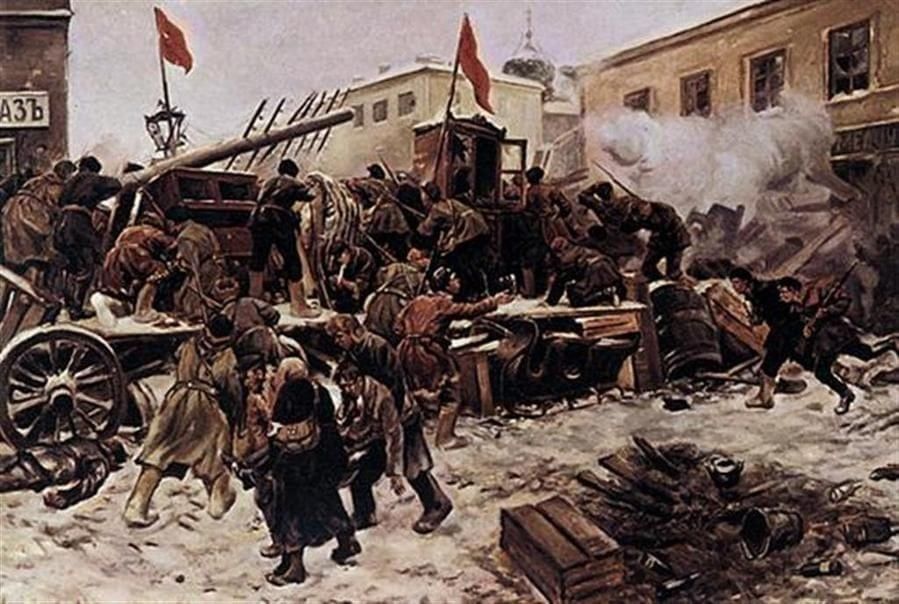
Russian Revolution of 1905


Q10. Discuss the civil war that took place in Russia after the October Revolution and its consequences.
Ans:  After the October Revolution of 1917, a civil war broke out in Russia between the Bolsheviks (Reds) and their opponents — Whites (pro-Tsarists), Greens (Socialist Revolutionaries), and foreign powers like Britain, France, Japan, and the USA. The war lasted from 1918 to 1920. The opposition aimed to overthrow the Bolsheviks but lacked unity and popular support. Harsh measures by the Whites on peasants led to further resistance. The war caused widespread famine, looting, and destruction. By 1920, the Bolsheviks regained control over most of Russia. As a result, they strengthened their rule, centralised planning, and laid the foundation for a one-party communist state.

October Revolution

Q11. Discuss briefly the Five Years Plans.
Ans: A process of centralised planning was introduced in the Soviet Union, where officials evaluated the economy and set targets for a five-year period. This led to the creation of the Five Year Plans. Key points include:

  • The government fixed all prices to encourage industrial growth.
  • The first two plans (1927-32 and 1933-38) resulted in significant economic progress.
  • Industrial production, particularly in oil, coal, and steel, increased by 100% between 1929 and 1933.
  • New factory cities emerged, but rapid construction often resulted in poor working conditions.


Q12. Explain why did the Bolsheviks considered the Russian Revolution as only the “first stage” of the revolution.
Ans: The Bolsheviks considered the Russian revolution as only the ‘first stage’ of revolution because merely seizing power was not their ultimate aim. They aimed at an egalitarian society. The next stage of the revolution included the redistribution of land, nationalisation of industries and banks, collective farming. Rich peasants had to be forced to redistribute land. Their ultimate aim was to establish the rule of the proletariat – the peasants and workers.


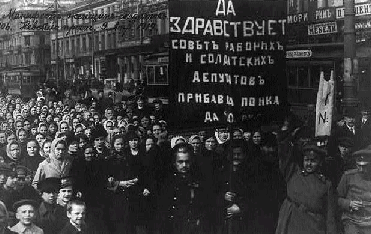
Q13. Why did the Tsarist autocracy collapse in 1917?
Ans: Anti-German sentiments were prevalent in Russia during this period. Key factors that contributed to the collapse of the Tsarist autocracy in 1917 include:

  • The renaming of St. Petersburg to Petrograd reflected growing anti-German feelings.
  • Tsarina Alexandra’s German origins and her poor advisors, particularly Rasputin, diminished the autocracy’s popularity.
  • By 1917, Russia faced devastating losses in World War I, with over seven million casualties and three million refugees.
  • Food shortages led to widespread riots as bread and flour became scarce.
  • The loyalty of the large Russian army shifted towards the revolutionaries, ultimately leading to the collapse of Tsarist power.


Q14. Mention the demands of the workers who went on strike at St. Petersburg in 1904.
Ans: In 1904, workers in St. Petersburg went on strike following the dismissal of four members of the Assembly of Russian Workers. Their key demands included:

  • A reduction of the working day to eight hours.
  • An increase in wages.
  • Improvements in working conditions.

Over 110,000 workers participated in this industrial action, highlighting the urgent need for change.


Q15. What was the impact of the First World War on the Russian economy?
Ans: The First World War had a significant impact on the Russian economy:

  • Large quantities of grain were diverted to feed the army.
  • This led to severe shortages of bread and flour in cities.
  • By 1916, riots over bread became common, especially in Leningrad.
  • A harsh winter worsened conditions for workers.
  • The resulting economic crisis contributed to the Revolutions.


Q16. Mention the important steps taken by Lenin to improve the agriculture and economy of Russia.
Ans: Important steps taken by Lenin to improve agriculture and economy in Russia:

  • Nationalised most industries and banks.
  • Ordered land redistribution to peasants.
  • Allowed peasants to cultivate socialised land.
  • Introduced centralised planning for the economy.
  • Fixed prices during the first two plans to boost industrial growth.
  • Increased production of oil, coal, and steel.
  • Developed an extended schooling system for workers and peasants.
  • Established communes where members shared resources and income.


Q17. Why socialists were against private property?
Ans: 
Socialists opposed private property because they believed it was the root of many social problems. They argued that:

  • Property ownership led to exploitation, as owners employed others primarily for their own profit.
  • Workers who contributed to the production of goods were not adequately supported or compensated.
  • Control of property should belong to the entire community, not just individuals.
  • This collective ownership would prioritise the welfare of society over individual interests.

Thus, socialists campaigned for a system where property was managed for the benefit of all.


Q18. What was Lenin’s April Theses? Why were some members of the Bolshevik Party surprised by the April Theses? What made them change their attitude? What were the main objectives of the Russian Revolutionaries?
Ans: The three demands of Vladimir Lenin, after his return to Russia in April 1917, were:
(i) He and the Bolsheviks had opposed the war since 1914. He felt in 1917 that it should be brought to a close.
(ii) Land should be transferred to the peasants.
(iii) The banks should be nationalised and the party should be renamed “Communist Party”. These three demands were called Lenin’s “April Theses”.

Most of the members of the Bolsheviks were initially surprised as they thought the time was not yet ripe for a socialist revolution and the provisional government needed to be supported. In the countryside, peasants pressed for redistribution of land, and encouraged by the socialist revolution’s ideas peasants seized land between July and September 1917. This led to the change of view and the Bolsheviks decided to seize power.


Q19. Mention any two changes introduced by Stalin in the Russian economy. How did Stalin deal with the critics?
Ans: The following changes were introduced by Stalin:

  • Elimination of kulaks: Stalin targeted wealthy farmers, confiscating their land to establish state-controlled farms.
  • Collectivisation of land: All peasants were required to work on collective farms (kolkhoz), sharing the profits generated from these farms.

Stalin dealt with resistance from peasants harshly. Those who opposed collectivisation were often punished severely, including deportation and exile. Critics of his policies were accused of conspiracy against socialism.


Q20. What steps were taken to improve the condition of factory workers and peasants in Russia after the Civil War?
Ans: After the Civil War, several measures were implemented to enhance the conditions of factory workers and peasants in Russia:

  • Bolsheviks nationalised industries and banks. They socialised land, allowing peasants to cultivate it. This was a demonstration of collective work using confiscated land.
  • Centralised planning was introduced, meaning that economic decisions were made by officials who set five-year goals.
  • New factories were established, and a schooling system was created, enabling factory workers and peasants to attend universities.
  • To support women workers, crèches were set up for their children.
  • Affordable public health services were arranged, and living quarters were provided for workers.


Q21. Discuss the relationship between peasants and nobles in Russia during the early 19th century.
Ans: In early 19th century Russia, the relationship between peasants and nobles was marked by tension and conflict:

  • The nobility, along with the Crown and the Orthodox Church, owned vast estates.
  • Unlike their French counterparts, Russian peasants held little respect for the nobles.
  • Many peasants desired the land owned by nobles and often refused to pay rent, leading to violent confrontations, including instances of murder against landlords.
  • In 1902, significant peasant unrest erupted in southern Russia, spreading nationwide by 1905.
  • Peasants formed communes (mir) that allocated land based on the needs of individual families.


Q22. What were the different notions of Liberals, Radicals, and Conservatives regarding the formation of the new Government in Russia? Discuss.
Ans:  Liberals opposed the unchecked power of dynastic rulers. They aimed to:

  • Protect individual rights against government interference.
  • Establish a representative, elected parliamentary system.
  • Ensure an independent judiciary, though they did not support universal suffrage.

Radicals sought a government reflecting the majority’s will. Their views included:

  • Opposition to the privileges of wealthy landowners and factory owners.
  • Support for women’s suffrage and a more equitable distribution of property.

Conservatives resisted both liberals and radicals, believing:

  • In gradual change, respecting historical traditions.
  • That societal transformation should occur slowly, rather than through abrupt shifts.


Q23. What were the three main changes observed after the October Revolution in Russia?

Ans: The three main changes observed after the October Revolution in Russia are:

  • Nationalisation: Most industries and banks were nationalised in November 1917, meaning the government took control of their ownership and management.
  • Land Reform: Land was declared social property, allowing peasants to seize land from the nobility.
  • Urban Reorganisation: Large houses in cities were divided according to family needs, and old aristocratic titles were abolished. New uniforms were introduced for the army and officials.

Q24. Why socialists were against private property?
Ans: Socialists opposed private property, viewing it as the cause of many social problems. Their key arguments included:

  • Property was owned by individuals who prioritised personal gain over the welfare of workers.
  • They believed that if society collectively controlled property, it would focus more on social interests.
  • Socialists aimed to change this system and advocated for collective ownership.

01.  The French Revolution – Short Questions answer

Q.1. What is the name of the national anthem of France?
Ans. It is named La Marseillaise’. It was composed by the poet Roget de L’lsle. It was sung for the first time by volunteers from Marseilles as they marched into Paris and so got its name.

 La Marseillaise’Q.2. Which Indian individuals responded to the ideas coming from revolutionary France?
Ans. Tipu Sultan and Raja Rammohan Roy are two examples of Indian individuals who responded to the ideas coming from revolutionary France.


Q.3. A large number of Jacobins came to be known as ‘Sans-culottes’. What did this term mean?
Ans. A large group among the Jacobins decided to start wearing long striped trousers similar to those worn by dock workers. This was to set themselves apart from the fashionable sections of society, especially nobles, who wore knee breeches. These Jacobins came to be known as the ”sans-culottes‘, literally meaning ‘those without knee breeches‘.

The Jacobin era of clothing.Q.4. Which rights were the ‘natural and inalienable’ rights according to the French Constitution?
Ans. The Constitution began with a declaration of the Rights of Man and Citizen. These rights were the right to life, freedom of speech, freedom of opinion, equality before the law, etc.


Q.5. Identify the symbols that stand for liberty, equality, and fraternity.
Ans. Liberty:-  The broken chain and the Phrygian cap. 
Equality:-  The winged woman and the Law tablet. 
Fraternity:-  The bundle of rods or fasces and Blue – white – red.

Symbolism of the French Revolution
Q.6. How were some basic rights set forth in Olympe de Gouges different from the Declaration of Rights of Man and Citizen?
Ans. The manifesto drafted by Olympe de Gouges mentions women and equality throughout its text, mentioning women first in all places. The Declaration of the Rights of Man and citizen does not mention women at all, it only talks about men.
Manifesto drafted by Olympe de Gouges
Q.7. What was the immediate cause of the French Revolution?
Ans. Due to bad harvest, the prices of bread rose and often, bakers hoarded the bread. The angry women who could not get bread after long hours in the queues stormed into the shops. The king ordered troops and on 14th July the agitated crowd stormed and destroyed the Bastille.

Q.8. Who was Mirabeau?
Ans. Mirabeau was born into a noble family and was a representative of a third estate who delivered speeches to the crowds assembled at Versailles. He was born into a noble family but was convinced of the need to do away with a society of feudal privilege.

H.G. Mirabeau

Q.9. Which proposal of the third estate was rejected by the Estates General?
Ans. The third estate demanded that voting should be conducted by the assembly as a whole, in which each member would have one vote. But the king rejected this proposal, and therefore, members of the third estate walked out of the assembly in protest.

Q.10. How was the meeting of Estates General called by Louis XVI attended by three Estates?
Ans. The first and the second estates sent 300 representatives each, who were seated in rows facing each other on two sides, while the 600 members of the third estate had to stand at the back.

Q.11. Who was Rousseau?
Ans. Rousseau was a French philosopher who carried the idea of Locke forward, proposing a form of government based on a social contract between people and their representatives.


Q.12. What were the views of John Locke in inspiring the people for the French Revolution?
Ans. Locke sought to refute the doctrine of the divine and absolute right of the monarch in his book Two Treatises Of Government”.
Locke
Q.13. Which social groups emerged as ‘middle class’ in 18th century France?
Ans. The social groups who earned their wealth through expanding overseas trade and from the manufacture of goods such as woollen and silk textiles that were either exported or bought by the richer members of society emerged as the middle class. 

Q.14. Who formed the First and Second Estates of French Society?
Ans. The clergy and the nobility were the members of the first and second estates, respectively. They enjoyed certain privileges by birth and were also exempted from paying taxes to the state from the first and second estates, respectively.

Q.15. Why did the French government increase the taxes?
Ans. To meet its regular expenses, such as the cost of maintaining an army, the court, and running government offices or universities, the state was forced to increase taxes.

Q.16. How did the American War of Independence add more debt to France?
Ans. The French army supported thirteen colonies of America in their war of independence against Great Britain. It added more than one billion livres (units of currency in France) that had risen to more than two billion livres with interest.

Q.17. Why was the treasury empty when Louis XVI ascended the throne?
Ans. Long years of war had drained the financial resources of France, and along with it was the cost of maintaining an extravagant court at the immense Palace of Versailles.

Q.18. What do you know about the ‘Estates General’?
Ans. The Estates General was a political body to which the three estates sent their representatives. In France of the Old Regime, the monarch did not have the power to impose taxes, rather he had to call a meeting of the Estates General to pass the proposals for new taxes. However, it was the monarch alone who could decide when to call a meeting of this body.

Estates GeneralQ.19. Elucidate the contribution of Mirabeau in the formation of the National Assembly.
Or
What was the contribution of Mirabeau to the formation of the National Assembly?
Ans. Mirabeau was born into a noble family but was convinced to do away with feudal privileges. On 20 June, the third estate assembled in the hall of an indoor tennis court in the grounds of Versailles. Mirabeau brought out a journal and delivered powerful speeches to the crowds assembled at Versailles.  

Q.20. When did France become a Republic?
Ans. The newly elected assembly was called the Convention. On 21st Sep. 1792, it abolished the monarchy and declared France a republic. A republic is a form of government where the people elect the government, including the head of the government. There is no hereditary monarch.

Q.21. Based on the French Constitution of 1791, who were known as ‘active citizens’?
Or
Who all got the right to vote for the National Assembly?
Ans. 
Based on the French Constitution of 1791, Only men of 25 years of age paid taxes equal to at least three days of a labourer’s wage. They were called ‘active citizens’ and were entitled to vote.

Q.22. When was the National Assembly recognized?
Ans. Louis XVI finally accepted the National Assembly in July 1789 and on 4th Aug 1789, the assembly passed a decree abolishing the feudal system of obligations and taxes.