05. Forest Society and Colonialism – Very Short Questions answer

Q1: What is tannin used for?
Ans:
 Tannin is used to convert skins and hides into leather.

Q2: Mention the period of industrialisation.
Ans:
 The period of industrialisation falls between 1700 and 1995.

Q3: Mention various reasons that caused forest depletion between 1700 and 1995.
Ans:
 These reasons are—industrial uses, cultivation, pastures, and fuelwood.

Q4: What was the main feature of deforestation during the colonial period?
Ans:
 During the colonial period, deforestation was more systematic and extensive.

Q5: What did the colonial state think about forests?
Ans: 
The colonial state thought that forests were unproductive.

Q6: Why were Adivasis hired by the forest department?
Ans:
 They were hired to cut trees and make smooth planks which would serve as sleepers for the railways.

Q7: Give two features of poplar forests.
Ans:
 Poplar forests are good mainly for timber. They are not used for leaves, fruits, or other products. These trees grow in straight lines and all have uniform height.

Q8: Who was made the first Inspector General of Forests in India?
Ans:
 Dietrich Brandis, a German expert, was made the first Inspector General of Forests in India.

Q9: When and where was the Imperial Forest Research Institute set up in India?
Ans: 
The Imperial Forest Research Institute was set up at Dehradun in 1906.

Q10: What was done in scientific forestry?
Ans:
 In scientific forestry, natural forests which had lots of different types of trees were cut down, and in their place, one type of trees was planted in straight rows.

Q11: The 1878 Act divided forests into three categories. Name them.
Ans:
 Reserved, protected, and village forests.

Q12: How were ‘reserved forests’ treated?
Ans:
 ‘Reserved forests’ were treated as the best forests. Villagers could not take anything from these forests, even for their own use.

Q13: Who are the main collectors of tendu leaves?
Ans:
 Women, children, and old men are the main collectors of tendu leaves.

Q14: What is shifting cultivation?
Ans: 
In shifting cultivation, parts of the forest are cut and burnt in rotation. Seeds are sown in the ashes after the first monsoon rains, and the crop is harvested by October-November. When the fertility of the land is over, the same practice is repeated at another location.

Q15: What was Taungya cultivation?
Ans: 
Taungya cultivation was a system in which local farmers were allowed to cultivate temporarily within a plantation.

Q16: How did the British see large animals?
Ans:
 The British saw large animals as signs of a wild, primitive, and savage society. They believed that by killing dangerous animals, the British would civilise India.

Q17: What is the belief of the people of Bastar? Why do they make offerings at each agricultural festival?
Ans: 
The people of Bastar believe that each village was given its land by the Earth, and in return, they look after the earth by making some offerings at each agricultural festival.

Q18: Give two uses of Mahua.
Ans:
 Mahua flowers are used to make alcohol. The seeds are used to make oil.

Q19: What is shifting cultivation also known as?
Ans:
 Shifting cultivation is also known as swidden agriculture.

Q20: What is shifting cultivation called in Southeast Asia and in Central America?
Ans:
 In Southeast Asia, it is called lading, and in Central America, it is called Milpa.

Q21: In India, there are many local terms for shifting agriculture. Name some of them.
Ans:
 Dhya, penda, bewar, nevad, jhum, podu, khandad, and kumri.

Q22: Name the colonial power in Indonesia.
Ans:
 The Dutch are the colonial power in Indonesia.

Q23: Who were the Kalangs of Java?
Ans: 
They were a community of skilled forest cutters and shifting cultivators.

Q24: What was known as the blanding diensten system?
Ans:
 The Dutch first imposed rents on land being cultivated in the forest and then exempted some villages from these rents if they worked collectively to provide free labour and buffaloes for cutting and transporting timber. This was known as the blanding diensten system.

Q25: Name the islands where most of Indonesia’s forests are located.
Ans: 
Sumatra, Kalimantan, and West Irian.
04. Pastoralists in the Modern World – Very Short Questions answer

Q1: What are bugyals?
Ans: 
Bugyals are vast natural pastures on the high mountains, above 12,000 feet. They are under snow in the winter and come to life after April. At this time, the entire mountainside is covered with a variety of grasses, roots, and herbs.

Q2: Who are Gujjar Bakarwals?
Ans: 
Gujjar Bakarwals are great rearers of goats and sheep who live in the mountains of Jammu and Kashmir.

Q3: Name the state inhabited by the Gaddi shepherds.
Ans:
 The Gaddi shepherds inhabit the state of Himachal Pradesh.

Q4: What are high meadows known as?
Ans:
 High meadows are known as Dhars.

Q5: Name any two pastoral communities of the Himalayas.
Ans:
 The Bhotiyas, Sherpas, and Kinnauries are pastoral communities of the Himalayas.

Q6: In which state does the Dhangar pastoral community live?
Ans:
 The Dhangar pastoral community lives in Maharashtra.

Q7: Name any two mountain pastoralists.
Ans: 
The Gaddi shepherds and the Gujjar Bakarwals are mountain pastoralists.

Q8: Name the states where Banjaras can be found.
Ans:
 Banjaras can be found in Uttar Pradesh, Punjab, Rajasthan, Madhya Pradesh, and Maharashtra.

Q9: Why did the Raikas combine cultivation with pastoralism?
Ans:
 The Raikas lived in the deserts of Rajasthan, where rainfall was poor and uncertain. Combining cultivation with pastoralism helped them secure their livelihood.

Q10: Which animal did the Maru Raikas herd?
Ans:
 The Maru Raikas herded camels.

Q11: What was the settlement of the Maru Raikas called?
Ans: 
The settlement of the Maru Raikas was called “dhandi.”

Q12: Name two commercially valuable timbers grown in reserved forests.
Ans: 
Deodar and sal are two commercially valuable timbers grown in reserved forests.

Q13: Why did the colonial government want nomadic people to live in fixed places?
Ans: 
Such a population was easy to identify and control.

Q14: Name the pastoral communities of Africa.
Ans: 
The pastoral communities of Africa include Bedouins, Berbers, Maasai, Somali, Boran, and Turkana.

Q15: Where do the Maasai cattle herders live?
Ans: 
The Maasai cattle herders primarily live in East Africa, in southern Kenya and Tanzania.

Q16: Who are the Maasai?
Ans: 
The Maasai are traditionally nomadic and pastoral people who depend on milk and meat for subsistence.

Q17: In pre-colonial times, Maasai society was divided into two social categories. Name them.
Ans:
 The two social categories were Elders and Warriors.

Q18: What did the warriors consist of? What was their duty?
Ans:
 The warriors consisted of younger people. Their duty was to protect the tribe, defend the community, and organize cattle raids.

Q19: How was raiding important in Maasai society?
Ans: 
Raiding was important as it asserted the power of different pastoral groups within Maasai society.

Q20: What do the Maasai warriors wear?
Ans:
 Maasai warriors wear traditional deep red shukas, brightly beaded Maasai jewelry, and carry five-foot, steel-topped spears.

Q21: Where is Serengeti Park located?
Ans:
 Serengeti Park is located in Tanzania.

Q22: Where is the Maasai Mara and Samburu National Park located?
Ans: 
The Maasai Mara and Samburu National Park are located in Kenya.

03. Nazism and the Rise of Hitler – Very Short Questions answer

Q1: What is Genocidal War?
Ans:
 Genocidal War refers to the large-scale killing and destruction of a significant portion of a population.

Q2: Name the countries which together were called the Allies or the Allied Powers.
Ans:
 The Allies or the Allied Powers included England, France, and Russia.

Q3: Why did people not welcome the Weimar Republic?
Ans:
 People did not welcome the Weimar Republic due to the harsh and humiliating terms it had to accept after Germany’s defeat in World War I.

Q4: What did the war Guilt Clause hold Germany responsible for?
Ans:
 The war Guilt Clause held Germany responsible for the war and the damages suffered by the Allied countries.

Q5: Who were mockingly called the ‘November Criminals’?
Ans:
 Those who supported the Weimar Republic, mainly Socialists, Catholics, and Democrats, were mockingly called the ‘November Criminals’.

Q6: How did the Nazi Party come into existence?
Ans: 
In 1919, Hitler joined a small group called the German Workers’ Party, which he later took over and renamed the National Socialist German Workers’ Party, known as the Nazi Party.

Q7: How did Nazi propaganda project Hitler?
Ans:
 Nazi propaganda projected Hitler as a messiah and savior who had come to deliver people from their distress.

Q8: What was the Fire Decree of 28 February 1933?
Ans: 
The Fire Decree of 28 February 1933 suspended civic rights like freedom of speech, press, and assembly that had been guaranteed by the Weimar Constitution.

Q9: Which Act established dictatorship in Germany?
Ans: 
The Enabling Act, passed on 3 March 1933, established dictatorship in Germany.

Q10: Whom did Hitler assign the responsibility of economic recovery?
Ans: 
Hitler assigned the responsibility of economic recovery to the economist Hjalmar Schacht.

Q11: Under which slogan did Hitler integrate Austria and Germany in 1938?
Ans: 
The slogan was “One people, One empire, and One leader”.

Q12: Why was Hjalmar Schacht removed?
Ans:
 Hjalmar Schacht was removed because he advised against excessive investment in rearmament, which conflicted with Hitler’s plans.

Q13: What was the Tripartite Pact?
Ans:
 The Tripartite Pact, signed in September 1940, was an alliance between Germany, Italy, and Japan that strengthened Hitler’s international influence.

Q14: Why did the US enter the Second World War?
Ans: 
The US entered the Second World War after Japan’s attack on the US base at Pearl Harbor, which provoked a response from the US.

Q15: Which two thinkers influenced Hitler’s racism?
Ans: 
Hitler’s racism was influenced by thinkers like Charles Darwin and Herbert Spencer.

Q16: Which race was considered the finest in Nazi eyes?
Ans:
 The Aryan race was considered the finest in Nazi ideology and was believed to be destined to dominate the world.

Q17: Who were considered ‘undesirable’ in the Nazi state?
Ans:
 Jews, Gypsies, Russians, Blacks, and Poles were considered ‘undesirable’ in the Nazi state.

Q18: What were Hitler’s pseudoscientific theories of race?
Ans:
 Hitler’s hatred for Jews was based on pseudoscientific theories of race, advocating their total elimination as the solution to ‘the Jewish problem’.

Q19: What happened to ‘undesirable children’ in schools under Nazism?
Ans:
 ‘Undesirable children’—Jews, the physically handicapped, and Gypsies—were expelled from schools and eventually subjected to mass killings.

Q20: What were boys taught after joining the Hitler Youth organization?
Ans:
 Boys were taught to glorify war, aggression, and violence, denounce democracy, and develop hatred towards Jews, Communists, and other ‘undesirable’ groups.

Q21: What were mass killings for Jews termed?
Ans: 
Mass killings for Jews were termed ‘special treatment’ and ‘final solution’.

Q22: What was Euthanasia in the context of Nazi Germany?
Ans:
 Euthanasia referred to the mass killings of disabled individuals under the Nazi regime.

Q23: What did ‘evacuation’ mean in Nazi Germany?
Ans: 
In Nazi Germany, ‘evacuation’ meant deporting people to gas chambers for execution.

Q24: How were Jews portrayed in the film ‘The Eternal Jew’?
Ans:
 In the film ‘The Eternal Jew’, Jews were stereotyped with flowing beards and kaftans, perpetuating harmful stereotypes.

Q25: What is the meaning of the term ‘Holocaust’?
Ans: 
The term ‘Holocaust’ refers to the systematic persecution, mass murder, and atrocities inflicted upon Jews during the Nazi regime.

02.  Socialism in Europe and the Russian Revolution – Very Short Questions answer

Q1: How was society organised in Europe before the eighteenth century?
Ans: 
Before the eighteenth century, society was broadly divided into estates and orders, with the aristocracy and church holding control over economic and social power.

Q2: Were the people in the eighteenth century—Europe in favour of a complete transformation of society?
Ans:
 Some people in eighteenth century Europe wanted change, but they advocated for a gradual shift, while others sought radical restructuring.

Q3: Which group in Europe looked to change society?
Ans:
 The liberals in Europe sought to bring about changes in society.

Q4: Which kind of nation did the liberals want?
Ans:
 The liberals aimed for a nation that tolerated all religions.

Q5: What was the biggest drawback of the liberals?
Ans:
 The liberals did not support Universal Adult Franchise; they believed that only men of property should have the voting right and did not advocate for women’s suffrage.

Q6: Who were radicals?
Ans:
 Radicals were a group of people who aimed to thoroughly change society and were critical of the concentration of property in the hands of a few.

Q7: What kind of nation did the radicals want?
Ans:
 The radicals desired a nation where the government was based on the majority of the country’s population.

Q8: Mention one difference between liberals and radicals.
Ans:
 Radicals opposed the privileges of wealthy landowners and factory owners, while liberals supported these privileges.

Q9: What was suffragette movement?
Ans: 
The suffragette movement was a movement that advocated for granting women the right to vote.

Q10: Who was Giuseppe Mazzini?
Ans:
 Giuseppe Mazzini was an Italian nationalist and a leader in the movement for the unification of Italy.

Q11: What was the basic idea of socialism?
Ans:
 The basic idea of socialism was the opposition to private property, which socialists saw as the root cause of many societal problems.

Q12: What was the basic idea behind building cooperatives? Or How did cooperatives work in the early nineteenth century?
Ans:
 Cooperatives were associations of people who collaborated in producing goods and shared profits based on the work contributed by members.

Q13: Who was Karl Marx?
Ans: 
Karl Marx was a German philosopher, economist, and revolutionary socialist, considered one of the most influential thinkers of the nineteenth century.

Q14: What was the Second International?
Ans:
 The Second International was an international body formed by socialists in the 1870s to coordinate their efforts and promote socialist ideas across Europe.

Q15: When did socialists take over the government in Russia?
Ans:
 Socialists took over the government in Russia during the October Revolution of 1917.

Q16: Who ruled Russia and its empire in 1914?
Ans: 
Tsar Nicholas II ruled Russia and its empire in 1914.

Q17: What was the majority religion of Russia at that time?
Ans:
 The majority religion of Russia at that time was Russian Orthodox Christianity.

Q18: What was the status of political parties in Russia before 1914?
Ans:
 All political parties were illegal in Russia before 1914.

Q19: Who were Jadidists?
Ans: 
Jadidists were Muslim reformers within the Russian empire who aimed to modernize Islam and lead their societies.

Q20: Name the two European alliances between which the First World War occurred.
Ans: 
The Central Powers (e.g., Germany, Austria, Turkey) and The Allies (e.g., France, Britain, Russia) were the two European alliances in the First World War.

Q21: Who was Rasputin?
Ans: 
Rasputin was a peasant who gained significant influence over Tsar Nicholas II and Tsarina Alexandra of Russia, giving poor advice and contributing to the decline of the autocracy.

Q22: What was Duma?
Ans: 
Duma was an elected Consultative Parliament in Russia.

Q23: What aggravated workers’ condition in February 1917?
Ans:
 In February 1917, food shortages and harsh winter conditions worsened the workers’ situation.

Q24: What did frustrated workers do on 23 February 1917?
Ans:
 On 23 February 1917, frustrated workers initiated a strike to draw attention to their grievances.

Q25: What was the Petrograd Soviet?
Ans: 
The Petrograd Soviet, established after the February Revolution, represented the city’s workers and soldiers in Russia.

01. The French Revolution – Very Short Questions answer

Q.1. When did the French Revolution begin?

Or

When was the Bastille Prison stormed?
Ans. It began on 14th July 1789 with the storming of the Bastille prison just outside Paris.

Q.2. Louis XVI belonged to which dynasty?

Or

Which ruler came to power in France in 1774?
Ans. Louis XVI belonged to the Bourbon dynasty. He became the king of France in 1774.

Q.3. Who belonged to the third estate?

Or 

Which estate of the French society paid all taxes?
Ans. The third estate comprised all the people of France except the clergy (first estate) and the nobility (second estate), i.e., all those who paid taxes.

Q.4. The new Constitution of France drafted in 1791 immediately after the revolution made France what kind of state?
Ans. It made France a Constitutional monarchy, with the powers of the king severely limited.

Q.5. Who was the leader of the Jacobin club?
Ans. The leader of the Jacobin club was Maximilian Robespierre.

Q.6. Who was the author of the pamphlet called ‘What is the Third Estate’?
Ans. Abbe Sieyes, originally a priest, wrote an influential pamphlet called ‘What is the Third Estate’.

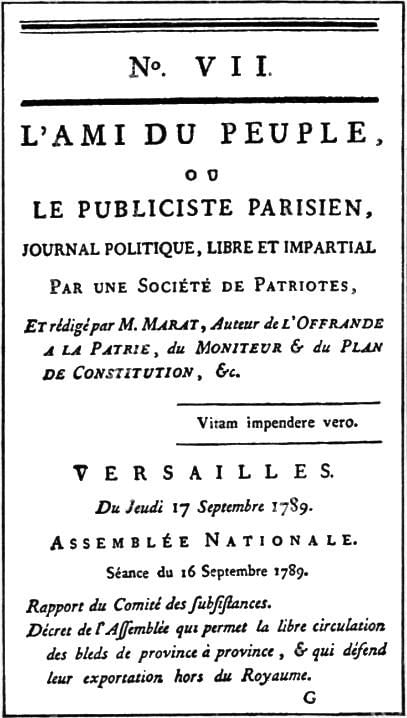
Q.7. Who was the editor of the paper called “L’ami du peuple” (The friend of the people)?
Ans. The revolutionary journalist Jean-Paul Marat was the editor.

Q.8. What was the charge on which King Louis XVI was sentenced to death?
Ans. Louis XVI was sentenced to death by a court on the charge of treason. On 21st January, 1793, he was executed publicly at the Place de la Concorde.

Q.9. What was the name of the assembly which was called in France in 1792?

Or 

Which new Assembly was formed by Jacobins?

Or

Who abolished the monarchy in France and declared it a republic, and when?
Ans. On 21st September 1792, the Convention, the newly elected assembly, abolished the monarchy and declared France a republic.

Q.10. A triangular slave trade was held between which areas of the world during the 18th century?

Or 

Between which three continents triangular slave trade was held?
Ans. A triangular slave trade was held between Europe, Africa and the Americas to meet a shortage of labor on the plantations in the Americas.

Q.11. When did Napoleon Bonaparte crowned himself Emperor of France?

Or

When did Napoleon Bonaparte become Emperor of France?
Ans. He crowned himself Emperor of France in 1804.

Q.12. When and where was Napoleon Bonaparte finally defeated?

Or

In which famous war was Napoleon Bonaparte defeated?
Ans. Napoleon was finally defeated at the Battle of Waterloo in 1815.

Q.13. Name the French port cities related to the slave trade.

Or

Name the French ports through which the slave trade was done.
Ans. Bordeaux and Nantes were the places from where the French merchants sailed to the African coast, where they bought slaves from local chieftains.

Q.14. Who seized power after the fall of the Jacobin government?
Ans. The fall of the Jacobin government allowed the wealthier middle classes to seize power in the form of a political body called the Directory.

Q.15. Who did lead the representatives of the third estate in Versailles on 20th June 1789?
Ans. The representatives of the third estate were led by Mirabeau and Abbe Sieyes.

Q.16. Which social groups emerged in the 18th century?
Ans. The 18th century witnessed the emergence of social groups, termed the middle class, as well as lawyers and administrative officials.

Q.17. What was the name of the direct tax collected by the state from the peasants in 18th-century France?

Or

What was taille?
Ans. These included A direct tax, called taille was collected by the state.

Q.18. Name the French colonies in the Caribbean.
Ans. The French colonies in the Caribbean were Martinique, Guadeloupe and San Domingo.

Q.19. When was slavery finally abolished in the French colonies?
Ans. Slavery was finally abolished in the French colonies in 1848.

Q.20. Who wrote a ‘Declaration of the Rights of Women and Citizens’?
Ans. Olympe de Gouges wrote a ‘Declaration of the Rights of Women and Citizens’ in 1791.

Q.21. When did the women in France get the right to vote?

Or

When did women in France finally get the right to vote in France?
Ans. In 1946, the women in France won the right to vote.

Q.22. Name the symbol of eternity in French society.
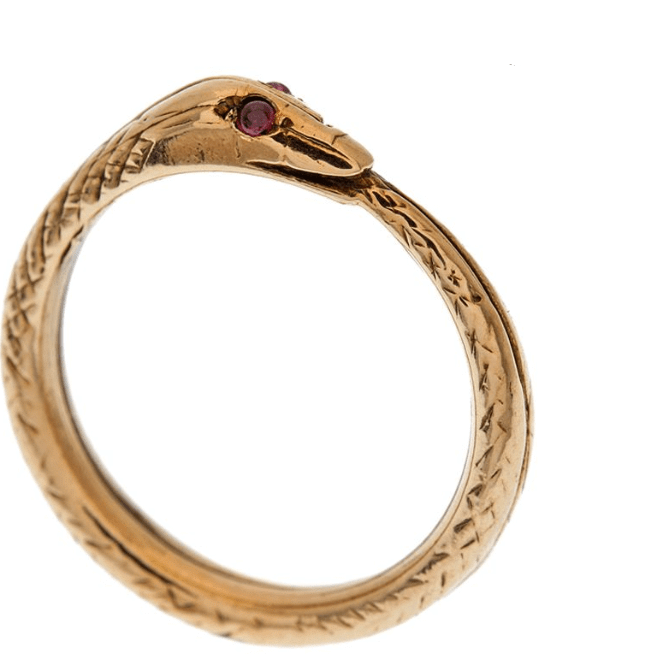
Ans. A snake biting its tail to form a ring is the symbol of eternity in French society.

Snake biting its tail to form a ring: Symbol of Eternity. A ring has neither a beginning nor an end.

Q.23. Which section of French society was forced to give up its power after the French Revolution?
Ans.
 The first and second estates were forced to give up their power after the French Revolution.

Q.24. Whom did Louis XVI get married to?
Ans. Louis XVI was married to Princess Marie Antoinette of Austria.

Q.25. Why was the Bastille hated by all?

Or

What did the fall of the Bastille signify?
Ans. The Bastille, the fortress prison, was hated by all because it stood for the despotic power of the king.

Q.26. Name the classes which formed the privileged estates.
Ans. The clergy and the nobility constituted the privileged estates.

Q.27. When was monarchy abolished and France declared a republic?
Ans. On 21st September 1792, the monarchy was abolished, and France became a republic.

Q.28. Name the authors of the following books. 
(i) The Social Contract 
(ii) The Spirit of Laws
Ans. 
(i) ‘The Social Contract’ was written by Jean Jacques Rousseau.
(ii) ‘The Spirit of Laws’ was written by Montesquieu.

Q.29. Explain the terms Liberty, Equality, and Fraternity of the French Revolution.
Ans. The term ‘Liberty’ means freedom, Equality stands for being equal and Fraternity stands for brotherhood.

Q.30. Name the European countries which share common boundaries with France.
Ans. The countries that share common boundaries with France are Spain, Italy, Switzerland, Germany, Luxembourg, and Belgium.

Q.31. What was the most important legacy of the French Revolution?
Ans. The ideas of liberty and democratic rights were the most important legacy of the French Revolution.

Or

LEF (liberty, equality and fraternity)

Q.32. When was slavery finally abolished in France?
Ans. Slavery was finally abolished in 1848 in France.

Q.33. Name the important political clubs formed by women in France to fight for their political rights.
Ans. The Society of Revolutionary and The Republican Women.

Q.34. What was ‘Directory’?
Ans. The directory was an executive made up of five members. They were appointed by two elected legislative councils.

Q.35. How Robespierre’s end came?
Ans. Robespierre was convicted by a court in July 1794, arrested and on the next day sent to the guillotine and killed in the same manner he punished guilty people.

Q.36. What was Guillotine?
Ans. A guillotine was a device consisting of two poles and a blade with which a person is beheaded. It was named after Dr. Guillotine, who invented it.

Q.37. Who introduced ‘Reign of terror’ in France?
Ans. Robespierre introduced Reign to Terror when he followed a policy of severe control and punishment in France.

Q.38. Who were ‘Sans-Culottes’?
Ans. Those Jacobins were known as Sans-Culottes, who were without knee breeches and wore red caps to symbolize liberty.

Q.39. What were political clubs?
Ans. Political clubs were formed by people to discuss government policies and plan their own forms of action. Women, too, formed such clubs.

Q.40. What was ‘Marseillaise’?
Ans. It was a patriotic song sung by volunteers of Marseilles as they marched into Paris. Marseillaise is now the national anthem of France.

Q.41. Who could qualify as an Elector?

Or

Who were the electors?
Ans. To qualify as an elector and then as a member of the Assembly, a man had to belong to the highest bracket of taxpayers.

Q.42. When was the draft of the National Assembly’s constitution completed, and what was its main objective?
Ans. The draft of the constitution was completed in 1791 and its main objective was to limit the powers of the monarch.

Q.43. What was tithe?
Ans. It was a tax levied by the church, comprising at least one-tenth of the agricultural produce by the farmers.

Q.44. What was a ‘Manor’?
Ans. A manor was an estate consisting of the lord’s lands and his mansion.

Q.45. What does ‘Chateau’ mean?
Ans. It was a castle or stately residence belonging to a king or a nobleman.

Q.46. What do you know about Abbe Sieyes?
Ans. Abbe Sieves was originally a priest. He wrote an influential pamphlet called ‘What is the Third Estate’.

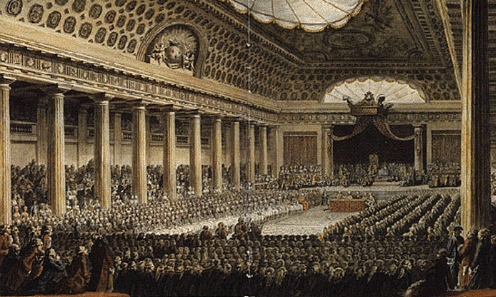
Q.47. What was the Estates General?
Ans. The Estates General was a political body to which the three estates sent their representatives.

Estates General

Q.48. How was the division of power suggested by philosopher Montesquieu?
Ans. Montesquieu proposed a division of power within the government between the legislative, the executive, and the judiciary.

Q.49. Why was Bastille Prison attacked?
Ans. The revolutionaries stormed the Bastille prison with the hope of finding hoarded ammunition for the revolution.

Q.50. What does ‘subsistence crisis’ mean?
Ans. It is an extreme situation where the basic means of livelihood are endangered.