5. Democratic Rights – Long Question answer

Q.1. Explain the correctness of the following statement, “Rights are necessary for the very sustenance of a democracy.”

Ans. It is absolutely correct to say that rights are necessary for the very sustenance of a democracy. Rights are the heart and soul of democracy. In a democracy, every citizen has the right to vote and the right to be elected to government. For democratic elections to take place, it is necessary that citizens should have the right to express their opinion, form political parties and take part in political activities.

Rights also perform a very special role in a democracy. They protect minorities from the oppression of the majority. They ensure that interests of the minorities are protected and majority does not act as per its whims and fancies. Rights are guarantees which can be used when things go wrong. Things may go wrong when some citizens may wish to take away the rights of others. Generally, the majority wants to dominate the minority. The government should protect the citizens’ rights in such a situation. Sometimes elected governments may not protect or even attack the rights of their own citizens (as happened in Yugoslavia under Milosevic). Therefore, some basic rights of the citizens are written down in the constitution of most democracies.

Q.2. What is a secular state? In which way does our constitution make India a secular state? [V. Important]

Ans. A secular state is one that does not confer any privilege or favour on any particular religion. It does not punish or discriminate against people on the basis of religion they follow. It implies that the government cannot compel any person to pay any taxes for the promotion or maintenance of a particular religion or religious institution. There shall be no religious instruction in the government educational institutions. In private institutions, no person can be compelled to take part in a religious activity. A secular state is one that does not establish any one religion as official religion.

Indian secularism practises an attitude of principled and equal distance from all religions. The Preamble to Indian constitution declares India to be a secular nation. There is no official religion in India. The Indian state is neutral and impartial in dealing with all religions. Right to freedom of religion is a Fundamental Right. Every citizen of India has a right to profess, practise and propagate the religion he/she believes in. Every religious group or sect is free to manage its religious affairs.

Q.3. State the provisions of the Cultural and Educational Rights. [Important]

Ans. For the simple reason that the working of democracy gives power to the majority, it is the language, culture and religion of minorities that needs special protection. Therefore, the cultural and educational rights of the minorities are specified in the constitution.

(i) Any section of citizens with a distinct language or culture has a right to conserve it.
(ii) Admission to any educational institution maintained by government or receiving government aid cannot be denied to any citizen on the ground of religion or language.
(iii) All minorities have the right to establish and administer educational institutions of their choice.
(iv) Full compensation has to be paid if the state seeks to acquire the property of a minority educational institution.

Q.4. Explain what is meant by the ‘Right to Constitutional Remedies’.

Ans. Rights guaranteed by the constitution are useless if there are no special provisions to guarantee them. The Fundamental Rights in the constitution are enforceable. We have the right to seek the enforcement of these rights by moving to the High Courts or the Supreme Court. This is called the Right to Constitutional Remedies which is provided by Article 32 of the constitution. This itself is a Fundamental Right. This right makes other rights effective. It is possible that sometimes our rights may be violated by fellow citizens, private bodies or by the government. When any of the rights are violated we can seek remedy through a court. If it is a Fundamental Right we can directly approach the Supreme Court or the High Court of a state. Dr. Ambedkar called the Right to Constitutional Remedies (Article 32) the ‘heart and soul’ of our constitution. There can be no law or action that violates the Fundamental Rights. Such a law can be declared null and void by the Supreme Court.

Q.5. What can a person do in case of the violation of Fundamental Rights? What is PIL and how does it work? [Important]

Ans. In case of any violation of Fundamental Right, the aggrieved person can approach the High Court or the Supreme Court for remedy. Moreover any person can go to court against the violation of the Fundamental Right, if it is of social or public interest. It is called the Public Interest Litigation (PIL).

Under this any citizen or group of citizens can approach the Supreme Court or the High Court for the protection of public interest against a particular law or action of the government. One can write to the judges even on a postcard. The court will take up the matter if the judges find it in public interest. Even a newspaper article or report can be treated as a PIL by the court.

Q.6. Mention four new rights which the constitution of South Africa has guaranteed to its citizens. [Important]

Ans. The scope of rights has been expanding and new rights are evolving over time. They are the result of the struggle of the people. New rights emerge as societies develop or as new constitutions are made.
The constitution of South Africa guarantees its citizens several kinds of new rights.

(i) Right to privacy, so that citizens or their home cannot be searched, their phones cannot be tapped, their communication cannot be opened.
(ii) Right to an environment that is not harmful to their health or well-being.
(iii) Right to have access to adequate housing.
(iv) Right to have access to health care services, sufficient food and water; no one can be refused emergency medical treatment.

Q.7. The Right to Freedom of Speech and Expression does not come without qualifications. Explain.

[CBSE 2010]

Ans. Freedom of speech is one of the essential features of any democracy. Our ideas and personality develop only when we are able to freely communicate with others. You may disagree with a policy of government, you are free to criticise the government. You may publicise your views through pamphlet, magazine or newspaper. However, you cannot use this freedom to instigate violence against others. You cannot incite people to rebel against the government, nor can you use it to defame others by saying false and mean things that cause damage to a person’s reputation. This is called freedom of speech with qualifications.

Q.8. Discuss the provisions included in the Right against Exploitation 

[CBSE 2010]

Ans. Once the right to liberty and equality is granted it follows that every citizen has a right to not to be exploited yet the constitution makers thought it was necersary to write down certain clear provisions to prevent exploitation of the weaker sections of the society. The constitution mentions three weaker sections of the society. The constitution mentions three evils and declares these as illegal. First, the constitution prohibits traffic in human beings, i.e., selling and buying of human beings. Secondly, it prohibits ‘‘begar’’ or forced labour in any form. Finally the constitution prohibits child labour. No one can employ a child below the age of fourteen to work in a factory or mine.
4. Working of Institutions – Long Question answer

Q.1. What was the reaction of the people to the implementation of Mandal Commission Report?

Ans. The implementation of the Mandal Commission Report led to widespread protests and counterprotests, some of which were violent. People reacted strongly because this decision affected thousands of job opportunities. Some felt that job reservations were essential to cope up with the inequalities among people of different castes in India. Others felt that this was unfair as it would deny equality of opportunity to people who did not belong to the backward communities. They would be denied jobs even if they were more qualified.

Q.2. Write about some of the activities involved in governing a country.

Ans. Governing a country involves various activities. For example, the government is responsible for ensuring security to the citizens and providing facilities for education and health to all. It collects taxes and spends the money thus raised on administration, defence and development programmes. It formulates and implements several welfare schemes. Some persons have to take decisions on how to go about these activities. Others have to implement these decisions. It is also important that these activities keep taking place even if the persons in key positions change.

Q.3. In which ways does the Parliament exercise political authority on behalf of the people?

Ans.

(i) Parliament can make new laws, change existing laws, or abolish existing laws and make new ones in their place.
(ii) Those who run the government can take decisions only so long as they enjoy support of the Parliament.
(iii) Parliament controls all the money that government has. Public money can be spent only when the Parliament sanctions it.
(iv) Parliament is the highest forum of discussion and debate on public issues and national policy.

Q.4. Describe the ways in which Lok Sabha is more powerful than Rajya Sabha. [Important]

Ans.

(i) An ordinary law has to pass through both Lok Sabha and Rajya Sabha. In case of differences, a joint session is held. Since Lok Sabha has larger number of members will prevail.
(ii) Lok Sabha exercises more powers in money matters. Once it passes the budget or the money bills, the Rajya cannot reject it. It can delay it by 14 days or suggest changes in it. The Lok Sabha may or may not accept these changes.
(iii) Lok Sabha controls the Council of Ministers. If the majority of Lok Sabha members say they have no confidence in the Council of Ministers, all ministers including the Prime Minister, have to quit. Rajya Sabha does not have this power.

Q.5. How can you say that the President occupies the position of a nominal head of the State?

Ans. The President is not elected directly by the people. She or he can never claim the kind of direct popular mandate that the Prime Minister can. This ensures that she or he remains only a nominal executive. The Constitution gives vast powers to the President. But the latter exercises them only on the advice of the Council of Ministers. The President can ask the Council of Ministers to reconsider its advice. But if the same advice is given again, she or he is bound to act according to it. Similarly, when a bill comes to the President for signatures she or he can return it to the Parliament with her or his advice but when the bill comes for her signatures again, she or he has to sign it, whether the Parliament agrees to her / his advice or not.

Q.6. What are the powers of the Supreme Court?

Ans. The Supreme Court controls the judicial administration of the country. Its decisions are binding on all other courts of the country. It can take up any dispute

  1. Between citizens of the country;
  2. between citizens and government;
  3. between two or more state governments;
  4. between governments at the union and state level.

It is the highest court of appeal in civil and criminal cases. It can hear appeals against the decisions of the High Courts. The Supreme Court has the power to interpret the Constitution of the country. It can determine the constitutional validity of any law. This is known as judicial review.

Q.7. Write any three powers of the Prime Minister? 

[CBSE 2010]

Ans. The Prime Minister is the most important political institution in the country. He/ She has wide ranging powers.

(i) He chairs cabinet meetings.
(ii) His decisions are final in case of disagreement between departments.
(iii) He distributes and redistributes work to ministers. He also has power to dismiss ministers.

When the Prime Minister quits, the entire ministry quits. Thus within the cabinet the Prime Minister is the most powerful so much so that parliamentary democracies are sometimes seen as prime ministerial form of government.

Q.8. Write two ways in which it can be proved that the President does not have any real powers. What can the President really do on his/her own? 

[CBSE 2010]

Ans. In our political system the head of the state exercises only nominal powers. The President of India is like the Queen of Britain whose functions are to a large extent ceremonial. The President supervises the overall functioning of all the political institutions in the country so that they operate in harmony to achieve the objectives of the state. The President represents the entire nation but can never claim the kind of direct popular mandate that the Prime Minister can. The same is true of his powers. All government activities do take place in the name of the President. All laws and major decisions of the government are issued in his name, all international treaties and agreements are made in his name but the President exercises these powers only on the advice of the Council of Ministers.

Q.9. Explain the difference between Political Executive and Permanent Executive. [2011 (T-2)]

Ans. In a democratic country two types of executives are there. ‘‘One that is elected by the people for a specific period, it is called the political executive. Political leaders who take big decisions fall into this category. In the second category people are appointed on a long-term basis. This is called the permanent executive or civil services. Persons working in civil services are called civil servants. They remain in office even when the ruling changes. These officers work under political executive.

Q.10. In what ways does the Parliament exercise political authority? Explain. [2011 (T-2)]

Ans. Parliament is the final authority for making laws in any country. This task of law making or legislation is so crucial that these assemblies are called legislatures. Parliaments all over the world exercise some control over these who run the government. In some countries like Inida this control is direct and full. Those who run the government can take decisions only, so long as they enjoy support of the Parliament. Parliaments control all the money that governments have. Parliament is the highest forum of discussion.

Q.11. Describe any four constitutional provisions for making judiciary independent. [2011 (T-2)]

Ans. Independence of the judiciary means that it is not under the control of the legislature or the executive. The judges do not act on the direction of the government or according to the wishes of the party in power. There is very little scope for the ruling party to interfere.

(i) The appointment of judges of Supreme Court and High Courts is done by the President on the advice of the Prime Minister and in consultation with the Chief Justice of the Supreme Court.

(ii) Once a person is appointed as judge of the Supreme Court or the High Court, it is impossible to removed him.

(iii) The judiciary in India is one of the most powerful in the world. The Supreme Court and the High Courts have the power to interpret the constitution of the country.

(iv) They can declare invalid any law of the legislative or the actions of the executive whether at the Union level or at the State level.

Q.12. How is the judicial system organised in India? Mention its major function. [2011 (T-2)]

Ans. An independent and powerful judiciary is considered essential for democracies. All the courts at different levels in a country put together are called the judiciary. The Indian judiciary consists of a Supreme Court for the entire nation, High Courts in the states, district courts and the courts at the local level. India has an integrated judiciary. It means the Supreme Court controls the judicial administration in the country. Its decisions are binding on all other courts of the country. It is the highest court of appeal in civil and criminal cases.

Q.13. Why is the Prime Minister the most powerful man in the government? Explain. [2011 (T-2)]

Ans. The Prime Minister has wide-ranging powers as head of the government. He chairs cabinet meetings, coordinates the work of different departments. His decisions are final. All ministers work under him/his leadership. He distributes and redistributes work to the ministers. He also has the power to dismiss them and when he quits the entire ministry quits. The Prime Minister controls the cabinet and the Parliament through the party.

3. Electoral Politics – Long Question answer

Q1: What is meant by ‘seats’ in an election? Explain with an example.

Ans: In India, for the Lok Sabha election, the country is divided into 543 constituencies. Similarly, each state is divided into a specific number of assembly constituencies. The parliamentary constituency has several assembly constituencies within it. The same principle applies to Panchayat and municipal elections. Each village or town is divided into several ‘wards’ that are like constituencies. Each ward elects one member of the village or the urban local body. Sometimes these constituencies are counted as ‘seats’ for each constituency represents one seat in the assembly.
Example: When we say a party has won 20 seats. It means that candidates of that party won in 20 assembly constituencies in the state and that it has 20 MLAs in the state assembly.

Q2: Define the following:

(a) Universal Adult Franchise

(b) Election Photo Identity Card

(c) Voter’s ListAnswer

Ans:

(a) Universal Adult Franchise: It is a right granted to all adults—men or women, rich or poor, white or black—to vote for their representatives who run the government. In practice, it means that everyone should have one vote, and each vote should have equal value.

(b) Election Photo Identify Card: This is introduced by the government to stop rigging. The voters are required to carry this card when they go out to vote so that no one can vote for someone else. The government has tried to give this card to every person on the voter list. However, the card is not yet compulsory for voting.

(c) Voter’s List: In a democratic election, the list of those who are eligible to vote is prepared much before the election and given to everyone. This list is officially called the electoral roll and is commonly known as the voters’ List.

Q3: Mention the eligibility for Indian citizens to be the member of Parliament.

Ans: The constitution stipulates that only Indian citizens of not less than 25 years of age are qualified to be members of the Lok Sabha. Similarly, only Indian citizens of not less than 30 years of age may be members of the Rajya Sabha. The Parliament may prescribe additional qualifications under Article 84 of the Constitution.
But a citizen is disqualified to become a member of the Parliament:
(a) If he/she holds an office of profit under the union of a state government.
(b) If he/she is declared to be of unsound mind by a court.
(c) If he/she is a bankrupt.
(d) If he/she has lost his Indian citizenship through voluntary renunciation or any other means.
(e) If he/she has been convicted of a crime.

Q4: Explain the role of the Election Commission in free and fair elections. [CBSE 2013] 

Ans: Functions of the Election Commission of India:

  • Allotment of Election Symbols: The political parties of national standing are allotted permanent election symbols. These symbols help even an ordinary man to recognize the different parties instantly.
  • Preparation of Electoral Rolls: Electoral Rolls are prepared in which the name, father’s name, age, and sex of the voters are mentioned.
  • Delimitation of Constituencies: The whole area where elections are held, is divided into so many clear-cut constituencies so that elections are held in an organized way.
  • Fixing the Election Dates: The Election date is announced so that the voters can easily cast their votes on that particular date.
  • Scrutiny (careful examination) of Nomination Papers: The candidates willing to contest the elections have to file the nominations up to a particular date. Then the Election Commission scrutinizes their papers and accepts or rejects the nomination papers as the case may be.
  • Checking Undue Interference of the Party-in-Power: The important duty of the Election Commission is to see that the party in power does in no way take advantage of other parties or individuals.

Q5: With reference to ‘electoral constituencies’, state how the elections are held in India.
Ans: For elections, the country is divided into different areas called ‘electoral constituencies’. The voters who live in an area elect one representative. For the Lok Sabha elections, the country is divided into 543 constituencies. The representative elected from each constituency is called a Member of Parliament (MP). Similarly, each state is divided into Assembly constituencies. In this case, the elected representative is called the Member of the Legislative Assembly (MLA).


Q6: Why is there no educational qualification prescribed for the political leaders who hold such an important position in governing the country?
Ans. Educational qualifications are not relevant to all kinds of jobs. Just as a cricketer needs the ability to play well, irrespective of educational qualification, similarly the relevant qualifications for an MLA or an MP include the ability to understand people’s concerns and problems, as well as the capacity to represent their interests.

In our country, putting an educational qualification would go against the spirit of democracy as it would mean depriving a majority of the country’s citizens of the right to contest elections.
Example: If graduation is made a compulsory qualification, then 90 percent of the citizens will become ineligible to contest elections.

Q7: How can you say that very few Election Commissions in the world have such wide-ranging powers as the Election Commission of India? [Important]
Ans. Election Commission makes decisions on every aspect of conduct and control of elections. It implements the code of conduct and punishes any candidate or party that violates it. During the election period, the EC can order the government to follow some guidelines, to prevent the use and misuse of governmental power to enhance its chances to win elections, or to transfer some government officials. When on election duty, government officers work under the control of the EC and not the government.

Q8: Explain how the outcome of elections is a final test of free and fair elections.
Ans. The ruling parties routinely lose elections in India both at the national and state level. In fact, in several instances, ruling parties have faced significant electoral defeats. In the US, an incumbent or ‘sitting’ elected representative rarely loses an election. In India, about half of the sitting MPs or MLAs lose elections. Candidates who are known to have spent a lot of money on ‘buying votes’ and those with known criminal connections often lose elections.

Q9: What are the demerits of political competition? [V. Important]
Ans. The political competition has many demerits:
(i) It creates a sense of disunity and factionalism in every locality. Different political parties and leaders often level allegations against one another. Parties and candidates often use dirty tricks to win elections.
(ii) This pressure to win electoral fights does not allow sensible long-term policies to be formulated.
(iii) Some good people who wish to serve the country do not enter this area as they do not like to be dragged into unhealthy competition.

Q10: Explain the term constituency. Give reasons why the system of reserved constituencies was introduced by our constitution-makers. [CBSE 2010]
Ans. The country is divided into different areas for elections. These are called ‘constituencies’. The voters who live in an area elect one representative. For the Lok Sabha elections, the country is divided into 543 constituencies. The representative elected is called an MP. Similarly, each state is divided into a specific number of assembly constituencies. In this case, the elected representative is called an MLA.

To give protection to the weaker section, The makers of our Constitution envisioned reserved constituencies. These are reserved for people who belong to SC or ST. The Lok Sabha has 84 reserved seats for SCs and 47 for STs.

Q11: Enumerate any four challenges to free and fair elections. [2011 (T-2)]
Ans. Four challenges to free and fair elections are as follows:

  • Inclusion of false names and exclusion of genuine names in the voter’s list.
  • Misuse of government facilities and officials in the ruling party.
  • Excessive use of money by rich candidates and big parties.
  • Intimidation of voters and rigging on the polling day.

Q12: Explain any four powers enjoyed by the Election Commission in India. [2011 (T-2)]
Ans. The Election Commission makes decisions on every aspect of conduct and control of elections from the announcement of elections to the declaration of results. It implements the code of conduct and punishes any candidate or party that violates it. During Elections EC can order the government to follow some guidelines to use/misuse governmental power, and its chances to win. When on election duty, government officials work under the control of the EC.

Q13: What is the Secret Ballot System? Give three reasons why the Secret Ballot System is good. [2011 (T-2)]
Ans. A ballot paper is a sheet of paper on which the names of the contesting candidates along with party names and symbols are listed.

Picture indicating a Ballot Paper

The Secret Ballot System is good because:

  • The voter can vote in security.
  • The voter feels secure, safe, and fearless.
  • The voter is free of threat and coercion.

Q14: How does our Election Law regulate campaigns? [2011 (T-2)]
Ans.  Election campaigns take place to have a free and open discussion about who is a better representative, which party will make a better government, or what is a good policy. These campaigns take place for two weeks between the announcement of the final list of candidates and the date of polling. During this period, the candidates contact their voters, political leaders address election meetings and political parties mobilize their supporters.

Q15: What are the conditions that make an election democratic? [2011 (T-2)]
Ans. The presence of an independent and very powerful Election Commission (EC). It enjoys the same kind of independence that the judiciary does. The Chief Election Commissioner is not answerable to the President or the government. It is virtually impossible to remove the CEC, once he is appointed. When election officials come to the opinion that polling was not fair in some booths or even in entire constituencies, they order a repoll.

Q16: What are some of the activities undertaken by political parties to carry out election campaigns? Mention any three activities.[CBSE 2010]
Ans. In election campaigns, political parties try to focus public attention on some big issues. For example, during the Lok Sabha elections of 1971, the Congress party, led by Indira Gandhi, adopted the slogan ‘Gharibi Hatao. “Save Democracy” was the slogan of the Janata Party in the Lok Sabha election of 1977. 
Secondly, political leaders contact their voters, address election meetings, and promise to remove the grievances of the people. 
Thirdly, support of media – TV Channels and newspaper columns–is also taken by the political parties to further their cause to gather more votes.

2. Constitutional Design – Long Question answer

Q1. Regarding the constitution-making, what compromise was reached between the blacks and whites?

Ans: The constitution of South Africa was created through negotiations between the white ruling party and the black leaders of the freedom struggle. This constitution is known for granting extensive rights to its citizens.

After lengthy discussions, both sides reached a compromise:

  • The whites accepted the principle of majority rule and the concept of one person, one vote.
  • They also agreed to recognise basic rights for the poor and workers.
  • The blacks accepted that majority rule would not be absolute.
  • They agreed that the majority would not be allowed to take away the property of the white minority.

This compromise was challenging, as both parties needed to trust each other to ensure its successful implementation.

Q2. What does the constitution effectively do that makes a country a democratic one?

Ans: constitution plays a vital role in establishing a democratic country by:

  • Building trust: It fosters trust and cooperation among diverse groups of people.
  • Defining government structure: It outlines how the government is formed and who holds decision-making power.
  • Limiting government power: It sets boundaries on governmental authority and defines citizens’ rights.
  • Reflecting aspirations: It conveys the people’s goals for a just and equitable society.

While not all countries with constitutions are democratic, every democratic nation has a constitution.

Q3. Why did the makers of the Indian constitution have anxieties about the present and the future of the country?

Ans: The makers of the Indian constitution had several anxieties regarding the country’s future:

  • The constitution was created for a large and diverse nation, which posed significant challenges.
  • India’s birth involved a traumatic partition based on religious differences, leading to violence that claimed at least one million lives on both sides of the border.
  • The British left the rulers of the princely states with the choice to join either India or Pakistan, or remain independent, creating uncertainty.
  • As the constitution was being drafted, the future of the country appeared unstable and insecure.

These factors contributed to the makers’ concerns about the present and future of India.

Q4. Describe how the Constituent Assembly worked to prepare the constitution for India.

Ans: The Constituent Assembly worked systematically and openly to prepare the Constitution for India. Key steps included:

  • Establishing and agreeing on basic principles for the Constitution.
  • Forming a Drafting Committee, led by Dr. B.R. Ambedkar, to create the initial draft.
  • Conducting several rounds of detailed discussions on the draft, examining it clause by clause.
  • Considering over 2000 amendments during the deliberations.
  • Holding discussions for a total of 114 days over three years.
  • Recording and preserving every document and word spoken, known as the ‘Constituent Assembly Debates’.

The Assembly, which had 299 members, adopted the Constitution on 26 November 1949, and it came into effect on 26 January 1950, celebrated annually as Republic Day.

Q5. In his speech ‘Tryst with Destiny’, Nehru said, ‘Freedom and power bring responsibility.’ Explain what he meant by this.

Ans: By stating that freedom and power bring responsibility, Nehru emphasised that Indians must not become complacent after gaining independence. Instead, they should:

  • Continuously strive to fulfil their commitments.
  • Serve the millions who continue to suffer.
  • Work towards ending poverty, ignorance, disease, and inequality of opportunity.

Nehru believed that true service to India involves addressing the needs of the less fortunate and striving for a better future for all.

Q6. What is the Preamble of the Constitution? What is the significance of ‘We the people of India’ and ‘secular’ in the Preamble?

Ans: The Preamble of the Constitution serves as its introductory part and outlines its fundamental principles. It is often referred to as the key to understanding the Constitution.

  • We, the people of India, signify that the Constitution is created and enacted by the citizens through their representatives.
  • Secular indicates that all citizens have the freedom to practice any religion, with no official state religion.

Overall, the Preamble encapsulates the essence of the Indian Constitution, guiding its interpretation and application.

Q7. Describe any three features of the Indian Constitution.

Ans: Three features of the Indian Constitution:

  • Sovereign, Democratic Republic: The Constitution establishes India as a sovereign state, meaning that the people have the ultimate authority to make decisions regarding both internal and external matters. It ensures that no external power can influence the Indian government.
  • Secular State: India is a secular nation, allowing citizens the freedom to practice any religion. The government treats all religions with equal respect and does not endorse any official religion.
  • Fundamental Rights and Duties: The Constitution guarantees citizens various rights, including social, economic, and political justice. It promotes liberty of thought, expression and worship, while ensuring equality of status and opportunity for all individuals.

Q8. What is a constitution? Why do we need a constitution?

Ans: constitution is a collection of written rules accepted by all citizens of a country. It serves as the supreme law that governs relationships among citizens and between the citizens and the government. The key functions of a constitution include:

  • Establishing trust and coordination among diverse groups.
  • Defining how the government is formed and who holds decision-making power.
  • Limiting government powers and outlining citizens’ rights.
  • Expressing the aspirations of the people for a better society.

While not all countries with constitutions are democratic, every democratic nation has a constitution. It is essential for maintaining order and protecting individual rights.

Q9. The Indian constitution is both rigid and flexible. Explain.

Ans: The Indian Constitution is a blend of rigid and flexible elements. It is not entirely one or the other, but rather a combination of both.

  • Some articles can be amended with a simple majority in Parliament. Examples include:
    • Changing the names of states
    • Altering state boundaries
    • Matters related to citizenship
  • Other articles require a two-thirds majority for amendments, such as:
    • The election process for the President of India.
  • Any proposed change must first be approved by a two-thirds majority in both houses of Parliament.

This structure allows the Constitution to adapt to societal changes while maintaining essential legal frameworks.

Q10. Mention the landmark years in the making of the Indian Constitution.

Ans: Several key years were significant in the development of the Indian Constitution:

  • 1928: Motilal Nehru and eight Congress leaders drafted a constitution for India.
  • 1931: The Karachi Session of the Indian National Congress discussed the future constitution.
  • 1937: Elections were held for provincial legislatures, providing valuable experience for Indians.
  • 1946: Elections for the Constituent Assembly took place in July, with its first meeting in December.
  • 1949: The Constitution was adopted on 26 November.
  • 1950: The Constitution came into effect on 26 January, celebrated as Republic Day.

The Indian Constitution incorporated many elements from colonial laws, such as the Government of India Act 1935, reflecting the experiences gained during British rule.

Q11. What is the aim of a socialist state? How can that be achieved?

Ans: A socialist state aims to:

  • Ensure that wealth is generated socially and shared equally.
  • Regulate the ownership of land and industry to reduce socioeconomic inequalities.
  • Work towards the welfare of all citizens, especially the disadvantaged.

To achieve these aims, the government should:

  • Implement policies that promote equality and social justice.
  • Provide support and resources to those in need.
  • Encourage community involvement in decision-making.

Q12. What was the African Policy of Apartheid? How could that come to an end?

Ans: Apartheid was a system of racial discrimination specific to South Africa, imposed by white Europeans. Key points about apartheid include:

  • The native population, primarily black, made up about three-quarters of the population.
  • Non-whites, including blacks, coloreds, and Indians, were treated as inferiors and denied voting rights.
  • Blacks were prohibited from living in white areas and required permits to work there.
  • Public services such as transportation, schools, and hospitals were segregated.
  • The resistance included protests, marches, and strikes led by groups like the African National Congress (ANC).
  • Despite international condemnation, the apartheid government continued to oppress non-whites.

Apartheid officially ended on 26 April 1994, with the establishment of the Republic of South Africa, marking the transition to a multi-racial government.

Q13. Define the following terms mentioned in the Preamble to the Constitution of India.

Ans: Sovereign: This term means that the people have the supreme right to make decisions regarding both internal and external matters. No outside power can dictate to the Government of India.

Socialist: Implies that wealth is generated collectively and should be shared fairly among all members of society. The government should regulate land and industry ownership to help reduce socio-economic inequalities.

Secular: In a secular state, citizens enjoy complete freedom to follow any religion. There is no official religion, and the government treats all religious beliefs with equal respect.

Republic: A republic is a form of government where the head of state is an elected person, rather than someone who inherits the position.

Q14. What is the Preamble? Explain any three guiding principles explained in the Preamble.

Ans: The Preamble is a brief introduction that outlines the fundamental values of a constitution. Inspired by the American model, many countries, including India, have adopted a Preamble. The Indian Constitution’s Preamble serves as a poetic expression of democracy and encapsulates the core philosophy behind the entire document.

  • Democratic – It establishes a government where all people enjoy equal rights.
  • Equality – It ensures that all citizens are treated equally under the law.
  • Fraternity – It promotes the idea that everyone should act as if they are part of the same family.

Q15. Why do we need a constitution? Give any four points.

Ans: Every country consists of diverse groups of people with different opinions and interests. To ensure harmony, a set of rules is essential. A constitution serves as a written agreement that outlines these rules, accepted by all citizens. It serves four key purposes:

  • Generates trust and coordination among citizens.
  • Specifies the structure of government and decision-making authority.
  • Lays down limits on government powers and defines citizens’ rights.
  • Expresses the aspirations of the people for a better society.

1. What is Democracy? Why Democracy? – Long Question answer

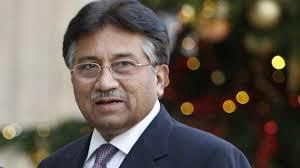
Ques 1. What were the steps taken by Musharraf in Pakistan to empower himself? [Important]
Ans. In Pakistan, General Pervez Musharraf led a military coup in October 1999. He overthrew a democratically elected government and declared himself the ‘Chief Executive’ of the country. Later he changed his designation to President and in 2002 held a referendum in the country that granted him a five year extension. This referendum was based on fraud and malpractices. In 2002, he issued a ‘Legal Framework Order’ that amended the Constitution of Pakistan. According to this order, the President could dismiss the national or provincial assemblies. 

Fig. Pervez Musharraf

Ques 2. With reference to Zimbabwe, describe how the popular approval of rulers is necessary in a democracy but not sufficient.
Ans. In Zimbabwe, since Independence in 1980, elections have been held regularly and always won by ZANU-PF, the party that led the freedom struggle. Its leader, President Robert Mugabe, is popular but also uses unfair practices in elections. His government has changed the Constitution several times to increase the powers of the President and make him less accountable. Opposition party workers are harassed. Public protests and demonstrations against the government are declared illegal. There is a law that limits the right to criticise the President.

Ques 3. On the basis of the various examples given in the chapter, state what should be the four features of a democracy. [V. Important]
Ans. Four features of a democracy are –
(i) Representatives elected by the people take all the major decisions.
(ii) Elections offer a choice and fair opportunity to the people to change the current rulers.
(iii) This choice and opportunity is available to all the people on an equal basis.
(iv) The exercise of this choice leads to a government limited by basic rules of the constitution and citizens’ rights.

Ques 4. Enumerate the arguments given against democracy.
Ans. Some of the arguments against democracy are as follows :
(i) Leaders keep changing in a democracy. This leads to instability.
(ii) Democracy is all about political competition and power play, with no scope for morality.
(iii) Since so many people are to be consulted in a democracy, it leads to delays.
(iv) Elected leaders do not know the best interest of the people; so it leads to bad decisions.
(v) Democracy leads to corruption as it is based on electoral competition.

Ques 5. How does democracy provide a method to deal with differences and conflicts?
Ans. In any society people are bound to have differences of opinions and interests. These differences are particularly sharp in a country like India which has lot of social diversity. The preference of one group may clash with those of the other groups. Democracy provides the only peaceful solution to this problem. In democracy, no one is a permanent winner or a permanent loser. Different groups can live with one another peacefully. In a diverse country like ours, democracy keeps our country together.

Ques 6. Write any four disadvantages of democracy.
Ans. 
(1) Leaders keep changing in a democracy. This leads to instability.
(2) Democracy is all about political competition and power play. There is no scope for morality.
(3) So many people have to be consulted in a Democracy that it leads to delays.
(4) Elected leaders do not know the best interest of the people. It leads to bad decisions.

Ques 7. How does a democratic government rule within limits set by Constitutional Law? Give three reasons.
Ans. A democratic government cannot do whatever it likes simply because it has won an election. Every major decision has to go through a series of consultations. Every office bearer has certain rights and responsibilities assigned by the constitution and the law. A democratic government rules within limits set by constitutional law and citizens rights.

Ques 8. What is the significance of the rule of law and respect for rights in democratic country? State four points.
Ans. A democratic government cannot do whatever it likes simply because it has won an election. It has to respect some basic rules. In particular it has to respect some guarantees to the minorities. Every major decision has to go through a series of consultation. Every office bearer has certain rights and responsibilities assigned by the constitution and the law. Each is accountable not only to the law but also to other independent officials.

Ques 9. Why is democracy called a ‘‘government by discussion’’?
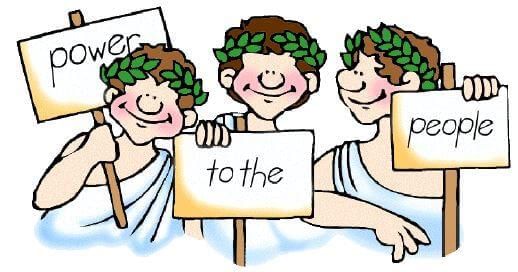
Ans. It is called a ‘‘government by discussion’’ because a democracy is based on consultation and discussion. A democratic decision always involves many persons discussions and meetings. When a number of people together think over a certain matter they are able to point out possible mistakes. This takes time. But there is big advantage in taking time. This reduces rush decisions, problems are not resolved by brutal force but by peaceful discussions. It offers best alternative that we know.Fig. Democracy means power to people

Ques 10. Why does a democratic country always need a constitution?
Ans. All countries that are democratic will have constitutions. After the war of independence against Great Britain the Americans gave themselves a constitution. After the revolution the French people approved a democratic constitution. Since then it has become a practice in all democracies to have a written constitution.

Ques 11. ‘‘Democracy enhances the dignity of citizen.’’ Justify this statement.
Ans. Democracy is based on the principle of political equality on recognising that the poorest and the least educated has the same status as the rich and the educated. People are not subjects of a ruler. They are the rulers themselves. Even when they make mistakes they are responsible for their conduct.

Ques 12. ‘‘Democracy improve the quality of decision making.’’ Explain.
Ans. Democracy provides a method to deal with differences and conflicts. In any society people are bound to have difference of opinions and interests. These differences are particularly sharp a country like ours which has an amazing social diversity. People belong to different regions speak different languages, practise different religions and have different castes. Preferences of a groups can clash with those of other groups. Democracy provides the only peaceful solution to this problem. In democracy no one is a permanent winner. No one a permanent loser. In a diverse country like India, democracy keeps our country together.

Ques 13. Give any four reasons why democracies resolve conflict in a better way than other forms of governments.
Ans. Democracies resolve conflict in a better way. Reasons —

(i) It improves the quality of decision making. It has scope for consultation and discussion.
(ii) In a Democracy conflicts are not solved by brutal force but by peaceful solutions.
(iii) Even even when people/associations/ government make mistakes for a democracy allows them to correct their mistakes; and
(iv)Democracy provides a forum for consultations and discussions to resolve conflicts.

Ques 14. Despite its demerits why is democracy the most preferred form of government? Explain.
Ans. Despite its demerits democracy is still the most preferred form of government as it is:
(i) a more accountable form of government. It responds to the needs of the people because the constitution requires it; and
(ii) Better decision come  when many heads together strive to do so, this reduces the chance of rash decisions or irresponsible decisions plus a democracy enhances the dignity of citizens. It is clearly better than any other form of government.

Ques 15. Why is democracy government a better government? Mention four reasons.
Ans.Fig: Democratic government.A democratic government is a better government as—
(i) it offers better chances of a good decision;
(ii) it is always likely to respect people wishes and allows;
(iii) different kinds of people to live together; and
(iv) even when it fails to do something for the people it allows a way of correcting its mistakes and offers more dignity to all citizens. That is why a democracy is considered the best form of government.