5. Democratic Rights – Short Questions answer

Q.1. What was the background in which ethnic massacre took place in Kosovo?

Ans. Kosovo was a province of Yugosalvia before it split away. In this province the population was overwhelmingly ethnic Albanian. But in the entire country, Serbs were in majority. A narrowminded Serb nationalist, Milosevic, had won the election and became the President of Yugoslavia. His government was very hostile to the Kosovo Albanians. He wanted that ethnic minorities like Albanians should either leave the country or accept the dominance of the Serbs. The massacre was carried out by the army under the direction of the government.

Q.2. Explain what is meant by ‘Rule of Law’. [Important]
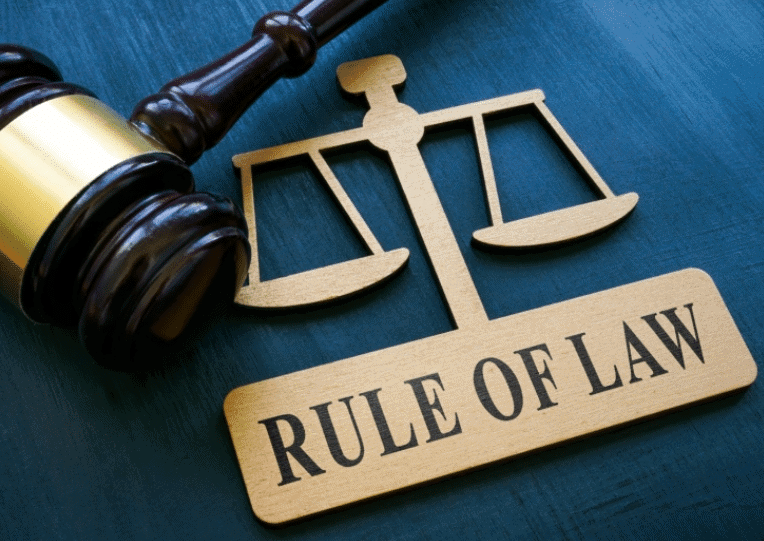
Ans. Rule of law means equality before the law or equal protection of the laws. It means that the laws apply in the same manner to all, regardless of a person’s status. Rule of law is the foundation of any democracy. It implies that no person is above the law. There cannot be any distinction between a political leader, government official and ordinary citizen.

Q.3. Are the reservations provided to the Scheduled Castes, Scheduled Tribes and OBCs against the Right to Equality? Give reasons.

Ans. These reservations are not against the Right to Equality. In a broader sense, equality does mean giving everyone the same treatments, no matter what they need. Equality means giving everyone an equal opportunity to achieve whatever one is capable of. Sometimes, it is necessary to give job reservations to socially and economically backward sections of the society to ensure equal opportunity. The constitution says that reservations of this kind are not a violation of the Right to Equality.

Q.4. Mention the freedoms provided under the ‘Right to Freedom’. Why are reasonable restrictions imposed on them? [Important]

Ans. Under the Right to Freedom, the Indian constitution guarantees six freedoms. These are :

(i) Freedom of speech and expression
(ii) Freedom to assemble peacefully without arms
(iii) Freedom to form associations and unions
(iv) Freedom to move freely throughout the country
(v) Freedom to reside in any part of the country and,
(vi) Freedom to practise any profession, or to carry on any occupation, trade or business.

Reasonable restrictions are imposed on our freedoms in the larger interest of the society. Freedom should be exercised in such a manner that it does not violate others’ right to freedom.

Q.5. What does the term ‘minority’ refer to under the Cultural and Educational Rights?

Ans. Here minority does not mean only religious minority at the national level. In some places, people speaking a particular language are in majority; people speaking a different language are in a minority. For example, Telugu-speaking people form a majority in Andhra Pradesh but they are a minority in Karnataka. Sikhs constitute a majority in Punjab, but they are a minority in Rajasthan, Haryana and Delhi.

Q.6. What is the role of National Human Rights Commission in securing the human rights? How does it work?
Ans. The National Human Rights Commission (NHRC) focuses on helping the victims secure their human rights. These include all the rights granted to the citizens by the constitution. For NHRC human rights also include the rights mentioned in the UN-sponsored international treaties that India has signed. The NHRC cannot by itself punish the guilty – that is the responsibility of the courts. The NHRC makes an independent and credible inquiry into any case of violation of human rights. The commission presents its findings and recommendations to the government or intervenes in the court on behalf of the victims. Like any court, it can summon witnesses, question any government official, demand any official paper, visit any prison for inspection or send its own team for on-the-spot inquiry.

Q.7. Give some examples with regard to the expansion of the scope of rights for the citizens.

Ans. Certain rights like right to freedom of press, right to information, and right to education are derived from the Fundamental Rights. Recently school education has become a right for Indian citizens.

Parliament has passed a law giving the right to information to the citizens. Under the directionof the Supreme Court, right to life now includes the right to food. Right to property is not a Fundamental Right but it is a legal right. Right to vote in elections is an important constitutional right.

Q.8. Explain the ‘Right to Equality’ enjoyed by the citizens of India. What is its importance?

[CBSE 2010]

Ans. All citizens irrespective of caste, colour, region, religion ethnicity, sex or place of birth are equal before the law. There shall be no discrimination against any citizen. All citizens shall have equal opportunity in matters of employment. This is what the ‘Right to Equality’ means.

Q.9. Describe in detail the cultural and educational rights of the minorities as provided in the Indian constitution.  [CBSE 2010]

Ans. The language, culture and religion of minorities need protection otherwise they may get neglected or undermined under the impact of the language, culture and religion of the majority. All minorities have the right to establish and administer educational institutions of their choice.

Q.10. The ‘Right to Constitutional Remedies’ is called the heart of the constitution. Explain.

[CBSE 2010]

Ans. This ‘Right’ makes other ‘Rights’ effective. If sometimes our rights are violated by fellow citizens, private bodies or by the government, we can seek remedy through courts. If it is a Fundamental Right we can directly approach the Supreme Court or the high court of a state. That is why Dr. Ambedkar called it “the heart and soul” of our constitution.

Q.11. “The right to freedom is a cluster of six rights”. Explain. [2011 (T-2)]

Ans. The right to freedom is a cluster of six rights. Therefore :
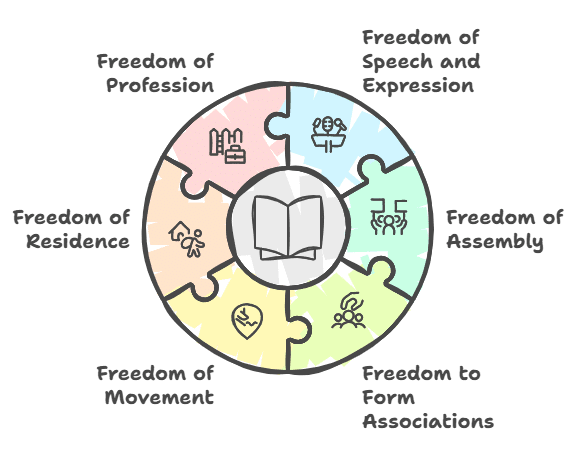
(i) Freedom of speech and expression
(ii) Freedom of assembly in peaceful manner
(iii) To form association and unions
(iv) Move freely through out the country
(v) Reside in any part of the country
(vi) Practice any profession or occupation.

Q.12. Why are the rights guaranteed by the Indian constitution called Fundamental Rights? [2011 (T-2)]

Ans.

(i) They are fundamental to our life.
(ii) Fundamental Rights put into effect the securing for all citizens equality, liberty and justice as given in the Preamble to our constitution.

Q.13. State any three provisions of the Fundamental Right Against Exploitation. [2011 (T-2)]

Ans.

(i) The constitution prohibits ‘traffic in human beings’ i.e. selling and buying of human beings.
(ii) It also prohibits forced labour or begar in any form.
(iii) The constitution also prohibits child labour. No one can employ a child below the age of fourteen to work in a factory, mine or any hazardous work.

Q.14. Why do we need rights in a democracy? [2011 (T-2)]

Ans. Rights are claims of a person over other fellow beings; over the society, and over the government. Rights are necessary for the very sustenance of democracy. Rights protect minorities. Rights are guarantees which can be used when things growing.

Q.15. Write three constitutional provisions for the protection of women and children in India. [2011 (T-2)]

Ans. These are : The constitution prohibits

(i) traffic in human beings i.e. selling & buying of human beings specially women for
immoral purposes.
(ii) It prohibits forced labour
(iii) It protects children under years of age by prohibiting their employment in any factory,  mine or hazardous work.

Q.16. Right to freedom comes with some limitations. Justify with three suitable examples. [2011 (T-2)]

Ans. (i) You cannot use your Right to Freedom to incite people to rebel against government or to defame others.
(ii) We can hold meetings but peacefully.
(iii) We cannot carry weapons while participating in a procession or a meeting.

Q.17. Mention any three features of Right to Equality. [2011 (T-2)]

Ans.

(i) The law apples to all citizens irrespective of his status (The Rule of Law).
(ii) The government shall not discriminate against any citizen on grounds of religion, caste ethnicity, sex or place of birth.
(iii) All citizens have equality of opportunity in matters of employment

Q.18 State the three features of cultural and educational rights. [2011 (T-2)]

Ans.

(i) Any sections of citizens with a distinct language or culture have a right to conserve it.
(ii) Admission to any educational institution maintained by government or with its aid cannot be denied to any citizen on the ground of religion or language.
(iii) All minorities have the right to establish and administer educational institutions of their choice.

Q.19. Mention any three rights of a detained person. [2011 (T-2)]

Ans.

(i) A person who is arrested and detained in custody will have to be informed of the reasons for such arrest.
(ii) Such a person shall be produced before the nearest magistrate within a period of 24 hours of arrest.
(iii) Such a person has the right to consult a lawyer or engage a lawyer for his defence.

Q.20. “Right to constitutional remedies is the heart and soul of the constitution.” Justify. [2011 (T-2)]

Ans. This right makes other rights effective when any of our rights are violated we can seek remedy through courts. If it is a Fundamental Right we can directly approach the Supreme Court. That is why Dr Ambedkar called it ‘‘the heart and soul of our constitutionoe’’.
4. Working of Institutions – Short Questions answer

Q1: Who is the supreme commander of the defence forces in India?
Ans:
 The President is the supreme commander of the defence forces in India.

Q2: Name the three institutions that play a key role in major decisions of the country.
Ans:
 Legislature, executive, and judiciary.

Q3: What is the national level government called?
Ans:
 The national level government is called Central Government, Union Government, or just Government of India.

Q4: What is the full form of SEBC?
Ans: 
SEBC stands for Socially and Educationally Backward Classes.

Q5: Who headed the Second Backward Classes Commission in 1979? What was it popularly called?
Ans:
 B.P Mandal headed the Second Backward Classes Commission in 1979. It was popularly called the Mandal Commission.

Q6: Mention one of the major recommendations made by the Mandal Commission.
Ans:
 It recommended that 27 per cent of government jobs be reserved for the socially and educationally backward classes.

Q7: What modification did the Supreme Court make in the Mandal Commission’s recommendations?
Ans: 
The Supreme Court said that well-to-do persons among the backward classes should be excluded from getting the benefit of reservation.

Q8: What is called Parliament?
Ans: 
A national assembly of elected representatives is called Parliament. It exercises supreme political authority on behalf of the people.

Q9: Which institution plays a central role in Modern democracies?
Ans:
 It is the Parliament that plays a central role in modern democracies.

Q10: In our country, the Parliament consists of two houses. Name them.
Ans:
 The Council of States or the Rajya Sabha, and The House of the people or the Lok Sabha.

Q11: Who are called civil servants?
Ans:
 Persons working in civil services are called civil servants.

Q12: What is the function of the civil servants?
Ans: 
The civil servants work under the political executive and assist them in carrying out the day-to-day administration.

Q13: Whom does the President appoint as the Prime Minister of India?
Ans:
 The president appoints the leader of the majority party as the Prime Minister of India.

Q14: In which matter does the Lok Sabha exercise more powers?
Ans:
 The Lok Sabha exercises more powers in money matters.

Q15: Who are Cabinet Ministers?
Ans:
 Cabinet Ministers are usually top-level leaders of the ruling party or parties who are in charge of the major ministries.

Q16: Why is parliamentary democracy in most countries often known as the Cabinet form of government?
Ans:
 It is not practical for all ministers to meet regularly and discuss everything; decisions are taken in Cabinet meetings. The ministers may have different views and opinions, but everyone has to own up to every decision of the cabinet.

Q17: Every ministry has secretaries. What functions do these secretaries perform?
Ans:
 The secretaries provide the necessary background information to the ministers to take decisions.

Q18: Who is the most powerful within the Cabinet?
Ans:
 Within the Cabinet, it is the Prime Minister who is the most powerful.

Q19: Who is the head of the State?
Ans:
 The President is the head of the State.

Q20: Who elects the President of India?
Ans:
 The President of India is indirectly elected by the elected Members of Parliament (MPs) and the elected Members of the Legislative Assemblies (MLAs).

Q21: What do you mean by the Presidential form of government?
Ans:
 In the presidential system, it is the president who is both the head of the state and the head of the government.

Q22: What is called the judiciary?
Ans:
 All the courts at different levels in a country put together are called the judiciary.

Q23: What does the Indian judiciary consist of?
Ans:
 The Indian judiciary consists of a Supreme Court for the entire nation, High Courts in the states, District courts, and the courts at the local level.

Q24: What is meant by an integrated judiciary?
Ans:
 An integrated judiciary means the Supreme Court controls the judicial administration in the country. Its decisions are binding on all other courts of the country.

Q25: What do you mean by ‘independence of the judiciary’?
Ans: 
Independence of the judiciary means that it is not under the control of the legislature or the executive. The judges do not act on the direction of the government or according to the wishes of the party in power.

3. Electoral Politics – Short Questions answer

Q1. What are the choices that voters make in an election?
Ans: In an election, voters make several important choices:

  • They can choose who will make laws for them.
  • They can select who will form the government and make key decisions.
  • They can pick the party whose policies will guide the government and law-making.

Q2. What is the check on the political leaders which makes them serve the people?
Ans: The check on political leaders arises from their need to serve the people to secure their positions in future elections. Key points include:

  • Electoral competition incentivises political parties and leaders to address issues that matter to voters.
  • If leaders fail to meet voters’ expectations, they risk losing in subsequent elections.
  • Even those motivated by power must respond to public needs, similar to how shopkeepers must provide good service to retain customers.
  • While political competition can lead to negative tactics, it ultimately encourages leaders to focus on the electorate’s interests.

Q3. Why is there a provision of reservation of seats in the legislatures? [Important]
Ans: The provision for reservation of seats in legislatures aims to support weaker sections of society. The Constitution makers were concerned that:

  • In an open electoral competition, these groups might struggle to get elected.
  • They often lack the necessary resources, education, and connections.
  • Influential candidates could overshadow them, limiting their representation.

This reservation ensures that the voices of all citizens, including Scheduled Castes and Scheduled Tribes, are heard in the Lok Sabha and State Assemblies, making our democracy more inclusive.

Q4. Mention the provisions laid down under the Model Code of Conduct to regulate the election campaign.
Ans: According to the Model Code of Conduct, no party or candidate can:

  • Bribe or threaten voters.
  • Appeal to voters based on caste or religion.
  • Use government vehicles, aircraft, or officials during the election.
  • Once elections are announced, Ministers must not lay foundation stones, make significant policy decisions, or promise public facilities.
  • Use government resources for campaigning or polling.

If these rules are violated, a candidate’s election can be annulled by the court, even after being declared elected.

Q5. In which way does the Election Commission enjoy the same kind of independence as the judiciary?
Ans: The Election Commission of India enjoys a level of independence similar to that of the judiciary. Key points include:

  • The Chief Election Commissioner (CEC) is appointed by the President of India.
  • Once appointed, the CEC operates independently and cannot be removed by the executive for political reasons.
  • It is extremely difficult for the ruling party to remove the CEC, regardless of their actions.
  • The Election Commission has broad powers to oversee elections, ensuring they are conducted fairly.

Q6. What are the trends of popular participation in India?
Ans: The trends of popular participation in India include:

  • Voter turnout is a key measure of participation. In India, it has either remained stable or increased over the years.
  • Unlike in many Western democracies, a larger proportion of poor, illiterate, and underprivileged individuals vote compared to wealthier citizens.
  • Common people place significant importance on elections, believing they can influence political parties to adopt favourable policies through their votes.

Q7. Write about any three challenges which an ordinary citizen would have to face if they wants to contest an election.
Ans: An ordinary citizen faces several challenges when contesting elections:

  1. Financial Disparity: Candidates with significant funds have an unfair advantage over others, especially in campaigning and publicity.
  2. Criminal Backgrounds: In some areas, candidates with criminal connections have been able to push out others from the electoral race and secure party tickets due to their influence.
  3. Political Dynasties: Political parties are often dominated by certain families, making it difficult for new or independent candidates to emerge and compete fairly.

Q8. Mention any three techniques of an election campaign.  [CBSE 2010]
Ans: Three common techniques of election campaigning are:

  1. Contacting Voters Directly: Candidates personally meet and interact with voters to gain support.
  2. Holding Public Meetings and Rallies: Parties organize gatherings where leaders address the public and highlight their agendas.
  3. Using Media: Candidates and parties use newspapers, television, and now social media to promote their campaign messages.

Q9. Discuss the importance of elections in a democracy. [CBSE 2010]
Ans: Elections are vital in a democracy for several reasons:

  • They allow people to choose their representatives and the policies they prefer.
  • Elections provide a mechanism for voters to express their preferences regularly.
  • They ensure that representatives remain accountable to the people.
  • Regular elections enable citizens to replace representatives who do not meet their expectations.

Without elections, it would be challenging to maintain a true democracy, as it would require all citizens to gather and make decisions collectively, which is impractical. 

Q10. Discuss the importance of an election manifesto. [CBSE 2010]
Ans: An election manifesto is a crucial document for political parties, outlining their proposed policies and actions if elected. Its importance includes:

  • Transparency: It informs voters about the party’s intentions and plans.
  • Accountability: Voters can hold parties responsible for their promises.
  • Guidance: It helps voters make informed decisions based on the party’s commitments.
  • Engagement: It encourages public discussion and debate on key issues.

Overall, an election manifesto serves as a roadmap for the party’s governance and a tool for voters to assess their options.

Q11. What is a reserved constituency? How does it strengthen democracy? [CBSE 2010]
Ans: A reserved constituency is one where only candidates from the Scheduled Castes (SC) or the Scheduled Tribes (ST) can contest elections. Currently, in the Lok Sabha:

  • 84 seats are reserved for SCs
  • 47 seats are reserved for STs

Note: The number of reserved seats is subject to change based on periodic delimitation and population data.

This system helps strengthen democracy by:

  • Ensuring representation of the weaker sections of society.
  • Providing equal opportunities for all citizens to participate in governance.
  • Preventing influential groups from monopolising political power.

02. Constitutional Design – Short Questions answer

Q.1. In which way was the system of ‘apartheid’ oppressive? 
Ans. The apartheid system was particularly oppressive for the blacks. They were forbidden from living in white areas. They could work in white areas only if they had a permit. Trains, buses, taxis, hotels, hospitals, schools and colleges, swimming pools, public toilets etc. were all separate for the whites and blacks. They could not even visit the churches where the whites worshipped. Blacks could not form associations or protest against the terrible treatment.


Q.2. What was the appeal made by the black leaders to the fellow blacks after the emergence of the new democratic South Africa?
Ans. After the emergence of the new democratic South Africa, black leaders appealed to fellow blacks to forgive the whites for the atrocities they had committed while in power. They urged the people to build a new South Africa based on equality of all races, and of men and women, on democratic values, social justice and human rights.


Q.3. What is meant by the term ‘Constitution’? 
Ans. The constitution of a country is a set of written rules that are accepted by all people living in that country. It is the supreme law that determines the relationship among the people living in a territory (called citizens) and also the relationship between the people and government. It specifies how the government will be constituted and who will have the power to take different decisions. It sets limits on government authority. It protects the rights of citizens.


Q.4. Describe the advantages that Indians had when they participated in the legislatures which were set up as a result of the elections of 1937.
Ans. Although the legislatures set up in India as a result of elections of 1937 were not fully democratic, the experience gained by Indians in the working of the legislative institutions proved to be very useful for the country in setting up its own institutions and working in them.


Q.5. Give a description of the composition of the Constituent Assembly.
Ans. The Constituent Assembly was elected mainly by the members of the existing Provincial Legislatures. This ensured a fair geographical share of members from all the regions of the country. Congress, which was the dominant party in the Assembly, itself included a variety of political groups and opinions. It represented members from different languages, castes, religions, classes and occupations. The Assembly worked systematically and openly, with a Drafting Committee led by Dr. B.R. Ambedkar preparing the constitution after extensive discussions. 


Q.6. What did Ambedkar mean by ‘Contradiction’ in his concluding speech to the Constituent Assembly?
Ans. In his concluding speech to the Constituent Assembly Dr. Ambedkar said that India was entering a life of ‘contradictions’ on 26th Jan 1950. By this he meant that in politics Indians would have equality but in social and economic life, there would be inequality. In politics India would be recognising the principle of one man one vote, with one value, but in social and economic life, the principle of one man one value would be denied.


Q.7. Why was a constitution necessary for a country like South Africa?
Ans. The oppressor and the oppressed, i.e. the whites and the blacks were planning to live together, as equals. It was not going to be easy for them to trust each other. They wanted to safeguard their interests. The only way to build and maintain trust was to write down some rules. This set of basic rules was the constitution needed for South Africa.


Q.8. What do you understand by secularism? Why is India called a secular country? 
Ans. Secularism refers to the principle of separating religion from political, social, and educational institutions. In a secular state, the government treats all religions equally and does not favour one over another. India is considered a secular country because:

  • It is home to many religions and respects all beliefs.
  • No religion is designated as the state religion.
  • All citizens have the freedom to practice any religion.
  • The government treats all religious practices with equal respect.


Q.9. What are Constitutional Amendments? State its significance in a democratic country like India. 
Ans. Constitutional Amendments are changes in the constitution made by the Supreme Legislative body in a country. The constitution of India is a very long and detailed document. Therefore it needs to be amended quite regularly to keep it updated. Amendments ensure the constitution aligns with the evolving needs of society. They help clarify legal provisions and institutional arrangements. Amendments support the principles of democracy by adapting to changing political contexts.


Q.10. What were the difficulties faced during the making of Indian constitution? 
Ans. The Indian Constitution was created under difficult circumstances. The country was formed through partition, leading to significant violence and trauma. Over a million people lost their lives during the partition-related violence. The British left the decision of the princely states’ merger to their rulers, creating uncertainty. At the time, the future of India seemed insecure, with many anxieties about governance.


Q.11. State the steps involved in the framing of Indian constitution.
Ans. The drafting of the document called the constitution was done by an assembly of elected representatives called the Constituent assembly Elections to the Constituent Assembly were held in July 1946. Its first meeting was held in December 1946. It had 299 members. The assembly adopted the constitution on 26 November 1949 and it came into force on 26 January 1950.


Q.12. The Preamble of our constitution is a short statement of values. Which country has inspired India to incorporate the Preamble? Why does it start with ‘‘We The People of India?’’ 
Ans. The Preamble of the Indian Constitution draws inspiration from the American model. It emphasizes the importance of the people in creating and enacting the Constitution. It starts with “We The People of India” to highlight that the Constitution is a collective decision made by the citizens. This phrasing signifies that the Constitution was not imposed by a monarch or foreign power. It reflects the democratic principle that the authority of the government comes from the people.

01. What is Democracy? Why Democracy? – Short Questions answer

Q1. How can you say that every government that holds an election is not a democracy? Give an example to prove your point. [Important]
Ans. It is true that every government that holds an election is not a democracy. In many dictatorships and monarchies, there are formally elected parliaments and governments but the real power is with those who are not elected. Pakistan under General Musharraf could not be called a democracy because people there elected their representatives to the national and provincial assemblies but the power to take final decision rested with army officials and with General Musharraf.

Q2. In China, elections are held after every five years. Inspite of this, China does not have a democratic government. Why?
Ans. In China, elections are regularly held after every five years for electing the country’s Parliament. The Parliament has the power to appoint the President of the country. It has nearly 3,000 members elected from all over China. Some members are elected by the Army. Before contesting elections, a candidate needs the approval of the Chinese Communist Party. The government is always formed by the Communist Party.

Q3. In which way is the right to vote denied in Saudi Arabia and Fiji?
Ans. In Saudi Arabia women do not have the right to vote. In Fiji, the electoral system is such that the vote of an indigenous Fiji has more value than that of an Indian Fijian. In both the countries, the right to vote is denied as there is no political equality. In a democracy, each adult citizen must have one vote and each vote must have one value.

Q4. Why has India never had a famine of the level which occurred in China in 1958-61?
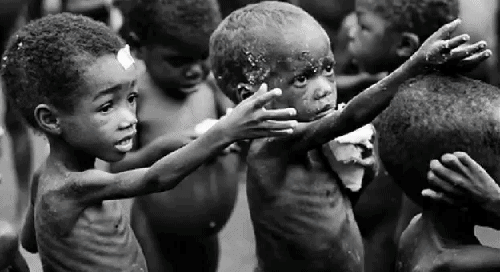
Ans.In China’s famine of 1958-61, nearly three crore people died. In those days India’s economic condition was not much better than China. Yet India did not have a famine of the kind China had. The reason was the difference in the economic policies of the two countries. Democratic government in India responded to the food shortage in a way that Chinese government did not. If China too had had multi-party elections, an opposition party and a press free to criticise the government, so many people would not have died in the famine.

Fig. Children affected in famine

Q5. ‘Democracy is based on consultation and discussion.’ Explain.
Ans. Consultation and discussion help democracy prosper. A democratic decision always involves many persons, discussions and meetings. When a number of people put their heads together, they are able to point out possible mistakes in any decision. This reduces the chances of rash or irresponsible decisions. Thus democracy improves the quality of decision-making.


Q6. Why is it not possible for the people to rule directly but through elected representatives?
Ans. The people cannot rule directly but only through their elected representatives because, firstly, modern democracies involve such a large number of people that it is physically impossible for them to sit together and take a collective decision. Secondly, even if they could, the citizens do not have the time, the desire or the skill to take part in all the decisions.


Q7. Is it possible for any country to become a perfect democracy? Give reasons.
Ans. No country is a perfect democracy as every democracy has to realize the ideals of democratic decision-making. This cannot be achieved once and for all. This requires a constant effort to save and strengthen democratic forms of decision-making. What we do as citizens can make a difference to making our country more or less democratic.


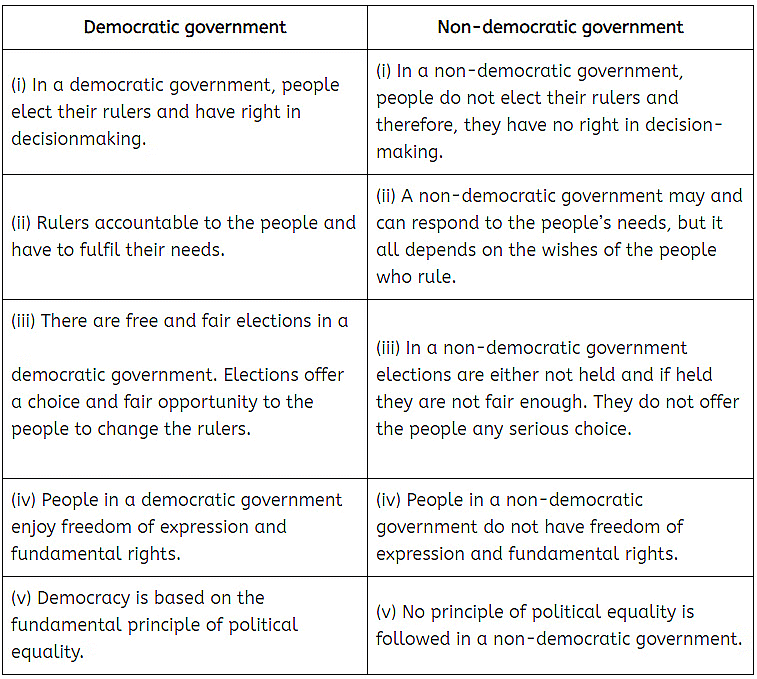
Q8. Explain any three differences between democratic country and non-democratic country?
Ans. 

Q9. Why is Democracy considered the best form of government? Give three reasons.
Ans. Democracy is a more accountable form of government.

(i) It improves the quality of decision-making
(ii) It enhances the dignity of citizens.
(iii)It allows us to correct its own mistakes.


Q10. What is the role of citizen in promoting democracy?
Ans. Every citizen should be able to play equal role in decision-making. For this a citizen not only needs an equal right to vote but also needs to have equal information, basic education, equal resources.

Q11. Is China a democratic country or not? Give two arguments in favor of your answer.
Ans. China is not a democratic country.
(i) Only those who are members of the Chinese Communist Party or eight smaller parties allied to it are allowed to contest elections;
(ii) Before contesting elections a candidate needs the approval of the Chinese Communist Party.

Q12. Explain any three features of democracy.
Ans. According to a Democracy—
(i) Rulers elected by the people take all the major decisions.
(ii) Elections offer a choice and fair opportunity to the people to change the current rulers.
(ii) This choice and opportunity is available to all the people on an equal basis.


Q13. Why is Zimbabwe not considered a democratic country?
Ans. It is ruled by ZANU-PF, the party that led the freedom struggle. Its leader, Robert Mugabe has been ruling the country since independence. Elections are held regularly but always won by the ZANU-PF. President Mugabe uses unfair means in the elections. He has changed the constitution several times to increase the power of the president. Radio and TV are controlled by the government.


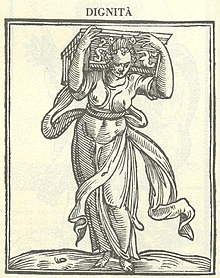
Q14. How does democracy in a country enhance the diginity of an individual? State three points.
Ans.Fig. Statue of dignity(i) Democracy is based on the principal of political equality on recognising that the poorest and the least educated has the same status as the rich and the educated.
(ii) People are not subjects of a ruler they are the rulers themselves.
(iii) Even when they make mistakes, they are responsible for their conduct.


Q15. ‘‘Elections in China do not represent people verdict.’’ Explain.
Ans. In China the elections do not offer the people any serious choice. They have to choose the ruling party and the candidates approved by it. Can it be called a choice? There is only are political party and people have to vote for its candidates.


Q16. ‘‘Democracy allows people to correct their own mistakes’’. Support the given statement with three points.
Ans. The advantage in a democracy is that mistakes made by a government cannot be hidden for long. There is a space for public discussion on these mistakes and there is room for correction. Either the rulers have to change their decisions or they can be changed.


Q17. Explain any three major political changes that took place recently in India’s neighbourhood?
Ans.
(i) Pakistan–General Musharaff led a military coup.
(ii) Nepal–In 2005 the new king dismissed the elected government.
(iii) Iraq–Sadaam Hussain’s regime was overthrown.


Q18. What does ‘one person, one vote, one value’ mean? Name the countries who deny the equal right to vote.
Ans: The principle of one person, one vote, one value is rooted in the concept of universal adult franchise. This means that every adult citizen, regardless of gender, race, religion, or socioeconomic status, has the right to vote and participate in the democratic process.

However, some countries deny equal voting rights:

  • Saudi Arabia: Women were not allowed to vote until 2015.
  • Estonia: Citizenship rules disadvantage the Russian minority, making it hard for them to obtain voting rights.
  • Fiji: The electoral system gives more value to the votes of indigenous Fijians compared to Indian-Fijians.