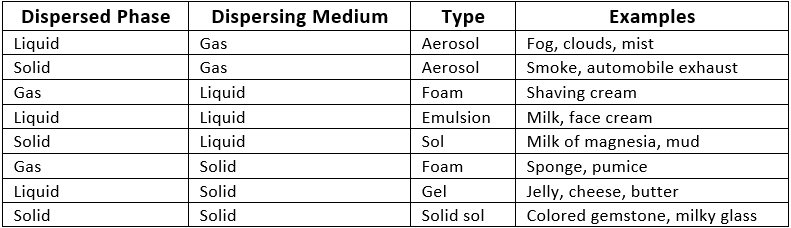
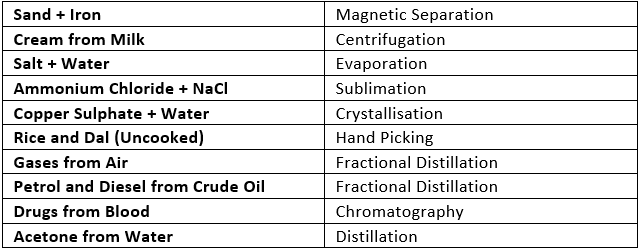
Q1: When the work is said to be done? Ans: When a force acts on an object and moves it in the same direction that of force then work is said to be done.
Q2: What will be the expression for the work done when a force acts on an object in the direction of its motion. Ans: Work done = Force × Displacement If W is the work done, F is the force applied on object and d is the displacement, then the expression of work done will be W = F × d
Q3: Explain 1 joule of work done. Ans: When a force of 1 N (Newton) is applied on an object and that object displaces upto a distance of 1 m (meter) in the same direction of its displacement, then 1 joule (J) of work is done on the object.
Q4: How much work is done in ploughing a 15 m long field when a pair of bullocks applies a force of 140 N on the plough? Ans: Since Work done (W) = Force (F) × Displacement (d) Hence, Work done in ploughing (W) = 140 N × 15 m = 2100 J
Q5: The force acting on the object is 7 N, and the displacement of the object occurs in the direction of the force is 8 m. Suppose that force acts on the object through displacement, then how much work was done in this case? Ans: As we know, Work done (W) = Force (F) × Displacement (d) Thus, Work done in the given case (W) = 7 N × 8 m = 56 J
Q6: Define kinetic energy of an object. Ans: The kinetic energy of an object is a kind of mechanical energy that exists in the object due to its state of motion (movement).
Q7: Write down the kinetic energy expression of an object. Ans: If m is the mass of an moving object and v is its velocity, then the expression of its kinetic energy (KE) will be K.E = 1/2mv2
Q8: Define power. Ans: The rate by which work is done refers to power. It is expressed by P. Power = Work done/Time P = W/t
Q9: What is 1 watt of power? Ans: When an object is doing work at the rate of 1 J/s, then the power of that body or object is 1 watt (where watt is the unit of power).
Q10: An object is thrown at an angle to the ground, moves along a curve and falls back to the ground. The start and end points of the object path are on the same horizontal line. How much work is done by the gravity on that object? Ans: There must be a displacement to calculate the work, but since the vertical displacement in this case is zero (because the start and end points are on the same horizontal line), the work done by gravity is zero.
Q11: How does the state of energy get changed when a battery lights up a bulb? Ans: The chemical energy of the battery is converted into heat and light energy of the bulb in the given case.
Q12: Calculate the work done by the force that changes the velocity of a moving body from 5 ms-1 to 2 ms-1. The body has a mass of 20 kg. Ans: Since work done by force = Change in the kinetic energy of the moving body Therefore, Work done by force =
= 1/2 x 20 ( 5 2– 22) = 10 x (25-4) = 10 x 21 = 210 J
Q13: An object having 10 kg weight is moved from point A to point B on the table. If the distance between A and B is horizontal, what work does gravity do to the object? Give the reason for the answer. Ans: Since the work done by gravity on the object depends on the change in the vertical height of the object, the vertical height of the object will not change. Because the connection level of A and B is at the same height, the work done is zero.
Q14: The potential energy of an object decreases gradually in a free fall. How does this violate the law of conservation of energy? Ans: This does not violate the law of conservation of energy, because the potential energy of an object in free fall gradually decreases with gradual changes until the kinetic energy of the object maintains the state of free fall, that is, the total energy of the object remains conserved.
Q15: What energy conversion occurs when riding a bicycle? Ans: Our muscle energy is converted into mechanical energy while riding a bicycle.
Q16: Does energy transfer occur when you push a huge rock with all your strength without moving it? Where did the energy you applied go? Ans: As long as you push a big rock with all your strength and do not move it, energy transfer will not occur, because cell energy is only used for muscle contraction and relaxation, and also for releasing heat (sweating).
Q17:A household uses 250 units of energy in a month. How much energy is used by that house in joules? Ans: Energy consumption by a house = 250 kWh Since, 1 kWh = 3.6 × 10⁶ J hence, 250kWh= 250 × 3.6 × 106 = 9 × 10⁸ J
Q18: The output power of the electric heater is 1500 watts. How much energy does it consume in 10 hours? Ans: Power of electric heater (p) = 1500W = 1.5kW Energy = Power × Time = 1.5kW × 10 hours = 15 kWh
Q19: An object of mass m moves at a constant speed v. How much work does the subject need to do to make it stable? Ans: For an object to be stationary, the work done must be equal to the kinetic energy of the moving object. The kinetic energy of any object is equal to K.E=1/2mv2, where m is the mass of the body and v is its velocity.
Q20: Sony said that even if different forces act on the object, the acceleration of the object can be zero. Do you agree with her, if yes, why? Ans: Yes, we agree with Soni, because the displacement of an object becomes zero when many balancing forces act on that object.
Q21: Calculate the energy (in kilowatt hours) consumed by four 500 W devices in 10 hours. Ans: Since, Energy = Power × Time Hence, Energy consumed by four 500 W devices in 10 hours = 4 × 500 × 10 = 20000 Wh = 20 kWh
Q22: Free-falling objects will eventually stop when they hit the ground. What will happen to their kinetic energy? Ans: The object will eventually stop after it hits the ground in free fall, because its kinetic energy will be transferred to the ground when it hits the ground.
Q23: A large force acting on an object, and the displacement of that object is zero, what will be the work done? Ans: The work done on the body is defined as the force exerted on the body that causes a net displacement of the body. Work done = Force x Displacement If the force does not cause any displacement, the work done to the object is zero.
Q24: Write some differences between kinetic and potential energy. Ans: Differences between kinetic and potential energy:
Q25: Describe the law of conservation of energy. Ans: The law of conservation of energy says that:
Energy cannot be produced or destroyed. It can only be transformed from one form to another.
The energy of the universe is constant.
Q26: A person weighing 50 kg climbs the stairs with a height difference of 5 meters, within 4 seconds. (a) What kind of work is done by that person? (b) What is the average power of that person? Ans: Mass of the man = 50 Kg Distance moved by that man = 5 meter Time taken to cover the given distance = 4s (a) Work Done = Force Acceleration In this case, the increase in Potential energy = Work done =Mgh =50×10×5 =2500 J (b) Power = Work Done /Time Taken =2500/ 4=625 Watts
Q27: Write differences between power and energy. Ans: Differences between power and energy are given below:
Q28: Write down the expressions for (a) Potential energy of an object (b) Kinetic energy of an object Ans: (a) The expression for Potential energy of an object = P.E = mgh Where, m = Mass of Body g = Acceleration due to gravity h = Height (b) The expression for Kinetic energy of an object = 1/2mv2 Where, m = Mass of body v = Velocity of body
Q29: If a force of 12.5 N is applied to complete a work of 100 J, what is the distance covered by the force? Ans: W = Work = 100 J F = Force = 12.5 N And S is the distance moved or displacement Since, Work done = Force Displacement W = FS 100 =12.5 × S 100/12.5 = S 8 m=S (Displacement)
Q30: A car weighing 1800 kg is moving at a speed of 30 m/s when braking. If the average braking force is 6000 N, it is determined that the vehicle has traveled to a standstill distance. What is the distance at which it becomes stable? Ans: M = Mass of the car = 1800 Kg V = Velocity of the car = 30 m/s F = Force applied while braking = 6000 N KE=1/2mv2 KE =121800×900 KE=810000 J KE of car = Work done by the car = Force Displacement 810000=6000× Displacement 810000/6000= Displacement 135 m= Displacement
Q31: What do you understand about average power? Ans: The agent may not always be able to complete the same amount of work in a given time period. In other words, the power of this work will change over time. Therefore, in this case, we can take the average power of the work done by the body per unit time (that is, the total energy consumed divided by the total time).
Q32: Take a look at the steps below. Based on your understanding of the word “work”, prove whether the work will proceed.
Suma swims in the pond.
The donkey carries a heavy load.
The windmill draws water from the well.
Green plants perform photosynthesis.
The trains are pulled by engines.
Drying food grains in the sun.
Sailing boats are powered by wind.
Ans: The work is said to be done when a force acts on an object and moves in the direction of the force. According to this explanation, the following activities were taken in which work will be proceeded:
Suma swims in the pond.
The donkey carries a heavy load.
The windmill draws water from the well.
The trains are pulled by engines.
Sailing boats are powered by wind.
Q33: The law of conservation of energy is explained by discussing the energy changes that occur when we move the pendulum laterally and swing it. Why does the pendulum eventually stop? What happens to the energy and does it violate energy conservation law? Ans: Bob will eventually stop due to the friction created by the air and the rigid support that holds the thread in place. This does not violate the law of conservation of energy, because mechanical energy can be converted into another unusable form of energy for some useful work. This energy loss is called energy dissipation.
Q34: Get the expression of the potential energy of an object. Calculate PE for a body of 10 kg which is resting at a height of 10 m. Ans: The potential energy of an object with mass = m kg, at height above the ground =h m Gravitational force of attraction on that body = mgN To lift that body to B height at h m above the ground. Force applied to lift this body with a constant velocity =mgN Distance moved by the body after applying force = hm Work done in lifting the body from a to B distance = Force × Distance Energy cannot be destroyed, hence, this energy is stored as potential energy in the stone. m = 10Kg g = 10 m/s2 h = 10 m PE = mgh PE = mgh = 10 × 10 × 10 = 1000Joules
Q2: What is the S.I. unit of pressure? Ans: The S.I. unit of pressure = N/m2 = Pascal.
Q3: Define thrust. Ans: The net force exerted by a body in a particular direction is called thrust.
Q4: Define pressure. Ans: The force exerted per unit area is called pressure.
Q5: Why is it easier to swim in seawater than in river water? Ans: The density of seawater is more due to dissolved salts in it as compared to the density of river water. Hence the buoyant force exerted on the swimmer by the sea water is more which helps in floating and makes swimming easier.
Q6: Why a truck or a motorbike has much wider tyres? Ans: The pressure exerted by it can be distributed to more area, and avoid the wear and tear of tyres.
Q7: Why are knives sharp? Ans: To increase the pressure, area is reduced, As pressure ∝ 1/Area hence the pressure or force exerted on a body increases.
Q8: Why is the wall of dam reservoir thicker at the bottom? Ans: The pressure of water in dams at the bottom is more, to withstand this pressure the dams have wider walls.
Q9: Why do nails have pointed tips? Ans: The force exerted when acts on a smaller area, it exerts larger pressure. So the nails have pointed tips.
Q10: While swimming why do we feel light? Ans: The swimmer is exerted by an upward force by water, this phenomenon is called buoyancy and it makes the swimmer feel light.
Q11: Define density and give its unit. Ans: The density of a substance is defined as mass per unit volume. Its unit is kg/m3.
Q12: What is relative density? Ans: The relative density of a substance is the ratio of its density to that of water. Relative density = density of a substance/density of water
Short Answer Type Questions Q1: A ship made of iron does not sink but the iron rod sinks in water, why? Ans: The iron rod sinks due to high density and less buoyant force exerted by the water on it, but in case of ship the surface area is increased, the upthrust experienced by the body is greater. So it floats on water.
Q2: Camels can walk easily on desert sand but we are not comfortable walking on the sand. State reason. Ans: Camels feet are broad and the larger area of the feet reduces the force/ pressure exerted by the body on the sand. But when we have to walk on the same sand, we sink because the pressure exerted by our body is not distributed but is directional.
Q3: What is lactometer and hydrometer? Ans: Lactometer is a device used to find the purity of a given sample of milk. Hydrometer is a device used to find the density of liquids.
Q4: The relative density of silver is 10.8. What does this mean? Ans: It means that the density of silver is 10.8 times more than that of water.
Q5: The relative density of gold is 19.3. The density of water is 103 kg/m3? What is the density of gold in S.I. unit? Ans: Relative density of gold = 19.3 Relative density of gold = Density of gold/Density of water ∴ Density of gold = Relative density of gold x Density of water = 19.3 x 10³ Kg/m3 =19300 Kg/m3
Q6: State Archimedes’ principle. Ans: Archimedes’ principle—When a body is immersed fully or partially in a fluid, it experiences an upward force that is equal to the weight of the fluid displaced by it. It is used in designing of ships and submarines.
Q7: Two cork pieces of same size and mass are dipped in two beakers containing water and oil. One cork floats on water but another sinks in oil. Why? Ans The cork floats on water because the density of cork is less than the density of water, and another cork sinks in the oil because the density of cork is more than the oil.
Q8: What are fluids? Why is Archimedes’ principle applicable only for fluids? Give the application of Archimedes’ principle. Ans: Fluids are the substances which can flow e.g., gases and liquids are fluids. Archimedes’ principle is based on the upward force exerted by fluids on any object immersed in the fluid. Hence it is applicable only for fluids. Applications of Archimedes’ principle: 1. It is used in designing ships and submarines. 2. It is used in designing a lactometer, used to determine the purity of milk. 3. To make hydrometers, used to determine the density of liquids.
Long Answer Type Questions
Q1: With the help of an activity prove that the force acting on a smaller area exerts a larger pressure. Ans: Consider a block of wood kept on a tabletop. The mass of the wooden block is 5 kg. Its dimension is 40 cm x 20 cm x 10 cm. Now, we have to find the pressure exerted by the wooden block on the tabletop by keeping it vertically and horizontally. The mass of the wooden block = 5 kg The weight of the wooden block applies a thrust on the tabletop ∴ Thrust = F = m * g = 5 kg * 9.8 m/s2 = 49 N ( case a ) — when the wooden box is kept vertically with sides 20 cm * 10 cm. Area of a side = length * breadth = 20 cm * 10 cm = 200 cm2 = 0.02 m2 (case b) — When the block is kept horizontally with side 40 cm * 20 cm Area = length * breadth = 40 cm * 20 cm = 800 cm2 = 0.08 m2 ∴ The pressure exerted by the box in case (a) is more as compared to the pressure exerted in case (b).The area is reduced and the pressure exerted is more. This shows that pressure ∝ 1/area. Pressure will be larger if the area is reduced. Application: • Nails have pointed tips. • Knives have sharp edges. • Needles have pointed tips.
Also read: NCERT Solutions: Gravitation
Activity-Based Questions
Q1: • Take an empty plastic bottle. Close the mouth of the bottle with an airtight stopper. Put it in a bucket filled with water. You see that the bottle floats. • Push the bottle into the water. You feel an upward push. Try to push it further down. You will find it difficult to push deeper and deeper. This indicates that water exerts a force on the bottle in the upward direction. The upward force exerted by the water goes on increasing as the bottle is pushed deeper till it is completely immersed. • Now, release the bottle. It bounces back to the surface. • Does the force due to the gravitational attraction of the earth act on this bottle? If so, why doesn’t the bottle stay immersed in water after it is released? How can you immerse the bottle in water? Ans: Yes, the bottle is attracted downwards by the earth’s gravitational force. On pushing the bottle with force in the water it does not remain there but comes up because of the upward force exerted by water on the bottle. This upward force is called upthrust or buoyant force. When the upward force or buoyant force is greater than the downward force ‘g’ the bottle will float. But if downward force is greater than upward force, the bottle will sink. The upward force (buoyant force) acting on the bottle can be reduced by increasing the force on the bottle or by filling the bottle with sand, water, etc.
Q2:• Take a beaker filled with water. • Take an iron nail and place it on the surface of the water. • Observe what happens. Ans: The iron nail sinks as the density of nail is more and the downward force exerted on nail is more than the buoyant force.
Q3: • Take a beaker filled with water. • Take a piece of cork and an iron nail of equal mass. • Place them on the surface of the water. • Observe what happens. Ans: The iron nail sinks as the density of nail is more and the downward force exerted on nail is more than the buoyant force. The cork floats as the density of cork is less and the buoyant force exerted on it is more than the downward force.
Q4: • Take a piece of stone and tie it to one end of a rubber string or a spring balance. • Suspend the stone by holding the balance or the string as shown in figure (a). • Note the elongation of the string or the reading on the spring balance due to the weight of the stone. • Now, slowly dip the stone in the water in a container as shown in Fig. (b). • Observe what happens to the elongation of the string or the reading on the balance. Observations : • In Fig. (a) the elongation of the string is 6 cm. • In Fig. (b) when the stone is dipped in water the length of the string is reduced to 5 cm. • The length of the string in case (b) decreases due to the upward force exerted by water on the stone called buoyant force.
Value-Based Questions
Q 1: A milkman sold his milk in the city and always carried a lactometer with him. The customers trusted him and his business flourished. (a) What is a lactometer? (b) What is the principle of working of a lactometer? (c) What value of milkman is seen in this case? Ans:
(a) A lactometer is an instrument used to measure the purity of milk. It helps determine the specific gravity of milk, which can indicate whether it has been diluted with water or not.
(b) The principle of working of the lactometer is based on Archimedes’ Principle. The lactometer floats in milk, and the level at which it floats depends on the density or specific gravity of the milk. If the milk is pure, the lactometer will float at a certain level. If the milk is diluted with water, the specific gravity decreases, and the lactometer will float higher in the liquid.
(c) The value of the milkman reflected in this case is honesty and integrity. He uses the lactometer to ensure that the milk he sells is pure, earning the trust of his customers and helping his business grow.
Q 2: Reeta was wearing a high heel shoes for a beach party, her friend told her to wear flat shoes as she will be tired soon with high heels and would not feel comfortable, (a) Why would one feel tired with high-heeled shoes on the beach? (b) Give the unit of pressure. (c) What value of Reeta’s friend is seen in the above act? Ans:
(a) One would feel tired with high-heeled shoes on the beach because high heels concentrate the weight on a small area of the feet. On a soft surface like sand, the high heel does not distribute the body weight evenly, leading to more pressure on the feet. This makes it harder to walk and causes discomfort and fatigue.
(b) The unit of pressure is the Pascal (Pa). It is defined as one newton per square meter (N/m²).
(c) The value of Reeta’s friend reflected in this case is concern and care. Her friend is looking out for Reeta’s comfort and well-being by advising her to wear flat shoes that would be more suitable for walking on the beach, helping to avoid unnecessary discomfort.
Q 3: In the school fair, there was a game in which one need to find the heaviest ball without holding them in hand. Three balls were given and few disposable glasses were kept. Tarun saw his friend struggling to win the game but he was unable to find the heaviest ball. Tarun helped him by dipping the three balls one by one in the glasses full of water upto the brim and finally they won the game. (a) Why did Tarun told his friend to dip the balls one by one in completely filled glass of water? (b) Name the principle used here. (c) What value of Tarun is reflected in this case? Ans:
(a) Tarun told his friend to dip the balls one by one in completely filled glasses of water because the heaviest ball would displace more water due to its greater volume. The one that displaces the most water is the heaviest.
(b) The principle used here is Archimedes’ Principle, which states that the upward buoyant force exerted on a body submerged in a fluid is equal to the weight of the fluid displaced by the body.
(c) The value of Tarun reflected in this case is helpfulness and problem-solving ability. He used his knowledge to assist his friend and help them win the game.
Ques 1: Explain Newton’s second law of motion and with the-help of an example show how it is used in sports.
Ans: Newton’s second law of motion: The rate of change of momentum of an object is proportional to the applied unbalanced force in the direction of the force.
Let us assume:
Object of mass m, is moving along a straight line with an initial velocity ‘u’, It is uniformly accelerated to velocity v in time ‘t by the application of force,
F throughout the time ‘t’.
Initial momentum of the object = p1 = mu
Final momentum of the object = p2 = mv
The change in momentum ∝ p2-p1
∝ mv-mu
= m (v-u)
The rate of change of momentum ∝
∴ Applied force F ∝
K = constant of proportionality
F = kg m/s2 = Newton
Use of second law of motion in sports :
In cricket field, the fielder gradually pulls his hands backward while catching a ball. The fielder catches the ball and gives swing to his hand to increase the time during which the high velocity of the moving ball decreases to zero.The acceleration of the ball is decreased and therefore the impact of catching the fast moving balls reduced.
If not done so, then the fast moving ball will exert large force and may hurt the fielder.
Ques 2: State all 3 Newton’s law of motion. Explain inertia and momentum.
Ans: Newton’s I law of motion: An object remains in a state of rest or of uniform motion in a straight line unless acted upon by an external unbalanced force.
Newton’s II law of motion: The rate of change of momentum of an object is proportional to the applied unbalanced force in the direction of the-force.
Newton’s III law of motion: To every action, there is an equal and opposite reaction and they act on two different bodies.
Inertia: The natural tendency of an object to resist a change in their state of rest or of uniform motion is called inertia.
Momentum: The momentum of an object is the product of its mass and velocity and has the same direction as that of the velocity. Its S.I. unit is kgm/s. p = m x v
Ques 3: Define force. Give its unit and define it. What are different types forces?
Ans:Force: It is a push or pull on an object that produces acceleration in the body on which it acts.
A force can do 3 things on a body
(a) It can change the speed of a body.
(b) It can change the direction of motion of a body.
(c) It can change the shape of the body.
The S.I. unit of force is Newton.
Newton: A force of one Newton produces an acceleration of 1 m/s2 on an object of mass 1 kg.
1N = 1kg m/s2
Types of forces:
(i) Balanced force: When the forces acting on a body from the opposite direction do not change the state of rest or of motion of an object, such forces are called balanced forces.
(ii)Unbalanced force: When two opposite forces acting on a body move a body in the direction of the greater force or change the state of rest, such forces are called as unbalanced force.
(ii)Frictional force: The force that always opposes the motion of object is called force of friction.
Ques 4: What is inertia? Explain different types of inertia. Give 3 examples in daily life which shows inertia.
Ans: Inertia: The natural tendency of an object to resist change in their state of rest or of motion is called inertia.
The mass of an object is a measure of its inertia. Its S.I. unit is kg.
Types of inertia:
Inertia of rest: The object at rest will continue to remain at rest unless acted upon by an external unbalanced force.
Inertia of motion: The object in the state of uniform motion will continue to remain in motion with same speed and direction unless it is acted upon by an external unbalanced force. .
Three examples of inertia in daily life are:
1. When we are travelling in a vehicle and sudden brakes are .applied we tend to fall forward.
2. When we shake the branch of a tree vigorously, leaves fall down.
3. If we want to remove the dust from carpet we beat the carpet so that dust fall down.
Activity-based Questions
Also read: Previous Year Questions Answers – Force and Laws of Motion
Ques 1: • Make a pile of similar carom coins on a table, as shown in the figure.
• Attempt a sharp horizontal hit at the bottom of the pile using another carom coin or striker. If the hit is strong enough the bottom coin moves out quickly. Once the lowest coin is removed, the inertia of the other coins makes them ‘fall’ vertically on the table.
Inertia: It is the tendency of a body to maintain its state of rest or of motion.
Ques 2: • Set a five-rupees coin on a stiff card covering an empty glass tumbler standing on a table as shown in the figure.
• Give the card a sharp horizontal flick with a finger. If we do it fast then the card shoots away, allowing the coin to fall vertically into the glass tumbler due to its inertia.
• The inertia of the coin tries to maintain its state of rest even when the card flows off.
Ans: The force applied on the card due to flicking changes the inertia of the card but the coin resist a change and stay at the rest i.e. inertia of rest and due to gravity falls down in the tumbler.
Ques 3: Place a water-filled tumbler on a tray.
• Hold the tray and turn around as fast as you can.
• We observe that the water spills. Why?
Ans: The water-filled in tumbler and tray are at rest. On moving/turning around the tray at faster speed the water spills because the tray and the tumbler comes into motion while the water in the tumbler remain at inertia of rest.
Ques 4:• Request two children to stand on two separate carts as shown on the next page.
• Give them a bag full of sand or some other heavy object. Ask them to play a game of catch with the bag.
• Does each of them receive an instantaneous reaction as a result of throwing the sand bag (action)?
• You can paint a white line on cartwheels to observe the motion of the two carts when the children throw the bag towards each other.
Ans: Yes, in this case each of them receives an instantaneous reaction as a result of throwing the sand bag.
This activity explain Newton’s III law of motion i.e., the force is exerted forward in throwing the bag full of sand and the person who is throwing it gets pushed backward.
Ques 5: • Take a big rubber balloon and inflate it fully. Tie its neck using a thread. Also using adhesive tape, fix a straw on the surface of this balloon. • Pass a thread through the straw and hold one end of the thread in your hand or fix it on the wall. • Ask your friend to hold the other end of the thread or fix it on a wall at some distance. The arrangement is shown in the figure below. • Now remove the thread tied on the neck of balloon. Let the air escape from the mouth of the balloon. • Observe the direction in which the straw moves.Observation: When the air escapes out from the balloon the straw moves in the opposite direction of the air moved out of the balloon. This activity explains the law of conservation of momentum and Newton’s III law of motion. Initial momentum = Final momentum
Ques 6: • Take a test tube of good quality glass material and put a small amount of water in it. Place a stop cork at the mouth of it. • Now suspend the test tube horizontally by two strings or wires as shown in the figure on next page. • Heat the test tube with a burner until water vaporises and the cork blows out. • Observe that the test tube recoils in the direction opposite to the direction of the cork.
Observation: The cork is pushed out in forward direction by the hot steam. The test tube is pushed in the backward direction. It explain Newton’s III law of motion and conservation of momentum.
Value-based Questions
Ques 1: Class V students were playing cricket with the cork hall in the school campus. Charu a senior student told them about the accidents that can occur due to cork ball in the campus and also advised them to bring soft cosco ball to play the game.
(a) Why it was safe to play with soft ball and not with hard cork ball?
(b) A player pulls his hands backwards after holding the ball shot at high speed. Why?
(c) What value of Charu is seen in this act?
Ans: (a) The soft ball will have less inertia as compared to the heavy ball and it would not hurt the players.
(b) By pulling the hand backwards it reduces the force exerted by the ball on hands.
(c) Charu showed the value of being responsible and helpful by nature.
Ques 2: Saksham saw his karate expert friend breaking a slate. He tried to break the slate but Saksham’s friend stopped him from doing so and told him that it would hurt, one needs lot of practice in doing so.
(a) How can a karate expert break the slate without any injury to his hand?
(b) What is Newton’s third law of motion?
(c) What value of Saksham’s friend, is seen in the above case?
Ans: (a) A karate player applies the blow with large velocity in a very short interval of time on the slate, therefore large force is exerted on the slate and it breaks.
(b) To every action there is an equal and opposite reaction, both act on different bodies.
Saksham’s friend showed the value of being responsible and caring friend.
Ques 1: Define force. Ans: It is a push or pull on an object that produces acceleration in the body on which it acts.
Ques 2: What is the S.I. unit of force? Ans: The S.I. unit of force is Newton.
Ques 3: Define one Newton. Ans: A force of one Newton produces an acceleration of 1 m/s2 on an object of mass 1 kg. 1 N = 1 kg m/s2
Ques 4: What is balanced force? Ans: When forces acting on a body from the opposite direction do not change the state of rest or of motion of an object, such forces are called balanced forces.
Ques 5: What is frictional force? Ans: The force that always opposes the motion of an object is called the force of friction.
Ques 6: What is inertia? Ans: The natural tendency of an object to resist a change in its state of rest or of uniform motion is called inertia.
Ques 7: State Newton’s first law of motion. Ans: An object remains in a state of rest or of uniform motion in a straight line unless acted upon by an external unbalanced force.
Ques 8: State Newton’s second law of motion. Ans: The rate of change of momentum of an object is proportional to the applied unbalanced force in the direction of the force.
Ques 9: What is momentum? Ans: The momentum of an object is the product of its mass and velocity and has the same direction as that of the velocity. The S.I. unit is kg m/s. (p = mv)
Ques 10: State Newton’s III law of motion. Ans: For every action, there is an equal and opposite reaction, and they act on two different bodies.
Ques 11: Which will have more inertia, a body of mass of 10 kg or a body of mass of 20 kg? Ans: A body of mass 20 kg will have more inertia.
Ques 12: Name the factor on which the inertia of the body depends. Ans: The inertia of a body depends upon the mass of the body.
Ques 13: Name two factors that determine the momentum of a body. Ans: Two factors on which the momentum of a body depends are mass and velocity. Momentum is directly proportional to the mass and velocity of the body.
Ques 14: What decides the rate of change of momentum of an object? Ans: The rate of change of momentum of an object is proportional to the applied unbalanced force in the direction of force.
Ques 15: The diagram shows a moving truck. Forces A, B, C and D are acting on the truck. Name the type of forces acting on a truck. Ans: The forces A, B, C and D acting on the truck are: A → driving force B → reacting force C → frictional force D → weight/gravitational force
Short Answer Type Questions
Ques 1: State the difference between balanced and unbalanced force. Ans:
Balanced force
Unbalanced force
Forces acting on a body from opposite directions are the same.
Forces acting on a body from two opposite directions are not the same.
It does not change the state of rest or motion of an object.
It does change the state of rest or of motion of an object.
Ques 2: What change will force bring in a body? Ans: Force can bring the following changes in the body: It can change the speed of a body. It can change the direction of motion of a body, It can change the shape of the body.
Ques 3: When a motorcar makes a sharp turn at a high speed, we tend to get thrown to one side. Explain why? Ans: It is due to the law of inertia. When we are sitting in a car moving in a straight line, we tend to continue in our straight-line motion. But when the engine applies an unbalanced force to change the direction of motion of the motorcar. We slip to one side of the seat due to the inertia of our bodies.
Ques 4: Explain why it is dangerous to jump out of a moving bus. Ans: While moving in a bus, our body is in motion. On jumping out of a moving bus, our feet touched the ground and came to rest. The upper part of our body stays in motion and moves forward due to the inertia of motion, and hence, we can fall in the forward direction. Hence, to avoid this, we need to run forward in the direction of the bus.
Ques 5: Why do fielders pull their hands gradually with the moving ball while holding a catch? Ans: While catching a fast-moving cricket ball, a fielder on the ground gradually pulls his hands backward with the moving ball. This is done so that the fielder increases the time during which the high velocity of the moving ball decreases to zero. Thus, the acceleration of the ball is decreased, and therefore, the impact of catching the fast-moving ball is reduced.
Ques 6: In a high jump athletic event, why are athletes made to fall either on a cushioned bed or on a sand bed? Ans: In a high jump athletic event, athletes are made to fall either on a cushioned bed or on a sand bed so as to increase the time of the athlete’s fall to stop after making the jump. This decreases the rate of change of momentum and, hence, the force.
Ques 7: How does a karate player break a slab of ice with a single blow? Ans: A karate player applied the blow with large velocity in a very short interval of time on the ice slab, which therefore exerted a large amount of force on it and suddenly broke the ice slab.
Ques 8. Why are roads on mountains inclined inwards at turns? Ans: A vehicle moving on mountains is in the inertia of motion. At a sudden turn, there is a tendency for the vehicle to fall off the road due to a sudden change in the line of motion; hence, the roads are inclined inwards so that the vehicle does not fall down the mountain.
Ques 9: For an athletic race, why do athletes have a special posture with their right foot resting on a solid supporter? Ans: Athletes have to run the heats, and they rest their feet on solid supports before the start so that during the start of the race, the athlete pushes the support with a lot of force and this support gives him equal and opposite push to start the race and get a good start to compete for the race.
Ques 10: Why do you think it is necessary to fasten your seat belts while traveling in your vehicle? Or How are safety belts helpful in preventing any accidents? Ans: While we are traveling in a moving car, our body remains in a state of rest with respect to the seat. But when the driver applies sudden breaks or stops the car, our body tends to continue in the same state of motion because of its inertia. Therefore, this sudden break may cause injury to us by impact or collision. Hence, the safety belt exerts a force on our body to make the forward motion slower.
Ques 11: When you kick a football, it flies away, but when you kick a stone, you get hu why? Ans: This is because stone is heavier than football, and heavier objects offer larger inertia. When we kick a football, its mass is less, and inertia is also less, so the force applied by our kick acts on it, and hence, it shows larger displacement, but in the case of stone, it has a larger mass and offers larger inertia. When we kick (action) the stone, it exerts an equal and opposite force (reaction), and hence it hurts the foot.
Ques 12: If a person jumps from a height on a concrete surface, he gets hurt. Explain. Ans: When a person jumps from a height, he is in a state of inertia of motion. When he suddenly touches the ground, he comes to rest in a very short time, and hence, the force exerted on his body by the hard concrete surface is very high, and the person gets hurt.
Ques 13: What is the relation between Newton’s three laws of motion? Ans: Newton’s first law explains the unbalanced force required to bring change in the position of the body. The second law states/explains the amount of force required to produce a given acceleration. And Newton’s third law explains how these forces acting on a body are interrelated.
Ques 14: Give any three examples in daily life that are based on Newton’s third law of motion. Ans: Three examples based on Newton’s third law are : (i) Swimming: We push the water backward to move forward. action – water is pushed behind reaction – water pushes the swimmer ahead (ii) Firing gun: A bullet is fired from a gun and the gun recoils. action – gun exerts a force on the bullet reaction – bullet exerts an equal and opposite force on the gun (ii) Launching of rocket: action – hot gases from the rocket are released. Reaction – the gases exert an upward push on the rocket
Ques 15: A bullet of m.ass 20 g is horizontally fired with a velocity of 150 m/s from a pistol of mass 2 kg. What is the recoil velocity of the pistol? Ans: Total momentum of the pistol and bullet before firing, when the gun is at rest = m1u1 + m2u2 = (0.02 * 0) + (2 * 0) 0 kg m/s Total momentum of the pistol and bullet after it is fired = m1v1 + m2v2 = (0.02 kg * 150) + (2 kg * v) = 3+ 2v ∴ Total momentum after firing = Total momentum before firing 3 + 2v ∴ v = -3/2 = -1.5 m/s
Ques 1: The phenomenon of motion was placed on a sound scientific footing by two scientists. Write their names. Ans: Galileo Galilei and Isaac Newton. Galileo laid the experimental foundations of kinematics and Newton formulated the laws of motion that provided a systematic explanation of how and why bodies move. Ques 2: Are rest and motion absolute or relative terms? Ans: They are relative terms. Whether an object is at rest or in motion depends on the chosen reference point or frame of reference. Ques 3: Suppose a ball is thrown vertically upwards from a position P above the ground. It rises to the highest point Q and returns to the same point P. What is the net displacement and distance travelled by the ball? Ans: Displacement is zero because the initial and final positions are the same. Distance travelled is twice the separation between P and Q, since the ball goes from P to Q and then back from Q to P. Ques 4: Which speed is greater: 30 m/s or 30 km/h? Ans: 30 m/s. (30 km/h = 30 × 1000/3600 m/s = 8.33 m/s, which is much less than 30 m/s.) Ques 5: What do you mean by 2 m/s2? Ans: It means the velocity of the body increases by 2 m/s every second. If the acceleration is negative, the speed would decrease by 2 m/s every second. Ques 6: Can uniform linear motion be accelerated? Ans: No. Uniform linear motion means constant velocity, so the acceleration is zero. Any non-zero acceleration changes the velocity and therefore the motion is not uniform. Ques 7: Define one radian. Ans: One radian is the angle subtended at the centre of a circle by an arc whose length is equal to the radius of the circle. (One radian ≈ 57.3°.) Ques 8: What is the relation between linear velocity and angular velocity Ans: Linear velocity = Angular velocity × Radius of the circular path. (v = ω × r)
Short Answer Questions
Ques 1: Give an example of a body that may appear to be moving for one person and stationary for the other.
Ans: Passengers in a moving bus see trees, buildings and people on the roadside appearing to move backward, while a person standing on the roadside sees the bus and its passengers moving forward. At the same time, each passenger may see fellow passengers sitting beside them as stationary. This illustrates that motion is relative and depends on the observer’s reference frame.
Ques 2: How can we describe the location of an object?
Ans: To describe the position of an object we specify a reference point called the origin and, when needed, a reference direction. For example, saying a library is 2 km north of the railway station locates the library with respect to the railway station, which acts as the reference point.
Ques 3: What do you mean by average speed? What are its units?
Ans: Average speed is the total distance travelled divided by the total time taken. If a body covers total distance D in time t, average speed = D/t. The SI unit is metre per second (m s-1).
Ques 4: What is the difference between uniform velocity and non-uniform velocity?
Ans:Uniform velocity: An object has uniform velocity when it covers equal distances in equal intervals of time in a specified direction; its speed and direction are constant. Example: a car moving at 40 km h-1 towards west with no change in speed or direction.
Non-uniform velocity: An object has non-uniform velocity if it covers unequal distances in equal time intervals or if its direction changes. Example: the blades of a revolving fan move at constant speed but their velocity is non-uniform because the direction keeps changing.
Ques 5: Differentiate between distance and displacement.
Ans:
Ques 6: What are the uses of a distance-time graph? Ans: The uses of a distance-time graph are: (a) It shows the position of the body at any instant of time. (b) From the graph we can read the distance covered by the body during a chosen time interval. (c) The slope of the distance-time graph gives the speed of the body at any instant, so the graph gives information about how the speed changes with time.
Long Answer Questions
Ques 1: With the help of a graph, derive the relation v = u + at. Ans:
Consider the velocity-time graph of an object that moves under uniform acceleration as shown in the figure (u≠0).
From this graph, we can see that initial velocity of the object (at point D) is u and then it increases to v (at point B) in time t. The velocity changes at uniform rate a. As shown in the figure, the lines BC and BE are drawn from point B on the time and the velocity axes respectively. The initial velocity is represented by OD. The final velocity is represented by BE. The time interval t is represented by OE. BA = BE – EA, represents the change in velocity in time interval t. If we draw DA parallel to OE, we observe that BE = BA + DE = BA + OD Substituting, BE with v and OD with u, we get v = BA + u or, BA = v – u — (i) Thus, from the given velocity-time graph, the acceleration of the object is given by Change in velocity a = (Change in velocity)/(Time Taken)= BA/DA= BA/OE Substituting OC with t, we get a = BA/t ⇒ BA = at — (ii2) From equations (1) and (2), we have v-u = at or v =u + at
Ques 2: Obtain a relation for the distance travelled by an object moving with a uniform acceleration in the interval between 4th and 5th seconds. Ans: Use the equation of motion for distance from rest with initial velocity u and constant acceleration a: s(t) = u × t + 1/2 × a × t2. Distance travelled in first 5 s, s(5) = u × 5 + 1/2 × a × 52 = 5u + 25/2 a. Distance travelled in first 4 s, s(4) = u × 4 + 1/2 × a × 42 = 4u + 8a. Distance covered during the interval between 4th and 5th seconds = s(5) – s(4) = (5u + 25/2 a) – (4u + 8a) = u + (25/2 – 16/2) a = u + 9/2 a. Thus the distance travelled in the fifth second is u + 9/2 a (metres, if u in m s-1 and a in m s-2).
Q1. Name the tissues responsible for the movement of the body.
Ans: Muscle tissue and nervous tissue are the primary tissues responsible for body movement.
Muscle tissueis divided into three types:
Striated muscle (voluntary muscles that we control, like those in our limbs)
Smooth muscle (involuntary muscles found in organs)
Cardiac muscle (the muscle of the heart)
Nervous tissue consists of neurons that transmit signals rapidly throughout the body.
Neurons allow us to control muscle movement by sending nerve impulses.
The combination of muscle and nervous tissue is essential for coordinated movement and response to stimuli.
Q2. What does a neuron look like?
Ans: A neuron is the basic unit of nervous tissue. It has a unique structure comprising:
Cell body: Contains the nucleus and cytoplasm.
Axon: A long, thread-like part that transmits signals.
Dendrites: Short, branched parts that receive signals from other neurons.
Neurons can be quite long, with some measuring up to a metre. They are bundled together by connective tissue to form nerves. The signals that travel along these fibres are known as nerve impulses, which enable muscle movement and rapid responses to stimuli.
Q3. Name the types of simple tissues.
Ans: The types of simple tissues in plants are:
Parenchyma
Collenchyma
Sclerenchyma
Q4. Name the types of complex tissues.
Ans: Complex tissues in plants consist of more than one type of cell that work together to perform a specific function. The main types of complex tissues are:
Xylem – Responsible for transporting water and minerals from the roots to other parts of the plant.
Phloem – Transports food produced in the leaves to other areas of the plant.
Both xylem and phloem are part of the vascular bundle, which is essential for the plant’s nutrient and water transport system.
Q5. Where is apical meristem found?
Ans: Apical meristem is found at the growing tips of stems and roots. It plays a crucial role in:
Increasing the length of the stem.
Increasing the length of the root.
Additionally, the lateral meristem (cambium) is responsible for increasing the girth of stems and roots, while the intercalary meristem is located near the nodes in some plants.
Q6. Which tissue makes up the husk of coconut?
Ans: The husk of a coconut is primarily made up of sclerenchyma tissue.
This tissue has the following characteristics:
It consists of dead cells that provide strength.
The cells are long and narrow with thickened walls due to lignin.
These thick walls often leave no internal space within the cells.
Sclerenchyma is also found in stems, around vascular bundles, and in the hard coverings of seeds and nuts.
Overall, this tissue plays a crucial role in providing support to various plant parts.
Q7. What are the constituents of phloem?
Ans: The phloem is made up of several important cell types:
Sieve tubes: These are tubular cells with perforated walls that facilitate the transport of food.
Companion cells: These cells support sieve tubes and help in the transport process.
Phloem parenchyma: This type of cell stores food and assists in transport.
Phloem fibres: These provide structural support to the phloem.
All phloem cells, except for phloem fibres, are living cells, playing a crucial role in moving nutrients from the leaves to other parts of the plant.
Q8. Define aerenchyma.
Ans: Aerenchyma is a type of parenchyma tissue that contains large air-filled cavities.
This tissue is particularly important for aquatic plants, as it:
Facilitates floating in water.
Helps in the exchange of gases.
In some cases, aerenchyma can also contain chlorophyll, allowing it to perform photosynthesis, and is then referred to as chlorenchyma.
Q9. What is the utility of tissues in multicellular organisms?
Ans: Tissues play a crucial role in multicellular organisms by:
Facilitating growth and development of organs.
Enabling the organisation of different organ systems.
Allowing cells to perform specific functions efficiently.
In summary, tissues are essential for the proper functioning and coordination of various biological processes in complex organisms.
Q10. Name the two types of tissues.
Ans: Types of Tissues
Plant Tissues
Divided into two main types: meristematic and permanent.
Meristematic tissue is found in growing areas and is capable of division.
Permanents tissuesarise from meristematic tissue and are classified into:
Simple tissues:
Parenchyma
Collenchyma
Sclerenchyma
Complex tissues:
Xylem
Phloem
Animal Tissues
Includes four main types:
Epithelial (e.g., squamous, cuboidal, columnar)
Connective (e.g., areolar, adipose, bone)
Muscular (e.g., striated, unstriated, cardiac)
Nervous (made of neurons)
Q11. Name the two types of plant tissue.
Ans: Plant tissues are classified into two main types:
Meristematic tissue: This is the dividing tissue found in the growing regions of plants.
Permanant tissue: This tissue forms when meristematic tissue loses its ability to divide. It is further classified into:
Simple tissues: Includes parenchyma, collenchyma, and sclerenchyma.
Complex tissues: Includes xylem and phloem.
Q12. What is differentiation?
Ans: The process by which cells acquire a specific shape, size, and function is known as differentiation. This occurs when:
Cells formed from meristematic tissue lose their ability to divide.
They take on distinct roles, leading to the formation of permanent tissues.
Differentiation is essential for the development of various types of tissues in plants and animals, allowing for the specialisation of cells to perform specific functions efficiently.
Q13. Name the three types of meristematic tissues.
Ans: The three types of meristematic tissues are:
Apical meristem – Located at the tips of roots and shoots.
Lateral meristem – Found along the sides of stems.
Intercalary meristem – Present at the nodes of plants.
Q14. Where is apical tissue found?
Ans: Apical tissue is found at the tips of:
Roots
Stems
This tissue is responsible for the growth in length of these plant parts.
Q15. What are tracheids?
Ans: Tracheids are specialised cells found in the xylem of plants. They have the following characteristics:
They are elongated with tapering ends.
Tracheids have thick walls, which provide structural support.
Many tracheids are dead cells when mature, allowing for efficient water transport.
They are tubular structures that facilitate the movement of water and minerals vertically within the plant.
Q16. What are guard cells?
Ans: Guard cells are specialised cells that surround each stoma, which are small pores found on the surface of leaves.
They have a kidney shape and play a crucial role in regulating gas exchange.
Guard cells control the opening and closing of stomata, allowing carbon dioxide in for photosynthesis and oxygen out.
They also help manage transpiration, which is the loss of water vapour from the plant.
Q17. Epithelial tissue is the simplest tissue. Write (F) for false or (T) for true.
Ans: True
Epithelial tissue is indeed the simplest type of tissue. Here are some key points:
It consists of a single layer of cells.
All cells in epithelial tissue are similar in structure.
This tissue serves as a protective barrier and is involved in absorption and secretion.
Q18. What are the functions of cuboidal epithelium?
Ans: The cuboidal epithelium serves several important functions:
Facilitates absorption of substances.
Involved in excretion processes.
Plays a role in secretion of various substances.
Provides mechanical support to surrounding tissues.
Short Answer Type Questions
Q1. Give four differences between bone and cartilage.
Ans:
Q2. Give the functions of bone.
Ans: The functions of bone include:
Shape: It gives shape to the body.
Support: It provides skeletal support.
Muscle anchoring: It anchors the muscles.
Protection: It protects vital organs like the brain and lungs.
Q3. Give the functions of cartilage.
Ans: Functions of cartilage:
Support and flexibility for various body parts.
Smoothens surfaces at joints for easier movement.
Q4. Fill in the blanks: (i) Water and minerals are conducted by …………………. (ii) In higher plants food is conducted by …………………….. (iii) Blood is a ……………. tissue. (iv) Bone consists of………….cells. (v) Cartilage consists of………………..cells. (vi) Fibres are absent in………….type of connective tissue. Ans: (i) Xylem (ii) Phloem (iii) Connective (iv) Osteocyte (v) Chondrocyte (vi) Blood
Q5. What are the functions of areolar tissue?
Ans: Functions of areolar tissue:
Assists in the repair of tissues after an injury.
Helps in combating foreign toxins.
Anchors skin to the underlying muscles.
Q6. Name the tissues for the following: (a) Stores fat in an animal body. (b) Divides and re-divides to grow in plants. (c) Tissue that joins bone to bone. (d) Covers the external surface of an animal body.
Ans:
Adipose tissue – This tissue stores fat in the animal body.
Meristematic tissue – This tissue divides and re-divides to promote growth in plants.
Ligament – This tissue connects bone to bone.
Epithelial tissue – This tissue covers the external surface of an animal body.
Q7. What is stomata?
Ans: Stomata are tiny openings found on the surface of leaves. They play a crucial role in:
Gas exchange: Allowing oxygen and carbon dioxide to enter and exit the leaf.
Transpiration: Enabling the loss of water vapour from the plant.
Each stoma is surrounded by two guard cells, which regulate its opening and closing, ensuring that the plant maintains a balance between gas exchange and water loss.
Q8. Why does epidermal tissue have no intercellular space?
Ans: The epidermal tissue serves as a protective outer layer for plants, safeguarding their internal structures. It plays a crucial role in:
Preventing water loss
Shielding against mechanical injury
Defending against parasitic fungi
To effectively perform these protective functions, epidermal cells form a continuous layer without any intercellular spaces. This ensures that the tissue remains intact and functional.
Most epidermal cells are relatively flat, with thicker outer and side walls compared to the inner walls. In some plants, especially those in dry environments, the epidermis may be thicker to enhance water retention.
Additionally, small pores known as stomata are present in the epidermis, allowing for gas exchange and transpiration.
Q9. Name and give the function of each cell of the xylem.
Ans: Xylem consists of four main types of cells:
Tracheids and vessels: These cells transport water and minerals vertically throughout the plant.
Xylem parenchyma: This type stores food and aids in the lateral movement of water.
Xylem fibres: These cells provide support to the plant structure.
Q10. What is the function and location of stratified squamous epithelium?
Ans:
Stratified squamous epithelium is a type of tissue found primarily in the skin. Its main features include:
Composed of multiple layers of cells.
Designed to protect against wear and tear.
Also lines areas such as the oesophagus and the mouth.
This structure helps to prevent damage from physical abrasion and provides a barrier to external elements.
Q11. Give the difference between ligament and tendon. Ans:
Q12. Give the difference between striated muscles and unstriated muscles. Ans:
Q13. State the difference between bone and blood. Ans:
Q14. Name all different types of tissues present in animals.
Ans:
There are four main types of tissues in animals:
Epithelial tissue: This tissue forms the outer and inner linings of the body, covering organs and cavities.
Muscular tissue: Composed of muscle cells, this tissue is responsible for movement.
Connective tissue: This type connects different organs and supports the body. Examples include blood, bone, and cartilage.
Nervous tissue: Made up of nerve cells, this tissue is essential for the nervous system and for transmitting impulses.
Q15. Why is blood called connective tissue?
Ans:
Blood is classified as a connective tissue due to its unique composition and functions:
It consists of cells suspended in a fluid called plasma.
The main components of blood include:
Red blood cells (RBCs)
White blood cells (WBCs)
Platelets
Plasma serves as a medium that connects and transports various substances throughout the body, including:
Oxygen
Nutrients
Hormones
Waste products
This connective function is essential for maintaining the body’s overall health and facilitating communication between different organs.
Q16. Name three types of muscle tissues and give the function of each.
Ans:
Striated muscle:These muscles have alternating light and dark bands, known as striations. They are voluntary and primarily found in skeletal tissues, aiding in the movement of the body and bones.
Smooth muscle:These are involuntary muscles that control movements such as the passage of food in the alimentary canal and the contraction of blood vessels. They are located in the iris, uterus, and other organs.
Cardiac muscle:This type of muscle is found only in the heart. It is responsible for the rhythmic contraction and relaxation of the heart throughout life.
Q17. State the difference between simple tissues of plants.
Ans: The simple tissues of plants include:
Parenchyma: This is the most common type of simple tissue. It consists of living cells with thin walls, usually arranged loosely, allowing for large intercellular spaces. Parenchyma primarily stores food.
Collenchyma: This tissue provides flexibility and support to plants. It is found in leaf stalks just below the epidermis and consists of living cells that are elongated and thickened at the corners, with minimal intercellular space.
Sclerenchyma: This tissue makes plants hard and stiff. Composed of dead cells with thick lignified walls, sclerenchyma has very little internal space. It is commonly found in stems and the husk of coconuts.
Q18. With the help of a diagram show the difference between striated muscle fiber, smooth muscle fiber and cardiac muscle fiber. Ans:
Q19. Name different types of meristematic tissue and draw a diagram to show their location.
Ans: The three types of meristematic tissue are:
Apical meristem – Responsible for growth in length, found at the tips of roots and stems.
Lateral meristem – Facilitates growth in thickness, located along the sides of stems and roots.
Intercalary meristem – Promotes growth in internodes, typically found near the nodes of some plants.
These tissues are crucial for the plant’s growth and development, as they produce new cells that eventually differentiate into various types of permanent tissues.
Meristematic Tissue
Q20. Explain the structure, function and location of nervous tissue.
Ans:
Structure: Nervous tissue is made up of cells known as neurons. Each neuron has:
A cell body containing a nucleus and cytoplasm.
A long, thin part called an axon.
Many short, branched parts known as dendrites.
Location: Nervous tissue is found in:
The brain
The spinal cord
Nerves throughout the body
Function: The primary roles of nervous tissue include:
Receiving and transmitting stimuli quickly within the body.
Facilitating movement by sending signals to muscles.
Enabling responses to various stimuli.
Long Answer Type Questions
Q1: Show the types of animal tissues using flow chart. Ans:
Q2. What is connective tissue? Explain its types.
Ans: Connective tissue is a type of tissue that supports, binds, and connects other tissues and organs in the body. It consists of various cells embedded in a matrix, which can vary in consistency.
Blood: A fluid connective tissue that transports nutrients and oxygen.
Bone: A rigid connective tissue with a hard matrix made of calcium and phosphorus, providing structure and support.
Cartilage: A flexible connective tissue found in joints, the nose, and ears, with a matrix of proteins and sugars.
Tendons: Connect muscles to bones, made of strong fibrous tissue.
Ligaments: Connect bones to other bones, highly elastic and strong.
Adipose tissue: Stores fat and provides insulation.
Areolar tissue: A loose connective tissue that supports and binds other tissues.
The matrix of connective tissue varies depending on its function, ranging from jelly-like to dense or rigid. This diversity allows connective tissues to perform various roles in the body.
Q3. Describe the ‘epidermis’ in plants.
Ans: The epidermis is the outermost layer of a plant, consisting of a single layer of cells. It serves several important functions:
The epidermis protects the internal parts of the plant.
On aerial parts, it secretes a waxy, water-resistant layer that helps prevent water loss, mechanical injury, and invasion by parasitic fungi.
In leaves, small pores called stomata are present, which facilitate gas exchange (oxygen and carbon dioxide) and transpiration (water loss).
In roots, the epidermis has long hair-like structures that increase the surface area for water absorption.
In desert plants, the epidermis features a thick waxy coating of cutin, which acts as a waterproofing agent.
Q4. Explain the ‘complex tissue’ of plants.
Ans: Complex tissues in plants consist of more than one type of cell that work together to perform a specific function. The main types of complex tissues are:
Xylem: Responsible for transporting water and minerals.
Phloem: Transports food throughout the plant.
The components of xylem include:
Tracheids: Tubular structures that help in water transport.
Vessels: Also assist in transporting water.
Xylem parenchyma: Stores food and aids in lateral water movement.
Xylem fibres: Provide structural support.
The phloem consists of:
Sieve tubes: Tubular cells that transport food.
Companion cells: Support sieve tubes in their function.
Phloem fibres: Provide support.
Phloem parenchyma: Involved in storage and transport.
In summary, complex tissues like xylem and phloem are essential for the plant’s transportation and support systems.
Also read: Important Points to Remember & Revision Notes – Tissues
Activity-Based Questions
Q1: Take two glass jars and fill them with water.
Now, take two onion bulbs and place one on each jar, as shown in the figure given below.
Length
Day 1
Day 2
Day 3
Day 4
Day 5
Day 6
Day 7
Jar 1
3 cm
3.5 cm
4 cm
4.5 cm
5 cm
5.2 cm
5.4 cm
Jar 2
3 cm
3.5 cm
4 cm
4.5 cm
3.5 cm
3.5 cm
3.5 cm
• Observe the growth of roots in both the bulbs for a few days. • Measure the length of roots on day 1, 2 and 3. • On day 4, cut the root tips of the onion bulb in jar 2 by about 1cm. After this, observe the growth of roots in both the jars and measure their lengths each day for five more days and record the observations in tables, like the table From the above observations, answer the following questions: (a) Which of the two onions has longer roots? Why? (b) Do the roots continue growing even after we have removed their tips? (c) Why would tips stop growing in jar 2 after we cut them? Answer: (a) The onion in jar 1 has longer roots, as the growth of roots continues in it due to intact root tips. (b) The roots did not continue to grow in jar 2 after cutting down their tips.(c) The tips of root stopped growing in jar 2 because the tips of these roots were cut down and the tissues which helps in the growth of roots i.e., meristematic tissues are removed from it.
Q2: Take a plant stem and with the help of your teacher cut into very thin slices or sections. Now, stain the slices with safranin. Place one neatly cut section on a slide, and put a drop of glycerine. Cover with a cover-slip and observe under a microscope. Observe the various types of cells and their arrangement. Answer the following on the basis of your observations: (a) Are all cells similar in structure? (b) How many types of cells can be seen? (c) Can we think of reasons why there would be so many types of cells? Transverse section and Longitudinal section of stem Answer: (a) No, all cells are not similar in structure, we see variety of cells with different shape and size. (b) We can see at least ten different types of cells in the slide. (c) Yes, there are variety of cells so that each group of cell does a specific role in the overall growth of plant.
Q3: Take a freshly plucked leaf of Rheo. Stretch and break it by applying pressure. While breaking it, keep it stretched gently so that some peel or skin projects out from the cut. Remove this peel and put it in a petridish filled with water. Add a few drops of safranin. Wait for a couple of minutes and then transfer it onto a slide. Gently place a cover slip over it. Ans: (a) The slide shows epidermal cells with stomatal pores as shown in Fig. (a). (b) On focusing stomata pores under microscope. We can see guard cells and stomata pore as shown in Fig. (b).
Value-Based Questions
Q1: A group of students completed the project of finding the botanical names of all the trees present in the school campus. They prepared metal plates with names carved on it, to fix it on the plant trunks. Shreya was concerned that if the metal plate is fixed into tree many cells of the tree may get damaged. But the group members explained her that the outer layer of trunk does not have living cells and there won’t be any damage to the tree. (a) What type of cells are present on the outer layer of the bark/tree trunk? (b) How does the cprk act as a protective tissue? (c) What value of the group is seen in the above cast? Ans: (a) On the outer layer of the tree trunk/bark all thick layer of dead cells is present which acts as protective tissue. (b) In cork, all cells are dead without intercellular spaces, the walls of the cells have deposition of suberin. (c) The students in a group show team effort, peer learning and co-operatiye.
Q2: A paralytic patient was unable to walk. ‘The family member of the atient took the outmost care of the patient. (a) Name two tissues responsible for the movement of a body. (b) Name the tissues present in brain and spine. (c) What value of the family members is seen in the above case? Ans: (a) The two tissues responsible for movement of the body are muscular tissue and nervous tissue. (b) The tissues present in brain and spine are nervous tissues. (c) The family members showed the value of being caring, responsible, dutiful and kind.
Ques 1: What are plastids? Name the different types of plastids found in plant cell. Ans: Plastids are organelles found only in plants. They are: (a) Chloroplast-Containing chlorophyll (b) Chromoplast-Containing carotenoids and xanthophyll (coloured plastids) (c) Leucoplast-White or colourless plastids
Ques 2: What is plasma membrane made up of? Ans: Plasma membrane is made up of proteins and lipids.
Ques 3: What did Robert Hooke observed first in cork cell? Ans: Robert Hooke observed that cork consists of box like compartments which formed a honeycomb structure.
Ques 4: Name the autonomous organelles in the cell. Ans: Chloroplasts and mitochondria are the autonomous organelles in the cells.
Question.5. What does protoplasm refer to? Ans: Protoplasm refer to cytoplasm and nucleus.
Ques 6: Name two cells which keep changing their shape. Answer: Amoeba and white blood cells.
Ques 7: Name the smallest cell and the longest cell in human body. Ans: The smallest cell is the red blood cell or sperm cell in male. Longest cell is the nerve cell.
Ques 8: Name 3 features seen/present in almost every cell. Ans: Plasma membrane, nucleus and cytoplasm.
Ques 9: What is diffusion? Ans: When gases like C02, 02, move across the cell membrane, this process is called diffusion.
Ques 10: What is osmosis? This takes place from high water concentration to low water concentration. Ans: The movement of water molecules through a selectively permeable membrane is called osmosis. This takes place from high water concentration to low water concentration.
Ques 11: What is the full form of DNA? Ans: DNA —> Deoxyribo Nucleic Acid.
Ques 12: What is the function of chromosome? Answer: Chromosomes contain information for the inheritance of features from parents to next generation in the form of DNA molecules.
Ques 13: Name the organelles present in liver of animals for detoxifying many poisons and drugs. Ans: In the liver of animal cells smooth endoplasmic reticulum helps in detoxifying many poisons and drugs.
Ques 14: What is the energy currency of the cell? Ans: ATP—Adenosine Triphosphate.
Ques 15: What is the function of ribosome? Ans: Ribosomes help in protein synthesis.
Ques 16. Where are genes located in the cell? Ans: Genes are located in the chromosomes in the nucleus of the cell.
Ques 17: Name the cell organelles that helps in packaging? Ans: Golgi apparatus.
Ques 18: Name the cell organelle which helps in the transportation of material. Ans: Endoplasmic reticulum.
Ques 19: Name the cell organelle due to which leaves, flowers and fruits get their colour. Ans: Chromoplast.
Ques 20: Name the cell organelle which helps in the formation of lysosome. Ans: Golgi apparatus.
Ques 21: Name the cleansing organelle in the cell. Ans: Lysosomes.
Ques 22: Name two cells with cell wall. Ans: Onion cell (plant cell) and fungi.
Ques 23: Why does mitochondria have largely folded inner membrane? Ans: Mitochondria is the site for cellular respiration and provides energy to the cell. The largely folded inner membrane provides the increased surface area for ATP-generating chemical reactions.
Ques 24: Which organelle makes the digestive enzyme of lysosome? Ans: Rough endoplasmic reticulum makes the digestive enzyme of lysosomes.
Ques 25: What are cisterns? Ans: The golgi bodies consist Of a system of membrane-bound vesicles arranged in stacks called cisterns.
Short Answer Type Questions
Ques 1: State two conditions required for osmosis. Ans: (i) The difference in the concentration of water, one should have higher concentration than the other. (ii) Semi-permeable membrane is also required through which water will flow.
Ques 2: What is plasmolysis? Ans: When a living plant cell loses water through osmosis there is shrinkage or contraction of the contents of the cell away from the cell wall. This phenomenon is known as plasmolysis.
Ques 3: How does fungi and bacteria can withstand much greater changes in the surrounding medium than animal cells? Ans: The cell wall present in fungi and bacteria permits these cells to withstand very dilute external medium without bursting. The cells take up water by osmosis, swells, and builds the pressure against the cell wall. The wall exerts an equal pressure against the swollen cell. It is because of the cell wall, such cells can withstand much greater changes in the surrounding medium than animal cells.
Ques 4: Give the function of nuclear membrane. Ans: The nuclear membrane present as outer covering in the nucleus allows the transfer of material inside and out of the nucleus to cytoplasm.
Ques 5: Name the cell-organelles that have their own DNA and ribosomes. Ans: The cell organelles with their own DNA and ribosomes are mitochondria and plastids.
Ques 6: State the difference between smooth endoplasmic reticulum and rough endoplasmic reticulum. Ans:
Ques 7: What is endocytosis? Ans: The cell membranes flexibility allows the cell engulf in food and other material from its external environment. This process is known as endocytosis. E.g., Amoeba acquires its food through such processes.
Ques 8: What is the function of vacuoles? Ans: Vacuoles are storage sacs for solid or liquid content. In plant cells it provides turgidity and rigidity to the cell. In single-celled organisms vacuoles store food, e.g., Amoeba.
Ques 9: When we put raisins in water, why do they swell? Ans: Raisins are dry with less water inside, when they are kept in water, osmosis takes place, water flows through the cell wall, cell membrane of the raisins and therefore it swells.
Ques 10: Why are lysosomes called suicidal bags? Ans: Lysosomes contain digestive enzymes in it and helps in the cleaning of cell by digesting any foreign materials entering the cell, such as bacteria, food and old cell organelles. When the lysosomes burst, the digestive enzyme digest its own cell. Hence it is called as suicidal bag.
Ques 11: What is nucleoid? Ans: The nuclear region in some cells are poorly defined due to the absence of a nuclear membrane, it contains only nucleic acid. This undefined nuclear region with nucleic acid in it is called nucleoid.
Ques 12: What is the role, of cell organelles in the cell? Ans: Each kind of cell organelles performs a specific function such as making new material, clearing of the waste, transporting material, etc.
Ques 13: Label the figure and answer the questions: (i) A – It is the packaging organelle (ii) B – Provides energy (iii) C – helps in the transport of material (iv) D – Carries the information.
Ans: (i) A – Golgi body (ii) B – Mitochondria (iii) C – Endoplasmic reticulum (iv) D – Nucleus
Ques 14: What is the function of nucleus in a cell? Ans: The nucleus plays a very important role in the reproduction of cells. It also helps the single cell to divide and form two new daughter cells. It plays an important role in determining how the cell will develop and what form it will exhibit at maturity, by directing the chemical activities of the cell.
Ques 15: What is the Junction of plastids? Ans: Plastids are present only in plant cells. There are two types of plastids chromoplasts (coloured plastids) and leucoplasts (white or colourless) Chromoplast—Consists of coloured pigments and gives different colours to flowers, fruits and leaves. The green colour pigment present in leaf is called chlorophyll which helps in the photosynthesis and a plastid with chlorophyll is called chloroplast. Leucoplast—It stores starch, oil and protein granules in it.
Ques 16: Do vacuoles store some material? If yes, name them. Ans: Yes, vacuoles also store some important substances required in life of the plant cell. These are amino acids, sugars, various organic acids and some proteins. In some unicellular organisms, e.g. Amoeba, vacuoles also store food.
Ques 17: Explain the structure and function of Golgi bodies. Ans:Structures: Golgi bodies consist of a system of membrane-bound vesicles arranged in stacks parallel to each other called cisterns. These membranes have connections with the membrane of endoplasmic reticulum (ER). Functions: (1) The material synthesised near the ER is packaged and dispatched to various target inside and outside the cell through Golgi apparatus. (2) It also stores, modifies and helps in the packaging of products in vesicles. (3) In some cases, complex sugars may be made from simple sugars in it. (4) It also helps in the formation of lysosomes. Ques 18: What are ribosomes? Where are they located in the cell? What is their function? Ans: Ribosomes are spherical organelles present in the cell which are either freely distributed in the cytoplasm or may be attached to the endoplasmic reticulum. It consists of ribosomal RNA (Ribonucleic acid) and proteins. Functions of Ribosomes: It helps in the synthesis of proteins.
Ques 19: What is the difference in chromatin, chromosomes and gene? Ans: (1) Chromatin: It is a fine network of thread-like structure made up of DNA or RNA. It gets condense to form chromosomes. (2) Chromosome: The chromosomes are made from chromatin material and are located iri the cell. (3) Genes are found in chromosomes.
Ques 20: Why do plant cells have more in number and big-sized vacuoles as compared to the animal cells? Ans: Plant cells attain turgidity and rigidity due to the more number of vacuoles as well as large-sized vacuoles help the plant cells to withstand the wear and tear, external environmental conditions. They also help in the storage of essential material required by plants for their growth like amino acids, sugar and various organic substances.
Ques 21: Explain the following terms: (a) Plasma membrane (b) Cytoplasm (c) Nucleus. Ans:(a) Plasma membrane: It is a thin membrane which controls the passage of materials in and out of the cell. It is also called as selectively permeable membrane. It makes the outer boundary of the cell and is made up of lipo-protein, (b) Cytoplasm: It is transparent jelly-like thick substance present in the cell. It makes the ground of the cell in which all the cell organelles are suspended. (c) Nucleus: It is a double-layered membrane structure which contains chromosomes required for the inheritance of characteristics from one generation to the other.
Ques 22: What is membrane biogenesis? Ans: The endoplasmic reticulum helps in the manufacture of proteins and fat molecules or lipids which are important for the cell function. These proteins and lipids help in the building of the cell membrane. This process is known as membrane biogenesis.
Ques 23: Which organelle is known as powerhouse of the cell? Ans: Mitochondria is known as powerhouse of the cell because they store energy in the form of ATP. [Adenosine Triphosphate]
Ques 24: What are genes? Ans: Gene is a segment of DNA. They are located on chromosomes in linear fashions. One gene may perform one or more function. Genes are carrier of genetic codes.
Question 25. Draw various cells of human body. Answer:
Long Answer Type Questions
Ques 1: Give five points of differences between plant cell and animal cell. Ans:
Ques 2: Give five points of differences between prokaryotic cell and eukaryotic cell. Ans:
Ques 3: Draw a neat labelled diagram of plant cell and label its parts. Ans:
Ques 4: Draw a neat labelled diagram of animal cell. Ans:
Ques 5: Name the cell organelle for the following: (a) Present only in plant cell, provides strength and rigidity to the cell. (b) It is the site for lipids synthesis and helps in detoxification of drugs. (c) The inner membrane is folded to form cristae, it has its own DNA and proteins. (d) It helps in the formation of lysosomes. (e) It imparts colour to the fruit and flowers. Ans: (a) Cell wall (b) Smooth endoplasmic reticulum (c) Mitochondria (d) Golgi apparatus (e) Chromoplast
Value-Based Questions
Ques 1: Vasu was helping his mother in laying the table when they had some guest for dinner. Vasu was about to sprinkle salt on salad for dressing. His mother stopped him from doing so and told him that it is too early to sprinkle salt on the salad, he should do so only when they are seated for having the dinner. (a) What would happen if salt is sprinkled on the salad? (b) Which property of cells is seen in adding salt to it? (c) What value of Vasu is seen? Ans: (a) On sprinkling of some salt on the salad, the salad will release water. (b) The salt outside the salad acts as hypertonic solution as it has less water concentration and therefore the cell looses water by osmosis. (c) Vasu showed the value of being very helpful, caring and responsible.
Ques 2: Anu is a five year old girl who joined the swimming classes. After the first class she was worried when she saw her wrinkled fingers. She asked her elder sister about the wrinkling and shrinking of her fingers. Her sister explained Anu why it was so. (a) Why did the fingers wrinkle after swimming? (b) What caused the shrinking/wrinkling of fingers? (c) What value of Anu is seen in the above cast? Ans: (a) Fingers wrinkled because the cells of the skin lost some water. (b) This happened because of the difference in the concentration of water in the skin cells and swimming pool’s water. (c) Anu showed the value of aware citizen and a good learner who clarifies the doubts.
Ques 3: Two sailors got marooned on the island, both of them were very thirsty and one of the sailors tried to drink sea water. The other sailor immediately stopped him from drinking the salty water of sea and suggested to wait for some help, stay calm and patient. (a) What would happen if the sailor drinks salty water? (b) What is osmosis? (c) What value of sailors is reflected in the above act? Ans: (a) On drinking sally water, exosmosis in the intestine will cause dehydration and vomiting. (b) The movement of water molecules through a permeable membrane is called osmosis. (c) Sailors showed the value of being patient, composed, empathy and determination.
Ques 4: Sachin’s mother wanted to use some eggs for incubation. Sachin helped his mother in separating rotten and spoilt eggs from the good ones. He took a bucket of water to separate them. (a) How can one separate the rotten eggs from the good ones using water? (b) What is the shell of egg made up of? (c) What value of Sachin is seen in this act? Ans: (a) We can separate the rotten eggs by dipping them in water. The eggs that will float in water are rotten eggs and the one that sinks are good one. (b) Egg shell is made up of calcium carbonate. (c) Sachin showed the value of being helpful, responsible behaviour.
Q1: Draw the atomic structure of the hydrogen atom. Ans:
Protium (represented as 1H1) contains 1 proton, 1 electron and 0 neutrons.
Q2: Why are some elements chemically inert? Ans: Because their outermost (valence) shell is completely filled, they have a stable electron arrangement and therefore do not readily gain, lose or share electrons.
Q3: Why is an atom electrically neutral? Ans: An atom is electrically neutral because it contains equal numbers of protons (positive charge) and electrons (negative charge). These opposite charges balance each other, giving the atom a net charge of zero.
Q4: What is the charge and mass of alpha particles? Ans: An alpha particle has a charge of +2 and a mass of 4 a.m.u.
Q5: What are valence electrons? Ans: Valence electrons are the electrons present in the outermost shell of an atom.
Q6: An atom has atomic number 12, what is its valency and name the element? Ans: Atomic number = 12 → Protons = Electrons = 12. Electronic configuration: K, L, M = 2, 8, 2. Valency = 2 (it tends to lose two electrons to attain a stable configuration). Element: Magnesium.
Q7: Find the number of neutrons in 27X13. Ans: Mass number (A) = 27, Atomic number (Z) = 13 (protons) Number of neutrons = A – Z = 27 – 13 = 14. Therefore, neutrons = 14.
Q8: Where is the mass of an atom concentrated? Ans: The mass of an atom is concentrated in the nucleus because most of the atom’s protons and neutrons (which carry nearly all the mass) are located there.
Q9: Name two elements with the same number of protons and neutrons. Ans: Carbon and Oxygen are examples where a common isotope has equal numbers of protons and neutrons:
Carbon (for 12C): Protons = Neutrons = 6
Oxygen (for 16O): Protons = Neutrons = 8
Q10: Draw the atomic structure of a sodium atom. Ans:
Electronic configuration of sodium: K, L, M = 2, 8, 1; valency = 1.
Q11: Name the isotope used for the treatment of cancer. Ans: A commonly used isotope for cancer treatment is Cobalt-60 (an isotope of cobalt).
Q12: AXZ What does this symbol represent? Ans: X → Symbol of the element. A → Mass number (total number of protons and neutrons). Z → Atomic number (number of protons).
Q13: Can the value of ‘Z’ be the same for two different atoms? Ans: No. The atomic number (Z) is unique to each element; two different elements cannot have the same atomic number because Z defines the element.
Q14: Can the value of ‘A’ be the same for two different atoms? Ans: Yes. Different elements can have the same mass number (A). For example, calcium and argon both have mass number 40 (they are isobars).
Short Answer Type Questions
Q1: Name the scientist who discovered protons and neutrons in an atom. Ans: Protons were discovered (observed) by E. Goldstein in 1886, neutrons were discovered by J. Chadwick in 1932.
Q2: What is the contribution of Bohr and Bury together to the structure of the atom? Ans: Bohr and Bury proposed the distribution of electrons in shells using the formula 2n2, where n is the shell number. This gives:
First shell (K, n=1): 2 electrons
Second shell (L, n=2): 8 electrons
Third shell (M, n=3): 18 electrons
Fourth shell (N, n=4): 32 electrons
Electrons fill shells beginning from the innermost shell outward.
Q3: Draw the atomic structure of (i) an atom with the same number of sub-atomic particles, (ii) an atom with the same number of electrons in L and M shells. Ans: (i) Helium ( most common isotope 4He ) has Protons = 2, Electrons = 2, Neutrons = 2.
(ii) Argon has filled L and M shells: K, L, M = 2, 8, 8.
Q4: What is an octet? Why would atoms want to complete their octet? Ans: An octet refers to a stable arrangement of eight electrons in the outermost shell (common for many elements). Atoms tend to complete their octet because a full valence shell gives a more stable, lower-energy electronic arrangement, achieving an octet reduces the atom’s tendency to react.
Q5: Find the valency of 14N7 and 35Cl17. Ans: The atomic number of nitrogen = 7, No. of protons = 7, No. of electrons = 7 Electronic configuration = K, L =2 ,5 Valency = 3 Because it will either gain three electrons or share 3 electrons to complete its octet. The atomic number of chlorine = 17, p = 17, e=17 Electronic configuration = K, L ,M= 2 ,8 ,7 Valency = 1 Because it will gain 1 electron to complete its octet.
Q6: Pick up the isotopes among the following and state the reason.
Ans: The isotopes are 35X17 and 37X17, because both have the same atomic number (17) but different mass numbers (35 and 37).
Q7: Pick up atoms that have the same number of neutrons from the following:
Ans:
Q8: What are nucleons? What is the name given to those atoms which have the same number of nucleons? Ans: Protons and neutrons present in the nucleus are called nucleons. Atoms of different elements that have the same total number of nucleons (same mass number) are called isobars.
Element
Protons
Neutrons
(Protons + Neutrons)
Argon
18
22
40
Calcium
20
20
40
Q9: Give the difference between the three sub-atomic particles. Ans: The three sub-atomic particles are electron, proton and neutron. Key differences:
Q10. Give the names of three atomic species of hydrogen. Ans: The three atomic species (isotopes) of hydrogen are: Protium (1H), Deuterium (2H) and Tritium (3H).
Q11: Atomic mass exists as a whole number. Why do we write the atomic mass of chlorine as 35.5 u? Ans: Chlorine occurs naturally as a mixture of two main isotopes, approximately 75% 35Cl and 25% 37Cl. The atomic mass given (≈ 35.5 u) is the weighted average of these isotopic masses:
Q12: Give the difference between isotopes and isobars. Ans:
Isotopes
Isobars
Atoms of the same element
Atoms of different elements
Have the same atomic number (Z)
Have different atomic numbers (Z)
Have different mass numbers (A)
Have the same mass number (A)
Number of protons and electrons are the same in each isotope of the element
Number of protons and electrons differ because elements are different, but total nucleons are the same
Q13: The Number of protons and electrons are same in an atom. Then why is it wrong to say that the atomic number of an atom is equal to its number of electrons? Ans: Although in a neutral atom the number of electrons equals the number of protons, the number of electrons can change when the atom forms ions (by loss or gain of electrons). The atomic number (number of protons) remains fixed and uniquely defines the element, so atomic number should not be equated with the variable number of electrons.
Q14: An atom is electrically neutral but on loss or gain of electrons why does it become charged? Ans: An atom is electrically neutral because it has an equal number of protons and electrons. However, when it loses or gains electrons, it becomes charged:
If an atom loses electrons, it has more protons than electrons, resulting in a positive charge.
If an atom gains electrons, it has more electrons than protons, leading to a negative charge.
Q15: In the structure of an atom, why are protons present in the centre and are not pulled outside by the electrons, as both are oppositely charged with the same unit of charge? Ans:Protons are located at the centre of an atom, forming the nucleus, due to their significant mass. Here are the key reasons:
Protons have a mass of approximately 1 unit, making them much heavier than electrons.
Electrons have a negligible mass, roughly 1/1800 that of protons.
Despite being oppositely charged, the mass of electrons is insufficient to pull protons away from the nucleus.
This structure ensures stability within the atom.
Q16: According to you, among the structures of an atom studied, which model is correct and why? Ans:Bohr’s model of the atom is the most accurate because it effectively explains the arrangement of nucleons (protons and neutrons) at the centre, with electrons orbiting around them in specific, discrete paths.
Electrons in these orbits do not lose energy.
This stability allows them to remain in their respective shells.
Long Answer Type Questions
Q1: What are isotopes? State its characteristics, and give the uses of isotopes?
Answer: Isotopes are atoms of the same element that have the same atomic number (Z) but different mass numbers (A). Characteristics: (1) Physical properties (such as mass and density) of isotopes differ. (2) Chemical properties are effectively the same because they have the same electronic configuration.
Uses: (1) Uranium-235 is used as fuel in nuclear reactors. (2) Cobalt-60 is used in radiotherapy for the treatment of cancer. (3) Iodine-131 is used in diagnosis and treatment of thyroid disorders (goitre).
Q2: Explain Rutherford’s α-particle scattering experiment and give its observation and the conclusion drawn. Ans: Rutherford’s α-particle scattering experiment: Rutherford directed fast α-particles (helium nuclei) at a very thin gold foil and observed their behaviour on a fluorescent screen placed around the foil.
Observations: (1) Most α-particles passed straight through the foil without deflection. (2) Some α-particles were deflected at small angles. (3) A very few (about 1 in 12,000) were deflected back (rebounded).
Conclusions: (1) Most of the atom is empty space (explains why most α-particles pass through). (2) The positive charge of the atom and most of its mass are concentrated in a very small central region – the nucleus (explains the large deflections and rare rebounds). (3) Electrons move around this nucleus occupying the remaining space.
Q3: Establish the relationship between atomic number, mass number, isotopes, isobars and valency of an atom. Ans: Atomic number — Gives the number of protons (Z) Mass number — Gives the number of protons and neutrons (A) Isotopes — When atoms of the same element have the same number of protons (Z) but a different number of neutrons (s) such atoms are called isotopes. Isobars — When atoms of different elements have the same mass number (A) but different atomic number (Z) such atoms are called isobars. Valency — It is the combining capacity of an atom.
Q4: Why do Helium, Neon and Argon have zero valency? Ans: Helium, Neon, and Argon have a zero valency because their outermost electron shells are full, making them stable and unreactive. They don’t need to gain, lose, or share electrons to achieve a stable electron configuration.
In Helium, the outermost orbit contains two electrons, forming a stable duplet configuration and remains inert in most reactions.
Both Neon and Argon have eight electrons in their outermost shell, resulting in a stable octet configuration, which makes them unreactive under normal conditions.
Q5: What were the drawbacks of Rutherford’s model of an atom? Ans:The drawbacks of Rutherford’s model of an atom are significant in understanding the limitations of his atomic theory. Rutherford conducted an experiment where he directed alpha particles at a thin gold foil and observed their deflection patterns. However, his model faced several challenges:
1.Stability of Electrons: Rutherford’s model couldn’t explain how electrons, which are charged particles, could continuously move in orbits around the nucleus without losing energy
2. Radiation Concerns: According to classical physics, any accelerating charged particle emits electromagnetic radiation. If this were the case, the electron would lose energy, spiral inward, and collapse into the nucleus, contradicting the stability of the atom.
Q6: Compare the properties of electrons, protons and neutrons. Ans:
Ans: The law of conservation of mass states that in a chemical reaction mass can neither be created nor destroyed. This means the total mass of the reactants equals the total mass of the products. For example: 2Na + Cl2 —> 2NaCl Mass of reactants = 2 × 23 + 2 × 35.5 = 46 + 71 = 117 u Mass of products = 2 × (23 + 35.5) = 2 × 58.5 = 117 u Thus, mass is conserved before and after the reaction.
Q2. Explain the law of constant proportion.
Ans: The law of constant proportion (law of definite proportions) states that a chemical compound always contains the same elements in the same fixed proportion by mass, irrespective of its source or method of preparation. Example: For example, in water (H₂O), the ratio of hydrogen to oxygen by mass is always 1 : 8.
Q3. Who coined the term atom?
Ans: The word “atom” comes from the ancient Greek word atomos and was used by early Greek philosophers such as Democritus. John Dalton, however, proposed the modern atomic theory and gave a scientific basis to the idea of atoms.
Q4. Define atom.
Ans: An atom is the smallest particle of an element that can take part in a chemical reaction and retain the chemical properties of that element.
Q5. Define molecule.
Ans: A molecule is the smallest particle of an element or compound that can exist independently and show all the chemical properties of that substance. Examples: O2 is a molecule of oxygen; H2O is a molecule of water.
Q6. Define atomicity.
Ans: Atomicity is the number of atoms present in one molecule of an element. Example: Atomicity of O2 is 2; atomicity of O3 is 3.
Q7. What is an atomic mass unit?
Ans: An atomic mass unit (amu), also written as unified atomic mass unit (u), is defined as one twelfth (1/12) of the mass of a carbon-12 atom. It is the standard unit for expressing atomic and molecular masses. Example: Molecular mass of H2O = (2 × 1) + 16 = 18 u.
Q8. Give one example of cation and anion.
Ans: Cation => Na+ Anion => Cl–
Q9. Give the chemical formula for ammonium sulphate.
Ans: Ammonium ion = NH4+ Sulphate ion = SO42- Chemical formula: (NH4)2SO4.
Q10. Find the molecular mass of H2O.
Ans: Molecular mass of H2O = (2 × 1) + 16 = 2 + 16 = 18 u
Short Answer Type Questions
Q1. Give the unit to measure the size of an atom and give the size of a hydrogen atom.
Ans: Atomic size is measured in nanometres (nm). The size of a hydrogen atom is about 10⁻¹⁰ m.
Q2. What is IUPAC, give its one function?
Ans: IUPAC is the International Union for Pure and Applied Chemistry. One of its functions is to set standard rules for naming chemical elements and compounds and to approve official chemical names, symbols and units.
Q3. Give the Latin name for sodium, potassium, and iron.
Q4. What is the ratio by mass of combining elements in H2O, CO2and NH3?
Ans: Mass ratios of combining elements are: H2O: H : O = 2 : 16 → simplest mass ratio H : O = 1 : 8 CO2: C : O = 12 : 32 → simplest mass ratio C : O = 3 : 8 NH3: N : H = 14 : 3 → simplest mass ratio N : H = 14 : 3
Q5. What is a polyatomic ion? Give one example.
Ans: A polyatomic ion is a group of two or more atoms bonded together that carry an overall electrical charge and act as a single charged species. Examples: Ammonium – NH4+; Nitrate – NO3–.
Q6. Write down the formula for: Copper nitrate, calcium sulphate and aluminium hydroxide.
Q7. What is formula unit mass? How is it different from molecular mass?
Ans: The formula unit mass of an ionic compound is the sum of the atomic masses of all atoms present in its simplest formula unit. Formula unit mass applies to ionic substances whose smallest repeating unit is a formula unit (made of ions). Molecular mass is the sum of the atomic masses of all atoms in a molecule and applies to molecular (covalent) substances. In short, formula unit mass = ionic compounds; molecular mass = molecular compounds.
Q8. What are the rules for writing the symbol of an element?
Ans: IUPAC approves the symbols of elements. Rules for writing symbols: – Symbols are one or two letters, usually taken from the element’s English name. – The first letter is always a capital (upper case) and, if there is a second letter, it is lower case. Examples: Hydrogen – H; Helium – He. – Some symbols come from Latin, e.g., Iron – Fe (Ferrum); Sodium – Na (Natrium).
Q9. Explain relative atomic mass and relative molecular mass.
Ans: Relative atomic mass of an element is the ratio of the average mass of atoms of the element to 1/12th of the mass of a carbon-12 atom. Relative molecular mass is the sum of the relative atomic masses of all atoms in a molecule; it gives how many times a molecule is heavier than 1/12th of a carbon-12 atom.
Q10. The formula of carbon dioxide is CO2. What information do you get from this formula?
Ans: The chemical formula CO₂ gives the following information:
CO₂ represents carbon dioxide, which is a compound.
One molecule of carbon dioxide contains one atom of carbon and two atoms of oxygen.
The ratio by number of atoms of carbon to oxygen in CO₂ is 1 : 2.
The formula shows that carbon and oxygen are chemically combined in a fixed proportion, which is characteristic of a compound.
Q11. State 3 points of difference between an atom and an ion.
Ans:
Atom
Ion
Is electrically neutral (no net charge).
Has a net electrical charge (positive or negative).
Number of electrons = number of protons.
Number of electrons ≠ number of protons (formed by loss or gain of electrons).
May be chemically reactive depending on element.
Usually formed to achieve greater stability (by gaining or losing electrons).
Q12. Calculate the formula unit mass of NaCl and CaCl2. (Na = 23, Cl = 35.5, Ca = 40)
Ans: Formula unit mass of NaCl = 23 + 35.5 = 58.5 u Formula unit mass of CaCl2 = 40 + (2 × 35.5) = 40 + 71 = 111 u
Q13.The ratio by mass for hydrogen and oxygen in water is given as 1 : 8 respectively. Calculate the ratio by number of atoms for a water molecule.
Ans: To convert mass ratio to number of atoms, divide the mass ratio by the atomic masses: Mass ratio H : O = 1 : 8 Atomic masses H = 1, O = 16 Divide each by its atomic mass: H → 1/1 = 1; O → 8/16 = 0.5 Make whole numbers by multiplying by 2: H → 1 × 2 = 2; O → 0.5 × 2 = 1 Thus, the ratio by number of atoms in water is H : O = 2 : 1.
Q14. Write down the chemical formula for the following compounds: (a) Aluminium carbonate (b) Calcium sulphide (c) Zinc carbonate (d) Copper phosphate (e) Magnesium bicarbonate (f) Aluminium hydroxide.
Q15. Explain the difference between 2[O] , O2and O3.
Ans: 2[O] -> Represents two separate oxygen atoms (these single atoms cannot exist freely under normal conditions). O2 -> Represents one oxygen molecule made of two oxygen atoms; this diatomic molecule exists freely and is the common form of oxygen in air. O3 -> Represents one molecule of ozone made of three oxygen atoms; ozone is a distinct triatomic form of oxygen with different properties.
Long Answer Type Questions
Q1. (a) How do atoms exist? (b) What is atomicity? (c) What are polyatomic ions?
(a) Atoms of some elements cannot exist independently under normal conditions and combine to form molecules or ions. For example, non-metals like oxygen form O2 molecules. Noble gases can exist independently; most other elements exist as molecules or ions.
(b) The number of atoms constituting a molecule is known as its atomicity. Examples: O3 -> atomicity is 3; O2 -> atomicity is 2. (c) Polyatomic ions: When more than one atom combine and together carry a net charge, they form a polyatomic ion which behaves as a single charged particle. Examples: OH–, NO3–, NH4+.
Q2. Which are the six postulates of Dalton’s atomic theory?
Ans: Postulates of Dalton’s atomic theory: 1. Matter is made of indivisible particles called atoms. 2. Atoms of the same element are similar in mass and properties, but differ from atoms of other elements. 3. Atoms are indivisible particles, which cannot be created or destroyed in a chemical reaction. 4. Atoms of different elements combine in fixed, simple whole-number ratios to form compounds. 5. Atoms of the same element can combine in different ratios to form different compounds. 6. The atom is the smallest unit of matter that can take part in a chemical reaction.
Q3. What is an atomic mass unit’? How is it linked with relative atomic mass?
Ans: An atomic mass unit (amu or u) is defined as one twelfth of the mass of a carbon-12 atom. The relative atomic mass of an element states how many times an atom of that element is heavier than 1/12th the mass of a carbon-12 atom. Thus, relative atomic mass is a dimensionless number comparing an atom’s mass to the standard amu.
Q4. Write the formulae for the following and calculate the molecular mass for each of them. (a) Caustic potash (b) Baking powder (c) Limestone (d) Caustic soda (e) Ethanol (f) Common salt
Ans:
(a) Caustic potash: KOH. Molecular mass = 39 + 16 + 1 = 56 u.
A solvent is the substance in a solution that dissolves the solute. Example: In a saltwater solution, water is the solvent.
Q2. Define solute.
A solute is the substance that gets dissolved in a solvent to form a solution. Example: In a saltwater solution, salt is the solute.
Q3. What is ‘tincture of iodine’?
A solution of iodine in alcohol is known as tincture of iodine. It has iodine (solid) as the solute and alcohol (liquid) as the solvent.
Q4. What are alloys?
Alloys are mixtures of two or more metals, or a metal and a non-metal. They cannot be separated into their individual components through physical methods. Example: Steel is an alloy of iron and carbon.
Q5. Give one example of a gas in a liquid solution.
In cold drinks, carbon dioxide gas is the solute and water is the solvent.
Q6. How can a solution be dilute or concentrated?
A solution is dilute if it contains a small amount of solute in the solvent, and concentrated if it contains a large amount of solute in the solvent.
Q7. What is “concentration of a solution”?
The concentration of a solution refers to the amount of solute present in a given amount of solvent or solution. It indicates how concentrated or dilute a solution is.
Q8. State the difference between aqueous and non-aqueous solutions.
Aqueous solutions use water as the solvent, while non-aqueous solutions do not contain water as the solvent.
Q9. What is the “solubility” of a solute?
The amount of a solute that can dissolve in a given amount of solvent at a specific temperature is known as its solubility.
Q10. What is a saturated solution?
A saturated solution is one in which the maximum amount of solute is dissolved in a solvent at a given temperature, and no more solute can dissolve further.
Q11. What is an unsaturated solution?
An unsaturated solution contains less solute than the maximum amount it can dissolve at a given temperature.
Q12. How can you convert the saturated solution into an unsaturated one or vice versa?
A saturated solution can be converted to an unsaturated solution by:
To convert a saturated solution into an unsaturated one, heat the solution so more solute can dissolve.
To convert an unsaturated solution into a saturated one, cool the solution or add more solute until no more dissolves.
Q13. Why is water called a universal solvent?
Water is called a universal solvent because:
It can dissolve a wide variety of substances due to its polar nature, which allows different molecules to interact with it effectively.
Example: In our body, water dissolves salts, sugars, and gases to help with digestion, transport, and cell functions.
Q14. What is the Tyndall effect?
The scattering of light by colloidal particles is known as Tyndall effect.
Q15. How can we separate colloidal mixtures?
Colloidal mixtures can be separated using centrifugation. This process involves:
Placing the colloidal solution in a test tube.
Rotating the test tube rapidly in a centrifuge machine.
Utilising centrifugal force to separate the colloidal particles from the mixture.
Q16. What is an emulsion?
An emulsion is a mixture where both the dispersed phase and the dispersing medium are liquids. Example: Milk, Face Cream.
Q17. What is aerosol?
An aerosol is a mixture where solid or liquid particles are dispersed in a gas. Example: Smoke, Fog.
Q18. What is the principle for the separation of immiscible liquids?
The principle of separation of immiscible liquids is based on their density differences. The less dense liquid collects at the top, and the denser one settles at the bottom.
Q19. How can you separate two liquids that have less than 25 K difference of boiling points?
To separate a mixture of two or more miscible liquids with a boiling point difference of less than 25 K, the method used is fractional distillation.
Q20. What is crystallisation?
When a saturated solution is heated and then allowed to cool slowly, crystals of the dissolved solute separate out. This process, called crystallisation, is used to purify solids.
Short Answer Type Questions
Q1. Why is a mixture called an impure substance?
A mixture is called an impure substance because it contains different components that:
Retain their individual properties
Can be easily separated by physical processes
Unlike pure substances, which have a uniform composition, mixtures consist of two or more pure substances combined together.
Q2. Give the differences between a mixture and a compound.
Q3. Distinguish between a physical change and a chemical change.
Q4. State the properties of a solution.
Properties of a solution are:
A solution is a homogeneous mixture.
Particles in a solution are smaller than 1 nm and are invisible to the naked eye.
They do not scatter a beam of light, making the path of light invisible.
Solute particles cannot be separated by filtration, indicating that a solution is stable.
Q5. State the properties of a suspension.
Properties of a Suspension:
Heterogeneous mixture: A suspension consists of different components that are not uniformly mixed.
Visible particles: The particles in a suspension can be seen with the naked eye.
Tyndall effect: When light passes through a suspension, it scatters, making the path of the light visible.
Unstable: The particles will eventually settle at the bottom if left undisturbed, indicating that a suspension is not stable.
Separation: The components can be separated using filtration.
Q6. What is a colloidal solution?
A colloidal solution is a type of heterogeneous mixture that looks homogeneous. Its particles are very small, typically less than 1 micrometre, making them invisible to the naked eye. However, these particles remain suspended and do not settle. Example: Milk and Blood.
Q7. State the properties of a colloidal solution.
Properties of colloidal solution:
A colloidal solution is a heterogeneous mixture with particle sizes ranging from 1 nm to 100 nm.
The particles are so small that they cannot be seen with the naked eye.
Colloidal solutions can scatter light, which is known as the Tyndall effect.
They are stable because the particles do not settle when undisturbed.
Q8. Give the applications of centrifugation.
Applications of centrifugation are:
Centrifugation is used in diagnostic laboratories for blood and urine tests.
It is applied in dairies and at home to separate butter from cream.
It is also used in washing machines to remove water from wet clothes.
Q9. Why is crystallisation better than evaporation?
Crystallisation is a process that separates a pure solid in the form of its crystals from a solution. It is often preferred over evaporation for the following reasons:
During evaporation, some solids may decompose or, like sugar, become charred when heated to dryness.
Some impurities can remain dissolved in the solution, which may contaminate the solid after evaporation.
Q10. A student is given a mixture of naphthalene balls’ powder and common salt. He needs to separate this mixture. How will he do this?
The properties of both naphthalene and common salt should be known before we choose the separation technique.
Naphthalene is a sublimate which on heating changes to gaseous state directly. Hence to separate a volatile compound (sublimate) from a non-volatile compound (non-sublimate), the sublimation process is used. Sublimation of Naphthalene
In a China dish, the mixture is kept and is placed on a stand. An inverted funnel is kept over the mixture in China dish with plugged stem. The sublimate on heating gets collected on the funnel and common salt remains in the China dish.
Q11. How can we obtain different gases from the air?
Air is a mixture of gases, and we can separate its components using fractional distillation. This process involves:
Cooling air to a liquid state.
Gradually warming the liquid to allow different gases to evaporate at their specific boiling points.
Collecting the gases separately.
Below is a flow diagram illustrating the steps involved in this process:
Q12. Draw a flow diagram to show the water purification system in waterworks.
The water purification process involves several key steps:
Collection: Water is collected in a reservoir.
Sedimentation: Water is sent to a sedimentation tank where solids settle at the bottom.
Loading Tank: The water moves to a loading tank, allowing suspended impurities to settle as sediment.
Filtration: Water passes through a filtration tank, where it goes through layers of sand and gravel to remove impurities.
Chlorination: The clear water is mixed with chlorine or bleaching powder in a chlorinated tank to kill bacteria.
Distribution: Finally, the purified water is supplied to homes.
Q13. Why is air considered a mixture and not a compound?
Air is considered as a mixture because it exhibits following properties:
1. Each component present in air retains its properties.
2. Each component can be separated by simple physical processes.
3. The components do not have any fixed proportion. All gases are present in different amount. Example: In greener area—more oxygen and water vapour is present; near industrial area—air consists of a lot of impurities and smoke suspended in it.
Q14. How can you prove that water is a compound?
Water is a compound because if we pass electricity through it then at two different electrodes, we get two different gases i.e., oxygen and hydrogen during the electrolysis of water. The ratio of oxygen: hydrogen is 1: 2 by number of molecules. (i) The properties of oxygen and hydrogen gases are entirely different from liquid water. (ii) The ratio of oxygen: hydrogen combination is always constant i.e., 1: 2 by volume. (iii) To separate the components of water, we need electrolytic cell, and it is not a simple process.
Q15. How can we convert a saturated solution into an unsaturated one by heating?
A saturated solution contains the maximum amount of solute that can dissolve at a specific temperature. When heated:
The solvent molecules gain kinetic energy.
They vibrate and move apart, creating more space.
This allows additional solute particles to dissolve.
As a result, the solution becomes unsaturated.
Thus, heating a saturated solution enables it to accommodate more solute, transforming it into an unsaturated solution.
Q16. What is the difference between fog and smoke?
Fog is a colloidal solution consisting of tiny liquid droplets suspended in gas. In contrast, smoke is a colloidal solution made up of tiny solid particles dispersed in gas.
Fog: Liquid droplets in gas.
Smoke: Solid particles in gas.
Q17: If 20g of salt is present in 220 g of solution, calculate the concentration of the solution.
Concentration of solution = Mass of solute/(Mass of solute + Mass of solvent) × 100 Mass Solute = 20g Mass of solute + solvent = 220g ∴ Concentration of solution = 20/220 × 100 = 9.09%
Also read: Short Notes: Is Matter Around Us Pure
Long Answer Type Questions
Q1. Give the difference between a true solution, a colloidal solution and a suspension.
The difference between true solution, colloidal solution and suspension
Q2. State the different types of colloids with examples.
Q3. (a) Define solution. (b) Give different types of solutions with one example each.
(a)Solution: It is a homogeneous mixture of two or more substances. It consists of solute and solvent. (b) Different types of solution:
Based on solvent—Aqueous and non-aqueous Aqueous solution has water as solvent (sugar + water) Non-aqueous solution has some other solvent but not water. Example: (sulphur + carbon disulphide)
Depending on the amount of solute dissolved in solvent—Dilute solution and concentrated solution.
Dilute solution—Less amount of solute particles are present in a solvent. Concentrated solution—Amount of solute present in its maximum capacity in a solvent.
Amount of solute present in its maximum capacity at a given temperature—Saturated and unsaturated solution.
Saturated Solution—It is a solution in which no more solute can further dissolve in a given solvent at a given temperature.
Unsaturated Solution—It is a solution in which some more solute can dissolve in a solvent at a given temperature.
Depending on the size of solute particles: (i)True solution Size is very small and particles cannot be seen through naked eyes (ii) Suspension Size is very big and can be seen through naked eyes (iii) Colloid Size is intermediate between true solution and suspension
Q4. How can you separate the following mixtures? (a) Sand + iron (b)Cream from milk (c) Salt + water (d) Ammonium chloride + NaCl (e) Copper sulphate + water (f) Rice and dal (uncooked) (g) Gases from air (h) Petrol and diesel from crude oil (i) Drugs from blood (j) Acetone from water
Value-Based Questions
Q1. Anil’s sister accidentally added some water to the bottle containing olive oil, and she was afraid of the scolded. Anil helped his sister and separated the water from the olive oil using a bottle as a separating funnel. (a) What is the principle of using and working of a separating funnel? (b) Suggest two separation techniques used to separate liquid mixtures. (c) What value of Anil is seen in the above case?
(a) The principle of the separating funnel is the difference in the densities of two immiscible liquids. (b) Liquid mixtures can be separated by distillation and fractional distillation. (c) Anil showed the value of helping, caring and responsible behaviour.
Q2. Preeti saw a labourer entering the sewage manhole immediately after removing the lid. She promptly stopped the labour from entering the manhole and told him to wait for some time before he entered it. (a) What will happen if the labourer immediately enters the manhole for cleaning after removing the lid? (b) Name the main gases that are released from the manhole. (c) What value of Preeti is seen in the above act?
(a) He could die from suffocation due to inhalation of poisonous gases released from sewage. (b) Gases released from the sewage manhole are methane, carbon dioxide and hydrogen sulphide. (c) Preeti showed moral responsibility and awareness as a citizen.
Q3. Prasanna wanted to buy a deodorant from the shop. While buying a bottle, he felt that it was slightly heavier than the usual deodorant bottle that he purchased every time. He read the weight mentioned on the bottle and told the shopkeeper to weigh the same. He found the bottle was heavy, and on opening the deodorant bottle, he found it half-filled with water. He complained about the matter to the consumer authority. (a) Define density. (b) Apart from water, what is the other substance that some shopkeepers add to the deodorant? (c) What value of Prasanna is reflected in this act?
(a) Density of any substance is defined to be the mass of the substance per unit volume. (b) One can add some cheap gases or compressed air in the deodorant bottles. (c) Prasanna showed leadership, awareness of consumer rights, and responsibility.
Q4. Rita’s father always got his vehicle checked for pollution control. He got it tested for the aerosol if released by his car. He also uses unleaded petrol and makes use of public transport wherever possible. He sparingly uses his car. (a) What is aerosol? (b) What happens when smoke released from a vehicle mixes with fog? (c) What values of Rita’s father are reflected here?
(a) An aerosol is a colloid in which solid or liquid particles are dispersed in a gas. Example: Smoke. (b) When smoke mixes with fog it forms smog. (c) Rita’s father reflects environmental awareness, responsibility, and good citizenship.
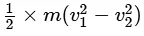
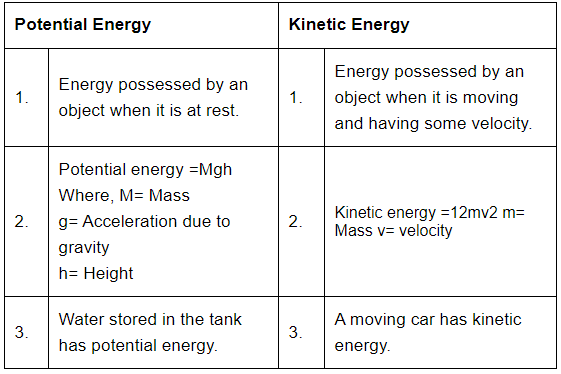
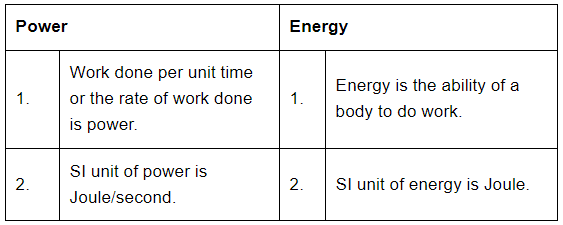
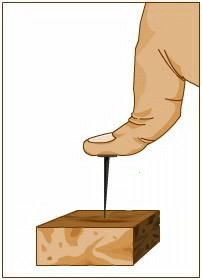
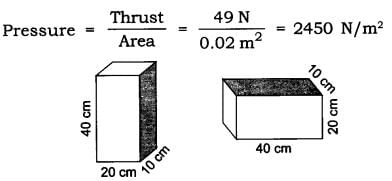

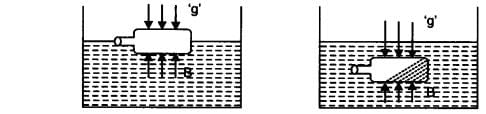
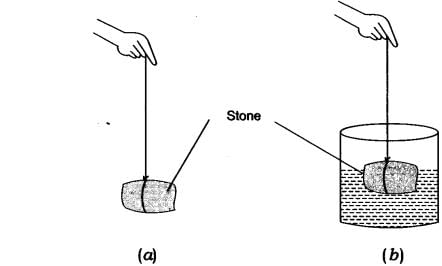


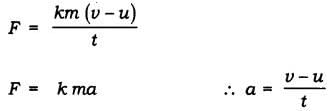

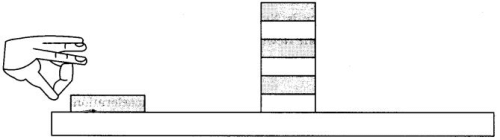
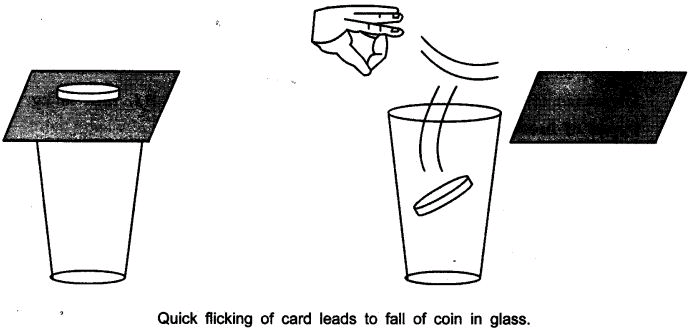
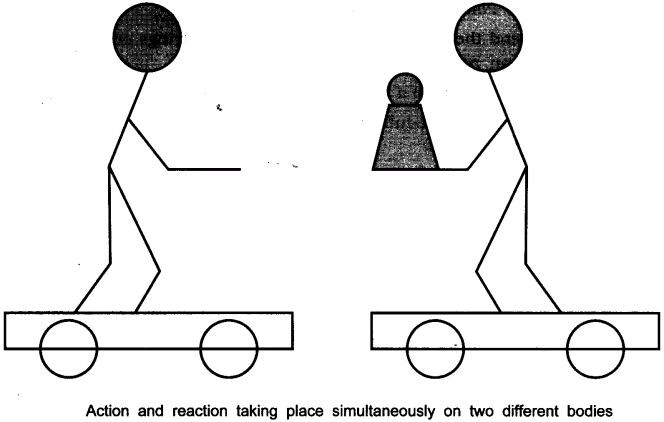
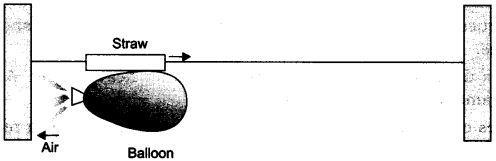 Observation: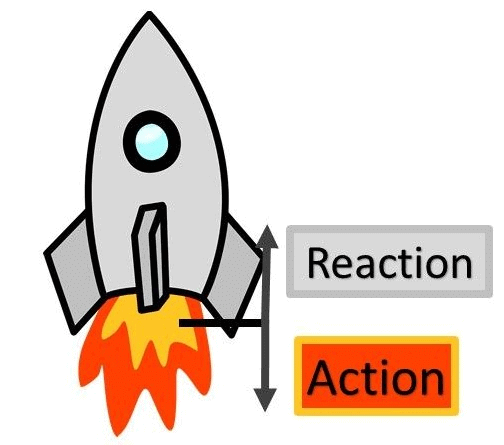
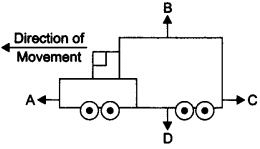
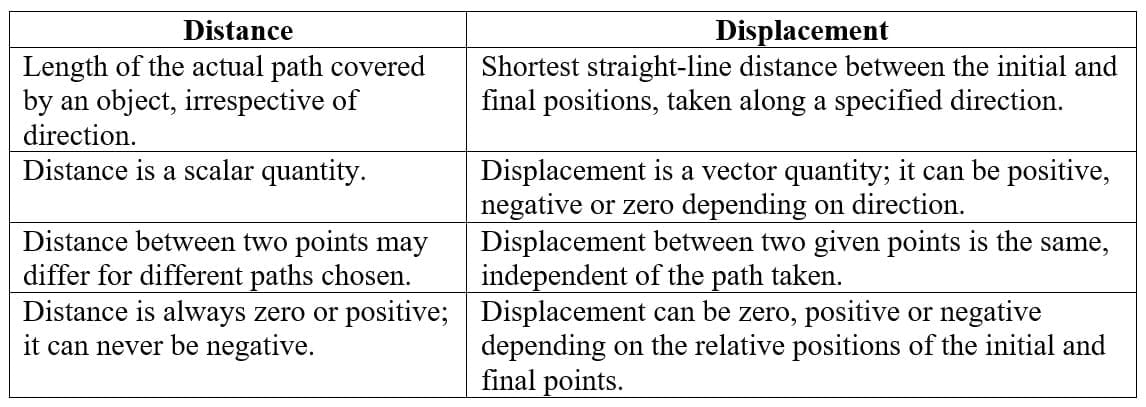
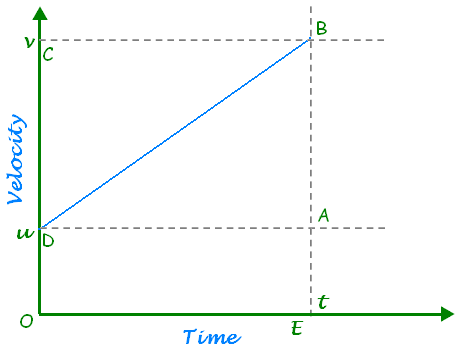
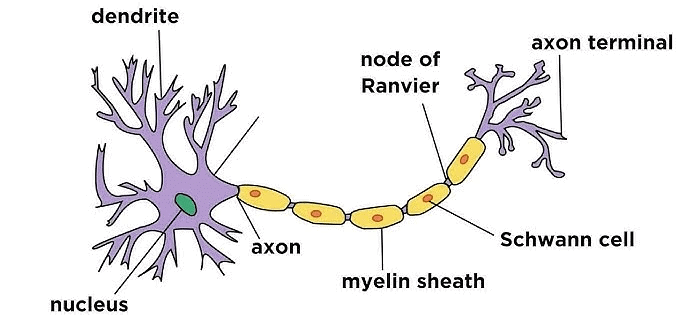
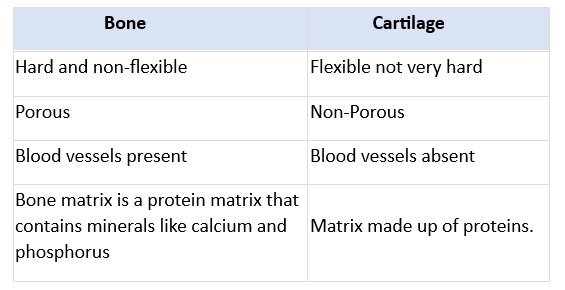

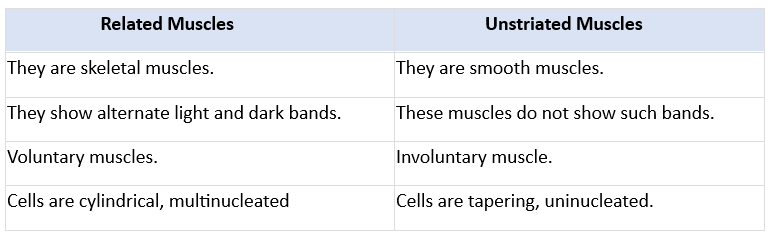
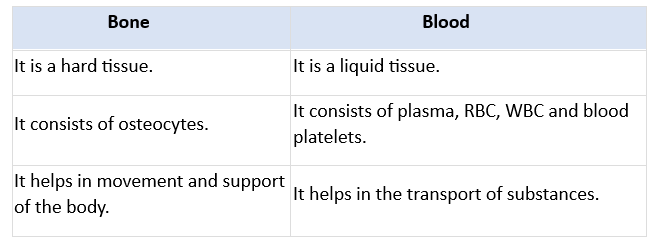
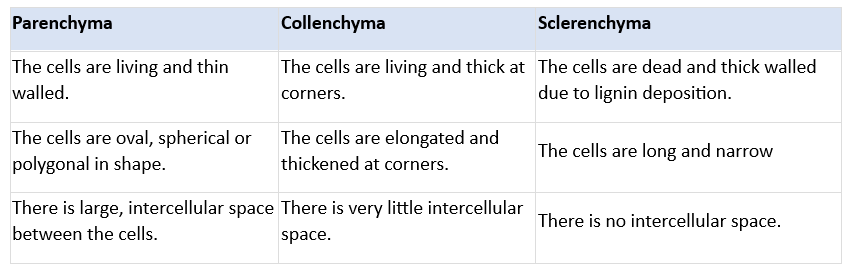
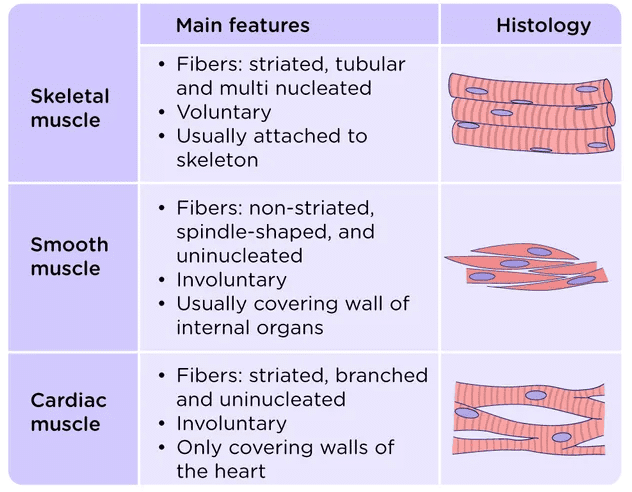
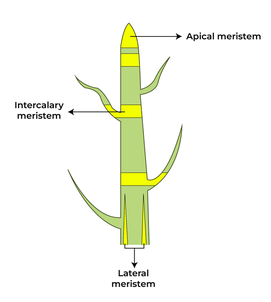 Meristematic Tissue
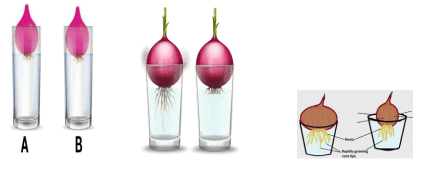 (c) The tips of root stopped growing in jar 2 because the tips of these roots were cut down and the tissues which helps in the growth of roots i.e., meristematic tissues are removed from it.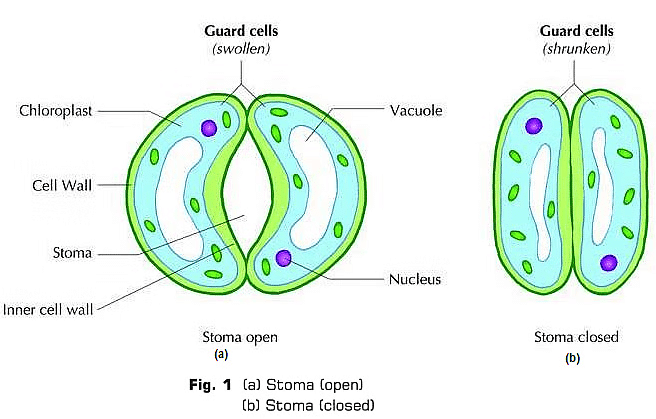

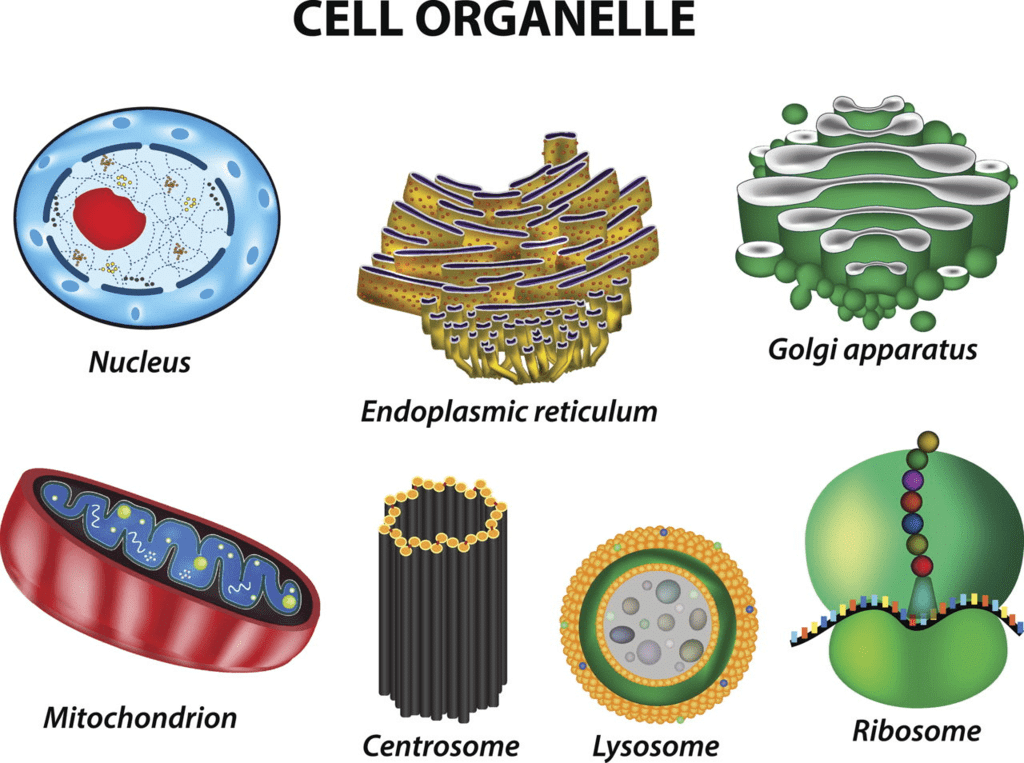
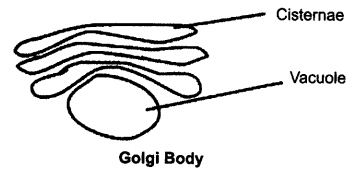
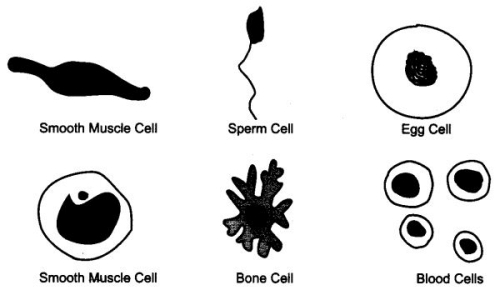
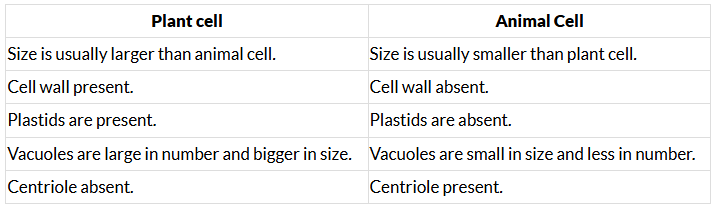
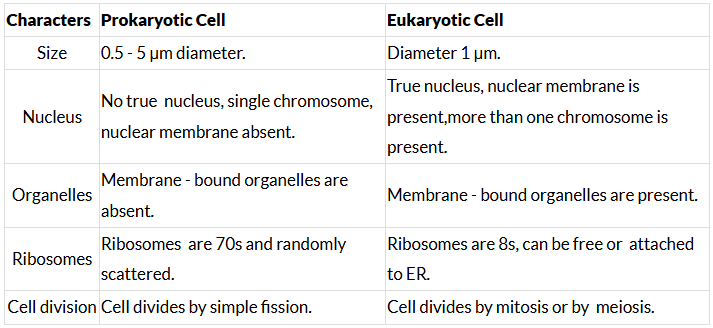
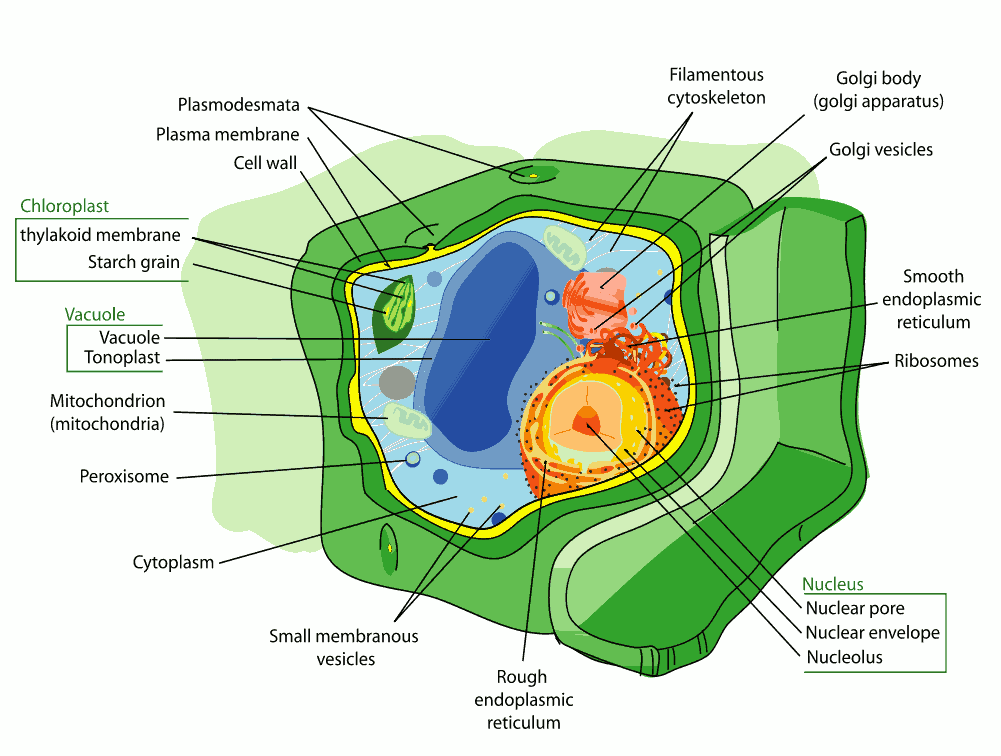
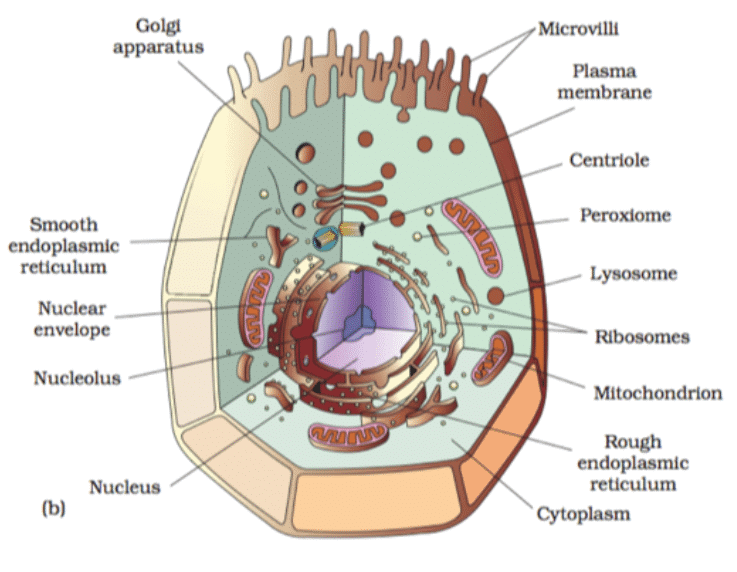
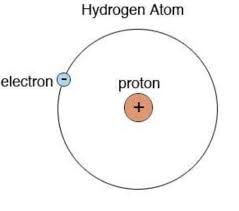
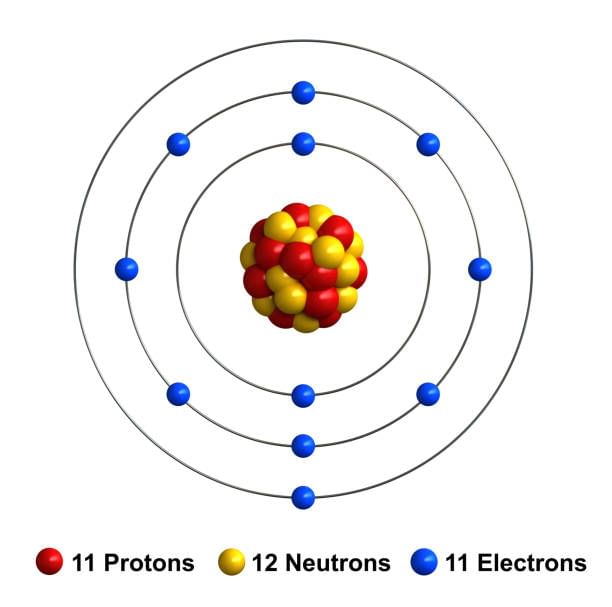
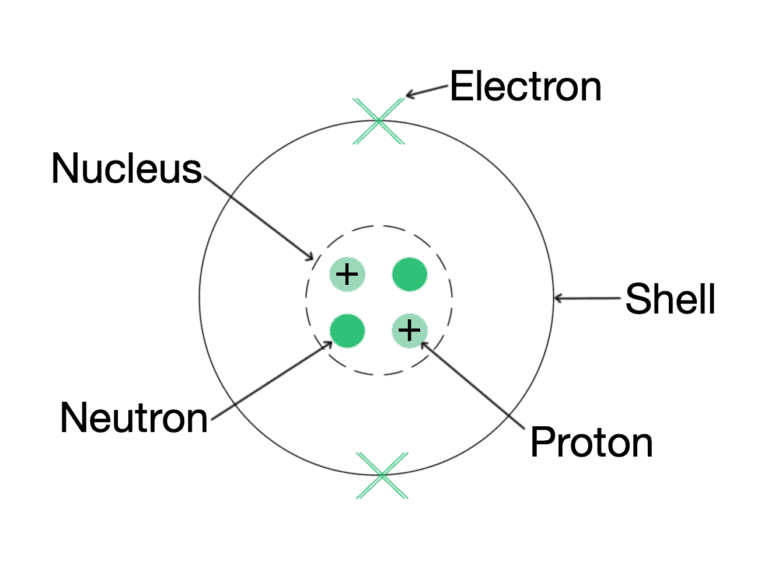
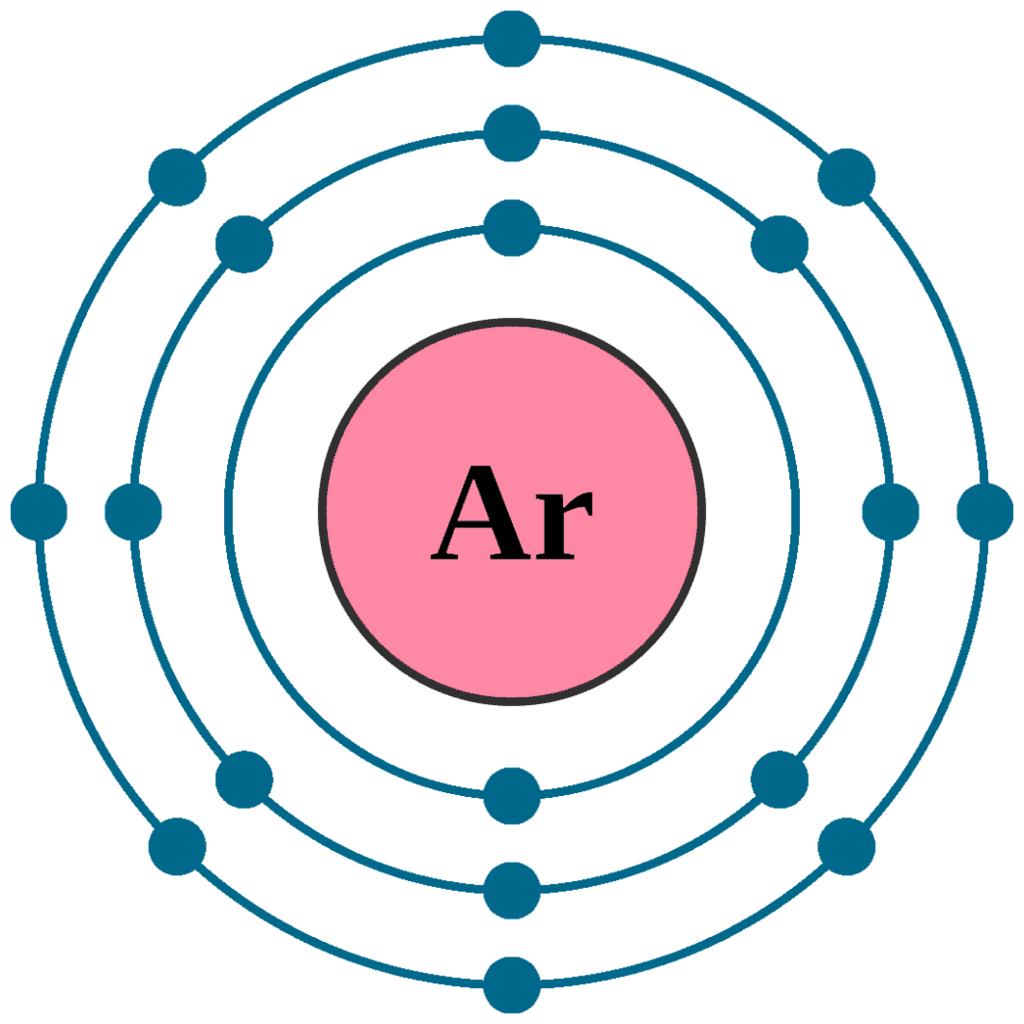

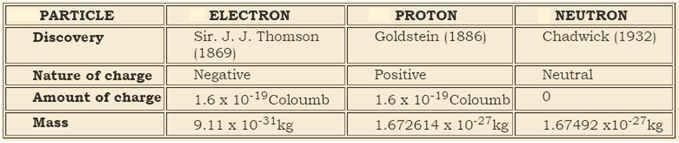
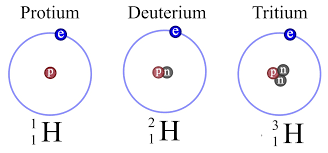
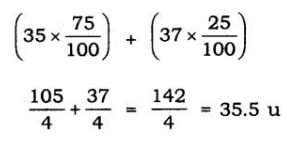
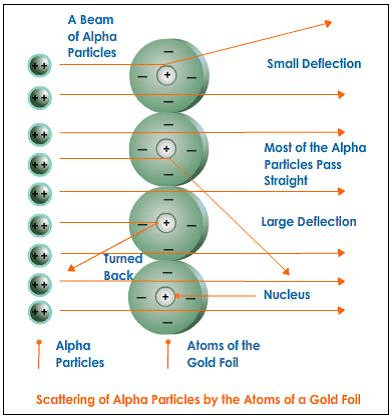
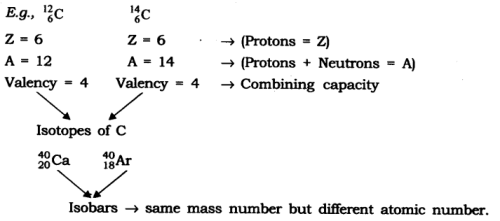

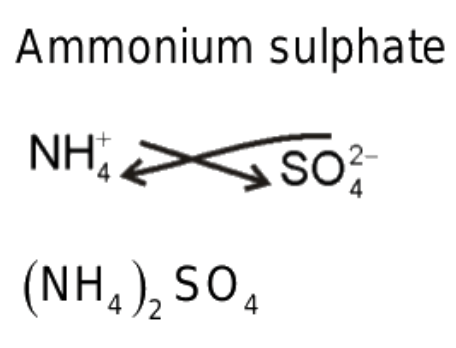
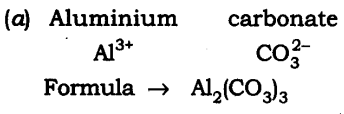
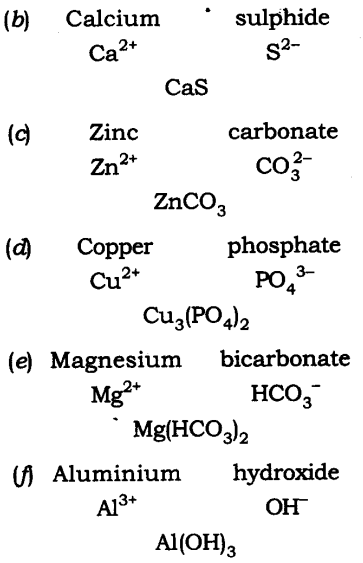

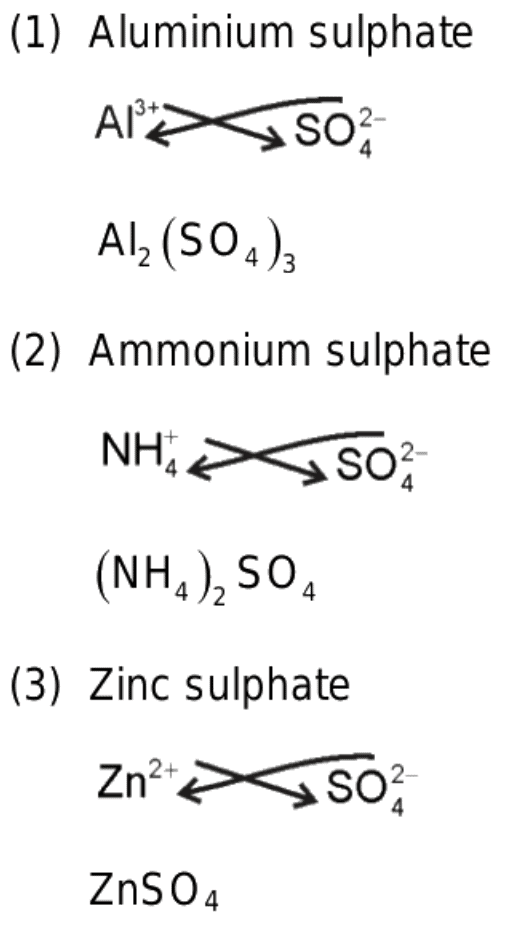
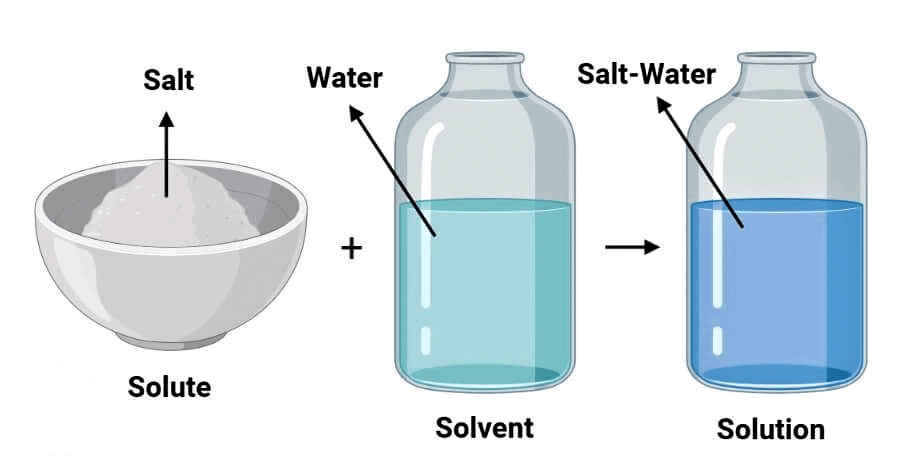
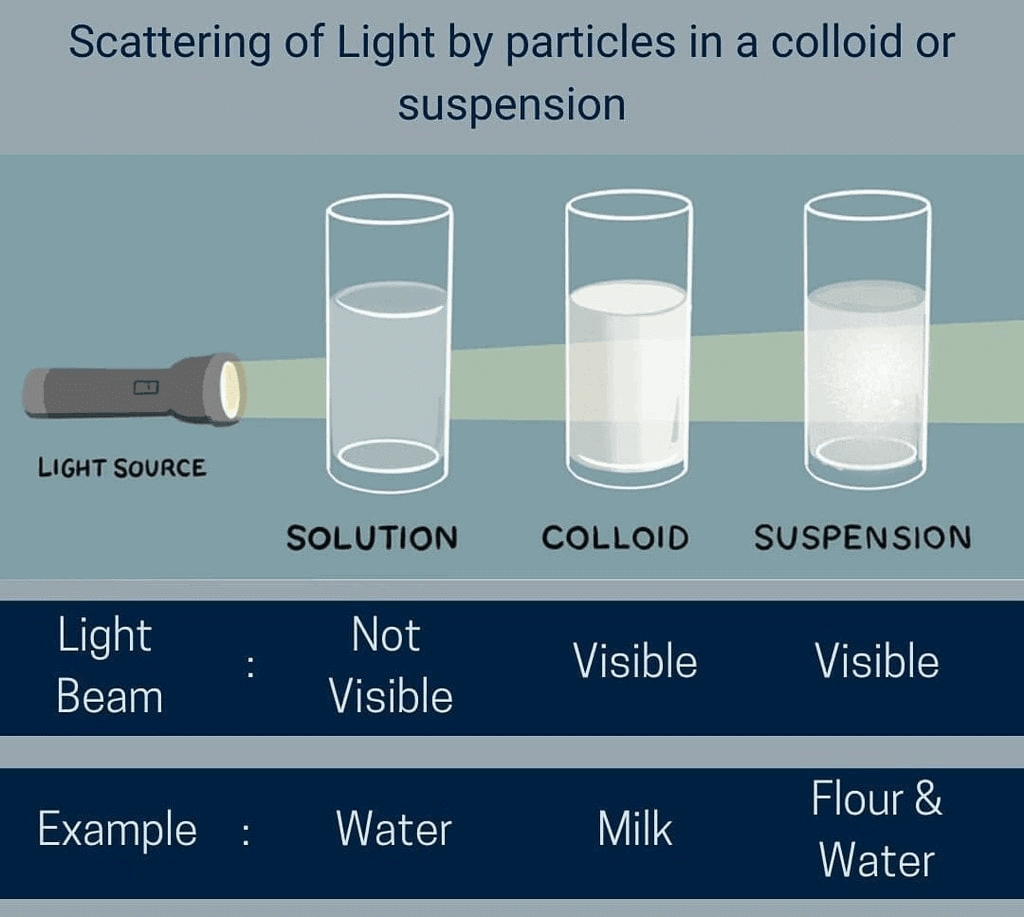
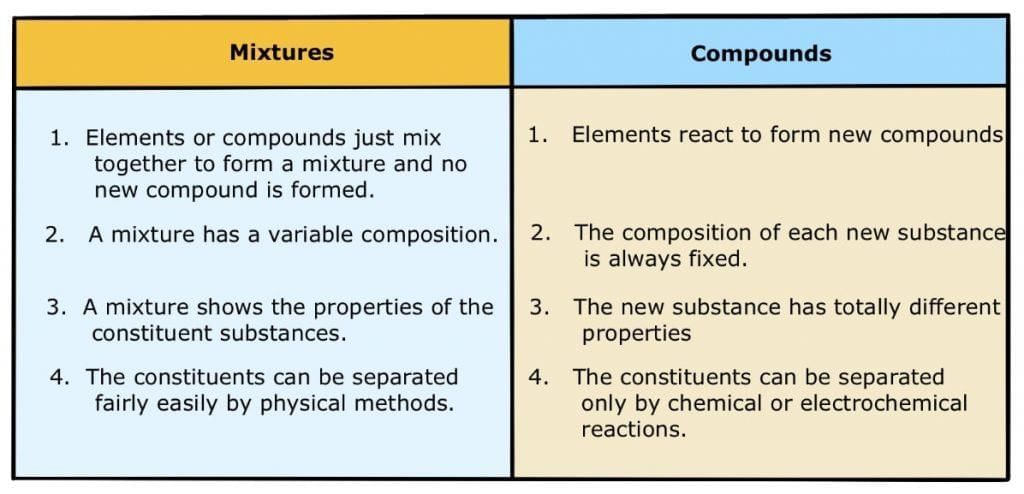
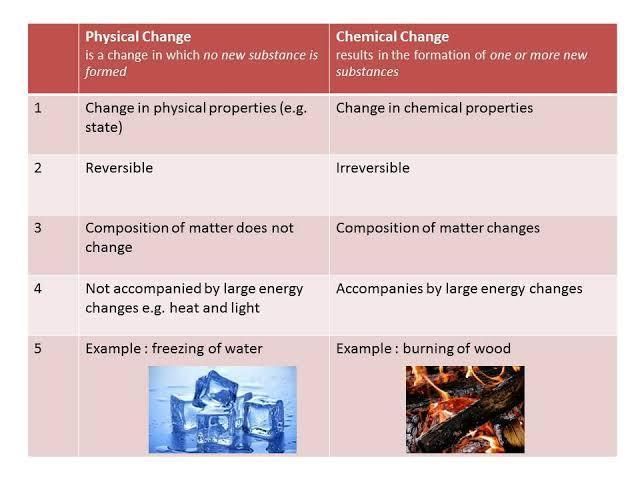
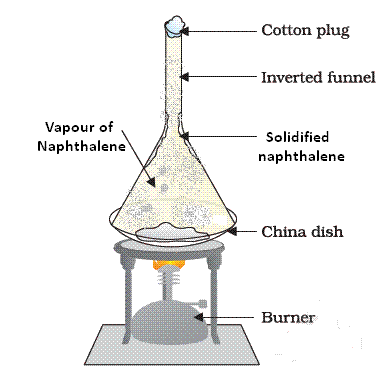 Sublimation of Naphthalene