Q1: Who discovered cells, and how? Ans: Robert Hooke, an English scientist, discovered cells in 1665. While examining a tiny slice of cork under his self-designed microscope, he saw a honeycomb-like structure.
Q2: Why is the cell called the structural and functional unit of life? Ans: Because all living organisms are made up of cells, the cell is the basic construction unit of a living organism, and all of a living organism’s activities are the sum of activities conducted by its cells, the cell is referred to as the structural and functional unit of life.
Q3: Why is the plasma membrane called a selectively permeable membrane? Ans: The plasma membrane is a very distinct structure. It is made up of lipids and proteins that selectively allow the entry of some molecules into the cell while preventing the exit of others, making it selectively permeable.
Q4: If the organisation of a cell is destroyed due to some physical or chemical influence, what will happen? Ans: Because all of a cell’s components are digested by its lysosomes, if the cell’s organisation is damaged by some physical or chemical action, the cell will not survive.
Q5: Why are lysosomes known as suicide bags? Ans: Lysosomes are organelles inside cells that contain hydrolytic (digestive) enzymes. When a cell is injured, its lysosomes may burst, allowing enzymes to digest the cell itself. As a result, we can call lysosomes “suicide bags.”
Q6: What would happen if the plasma membrane ruptures or breaks down? Ans: The rupture or breakdown of a cell’s plasma membrane signals that the cell has been injured, and in this case, the damaged cell’s lysosomes may burst, causing the digestive enzymes inside those lysosomes to eat their own cell. The cell will die as a result of this.
Q7: What would happen to the life of a cell if there was no Golgi apparatus? Ans: The preservation, modification, and packaging of products in particles are all tasks of the Golgi apparatus. All types of storage, modification, packaging and dispatch of materials within and beyond the cell would be impossible if there was no Golgi apparatus for the cell.
Q8: Which organelle is known as the powerhouse of the cell? Why? Ans: The cell’s Mitochondria, also known as the cell’s powerhouse, synthesises energy in the form of ATP during respiration, which is essential for many living processes.
Q9: Where do the lipids and proteins constituting the cell membrane get synthesised? Ans: There are two types of endoplasmic reticulum: (i) The smooth endoplasmic reticulum (SER) is in charge of producing the lipids that make up the cell membrane. (ii) The ribosomes are housed in the rough endoplasmic reticulum (RER), which is responsible for the production of proteins that make up the cell membrane.
Q10: How do substances like CO2 and water move in and out of the cell? Discuss. Ans: The exchange of gases CO2 and O2 between cells takes place by a diffusion process. Diffusion is the migration of a chemical from a high-concentration region to a low-concentration zone. CO2 is produced inside the cell as a result of respiration and accumulates in the cell, resulting in a high concentration of CO2 in the cell compared to the outside environment. However, because O2 is used inside the cell during respiration, its concentration declines inside the cell while remaining relatively high in the environment. As a result, CO2 diffuses out of the cell and O2 diffuses in.
Q11: Fill in the gaps in the following table illustrating the differences between prokaryotic and eukaryotic cells. Ans: The difference between prokaryotic cell and eukaryotic cell as follows: Q12: Make a comparison and write down ways in which plant cells are different from animal cells. Ans: The difference between plant cells and animal cells is as follows:
Q13: How is a prokaryotic cell different from a eukaryotic cell? Ans: The difference between prokaryotic cell and eukaryotic cell as follows:
Q14: How does an Amoeba obtain its food? Ans: Amoeba feeds on planktonic bacteria that float in water. It grows artificial feet, or pseudopodia, to encircle the meal and then catches it in a sac-like structure called the food vacuole, within which food digestion occurs.Process showing Amoeba obtaining its food Q15: What is osmosis? Ans: The passage of water (solvent) through a semipermeable membrane from a location of high-water concentration to a region of low water concentration is known as osmosis. It can only happen in a liquid medium; it cannot happen in solids or gases. Plant roots, for example, absorb water from the earth.
Q16: Carry out the following osmosis experiment: Take four peeled potato halves and scoops each one out to make potato cups. One of these potato cups should be made from a boiled potato. Put each potato cup in a trough containing water. Now, (a) Keep cup A empty (b) Put one teaspoon sugar in cup B (c) Put one teaspoon salt in cup C (d) Put one teaspoon of sugar in the boiled potato cup D. Keep these for two hours. Then observe the four potato cups and answer the following: (i) Explain why water gathers in the hollowed portion of B and C. Ans: When we add one teaspoon of sugar in cup B and one teaspoon salt in cup C, we create a hypertonic solution within, which allows water from outside to enter through osmosis and accumulate in the hollowed area of cups B and C. (ii) Why is potato A necessary for this experiment? Ans: To observe osmosis, you’ll need Potato A. (iii) Explain why water does not gather in the hollowed-out portions of A and D. Ans: Because there is no solution (liquid medium) in the hollowed-out portions of A and D, osmosis cannot occur, and water does not collect.
Q1: On the basis of Thomson’s model of an atom, explain how the atom is neutral as a whole. Ans: As per Thomson’s model of an atom, the number of electrons and the number of protons are equal in an atom. Electrons are positively charged and protons are negatively charged, hence the + and – charges are neutralized by each other that makes atoms neutral as a whole.
Q2: On the basis of Rutherford’s model of an atom, which subatomic particle is present in the nucleus of an atom? Ans: The subatomic particle present in the nucleus of an atom, according to Rutherford’s model, is the proton.
Q3: Draw a sketch of Bohr’s model of an atom with three shells. Ans: Bohr’s model of an atom with three shells is as follows:
Q4: What do you think would be the observation if the α− particle scattering experiment is carried out using a foil of a metal other than gold? Ans: If the α− particle scattering experiment is carried out using a foil of a metal other than gold we will get a different observation. Overall, the results would depend on the properties of the metal used.
Q5: Helium atom has an atomic mass of 4 u and two protons in its nucleus. How many neutrons does it have? Ans: The atomic mass of an atom is the sum of masses of protons and neutrons present in its nucleus. Given that the mass of the helium atom is 4 u and two protons present in its nucleus. So the number of neutrons will be Number of neutrons = atomic mass − number of protons ⇒ Number of neutrons = 4−2 ∴ Number of neutrons = 2 Therefore, the helium atom has 2 neutrons.
Q6: Write the distribution of electrons in carbon and sodium atoms. Ans: Distribution of electrons in carbon and sodium atoms is as follows:
Carbon:
Atomic number: 6
Electron distribution: 2, 4
Sodium:
Atomic number: 11
Electron distribution: 2, 8, 1
Q7: If K and L shells of an atom are full, then what would be the total number of electrons in the atom? Ans: K shell contains total 2 electrons and L shell contains maximum 8 electrons. If K and L shells of an atom are full, then the total number of electrons in the atom will be 10.
Q8: If number of electrons in an atom is 8 and number of protons is also 8, then (a) What is the atomic number of the atom? Ans: The atomic number of an atom is equal to the number of protons or electrons present in its nucleus. So the atomic number of an atom with 8 electrons and 8 protons is 8. (b) What is the charge on the atom? Ans: A single electron contains one negative charge and one single proton contains one positive charge. There are equal numbers of electrons and protons in an atom so they neutralize each other. The atom will be neutral.
Q9: Write the electronic configuration of following ions: (a) Cl− Ans: Electronic configuration of Cl− ion is 2,8,8. (b) Mg Ans: Electronic configuration of Mg ion is 2,8,2. (c) Al3+ Ans: Electronic configuration of Al3+ ion is 2,8. (d) O Ans: Electronic configuration of O is 2,6.
Q10: What are the limitations of J.J. Thomson’s model of the atom? Ans: The J.J. Thomson’s atomic model failed to explain the organization of electrons in an atom.
Q11: Na+ has completely filled K and L shells. Explain. Ans: Sodium (Na) has atomic number 11, so the electronic configuration of Na is 2,8,1. It has a single electron in the outermost shell, when it gives away that electron it becomes Na+ and has electronic configuration 2,8. Also the K shell contains a total 2 electrons and the L shell contains a maximum of 8 electrons. So Na+ has completely filled K and L shells.
Q12: If z = 3, what would be the valency of the element? Also, name the element. Ans: z = 3 represents that element has 3 electrons in its shells. The electronic configuration is 2,1. It means the outermost shell electron has 1 electron, so its valency is 1. The element is Lithium.
Q13: For the following statements, write T for True and F for False. (a) J.J. Thomson proposed that the nucleus of an atom contains only nucleons. Ans: False (b) A neutron is formed by an electron and a proton combining together. Therefore, it is neutral. Ans: True (c) The mass of an electron is about 12000 times that of proton. Ans: True (d) An isotope of iodine is used for making tincture iodine, which is used as a medicine. Ans: False
Q14: Explain the formation of Al3+ ion and why is it formed? Ans: Aluminum has an atomic number of 13. The electronic configuration of Al is 2,8,3. It has 3 electrons in the outermost shell and to become stable it needs to complete its octet. In the outermost shell, the maximum number of electrons must be 8. So it is easy to lose 3 electrons and complete the octet. By giving away the 3 outermost electrons it becomes Al3+ ion.
Q15: Why metals are electropositive and non-metals are electronegative in nature? Ans: Metals are electropositive in nature because all metals give away electrons from their outermost shell in order to complete the octet and become stable. So metals become positively charged. Non-metals are electronegative in nature because all non-metals gain electrons in order to complete the octet and become stable. So non-metals become negatively charged.
Q16: Write the postulates of Bohr theory? Ans: The postulates of Bohr’s theory are as follows:
Electrons revolve around the nucleus in specific paths called orbits or shells.
Each orbit has a fixed amount of energy.
The energy increases from the inner shells to the outer shells, with the innermost shell having the lowest energy.
If energy is supplied, an electron can move from a lower orbit to a higher orbit.
Q17: Compare the three major particles in atoms with respect to their mass and charge? Ans: Comparison of three major particles proton, neutron and electron with respect to their mass and charge is as follows:
Inside an atom electron revolves around the nucleus in a circular path. Protons and neutrons are present inside the nucleus.
Q18: In a gold – foil experiment: (a) Why did many α− particles pass through the gold foil undeflected? Ans: Most of the space within the atom was empty so many α− particles passed through the gold foil undeflected. (b) Why did few α− particles deflect through small angles. Ans: In a gold foil at center there is a positive charge so few α− particles deflect through small angles. (c) Why did few α− particles, after striking the gold foil, retrace their path. Ans: Very few α-particles retraced their path after striking the foil, indicating that the positively charged nucleus is very small.
Q19: Define valency by taking examples of silicon and oxygen. Ans: The valency of electrons is determined by electrons present in the outermost shell of an atom. Electrons present in the outermost shell of an atom are known as the valence electrons. Electrons gain or lose electrons to complete its octet.
Atomic number of silicon is 14 and electronic configuration is 2,8,4. This means it can either gain or lose 4 electrons. So the valency of silicon is 4. Atomic number of oxygen is 8 and the electronic configuration is 2,6. To complete its octet oxygen gains 2 electrons hence the valency of oxygen is 2.
Q20: The average atomic mass of a sample of an element X is 16.2 u. What are the percentages of isotopes and in the sample? Ans: Average atomic mass of sample is given as
We get
The percentage of isotopes is
Q21: Define isotopes.
Ans: Isotopes are atoms which have identical atomic numbers but different mass numbers. Examples of isotopes are
Q22: Which of the following electronic configuration are wrong and why? (a) 2,8,2 (b) 2,8,8,2 (c) 2,8,9,1. Ans: From the given electronic configuration, 2,8,9,1 is wrong because in the third shell the maximum number of electrons is 8. The correct electronic configuration is 2,8,8,2.
Q23: What are ions? What are its two types? Ans: When one or more electrons are detached from a neutral atom, a positively charged particle is formed and called an ion. Ions may be cations and anions.
Q24: Show diagrammatically the formation of O2− ion? Ans: Atomic number of oxygen is 8 and its electronic configuration is 2,6. In the outermost shell oxygen has 6 electrons. To complete its octet and become stable it needs 2 electrons. By gaining 2 electrons it becomes O2− ion. Diagrammatic representation of formation of O2− ion is as follows:
Q25: Define isobars. Ans: Isobars are atoms that have different atomic numbers but the same mass number. Examples of isobars are
Q26: For the symbol H, D and T tabulate three subatomic particles found in each of them. Ans: H represents the hydrogen atom, D represents the deuterium atom and T represents the tritium atom. Three subatomic particles present in each of them is represented as follows:
Q27: Write the electronic configuration of any one pair of isotopes and isobars. Ans: Electronic configuration of pairs of isotopes of carbon is . Isotopes have the same number of electrons and protons. Electronic configuration of a pair of isobars of argon and calcium is
Q28: Compare the properties of electrons, protons and neutrons. Ans: Comparison of electrons, protons and neutrons is as follows:
Q29: What are the limitations of Rutherford’s model of the atom? Ans: Rutherford’s model of the atom has several limitations:
The model does not explain the stability of atoms. It suggests that electrons orbit the nucleus, which would cause them to emit energy.
As electrons lose energy, their orbits would shrink, eventually leading them to collide with the nucleus. This implies that atoms should be unstable, contradicting the observed stability of matter.
Q30: If bromine atom is available in the form of, say, two isotopes Calculate the average atomic mass of bromine atom. Ans: The average atomic mass of bromine is
Q1: Define the atomic mass unit. Ans: One atomic mass unit is a mass unit equal to exactly one-twelfth (1/12th) the mass of one atom of carbon-12. Relative atomic masses of all elements are measured with respect to the carbon-12 standard. According to IUPAC (International Union of Pure and Applied Chemistry), the atomic mass unit (written as u, the unified mass unit) is defined as the mass of one-twelfth of a carbon-12 atom. 1 amu = 1/12th mass of C612
Q3: Write down the names of compounds represented the following formulae: (a) Al2(SO4)3 Ans: Al2(SO4)3 – Aluminium sulphate (b) CaCl2 Ans: CaCl2 – Calcium chloride (c) K2SO4 Ans: K2SO4 – Potassium sulphate (d) KNO3 Ans: KNO3 – Potassium nitrate (e) CaCO3 Ans: CaCO3 – Calcium carbonate
Q4: What is meant by the term chemical formula? Ans: The chemical formula of a compound is a symbolic representation showing the types of atoms present and the number of each type in a single molecule (or formula unit) of that compound. It uses atomic symbols and numbers (subscripts) to indicate composition.
They provide information on the elements that constitute the molecules of a compound and the ratio in which the atoms of those elements combine to form the molecules.
Example: A water molecule contains two hydrogen atoms and one oxygen atom. Its chemical formula is H2O.
Q5: What are polyatomic ions? Give examples. Ans: Polyatomic ions are groups of two or more atoms covalently bonded together that carry a net electrical charge and act as a single ion in chemical reactions. They behave as one charged unit. Examples:
Ammonium – NH4+
Hydroxide – OH–
Nitrate – NO3–
Hydrogen carbonate – HCO3–
Q6: Write the chemical formulae of the following. (a) Magnesium chloride Ans: Magnesium chloride – MgCl2 (b) Calcium oxide Ans: Calcium oxide – CaO (c) Copper nitrate Ans: Copper nitrate – Cu(NO3)2 (copper commonly exists as Cu2+ in this salt) (d) Aluminium chloride Ans: Aluminium chloride – AlCl3 (e) Calcium carbonate Ans: Calcium carbonate – CaCO3
Q7: Give the names of the elements present in the following compounds. (a) Quick lime Ans: Quick lime – CaO Elements present – Calcium, Oxygen (b) Hydrogen bromide Ans: Hydrogen bromide – HBr Elements present – Hydrogen, Bromine (c) Baking powder Ans: Baking powder (sodium hydrogen carbonate+mild acid like tartaric acid) – NaHCO3 Elements present – Sodium, Hydrogen, Carbon, Oxygen (d) Potassium sulphate Ans: Potassium sulphate – K2SO4 Elements present – Potassium, Sulphur, Oxygen
Q8: What is the mass of – Atomic mass of – S = 32u, Al = 27u, Na = 23u, N = 14u, O = 16u (a) 1 mole of nitrogen atoms? Ans: Given the atomic mass of nitrogen is 14 u, 1 mole of nitrogen atoms has a mass of 14 g. (b) 4 moles of aluminium atoms (Atomic mass of aluminium is 27)? Ans: Mass of 1 mole of aluminium = 27 g. Therefore mass of 4 moles = 27 × 4 = 108 g.
Q9: Convert into mole. Atomic mass of – C = 12u, H = 1u, O = 16u (a) 12 g of oxygen gas Ans: Molar mass of O2 = 16 × 2 = 32 g/mol ⇒ Number of moles = mass / molar mass = 12 / 32 = 0.375 mol (b) 20 g of water Ans: Molar mass of H2O = (1 × 2) + 16 = 18 g/mol ⇒ Number of moles = mass / molar mass ⇒ Number of moles = 20 / 18 ≈ 1.11 mol (c) 22 g of carbon dioxide Ans: Molar mass of CO2 = 12 + (16 × 2) = 44 g/mol ⇒ Number of moles = mass / molar mass ⇒ Number of moles = 22 / 44 = 0.50 mol
Q10: State the Postulates of Dalton Theory? Ans: Dalton’s atomic theory proposed that matter is made of small particles called atoms. Its main postulates are:
All matter is composed of very small particles called atoms.
Atoms are indivisible in chemical processes and cannot be created or destroyed in a chemical reaction.
Atoms of a given element are identical in mass and chemical properties.
Atoms of different elements have different masses and chemical properties.
Atoms combine in simple whole-number ratios to form compounds.
A given compound always contains the same relative number and kinds of atoms (constant composition).
Q11: Find the percentage of water of crystallization in FeSO4.7H2O. Ans: Atomic masses: Fe = 55.9 u, S = 32 u, H = 1 u, O = 16 u. Molar mass of FeSO4·7H2O = Fe + S + (O × 4) + 7 × (H2O) = 55.9 + 32 + (16 × 4) + 7 × [(1 × 2) + 16 × 1] = 55.9 + 32 + 64 + 7 × 18 = 151.9 + 126 = 277.9 g/mol So, 1 of FeSO4 contains 126/277.6 g water of crystallization. Mass of water of crystallization = 7 × 18 = 126 g per mole of the hydrated salt. Percentage of water = (mass of water / molar mass of hydrated salt) × 100%
Thus, we get 126/277.6 x 100 = 0.4534 x 100 = 45.34% The percentage of water of crystallization in FeSO4·7H2O is approximately 45.36%.
Q12: 2.42g of copper gave 3.025g of a black oxide of copper, 6.49g of a black oxide, on reduction with hydrogen, gave 5.192g of copper. Show that these figures are in accordance with the law of constant proportion? Ans: Given: Case A – Mass of copper = 2.42 g Mass of copper oxide = 3.025 g Case B – Mass of black copper oxide = 6.49 g Mass of copper after reduction = 5.192 g To verify the law of constant proportion, calculate the percentage of copper in the oxide in both cases. Percentage of copper in Case A = (mass of copper / mass of copper oxide) × 100% = (2.42 / 3.025) × 100 = 80.00%
Percentage of copper in Case B = (mass of copper / mass of copper oxide) × 100% = (5.192 / 6.49) × 100 = 80.00%
Both samples contain the same percentage of copper (80.00%). This shows that copper combines with oxygen in a constant proportion, confirming the law of constant proportions.
Q13: A compound was found to have the following percentage composition by mass Zn = 22.65%, S = 11.15% , H = 4.88% , O = 61.32% . The relative molecular mass is 287 g/mole . Find the molecular formula of the compound, assuming that all the hydrogen in the compound is present in water of crystallization. Ans: Given percentages (per 100 g of compound): Zn = 22.65 g, S = 11.15 g, H = 4.88 g O = 61.32 g. Atomic masses: Zn = 65.4 u S = 32 u H = 1 u O = 16 u. ⇒ Number of atoms = percentage of element present in a compound × mass of compound / atomic mass × 100 Using the formula above Empirical atom counts ≈ Zn1S1H14O11. Assuming all hydrogen is in water of crystallization, H14 corresponds to 7 molecules of H2O. These 7 waters contribute 7 oxygen atoms, leaving O atoms in the anhydrous part = 11 – 7 = 4. Thus the formula for the anhydrous part is ZnSO4, with 7 H2O as waters of crystallization. Therefore the compound is ZnSO4·7H2O.
Q14: Which element will be more reactive and why – the element whose atomic number is 10 or the one whose atomic number is 11? Ans: The element with atomic number 11 is more reactive than the element with atomic number 10. Reason: The element with atomic number 11 has electronic configuration (2, 8, 1). It has one electron in its outermost shell and can lose that electron easily to attain a stable noble-gas configuration, so it is more reactive (typical of alkali metals). The element with atomic number 10 has configuration (2, 8) and a full outer shell; it is already stable and thus much less reactive (a noble gas).
Q15: What are the failures of Dalton’s Atomic theory? Ans: Dalton’s atomic theory was an important step, but it had several limitations:
It did not account for subatomic particles: Atoms are not indivisible; electrons, protons and neutrons were later discovered.
It did not account for isotopes: Atoms of the same element can have different mass numbers Example: hydrogen ¹₁H, deuterium ²₁H , and tritium³₁H, have the same atomic number, but different mass numbers.
It did not account for isobars: Different elements can have atoms with the same mass number Example: Ar4018 andCa4020, they have different atomic numbers, but the same mass number.
It assumed elements always combine in simple whole-number ratios; some complex molecules have larger whole-number ratios , though they still use whole numbers. Example: sucrose C12H22O11
It could not explain allotropy: Different forms of the same element (diamond and graphite for carbon) have different properties despite containing only one type of atom.
Q16: Calculate the Molecular Mass of Atomic mass of – S = 32u, H = 1u, C = 12u, N = 14u, O =16u (a) Ammonium sulphate (NH4)2SO4 Ans: Molar mass of (NH4)2SO4 = 2 × [N + (H × 4)] + S + (O × 4) = 2 × [14 + (1 × 4)] + 32 + (16 × 4) = 2 × 18 + 32 + 64 = 36 + 96 = 132 g/mol (b) Penicillin C16H18N2SO4 Ans: Molar mass = (12 × 16) + (1 × 18) + (14 × 2) + 32 + (16 × 4) = 192 + 18 + 28 + 32 + 64 = 334 g/mol (c) Paracetamol C8H9NO2 Ans: Molar mass = (12 × 8) + (1 × 9) + 14 + (2×16) = 96 + 9 + 14 + 32 = 151 g/mol
Q17: Write an experiment to show that cathode rays travel in a straight line? Ans: An experiment to show that cathode rays travel in a straight line can be performed using a fluorescent coated discharge tube and a source of cathode rays, an opaque object, and a high voltage source. Set-up and procedure:
Start the discharge so that cathode rays are produced inside the tube; the fluorescent coating will glow where rays strike.
Place an opaque object in the path of the rays between the cathode and the fluorescent screen.
When cathode rays strike against the screen, they produce fluorescence. But due to the placement of the opaque object, we will observe a sharp shadow being formed on the screen in the shape of the object.
A sharp shadow of the object appears on the glowing screen behind it.
A sharp shadow is produced only if the rays travel in straight lines; if the rays bent around the object no clear shadow would form.
This observation shows that cathode rays travel in straight lines.
Q18: What is radioactivity? What are the applications of radioisotopes? Ans: Radioactivity is the spontaneous emission of radiation (alpha particles, beta particles or gamma rays)in the form of particles or high-energy photons from the nuclei of unstable atoms as they transform to more stable forms. Applications of radioisotopes:
Co-60 emits γ-radiation used in radiotherapy to treat cancer.
I-131 is used in the diagnosis and treatment of thyroid disorders.
P-32 is used in treating certain types of leukaemia and as a tracer in medical research.
C-14 is used as a tracer in biochemical studies and for dating formerly living materials.
Q19: There are two elements C and B. C emits an α – particle and B emits a β – particle. How will the resultant elements change?
Ans: When an element emits an α particle, its atomic number decreases by 2 and its mass number decreases by 4 (an α particle is a He nucleus: 2 protons and 2 neutrons).
So element C after α emission: atomic number → (Z – 2), mass number → (A – 4).
When an element emits a β particle (electron), a neutron in the nucleus converts to a proton. Thus the atomic number increases by 1 while the mass number remains unchanged.
So element B after β emission: atomic number → (Z + 1), mass number → A.
Q20: What are isotopes? Name the isotopes of hydrogen and draw the structure of their atoms. Ans: Isotopes are atoms of the same element that have the same atomic number (same number of protons) but different mass numbers (different numbers of neutrons). Example – Isotopes of hydrogen:
Protium: ¹₁H (one proton, no neutron)
Deuterium: ²₁H (one proton, one neutron)
Tritium: ³₁H (one proton, two neutrons)
Structure of Isotopes of Hydrogen:
Q21: In a reaction, 5.3g of sodium carbonate reacted with 6g of ethanoic acid. The products were 2.2g of carbon dioxide, 0.9g water and 8.2g of sodium ethanoate. Show that these observations are in agreement with the Law of Conservation of Mass. Sodium carbonate + Ethanoic acid → Sodium ethanoate + Carbondioxide + Water Ans: The law of conservation of mass states mass is neither created nor destroyed in a chemical reaction. So mass of reactants = mass of products. Given: Mass of sodium carbonate = 5.3 g Mass of ethanoic acid = 6.0 g Total mass of reactants = 5.3 + 6.0 = 11.3 g Mass of products: sodium ethanoate = 8.2 g, CO2 = 2.2 g, H2O = 0.9 g Total mass of products = 8.2 + 2.2 + 0.9 = 11.3 g Mass of reactants = Mass of products = 11.3 g. This confirms the law of conservation of mass.
Q22: A 0.24g sample of compound of oxygen and boron was found by analysis to contain 0.096g of boron and 0.144g of oxygen. Calculate the percentage composition of the compound by weight. Ans: Given: Mass of sample = 0.24 g Mass of boron = 0.096 g Mass of oxygen = 0.144 g Percentage of boron = (mass of boron / mass of sample) × 100%
Percentage of oxygen = (mass of oxygen / mass of sample) × 100%
The compound contains 40% boron and 60% oxygen by mass.
Q23: If one mole of carbon atoms weighs 12 grams, what is the mass (in grams) of one atom of carbon? Ans: 1 mole of carbon = 6.023 × 10²³ atoms = 12 g Mass of one carbon atom = 12 g / (6.023 × 10²³) ≈ 1.993 × 10⁻²³ g
Ques 1. Suggest separation technique(s) one would need to employ to separate the following mixtures. (a) Mercury and water Ans: Use a separating funnel.
Explanation: Mercury and water are immiscible liquids with different densities (mercury is denser, ~13.6 g/cm³, compared to water, ~1 g/cm³). A separating funnel allows the denser mercury to settle at the bottom, and the water can be drained off from the top, effectively separating the two liquids.
(b) Potassium chloride and ammonium chloride Ans: Sublimation.
Ammonium chloride sublimes (turns directly from solid to gas) when heated, while potassium chloride does not sublime and remains as a solid. By heating the mixture, ammonium chloride will vaporize and can be collected separately upon cooling, leaving potassium chloride behind.
Fig: Sublimation(c) Common salt, water and sand Ans: Sedimentation, decantation, filtration and evaporation Sedimentation is the process where solid particles settle at the bottom of a liquid. This is followed by decantation, which involves carefully pouring off the liquid, leaving the solid behind. Next, filtration is used to separate solids from liquids using a filter paper. Finally, evaporation removes the liquid, leaving behind any dissolved solids.
Sedimentation: Particles settle at the bottom.
Decantation: Pouring off the liquid.
Filtration: Using filter paper to separate solids.
Evaporation: Removing liquid to leave solids.
(d) Kerosene oil, water and salt Ans: Use a separating funnel followed by evaporation. Kerosene oil and water are immiscible liquids, so a separating funnel can separate them, with kerosene forming the upper layer (density ~0.8 g/cm³) and water (with dissolved salt) the lower layer (density ~1 g/cm³). After separating kerosene, the salt water solution is heated to evaporate the water, leaving the salt behind.
Ques 2. Which of the tubes in figure (a) and (b) will be more effective as a condenser in the distillation apparatus?
Ans: Condenser (a) will be more effective because it provides more surface area for cooling of the vapours passing through it.
Ques 3. Salt can be recovered from its solution by evaporation. Suggest some other technique for the same? Ans:Salt can be recovered from its solution by crystallisation. This method is often preferred over evaporation because:
It effectively removes soluble impurities.
It produces pure salt crystals.
In contrast, evaporation may leave behind some impurities, making crystallisation a more efficient technique.
Ques 4. The ‘sea-water’ can be classified as a homogeneous as well as a heterogeneous mixture. Comment. Ans:Sea-water can be classified as both a homogeneous and a heterogeneous mixture due to the following reasons:
It is considered homogeneous because it contains dissolved salts, creating a uniform solution.
It is also seen as heterogeneous because it includes various insoluble components, such as sand, microbes, and shells.
Ques 5. While diluting a solution of salt in water, a student by mistake added acetone (boiling point 56°C). What technique can be employed to get back the acetone? Justify your choice. Ans:Acetone is soluble in water, creating a homogeneous mixture. Therefore, separation using a separating funnel is not effective. The best method to recover acetone is through simple distillation due to the significant difference in boiling points:
Boiling point of acetone: 56°C
Boiling point of water: 100°C
In a distillation flask:
Acetone will boil at 56°C and convert into vapour.
The vapour can then be condensed and collected in a separate flask.
Ques 6. What would you observe when (a) a saturated solution of potassium chloride prepared at 60°C is allowed to cool to room temperature. Ans: When a saturated solution of potassium chloride is prepared at 60°C and then allowed to cool to room temperature, the following observations can be made:
The solution remains saturated at the higher temperature.
As the temperature decreases, the solubility of potassium chloride also decreases.
Consequently, some of the potassium chloride will settle at the bottom of the container.
This occurs because the solution can no longer hold all the dissolved solute at the lower temperature.
(b) an aqueous sugar solution is heated to dryness. Ans: When an aqueous solution of sugar is heated to dryness:
The water evaporates, leaving sugar behind in the container.
If heated further, the sugar may become charred.
(c) a mixture of iron filings and sulphur powder is heated strongly. Ans: When a mixture of iron filings and sulphur powder is heated strongly, a chemical reaction occurs, resulting in the formation of ferrous sulphide.
Ques 7. Explain why particles of a colloidal solution do not settle down when left undisturbed, while in the case of a suspension they do? Ans: The particles in a colloidal solution do not settle down when left undisturbed due to several reasons:
Size and Weight: Colloidal particles are smaller and lighter compared to those in a suspension.
Brownian Movement: These particles are in constant zig-zag motion, known as Brownian movement, which counteracts the force of gravity.
Charge and Repulsion: Colloidal particles carry a charge that causes them to repel each other, preventing them from clumping together and settling.
In contrast, particles in a suspension are larger and heavier, resulting in less movement. This allows them to settle under the influence of gravity.
Ques 8. Smoke and fog both are aerosols. In what way are they different? Ans:Smoke and fog are both types of aerosols, but they differ in their composition:
The dispersion medium for both is air.
In smoke, solid carbon particles are dispersed in the air.
In fog, liquid water droplets are dispersed in the air.
Ques 9. Classify the following as physical or chemical properties (a) The composition of a sample of steel is: 98% iron, 1.5% carbon and 0.5% other elements. Ans: The composition of steel (98% iron, 1.5% carbon, 0.5% other elements) reflects the chemical identity and proportion of elements in the alloy, which is a chemical property, as it involves the substance’s chemical makeup rather than a physical characteristic like colour or density.
(b) Zinc dissolves in hydrochloric acid with the evolution of hydrogen gas. Ans: The reaction of zinc with hydrochloric acid produces hydrogen gas, indicating a chemical change. This demonstrates a key chemical property of zinc.
Fig: Reaction of zinc with hydrochloric acid
(c) Metallic sodium is soft enough to be cut with a knife. Ans:Metallic sodium is soft enough to be cut with a knife. This characteristic demonstrates the softness of sodium, which is a physical property.
(d) Most metal oxides form alkalis on interacting with water. Ans:Most metal oxides form alkalis on interacting with water. This characteristic demonstrates the reaction between metal oxides and water, which is a chemical property.
Ques 10. The teacher instructed three students ‘A’, ‘B’ and ‘C’ respectively to prepare a 50% (mass by volume) solution of sodium hydroxide (NaOH). ‘A’ dissolved 50 g of NaOH in 100 mL of water, ‘B’ dissolved 50 g of NaOH in 100g of water while ‘C’ dissolved 50g of NaOH in water to make 100 mL of solution. Which one of them has made the desired solution and why?
Ans: Concentration is the relative percentage of solute compared to the total volume of the solution and it is calculated by dividing mass by volume. In the case of A, since 50g of NaOH has been dissolved in 100 mL of water, the total volume of solution became about 150 mL, thus concentration of NaOH would be less than 50%. In the case of B, since 50g of NaOH has been dissolved in 100g of water, therefore, total volume of the solution would become 150 mL, consequently concentration of NaOH would again less than 50%. In the case of C, 50g of NaOH has been dissolved in water and then volume of the solution made to 100mL, thus concentration of NaOH would become 50%.Thus, C made the solution of NaOH having concentration equal to 50%.
Ques 11. Name the process associated with the following (a) Dry ice is kept at room temperature and at one atmospheric pressure. Ans:Sublimation is the process that occurs when dry ice is left at room temperature and one atmospheric pressure. During this process:
Dry ice, which is solid carbon dioxide, turns into gas.
This transition happens without passing through a liquid state.
Sublimation is common in substances that can easily change from solid to gas.
Fig: Subliming dry ice
(b) A drop of ink placed on the surface of water contained in a glass spreads throughout the water. Ans: When a drop of ink is placed on the surface of water, it spreads out and eventually mixes with the water. This occurs due to the motion of particles, which is known as diffusion.
(c) A potassium permanganate crystal is in a beaker and water is poured into the beaker with stirring. Ans: When potassium permanganate crystals are placed in a beaker and water is added while stirring:
The potassium permanganate particles mix with the water.
Stirring increases the motion of the particles, which helps them to mix more quickly.
This process is known as diffusion.
(d) Milk is churned to separate cream from it. Ans: When milk is churned, the process separates the cream from the milk. This separation occurs due to the action of centrifugal force, which is the principle behind centrifugation.
(e) Settling of sand when a mixture of sand and water is left undisturbed for some time. Ans: When mixture of sand and water is left undisturbed, the sand settle at the bottom of water, thus this is the process of sedimentation.
Fig: Mixture of sand and water
(f) Fine beam of light entering through a small hole in a dark room, illuminates the particles in its paths. Ans: When a fine beam of light enters a dark room through a small hole, it illuminates particles in its path. This occurs due to:
The collision of air and dirt particles.
The scattering of light, which makes the dust particles appear to dance.
This phenomenon is known as the Tyndall effect.
Ques 12. You are given two samples of water labelled as ‘A’ and ‘B’. Sample ‘A’ boils at 100°C and sample ‘B’ boils at 102°C. Which sample of water will not freeze at 0°C? Comment. Ans: Since impurities in water raise its boiling point, thus water in sample B is impure. Hence it will not freeze at 00C because of impurities since impAns: Since impurities in water raise its boiling point, thus water in sample B is impure. Hence it will not freeze at 00C because of impurities since impurities decreases the freezing point below the 00C, this is the cause that’s why sea water remain liquid below the 00C.
Ques 13. An element is sonorous and highly ductile. Under which category would you classify this element? What other characteristics do you expect the element to possess? Ans: Since the element is sonorous and ductile, it can be classified as a metal. Other expected characteristics of metals include:
Good conductivity of heat and electricity
Lustrous appearance
Malleability (can be shaped into thin sheets)
Ques 14. Give an example each for the mixture having the following characteristics. Suggest a suitable method to separate the components of these mixtures. (a) A volatile and a non-volatile component. Ans: The mixture of acetone and water. In this acetone is volatile and water is non-volatile. The mixture of water and acetone can be separated by the process of distillation.
(b) Two volatile components with appreciable difference in boiling points. Ans: Mixture of acetone and ethanol. The boiling point of acetone is 560C and that of ethyl alcohol is 78.40C. The mixture of acetone and ethanol can Ans: Mixture of acetone and ethanol. The boiling point of acetone is 560C and that of ethyl alcohol is 78.40C. The mixture of acetone and ethanol can be separated using fractional distillation. Since they are two immiscible liquids, thus their mixture can be separated using separating funnel.Fig: Fractional distillation(c) One of the components changes directly from solid to gaseous state. Ans: The mixture of salt and ammonium chloride. In this mixture ammonium chloride changes from solid to gaseous state directly.The mixture of salt and ammonium chloride can be separated by the process of sublimation.
(d) Two or more coloured constituents soluble in some solvent. Ans: The ink is the mixture of dyes of many colours. The different dyes of ink can be separated using chromatography.
Ques 15. Fill in the blanks
(a) A colloid is a __________ mixture and its components can be separated by the technique known as _________.
Ans: heterogeneous, centrifugation
(b) Ice, water and water vapour look different and display different _________ properties but they are ___________ the same. Ans: Physical, chemically
(c) A mixture of chloroform and water taken in a separating funnel is mixed and left undisturbed for some time. The upper layer in the separating funnel will be of________ and the lower layer will be that of ___________. Ans: Upper layer: Water
Lower layer: Chloroform
(d) A mixture of two or more miscible liquids, for which the difference in the boiling points is less than 25 K can be separated by the process called____________. Ans: Fractional distillation
(e) When light is passed through water containing a few drops of milk, it shows a bluish tinge. This is due to the _________ of light by milk and the phenomenon is called _________ . This indicates that milk is a ________ solution. Ans: scattering, Tyndall Effect, colloidal
Ques 16. Sucrose (sugar) crystals obtained from sugarcane and beetroot are mixed together. Will it be a pure substance or a mixture? Give reasons for the same. Ans: Pure substance, since it contains a single component, i.e. sucrose.
Fig: Structure of sucrose
Ques 17. Give some examples of Tyndall effect observed in your surroundings? Ans:Examples of Tyndall Effect:
When a sunbeam shines through a window, dust particles in the air make the beam visible.
Milk appears faint blue in a glass due to its colloidal nature, which scatters light.
Sunlight filtering through clouds looks bright because of light scattering by water droplets.
In a dense forest, mist with tiny water droplets creates a visible beam of light.
Ques 18. Can we separate alcohol dissolved in water by using a separating funnel? If yes, then describe the procedure. If not, explain. Ans: The mixture of alcohol and water cannot be separated using a separating funnel, since these are not immiscible liquids. The mixture of alcohol and water can be separated by the process of distillation.
Fig: Distillation process
Ques 19. On heating calcium carbonate gets converted into calcium oxide and carbon dioxide. (a) Is this a physical or a chemical change? Ans: The conversion of calcium carbonate into calcium oxide and carbon dioxide is a chemical change.
(b) Can you prepare one acidic and one basic solution by using the products formed in the above process? If so, write the chemical equation involved. Ans: Yes one acidic and one basic solution can be formed by the calcium oxide and carbon dioxide, which are product formed in the above process. Since metallic oxides are basic and non-metallic oxides are acidic in nature.Calcium oxide is a metallic oxide. Hence by dissolving it in water a basic solution is formed because of the formation of calcium hydroxide. The reaction involved Calcium oxide is a metallic oxide. Hence by dissolving it in water a basic solution is formed because of the formation of calcium hydroxide. The reaction involved in this can be written as follows:
CaO + H2O → Ca(OH)2
Carbon is a non metal hence carbon dioxide is acidic in nature. When it is dissolved in water an acidic solution is formed.
CO2+H2O→ H2CO3
Ques 20. Non metals are usually poor conductors of heat and electricity. They are non-lustrous, non-sonorous, non-malleable and are coloured. (a) Name a lustrous non-metal. Ans: Graphite.
Fig: Graphite
(b) Name a non-metal which exists as a liquid at room temperature. Ans: Bromine
(c) The allotropic form of a non-metal is a good conductor of electricity. Name the allotrope. Ans: Graphite. Graphite is a good conductor of electricity. It is an allotropic form of carbon.
(d) Name a non-metal which is known to form the largest number of compounds. Ans: Carbon is a non-metal. It is known to form the largest number of compounds.
(e) Name a non-metal other than carbon which shows allotropy. Ans: Sulphur is a non-metal which shows allotropy. Disulphur and trisulphur are some of the allotropes of sulphur.
(f) Name a non-metal which is required for combustion. Ans: Oxygen
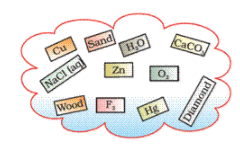
Ques 21. Classify the substances given in Figure into elements and compounds
Ans:Elements: Cu, Zn, O2, F2, Hg, Diamond
Compound: CaCO3, NaCl, H2O,
Ques 22. Which of the following are not compounds?
(a) Chlorine gas (b) Potassium chloride (c) Iron (d) Iron sulphide (e) Aluminium (f) Iodine (g) Carbon (h) Carbon monoxide (i) Sulphur powder Ans:Chlorine gas, iron, aluminium, iodine, carbon, and sulphur powder are not compounds.
Chlorine gas is a diatomic molecule, consisting of two chlorine atoms.
Iron and aluminium are both elements, not chemically combined with others.
Iodine is also an elemental substance.
Carbon can exist as a pure element, such as in graphite or diamond.
Q1: The mass per unit volume of a substance is called density. (density = mass/volume). Arrange the following in order of increasing density – air, exhaust from chimneys, honey, water, chalk, cotton, and iron. Ans: The correct order of increasing densities of the substances is as follows: Air < exhaust from chimneys< cotton< water< honey< chalk< iron.
Q2: Why does a desert cooler cool better on a hot dry day? Ans: A desert cooler works effectively on a hot, dry day due to the following reasons:
The hot air that enters the cooler causes water to evaporate quickly.
Higher temperatures increase the rate of evaporation, making the air cooler.
On dry days, the air can hold more moisture, enhancing the cooling effect.
As a result, the cooler can lower the air temperature more efficiently than on humid days.
Q3: Why does our palm feel cold when we put some acetone or petrol or perfume on it? Ans: When substances like acetone, petrol, or perfume are applied to the palm, they feel cold due to the following reasons:
The liquids are volatile, meaning they evaporate quickly.
As they evaporate, they absorb heat from the skin.
This heat absorption causes the palm to feel cool.
Essentially, the energy required for evaporation is taken from your palm, leading to a cooling sensation.
Q4: What type of clothes should we wear in summer? Ans: In summer, it is important to wear clothes that promote easy evaporation to help keep us cool. Here are some key points:
Choose fabrics that allow sweat to evaporate quickly.
Cotton is highly recommended as it absorbs sweat well.
Cotton also facilitates evaporation, which cools the body.
Wearing cotton clothes can significantly enhance comfort during hot weather.
Q5: Convert the following temperatures to the Kelvin scale. (a) The temperature is 25 ⁰C Ans: When we use: K = ⁰C + 273 = 25 + 273 = 298 K (b)The temperature is 373 ⁰C Ans: When we use: K = ⁰C + 273 = 373 + 273 = 656 K
Q6: Give two reasons to justify – (a) Water at room temperature is a liquid. Ans: For a temperature of <0 ⁰Cwater is in solid-state, for 0⁰C → 100⁰C → water is in a liquid state and for temperature >100 ⁰C water is in a gaseous state. Since room temperature always lies between 0 ⁰C and 100 ⁰C and within this range the physical state of water is liquid so water is liquid at room temperature. (b) An iron almirah is a solid at room temperature. Ans: Since the room temperature is very less than the melting point of iron hence an almirah made up of iron will be a solid at room temperature.
Q7: What produces more severe burns, boiling water or steam? Ans: Steam produces more severe burns than boiling water because:
When steam condenses into water, it releases latent heat.
This latent heat causes more damage to skin compared to the heat from boiling water alone.
Thus, steam can result in more severe burns.
Q8: What happens when we apply pressure to the particles of matter? Ans: Pressure is defined as the force applied per unit area. When we apply pressure to the particles of matter:
The force pushes the particles closer together.
This can lead to changes in the state of matter.
In gases, increased pressure can compress the particles.
Overall, applying pressure affects the arrangement and movement of particles in different states of matter.
Q9: If the melting point of object A is high then what state do you expect it to be at room temperature? Ans: If an object has a high melting point, it will remain in a solid state at room temperature. This is because:
The melting point is the temperature at which a solid turns into a liquid.
At temperatures below the melting point, the substance stays solid.
Therefore, a high melting point indicates that the object will not melt at typical room temperatures.
Q10: When heat is being supplied to a solid, then what does the heat energy do to the particles of the solid? Ans: When heat is supplied to a solid:
The kinetic energy of the particles increases.
This increase allows the particles to overcome the forces of attraction holding them in place.
As a result, the particles start to move more freely.
Eventually, the solid melts and transforms into a liquid.
Q11: Why do we say that evaporation is a surface phenomenon? Ans: Evaporation is known as a surface phenomenon because:
Only the particles at the surface of a liquid can absorb energy.
These particles gain enough energy to break free from the liquid and turn into vapour.
This process occurs without the liquid reaching its boiling point.
Q12: Which of the following matter? Chair, air, love, smell, hate, almonds, thought, cold, cold drink, the smell of perfume. Ans: As we can define matter as any ‘physical substance’, hence almonds, air, chair, the smell of perfume, cold drink and smell can be considered as matter.
Q13: What is the physical state of water at: (a) A temperature of 250 ⁰C Ans: The boiling point of water is 100 ⁰C, hence the physical state of water at 250⁰C will be gaseous. (b) A temperature of 100 ⁰C Ans: The boiling point of water is 100 ⁰C, hence at 100 ⁰C water is in the gaseous state.
Q14: Suggest a method to liquefy atmospheric gases. Ans: One method to liquefy atmospheric gases is to decrease the temperature and increase the pressure.
Q15: What is the physical state of water at- (a) A temperature of 25 ⁰C? Ans: The physical state of water at 25 ⁰C is liquid. (b) A temperature of ⁰C? Ans: The physical state of water at ⁰C is solid. (c) A temperature of 100⁰C? Ans: The physical state of water at 100⁰C is gas.
Q16: Which of the following statements is correct? (a) boiling is a bulk phenomenon and evaporation is a surface phenomenon (b) boiling is a surface phenomenon and evaporation is a bulk phenomenon (c) boiling and evaporation both are a surface phenomenon (d) boiling and surface both are bulk phenomenon Ans: The correct option is (a) boiling is a bulk phenomenon and evaporation is a surface phenomenon.
Evaporation, on the other hand, is a surface phenomenon. It occurs only at the surface of the liquid, where molecules gain enough energy to escape into the gaseous phase. So, boiling involves the conversion of a liquid into a gas throughout its bulk, while evaporation involves the conversion of liquid into a gas at its surface.
Q17: Which of the following has the least inter atomic spacing? (a) solid (b) liquid (c) gases (d) plasma Ans: The correct option is (a), solid. In a solid, the atoms or molecules are closely packed together, which results in the least interatomic spacing compared to the other states of matter. In a liquid, the particles have more space between them than in a solid, while gases have even greater intermolecular spacing. Plasma is an ionized gas with very high temperatures, and it can have significant spacing between ions and electrons as well.
Q18: Give reasons for the following observation: The smell of hot sizzling food reaches you several meters away, but to get the smell from cold food you have to go close. Ans: The smell of hot sizzling food travels quickly because:
The temperature of hot food is higher, causing particles to move faster.
Higher temperatures increase the diffusion rate of particles, allowing the aroma to spread quickly.
In contrast, cold food has a lower temperature, resulting in a slower diffusion rate.
Thus, the smell of hot food can reach us from several metres away, while cold food requires proximity.
Q19: Liquids generally have a lower density as compared to solids. But you must have observed that ice floats on water. Find out why. Ans: Ice floats on the water since there is a large empty space inside the 3D structure of ice due to which it becomes less in weight as compared to water and can float on water.
Q20: How does the water kept in an earthen pot (matka) become cool during summer? Ans: The water in an earthen pot becomes cool during summer due to the process of evaporation. Here’s how it works:
Earthen pots have small pores that allow water to seep through.
As water evaporates from these pores, it absorbs heat from the surrounding air.
This heat absorption creates a cooling effect, lowering the temperature of the water inside the pot.
Q21: Why are we able to sip hot tea or milk faster from a saucer rather than a cup? Ans: When sipping hot tea or milk from a saucer, the following occurs:
The surface area for evaporation is larger compared to a cup.
This increased area allows for faster evaporation of liquid particles.
As evaporation occurs, the liquid cools down more quickly.
This makes it easier to take a sip without burning your mouth.
Q22: Convert the following temperatures to the Celsius scale. (a) The temperature is 293 K Ans: When we use: ⁰C = K – 273 = 293 – 273 = 20 ⁰C (b) The temperature is 470 K Ans: When we use: ⁰C = K – 273 = 470 – 273 = 197 ⁰C
Q23: Give a reason for the following observations. (a) Naphthalene balls disappear with time without leaving any solid. Ans: Sublimation can be defined as the conversion between the solid and the gaseous phases of matter, with no intermediate liquid stage. Naphthalene balls will be having the property of sublimation because of which they directly vary from solid to gaseous state without a conversion into liquid. Hence, naphthalene balls will be vanishing with time leaving no solid. (b)We can get the smell of perfume sitting several meters away. Ans: Volatile substances such as perfumes change from liquid state to gaseous state very fast which allows them to diffuse and mix up with the air particles to reach our nostrils. Therefore we get the smell of perfume sitting several metres away.
Q24: Why is ice at 273 K more effective in cooling than water at the same temperature? Ans: Ice will be producing a more intense cooling effect as compared to water at 273 K because at 273 K ice will be absorbing latent heat of melting from the surroundings and will be getting converted into water. Therefore ice at 273 K is more effective in cooling than water at the same temperature.
Q25: What is evaporation? What are the factors affecting it? Ans: Evaporation can be defined as the process of conversion of a substance from its liquid state to a gaseous state at any temperature below its boiling point. Evaporation will be dependent on the factors below:
Surface area: A larger surface area increases the rate of evaporation. For example, spreading out wet clothes helps them dry faster.
Temperature: Higher temperatures provide more energy to particles, allowing more of them to escape into the gas phase.
Humidity: Lower humidity levels enhance evaporation. When the air is already saturated with water vapour, evaporation slows down.
Wind speed: Increased wind speed helps remove water vapour from the surface, promoting faster evaporation.
Q26: Define latent heat of vaporization and latent heat of fusion. Ans: The heat energy required to change 1 kg of a substance from its liquid state to a gaseous state at atmospheric pressure without changing its temperature is known as latent heat of vaporization.
Q27: What happens when the temperature of the solids increase? Ans: When we increase the temperature of the solid, we are giving energy to it. That energy is utilized in increasing the kinetic energy of the particles and as a result, the speed of the particles is increased and they vibrate more freely. Once the particles overcome the force of attraction between them they start moving more freely.
Q28: Why is it that on increasing the wind speed the rate of evaporation increases? Ans: If we increase the speed of the wind, then they will be blowing away with them. The water vapours in the air are blown away when the speed of wind is increased, making room for more water vapours and increasing the rate of evaporation.
Q29: What are the characteristics of the particles of matter? Ans: The particles of matter have the following characteristics: (i) The particles of matter are in continuous motion. (ii) There are gaps between the particles of matter. (iii) There is a force of attraction between the particles of matter which keeps them together. Q30: Give reasons (a) A gas fills completely the vessel in which it is kept. Ans: The particles of gas have negligible attraction force between them because of which the particles move freely in all directions filling the whole container the gas is kept in. (b) A gas exerts pressure on the walls of the container. Ans: The particles of gas move freely due to which they collide with the container walls continuously and randomly. Therefore the collision of particles on the container walls exerts pressure on the walls. (c) A wooden table should be called a solid. Ans: Solids have rigid and fixed particles and have a definite shape and clear boundaries. Since a wooden table possesses all the qualities of a solid, it should be called a solid. (d) We can easily move our hand in the air but to do the same through a solid block of wood we need a karate expert. Ans: Since air is a gas and the forces of attraction between the particles of gas are very less which makes it easy to separate the particles with the help of an external force and hence we can easily move our hand in the air. Whereas in the case of solids the forces of attraction are very strong and we need a very high force to separate the particles of a solid and hence we need a karate expert for it.
Q31: Are the three states of matter inter-convertible? How can they interconnect? Ans: Yes, the three states of matter can be converted into each other.
The three states of matter are interconvertible as shown below: (a) By heating we can convert solids into liquids and by cooling we can convert liquids into solids. (b) We can convert liquids into gases by vaporization and we can convert gases to liquids by condensation. (c) Using sublimation we can convert solids into gases and vice versa and using condensation we can convert liquids into solids.
Q32: Why should we wear cotton clothes in summer? Ans: Since cotton is a good absorbent of water, it absorbs all the sweat from our body and allows easy and fast evaporation. The sweat absorbs heat from our body and evaporates which makes us feel cooler during a hot summer day. That is why we should wear cotton clothes in summer.
Q33: A solution of H₂SO₄ is labeled 40%. The density of the solution is 1.3 gm/l. What is the concentration of the solution in %(m/v)? Ans: The given concentration of the solution is 40%. Therefore, 100 gm of the solution contains 40 g of H₂SO₄ Density = mass / volume 1.3gm/l = 100g / volume Volume of the solution = 100 / 1.3 = 100 / 1.3ml So, = 100 / 1.3 of the solution contains 40g of H₂SO₄ Therefore, 100 ml of solution will contain 100 × 40 × 1.3 / 100 g of H₂SO₄ = 52 g of H₂SO₄ Therefore, the concentration is 52% (m/v).
Q34: Why is it that to smell cold food, we have to go close but the smell of hot food reaches us several meters away? Ans: When the particles are at higher temperature, their movements are fast and therefore they can travel up to several meters. Hence the hot food’s smell will be reaching us several meters away. At lower temperatures, the movements of particles are not very fast and particles do not have enough kinetic energy to travel a distance of several meters. Therefore we have to go close to smell cold food.
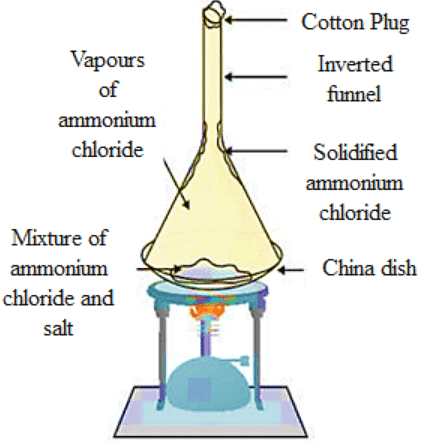
Q35: Give an experiment to show that ammonium chloride undergoes sublimation. Ans: Experiment for representing the sublimation of ammonium chloride (NHCl₄): (a) Take a crystal of ammonium chloride (NHCl₄) inside a china dish and an inverted funnel. (b) With the help of a burner, heat the ammonium chloride (NHCl₄) crystals. (c) When the ammonium chloride (NHCl₄) crystal is heated, vapours of (NHCl₄) and the Ammonium chloride (NHCl₄) which is solidified along the walls at the beaker’s upper end is observable. (d) This experiment shows that solid ammonium chloride (NHCl₄) undergoes solidification. It directly changes to vapour state from a solid state, it does not convert into liquid.
Q36: What is distillation and fractional distillation? What is the basic property that separates the two methods? Ans: The process of distillation is used for separating the components of a mixture containing two liquids, having different boiling points and both liquids boil without decomposition. The process of fractional distillation is used for separating the components of a mixture containing more than two liquids having a boiling point difference of less than 25 K. The basic property that separates these two methods is: Using distillation we can separate only those components which have a significant difference in their boiling points. While fraction distillation is used when the difference in boiling points is less.
Q37: What is the state of inter particle distance inside a solid, liquid, and gas? Ans: In a solid, the forces of attraction between the particles are very high and hence the particles of a solid will be very close to each other and the inter particle distance is the least.
In a liquid, the forces of attraction between the particles are very weak, and therefore the particles of a liquid will not be closely packed with each other and the inter-particle distance is large.
In a gas, the forces of attraction between the particles are almost negligible or extremely weak and therefore the particles of a gas are very loosely packed and are very far from each other and the inter particle distance is largest.
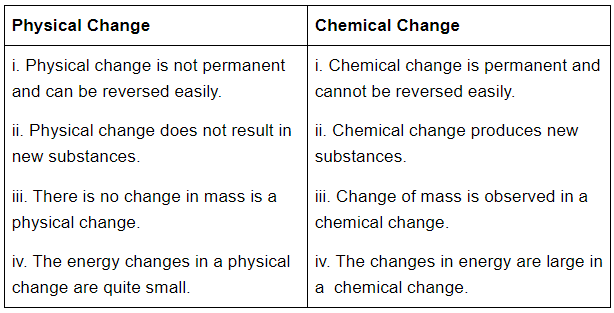
Q38: Differentiate between physical and chemical change? Ans: The difference physical and chemical change is given below:
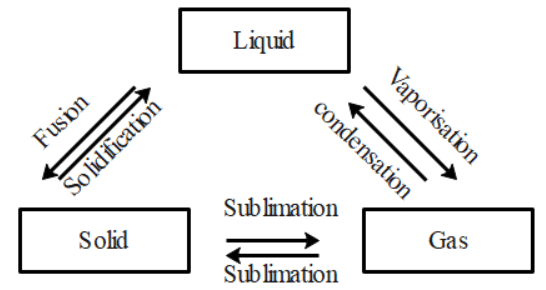
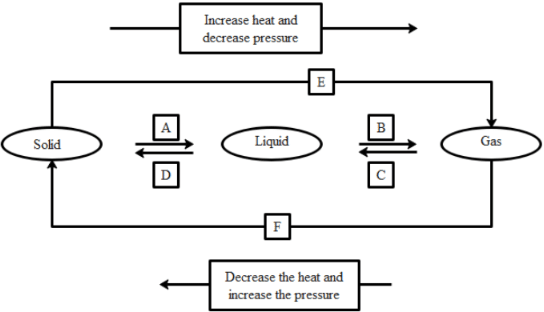
Q39: Name A, B, C, D, E, and F in the following diagram showing changes in its state.
Ans: A is fusion or heating or melting. B is vapourisation. C is cooling or Condensation. D is cooling or solidification. E is sublimation. F is solidification.
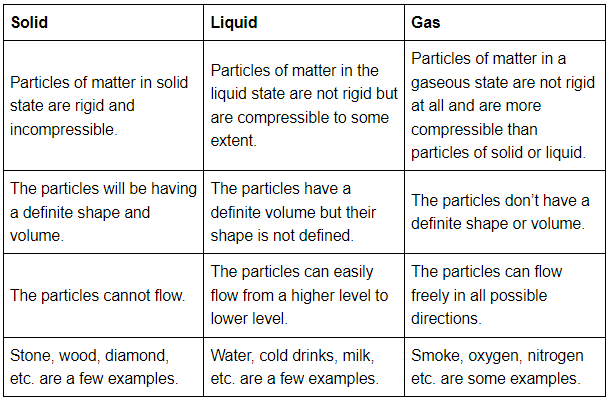
Q40: (a) Tabulate the differences in the characteristics of states of matter. Ans: Tabular differences in characteristics of matters are given below:
(b) Comment upon the following: rigidity, compressibility, fluidity, filling a gas container, shape, kinetic energy, and density. Ans:
Rigidity → The property of matter to maintain its shape when external forces are applied to it is known as rigidity. Solids have this property.
Compressibility → The property of matter to allow compression when high pressure is applied to it is known as compressibility. Some Liquids and all gases have this property.
Fluidity → The property of matter to flow and change in its shape when external forces are applied to it is known as fluidity. Both liquids and gases have this property.
Filling a gas container → Gases are fluid in nature and are highly compressible which allows them to be filled within a vessel at high pressure. A large volume of gas can be filled in a container of less volume making it suitable and more cost-efficient for transportation.
Shape → Only solid objects have well-defined shapes while liquids can acquire any shape depending on the container they are kept in and gases don’t have any shape.
Kinetic energy → The particles of a matter are continuously in motion and thus have kinetic energy. As the particles in solids have the least movement, the kinetic energy of solids is the least. The particles of gases have the freest movements and hence they have the highest kinetic energy. The order of kinetic energies for different types of matters is: solid < liquid < gas
Density → Density of any substance can be explained as Mass per unit volume i.e. density = mass/volume.
Q1: Name any two fodder crops. Ans: Berseem and Sudan grass are raised as food for the livestock, called fodder crops.
Q2: What do you understand by photoperiod of sunlight? Ans: Photoperiods are related to the duration of sunlight required for plant growth.
Q3: Name two kharif crops. Ans: Paddy and soybean.
Q4: Name two rabi crops. Ans: Wheat and gram.
Q5: Define hybridization. Ans: Hybridization refers to crossing between genetically dissimilar plants to obtain a better variety of crops.
Q6: What are genetically modified crops? Ans: A gene with required characters can be introduced into a crop for its improvement; this crop is called genetically modified crop.
Q7: “Shorter the duration of the crop from sowing to harvesting, the more economical is the variety.” Give reason for this. Ans: Farmers can grow more crops in a year due to short duration of crop growth and reduce the cost of crop production.
Q8: Name different types of crop production practices involved in India. Ans: They are (a) no cost production, (b) low cost production and (c) high cost production.
Q9: What is mariculture? Ans: The culture of marine fish in sea water is called mariculture.
Q10: What are macro-nutrients? Ans: The nutrients required by plants in larger quantity are called macro-nutrients. They are nitrogen, phosphorus, potassium, calcium, magnesium, and sulfur.
Q11: Name the nutrients that plant obtains from air and water. Ans: Air – Carbon and oxygen, Water – Hydrogen and oxygen.
Q12: State the difference between compost and vermicompost. Ans: Compost is obtained by decomposition of organic waste naturally due to decomposition by bacteria. Vermi-compost is obtained by adding red-worms to organic matter to speed up decomposition.
Q13: How does deficiency of nutrients affect the crop? Ans: Physiological processes can be affected by deficiency of any nutrient in plants including reproduction, growth and susceptibility to diseases.
Q14: Name two Indian cattle. Ans: Bos indicus – cows, Bos bubalis – buffaloes.
Q15: How does Bos indicus differ from Bos bubalis? Ans: Bos indicus is a cow while Bos bubalis is a buffalo.
Q16: Name the two vitamins which are added in the poultry feed. Ans: Vitamins A and K.
Q17: From where do plants acquire the following nutrients? (a) Nitrogen, (b) Hydrogen. Ans: (a) Nitrogen from soil, (b) Hydrogen from water.
Q18: What is animal husbandry? Ans: Animal husbandry is the management and care of farm animals by humans for profit.
Q19: Mention the components of food present in vegetables and fruits. Ans: Vegetables, spices and fruits provide a range of vitamins and minerals in addition to small amounts of proteins, carbohydrates and fats.
Q20: What causes disease in plants? Ans: It is caused by pathogens such as bacteria, fungi and viruses.
Q1: What does wave transfer – matter or energy? Ans: Energy.
Q2: What is the intensity of sound? Ans: Sound intensity is the sound energy passing per unit area per second, perpendicular to the direction of wave propagation.
Q3: Guess which sound has a higher pitch – guitar or car horn? Ans: The guitar has a higher pitch because it has a higher frequency.
Q4: Name the waves used by bats while flying in the dark. Ans: Bats use ultrasonic waves while flying in the dark.
Q5: Which of the following sound waves can we hear: 10 Hz, 500 Hz, 1500 Hz, 12000 Hz, 25000 Hz? Ans: We can hear sound waves of frequency: 500 Hz, 1500 Hz, 12000 Hz. These are within the audible range of 20 Hz to 20,000 Hz for a typical human ear.
Q6: What do you understand by the term ultrasonic vibrations? Ans: Sounds having frequencies higher than 20,000 Hz are called ultrasonic vibrations.
Q7: What do you understand by the term echo? Ans: The sound heard after reflection from a rigid obstacle is called an echo.
Q8: Name the two types of mechanical waves. Ans: The two types of mechanical waves are: (i) Transverse wave and (ii) Longitudinal wave.
Q9: What is a wave? Ans: A wave is a disturbance that travels through a medium, transferring energy from one point to another without the net movement of particles of the medium.
Q10: Define one hertz. Ans: One hertz is one vibration per second. It is the SI unit of Frequency.
Q11: Define wavelength. Ans: It is the distance between two nearest points in a wave which are in the same phase of vibration.
Q12: What is the audible range of the average human ear? Ans: An average human ear can hear sound waves between frequencies 20 Hz to 20,000 Hz.
Q13: What is sound, and how is it produced? Ans: Sound is a form of mechanical energy that produces a sensation of hearing. It is produced when an object vibrates.
Q14: Why is a sound wave called a longitudinal wave? Ans: Sound is a form of energy that produces a sensation of hearing. It is generated when an object vibrates and these vibrations travel through a medium.
Q15: How are moths of certain families are able to escape capture? Ans: Moths of certain families can hear the high-frequency sounds made by bats using sensitive hearing organs. This helps them detect the presence of bats and escape capture.
Q16: What is a transverse wave? Ans: It is a wave in which the particles of the medium vibrate perpendicular to the direction of propagation of the wave.
Q17: What is a longitudinal wave? Ans: It is a wave in which the particles of the medium vibrate in the direction of propagation of the wave.
Q18: What is a trough? Ans: A trough is a depression (lowest point) in a wave, i.e., maximum displacement in the negative direction (below the mean position).
Q19: What do you understand by the term infrasonic vibrations? Ans: Sounds having frequencies lower than 20 Hz are called infrasonic or subsonic vibrations.
Q20: Why do we see lightning before we hear thunder during a storm? Ans: Because light travels much faster than sound in air.
Q1: A spring which has been kept compressed by tying its ends together is allowed to be dissolved in an acid. What happens to the potential energy of the spring? Ans: The PE of the spring gets converted into KE of acid molecules whose temperature rises. Q2: The work done in lifting a box on to a platform does not depend upon how fast it is lifted up. Explain your answer giving proper reasoning. Ans: The work done (W) in lifting a box through a distance (s) against the gravitational force (F) is given by W = Fs. Hence, it is obvious that it is independent of the rate at which the box is lifted. Q3: A body moves along a circular path. How much work is done in doing so? Explain. Ans: In case of a body moving along a circular path, the force (centripetal) is always along the radius while displacement is tangential. Hence, work done W = FS cos 90° = 0 as angle between F and S is 90°. Q4: What type of energy is stored in the spring of a watch? Ans: When we wind a watch, the configuration of its spring is changed. The energy stored in the spring is obviously potential in nature (elastic potential energy to be more accurate).
Q5: A spring which is kept compressed by tying its ends together is allowed to be dissolved in an acid. What happens to the potential energy of the spring? Ans: The potential energy of the spring gets converted into heat energy (kinetic energy of acid molecules). Due to this heat, the temperature of the acid rises.
Q6: (a) How much work is done when a force of 1 N moves a body through a distance of 1 m in its direction? (b) Is it possible that a force is acting on a body but still the work done is zero? Explain giving one example. Ans: (a) 1 J of work is done. (b) Yes, it is possible when force acts at right angles to the direction of motion of the body. Example : Gravitational force of Earth acts on a satellite at right angles to its direction of motion.
Q7: A man rowing a boat upstream is at rest with respect to the shore. Is he doing work? Ans: The man is doing work relative to the stream because he is applying force to produce relative motion between the boat and the stream. But he does zero work relative to the shore as the displacement relative to the shore is zero.
Q8: Is it possible that a body be in accelerated motion under a force acting on the body, yet no work is being done by the force? Explain your answer giving a suitable example. Ans: Yes, it is possible, when the force is perpendicular to the direction of motion. The Moon revolving round the Earth under the centripetal force of attraction of the Earth, but Earth does no work on the motion.
Q9: Justify giving proper reasoning whether the work done in the following case is positive or negative – Work done by resistive force of air on a vibrating pendulum in bringing it to rest. Ans: Work done is negative because the resistive force of air always acts opposite of the direction of motion of the vibrating pendulum.
Q10: Name the common forms of the mechanical energy. Ans: The common forms of the mechanical energy are : (i) Kinetic e nergy (ii) Potential energy
Q11: A spring is compressed, what change is expected in the potential energy of the spring Ans: When a spring is compressed, its potential energy is used up to changing its shape.
Q12: What type of energy is possessed by a flying bird and a flying aeroplane? Ans: Both potential energy and kinetic energy.
Q13: Give one example of potential energy due to position. Ans: Water stored in the reservoir of a dam has potential energy.
Q14: Which type of energy is present in a battery? Ans: Chemical energy.
Q15: At what rate is electrical energy consumed by a bulb of 60 watt? Ans: A 60 watt bulb consume electrical energy at the ratio of 60 joule per second.
Q16: How much energy will an electric motor of 1 horsepower consume in one second? Ans: An electric motor will consume 746 joule of energy per second.
Q17: What is meant by the term horsepower (hp)? Ans: Horsepower is another commercial unit power 1 hp = 746 W 1W = 1 / 746 hp = 0.0013 hp
Q18: A car and a truck are moving with the same velocity of 60 km/hr–1, which one has more kinetic energy? Ans: Truck has more kinetic energy as kinetic energy is directly proportional to the mass.
Q19: What kind of energy transformation takes place when a body is dropped from a certain height? Ans: When a body falls, its potential energy gradually gets converted into kinetic energy. On reaching the ground, the whole of the potential energy of the body gets converted into kinetic energy.
Q20: Give one example each of potential energy (i) due to position (ii) due to shape. Ans: (i) Potential energy due to position : Water stored in dam has potential energy. (ii) Potential energy due to shape : In a toy car, the wound spring possesses potential energy and as the spring is released, its potential energy changes into kinetic energy due to which the car moves.
Q21: Can any object have mechanical energy even if its momentum is zero? Explain. Ans: Yes, mechanical energy comprises of both potential energy and kinetic energy. Zero momentum means that velocity is zero. Hence, there is no kinetic energy but the object may possess potential energy.
Q22: How much work is done by a force of 10 N in moving an object through a distance of 4 m in the direction of the force? Ans: Work done = Force × Displacement = F × s = (10 N) × (4 m) = 40 joule or 40 J.
Q23: When an arrow is shot from its bow, it has kinetic energy. From where does it get the kinetic energy? Ans: A stretched bow possesses potential energy on account of a change in its shape. To shoot an arrow; the bow is released. The potential energy of the bow is converted into the kinetic energy of the arrow.
Q24: What do you mean by transformation of energy? Ans: It is the change of energy from one form of energy into another form of energy.
Q25: A body performs no work. Does it imply that the body possesses no energy? Ans: When a body does not perform any work, it never implies that the body has no energy. The body may have energy but still does not perform any work, e.g., a book placed on a table has potential energy but is not performing any work.
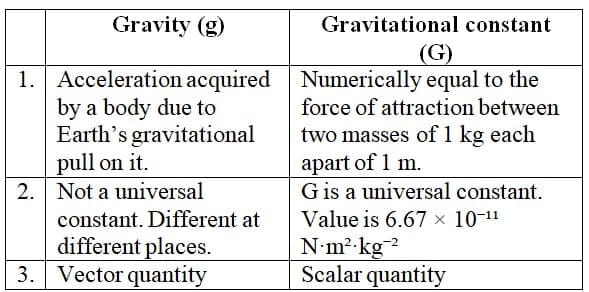
In SI system, force F is measured in N, distance r in m and masses m1 and m2 in kg, therefore
Using G = Fr2 / (m1m2), the SI unit of G becomes N m2 kg-2.
Q2: Why should we be sent flying in space if the force of gravity somehow vanishes today? Ans: Earth’s gravity provides the inward (centripetal) force that keeps us moving in a circular path as the Earth rotates. If gravity vanished, that centripetal force would disappear and objects on the surface would continue to move in a straight line tangent to the Earth’s surface. As a result, we would move away from the Earth and be sent off into space along that tangent.
Q3: A ball moving on a table reaches the edge and falls. Sketch the path it will follow while falling. Ans: As the ball leaves the table it has a horizontal velocity and, at the same time, a vertical downward acceleration due to gravity. The horizontal velocity remains nearly constant while the vertical speed increases. The combined motion makes the path a parabola.
Q4: Is value of “g” same at all places on the Earth? Give reason for your answer. Ans: No. The value of g is slightly larger at the poles and slightly smaller at the equator. This is because the Earth is not a perfect sphere (it is slightly flattened at the poles) and because Earth’s rotation produces a small centrifugal effect that reduces the effective gravitational acceleration at the equator.
Q5: What is the relation between gravitational force of the Moon with the Earth. Ans: The surface gravitational acceleration on the Moon is about one-sixth of that on the Earth. Therefore the gravitational force (weight) on an object at the Moon’s surface is roughly 1/6 of its weight on Earth.
Q6: Why does a mug full of water feel lighter inside water? Ans: A mug immersed in water experiences an upward buoyant force from the water. This upward force opposes part of the mug’s weight, so the apparent weight (how heavy it feels) is reduced when it is inside the water.
Q7: Name the force which accelerates a body in free fall. Ans: Gravitational force of the Earth (weight) is the force that accelerates a body in free fall.
Q8: Why value of “g” more or less constant on or near the Earth? Ans: Because the distance from the surface to the centre of the Earth changes very little over the Earth’s surface, the value of g remains nearly the same on or near the Earth. Small variations occur due to Earth’s shape and rotation, but they are minor.
Q9: What is the unit of “g”? Ans: The unit of g is m s-2 (metre per second squared).
Q10: What is the importance of universal law of gravitation? or
Write four phenomenons which were successfully explained using universal law of gravitation. Ans: The universal law of gravitation explains how masses attract each other and helps us understand many natural phenomena. Some important examples are: (i) It explains why objects remain bound to Earth (why we stay on the ground). (ii) It explains the Moon’s motion around the Earth. (iii) It explains the motion of planets around the Sun (planetary orbits). (iv) It explains tides caused by the gravitational pull of the Moon and the Sun.
Q11: Name the scientist in whose honor the SI unit of pressure is named. Ans: The SI unit of pressure, the pascal, is named after the scientist Blaise Pascal.
Q12: Define the weight of an object on Moon. Ans: The weight of an object on the Moon is the gravitational force with which the Moon attracts that object. It is measured in newtons and is about one-sixth of the object’s weight on Earth.
Q13: What is weightlessness? Ans: A body is in a state of weightlessness when the normal reaction force from a supporting surface becomes zero, so its apparent weight is zero. This happens, for example, during free fall or for astronauts orbiting the Earth, where they and their spacecraft fall freely together.
Q14: Give difference between `g’ and ‘G’ in a tabular form. Ans:
Q15: Why is G called ‘a universal gravitational constant’? Ans: The numerical value of G is the same for any pair of objects anywhere in the universe and does not depend on the nature of the medium between them. For these reasons G is called the universal gravitational constant.
Q1: Name two factors which determine the momentum of a body. Ans: The two factors that determine the momentum of a body are its mass and velocity.
Q2: If a man jumps out of a boat, the boat moves backwards. Why? Ans: When a man jumps forward from a boat, he exerts a force on the boat in the backwards direction. As a reaction, the boat moves backwards. This is the example and application of Newton’s third law of motion.
Q3: What is the direction of momentum? Ans: The direction of momentum is the same as that of velocity.
Q4: Why are road accidents at high speeds very much worse than accidents at low speeds? Ans: At high speeds, the momentum is large and the time of impact is small, resulting in a greater force during collision.
Q5: State Newton’s first law of motion. Ans: An object remains in a state of rest or of uniform motion in a straight line unless acted upon by an external unbalanced force.
Q6: Which type of force brings an object into motion? Ans: Unbalanced force
Q7: Name the scientist who introduced the property of momentum. Ans: Sir Isaac Newton introduced the concept of momentum as part of his laws of motion.
Q8: Why do athletes run some distance before jumping? Ans: To gain momentum for a longer jump.
Q9: What decides the rate of change of momentum of an object? Ans: he rate of change of momentum of an object depends on the unbalanced force applied to it. (Newton’s second law).
Q10: The fruits fall off the branches when a strong wind blows. Give a reason. Ans: Fruits fall off branches during strong winds due to the principle of inertia.
Q11: Define force. Ans: Force is a push or pull that changes or tends to change the state of motion of an object. Mathematically, according to Newton’s second law of motion, F = ma.
Q12: If a ball is thrown up in a moving train, it comes back into the person’s hands. Why? Ans: If a ball is thrown up in a moving train, it comes back into the person’s hands becauseit retains the forward motion of the train due to inertia, so it comes back to the thrower’s hand
Q13: State Newton’s third law of motion. Ans: Newton’s third law of motion states that, for every action, there is an equal and opposite reaction.
Q14: What is a frictional force? Ans: The frictional force is the force that opposes the motion of an object. It acts between two surfaces in contact.
Q15: Define the SI unit of force. Or what is one Newton force? Ans: A Newton is the force which acts on a body of mass 1 kg to produce an acceleration of 1 m/s² in it.
Q16: Name the physical quantity which is determined by the rate of change of linear momentum. Ans:Force is the physical quantity that results from the rate of change of linear momentum.
Q17: It is easier to push an empty box than to push a box full of books. Give a reason. Ans: It is easier to push an empty box than to push a box full of books because an empty box has less mass, it has less inertia, so it’s easier to push.
Q18: Is force a scalar quantity or a vector quantity? Ans: Force is a vector quantity.
Q19: What is inertia? Ans: The natural tendency of an object to resist a change in its state of rest or uniform motion is known as inertia.
Q20: There are three solid balls, made up of aluminium, steel, and wood of the same shape and volume. Which of them would have the highest inertia? Why? Ans: The ball made of steel has the highest inertia among the three materials because steel has the highest density, so it has the greatest mass and therefore the highest inertia.
Q21: No force is required to move an object with constant velocity. Why? Ans: According to Newton’s first law, no force is needed to keep an object in motion with constant velocity in the absence of external forces like friction.
Q22: Explain our walking in terms of Newton’s third law of motion. Ans: When we walk on the ground, our foot pushes the ground backwards, and in return, the ground pushes our foot forward. The forward reaction exerted by the ground on our foot makes us walk forward. Q23: Which will have more inertia, a body of mass 10 kg or a body of mass 20 kg? Ans: A body with a mass of 20 kg will have more inertia than a body with a mass of 10 kg.
Q24: Which type of force does not change the state of rest or of motion of an object? Ans: Balanced force
Q25: State Newton’s second law of motion. Ans: The second law of motion states that the rate of change of momentum of an object is proportional to the unbalanced force applied. This change occurs in the direction of the applied force.
Q26: What is momentum? Ans: Momentum is the product of mass and velocity. It is a vector quantity and is measured in kg·m/s.
Q27: Why do action and reaction not cancel each other? Ans: Action and reaction do not cancel each other because they act on different objects.
Q28: What is a balanced force? Ans: Balanced forces are forces that act on an object from opposite directions and do not change its state of rest or motion.
Q29:What is the momentum of a body at rest? Ans: Zero.
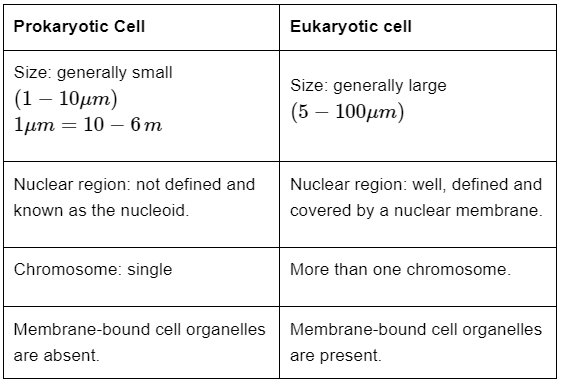
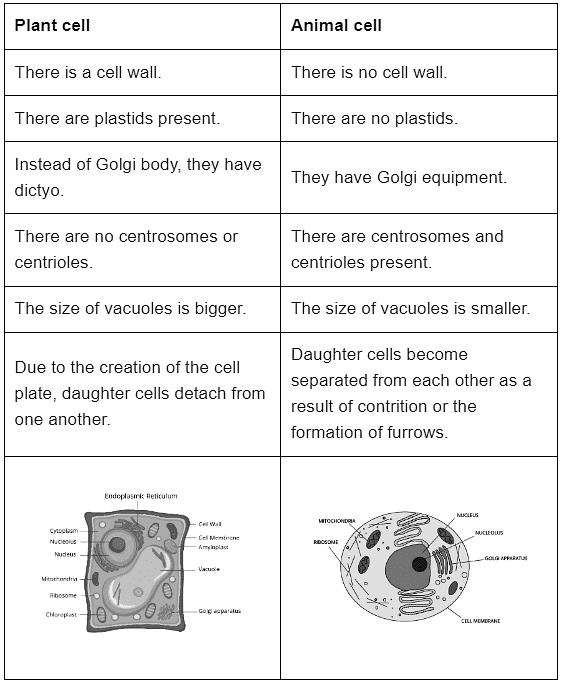
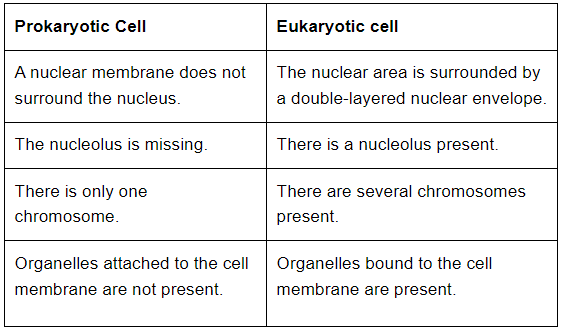
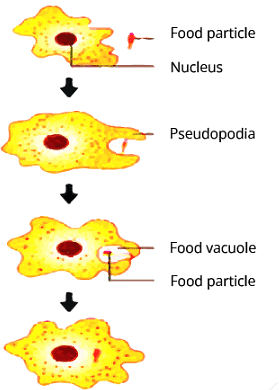 Process showing Amoeba obtaining its food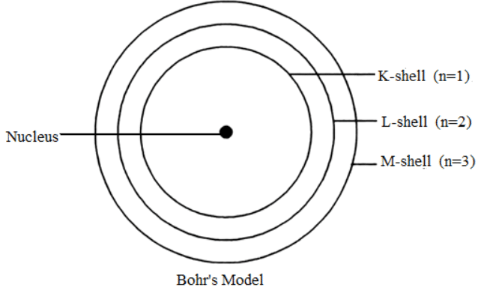
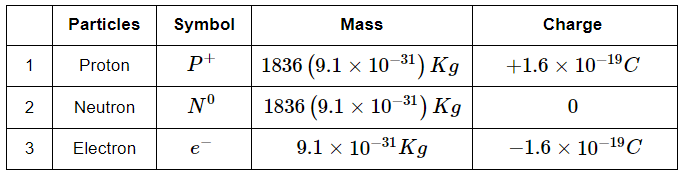
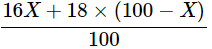
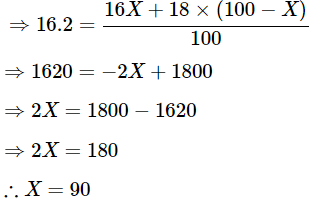


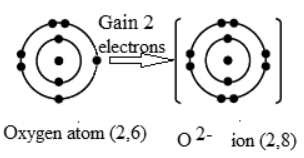

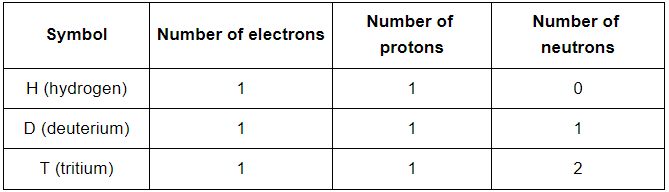
 . Isotopes have the same number of electrons and protons.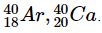
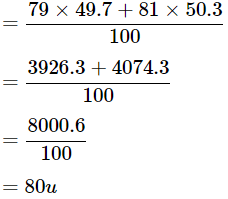


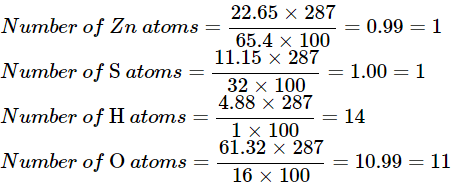
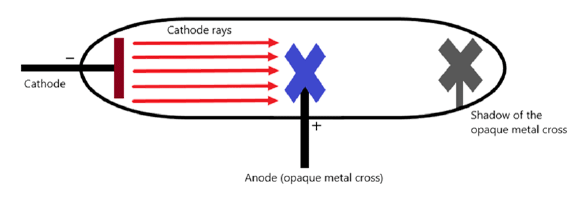
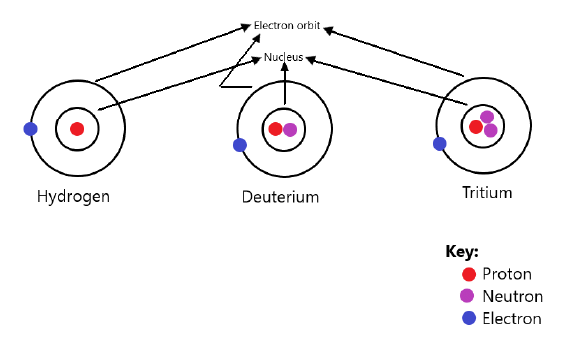



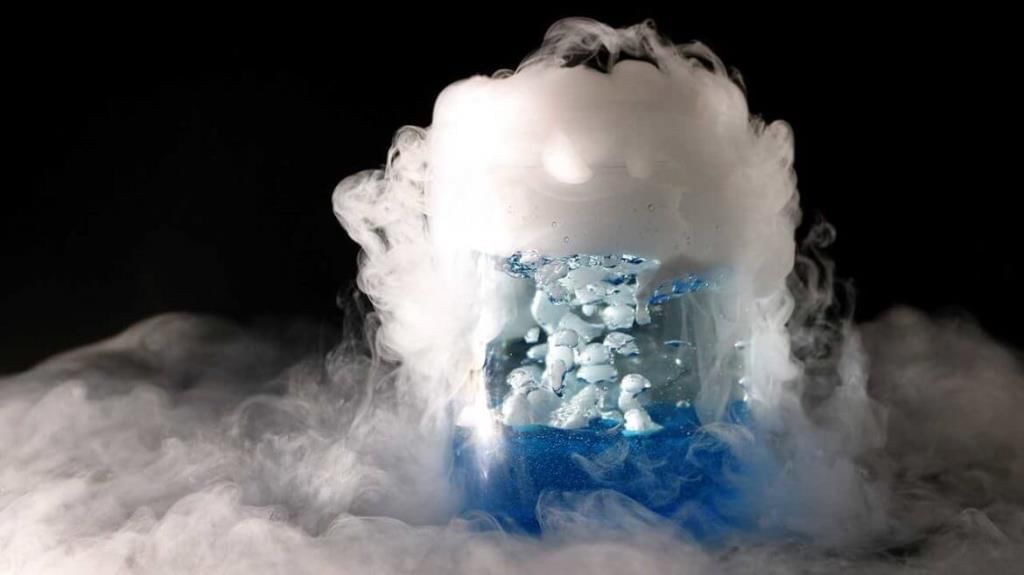 Fig: Sublimation(c) Common salt, water and sand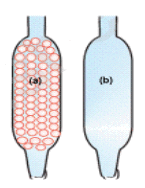
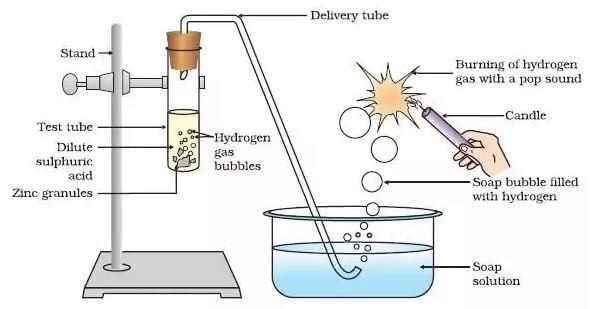 Fig: Reaction of zinc with hydrochloric acid
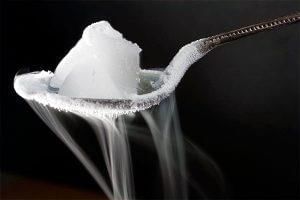 Fig: Subliming dry ice
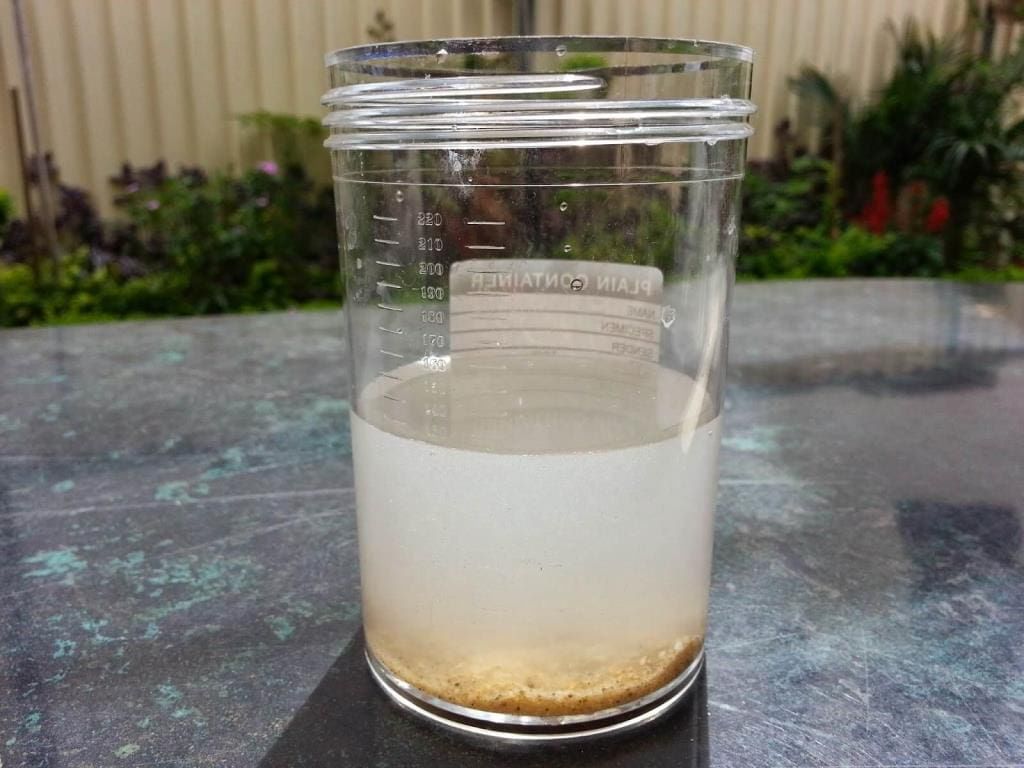 Fig: Mixture of sand and water
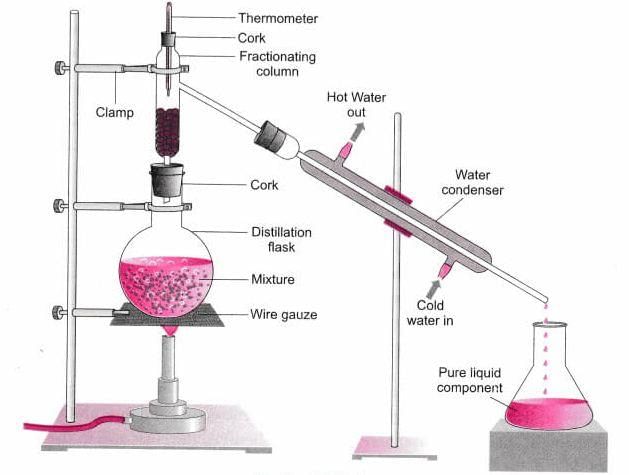 Fig: Fractional distillation(c) One of the components changes directly from solid to gaseous state.
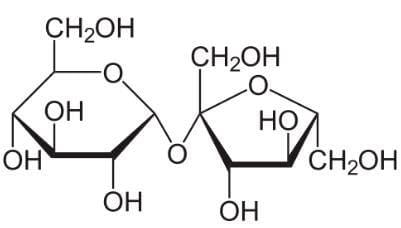 Fig: Structure of sucrose
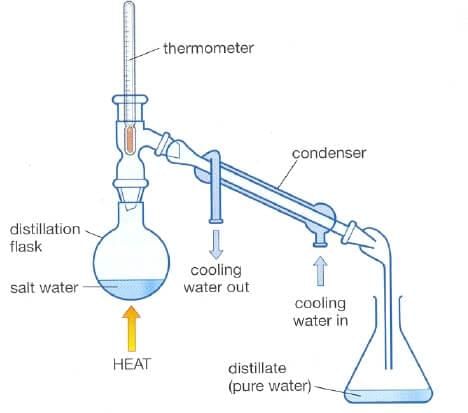 Fig: Distillation process
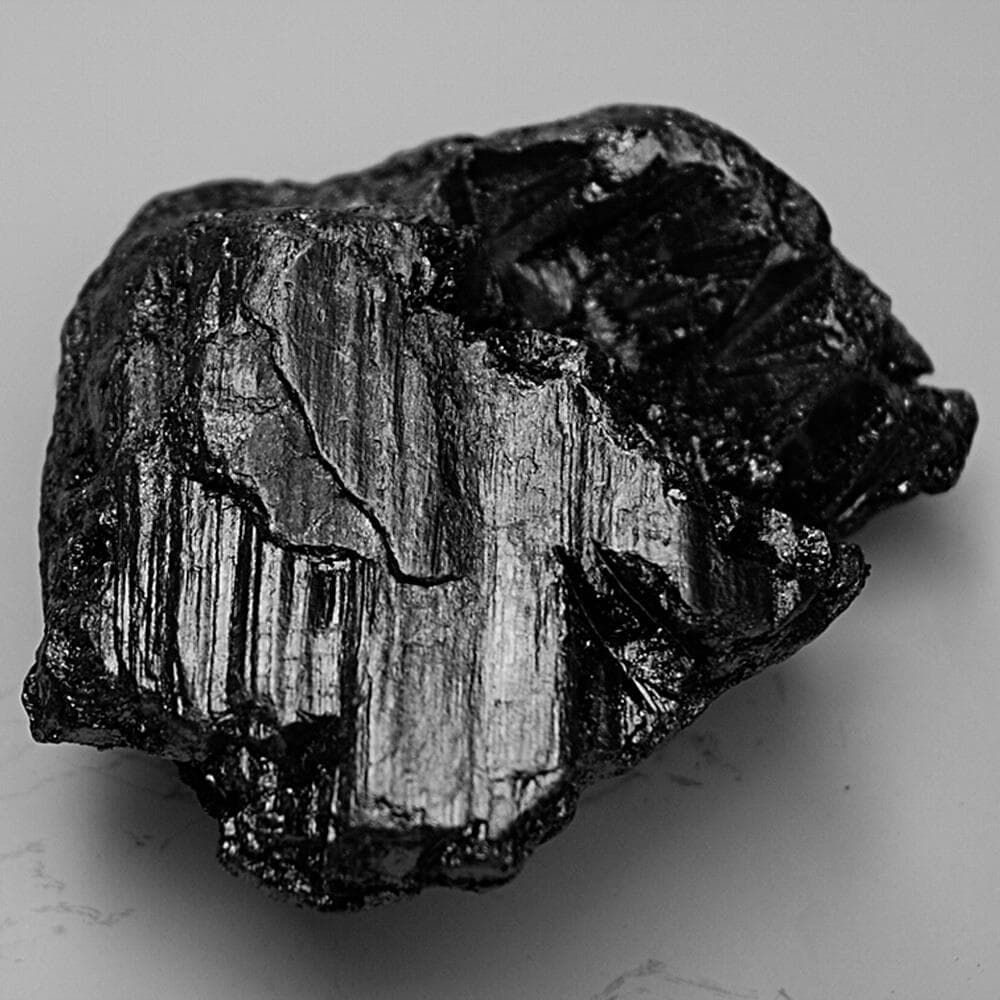 Fig: Graphite