7. The Necklace – Long Answer Questions

Q1: Matilda realized that one little act of negligence can lead to total ruin. How would you prefer to be guided to move on in life?
​Ans: Matilda’s experience taught her a valuable lesson about the consequences of negligence. To move on in life, we must first acknowledge our mistakes and take responsibility for them. This means being honest with ourselves and others about what went wrong and making amends where possible. Once we have taken responsibility for our actions, it’s important to focus on the future and take positive steps towards recovery. This may involve making changes to our lifestyle or habits, seeking guidance from others, or taking practical steps to address the situation.
It’s also important to maintain a positive outlook and avoid dwelling on past mistakes. This means focusing on the present moment and taking action towards our goals, rather than letting past mistakes hold us back. Finally, we should be open to learning from our mistakes and using them as an opportunity for growth and personal development. This may involve seeking feedback from others, reflecting on our actions and decisions, and developing new skills and knowledge to help us avoid similar mistakes in the future.


Q2: Loisel wished to keep his wife in good humour. Which values of Matilda impress him?
Ans: Loisel wished to keep his wife in good humour. Matilda was a beautiful and delicate woman. She was fond of all riches and luxuries. She thought she deserves all these and thought that it was an error of destiny that she is born into a poor family and married to a mere clerk in the office of the Board of Education. 
Matilda’s beauty and style impressed Loisel. He tried his best to keep her happy. She was fond of parties and balls. He was happy for his wife. He bought her a new dress for the ball, with the money he had saved to buy a hunting gun.  He loved her so much that he bought the new diamond necklace to replace the lost one for thirty-six thousand francs which lost all his savings and compelled him to do extra jobs after office time. This entire all he did because he loved his beautiful wife very much and wanted to keep her happy.


Q3: Was Matilda’s dream fulfilled at the ball? Why did all men notice and wanted them to be presented to her?
Ans: Matilda always dreamt of grandeur, delicacies and luxuries in her life. She had prepared the ball so thoroughly as befitted a grand occasion. She didn’t want to present a poverty-stricken image of her, amidst rich ladies and gentlemen. She made her husband buy a new costume for this occasion. She borrowed jewels from Madam Forestier to adorn herself like a graceful and distinguished lady. And she proved to be a grand success at the ball. Her dream was fulfilled. She was the centre of attraction for all ladies as well as gentlemen who were present there. 
Matilda danced with enthusiasm. She was intoxicated with pleasure. She loved to be admired and appreciated. Her victory at the ball was so complete and sweet to her. She was the prettiest of all. She was elegant and gracious. She was smiling and full of joy. All the men noticed her. They asked her name and were eager to be presented to her. She was so attractive and appealing to them. They couldn’t avoid the temptation of noticing her.
Q4: “Oh! My poor Matilda! Mine was false.” Confession saves you from a lot of trouble and a sense of guilt. Justify the statement.
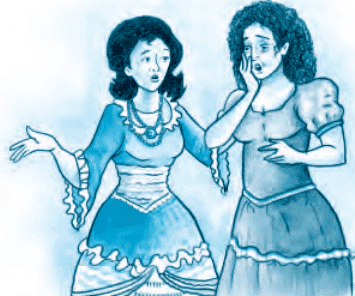
Ans: Matilda’s friend Mme Forester meets her after a long time, nearly a gap of ten years. Perhaps it was destined to. She does not recognize Matilda — old, hard and crude with dishevelled hair and skirts awry. She is astonished to see Matilda in this pathetic condition. Matilda tells her the reason for this — the loss of the original necklace and the misery that followed after replacing the necklace. Mme Forestier could only sympathize with Matilda, for the necklace she had lent to Matilda was not of original diamonds. She could have told this clearly to Matilda while giving it to her. 
Perhaps Mme Forestier thought she should not dampen Matilda’s spirits by revealing the truth. But what the loss of it. Brought to Matilda was irreversible. Matilda on her part should have revealed the loss of the necklace to her friend. If it had been of real diamonds, then she could have asked for some time to replace it. Matilda could have thus taken her friend into confidence, but the silent suffering had taken its toll on her life. If Matilda had only taken courage and been honest to her friend, she would still have been living comfortably, thus justifying the statement given above. Her senseless attitude led to her ruin.


Q5: Write a character sketch of Mrs Loisel.
Ans: Madame Loisel is a beautiful but vain woman who dreams of a life of luxury and elegance. She believes that she is destined to be admired and loved by wealthy and influential people. However, her family’s modest financial situation and lack of dowry force her to marry a lowly clerk. Madame Loisel is constantly dissatisfied with her situation, and she frequently complains about her modest home and simple lifestyle. She yearns for fancy dresses, expensive jewellery, and lavish parties. Her dreamy and ambitious nature ultimately leads her into trouble when she borrows a diamond necklace to wear to a ball and loses it.
After losing the necklace, Madame Loisel’s life takes a drastic turn. She becomes physically worn out, and her beauty fades away. She is forced to work hard to repay the loan, which leaves her looking and feeling old and tired. Despite her misfortune, Madame Loisel remains honest and brave, and she never loses her determination to pay off her debt. Madame Loisel’s character can be described as self-centred and materialistic. She cares only about her desires and is willing to go to great lengths to fulfil them. Her vanity and desire for wealth and status cause her to make poor decisions, leading to her downfall. However, her resilience and perseverance in the face of adversity show her strength of character and determination to make things right.


Q6: What preparations did Mrs Loisel make for the ball?
Ans: Mrs Loisel did not have a good dress to wear at the party. She told her husband that a suitable dress would cost four hundred francs. Her husband had been saving money to buy a gun. He gave up the idea of purchasing the gun. Mrs Loisel purchased a beautiful dress with that money. But Mrs Loisel was still not happy. Now she told her husband that she did not have any jewellery to wear at the party. Her husband asked her to request Mrs Forestier for help. Mrs Loisel and Mrs Forestier were very good friends. 
Mrs Forestier was very rich. She had several necklaces. Her husband suggested that she should borrow a necklace from her. Mrs Loisel liked the idea. She went to her friend. Mrs Forestier agreed to lend her a necklace. She showed her several of her necklaces. She asked Mrs Loisel to choose any of those necklaces. All these necklaces looked attractive and costly. At last Mrs Loisel selected a beautiful necklace and borrowed it. In this way, Mrs Loisel made preparations for the party.


Q7: What kind of life did Matilda and her husband live after the loss of the diamond necklace?
Ans: The couple needed thirty-six thousand francs to purchase a diamond necklace and return it to Mrs Forestier. But Mr Loisel had only eighteen thousand francs with him. He raised a loan of eighteen thousand francs for purchasing the necklace. Now Loisel and his wife worked hard to repay that debt. They changed their lodgings. They shifted to a small room. They dismissed their maid. Mrs Loisel did all her household work herself. She had to be very frugal in her purchases. 
She bargained for small amounts. Mr Loisel did extra work in the evenings. Sometimes late at night, he did the work of copying manuscripts. After ten years of hard work, they were able to pay off their debt. But because of hard work and misery, Mrs Loisel looked old.  Ten years ago, she was pretty. But now she looked unattractive. She had become an ordinary woman in a poor house. She remembered her past life with sadness. Sometimes she remembered that great party. She remembered how beautiful she had looked at the party. Thus, the couple’s life was completely changed after they had raised the loan for the necklace.


Q8: What would have happened if Matilda had made the true confession to Mme Forestier?
Ans: If Matilda had made a true confession to Mme Forestier, it could have saved her and her husband from years of hardship. Matilda’s confession would have revealed that the lost necklace was fake and not worth the large debt they incurred to replace it. However, it is not clear whether Mme Forestier knew that the necklace was fake or not. The story implies that Mme Forestier had borrowed the necklace from someone else, suggesting that she may not have known its true value. Regardless, Matilda’s confession could have potentially led to Mme Forestier’s assistance in resolving the issue, which would have saved Matilda’s family from their financial struggles. Overall, if Matilda had been honest and confessed the truth, she could have avoided a great deal of misery for herself and her husband, who spent ten years working to repay the debt incurred to replace the necklace.


Q9: Mr Loisel was a caring, accommodating and helpful husband who tried to please his ambitious wife within his limited means. Comment.
Ans: Mr Loisel was every inch a gentleman. He was caring, accommodating and helpful. He had a better understanding of people and things than his ambitious wife. He knew his limitations and never tried to go beyond his means.  However, he stood solidly in thick and thin with his wife. He was ready to make any sacrifice to make her happy. Mr Loisel was a ‘petty’ clerk in the Ministry of Education. He realised that he was the husband of a beautiful and young, but ambitious wife. So, he made every effort within his means to make her happy. 
He didn’t believe in showing off like Matilda. He suggested wearing the same dress which Matilda wore when she went to the theatre. He suggested wearing natural flowers instead of jewels. However, when he failed to convince her, he was ready to make the necessary sacrifices. He sacrificed 400 francs that he had saved to buy a gun for hunting, to buy a suitable costume for her. Even in bad times, he stood with his wife. He was self-respecting and contributed all the money, 18000 francs left by his father, to buy a substitute necklace. He worked in the evenings putting the books of some merchants to pay off his debts. He also did copying work at five sous a page at night. His hard work and savings helped them to pay off all their debts in ten years.


Q10: “Contentment in one’s life is very important to lead a peaceful life. We should be happy with what we have and should not crave for what we don’t have. Matilda suffered in life because she was not content in her life. Her desires led to her disaster. What do you learn from her mistake in life?
Ans: It is crucial for a person to live a contented life. We should embrace simple living and focus on higher thoughts. Not everyone is born into wealth, but through honesty and hard work, we can achieve our best. Constantly craving for what we don’t have will never make us happy and might even ruin our present. Matilda desired a life of luxury and wealth, losing sight of what truly mattered. She became absorbed in glamour after her husband got an invitation to a ball, disregarding her loving middle-class husband in favor of her fantasies. She could have worn a theater dress to the minister’s party, but instead, she insisted on buying a new dress for 400 francs, crushing her husband’s dreams. 
She also longed for unnecessary jewelry, borrowing a diamond necklace, which she eventually lost. To repay the debt, she and her husband sacrificed many years of their lives, living in extreme poverty. Matilda lost her beauty and charm in pursuit of temporary appearances. Her desire to show off beyond her means led to her downfall. Thus, it’s wise to be satisfied with what we have rather than pretending to be something we’re not, and Matilda’s story is a strong example of this.
6. The Making of a Scientist – Long Answer Questions

Q1. ‘Success is failure turned inside out’. Prove the above statement with instances from the journey taken by Richard Ebright from losing at the science fair to winning at the international fair.

Ans: The statement ‘Success is failure turned inside out’ is clearly illustrated in Richard Ebright’s journey. Initially, as a seventh-grader, Ebright faced disappointment at the County Science Fair when his project on frog tissue slides did not win. Instead of giving up, he used this failure as motivation to improve. In eighth grade, he shifted his focus to a project on viral diseases affecting monarch caterpillars, which earned him a win. The following year, although his project on butterfly mimicry placed third, he remained determined to succeed. Ebright then developed a device to study the gold spots on monarch caterpillars, demonstrating their role in the butterfly’s development. This project secured him third place at the international fair. However, his persistence paid off the next year when his advanced research on monarch pupae won first place at the international science fair. Through his journey, Ebright transformed his setbacks into valuable lessons, proving that success often stems from learning and growing through failure. His competitive spirit and dedication to real experiments, rather than mere displays, paved the way for his achievements, showcasing that each failure can lead to greater success if one is willing to learn and adapt.


Q2. How does Richard Ebright become a scientist?
Ans: Richard Ebright‘s journey to becoming a scientist began early, fuelled by his curiosity and his mother’s support. As a child, he collected rocks, fossils, coins, and butterflies, showing a strong interest in the natural world. His passion for science grew when Dr. Frederick A. Urquhart invited him to assist in collecting butterflies for research, igniting his interest in scientific inquiry. In seventh grade, Ebright entered a county science fair but did not win, which was disappointing. This experience taught him that science is about conducting meaningful experiments rather than just creating displays. Motivated by this lesson, he worked diligently and eventually won first place at a county fair, earning a spot in the international science fair. Although he placed third there, it only strengthened his determination. His research on the spots of the Monarch pupa led to a significant theory about cell life, establishing him as a renowned scientist and demonstrating the power of perseverance. Ebright’s early fascination with butterflies opened the door to a successful scientific career, showcasing how curiosity and hard work can lead to remarkable achievements.


Q3. Ebright’s backbone was his mother. How did she contribute to his learning? What kind of work did she find for him even at the dining table? What values did Ebright imbibe from his mother?
Ans: Ebright’s mother played a crucial role in his development as a scientist. She encouraged his curiosity by taking him on trips and providing essential tools like telescopes, microscopes, and cameras. Every evening, they worked together at the dining table, where she ensured he had engaging projects. If he lacked a task, she would find him work related to his studies. Her support included gifting him the book ‘The Travels of Monarch X’, which sparked his passion for science. Through her encouragement, Ebright developed a love for learning that helped him achieve top grades in school. She not only nurtured his interests but also instilled in him the values of dedication and perseverance. This strong foundation in science paved the way for his future achievements, demonstrating the profound impact of her support on his journey.


Q4. Which book proved to be a turning point in Ebright’s life?
Ans: One day, Ebright’s mother gave him a book titled The Travels of Monarch X. This book fascinated him as it detailed the migration of monarch butterflies to Central America. At the end of the book, readers were invited to help study butterfly migrations by tagging butterflies for research conducted by Dr. Frederick A. Urquhart from the University of Toronto, Canada. Ebright’s mother contacted Dr. Urquhart, and soon Ebright began attaching light adhesive tags to the wings of the butterflies. The butterfly collecting season in Reading lasts only six weeks in late summer. Ebright realised that chasing butterflies one by one would not yield many captures. Therefore, he decided to raise a flock of butterflies. He would catch a female monarch, collect her eggs, and nurture them through their life cycle in his basement, from egg to caterpillar to pupa to adult butterfly. After tagging the butterflies’ wings, he would release them. Over the years, his basement became home to thousands of monarchs at various developmental stages. Eventually, Ebright lost interest in tagging butterflies, finding it tedious with little feedback. He remarked, “In all the time I did it, only two butterflies I had tagged were recaptured – and they were not more than seventy-five miles from where I lived.” Despite this, his early experiences with butterflies opened the door to a lifelong passion for science.


Q5. What experiments did Ebright do about monarch butterflies?
Ans: Richard Ebright conducted several significant experiments on monarch butterflies during his school years. Initially, he sought guidance from Dr. Frederick Urquhart, a prominent scientist, who provided him with numerous experimental ideas. One of Ebright’s early projects aimed to identify the cause of a viral disease that severely affected monarch caterpillars. He hypothesised that the disease might be transmitted by a beetle and attempted to raise caterpillars alongside beetles, but he did not achieve significant results. Nonetheless, he presented his findings at a science fair, where he won an award. In the following year, Ebright explored the theory that viceroy butterflies mimic monarchs to evade predation by birds, as monarchs are unpalatable. His project demonstrated that birds, such as starlings, preferred to eat viceroys over monarchs. This research earned him first place in the zoology division and third overall at the county science fair. As he progressed through high school, Ebright continued his research, ultimately discovering an unknown insect hormone linked to the gold spots on monarch pupae. To investigate the purpose of these spots, he and another student built a device that showed the spots produced a hormone essential for the butterfly’s full development. This innovative project won him first place at the county fair and entry into the International Science Fair, where he secured third place for zoology. He demonstrated that these cells would only divide and develop into normal butterfly wing scales when fed the hormone from the gold spots. This project won first place at the International Science Fair and provided him with further opportunities to work at the Walter Reed Army Institute of Research.


Q6. How did Ebright get the idea for his new theory about cell life? How can this theory be beneficial?
Ans: Richard Ebright developed his new theory about cell life while examining X-ray photos of the chemical structure of a hormone. These images, along with his research on insect hormones, helped him tackle a major question in biology: how cells can ‘read’ their DNA blueprint. DNA, found in the nucleus of a cell, controls heredity and determines the cell’s form and function, serving as the blueprint for life. Alongside his college roommate, James R. Wong, Ebright spent a night creating drawings and plastic models of molecules to illustrate their ideas. They later published a paper explaining their theory. Ebright graduated from Harvard with the highest honours, coming second in his class of 1,510, and became a graduate researcher at Harvard Medical School, where he began conducting experiments to test his theory. If proven correct, this theory could greatly enhance our understanding of life processes and may lead to new methods for preventing certain types of cancer and other diseases. Ebright’s scientific curiosity, sparked by his early interest in butterflies, has driven his research and discoveries.


Q7. Give a character sketch of Richard Ebright highlighting his achievements and his added interests.
Ans: Richard H. Ebright was a brilliant and curious student with a passion for science from an early age. He began collecting butterflies in childhood and, by second grade, had collected all 25 species found in his hometown. Inspired by the book Travels of Monarch X, he began real scientific research, leading to a project that showed viceroy butterflies mimic monarchs to avoid predators. This won him first prize at a science fair. As he grew, Ebright continued to make significant discoveries, including finding that DNA controls heredity and that certain spots on monarch pupae produce important hormones. At just 22, he co-authored a paper published in the Proceedings of the National Academy of Sciences, a rare achievement for a college student.

Beyond science, Ebright was a straight-A student, champion debater, skilled canoeist, and nature photographer. His competitive spirit and drive to learn made him successful in every field he pursued. His journey reflects not only scientific brilliance but also a well-rounded personality with many interests.


Q8. How did Richard Ebright not winning anything at his first County Science Fair motivate him to become a great scientist? What lessons did he learn from his failure there?
Ans: Richard Ebright’s fascination with butterflies began in his childhood; by second grade, he had collected all twenty-five species in his hometown. However, a crucial lesson about real science emerged in seventh grade when he entered the County Science Fair with a project on frog tissues. Despite his hard work, he did not win any awards, while others did. This experience was a turning point for Ebright, as he realised that genuine science involves conducting experiments rather than merely creating attractive displays. Although he felt disheartened, he recognised the need for improvement. Determined to succeed, Ebright sought guidance from Dr. Urquhart, who provided him with several experimental ideas. This marked a significant shift in his approach, leading to extensive research and experimentation throughout high school. His dedication bore fruit, resulting in numerous awards at both local and international science fairs. For instance, in eighth grade, he investigated a viral disease affecting monarch caterpillars, which ultimately won him first place in the county fair and entry into the International Science and Engineering Fair. Through these experiences, Ebright learned that failure can be a powerful motivator, driving him to pursue authentic scientific inquiry. This journey not only shaped him into a respected scientist but also instilled in him the understanding that true achievement comes from hard work and a commitment to scientific inquiry.

5. Footprints without Feet – Long Answer Questions

Q1. What do you think Griffin’s life was like before he became invisible? Describe his background, reasons, and the events that made him start his experiments.

Ans: Before Griffin discovered the secret of becoming invisible, he was known as a curious, intelligent, and hardworking scientist. He had a deep passion for learning and spent a great deal of time exploring new scientific ideas. Griffin likely had a strong academic background and showed exceptional interest in research and experimentation. He was not afraid of failure and used his setbacks as motivation to push himself further.

His desire to achieve something extraordinary and prove his theories right made him very focused and determined. Over time, Griffin became fascinated by the mysterious concept of invisibility. He wanted to challenge the known limits of science and create something no one had ever imagined possible. With tireless effort, long hours in the laboratory, and experiments using rare and powerful chemicals, Griffin finally succeeded in making himself invisible. His journey was driven by a strong ambition to leave a mark on the world through his unique scientific discovery.

Q2. Describe Griffin’s feelings and thoughts when he first discovered he could become invisible. How might he have felt about the uses and dangers of his discovery?

or
What do you understand about the attitude of Griffin when he first became invisible?

Ans:  When Griffin first discovered that he could become invisible, he must have felt a mixture of excitement and fear. As a brilliant and ambitious scientist, he had worked tirelessly on his experiments, and finally seeing them succeed would have filled him with a sense of great achievement and pride. The idea of being invisible was fascinating and full of possibilities. Griffin probably imagined all the advantages it could bring — he could move unseen, avoid danger, spy without being noticed, and have power over others.

However, along with excitement, Griffin also likely felt uneasy and uncertain. Invisibility was not just a scientific marvel but also a dangerous state to live in. He could not be seen, but that also meant he could not live like an ordinary person. He had to remain hidden, which would bring loneliness and fear of being discovered. People might consider him a threat or try to harm him out of fear. He also faced practical difficulties, like suffering from cold weather since he could not wear clothes without revealing himself. This would have made daily life extremely uncomfortable and risky.

Thus, Griffin’s attitude was a mix of pride in his scientific success and growing awareness of the dangers and isolation his invisibility would bring. He began to drift away from humanity, choosing to misuse his powers rather than use them for good.

Q3. What was the explanation of ‘mystery’ and how it affected the two boys in London?

or
Why were the two boys in London surprised and fascinated?

Ans: The two boys were amazed when they saw fresh muddy footprints of bare feet on the steps of a house in London—yet there was no one in sight. Curious and confused, they wondered what a barefooted person was doing there and, more mysteriously, where he had gone. As they watched, more footprints appeared one after another, as if being made by an invisible person. Intrigued, the boys followed the trail as it moved down the street, but eventually, the footprints faded and disappeared.

What seemed like a strange and unexplainable mystery to the boys was, in fact, the result of a scientific experiment. Unknowingly, they had been following Griffin, a brilliant scientist who had discovered how to make the human body invisible by swallowing a special set of drugs that rendered him completely transparent.

Q4. What did Griffin do inside the big London store, and explain its consequences?

or
How did Griffin survive the cold January air in London and explain the aftermath?
or
What mistake did Griffin make while he was in a big London store? What should have he done?

Ans: To protect himself from the bitter January cold, Griffin broke into a large London store after it had closed for the night. Inside, he found exactly what he needed—warm clothing and plenty of food. He put on suitable clothes to shield himself from the freezing temperature and treated himself to a hearty meal, including cold meat, coffee, sweets, and wine. Feeling comfortable and full, he explored the store further and came across a pile of quilts in the bedding section. Believing he was safe for the night, he lay down and soon fell into a deep sleep.

However, this comfort led to a costly mistake. Griffin overslept and did not wake up before the store opened the next morning. As the staff began to arrive for work, he suddenly woke up in a panic. Realising he would be discovered, Griffin had no time to gather his things. In desperation, he tore off his clothes—the only items making him visible—and fled the store in his invisible form. Once again, he found himself completely naked and vulnerable in the icy January air, forced to start all over again in search of shelter and clothing.

Q5. Why did Griffin enter the big London store? What did he do there? How was he finally obliged to leave it?

Ans: Griffin entered a big store in London to seek shelter after setting fire to his landlord’s house and becoming invisible. Inside the store, he helped himself to food, put on warm clothes, and rested for the night. It was a chance for him to relax and stay safe from the cold.

The next morning, as the store opened, the staff discovered him sleeping there. Realizing that he had been caught, Griffin quickly panicked. To avoid being captured, he removed the clothes he was wearing and turned invisible once again. Using the confusion to his benefit, he escaped from the store, leaving the employees shocked and puzzled, as they could not understand how someone could vanish into thin air. This incident showed both the power and limitations of his invisibility—he could escape, but only by giving up comfort and living like a fugitive.

Q6. Why did Griffin leave London and came to live in the village of Iping? How was he received there?

Ans:  Griffin left the busy city of London in search of peace and privacy, which he hoped to find in the quiet village of Iping. He arrived at the Coach and Horses Inn, where Mrs. Hall, the landlady, welcomed him. Although he behaved strangely and preferred to stay alone, she tolerated his odd manners because he claimed to have been injured in an accident and paid his rent in advance. She assumed he was an eccentric scientist working on some secret experiments.

However, as time passed, unusual incidents began to occur. A burglary took place at the local clergyman’s house, and strange activities were noticed at the inn, such as furniture moving on its own. These events alarmed the villagers, who began to suspect that something unnatural was going on. Many believed that witchcraft was involved or that the house was haunted, which led to growing suspicion and fear about the mysterious stranger staying in their village.

Q8. How did the arrival of Griffin at the Iping inn was taken by the people and the landlady, Mrs. Hall?

or
Why did Mrs. Hall find the scientist eccentric?
or
Why was Griffin considered an eccentric character by the people at the inn?

Ans: Griffin’s arrival at the inn in Iping during the winter was highly unusual and quickly became the talk of the village. It was uncommon for anyone to visit at that time of year, and his strange appearance—covered in bandages, wearing dark glasses, a hat, and gloves—only added to the mystery. Mrs. Hall, the innkeeper’s wife, was curious but tried to remain polite and friendly. However, Griffin was cold and rude, insisting on complete privacy and refusing to engage in any conversation.

Despite his eccentric behavior and odd looks, Mrs. Hall chose to tolerate him because he had paid in advance. His secretive nature and the unusual circumstances of his arrival fueled gossip among the villagers, and both Mrs. Hall and the locals found him increasingly suspicious. Yet, as long as he caused no trouble and continued to pay, Mrs. Hall decided to ignore his peculiarities—for the time being.

Q9. Give a character-sketch of Mrs. Hall.

Ans: Mrs. Hall was a kind and welcoming landlady at the inn in Iping. She was eager to ensure the comfort of her guest, Griffin, despite his odd behavior. She believed him to be an eccentric scientist and excused his strange actions because he had paid in advance. As the incidents in Griffin’s room became more bizarre, Mrs. Hall became concerned, suspecting that the room might be haunted. Her fears were confirmed when Griffin revealed himself as a headless man, leaving her shocked and disturbed.

Q10. What was the curious episode that took place in the clergyman’s study?

Ans: One morning, the clergyman and his wife heard strange noises coming from their study and discovered that someone had taken money from the desk. Despite searching the room, they found no one. The clergyman cautiously opened the door, expecting to find the thief, but the room was empty. After searching thoroughly, they could not find the culprit, leaving them puzzled as the money had vanished mysteriously.

Q11. Why did Griffin have to resort to a burglary at the house of a clergyman in the village of Iping?

Ans: Griffin had run out of money while staying at the inn in Iping, and, unable to pay for his stay, he claimed he was waiting for a cheque. Desperate for cash, he decided to rob the clergyman’s house. One morning, the clergyman and his wife heard noises coming from their study, where they discovered money was missing from the desk. They searched the room but found no one. Griffin, however, had already escaped invisibly with the cash.

Q12. When and how did the landlady Mrs. Hall and her husband see their furniture moving and behaving strangely in the stranger’s room? What was the result?

Ans: One morning, Mrs. Hall and her husband woke to find the scientist’s room wide open, which was unusual. Upon entering, they found no one inside, but Griffin’s bedclothes were cold, and his belongings were scattered around. Suddenly, Mrs. Hall heard a sniffing sound, and then Griffin’s hat flew off the bedpost and struck her face. The bedroom chair moved on its own, and the couple was pushed out of the room. The door slammed and locked behind them. Terrified, Mrs. Hall believed the room was haunted, and the villagers began suspecting witchcraft.

Q13. Describe Griffin’s adventures or misadventures in the village of Iping. Why did he come there?

Ans: Griffin came to Iping from London to find a quiet place to escape attention. At the inn, he remained reclusive and refused to engage with others. Short on money, he resorted to robbing the clergyman’s house. Soon after, strange occurrences in his room led Mrs. Hall to suspect him of being involved in supernatural events. Griffin revealed himself as a headless man when confronted. Later, after being chased by Constable Jaffers, Griffin used his invisibility to escape once again, becoming a lawless wanderer.

Q14. Why did no one know where to lay hands on Griffin during the encounter of the invisible man with the constable, Mr. Jaffers?

Ans: Mr. Jaffers was informed of the situation and arrived to arrest Griffin. He was shocked to discover that he had to apprehend a man who appeared to have no head. As the constable attempted to catch Griffin, the scientist was shedding his clothes, becoming increasingly invisible. Eventually, when Griffin threw his shirt into the air, he vanished completely. Despite the chaos, Jaffers struggled to make the arrest. Others who tried to assist him were struck by unseen blows. In the end, Jaffers was knocked unconscious during his last attempt to seize the invisible scientist.

Q15. How did invisibility help Griffin in escaping on different occasions in the story? When did invisibility become a curse for Griffin?

Ans: Griffin used his invisibility to escape danger multiple times. After committing a robbery, he used it to avoid being caught by the clergyman and his wife. He also escaped from a London store by shedding his clothes, turning invisible to evade detection. However, invisibility became a curse when Griffin faced the harsh cold without clothes and became homeless. His inability to lead a normal life and the constant fear of being discovered made his power a burden rather than a blessing.

Q16. What do you understand about the attitude of the villagers from the way they reacted to the strange events happening in the inn? What does this tell you about their beliefs and fears?

Ans: The villagers were scared and confused when strange things happened at the inn. They saw objects moving by themselves, like a hat flying and a chair attacking Mrs. Hall. They thought the inn was haunted or that witchcraft was involved. This shows that they believed in magic and supernatural things because they didn’t know how to explain the events. Instead of thinking logically, they feared what they didn’t understand and turned to old beliefs, like witchcraft, to make sense of the situation. People often use magical explanations when they are afraid of the unknown.

Q17. Think about how the villagers reacted to the idea of witchcraft. How does this show human nature and the habit of explaining unknown things with fear?

Ans: The villagers quickly thought witchcraft was involved because they didn’t understand the strange things happening. This shows that people often turn to fear when they don’t know what’s going on. Instead of looking for logical explanations, they used supernatural ideas to explain what they couldn’t understand. People naturally feel afraid of things they can’t explain, so they often try to make sense of it by using old beliefs, even if they don’t have any proof.

Q18. Griffin was not a true scientist as he misused his scientific discovery. Illustrate this point by giving two incidents from the story.

OR

Scientists contribute to make the world a better place. Griffin is an antithesis to this statement. Justify.

Ans: It’s evident from these two cases that Griffin abused his scientific discovery. Griffin first lit the house on fire in retaliation when his landlord tried to evict him. He had conveniently done this after ingesting some rare drug that had rendered him invisible as a sheet of glass. The second incident occurs after he gets caught sleeping in a London store. He attacks and robs a storekeeper of money so he can get warm and put on clothes. Then he reserves a room at an inn and asks to not be bothered. Here, a number of strange things happen. In order to investigate, the landlord and his wife first go into the scientist’s room while he is not there. His clothes and cap are scattered over the room, and his bed clothes are damp. The hat suddenly flies across her face as she hears a sniff near her ears. The chair in the bedroom comes to life and attacks her legs. The door is then locked after forcing Mr. and Mrs. Hall out of the space. As a result, we can observe how the clever scientist abuses his scientific findings.

Q19. What impression do you form of Griffin after reading the lesson, “Footprint, without Feet”?

OR

Give a character-sketch of Griffin.

Ans: Griffin was a great scientist who created a medicine that when ingested, caused his body to turn transparent like a sheet of glass. Because of this, he would completely vanish. Yet he was a lawless man. In chilly mid January, Griffin became a homeless wanderer without clothes or money as a result of his wrongdoings. He was an introvert who liked his solitude. He was dishonest, though, as he stole from many people and he also had a lightning-quick temper, which led to him becoming a fugitive. Griffin was a very talented and gifted man but used his mind in a sinister way.

Q20. If Griffin had used his invisibility for good purposes, what kind of positive actions could he have taken? Give examples of how he could have helped others.

Ans: If Griffin had used his invisibility for good, he could have done a lot of positive things. For example, he could have helped solve crimes by gathering evidence without being seen. He could have helped people in dangerous situations, like rescuing them without putting himself in harm’s way. Griffin could have used his invisibility to expose bad people doing wrong things, like corrupt officials or dishonest workers. In schools and hospitals, he could have helped by secretly catching cheating students or helping doctors with their patients.

Q21. If you were in Griffin’s position, what would you have done differently after becoming invisible? Explain your actions and reasoning.

Ans: If I were Griffin, I would have made different choices. Instead of using my invisibility to cause harm, I would have tried to stay safe and think about using it for good. I could have helped people by stopping crimes or helping others without being seen. By staying calm and using my power to help others, I could have avoided the problems Griffin faced and done something positive instead of making bad choices.

Q22. How do you think the story would change if Griffin had found a friend he could trust? Describe the potential impact on his life and actions.

Ans: If Griffin had found a friend he could trust, the story would have been very different. A friend could have helped him think about the consequences of his actions and guided him to use his invisibility for good. With a friend, he wouldn’t have felt so lonely and desperate. They could have worked together to solve his problems and even found a way to reverse the invisibility. A friend could have helped Griffin make better choices and avoid turning into a criminal, which would have changed his life for the better.

Q23. What are the ethical issues with Griffin’s experiments? Did he have the right to make himself invisible? Why or why not?

Ans: Griffin’s experiments caused a lot of harm. He didn’t think about the consequences of his actions. By becoming invisible, he broke the law and hurt others. Scientists should always think about how their work affects society. Griffin didn’t use his discovery in a good way, and he didn’t have the right to make himself invisible without considering the harm it could cause. His actions were selfish, and he didn’t care about the impact on others, which made his choice wrong.

Q24. Imagine you are Mrs. Hall. Write a letter to a friend describing the strange occurrences in your inn and your thoughts about Griffin.

Ans:

Dear Helen,

I hope you’re doing well. I need to tell you about some strange things happening at my inn. One of my guests, Griffin, is very strange. He always wears bandages and dark glasses, even inside. He says he had an accident, but I’m not sure I believe him.

The other day, I heard a strange sniffing sound right next to me, but when I looked around, no one was there. Then, a hat flew off a bedpost and hit me in the face! Right after that, a chair seemed to move by itself and rushed towards me.

I’m starting to wonder if Griffin is somehow involved in all of this. He’s always hiding something and gets very angry. I think there might be something supernatural going on. Please let me know what you think.

Take care,

Mrs. Hall

4. A Question of Trust – Long Answer Questions

Q1: How did the lady in red manage to outsmart and out manoeuvre the other thief, Horace Danby, by robbing the safe without leaving a single fingerprint? 

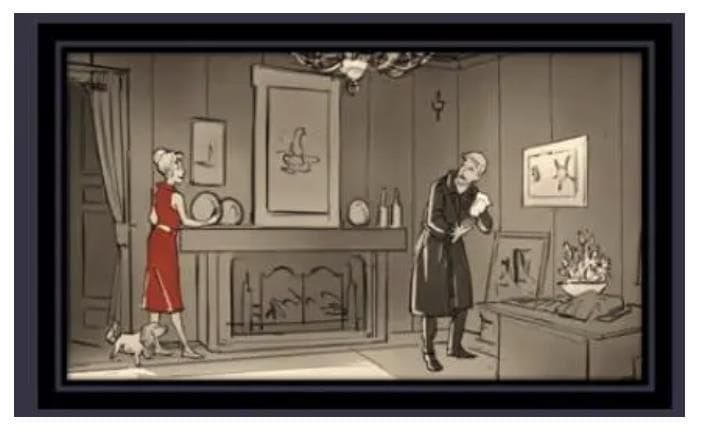
Ans: The lady in red was also a thief like Horace Danby. But it was the lady in the red dress who outmanoeuvred and outwitted Horace. No doubt, Horace did his job quite professionally. He worked hard to find out the necessary details about the location of the house and the position of the key and the safe.
But, Horace proved to be a novice in judging the young lady. The young lady acted with so much confidence and in such a convincing manner that she could easily pass off as the lady of the house. Horace Danby became a mere puppet who danced to the tune of the lady.
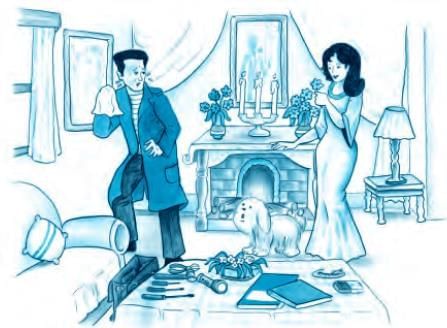
When caught red-handed, he pleaded her to let him go. The young lady exploited his confusion and fear of going to prison fully. She made Horace open the safe. The unsuspecting Horace was made to believe that he was working for the lady of the house. So he opened the safe without putting on his gloves.
He gave the jewels to the lady leaving his fingerprints on the safe. So he was found out and arrested. Naturally, the young lady in red proved far smarter. 

Q2: Horace Danby represents such people who adopt the wrong ways to fulfil their wishes. What values would you like such people to imbibe to reform themselves?

Ans: Horace Danby was a successful businessman. He was about fifty years old and a respectable citizen but had a habit that led him to do robberies. Danby loved rare, expensive books and to get them he used to rob a safe every year. Every year he planned carefully just to get what he wanted. Danby adopted wrong ways to fulfil his wishes and hence, later got trapped in a plot by a thief like him. People should imbibe good values. They should learn that hard work is the only key to success. One should work hard to fulfil one’s desires. I think such people should imbibe the values of honesty, responsibility, hard work, dedication and self-confidence in order to reform themselves. One should either curb one’s wishes or try to fulfil them by working hard. There is no shortcut to hard work.

Q3. Horace stated that he robbed only those who had a lot of money. Was he really a threat to society? Did he lack the qualities of a good citizen? Discuss the values he needs to imbibe to lead a path of righteousness in 100-120 words.
Ans: Horace was not a major threat to society, as he only targeted wealthy individuals and did not cause any physical harm during his robberies. Although he was seen as a good citizen, his actions revealed a lack of honesty and integrity. He stole for personal gain rather than out of malice. To lead a more righteous life, Horace should adopt values such as respect for others’ property, self-discipline, and a commitment to hard work. He must recognise that wealth obtained through dishonest means is fleeting and can lead to negative consequences. By striving to meet his needs through effort, he can achieve a life of dignity and positively contribute to society.

Q4: ‘Honour among thieves’ is considered a popular code. Examine A Question of Trust as a story woven around this code. 

Ans: ‘Honour among thieves’ is a popular code among thieves to protect themselves from each other. Thieves follow his code and they are not supposed to cheat each other and double cross against themselves. According to this, the thieves help each other. In the story, ‘The Question of Trust’, the main protagonist is very careful regarding his theft conducted once a year. But the lady in red, who is thief herself, does not follow the code and breads the code of honour that exists between them. Horace mistake the lady thief as the owner of the house and opened the safe for her so that she could have those jewels. This resulted its him going to the prison for the first time. Horace felt betrayed and his trust broken. 

Q5. Horace Danby requested the lady to forget what she saw. Was Horace afraid of being caught? Did he lack the courage to accept his crime publicly? Explain the values one must imbibe to accept one’s mistake in 100-120 words.
Ans: Yes, Horace was afraid of being caught and lacked the courage to face the consequences of his actions. Although he was perceived as a good man, his fear led him to ask the lady to forget what she saw instead of admitting his mistake. This highlights his failure to accept responsibility. To live a righteous life, one must embrace values such as honesty, accountability, and courage. Accepting one’s mistakes and learning from them is essential for personal growth. Horace needed the strength to confront the truth and make amends, as it is through self-reflection and honesty that individuals can truly improve.

Q6. “Horace had some hope because she seemed to be amused at meeting him.” Why did Horace feel so? Did he consider the young lady compassionate towards him? Did he find her free from bias? Discuss the values Horace should have imbibed understanding of the person in 100-120 words.
Ans: Horace felt hopeful because the young lady seemed amused and kind, leading him to believe she might spare him from punishment. He misinterpreted her politeness as compassion and thought she was unbiased. However, Horace failed to grasp her true nature. He needed to learn the value of being more discerning and not swayed by superficial charm. It’s crucial to evaluate people based on their actions rather than initial impressions. Horace should have recognised the importance of seeing beyond appearances and trusting his own judgment, as relying on such assumptions resulted in significant mistakes.

Q7. Describe Horace Danby’s encounter with the young lady.
Ans: Horace Danby was in the midst of a robbery at Shotover Grange when he encountered a young lady dressed in red. She claimed to be the owner’s wife and pretended to have forgotten the combination to the safe. The lady persuaded Horace to assist her in opening it. Despite his careful planning, he was charmed by her and agreed to help. After she took the jewels, Horace was arrested, as his fingerprints were found all over the room. The true owner, a sharp-tongued woman, dismissed his claims about the lady’s involvement. Horace was left to ponder how easily he had been deceived.

Q8. Give a character sketch of Horace Danby in your own words. How was he outsmarted by the lady in red?
Ans: Horace Danby was a respectable man in his fifties with a hidden secret: he committed robberies each year to fund his passion for rare books. Although he appeared decent, his actions were motivated by personal desires. Horace meticulously planned his heists, but during an attempt to steal jewels from Shotover Grange, he was outsmarted by a lady in red. She deceived him into assisting her with the safe, exploiting his naivety and trust. Once he opened the safe, she took the jewels and left him to be arrested shortly after. His inability to see through her trickery highlighted his vulnerability.

Q9. Horace was not a typical thief. What values would you like to inculcate in him to transform him? Write in about 80-100 words. 
Ans: Horace, although not a typical thief, stole to fulfil his passion for rare books. To transform him, I would instil values such as honestyintegrity, and self-discipline. It is essential for Horace to realise that genuine satisfaction comes from earning things through hard work, rather than through crime. He should learn that perseverance and trust in others can lead to true success. By embracing these values, Horace can evolve into a better person and make a positive contribution to society.

Q10. Give a character sketch of the lady in red highlighting how she outwitted Horace Danby.
Ans: The lady in red is a clever and deceptive character. She enters the room with confidence, pretending to be the owner’s wife, and persuades Horace to assist her in opening the safe. With her charm and persuasive skills, she convinces him that she needs the jewels for a party. By making him open the safe without gloves, she ensures that his fingerprints are left everywhere. After taking the jewels, she leaves, leaving Horace oblivious to her true intentions. Her cunning and resourcefulness demonstrate her ability to outsmart Horace, making her a skilled criminal.

Q11. How had Horace planned to loot the house at Shotover Grange?
Ans: Horace Danby meticulously planned his robbery at Shotover Grange, dedicating two weeks to studying the house’s layout, electrical wiring, and pathways. He realised that the servants would be away, providing him with the perfect opportunity to execute his plan. Horace had also examined a magazine article that detailed the house, including a mention of a concealed safe. He aimed to steal jewels valued at approximately fifteen thousand pounds, anticipating a significant profit from their sale. To avoid leaving fingerprints, he wore gloves and took the key to the kitchen door. Once inside, he carefully set to work, confident in his ability to access the safe without detection. He was determined to complete the robbery before the servants returned.

Q12. How was Horace Danby arrested for the robbery of the jewels in a house at Shotover Grange? Do you think his own foolishness was responsible for his arrest? Give a reasoned answer.
Ans: Horace Danby was arrested after being deceived by the lady in red during his robbery at Shotover Grange. Although he had planned the robbery carefully, he neglected a crucial precaution: wearing gloves. The lady manipulated him into opening the safe, which resulted in him leaving fingerprints behind. After she took the jewels, he was apprehended, despite his claims of being tricked. His lack of caution and gullibility were significant factors in his capture. Thus, his arrest was largely due to his own foolishness and failure to follow his usual methods.

Q13. Horace promised the young lady that he would follow the path of honesty if Sills would not hand him over to the police, but he could not keep his promise for more than days. Did he lack reconciliation? Was it not in his nature to keep his promise? Did he lack the courage to fulfil his needs through an honest living? Discuss the values he needed to imbibe in 100-120 words.
Ans: Horace promised to embrace honesty, but he could not maintain this commitment when tempted to steal again. His failure to keep his word reveals a lack of reconciliation and a struggle with personal growth. Horace demonstrated a deficiency in the courage needed to pursue an honest life, opting for theft to fulfil his desires instead. To improve, he needed to cultivate values such as self-control, integrity, and the bravery to confront challenges without resorting to dishonest means. By learning to appreciate the rewards of legitimate work and the satisfaction of hard-earned success, Horace could have significantly transformed his life.

Q14. Explain the irony in Horace’s situation at the end of the story.
Ans: The irony in Horace Danby’s situation is both situational and dramatic. Horace is a careful and experienced thief who prides himself on being methodical and never getting caught. He only robs once a year and spends the rest of the time living a quiet, respectable life. However, despite all his planning and precautions, he is deceived not by the police or the security system, but by another thief — a woman who pretends to be the owner of the house.

She plays on his fear of being caught and manipulates him into opening the safe for her, pretending that she has forgotten the combination. Ironically, Horace, who breaks into homes for a living, is fooled inside someone else’s home and ends up getting arrested for the crime — a crime for which he has no proof of innocence, as the real thief leaves no trace of her involvement.

The most ironic twist is that Horace considered himself clever and trustworthy in his own way, but he ends up being outwitted by someone even more cunning. This reversal — where the deceiver gets deceived — adds a humorous yet sharp message about trust, overconfidence, and the unpredictability of crime.

Q15:  What does the phrase ‘honour among thieves’ mean? Why does Horace get angry at this phrase?  

Ans: The phrase ‘honour among thieves’ refers to the belief that even criminals follow a certain code of conduct and loyalty among themselves — that they do not betray or deceive one another while committing crimes. It suggests that despite their illegal activities, thieves maintain mutual trust within their circle.

However, in Horace Danby’s case, this belief is shattered. He becomes the victim of another thief’s clever deception. The woman, who pretends to be the owner of the house, tricks Horace into believing that she is in trouble and needs his help to open the safe. Trusting her, and hoping to avoid being caught, Horace uses his skills to crack the safe for her. But ironically, the woman herself turns out to be a thief who steals the jewels and leaves Horace behind to take the blame.

When Horace is eventually caught and imprisoned, he feels betrayed and humiliated. The phrase ‘honour among thieves’ now makes him angry because it reminds him of how he was tricked by someone from his own world of crime — a world where he expected at least some trust. This betrayal shows that in the world of crime, even thieves cannot trust each other, and the idea of honour among them is merely a myth.

3. The Midnight Visitor – Long Answer Questions

Q.1. How did Ausable use ‘the knock at the door in his favor? What light does it throw on his character?
Ans. Ausable was a secret agent. He was staying in a hotel. A guest named Fowler comes to meet him. Ausable gives an order to the waiter for a bottle of wine and two glasses. When they entered the room, they were surprised to see an intruder named Max in the room. That man had a pistol in his hand. After some time, there was a knock at the door. Ausable knew that it was the waiter, but he told Max that it would be the police . He said that he himself had called the police for the protection of the important report. Hearing this, Max jumped out of the window onto the balcony. There was no balcony. He fell down and died. This episode shows that Ausable had a great presence of mind. He was a clever spy indeed.


Q.2. Pride before a fall befits Max, who said: “I will get it back tonight.” Was he successful? What lessons can be learned from this?
Ans. Max was a spy who was overconfident and too proud. His pride blinded him, and he thought that wielding a gun would give him a further edge over the seemingly slow Ausable. However, despite this apparent pride and confidence, Max was utterly unsuccessful. Ausable outwitted him without lifting a finger. Max jumped to his death by taking Ausable’s Words at face value. Thus, one learns that one should not be proud and must pay attention to the finer details before attempting to do anything.


Q.3. Ausable was a successful secret agent. What qualities can be attributed to him? Give some examples.
Ans. Ausable was very fat. He appeared to be a slow and sluggish person. But inside that fat body, he had a very sharp brain.
It was through his presence of mind, intelligence, and cleverness that he got rid of Max easily. When Max heard a knock at the poor Ausable, he told him that it was the police whom he had called for the extra protection of the papers.
Max wanted him to send them off quickly until he waited on the balcony.
Ausable had ordered a drink, and it was the waiter with the drink knocking. Ausable used the false story to mislead Max. The poor fellow was neither police nor jumped through the nor down below, neither on the balcony but on the ground from the sixth. Max lost his life, and with him died, he was his mission, a clever secret agent. Way Ausable got rid of Max.  They may assemble, but getting rid of Max proves that he is a clever secret agent.

Q.4. At the beginning of the story, Fowler feels disappointed with Ausable. Do you think Fowler had the same feeling toward the end of the story? Give reasons for your answer.
Ans. At the beginning of the story, Fowler feels disappointed with Ausable because he does not look at all like a secret agent of his imagination. He found him quite boring. He did not want to be with him anymore. But when he found Max in his room with a gun, he was thrilled. He found that Ausable was not at all perturbed. He cooked up a story about the balcony outside his window. When the waiter knocked at the door, Ausable told Max that it would be the police. He told him that he had called the police for the security of that important paper. Hearing this, Max jumped outside the window to the balcony. But there was no balcony. He fell from the sixth floor and died. Thus, Fowler was thrilled to see all this. So towards the end of the story, he was not disappointed with Ausable.


Q.5. Describe the incident leading to the death of Max.
Ans. Ausable was a secret agent. He was living in a French hotel. His room was on the sixth and top floor of the hotel. One evening, a young writer named Fowler came to meet him. When they entered the room and switched on the light, they found a man standing in the center of the room. He had a pistol in his hand. His name was Max. He came there to grab the important report from Ausable. Seeing Max, Ausable remained cool and silent. But he seemed to be angry with the management of the hotel. He said that because of the balcony just below his window, anyone could enter the writ
When there was a sudden knock at the door, Ausable said that it might be the police. He said that he himself had called the police. Max jumped through the window to the balcony. But in reality, there was no balcony. So, Max fell to the ground from the sixth floor and was killed.


Q.6. Write a character sketch of the secret Agent Ausable.
Ans. Ausable was a secret agent. He was a fat and sloppy fellow. In his appearance, he did not seem to be a romantic figure. He came to Paris from Boston twenty years ago. He could speak French and German passably. He had not lost the American accent. Ausable was a very intelligent person. He had a great presence of mind. He did not lose heart in a difficult situation when facing a man with a pistol. He remained cool. He cooked up a story about the balcony. He made Max nervous by telling him about the police. He got Max killed without any fighting or shooting. Fowler, who was disappointed to meet him at the beginning of the story, was very much impressed with his intelligence and presence of mind at the end of the story.


Q.7. What makes you think Max was a careless and foolish fellow?
Or
Though Max was very cunning, he was still but a little spy’ before Ausable. Explain.
Ans. Though Max was very cunning, he was indeed no match for Ausable. Ausable easily misled him into believing that there was a balcony attached to the room. He also made him fool by cooking up a false story about the police knocking at the door, though he knew it was the waiter. Ausable’s facial expressions were so normal that Max could not believe he was telling lies to him. Ausable was able to get rid of Max with very little effort. So we can say that Max was “a little spy” before Ausable.


Q.8. With reference to `The Midnight Visitor’, do you think the presence of mind should be developed and to what advantage? Elaborate highlighting the values possessed by Ausable.
Or
The presence of mind and intelligence are more powerful than a gun. How far is it true in the case of Ausable, the secret agent?
Ans. Max lay in wait for Ausable to steal the important paper from him. As Fowler observed, apart from the pointed gun he didn’t look very menacing. Even this proved useless for him as Ausable outwitted him with his presence of mind and intelligence. Ausable cleverly discovered how Max had entered the room and created an extremely believable story about a non-existent balcony. He kept calm, and, hearing the waiter knock, declared it to be the police. Max, in an attempt to hide, fell to his death. Thus, Ausable got rid of Max without moving a muscle.


Q.9. Give a character sketch of Ausable highlighting his presence of mind and intelligence.
Ans. Ausable is a different kind of secret agent. Generally, secret agents that are described in detective books and shown in films are very smart and gun-friendly. Wine and dark-eyed beauties are associated with them. However, Ausable doesn’t present such a romantic picture. He is very fat and sloppy. He lives in a small room on the sixth floor. Fowler is disappointed after meeting Ausable.
They say that appearances are often deceptive. This is quite true in the case of Ausable. Physically, he may be fat, but mentally, he is very agile and quick-witted. He knows all the tricks of his trade. He is very quick to react and can cook up stories that may fit in all kinds of situations. He convinces even the crafty Max that there is a balcony below the window of his room. This is a well-thought-out trap, and Max unwittingly falls into it. Then he cooks up the story of the police. He again succeeds in convincing Max that the loud knockings at the door are that of the police. He tells Max that he himself has sought the protection of the police as he has an important report concerning some new missiles with him. In this way, he gets rid of his rival and enemy, Max, who jumps out of the window only to cry for the last time in his life.


Q.10. Presence of mind and intelligence are more powerful than a gun. How far is it true in case of Ausable, the secret agent?
Ans. Ausable is actually not of that kind as we read in detective stories and books. Nor is he like the heroes of James Bond films. Ausable is an exception. The young writer, Fowler, is disappointed after meeting Ausable. Ausable does not fit any description of a secret agent. He is fat and sloppy. His room is rather small, and that too on the sixth floor. However, appearances are often deceptive. Ausable proves that the presence of mind and intelligence is more powerful than a gun.
The presence of mind and intelligence are the assets of Ausable. His sharp reaction, particularly to a dangerous situation, is very quick and thorough. When he finds crafty Max in the room with a pistol in his hand, he at once understands the purpose of his visit. The rival secret agent who has come to take away the important report that concerns some new missiles must be outwitted and defeated in his own game. Ausable cooks up the stories of the balcony and the police so convincingly that Max falls into his trap. While there is no balcony below the window of his room, the knockings at the door are not of the police but of his waiter. The confused and unnerved Max jumps out of the window in desperation. Thus, through his presence of mind and intelligence, Ausable proves himself more powerful than a gun.


Q.11. How did crafty and foxy Max fail to take away the all-important report concerning some new missiles from Ausable? Or How did Ausable outsmart and outwit the crafty Max and get rid of him?
Ans. Naturally, it was a fight between two secret agents belonging to two different organizations. The bone of contention was the all-important report concerning some new missiles. It was with Ausable, and Max wanted to take it away by the use of his gun. The report was so important that several men and women had risked their lives to get it. Someday, that report might well have affected the course of history.
No doubt, Max had come prepared. When Ausable switched on the light, he found Max standing halfway across the room with a small automatic pistol in his hand. Ausable had to use his presence of mind and fertile brain to outwit Max. His cooking up of two stories related to the balcony below his window and the police were his masterstrokes. In his simple way, Ausable succeeds in convincing Max that both stories are true. Actually, there was no balcony below his window. He wanted to unnerve Max by planting the false story of the loud knockings at the 
door of the police. In desperation, Max jumped out of the window and Ausable got rid of his crafty rival forever.


Q.12. Describe in detail the two false stories planted by Ausable to get rid of Max, the secret agent of the rival organization. Did the false stories have the desired effect? Give a reasoned answer.
Ans. The presence of mind, quick reactions, and a fertile brain more than compensated for the fat and sloppy man, Ausable. His fertile brain and the stories he cooked up proved more than a match for a gun-wielding rival, Max. Ausable started in a simple but natural way with the story of the balcony below the window of his room. He was able to convince Max that his balcony had really become a nuisance. It was the second time in the month that somebody had got into his room. Actually, it was a clever trap for Max to fall in and the desperate and nervous Max did fall into the trap. He jumped out of the window in desperation to avoid being arrested or shot at by the police.
The second story related to the police was a masterstroke. It was the product of his fertile brain. Ausable knew that he could unnerve his gun-wielding rival by showing the threat to the police. He planted a false story that he himself sought the protection of the police. After all, the all-important report about the new missiles needed some extra protection. The loud knocking at the door signaled the arrival of the police. Max asked Ausable to send the police away. Ausable convinced Max that the police wouldn’t hesitate to shoot. In desperation, he jumped out, never to be able to come back again. Later on, Fowler found that the knocking at the door was done by the waiter. He entered with a tray, a bottle, and two glasses.


Q.13. Sometimes, appearances can be very deceptive. How does this statement prove with this story?
Ans. Yes, it is true that sometimes we fail to identify the real personality of a man due to his different appearances. So, it can be said that appearances can be deceptive. Fowler was young and romantic. He was a writer of adventurous stories. Ausable was a secret agent—a detective. He faces danger in his work. So, Fowler wanted to meet him for some adventurous stories. But when he met Ausable in a French hotel with a damp corridor, Fowler felt disappointed. But Ausable proved himself after reaching his room. A man named Max was found inside Ausable’s room with a gun in his hand. Ausable at once proved that he possessed the quality of a true detective. He told Max about a balcony next to the window and police at the door. Max believed him because Ausable’s way of talking was so real.

2. The Thief’s Story – Long Answer Questions

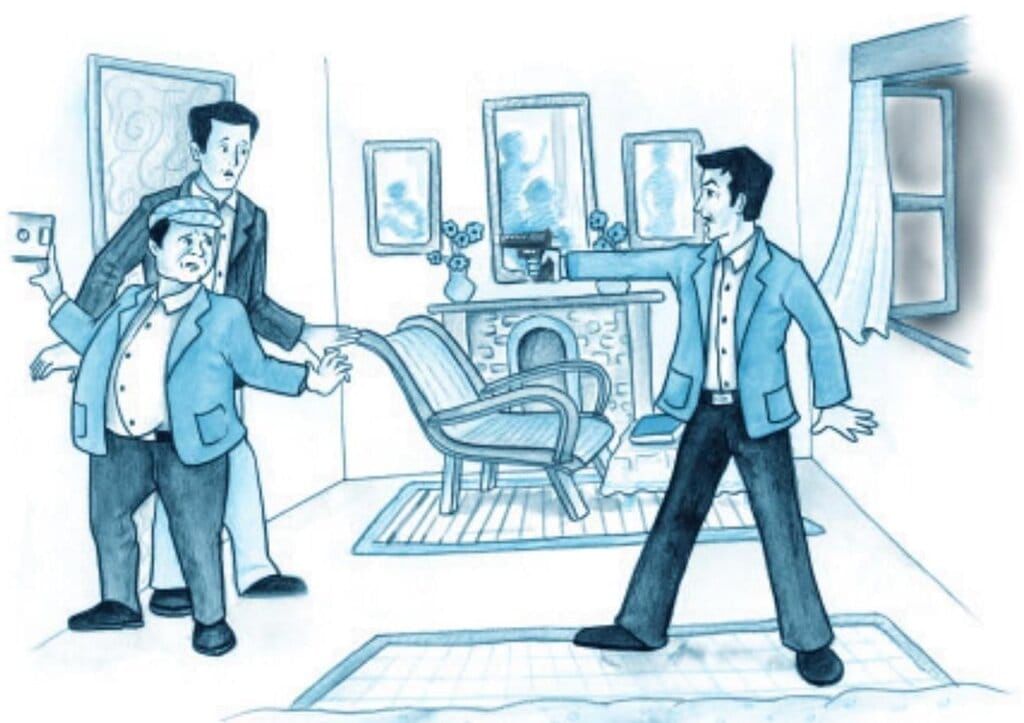
Q1. Anil plays a major role in the transformation of Hari Singh. Comment on the statement by highlighting the values possessed by Anil, which touched Hari’s heart and made him return to his honest ways of earning his livelihood.
Ans: Anil was a kind and trusting man who provided Hari Singh with an opportunity to change his life. Despite being a struggling writer with no stable income, Anil offered Hari food, shelter, and education. He taught him to read and write, which profoundly impacted Hari, who had spent most of his life as a thief. After stealing Anil’s money, Hari felt a deep sense of guilt and realised that earning an honest living was far more fulfilling than stealing. Anil’s generosity moved Hari, prompting him to return the stolen money. Even after discovering the theft, Anil chose not to confront Hari. Instead, he continued to treat him with trust and kindness, demonstrating how compassion can lead to positive change.


Q2. How did Hari Singh come into contact with Anil? He breached Anil’s trust in him, but why did Anil not only forgive him but also promise to pay him regularly?
Ans: Hari Singh met Anil at a wrestling match where he pretended to be a cook. Although he lied about his cooking skills, Anil saw through the deception and decided to teach him how to cook, read, and write. Despite this opportunity, Hari succumbed to his old habits and stole Rs. 600 from Anil. Realising his mistake, he returned the money and resolved to live honestly. Anil, recognising Hari’s internal struggle, chose not to punish him. Instead, he handed Hari a fifty-rupee note and promised him regular payments, believing that trust and forgiveness could inspire genuine change.


Q3. ‘I couldn’t cook his meals, run to the bazaar or learn to write whole sentences anymore.’ Hari Singh could not at once come out of the idea of working for Anil. Do you think he accepted the joy of earning money by following the path of honesty? Explain the values highlighted through Hari’s character.
Ans: Initially, Hari Singh saw Anil as an easy target for theft. However, as he spent time with Anil, he developed an emotional bond. Despite his temptation to steal, Hari began to appreciate Anil’s kindness and trust, making it hard for him to betray him. After stealing money, he was overwhelmed with guilt and ultimately chose to return it. This act marked a significant change in his perspective, leading him to realise that earning money through honesty was far more rewarding. Hari’s journey illustrates important values such as self-reflectiongratitude, and the significance of education. His decision to return the stolen money reflects his desire to change and highlights that, with the right influence, even someone with a troubled past can embrace the path of honesty.


Q4. ‘He was the most trusting person I had ever met.’ Justify Hari Singh’s statement about his benefactor, Anil. Did he breach Anil’s trust?
Ans: Hari Singh described Anil as the most trusting person he had ever met because Anil never doubted him, even when he was aware that Hari was taking small amounts of money from the grocery shopping. Anil even entrusted Hari with the key to his house, demonstrating his complete trust. However, Hari Singh did breach this trust by stealing Rs. 600. Despite this act, the weight of his guilt and the recognition of Anil’s kindness compelled Hari to return the money. Instead of confronting him, Anil forgave Hari without saying a word. This illustrates that Anil’s trust and forgiveness were crucial in helping Hari change for the better.


Q5. How did Hari Singh happen to stay with Anil? How did he stay with Anil before he tried to rob him?
Ans: Hari Singh met Anil at a wrestling match and falsely claimed he could cook to secure a job. Although Anil soon realised that Hari lacked cooking skills, he chose to teach him and allowed him to stay. During his time with Anil, Hari ran errands, made tea, and learned to read and write. This daily interaction fostered a strong bond of trust between them. However, old habits resurfaced, leading Hari to steal Rs. 600 from Anil. Despite his intention to rob him, Anil’s trust made it difficult for Hari to go through with the theft. Ultimately, he returned the money, opting for a life of honesty instead.


Q6. If you were Anil, would you have pardoned the thief? If Yes/No, why?
Ans: Yes, if I were Anil, I would have pardoned Hari Singh, just as he did. Anil recognised that punishing Hari would not lead to positive change; instead, offering him trust and guidance could make a difference. By not confronting Hari about the theft and rewarding his return with a fifty-rupee note, Anil reinforced the idea that honesty and redemption are attainable. This approach allowed Hari to appreciate the value of integrity and education. Had Anil chosen to punish him, Hari might have continued his life as a thief. However, through forgiveness, he was given the opportunity to grow.


Q7. Give a character sketch of Anil. Did he know all about the theft? If so, why did he keep Hari Singh again to work for him?
Ans: Anil was a kind, generous, and trusting man. As a struggling writer, he lived a simple life but always maintained a helpful attitude. He took in Hari Singh, a dishonest thief, and taught him essential skills like cooking, reading, and writing. Although Anil suspected the theft, he chose not to confront Hari. Instead, he believed in forgiveness and understood that scolding Hari would only push him further into crime. By keeping Hari and even rewarding him with a fifty-rupee note, Anil demonstrated his belief in redemption and his understanding of human nature. This act of forgiveness helped Hari recognise the value of trust and honesty.


Q8. What does Hari Singh’s decision to return the stolen money suggest about his transformation?
Ans: Hari Singh’s decision to return the stolen money reflects a significant change in his character. Initially motivated by greed and the excitement of theft, his time spent with Anil, who showed him kindness and trust, led to a profound realisation. Hari came to understand that money earned through honest means was far more rewarding than stolen wealth. By returning the money, he demonstrated that even someone with a history of theft could transform when influenced by compassion and positive guidance.


Q9. How does the setting of the story contribute to its theme of trust and redemption?
Ans: The setting of the story, centred around Anil’s modest home, significantly contributes to the themes of trust and redemption. Anil’s simple lifestyle and his willingness to teach Hari highlight the value of personal growth over material wealth. The peaceful and humble environment stands in stark contrast to Hari’s past as a thief, creating a space that fosters reflection and self-improvement. Moreover, the absence of formal punishment in favour of redemption illustrates the transformative power of trust in a supportive setting. Anil’s calm and forgiving nature allows Hari to reconsider his choices, ultimately leading him towards a path of redemption.


Q10. Describe the sequence of events that took place after Hari Singh stole the money. Evaluate Hari Singh as a thief and as a human being. 
Ans: After Hari Singh stole the money, he initially felt a mix of excitement and guilt. He had planned to escape to Lucknow with the stolen cash, but as he sat in the rain, he began to reflect on his actions. The reality of his situation set in; he realised he could no longer enjoy the simple pleasures of life, like cooking for Anil or learning to write. The thrill of theft quickly turned into regret. As a thief, Hari Singh was skilled but also deeply conflicted. He understood that stealing was wrong, yet he justified his actions by thinking that Anil would waste the money. This rationalisation reveals a lack of moral grounding, indicating that he viewed theft as a means to an end rather than a crime. However, his internal struggle suggests that he was not entirely devoid of conscience. In terms of his character as a human being, Hari Singh displayed a complex mix of vulnerability and ambition. Despite his criminal actions, he was drawn to Anil’s kindness and the possibility of a better life through education. His decision to return the money at the end of the story highlights a significant moment of growth. It shows that he valued trust and friendship more than the money he had stolen, indicating a potential for change and redemption. Ultimately, Hari Singh embodies the struggle between right and wrong. His journey reflects the challenges faced by those who find themselves in difficult circumstances, suggesting that even a thief can possess the capacity for goodness and change.

1. A Triumph of Surgery – Long Answer Questions

Q1: Tricki was more than a dog. He was more like a spoilt child of an overindulgent mistress, Mrs. Pumphrey. Comment.

Ans: Tricki was more than just a dog; he was like a spoiled child to Mrs. Pumphrey. He was a small dog, but his only flaw was his love for food. Overfeeding him with sweets, cakes, and chocolates made him very overweight. He became weak and lost his energy, with his tongue hanging out of his mouth. The doctor advised Mrs. Pumphrey to put Tricki on a strict diet and give him plenty of exercise.
Tricki suffered from too much pampering and overfeeding. Mrs. Pumphrey didn’t follow Dr. Herriot’s advice, and Tricki lost his appetite and started vomiting. Dr. Herriot recommended that Tricki stay in the hospital under his care for two weeks. Tricki was so attached to Mrs. Pumphrey that she almost fainted at the thought of being separated from him. He was extremely pampered, with the staff and maids always ready to cater to his needs with beds, cushions, toys, and more.
Tricki’s recovery was surprisingly quick. He wasn’t given food but plenty of water. After a few days, he began to take an interest in his surroundings. He transformed into a fit and strong dog. When Mrs. Pumphrey came to pick him up, Tricki showed his love by jumping into her lap.


Q2: The chapter shows the silly and negligent behaviour of rich people like Mrs. Pumphrey who may harm their near and dear ones by their extra caring nature. Tricki’s declining health was the outcome of Mrs. Pumphrey’s over-caring nature. Do you think such people’s actions can prove to be fatal for the health of their kind? What values would you suggest to such people to emulate in themselves and why? 

Ans: Mrs. Pumphrey was a wealthy woman with a pet dog named Tricki, who was very dear to her. Because of this, she took extra care of him, pampering him with all sorts of comforts. Tricki had many coats for different weather, various cushions for his comfort, and a variety of dishes to eat. She even gave him extras between meals, like malt, cod-liver oil, and a bowl of Horlicks at night to help him sleep. He was also treated to cream cakes and chocolates. This made him very fat and lazy. He became so overweight that he looked like a bloated sausage. His eyes became bloodshot, and his tongue hung out of his mouth.
I believe Mrs. Pumphrey’s overly caring nature caused Tricki’s health to decline. Such an attitude can have serious consequences for their well-being. It’s important not to overindulge them. Exercise and a proper diet are crucial for good health. Dr. Herriot took care of this, leading to Tricki’s quick recovery.


Q3: “He had never been known to refuse food; he would tackle a meal at any hour of the day or night.” Herriot believed that Tricki’s problem was his greed. Did he lack tolerance? What values would you like Tricky to imbibe? Elucidate.

Ans: Dr. Herriot wasn’t wrong in thinking that Tricki’s problem was his greed. Tricki was indeed greedy, but Mrs. Pumphrey made things worse by feeding him too much rich food. Herriot wasn’t being harsh; he was just pointing out the obvious. As a vet, he was worried about Tricki’s poor health and noticed the issue right away. Tricki needed to control his eating habits and not eat everything placed in front of him. Mrs. Pumphrey herself admitted that Tricki loved cream cakes and chocolates a lot. Tricki should have been less greedy and more like a normal dog.


Q4: How did Herriot save Tricki’s life?

Ans: Tricki was seriously ill. He refused food. He had bouts of vomiting. Mrs. Pumphrey was very much worried about him. She called Mr. Herriot who was a vet. Herriot and knew Tricki’s disease well. He told Mrs. Pumphrey that the dog must be hospitalized for a fortnight immediately. He carried the dog in his car to his surgery. There he put him in a separate room. He was given no food for two days but plenty of water. After two days the dog felt better. He started enjoying games with other dogs. In this way, Herriot cured Tricki of his illness without any medicine or surgery.


Q5: Mrs. Pumphrey says, “This is ‘A Triumph of Surgery’. Why did she say so? Did she know what ‘, Ticki’s ailment was?

Ans: Tricki was seriously ill. He refused food. He had bouts of vomiting. Mrs. Pumphrey was very much worried about him. She called Dr. Herriot who was a vet surgeon. Dr. Herriot knew about Tricki’s disease. He took the dog to his surgery. He gave Tricki no food for two days. He gave him a lot of exercise. 
When Mrs. Pumphrey went to Dr. Herriot’s surgery to take Tricki back she found him totally transformed. He had been very lazy and flabby. But now he had been transformed into a lithe and hard-muscled animal. All this made him say, “This is ‘A Triumph of Surgery’. No, Mrs. Pumphrey did not know about Tricki’s ailment. She also did not know how he was cured.


Q6: Dr James Herriot was a competent veterinary surgeon. His practical approach and common sense helped in the rapid recovery of Tricki. Comment.

Ans: Dr James Herriot, no doubt, was a competent veterinary surgeon. He was really worried about Tricki. He understood that the real fault of the dog was his greed for food. He never refused food. The dog had become hugely fat and listless. Dr Herriot instructed Mrs Pumphrey to keep Tricki on a very strict diet. He also asked her to give him a lot of exercises. Dr Herriot also suggested cuttting down sweets to him. He advised her that Tricki must be hospitalised for a fortnight under his observation.
Dr James Herriot was practical and pragmatic (sensible). He didn’t give any medical treatment to the dog. The dog was not given any food but lots of water. His method worked. Tricki’s recovery was surprisingly rapid. Tricki was transformed into a flexible and hard-muscled dog. He was not only out of danger but was soon handed over to his mistress. The grateful mistress thanked Dr. Herriot and called his feat (achievement)”A Triumph of Surgery”.
Dr. James Herriot was clever enough to enjoy the best of both worlds. He was tempted to keep Tricki on as a permanent guest. It was a happy period for Dr. Herriot and his friends. He enjoyed eggs for breakfast, and wine and brandy for lunch.


Q7: Why did Dr James Herriot say that he was tempted to keep Tricki on as a permanent guest? Give a reasoned answer.


Ans: Dr. James Herriot was not only a competent veterinary surgeon but also a clever man of the world. No doubt, Tricki was in a highly miserable state when he was brought to Dr. Herriot’s surgery. The doctor gave no medical treatment to the dog. He didn’t give food but plenty of water for a few days. Tricki’s recovery was rather rapid. Soon, he was transformed into a flexible and hard-muscled dog. The grateful mistress obliged Dr. Herriot and his friends. His partners and he himself had two eggs each for breakfast. Lunch became a ceremonial occasion. The grateful and fabulously rich mistress of Tricki treated him warmly with liberal (wide-ranging) servings of wine and brandy.
Dr. James Herriot was enjoying the best of both the worlds. He had no hesitation in accepting Mrs. Pumphrey’s tempting services. Naturally, it was a temptation for him to keep Tricki on as a permanent guest. Those were days of deep content. Fresh eggs in the morning, wine at noon and finishing luxuriously around the fire with brandy. Who wouldn’t like such a pleasant situation? After all, Dr. Herriot was a clever and worldly-wise man.


Q8: The foolish indulgence and pampering of the rich mistress, Mrs Pumphrey was the real cause of Tricki’s miserable condition. Give a reasoned answer.

Ans: Overindulgence and pampering beyond a limit becomes unproductive. Be it a pet or a child, discipline is very necessary. The fabulously rich and resourceful mistress was the main cause of Tricki’s miserable condition. The entire staff and maids were there to look after the needs of Tricki. His day-bed, night-bed, cushions, toys, rubber rings, breakfast bowl, lunch bowl and supper(dinner) bowl were always kept ready. 
Dr. Herriot rightly found out that Tricki’s only fault was his greed for food. Overfeeding of sweets, cakes and chocolates made Tricki hugely fat and listless. Had Mrs. Pumphrey followed Dr. Herriot’s instructions sincerely, things would not have worsened so far. The doctor advised her to put Tricki on a strict diet and give him plenty of exercises. It was necessary to cut down his intake of sweets. But foolish indulgence of the mistress ignored his healthy advice. The result was disastrous(harmful). 
Tricki lost his appetite and started vomiting. Only when Mrs. Pumphrey was ready to send Tricki to Surgery to Dr. Herriot’s for a fortnight, things started improving. The doctor gave him no food but plenty of water for a few days. It worked and Tricki’s recovery was rather fast.

9. The Book that Saved the Earth – Short Answer Questions

Q1: What difficulty do the crew of the space probe face on the Earth?
Ans: The crew of the space probe encountered challenges upon arriving on Earth. They were sent to conduct research as the Martians planned to invade the planet. Their spacecraft touched down in a library, but they were confused about their location and the purpose of the books they found there. To them, the library appeared unfamiliar, and they mistook it for some kind of storage facility.

Q2: What does Noodle tell Think-Tank about the books ?
Ans:
 Noodle informs Think-Tank that books are not a type of food, as Think-Tank initially believed, thinking they might be some kind of sandwiches. Instead, Noodle explains that the earthlings used books as a means of communication.

Q3: How did the children’s book transform his life?
Ans: The children’s book transformed his life as he had to leave his kin and evacuate the entire planet. He had to go to Alpha Centauri, a hundred million miles away to save his life.

Q4: Why did Think-Tank react in alarm to the third passage read?  
Ans: Think-Tank reacted in alarm as he misunderstood the meaning of the poem and thought that they can actually grow crops of rare metals and even explosives also, which are dangerous for him.

Q5: What different guesses were made by the Martians about what books are? 
Ans: In the process of Martian invasion on earth, they landed in a library. They took the books as sandwiches and tried to understand the meaning of the code. And for that, they had to take vitamins given by the chemical department. They thought it would increase their intelligence.

Q6: What steps did the Crew take to decipher the code in the sandwich?
Ans: Martians reached the library in the process of invasion of earth. They had never seen books before that. They did not understand where they are and what are the things placed in different racks. Firstly they thought that they were sandwiches and tried to eat them. Then they misunderstood that sandwiches are used as some sort of communication device. Later they took them as eye communication and not ear communication, and understand that they had to take vitamins to understand all these codes.

Q7: Why did Think-Tank send his crew on the earth?
Ans: Think-Tank, the ruler of Mars regarded the Earth as a mass of mud, and Earthlings as ugly, tiny-headed creatures. He planned to invade Earth and expand his domain. He sent Probe One to Earth to get more information about the Earthlings.

Q8: How did Think-Tank interpret the poem ‘The Cat and the Fiddle “.
Ans: The second rhyme was about the cat and the fiddle, wherein the cow jumped over the moon, the dog laughed to see it and the dish ran away with the spoon. Think-Tank misinterpreted it. He thought that Earthlings had taught their domesticated animals’ musical culture and Space Techniques. They might be launching an interplanetary attack on millions of cows!

Q9: How does Think-Tank describe the people on Earth? Why does he command Noodles to contact the Space probe?
Ans: Think-Tank thought Earthlings were weak, ignorant, uncivilized persons and hence planned to invade Earth. He sent his commander Noodles to make contact with the crew of the manned space probe, now on Earth to seek more information about the Earth.

Q10: What do historians speak about the books?
Ans: The historians tell that the twentieth century was called — The Era of Books. They and motivate them when they are man’s best friends and companions. They inspire disheartened. They give us pleasure and knowledge.

Q11: Who was Omega? Why did he try to oat the book?
Ans: Omega was the captain of the space control Probe One, on Earth. Think-Tank asked him to pick up the most colourful sandwich (book) and report him about his observation on it.

Q12: Why books referred to as a man’s best companion? Which book saved the Earth from Martian invasion? 
Ans: Books are our best friends and companions. They are never demanding but always giving knowledge and pleasure. They give us company. The book that saved the Earth from Martian invasion was ‘Mother Goose.’

Q13: What happens when the Historian turns on the hysteroscopy?
Ans: As the Historian turn on the hysteroscope, suddenly, the scene changes from the present twenty-fifth century to many centuries ago in 2040. Spotlight on Historian goes out. Think-Tank appears. He is seated on a raised box, arms folded. He has a huge, egg-shaped head. He wears a long robe decorated with stars and circles. Apprentice Noodles stands beside him.

Q14: What do Noodles say in the praise of Think-Tank? Why does Think-Tank ask Noodles to go over the whole thing again?
Ans: Noodles bows low before the Commander-in-Chief, Think-Tank. He calls Think-Tank “Great and Mighty”. He was the most powerful and intelligent creature in the whole universe. But Think-Tank stops Noodles abruptly. He had left out a part of his salutation. He asks him to repeat it again from the very beginning. Noodles add that Think-Tank is the newer ruler of Mars has two moons. He bows down to receive orders from his chief.

Q15: How does Think-Tank compare the Earth and Earthlings, with Mars and Martians?
Ans: Think-Tank’s comments on the Earth and the Earthlings are very sarcastic, ridiculous and insulting. He considers Martians a handsome race. They are much more attractive than those ugly Earthlings with their tiny heads. He calls the Earth as a primitive ball of mud. He even threatens to invade it.

Q16: Name the persons who are in the Mars Space Control.
Ans: There are five persons who are managing the Mars Space Control. First and the most important of them all is great and Mighty Think-Tank. He is the Commander-in-Chief, and the ruler of Mars and two moons. Noodle is an apprentice who is always praising Think-Tank but also giving subtle suggestions very respectfully. Then, there is Captain Omega who is always opening and closing card catalog drawers. Sergeant Oop is at right, opening and closing a book. Lieutenant Iota is up left, counting books in a bookcase.

Q17: Describe Think-Tank and his role in the play.
Ans: The think-tank is the Commander-in-Chief and the ruler of Mars and its two moons. He is considered as the most powerful and intelligent person in the universe. He himself thinks so. He is proud of belonging to a handsome race of Martians. He is dominating, loves no arguments, expects obedience and compliance. But all these claims fall short of realities and belie his claims of greatness.

Q18: Why do Noodles say that those sandwiches are actually communication sandwiches? Does “Think-Tank’ confirm it?
Ans: Noodles claim that he has seen surveyor films of those sandwiches. He noticed that the Earthlings didn’t eat them. They used them as some sort of communication devices. Think-Tank actually confirms Noodles findings. He orders them to listen to them.

Q19: Why does Think-Tank declare that these sandwiches are not for ear communication but for eye communication?
Ans: They don’t hear any sound coming from the sandwiches. Noodles say that a cloudy piece of information is twirling around in his head. Think-Tank asks to twirl it out. Noodles clarify that the Earthlings don’t listen to the sandwiches but open and watches them. Think-Tank finds it correct and declares that those sandwiches are not for ear-communication but they are for eye communication.

Q20: Why do Noodles recommend giving space to people vitamins? What does Think-Tank say in this regard?
Ans: They pick up a very large volume of `Mother Goose’. Think-Tanks asks them to decode them. They fail to decode little lines, squabbles and dots along with pictures in the book. Think-Tank says that perhaps the Earthlings are not as primitive as they have thought. He asks their chemical department to give vitamins to space people to increase their intelligence. They will be able to unfold the meaning of the code successfully.

Q21: How does Think-Tank interpret the rhyme: “Mistress Mary….?” Why does he say that it is no time for laxity?
Ans: As is his habit of misjudging, Think-Tank misinterprets the rhyme on Mistress Mary. He chides Oop for laughing. He says that he should realise the seriousness of the discovery. The Earthlings have discovered how to combine agriculture and mining. They can actually grow crops of silver and other metals. And for cockle shells, Think-Tank interprets them as high explosives. They can grow even explosives. He asks Noodles to contact their invasion fleet.

Q22: Why does Think-Tank order the invasion fleet to evacuate the entire planet of Mars? Where are they heading for?
Ans: Misinterpreting the words “Had a great fall” of ‘Humpty Dumpty’ rhyme, Think-Tank declares that the Earthlings want to capture Mars Central Control and him. He orders space people to leave Earth at once without leaving any traces of their visit. They will be heading for Alpha Centauri, a hundred million miles away from Mars.

Q23: How did a dusty old book of nursery rhymes to save the world from a Martians invasion?
Ans: Think-Tank was about to give orders for the invasion of the Earth. But a dusty old book of nursery rhymes to save the world from a Martians invasion. Think-Tank misinterpreted the words “had a great fall” to his own downfall. He interpreted that his downfall was imminent as the Earthlings wanted to capture Mars Central Control and him. It is an invasion on Mars. He orders the invasion fleet to evacuate the entire planet of Mars. He must escape without delay in a space capsule.

Q24: What is the time and place of the story at the beginning?
Ans: This is a science fantasy. This imaginary story is set in the twenty-fifth century. The place is the Museum of Ancient History. Department of the Twentieth Century. There is a historian sitting at a table. There is a movie projector on the table.

Q25: What strange thing about a book does the historian tells the audience?
Ans: The historian tells her audience that once a book saved the earth. She narrates a real story from the twenty-first century. She tells how the Martians (people from the planet Mars) invaded the earth in 2040 and a book of nursery rhymes saved the Earth from their attack.

Q26: The story takes place in the twenty-fifth century. How does the historian take her audience back to the twenty-first century?
Ans: The historian shows the audience the happenings that actually took place. Them: base been recorded in a film She turns on the projector. On the projector, the audience sees what actually happened in the twenty-first century.

Q27: Who is shown when the projector starts?
Ans: The projector shows the Mas Space Control room. We see Think-Tank who is the Commander-in-Chief. He has a huge, egg-shaped head. He wears a long robe decorated with stars and circles. His deputy, Noodles stands beside him at a switchboard.

Q28: What is the purpose of the manned spacecraft sent to the earth by Think-Tank?
Ans: Think – Tank has already sent a manned spacecraft to the earth. Their purpose is to collect information about the earth’s defense system and send it back to the other spacecraft from Mars who are ready to attack the earth before lunch.

Q29: What is Think-Tank’s second guess about books? 
Ans: Think-Tank’s second guess about books is that they are communication devices. He orders Omega to listen to them (books). He puts a book to his ears and tries hard to listen. Think-Tank asks Omega if he can listen to something from them. Omega replies that they may not be on the correct frequency.

Q30: What order does Think-Tank give Noodles for escaping from Mars?
Ans: Think-Tank orders Noodles to prepare a space capsule for him. He must escape without delay. The Earthlings are coming to capture Martians. Noodles ask Think-Tank where they shall go. Think-Tank replies they will go to the planet Alpha-Centauri, a hundred million miles away.

8. Bholi – Short Answer Questions

Q1. What were the two steps taken by Ramlal to persuade Bishamber to marry Bholi?
Ans: Ramlal persuaded Bishamber to marry Bholi by offering a dowry of five thousand rupees. Initially, Bishamber demanded this amount, stating that he would not proceed with the marriage otherwise. In a desperate attempt to avoid humiliation, Ramlal placed his turban—a symbol of his honour—at Bishamber’s feet and pleaded for a lower amount. However, Bishamber remained firm, insisting on the full dowry. Ultimately, Ramlal, in tears, retrieved the money from his safe and presented it to Bishamber, securing the marriage.

Q2. Give two points to demonstrate that Bholi’s wedding was a grand one.
Ans: Bholi’s wedding was truly grand for several reasons. Firstly, her groom, Bishamber, was a wealthy man with a large shop, his own house, and a substantial bank balance. This financial stability added to the grandeur of the occasion. Secondly, the wedding procession was lively, featuring a brass band playing a popular tune from an Indian film, which set a festive atmosphere. Additionally, Bishamber arrived riding a decorated horse, accompanied by a large group of friends and relatives, resembling a grand parade.

Q3. What two actions did Bholi take to stop her marriage to Bishamber?
Ans: Bholi took two decisive actions to stop her marriage to Bishamber. First, she threw the garland into the fire, rejecting the marriage outright. Then, she discarded her veil and firmly told her father to take back the dowry money, stating clearly, “I am not going to marry this man.” Despite the shock and disapproval from her family and guests, Bholi stood her ground, refusing to accept a marriage with someone she deemed mean and greedy.

Q4. How did Bholi console her father in the end?
Ans: Bholi consoled her father by assuring him that even if she did not get married, she would care for her parents in their old age. She also expressed her desire to teach at the same school where she had learned so much, promising to contribute positively to their lives.

Q5. Conclude as to why Bholi’s teacher felt like an artist admiring her masterpiece.
Ans: Bholi’s teacher felt like an artist admiring her masterpiece because she witnessed the profound impact of her support on Bholi. Through her encouraging words and education, the teacher helped Bholi gain the confidence to face the world. This transformation turned Bholi from an unsure, backward child into a bold and confident girl, making the teacher proud of her role in this journey.

Q6. How does she become a masterpiece?
Ans: Bholi was initially seen as a witless fool who stammered and was neglected. However, her teacher played a crucial role in her transformation. With encouragement and support, Bholi grew into a confident and articulate woman. She made the brave decision to refuse a marriage proposal from a greedy man, choosing instead to care for her parents in their old age. Through these choices, she truly became a masterpiece.

Q7. What ideas do you form of Ramlal’s personality?
Ans: Ramlal was the revenue officer of the village and a successful farmer with seven children. He held traditional views and opposed the idea of sending girls to school, fearing it would hinder their chances of finding suitable husbands. Ramlal was particularly concerned about his youngest daughter, Bholi, whom he deemed unattractive and lacking intelligence. He wished to rid himself of her, believing she would be a burden due to her perceived shortcomings.

Q8. Describe two accidents that had disfigured Bholi and made her a backward child.
Ans: Bholi faced two significant accidents in her early life that led to her being perceived as a backward child. Firstly, when she was just ten months old, she fell off her cot, which likely caused damage to her brain. This injury contributed to her developmental delays, making her slower to learn and communicate. Secondly, at the age of two, Bholi contracted smallpox, which left her body permanently marked with deep pock-marks. These physical scars, combined with her speech difficulties, led to her being ridiculed by others.

Q9. Was Ramlal happy to send Bholi to school? If not, why did he send her there?
Ans: No girl in the family had ever attended school. Bholi’s mother feared that sending their daughters to school would make them undesirable for marriage. However, the Tehsildar, who opened the first girls’ school in the village, urged Ramlal to set an example for the community by sending his daughters to school. Ramlal felt he could not refuse the Tehsildar’s request. Ultimately, he decided to send Bholi to school, as his wife suggested it would be unlikely for her to find a husband due to her appearance and lack of intelligence.

Q10. Why was Bholi frightened to go to school?
Ans: Bholi was frightened to go to school because no girl in her family had ever attended. When her father, Ramlal, took her hand to lead her there, she felt terrified. She had no idea what school was and feared that her parents were punishing her by sending her away. In her panic, she cried out and pulled her hand away from her father’s grip, believing she was being taken somewhere dreadful.

Q11. Why did Sulekha start stammering?
Ans: Sulekha could not speak until she was five years old. When she finally learned to talk, she began to stammer because other children often made fun of her and mimicked her speech. This teasing led her to speak very little.

Q12. Describe the family of Ramlal, the Numberdar.
Ans: Ramlal was a Numberdar responsible for collecting revenue from the village. He had a total of seven children: three sons and four daughters. The eldest daughter, Radha, was already married, while the second daughter, Mangla, had her marriage arranged. All his daughters were attractive and healthy. Ramlal sent his sons to the city for their education. However, he was particularly concerned about his youngest daughter, Bholi, who lacked both beauty and intelligence, making it challenging to find a suitable husband for her.

Q13. What changes did the village see after some years?
Ans: The years passed, and the village transformed into a small town. The primary school evolved into a high school. A cinema was established under a tin shed, and a cotton-ginning mill was built. Additionally, the mail train began to stop at their railway station.

Q14. Was Ramlal happy with Bishamber’s proposal? What was the opinion of Bholi’s mother about this unequal match?
Ans: Bishamber was initially pleased with the proposal for Bholi’s marriage, as he saw it as a fortunate opportunity. His wife supported the idea, believing that Bholi was lucky to have such a wealthy groom. Bishamber owned a large shop, a house, and had several thousand rupees in the bank, and he was not demanding any dower. However, Bholi’s mother acknowledged the disparity in their ages and Bishamber’s limp, but she dismissed these concerns, arguing that he was still a good match. She felt that if they rejected this proposal, Bholi might remain unmarried for life.

Q15. Was Bishamber a suitable bridegroom for Bholi? Give your opinion.
Ans: No, Bishamber was not a suitable match for Bholi. Although he was wealthy, owning a large shop and having a substantial bank balance, his character was deeply flawed. He was mean and greedy, which became evident when he learned about Bholi’s pockmarks. He demanded a dowry of 5000 rupees to marry her, showing his lack of compassion. Even Ramlal’s humble gesture of placing his turban at Bishamber’s feet did not sway him. Bholi made the right choice in rejecting him.

Q16. Why didn’t Bholi at first oppose the proposal of the unequal match? Why did she agree to it?
Ans: Bholi initially accepted the marriage proposal because she felt like a burden to her parents. They viewed her as worthless and had no hope of finding a suitable match for her. When she saw her parents’ happiness at the prospect of a well-off groom, she chose to comply with their wishes to preserve the family’s honour. Despite the groom being much older and having children from a previous marriage, Bholi did not voice her opposition at first.

Q17. What happened when Bishamber took a quick glance at his bride’s face?
Ans: The auspicious moment arrived as the bridegroom lifted the garland of yellow marigolds. A woman removed the bride’s silken veil, and Bishamber took a quick glance at her face. The garland hesitated in his hand as he exclaimed that the bride had pockmarks. He demanded that her father pay him five thousand rupees to proceed with the marriage.

Q18. How did Ramlal react after the ceremony ended with the departure of the bridegroom alone?
Ans: After the ceremony ended with the bridegroom leaving alone, Ramlal stood silently, overwhelmed by grief and shame. His head was bowed low, reflecting his sorrow. He turned to Bholi and expressed his concern, saying, “But what about you? No one will ever marry you now. What shall we do with you?”

7. The Necklace – Short Answer Questions

Q1: What, do you think, were the feelings of Madame Forestier when she came to know that Matilda returned her a diamond necklace in place of an artificial one?
Ans: After learning that Matilda had returned a diamond necklace instead of the artificial one she had borrowed for the party, it can be inferred that Madame Forestier was likely surprised and taken aback. Perhaps she had not expected such a turn of events and may have felt a range of emotions, including relief that the necklace was returned, disappointment that it was not the original, and possibly even frustration at Matilda’s actions. It is possible that Madame Forestier wished Matilda had been honest with her from the beginning, as it could have prevented the situation from escalating.


Q2: How does the writer’s use of the literary device—a twist in the tale—towards the story’s end impact the narrative of The Necklace?
Ans: The twist at the end of the story has a significant impact on the narrative. The discovery that the lost necklace was just an imitation and not a valuable piece completely changes the story’s direction. This twist adds irony and emphasizes the theme of materialism. It leaves a strong impression on our understanding of the characters’ decisions and the consequences of unchecked desire. The twist turns the story into a cautionary tale, making us think about the true value of our ambitions.


Q3: Briefly state how Matilda invited ‘a dreadful life of necessity’ into her family. 
Ans: Matilda, born into a middle-class family, was unhappy with her simple life and longed for luxury. Ignoring her husband’s advice to wear natural flowers, she borrowed a necklace and lost it. This led to her downfall, as her dissatisfaction with what she had brought about a life of poverty and hardship while trying to repay the debt for the lost necklace.


Q4: Madame Loisel now knew the horrible life of necessity. Do you think Madame Loisel accepted this change willingly? Give two reasons in support of your answer. 
Ans: Yes, Madame Loisel came to know the harsh reality of a life of necessity after losing the necklace, which drastically changed their lives. She had to do all the household chores herself, as they could no longer afford a maid, and even carried garbage to the street on her own. Additionally, she had to wash dishes and haggle while shopping in the market. Although it was difficult for her to accept this new reality, she understood that she had to endure it to repay the debt they had incurred.


Q5: Madame Loisel was intoxicated with pleasure at the ball. Give three reasons to support your answer.
Ans: Madame Loisel was completely captivated by the pleasure of the ball, and there are several reasons to support this observation. 
Firstly, she was enthusiastic and energetic on the dance floor, reveling in the joy of the music and the company around her. 
Additionally, she received numerous compliments and flattery from those around her, which likely contributed to her sense of elation and satisfaction. Finally, Madame Loisel appeared to be truly radiant and beautiful on this particular evening, exuding elegance, grace, and joy with her every movement and expression. 


Q6: What changes occurred in Madame Loisel after 10 years?
Ans: Madame Loisel now knows the horrible life of necessity. She sent away from her maid and learned the odious work of the kitchen. She washed the dishes and the clothes on her own. She took down wastes to the street and brought up the water, stopping at each landing to breathe. They changed their lodging and rented some rooms in the attic. She seemed old now and became a strong and hard woman. Her hair badly dressed, her skirts awry, her hands red and spoke in a loud voice.


Q7: Why did Madame Loisel leave the ball in a hurry? What does it show about her character?
Ans: Madame Loisel left the ball in a hurry because her husband threw the modest wraps around her shoulders, whose poverty clashed with the elegance of the ball costume. She did not want to be noticed by the other woman who was wrapping themselves in rich furs. It shows the hypocrisy and show-off life of M Loisel and her dissatisfaction, anger and frustration with life.


Q8: How did M. Loisel and Madame Loisel manage to buy a diamond necklace to return it to Madame Forester? What were the consequences?
Ans: Mr. Loisel and Madame Loisel spent all their savings i.e. eighteen thousand francs, which his father had saved for him. Rest of the money they borrowed from usurers with ruinous promises. They had to arrange 36,000 francs for the new diamond necklace. All this ruined their life. M Loisel had to do all odd jobs to save money. They had to change their lodgings. Mr. Loisel had to work till late at night after office hours, putting the books of some merchant or to copy pages at five soups a page to earn extra money.


Q9: Why do you think that M. Loisel was a loving husband?
Ans: M. Loisel was a simple and poor clerk. He made every effort and sacrifice to make his wife happy. He sacrificed his 400 francs that he had saved to buy a gun for himself in order to buy a new party dress for his wife. It proves that he was a loving husband.


Q10: How did Mr. Loisel meet the demand for a suitable costume for his wife for going to the ball?
Ans: Matilda refused to go to the ball without having a suitable costume for the occasion. Her husband asked her to wear the dress that she wore while going to the theatre. When Matilda reacted strongly, he asked how much a suitable costume would cost. She replied that it would cost 400 francs. Mr Loisel turned pale. He had saved 400 francs to buy a gun for him to shoot larks. But he bowed down and agreed to give 400 francs to have a pretty dress.


Q11: How was Matilda’s demand of adorning herself with jewels fulfilled?
Ans: Mrs. Loisel was adamant about having some jewels to adorn herself for the ball. Her poor husband felt helpless. However, an idea struck him. He told her that she could borrow jewels from her rich friend Madame Forestier. Madame Forestier easily agreed and placed her jewellery box before Matilda to make her choice. In the end, Matilda chose a superb diamond necklace and Madame Forestier happily gave the necklace to her friend.


Q12: What did the Losels do to replace the necklace?
Ans: They had to save every single penny in order to repay the huge loan they had taken for the diamond necklace. Mrs. Loisel sent away all the maids and did all the household work by herself. They changed their lodging and shifted to a cheaper rented room.


Q13: What was the cause of her ceaseless suffering? 
Ans: Mrs. Loisel was very beautiful. She wanted to lead a life of comfort and luxury. She wanted to enjoy life. But she was married to a clerk. She lived in a simple house and led an ordinary life. This was the cause of her ceaseless suffering.


Q14: How did Matilda perform at the ball and why did men want to be introduced to her?
Ans: It was a great test for Matilda to present herself at the ball. And she was a grand success there. She was the prettiest of them all. She was elegant, graceful and full of joy. She danced with enthusiasm. All the men noticed such a wonderful lady, asked her name and wanted to be introduced to her.


Q15: Why did Mr. Loisel have to put on his clothes to go out into the cold at night, minutes after returning from the ball? Did he succeed in getting what he searched for?
Ans: Matilda had lost the diamond necklace that she had borrowed from Madame Forestier, at the ball. When it was not found in the folds of her dress, in the folds of the cloak, in pockets, everywhere, Mr. Loisel went out. He went over the track in search of the lost necklace. No, he didn’t succeed in finding what he had been searching for in the cold night.


Q16: What did her husband bring home one evening? Why was he so elated? 
Ans: One evening, her husband brought home an invitation card. They were invited to a party at the residence of the Minister of Public Instruction. He was so elated because he thought that it would make his wife happy.


Q17: Why and how did the Loisels spend the horrible and miserable life of necessity?
Ans: Loisels had heavy debts on their heads. To pay them off, they had to lead a very hard and even miserable life. They sent away from their maid. They changed their lodgings and rented some rooms in the attic. Matilda learned the odious work of a kitchen. She washed the dishes and soiled linen. She took down the refuse to the street. She clothed like an ordinary woman and did all odd jobs herself. Mr. Loisel put the books of some merchants in order. He did copying at five soups a page. It took ten years to pay off all the debts.


Q18: Why didn’t Madame Forestier recognize Matilda? How did both the ladies look?
Ans: One day, Matilda was taking a walk in the Champs-Elysees. She suddenly saw a woman walking with a child. It was Madame Forestier. She was still young, pretty and still attractive. But Mrs. Loisel looked just the difference. Her face was telling her story. She had so much changed that Madame Forestier couldn’t recognise her. She could only say, “Oh! my poor Matilda! How you have changed!”


Q19: Why was she not delighted to receive the ‘invitation to the party?
Ans: Mrs. Loisel wanted to lead a life of luxury. She wanted to attend parties. One day her husband got an invitation to attend a party given by the Minister of Public Instruction. But she did not have a good dress to wear at the party. So she was not happy to get the invitation.


Q20: How did Matilda’s husband obtain an invitation to attend the party?
Ans: Matilda’s husband was a clerk in the office of the Board of Education. The Minister of Public Instruction was giving a dance party. Clerks were not being invited to the party. But Matilda’s husband tried his best and obtained an invitation to attend the party.


Q21: Describe Matilda’s experience at the dance party.
Ans: Matilda looked very charming at the dance party. All the men at the party looked at her. They asked her name. Everybody wanted to be introduced to her. The officers at the party wanted to dance with her. She danced with joy. She had a great sense of victory.


Q22: When did the party end? What did Matilda find when she reached home?
Ans: The party ended at four o’clock in die morning. Matilda and her husband reached home. Matilda stood before the mirror. She wanted to see heme If again with the necklace. But she was shocked to find that she had lost the necklace.


Q23: What efforts did Matilda and her husband make to look for the lost necklace?
Ans: They looked into the folds of MatiIda’s dress, in the folds of her cloak and in her pockets. Her husband searched the whole route by which they had come home. He returned at seven o’clock. He informed the police. He went to the newspaper’s office to announce a reward. But the lost necklace was not found.


Q24: How was Mrs. Loisel ‘a mistake of destiny’?
Ans: Mrs. Matilda Loisel was very charming and pretty. She appeared to be a lady of high family. But she was born in a family of clerks. As her parents did not have much money, she was married to a clerk. But her thoughts were high. She wanted to enjoy the luxuries of life. So, the writer says that she was a mistake of destiny.’


Q25: Why did Matilda think that she was born in a family of petty clerks by some error of destiny?
Ans: Matilda was a beautiful young lady with high dreams and aspirations. She had no dowry, no hopes, no fame and no wealth. She lost all hopes of marrying a man either rich or distinguished. She believed that she was born into a family of clerks only by some error of destiny. So, she allowed herself to marry a petty clerk in the office of the Board of Education.


Q26: Why was Matilda always unhappy?
Ans: Matilda was always unhappy. She was not satisfied with what life and fate had given to her. She believed that she was born in a family of petty clerks through some error of destiny. She dreamt of a big and grand house, marvellous dishes, good dresses and jewels. She hated to give an image of poverty. But the harsh realities of life made her unhappy and dissatisfied with her lot.


Q27: Why didn’t Matilda like to visit her rich friend?
Ans: Matilda or Mrs Loisel always dreamt of things that were beyond her means. She dreamt of a grand house, costly dishes, good dresses and jewels. She was disillusioned that she couldn’t get them. When she visited her rich friend, she really suffered because she became intensely conscious of her poverty in the presence of her fortunate and rich friend. She suffered so much when she returned to her modest and miserable surroundings.

Q28: Why did Matilda ask her husband to give the invitation card to some colleague?
Ans: One evening, Matilda’s husband returned home carrying in his hand a large envelope. She drew out a printed card quickly but threw it on the table spitefully. It was an invitation for a ball arranged by the Minister of Public Instruction. She complained that she didn’t have a suitable dress for that grand occasion. She asked him to give that invitation to some colleague whose wife was better fitted out than her.


Q29: Why was Madame Loisel shocked to know at the end of the story?
Ans: Madame Loisel, who had borrowed a necklace from Madame Forestier, to wear at the minister’s ball, had lost it by the time she was back home. Both her husband and she could not find it and decided to replace it with a new one. This cost them thirty six thousand francs and ten years in toil and suffering. At the end of the story, she was shocked to know from Madame Forestier that her necklace (diamond one) was fake and did not cost over five hundred francs.


Q30: Why did Matilda not want to see her rich friends?
Ans: Matilda did not want to see her rich friends because she suffered from inferiority complex. She was married to a simple clerk; whereas her friends were rich and full of money power.

If you want to make the most of your studies and get the grades you deserve, then EduRev is a perfect choice!