(a) Mrs Hall (b) the clergyman (c) the landlord (d) the shopkeeper
Correct Answer is Option (c)
Q4:What was Griffin’s discovery?
(a) A drug that could make one invisible (b) Time machine (c) Invisible ink (d) None of these
Correct Answer is Option (a)
Q5: Griffin’s presence was felt when:
(a) He jumped into the water with a splash. (b) He wore clothes. (c) He left muddy footprints. (d) He stepped in mud.
Correct Answer is Option (a)
Q6: How did Griffin find himself invisible but naked in the chill January air for the second time?
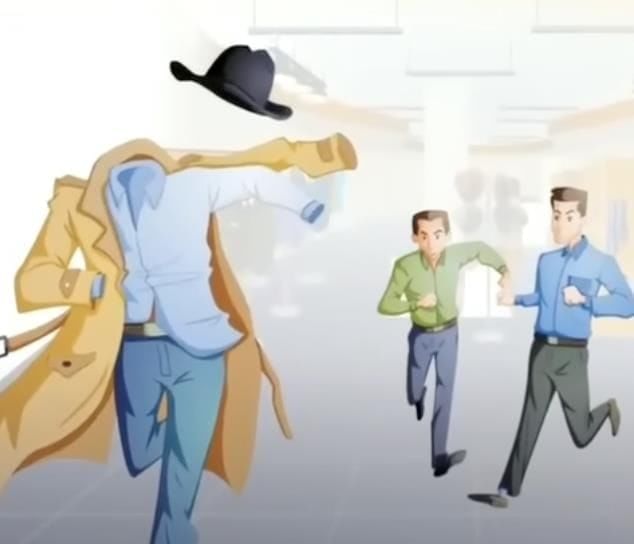
As he had overslept in the big London store, when the store opened in the morning the store assistants came in. Griffin panicked and ran, chased by the assistants. He had to take off his newly found clothes to become invisible and escape so that he found himself invisible but naked in the chill January air for the second time.
Q7: What did Halls see in the scientist’s room?
As the door was open and nobody appeared to be inside, Halls entered the scientist’s room. They saw that the bedclothes were cold, showing that the scientist must have been up for some time, and stranger still, the clothes and bandages that he always wore were lying about the room.
Q8: Griffin was not a true scientist as he misused his scientific discovery. Illustrate this point by giving two incidents from the story.
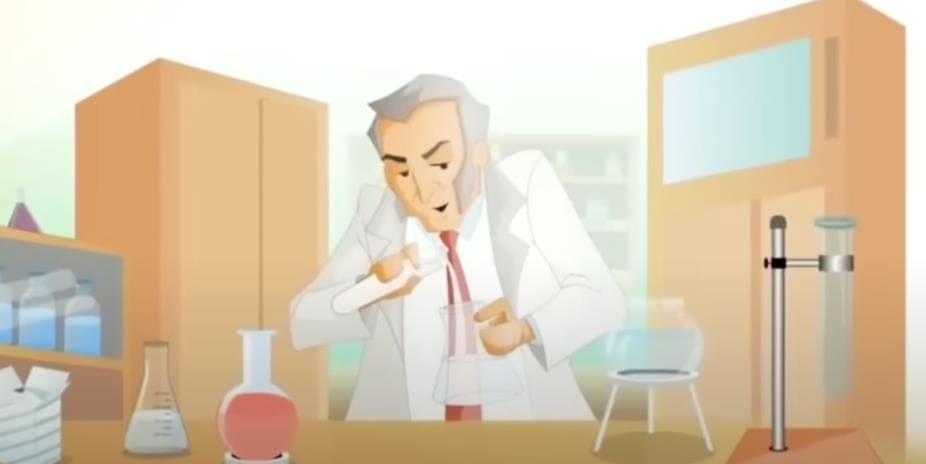
A true scientist is a law-abiding person. A scientist is also called a ‘natural philosopher’. Griffin was not a true scientist as he did not use his discovery of how to make himself invisible for good uses. He lost control of himself and behaved like a criminal. First, he set fire to his landlord’s house and ran away. Then he stole food without paying for it in a London store. Besides, he robbed the owner of a theatrical company and stole money from a clergyman’s desk.
Q9: What are the adventures made by Griffin in the village Iping? Give examples in support of your answer.
The tiny and quiet village of Iping saw one adventure after another ever since the arrival of Griffin. The first event occurred at the clergyman’s house. Very early in the morning, the clergyman and his wife were awakened by noises in their study. They heard the chink of money being taken from the clergyman’s desk. But when the clergyman flung open the door, there was no one inside. The room appeared to be empty. The clergyman and his wife looked under the desk, behind the curtains and even up the chimney but there wasn’t a sign of anybody. Yet the desk was open and the housekeeping money was stolen. Griffin had stolen the money.
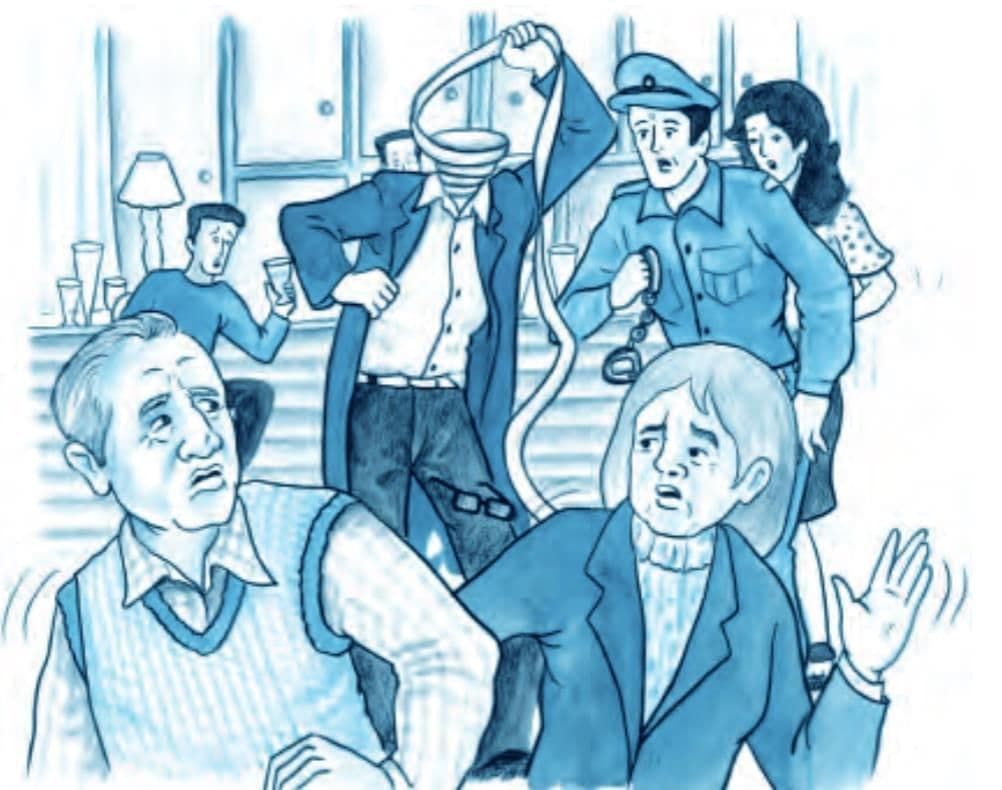
Then another extraordinary event took place at Mrs Hall’s inn. Mrs Hall found the door of Griffin’s room open and decided to investigate. They found that Griffin was not in his room and his clothes and bandages were lying about the room. Just then, Mrs Hall heard a sniff close to her ear and a moment later, the hat on the bedpost leapt up and hit her on her face. Then suddenly the bedroom chair became alive. Springing into the air, it charged at Mrs Hall’s legs and pushed her and her husband out of the room and then slammed and locked the door after them. Griffin had pushed them and slammed the door and locked it. And when the village constable came to arrest Griffin, the villagers were witness to yet another extraordinary spectacle. Griffin threw off his bandages, whiskers, spectacles and his nose and the people were staring at a headless man. And then he threw off one garment after another and became more and more invisible and then disappeared completely. These adventures were made by Griffin in the village Iping.
Q10: Give the character-sketch of Griffin.
Griffin was an extremely gifted scientist, but he had more negative qualities. Truly, he was a lawless person. He was not a true scientist as he misused his scientific discovery. He indulges in anti-social activities. After becoming invisible, he enters a London store and steals various things. Then he goes to a theatrical company in Drury Lane and steals clothes and other accessories and also robs its owner. Then, he flees to Iping village. There he steals money from the clergyman’s house. People call Mr Jaffers, the village constable, in Iping. The constable tries to catch him, but Griffin becomes invisible and escapes. All these activities show that Griffin had a criminal mind. He also had a bad temper. He used his invention to harass other people. He was not a law-abiding citizen.
Q.1. Horace Danby was ____ years old. (a) 50 (b) 40 (c) 60 (d) 45
Correct Answer is Option (a) Horace Danby was 50 years old, and unmarried. He lived with a housekeeper who worried over his health.
Q.2. The housekeeper hung the key of which door outside? (a) Kitchen door (b) Back door (c) Front door (d) Bedroom window
Correct Answer is Option (a) Horace Danby had seen the housekeeper hang the key to the kitchen door on a hook outside.
Q.3. Whom did Horace Danby see in the kitchen? How did they greet each other? What tact did Horace apply there?
Horace Danby saw the family dog, Sherry, in the kitchen. The dog greeted Horace by stirring, making noise, and wagging its tail in a friendly way. Horace greeted the dog by tactfully calming it down, calling it by its name, and showing love to it.
Q.4. Horace Danby was interested in the books, not in the painting. Why?
Horace Danby had a strong passion for rare books. Although he briefly considered collecting paintings, he ultimately realised that in a small house, books were more practical and valuable to him. This preference for books over paintings guided his decision-making.
Q.5. What was the passion of Horace Danby and how did he satisfy it?
The passion of Horace Danby was collecting rare and expensive books. To fulfil this passion, he needed money, which he obtained by robbing a safe each year. He carefully planned each robbery and then secretly purchased the books he desired through an agent.
Q.6. Give the character sketch of Horace Danby.
Horace Danby was a fifty-year-old bachelor who was perceived as a good and honest citizen. Generally, he was cheerful and healthy, except for occasional bouts of hay fever during summer. He was a successful lock maker, employing two assistants in his business. While he was regarded as respectable, he was not entirely honest. Fifteen years prior, Horace had served a prison sentence, which he spent in the library. His true passion lay in collecting rare and expensive books. To fund his collection, he planned a robbery each year, carefully studying his targets and stealing just enough to last him for twelve months. He would then purchase the books he desired through an agent. On a sunny July day, Horace felt confident about this year’s robbery at Shotover Grange. After observing the house for two weeks, he noted the absence of the family and their servants, who had gone to the movies. However, his plan was thwarted when he was arrested for the jewel robbery. His fingerprints were found at the scene, and despite his claims that the owner’s wife had asked for his help, no one believed him. Now, Horace serves as an assistant librarian in prison, often reflecting on the clever young woman who deceived him. He feels angered when discussions arise about honour among thieves.
Q.7. Why was Horace Danby arrested although he failed to profit from the robbery at Shotover Grange?
Horace Danby was arrested despite not profiting from the robbery at Shotover Grange because he broke open the safe to give the lady in red the jewels. He mistakenly believed she was the owner’s wife who had forgotten the safe’s combination. Although he intended to escape without trouble, he was caught red-handed by the lady and wanted to keep her satisfied. Unfortunately, he had not worn gloves while opening the safe, leaving his fingerprints all over the room. Consequently, he was arrested shortly after the incident.
Q.8. Horace Danby was a meticulous planner but still, he faltered. Where did he go wrong and why?
Horace Danby was a careful planner who gathered extensive information about the house, its owner, and the servants. Despite his meticulous preparations, he made a critical mistake when he was deceived by a young lady in red, who claimed to be the owner. When she asked him to open the safe for her jewels, he was so taken in by her appearance that he forgot to wear his gloves. As he opened the safe, his fingerprints were left all over the scene, leading to his arrest just two days later. The real owner was actually an elderly lady of sixty, while the young woman was a thief who had tricked him and escaped with the jewels. Horace’s careful planning ultimately failed due to this moment of distraction and trust in the wrong person.
Q.9. Horace was a successful thief because he carefully planned his robberies. Should we call him a successful thief and still appreciate his work? Why or why not?
Yes, Horace can be considered a successful thief because he meticulously planned his robberies and executed them effectively. While he appeared to lead a life as a good and honest citizen, the wealth he amassed through his crimes did not belong to him. Although he may have been efficient in his criminal activities, he is ultimately a criminal. Therefore, despite his skills, we cannot appreciate his work.
Q.10. Horace was clever but the lady in red was cleverer. Do you agree with this statement? Justify your answer.
Yes, I agree with this statement. Horace was clever; he planned the robbery meticulously, studied the target, and brought the right tools, including gloves to avoid leaving fingerprints. However, the young lady in red was even cleverer. She had all the necessary information and, by posing as the mistress of the house, exploited Horace’s fear of being caught. She tricked him into opening the safe and handing over the jewels. Furthermore, she ensured that Horace left his fingerprints behind by distracting him with a cigarette he offered to light after he removed his gloves. Thus, the lady successfully outsmarted him.
Q.1. Who is the author of the story “The Midnight Visitor”? (a) James Herriot (b) Ruskin Bond (c) Robert Arthur (d) Victor Canning
Correct Answer is Option (c)
Q.2. Where was Ausable staying? (a) Fowler’s home (b) French hotel (c) Max’s home (d) French Inn
Correct Answer is Option (b)
Q.3. Why had Fowler wanted to meet Ausable?
Fowler was a writer and he had wanted to meet Ausable, a renowned secret agent. Fowler wanted to know how Ausable tackled dangerous situations. He was disappointed when he saw Ausable, as he didn’t look like what Fowler thought a secret agent should look like.
Q.4. ‘Ausable shows the great presence of mind in a situation of danger and surprise.” Do you agree with this statement? If yes, why?
Yes, I agree with this statement, as Ausable showed great presence of mind when Max pointed a gun at him when he entered the hotel room with Fowler, which surprised and endangered both of them. He remained calm and cool, inventing stories as required to fool Max into jumping to his death.
Q.5. Why did Ausable frame the story of the balcony?
Ausable framed the story of the balcony to counter the use of the pistol by the rival secret agent Max to threaten him. The rival would have been able to get the important report about the new missiles if Ausable had not concocted this story.
Q.6. Who actually had knocked at the door of Ausable’s room? Why did he come there?
The waiter in the hotel where Ausable stayed knocked at the door of Ausable’s room. He had brought the drinks that Ausable had ordered when he arrived in the hotel with Fowler.
Q.7. How do you know that Ausable was an intelligent secret agent?
Ausable was an intelligent secret agent, as he could easily fabricate stories and befoot his enemies and kill them without using any weapon. He is very fat and short but he is much alert in the mind. Actually he uses his mind to the maximum. He did not get nervous when Max entered the room with an automatic pistol. Rather he was easily able to outwit Max.
Q.8. Give a character sketch of Ausable.
Ausable was a smart, intelligent man who was an expert secret agent. He was very fat and sloppy. He spoke in an American accent which he had brought from Boston twenty years ago. He could speak French and German but possibly he was a spy who dealt in espionage and danger. He had a very important paper for which several men and women had risked their lives and even Max had come for that paper. He was quick-witted and had a great presence of mind. He cooked up a police story and of the balcony to befool Max. The story was so convincing that Max jumped down the window. Not for a moment did he think that it might be a fabricated story. In other words, he proved to be quite dangerous for Max, though he had a great sense of humour when he talked to Fowler. Ausable was very witty who fabricated stories on the spot with the presence of his mind. He narrated stories in such a cool manner that everybody believed him and nobody suspected him even once.
Q.9. What information did Ausable give about the imaginary balcony? Why did he do so?
Ausable created a detailed description of how his room was part of a bigger apartment and how the next room had a direct connection with a balcony. His statement that somebody else had also broken into his office through that balcony made it a convincing story. Ausable did this to fool Max into thinking that a balcony existed just outside the window, as he knew that soon the waiter bringing the drinks he had ordered would be knocking at the door, which may prompt Max to jump into the imaginary balcony to hide.
Q.10. Ausable was a clever secret agent. Do you agree with the statement? Justify your answer.
Ausable did not look at all like the conventional image of a secret agent. He was short and very fat. Besides, he spoke French and German which lacked fluency as well as the right accent; the American accent was quite palpable in his speech. However, Ausable had a very sharp and active mind because he invented two stories, one about a non-existent balcony outside his hotel window and another about the police arriving to give extra security to some important documents he was about to receive. He was an intelligent man and a clever secret agent to be able to invent such stories on the spur of the moment in the face of imminent danger in the form of Max, a rival secret agent.
Q.1. How has the narrator described Anil? (a) Simple (b) Kind (c) Easy-going (d) All of these
Correct Answer is Option (d)
Q.2. How did the narrator attempt at being friends with Anil? (a) Flattering him (b) Teasing him (c) Introducing himself (d) None of these
Correct Answer is Option (a)
Q.3. Why did Hari Singh approach Anil?
Hari Singh was a thief who had not had much luck in his work recently. So he approached Anil with the intention of robbing him, as he seemed to be an easygoing and simple man. According to Hari, winning Anil’s confidence was an easy task.
Q.4. What did Anil and Hari agree upon to be the mode of payment?
When Anil stated his inability to pay Hari, Anil questioned Hari if he could feed Hari. Hari realized that he had misjudged his target and molded the situation for his benefit. Anil then agreed to feed him if he knew how to cook.
Q.5. What made Hari Singh go back to Anil’s house?
Hari Singh realised the importance of the education he was receiving from Anil. He knew that learning how to read and write and being a literate person would open doors to many opportunities. He was sure that he would then be able to earn more than a few hundred rupees he had in hand at that time. This made him go back to Anil.
Q.6. State the events that took place on the night of the theft.
The night of the robbery vitas quite eventful for Hari Singh. After stealing Anil’s money and leaving Anil’s house, Hari went to the railway station but didn’t board the train to Lucknow. He walked slowly through the bazaar as he did i ot know anyone who would provide him shelter except Anil, for he didn’t have any friends. He was forced to take shelter under the clock tower later when it started raining heavily. That is where he realised the importance of education and decided to go back to Anil.
Q.7. How was the morning after the night of the theft?
The morning after the night of the theft was just like a normal one. Hari woke up late and Anil had made tea by then. Anil gave a fifty rupee note to Hari and told him that he will now be paid regularly. Hari was aware that Anil knew about the theft but he didn’t show anything.
Q.8. Had Anil really forgiven Hari Singh? Support your answer with evidence.
Yes, Anil had forgiven Hari Singh. It is evident because Anil handed over to Hari a fifty rupee note as soon as Hari woke up. Though he knew that Hari had robbed the money at first but his subsequent actions gave him hope of change in Hari’s character.
Q.9. Money can’t make a man as much as education can. Elucidate the statement.
The statement stands true in almost all aspects of life. Money may buy us all the luxuries and fulfil our needs but it cannot buy us knowledge, civilised thinking, skills and abilities to achieve our dreams. Education lays the platform for all to act upon our goals according to our abilities. Education enables us to keep up with the fast moving world. It opens the door to opportunities we do not know even exist. Money, on the other hand, can assist us to a certain level. It can buy us a plan but education gives us the knowledge of its execution. Just as in the story ‘A Thief s Story’, Hari Singh prioritised the chance of being literate over a few hundred rupees, we must understand that education can help us to achieve whatever we desire.
Q.10. Hari Singh didn’t board the express and returned to Amil. Why did he return? On what values does this incident put light on?
Hari Singh was a thief and he had stolen Anil’s money. After the theft, he realised that he had robbed not only Anil but also himself of the chance of being literate and having a bright future. His conscience pricked him to think what all he could have got had he not done this. It was difficult for him to rob Anil but it was tougher for him not to back. He realised that he could not make tea, buy daily supplies and learn how to read and write then. His inner self did not agree to bypass this and forced him to return. Hari’s return to Anil shows that despite indulging in criminal acts, he still had a practical and positive attitude towards life. It is the awakening of Hari’s conscience and Anil’s love and care that reformed Hari’s character. It teaches us that love alone can change a person. Anil’s understanding nature and care changed Hari’s thinking to mend his ways for good.
Q.1. When Mrs. Pumphery listened about the dog’s hospitalization, she was_________ (a) Angry (b) Agitated (c) Almost unconscious (d) Emotional
Correct Answer is Option (c)
Q.2. “I think I know a cure for you”. Here ‘cure’ refers to _________ (a) Treatment (b) Punishment (c) Regulating Tricki’s upkeep (d) Diagnosis
Correct Answer is Option (c)
Q.3. The narrator called Mrs.Pumphery after _________ (a) 25 days (b) 15 days (c) 20 days (d) 30 days
Correct Answer is Option (b)
Q.4. What made James Herriot expect a call from Mrs. Pumphrey?
James Herriot’s encounter with Mrs. Pumphrey and Tricki made him expect a call for help. He was sure that the extra diet and no physical activity would soon put Tricki’s health in danger. And just as anticipated, Mrs Pumphrey called the vet a few days afterwards.
Q.5. What ‘extra’ did Mrs. Pumphrey start to give Tricki and why?
Mrs. Pumphrey thought that Tricki was suffering from malnutrition, as he was weak and listless. So, she started to give him extra snacks like cod-liver oil and malt between the main meals and Horlicks after dinner to make him stronger. She also continued his cream cakes and chocolates.
Q.6. What made Mrs. Pumphrey call the vet?
Tricki had become fat and lazy. He used to lie on his rug and pant. He also refused to eat his favorite dishes. His bouts of vomiting added to Mrs. Pumphrey’s worry and hence she decided to call Dr. James Herriot, the vet.
Q.7. How can you say that it was hard for Mrs. Pumphrey to part with her doting pet?
Mrs. Pumphrey treated Tricki as her own child. She loved him very much. It was very difficult for her to see Tricki in such a situation. She was distraught when she had to make the decision to hospitalise Tricki, for her love for him knew no bounds. It was a terrible and tearful moment for her but she agreed to Herriot’s suggestion for the betterment of her pet.
Q.8. Was Tricki suffering from any ailment in reality? If not, then what made him inactive and lethargic?
No, Tricki was not suffering from any ailment. It was his greed for food and the love of his mistress that spoilt his health to such an extent. He was being overfed every day and that made him obese and lethargic. That is why his health showed rapid improvement when his diet was controlled.
Q.9. Write the character sketch of Mrs. Pumphrey.
Mrs. Pumphrey was a very wealthy lady. She was very loving to her dog. She pampered and overfed him. She gave him lots of nutritious food. Tricki was very greedy. He never refused food. This made him hugely fat and lazy. Mrs. Pumphrey was worried about him. She thought that he was suffering from malnutrition and so she eventually gave him more energy food. She almost swooned when Herriot told her that Tricki must be hospitalized for a fortnight. She thought that Tricki would pine and die if he did not see his even for a single day. Mrs. Pumphrey is impractical but very compassionate and caring. She and her staff members arranged and provided all possible comforts such as beds, cushions and toys to Tricki. She regularly enquired about his health from Dr Herriot. She gratefully thanked Dr Herriot for saving Tricki’s life and called it “A triumph of Surgery.”
Q.10. Write the character sketch of Dr. James Herriot.
Dr. James Herriot is a competent veterinary surgeon. He is really worried about Tricki. He understands that the real fault of the dog is his greed for food. Dr. Herriot instructs Mrs Pumphrey to keep Tricki on a very strict diet. Dr. James Herriot is practical and pragmatic. He doesn’t give any medical treatment to the dog. He feeds the dog with only water. His method works. The grateful mistress thanks Dr. Herriot and calls his feat “A triumph of Surgery!” Dr. James is clever enough to enjoy the best of both the worlds. He is tempted to keep Tricki as a permanent guest. It was a happy period for Dr. Herriot and his friends. He used to enjoy eggs for breakfast and wine and brandy for lunch.
Extract Based Questions
Q.11.I tried to sound severe : “Now I really mean this, If you don’t cut his food right down and give him more exercise he is going to be really ill. You must harden your heart and keep him on a very strict diet”.
(a) The speaker tried to sound severe because_______
(b) For whom was the advice given __________
(c) Find the word in the extract which is a synonym of the word ‘serious’.
1. severe 2. strict 3. exercise 4. sound
(d) The antonym of ‘hardened’ is _________.
Answer.
(a) The speaker tried to sound severe to make Mrs Pumphrey take his advice seriously and act on it.
(b) The advice was given for Tricki because he had become obese and lazy. He was unwell and the speaker wanted him to be on a strict diet.
(c) 1. ‘severe’
(d) The antonym is ‘softened’.
Q.12. ‘And did you cut down on the sweet things as I told you?’
(a) What sweet things are being referred to in the extract?
(b) Why does the speaker enquire if the sweet things have been cut down?
(c) What is the meaning of the phrase ‘cut down’?
(d) What is the opposite of ‘sweet’?
Answer.
(a) The sweet things mentioned in the extract are cream cakes and chocolates.
(b) The speaker enquires if the sweet things have been cut down because these were spoiling Tricki’s health and he needed to be put on a strict diet.
(c) The phrase ‘cut down’ means ‘to reduce the quantity of something’.
(d) ‘Sour’ is its opposite.
Q.13. As I moved off, Mrs Pumphrey, with a despairing cry, threw an armful of the little coats through the window. I looked in the mirror before I turned the corner of the drive; everybody was in tears.
(a) Where was the speaker going and with whom?
(b) Why was everybody in tears? ‘
(c) Find the word in the extract which is an antonym of the word ‘cheerful’.
(d) What is the opposite of ‘before’?
Answer.
(a) The speaker was going to the hospital with Tricki.
(b) Everybody was in tears because Tricki was being hospitalised as he was ill. Everyone was worried about his health.
(c) The word is ‘despairing’.
(d) ‘After’ is its opposite.
Q.14. “Poor old lad”, I said, “You haven’t a kick in you but I think I know a cure for you”.
(a) The speaker says ‘Tricki as “poor old lad” because ________
(b) The speaker knows the cure of ‘Tricki illness is ________
(c) The meaning of ‘a kick’ in the extract is __________
(d) synonym of ‘cure’ is ______
1. help 2. health 3. heal 4. care
Answer.
(a) The speaker addresses Tricki as a poor old because he is unwell and listless.
(b) The speaker knows that the cure for Tricki’s illness is to put him on a strict diet.
Q.1. Who tried to invade the earth in the twenty-first century? (a) Martians (b) Mercurius (d) Plutians (c) Jupiters
Q.2. Who is the writer of the chapter ‘The Book That Saved the Earth’? (a) Victor Canning (b) H.O. Wells (c) K.A. Abbas (d) Claire Boiko
Q.3. Why did Think-Tank wish to contact the space probe?
Q.4. How does Think-Tank explain the books to his probe crew?
Q.5. Think-Tank thinks that Earthlings are after him. What is the reason?
Q.6. Compare and contrast the characters of Noodle and Think-Tank
Q.7. Noodle hails Think-Tank as the most powerful and intelligent creature in the whole universe. Do you agree? Write your opinion of Think-Tank citing instances from the given text.
Q.8. Compare and contrast the characters of Noodle and Think-Tank.
Q.9. Mars and Earth become friends. How?
Q.10. Why does the space probe crew take vitamins?
You can access the solutions to this worksheet here.
Q.1. One day Mr. Loisel received an invitation from: (a) The Minister of Health (b) The Minister of Home Affairs (c) The Minister of Sea Affairs (d) The Minister of Public Instruction
Q.2. How much time did they take to repay the loan? (a) Two years (b) Five years (c) Ten years (d) Twenty years
Q.3. What was the excuse given for the delay in returning the necklace?
Q.4. What would Matilda often dream of?
Q.5. Why did Matilda throw the invitation spitefully?
Q.6. How was Mrs. Loisel ‘a mistake of destiny’?
Q.7. What excuse did Loisels put up to explain the delay in returning the necklace?
Q.8. Loisel wished to keep his wife in good humour. Which values of Matilda impress him?
Q.9. Do you think the story is aptly titled? Justify your answer.
Q.10. What is your opinion about M. Loisel?
You can access the solutions to this worksheet here.
Q.1. Ebright wanted to become – (a) A scientist (b) A Journalist (c) An astronomer (d) A writer
Q.2. Ebright was always encouraged for studies by his – (a) Father (b) Grandmother (c) Sister (d) Mother
Q.3. What rare achievement did Richard manage at the age of twenty-two?
Q.4. How did ‘The Travels of Monarch X’ prove a turning point in his life?
Q.5. Which project did Richard undertake in the eighth grade?
Q.6. Mention any two of Ebright’s contributions to the world of science.
Q.7. Mr. Weiherer pays a glowing tribute to Richard. What did he say?
Q.8. What are the values required to become a successful scientist like Richard Ebright? Elaborate with reference to the lesson ‘The Making of a Scientist.
Q.9. Richard Ebright displayed a well-rounded personality. Do you agree? Elucidate in the context of the given text.
Q.10. Which project did Albright submit in his eighth grade? Why did he win?
You can access the solutions to this worksheet here.
(a) Mrs Hall (b) the clergyman (c) the landlord (d) the shopkeeper
Q4:What was Griffin’s discovery?
(a) A drug that could make one invisible (b) Time machine (c) Invisible ink (d) None of these
Q5: Griffin’s presence was felt when:
(a) He jumped into the water with a splash. (b) He wore clothes. (c) He left muddy footprints. (d) He stepped in mud.
Q6: How did Griffin find himself invisible but naked in the chill January air for the second time? Q7: What did Halls see in the scientist’s room? Q8: Griffin was not a true scientist as he misused his scientific discovery. Illustrate this point by giving two incidents from the story. Q9: What are the adventures made by Griffin in the village Iping? Give examples in support of your answer. Q10: Give the character-sketch of Griffin.
You can access the solutions to this worksheet here.