8. Poem – The Ball Poem – Textbook Worksheet

Q.1. Why does the poet say, ‘I would not intrude on him?’ Why doesn’t he offer him money to buy another ball?

Q.2. “… staring down/All his young days into the harbour where/His ball went …” Do you think the boy has had the ball for a long time? Is it linked to the memories of days when he played with it?

Q.3. Should the boy be allowed to grieve for his ball? If his loss is irreparable or irretrievable then how should one handle it? What lessons can be learnt?

Q.4. How did the boy really react to the loss of the ball or was he fearful of something or someone……..? Can our attention be directed toward his family and other people? Are there any lessons to be learnt?

Q.5. What does the poet say the boy is learning from the loss of the ball? Try to explain this in your own words?

Q.6. Why does the poet say, “I would not intrude on him”? Why doesn’t he offer him money to buy another ball?

Q.7. Do you think the boy has lost anything earlier? Pick out the words that suggest the answer?

Q.8. What does “in the world of possessions” mean?

Q.9. Why did the boy feel so sad at the loss of his ball?

Q.10. Why is it important for everyone to experience loss and to stand up after it?

The solutions of the worksheet “Worksheet Solutions: The Ball Poem” 
7. Poem – How to Tell Wild Animals – Textbook Worksheet

Q1: Who smiles while catching their prey?
(a)
 Hyena
(b) Crocodile
(c) Both of them
(d) None of them

Q2: Which animal’s roar is enough to kill you?
(a)
 Asian Lion
(b) Bengal Tiger
(c) Leopard
(d) Bear

Q3: Describe the effective use of humour in the poem How to tell wild animals. What are the poetic liberties taken by the poet in the poem?

Q4: Why does the poetess use the term ‘noble’ and ‘wild’ for the tiger?

Q5: How can you distinguish between a hyena and a crocodile?

Q6: How does a leopard behave when he sees someone?

Q7: What is the theme of the poem ‘How to tell wild Animals’? 

Q8: Why does the poetess say that a bear’s ‘hug’ may confuse a novice? 

Q9: Describe a few characteristics of a chameleon.

Q10: How can you identify the Asian lion and the Bengal Tiger?

The solutions of the worksheet “Worksheet Solutions: How to Tell Wild Animals

6. Two Stories about Flying – Textbook Worksheet

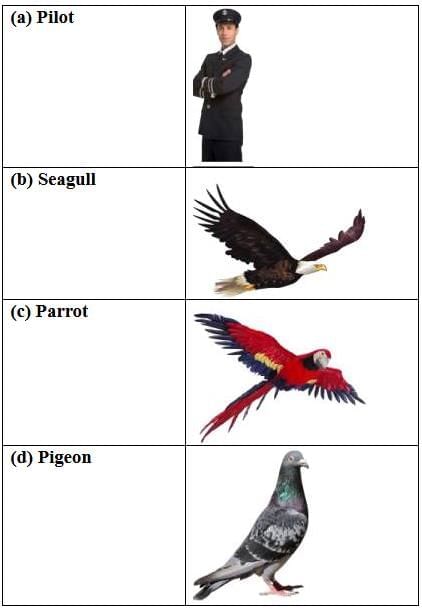
Q1. Fill in the Blanks Using the Suitable options (See, France, India, Seagull, Black Aeroplane, Frederick Forsyth) 
(a) The pilot was unable to ___ anything. 
(b) From _____ to _____, the pilot was flying. 
(c) The title ____ is based on the aeroplane that helped the pilot. 
(d) _____ is the author of Black Aeroplane. 
(e) ____ is the focus of the lesson “His First Flight.” 

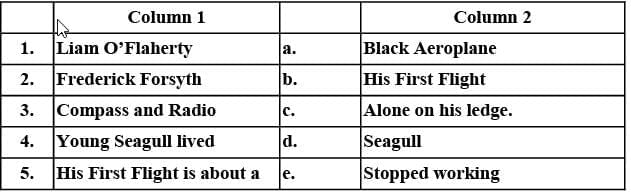
Q2. Match the following. 

Q3. What is the lesson “His First Flight” about?

Q4. Why was he afraid to fly? 
(a) He lacked courage. 
(b) He was concerned that his wings would not support him. 
(c) He was concerned that people would criticise him.
(d) Both 1 and 2.

Q5. What did his parents threaten to do if he didn’t fly away? 
(a) never speak to him 
(b) punish him 
(c) should starve him 
(d) leave him

Q6. What lessons did his parents impart to his siblings? 
(a) to master the art of flight 
(b) skimming the waves 
(c) to fish by diving 
(d) All of the above

Q7. Which control station did he call while travelling? 

Q8. What food did the Seagull’s mother purchase for it? 

Q9. The young Seagull was alone, why? 

Q10. Name the aircraft in which the pilot was operating? 

Q11. Why didn’t he travel with his brothers and sisters? 

Q12. Why was he frightened to fly?

Q13. How far away from Paris was the narrator when he noticed ominous clouds in the sky?

Q14. During the day, what did he observe?

Q15. ‘He felt the heat because he had not. eaten since the previous nightfall’ what did the little Seagull do to feed himself?

Q16. Why was it impossible for the young Seagull to fly to his parents? 

Q17. When the Seagull failed to catch their attention, what were his family members doing on the plateau? 

Q18. How did the baby Seagull learn to fly? 

Q19. When did the Seagull start to fly? Where does it end? 

Q20. What occurred when the young Seagull dove for the fish that his mother had just picked up?

Q21. When the Seagull’s belly reached the green sea, how did he feel? 

Q22. How did the Seagull conquer his sea phobia? 

Q23. Do you feel sorry for the Seagull? Why? 

Q24. How did the baby Seagull discover how to float in the water? 

Q25. What did the little Seagull do to catch his mother’s eye?


You can find Worksheets Solutions here: Worksheet Solutions: Two Stories about Flying

5. Poem – A Tiger in the Zoo – Textbook Worksheet

Q.1. What is the tiger doing in its cage?
(a)
 Jumping
(b) Terrorising
(c) Sleeping
(d) Stalking

Q.2. Whose noise does tiger hear last at night?
(a)
 Noise of the animals
(b) Noise of the patrolling cars
(c) Noise of the villagers
(d) Noise of the visitors

Q.3. Explain why the Tiger ignores the visitors at the zoo? 

Q.4. What does the poet mean when he says that the Tiger’s strength is behind the bars?

Q.5. Explain how the poet contrasts the Tiger in the cage to the Tiger in the jungle? 

Q.6. What is the tiger doing? Why is he ignoring the visitors?

Q.7. Describe the tiger in the wild.

Q.8. Is it right to confine wild animals into cages? Why or why not?

Q.9. How does a tiger create terror for the villagers?

Q.10. Why does the tiger express his rage quietly?

The solutions of the worksheet “Worksheet Solutions: A Tiger in the Zoo

4. Nelson Mandela – Long Walk to Freedom – Textbook Worksheet

Multiple Choice Questions
Q1: What realizations did Mandela have of his boyhood freedom?
(a) Freedom was meant for kids
(b) He was born free
(c) It is just an illusion
(d) He had no realizations

Q2: Nelson Mandela’s wish for the country was _________.
(a) 
to unite all his people together
(b) to push away the enemies
(c) to remain free forever without an oppressor ruling them
(d) none of these

Q3: According to Mandela, what is the greatest wealth of a nation?
(a) minerals
(b) gems
(c) diamonds
(d) people

Q4: What unintended effect did the decades of oppression and brutality have?
(a) created men of extraordinary courage, wisdom, and generosity
(b) Poverty and suffering
(c) Boycotts from foreign nations
(d) both 2 and 3

Q5: What change brought international leaders to South Africa?
(a) End of Apartheid
(b) humanity
(c) peace
(d) trade negotiations

Short Answer Type Questions
Q6: What were Nelson Mandela’s views on the policy of Apartheid? 
Q7: What were the difficulties Nelson Mandela encountered while fighting for freedom?
Q8: How did ‘hunger for freedom’ change Mandela’s life? 
Q9: What are the ‘twin obligations’ referred to by Nelson Mandela?
Q10: What was unique in the inauguration ceremony?

Long Answer Type Questions
Q11: Describe the views of Mandela for the black people who fought and sacrificed their lives for the country’s political independence.
Q12: What were the difficulties faced by Nelson Mandela in achieving freedom for his people? 
Q13: Summarise the chapter ‘Nelson Mandela -Long Walk to Freedom. 

Extract Based Questions
Q14: In life, every man has twin obligations- obligations to his family, to his parents, to his wife and
children; and he has an obligation to his people, his community, his country. In a civil and humane society, each man is able to fulfil those obligations according to his own inclinations and abilities. But in a country like South Africa, it was almost impossible for a man of my birth and colour to fulfil both of those obligations. In South Africa, a man of colour who attempted to live as a human being was punished and isolated.
(a) What are the obligations that every man has in his life?
(b) Why was it impossible for a coloured man to discharge his obligations in South Africa?
(c) What does it mean by the phrase ‘a man of my birth’?
(d) What is the adjective form of ‘punished’?

Q15: On the day of the inauguration, I was overwhelmed with a sense of history. In the first decade of the twentieth century, a few years after the bitter Anglo-Boer war and before my own birth, the white-skinned people of South Africa patched up their differences and erected a system of racial domination against the dark-skinned people of their own land. The structure they created formed the basis of one of the harshest, most inhumane societies the world has ever known. Now, in the last decade of the twentieth century, and my own eighth decade as a man, that system had been overturned forever and replaced by one that recognised the rights and freedoms of all people, regardless of the colour of their skin. 
(a) What made the author overwhelmed?
(b) Which system was created by white-skinned people of South Africa?
(c) What did the new system recognize? 
(d) Which word in the passage means the same as ‘submerged’? 

The solutions of the worksheet “Worksheet Solutions: Nelson Mandela – Long Walk to Freedom

3. Poem – Fire and Ice – Textbook Worksheet

Multiple Choice Questions
Q1: Why are desires compared to fire?
(a) Both are lethal
(b) Both are related to heat
(c) Both burn
(d) Both consume rapidly

Q2: According to the poem Fire and Ice, what do some people think the world will end in?
(a) 
Rain
(b) Moon
(c) Sun
(d) Fire

Q3: “But if it had to perish twice.” What does ‘it’ stand for in this line?
(a)
 World
(b) Desire
(c) Ice
(d) Fire

Q4: Who is the poet of the poem Fire and Ice?
(a) 
Robert Frost
(b) Ben Jonson
(c) William Cowper
(d) William Blake

Q5: Name the poetic device used in the line To say that for destruction ice is also great.
(a) 
Oxymoron
(b) Alliteration
(c) Imagery
(d) Metaphor

Short Answer Type Questions
Q6: Which age-old question does the poem revolves around? 
Q7: What do the metaphors of Ice and Fire convey to the reader? Elaborate. What is the message given by the poet? 
Q8: What do ‘Fire’ and ‘Ice’ stand for and what is the general opinion regarding the world? 
Q9: How can fire destroy the world? 
Q10: What is the central idea of the poem ‘Fire and ‘Ice’? 

Long Answer Type Questions
Q11: Discuss how extreme behavior can hasten the end of the world with respect to ‘Fire and Ice’. 
Q12: The poem ‘Fire and Ice’, carries with it very deep thematic ideas. Elaborate on these darkest traits of humanity.
Q13: How will the world end? Support your answer with a scientific explanation. 

Extract Based Questions
Q14: 
Some say the world will end in fire
Some say in ice.
From what I’ve tasted of desire
I hold with those who favor fire.
(a) What is the poet’s opinion of the world in these lines?  
(b) What is the poet’s opinion about the world?
(c) What is the contradictory opinion of the public?
(d) How are ice and fire similar to each other though they have contradictory traits? 

Q15: 
 But if it had to perish twice,
I think I know enough of hate
To say that for destruction ice
Is also great
And would suffice.
(a) Why does the poet feel that ‘ice’ is also great for destruction?
(b) What is the rhyme scheme of this stanza of the poem?
(c) The two things that the poet thinks are good enough for destruction are 
(d) What does ‘it’ stand for in the first line?

The solutions of the worksheet “Worksheet Solutions: Fire & Ice

2. Poem – Dust of Snow – Textbook Worksheet

Q1: What change come in the poet’s mood?

(a) From joy to sorrow
(b) From hope to despair
(c) From despair to cheer
(d) From anger to harmony

Q2: Who is the poet of the poem “Dust of Snow”?
(a)
 Leslie Norris
(b) Robert Frost
(c) Carolyn Wells
(d) Robin Klein

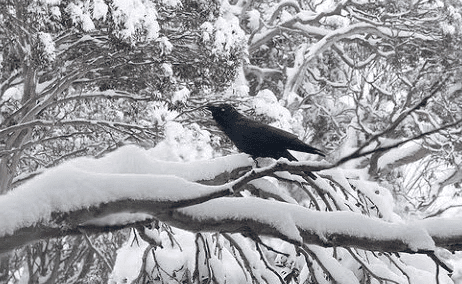
Q3: Where was the crow sitting?

(a) on a Banyan tree
(b) on a Hemlock tree
(c) on a Pine tree
(d) on a Gulmohar tree

Q4: Pick the set of options that are related to the idea conveyed in the poem.
i. The state of sadness neither can be ended nor can be avoided.
ii. The state of depression should last for long.
iii. Everyone has moments of sadness or depression in one’s life.
iv. The sooner one gets over grief or depression the better it is.
v. The state of depression if not ended will end us.
vi. The state of sadness should continue for long.
vii. Everyone mustn’t avoid the state of depression.

a. i, ii, iv
b. iii, iv, v
c. v, vi, vii
d. i, iii, v

Q5: What did poet realise when dust of snow fell on him?

i. That he had wasted his time being in sorrow
ii. That he should utilise his remaining day in doing some useful tasks.

a. Both (i) and (ii) are correct
b. 
Only (i) is correct
c.
 Only (ii) is correct
d. 
Neither (i) nor (ii) is correct

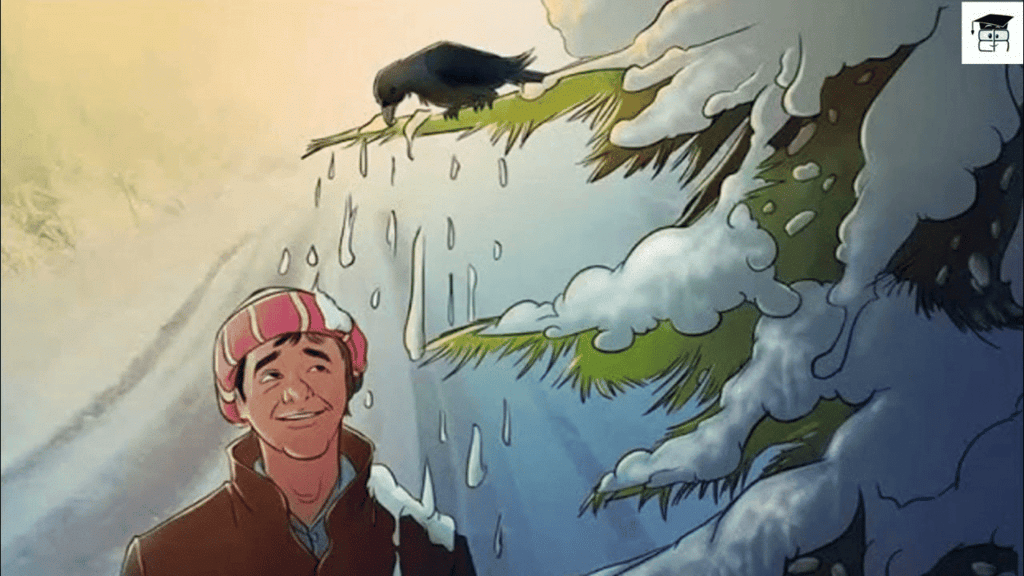
Q6: What do the crow, hemlock tree and dust of snow represent in the poem? 

Q7: It is our attitude towards a situation that makes it positive or negative. Do you agree with it? Express your views with reference to the poem ‘Dust of Snow’.

Q8: In the poem ‘Dust of Snow’, how does the poet’s mood get changed?

Q9: A simple moment proves to be very significant and saves the rest of the day of the poet from being wasted. Explain on the basis of the poem ‘Dust of Snow’.

Q10: What do the ‘Hemlock’ tree and ‘Crow’ represent? What does the dust of snow metaphorically stand for?

The solutions of the worksheet “Worksheet Solutions: Dust of Snow”

1. A Letter to God – Textbook Worksheet

Q.1. The field of corn dotted with flowers means that
(a) not a single flower was bigger than a dot.
(b) the flowers were scattered across.
(c) the flowers were in shaped like dots.
(d) the flowers had shrunk in size.

Q.2. Which crop was growing on Lencho’s fields?
(a) 
Corn
(b) 
Barley
(c) 
Rice
(d) 
None of the above

Q.3. Why did the postmaster decide to reply to Lencho’s letter?
(a) 
he was a good man
(b) 
he felt empathetic
(c) 
to preserve Lencho’s faith in God
(d) 
all of the above
Q.4. How much money did Lencho ask for?

(a) 100 pesos
(b) 1000 pesos
(c) 10 pesos
(d) 500 pesos

Q.5. Where did Lencho expect the downpour to come from?
(a)
 north
(b) north-east
(c) north-west
(d) south-east

6. True and False: 
(a) The letter was read by the postmaster. 
(b) Lencho wished for Rain. 
(c) Lencho compared the raindrops to new coins. 
(d) After the rain ended, Lencho was overcome with sorrow because everything had been Safe. 
(e) He was happy with the difference in the amounts. 

7. Fill in the blanks: (Harvest, God, Laughed, Died, Hundred) 
(a) Lencho wished for favourable rain because a good____ required it 
(b) In Lencho’s field, all of the crops ____as a result of the weather. 
(c) The postmaster first____ as he read Lencho’s letter 
(d) Lencho had asked for a____ pesos 
(e) He has entire faith in___

Q.6. Who did Lencho write a letter? What did he ask for?

Q.7. How did the rain change? What happened to Lencho’s fields?

Q.8. What does the postmaster do to answer Lencho’s Letter?

Q.9. People get support from family and friends during bad times. How does Lencho’s family behave after the harvest is ruined?

Q.10. What were Lencho’s feelings when he found the letter with money in it? What did he do after opening the letter?

You can find Worksheets Solutions here: Worksheet Solutions: A Letter to God

19. The Proposal – Textbook Summary

Key Points of the Story

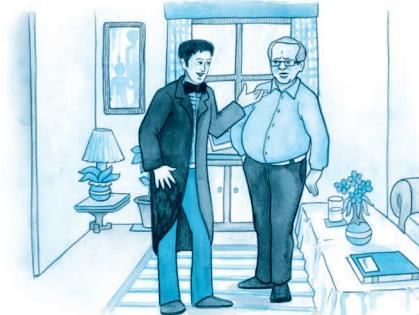
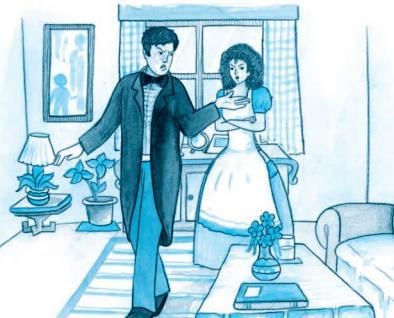
  • The play takes place in Stepan Chubukov’s drawing-room.
  • Main characters include Stepan Chubukov, his daughter Natalya Stepanovna, and their neighbour Ivan Vassilevitch Lomov.
  • Ivan Lomov comes to Chubukov’s home to ask for Natalya’s hand in marriage.
  • Chubukov is shocked and very happy, showing his excitement in an exaggerated way.
  • Both families are wealthy landowners, which plays a role in the marriage proposal.
  • Natalya, unaware of the proposal, talks about land with Lomov.
  • They argue about who owns Oxen Meadows, each claiming it belongs to them.
  • They also argue over which dog is superior, Squeezer or Guess.
  • All three characters are argumentative, bickering over trivial matters.
  • The argument escalates, causing Lomov to feel palpitations.
  • Chubukov happily confirms Lomov’s proposal to Natalya, who seems unaware amidst the dispute.
  • Even after the proposal, the arguments persist, highlighting their pettiness.

Try yourself:

What do Natalya and Lomov argue about?

  • A.Oxen Meadows
  • B.Money
  • C.Weather
  • D.Food

View Solution

Detailed Summary

The chapter, The Proposal, is a comedy-drama that is based on the tendency of two wealthy families who seek ties with each other to increase their estates by encouraging marriage that would improve their wealth. The play began with Ivan Lomov, who visited Stephan Chubukov, a wealthy neighbour of Lomov. Lomov was a wealthy person himself who was dressed neatly and had come to seek Chubukov’s twenty-five-year-old daughter, Natalya Stepanovna’s hand in marriage. Initially, Chubukov was curious about Lomov’s sudden visit and assumed that the young man had come to ask for money which he might not return.

Lomov was a thirty-five-year-old gentleman who suffered from severe heart-throbbing and became upset easily. He thought that Natalya was an excellent housekeeper, a well-educated and average-looking woman who would be an ideal partner to marry. However, when Chubukov heard about the proposal, he was glad and embraced Lomov. He immediately rushed inside to call his daughter, Natalya.

When Natalya arrived, Lomov began the conversation about how both families share a cordial relationship. As he spoke about his land Oxen Meadows, which was a disputed property, Natalya objected that the land belonged to her family. Lomov yelled back, stating that the land belonged to him. Both of them had a heated argument on this topic until Lomov had a sudden palpitation attack with numbness in his feet. In no time, Natalya’s father, Chubukov, arrived, and the father-daughter duo started abusing Lomov. Feeling insulted, Lomov rushed out of the house. As Chubukov continued to defame the young man, he accidentally mentioned Natalya about Lomov’s marriage proposal. Hearing this, Natalya immediately regretted insulting Lomov and asked her father to bring him back.

Chubukov rushed out of the house immediately to call Lomov. When the young man returned, Natalya started a conversation about their dogs. In no time, a second round of debate ensued between her and Lomov, where she mentioned that her dog Squeezer was better than Lomov’s Guess. Soon, Chubukov entered the scene, and the argument worsened. All three people began quarrelling, and soon Lomov fainted with another attack of palpitation.

Seeing this, Natalya asked her father to wake up Lomov as she expressed her desire that she like him too. Suddenly when Lomov made a movement, they offered him some water to drink, and Chubukov put Natalya’s hand over his hand. They agreed to marry, but the quarrel persisted as Natalya said that Squeezer was better than Guess. However, Lomov was adamant and refused to accept that his dog, Guess, was worse than Squeezer, Natalya’s dog. The curtain went down as the verbal fight continued among the characters.

Try yourself:

What is the main reason for the argument between Lomov and Natalya in the play “The Proposal”?

  • A.The ownership of Oxen Meadows.
  • B.The color of their dogs.
  • C.The weather on that day.
  • D.The price of the neighboring land.

View Solution

Theme 

The play highlights how anger and argument can spoil a relationship. It also shows the fate of such marriages which are done with the purpose of cheating the spouse. The kind of matrimonial alliances entered into by the wealthy people whose main purpose is to amass riches has been depicted.

Message

The proposal goes through despite the arguments, showing that economic sense often prevails over personal disputes. The continuous quarrels even after the proposal suggest that human nature is prone to foolishness and petty conflicts.

Glossary

  1. Farce: A comic dramatic work using buffoonery and horseplay.
  2. Quarrelsome: Inclined to argue or disagree.
  3. Perpetuity: The state of lasting forever.
  4. Haberdashery: A store selling men’s clothing and accessories.
  5. Salutation: A gesture or utterance made as a greeting.
  6. Palpitations: Rapid, strong, or irregular heartbeat.
  7. Neglige: Casual or informal clothing.
  8. Dessiatins: An old Russian unit of land measurement.
  9. Impudent: Not showing due respect for another person.
  10. Pettifogger: A lawyer who deals with petty cases or employs dubious practices.
  11. Embezzlement: Theft or misappropriation of funds.
  12. Lunacy: Insanity or madness.
  13. Guzzling: Eating or drinking greedily.
  14. Intriguer: A person who schemes or plots.
  15. Malicious: Intending to do harm.

18. Poem – For Anne Gregory – Textbook Summary

About the Poet 

  • William Butler Yeats (1865-1939) was an Irish nationalist, born in 1865 in Sandymount, Dublin, to an artistic family.
  • His poetry was inspired by Irish mythology and evolved from traditional forms to include elements of realism and spirituality.
  • Yeats had a strong interest in folklore and mythology, which shaped many of his poetic themes.
  • He experimented with various poetic forms and styles, placing importance on rhythm and traditional structures.
  • In 1923, he received the Nobel Prize for Literature.

Key Points of the Poem 

  • The poet talks to a young girl named Anne Gregory, explaining that a young man will not love her for who she is, but for her looks, particularly her yellow hair.
  • The lines suggest: “A young man, / Overwhelmed by those lovely honey-coloured / Waves at your ear, / Will never love you for yourself / But for your yellow hair.”
  • Anne responds by saying she could dye her hair brown, black, or even red to find out if young men would love her for her true self, not just her yellow hair.
  • There was an old religious man I heard / Last night saying / He found a text that shows / Only God, my dear, / Could truly love you for who you are / And not just for your yellow hair.

Detailed Summary

Stanza 1  

Never shall a young man,
Thrown into despair
By those great honey-coloured
Ramparts at your ear,
Love you for yourself alone
And not your yellow hair.

The poem starts with the speaker talking to Anne Gregory, looking into the tricky nature of love and attraction. The speaker points out how Anne’s beautiful honey-coloured hair attracts men, implying that her outer beauty may prevent true connections. They wonder if any man can truly love Anne for who she is inside, rather than just for her looks.

Stanza 2

But I can get a hair-dye
And set such colour there,
Brown, or black, or carrot,
That young men in despair
May love me for myself alone
And not my yellow hair.

In the second stanza, Anne responds to the speaker by emphasizing that outer appearances are superficial and unimportant. Using her hair as an example, she suggests that external beauty, like hair color, can easily be changed and is therefore not genuine. Anne asserts that anyone who loves her must see beyond her outward appearance and appreciate her true self. She believes that genuine love should focus on her character rather than her physical attributes, such as her yellow hair.

Stanza 3

I heard an old religious man
But yesternight declare
That he had found a text to prove
That only God, my dear,
Could love you for yourself alone
And not your yellow hair.

In the final stanza, the speaker recalls a conversation with an old religious man who stated that only God could love someone for who they truly are, rather than just their outer beauty. This underlines the idea that people often focus on looks and miss the true essence of a person. The speaker concludes that only God can truly love Anne unconditionally, without being influenced by her beauty.

Theme/ Message

Theme 

  • Conventional Ideas of Beauty: The idea of beauty is often shaped by cultural norms, creating a limited view. Light hair is seen as beautiful, while dark hair is viewed as less appealing. This belief is widespread, and many, including Anne Gregory, accept it without question. However, the poet challenges this view in ‘For Anne Gregory,’ suggesting that real beauty comes from within, not just looks. Anne’s reaction to this idea, however, is unclear.
  • Men’s Judgement Based on Outer Appearance: The poet criticises societal expectations that make men judge women based solely on their looks, ignoring their inner worth. He encourages men to value women for their character instead of just their appearance. The poet sees Anne’s inner beauty but doubts if her peers will recognise it.
  • Universal Truth Told by a Wise Man: An “old religious man” represents wisdom. He conveys a universal truth: only God truly knows and loves people for who they are beyond their looks. God’s love for Anne is based on her kind character, not her appearance, highlighted in the line, “only God, my dear, could love you for yourself alone and not your yellow hair.”

Message 

  • True love transcends physical appearance: The poem portrays that real love goes beyond outer beauty and explores the deeper qualities of a person.
  • Inner beauty holds greater value: True love is founded on a person’s inner beauty, highlighting the significance of appreciating character over mere looks.
  • Divine love is selfless: The poem suggests that only God can offer unconditional love. Unlike humans, who may be blinded by appearances, God loves people for their true selves, beyond physical traits.

Literary Devices

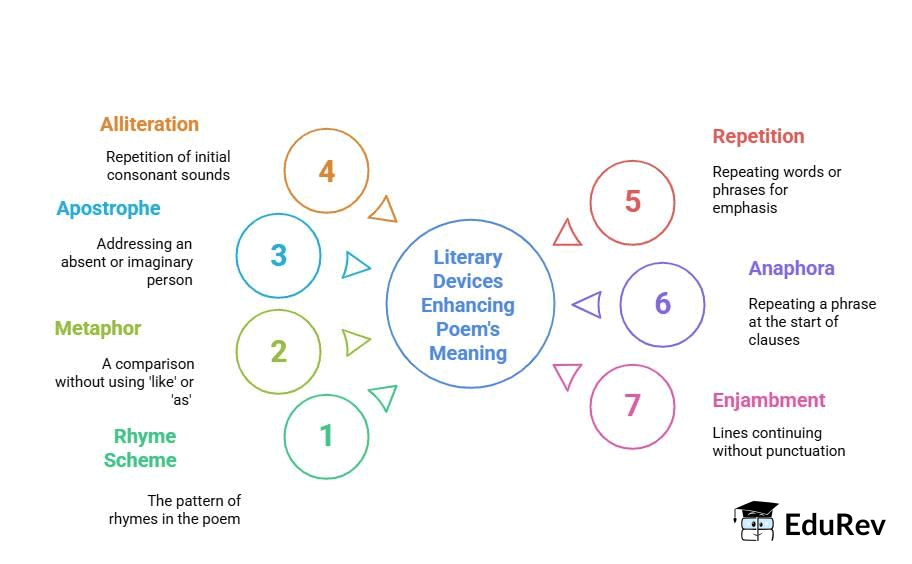
  • Rhyme Scheme – The rhyme scheme of the poem is abcbdb.
    “But I can get a hair-dye a
    And set such colour there, b
    Brown, or black, or carrot, c
    That young men in despair b
    May love me for myself alone d 
  • Metaphor – A metaphor is a literary device used to represent a comparison without using the words “like” or  “as”.
    In this poem, ‘honey-coloured ramparts’ acts as a metaphor for beauty and its protective traits. Yeats uses this metaphor to show how Anne Gregory’s beautiful hair protects her true self.
  • Apostrophe – An apostrophe is when a speaker addresses someone who isn’t present as if they can hear. In this poem, Yeats speaks to Anne Gregory, even though she is not there. This method helps convey the poem to her, an absent audience. 
    The speaker reflects on Anne’s qualities instead of talking directly to her. The repeated lines “Love you for yourself alone And not your yellow hair” indicate a focus on her traits rather than a direct conversation.
    Note:
    Some students raised doubts on this device. So here is some more of explanation on the use of this device.
    There is a use of apostrophe as a poetic device in the poem. However, it’s important to note that the term “apostrophe” in poetry refers to a figure of speech in which the speaker addresses an absent or imaginary person, or an abstract idea, as if it were present and capable of responding.
    In the poem, the speaker seems to be addressing someone directly, possibly a woman with yellow hair. The repeated lines “Love you for yourself alone And not your yellow hair” suggest a direct address to the person with the yellow hair. This can be considered a form of apostrophe, as the speaker is addressing the qualities of the person directly, in this case, the yellow hair.
    So, while apostrophe is present in the poem, it is not in the form of the punctuation mark ‘ but rather in the form of a rhetorical device where the speaker is addressing someone or something directly.
  • Alliteration 
    Love you for yourself alone
    The phrase ‘your yellow hair’ is an example of alliteration. The repeated ‘y’ sound highlights the link between love and identity.
    Brown, or black
  • Repetition
  • The term ‘yellow hair’ appears several times. This repetition stresses the idea of outer beauty. The word ‘despair’ is also repeated, showing the feelings of young men towards Anne Gregory.
  • Anaphora – Repeating a word or phrase at the beginning of sentences or clauses that follow each other, done for emphasis
    In the 3rd stanza – the second and third line
    That he had found a text to prove
    That only God, my dear,
  • Enjambment – Lines in a stanza ending going or continuing without any punctuation
    In the 2nd Stanza: the 4th and the 5th Line
    That young men in despair
    My love me for myself alone
    In the 3rd Stanza: 1st, 2nd and the 3rd Line
    ‘I heard an old religious man
    But yesternight declare
    That he had found a text to prove

Difficult Meanings

  • Despair: hopelessness, here it means failure in succeeding or even expecting to get the love of Anne Gregory
  • Ramparts: the tall, wide walls around a castle or fort, such as those of the Red Fort.
  • Carrot: of carrot colour
  • Yesternight: the previous night 
  • Text: matter, original writing
  • Declare: to announce or tell others or claim
  • Prove: to demonstrate and show the truth by evidence or argument