4. Agriculture – Very Short Questions Answer

Q1: What is agriculture?
Ans: 
The art and science of cultivating soil, raising crops and rearing livestock including animal husbandry and forestry.

Q2: Name any two farming system (agriculture type) which are practised in India.
Ans: 
(a) Primitive subsistence 
(b) Commercial farming

Q3: Name any four agricultural products exported by India.
Ans: 
(a) Tea
(b) Coffee
(c) Spices
(d) Jute

Q4: What is primitive subsistence farming [CBSE 2014]
Ans:
 It is a type of farming which is practised on small patches of land with the help of primitive tools like hoe, doa, digging sticks and community labour.

Q5: What is slash and bum agriculture?
Ans:
 Under slash and bum agriculture, farmers clear a patch of land and produce cereals and other food crops to sustain their family.

Q6: Which type of agriculture is practised on small patches of land with the help of primitive tools?
Ans:
 Primitive subsistence farming.

Q7: What is intensive subsistence farming?
Ans:
 It is a type of farming practised in areas with a high density of population using modem inputs

Q8: Name any two states where commercial farming is practised.
Ans:
 Punjab and Haryana.

Q9: Mention any four plantation crops produced in India.
Ans:
 Tea, coffee, rubber and sugarcane.

Q10: Mention any two factors which play an important role in the development of plantations.
Ans:
 (i) Developed a network of transport and communication connecting the plantation areas.
(ii) Developed market.

Q11: Name the cropping seasons of India with examples.
Ans: 
(i) Rabi – wheat
(ii) Kharif – paddy
(iii) Zaid – watermelon

Q12: What are rabi crops Give four examples. 
Ans:
 The crops are grown in winter from October to December and harvested in summer from April to June. Wheat, barley, peas, gram are some examples of rabi crops.

Q13: What is the period of Kharif crop [CBSE 2014]
Ans: 
Kharif season starts with the onset of the monsoon i.e., June-July and continues till the beginning of winter i.e., October-November. For example, rice, millet etc.

Q14: What are zaid crops?
Ans:
 These are crops which are sown between the rabi and kharif crops. Watermelon, muskmelon, cucumber and vegetables are some examples of zaid crops.

Q15: Mention any two important factors responsible for the success of rabi crops. 
Ans:
 (i) Availability of precipitation during winter months due to the western temperate cyclone.
(ii) The success of Green Revolution in Punjab, Haryana and Western Uttar Pradesh.

Q16: Name any four states which are the main producers of kharif crops.
Ans:
 (a) Assam (b) West Bengal (c) Andhra Pradesh (d) Tamil Nadu

Q17: Name any two kharif crops. [CBSE 2014]
Ans:
 Rice, millet, maize, groundnut, jute, cotton.

Q18: Name any two states where three crops of paddy are grown in a year.
Ans:
 Assam and West Bengal.

Q19: Which is the staple crop of a majority of the people in India.
Ans: 
Rice.

Q20: Which country is the largest producer of rice in the world?
Ans:
 China.

3. Water Resources – Very Short Questions Answer

Q1: How is freshwater obtained
Ans: 
The freshwater is obtained from precipitation, surface run off and groundwater that is continually being renewed and recharged through the hydrological cycle.

Q2: What is hydrological cycle
Ans:
 The continuous movement of water on, above and below the surface of earth.

Q3: What is the importance of hydrological cycle
Ans:
 The freshwater is mainly obtained from surface run off and groundwater that is continually being renewed and recharged through the hydrological cycle. All water moves within the hydrological cycle ensuring that water is renewable resource.

Q4: What is water scarcity [CBSE 2014]
Ans:
 Water scarcity is the lack of sufficient available water resources to meet the demand.

Q5: “The availability of water resources varies over space and time”. Give reasons.
Ans:
 Water resources varies over space and time due to the variation in seasonal and annual precipitation.

Q6: What percentage of the total volume of world’s water is estimated to exist as oceans
Ans: 
96.5%

Q7: How much per cent of the total volume of world’s water is estimated to exist as fresh water
Ans:
 2.5

Q8: What are the sources of fresh water?
Ans: 
Precipitation, surface run off and groundwater.

Q9: How is freshwater being renewed
Ans:
 The freshwater is being renewed through the hydrological cycle.

Q10: Mention any two regions which are expected to face water shortage.
Ans:
 (i) Regions having low rainfall
(ii) Regions which are drought prone.

Q11: What is a dam
Ans:
 ‘A dam’ is a barrier across the flowing water that obstructs dissects or retards the flow, often creating a reservoir, lake or impoundment.

Q12: What is a multipurpose project
Ans:
 A multipurpose project is that which fulfils a . variety of purposes at the same time, for example – irrigation, generation of electricity, flood control, fish breeding, soil conservation etc.

Q13: Who proclaimed dams as the temples of modem India
Ans:
 Jawaharlal Nehru.

Q14: Why were the multipurpose river projects considered as temples of modem India by Jawaharlal Nehru
Ans:
 These would integrate development of agriculture and the village economy with rapid industrialisation and growth of the urban economy.

Q15: Name any two social movements which have been launched against the multipurpose projects.
Ans:
 Narmada Bachao Andolan and ‘Tehri Dam’ Andolan.

Q16: What was considered as a viable alternative to the multipurpose projects and why [CBSE 2013]
Ans: 
The. disadvantages and rising resistance against the multipurpose projects, has lead us to conclude that water harvesting system is a viable alternative, both socio-economically and environmentally.

Q17: Irrigation has changed the cropping pattern of many regions with farmers shifting to water intensive and commercial crops”. Mention its ecological consequence.
Ans: 
Salinisation of the soil

Q18: What was the primary reason for launching ‘Narmada Bachao Andolan’
Ans: 
Narmada Bachao Andolan was launched due to the large scale displacement of local communities.

Q19: What is silt?
Ans: 
A fine soil which is formed in flood plains.

Q20: How people used to conserve or harvest water in hills and mountainous regions
Ans:
 By building diversion channels like the ‘guts’ or ‘kuls’.

2. Forest and Wildlife Resources – Very Short Questions Answer

Q1: What is biodiversity?
Ans: 
It is the sum total of all the varieties of species of plants, animals, and microorganisms living on the earth.

Q2: What is flora?
Ans:
 Plants of a particular region or period are referred to as flora.

Q3: What is fauna?
Ans:
 The species of animals of a particular region or period are referred to as fauna.

Q4: “India is one of the world’s richest countries in terms of its vast array of biological diversity”. Justify.
Ans:
 India has nearly 8% of the total number of species in the world.

Q5: What are endangered species?
Ans: 
The species which are in danger of extinction are called endangered species.

Q6: What are vulnerable species?
Ans: 
The species whose population has declined to levels from which it is likely to move into the endangered category shortly if the negative factors continue to operate.

Q7: What are extinct species?
Ans:
 The species that are not found after searches of known or likely areas where they may occur.

Q8: Give two examples of rare species.
Ans:
 (i) Wild Asiatic buffalo (ii) Hornbill

Q9: Categorise the following as endangered or vulnerable species: Asiatic elephant, Indian Rhino.
Ans: 
(i) Asiatic elephant – Vulnerable species.
(ii) Indian Rhino – Endangered species.

Q10: Categorise the following as endemic and endangered species- Lion-tailed macaque, Nicobar Pigeon.
Ans:
 (i) Lion-tailed macaque – Endangered.
(ii) Nicobar pigeon – Endemic.

Q11: Mention any two factors responsible for depleting our forests and wildlife.
Ans:
 Factors responsible for depleting forests and wildlife:

  • Expansion of agriculture: Increased land use for farming leads to deforestation.
  • Mining: Extraction of minerals disrupts ecosystems and destroys habitats.


Q12: Name the Tiger Reserve which is seriously threatened by dolomite mining activity.
Ans: The Bauxa Tiger Reserve in West Bengal is currently facing serious threats due to dolomite mining activities. This mining poses significant risks to the reserve’s ecosystem and wildlife.

Q13: Mention the social impact of deforestation.
Ans: 

  • In many communities, women are primarily responsible for gathering essential resources such as fuelfodder, and water.
  • As deforestation progresses, these resources become scarce, leading to increased hardship for women.
  • Women may have to travel over 10 km to collect these vital resources, adding to their daily burdens.

Q14: Mention any wildlife protection program.
Ans: The Indian Wildlife Act 1972.

Q15: What are permanent forests?
Ans: Reserved and protected forests are known as permanent forests.

1. Resources and Development – Very Short  Questions Answer

Q1: What is a Resource? Give two examples.
Ans: 
Everything available in our environment which can be used to satisfy our needs, provided, it is technologically accessible, economically feasible and culturally acceptable can be termed as a resource. Coal, water, air, minerals etc. are some examples of resources.

Q2: What is the role of humans in resource development?
Ans: 
(i) Human beings interact with nature through technology and create institutions to accelerate their economic development.
(ii) Human beings transfer material available in our environment into resources and use them.

Q3: How can the resources be classified on the basis of origin? 
Ans: 
Biotic and Abiotic.

  • Resources obtained from the biosphere, like forests, wildlife, fisheries, livestock, human beings, etc., which have life, are called biotic resources.
  • Resources which are obtained from non-living things are called abiotic resources. Iron, copper, gold and lead are abiotic resources.

Q4: What are abiotic resources? 
Ans:
 All those things which are composed of non–living things are called abiotic resources.
Q5: A gas reserve has been discovered in an Ocean. The reserve is 19 km from the coast of the nation. Will it be considered an international resource or a national resource?
Ans:
 Resources within 12 nautical miles (22.2 km) from a nation’s coast are considered national resources. Since the gas reserve is 19 km (approximately 10.3 nautical miles) from the coast, it is a national resource.


Q6: “There is enough for everybody’s need and not for anybody’s greed”. Who said these words?
Ans:
 Mahatma Gandhi
Gandhi believed that Mother Nature offers enough resources for everyone, but human greed leads to unequal distribution, causing socio-economic disparities. He suggested that sharing resources equally could eliminate hunger and thirst for all.


Q7: It is important to use the available land for various purposes with careful planning”. Give reason.
Ans:
 It is important to use the available land for various purposes with careful planning because land is an asset of a finite resource.

Q8: How can the resources be divided on the basis of exhaustibility?
Ans:
 Renewable and Non-renewable.
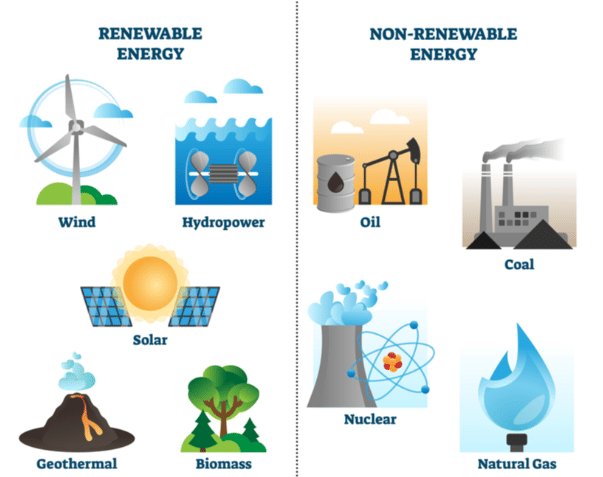
Renewable resources: These resources are unlimited. They are not going to get exhausted, for example, air, light, and wind. These resources get renewed quickly.
Non-renewable resources: The resources which have a limited stock and which take thousands of years to renew or replenish are called non-renewable resources.
Q9: Classify the following resources as biotic and abiotic.
(i) Metals
(ii) Fauna
Ans:
 (i) Metals – abiotic (ii) Fauna – biotic

Q10: Give a single word for the following :
(i) Materials which have the potential to satisfy human needs but human beings do not have the appropriate technology.
(ii) The resources which can be renewed or reproduced by physical, chemical or mechanical processes.
Ans: 
(i) Stock
(ii) Renewable

Q11: Name any two states of India which are well endowed with solar energy.
Ans:
 Gujarat and Rajasthan.

Q12: Name any two factors on which resource development depends.
Ans: 
(i) Technology
(ii) Quality of human resources.

Q13: What is the total geographical area of India?
Ans: 
3.28 million s km.

Q14: Mention any two factors which determine the land use pattern of a nation.
Ans: 
(i) Topography (ii) Population
Others can be Soil type, Climate

Q15: What is wasteland?
Ans: 
An unused area of land, like rocky, arid and desert areas.

Q16: What is net sown area? 
Ans:
 The Area sown once a year is known as the net sown area.

Q17: What is gross sown area?
Ans:
 This represents the total sown area once/or more than once in a particular year, i.e. the area is counted as many times as there are sowings in a year.

Q18: Name any two states which have a high percentage of net sown area.
Ans:
 Punjab and Haryana

Q19: Name any two states Which have a very low percentage of net sown area.
Ans:
 Arunachal Pradesh and Mizoram

Q20: How much degraded land is present in India ? 
Ans: 
130 million hectares.

7. Life Lines of National Economy – Long Answer Questions

Q1: Mention four demerits of road transportation concerning India.
 OR
 ‘Indian road transportation is confronted with problems.’ Describe any four.

Ans: Road transportation in India faces several challenges despite its advantages.

  • High Traffic Volume: India’s large population leads to heavy traffic, but the road network is inadequate to handle this demand.
  • Poor Road Conditions: Many roads are kuccha (unmetalled), limiting their use during the rainy season due to potholes and muddy pools, which can cause accidents.
  • Insufficient Highways: There is a need for more national highways to connect various regions of the country effectively.
  • Traffic Congestion: Urban roads are often congested, leading to frequent traffic jams. Additionally, many bridges and culverts are old and narrow, worsening the situation.
  • Inadequate Police Presence: There is insufficient police patrolling on highways, which raises safety concerns for goods and passengers.

National Highway

Q2: What is mass communication? What are the different means of mass communication? What is the significance of mass communication in a country like India?

Ans: Mass communication provides both entertainment and information to a large audience simultaneously. It encompasses various channels that reach the masses.

  • Press or print media: Newspapers, periodicals, magazines, and books.
  • Electronic media: Radio, television, films, and computers.

Mass communication covers a wide range of topics, including Entertainment, Education, News, Sports and Business.

In a vast country like India, with its large population and diverse cultures, mass communication plays a crucial role in:

  • Disseminating information about national programmes and policies.
  • Raising awareness of social and economic issues.
  • Helping to form public opinion.
  • Educating the populace.

Q3: Discuss the importance of tourism in India.

Ans: Tourism plays a vital role in India’s economy and cultural development. Its significance includes:

  • National Integration: Tourism fosters unity among diverse regions.
  • Cultural Awareness: It highlights India’s rich heritage and natural beauty.
  • Economic Growth: The industry attracts over 2.6 million foreign tourists annually, contributing significantly to foreign exchange.
  • Employment Generation: More than 15 million people work directly in tourism, with many more in related sectors.

India ranks fourth among the world’s top holiday destinations, with tourists drawn to Heritage tourism, Cultural tourism, Ecotourism, Adventure tourism, Medical tourism, and Business tourism.

In recent years, tourism has seen substantial growth, with a 23.5% increase in foreign tourist arrivals from 2003 to 2004, generating ₹21,828 crores in foreign exchange. With ongoing efforts to promote various types of tourism, the future looks promising for this sector in India.

Q4: Write a short note on (a) Personal written communication and (b) the Telecom network of India.

Ans:

(a) Personal written communication in India is primarily managed by the Indian postal network. Key points include:

  • First-class mail consists of cards and envelopes, which are airlifted for faster delivery.
  • To enhance mail delivery in urban areas, six channels have been established:
  • Rajdhani Channel, Metro Channel, Green Channel, Business Channel, Bulk Mail Channel, Periodical Channel.
  • Second-class mail includes book packets, registered newspapers, and periodicals, transported by surface methods.

(b) Telecom network of India is one of the largest in Asia, with approximately 37,565 telephone exchanges nationwide. Key features include:

  • There is a uniform rate for STD services across the country.
  • The government aims to provide 24-hour STD access to all villages.
  • This expansion is supported by advancements in Space Technology and Communication Technology.
  • Private companies have entered the telecom sector, improving service quality for customers.
  • Over two-thirds of villages have access to Subscriber Trunk Dialling (STD) facilities.

Q5:Difference between Personal and Mass Communication

Ans:

6. Manufacturing Industries – Long Answer Questions

Q.1. Classify industries on the basis of :
 (a) Capital investment,
 (b) Ownership
 (c) Bulk and weight of raw material and finished product.

Ans. Industries can be classified into the following categories :

(a) On the basis of capital investment :

  1. Large scale industries make large capital investment of more than one crore of rupees. They employ large numbers of people and use a large number of machineries, e.g. cotton textile.
  2. Small scale industries involve capital outlay of less than one crore rupees, employ a smaller number of labourers and use few power driven machineries, e.g. cycle parts manufacturing.

(b) On the basis of ownership :

  1. Public sector industries are owned and operated by government agencies, e.g. Rourkela Steel Plant.
  2. Private sector industries are owned and operated by an individual or a group of individuals, e.g. Bajaj Auto Ltd.
  3. Joint sector industries are jointly run by the state and individual entrepreneurs e.g. Oil India Ltd.
  4. Cooperative sector industries are owned and managed by the producers and suppliers of raw materials or by workers. They pool in their resources and share the profits and losses proportionately, e.g., sugar industry in Maharashtra.

(c) On the basis of bulk or weight of raw material and finished products :

  1. Heavy industries use bulky raw materials and their finished products are also heavy, e.g., iron and steel industry.
  2. Light industries use light raw materials and their finished products are also light, eg. electrical industries producing bulbs.

Q.2. Mention the factors responsible for localisation of cotton textile industry in Maharashtra- Gujarat region in early years. What factors were responsible for the decentralisation of the industry? Mention three main problems faced by the industry. What is the contribution of textile industry to Indian economy?

Ans. The favourable factors for the location of cotton textile industry in Maharashtra–Gujarat region in early years were as follows :

(a) Availability of raw cotton from the cotton growing belt of Deccan in Maharashtra and Gujarat.
(b) The port of Mumbai facilitating export of cotton goods and import of machineries and other inputs.
(c) Moist climate in the belt facilitated spinning.
(d) Market for the finished goods.
(e) Finance or capital from Parsi and Bhatia traders.
(f) Good transport network.
(g) Availability of cheap and skilled labour.

Huge market, development of transport network, banking facilities and availability of cheap electricity contributed to the decentralisation of cotton mills in the country. Weaving is highly decentralised to provide scope for incorporating traditional skills and designs of weaving in cotton, zari, embroidary, etc., prevalent among local weavers in different parts of India.

Three major problems faced by cotton textile industries in India are :
(i) Erratic Power Supply.
(ii) Old and obsolete machinery and
(iii) Stiff competition with the synthetic fibre industry.

The textile industry occupies a unique position in the Indian economy :
(a) It contributes significantly to industrial production, 14 per cent of the total production of industries comes from textiles.
(b) It provides employment to about 35 million people directly.
(c) It contributes about 24.6 percent of the foreign exchange earnings of the country.
(d) Textiles contribute 4 percent towards GDP.

Q.3. How are integrated steel plants different from mini steel plants? Name the integrated steel plants of India. What are the problems faced by this industry? What is India’s present position with regard to manufacturing and consumption of iron and steel?

Ans. Mini steel plants are smaller, have electric and induction furnaces, and use steel scrap and sponge iron as raw material. They may have re-rollers manufacturing bar and rods. They produce mild and alloy steel and also liquid steel which are turned into ingots. They are decentralized secondary units scattered across the country to meet local demands. An integrated steel plant is large and handles everything in one complex from assembling raw material and melting of iron ore in the blast furnace to steel making, rolling and shaping. They are usually concentrated near the sources of raw materials and market.

Presently there are 10 integrated steel plant in India, which are as follows :
(a) Indian Iron and Steel Company, IISCO at Kulti and Burnpur, West Bengal.
(b) Tata Iron and Steel Company, TISCO at Jamshedpur, Jharkhand.
(c) Visveswarayya Iron and Steel Plant, at Bhadravati, Karnataka.
(d) Bhilai Steel Plant, at Bhilai, Chhattisgarh.
(e) Bokaro Steel Plant, at Bokaro, Jharkhand.
(f) Durgapur Steel Plant, at Durgapur, West Bengal.
(g) Rourkela Steel Plant, at Rourkela, Orissa.
(h) Vishakhapatnam Steel Plant, at Vishakhapatnam, Andhra Pradesh.
(i) Salem Steel Plant, Salem, Tamil Nadu.
(j) Vijayanagar Steel Plant in Karnataka.

Though India is an important iron and steel producing country in the world, we are not able to perform to our full potential largely due to the following problems faced by the industry:
(i) High costs and limited availability of coking coal.
(ii) Lower productivity of labour.
(iii) Irregular supply of energy.
(iv) Poor infrastructure.

Today with 32.8 million tonnes of steel production, India ranks ninth among the world crude steel producers.
It is the largest producer of sponge iron. In spite of large quantity of production of steel, per capita consumption of steel per annum is only 32 kg.

Q.4. In which region are most of the jute mills of India concentrated? Why? What are the challenges faced by this industry? What step has resulted in the increase of internal demands of jute in recent years?

Ans. Most of the jute mills of India are concentrated in the Hoogli basin in West Bengal. It is a narrow belt 98 km long and 3 km wide along the Hoogli river.

The factors responsible for the localisation of the jute industry in this region are as follows :
(i) Proximity to the jute producing areas of Ganga-Brahmaputra basin. West Bengal is the leading producer of raw jute in the country and provides the mills with the required raw material.
(ii) Abundant water for processing of raw jute.
(iii) Cheap water transport, supported by a good network of railways and roadways, facilitates the movement of raw materials to the mills.
(iv) Cheap labour from West Bengal and adjoining states of Bihar, Orissa and Uttar Pradesh.
(v) Banking and insurance facilities from city of Kolkata.
(vi) Port facilities of Kolkata for export of jute goods.

Challenges faced by the jute industry are as follows :
(i) Stiff competition in the international market from synthetic substitutes.
(ii) Competition from other jute goods producing countries like Bangladesh, Philippines, Thailand, Egypt and Brazil.
(iii) Decrease in demand for packing materials and jute carpet, and high cost of production.
(iv) Old and inefficient machineries.
To face the competition from synthetic fibres and other countries producing jute, government has taken measures to boost up production of jute goods. In 2005, the National Jute Policy was formulated with this objective. Government policy of mandatory use of jute packaging has resulted in the increase of internal demand of jute in recent years.

Q.5. Write about the role of Information Technology Industry in modern India. What are software technology parks and where in India are they located?

Ans. Information Technology industry or IT as it is popularly known specialise in Research and Development (R&D), manufacture of electronics and production of hardware and software. A major impact of this industry in India has been on employment generation. Upto 31st March 2005, the IT industry employed over one million persons. This number was expected to increase eight fold in the following 3 to 4 years. This means that by 2008-2009 the IT industry was expected to provide employment to nearly 8 million people. The industry has also provided employment opportunity to women, and about 30 percent of the people employed in this sector are women.

The IT industry has been a major foreign exchange earner in the last few years because of its fast growing Business Processes Outsourcing (BPO) sector. The continuing growth in hardware and software is the key to the success of IT industry in India. The IT industry has provided India a special position in the industrial world. Software technology parks provide single window service and high data communication facility to software exports. There are 18 software technology parks in India. They are located at Srinagar, Mohali, Noida, Jaipur, Gandhinagar, Indore, Mumbai, Pune, Kolkata, Bhubaneswar, Guwahati, Bengaluru, Hyderabad, Mysore, Chennai, Thiruvananthapuram and Vishakhapatnam.

Q.6. Discuss the role of NTPC in paving the way to control environmental degradation.

Ans. NTPC is a major power providing corporation in India. It has ISO certification for EMS (Environmental Management System) 14001. The corporation has a proactive approach for preserving the natural environment and resources like water, oil, gas and fuels in places where it is setting up power plants. This is achieved through the following methods :
(a) Optimum utilisation of equipment adopting latest techniques and upgrading existing equipment.
(b) Minimising waste generation by maximising ash utilisation.
(c) Providing green belts for nurturing ecological balances and encouraging afforestation.
(d) Reducing environmental pollution through ash pond management, ash water recycling system and liquid waste management.
(e) Ecological monitoring reviews and online database management for all its power stations.
5. Minerals and Energy Resources – Long Answer Questions

Q1. Name the two varieties of iron ore in India that have a high content of iron. Mention the names of places in India which have the richest iron ore deposits. Explain two effects on our economy due to the export of good quality ores in large quantities.

Ans: The two varieties of iron ore in India with high iron content are magnetite and hematite

Rich deposits of iron ore are found in several regions of India:

  • Odisha-Jharkhand belt: High-grade hematite in Badampahar (Mayurbhanj and Keonjhar districts) and Gua and Noamundi in Singhbhum district, Jharkhand.
  • Durg-Bastar-Chandrapur belt: Located in Chhattisgarh and Maharashtra, features super-high-grade hematite in the Bailadila range of hills in Bastar district.
  • Maharashtra-Goa belt: Includes Ratnagiri and Chandrapur in Maharashtra, and Bicholim and Pali in Goa.

About half of India’s iron ore production is exported, mainly to Japan, Korea, and European countries, through ports like Paradip, Vishakhapatnam, Mangalore, and Marmagao.

The export of high-quality iron ore has two significant effects on the economy:

  • Positive effect: It generates substantial foreign exchange, essential for development activities.
  • Negative effect: It hampers domestic industrial production, as the country struggles to produce enough iron and steel despite having ample iron ore reserves.

Q2. What are the differences between hydro-electricity and thermal electricity? What is nuclear electricity?

Ans: 

Nuclear electricity, also known as atomic energy, is produced by changing the structure of atoms in elements like uranium and thorium. This alteration releases a significant amount of energy in the form of heat, which is then used to generate electric power.

Q3. Name the ore from which aluminium is obtained. Why is aluminium considered to be an important metal? Name the areas which have rich deposits of the ore of aluminium.

Ans: Aluminium is primarily obtained from bauxite. Although several ores contain aluminium, bauxite is a reddish-brown, clay-like substance from which alumina and subsequently aluminium are extracted. Bauxite deposits form through the decomposition of various rocks rich in aluminium silicates.

Aluminium is important due to its:

  • Strength: It combines the strength of metals like iron with extreme lightness, making it ideal for manufacturing aircraft and transport vehicles.
  • Malleability: Its great malleability allows it to be used in construction for doors, windows, rods, and utensils.
  • Conductivity: Aluminium is a good conductor of electricity, which makes it suitable for electrical conductors.

Rich deposits of bauxite are mainly found in:

  • Amarkantak Plateau
  • Maikal Hills
  • Bilaspur-Katni Plateau region in Madhya Pradesh and Chhattisgarh

Additionally, Odisha is the leading producer, accounting for about 45% of India’s total bauxite production, with the Panchpatmali deposits in Koraput being particularly significant.

Q4. State the facts about coal found in India with reference to the following : 
(a) their total reserves 
(b) its importance as a source of energy and as a source of raw material 
(c) its main varieties 
(d) distribution of coal in India

Ans: Coal is the most abundantly available and important fossil fuel in India.

(a) Total reserves of coal: India has approximately 214,000 million tonnes of coal reserves. These reserves are found in two main geological ages:

  • Gondwana: Over 200 million years old.
  • Tertiary: About 55 million years old.

(b) Importance as a source of energy and raw material:

  • Coal is the primary source of power generation in India.
  • It meets a significant portion of the nation’s energy needs for industries and households.
  • Essential for manufacturing iron and steel.
  • Used as a raw material in the chemical industry.

(c) Main varieties of coal:

  • Anthracite: Highest quality hard coal with over 80% carbon content.
  • Bituminous: Most commonly used coal, containing 60-80% carbon.
  • Lignite: Low-grade brown coal with high moisture content (about 60% carbon).
  • Peat: Formed from decaying plants, with less than 50% carbon and low heating capacity.

(d) Distribution of coal in India:

  • Coal is primarily found in the eastern part of India.
  • Major resources of Gondwana coal are in the Damodar Valley (West Bengal, Jharkhand), including Jharia, Raniganj, and Bokaro.
  • Other coal deposits are located in the Godavari, Mahanadi, Son, and Wardha valleys.
  • Tertiary coal deposits are found in the northeastern states of MeghalayaAssamArunachal Pradesh, and Nagaland.

Q5. How is petroleum an important source of both energy and raw material? Mention the names of the areas which have rich petroleum deposits.

Ans: Petroleum, also known as mineral oil, is a vital energy source in India. Its significance lies in the following areas:

  • Provides fuel for heating and lighting.
  • Powers vehicles, including automobiles, trains, aeroplanes, and ships.
  • Generates thermal electricity, which is crucial for commercial power.

Additionally, petroleum is a key raw material for various industries. Byproducts obtained from its fractional distillation include:

  • Chemical fertilisers
  • Insecticides
  • Plastics
  • Raw materials for synthetic textiles and rubber.

In India, major petroleum production areas include:

  • Mumbai High and Bassien in the Arabian Sea, contributing 63% of production.
  • Gujarat, accounting for 18%, with important oilfields like Ankaleshwar and Kalol.
  • Assam, the oldest oil-producing state, contributed 16%. Key fields include DigboiNaharkatiya, and Sibsagar.
  • Other regions with discoveries include the KaveriKrishna, and Godavari basins, as well as Jawalamukhi in Himachal Pradesh.

Q6. Why do we need to conserve our mineral resources? Explain any three methods of conservation of minerals.

Ans: Minerals are essential for various aspects of life, including agriculture, industry, and domestic use. However, we are depleting these resources, which took millions of years to form, at an alarming rate. The natural processes that create minerals are incredibly slow, making their replenishment negligible compared to current consumption rates. As these resources are finite and non-renewable, their rapid exploitation leads to lower quality and higher extraction costs. Therefore, it is crucial to conserve our mineral resources for future generations.

Here are three methods to conserve minerals:

  • Minimise waste during mining and processing.
  • Develop advanced technologies to utilise low-grade ores cost-effectively.
  • Implement a recycling and reuse policy for minerals, using scrap metals and alternatives to reduce the need for new deposits.

Q7. In recent years, the use of which fuel for transport vehicles is gaining popularity? What development has provided impetus to India’s gas production?

Ans: In recent years, the use of Compressed Natural Gas (CNG) for transport vehicles is gaining popularity. It is replacing liquid fuels like petrol and diesel due to several advantages:

  • Environmental benefits: CNG produces less pollution compared to traditional fuels.
  • Cost-effective: As petroleum resources deplete, CNG offers a more economical alternative.
  • Government initiatives: In cities like Delhi, CNG is promoted for cleaner air and reduced emissions.

Development in gas production: The 1,700 km Hazira-Bijapur-Jagdishpur (HVJ) cross-country gas pipeline has significantly boosted India’s gas production. This pipeline:

  • Links Mumbai High and Bassein gas fields with various industrial complexes.
  • Facilitates the easy transportation of natural gas from production areas to markets.
  • Supports the growing demand for gas in the fertiliser and power sectors.

Overall, the expansion of gas infrastructure is crucial for meeting energy needs and promoting cleaner fuel options.

4. Agriculture – Long Answer Questions

Q1. Distinguish between Intensive Subsistence Farming and Commercial Farming.

Ans: Intensive Subsistence Farming

  • Practised in regions with high population density.
  • Labour-intensive, using significant biochemical inputs and irrigation.
  • Aims for maximum output from limited land due to a lack of alternative livelihoods.
  • Common in states like Punjab and Haryana.

Commercial Farming

  • Focuses on high productivity using modern inputs like HYV seeds and chemical fertilisers.
  • The level of commercialisation varies by region; for example, rice is a commercial crop in Haryana but a subsistence crop in Odisha.
  • Includes plantation farming, where a single crop is grown on a large scale.
  • Major plantation crops in India include tea, coffee, and sugarcane.

Q2. Describe the geographical conditions for growth of cotton. Name the major areas of its production. Why is West Bengal the leading producer of Jute, the second important fibre crop of India? 
OR 
Which are the important fibre crops of India? Mention the major producing areas of each crop. Write about the geographical conditions required for the growth of the most important fibre crop.

Ans: Cotton, jute, hemp and natural silk are the major fibre crops of India. The geographical conditions for cotton, the most important fibre crop, include:

  • Cotton is a kharif crop that thrives in high temperatures.
  • It requires light rainfall or irrigation, with around 210 frost-free days.
  • Bright sunshine is essential for its growth.
  • Excess rainfall during the cotton ball bursting period can be harmful.
  • Cotton grows best in the drier regions of the black soil area of the Deccan Plateau.

The major cotton-producing states in India are: Maharashtra, Gujarat, Madhya Pradesh, Karnataka, Andhra Pradesh, Tamil Nadu, Punjab, Haryana, Uttar Pradesh.

Jute, known as the golden fibre, is the second most important fibre crop. West Bengal leads in jute production due to:

  • Well-drained, fertile soils in the floodplains, which are renewed annually.
  • High temperatures during the growth period.

Other jute-producing states include: Bihar, Assam, Odisha, Meghalaya

Q3. What are the main cropping seasons of India? 

Ans: India has three main cropping seasons:

  • Rabi:
    • Sown in winter (October to December).
    • Harvested in summer (April to June).
    • Key crops include wheat, barley, peas, gram, and mustard.
    • Important regions: Punjab, Haryana, Himachal Pradesh, Jammu and Kashmir, Uttarakhand, and Uttar Pradesh.
    • Success relies on winter precipitation from western temperate cyclones.
  • Kharif:
    • Grown with the onset of monsoon (June to September).
    • Harvested in September-October.
    • Key crops include paddy, maize, jowar, bajra, tur (arhar), moong, urad, cotton, jute, groundnut, and soyabean.
    • Major rice-growing areas: Assam, West Bengal, Odisha, Andhra Pradesh, Telangana, Tamil Nadu, Kerala, Maharashtra, Uttar Pradesh, and Bihar.
    • In some states, three rice crops are grown annually: Aus, Aman, and Boro.
  • Zaid:
    • A short season between rabi and kharif.
    • Crops include watermelon, muskmelon, cucumber, vegetables, and fodder.
    • Sugarcane takes almost a year to grow.

Q4. Explain rubber cultivation in India under the following heads. [2011 (T-1)]

Ans: Importance:

  • Rubber is a vital industrial raw material.
  • It is used to make products like tyres and tubes for vehicles.

Geographical conditions:

  • Rubber is primarily an equatorial crop but can grow in tropical and sub-tropical areas.
  • It needs a moist and humid climate with over 200 cm of rainfall.
  • Temperatures should be above 25°C for optimal growth.

Rubber producing states:

  • The main states for rubber cultivation are Kerala and Tamil Nadu.

Q5. Explain briefly any four features of intensive subsistence farming in India.

Ans: Four features of intensive subsistence farming in India are:

  • High Population Pressure: This farming is common in regions with a dense population, particularly in the east and south of India, including states like West Bengal, Assam, Orissa, Bihar, eastern Uttar Pradesh, and coastal areas of Andhra Pradesh, Tamil Nadu, and Kerala.
  • Cereal Production: Farmers primarily grow cereal crops such as rice and millets for their own consumption and for local markets.
  • Land Ownership Limits: There are restrictions on the amount of land a farmer can own, which affects agricultural practices.
  • Labour-Intensive Methods: This type of farming relies heavily on family labour and the use of high doses of inputs like fertilisers and irrigation to maximise yields.

Q6. Compare the geographical conditions, required of the two major cereal crops in India, rice and wheat. Give one major area where they are grown.

Ans: Geographical conditions for Rice:

  • Temperature: Requires high temperatures above 25°C.
  • Humidity: Needs high humidity.
  • Rainfall: Requires over 100 cm annually or assured irrigation.
  • Soil: Prefers alluvial soil.
  • Major Regions: Grown in coastal areas, Haryana, Punjab, Bihar, West Bengal, and Odisha.

Geographical conditions for Wheat:

  • Temperature: Thrives in cool conditions between 15°C to 30°C.
  • Sunshine: Needs bright sunshine during ripening.
  • Rainfall: Requires 50 to 75 cm of annual rainfall.
  • Soil: Grows well in alluvial soil.
  • Major Regions: Predominantly grown in Uttar Pradesh, Haryana, and Punjab.

Q7. State the geographical conditions required for growing rice and cotton.

Ans: Geographical conditions for growing rice:

  • Rice thrives in plains of northern and northeastern India, as well as in coastal and delta regions.
  • It requires a dense network of canal irrigation and tubewells, enabling growth in areas with less rainfall.

Geographical requirements for cotton:

  • Temperature: Needs high temperatures.
  • Rainfall: Prefers light rainfall or requires irrigation.
  • Soil: Grows best in black soil.
  • Regions: Major states include Gujarat and Maharashtra.

Q8. Name the four fibre crops grown in India. Which one of them is not obtained directly from the crops? What is the name given to the process involved in its production?

Ans: Four fibre crops grown in India:

  • Jute
  • Cotton
  • Hemp
  • Natural silk

The fibre that is not obtained directly from the crop is natural silk. This is produced through a process called sericulture, where silk is harvested from the cocoons of silkworms that are fed on mulberry leaves.

Q9. Why has Indian agriculture started a declining trend in food production? Explain any four reason.

Ans: Food production in India is declining due to several factors:

  • There is a gradual shift from growing food crops to cash crops, fruits, and vegetables.
  • Urbanisation has reduced the area available for food crops.
  • More land is being allocated for housing and industries.
  • The productivity of land is declining because of excessive use of chemical fertilizers and pesticides.
  • Natural disasters, such as drought and floods, are becoming more frequent, impacting food production.

Q10. Mention the geographical conditions for the growth of wheat. Name the major areas of wheat production.

Ans: Wheat is a vital food crop primarily grown in the northern and north-western regions of India. The conditions that favour its growth include:

  • Temperature: Wheat is a rabi crop that thrives in cool weather. The ideal temperature during sowing is between 10°C and 15°C. Warmer temperatures and bright sunshine are necessary during harvesting for proper grain ripening.
  • Rainfall: It requires moderate rainfall of 50 to 75 cm annually, distributed evenly throughout the growing season. A bit of winter rain before ripening can enhance yield.
  • Soil: Wheat grows best in deep alluvial clayey soils found in the Northern Plains and also in the black soil of the Deccan region.

The two major wheat-growing zones in India are: The Ganga-Satluj plains in the north-west. The black soil region of the Deccan.

The principal states for wheat production include:

  • Punjab
  • Haryana
  • Uttar Pradesh
  • Bihar
  • Rajasthan
  • Parts of Madhya Pradesh

Q11. Write four geographical requirements each for the growth of tea and sugarcane.

Ans: Tea is a significant beverage crop in India. Its growth depends on the following geographical requirements:

  • Tropical and Sub-Tropical Climate: The tea plant thrives best in these climates.
  • Warm and Moist Conditions: Tea bushes need a warm, moist environment that is free from frost.
  • Well-Drained Soil: Deep, fertile soil rich in humus and organic matter is essential.
  • Regular Rainfall: Frequent, evenly distributed showers support continuous growth.

Sugarcane is another important crop in India, with the following geographical requirements:

  • Hot and Humid Climate: It grows well in temperatures between 21°C and 27°C.
  • Annual Rainfall: Requires 75 cm to 100 cm of rainfall, with irrigation needed in drier areas.
  • Variety of Soils: Sugarcane can be cultivated on different soil types.
  • Manual Labour: The crop needs significant manual labour from sowing to harvesting.

Q12. State any four characteristies of commerical farming in India. [2011 (T-1)]

Ans: Four characteristics of commercial farming in India are:

  • Large-scale production: Crops are cultivated on extensive farms or plantations primarily for commercial purposes and export.
  • Capital intensive: This type of farming requires significant investment in modern inputs.
  • Use of modern inputs: High yielding variety (HYV) seeds, chemical fertilisers, insecticides, and pesticides are employed to boost productivity, along with irrigation to meet water needs.
  • Regional practice: Commercial farming is prevalent in states with lower population density, such as Punjab, Haryana, Gujarat, Maharashtra, and western Uttar Pradesh. Key crops include wheat, cotton, sugarcane, oilseeds, tea, and coffee.

3. Water Resources – Long Answer Questions

Q1. Multipurpose river projects are referred as the ‘temples of modern India.’ Elucidate. OR Why did Jawaharlal Nehru proudly proclaim the dams as the temples of modern India? (2010)

Ans: Multipurpose River Projects were initiated after Independence to manage water resources effectively. They aimed to provide various benefits that would foster national development, overcoming the limitations of the colonial era.

Jawaharlal Nehru referred to these modern dams as ‘temples of modern India’ because they:

  • Integrate agricultural development with rapid industrialisation.
  • Support both rural and urban economies.

The key benefits of these multipurpose projects include:

  • Providing water to areas facing water scarcity.
  • Irrigating fields during dry seasons, enhances agricultural productivity.
  • Controlling floods by regulating water flow.
  • Supplying water for domestic and industrial use.
  • Generating hydroelectricity for homes and industries.
  • Facilitating inland navigation for transport and trade.
  • Supporting fish breeding.
  • Offering recreational facilities.
  • Promoting soil conservation through afforestation.

Q2. In recent years, multipurpose projects and large dams have come under great scrutiny and opposition. Explain why. (2010) OR What objections have been raised against multipurpose river valley projects? Explain any three.

Ans: In recent years, multipurpose projects and large dams have faced significant scrutiny and opposition for several reasons:

  • Natural Flow Disruption: Regulating and damming rivers alters their natural flow, leading to poor sediment flow and increased sedimentation at the reservoir’s bottom. This results in rockier stream beds, which are less suitable for aquatic life.
  • Fragmentation: Dams fragment rivers, hindering the migration and spawning of aquatic species.
  • Vegetation Loss: Reservoirs created on floodplains submerge existing vegetation and soil, causing their decomposition over time.
  • Flood Control Failures: Ironically, dams intended for flood control can trigger floods due to sediment buildup and excessive water release during heavy rains.
  • Community Displacement: Projects like the ‘Narmada Bachao Andolan’ highlight the large-scale displacement of local communities, who lose their livelihoods when forced off their land.
  • Social Inequality: Benefits often accrue to landowners, large farmers, and industrialists, while displaced locals receive little support, widening the gap between rich and poor.

Q3. What are interstate water disputes? Why are such issues raised? Give examples of interstate water disputes.

Ans: Interstate water disputes occur when two or more states experience tension over the sharing of river water, often due to the construction of multipurpose projects. These disputes arise from disagreements on the costs and benefits associated with these projects. When a river flows through multiple states, actions taken in one state, such as damming, can significantly impact the flow and availability of water in another state. This can lead to one state benefiting while another suffers, resulting in conflicts.

Examples of interstate water disputes include:

  • Krishna-Godavari dispute: Involves Karnataka and Andhra Pradesh objecting to Maharashtra’s diversion of more water from the Koyna tributary for a hydroelectric project, which reduces downstream flow.
  • Kaveri water dispute: A conflict between Karnataka and Tamil Nadu over the sharing of Kaveri river water.
  • Narmada River dispute: Involves Rajasthan, Madhya Pradesh, Gujarat, and Maharashtra.
  • Ravi-Beas dispute: A disagreement between Punjab and Haryana.
  • Mandovi-Mahadayi-Vansadhara dispute: Involves Goa, Karnataka, Andhra Pradesh, and Odisha.

Q4. Write about the rooftop rainwater harvesting system prevalent in Meghalaya. How is the bamboo drip irrigation system employed for water harvesting in Meghalaya?

Ans: Rooftop rainwater harvesting is a common practice in Shillong, Meghalaya. Despite being near Mawsynram, the wettest place on Earth, Shillong faces significant water shortages due to its location in a rainshadow area. As a result:

  • Most households have rainwater harvesting systems.
  • These systems collect rainfall for use during dry periods.
  • Approximately 15-25% of household water needs are met through this method.

The bamboo drip irrigation system in Meghalaya is a traditional method that has been in use for over 200 years. Key features include:

  • Bamboo pipes are used to collect and transport water from springs and streams.
  • This system utilises gravity to move water from hilltops to lower areas.
  • About 18-20 litres of water can flow through the bamboo pipes, which can transport it over long distances.
  • The water flow is carefully controlled by adjusting the pipe positions, delivering water directly to plant roots.
  • At the plant site, the flow reduces to 20-80 drops per minute.

Q5. An area or region may have ample water resources but still face water scarcity. Explain why such circumstances arise.

Ans: Water scarcity in areas with ample water resources can occur due to several factors:

  • Population Growth: A dense and increasing population leads to higher water demand, straining existing resources.
  • Unequal Access: Water distribution is often unequal, particularly affecting rural areas where access is limited.
  • Domestic and Agricultural Needs: More water is needed for domestic use and to support expanding irrigation for food production. This can result in over-exploitation of water resources.
  • Industrial Demand: The rise in industries increases water consumption, putting additional pressure on freshwater supplies.
  • Pollution: Water resources can become unusable due to pollution from industrial effluents, agricultural chemicals, and domestic waste, further contributing to scarcity.

Q6. Identify the reasons (any three) for water scarcity specially, in metropolitan towns. Suggest one measure that in your opinion can lead to a more equitable distribution of available water supply.

Ans: Reasons for water scarcity in metropolitan towns:

  • Dense population: Urban lifestyles lead to higher water consumption. Many housing societies rely on groundwater pumping, causing depletion of water levels.
  • Industrial demand: Industries and multinational corporations consume large amounts of water, putting pressure on existing freshwater resources.
  • Water pollution: The discharge of domestic and industrial waste into water bodies contributes to water scarcity.

A potential solution for a more equitable distribution of water is the linking of river systems in India. This approach can transfer water from areas with a surplus to those facing shortages.

Q7. Water is available in abundance in India but even then scarcity of water is experienced in major parts of the country. Explain with four examples.

Ans: India receives nearly 4 per cent of the world’s precipitation, with total renewable water resources estimated at 1,897 sq km per annum. Despite this abundance, many regions in India face severe water scarcity. Currently, India ranks 133rd globally in water availability per person per annum, and by 2025, large parts of the country may experience absolute water scarcity.

Here are four examples illustrating this issue:

  • Rajasthan: This desert region receives very low rainfall and is prone to drought, leading to regular water shortages.
  • Metropolitan Cities: Cities like Mumbai and Kolkata face acute water shortages due to their large populations and high water demands.
  • Urban Lifestyle: High water consumption in urban areas, coupled with over-exploitation of groundwater, contributes to water scarcity.
  • Agricultural Demand: Intensive agriculture requires significant water resources, leading to depletion and further scarcity.

Q8. How have intensive industrialisation and urbanisation passed a great pressure on existing freshwater resources in India? Explain with two examples for each.

Ans: Intensive industrialisation and urbanisation in India have significantly stressed existing freshwater resources. Here are some examples illustrating their impact:

  • Effects of industrialisation:
    • Industries, such as cotton textile mills in Maharashtra and jute mills in West Bengal, consume large amounts of water.
    • Heavy water use leads to the over-exploitation of local freshwater sources.
    • Discharge of industrial waste has polluted major rivers like the Ganga and Yamuna, making them hazardous for human use.
  • Effects of urbanisation:
    • Metropolitan cities like Mumbai and Kolkata face severe water shortages due to their dense populations.
    • Urban lifestyles increase water and energy demands, exacerbating the scarcity.
    • Many housing societies rely on groundwater pumping, leading to the depletion of fragile water resources.

2. Forest and Wildlife Resources – Long Answer Questions

Q1. Why was Project Tiger launched? What are its objectives? What are its effects on the conservation of wildlife?

Ans: The tiger is a crucial species in the wildlife ecosystem. In 1973, authorities discovered that the tiger population had plummeted to 1,827 from an estimated 55,000 at the start of the century. Major threats to tigers include:

  • Poaching for trade
  • Loss of habitat
  • Human population growth
  • Deforestation

Poaching for skins and bones is the primary reason for the drastic decline, pushing tigers towards extinction. With India and Nepal housing about two-thirds of the world’s tigers, they became prime targets for illegal activities.

Project Tiger, launched in India in 1973, aims to:

  • Ban hunting and poaching of tigers, Restrict trade of tiger skins and bones.
  • Provide legal protection to habitats by creating tiger reserves, such as Corbett National Park and the Sunderbans
  • Increase the tiger population through natural breeding.

Initially, Project Tiger was successful, with the tiger population rising to 4,002 in 1985 and 4,334 in 1989. However, by 1993, the population had dropped to 3,600, and it continues to decline alarmingly. Tiger conservation is not only about saving an endangered species but also about preserving significant biotypes.

Q2. Discuss the role of local communities in the conservation of forests with the help of examples.

Ans: Local communities play a crucial role in forest conservation in India, often relying on forests for their livelihoods. Their involvement varies from collaboration with government officials to independent protection efforts.

  • In Sariska Tiger Reserve, Rajasthan, villagers successfully opposed mining activities by invoking the Wildlife Protection Act.
  • In Alwar district, five villages declared 1,200 hectares of forest as Bhairodev Dakav ‘Sonchuri’, establishing their own rules to protect wildlife and banning hunting.
  • The Bishnois of Rajasthan are renowned for safeguarding endangered species like black bucks, nilgai, and peacocks.
  • The Chipko Movement in the Himalayas, led by local communities, particularly women, effectively resisted deforestation and promoted community-led afforestation with native species.
  • Movements such as Beej Bachao Andolan and Navdanya have revived traditional conservation methods and promoted ecological farming.
  • The Joint Forest Management programme exemplifies local community involvement in managing and restoring degraded forests.

Q3. What are ‘sacred groves’? Give examples of some species of flora which are worshipped by the tribals. How has the ‘sacredness’ ascribed to plants and animals helped in protecting them?

Sacred Grooves

Ans: Sacred groves are untouched forests that local communities protect, viewing them as sacred spaces. This ancient belief in nature worship leads to the preservation of these areas, which often host diverse and rare species.

Many tribal societies hold specific plants as sacred, including:

  • Mahua (Bassia latifolia) and Kadamba (Anthocaphalus cadamba) trees worshipped by the Mundas and Santhals in Chhotanagpur.
  • Tamarind (Tamarindus indica) and Mango (Mangifera indica) trees revered during weddings by tribes in Odisha and Bihar.
  • Peepal and Banyan trees, commonly considered sacred across India.

The ascribed sacredness of these plants and animals plays a crucial role in their protection:

  • Many animals, such as macaques and langurs, are cared for by temple devotees.
  • In Bishnoi villages, animals like blackbuck, nilgai, and peacocks are protected by the community.

Q4. Write a short note on Joint Forest Management. What have been the effect of Beej Bachao Andolan towards conservation of forests?

Ans: Joint Forest Management (JFM) in India is a successful approach that engages local communities in the management and restoration of degraded forests. Key aspects include:

  • Formation of local village institutions to protect forest land.
  • Community members receive benefits such as access to non-timber forest products (e.g., fruits, nuts, honey) and a share of timber.
  • Established in 1988, JFM promotes community involvement in forest conservation.

The Beej Bachao Andolan has significantly contributed to forest conservation by:

  • Advocating for ecological farming and reviving traditional conservation methods.
  • Demonstrating that diverse crop production can be economically viable without synthetic chemicals.
  • Encouraging sustainable practices that benefit both the environment and local communities.

Q5. Write a note on the programmes accepted for conserving forest and wildlife in India.

Ans: Conserving forests and wildlife is crucial for maintaining ecological diversity and supporting our life systems. The National Forest Policy in India focuses on:

  • Maintaining environmental stability by preserving and restoring ecological balance.
  • Increasing forest cover through afforestation and social forestry initiatives.
  • Meeting the demand for fuel, fodder, and minor forest products by enhancing forest productivity.

For wildlife conservation, India has implemented several key measures:

  • Established 106 national parks564 wildlife sanctuaries, and 18 biosphere reserves.
  • Enforced the Wildlife Protection Act.
  • Protected endangered species by banning hunting and safeguarding their habitats.
  • Initiated projects like Project TigerProject Rhino, and Project Elephant to protect threatened species in their natural environments.
  • Created 27 tiger reserves under Project Tiger and identified four coral reefs for conservation.
  • Linked many wetlands with the river system for better management.