11. Harvest Hymn – Very Short Answer Questions

Q1. Who is the poet of the poem Harvest Hymn?
Ans: Sarojini Naidu.

Q2. To whom is the poem addressed?
Ans: To the gods of nature and creation.

Q3. Who is called the ‘Lord of the lotus’?
Ans: Surya, the Sun God.

Q4. Why is Surya praised in the hymn?
Ans: He gives light and bounty for the harvest.

Q5. Who is the ‘Lord of the rainbow’?
Ans: Varuna, the God of rain.

Q6. How does Varuna help in harvest?
Ans: By sending rain and dew to nourish crops.

Q7. Who is the ‘Queen of the harvest’?
Ans: Prithvi, Mother Earth.

Q8. What does Earth provide to mankind?
Ans: Her bosom yields fruits, grains, and riches.

Q9. Who is called the ‘Life of all life’?
Ans: Brahma, the Creator.

Q10. What is offered as tribute to the Sun?
Ans: Songs and garlands.

Q11. What is offered to the Earth?
Ans: Fruits and grains from the harvest.

Q12. What is offered to Varuna?
Ans: Thanks for his rain and dew.

Q13. What musical instruments are mentioned in the poem?
Ans: Cymbal, flute, pipe, and drum.

Q14. What does the ‘piping flute’ symbolize?
Ans: Joy and celebration of the harvest.

Q15. Why do the people sing and dance in the poem?
Ans: To celebrate and thank the gods for the harvest.

Q16. What kind of hymn is Harvest Hymn?
Ans: A prayer of gratitude for nature’s blessings.

Q17. What mood does the poem create?
Ans: Festive, thankful, and devotional.

Q18. Which natural forces are thanked in the poem?
Ans: Sun, rain, and Earth.

Q19. What role does Mother Earth play in the harvest?
Ans: She nourishes seeds and gives a rich yield.

Q20. Who is praised as the ‘eternal father’?
Ans: Brahma.

Q21. Why are garlands mentioned in the poem?
Ans: They are offerings to the gods.

Q22. What is the central theme of the poem?
Ans: Gratitude to gods and nature for a bountiful harvest.
10. The Cherry Tree – Very Short Answer Questions

Q1. Who is the main character of the story?
Ans: The main character is Rakesh, a young boy living with his grandfather in Mussoorie.\

Q2. Where did Rakesh live?
Ans: He lived with his grandfather on the outskirts of Mussoorie.

Q3. Why did Rakesh live with his grandfather?
Ans: Because there were no schools in his village, his parents sent him to study in Mussoorie.

Q4. What fruit was Rakesh eating at the beginning of the story?
Ans: He was eating cherries bought from the bazaar.

Q5. Where had the cherries come from?
Ans: They had come from the Kashmir Valley.

Q6. How many cherries were left by the time Rakesh reached home?
Ans: Only three cherries were left.

Q7. What did Rakesh offer his grandfather?
Ans: He offered him one cherry.

Q8. What did Rakesh do with the last cherry seed?
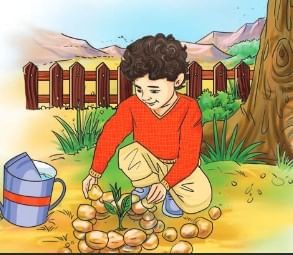
Ans: He kept it in his hand, studied it, and later planted it.

Q9. Who suggested planting the cherry seed?
Ans: Grandfather suggested it.

Q10. Where did Rakesh plant the seed?
Ans: In a shady corner of the garden where it wouldn’t be disturbed.

Q11. When did Rakesh discover that the seed had grown into a small plant?
Ans: He discovered it the following spring.

Q12. What did Rakesh do to protect the tiny plant?
Ans: He circled it with pebbles “for privacy.”

Q13. What damaged the cherry tree the first time?
Ans: A goat entered the garden and ate its leaves.

Q14. What damaged the tree the second time?
Ans: A woman cutting grass accidentally cut the tree in two with her scythe.

Q15. What was Rakesh’s reaction when the tree was cut?
Ans: He thought the tree might die.

Q16. Did the tree survive after being cut?
Ans: Yes, it grew again with new shoots.

Q17. What insect did Rakesh find sitting on the tree?
Ans: A bright green praying mantis.

Q18. What did Rakesh do when a caterpillar began eating the leaves?
Ans: He removed it and told it to come back as a butterfly.

Q19. When did the cherry tree first blossom?
Ans: It blossomed when Rakesh was nine years old.

Q20. What was Grandfather doing when Rakesh saw him under the tree one afternoon?
Ans: He was reclining on a cane chair, enjoying the shade of the tree.

Q21. Why did Rakesh and his grandfather feel the cherry tree was special?
Ans: Because they had planted it themselves.

Q22. What did Rakesh feel when he touched the tree’s bark at the end?
Ans: He wondered if that was what it felt like to be God, creating life.

9. Spectacular Wonders – Very Short Answer Questions

Q1. What is the Valley of Flowers famous for?
Ans: It is famous for its 600 species of exotic flowers.

Valley of Flowers

Q2. In which district is the Valley of Flowers located?
Ans: It is located in Chamoli district, Uttarakhand.

Q3. Name one rare animal found in the Valley of Flowers.
Ans: The snow leopard lives there.

Q4. Which title has UNESCO given to the Valley of Flowers?
Ans: It is a UNESCO World Heritage Site.

Q5. What are the living root bridges made of?
Ans: They are made of intertwined roots.

Q6. Which Indian state is home to the living root bridges?
Ans: They are in Meghalaya.

Q7. How long can a living root bridge last?
Ans: It can last for hundreds of years under good conditions.

Q8. What is the length of the state’s longest living root bridge?
Ans: It is about 175 feet long.

Q9. How was the Lonar Crater formed?
Ans: It was formed by the impact of a meteorite.

Q10. Where is the Lonar Crater Lake located?
Ans: It is in Buldhana district, Maharashtra.

Q11. Which rock type makes the Lonar Crater unique?
Ans: It is formed in basaltic rock.

Q12. What strange thing happens at Magnetic Hill in Ladakh?
Ans: Vehicles appear to move uphill on their own.

Q13. What causes this illusion at Magnetic Hill?
Ans: It is caused by the peculiar alignment of slopes and the horizon.

Q14. What is bioluminescence?
Ans: It is light produced by living organisms.

Q15. Where in Kerala can glowing waters be seen?
Ans: They can be seen in Kumbalangi village, near Kochi.

Q16. Which trees are found in abundance in the Sundarbans?
Ans: Sundari trees are abundant there.

Q17. Name one endangered animal found in the Sundarbans.
Ans: The Bengal tiger is found there.

Q18. What natural event happens at Chandipur Beach?
Ans: The sea disappears and reappears daily.

Q19. How far does the sea retreat at Chandipur Beach?
Ans: It retreats 2–5 km during ebb tide.

Q20. Which rivers form the Sundarbans delta?
Ans: The Ganga, Brahmaputra, and Meghna.

Q21. What type of forest is the Sundarbans?
Ans: It is a mangrove forest.

Q22. What message do these wonders give us?
Ans: They show nature’s mystery, beauty, and power.

8. The Magic Brush of Dreams – Very Short Answer Questions

Q1. Who is Gopi in the poem?
Ans: Gopi is a poor but kind-hearted girl who receives a magic brush.

Q2. What was Gopi asked to bring home at the beginning?
Ans: She was asked to bring firewood.

Q3. Where was Gopi sitting when she first appeared?
Ans: She was sitting under a tree.

Q4. What was she drawing pictures with?
Ans: She was drawing with a stick on the ground.

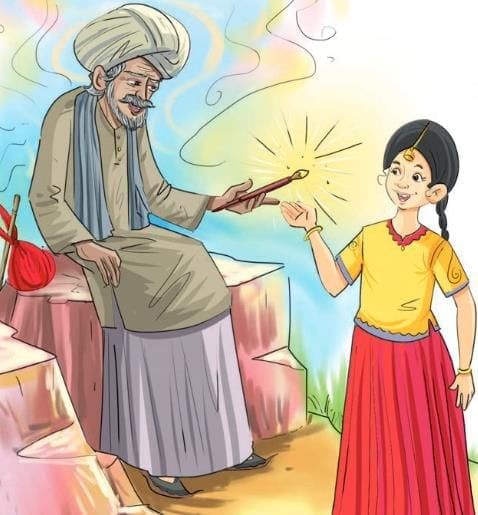
Q5. Who gave Gopi the magic brush?
Ans: An old man gave her the brush.

Q6. What did the man tell Gopi about how to use the brush?
Ans: He told her to use it only to help the poor and needy.

Q7. What was the first thing Gopi painted with the brush?
Ans: She painted a cow.

Q8. What happened when she painted khichdi?
Ans: The khichdi became real and everyone ate happily.

Q9. Whom did she paint a muffler for?
Ans: She painted a muffler for a poor boy.

Q10. What did Gopi paint for a grandmother?
Ans: She painted a walking stick for the grandmother.

Q11. Who heard about the magic brush?
Ans: The greedy Zamindar heard about it.

Q12. What did the Zamindar order Gopi to paint?
Ans: He ordered her to paint gold coins.

Q13. Why did Gopi refuse the Zamindar’s order?
Ans: Because she was told to use the brush only for the poor.

Q14. What punishment did the Zamindar give Gopi?
Ans: He put her in prison.

Q15. What did Gopi paint to escape the prison?
Ans: She painted a key.

Q16. How did Gopi leave the prison?
Ans: She unlocked the door with the key and ran away.

Q17. What did she paint to stop the Zamindar and his men from chasing her?
Ans: She painted a wide river.

Q18. What did Gopi threaten to paint if they kept chasing her?
Ans: She threatened to paint a storm.

Q19. How did the Zamindar react to Gopi’s warning?
Ans: He became frightened and stopped chasing her.

Q20. What did Gopi finally paint for the villagers at the end?
Ans: She painted fields full of crops.

Q21. What lesson does the poem convey about the use of power?
Ans: Power should be used to help others, not for greed.

Q22. What emotion do the villagers feel when Gopi returns?
Ans: They feel joy and gratitude.

7. The Case of the Fifth Word – Very Short Answer Questions

Q1. Who was Encyclopedia Brown?
Ans: He was a young boy named Leroy Brown, nicknamed “Encyclopedia” for his vast knowledge.

Q2. Why was he called ‘Encyclopedia’?
Ans: Because his head was filled with facts, just like an encyclopedia.

Q3. Who was Chief Brown?
Ans: He was Encyclopedia’s father and the Chief of Police in Idaville.

Q4. When did Chief Brown usually discuss cases?
Ans: He discussed difficult cases at the family dinner table.

Q5. What kind of mysteries did Encyclopedia solve?
Ans: He solved cases that even the police found difficult.

Q6. What crime was Tim Nolan suspected of?
Ans: He was suspected of a jewellery store hold-up.

Q7. Who was Daniel Davenport?
Ans: He was Nolan’s friend and suspected partner in the robbery.

Q8. Where did Nolan and Davenport first meet?
Ans: They met in prison in South Carolina.

Q9. What was Nolan’s profession after prison?
Ans: He started a palm-tree nursery in Idaville.

Q10. What happened during the Diamond Mart robbery?
Ans: A clerk thought she recognized Nolan when one robber’s mask slipped.

Q11. Why wasn’t Nolan arrested?
Ans: There was no solid proof and the clerk refused to testify.

Q12. What illness did Nolan suffer from?
Ans: He had a bad heart and eventually died of a stroke.

Q13. What did Nolan leave in his will?
Ans: He left everything, including his nursery, to Davenport.

Q14. What strange clue was found with the will?
Ans: A sheet with four words: Nom, Utes, Sweden, Hurts.

Q15. Who first tried to interpret the four words?
Ans: Mrs. Brown tried but failed to make sense of them.

Q16. What question did Encyclopedia ask about the clue?
Ans: He asked if there was a young fir tree in Nolan’s nursery.

Q17. What was the connection between the four words and the days of the week?
Ans: They were coded forms of Monday, Tuesday, Wednesday, and Thursday.

Q18. What was the “fifth word”?
Ans: It was “Fir” for Friday.

Q19. Where was the jewellery hidden?
Ans: Inside a jug of earth beneath a young fir tree in Nolan’s nursery.

Q20. How did Encyclopedia solve the mystery?
Ans: By decoding Nolan’s four-word clue using the calendar as the key.

6. Verghese Kurien — I Too Had A Dream – Very Short Answer Questions

Q1. Who is the writer of I Too Had a Dream?
Ans: The writer is Verghese Kurien, known as the “Father of the White Revolution in India.”

Q2. To whom is the letter in the chapter addressed?
Ans: The letter is addressed to Kurien’s grandson, Siddharth.

Q3. What difference does Kurien mention between writing and speaking on the phone?
Ans: Speaking gives fleeting joy, but writing can be treasured and re-read for years.

Q4. What was the noblest task after India’s independence, according to Kurien?
Ans: The noblest task was contributing to building an India free from hunger, poverty, and inequality.

Q5. What career did Kurien initially envision for himself?
Ans: He had planned to work in metallurgy or pursue a career in the army or abroad.

Q6. Where did Kurien finally choose to work?
Ans: He chose to work in Anand, Gujarat, with a small dairy cooperative.

Q7. Who supported Kurien in his decision to stay in Anand?
Ans: His wife (Siddharth’s grandmother) ardently supported his decision.

Q8. Who was Kurien’s mentor in Anand?
Ans: Tribhuvandas Patel was his mentor and supporter.

Q9. What value did Kurien consider most important in life?
Ans: Integrity—being honest with oneself.

Q10. What does Kurien mean by “life is a privilege”?
Ans: He means life is a gift, and wasting it is wrong; one must use it for good.

Q11. What, according to Kurien, is the real meaning of failure?
Ans: Failure is not about not succeeding, but about not putting in one’s best effort.

Q12. How should one contribute to the common good, according to Kurien?
Ans: By helping friends, volunteering for teachers, or supporting the community.

Q13. What correlation does Kurien draw between circumstances and happiness?
Ans: He says happiness is not directly linked to circumstances; it depends on how one values life.

Q14. When did Kurien receive the Padma Vibhushan?
Ans: He received the Padma Vibhushan in 1999.

Q15. What innocent question did Siddharth ask at the award ceremony?
Ans: He asked if he could keep the medal.

Q16. What was Kurien’s reply about the medal?
Ans: He said the medal was Siddharth’s too, but he should earn his own reward in life.

Q17. What hope does Kurien express for the younger generation?
Ans: He hopes they will work tirelessly for the good of the country and humanity.

Q18. How does Kurien define personal integrity?
Ans: He defines it as being honest to yourself, which makes it easier to be honest with others.

Q19. What values did Kurien inherit from his family?
Ans: He inherited values of honesty, service, and integrity.

Q20. What choice did Kurien’s grandmother (wife) make?
Ans: She chose to support his decision to live in Anand despite hardships.

Q21. What does Kurien say about comparing ourselves with others?
Ans: He says comparisons are often misleading because people only show images of perfection.

Q22. What does Kurien dedicate his musings to?
Ans: He dedicates them to Siddharth and the younger generation of India.

Q23. What kind of life does Kurien say is truly “well-lived”?
Ans: A life where one loves, rejoices in others’ happiness, and contributes to humanity.

Q24. Who is called the “Father of the White Revolution”?
Ans: Verghese Kurien.

Q25. What does Kurien mean by “true rewards”?
Ans: Rewards that come from one’s own hard work and service to others.

5. Somebody’s Mother – Very Short Answer Questions

Q1. Who is the central figure in the poem?
Ans: The central figure is an old, poor, and helpless woman waiting to cross the street.

Q2. How is the old woman described?
Ans: She is described as old, ragged, grey, and bent with age.

Q3. What season is described in the poem?
Ans: The poem is set in winter after a snowfall.

Q4. Why was the street slippery?
Ans: The street was slippery because of recent snow.

Q5. What was the woman waiting for?
Ans: She was waiting for someone to help her cross the busy street.

Q6. How did the passersby treat her?
Ans: They ignored her and did not offer any help.

Q7. Who came out of school in the poem?
Ans: A group of boys came out of school happily.

Q8. Why were the boys happy?
Ans: They were happy because school was over and they enjoyed the snow.

Q9. What did the boys do when they saw the old woman?
Ans: They hurried past her without helping.

Q10. Why was the old woman afraid to cross alone?
Ans: She was weak and feared slipping or being hurt by horses and carriages.

Q11. Who finally helped the old woman?
Ans: A kind young boy helped her.

Q12. How did the boy help her?
Ans: He supported her by offering his arm and guided her across safely.

Q13. What did the boy feel after helping her?
Ans: He felt proud, happy, and content.

Q14. Why did the boy help the woman?
Ans: He helped because he thought of his own mother and hoped someone would help her too if needed.

Q15. What did the boy tell his friends?
Ans: He reminded them that the woman was “somebody’s mother.”

Q16. What did the woman do at night?
Ans: She prayed to God to bless the noble boy.

Q17. What did she pray for the boy?
Ans: She prayed for God’s kindness and blessings on him.

Q18. Who is called ‘somebody’s son’ in the poem?
Ans: The helpful boy is called ‘somebody’s son.’

Q19. What emotion does the poem mainly express?
Ans: It expresses kindness, compassion, and empathy.

Q20. Who wrote the poem?
Ans: The poem was written by Mary Dow Brine

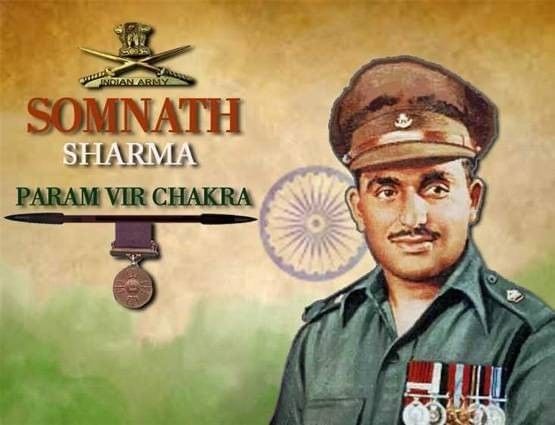
4. A Tale of Valour: Major Somnath Sharma and the Battle of Badgam – Very Short Answer Questions

Q1. Who was the first recipient of the Param Vir Chakra?
Ans: Major Somnath Sharma was the first recipient of the Param Vir Chakra.

Q2. In which battle did Major Somnath Sharma display his valour?
Ans: He displayed his valour in the Battle of Badgam.

Q3. Which year did the Battle of Badgam take place?
Ans: The Battle of Badgam took place in 1947.

Q4. Who launched Operation Gulmarg to annex Kashmir?
Ans: Pakistan launched Operation Gulmarg to annex Kashmir.

Q5. What was the main aim of the Pakistani infiltrators?
Ans: Their aim was to capture Srinagar and the Kashmir Valley.

Q6. On what date did Operation Gulmarg begin?
Ans: Operation Gulmarg began on 22 October 1947.

Q7. When did Jammu and Kashmir accede to India?
Ans: Jammu and Kashmir acceded to India on 26 October 1947.

Q8. How did Indian troops first reach Srinagar in 1947?
Ans: They were airlifted to Srinagar.

Q9. Which regiment was Major Somnath Sharma commanding at Badgam?
Ans: He was commanding the 4th Battalion of the Kumaon Regiment.

Q10. What injury did Major Somnath Sharma have during the battle?
Ans: His left hand was in plaster.

Q11. How many soldiers were with Major Somnath Sharma in D Company?
Ans: Ninety soldiers were with him in D Company.

Q12. How many invaders did D Company face at Badgam?
Ans: They faced about 500 invaders.

Q13. What did Major Somnath Sharma request to fight back the enemy?
Ans: He requested air strikes.

Q14. What guided the aircraft for air strikes during the battle?
Ans: Ground panels laid by Major Somnath Sharma guided the aircraft.

Q15. What were Major Somnath’s last words to his headquarters?
Ans: His last words were that he would not withdraw an inch and fight to the last man and round.

Q16. How did Major Somnath Sharma die?
Ans: He was killed by a mortar shell in a trench.

Q17. How many casualties did the enemy suffer in the battle?
Ans: The enemy suffered more than 300 casualties.

Q18. Which regiment was flown in as reinforcements to Srinagar?
Ans: The Punjab Regiment was flown in as reinforcements.

Q19. At what age did Major Somnath Sharma sacrifice his life?
Ans: He sacrificed his life at the age of 24.

Q20. When was Major Somnath Sharma born?
Ans: He was born on 31 January 1923.

Q21. Where was Major Somnath Sharma born?
Ans: He was born in Dadh, Kangra, Himachal Pradesh.

Q22. What was the name of Major Somnath Sharma’s father?
Ans: His father’s name was Major General Amar Nath Sharma.

Q23. From where did Major Somnath Sharma receive his early education?
Ans: He received his early education at Sherwood College, Nainital.

Q24. In which war did Major Somnath Sharma serve before 1947?
Ans: He served in World War II.

Q25. Where is Major Somnath Sharma’s name inscribed in honour today?
Ans: His name is inscribed on the Honour Wall of the National War Memorial.

3. Wisdom Paves the Way – Very Short Answer Questions

Instruction:                                                      Answer the following questions in one line.

Q1. What is the name of the city the four young men are traveling to?
Ans: The city is Ujjain.

Q2. How many young men are walking to Ujjain?
Ans: There are four young men.

Q3. What time of day is it when the story begins?
Ans: It is midday.

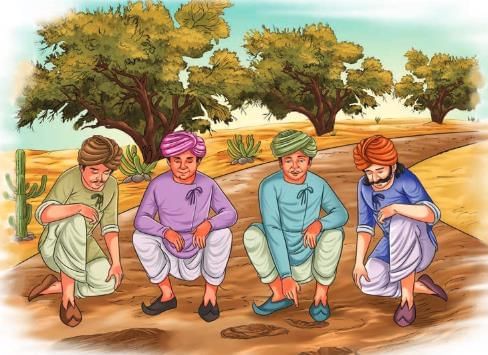
Q4. Who notices the camel tracks first?
Ans: Shiv Datt notices the camel tracks first.

Q5. What animal’s tracks do the young men find on the road?
Ans: They find camel tracks.

Q6. Where do the young men stop to discuss the camel tracks?
Ans: They stop under a large tree.

Q7. Who approaches the young men asking for help with a lost animal?
Ans: A merchant approaches them.

Q8. What is the merchant looking for?
Ans: The merchant is looking for his lost camel.

Q9. What is the name of the first young man questioned by the King?
Ans: Ram Datt is the first young man questioned.

Q10. What decorates the King’s court?
Ans: The King’s court is decorated with rich tapestries.

Q11. What is the King sitting on in his court?
Ans: The King is sitting on a throne.

Q12. Who leads the merchant into the King’s court?
Ans: A sentry leads the merchant into the court.

Q13. What does the merchant call the young men when he accuses them?
Ans: He calls them thieves.

Q14. How many footprints does Ram Datt notice are clear in the camel’s tracks?
Ans: Ram Datt notices three clear footprints.

Q15. Which side’s leaves does the camel not eat, according to Shiv Datt?
Ans: The camel does not eat leaves on the right side.

Q16. What pest does Har Datt say caused the blood droplets on the road?
Ans: Har Datt says mosquitoes caused the blood droplets.

Q17. Which part of the camel’s body does Dev Datt say is in pain?
Ans: Dev Datt says the camel’s stomach is in pain.

Q18. What does the King call the young men after hearing their explanations?
Ans: The King calls them wise.

Q19. What does the merchant do after the King dismisses his accusations?
Ans: The merchant leaves the court.

Q20. How does the court react when the King appoints the young men as advisers?
Ans: The court erupts in applause.

2. A Concrete Example – Very Short Answer Questions

Q1. Who is the poet of “A Concrete Example”?
Ans: The poet of “A Concrete Example” is Reginald Arkell.

Q2. What is the primary feature of Mrs. Jones’s garden described in the poem?
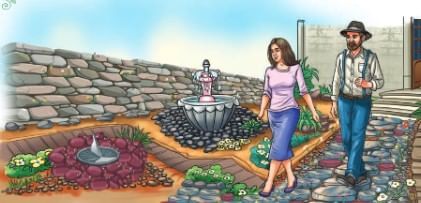
Ans: The primary feature of Mrs. Jones’s garden is a collection of stones, including a crazy path, rockery, and sundial.

Q3. How many stanzas does the poem “A Concrete Example” have?
Ans: The poem has three stanzas.

Q4. How does the poem’s language create its overall mood?
Ans: The poem’s light-hearted and humorous language creates a whimsical and slightly amused mood.

Q5. What feature of Mrs. Jones’s garden is described as winding?
Ans: The crazy path in her garden is winding.

Q6. What is the name of the water feature in Mrs. Jones’s garden?
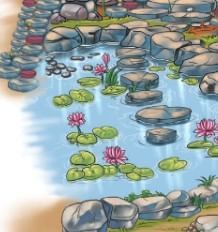
Ans: The water feature is a lily pond.

Q7. What is a rockery in Mrs. Jones’s garden?
Ans: A rockery is a decorative arrangement of stones.

Q8. What device in the garden tells time using the sun?
Ans: The sundial tells time using the sun.

Q9. How does Mrs. Jones feel about her sundial’s design?
Ans: Mrs. Jones thinks the sundial’s design is rather nice.

Q10. What does Mrs. Jones place between the stones in her garden?
Ans: She places tiny plants between the stones.

Q11. How does the speaker describe the plants in the garden?
Ans: The speaker describes the plants as delicate and small.

Q12. How does the speaker view the significance of the tiny plants?
Ans: The speaker views the tiny plants as having no significant value.

Q13. What tool does the speaker humorously suggest Mrs. Jones uses to plant?
Ans: The speaker suggests she uses a pin to plant the tiny plants.

Q14. What does Mrs. Jones invite the speaker to see in her garden?
Ans: She invites the speaker to see her stones.

Q15. How long do the speaker and Mrs. Jones talk about a flower?
Ans: They talk about a flower for a quarter of an hour.

Q16. What surprising thing does Mrs. Jones say about the flower?
Ans: She says the speaker is standing on the flower.

Q17. What does the speaker’s mistake of stepping on the flower create?
Ans: The mistake creates a humorous and ironic moment.

Q18. What does Mrs. Jones’s garden reveal about her character?
Ans: Her garden reveals her eccentric character, with a preference for stones over typical plants.

Q19. What does the poem suggest about beauty through Mrs. Jones’s garden?
Ans: The poem suggests beauty can be found in unexpected places.

Q20. What does the speaker’s view of the plants show about perception?
Ans: The speaker’s view that the plants are insignificant shows perception differs from reality.