5. The Frog – Textbook Worksheet

Q1. Multiple Choice Questions (MCQs)

1. Where does the frog sit?
(a) In trees
(b) In ponds and in the rain
(c) On rooftops
(d) On roads

2. What was the frog as a tadpole?
(a) A small frog
(b) A tiny fish-like thing
(c) A snake
(d) A bird

3. How does the frog catch its food?
(a) With its feet
(b) With its tongue
(c) With its eyes
(d) With its tail

4. What should the frog beware of?
(a) Snakes
(b) Birds
(c) Fish
(d) Humans

5. How does the frog feel in its pond?
(a) Lonely
(b) Proud
(c) Scared
(d) Angry

Q2. True or False

1. The frog only lives on land.
2. The frog’s colours match the plants and trees.
3. The frog croaks quietly.
4. The frog hops very high.
5. The frog swims with webbed feet.

Q3. Fill in the Blanks

1. The frog hops about in a ______ drain.
2. As a tadpole, the frog swims with ______.
3. The frog hides in grass and ______.
4. Snakes may catch the frog ______.
5. The frog leaps high in joyful ______.

Q4. Write the Meaning of the word and form the Sentence

1. Tadpole
2. Croak
3. Webbed
4. Cheer
5. Muddy

Q5. Jumbled Words

1. ddmyu  
2. pdaotlt  
3. webd  
4. rehce  
5. craok  

Q6. Arrange the lines to create a meaningful stanza from the poem.

(a) I croak my songs, they sound so loud,
(b) I hop around, I jump so high,
(c) I live on land and water too,
(d) With webbed feet, I swim with ease,
(e) My colours match the plants and trees.

Q7. Short Answer Questions

1. Describe the frog’s habitat.
2. How does the tadpole differ from the frog?
3. How does the frog catch its food?
4. Why is camouflage important for frogs?
5. How does the frog feel in its pond?

 You can find Worksheet Solutions here: Worksheet Solutions: The Frog

4. The Wise Parrot – Textbook Worksheet

Q1. Multiple Choice Questions (MCQs)

1. Where did the rich merchant keep his parrot?
(a) On a tree
(b) In a cage of gold
(c) On the rooftop
(d) In the forest

2. What kind of bird was the parrot?
(a) Silent and dull
(b) Bright and talkative
(c) Angry and wild
(d) Lazy and quiet

3. What did the parrot long for most?
(a) More fruits
(b) The joy of flying in the sky
(c) To sing louder
(d) More company

4. What did the parrot ask the merchant to do if it couldn’t fly?
(a) Give it more fruits
(b) Send greetings to its friends in the jungle
(c) Take it to the forest
(d) Teach it songs

5. How did the merchant communicate with the other parrots in the forest?
(a) By writing a letter
(b) By speaking to them
(c) By sending gifts
(d) By whistling

Q2. True or False

1. The merchant agreed immediately to let the parrot fly.
2. The parrot had tasted all kinds of fruits and chillies.
3. One parrot in the forest fell to the ground when the merchant conveyed the greetings.
4. The merchant understood why his parrot fell into the cage immediately.
5. After the merchant stepped back, the parrot flew into the open sky.

Q3. Fill in the Blanks

1. The merchant kept a ______ and talkative parrot.
2. The parrot longed for the ______ and green trees.
3. The merchant traveled to a ______ land.
4. The parrot asked the merchant to send ______ to its friends.
5. The parrot finally escaped and flew into the ______.

Q4. Write the Meaning of the word and form the Sentence

1. Cage
2. Sharp mind
3. Sigh
4. Distressed
5. Perch

Q5. Antonyms

1. Bright  
2. Far-off  
3. Longed  
4. Open  
5. Distressed  

Q6. Short Answer Questions

1. Describe the parrot’s life in the merchant’s house.
2. Why did the parrot ask to fly?
3. How did the merchant help the parrot send greetings?
4. What happened when the forest parrot heard the message?
5. How did the merchant describe this incident to his parrot?

You can find Worksheet Solutions here: Worksheet Solutions: The Wise Parrot

3. The Rainbow – Textbook Worksheet

Q1. Multiple Choice Questions (MCQs)

1. What is described as moving across the sky?
(a) Boats
(b) Clouds
(c) Bridges
(d) Trees

2. Which of the following is compared to a bow?
(a) Tree
(b) Rainbow
(c) Ship
(d) River

3. What overtops the trees according to the poem?
(a) Bridges
(b) Boats
(c) Rainbow
(d) Rivers

4. What is built by the rainbow from earth to sky?
(a) A bridge
(b) A road
(c) A ship
(d) A river

5. Which of these does the poet say is “prettier far than these”?
(a) Clouds
(b) Bridges on rivers
(c) Boats
(d) All of the above

Q2. True or False

1. The poem mentions bridges on rivers as “pretty as you please.”
2. The rainbow is described as a natural bridge.
3. Ships are said to sail on rivers.
4. Clouds are described as less attractive than bridges.
5. The poem implies that human-made bridges are more beautiful than the rainbow.

Q3. Fill in the Blanks

1. Boats sail on the ______.
2. Ships sail on the ______.
3. The rainbow bridges ______.
4. The rainbow builds a road from ______ to sky.
5. Bridges on rivers are as pretty as you ______.

Q4. Write the Meaning of the word and form the Sentence

1. Sail
2. Bridge
3. Overtop
4. Bow
5. Prettier

Q5. Antonyms

1. Prettier  
2. Build  
3. Across  
4. Heaven  
5. Overtop  

Q6. Arrange the Lines to create a meaningful Stanza from the poem

(a) Boats sail on the rivers,
(b) And ships sail on the seas;
(c) But clouds that sail across the sky
(d) Are prettier far than these.
(e) There are bridges on the rivers,
(f) As pretty as you please;

Q7. Short Answer Questions

1. What is the main theme of the poem?
2. How does the poet describe clouds?
3. What is the significance of the bow in the poem?
4. How are bridges compared to the rainbow?
5. Why does the poet say “prettier far than these”?

You can find Worksheet Solutions here: Worksheet Solutions: The Rainbow

2. Gone with the Scooter – Textbook Worksheet

Q1. Multiple Choice Questions (MCQs)

(i) What was Gopi doing in the veranda?
(a) Sleeping
(b) Reading a book
(c) Playing hockey
(d) Eating mangoes

(ii) What sound did Gopi first hear in the garden?
(a) Someone laughing
(b) A scooter horn
(c) Something rustling and falling with a thud
(d) The barking of a dog

(iii) What did Gopi finally find on the heap of dry leaves?
(a) A football
(b) A hockey ball
(c) A mango
(d) A cricket ball

(iv) Who first claimed that the ball was his?
(a) Deepak
(b) Ramani
(c) Manoj
(d) Jay

(v) How did the ball finally get lost?
(a) It rolled into the bushes
(b) It was kept in Gopi’s pocket
(c) It fell into the basket of a passing scooter
(d) Someone took it home

Q2. True or False

(i) Gopi thought at first that the sound was a mango falling.
(ii) Gopi decided to keep the ball for himself.
(iii) Deepak said his father had bought him a brand-new football.
(iv) Manoj liked to play as the goalkeeper.
(v) In the end, Gopi’s mother took the ball away.

Q3. Fill in the blanks

(i) Gopi was sitting in the __________, reading a book.
(ii) On the heap of dry leaves, Gopi found a __________ ball.
(iii) Ramani claimed the ball was his and asked Gopi to __________ it.
(iv) Jay hit the ball so hard that it went past the __________ gate.
(v) The children burst into __________ when the ball was gone.

Q4. Write the Meaning of the word and form the Sentence

(i) Veranda
(ii) Heap
(iii) Grabbed
(iv) Dribbled
(v) Scooterist

Q5. Jumbled Words

(i) gnpyaorud 
(ii) akssotecr 
(iii) drebbidl 
(iv) tpcoek 
(v) leapvyr 

Q6. Short Answer Questions

1. Describe how Gopi found the ball.
2. What did Gopi do after finding the ball?
3. Why was the ball not Manoj’s?
4. How did Ramani identify the ball?
5. How did Deepak react to the ball?

You can find Worksheet Solutions here: Worksheet Solutions: Gone with the Scooter

1. Papa’s Spectacles – Textbook Worksheet

Q1. Multiple Choice Questions (MCQs)

(i) What was Papa searching for?
(a) His cap
(b) His spectacles
(c) His shoes
(d) His bag

(ii) Without his spectacles, Papa could not ______.
(a) Cook food
(b) Cut vegetables
(c) Sweep the floor
(d) Open the door

(iii) Papa looked for his spectacles under the ______.
(a) Table
(b) Chair
(c) Bed
(d) Sofa

(iv) What did the child ask Papa to do?
(a) Stop searching
(b) Go to the market
(c) Call a neighbour
(d) Buy new spectacles

(v) Where were the spectacles finally found?
(a) On the table
(b) On Papa’s head
(c) In the drawer
(d) Near the window

Q2. True or False

(i) Papa could not read the newspaper without his spectacles.

(ii) Papa searched near the window.

(iii) The poem says Papa had two pairs of spectacles.

(iv) The child told Papa not to worry or be sad.

(v) Papa himself found the spectacles under the chair.

Q3. Fill in the blanks

(i) Papa was searching __________.
(ii) It was his only __________.
(iii) He checked inside his __________.
(iv) The child said, “Papa! Stop please, don’t be __________.”
(v) The spectacles were on Papa’s __________.

Q4. Write the Meaning of the word and form the Sentence

(i) Everywhere
(ii) Pair
(iii) Chair
(iv) Sad
(v) Head

Q5. Synonyms

(i) Lost  
(ii) Sad  
(iii) Glanced  
(iv) Stop  
(v) Pair 

Q6. Arrange the lines to create a meaningful stanza from the poem.

(a) Don’t worry, don’t be sad,
(b) Your spectacles are right there,
(c) On your head, dear dad!
(d) We said, “Papa! Stop please,

Q7. Short Answer Questions

1. Describe the main problem in the poem.
2. Who helps Papa find the spectacles?
3. What tasks could Papa not do without his spectacles?
4. How did Papa search for the spectacles?
5. Why was the child amused?
 
You can find Worksheet Solutions here: Worksheet Solutions: Papa’s Spectacles

10 Earth — Our Shared Home – Short and Long Answer Questions

Short Answer Questions

Q1: What does Earth look like from space?
Ans: From space, Earth appears as one blue planet without borders. Astronauts like Rakesh Sharma noted its unity, calling it the best.

Q2: How do rosy starlings benefit Indian farmers?
Ans: They migrate from Russia to India in winter, eating pests like locusts. This natural pest control helps crops without chemicals.

Q3: What is Vasudhaiva Kutumbakam?
Ans: An ancient Indian saying meaning ‘the world is one family’. It promotes global unity, respect, and shared care for nature.

Q4: How did yoga spread globally?
Ans: Originating in India over 3,000 years ago for harmony, it spread via travellers. Now, International Yoga Day unites millions worldwide.

Q5: Trace the journey of chillies to India.
Ans: From South America, Portuguese traders brought chillies 400-500 years ago. They became essential in Indian cuisine, replacing pepper.

Q6: What is the origin of sugar?
Ans: Discovered in India from sugarcane, turned into jaggery, then sugar. It spread globally via trade, sweetening foods worldwide.

Q7: How did marigolds come to India?
Ans: From Mexico, marigolds travelled to festivals. Their bright colours fit Indian celebrations like Diwali, becoming temple staples.

Q8: What Indian cows were taken to Brazil?
Ans: Gir, Kankrej, and Ongole breeds, strong and milk-rich, adapted well. Now, they provide most of Brazil’s milk, even on stamps.

Q9: Name some Indian inventions shared globally.
Ans: Zero for math, chess for strategy, ayurveda for medicine, indigo for dyes. These influenced global knowledge and culture.

Q10: What does the MoEFCC logo represent?
Ans: It shows a balance between nature and humans, with the motto ‘Nature Protects if She is Protected’. It urges harmony and conservation.

Long Answer Questions

Q1: Explain how the migration of birds like rosy starlings shows nature’s connections.
Ans: The migration of birds like rosy starlings in India vividly illustrates nature’s interconnected cycles, linking seasons, ecosystems, and human life in a harmonious web.

  • Rosy starlings fly from Russia to India’s warmth, eating pests to aid farmers.
  • This migration highlights the borderless nature, with winds and currents helping journeys.
  • It teaches interdependence, as protecting habitats ensures their survival.
  • Human actions like conservation support these links, reminding us of global family ties in Vasudhaiva Kutumbakam.

Q2: Discuss the global spread of Indian practices like yoga and their benefits.
Ans: India’s ancient practices, particularly yoga, have transcended cultural boundaries to become global phenomena, promoting holistic well-being while fostering cross-cultural exchanges.

  • Yoga, practised in India for 3,000 years, promotes health and peace, now global via International Yoga Day.
  • It harmonises body and mind with nature.
  • Similarly, Ayurveda offers ancient medicine.
  • These share wisdom, improving well-being worldwide.
  • They embody India’s contributions, fostering unity and respect for shared human heritage.

Q3: Trace the journeys of foods like chillies and sugar between countries.
Ans: Here’s a traced journey of each:

  • Chillies from South America reached India via Portugal, spicing cuisine.
  • Sugar from Indian sugarcane spread to sweeten global foods.
  • Marigolds from Mexico enhance festivals.
  • These exchanges blend cultures, showing interconnectedness.
  • They highlight trade’s role in enriching lives, encouraging appreciation for origins and sustainable sharing.

Q4: How do animal and plant exchanges reflect world connections?
Ans: Animal and plant exchanges reflect world connections because they show how regions are linked through trade, migration, colonisation, and cultural interaction.

  • Indian Gir cows thrive in Brazil, providing milk and featured on stamps.
  • Dates from Arabs and paper from China enriched India.
  • These movements show nature’s borderless flow, like migrating birds.
  • They teach Vasudhaiva Kutumbakam, urging protection of shared resources for mutual benefit and global family harmony.

Q5: What does ‘Earth as our shared home’ mean, with examples from the chapter?
Ans: “Earth as our shared home” means that the planet belongs to all living beings — humans, animals, and plants — and we are all interconnected. It stresses the idea that resources, environments, and ecosystems are not owned by one person, nation, or species, but are shared and need to be cared for collectively.

  • It means viewing the world as one family, per Vasudhaiva Kutumbakam, with shared nature and ideas.
  • Examples include yoga’s global practice, chillies’ journey, and bird migrations.
  • Protecting Earth, as in MoEFCC’s logo, ensures harmony.
  • Stories of exchanges inspire care, recognising interconnected lives and the need for collective responsibility.
09 Rhythms of Nature – Short and Long Answer Questions

Short Answer Questions

Q1: What causes day and night?
Ans: Earth’s rotation on its axis creates day when facing the sun and night when away. This cycle repeats daily.

Q2: How many seasons are there in India?
Ans: India has six seasons: vasanta (spring), grishma (summer), varsha (monsoon), sharad (autumn), hemant (pre-winter), shishir (winter). They shape nature and activities.

Q3: What covers three-fourths of Earth?
Ans: Water covers most of Earth, as seen on globes. It’s vital for life, with oceans connected globally.

Q4: Name festivals linked to seasons.
Ans: Holi in spring, Pongal for harvest in autumn, Nag Panchami in monsoon, honouring snakes. They celebrate nature’s cycles.

Q5: What is Mawsynram known for?
Ans: It’s the wettest place on Earth in Meghalaya, receiving heavy monsoon rains. This contrasts with the dry Thar desert.

Q6: How do animals predict rain?
Ans: Ants carry eggs to higher ground, and koels sing in Odisha before rains. These natural signs help farmers prepare.

Q7: What model represents Earth?
Ans: A globe shows Earth’s shape, with blue for water and land for countries. It helps understand geography.

Q8: Why do seasons differ across India?
Ans: Geography, like Kashmir’s cold winters versus Kerala’s mild ones, causes variations. Monsoons vary from wet Assam to dry Rajasthan.

Q9: What repeats every year in nature?
Ans: Seasons repeat annually, influencing plant growth, animal behaviour, and human activities like farming and festivals.

Q10: Which village sees India’s first sunrise?
Ans: Dong in Arunachal Pradesh, known as the ‘First Village of the Sunrise’. It highlights India’s eastern extent.

Long Answer Questions

Q1: Explain how day and night occur and their representation on a globe.
Ans: Day and night occur due to Earth’s rotation on its axis, and their representation on a globe illustrates the division of light and dark areas across the planet.

  • Earth’s rotation causes day on the sun-facing side and night on the opposite.
  • A globe demonstrates this with light showing illuminated areas.
  • This cycle affects sleep, work, and nature.
  • In India, it is tied to festivals and daily rhythms.
  • Understanding via activities like throwing light from a torch on a globe teaches planetary movement and time zones.

Q2: Describe India’s six seasons and their impact on life.
Ans: India’s six seasons, rooted in its traditional calendar, shape daily life, agriculture, culture, and festivals, reflecting a deep connection between nature and society.

  • Vasanta brings flowers, grishma heat, varsha rains, sharad harvests, hemant coolness, shishir cold.
  • They influence crops, festivals like Holi in spring, and animal behaviours.
  • Regional differences, like wet monsoons in Assam, shape agriculture and culture.
  • Observing changes in journals fosters appreciation for nature’s repeating patterns.

Q3: How do natural signs and places reflect seasonal rhythms?
Ans: Natural signs and places in India vividly reflect seasonal rhythms, showcasing the cyclical changes of the six seasons through distinct environmental cues and cultural connections.

  • Birds like koels signal rain, and ants move eggs pre-monsoon.
  • Wettest Mawsynram contrasts with driest Thar, showing diversity.
  • Festivals like Pongal celebrate harvests, and Nag Panchami respects snakes in the rains.
  • These connect humans to nature, teaching adaptation and respect for cycles in varied Indian landscapes.

Q4: Discuss the role of journaling in understanding seasonal changes.
Ans: Journaling plays a vital role in understanding seasonal changes by enabling individuals to observe, record, and reflect on natural and cultural patterns, fostering a deeper connection with India’s six seasons.

  • Journals track plant growth, animal behaviours, weather, and activities over periods like April-June.
  • Class charts and posters analyse patterns, revealing six seasons’ impacts.
  • This builds observation skills, linking nature to human life.
  • Sharing stories from elders highlights long-term changes, encouraging environmental awareness.

Q5: Why are seasons connected to festivals and agriculture in India?
Ans: In India, seasons are deeply connected to festivals and agriculture due to the country’s six-season cycle, which shapes cultural traditions and agricultural practices, reflecting a harmonious relationship with nature.

  • Seasons dictate planting and harvesting, with summer crops differing from winter ones.
  • Festivals like Baisakhi mark new years and harvests, and Holi in spring.
  • This harmony sustains food and culture.
  • Regional variations, like Odisha’s koel songs, integrate nature’s rhythms into daily life, promoting sustainable farming and celebrations.

08 Clothes — How Things are Made – Short and Long Answer Questions

Short Answer Questions

Q1: How do birds like the baya weaver make nests?
Ans: Baya weavers weave grass into pouch-shaped nests hanging from trees. This criss-cross pattern strengthens the structure.

Q2: What is weaving and its tools?
Ans: Weaving interlaces threads into fabric using looms. Handlooms create traditional cloth, employing millions in India.

Q3: Explain spinning and its importance.
Ans: Spinning twists fibres like cotton into yarn using charkhas. It’s key for making strong threads for weaving clothes.

Q4: Name natural fibres and their sources.
Ans: Cotton from plants, silk from silkworm cocoons, wool from sheep or goats, like pashmina from Ladakh.

Q5: What are synthetic fibres?
Ans: Man-made like nylon (stretchy) or polyester, used for durable clothes. They differ from natural ones in origin and properties.

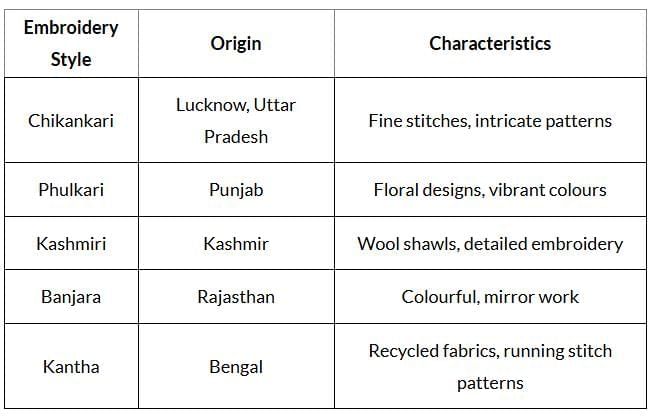
Q6: Describe Chikankari embroidery.
Ans: From Lucknow, it’s delicate thread work on fabric. It showcases regional artistry and provides livelihoods.

Q7: What is bandhani?
Ans: A tie-dye from Gujarat, where cloth is tied and dyed for patterns. It’s eco-friendly and cultural.

Q8: How is a running stitch done?
Ans: Thread a needle, knot, and go up and down in a line to join fabrics. It’s basic for sewing.

Q9: Why is handloom important in India?
Ans: It employs over 45 lakh people, preserving traditions like patola sarees. It supports rural artisans sustainably.

Q10: What is phulkari?
Ans: Embroidery from Punjab using flower patterns. It’s vibrant and part of the cultural heritage, often on clothing.

Long Answer Questions

Q1: Explain the process of making cloth from fibres to fabric.
Ans:  Process of making cloth from fibres:

  • Start with fibres like cotton spun into yarn via twisting on charkhas.
  • Yarn is woven on looms, interlacing vertical and horizontal threads.
  • Natural fibres from plants or animals, and synthetic fibres from chemicals.
  • Embroidery like chikankari adds designs.
  • Handlooms preserve culture, employing millions. This process creates diverse textiles, blending tradition and utility.

Q2: Discuss animal inspirations in cloth-making, like birds.
Ans: Animal inspirations, particularly from birds, have significantly influenced cloth-making, inspiring patterns, textures, and sustainable techniques in textile design.

  • Baya weavers inspire weaving with grass nests, tailorbirds stitch leaves.
  • Humans mimic in looms and stitches.
  • Natural fibres like silk from cocoons show animal roles.
  • These teach sustainable methods, reducing waste.
  • Cultural embroideries like phulkari reflect nature’s patterns, connecting human crafts to biodiversity.

Q3: Describe traditional Indian embroideries and their regions.
Ans: Traditional Indian Embroideries:

  • Chikankari from Lucknow uses fine stitches, phulkari from Punjab floral designs, and Kashmiri for wool shawls.
  • Banjara from Rajasthan is colourful, and kantha from Bengal recycles fabrics.
  • Each employs locals, preserves heritage, and uses local materials.
  • They add value to handlooms, supporting economies and cultural identity.

Q4: How does recycling and reuse apply to clothes in India?
Ans: Recycling and reuse of clothes in India promote sustainability by reducing waste, conserving resources, and supporting traditional practices that align with environmental and cultural values.

  • Old clothes are passed to siblings or remade into quilts, reducing waste.
  • Sectors like handloom employ lakhs sustainably.
  • Kala cotton from Gujarat is chemical-free.
  • Traditions encourage mending with stitches, like running.
  • This promotes eco-friendliness, dignity of labour, and cultural continuity in resource use.

Q5: What is the significance of handloom in the Indian economy and culture?
Ans: Handloom holds immense significance in India’s economy and culture, serving as a source of livelihood, preserving heritage, and promoting sustainable craftsmanship.

  • Handloom employs over 45 lakh people, especially women, as a cottage industry.
  • It produces unique items like six-month woven patola sarees.
  • Regional styles like bandhani preserve arts.
  • It supports self-sufficiency, as Gandhi promoted khadi.
  • Economically, it boosts rural incomes; culturally, it ties to festivals and identities, fostering pride and sustainability.

07 Energy — How Things Work – Short and Long Answer Questions

Short Answer Questions

Q1: What is energy and its everyday uses?
Ans: Energy makes things move, light up, or heat. It’s used in cooking, vehicles, and lights, coming from sources like food or the sun.

Q2: How does food provide energy?
Ans: Food fuels living things for movement and growth. Skipping meals causes tiredness, while eating restores activity.

Q3: Explain solar energy with an example.
Ans: Solar energy from sunlight powers panels for electricity. It dries clothes or warms water naturally, being clean and renewable.

Q4: What are fuels and their types?
Ans: Fuels like petrol for vehicles or gas for cooking provide energy. They burn to release heat, but can pollute if overused.

Q5: How is wind energy generated?
Ans: Wind spins windmills to produce electricity. It’s clean, used historically in sails for ships across seas.

Q6: What is Vaastu Shastra?
Ans: An ancient Indian system of designing buildings with nature for natural light and wind, reducing energy needs.

Q7: Why are LED bulbs energy-efficient?
Ans: LEDs use less electricity for the same light as older bulbs. They save resources and reduce bills.

Q8: How do batteries store energy?
Ans: Batteries hold chemical energy for devices like torches. They provide portable power without constant electricity.

Q9: What is kinetic energy?
Ans: It’s energy from movement, like running water turning mills or wind spinning turbines for grinding grains.

Q10: How do animals provide heat energy in Ladakh?
Ans: Cattle kept on ground floors warm homes above with body heat, a natural way to stay cosy in cold winters.

Long Answer Questions

Q1: Describe different sources of energy and their importance.
Ans: Energy is essential for human civilisation, powering homes, industries, transportation, and technology.

  • Sources include sun (solar for panels), wind (for mills), water (for hydropower), food (for living beings), and fuels (for vehicles).
  • They enable movement, light, and heat essential for life.
  • Clean sources like solar reduce pollution, while fuels like gas aid cooking.
  • Understanding storage in batteries promotes efficiency.
  • Wise use ensures sustainability for future needs.

Q2: Explain the benefits of clean energy sources like solar and wind.
Ans: Clean energy sources like solar and wind offer numerous benefits, contributing to environmental, economic, and social advancements. Below is a concise explanation of their key advantages, written in clear and accessible language:

  • Solar panels generate electricity from sunlight without smoke, powering homes cleanly.
  • Windmills use air movement for power, reducing fossil fuel dependence.
  • Both are renewable, cutting pollution and costs.
  • In India, they support rural areas and ancient practices like Vaastu for natural harmony.
  • Adopting them combats climate change and promotes eco-friendly living.

Q3: Discuss safety rules for using electricity.
Ans: Following safety rules for using electricity is essential to prevent accidents and ensure a secure environment.

  • Avoid touching plugged wires or sockets, report broken poles, and never play near transformers.
  • Efficiency, like using LEDs, saves energy.
  • Dangers include shocks or fires, so unplug during storms.
  • Education on these prevents accidents, ensuring safe use in homes and schools.
  • Following the rules protects lives and conserves resources.

Q4: How does energy from nature work in daily life, with examples?
Ans: Energy from nature, such as solar, wind, and hydropower, powers daily life by providing sustainable electricity and supporting essential activities.

  • Sun provides heat for drying and solar power, wind for pinwheels or mills, and water for wheels grinding grains.
  • In Ladakh, animal heat warms houses.
  • These natural sources are clean and ancient, like ships using the wind.
  • Activities show vibration for sound or focus for burning, teaching sustainable uses without harming the environment.

Q5: What is the role of stored energy, and how can we save it?
Ans: Stored energy plays a crucial role in powering daily life by providing a reliable supply when natural sources like sunlight or wind are unavailable, and saving it involves efficient use and conservation strategies.

  • Stored in batteries for torches or bodies from food for activity, it ensures availability without constant sources.
  • Saving involves turning off lights, using LEDs, and natural designs like Vaastu.
  • Efficiency reduces waste, like the brain using energy even at rest.
  • Small actions like unplugging devices conserve energy for the future, promoting responsible global energy use.

06 Some Unique Places – Short and Long Answer Questions

Short Answer Questions

Q1: What is Indira Point?
Ans: It’s India’s southernmost tip in the Andaman and Nicobar Islands. Surrounded by sea, it’s part of a chain with unique forests and wildlife.

Q2: Describe the living root bridges in Northeast India.
Ans: Made from tree roots grown across streams, they are natural and strong. Local people maintain them, showcasing harmony with nature.

Q3: What makes the Sundarbans unique?
Ans: It’s the world’s largest mangrove forest where the Ganga meets the sea. Mangroves grow in salty water, protecting against erosion and hosting tigers.

Q4: Name an animal unique to the Western Ghats.
Ans: The lion-tailed macaque, a monkey found only here. It lives in rich forests with diverse wildlife and medicinal plants.

Q5: What is the Silent Valley National Park known for?
Ans: A silent rainforest in Kerala, home to rare species. The ‘Save Silent Valley’ movement protected it from a dam, preserving its biodiversity.

Q6: How do the Andaman Islands support unique wildlife?
Ans: Isolated forests host birds like the Andaman hornbill. Roots support trees, and corals shelter marine life, making it a biodiversity hotspot.

Q7: What is Bhut Jolokia?
Ans: The hottest chilli from Northeast India, used in food and to deter elephants. It reflects the region’s spicy cuisine and agriculture.

Q8: Describe the Kailasanatha Temple.
Ans: Carved from a single rock in Maharashtra, it’s the world’s largest such structure. It showcases ancient Indian architecture and craftsmanship.

Q9: Why are mangroves important?
Ans: Their roots hold soil, prevent erosion, and grow in salty water. They protect coasts and support fish and birds.

Q10: What is Chandrayaan-3’s achievement?
Ans: It made India the first to land on the lunar south pole. This highlights India’s space exploration and scientific progress.

Long Answer Questions

Q1: Explain the unique features of the Andaman and Nicobar Islands.
Ans: Unique features of the Andaman and Nicobar Islands:

  • These islands in the Bay of Bengal have unique trees with supporting roots and endemic birds like the Andaman hornbill.
  • Coral reefs shelter marine life, while tribes like the Sentinelese live traditionally.
  • Forests are biodiversity hotspots, but tsunamis pose risks.
  • Ecotourism and protection efforts preserve this isolated paradise, teaching nature’s wonders and human-nature harmony.

Q2: Discuss the importance of mangroves in the Sundarbans.
Ans:  Importance of mangroves in the Sundarbans:

  • Sundarbans’ mangroves thrive in salty mud, with breathing roots preventing erosion from waves.
  • They host tigers and birds, supporting local livelihoods like fishing.
  • People depend on forests for honey and wood, living harmoniously.
  • Conservation protects against climate change, as mangroves act as natural barriers, sustaining ecosystems and communities in this delta region.

Q3: Describe the biodiversity and cultural aspects of Northeast India.
Ans: Northeast India, also known as Seven Sisters, is culturally very rich.

  • The ‘Seven Sisters’ states feature root bridges, the hottest chillies like Bhut Jolokia, and festivals with dances.
  • Rich wildlife includes Hargila storks protected by locals.
  • Bamboo houses suit hilly terrain, and markets sell unique crafts.
  • This diversity fosters traditions like weaving, blending nature and culture, making it a vibrant, eco-conscious region.

Q4: What makes the Western Ghats a biodiversity hotspot?
Ans: The Western Ghats, a mountain range running parallel to India’s western coast, is considered one of the world’s eight “hottest hotspots” of biological diversity. This exceptional status is attributed to a combination of factors:

  • This mountain range spans six states, with rare animals like lion-tailed macaques and over 200 mango varieties.
  • Rivers originate here, supporting tribes using medicinal plants.
  • Forts like Kumbhalgarh and temples like Kailasanatha add historical value.
  • Protection through parks like Silent Valley conserves wildlife, emphasising sustainable living and community efforts in preserving India’s natural heritage.

Q5: How do unique places in India reflect human-nature connections?
Ans: India is home to many places that beautifully show the strong bond between people and nature. These sites reveal traditional ways of life, sacred beliefs, and sustainable practices that have respected the environment for generations.

  • Places like Andamans with corals, Sundarbans’ mangroves, and Northeast’s root bridges show adaptations to environments.
  • Tribes in Sentinel Island use nature signs for safety, while Western Ghats’ surveys protect fruits.
  • These highlight traditional knowledge, biodiversity, and conservation movements.
  • They teach respect for nature, inspiring protection of India’s diverse landscapes for future generations.