2. RESHAPING INDIA’S POLITICAL MAP – Short and Long Answer Questions

Q1. What is meant by the medieval period in Indian history?
Answer:
The medieval period in Indian history refers to the era between the 11th and 17th centuries. It was marked by frequent foreign invasions, the rise and fall of dynasties, and continuous changes in India’s political boundaries. During this time, rulers from Central Asia, such as the Turks and Afghans, invaded India for wealth, territory, and to spread their own faiths. The period saw old kingdoms being destroyed and new empires emerging. Despite these conflicts, Indian society blended new ideas, creating a dynamic and diverse culture.

Q2. Who founded the Delhi Sultanate, and what were its main ruling dynasties?
Answer:
The Delhi Sultanate was founded in 1192 after Prithviraj Chauhan was defeated by Central Asian invaders. It was ruled by five successive Turkic-Afghan dynasties: the Mamluks (Slave dynasty), the Khiljis, the Tughlaqs, the Sayyids, and the Lodis. The Sultanate controlled large parts of northern India and faced resistance from kingdoms in the south and east. Its rule was marked by political instability, frequent wars, and a short average reign for each sultan.

Q3. What led to political instability during the Delhi Sultanate period?
Answer:
Political instability during the Delhi Sultanate period was mainly caused by violent successions and frequent wars. About two-thirds of the sultans gained power by killing their predecessors, resulting in short reigns averaging only nine years. Continuous expansion, raids, and plundering of villages and cities added to the instability. This constant turmoil weakened the authority of the sultans and made it difficult to maintain stable rule over the vast territories.

Q4. Why did Muhammad bin Tughlaq’s policies fail? (Long answer, sample)
Answer:
Muhammad bin Tughlaq, one of the most ambitious rulers of the Delhi Sultanate, introduced several reforms during his reign, but most failed and caused great hardship.

  • He moved the capital from Delhi to Daulatabad in the hope of controlling his empire better. However, people were forced to relocate over 1,000 km, resulting in suffering and the eventual reversal of the move.
  • Tughlaq introduced a token currency, making copper coins equal in value to silver and gold coins. This led to widespread counterfeiting, confusion, and a collapse of trust in trade.
  • His schemes were not practical for the time; the disruption they caused led to economic instability.
    Overall, Muhammad bin Tughlaq’s policies weakened administration, led to loss of revenue, and increased dissatisfaction among his subjects. It stands as an example of poor planning and execution in medieval Indian history.

Q5. Describe the military campaigns of Ala-ud-din Khilji.
Answer:
Ala-ud-din Khilji was a powerful ruler of the Delhi Sultanate who expanded his empire through continuous military campaigns. He repelled repeated Mongol invasions, protecting India from these fierce attackers. Khilji also launched raids into southern India, led by his slave general Malik Kafur, who conquered important kingdoms such as Srirangam, Madurai, and Chidambaram. These campaigns brought immense wealth that helped Khilji maintain a strong army and expand his control over large parts of India. His reign is remembered for aggressive expansion and formidable military power.

Q6. What was the impact of Timur’s invasion on the Delhi Sultanate?
Answer:
In the late 14th century, Timur, a Turkic-Mongol conqueror, invaded northern India and attacked Delhi fiercely. His invasion resulted in widespread destruction, mass killings, and enslavement of people. Timur plundered immense wealth from Delhi, leaving the city in ruins and creating political chaos. Although Timur withdrew after the attack, the Delhi Sultanate never fully recovered. The invasion weakened the Sultanate’s control and opened the way for the rise of new kingdoms and dynasties. This event marked the beginning of the decline of the Delhi Sultanate.

Q7. Explain the resistance offered by the Eastern Ganga kingdom against the Delhi Sultanate.
Answer:
The Eastern Ganga kingdom, located in present-day Odisha and nearby areas, strongly resisted the Delhi Sultanate’s attempts to expand into eastern India. Under the leadership of Narasimhadeva I, the kingdom successfully repelled repeated invasions and defeated the Sultanate’s governor of Bengal. Narasimhadeva I’s military strength and cultural achievements made the Eastern Ganga kingdom a symbol of resistance. To celebrate his victories, he built the famous Sun Temple at Konark, which stands as an architectural marvel and a symbol of pride for the people of the region.

Q8. How did the Vijayanagara Empire rise and maintain power in southern India?
Answer:
The Vijayanagara Empire was founded in the 14th century by brothers Harihara and Bukka, who declared independence from the Delhi Sultanate. The empire grew strong through capable leadership, military strength, and strategic diplomacy. It faced constant rivalry with the Bahmani Sultanate and its successor Deccan Sultanates, regularly engaging in battles to defend and expand its territory. Under King Krishnadevaraya in the 16th century, Vijayanagara reached its peak, with notable military victories and patronage of art, culture, and temple building. The empire became a center of political, cultural, and architectural achievements in southern India.

Q9. What were some of Akbar’s policies that promoted religious tolerance?
Answer:
Akbar, one of the greatest Mughal emperors, promoted religious tolerance through several policies:

  • He abolished the jizya tax on non-Muslims, creating a more inclusive society.
  • He encouraged peace between all religions by following the principle of sulh-i-kul, meaning “peace with all.”
  • Akbar formed marriage alliances with Rajput princesses to build political ties and welcomed Hindu leaders into his court.
  • He appointed people of different faiths to important administrative posts.
  • Akbar also supported cultural projects like translating Hindu texts into Persian, fostering respect between communities.
    These policies helped unite a diverse empire with many religions and cultures.

Q10. How did Aurangzeb’s religious policies affect the Mughal Empire?
Answer:
Aurangzeb, unlike his predecessor Akbar, adopted strict Islamic policies which negatively impacted the Mughal Empire:

  • He reintroduced the jizya tax on non-Muslims, increasing their economic burden and resentment.
  • Aurangzeb ordered the destruction of Hindu, Jain, and Sikh temples, causing unrest among these communities.
  • He banned music and dance in his court, enforcing a rigid religious rule.
  • His harsh policies led to widespread rebellions by groups such as the Rajputs, Jats, and Sikhs.
  • These uprisings drained the empire’s resources and weakened its stability.
    Aurangzeb’s religious intolerance significantly contributed to the decline of Mughal power after his death.

Q11. Who were the Rajputs, and what role did they play during the Mughal period?
Answer:
The Rajputs were warrior clans from northwest India known for their bravery and strong sense of independence. They played a significant role during the medieval period by resisting various foreign invaders and maintaining their regional power.

  • They rebuilt kingdoms in areas like Mewar and Marwar after earlier invasions by the Khiljis.
  • Rana Sanga was a great leader who united several Rajput clans and fought many battles to defend their lands, although he was defeated by Babur at the Battle of Khanwa.
  • Maharana Pratap, another famous Rajput king, refused to accept Mughal rule and engaged in guerrilla warfare against the Mughals after his defeat at the Battle of Haldighati.
  • Rajputs maintained their independence with help from tribal allies, including the Bhils, who provided archers and terrain knowledge.
  • Even as some Rajput states allied with Mughals, many continued resisting, limiting Mughal control in Rajasthan.

This constant resistance helped preserve Rajput culture and autonomy during the Mughal era.


Q12. Describe the Ahom kingdom and their resistance against Mughal invasions.
Answer:
The Ahom kingdom was established in the 13th century in the Brahmaputra Valley of present-day Assam by migrants from Myanmar. They created a unique social and military system called the paik, where every able-bodied man was required to contribute labor or military service. This system helped build public infrastructure and maintain a large fighting force without a standing army.

  • Ahoms used their knowledge of the difficult terrain—including forests, rivers, and hills—to resist Mughal and Sultanate attempts at expansion.
  • One of their greatest military successes was the Battle of Saraighat in 1671, where the Ahom commander Lachit Borphukan led 10,000 Ahom soldiers to defeat a much larger Mughal army.
  • Their victory preserved the independence of the Ahom kingdom and helped nurture Assam’s unique cultural identity.
  • The Ahoms also promoted local agriculture, assimilated diverse cultures, and supported religious tolerance.

Their effective resistance made them one of the few kingdoms in medieval India to successfully resist Mughal domination.


Q13. How did Sikhism evolve into a martial community during Mughal rule?
Answer:
Sikhism began as a spiritual and peaceful movement founded by Guru Nanak in the 15th century, focusing on equality and devotion to one God. However, during Mughal rule, especially under emperors like Jahangir and Aurangzeb, Sikhs faced persecution, prompting a transformation into a martial community.

  • The fifth Guru, Guru Arjan, was executed for supporting Mughal rebels, increasing hostility towards Sikhs.
  • His son, Guru Hargobind, introduced martial training and formed a Sikh army to defend the community.
  • Later, Guru Gobind Singh founded the Khalsa in 1699, a brotherhood of warrior Sikhs committed to justice and protecting their faith.
  • The Khalsa faced frequent battles against Mughal forces and strengthened Sikh identity through discipline and unity.
  • This martial tradition ultimately helped the Sikhs establish a powerful empire under Maharaja Ranjit Singh in the 19th century.

Thus, Sikhism evolved from spiritual teachings to include military resistance to protect their community’s rights.


Q14. What was the iqta system of administration under the Delhi Sultanate?
Answer:
The iqta system was a form of administrative and fiscal control used by the Delhi Sultanate to govern its vast territories.

  • The sultan granted land (iqtas) to nobles called iqtadars, who collected taxes from the people living on that land.
  • The collected revenue was mainly used to maintain the Sultan’s army and fund government expenses.
  • Positions of iqtadars were not hereditary; they were appointed by the Sultan and could be replaced.
  • While this system allowed the Sultanate to extend control over different areas, it often led to high tax burdens on peasants.
  • The harsh tax collection, at times enforced by cruelty, caused hardship among the common people.

The iqta system was effective for managing the empire but also contributed to social and economic difficulties during the Sultanate period.


Q15. Explain Akbar’s mansabdari system and land revenue reforms.
Answer:
Akbar introduced the mansabdari system to organize the Mughal administrative and military framework efficiently.

  • Mansabdars were ranked officers responsible for maintaining troops, horses, elephants, and camels as per their rank (mansab).
  • They were paid through the assignment of jagirs, land revenues from certain areas, instead of direct salaries.
  • This system allowed quick assembly of armies without a permanent standing military, improving flexibility and control.
  • Akbar’s finance minister, Todar Mal, implemented land revenue reforms by conducting detailed land surveys and crop assessments.
  • These reforms standardized revenue collection, set fair crop prices, and reduced corruption, resulting in a reliable income for the empire.
  • Akbar also divided the empire into provinces called subahs, each managed by appointed officials overseeing finance, military, public works, and justice.
  • Village-level governance continued with minimal interference, maintaining local stability.

The mansabdari and revenue systems strengthened the Mughal state, supporting territorial expansion and effective administration.


Would you like me to continue with similarly detailed answers for other questions or chapters?
1. Natural Resources and Their Use – Short and Long Answer Questions

Short Answer Questions

Q1. What is meant by a natural resource?
Answer:
A natural resource is any material or substance found in nature that people use to meet their needs or make things. These include living things like plants and animals as well as non-living things such as water, air, minerals, and soil. Natural resources are not made by humans but occur naturally in the environment. For example, trees provide wood, rivers supply water, and coal is found underground. These natural elements become resources when humans use them for food, shelter, energy, and other purposes.

Q2. Give two examples each of renewable and non-renewable resources.
Answer:
Renewable resources are those that can be replenished naturally in a short period of time, so they can be used repeatedly if managed properly. Two examples of renewable resources are solar energy, which is constantly available from the sun, and forests, which can regrow if trees are replanted and protected. Non-renewable resources take millions of years to form and cannot be replaced within a human lifetime once they are used up. Two examples of non-renewable resources are coal, which is mined from the earth, and petroleum, used as fuel for vehicles and industries.

Q3. When does a part of nature become a resource for humans?
Answer:
A part of nature becomes a resource for humans when people find a way to use it for their benefit. Nature includes all living and non-living things, but these only become resources when humans use them to fulfill needs such as food, shelter, or energy. For example, trees growing in a forest are natural elements, but when people cut them to make furniture or paper, trees become a resource. Similarly, water is natural but becomes a resource when used for drinking, farming, or industry. So, nature turns into a resource through human use and application.

Q4. Name one obvious and one less obvious natural resource.
Answer:
An obvious natural resource is water, which is essential for drinking, farming, and daily life. It is visible and used directly. A less obvious natural resource is coal, which forms underground over millions of years and is not immediately visible or accessible without mining. Coal is used as a source of energy but is less obvious compared to resources like water or air.

Q5. What are the three conditions necessary for a material to be considered a resource?
Answer:
For a material to be considered a resource, it must meet three conditions: First, it should be technologically accessible, meaning humans need to have the tools or technology required to use the material, such as machines to mine coal or pump oil. Second, it must be economically feasible, implying that it should not cost too much to obtain or use the resource, otherwise it will not be practical to use. Third, it must be culturally acceptable, meaning its use should respect local beliefs and values, for example, certain trees in sacred groves may not be cut due to cultural reasons. When all these conditions are fulfilled, a natural material can become a useful resource.

Q6. What is ‘exploitation’ of natural resources?
Answer:
Exploitation of natural resources means using or consuming these resources for human needs and activities. Although the word “exploitation” often has a negative meaning, in this context it simply refers to taking natural materials like wood, water, or minerals from nature to make useful products or meet our daily needs. For example, cutting trees for building houses or using water for farming is considered the exploitation of those natural resources. Responsible exploitation means using resources carefully without harming the environment or depleting them too quickly.

Q7. How do forests help in maintaining the balance of nature?
Answer:
Forests help maintain the balance of nature by providing many essential benefits to the environment and living things. Trees produce oxygen through photosynthesis, which humans and animals need for breathing. Forests provide shelter and food for many animals and birds, supporting biodiversity. They also protect soil from erosion by holding it with their roots, maintain the water cycle by absorbing and releasing water, and help regulate the climate. When fallen trees decompose, they enrich the soil, allowing new plants to grow, which demonstrates how forests constantly regenerate and keep the ecosystem healthy and balanced.

Q8. What is meant by the term “ecosystem services”? Give one example.
Answer:
Ecosystem services are the useful functions and benefits that natural ecosystems provide to humans without any cost. These services help sustain life and human well-being. For example, a mature tree produces oxygen daily, which is essential for breathing. Trees also clean the air by absorbing harmful gases and protect the soil from erosion. Water purification by wetlands, pollination of crops by insects, and climate regulation through forests are other examples of ecosystem services that nature provides freely to support life on earth.

Q9. Name two human activities that disturb natural cycles.
Answer:
Two major human activities that disturb natural cycles are industrialization powered by fossil fuels and deforestation for agriculture and development. Industrialization releases large amounts of greenhouse gases into the atmosphere, causing global warming and climate change. Deforestation involves cutting down trees on a large scale, which destroys habitats, reduces oxygen production, causes soil erosion, and disrupts the water cycle. Both these activities negatively impact the natural balance and reduce the ability of ecosystems to restore and regenerate.

Q10. What was special about Sikkim’s approach to farming?
Answer:
Sikkim’s approach to farming is special because it became the first 100% organic state in India in 2016. This means that all farming in Sikkim is done without using chemical fertilizers or pesticides. Instead, farmers use natural methods such as composting, preparing natural pest repellents from plants like neem and garlic, and practicing crop rotation and mixed cropping. This approach improved the health of the soil, increased biodiversity by attracting more birds and insects, boosted tourism with people interested in eco-friendly farming, and raised the incomes of farmers by about 20%. Sikkim is now a global example of sustainable and environmentally friendly farming.Long Answer Questions

Q11. Explain, with examples, the difference between renewable and non-renewable resources. Why is it important to use each type carefully?
Answer:
Renewable resources are those that nature can replenish or regenerate over a short period, meaning they can be used repeatedly if managed properly. Examples include solar energy, which is constantly available from the sun, and forests, which can grow back if trees are replanted and protected. Non-renewable resources, on the other hand, are formed over millions of years and cannot be replaced quickly once they are used. These include fossil fuels like coal and petroleum, and minerals like iron and copper.

It is important to use these resources carefully because:

  • Renewable resources can become scarce if they are used faster than nature can restore them (e.g., over-harvesting forests).
  • Non-renewable resources will eventually run out if consumed without restraint, causing energy crises and economic difficulty.
  • Careful use ensures that these resources remain available not only for the current generation but also for future generations.
  • Sustainable use of both types also helps reduce environmental damage such as pollution and loss of biodiversity.

Q12. Describe how human activities like industrialization and deforestation impact natural resources and the environment. Give examples from the chapter.
Answer:
Human activities such as industrialization and deforestation have significantly disturbed natural cycles and harmed the environment. Industrialization relies heavily on fossil fuels like coal and petroleum, which when burned, release greenhouse gases causing air pollution and global warming. Deforestation involves clearing large areas of forests for agriculture and urbanization, which destroys habitats, reduces oxygen production, and disrupts natural water and nutrient cycles.

Key impacts include:

  • Increased pollution leading to climate change and health problems.
  • Loss of biodiversity as animals and plants lose their homes.
  • Soil erosion and degradation, reducing fertility.
  • Melting glaciers due to rising temperatures, threatening water security.
  • Overfishing disturbing aquatic ecosystems and reducing fish populations, like tuna.

These examples illustrate how irresponsible human actions endanger both nature and human well-being.

Q13. How does the uneven distribution of resources affect people’s lives and lead to challenges or conflicts?
Answer:
Natural resources are unevenly distributed across the world and within countries, influencing where people live and how societies develop. People settle near resource-rich areas for jobs and better facilities, leading to the growth of industries and cities. For example, mining towns grow near coal mines providing employment, schools, and hospitals.

However, uneven distribution also causes several challenges:

  • Communities may be displaced from their homes to make way for factories or mines.
  • Sacred places like forests and temples can be damaged, leading to cultural conflicts.
  • Sharing of transboundary resources like rivers often results in territorial disputes, such as the water-sharing issues over the Kaveri River among Indian states.
  • Economic inequalities arise as resource-poor areas face difficulties in development.

Thus, while resources bring benefits, they also create social, environmental, and political problems that require careful management.

Q14. Explain the idea of the “Natural Resource Curse” and describe how India has tried to avoid it.
Answer:
The “Natural Resource Curse,” also known as the “Paradox of Plenty,” is when countries rich in natural resources grow slowly or remain poor because they rely mainly on selling raw materials instead of producing finished goods. This causes temporary wealth but fails to build long-term economic stability. For example, countries that export raw cotton earn less compared to those that produce finished garments. Problems such as lack of industrial development, poor governance, and over-dependence on raw exports contribute to this curse.

India has avoided this curse by:

  • Building industries that add value to raw materials, such as steel factories that convert iron ore into steel products.
  • Creating jobs and improving the economy through manufacturing rather than raw export.
  • Using strategic planning and investing in human knowledge to utilize resources sustainably.
  • Developing governance systems that regulate resource use fairly.

India’s approach has helped promote steady economic growth and job creation beyond mere natural resource sales.

Q15. In what ways can traditional methods and modern science work together for the wise use of natural resources? Give examples from the chapter.
Answer:
Traditional knowledge and modern science can complement each other to ensure the sustainable use of natural resources. Ancient systems like Vṛkṣāyurveda teach eco-friendly farming practices such as using natural fertilizers (cow dung), crop rotation, mixed cropping, companion planting, and natural pest management. These methods maintain soil health and promote biodiversity.

Modern science offers new technologies and innovations, for example:

  • Development of renewable energy sources like solar and wind power to reduce dependence on fossil fuels.
  • Pollution control standards for industries to minimize environmental harm.
  • Modern irrigation techniques and water conservation practices.

The chapter highlights Sikkim’s organic farming success, where traditional organic methods combined with organized support benefited both the environment and farmers’ livelihoods. Together, traditional wisdom and scientific advancements help conserve resources, reduce pollution, and create sustainable systems for the future.

7. Factors of Production – Very Short Answer Questions

Q1. What are the four main factors of production?
Answer: Land, labour, capital, and entrepreneurship.

Q2. What does “land” include in economics?
Answer: All natural resources like soil, water, forests, minerals, oil, and natural gas.

Q3. How is land usually obtained for production?
Answer: By buying it or paying rent to use it for a period.

Q4. What is “labour” in production?
Answer: The physical and mental effort people use to produce goods and services.

Q5. Give two examples of labour in different occupations.
Answer: A carpenter’s physical work and a teacher’s mental work.

Q6. What is “human capital”?
Answer: The skills, knowledge, abilities, and expertise that make labour more effective.

Q7. How is human capital different from labour?
Answer: Labour is effort; human capital is the quality (skills/knowledge) that increases productivity.

Q8. Name two facilitators of human capital.
Answer: Education/training and healthcare.

Q9. How does education help human capital?
Answer: It provides knowledge and prepares people to solve real-world problems.

Q10. How does good health support productivity?
Answer: It enables faster work, creativity, and fewer absences due to illness.

Q11. Name one cultural trait from Japan or Germany that supports productivity.
Answer: Japan’s kaizen (continuous improvement) or Germany’s punctuality and quality focus.

Q12. Mention one demographic advantage India has for human capital.
Answer: A young population with 65% under 35 (demographic dividend).

Q13. What is needed to benefit from the demographic dividend?
Answer: Quality education, health, training, and skills.

Q14. What do the Shilpa Shastras provide?
Answer: Detailed design guidelines for crafts, sculpture, architecture, and proportions.

Q15. What was unique about ancient Indian stitched shipbuilding?
Answer: Wooden planks were stitched with cords, making flexible ships for rough seas.

Q16. What does “capital” include?
Answer: Money and durable assets like machinery, tools, vehicles, shops, and factories.

Q17. Name two common ways small businesses raise capital.
Answer: Personal savings/family help and bank loans.

Q18. How do large companies raise capital?
Answer: By selling shares in the stock market and paying dividends.

Q19. What is entrepreneurship?
Answer: Identifying a problem/idea, combining factors, taking risks, and creating value.

Q20. Name two roles an entrepreneur performs.
Answer: Makes key business decisions and organizes land, labour, and capital.

Q21. Name one contribution of J.R.D. Tata.
Answer: Founded India’s first airline (Tata Airlines, 1932) and led the Tata Group’s expansion.

Q22. What is technology in production?
Answer: Application of scientific knowledge to make production easier, faster, or better.

Q23. Give two examples of modern technology enabling production or access.
Answer: UPI for payments and SWAYAM MOOCs for free online courses.

Q24. What does the National Career Service (NCS) do?
Answer: Connects people to jobs across sectors via a government portal.

Q25. What is the difference between labour-intensive and capital-intensive production?
Answer: Labour-intensive uses more human labour (e.g., agriculture); capital-intensive uses more machinery (e.g., semiconductors).

Q26. How are the factors of production connected?
Answer: They complement each other; lacking or misusing one reduces efficiency or halts production.

Q27. Give one recent example of supply chain risk mentioned in the chapter.
Answer: COVID-19 disruptions from relying on distant sources.

Q28. What responsibilities do businesses have toward natural resources and workers?
Answer: Use resources sustainably, reduce pollution, ensure fair pay and safe conditions, and invest in training.

Q29. What does India’s CSR law (2014) require?
Answer: Eligible companies invest 2% of their average profits over the past three years in social initiatives.

Q30. Why is technology considered the “fifth factor” of production in this chapter?
Answer: It improves efficiency, connects other factors, and enables higher productivity with the same or fewer resources.

6. The Parliamentary System: Legislature and Executive – Very Short Answer Questions

Q1. What is India’s national law-making body called and how many parts does it have?
Answer: The Parliament of India; it includes the President, Lok Sabha, and Rajya Sabha.

Q2. What does “bicameral” mean in the context of Parliament?
Answer: It means the legislature has two houses or chambers.

Q3. Why was a bicameral Parliament chosen for India?
Answer: To balance national needs with state interests and strengthen federalism.

Q4. Which house represents the people directly and which represents the states?
Answer: Lok Sabha represents the people directly; Rajya Sabha represents the states.

Q5. Who presides over the Lok Sabha?
Answer: The Speaker of the Lok Sabha.

Q6. Who is the Chairperson of the Rajya Sabha?
Answer: The Vice President of India.

Q7. Name the four broad functions of Parliament highlighted in the chapter.
Answer: Constitutional, lawmaking, executive accountability, and financial accountability.

Q8. What does the “constitutional function” of Parliament ensure?
Answer: Protection of democracy, federalism, separation of powers, Fundamental Rights, and Directive Principles.

Q9. What is a bill and when does it become an act?
Answer: A bill is a draft law; it becomes an act after passing both houses and receiving the President’s assent.

Q10. Give one example of a law and its constitutional basis from the chapter.
Answer: The Right to Education Act, 2009, rooted in Article 21A via the 86th Amendment.

Q11. What are “clauses” in a bill?
Answer: Specific sections detailing the provisions of the proposed law.

Q12. What is the official government publication for laws and notices called?
Answer: The Gazette.

Q13. What is special about Money Bills in Parliament?
Answer: They can only be introduced in the Lok Sabha and need the President’s prior recommendation.

Q14. What is Question Hour and why is it important?
Answer: A time when MPs question ministers, ensuring executive accountability.

Q15. How else does Parliament hold ministries accountable besides Question Hour?
Answer: Through parliamentary committees that scrutinize policies and decisions.

Q16. What is Parliament’s role in financial accountability?
Answer: Approving the Budget, overseeing allocation and use of public funds, and demanding accurate information.

Q17. Who forms the Union Executive?
Answer: The President, Vice President, and Council of Ministers led by the Prime Minister.

Q18. How is the Prime Minister appointed?
Answer: The President appoints the leader of the majority party/coalition in the Lok Sabha.

Q19. To whom is the Council of Ministers collectively responsible?
Answer: The Lok Sabha.

Q20. What is the President’s role regarding bills and sessions?
Answer: Summons/adjourns Parliament, appoints the PM/Ministers, and gives assent to bills.

Q21. In what situation may the President act using personal discretion?
Answer: When no party has a clear majority in the Lok Sabha.

Q22. Who assists ministers in executing laws and running departments?
Answer: Civil servants/administrators (the bureaucracy).

Q23. What example from 1956 illustrates ministerial accountability?
Answer: Railway Minister Lal Bahadur Shastri resigned after a train accident, taking moral responsibility.

Q24. What service helps inclusivity in parliamentary debates across languages?
Answer: Simultaneous interpretation/translation in multiple Indian languages.

Q25. How does the chapter summarize the Legislature vs Executive distinction?
Answer: The Legislature makes laws and scrutinizes government; the Executive implements laws and governs under legislative oversight.

5. Universal Franchise and India’s Electoral System – Very Short Answer Questions

Q1. What does “universal adult franchise” mean in India?
Answer: Every citizen aged 18 and above has the right to vote, regardless of caste, religion, gender, education, or income.

Q2. Which Article of the Constitution provides for adult franchise?
Answer: Article 326.

Q3. Can anyone vote on behalf of another person?
Answer: No, each voter must cast their own vote.

Q4. What is required to vote in an election?
Answer: Registration as a voter in one’s constituency.

Q5. Name two kinds of elections in India based on universal franchise.
Answer: Lok Sabha and State Legislative Assembly elections.

Q6. What is the main benefit of universal adult franchise?
Answer: It ensures equal political voice and strengthens democracy.

Q7. What challenge does India’s size and diversity create for elections?
Answer: Reaching remote, varied geographies and managing a massive voter population.

Q8. Who organizes elections in India?
Answer: The Election Commission of India (ECI), an independent constitutional body.

Q9. Name one accessibility measure introduced recently to support voters.
Answer: Home voting for elderly voters and persons with disabilities.

Q10. Give one example of assistive technology used in elections.
Answer: Braille-enabled voter cards or app-based wheelchair/ramp requests.

Q11. What is the composition of the ECI?
Answer: A Chief Election Commissioner and Election Commissioners.

Q12. Which bodies’ elections are conducted by the ECI?
Answer: Lok Sabha, Rajya Sabha, State Assemblies, President, and Vice President.

Q13. What is the Model Code of Conduct (MCC)?
Answer: A set of guidelines to ensure free and fair elections for parties and candidates.

Q14. What restriction does the MCC place on the ruling party during elections?
Answer: It cannot announce new schemes or use government resources to influence voters.

Q15. What is prohibited regarding inducements to voters?
Answer: Offering gifts or incentives to influence votes is punishable by law.

Q16. What is India’s basic electoral system for Lok Sabha/Assembly seats?
Answer: First-Past-the-Post: the candidate with the most votes in a constituency wins.

Q17. How many Lok Sabha constituencies are there?
Answer: 543.

Q18. What are MPs and MLAs?
Answer: MPs are Members of Parliament (Lok Sabha/Rajya Sabha); MLAs are Members of Legislative Assembly (states).

Q19. How are Rajya Sabha members chosen?
Answer: Indirectly—most are elected by state MLAs; some are nominated by the President.

Q20. Why is the Rajya Sabha called a “Permanent House”?
Answer: It never dissolves; one-third of members retire every two years.

Q21. How is the President of India elected?
Answer: Indirectly by an Electoral College of elected MPs and MLAs from states/UTs (Delhi, Puducherry).

Q22. Who does not vote in the President’s election among legislators?
Answer: Nominated members of Parliament and State Legislative Assemblies, and members of Legislative Councils.

Q23. Who elects the Vice President of India?
Answer: An Electoral College of both Houses of Parliament (elected and nominated members).

Q24. What is one major challenge to elections mentioned in this chapter?
Answer: Money power, criminalization of politics, or voter apathy.

Q25. How can democracy be strengthened according to the chapter?
Answer: Through voter awareness, responsible choices, and informed participation by citizens, especially youth.

4. The Colonial Era in India – Very Short Answer Questions

Q1. What does “colonialism” mean?
Answer: When a powerful country controls another region, imposing its political, economic, and cultural systems.

Q2. Which European powers were most active in colonising parts of India?
Answer: The Portuguese, Dutch, French, and British.

Q3. Why was India attractive to European powers before colonisation?
Answer: Its wealth in spices, textiles, metals, and thriving trade networks made it highly profitable.

Q4. Who first reached India by sea from Europe and when?
Answer: Vasco da Gama in 1498 at Kappad near Kozhikode.

Q5. Which city became the Portuguese capital in India, and when was it captured?
Answer: Goa, captured in 1510.

Q6. What was the Portuguese “cartaz” system?
Answer: A pass system forcing ships to buy permits or risk seizure.

Q7. What was the Goa Inquisition?
Answer: A tribunal (from 1560) that persecuted religious communities and forced conversions.

Q8. Where did the Dutch set up early posts in India?
Answer: Surat, Bharuch, Cochin, Nagapattinam, and Masulipatnam.

Q9. Which 1741 battle weakened Dutch power in India?
Answer: The Battle of Colachel, where Travancore defeated the Dutch.

Q10. Where did the French establish major posts?
Answer: Surat (1668) and Pondicherry (1674).

Q11. Who was the French Governor-General who trained sepoys and used indirect rule?
Answer: Dupleix (1742–1754).

Q12. What were the Carnatic Wars mainly about?
Answer: Anglo-French rivalry for control in South India (1746–1763).

Q13. How did the British East India Company begin rule in India?
Answer: It started as traders with a royal charter, then used military and political strategies to seize control.

Q14. Name three early British trading centers in India.
Answer: Surat, Madras, and Bombay (later also Calcutta).

Q15. What was “divide and rule”?
Answer: Exploiting rivalries among Indian rulers and communities to gain power.

Q16. What happened at the Battle of Plassey (1757)?
Answer: Clive defeated Siraj-ud-daulah with Mir Jafar’s betrayal, giving the British control of Bengal.

Q17. What was the Doctrine of Lapse?
Answer: Annexation policy for states without a natural male heir.

Q18. What was the “subsidiary alliance”?
Answer: Indian rulers accepted British troops and Residents, losing control over external affairs.

Q19. What rights did the Company gain after Plassey that boosted revenue?
Answer: Diwani (revenue collection) in Bengal, Bihar, and Odisha.

Q20. What caused the Bengal Famine of 1770–1772 to worsen?
Answer: Harsh cash tax demands and neglect during crop failure.

Q21. Name one 19th-century famine that caused massive deaths.
Answer: The Great Famine of 1876–1878.

Q22. What British policy worsened famines by avoiding market intervention?
Answer: “Free market” non-interference in food prices.

Q23. What is meant by the “drain of wealth”?
Answer: Systematic transfer of India’s wealth to Britain via taxation, trade, and state expenses.

Q24. Name two Indian thinkers who wrote on the drain of wealth.
Answer: Dadabhai Naoroji and R.C. Dutt.

Q25. How did British policies affect India’s textile industry?
Answer: Heavy tariffs on Indian exports and free entry for British goods led to collapse of Indian textiles.

Q26. What did Charles Metcalfe call Indian village communities and why?
Answer: “Little republics,” for their resilience and self-governance.

Q27. What was Macaulay’s 1835 education policy aimed at creating?
Answer: English-educated Indians to serve colonial administration.

Q28. What social division did colonial education intensify?
Answer: A gap between English-educated elites and the masses.

Q29. What was the main colonial purpose of railways in India?
Answer: To move raw materials to ports, distribute British goods, and deploy troops quickly.

Q30. What was the Sanyasi-Fakir rebellion linked to?
Answer: The post-1770 famine distress and restrictions on ascetics.

Q31. Name two major tribal uprisings before 1857.
Answer: The Kol Uprising (1831–1832) and the Santhal Rebellion (1855–1856).

Q32. What was the Indigo Revolt (1859–1862) about?
Answer: Peasants resisted forced indigo cultivation, low payments, and planter coercion.

Q33. What sparked the 1857 Rebellion among sepoys?
Answer: Rumours of greased cartridges were offensive to Hindu and Muslim beliefs, along with wider grievances about British policies.

Q34. Name two women leaders associated with the 1857 Rebellion and one major change after it.
Answer: Rani Lakshmibai of Jhansi and Begum Hazrat Mahal of Awadh; after 1857, the British Crown took direct control from the East India Company.

Q35. Name one unintended cultural effect of colonial rule.
Answer: Growth of archaeology, mapping, and translations that also increased European awareness of Indian heritage.

3. The Rise of the Marathas – Very Short Answer Questions

Q1. Who were the Marathas and where did they primarily live?
Answer: The Marathas were people of the Deccan plateau, mainly Maharashtra, who spoke Marathi and shared a rich cultural heritage.

Q2. Which movement helped unite Maratha society culturally?
Answer: The Bhakti movement, through saints and devotional poetry.

Q3. Name two Bhakti saints who inspired Maratha unity.
Answer: Dnyaneshwar and Tukaram.

Q4. Which dynasty ruled Maharashtra before the Sultanates and where was its capital?
Answer: The Yadava dynasty, with Devagiri (Daulatabad) as its capital.

Q5. What was Shivaji’s central political ideal called?
Answer: Swarajya, meaning self-rule.

Q6. At what age did Shivaji begin capturing forts, and what tactic did he use?
Answer: Around 16, using guerrilla warfare with swift surprise attacks.

Q7. Which Bijapur general did Shivaji defeat at Pratapgad in 1659?
Answer: Afzal Khan.

Q8. Why is the attack on Shaista Khan famous?
Answer: Shivaji’s night raid forced him to flee after losing fingers, showing daring precision.

Q9. What was notable about Shivaji’s navy?
Answer: He built a coastal navy when other Indian powers had weak or no navies, protecting the west coast.

Q10. What did Shivaji achieve in his raids on Surat, and what was noteworthy about his conduct?
Answer: He seized great wealth but spared religious places and kind citizens like Mohandas Parekh.

Q11. Where and when was Shivaji crowned, and what era did he start?
Answer: At Raigad in 1674; he began the Rajyabhisheka Shaka.

Q12. Who succeeded Shivaji and what happened to him?
Answer: Sambhaji; he was captured and executed by Aurangzeb after the fall of Raigad.

Q13. Which Maratha ruler shifted to Gingee and spread the war southward?
Answer: Rajaram.

Q14. Who led the Marathas after Rajaram and launched invasions into Mughal lands?
Answer: Tarabai.

Q15. How did the Maratha state’s power structure change in the 18th century?
Answer: It became a confederacy with rising Peshwa authority over a less centralized state.

Q16. Which Peshwa expanded Maratha influence to Lahore, Attock, and Peshawar?
Answer: Peshwa Bajirao I (with expansion continued under Nanasaheb).

Q17. What was the outcome of the Third Battle of Panipat (1761) for the Marathas?
Answer: A major defeat by the Afghans, followed by recovery under Peshwa Madhavrao I.

Q18. Which leader recaptured Delhi for the Marathas in 1771?
Answer: Mahadji Shinde (Scindia).

Q19. Name the two key Maratha exactions and their rates.
Answer: Chauth at 25% and Sardeshmukhi at an extra 10%.

Q20. What was the Ashta Pradhana Mandala?
Answer: Shivaji’s council of eight ministers for efficient governance.

Q21. What roles did Bargirs and Shiledars play?
Answer: They were cavalry types—Bargirs state-mounted, Shiledars self-mounted.

Q22. Why were forts central to Maratha strategy?
Answer: They anchored control and enabled endurance in guerrilla warfare, as emphasized in the Adnyapatra.

Q23. Who led the Maratha navy to prominence in the 18th century and how did Europeans view him?
Answer: Kanhoji Angre; Europeans labeled him a “pirate” due to pass (cartaz) confrontations.

Q24. What was Shivaji’s cultural stance toward language and religion?
Answer: He promoted Marathi and Sanskrit, used a Sanskrit seal, respected other faiths, and rebuilt damaged temples.

Q25. Name two notable Maratha-era women and one contribution each.
Answer: Tarabai—led campaigns safeguarding the empire; Ahilyabai Holkar—rebuilt temples like Kashi Vishwanath and promoted welfare.

2. RESHAPING INDIA’S POLITICAL MAP – Very Short Answer Questions

Q1. What time span does the “medieval period” in Indian history generally cover?
Answer: Roughly the 11th to 17th centuries, marked by frequent invasions, shifting borders, and cultural blending.

Q2. When did the Delhi Sultanate begin, and with whose defeat?
Answer: In 1192, after Prithviraj Chauhan’s defeat.

Q3. Name the five dynasties of the Delhi Sultanate.
Answer: Mamluks (Slave), Khiljis, Tughlaqs, Sayyids, Lodis.

Q4. Which regions notably resisted the Sultanate’s expansion in the south and east?
Answer: The Hoysalas in the south and the Eastern Ganga kingdom in the east.

Q5. What trend shows political instability among the Sultans?
Answer: About two-thirds rose to power by killing predecessors, with average reigns around nine years.

Q6. Which Sultan repelled repeated Mongol invasions?
Answer: Ala-ud-din Khilji.

Q7. Who led Khilji’s southern raids and what did they fund?
Answer: Malik Kafur; the plunder funded a large army.

Q8. Name two failed policies of Muhammad bin Tughlaq.
Answer: Shifting the capital to Daulatabad and introducing token copper currency.

Q9. Who invaded Delhi in the late 14th century, and what was the impact?
Answer: Timur; mass killings, enslavement, and heavy plunder devastated Delhi.

Q10. Who built the Konark Sun Temple and why?
Answer: Narasimhadeva I of the Eastern Ganga to commemorate victories over the Sultanate.

Q11. Which Rajput ruler built Kumbhalgarh Fort?
Answer: Rana Kumbha of Mewar.

Q12. Who founded the Vijayanagara Empire and in which century?
Answer: Harihara and Bukka in the 14th century.

Q13. Which state was Vijayanagara’s principal northern rival?
Answer: The Bahmani Sultanate (later split into five Deccan Sultanates).

Q14. Name the five Deccan Sultanates formed from Bahmani disintegration.
Answer: Bijapur, Golconda, Berar, Ahmednagar, Bidar.

Q15. Who was Vijayanagara’s most famous ruler and one of his literary works?
Answer: Krishnadevaraya; he wrote the Telugu epic Āmuktamālyada.

Q16. Which battle led to Vijayanagara’s downfall and when?
Answer: The Battle of Talikota in 1565.

Q17. Who founded the Mughal Empire and after which battle?
Answer: Babur, after the First Battle of Panipat (1526).

Q18. What new military technologies did Babur use in India?
Answer: Gunpowder, field artillery, and matchlock guns.

Q19. Which Afghan ruler displaced Humayun and what was his empire called?
Answer: Sher Shah Suri; the Sur Empire.

Q20. Who was Himu and which battle led to his defeat?
Answer: A Suri commander who briefly ruled Delhi; defeated by Akbar at the Second Battle of Panipat.

Q21. Which Rajput fort’s fall saw jauhar during Akbar’s reign?
Answer: Chittorgarh Fort.

Q22. Name two of Akbar’s policies that promoted stability.
Answer: Abolishing jizya and promoting sulh-i-kul (peace with all).

Q23. Which Mughal emperor built the Taj Mahal and Red Forts?
Answer: Shah Jahan.

Q24. Under whom did the Mughal Empire reach its greatest territorial extent?
Answer: Aurangzeb.

Q25. Name two religious policies associated with Aurangzeb.
Answer: Reimposing jizya and ordering temple demolitions.

Q26. Which Gond queen resisted the Mughals and how did her life end?
Answer: Rani Durgavati; she chose death in battle in 1564 to avoid capture.

Q27. Name two Rajput leaders known for resisting the Mughals.
Answer: Rana Sanga and Maharana Pratap.

Q28. Who led the Ahoms to victory at Saraighat and against whom?
Answer: Lachit Borphukan; he defeated a larger Mughal force in 1671.

Q29. Which Sikh Gurus mark the turn to armed resistance and identity formation?
Answer: Guru Hargobind (militarization) and Guru Gobind Singh (Khalsa, 1699).

Q30. What were two key administrative systems under the Sultans and Mughals?
Answer: The iqta system (Sultanate tax grants) and Akbar’s mansabdari-jagirdari framework with Todar Mal’s revenue reforms.

1. Natural Resources and Their Use – Very Short Answer Questions

Q1. What is meant by ‘Nature’?
Answer: Nature includes all living things and non-living things in the environment that are not made by humans, like trees, rivers, and coal.

Q2. When does nature become a resource?
Answer: It becomes a resource when humans use elements from nature for living or making things, such as cutting trees for furniture or using water for farming.

Q3. What are the three conditions for something to be considered a resource?
Answer: It must be technologically accessible, economically feasible, and culturally acceptable.

Q4. Give two examples of obvious natural resources.
Answer: Water and soil.

Q5. What does ‘exploitation’ mean in this chapter?
Answer: It means taking, using, and consuming natural resources.

Q6. Name the three categories of resources based on their use.
Answer: Essential for life, resources for materials, and resources for energy.

Q7. Give two examples of resources essential for life.
Answer: Air and water.

Q8. Name two examples of resources for energy.
Answer: Coal and solar energy.

Q9. What are renewable resources?
Answer: Resources that can be naturally replenished in a short period, like solar energy and forests.

Q10. State one condition for renewable resources to remain renewable.
Answer: The natural cycles of restoration and regeneration must not be disturbed.

Q11. Give two examples of renewable resources.
Answer: Wind energy and timber.

Q12. Mention two main human actions disturbing natural cycles.
Answer: Industrialisation using fossil fuels and deforestation.

Q13. What is meant by ‘ecosystem services’?
Answer: Natural actions of ecosystems that benefit people, like trees producing oxygen and cleaning water.


Q14. How much oxygen does one mature tree produce daily?
Answer: About 275 litres.

Q15. What are non-renewable resources?
Answer: Resources that take millions of years to form and cannot be replenished quickly, like coal and petroleum.

Q16. How many years may India’s coal reserves last at current usage?
Answer: About 50 years.

Q17. Give two examples of non-renewable resources.
Answer: Iron and gold.

Q18. What is meant by uneven distribution of resources?
Answer: Resources are not found equally everywhere.

Q19. Give one example of conflict caused by resource sharing.
Answer: The Kaveri River water dispute between Karnataka, Tamil Nadu, Kerala, and Puducherry.

Q20. What is the Natural Resource Curse?
Answer: When resource-rich countries stay poor because they rely on selling raw materials instead of making high-value products.

Q21. What does ‘stewardship’ of resources mean?
Answer: Using resources wisely to help them restore and regrow or last longer.

Q22. Name two traditional soil care methods.
Answer: Mulching and multi-cropping.

Q23. What was the main cause of groundwater overuse in Punjab during the 1960s?
Answer: Growing high-yielding crops that need more water and free electricity for pumping.

Q24. Name one pollution problem caused by cement production.
Answer: Cement dust harms lungs and reduces plant growth.

Q25. What is Vṛkṣāyurveda?
Answer: An ancient Indian science of plant care focusing on sustainable agriculture and plant health.

Q26. Name one irrigation method mentioned in Vṛkṣāyurveda.
Answer: Tailored watering methods for different plants and seasons.

Q27. When did Sikkim become 100% organic, and name one benefit of the change?
Answer: In 2016, it increased biodiversity or raised farmers’ incomes.

Q28. What is Bhadla Solar Park, and when was the International Solar Alliance launched?
Answer: Bhadla Solar Park in Rajasthan is one of the world’s largest solar parks; the International Solar Alliance was launched in 2015 by India and France.

Q29. What is the main aim of the International Solar Alliance?
Answer: To promote solar energy use among sunshine-rich countries.

Q30. What does the Bhagavad Gita’s concept of lokasangraha mean?
Answer: Working for the good of all, encouraging thoughtful use of resources.

8. नए मेहमान – Short and Long Answer Questions

लघु उत्तरीय प्रश्नोत्तर (Short Answer Type Questions)

प्रश्न 1: कहानी “नए मेहमान” का मुख्य विषय क्या है?
उत्तर: 
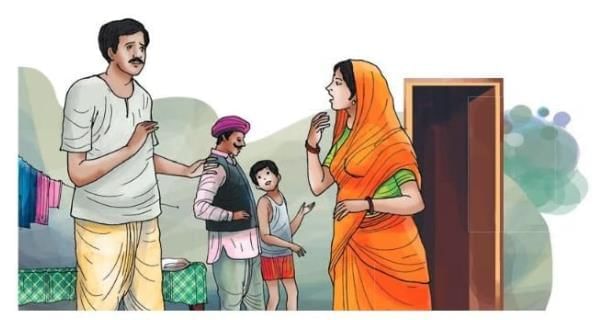
कहानी “नए मेहमान” मध्यवर्गीय परिवार की परेशानियों और मेहमाननवाजी की परंपरा को दर्शाती है। यह दिखाती है कि कैसे एक परिवार गर्मी और छोटे मकान की समस्याओं के बीच मेहमानों की खातिरदारी करता है। कहानी में सामाजिक दबाव और हास्य भी शामिल है।

प्रश्न 2: विश्वनाथ और रेवती गर्मी से क्यों परेशान हैं?
उत्तर:
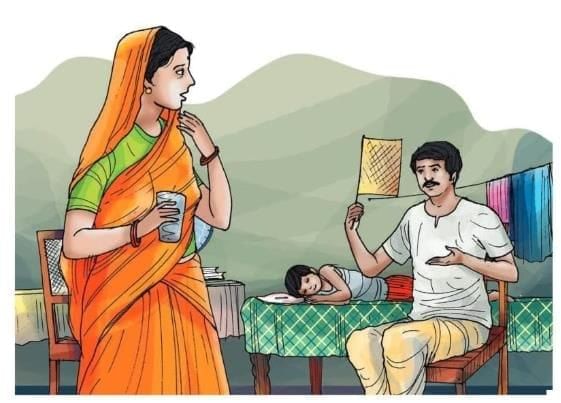
 विश्वनाथ और रेवती गर्मी से परेशान हैं क्योंकि उनका मकान छोटा और गर्म है। मकान में हवा नहीं आती, पानी गर्म है, और ठंडा पानी भी प्यास नहीं बुझाता। इससे उनकी मुश्किलें बढ़ जाती हैं।

प्रश्न 3: नन्हेमल और बाबूलाल कौन हैं?
उत्तर:
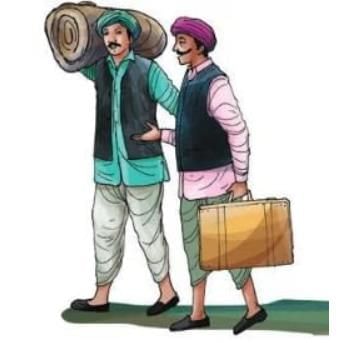
 नन्हेमल और बाबूलाल दो अनजान मेहमान हैं जो गलती से विश्वनाथ के घर आ जाते हैं। वे बिजनौर से आए हैं और कहते हैं कि वे संपतराम के रिश्तेदार हैं, लेकिन उनकी बातें अस्पष्ट हैं।


प्रश्न 4: कहानी में पड़ोसी का व्यवहार कैसा है?
उत्तर: 
पड़ोसी स्वार्थी और शिकायती है। वह विश्वनाथ के मेहमानों द्वारा छत पर गंदा पानी फैलाने की शिकायत करता है। वह दूसरों की मदद करने के बजाय नाराज़गी दिखाता है।

प्रश्न 5: रेवती का भाई कहानी में कैसे आता है?
उत्तर: 
रेवती का भाई कहानी के अंत में अचानक आता है। वह कहता है कि उसने तार भेजा था, लेकिन विश्वनाथ को तार नहीं मिला। वह गर्मी और मकान खोजने की परेशानी से थका हुआ है।

प्रश्न 6: विश्वनाथ मेहमानों की खातिरदारी क्यों करता है?
उत्तर: 
विश्वनाथ भारतीय मेहमाननवाजी की परंपरा के कारण मेहमानों की खातिरदारी करता है। भले ही वह और रेवती परेशान हों, वे मेहमानों को भूखा नहीं रखना चाहते। यह उनकी सामाजिक जिम्मेदारी दिखाता है।


प्रश्न 7: कहानी में हास्य का पुट कैसे आता है?
उत्तर: 
कहानी में हास्य नन्हेमल और बाबूलाल की अस्पष्ट बातों और गलत मकान में आने से पैदा होता है। उनकी गलतफहमी और विश्वनाथ की परेशानी हास्य की स्थिति बनाती है।

प्रश्न 8: विश्वनाथ को नया मकान क्यों नहीं मिल पाता?
उत्तर: 
विश्वनाथ दो साल से बेहतर मकान ढूँढ़ रहा है, लेकिन उसे कोई अच्छा मकान नहीं मिलता। इसका कारण आर्थिक तंगी और शहर में अच्छे मकानों की कमी है।

प्रश्न 9: कहानी में बच्चों की क्या भूमिका है?
उत्तर: 
विश्वनाथ के बच्चे, प्रमोद और किरण, छोटे-मोटे कामों में मदद करते हैं। प्रमोद मेहमानों को रास्ता दिखाता है, और किरण पंखा चलाने जैसे काम करती है।

प्रश्न 10: कहानी में मेहमाननवाजी की परंपरा कैसे दिखाई गई है?
उत्तर: 
कहानी में मेहमाननवाजी की परंपरा विश्वनाथ और रेवती के व्यवहार से दिखाई गई है। वे अनजान मेहमानों और रेवती के भाई की खातिरदारी करते हैं, भले ही उनकी अपनी परेशानियाँ हों।

दीर्घ उत्तरीय प्रश्नोत्तर (Long Answer Type Questions)

प्रश्न 1: कहानी “नए मेहमान” में मध्यवर्गीय जीवन की कठिनाइयों को कैसे दर्शाया गया है?
उत्तर: 
कहानी “नए मेहमान” में मध्यवर्गीय जीवन की कठिनाइयों को गर्मी, छोटे मकान, और आर्थिक तंगी के माध्यम से दिखाया गया है। विश्वनाथ और रेवती गर्मी और सिरदर्द से परेशान हैं, क्योंकि उनका मकान हवादार नहीं है और पानी गर्म है। वे नया मकान नहीं ढूँढ़ पाते, क्योंकि उनके पास पैसे कम हैं। मेहमानों के आने से उनकी परेशानियाँ और बढ़ जाती हैं, क्योंकि उनके पास नौकर नहीं है और खाना मँगाना महँगा है। फिर भी, वे मेहमानों की खातिरदारी करते हैं, जो उनके सामाजिक दबाव और जिम्मेदारी को दर्शाता है। यह सब मध्यवर्गीय जीवन की मुश्किलों को उजागर करता है।

प्रश्न 2: कहानी में मेहमाननवाजी की भारतीय परंपरा को कैसे प्रस्तुत किया गया है?
उत्तर: 
कहानी में मेहमाननवाजी की भारतीय परंपरा को विश्वनाथ और रेवती के व्यवहार से दिखाया गया है। जब अनजान मेहमान नन्हेमल और बाबूलाल आते हैं, तब विश्वनाथ और रेवती उनकी खातिरदारी करते हैं, भले ही वे गर्मी और सिरदर्द से परेशान हों। वे मेहमानों को ठंडा पानी, नहाने का इंतजाम, और खाना देने की कोशिश करते हैं। जब रेवती का भाई आता है, तब भी वे उसकी सेवा करते हैं। यह दिखाता है कि भारतीय संस्कृति में मेहमान को भगवान माना जाता है, और मध्यवर्गीय परिवार अपनी परेशानियों के बावजूद मेहमानों का सम्मान करता है।


प्रश्न 3: कहानी में गलतफहमी का तत्व कैसे हास्य पैदा करता है?
उत्तर: 
कहानी में गलतफहमी का तत्व नन्हेमल और बाबूलाल के गलत मकान में आने से पैदा होता है, जो हास्य की स्थिति बनाता है। वे अस्पष्ट बातें करते हैं, जैसे बिजनौर से होने और संपतराम या सेठ जगदीशप्रसाद के रिश्तेदार होने का दावा, लेकिन विश्वनाथ को कुछ याद नहीं आता। उनकी बार-बार बदलती कहानियाँ और गलत पते की बात हास्य उत्पन्न करती है। विश्वनाथ और रेवती की परेशानी, फिर भी मेहमानों की खातिरदारी करने की मजबूरी, हास्य को और बढ़ाती है। अंत में, जब पता चलता है कि वे कविराज रामलाल के यहाँ जा रहे थे, तो यह गलतफहमी और मज़ेदार बन जाती है।

प्रश्न 4: कहानी में पड़ोसियों के स्वार्थी व्यवहार को कैसे दर्शाया गया है?
उत्तर:
 कहानी में पड़ोसियों का स्वार्थी व्यवहार उनकी शिकायतों और मदद न करने से दिखाया गया है। रेवती बताती है कि पड़ोसियों ने अपनी छत पर बच्चों को सोने की जगह नहीं दी, क्योंकि वे स्वार्थी हैं। जब नन्हेमल और बाबूलाल गलती से छत पर गंदा पानी फैलाते हैं, तो पड़ोसी शिकायत करने आता है और विश्वनाथ को बार-बार मेहमानों के आने पर ताने देता है। यह व्यवहार दिखाता है कि शहरों में लोग अपने स्वार्थ को ज्यादा महत्व देते हैं और पड़ोसियों की मदद करने में रुचि नहीं लेते। यह मध्यवर्गीय परिवार की अकेलेपन और सामाजिक दूरी को भी उजागर करता है।

प्रश्न 5: कहानी “नए मेहमान” हमें जीवन के लिए क्या सीख देती है?
उत्तर: 
कहानी “नए मेहमान” हमें धैर्य, संयम, और मेहमाननवाजी की सीख देती है। यह दिखाती है कि मध्यवर्गीय परिवार अपनी परेशानियों जैसे गर्मी, छोटे मकान, और आर्थिक तंगी के बावजूद मेहमानों का सम्मान करता है। अनजान मेहमानों और गलतफहमियों से निपटने में विश्वनाथ और रेवती धैर्य और समझदारी दिखाते हैं। कहानी हमें सिखाती है कि मुश्किल परिस्थितियों में भी हँसी-मज़ाक और आपसी सहयोग से समस्याओं का सामना करना चाहिए। साथ ही, यह भारतीय मेहमाननवाजी की परंपरा का महत्व बताती है, जहाँ मेहमान को भगवान माना जाता है।