उत्तरम् : “सङ्गच्छध्वं संवदध्वम्” इत्यस्य अभिप्रायः अस्ति यः मानवः समाजे ऐक्यभावेन मिलित्वा गच्छेत् तथा परस्परं सम्यक् विचारविनिमयं कुर्यात्। (“संगच्छध्वं संवदध्वम्” का अर्थ है कि सभी मनुष्य समाज में एकता के साथ मिलकर चलें और परस्पर अच्छे विचारों का आदान-प्रदान करें।)
(ग) सर्वे किं परित्यज्य ऐक्यभावेन जीवेयुः? (सभी लोग किसे त्यागकर एकता के भाव से जिएँ?)
उत्तरम् : सर्वे वैमनस्यं परित्यज्य ऐक्यभावेन जीवेयुः। (सभी लोग वैर-भाव को त्यागकर एकता के भाव से जीवन व्यतीत करें।)
(घ) अस्मिन् पाठे का प्रेरणा अस्ति? (इस पाठ में क्या प्रेरणा दी गई है?)
उत्तरम् : अस्मिन् पाठे मानवजातेः ऐक्यभावेन सहकार्यं कृत्वा सुखपूर्वकं जीवनं यापनस्य प्रेरणा अस्ति। (इस पाठ में मानव समाज को एकता के साथ मिलकर कार्य करते हुए सुखपूर्वक जीवन जीने की प्रेरणा दी गई है।)
३. रेखाङ्कितपदानि आधृत्य प्रश्ननिर्माणं कुरुत
(क) परमेश्वरः सर्वत्र व्याप्तः अस्ति। (परमेश्वर सर्वत्र व्याप्त है।)
उत्तरम्: कः सर्वत्र व्याप्तः अस्ति? (कौन सर्वत्र व्याप्त है?)
(ख) वयम् ईश्वरं नमामः। (हम ईश्वर को नमस्कार करते हैं।)
उत्तरम्: वयं कं नमामः? (हम किसे नमस्कार करते हैं?)
(ग) वयम् ऐक्यभावेन जीवामः। (हम एकता के भाव से जीते हैं।)
उत्तरम्: वयं कथं जीवामः? (हम कैसे जीते हैं?)
(घ) ईश्वरस्य प्रार्थनया शान्तिः प्राप्यते। (ईश्वर की प्रार्थना से शांति प्राप्त होती है।)
उत्तरम्: कस्य प्रार्थनया शान्तिः प्राप्यते? (किसकी प्रार्थना से शांति प्राप्त होती है?)
(ङ) अहं समाजाय श्रमं करोमि। (मैं समाज के लिए श्रम करता हूँ।)
उत्तरम्: कस्मै अहं श्रमं करोमि? (मैं किसके लिए श्रम करता हूँ?)
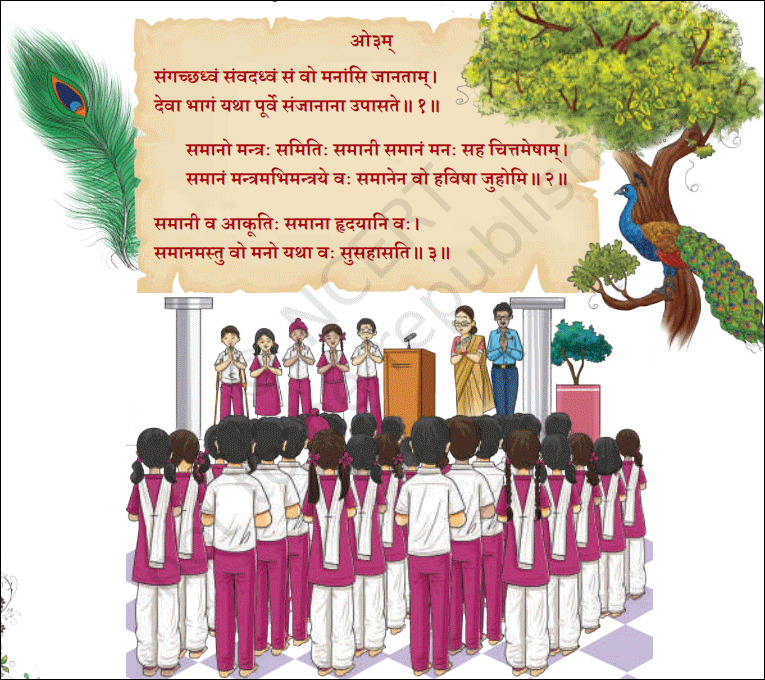
एक साथ चलो, एक स्वर में बोलो, तुम्हारे मन एक-दूसरे को जानें। जैसे प्राचीन काल में देवता अपने-अपने भाग को स्वीकार करके समन्वय के साथ कर्तव्यों का पालन करते थे।
इनका विचार समान हो, लक्ष्य की प्राप्ति समान हो, इनका मन सौहार्दपूर्ण हो, और इनका चित्त एक हो। मैं तुम्हारे सामूहिक विचार को संस्कारित करके प्रचारित करता हूँ और तुम्हारी सामूहिक प्रार्थना से ज्ञान-यज्ञ को सिद्ध करता हूँ।
(ङ) कपोतराजस्य नाम किम्? (कबूतरों के राजा का नाम क्या है?)
उत्तरम्: चित्रग्रीवः। (चित्रग्रीव)
(च) व्याधः कान् विकीर्य जालं प्रसारितवान्? (शिकारी ने किस पर जाल फैलाया?)
उत्तरम्: कपोतान्। (कबूतरों पर)
(छ) विपत्काले विस्मयः कस्य लक्षणम्? (विपत्ति के समय चकित हो जाना किसका लक्षण है?)
उत्तरम्: मूर्खस्य। (मूर्ख का)
(ज) चित्रग्रीवस्य मित्रं हिरण्यकः कुत्र निवसति? (चित्रग्रीव का मित्र हिरण्यक कहाँ रहता है?)
उत्तरम्: वने। (जंगल में)
(झ) चित्रग्रीवः हिरण्यकं कथं सम्बोधयति? (चित्रग्रीव हिरण्यक को किस तरह संबोधित करता है?)
उत्तरम्: प्रियसख। (प्रिय मित्र)
(ञ) पूर्वं केषां पाशान् छिनत्तु इति चित्रग्रीवः वदति? (चित्रग्रीव सबसे पहले किनके बंधन काटने को कहता है?)
उत्तरम्: शिशूनाम्। (बच्चों के)
२. पूर्णवाक्येन उत्तरं लिखत –
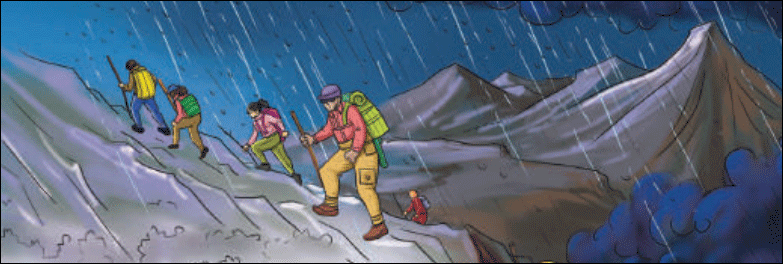
(क) प्रश्न: यदा केदारक्षेत्रम् आरोहन्तः आसन् किम् अभवत्? हिंदी अनुवाद: जब वे लोग केदार क्षेत्र की ओर चढ़ रहे थे, तब क्या हुआ था?
उत्तरम्: यदा ते केदारक्षेत्रम् आरोहन्तः आसन्, तदा पर्वतेषु हिमवृष्टिः अभवत्। हिंदी अनुवाद: जब वे लोग केदार क्षेत्र की ओर चढ़ रहे थे, तब पर्वतों पर बर्फ़ गिरने लगी थी।
(ख) प्रश्न: सर्वे उच्चस्वरेण किं प्रार्थयन्त? हिंदी अनुवाद: सभी लोग ऊँचे स्वर में क्या प्रार्थना कर रहे थे?
उत्तरम्: सर्वे जनाः उच्चस्वरेण “ईश्वरः रक्षतु” इति प्रार्थयन्त। हिंदी अनुवाद: सभी लोग ऊँचे स्वर में “ईश्वर रक्षा करें” ऐसा प्रार्थना कर रहे थे।
(ग) प्रश्न: असम्भवं कार्यं कथं कर्तुं शक्यते इति नायकः उक्तवान्? हिंदी अनुवाद: असंभव कार्य को कैसे किया जा सकता है — ऐसा नायक ने क्या कहा?
उत्तरम्: नायकः उक्तवान् – “यत्र इच्छा तत्र मार्गः”, इत्यनेन असम्भव कार्यं अपि सम्भवम् भवति। हिंदी अनुवाद:नायक ने कहा – “जहाँ इच्छा है, वहाँ रास्ता है”, जिससे असंभव कार्य भी संभव हो सकता है।
(घ) प्रश्न: निर्जने वने तण्डुलकणान् दृष्ट्वा चित्रग्रीवः किं निरूपयति? हिंदी अनुवाद: निर्जन वन में चावल के दानों को देखकर चित्रग्रीव क्या बताता है?
उत्तरम्: चित्रग्रीवः निर्जने वने तण्डुलकणान् दृष्ट्वा तान् जालस्य संकेतः इति निरूपयति। हिंदी अनुवाद: चित्रग्रीव चावल के दानों को देखकर उन्हें जाल का संकेत बताता है।
(ङ) प्रश्न: किं नीतिवचनं प्रसिद्धम्? हिंदी अनुवाद: कौन-सा नीतिवचन प्रसिद्ध है?
उत्तरम्: “विपत्तौ विवेकः आवश्यकः” इति नीतिवचनं प्रसिद्धम्। हिंदी अनुवाद: “विपत्ति के समय विवेक आवश्यक होता है” यह नीति-वचन प्रसिद्ध है।
(च) प्रश्न: व्याधात् रक्षां प्राप्तुं चित्रग्रीवः कम् आदेशं दत्तवान्? हिंदी अनुवाद: शिकारी से बचने के लिए चित्रग्रीव ने किसे आदेश दिया?
उत्तरम्: चित्रग्रीवः हिरण्यकं आदेशं दत्तवान् यत् सः व्याधस्य जालं छिन्तु। हिंदी अनुवाद: चित्रग्रीव ने हिरण्यक को यह आदेश दिया कि वह शिकारी के जाल को काटे।
उत्तरम्: हिरण्यकः दुःखितं मित्रं दृष्ट्वा करुणया तूष्णीं स्थितः। हिंदी अनुवाद: हिरण्यक अपने दुःखी मित्र को देखकर करुणा से चुपचाप खड़ा रहा।
(ज) प्रश्न: पुलकितः हिरण्यकः चित्रग्रीवं कथं प्रशंसति? हिंदी अनुवाद: पुलकित हिरण्यक चित्रग्रीव की कैसे प्रशंसा करता है?
उत्तरम्: पुलकितः हिरण्यकः चित्रग्रीवं साहसी, धैर्यशीलः इति प्रशंसति। हिंदी अनुवाद: पुलकित होकर हिरण्यक चित्रग्रीव को साहसी और धैर्यवान कहकर उसकी प्रशंसा करता है।
(झ) प्रश्न: कपोताः कथं आत्मरक्षणं कृतवन्तः? हिंदी अनुवाद: कबूतरों ने आत्मरक्षा कैसे की?
उत्तरम्: कपोताः एकत्र मिलित्वा समवेतबलस्य उपयोगेन आत्मरक्षणं कृतवन्तः। हिंदी अनुवाद: कबूतरों ने मिलकर, सामूहिक बल का उपयोग करके आत्मरक्षा की।
(ञ) प्रश्न: नायकस्य प्रेरकवचनैः सर्वेऽपि किम् अकुर्वन्? हिंदी अनुवाद: नायक के प्रेरक वचनों से सभी ने क्या किया?
उत्तरम्: नायकस्य प्रेरकवचनैः प्रेरिताः सर्वेऽपि कठिन कार्ये अपि साहसं कृतवन्तः। हिंदी अनुवाद: नायक के प्रेरणादायक वचनों से सभी ने कठिन कार्य में भी साहस किया।
३. अधोलिखितानिवाक्यानिपठित्वाल्यप्प्रत्ययान्तेषुपरिवर्तयत –
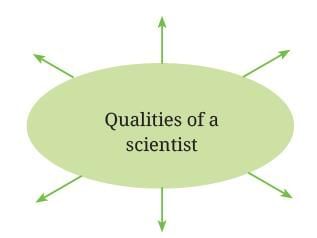
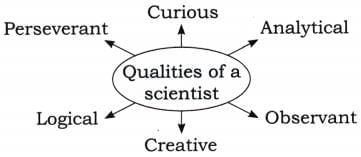
I. Work in pairs. What qualities do you associate with a scientist? Share your answers with your classmates and teacher. Complete the word web given below. Ans: Some qualities associated with a scientist may include:
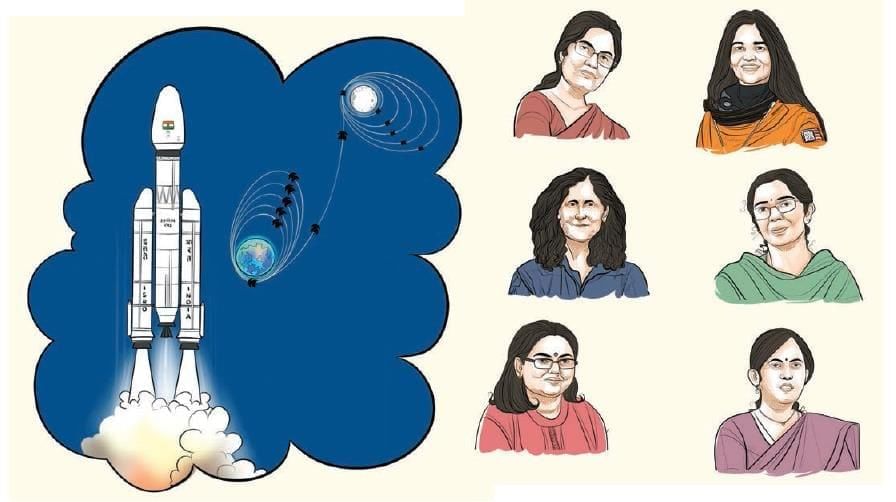
II. Some pictures of women scientists are given below. What do you know about their work? Share your answers with your classmates and teacher. Ans: 1. Kalpana Chawla – The first woman of Indian origin to go to space. She was an astronaut with NASA and died in the Space Shuttle Columbia disaster in 2003. 2. Dr. Tessy Thomas – Known as the “Missile Woman of India,” she played a key role in the Agni missile project at DRDO. 3. Dr. Ritu Karidhal – Known as the “Rocket Woman of India,” she was Deputy Operations Director of ISRO’s Mars Orbiter Mission and led Chandrayaan-2. 4. Dr. Indira Hinduja – A pioneer in reproductive medicine in India, she delivered the country’s first test-tube baby.
Page No. 237-244
Let us think and reflect
I. Arrange the following events from Bibha Chowdhuri’s life in the correct order of occurrence. Share your answers with your classmates and teacher. 1. The International Astronomical Union (IAU) honoured her legacy by renaming a star in the constellation Leo—HD 86081—as ‘Bibha’. 2. She became the first woman faculty member at the Tata Institute of Fundamental Research (TIFR). 3. Bibha Chowdhuri was born in pre-independent India. 4. The Government of India declared a chair professorship in Bibha’s name. 5. She joined the University of Manchester under the guidance of the celebrated Nobel Laureate, Patrick M.S. Blackett. 6. She was nominated for a Nobel Prize by Erwin Schrodinger. Ans: 3 → 5 → 6 → 2 → 1 → 4
Let us think and reflect
I. Read the given extracts and answer the questions that follow. 1. In 1945, Bibha’s academic journey took her to the University of Manchester. Under the guidance of the celebrated Nobel Laureate, Patrick M.S. Blackett, she delved deeper into the field of cosmic rays. Her Ph.D. thesis on cosmic rays earned local recognition, with newspapers introducing her as ‘India’s New Woman Scientist—She has an eye for Cosmic Rays’.
(i) Why is the mention of Patrick M.S. Blackett, a Nobel Laureate, significant in this extract? Ans: The mention of Patrick M.S. Blackett is significant because it shows that Bibha was working under one of the most respected and renowned scientists of the time, highlighting the calibre of her research and the respect she had earned in the field of physics.
(ii) What can be inferred about the public perception of women scientists in the 1940s from the title given to her by the press ‘India’s New Woman Scientist’? A. Women scientists were widely accepted and celebrated at that time. B. The world was still doubtful about the capabilities of women scientists. C. Women scientists were as common and renowned as men in the 1940s. D. Women were not allowed to study sciences or pursue scientific careers. Ans: (B) The world was still doubtful about the capabilities of women scientists.
(iii) In the phrase ‘celebrated Nobel Laureate,’ the word ‘celebrated’ refers to all of the following EXCEPT someone who is A. famous and highly respected B. frequently seen in public C. renowned for their achievements D. well-regarded in their field Ans: (B) frequently seen in public
(iv) Complete the following sentence suitably. The phrase ‘She has an eye for Cosmic Rays’ suggests that ____________ Ans: The phrase ‘She has an eye for Cosmic Rays’ suggests that she had a deep understanding and insight into the study of cosmic rays.
2. The journey from Bibha Chowdhuri’s era to today’s women scientists has been long and arduous, but it is also inspiring. The struggles Chowdhuri faced are a stark reminder of how far we’ve come—and how much Jiirther we have to go. But with every cosmic achievement— be it landing on the moon or reaching Mars—these women prove that the journey is well worth it. Bibha Chowdhuri’s legacy lives on. Her story continues to inspire young women to pursue their passions, break barriers, and leave their mark on the world. As the stars of Indian science shine brighter, Bibha Chowdhuri, the beacon-beam of light, ’ will always guide the way. (i) What can be inferred about the challenges faced by women scientists today, as compared to Bibha Chowdhuri’s era? A. Women scientists no longer face any barriers. B. The challenges remain, but progress has been made. C. The struggles have become more difficult over time. D. The struggles are the same as they were for Chowdhuri. Ans: (B) The challenges remain, but progress has been made.
(ii) The phrase ‘Bibha Chowdhuri’s legacy lives on’ suggests that ____________ Ans: The phrase ‘Bibha Chowdhuri’s legacy lives on’ suggests that her contributions continue to inspire and influence future generations.
(iii) Why is Bibha Chowdhuri referred to as a “beacon’ and a “beam of light’ in the extract? Ans: Because she led the way for women in science through her courage, dedication, and pioneering work, giving hope and inspiration to others.
(iv) State whether the following sentence is a fact or an opinion. Bibha Chowdhuri was the beacon, the ‘beam of light’ whose story continues to inspire young women. Ans: Opinion – It reflects the writer’s admiration and interpretation of her legacy.
II. Answer the following questions.
Q1: Why is Bibha Chowdhuri considered a pioneer in the field of science? Ans: Bibha Chowdhuri is considered a pioneer because she was the first Indian woman physicist to work in the highly specialized field of high-energy particle physics. She broke gender barriers, conducted crucial research on cosmic rays and subatomic particles, and paved the way for future women in Indian science.
Q2: What does Bibha Chowdhuri’s nomination by Erwin Schrodinger tell us about her abilities? Ans: It shows that Bibha Chowdhuri’s scientific work was of exceptional quality and internationally recognized. Being nominated for a Nobel Prize by a renowned scientist like Erwin Schrodinger indicates her outstanding contributions and talent.
Q3: Bibha Chowdhuri never worked for awards or recognition. Support this statement with evidence from the text. Ans: Despite her groundbreaking work, Bibha Chowdhuri never received any awards during her lifetime. She continued her research tirelessly, often working in the background, focusing on her passion for science rather than seeking fame or recognition.
Q4: How does the renaming of a star as ‘Bibha’ serve as both a literal and symbolic recognition of her contributions to science? Ans: Literally, it immortalizes her name in the cosmos, while symbolically, it reflects the “beam of light” she represented in science—illuminating the path for future generations and acknowledging her once-forgotten brilliance.
Q5: How do the roles of women in ISRO today reflect broader changes in societal attitudes towards women in STEM in India? Ans: Women in ISRO today hold leadership roles in major space missions, showing that societal attitudes have shifted to recognize and support women’s capabilities in science and technology. This progress is rooted in the pioneering efforts of women like Bibha Chowdhuri.
Q6: What is the writer’s purpose of highlighting the contributions of Bibha Chowdhuri and other modern women scientists? Ans: The writer aims to inspire readers, especially young girls, by showcasing how women have overcome challenges to excel in science. It also seeks to acknowledge unsung heroes and promote gender equality in STEM fields.
Q7. How might this text help shape people’s perception of the role of women in other traditionally male-dominated fields? Ans: This text challenges stereotypes and encourages society to view women as equally capable in all fields, including those traditionally dominated by men. It motivates individuals to support and recognize women’s contributions across professions.
Let us learn
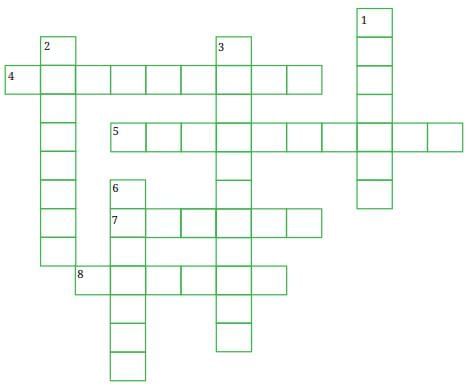
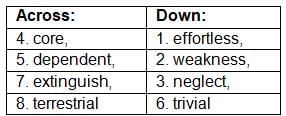
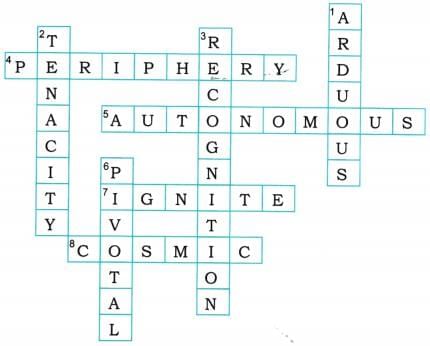
I. Complete the crossword puzzle by filling in the antonyms from the clues given below in the table. You may refer to the text.
Ans:
II. Substitute the underlined phrase in the sentences with the suitable words from the box given below. 1. They are considered to be the first people to start the online markets. 2. A scientist who studies matter, energy, light, etc. 3. Most of my friends are my classmates and are my age. 4. We first welcomed all the famous and important people in folk song for the award ceremony. 5. My brother finally succeeded in his business because of his continuous efforts and determination. 6. We should remove all the things that block our way in achieving success Ans: 1. Pioneers 2. Physicist 3. Peers 4. Luminaries 5. Persistence 6. Barriers
III. The words ‘professorship’, ‘mentorship’, and ‘leadership’ are used in the text. These words are made by adding the suffix ‘-ship’ to the words ‘professor’, ‘mentor’ and ‘leader’. Similarly, we can make words by adding -ment and -hood to certain words. Now, make words by adding suitable suffixes -ship, -ment, and -hood to the words given below. One example has been done for you. achieve + ment = achievement 1. member + _______________ = _________________ 2. govern + _______________ = _________________ 3. partner + _______________ = _________________ 4. child + _______________ = _________________ 5. citizen + _______________ = _________________ 6. entertain + _______________ = _________________ 7. brother + _______________ = _________________ 8. agree + _______________ = _________________ Ans: 1. member + ship = membership 2. govern + ment = government 3. partner + ship = partnership 4. child + hood = childhood 5. citizen + ship = citizenship 6. entertain + ment = entertainment 7. brother + hood = brotherhood 8. agree + ment = agreement
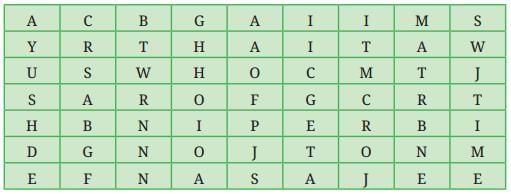
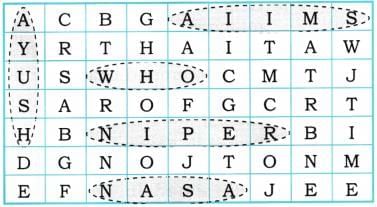
IV. The abbreviations—ISRO and STEM— used in the text are called acronyms because they are read or pronounced as full words. The grid given below has acronyms for the following. Circle the acronyms in the grid. 1. National Aeronautics and Space Administration 2. All India Institute of Medical Sciences 3. Ayurveda, Yoga and Naturopathy, Unani, Siddha, and Homoeopathy 4. National Institute of Pharmaceutical Education and Research 5. World Health Organization
Clipping The short form of laboratory is lab. In making this short form, the front part of the word is retained and the end part is removed or clipped. Clipping is a method of making words from larger words in English. There are three clipping methods. 1. Back clipping: a word is made by removing the end part of a word and retaining the front part (exam—examination, ad—advertisement, gas—gasoline, memo—memorandum, gym—gymnasium, photo—photograph, etc.). 2. Front clipping: a word is made by removing the front part of a word and retaining the end part (phone—telephone,net—internet, bike—motorbike, net—internet, etc.). 3. Middle clipping: a word is made by removing the front and the end parts of the word and retaining the middle part (flu—influenza, fridge—refrigerator, etc.). Ans:
V. Read the following sentence from the text and the table that follows. …, the foundation was laid by early pioneers like Bibha Chowdhuri… Here the verb is expressed in passive form. Verbs can be expressed in either active voice or passive voice.
When the subject performs the action, the sentence is said to be in active voice. On the other hand, when the subject receives the action, the sentence is in passive voice.
Generally, sentences written in active voice are considered effective. However, passive voice is used when the
action is more important than the doer, A cure for the disease was discovered. (The focus is on the discovery, not on who discovered it.)
doer of the action (agent) is obvious, The national anthem is sung at the beginning of the event. (It is clear that people sing it, so mentioning the doer is unnecessary.)
doer of the action is unknown. The car was stolen last night. (The identity of the thief is unknown.)
Now, complete the following news report with the passive form of verbs given in the box below. (Remember that the verb must agree with the subject.) Last year, significant advancements in medical science 1. __________ in leading medical journals when a new vaccine for malaria 2. __________. The vaccine 3. __________ through several clinical trials and results 4. _________ in those journals. During the trials, blood samples 5. __________ regularly from participants to monitor their immune response. The amount of antibodies produced 6. __________ carefully to assess the effectiveness of the vaccine. Ans: 1. were published 2. was discovered 3. was tested 4. were recorded 5. were taken 6. was measured
VI. Read the following report of an experi¬ment. Rewrite the report using passive verbs wherever necessary. I conducted an experiment to investigate the effects of light on plant growth. I placed various plants under different light conditions and measured their growth over several weeks. I recorded data daily to track the height of each plant. At the end of the experiment, I analysed the results and found that plants exposed to natural light grew significantly taller than those under artificial light. I concluded that sunlight plays a crucial role in plant development. I presented my findings to the class, highlighting the importance of light in enhancing photosynthesis and overall plant health. You may begin like this. An experiment was conducted… Ans: An experiment was conducted by me to investigate the effects of light on plant growth. Various plants were placed by me under different light conditions and their growth was measured over several weeks. Data was recorded daily by me to track the height of each plant. At the end of the experiment, the results were analysed by me and it was found that plants exposed to natural light grew significantly taller than those under artificial light. It was concluded by me that sunlight plays a crucial role in plant development. The findings were presented by me to the class, highlighting the importance of light in enhancing photosynthesis and overall plant health.
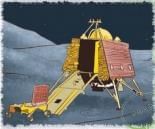
VII. Read the instructions given in the box on landing of Chandrayaan. Complete the passage by choosing the correct answer from the options given. Launch the spacecraft towards the Moon from Earth.
Position the spacecraft to enter the Moon’s orbit.
Adjust the spacecraft’s path for landing.
Slow down the spacecraft as it nears the Moon’s surface.
Release the rover to explore the surface and collect valuable data
Chandrayaan’s landing mission involves several key steps. First, the spacecraft 1.________ towards the Moon from the Earth. Then, it 2. ________ to enter the Moon’s orbit. After reaching the Moon’s orbit, the spacecraft’s path 3. ________ for landing. Next, the spacecraft 4. ________ as it nears the Moon’s surface. Finally, the rover 5.________ to explore the surface and collect valuable data. (i) A. launched B. were launched C. was launched D. is launched Ans: (C) was launched
(ii) A. position B. was positioned C. is positioned D. has positioned Ans: (B) was positioned
(iii) A. adjusted B. was adjusted C. is adjusted D. were adjusted Ans: (B) was adjusted
(iv) A. slowed down B. was slowed down C. is slowed down D. were slowed down Ans: (B) was slowed down
(v) A. is released B. has released C. were released D. was released Ans: (D) was released
Let us listen
I. You will listen to a podcast about Artificial Intelligence. As you listen, answer the following questions by selecting the correct options. Refer to the NCERT Textbook Page 251 for transcript. 1. What is one of the key benefits of AI in the healthcare sector? (i) Helps doctors communicate faster with patients. (ii) Provides personalised treatments and faster diagnoses. (iii) Focuses on cosmetic surgeries to improve appearance. Ans: (ii) Provides personalised treatments and faster diagnoses.
2. How did AI play a crucial role during the global pandemic? (i) AI robots monitored patient behaviour in hospitals. (ii) AI assisted in speeding up the discovery of new medicines. (iii) AI developed different types of vaccines by itself. Ans: (ii) AI assisted in speeding up the discovery of new medicines.
3. What example was given regarding AI’s role in renewable energy? (i) AI is optimising the placement of wind turbines and solar panels in cities. (ii) AI is promoting alternative energy from wind turbines and solar panels. (iii) AI is improving the performance of wind turbines and solar panels. Ans: (iii) AI is improving the performance of wind turbines and solar panels.
4. What does AI offer to teachers in the field of education? (i) Helps teachers assign grades more quickly. (ii) Allows teachers to communicate better with students. (iii) Helps teachers analyse student performance. Ans: (iii) Helps teachers analyse student performance.
5. What is one of the user-friendly features that AI is enhancing for people with disabilities? (i) Helps them find better jobs in the mainstream. (ii) Improves speech recognition and voice command technologies. (iii) Trains individuals to interact with robots. Ans: (ii) Improves speech recognition and voice command technologies.
Page No. 245-246
Let us speak
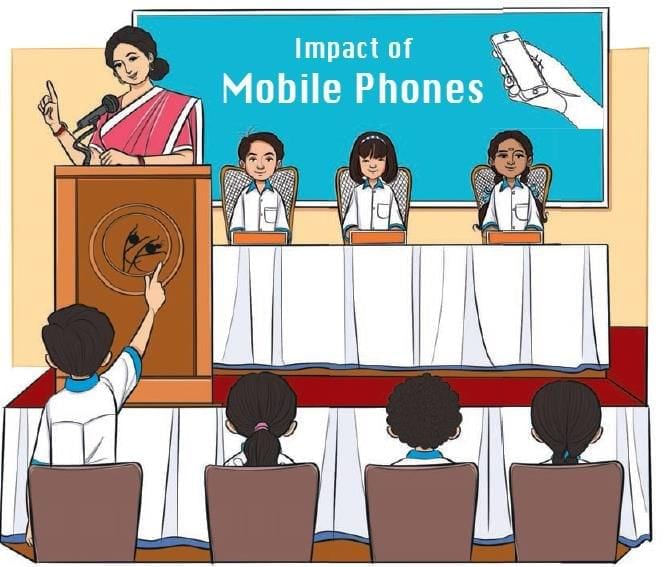
I. Form a group of five. Conduct a panel discussion on the topic, ‘Evaluating the Impact of Mobile Phones—Beneficial or Harmful’. Each student will take on one of the following roles.
Moderator (initiates and directs the flow of the discussion inviting the speakers to share their views on the subject; at the end sums up the points of discussion and thanks the members of the group)
Principal (opposed to—focus on discipline in school)
Teacher (in favour of—partially in favour, educational use with limitations)
Parent (opposed to—concerned about health and social effects on children)
Student (in favour of—highlighting the benefits like connectivity and learning)
You may use the cues given below and add your own ideas when speaking.
Principal: As a Principal, I strongly believe mobile phones are largely disruptive because… Teacher: From an educator’s perspective, I think mobile phones can be valuable but… Parent: As a parent, I’m concerned that mobile phones pose certain risks to children’s health and social development… Student: As a student, I feel mobile phones are essential because… Ans: 1. Moderator: Good morning everyone. Welcome to today’s panel discussion on the topic “Evaluating the Impact of Mobile Phones—Beneficial or Harmful.” We have with us a Principal, a Teacher, a Parent, and a Student who will share their perspectives. Let’s begin with the Principal.
2. Principal (Opposed to mobile phones): As a Principal, I strongly believe mobile phones are largely disruptive in schools. They distract students, reduce focus in classrooms, and affect discipline. I have seen students misuse phones for games and social media. In my opinion, mobile phones should be banned in school premises.
3. Teacher (Partially in favour): From an educator’s perspective, I see both sides. Mobile phones can be useful for educational apps, online research, and quick communication. However, students must be taught to use them responsibly. I support their use only under supervision and within limits.
4. Parent (Opposed to mobile phones): As a parent, I am concerned about the health and social impact of mobile phones. Children spend too much time on screens, leading to eye strain, lack of physical activity, and reduced real- world interaction. It’s becoming harder to engage them in healthy habits.
5. Student (In favour of mobile phones): As a student, I feel mobile phones are essential tools for learning and staying connected. We use them for online classes, accessing study material, and even solving doubts through educational platforms. They also help us stay in touch with family and friends. We just need to use them wisely. Moderator (Conclusion): Thank you all for your valuable insights. From today’s discussion, we see that mobile phones can be both beneficial and harmful, depending on how they are used. Responsible use, clear guidelines, and awareness can help us make the best of this technology while avoiding its drawbacks. Thank you for being part of this meaningful discussion!
Let us write
I. Your school recently hosted the Zonal Science Exhibition, in which teams of students from 25 schools participated enthusiastically. As the student editor, write a report on the exhibition to be published in your school magazine. Use the cues given below with your own ideas to compose this report.
Who was the organiser and who hosted the exhibition?
When (date and time) and where was it held?
Why was it held?
Who participated?
Who was the Chief Guest?
What were the competitions held? For example: Science Quiz, Science Models, etc.
What were the topics of models exhibited? Give details.
Which team got the trophy for best exhibit?
What were the observations of the Chief Guest and other visitors?
Points to remember: 1. Write the report in past tense, passive voice, and third person. 2. Follow proper format with a headline, reporter’s name, and three paragraphs. Ans: Young Innovators Shine at the Zonal Science Exhibition By: Aarav Mehta, Student Editor The Zonal Science Exhibition 2025 was successfully hosted by Green Valley Public School on 10th August 2025 in the school auditorium. The event was organised under the guidance of the Science Department in collaboration with the District Education Office. The purpose of the exhibition was to promote scientific curiosity, creativity, and innovation among school students. Participation and Events a total of 25 schools from across the zone participated with great enthusiasm. The Chief Guest, Dr. Anjali Rao, a renowned scientist from the Indian Institute of Science, inaugurated the event. The exhibition featured various competitions such as the Science Quiz, Model Display, and Poster Making Contest.
Students presented models on topics like Renewable Energy, Space Technology, Water Conservation, and Artificial Intelligence. Among all entries, the model titled “Smart Irrigation System” by Springdale Public School won the Best Exhibit Trophy for its innovation and practical application.
Observations and Conclusion The Chief Guest appreciated the creativity and scientific temperament displayed by the students. Visitors were impressed by the depth of research and presentation skills. The event successfully created awareness about science and motivated students to explore and innovate. The exhibition concluded with a vote of thanks by the school Principal and the distribution of certificates and mementos.
Page No. 247-248
Let us explore
I. In the recent times, Augmented Reality and Virtual Reality are changing the way students learn. Let us know more about them.
Augmented reality (AR) enhances a person’s environment by adding digital elements to what can be seen in real time, usually through a smartphone camera.
Virtual reality (VR) offers a fully immersive experience, replacing the real world with a simulated one.
Through AR and VR, the students can see and interact with things that they could not interact with in real life. This enables younger students to understand difficult ideas easily.
To keep up with the times, NCERT has developed the e-Pathshala AR (Augmented Reality) App under the aegis of MHRD, Government of India.
This App aims to enable students to go beyond textbooks and four walls of the classrooms and learn concepts by directly experimenting rather than only through reading and memorisation.
This revolutionary effort will change most students from passive listeners to active learners.
This effort is in line with the Prime Minister’s Digital India vision to empower varied sectors using technology and addressing the triple need of skill, scale, and speed.
Gear up for the new age education! https://ciet.ncert.gov.in/ar-vr
II. The Government of India has come out with a new set of National Awards in the field of Science, Technology, and Innovation known as ‘Rashtriya Vigyan Puraskar’. The objective of the Rashtriya Vigyan Puraskar (RVP) is to recognise the notable and inspiring contribution made by the scientists, technologists, and innovators individually or in teams in various fields of science, technology, and technology-led innovation. 1. Vigyan Ratna (VR) award will recognise lifetime achievements and contributions made in any field of science and technology. 2. Vigyan Shri (VS) award will recognise distinguished contributions in any field of science and technology. 3. Vigyan Yuva-Shanti Swarup Bhatnagar (VY-SSB) award will recognise and encourage young scientists up to the age of 45 years, who have made an exceptional contribution in any field of science and technology. 4. Vigyan Team (VT) award to be given to a team comprising three or more scientists/researchers/innovators, who have made an exceptional contribution working in a team in any field of science and technology. https://pib.gov.in/PressReleaseIframePage.aspx?PRID=1959262
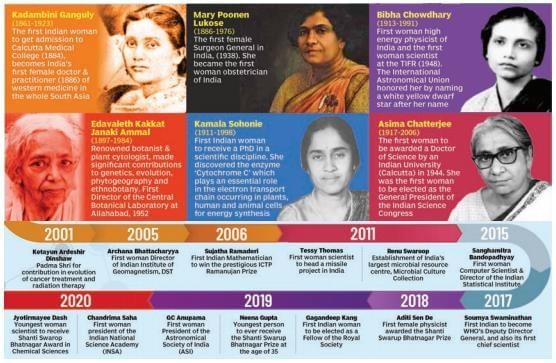
III. A glimpse of women pioneers from different fields. Source: https://www.indiascienceandtechnology.gov.in/sites/all/themes/ vigyan/images/Women’s_Scientist_Brochure_Low_Res.pdf
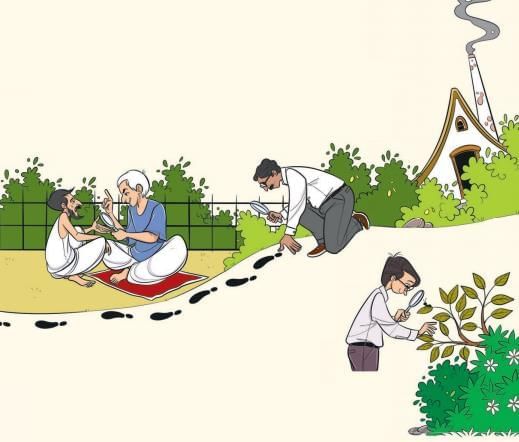
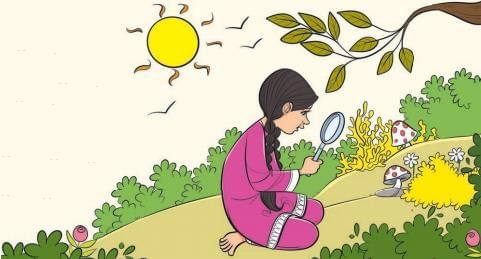
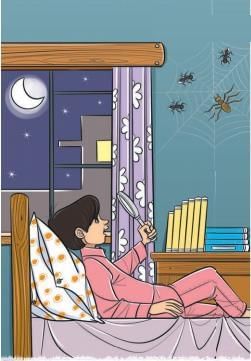
I. Work in pairs. Answer the questions that follow the pictures given below. Share your answers with your classmates and teacher. Q1: What is common in all these pictures? Ans: All the pictures show people using a magnifying glass to observe small or tiny objects in detail.
Q2: Select the pictures you are familiar with. Ans: (Answers may vary) Do it yourself.
Q3: Why do you think the people in the pictures need to use a magnifying glass? Ans: The people use a magnifying glass to see small details more clearly, such as the structure of insects, leaves, or patterns that are not visible to the naked eye.
Q4: What other instruments magnify objects? Ans: Other instruments that magnify objects include microscopes, telescopes, binoculars, hand-held magnifiers, and magnifying spectacles.
II. If you have a magnifying glass, what would you like to use it for and why? Share your answers with your classmates and teacher. Ans: If I had a magnifying glass, I would use it to observe leaves, insects, and tiny patterns on stones or shells. It would help me see things in nature more clearly and understand how beautiful and complex even the smallest things can be.
Page No. 223-226
Let us discuss
I. Complete the summary of the poem given below with suitable words from the poem. The poem describes the magic of seeing the world through a 1. __________. It reveals how tiny things like 2. __________ and 3. __________ can appear vast and complex. Even a 4. __________ of water can seem like a hive of 5. __________. The poet is impressed at how the spider spins its 6. __________ from its 7. __________. The poem ends with the idea that, through lenses, the 8. __________ could seem within reach. Ans: 1. magnifying glass 2. moss 3. chalk 4. drop 5. bees 6. web 7. spinnerets 8. moon
II. Fill in the blanks by choosing the correct answer from the brackets. 1. The main idea of the poem is the transformative power of __________ (wonders in nature/close observation) through the magnifying glass. 2. The tone of the poem is __________ . (wonder and curiosity/peaceful and emotional) 3. The poem has __________ stanzas with __________ lines in each stanza. Hence, it is a quatrain. (four; six/six; four) 4. The rhyme scheme of the poem is __________. (ABCD; ABCB) Ans: 1. close observation 2. wonder and curiosity 3. six /four 4. ABCB
III. Pick examples from the poem for the following poetic devices. 1. Simile 2. Alliteration 3. Metaphor Ans: 1. Simile:
A drop of water/Like hive of bees
Yes, and with lenses like it
2. Alliteration: Shells show, forest-flowers, wait and watch, woven web-silk, make more marvellous
3. Metaphor:
“Magic talk” (the magnifying glass is not literally talking)
The whole poem is metaphorical in how it compares ordinary things to magical wonders.
IV. The poem is rich in visual imagery, painting vivid pictures of small, everyday things magnified into something grand. 1. In the line, ‘A myriad shells show in a scrap of chalk’, the magnifying glass reveals ______________________. 2. In the line, ‘A forest—flowers and trees’ the poet uses the imagery of nature to emphasise ______________________. Ans: 1. the hidden patterns or fossil-like structures in something as simple as chalk. 2. how a tiny patch of moss can look like an entire forest under magnification.
V. Complete the following sentences with a reason. 1. The poet uses exclamation marks in lines, ‘The tigerish claws he has!’, ‘With all those eyes!’ and ‘In an afternoon!’ because it ______________________. 2. In the phrase, ‘Magic talk’ the poet uses personification to describe the magnifying glass because it ______________________. 3. Each stanza follows a repetitive pattern of introducing a small or ordinary object and then describing the extraordinary details revealed through magnification. This is because it supports the theme of __________ as the speaker reveals ____________. 4. In the final stanza the poet shifts from small, everyday objects being magnified to a celestial body like moon because __________. Ans: 1. expresses his sense of amazement and excitement at what he sees through the magnifying glass. 2. seems to reveal secrets or tell stories that are otherwise hidden from the naked eye. 3. curiosity and discovery; how much beauty and wonder exists in small things. 4. it shows how far human curiosity and observation can go, even reaching space through lenses like telescopes.
Let us think and reflect
I. Read the extracts given below and answer the questions that follow.
1. With this round glass I can make Magic talk— A myriad shells show In a scrap of chalk; Of but an inch of moss A forest—flowers and trees;
(i) Identify whether the following statement is true or false: The poet uses his magical powers to make the round glass powerful. Ans: False The poet does not have magical powers; the magnifying glass itself reveals the magic of small objects when observed closely.
(ii) Select the line from the extract that expresses the presence of intricate patterns in ordinary objects. Ans: “A myriad shells show / In a scrap of chalk” This line shows how even a simple piece of chalk can contain complex patterns visible through a magnifying glass.
(iii) What does the comparison of ‘an inch of moss’ to a fo rest “suggest about the speaker’s view of the world through the magnifying glass? Ans: It suggests that the speaker sees immense beauty and complexity in even the tiniest parts of nature. Through the magnifying glass, the ordinary becomes grand and magical.
(iv) How does the poet feel about the ability of the magnifying glass to reveal hidden wonders? A. Satisfied B. Fascinated C. Grateful D. Determined Ans: (B) Fascinated The poet expresses awe and wonder at how the magnifying glass reveals the unseen marvels of the natural world.
II. Answer the following questions.
Q1: What is the significance of the spider in the poem? Ans: The spider represents skill, precision, and natural beauty. The poet admires how the spider spins its web using its spinnerets and how even its small, tiger-like claws become visible through magnification. It reflects the hidden intricacies of life that are revealed when observed closely.
Q2: How might the speaker’s view of the natural world change if there was no use of a magnifying glass? Ans: Without a magnifying glass, the speaker might miss the minute details and hidden beauty of small things. The natural world would seem ordinary rather than extraordinary and magical, and the sense of curiosity and wonder would be diminished.
Q3: Why does the poem, end with the idea of the moon being within reach? Ans: The poem ends with the idea of the moon being within reach to show that scientific instruments like lenses and telescopes can expand our reach and imagination. It suggests that human curiosity and observation can take us beyond the Earth, even to celestial bodies like the moon.
Q4: What is the speaker’s attitude towards nature and the act of observation? Ans: The speaker has a deep sense of curiosity, fascination, and admiration for nature. He sees observation as a way to uncover hidden beauty and believes that even the smallest things hold wonder and mystery when seen up close.
Q5: Which is your favourite part of the poem? Why? Ans: My favourite part is “A drop of water/ Like hive of bees” because it beautifully compares a simple drop of water to a busy beehive, showing how full of life and activity even the smallest things can be when seen through a magnifying glass. It reminds me to appreciate the hidden wonders all around me.
Let us learn
I. Fill in the blanks in the sentences with the words given in the box below. With his 1. ____________ description, the author has written the story beautifully 2. ____________with fascinating details. When you read the story, you will surely enjoy the 3. ____________storytelling technique that attracts all kinds of readers. What makes the story interesting is the superb way of describing the 4. ____________emotions and feelings of the characters. The reader will 5. ____________upon the unexpected twists and turns that 6. ____________ all our understanding and make us wonder at the narrative power of the author Ans: 1. deft 2. woven 3. marvellous 4. myriad 5. stumble 6. surpass
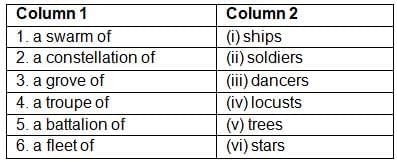
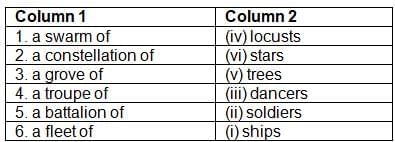
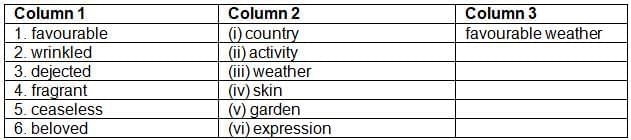
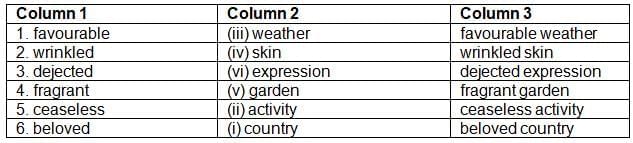
II. The collective noun ‘a hive of bees’, is used in the poem. Match the phrases in Column 1 with suitable words in Column 2 to make collective nouns.
Ans:
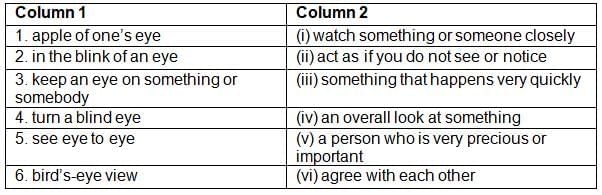
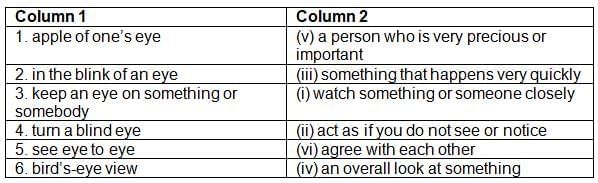
III. The poet uses the expression ‘eyeing the moon’ in the poem. Match the idiomatic expressions with ‘eye’ given in Column 1 with their meanings in Column 2. You may refer to a dictionary.
Ans:
IV. The poet uses the adjective form ‘tigerish’ in the poem by adding the suffix -‘ish’ to the noun ‘tiger’. In the same way, we can make adjectives by adding the suffix -‘ish’ to some nouns. Choose the nouns to which you can add the suffix -‘ish’ to make adjectives. Ans:
girl → girlish
boy → boyish
silk → silkish
moon → moonish
book → bookish
Page No. 227
Let us listen
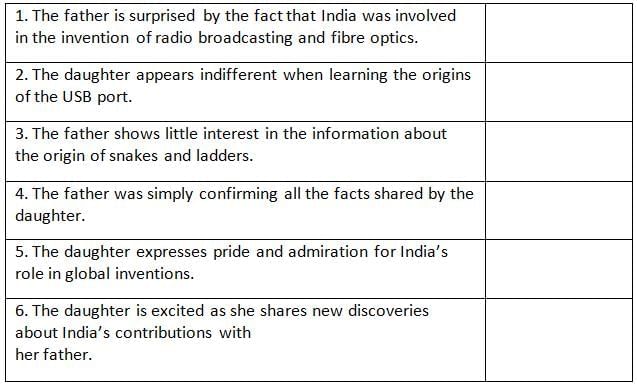
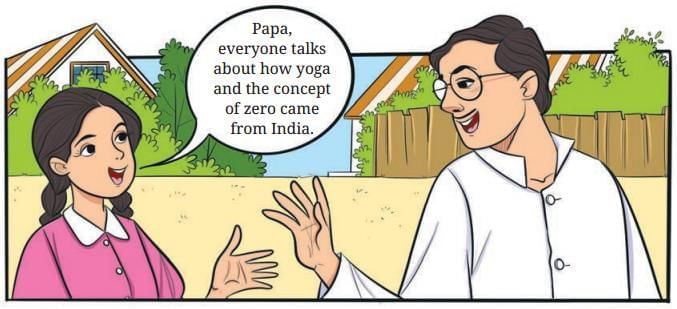
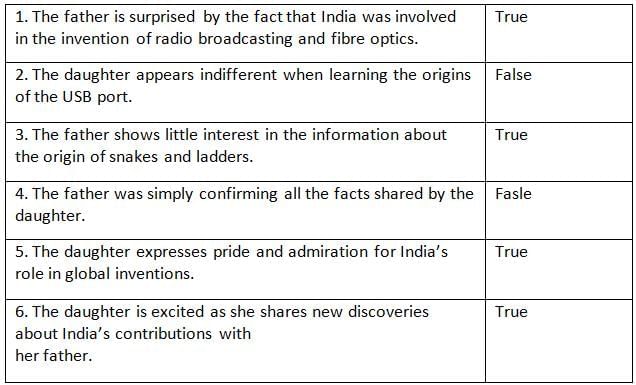
I. You will listen to a conversation between a father and daughter about lesser- known Indian inventions. As you listen, mark the four true statements from (1)—(6) given below.
Daughter: Papa, everyone talks about how yoga and the concept of zero came from India, but I recently found out there are so many more inventions that people don’t really know about! Father: Oh really? Like what? Daughter: Well, did you know that radio broadcasting has roots in India? We usually credit Marconi, but Jagadish Chandra Bose, a Bengali scientist, actually conducted an experiment using microwaves before Marconi. Father: Wow, I didn’t know that! That’s incredible. I can recollect something about fire optics. Daughter: Yes! You’re absolutely right Papa. Can you imagine life without fibre optics? No fast internet, no clear communication… And guess what? It was pioneered by Narinder Kapany, an Indian physicist from Punjab. He’s called the ‘father of fibre optics.’ Father: That’s something I use every day, but I just had an idea that the origins were in India. What about fun things? Any of those that you’ve found out about? Daughter: Yes indeed! You’ll love this one—Snakes and Ladders! It was actually invented as a game to teach children values, with ladders representing virtues and snakes representing evil. It wasn’t just a board game like we think today. It had a spiritual meaning in ancient times. Father: So even that simple game had such deep roots. Let me tell you about one that I just remembered. Daughter: Of course! I’d love to know. Father: Well, the USB port, something we rely on all the time to connect devices, was invented by Ajay Bhatt. He’s an Indian-born engineer who helped revolutionise the way we use technology. Daughter: That’s amazing. USB is such a basic part of life now. It’s hard to imagine a time without it. Father: That’s incredible. And all this from India. I definitely learned a lot from this conversation. Adapted from— https://www.bbc.co.uk/programmes/articles/5rnsYs1QcPB7CsyjzvTcmjf/7-surprising-things-india-has-given-the-world
Ans:
Page No. 228
Let us speak
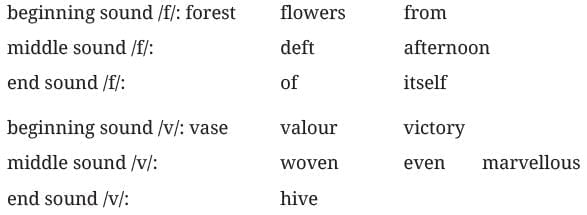
I. When pronouncing /v/ and /f/, the lower lip lightly touches the edge of the upper teeth. Air flows through the small gap, creating a soft friction sound. Note the difference between /v/ and /f/. When we pronounce words with /v/ sound, there is a vibration, whereas /f/ sound has no vibration. Both the sounds can occur in the beginning, middle, or at the end of words. Read these words aloud with the help of your teacher. Ans: Do it yourself.
II. If you could travel to space, which planet would you like to visit? Why? What preparations would you like to make? Speak about any five things that you would like to take along. Ans: If I could travel to space, I would like to visit Mars because it is known as the Red Planet and scientists believe that it may have had water and life in the past. I would love to see its rocky surface and experience low gravity.
Preparations I would make:
Train in a space program
Learn how to live in zero gravity
Understand how to use a space suit
Carry necessary equipment
Five things I would take along: 1. Oxygen supply 2. Space food 3. A camera to record my journey 4. A communication device 5. A journal to write about my experiences
III. If you could invent something, what would you like to invent and how? Give reasons for the choice of your invention. Speak about your wonder invention. Ans: If I could invent something, I would invent a Pollution Cleaner Drone. It would fly around cities and absorb harmful gases and dust particles from the air to keep the environment clean. I would invent it because pollution is a big problem today, and clean air is necessary for a healthy life. This drone would help people breathe better and reduce diseases. It would use sensors to detect polluted areas and special filters to clean the air. It would be solar-powered to make it environment-friendly. This invention would truly be a gift to the Earth!
Page No. 229-232
Let us write
I. In a conversation, we communicate through dialogues. While writing a conversation, we need to ensure that the dialogues are engaging and serve a purpose. Points to remember:
Mention where, when, and with whom the conversation is taking place.
Identify the word choice and tone—formal or informal.
Include key information, points of agreement and disagreement, etc.
Use words in brackets to express emotions or actions, such as (joyfully) (sits down).
You may use filler words like Uff, Er… , Ugh, etc.
Deepa and Asma, members of the Science Club have a conversation to take a decision about making a model for an upcoming Science Fair. Create this conversation between Deepa and Asma.
You may begin the conversation like this. Deepa : Hi Asma! Our Science teacher mentioned that you have a wonderful idea for the Science Fair project. Asma : (hesitatingly) Yes, I do. But I’m not sure if it is good enough. Deepa : (encouragingly) Don’t worry… Ans: Deepa : Hi Asma! Our Science teacher mentioned that you have a wonderful idea for the Science Fair project. Asma : (hesitatingly) Yes, I do. But I’m not sure if it is good enough. Deepa : (encouragingly) Don’t worry, Asma! I’d love to hear it. Every idea has potential. Just tell me what you’re thinking. Asma : Well… I am thinking we can make a working model of a water purification system using natural materials like sand, charcoal, and gravel. It can show how clean water can be produced using simple, eco-friendly methods. Deepa : That sounds amazing! It’s a practical idea and also spreads an important message about clean water and sustainability. Asma : You really think so? I was worried it might be too simple compared to some of the high-tech models others might present. Deepa : Simple doesn’t mean boring. If we present it well and explain the science clearly, it can actually stand out. It’s something everyone can relate to. Asma : That makes sense. Maybe we can also show water samples before and after filtration to highlight the difference. Deepa : Great idea! And we can add labels and posters explaining each layer’s function in the filtration process. Asma : Yes! Maybe even a small interactive section where visitors can try pouring in some ‘dirty’ water and see it come out clean. Deepa : Perfect! Let’s start planning the materials well need and divide the work. I’m excited already. Asma : Me too, Deepa. Thanks for encouraging me. I’m glad we’re doing this together. Deepa : Anytime! Let’s make this Science Fair project awesome!
Let us explore
I. Children with low vision may benefit from different types of visual aids, such as magnifying spectacles, stand magnifiers, hand-held magnifiers, and telescopes. Magnifying spectacles are used for reading, threading a needle or doing other close-up tasks. Stand magnifiers rest above the object and are hands-free and help to keep the magnifying lens at a proper distance. Hand-held magnifiers with and without built-in lights, are usually smaller and lighter to move over printed material. They can be moved more easily. Telescopes are used to see objects or signs far away. Some telescopes can even be attached to eyeglasses.
Ans: Do it yourself.
II. Did you know that telescopes also use lenses?
1. The largest telescope in India for studying celestial objects is located in the district of Nainital, Uttarakhand. Commissioned in 2016, it is maintained and operated by ARIES (Āryabhaṭa Research Institute of Observational Sciences).
2. The Indian Astronomical Observatory (IAO) is a high-altitude astronomy station located in Hanle, Ladakh, India. It is situated at an elevation of 4,500 meters (14,764 ft), and supports optical, infrared, and gamma-ray telescopes.
3. The largest, most powerful, and most complex telescope ever launched into space is the James Webb Space Telescope. NASA launched it on, 25 December 2021. It orbits the Sun at a distance of 1.5 million kilometres from Earth. To learn more, visit the link below. https://science.nasa.gov/mission/webb/
4. The Mauna Kea Observatory, astronomical observatory in Hawaii, US, that has become one of the most important in the world because of its outstanding observational conditions. The Mauna Kea Observatory is operated by the University of Hawaii and lies at an elevation of 4,205 metres (13,796 feet) atop the peak of Mauna Kea, a dormant volcano on north-central Hawaii island. The summit hosts a worldrenowned collection of astronomical research facilities and large telescope observatories, including the Keck Observatory and Subaru Telescope, for optical, infrared, and submillimeter astronomy.
The observatories are set up here because of Mauna Kea’s high elevation, dry environment, and stable airflow that make it a prime location for astronomical observation. The focus is scientific research across the electromagnetic spectrum.
Public Access: The Onizuka Center for International Astronomy provides visitor information and exhibits about the mountain and its observatories, and offers guided tours of the summit.
Find out more about them from the internet and discuss with your science teacher and classmates. Ans: Do it yourself.
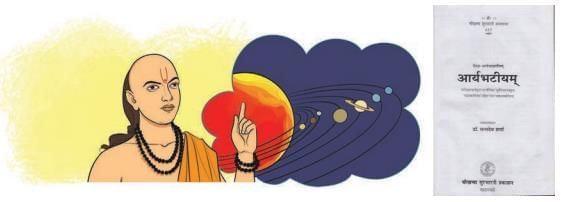
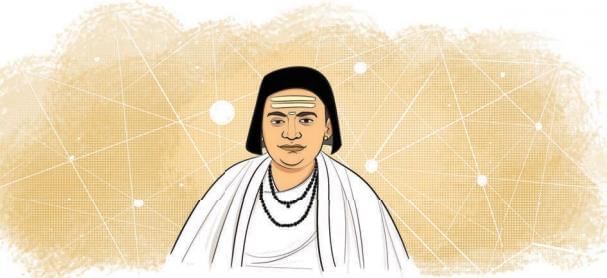
III. Read about ancient Indian scholars. 1. One of the eminent astronomers of the ancient India was Āryabhaṭa. His work Āryabhaṭiyam, laid the groundwork for various astronomers to develop in subsequent centuries and continues to be an important work even today. Āryabhaṭa proposed a heliocentric model of the solar system centuries before Copernicus. He also gave a scientific explanation of lunar and solar eclipses. 2. Varāmihira, the sixth-century CE astronomer, philosopher, and mathematician wrote the astronomical treatise Pañchasiddhāntika (Fine Treatises), a compendium of Greek, Egyptian, Roman, and Indian astronomy. 3. The tenth-century CE mathematician-astronomer Bhāskarachārya II contributed significantly to the advancement of astronomical concepts. His works Siddhāntaśiromaṇi and Karaṇakutūhala, include compiled data on planetary positions, conjunctions, and eclipses. https://indianculture.gov.in/timeless-trends/unveiling-cosmos-journey-throughhistory-astronomy-india
Ans: Do it yourself.
IV. Jantar Mantar in New Delhi is an astronomical observatory. It has large-scale astronomical instruments designed for precise calculations and measurements of celestial movements. It was built in 1724 by Maharaja Sawai Jai Singh II. The observatory is a UNESCO World Heritage Site. Five such observatories were built by Jai Singh II, the other four are located in Ujjain, Mathura, Varanasi, and Jaipur. Ans: Do it yourself.
I. Work in pairs and discuss the questions given below. Share your Ans:s with your classmates and teacher.
Q1: Who can a ‘feathered’ friend be? Ans: A feathered friend can be a bird.
Q2: Which ‘feathered’ friend do you like? Why? Ans: I like parrot as my feathered friend. It is very intelligent, and can imitate the voice of human beings.
Q3: If you have a choice between a feathered’ and a ‘furry’ friend, who would you choose? Why? Ans: I would like to choose a feathered friend, because of having a light body and less expensive. On the other hand, the furry friends refer to animals with fur, like a cat. Sometimes, they can bite us without reason.
Q4: Do you think a ‘feathered’ or a furry’ friend can accompany astronauts to space? If yes, why? If no, why not? Ans: No, I don’t think a furry friend can accompany astronauts to space. Furry friends are very disturbing. They Will always create problems for astronauts in the aircraft by their notorious activities.
II. Complete the words given below by inserting vowels. Refer to their meanings given alongside. Share your Ans:s with your classmates and teachers. 1. official rule that controls how something is done: R_G_L_T N 2. to not allow something: F _ R B _ D 3. join or blend to form a single entity: F _ S _ 4. suddenly: _BR_PTLY 5. admit one’s mistake: C _ N F _ S S 6. a person who advises what to eat to keep healthy: D T _ T N Ans: 1. REGULATION 2. FORBID 3. FUSE 4. ABRUPTLY 5. CONFESS 6. DIETITIAN
Page No. 209
Let us read
I. Ans: the following questions briefly. Q1: Why did the narrator think Sven had sneaked a bird aboard? What was Sven’s scientific reason? Ans: The narrator had some reasons to think so. It was the bird’s unusual behaviour, like her seemingly effortless flight in a space station and lack of concern for the absence of gravity. On the other hand, Sven’s scientific reason for bringing the bird aboard was to observe how a bird would function in a weightless environment. He wanted to experience how a bird could operate and navigate without the effects of gravity.
Q2: How did Claribel adjust to the new surroundings? Ans: Claribel learnt to operate without using her wings or much efforts. She learnt to simply hang in the air, motionless with her wings folded. This adaptation allowed her to thrive and even gain weight in the unique conditions of her new surroundings.
Q3: What made the narrator mistake the musical whistle for a sound from the intercom? Ans: The narrator heard the whistle near his ear. He expects an announcement to follow the whistle, that is typical of intercoms. The melody of the whistle, rather than a human voice, hence leads him to realize it wasn’t the intercom.
Q4: Do you think the presence of the canaiy would lead the spacers into trouble? If yes, why? If no, why not? Ans: Especially during a long mission, the presence of canaries on the spacecraft could lead to some challenges for the spacers. While they can be valuable as early warning indicators for certain gases, they also have some particular needs and vulnerabilities that could be difficult to manage in a confined space environment.
Page No. 211-213
Let us discussI. Identify whether the following statements from parts I and II are true or false. Share your Ans:s with your classmates and teachers.
Q1: The alarm at the space station failed to work properly because they were not connected. Ans: False
Q2: Claribel was brought to the space station for an official experiment on animal behaviour in space. Ans: False
Q3: The canary’s suffering helped the crew discover a problem with the air purifier. Ans: True
Q4: The air purifier froze because there was a rare eclipse. Ans: True
Q5: Claribel could fly gracefully in the space station, performing loops in the air. Ans: True
Q6: The space station crew was uninterested in Claribel and hardly noticed her presence after she was discovered. Ans: False
Q7: Claribel had fainted and had to be revived with oxygen supply. Ans: True
Let us think and reflect
I. Read the given extracts and Ans: the questions that follow. Q1: Sven was one of our best construction men, and excelled at the tricky and specialised work of collecting assorted girders as they floated around in free fall, making them do the slow-motion, three-dimensional ballet that would get them into their right positions, and fusing the pieces together when they were precisely dovetailed into the intended pattern: it was a skilled and difficult job, for a space suit is not the most convenient of garbs in which to work. (i) What can be inferred about Sven’s abilities from his job description? A. He is good at following instructions but lacks creativity. B. He possesses a strong understanding of working in space. C. He struggles with the complexities of construction in space. D. He prefers working on simpler tasks rather than complex jobs. Ans: (B) He possesses a strong understanding of working in space.
(ii) How can we conclude that Sven was working in zero gravity? Ans: Sven was working in space. His job was to collect assorted girders as they floated around in a free fall. He had to make them do the slow-motion that would get them into their right position and then, fuse the pieces together into the required pattern
(iii) Select the option that is correct for both (Assertion) A and (Reason) R. (A): Sven’s job required him to make girders perform a ‘three-dimensional ballet’ in space. (R): Working in zero gravity allows objects to float, making precise positioning more challenging. A. Both (A) and (R) are true, and (R) is the correct explanation of (A). B. Both (A) and (R) are true, but (R) is not the correct explanation of (A). C. (A) is true, but (R) is false. D. (A) is false, but (R) is true. Ans: A. Both (A) and (R) are true, and (R) is the correct explanation of (A).
(iv) Replace the underlined word with a word similar in meaning from the extract. During the festival, people wore colourful outfits that represented their culture. Ans: Garbs
Q2: “Jim!” There’s something wrong with the air! That’s why Claribel’spassed out. I’ve just remembered that miners used to carry canaries down to warn them of gas.” “Nonsense!” said Jim. “The alarms would have gone off. We’ve got duplicate circuits, operating independently. ” “Er—the second alarm circuit isn’t connected up yet, ” his assistant reminded him. That shook Jim; he left without a word, while we stood arguing and passing the oxygen bottle around like a pipe of peace. (i) Fill in the blank by selecting the correct option from those given in the brackets. The narrator references canaries and miners in order to __________. (highlight the historical use of canaries as warning systems/explain the reason that caused Claribel to faint suddenly) Ans: highlight the historical use of canaries as warning system.
(ii) Complete the following sentence with a suitable reason. Jim initially dismisses the warning about the air because __________. Ans: the alarms would have gone off.
(iii) What does the phrase ‘shook Jim’ mean in the context of the information in the extract? Jim was _________. A. physically pushed by someone B. startled by unexpected information C. cold and needed to warm up D. trying to shake off sleepiness Ans: (B) startled by unexpected information
(iv) What does the crew’s action of passing the oxygen bottle around ‘like a pipe of peace’ suggest about their response to the situation? Ans: This phrase suggests that the crew is sharing a valuable, life-saving resources equally and perhaps even peacefully during a difficult situation. It also indicates that they are not either selfish or greedy.
II. Answer the following questions. Q1: What was the purpose of the alarm? What had caused its failure? Ans: The purpose of the alarm was to warn the crew of low oxygen levels in space. The alarm failed because an eclipse caused part of the air purifier to freeze. The freezing prevented the air purifier from properly functioning, which in turn prevented the alarm from triggering.
Q2: How does the crew’s reaction to Claribel change over the course of the story? Ans: The crew’s initial reaction to Claribel is one of the curiosity and perhaps even a bit of amusement. They are surprised to see a pet onboard the space station. However, as the story progresses, their feelings towards Claribel evolve, becoming one of deep concern and eventually affection. This shift is largely due to Claribel’s unexpected ability to alert the crew to a dangerous situation, saving their lives.
Q3: What does the last part of the story tell us about the significance of unusual ways of problem solving? Ans: The unusual ways of problem solving revolves around a canary bird named Claribel. She detects air quality issue on a space station. When she passes out due to poor air quality, the crew realizes a malfunction in the air purifier has caused this problem. This shows reliance on a living organism to act as an early warning system for dangerous conditions, a method that might not be immediately obvious or conventional in space.
Q4: Justify the appropriateness of the title of the story. Ans: The title of the story, ‘Feathered Friend’ is appropriate. The story directly related to the core theme of friendship and the bond between humans and animals, particularly birds. The title evokes the image of a bird as a companion and a source of joy, that supports the narrator’s focus on the relationship between Sven and Claribel, who is a canary bird.
Q5: ‘Without Claribel, we should soon have been slightly dead.’ What does this line suggest about uncertainty of life in space? Ans: This quote highlights the crucial role of Claribel in alerting the space station crew to a potentially deadly situation, caused by a malfunctioning air purifier. They would have suffered from the poisonous atmosphere, without Claribel’s sensitivity to changes in the air.
Q6: Explain how has the writer presented science fiction with a touch of humour. Ans: The narrator’s disbelief in the canary’s ability to thrive in space, and his causal attitude towards breaking rules, creates a comedic contrast with the serious nature of their mission. The over-exaggeration of the space station’s equipment, like the alarm that failed to function, and the crew’s reactions, especially the narrator’s initial sluggishness add a layer of comedic absurdity to the story. Sven is a crew member, and brings Claribel aboard. He is presented as a somewhat eccentric and unpredictable figure, that adds to the overall humourous tone of the story. Moreover, the unexpected way in which Claribel revives and the subsequent events, such as the air purifier freezing, provides moments of light hearted amusement to the story.
Q7: How would Sven reflect on his experience of almost losing Claribel and for saving the lives of the entire crew? Ans: Sven would likely reflect on the tragic loss of Claribel and acknowledge her role in saving the lives of the entire entire member. The loss of Claribel would be mourned as a personal and profound tragedy, in the light of the affectionate bond she shared with the crew. However, the story also emphasizes the profound impact of her alertness, that highlights her accidental yet significant contribution to their survival.
Page No. 214 -221
Let us learn
I. Choose the appropriate adjectives from the box given below to match with the words 1-8 that follow. 1. ________________ path 2. ________________ worry 3. ________________ plan 4. ________________ look 5. ________________ reason 6. ________________ traffic 7. ________________ voices 8. _______________ expression Now, underline the sentences that use these adjectives in the text. Ans: 1. narrow 2. nagging 3. inexplicable 4. sheepish 5. vague 6. sluggish 7. delighted 8. hushed
The sentences that use the above adjectives in the text have been underlined below. 1. I had a nagging headache, and vague memories to fitful, disturbed dreams. 2. We all waited in hushed silence while he held Claribel against his ear in an attempt to detect any heartbeat. 3. My mind seemed to be very sluggish that morning, as if I was still unable to cast off the burden of sleep. 4. He came back ten minutes later with sheepish expression. 5. So now, if you visit any space station, don’t be surprised if you hear an inexplicable snatch of birdsong. 6. To our delighted surprise, she arrived at once. 7. There were a couple of narrow escapes.
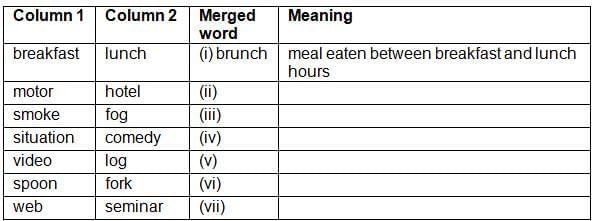
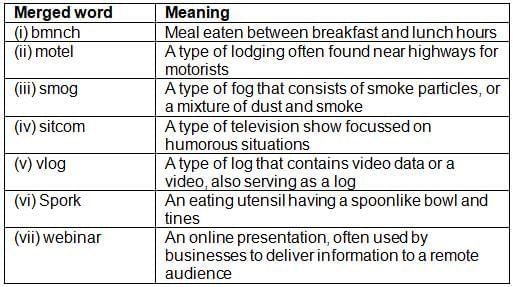
II. The word ‘intercom’ is used in the text. It is called a merged word as it is made by combining the parts of two words— ‘internal’ and ‘communication’. Merged words are made by combining two words. Combine the words in Column 1 with the words in Column 2 to make merged words. Write the merged word and its meaning. One example has been done for you.
Ans:
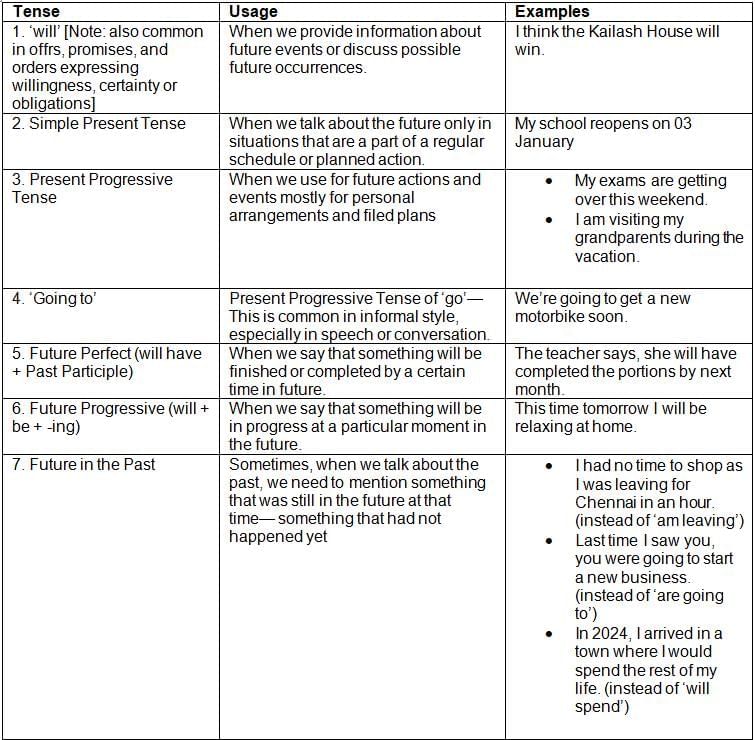
III. Read the following sentence from the text and fill in the blank. It will mean that you’re being doubly safeguarded. In the given sentence, ‘will’ denotes _________ (past/present/future) time. Ans: Future There are several ways to use verbs to talk about the future in English. The following table lists some of the usages of future time references.
IV. Fill in the blanks with the correct form (Simple Present, Present Progressive, ‘will’, or ‘going to’) to indicate future time. 1. Our flight __________ (leave) at 10.00 a.m. tomorrow. 2. They __________ (finish) the project by the end of this week. 3. The weather forecast says it __________ (rain) later today. 4. We __________ (move) into our new house next month. 5. I __________ (start) my new hobby class next Monday. 6. She __________ (go) to the mall this afternoon. 7. The team __________ (have) a meeting at 3.00 p.m. tomorrow. 8. I __________ (help) you with your homework after dinner Ans: 1. leaves 2. will have finished 3. is going to rain 4. are moving 5. am starting 6. will go 7. is having 8. am going to help
V. Fill in the blanks with the suitable forms of verbs given in brackets to express future time reference. By 2040, artificial intelligence 1. ________ (revolutionise) medical treatments. Researchers 2.________ (develop) AI-powered diagnostic tools that 3. ________ (transform) healthcare by the end of this decade. Next week, the International Science Congress 4. _______ (open) to showcase advancements in AI and robotics. In the coming years, robots 5. _______ (assist) surgeons in performing complex operations. Years ago, experts had predicted that AI would reshape our world, and now, as we approach the future, this 6. _______ (be) our new reality Ans: 1. is going to revolutionise 2. are developing 3. will transform 4. opens 5. will assist 6. is going to be
Let us listen
I. You will listen to a conversation between Monika and Toby. Toby is a Martian and is stranded on Earth. He has become Monika’s friend. As you listen, put a tick mark (✓) against the correct statements and a cross against the wrong ones.
Q1: Toby misses his school. Ans: False
Q2: Monika accepts Toby as her friend. Ans: True
Q3: Monika asks Toby about one of his facial features. Ans: False
Q4: Toby tells Monika that she had a banana for breakfast. Ans: False
Q5: Toby shares that he can see much clearer with a closed eye. Ans: True
II. Listen to the conversation again and fill in the blanks with the exact words you hear. 1. Toby: I miss my _______ and home. 2. Toby: Well, we _______ don’t need to eat anything. We get our from the Sun. 3. Monika: Oh! Don’t you ever feel like having ice-creams and _______ ! 4. Monika: Okay, tell me one thing. How are you able to see only with _______ eye? 5. Toby: I can see beyond mountains and _______, woods and even Ans: 1. people 2. Martians; energy 3. chocolates 4. one 5. clouds; even metals
Let us speak
I. Read the following words from the text aloud and circle the letters that are not pronounced (silent letters). ballet (ba-lay) [ba pronounced as in bat] whistle (wi-sl) alarm (uh-laam) psychologist (sai-ko-luh-juhst) Now, read some more words with silent letters. As you read, circle the letters that are not pronounced. Ans: Receipt – the letter ‘p’ is silent. Debris – the letter ‘s’ is silent. Pneumonia – the letter ‘p’ is silent. Almond – the letter ‘1’ is silent. Foreign – the letter ‘g’ is silent. Island – the letter ‘s’ is silent. Wreck – the letter “w’ is silent. Campaign – the letter ‘g’ is silent. Fasten – the letter ‘t’ is silent.
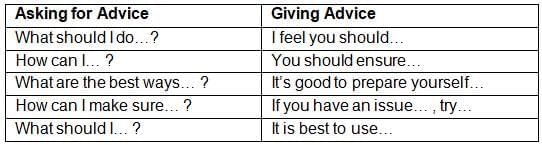
II. Work in pairs. Use the given situations to ask for and give suggestions.
You need to make a model of the solar system for the Science Exhibition but don’t know what materials to use. Ask your friend for suggestions.
You need to prepare for the inter-class quiz on the topic Chandrayaan-3. Ask your friend for advice on how to prepare. You may use the prompts given below.
Ans: I need to make a model of the solar system for the Science Exhibition, but I have no idea how I should complete my model. I need your suggestion. Friend’s suggestions: To make a model of the solar system, first decide if you want to represent planet sizes or distances or both, and then, choose a scale that fits your space. Now, you should gather materials like craft supplies or materials found around your house. Then, you should think over using paints, markers, or other creative mediums. At last, you should research on the characteristics of each planet, such as size, colour, rings, etc. to accurately represent them on your model. Thus, your model of the solar system for the Science Exhibition would be ready for demonstration.
I need to prepare Inter-class quiz on the topic Chandrayaan-3, but I have no knowledge how to make questions about the important aspects of Chandrayaan-3. I hope you can better suggest me, as you are quiet familiar with this topic. Friend’s suggestions: To prepare a successful inter-class quiz on Chandrayaan-3 is not a difficult task. You should focus on understanding the mission’s goals, key components, and scientific objectives. Moreover, you should include questions about the launch date, landing site, the purpose of the rover and lander, and the instruments they carry. In addition, you shouldn’t forget to touch upon the significance of the lunar south pole and the mission’s broader implications for Indian space exploration. Your quiz kit should contain everything related to this pride mission.
Let us write
I. Complete the social media web given below with the uses of the internet. Ans: Now, write an article titled The Importance of Internet’ with the help of the social media web. Points to remember: Heading/Title Name of the writer Paragraph 1: Give a general introduction to the topic. Paragraph 2: Explain the uses of the internet and why it is important. Give examples to support your view. Paragraph 3: End with a comment and leave the reader with a thoughtful idea or quote. Ans: The Importance of Internet Garima, Class-7 The last few years have witnessed heavy reliance on the Internet. This has been because of multiple advantages that it has to offer – for instance, reducing work stress and changing the face of communication most importantly. If we take the current scenario, we cannot ignore how important the Internet is in our everyday lives. It is now indeed a challenging task to visualize a world without the internet. One may define the internet as a large library composed of stuff like – records, pictures, websites, and pieces of information. Another sector in which the internet has an undeniably important role to play is the field of communication. Without access to the internet, the ability to share thoughts and ideas across the globe would have also been just a dream.
Let us explore
‘A canary in the coal mine’ is a popular phrase to describe early signs of potential danger. I. Coal miners in places like Arunachal Pradesh used canary birds to detect the presence of carbon monoxide. Such gases are a potential risk to the life of the miners. These little birds are particularly sensitive to carbon monoxide and can prevent mining accidents.
II. Astronauts living in space stations have to do things differently. Read how they manage the routine tasks in the absence of gravity. You may find out more information about it from the internet. 1. Write: Astronauts use a special Space Pen which has a cartridge with ink combined with resin. The ink remains solid until friction with the ball at the point of the pen liquefies it. It works in all positions, in extreme heat and cold, and in atmospheres ranging from pure oxygen to vacuum. 2. Exercise: Astronauts use resistance exercise equipment. Weight training is done by applying a load using vacuum cylinders. Running on the treadmill is made possible with the bodies held down using rubber straps. 3. Eat: Astronauts eat preserved foods which is dried, canned, vacuum-packed, and frozen. These can be prepared by adding cold or hot water, and some can be heated in an oven. They also eat ready-to-eat items, such as nuts, breads, and fruits. 4. Sleep: Astronauts can sleep on a floor, wall, or ceiling as there’s no distinction between up and down but they may gradually float away while sleeping. Therefore, they need to restrain their bodies in small sleeping compartments or sleeping bags.
III. Did you know that animals can save humans from natural calamities? Animals can sense natural calamities. Read the following examples and decide if this is true.
In 2004, before a tsunami could hit the coastline of Indonesia, some animals made efforts to flee—elephants ran for higher ground,flamingos abandoned low-lying nesting areas, and dogs refused to go outdoors.
Minutes before the Naples quake of 1805, oxen, sheep, dogs, and geese started making alarm calls in unison.
Migratory birds crossing the Pacific are able to dodge storms and other hazards.
In the Gulf of Mexico, sharks sense the drop in barometric pressure that precedes hurricanes and tend to swim to deeper waters as a result. Dolphins have also been observed swimming away from storm-prone areas.
Scientists have studied this behaviour and found that when severe stresses arise in deep rock before the earthquake, ultra-low frequency electromagnetic waves are generated that animals can sense.
IV. Salim Ali, the ‘Birdman of India’, was an Indian ornithologist (a person who studies birds). He was the first Indian to conduct systematic bird surveys across India and wrote several books on birds. He was awarded the Padma Bhushan in 1958 and the Padma Vibhushan in 1976.
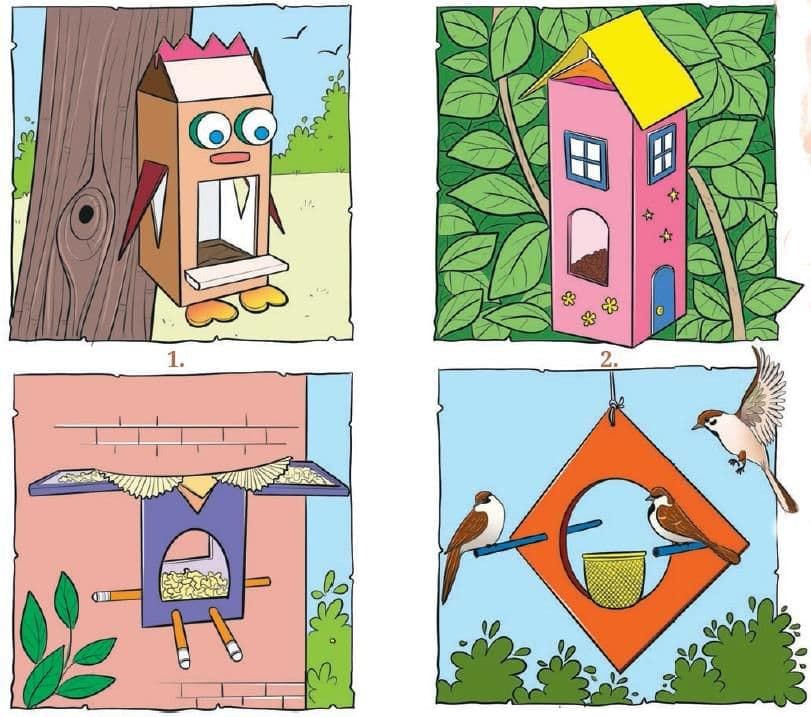
V. We need to conserve our ‘feathered’ friends. Work in groups of four. Look at the pictures and make a bird feeder with cardboard, chart paper, etc. Ans: Do it yourself.
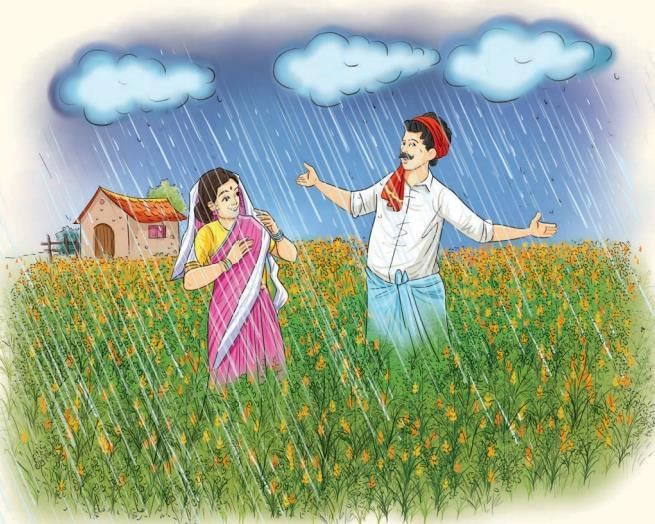
I. Have you ever waited for the rains? Why? Ans: Yes, I have waited for the rains, especially during hot summer days. The rain brings coolness and freshness after long, hot weather. It also helps plants and trees to grow well.
II. How do you feel when it rains after a long time? Ans: When it rains after a long time, I feel very happy and refreshed. The smell of the first rain, the sound of raindrops, and the cool breeze make me feel relaxed and joyful.
III. Why do you think the farmers wait for the rains? Ans: Farmers depend on rain for watering their crops. Without rain, their fields remain dry, and they cannot grow food. That’s why rain is very important for their livelihood and survival.
IV. Discuss in groups what happens when you wait for something or someone for a long period of time. 1. How do you spend the waiting period? 2. What do you think about? 3. How do you feel? Share your answers with your classmates and teacher. Ans: 1. I try to stay calm and do other activities like reading, listening to music, or just watching the surroundings while waiting. 2. I think about when the person or thing will arrive and whether everything will go as expected. 3. Sometimes I feel anxious or impatient, but I also feel hopeful and excited, depending on the situation. Share your answers with your classmates and teacher.
Page No. 188
Let us discuss
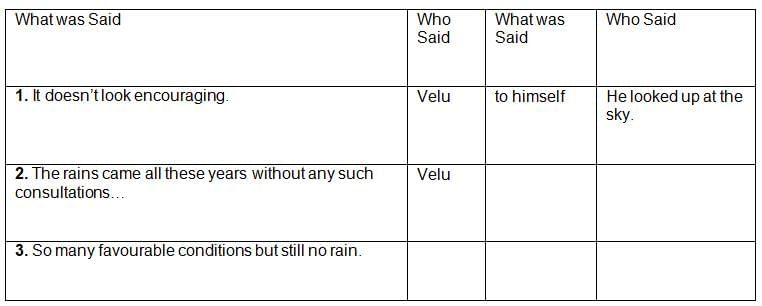
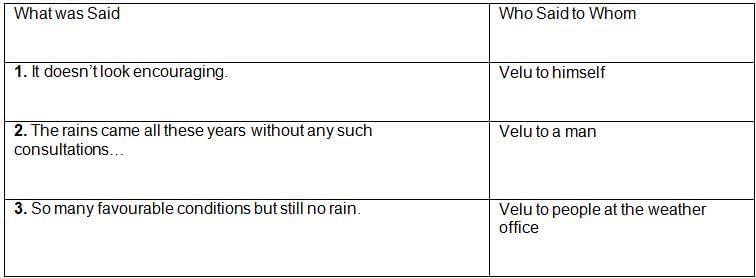
I. Complete the table given below. One example has been done for you. Share your answers with your classmates and teacher.
Ans:
II. Do you think the old woman would help Velu? If yes, why? If no, why not? Ans: Yes, the old woman helps Velu—not by giving him rain, but by offering him a new way of thinking. She explains that just like people, the land also needs rest, which comforts and enlightens Velu during a time of hopelessness.
III. Will Velu’s wait continue or will it rain? Ans: Velu’s wait will not continue for long. By the end of the story, clouds begin to gather, and raindrops fall, indicating that rain has finally arrived, bringing relief and joy to Velu.
Page No. 191-198
Let us discussI. Complete the following statements given below with suitable reasons. 1. Velu asked the old woman to stop smiling because _________________. 2. Velu said that it was hard not being able to work since_________________. 3. Velu was confused when the old lady said that the land needed rest because _________________. 4. The old lady said that it was good for the land when it didn’t rain as _________________ 5. Velu ran home laughing and happy because _________________.
Ans: 1. there was no rain, and he felt there was nothing to smile about during such a difficult time. 2. he had been working continuously for six years and could not bear to sit idle. 3. he had never thought of land as something that needed rest like humans do. 4. it allowed the land to rest and rejuvenate after years of continuous cultivation. 5. he felt the cool breeze and saw raindrops, realizing that the long-awaited rain had finally come.Let us think and reflect
I. Read the given extracts and answer the questions that follow. Q1:“…Ican’t see how talking to astrologers will bring rain. ” He decided to go to the weather office in the city and talk to someone. But the people at the weather office said they couldn’t really tell him when the sky would gather clouds and bring rain. “We are at a loss ourselves!” they exclaimed. “So many favourable conditions but still no rain. Very odd!” (i) What does the fist line of the extract tell us about Velu’s beliefs? Ans: It shows that Velu is a practical and rational person. He does not believe in superstitions or relying on astrologers.
(ii) Complete the following sentence with a suitable reason. Velu is determined to seek information about the rain because ___________________. (he was at a loss of words/he wants to find a practical solution to the drought affcting his farm) Ans: he wants to find a practical solution to the drought affecting his farm.
(iii) Complete the table with reference to Velu’s weather offi visit.
Ans:
(iv) Complete the following sentence with a suitable option. The absence of rain despite favourable conditions, shows _________________. A. lack of astrological knowledge B. ineffectiveness of farmers like Velu C. delay in understanding the weather D. unpredictability of nature Ans: (D) unpredictability of nature
Q2: “The soil, the land, the earth… shouldn’t someone let the land rest a bit?” the old woman said, softly, smiling. “Rest? Let the land rest? I don’t understand, ” Velu looked at her, a little puzzled. “Yes, my son, that is the difficulty. You don’t realise that the earth is old…”
(i) The old woman’s advice was accompanied with a soft tone and a smile. What does that tell us about her? Ans: It shows that she is wise, gentle, and calm. She speaks kindly, with care and understanding. (ii) Fill in the blank with the correct option from those given below. The old woman’s advice _________________ Velu, at that moment. A. failed to impress B. confused C. scared D. made sense to Ans: (B) confused (iii) State one thing about the old woman when she referred to Velu as ‘my son’, while offering advice. Ans: It shows that the old woman was affectionate, motherly, and caring in her attitude toward Velu. (iv) Complete the following sentence with a suitable explanation. The ‘difficulty’ that the old woman mentions is due to the fact that _________________ Ans: people like Velu fail to understand that even the earth needs rest after constant use. II. Answer the following questions.
Q1: How does the old woman convey Nature’s wisdom to Velu? Ans: The old woman explains that just as people need rest, the land also needs time to recover. She personifies the earth, showing that it has worked for centuries and must be allowed to breathe and rejuvenate.
Q2:The writer says, The fields lay untended…’ Why couldn’t the farmers tend to their fields in the absence of rain? Ans: Without rain, the soil became dry, cracked, and hard. It was impossible to plough, sow seeds, or grow any crops. Hence, the farmers could not tend to their fields.
Q3: Support the old woman’s perspective that the land needs rest just like people do. Ans: Just as continuous work tires human beings, the earth too becomes exhausted after constant cultivation. Leaving it fallow helps it restore nutrients and moisture. This rest helps in better crop growth later.
Q4: What can be inferred about Velu’s character based on his reaction to the drought? Ans: Velu is hardworking, sincere, and deeply connected to his land. He feels helpless and anxious when he cannot work. His actions show that he is responsible and practical, though initially impatient.
Q5: What does the story suggest about the life of farmers and their relationship with nature? Ans: The story shows that farmers are closely tied to the rhythms of nature. Their lives depend on natural events like rainfall. It also suggests that farmers must learn to respect nature’s cycles, including times of rest.
Q6: How might the rest and care of land contribute to a balanced and sustainable ecosystem? Ans: Resting the land prevents soil exhaustion, preserves moisture, and helps maintain its fertility. This practice supports healthy crop cycles and ensures long-term productivity, contributing to a sustainable farming ecosystem.
Let us learn
I. Solve a crossword using picture and word clues. All clues are related to the words from the text that are connected to weather or agriculture.
Ans:
II. The text uses words like ‘piece,’ “weather,’ ‘son,’ and ‘rain’. These words are the same as other words that are spelt differently— peace, whether, sun, and reign. Words that are pronounced the same as other words but differ in meaning or in spelling are called homophones. Now, complete the paragraph by filling in the correct option of homophones given in the brackets. The farmer looked at the sky and wondered 1. ________________ (weather/whether) the clouds would fially bring rain. He sat down on the ground, breaking a small 2. ________________ (piece/peace) of roti for his meal. The 3. ________________ (plain/plane) filds stretched endlessly before him, completely dry. He thought about how he could 4. ________________ (sell/cell) his last sack of grain to buy some essentials for his family. Without the rains, it didn’t 5. ________________ (seam/seem) possible to grow another crop this season. Despite his worries, he smiled, knowing that every farmer hopes for the next 6. ________________ (rain/reign) by nature to bring life back to the land. Ans: 1. whether 2. piece 3. plain 4. sell 5. seem 6. rain
III. Choose the correct meanings from the given options for the underlined words or phrases in the following sentences. Q1: Being annoyed, she muttered something which nobody heard. (i) spoke in a low voice (ii) spoke slowly (iii) spoke angrily Ans: (i) spoke in a low voice
Q2: At the new work place, Riya felt forlorn for a week. (i) upset and irritated (ii) angry and bitter (iii) sad and neglected Ans: (iii) sad and neglected
Q3: When all his friends had gone, he was at a loss because he did not know what to do. . (i) confused (ii) shocked (iii) lonely Ans: (i) confused
Q4: When the little child saw her father, her eyes sparkled. (i) glowed dimly (ii) showed joy (iii) opened wide Ans: (ii) showed joy
IV. Match each word (adjective) in Column 1 with a word (noun) that collocates in Column 2. Write the adjective-noun collocation in Column 3. One example has been done for you.
Ans:
V. Underline the verbs and identify the forms of tenses for the following sentences from the text. 1. Oh, it is hard not to be able to work… 2. …I am too old. 3. What are you smiling at, Amma? 4. But my son, that is what I am talking about. 5. The earth has worked for years, centuries… 6. I have worked hard and honestly. Ans: 1. Oh, it is hard not to be able to work… (Simple Present) 2. …I am too old. (Simple Present) 3. What are you smiling at, Amma? (Present Progressive) 4. But my son, that is what I am talking about. (Present Progressive) 5. The earth has worked for years, centuries… (Present Perfect) 6. I have worked hard and honestly. (Present Perfect)
The forms of tenses in the given statements are Simple Present Tense (1 and 2), Present Progressive Tense (3 and 4) Present Perfect Tense (5 and 6). Now, fill in the blanks with the correct form of Simple Present, Present Progressive or Present Perfect tenses of the verbs given in brackets. Ravi (i) __________ (be) a farmer who (ii) __________ (practise) crop rotation on his land. Each season, he (iii) __________ (plant) different crops to maintain the soil’s health. This year, he (iv) __________ (grow) legumes, which help restore the nutrients in the soil. Over the years, Ravi (v) __________ (learn) that planting the same crop repeatedly (vi) __________ (deplete) the soil, making it less fertile. By rotating crops, he (vii) __________ (keep) the land productive and fertile. He (viii) __________ (see) a noticeable improvement in his yields since adopting this method. Now, Ravi (ix) __________ (share) his knowledge with other farmers, explaining how crop rotation (x) __________ (benefit) both the soil and their harvests. Ans: (i) is (ii) practices (iii) plants (iv) will grow (v) has learnt (vi) depletes (vii) keeps (viii) has seen (ix) is sharing (x) benefits
VI. Study the highlighted words in the following sentences from the text.
The rains came all these years without any such consultations.
So many favourable conditions, but still no rain.
Every day they hoped that the rains would come.
But this year turned out to be diffrent.
This is the fist season in five, no, six years that I have not sown, nor ploughed.
We ought to talk to some astrologers.
I have only done what any hard-working farmer would do.
Velu looked at her, a little puzzled.
She takes care to give her children the rest they need…
Velu felt a cool breeze on his back.
The highlighted words or phrases that come before a noun but do not describe them are called determiners. Let us learn the use of some common determiners.
Articles: a, an, the These are used to introduce nouns.
Demonstrative Determiners: this, that, these, those These are used to point out specifi items.
Possessive Determiners: my, our, your, his, her, its, their, one’s These indicate ownership or relationship.
Defiite Numeral Determiners: one, two, three, etc. These specify exact quantities.
Indefiite Numeral Determiners: some, any, no, all, much, many, few, less, several, little and few ‘Some’ is used in affiative sentences, while ‘any’ and ‘no’ are used in negative and interrogative sentences. ‘All’ refers to the entirety of a group. ‘Much’ and ‘many’ denote large quantities of uncountable and countable nouns, respectively. ‘Few’ indicates a small number, ‘less’ refers to a smaller quantity, and ‘several’ means more than two but not many. ‘Little’ means not much, ‘few’ means not many. Use ‘a little’ and ‘a few’ to convey a positive sense.
Distributive Determiners: each, every, either, neither ‘Each’ refers to individual items or people, ‘every’ refers to all items or people collectively. ‘Either’ means one of two options and ‘neither’ means not one of the two options.
Now, fill in the blanks by choosing the correct determiner from those given in the brackets.
It was 1. ________ (a/an) rainy afternoon, and 2. ________ (a/the) sky was thick with dark clouds. Mala noticed a large puddle quickly forming in front of 3. ________ (her/their) house. Excited, she called for her brother to join her, knowing that both of them always loved playing in 4. ________ (a/the) rain. While jumping from 5. ________ (some/one) puddle to another, Mala spotted 6. ________ (few/a few) snails slowly creeping along the wet sidewalk and pointed them out to her brother. With 7. ________ (each/every) jump, the sound of both 8. ________ (her/their) squeals and laughter was heard through the soft patter of raindrops. Though they were fully drenched 9. ________ (either/neither) siblings minded it. It had been a perfect rainy day. Ans: 1. a 2. the 3. her 4. the 5. one 6. a few 7. each 8. her 9. neither
Let us listen
I. Listen to the weather forecast. As you listen, fill in the blanks with the exact word you listen to. (Refer to NCERT Textbook Page 204 for Transcript) 1. Delhi will mostly have a ___________ sky with light rain. 2. Moderate rain is likely to happen in ___________. 3. Kolkata is likely to have a maximum temperature of around ___________ °C. 4. There is a chance of a ___________ in Chennai. 5. Bengaluru will have a ___________ temperature of 29 °C. 6. Taking an ___________ is advisable because of the weather conditions. Ans: 1. cloudy 2. Mumbai 3. 34 4. thunderstorm 5. maximum 6. umbrella
Let us speak
I. Here is a tongue twister about ‘weather’. Practice saying it as fast as you can. Whether the weather be fine, or whether the weather be not, whether the weather be cold, or whether the weather be hot, well weather the weather, whatever the weather, whether we like it or not. Ans: Practise it yourself.
II. Rain has arrived after a long dry spell on the Earth. Imagine the Rain and the Earth have a conversation. Work in pairs and present the role-play. You may use the hints in the table given below. You may start the conversation in the following way. Rain: Greetings, Earth! It’s been awhile since we’ve met. How have you been? Earth: Hello Rain! I am so glad to see you. To continue the conversation, use the hints given below.
Ans: Sample Role-play Script Rain: Greetings, Earth! It’s been a while since we’ve met. How have you been? Earth: Hello Rain! I am so glad to see you. I’ve been dry and tired. Eveiything on me — the trees, the rivers, the crops — they’ve all been waiting for you. Rain: I’m truly sorry I took so long. My journey from the ocean to the sky and back to you is long and sometimes unpredictable. But I’ve finally arrived! Earth: Thank you for returning. Your water brings life to my soil. Crops will grow, rivers will flow, and the forests will bloom again. Rain: I promise to return regularly and on time next year. Ill continue to bring your people and plants the water they need. Earth: You’re always welcome, Rain. Come, let’s celebrate with the rivers, forests, and all the people. You are a blessing to us all. Rain: I’m glad I can help. I’ve missed being here too.
Use voice modulation to show emotion (joy, relief, gratitude).
Practise with a partner and present it in front of the class.
Add gestures or simple props if desired for a fun performance.
Page No. 199-200
Let us write
I. You have observed the difficulties faced by the people in your neighbourhood due to scarcity of water especially during the summer months. Write a letter to the Councillor of your Municipal ward, requesting her/him to set up a rain water harvesting unit. Provide suggestions to address the issue.
Remember to
use formal language
keep sentences short and to the point
state the purpose clearly and concisely
give relevant details
Format and Layout: Ans: 123 Green Lane Vikas Nagar New Delhi – 110018 19 May 20XX The Municipal Councillor Ward No. 44 New Delhi Municipal Council (NDMC) New Delhi – 110001 Subject: Request to Install a Rainwater Harvesting Unit in Ward No. 44 Dear Madam I am writing to draw your kind attention to the severe water scarcity being faced by the residents of our neighbourhood, especially during the summer months. This scarcity is caused by irregular rainfall, excessive usage, and poor storage systems. As a result, we struggle to meet our daily water needs for drinking, cooking, and cleaning. People are forced to depend on water tankers, which are often irregular and expensive. I humbly request you to set up a rainwater harvesting unit in our locality. This system will help us collect and store rainwater, reduce dependency on groundwater, and ensure sustainable water supply. Public awareness campaigns and community involvement can further support this effort. Rooftop collection systems, recharge pits, and community tanks can be good starting points. We look forward to your prompt action and support in making our ward water-efficient and eco-friendly.
Yours sincerely Ravi Sharma
Let us explore
I. Rest is very important for us to function in a proper manner. Even the Earth needs rest. This is known as fallowing. Read the facts given below related to fallowing:
A fallow year refers to leaving the land without sowing for one, or several vegetative cycles.
This is done to allow the land to recover its nutrients and retain moisture. It also helps to avoid spreading of diseases and controlling pests.
The sustainable land management method has been applied for centuries, wherein a field is divided into two halves—one is planted with crops while the other remains unplanted. Then, the process is reversed in the following year.
Ans: Do it yourself.
II. Find out from your Vocational Education teacher about Agriculture as a vocation and other related vocations, such as horticulture, etc. Ans: Question to be asked by student from her/ his Vocational Education Teacher: What are some vocations related to agriculture? Expected Answer from the teacher: Besides farming, vocations related to agriculture include:
Horticulture: Growing fruits, vegetables, flowers, and ornamental plants.
Dairy farming: Rearing animals for milk production.
Poultry farming: Rearing birds like chickens and ducks for eggs or meat.
Sericulture: Silk production through silkworm rearing.
Apiculture: Beekeeping for honey production.
Agri-business: Selling agricultural tools, seeds, and fertilizers.
Soil conservation: Working on protecting and enriching soil health.
I. Work in pairs and share your responses with your classmates and teacher. Q1: India celebrates many harvest festivals. When is the harvest festival celebrated in your region and how is it celebrated? Ans: Select harvest festival according to your region.
Pongal: Pongal is celebrated in January. A four-day harvest festival primarily celebrated in Tamil Nadu.
People celebrate this festival by offering prayers to the sun and cattle. Baisakhi: Baisakhi is celebrated in April. It is celebrated in Punjab and Haryana, it marks the new year in the Punjabi calendar and is a time for gratitude for the harvest.
Bihu (Assam): A three-part harvest festival, with Rongali Bihu (Bohag Bihu) in April, Magh Bihu (Bhogali Bihu) in January, and Kongali Bihu (Kati Bihu) in October-November.
Onam: Onam is celebrated in August- September. A ten-day harvest festival in Kerala, it celebrates the return of King Mahabali. They are cultural celebrations.People celebrate it by feasting.
Navanna: Navanna (West Bengal) is celebrated during the Bengali month of Agrahayan, it marks the new rice harvest. People offer the first grains to Goddess Lakshmi.
Vishu: Vishu (Kerala) is celebrated on the first day of the Malayalam month of Medam, it marks the beginning of the agricultural season. People celebrate it as the new year.
Q2: A hymn refers to a song of praise. (i) To whom do we offer a hymn? (ii) When and where do we sing a hymn? (iii) Why do we offer it? Ans: (i) A hymn is usually offered to God or divine beings. (ii) Hymns are sung during prayers, religious ceremonies, or festivals, often in temples, churches, or during community gatherings. (iii) We offer hymns to express devotion, gratitude, and reverence to the divine for blessings and protection.
II. Some poets and authors use words that are no longer a part of common usage. Such words are called archaic words. Work in pairs. Read the sentences given below. Match the underlined archaic words in Column 1 with their meanings in Column 2. Thou art my friend, and I trust thee. Thy kindness is great, and everything that is mine is thine.’
Ans:
III. Work in pairs. Read the paragraph and select the correct meaning for each underlined word from the options given below. Share your answers with your classmates and teacher. Under the golden 1. radiance of the evening sun, the villagers gathered to pay 2. tribute to their 3.cherished elder, who had dedicated his life to their well-being. His wise 4.counsel had guided generations, steering them through challenges. Known for his 5. munificentspirit, he never hesitated to share his resources generously. 1. radiance : (i) glow (ii) brilliance 2. tribute : (i) respect (ii) gratitude 3. cherished : (i) preserved (ii) loved 4. counsel : .(i) advice (ii) decision 5. munificent : (i) rich (ii) generous Ans: 1. (ii), 2. (i), 3. (ii), 4. (i), 5. (ii)
Page No. 176-177
Let us discuss
I. Write the stanza number for the main idea of each stanza given below. Share your answers with your classmates and teacher.
II. Fill in the blanks by choosing the appropriate words or phrases from within the brackets. Q1: The setting of the poem is a rural landscape, possibly during a ____________ (harvest/religious) festival. Q2: The tone of the poem is respectful and celebratory because it praises ____________ (the men and women / nature and the Lord) with deep respect and gratitude.
Q3: In the line Thou art our Hands and our Heart and our Home’, the letter ‘h’ is capitalised in ‘Hands’, ‘Heart’ and ‘Home’ because ____________ (it represents the hard work of farmers/ God resides in them) Ans: 1. harvest 2. nature and the Lord 3. God resides in them.
III. Identify the poetic device used in the
Bright and munificent lord of the morn!
We bring thee our lives and our labours poetic device from
Ans:
Alliteration
Alliteration
IV. Match the lines from the poem in following lines from the poem. Column 1 with their expressions in Column 2. Choose the appropriate the box given below for tribute and write in Column 3.
Ans:
V. Certain words or phrases are repeated in the same line of the poem. For example, The gold of our fields and the gold of our fruit; Find more such repetitions from the poem. What is the poet’s purpose of using repetition in the poem? Ans:
We bring thee our songs and our garlands for tribute
We praise thee… (repeated for different deities)
The poet uses repetition to create a rhythmic and musical quality, emphasize the importance of gratitude, and unify the voices of the community in praise.
VI. The poem uses symbolism to convey deeper meanings. Match the symbols in Column 1 with the meanings they convey in Column 2.
Ans:
Page No. 178-181
Let us think and reflect
I. Read the given extracts and answer the questions that follow. Q1: We bring thee our songs and our garlands for tribute, The gold of our fields and the gold of our fruit; O giver of mellowing radiance, we hail thee, We praise thee, O Surya, with cymbal and flute.
(i) What does the act of bringing songs and garlands as tribute suggest about the people’s relationship with the divine? A. They fear the gods and wish to calm them in any way possible. B. They have a deep sense of reverence and gratitude towards the divine. C. They are forced to perform rituals without understanding the divine. D. They depend on the gods for their daily needs and activities. Ans: (B) The act of bringing songs and garlands as tribute suggests that people have a deep sense of reverence and gratitude towards the divine.
(ii) Complete the following sentence suitably. The word ‘gold’ in the phrases ‘the gold of our fields’ and ‘the gold of our fruit’ symbolises ____________ Ans: richness and abundance of the harvest
(iii) How does the description ‘O giver of mellowing radiance’ help us understand Surya’s role in the harvest? Ans: It highlights Surya’s (Sun’s) role in ripening and nurturing the crops by providing gentle, life-giving light.
(iv) Fill in the blank by selecting the correct option from those given in the brackets. The use of cymbal and flute signifies ____________ (joy and celebration/meditation and worship) Ans: joy and celebration
Q2: All Voices: Lord of the Universe, Lord of our being, Father eternal, ineffable Om! Thou art the Seed and the Scythe of our harvests, Thou art our Hands and our Heart and our Home. (i) In the phrase ‘Lord of our being,’ what I does the word ‘being’ most likely refer to? A. Our physical body B. Our entire existence C. Our spiritual practices D. Our earthly possessions Ans: (B) Our entire existence
(ii) Identify whether the following statement is true or false. The imagery of ‘the Seed and the Scythe’ symbolises the divine’s role as both the beginning (creation) and the end (harvest) of the agricultural cycle. Ans: True
(iii) Identify the phrases from the extract that mean the following: A. The divine as a timeless, everlasting presence B. Beyond human comprehension or description Ans: A. Father eternal B. Ineffable Om
(iv) How do we know that these lines from the extract are spoken as a chorus? Ans: These lines from the extract are spoken as a chorus because the stanza is introduced with “All Voices”, indicating a collective, choral praise by the entire community.
II. Answer the following questions.
Q1: Why do the farmers hail the God of rain? Ans: The farmers hail the God of rain because rain is essential for the crops to grow, and they are grateful to Varuna for nourishing the fields with rain and dew.
Q2: What is being referred to as “wealth of our valleys’? Why? Ans: The phrase “wealth of our valleys’ refers to the freshly harvested crops, which represent the rich produce gathered from the valleys, symbolising prosperity and abundance.
Q3: State one reason why the women refer to the Earth as a ‘source of manifold gladness’. Ans: The women refer to the Earth as a ‘source of manifold gladness’ because Mother Earth provides food, shelter, and life, bringing joy, sustenance, and well-being to all.
Q4: Why does everyone in the poem offer their “labours for tribute’? Ans: Everyone in the poem offers their “labours for tribute’ to show gratitude to the divine for blessing their hard work with a successful harvest, and to dedicate their the celebration, unity, and richness of the efforts to the greater cosmic power. harvest season.
Q5: Why has the poet presented the poem as voices of men, women, and all voices? Ans: The poet has presented the poem as voices of men, women, and all voices to show that the entire community — regardless of gender — comes together in unity and gratitude to celebrate the harvest and praise nature and divinity.
Q6: How does the poet create the joyous atmosphere of rural India at harvesting time? Ans: The poet creates the joyous atmosphere of rural India at harvesting time by using vivid imagery, musical instruments (like cymbals, flutes, and drums), and words of praise and thanks, the poet conveys
Q7: Why is the poem presented as a hymn? Ans: The poem is presented as a hymn because it is a song of praise and devotion, expressing spiritual gratitude towards nature and the divine for the blessings of the harvest.
Let us learn
I. Match the pictures of the farming implements given in Column 1 with their use given in Column 2. Then, fill in the blanks in Column 3 to complete the name of the implement. Ans: 1. (iii) SICKLE 2. (vi) SCYTHE 3. (iv) PLOUGH 4. (ii) TROWEL 5. (i) RAKE 6. (v) SPADE
II Choose the correct synonyms for the underlined words in the given sentences from the box below. Circle the words or phrases in the sentences that helped you to infer the meanings. One example has been done for you. Q1: The king was benefient to the poor because he took good care of them. synonym: ______ Ans: kind
Q2: He was munificent towards the needy and donated a lot for their health care, synonym: ____________ Ans: Generous
Q3: When he lost his job, all his friends gave him succour by supporting him with money. synonym: ____________ Ans: Help
Q4: When the sun’s rays came into the dark room, the whole room was full of radiance, synonym: ____________ Ans: Brightness
Q5: The little girl was speechless with ineffable joy when she got her birthday gift from her aunt. synonym: ____________ Ans: Indescribable
III. You have learnt about some archaic words. Some more archaic words are given below. Refer to a dictionary to find commonly used words which are similar in meaning. 1. morrow 2. hither 3. quoth 4. betwixt 5. yonder Ans: 1. tomorrow 2. here 3. said 4. between 5. over there
Page No. 181-184
Let us listen
I. Listen to the talk about paddy cultivation. As you listen, number the events in the correct order in which they happen. (Transcript for teacher on page 203) Hello everyone! Did you know that rice is actually a type of grass, and the part we eat is its seed? Let me tell you about the process of cultivating rice. It all starts with preparing the land. First, the soil has to be ploughed. Rice is typically grown in fertile soil that holds a lot of water. The most important step in preparing the soil is to soak it with plenty of water. This step is called puddling. Once the nursery bed is prepared, the seeds can be planted. After that, we sow the seeds on the soil’s surface.
Paddy farmers have to ensure that their filds stay floded with water because irrigation is crucial. It takes around 4 to 5 weeks for the seeds to grow into seedlings. After this comes the most important step—transplanting. The seedlings that were prepared in the nursery bed are uprooted and then transplanted into the floded fild.
In around 120 days, the rice plants are fully grown. At this point, the crops are harvested by cutting them. Following this, the seeds are separated from the plant. This is called threshing. To reduce the moisture content even more, the separated grains are dried. This ensures that they can be stored or processed further. Through a process called milling, the rice is separated from the outer covering on it.
Finally, the rice reaches the market, and that’s where we get it to make all kinds of delicious foods. Whether it’s Appam, Pulao, Khichdi, or Daal Bhaat, rice is a big part of many meals. 1. Transplanting of seedlings 2. Ploughing of soil 3. Threshing of grains 4. Puddling of land 5. Harvesting of paddy 6. Irrigating the field 7. Milling of rice Ans: 1. Ploughing of soil 2. Puddling of land 3. Irrigating the field 4. Transplanting of seedlings 5. Harvesting of paddy 6. Threshing of grains 7. Milling of rice
II. Now, listen to the talk again. As you listen, choose the correct option to answer the questions that follow. Q1: What is the main step in preparing the soil for cultivation of rice? (i) Ploughing the soil (ii) Clearing the soil (iii) Puddling the soil Ans: (iii) Puddling the soil
Q2: How long does it take for rice seeds to grow into seedlings before being transplanted? (i) 2-3 weeks (ii) 4-5 weeks (iii) 6-7 weeks Ans: (ii) 4-5 weeks
Q3: Why is drying rice grains important after threshing? (i) To get rice seeds for plantation (ii) To separate the rice grains easily (iii) To store the rice grains for longer Ans: (iii) To store the rice grains for longer
Let us speak
I . In English, some letters are not pronounced in certain words. For example, in words like ‘knife’, ‘knowledge’, and ‘know’, the fist letter ‘k’ is not pronounced. Let us look at a few more such examples.
In the words given below the letter ‘n’ is silent when it appears with ‘m’ at the end of the word. hymn, column, autumn, solemn Now, say these words aloud.
In the words given below the letter ‘b’ is silent when it appears with ‘m’. womb, tomb, bomb, climb, comb Now, say these words aloud. Ans: Do it yourself.
II. In our country, harvest is celebrated with the preparation of delicious dishes. Work in groups and make a presentation on any popular dish made during the harvest festival in your region. Use the prompts given in the box to make your presentation. Make sure that all the members share their views. Include the following:
What is the dish called? Is it known by any other name in other parts of India?
What ingredients are used to make the dish?
How is the dish prepared?
How is the dish served?
What does the dish taste like?
What is the special ritual related to the preparation of this dish? .
Describe any special memory associated with the preparation of this dish.
Ans: Good morning respected Principal, teachers, and friends! Today, we, Asha, Ravi, and I, are here to tell you about a delicious dish made during our harvest festival — Pongal also known as Ven Pongal in Tamil Nadu. It is made of rice, moong dal, ghee, pepper, cumin, ginger, and cashews. Rice and dal are boiled together, then tempered with spices in ghee. It is served usually hot, with chutney or sambhar on banana leaves. It tastes savoury, warm, and mildly spicy with a rich aroma. It is offered to the Sun God during Pongal festival. Every year, our grandmother makes it early in the morning and we eat it together as a family. Finally, I’d like to say that Pongal is not just a dish, it is a tradition that brings our family together. We hope you enjoyed learning about our harvest dish! Thank you very much for listening to our presentation.
Let us write
Creative slogans are used to spread a message to capture the reader’s attention. Some examples are given below:
Education is the Key, Unlock Your Destiny!
Protect the Environment Today for a Better Tomorrow
Learn, Grow, Succeed
Go Green by Keeping the Planet Clean
Your school wishes to express gratitude to the farmers who play an important role in providing us the food on our plates. Draft a creative slogan to be put up on the school notice board.
Remember to
focus on the main idea to be expressed
use simple language
be concise—express yourself in a few words
You may write the slogan on a chart paper and decorate it. Ans: No Farmers, No Food Farmers Make Earth Smile
Let us explore
I. Millets are a varied group of small-seeded grasses. They have more fire and minerals than other cereals. Millets have been a part of the Indian cuisine for years. They have been rediscovered worldwide as superfoods.
Q1: Read the information on Pearl Millet given below.
Use the link given below to know more about other kinds of millets. https://eatrightindia.gov.in/millets2023/assets/documents/Millets – Nutritious Cereal of India.pdf
Q2: Work in groups of four and do the following activities. (i) Find out if millets are a part of your cuisine. (ii) Find recipes with millets and compile them into a booklet. (iii) Create a recipe of your choice. Ans: Do it yourself.
II. Songs related to harvest season form a part of our culture and heritage. Talk to the elders in your house and learn a song sung on a harvest festival. Share it with your classmates and teacher. Then, compile all the songs to create a songbook with the help of teacher. Ans: Do it yourself.
Q1. Why is the Earth’s crust important for life despite being so thin? The Earth’s crust provides air, water, soil, and minerals needed for life. It also gives us resources like timber, rocks, and metals to build and survive. Without the crust, no plants, animals, or humans could exist.
Q2. How do false colour satellite images help scientists? False colour images use special colours to show details not visible to the naked eye. They help scientists study landforms, water bodies, plant growth, and environmental changes more clearly.
Q3. How does the greenhouse effect on Earth differ from that on Venus? On Venus, the thick carbon dioxide atmosphere traps extreme heat, making it the hottest planet. On Earth, the greenhouse effect is milder, trapping just enough heat to keep temperatures suitable for life.
Q4. Why is the Earth’s position in the Solar System called the “Goldilocks Zone”? Earth is at the right distance from the Sun—neither too hot nor too cold. This allows water to stay mostly in liquid form, which is essential for life.
Q5. What makes Earth’s size suitable for life? Earth’s size creates enough gravity to hold its atmosphere without crushing living beings. If it were smaller, gases would escape; if it were much bigger, gravity could be too strong for life.
Q6. What was the purpose of India’s Mangalyaan mission? Mangalyaan studied Mars’ atmosphere and surface. It searched for signs of past water and explored whether Mars could have supported life.
Q7. How does the Earth’s magnetic field protect life? The magnetic field deflects harmful charged particles from space, such as solar wind and cosmic rays. This protects our atmosphere and living beings from radiation damage.
Q8. How do air, water, and sunlight work together to support life? Plants use sunlight, water, and carbon dioxide to make food through photosynthesis. Animals breathe the oxygen plants release and drink water for survival. This cycle keeps life on Earth balanced.
Q9. Why is soil considered an active part of life on Earth? Soil provides nutrients for plants, which feed most other living things. It is formed from rocks and dead organisms and plays a vital role in supporting ecosystems.
Q10. How are plants, animals, and microorganisms connected in the biosphere? Plants produce food, animals depend on plants or other animals for energy, and decomposers recycle nutrients from dead organisms. This interconnected network keeps ecosystems balanced.
Q11. What human actions are causing biodiversity loss? Cutting forests, draining wetlands, and destroying habitats reduce the number of plants and animals. This breaks food chains and weakens ecosystems.
Q12. How can local communities help protect the environment? Local communities can manage resources like water, soil, and forests wisely. They can reduce waste, prevent pollution, and protect wildlife to keep ecosystems healthy.
Long Answer Questions
Q1. Explain how the thin crust of Earth supports life and why it is compared to the skin of an apple. Ans:
The Earth’s crust is the outermost and thinnest layer where all known life exists. Although it is very thin compared to the rest of the planet, it contains the soil, water, air, and minerals needed for plants, animals, and humans to survive.
Just like the thin skin of an apple protects and covers the fruit, the crust supports and protects life. Beneath it are deeper layers like the mantle and core which do not support life. The crust provides essential resources such as timber, metals, and building materials. Without this layer, life as we know it could not exist.
Q2. Describe the difference between rocky planets and gas giants in our Solar System. Ans:
The Solar System’s planets are divided into two main types—rocky planets (Mercury, Venus, Earth, and Mars) and gas giants (Jupiter, Saturn, Uranus, and Neptune). Rocky planets are smaller, have solid surfaces, and are made mostly of rock and metal. Gas giants are much larger, made mostly of gases like hydrogen and helium, and do not have a solid surface.
Rocky planets are closer to the Sun, while gas giants are farther away. Each type has unique characteristics that affect temperature, atmosphere, and the possibility of life. Studying these planets helps scientists understand Earth’s place in the Solar System.
Q3. Why is Earth’s orbit shape important for maintaining suitable living conditions? Ans:
Earth moves around the Sun in a nearly circular orbit, which keeps sunlight and temperatures relatively steady throughout the year. This prevents extreme temperature changes that could make survival difficult for most living things. If Earth’s orbit were more oval-shaped, some areas would become extremely hot while others would freeze.
The steady climate created by this orbit allows plants to grow and animals to adapt naturally. Along with other factors, the orbit helps maintain the balance of seasons and supports the diversity of life. This stability is one reason Earth can sustain life while other planets cannot.
Q4. How does the magnetic field of Earth act as a shield for life? Ans:
Earth’s magnetic field is created by the movement of molten iron in its core. This invisible field surrounds the planet and deflects harmful charged particles from the Sun (solar wind) and from space (cosmic rays). Without this shield, these particles could strip away parts of the atmosphere and damage living cells.
The magnetic field also helps protect the ozone layer, which blocks dangerous ultraviolet rays. This protection allows life to survive without being exposed to extreme radiation. In short, Earth’s magnetic field is one of the planet’s most important safety features.
Q5. Discuss how water in different forms supports life on Earth. Ans:
Water covers about 70% of Earth’s surface and exists in oceans, rivers, lakes, groundwater, ice, and water vapour in the air. Oceans and seas are home to countless marine species, while freshwater bodies provide drinking water and support farming. Water helps plants absorb nutrients and animals regulate body temperature.
Water vapour forms clouds, leading to rain and snow that refill water sources. Even ice is important—it reflects sunlight and keeps Earth’s climate balanced. Without the continuous movement and recycling of water, life on Earth would not survive.
Q6. Explain the role of microorganisms in maintaining life on Earth. Ans:
Microorganisms like bacteria and fungi are small but play a big role in the Earth’s ecosystems. They act as decomposers, breaking down the remains of dead plants and animals into nutrients that enrich the soil.
Some bacteria help in processes like nitrogen fixation, which makes nutrients available to plants. Microorganisms also form part of the food chain, supporting larger life forms. Without them, waste and dead matter would pile up, and nutrients would not be recycled. Their work ensures that ecosystems stay productive and balanced.
Q1. What does it mean that nature is interconnected? Nature is interconnected means plants, animals, humans, water, and air all affect each other through many links. A change in one part can cause changes in many other parts.
Q2. How can a small change cause big effects in an ecosystem? A small change, like less rainfall, can reduce plant growth and then reduce food for animals. This can push animals to move and disturb nearby farms and villages.
Q3. Why do organisms adapt to their habitats? Organisms adapt so they can survive better in the conditions of their home, like temperature, water, and food. Adaptations help them find shelter, breathe, and get food.
Q4. How do different species share the same habitat without direct conflict? Species can use resources at different times or in different ways, like one being active at night and another in the day. This reduces competition and helps both survive.
Q5. What is resource competition and why is it important? Resource competition is when organisms try to use the same limited food, water, space, or light. It helps control population sizes and keeps balance in the ecosystem.
Q6. What is a niche in a community? A niche is the role an organism plays, including what it eats, where it lives, and when it is active. Clear niches reduce conflict and support harmony.
Q7. How do abiotic factors influence a habitat’s conditions? Abiotic factors like sunlight, temperature, water, and soil shape how organisms live and grow. They decide which plants and animals can survive in that place.
Q8. How do abiotic components interact with each other? Sunlight can warm air and water, changing temperature and speeding evaporation. Wind can move air and water, forming waves and spreading moisture.
Q9. Why are food webs more realistic than food chains? Food webs show that most organisms eat and are eaten by more than one species. This makes the network of feeding relationships more accurate and stable.
Q10. How do migratory birds support ecosystems? Migratory birds help pollinate flowers and spread seeds between faraway places. They also eat pests, which helps farmers protect crops.
Q11. How can human actions disturb ecological balance? Activities like overfishing, pollution, and cutting forests remove key species and damage habitats. This can cause population explosions or crashes and harm people’s livelihoods.
Q12. What steps can communities take to protect ecosystems? Communities can reduce pollution, save water, and protect local green areas and wetlands. They can also support protected areas and use resources wisely to keep nature balanced.
Long Answer Questions
Q1. Explain how biotic and abiotic components interact in an ecosystem. Give suitable examples. Ans:
Biotic components are the living parts of an ecosystem, while abiotic components are the non-living parts. These two are closely linked and depend on each other for survival.
For example, plants (biotic) need sunlight, water, and soil (abiotic) to grow. Animals eat plants or other animals for food, but they also depend on water, air, and temperature for survival.
In a pond, fish (biotic) need oxygen dissolved in water (abiotic) to live. Without these interactions, life processes cannot continue and ecosystems would not be balanced.
Q2. Why is balance in nature important, and what are the effects when it is disturbed? Ans:
Balance in nature means that the number of plants, animals, and other organisms remains stable over time. This happens when resources like food, water, and shelter are used sustainably, and no species grows uncontrollably.
If the balance is disturbed, such as by cutting forests or overfishing, it can start a chain reaction affecting many other species. For instance, removing too many fish can increase insect numbers, reduce pollinators, and lower plant growth.
Human activities like pollution and habitat destruction often cause such imbalances. Restoring balance takes time and careful conservation efforts.
Q3. Describe the roles of producers, consumers, and decomposers in an ecosystem. Ans:
Producers, such as green plants, make their own food using sunlight through photosynthesis. Consumers depend on others for food—herbivores eat plants, carnivores eat animals, and omnivores eat both.
Decomposers like fungi and bacteria break down dead plants and animals into simpler substances, returning nutrients to the soil. This cycle ensures that energy and matter are reused in the ecosystem.
Without producers, there would be no source of energy for other organisms. Without decomposers, waste and dead material would pile up, and nutrients would not return to the soil for plants to use.
Q4. Differentiate between a food chain and a food web with examples.
Ans:
A food chain is a simple, linear sequence showing “who eats whom” in an ecosystem, such as grass → grasshopper → frog → snake → eagle. Each organism passes energy to the next in the chain. A food web is more complex and shows how different food chains are interconnected.
For example, grass may be eaten by rabbits or mice, and mice can be eaten by snakes or owls. This network of feeding relationships makes ecosystems more stable because organisms have multiple food sources. If one food source is removed, others can still sustain the population.
Q5. Explain with an example how a small change in an ecosystem can cause a chain reaction. Ans:
In nature, every part is connected, so even a small change can affect many others. For example, if pollution kills plants in a pond, the oxygen level decreases.
This causes fish populations to drop because they need oxygen to survive. With fewer fish, insect numbers may grow rapidly because fish are their predators.
These insects can damage nearby crops, leading farmers to use more pesticides. Such pesticides harm the environment further, showing how one change spreads through the ecosystem in a series of reactions.
Q6. How do migratory birds contribute to ecosystem balance and why do they migrate?
Ans:
Migratory birds travel long distances to avoid harsh weather and find food. They play important roles in maintaining ecosystem balance. Many act as pollinators, helping flowers reproduce, and as seed dispersers, spreading plant species over wide areas. They also feed on pests like insects, helping farmers reduce crop damage.
For example, the Demoiselle Cranes visit Khichan village in Rajasthan every winter, adding beauty and ecological value. By linking distant habitats, migratory birds ensure that ecosystems remain interconnected across regions.
Q7. Discuss the threats faced by the Sundarbans and why its conservation is important. Ans:
The Sundarbans is the world’s largest mangrove forest and protects coastal areas from floods and storms. It is home to endangered species and supports rich biodiversity. However, it faces threats from deforestation, illegal hunting, overuse of forest resources, and pollution from industries. Cutting mangroves weakens natural flood protection and harms wildlife.
Since the Sundarbans also absorb large amounts of carbon dioxide, their loss would contribute to climate change. Protecting this ecosystem is important not just for local communities but also for global environmental health.
Q8. What are the harmful effects of unsustainable farming practices and how can they be avoided? Ans:
Unsustainable farming practices include overusing chemical fertilizers, monoculture (growing only one crop), and excessive irrigation. These harm the soil by reducing organic matter and killing beneficial microorganisms. Soil erosion increases without humus, and pests may become resistant to pesticides.
Such practices also disturb natural predators and pollinators, reducing biodiversity. To avoid these problems, farmers can use organic manure, rotate crops, and adopt natural pest control methods. Sustainable farming helps maintain soil fertility and keeps ecosystems healthy for future generations.