13. Feathered Friend – Chapter Notes

Introduction

Set aboard a space station far from Earth, “Feathered Friend” is a science fiction story that explores how even the smallest life can play a vital role in survival. The story follows Sven Olsen, a technician who secretly brings a canary named Claribel into space. While the bird becomes a cheerful companion to the crew, her true importance is revealed when she senses a drop in oxygen—long before any alarm does. Through this gentle and thoughtful tale, Arthur C. Clarke reminds us that in a world filled with machines, nature can still be our most reliable guardian.

About the Author

Arthur C. Clarke (1917–2008) was a world-famous British science fiction writer, futurist, and inventor. He is best known for his novel 2001: A Space Odyssey and many short stories that explore space, science, and technology in imaginative ways. Clarke had a deep interest in space exploration and often predicted future scientific advancements with great accuracy. In “Feathered Friend,” Clarke mixes humour with science to show how something as simple as a canary can be smarter than all the machines in a space station.

Arthur C. Clarke

Key Points of the Story

  • The story begins with a character named Sven Olsen, who is a skilled construction worker on a space station.
  • Sven has a pet canary named Claribel, which he secretly brought to the station, despite there being no rules against pets.
  • Claribel can fly in the absence of gravity and adapts well to her new environment.
  • The narrator first discovers Claribel while reviewing technical documents in his small office on the space station.
  • Sven initially keeps the ownership of Claribel a secret, but soon everyone on the station knows about her.
  • Claribel becomes a beloved pet among the crew, and they manage to hide her from visiting VIPs.
  • The crew works in twelve-hour shifts, and life on the space station is relatively quiet without day and night.
  • One morning, Sven cannot find Claribel, leading to a sense of worry among the crew.
  • Sven eventually finds Claribel unconscious and heartbroken, and he brings her to the crew for help.
  • The crew’s cook, Jock, tries to check if Claribel is alive by listening for a heartbeat, but cannot find one.
  • They decide to give her oxygen, and to their surprise, she revives momentarily before passing out again.
  • The narrator realises that there is something wrong with the air in the station, recalling that canaries are used as gas detectors in mines.
  • Jim, the duty engineer, initially dismisses the concern, but he is reminded that the backup alarm system is not connected.
  • Later, it is discovered that an eclipse had caused a malfunction in the air purifier, which could have been disastrous without Claribel’s warning.
  • The story ends with a suggestion that having a canary in space stations could serve as an early warning system for air quality issues.

Try yourself:

What does Sven Olsen secretly bring to the space station?

  • A.A fish
  • B.A canary
  • C.A dog
  • D.A cat

View Solution

Detailed Summary

The narrator begins by explaining that there was no rule against keeping pets in the space station, and even if there had been, Sven Olsen would have ignored it. Sven was small and wiry, the kind of person who qualified easily for the space missions where weight mattered a lot. He was also one of the best construction workers in the team, skilled at handling floating girders and welding them into perfect shapes in space’s zero-gravity environment.

One day, the narrator was in his tiny office when he heard a strange musical whistle. At first, he thought it was from the station’s intercom, but when the sound continued, he looked up only to see a small yellow canary floating in mid-air. This bird was Claribel, and she was perfectly comfortable in the weightless conditions. She performed a loop in the air and floated away. The narrator was surprised but also amused at how easily Claribel had adapted to space life.

Sven didn’t admit to bringing Claribel aboard right away. When he finally did, it was too late to scold him because everyone had already grown fond of the bird. He explained that he brought Claribel partly out of scientific curiosity to see how a bird would behave in zero gravity. She didn’t need much food or space, and unlike most animals, she didn’t get scared in space.

Claribel became a quiet but cheerful member of the crew. She was hidden during visits from Earth’s important officials, though her chirping sometimes made it hard to conceal her presence. Still, no one suspected that a bird was aboard the space station.

One “morning,” which in space is only a term since there’s no real day or night, the narrator woke up with a headache and feeling unusually tired. During breakfast, the team noticed that Sven was missing. Someone mentioned that he was looking for Claribel, who usually woke him up with her chirping.

When Sven finally appeared, he looked deeply upset. In his hand was Claribel, motionless and silent. She seemed lifeless. The whole crew was sad and confused. The cook, Jock Duncan, tried to check if she had a heartbeat but couldn’t tell for sure. Someone suggested giving her oxygen using the emergency supply. To everyone’s joy, Claribel came back to life but only briefly. She chirped happily, then fainted again.

The narrator suddenly remembered something important. In olden times, miners used to take canaries into coal mines because the birds were more sensitive to toxic gases than humans. If the bird collapsed, it was a warning that the air was dangerous. He realised that something similar might be happening now.

He told the duty engineer, Jim, that there could be something wrong with the air. At first, Jim dismissed the idea, saying the air alarms would have gone off. But then Jim’s assistant reminded him that the second alarm system hadn’t been connected yet. Jim rushed out without another word.

Ten minutes later, he returned looking embarrassed. It turned out that during an eclipse caused by Earth’s shadow, part of the air purifier had frozen and stopped working. The one alarm that was connected had also failed. Without Claribel’s warning, the crew would not have known about the problem in time and might have died from lack of oxygen.

Thanks to Claribel, the small yellow canary, the whole crew was saved. After this incident, it became common for space stations to keep birds not only as pets but also as natural early warning systems.

Try yourself:

What is a benefit of reading books?

  • A.Takes a lot of time
  • B.Improves vocabulary
  • C.Is always boring
  • D.Requires special skills

View Solution

Theme/ Message

  • The story illustrates the importance of companionship, even in the most unusual environments, as shown by Sven’s bond with Claribel.
  • The narrative highlights the unexpected roles animals can play in human lives, serving as both pets and protectors.
  • It emphasises the need for safety and vigilance in technology-dependent environments like space stations.
  • The story also conveys a sense of teamwork and camaraderie among the crew as they work together to solve the problem posed by Claribel’s condition.
  • Ultimately, the presence of Claribel reinforces the idea that sometimes the smallest beings can have the largest impact on our lives.

Try yourself:

What is the main idea of the text?

  • A.A story about animals
  • B.A lesson on teamwork
  • C.A recipe for soup
  • D.A description of a city

View Solution

Difficult Words

  • Regulation: A rule or directive made and maintained by an authority.
  • Wiry: Lean and strong; slim but muscular.
  • Specialised: Designed or developed for a particular purpose or field.
  • Dovetailed: Fitted together closely or precisely, like pieces of a puzzle.
  • Excels: Performs exceptionally well; surpasses others in a particular skill.
  • Hushed: Quiet; made silent or still.
  • Mournfully: In a way that expresses sadness or grief.
  • Apologetically: In a manner that shows regret or guilt for an action.
  • Revived: Brought back to life or consciousness; restored to health.
  • Safeguarded: Protected from harm or danger.
  • Inexplicable: Unable to be explained or understood.
  • Curious: Eager to know or learn something; inquisitive.
12. Waiting for the Rain – Chapter Notes

Introduction

This story explores the close relationship between nature and humans, especially focusing on a farmer’s bond with his land. Set during a year of severe drought, the story follows a hardworking farmer named Velu who is deeply worried about the lack of rain. Through a chance encounter with an old woman, Velu learns a powerful lesson about the natural world that nature, like humans, also needs rest. The story ends on a hopeful note with the arrival of rain, showing how nature works in its own time.

About the Author

Kamakshi Balasubramanian is a respected Indian author, teacher, and environmental thinker. She has a deep love for storytelling that inspires readers to see the world with more care and understanding. Her writing often focuses on nature, everyday life, and the simple truths we tend to forget. Through her thoughtful and gentle stories, she encourages young readers to notice the beauty in small things and to value the bond between humans and the natural world. In “Waiting for the Rain”, she uses the voice of an old woman to remind us that just like people, even the land needs time to rest and recover.

Key Points of the Story

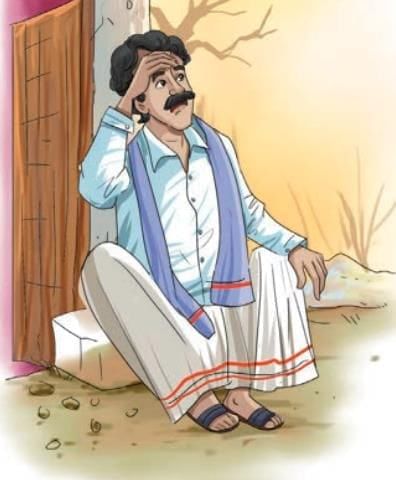
  • Velu is a hardworking farmer who wakes up early every day, hoping for rain.
  • This year, there has been no rain, which is unusual. Velu and his neighbours are worried about their crops.
  • They wait for weeks and months, but the rain does not come. The fields become dry and cracked.
  • Velu thinks about going to astrologers for help, but he does not believe they can bring rain.
  • He visits the weather office, but the people there also do not know when it will rain.
  • Feeling tired and thirsty, Velu sits under a tree and meets an old woman who is also resting.
  • The old woman smiles at Velu, but they both feel sad because of the lack of rain.
  • Velu expresses his frustration about not being able to work on his land due to the drought.
  • The old woman tells Velu that sometimes the land needs to rest, just like people do.
  • She explains that Nature takes care of everything and that the earth has its cycle.
  • Velu begins to understand that the land might be resting and that rain will eventually come.
  • As Velu walks home, he feels a breeze and sees clouds forming in the sky.
  • He becomes excited as he realises that rain may soon fall, bringing hope for his crops.
  • Velu runs home, feeling happy and hopeful about the future.

Try yourself:

What does the old woman tell Velu about the land?

  • A.It needs rain right away.
  • B.It needs to rest sometimes.
  • C.It is always dry.
  • D.It will never grow crops.

View Solution

Detailed Summary

Velu was a sincere and hardworking farmer who lived in a village. Every day, he woke up early to tend to his land. He loved his work and never took a break, even during festivals or holidays. For the past six years, his land had always yielded good crops like jowar and dal, and this made him proud and hopeful.

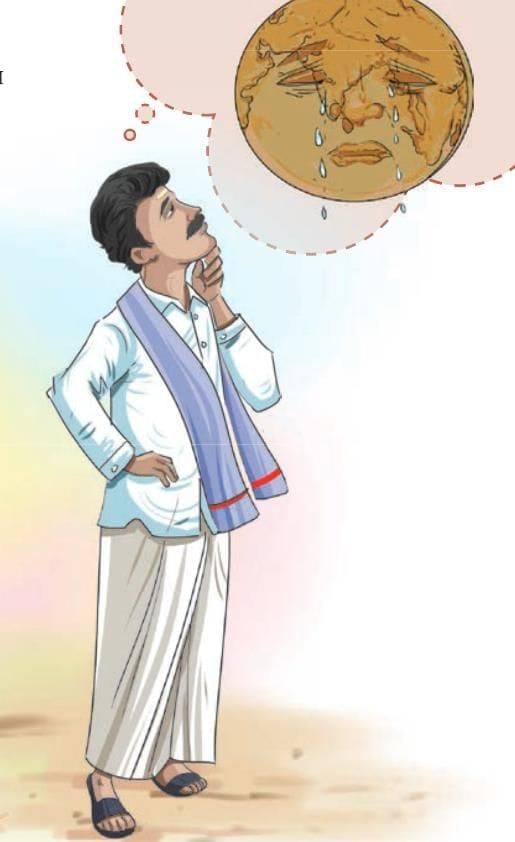
One morning, Velu woke up hoping it would rain. He looked at the sky, but there were no clouds, only a bright red sun rising in the sky. Without rain, Velu couldn’t plough his field, and this made him feel worried and helpless. This year, the usual monsoon rains had not come. The earth in the fields had dried up, cracked, and turned lifeless. Farmers like Velu, who depended on rain, had no choice but to wait and hope.

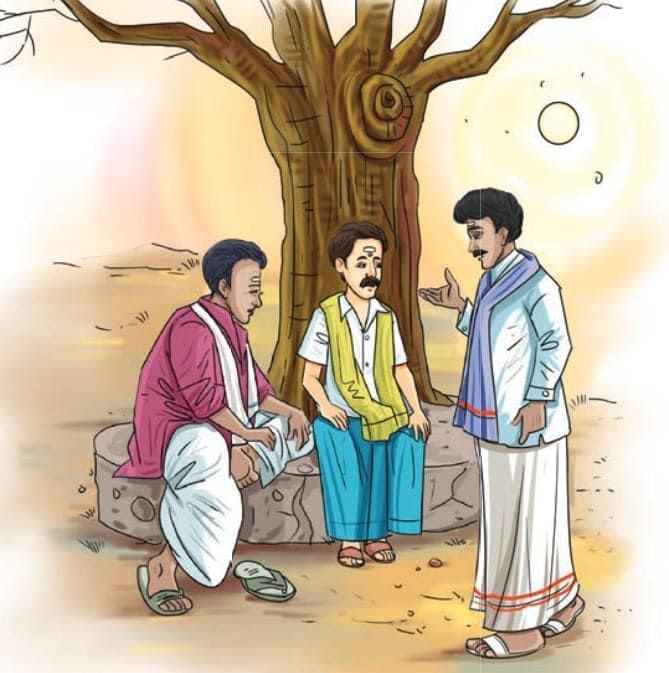
Some villagers began to lose patience. They suggested visiting astrologers to perform rituals or give advice to please the heavens. But Velu didn’t believe in these ideas. He trusted science and nature more. So, he went to the city to talk to people at the weather office. Sadly, even the experts there were confused. They told him that the weather conditions seemed right, but the rain still hadn’t come. Velu returned to his village feeling tired, dusty, and more discouraged than ever.

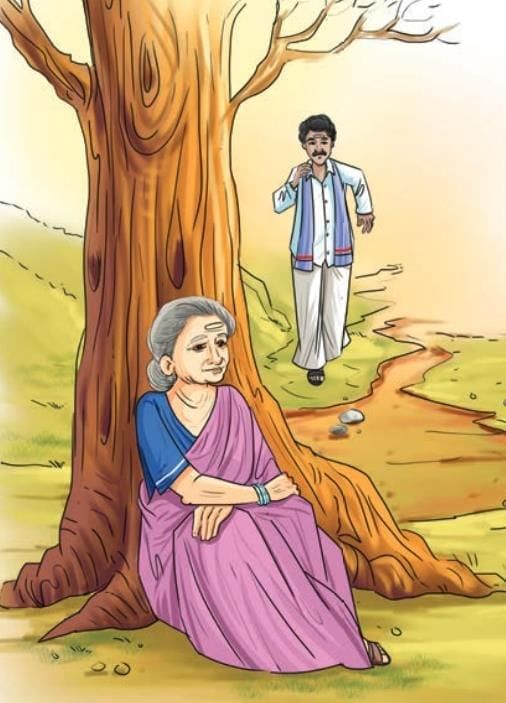
On the way back, Velu stopped under a shady tree to rest. There, he noticed an old woman already sitting under the tree. She had a kind face, sparkling eyes, and a warm smile. Velu was curious and began speaking with her. He shared his sadness and frustration, telling her how much he had worked over the years and how the lack of rain was affecting his family’s survival.

To Velu’s surprise, the old woman gently suggested that perhaps the land itself was tired. She explained that just like people, the earth also needs time to rest and recover. She reminded him that the soil had been worked for thousands of years and that nature often brings a pause so that everything can regain strength. Her words made Velu stop and think. He realised that maybe this long dry season was nature’s way of giving the land a break.

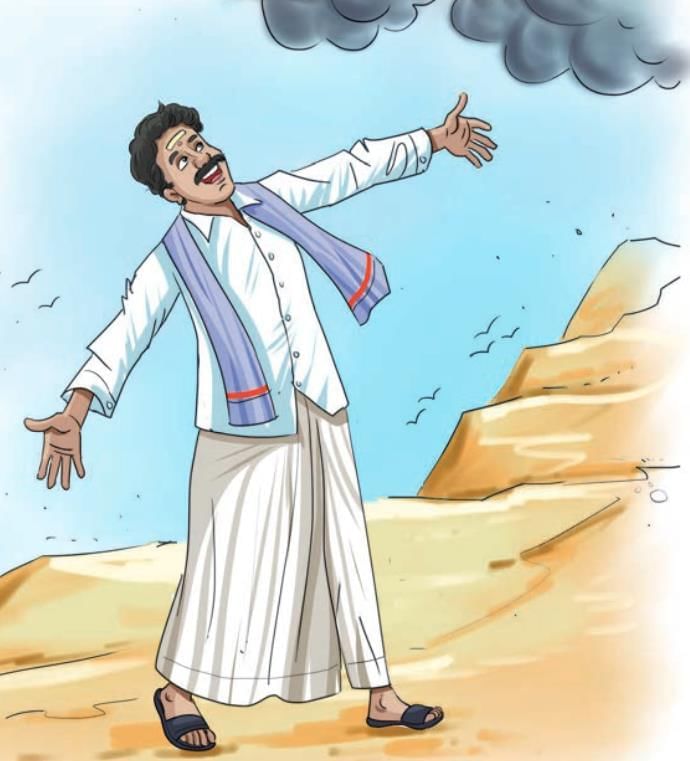
As Velu walked home, he thought deeply about what the old woman had said. The idea that the earth could be resting gave him peace. He began to feel hopeful again. Just then, he felt a cool breeze and a tiny drop of water on his shoulder. Looking up, he saw clouds gathering in the sky. The air became cooler, the light dimmed, and soon it looked like the rains would finally arrive.

Velu was filled with happiness. He understood that everything in nature happens for a reason and at the right time. Trusting nature, he ran home joyfully, ready to start again with a fresh heart.

Theme/Message

  • The main theme of the story is the connection between humans and nature. It shows how farmers depend on the weather for their crops.
  • Another important theme is patience and understanding. Sometimes, things do not happen right away, and we must wait for nature to take its course.
  • The story also highlights the importance of rest. Just like people need breaks, the land also needs time to recover and rejuvenate.
  • The message of the story is that hard work is important, but it is equally important to respect nature’s rhythms.
  • It teaches us to have hope, even in tough times. Just like Velu learned to trust that rain would come, we should trust that good things will happen in our lives, too.
  • By listening to the wisdom of the old woman, Velu learns that every living thing has a purpose and a cycle, and we must be patient with ourselves and with nature.

Try yourself:

What is the main idea of the theme?

  • A.A character’s action
  • B.A central message
  • C.A specific event
  • D.A plot twist

View Solution

Difficult Words

  • Crimson: A deep red colour.
  • Encouraging: Giving hope or confidence.
  • Dejected: Feeling sad and disappointed.
  • Astrologers: People who study the stars and planets to predict the future.
  • Wrinkled: Having lines or folds in the skin, usually due to age.
  • Fragrant: Having a pleasant smell.
  • Undisturbed: Not being interrupted or disturbed.
  • Jowar: A type of grain used for food, similar to sorghum.
  • Harvesting: Gathering crops when they are ready to be eaten.
  • Cracked: Having lines or breaks on the surface.
  • Frustration: A feeling of being upset or annoyed because you cannot do something.
  • Rejuvenate: To make something feel young or fresh again.

11. Harvest Hymn – Chapter Notes

Introduction

What if nature itself was part of a family—Sun like a father, Earth as a mother, and Rain as a gentle friend? 

In “Harvest Hymn” by Sarojini Naidu, the poet gives voice to grateful villagers who sing in praise of the forces that make life and harvests possible. Through rich and poetic language, the villagers express their thanks to Surya (Sun), Varuna (Rain), Prithvi (Earth), and the Supreme Lord for their roles in giving light, rain, soil, and spirit. It is a song of prayer, unity, and thanksgiving that shows how deeply connected human life is to nature.

About the Poet

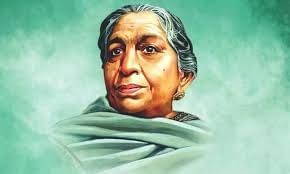
Sarojini Naidu (1879–1949), known as the “Nightingale of India,” was a gifted poet, freedom fighter, and the first woman Governor of an Indian state. She wrote lyrical poems about nature, love, Indian traditions, and national pride. Her poetry is known for its melody, emotional depth, and cultural richness. In “Harvest Hymn,” she blends spiritual devotion with the everyday lives of farmers, showing the beauty of rural India and its dependence on natural forces.Sarojini Naidu

Key Points of the Poem

  • The poem is a hymn of gratitude offered by villagers for a successful harvest.
  • It praises different natural forces—Sun (Surya), Rain (Varuna), and Earth (Prithvi)—each of which plays a vital role in farming.
  • The poem shows how deeply connected farming is to nature, and how grateful people are for these blessings.
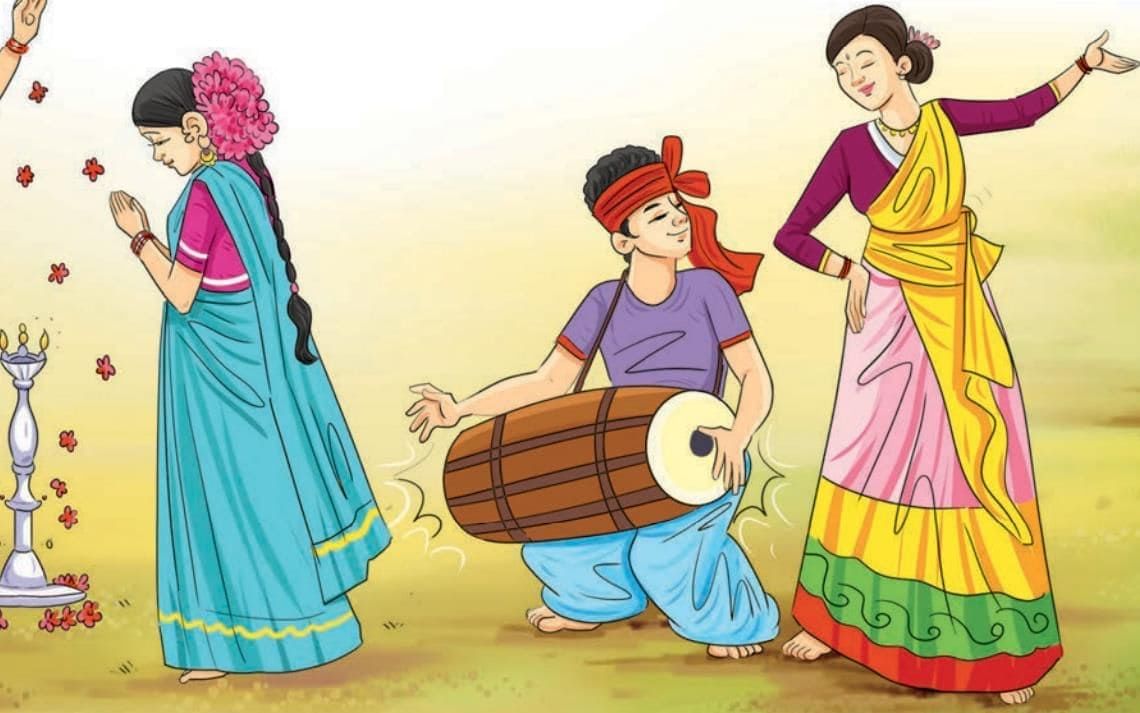
  • The villagers offer songs, flowers (garlands), and the fruits of their labour as tribute to these divine forces.
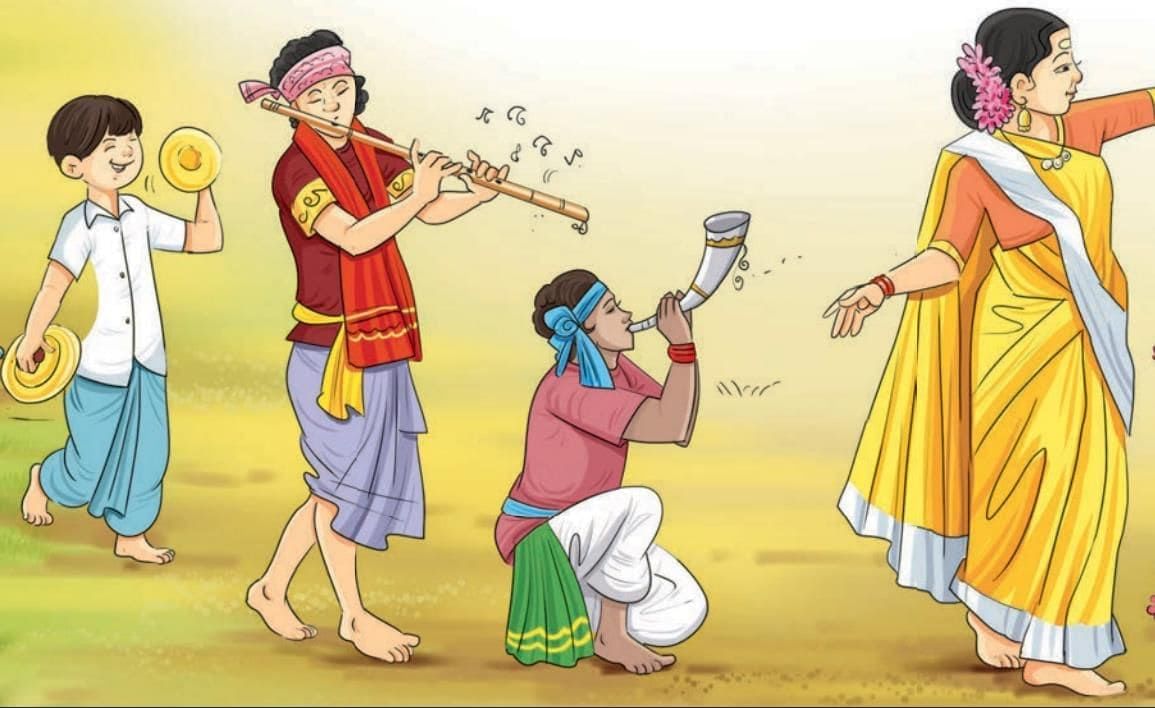
  • The poem uses rich language and musical instruments (cymbals, flutes, drums, pipes) to show how joyful and respectful the villagers are.
  • Both men and women participate in the hymn, and in the end, all voices join together to praise the Supreme Lord who is the giver and protector of life.
  • The poem highlights the Indian cultural tradition of treating nature as sacred and alive.
  • It encourages respect, unity, and devotion, reminding us to stay connected to the earth and be thankful for its gifts.

Try yourself:

What do the villagers offer to show gratitude for the harvest?

  • A.Songs and flowers
  • B.Money and gifts
  • C.Food and drinks
  • D.Books and toys

View Solution

Explanation of the Poem

Stanza 1

Men’s Voices:

Lord of the lotus, lord of the harvest,
Bright and munificent lord of the morn!
Thine is the bounty that prospered our sowing,
Thine is the bounty that nurtured our corn.
We bring thee our songs and our garlands for tribute,
The gold of our fields and the gold of our fruit;
O giver of mellowing radiance, we hail thee,
We praise thee, O Surya, with cymbal and flute.

Explanation:

The villagers begin by thanking Surya, the Sun God, who gives light and warmth to the earth. They call him “bright and munificent” because he generously shines every day, helping seeds grow into plants. Without the Sun, there would be no crops. The villagers say that the sunshine “prospered” (helped) their sowing and “nurtured” their corn, meaning the sunlight helped their seeds sprout and grow strong. They offer him songs, garlands, and their golden fields of crops and fruits. The use of musical instruments like cymbals and flutes shows joy and celebration. This stanza shows that Surya is seen not just as a source of light but also as a giver of life.

Stanza 2

Lord of the rainbow, lord of the harvest,
Great and beneficent lord of the main!
Thine is the mercy that cherished our furrows,
Thine is the mercy that fostered our grain.
We bring thee our thanks and our garlands for tribute,
The wealth of our valleys, new-garnered and ripe;
O sender of rain and the dewfall, we hail thee,
We praise thee, Varuna, with cymbal and pipe.

Explanation:

Next, they praise Varuna, the god of rain and water. He is called “lord of the rainbow” and “lord of the main,” meaning the ocean. Rain is shown as a kind and gentle force his “mercy” helps ploughed fields (furrows) and crops to grow. The villagers thank him for watering the earth, helping the grains to ripen. They offer him garlands and the fresh produce from their valleys. The phrase “new-garnered and ripe” means freshly gathered and fully grown crops. They celebrate him with cymbals and pipes, grateful for the rainfall that made the harvest possible.

Stanza 3

Women’s Voices:
Queen of the gourd-flower, queen of the harvest,
Sweet and omnipotent mother, O Earth!
Thine is the plentiful bosom that feeds us,
Thine is the womb where our riches have birth.
We bring thee our love and our garlands for tribute,
With gifts of thy opulent giving we come;
O source of our manifold gladness, we hail thee,
We praise thee, O Prithvi, with cymbal and drum.

Explanation:

Now, the women offer praise to Prithvi, Mother Earth. She is described lovingly as the “queen of the gourd-flower” and the “sweet and omnipotent mother.” The earth is shown as full of life-giving power. Her “plentiful bosom” (chest) feeds all people, and her “womb” (symbol of birth) gives birth to all the riches of the land. This imagery makes us feel how nurturing and important the earth is—like a mother who feeds, protects, and gives life. The women come with garlands and gifts of the harvest, praising her with cymbals and drums. This part of the poem reminds us to love and care for the land that supports us.

Stanza 4

All Voices:
Lord of the Universe, Lord of our being,
Father eternal, ineffable Om!
Thou art the Seed and the Scythe of our harvests,
Thou art our Hands and our Heart and our Home.
We bring thee our lives and our labours for tribute,
Grant us thy succour, thy counsel, thy care.
O Life of all life and all blessing, we hail thee,
We praise thee, O Lord, with cymbal and prayer.

Explanation:

In the final stanza, everyone comes together to pray to the Supreme Lord, called “Lord of the Universe” and “Father eternal.” He is too great to describe (ineffable) and is the source of all life. He is called both the “Seed” (beginning) and “Scythe” (end) of the harvest—meaning he controls all stages of life and death. The villagers offer not just crops, but their own lives and hard work. They ask for his succour (help)counsel (guidance), and care (protection). The poem ends with cymbals and prayer, showing respect, faith, and the idea that God lives in everything nature, work, and people.

Theme /Message

Theme

  • Gratitude to Nature: The poem celebrates nature’s role in human life and farming.
  • Unity of Men, Women, and Nature: Everyone joins in devotion, showing unity and respect for natural forces.
  • Divine Presence in Daily Life: Nature is not just physical—it is divine and deserves our prayers and offerings.
  • Balance and Harmony: The poem shows the harmony between humans and nature when people work with care, prayer, and gratitude.

Message

  • We should be thankful for the natural forces—sun, rain, and earth—that make life and food possible.
  • Hard work, prayer, and respect must go together in life.
  • Nature is sacred and should not be taken for granted.
  • If we respect the land, water, and sky, they will continue to bless us in return.

Try yourself:

What is the main theme of the text?

  • A.Nature
  • B.Learning
  • C.Adventure
  • D.Friendship

View Solution

Difficult Words 

  • Harvest: Collecting ripe crops
  • Munificent: Very generous or kind
  • Bounty: Gifts or blessings of nature
  • Prospered: Helped something grow well
  • Nurtured: Cared for and developed
  • Radiance: Bright light or glow
  • Cymbal: A round metal instrument that makes a clashing sound
  • Beneficent: Kind and helpful
  • Furrows: Long, narrow cuts in soil made for planting seeds
  • Garnered: Gathered or collected
  • Opulent: Rich and full
  • Omnipotent: All-powerful
  • Womb: The part of the body where life begins (used symbolically for Earth)
  • Manifold: Many and varied
  • Ineffable: Too great to be described
  • Scythe: A curved tool used to cut crops
  • Succour: Help or support
  • Counsel: Advice or guidance
  • Hail: To greet with respect

10. The Cherry Tree – Chapter Notes

Introduction

The Cherry Tree is a touching short story written by the renowned Indian author Ruskin Bond. Set in the hill town of Mussoorie, it beautifully captures the bond between a young boy named Rakesh and his grandfather, as they nurture a cherry tree from a single seed to a full-grown tree. The story highlights patience, growth, nature’s wonder, and the quiet joys of rural life. It shows how small acts like planting a seed can grow into something meaningful over time.

About the Author

Ruskin Bond is one of India’s most beloved writers for children. Born in 1934 in Kasauli, he has written hundreds of short stories, novels, and poems that often focus on nature, childhood, and life in the hills. His writing is simple, warm, and filled with gentle humour and wisdom. Bond’s stories reflect his deep love for the natural world and his ability to find magic in everyday life. He has won many awards, including the Padma Shri and Padma Bhushan, for his contribution to literature.

Ruskin Bond

Key Points of the Story

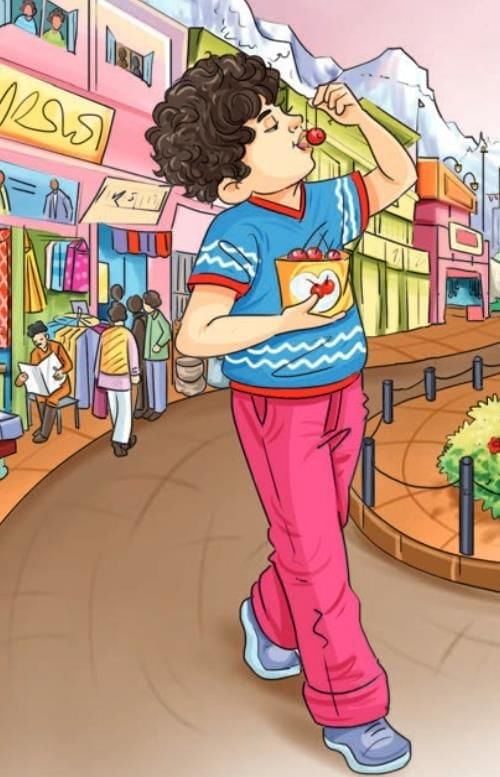
  • Rakesh is a six-year-old boy who loves cherries, brought from the Kashmir Valley, which he buys on his way home from school.
  • He lives with his grandfather in a cottage at the edge of Mussoorie, while his parents live in a village where there are no schools.
  • Rakesh is sent to live with his grandfather so he can go to school and learn.
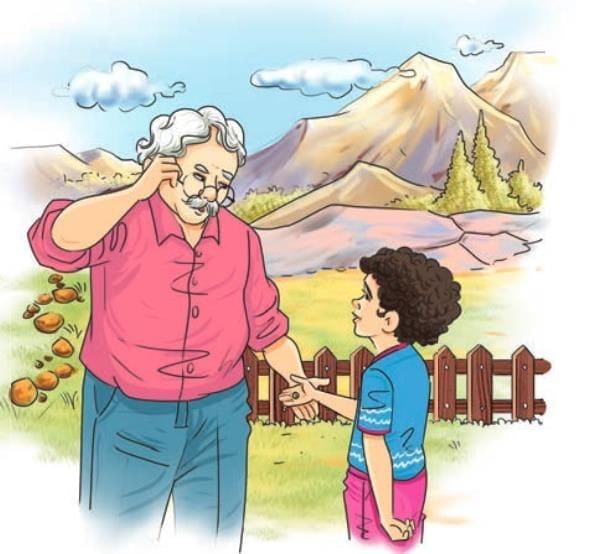
  • After eating cherries, Rakesh finds the seed and asks his grandfather if it is lucky. His grandfather tells him to plant it to make it lucky.
  • Rakesh digs a small hole in the garden and plants the cherry seed, forgetting about it soon after as he plays cricket with friends.
  • As winter comes, Rakesh and his grandfather enjoy telling stories by the fire, while Rakesh finds joy in reading the newspaper to his grandfather.
  • Spring arrives, and Rakesh discovers the cherry seed has sprouted into a tiny tree, which brings him joy.
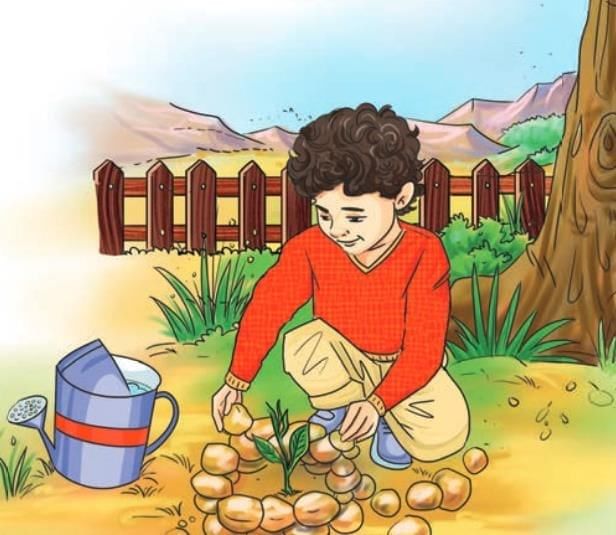
  • Rakesh takes care of the tree by watering it and protecting it with pebbles, hoping it will grow strong.
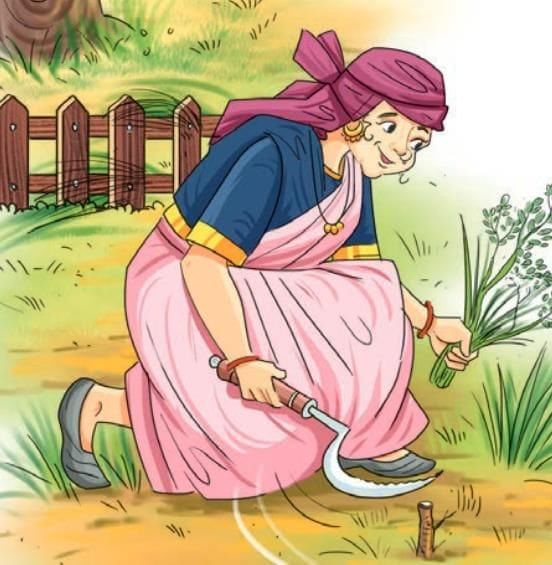
  • During the rainy season, the cherry tree faces challenges, such as being eaten by a goat and being cut in half by a woman with a scythe.
  • Despite these challenges, the cherry tree continues to grow and thrive, showing resilience.
  • As Rakesh grows older, he continues to care for the cherry tree, which grows taller and eventually bears fruit.
  • Rakesh learns the importance of nurturing and caring for something he has planted, as it becomes special to him and his grandfather.
  • The story highlights the bond between Rakesh and his grandfather, as well as the connection they share with nature.

Try yourself:

What does Rakesh plant in the garden?

  • A.A tree branch
  • B.A vegetable
  • C.A cherry seed
  • D.A flower

View Solution

Detailed Summary  

Rakesh was a six-year-old boy living with his grandfather on the outskirts of Mussoorie, near the forest. One day, while walking home from the bazaar, he ate some sweet-and-sour cherries. He gave one to his grandfather and kept one seed in his mouth, rolling it around. Curious, he asked if cherry seeds were lucky. His grandfather replied that luck only comes when we make use of something, so Rakesh decided to plant it.

Rakesh planted the seed in a shady corner of the garden where the earth was soft. He soon forgot about it as he went off to play with his friends. Time passed, and winter came, making the garden bare. Grandfather and Rakesh would sit by the charcoal fire, telling and listening to stories. Rakesh also read aloud from the newspaper for his grandfather, though he found it boring compared to stories.

With the arrival of spring, Rakesh saw wild ducks flying north in a V-shape, a sign that winter had ended. One day, while playing in the garden, he bent to pick up a twig and realised it was the cherry seed he had planted—it had sprouted! Excited, he ran to show Grandfather. The plant was only four inches tall, but it had rooted itself well.

Rakesh began caring for the plant, watering it and surrounding it with pebbles “for privacy.” Though he didn’t notice daily changes, slowly it grew. During the monsoon season, the cherry plant thrived, reaching two feet tall. But one day, a goat entered the garden and ate all the leaves. Rakesh was upset, but Grandfather comforted him, saying Cherry trees are tough.

Soon after, a woman cutting grass accidentally cut the tree in half with her sickle. Grandfather scolded her, but the damage was done. Rakesh thought the tree would die, but once again, it began to grow back, sending out fresh shoots. By next summer, the tree was almost up to Rakesh’s chest.

Rakesh, now eight, went home to his village for the monsoon to help his parents on their farm. He returned stronger, and to his joy, the cherry tree had grown another foot. He continued to water it, even when it rained, to show the tree he was present. One day, he saw a praying mantis on its branch, its first visitor.

Later, a hairy caterpillar began eating its leaves, but Rakesh removed it, telling it to come back as a butterfly. Winter returned with snow covering the land, and Grandfather’s stories turned gloomy because the newspaper couldn’t be delivered. Mice made homes in the roof, and everyone waited for spring.

On Rakesh’s ninth birthday in February, the sun finally came out. Grandfather went to the garden and suddenly shouted for Rakesh to come quickly. On a branch of the cherry tree, there was a single pale pink blossom, the first flower. Rakesh and Grandfather looked at it as if it were a miracle.

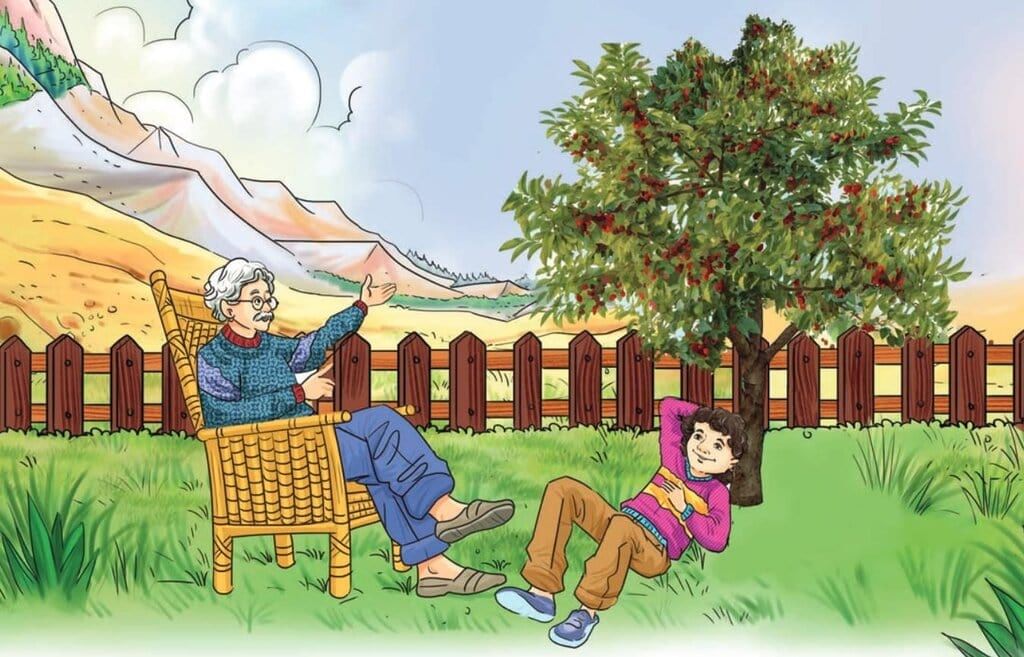
The following year, more blossoms appeared, and the tree grew taller than both Rakesh and Grandfather. Birds and bees visited it. Rakesh tasted a cherry but found it too sour, though birds enjoyed them. One warm afternoon, he found Grandfather resting under the tree, enjoying its shade. Rakesh joined him and looked up at the sky through the leaves. As the stars came out and crickets began to chirp, Rakesh wondered why this tree felt so special. Grandfather replied, “Because we planted it ourselves.” Rakesh gently touched the bark and asked, “Is this what it feels to be God?” Through their shared experiences with the cherry tree, Rakesh learned about growth, care, and the bond between nature and family. The cherry tree was not just a tree; it was a symbol of their love and the memories they created together.

Theme/ Message

  • The main theme of the story is the connection between nature and humanity. Rakesh’s relationship with the cherry tree symbolises how nurturing something can lead to growth and happiness.
  • Another important theme is resilience. The cherry tree faces many obstacles, yet it continues to grow stronger, showing that challenges can be overcome with care and persistence.
  • The story emphasises the importance of family, as the bond between Rakesh and his grandfather is central to the narrative. Their shared experiences bring them closer together.
  • The message of the story is that every small action, like planting a seed, can lead to something wonderful. It teaches that with love and care, we can create beautiful things in our lives.
  • Additionally, the story conveys that patience and dedication are essential when nurturing relationships or projects. Rakesh learns that taking care of the cherry tree requires time and effort.
  • Ultimately, the story reminds readers to appreciate the simple joys in life, such as the beauty of nature and the warmth of family connections.

Try yourself:

What is the main idea of the theme?

  • A.A specific event
  • B.A lesson or moral
  • C.A character’s journey
  • D.A historical fact

View Solution

Difficult Words

  • Terraced: Arranged in a series of flat areas or levels, often used for farming on hillsides.
  • Spirited: Full of life and energy; lively.
  • Resilience: The ability to recover quickly from difficulties or challenges.
  • Blossom: A flower or a mass of flowers; the state of flowering.
  • Scythe: A tool used for cutting grass or crops, consisting of a long, curved blade.
  • Feasting: Eating and plentifully enjoying food.
  • Yielding: Soft and easy to work with; giving way under pressure.
  • Peering: Looking closely or carefully at something.
  • Sprouting: The process of a seed beginning to grow and develop.
  • Caterpillar: The larval stage of a butterfly or moth, usually a worm-like creature.
  • Charcoal: A black carbon material made from burning wood, used for cooking and heating.
  • Deodar: A type of tall evergreen tree found in the Himalayas.
  • Bulbul: A type of bird known for its beautiful singing.
  • Whispered: To speak very softly or quietly.

9. Spectacular Wonders – Chapter Notes

Introduction

India is a country filled with magical and surprising natural wonders. From glowing waters and disappearing seas to hills where gravity seems to vanish, nature here works in mysterious and fascinating ways. These wonders amaze everyone, both people living in India and those visiting from other countries. In this chapter, we travel through seven extraordinary places that show us how powerfulcreative, and full of surprises nature can be.

Key Points of the Story

  • The Valley of Flowers, located in Uttarakhand, is home to around 600 species of beautiful flowers, including orchids, poppies, and daisies. It is a stunning sight, especially during the blooming months of May to October.
  • This valley is not only famous for its flowers but also for its wildlife, which includes rare animals like the snow leopard and the red fox. The place is surrounded by the majestic Himalayan mountains.
  • The Living Root Bridges in Meghalaya are unique bridges made from the roots of trees. They are built by the local people and are a part of their culture. These bridges are strong and can last for hundreds of years.
  • The Lonar Crater Lake in Maharashtra was formed by a meteorite crashing into the Earth. This lake is special because it is the only crater in India made of basalt rock and is one of the largest in the world.
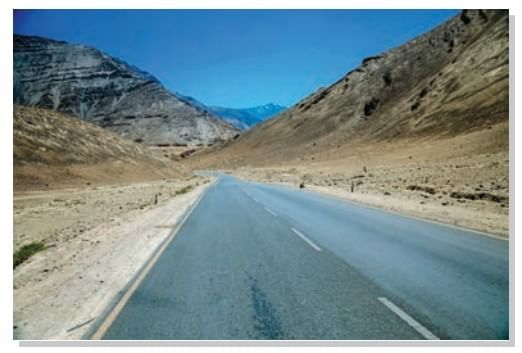
  • In Ladakh, there is a place called the Magnetic Hill, where cars can roll uphill due to an optical illusion. This strange phenomenon attracts many visitors who want to see it for themselves.
  • Kumbalangi in Kerala features glowing waters due to tiny organisms called microplankton. This beautiful sight attracts tourists and is part of the village’s eco-tourism efforts.
  • The Sundarbans is a large mangrove forest in West Bengal. It is home to many animals, including the famous Bengal tiger. This forest helps protect the coastline from erosion.
  • Chandipur Beach in Odisha is famous for its disappearing sea. The water moves away and comes back, making it look like the sea is playing hide-and-seek with people.
  • These natural wonders in India showcase the beauty and mystery of nature. Each place tells a unique story and shows how magical the world can be.
  • These phenomena remind us of the power of nature and how it can surprise and delight us.

Try yourself:

What is unique about the Living Root Bridges in Meghalaya?

  • A.Built from tree roots
  • B.Made of stone
  • C.Built by machines
  • D.Made of metal

View Solution

Detailed Summary

India is full of natural wonders that are both beautiful and mysterious. These places are not only amazing to look at but also tell fascinating stories about nature’s creativity. Let’s explore some of these magical places and the secrets they hold.

1. The Valley of Flowers, Uttarakhand

Tucked in Uttarakhand, the Valley of Flowers is like a dreamland full of colour. It blooms with around 600 different flowers – orchids, poppies, primulas, marigolds, daisies, and anemones. The entire valley becomes a painting of nature’s beauty from May to October. The trek to reach the valley is exciting too, with waterfalls and wild streams along the way. This valley is also home to rare animals like the grey langur, flying squirrel, red fox, lime butterfly, and even the snow leopard. With the majestic Himalayas in the background, the Valley of Flowers is a UNESCO World Heritage Site that gives visitors an unforgettable experience.

2. The Living Root Bridges, Meghalaya

In Meghalaya, people have created real-life magical bridges using tree roots. These living root bridges are made by guiding the roots of trees to grow across streams and rivers. Unlike bamboo or wooden bridges that easily get damaged during monsoons, these root bridges are strong and can last hundreds of years. They are built by indigenous people and reflect their deep connection with nature. Some of these bridges are 50 to 100 feet high, and the longest one is 175 feet long. There are nearly 100 such bridges across various villages, and they are also recognised as part of UNESCO’s world heritage.

3. The Lonar Crater Lake, Maharashtra

Lonar Crater Lake, located in Buldhana, Maharashtra, is a geological wonder formed thousands of years ago when a huge meteorite hit the Earth. It is the only meteorite crater in India formed in basaltic rock and is the third-largest in the world. At the centre of the perfectly round crater is a salty lake, creating a strange and beautiful sight. It’s a mix of space science and Earth’s natural beauty. The crater rim gives a great view of the area, reminding us of how powerful and mysterious nature can be.

4. Magnetic Hills, Ladakh

In the Leh district of Ladakh, there’s a place called Magnetic Hill that seems to go against the laws of gravity. A yellow signboard marks the area, telling visitors to park their vehicles in a white-marked spot. When they do, the cars appear to roll uphill by themselves at a speed of about 20 km/h! This amazing trick is an optical illusion caused by the way the surrounding land and horizon are aligned. Even though it feels like the car is going uphill, it is rolling downhill. This strange effect has puzzled and delighted visitors for years.

5. Glowing Waters of Kerala

At night, in the village of Kumbalangi near Kochi, the waters glow like magic! This glow is caused by tiny sea organisms called microplankton. When disturbed, they light up, creating a glowing effect in the water, especially at night. This natural phenomenon, known as bioluminescence, has made Kumbalangi a popular eco-tourism spot. Tourists enjoy the glow and also explore village life, its delicious food, and peaceful culture. It’s a place where nature and people live in harmony.

6. The Sundarbans, West Bengal

The Sundarbans is a huge mangrove forest spread over 1,400 km² in West Bengal, at the delta formed by the Ganga, Brahmaputra, and Meghna rivers. These forests grow in salty, muddy areas, and their roots slow down tides and help protect the coastline. The name comes from the sundari trees that are common there. The Sundarbans is also a wildlife treasure. It is home to the famous Bengal tiger, along with the estuarine crocodile, Indian python, and many rare birds. This ecosystem shows how nature adapts and survives in extreme conditions.

7. The Invisible Chandipur Beach, Odisha

In Odisha, the Chandipur Beach in Balasore district plays a magical trick every day, the sea disappears and then returns! During low tide, the water retreats by 2 to 5 kilometres, making the sea vanish before your eyes. Then, during high tide, it comes back to the shore. This daily hide-and-seek is caused by natural tidal movements. Watching the sea go away and return is a unique experience and one of nature’s coolest shows.

These amazing places across India remind us that nature is full of surprises. Each one teaches us something new about the Earth, blending beauty with science, and inspiring us to protect these treasures for future generations.

Theme/ Message

  • The theme of this chapter is the extraordinary beauty and mystery of nature. It highlights how different natural phenomena can amaze us and showcase the uniqueness of our planet.
  • Each natural wonder described in the chapter teaches us about the importance of preserving nature. It shows that nature has incredible power and creativity.
  • The message of the chapter emphasises that we should appreciate and protect our natural wonders. They are valuable parts of our world that need care and respect.
  • Additionally, these wonders inspire curiosity and invite exploration. They encourage us to learn more about nature and its amazing capabilities.
  • Ultimately, the chapter reminds us that there is so much beauty in our world, and we should take the time to experience and enjoy it.

Try yourself:

What is the main theme of the text?

  • A.Love
  • B.Adventure
  • C.Friendship
  • D.Courage

View Solution

Difficult Words

  • Phenomena: Rare or unusual events or occurrences in nature.
  • Exotic: Unusual and attractive, often from distant places.
  • Botanical: Related to plants and their study.
  • Innovative: Introducing new ideas or methods.
  • Celestial: Related to the sky or outer space.
  • Optical Illusion: A visual trick that makes something appear different from what it is.
  • Bioluminescence: The ability of living organisms to produce light.
  • Mangrove: A type of tree that grows in coastal areas in salty water.
  • Retreat: To move back or withdraw.
  • Erosion: The process by which soil and rock are worn away, often by water or wind.
  • Cultural: Related to the ideas, customs, and social behaviour of a particular group of people.
  • Ecotourism: Responsible travel to natural areas, conserving the environment and improving the well-being of local people.
  • Indigenous: Native to a particular place or region.

8. The Magic Brush of Dreams – Chapter Notes

Introduction

Can a simple brush create magic? 

In The Magic Brush  (adapted from a folk tale), we meet Gopi, a young girl with a kind heart and a big imagination. One day, while drawing pictures in the sand, she is gifted a special paintbrush, but with one condition: she must use it only to help the poor. What follows is a thrilling story of bravery, kindness, and the triumph of good over greed. Through Gopi’s journey, the poem shows how imagination and goodness can change the world.

About the Poet

The poem is adapted from a folk tale and does not have a specific poet credited. Folk tales are stories passed down through generations, often containing lessons, morals or cultural values. This particular tale celebrates creativity, kindness, and the importance of helping others. The characters in folk tales are usually simple and relatable, allowing readers to connect with them easily. In this poem, we see the character Gopi, a young girl who possesses a magical brush that can bring her paintings to life. The story highlights the themes of generosity, the power of art, and the conflict between wealth and compassion. Folk tales like this one often teach us important lessons while entertaining us with imaginative scenarios and characters.

Key Points of the Poem

  • The poem tells the story of a girl named Gopi who has a magical brush.
  • Gopi is tasked with gathering food but is more interested in painting.
  • A mysterious man gives her a brush that can create real objects.
  • Gopi decides to use her magic for good, helping the poor villagers.
  • The Zamindar, a wealthy landowner, demands that Gopi paint for him.
  • Gopi refuses to paint for the rich, choosing to help the needy instead.
  • She is imprisoned by the Zamindar for her refusal.
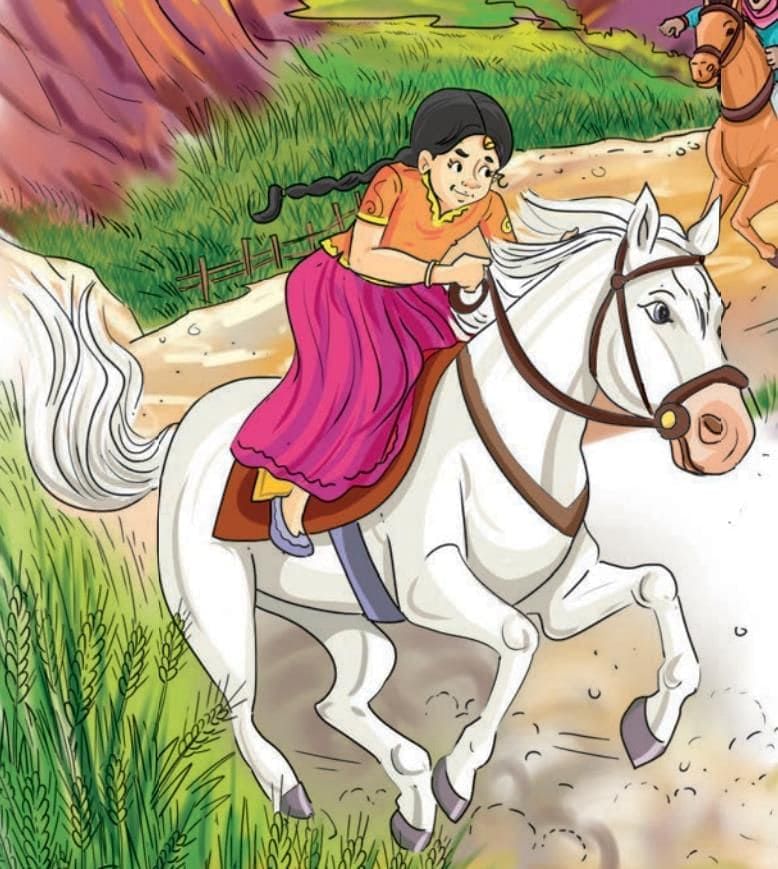
  • Gopi cleverly escapes using her magic brush to paint a road and a horse.
  • She outsmarts the Zamindar and his men, leading them on a wild chase.
  • In the end, Gopi paints a feast for the villagers, celebrating their victory.
  • The poem teaches valuable lessons about kindness and using one’s talents for good.

Try yourself:

What does Gopi use her magical brush for?

  • A.To escape from prison
  • B.To gather food
  • C.To help poor villagers
  • D.To paint for the rich

View Solution

Explanation of the Poem

Stanza 1

“Go and gather wild beans, Gopi,
Go and fetch some rice.
Go and pluck the mangoes
And bring home something nice.”

Explanation:
At the beginning of the poem, Gopi’s family gives her some tasks. She is asked to go out and collect wild beans, rice, and mangoes—some basic food items from the village or forest. The family wants her to bring back something good to eat. This shows that Gopi belongs to a simple, rural household where people gather food from nature.

Stanza 2

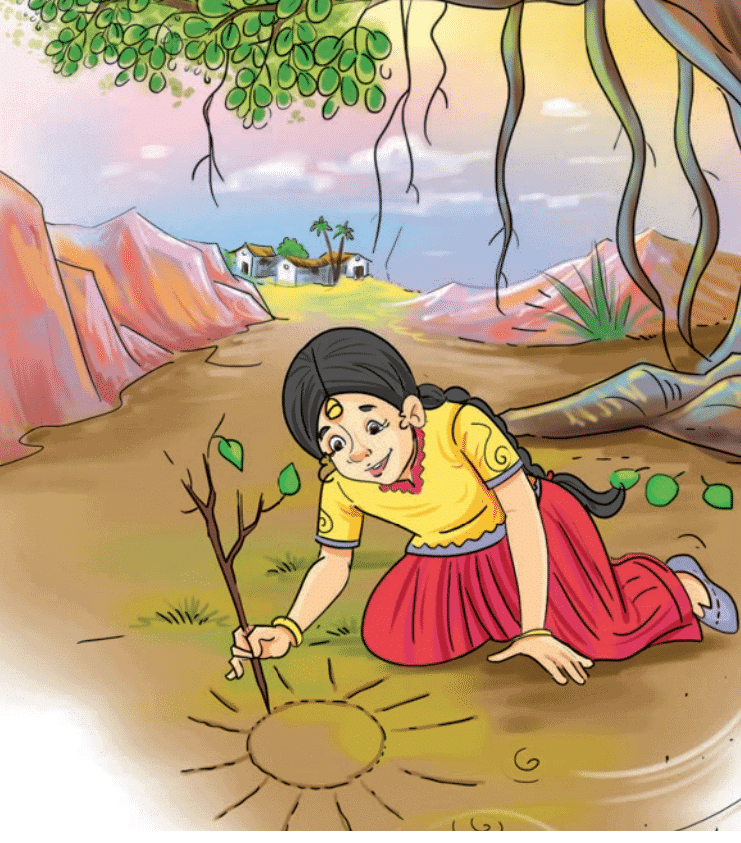
Gopi sits beneath the banyan,
A twig is in her hand.
She sits there drawing pictures,
Pictures in the sand.

Explanation:
Instead of doing the work she was given, Gopi sits under a big banyan tree. She holds a small twig (like a thin stick) in her hand and begins drawing pictures in the sand. This shows her love for creativity and imagination. Even though she was sent to bring food, her mind is full of dreams and drawings.

Stanza 3

The winds blow by and sweep away
The pictures in the sand.
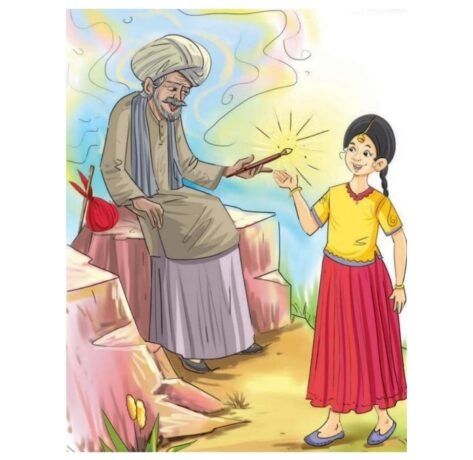
But on a stone there sits a man,
A brush is in his hand.

Explanation:
The wind comes and wipes away Gopi’s drawings, but something magical happens. A mysterious man is sitting nearby on a stone. He holds a brush in his hand. This moment shows that something unusual or magical is about to happen in Gopi’s life.

Stanza 4

He looks around. He calls to Gopi.
“Come here!” he whispers. “Hush!
We mustn’t let the village know
About this magic brush.”

Explanation:
The man quietly calls Gopi over. He speaks in a whisper, telling her not to tell anyone else about the brush. He calls it a magic brush, which makes us wonder what powers it has. The secrecy shows that it is something very special and powerful, not for everyone to use.

Stanza 5

He slips the brush into her hand
And tells her to be sure,
“Paint not for the wealthy ones,
But only for the poor.”

Explanation:
The man hands the brush to Gopi and gives her a strong rule—she must never use it to help rich people (the wealthy), only the poor and needy. This shows that the brush is meant to bring justice and kindness, not to make greedy people richer.

Stanza 6

“Did you gather wild beans, Gopi?
Did you fetch some rice?
Did you pluck the mangoes
And bring home something nice?”

Explanation:
Gopi’s family or someone from the house asks if she collected the food they sent her for. They expect her to return with real things like beans, rice, or mangoes. They don’t know anything about the magic brush yet.

Stanza 7

“No beans, no rice, no mangoes!”
Gopi grins and runs inside.
She paints a bowl of khichdi
and waits,
Until the paint has dried

Explanation:
Gopi smiles mischievously and runs inside. She hasn’t brought any real food, but she uses her new magic brush to paint a bowl of khichdi (a rice and lentil dish). She waits for the paint to dry, showing that she trusts the brush’s powers. This is the first time we see how the brush works.

Stanza 8

“The bowl is full of khichdi, Gopi!”
Into the house the villagers streamed
The young and old all wish to see
The magic brush of dreams.

Explanation:
Amazingly, the painting turns into a real bowl of khichdi! The news spreads quickly, and many villagers come to Gopi’s house to see this “magic brush of dreams.” People of all ages are curious and amazed by what she can do. Gopi is now seen as someone special in the village.

Stanza 9

She paints a muffler for a farmer,
A plough for another man,
A shawl for a grandmother,
And for a girl, a fan.

Explanation:
Gopi uses the magic brush to help people in the village. She paints useful things like a muffler (scarf) to keep a farmer warm, a plough to help with farming, a shawl for a grandmother to stay cozy, and a fan to keep a girl cool. All these things become real, proving Gopi is generous and thoughtful.

Stanza 10

And soon the news spreads far and wide,
Through forests, fields, and plains,
Until the Zamindar himself
Hears of these magic gains.

Explanation:
As Gopi continues helping people, the story spreads to places far away. Eventually, the Zamindar (a rich landlord or ruler) hears about the magic brush. The poem now hints at a coming conflict between Gopi and someone greedy.

Stanza 11

“I order you to paint for me,
A fortress tall and grand.
Paint treasures, jewels, and riches rare,
Enough to rule this land.”

Explanation:
The Zamindar commands Gopi to paint a huge palace (fortress) and lots of jewels and riches so he can become more powerful. He only thinks about wealth and power—not about helping others.

Stanza 12

Gopi bows and shakes her head.
“My lord, I can’t comply.
I swore to use this magic brush
To help the needy by.”

Explanation:
Gopi politely refuses. She says she made a promise to only help the poor. The word “comply” means to agree or obey. Gopi is brave and sticks to her values, even when speaking to a powerful man.

Stanza 13

The Zamindar roars and stamps his foot.
He bellows to his men,
“Seize this brush and seize the girl.
Throw her in the pen!”

Explanation:
The Zamindar becomes very angry and shouts loudly (bellows). He tells his guards to take both Gopi and the brush and put her in the pen—a small, closed prison. He wants to take control by force.

Stanza 14

Now Gopi waits inside the cell,
Upon a cold mud floor.
Until the Zamindar returns
And shouts through the door.

Explanation:
Gopi is now locked in a dark and uncomfortable prison. She sits on the cold mud floor, waiting. This scene shows her difficult situation and builds suspense about what will happen next.

Stanza 15

He holds the brush. He thunders loud,
“Paint my fortress tall!
Paint gold and rubies, emeralds bright,
And you shall leave this hall!”

Explanation:
The Zamindar offers Gopi freedom—but only if she paints treasures for him. He talks about rubies and emeralds (precious stones) and a fortress, which again shows his greed.

Stanza 16

That night the Zamindar lies in bed,
Dreaming of his gold,
While Gopi paints a winding road,
A horse both strong and bold.

Explanation:
While the Zamindar sleeps, dreaming of riches, Gopi uses the brush cleverly. She paints a winding road and a strong horse—tools to help her escape from prison.

Stanza 17

The road leads out of prison gates.
The horse, she swiftly urges
Gopi leaps on and gallops fast,
Through fields and many villages.

Explanation:
The magic painting comes to life. The road opens the way out of the prison, and the horse lets Gopi escape. She rides through the countryside quickly, showing her courage and cleverness.

Stanza 18

“It’s Gopi! It’s Gopi! She’s back again!”
Say the villagers, merry and kind.
But Gopi keeps on painting still,
With the Zamindar’s men following behind.

Explanation:
The villagers are happy to see Gopi again, but she doesn’t stop—she keeps painting, as the Zamindar’s men are chasing her. The tension rises again as the story is not over yet.

Stanza 19

She paints a mighty river wide,
Its currents fast and deep.
The Zamindar and all his men
Stop short and cannot leap.

Explanation:
To block her pursuers, Gopi paints a wide, fast-flowing river. It becomes real, and the Zamindar’s men can’t cross it. This shows how she uses her wit to protect herself.

Stanza 20

“Now should I paint a beast
To leap and chase you through?
Stop this chase or it will feast
On you, and you and you!”

Explanation:
Gopi warns the Zamindar’s men that she could paint a dangerous beast to attack them. Her warning is powerful and scary. She shows that she can defend herself without hurting anyone—unless she’s forced to.

Stanza 21

The Zamindar cries, “No, no, no more!
I’ll leave, I’ll go away!”
He turns and flees; his men behind
Dare not choose to stay.

Explanation:
The Zamindar becomes scared and runs away, shouting that he gives up. His men follow him because they are too afraid to stay behind. Gopi has won without using violence—just her cleverness and courage.

Stanza 22

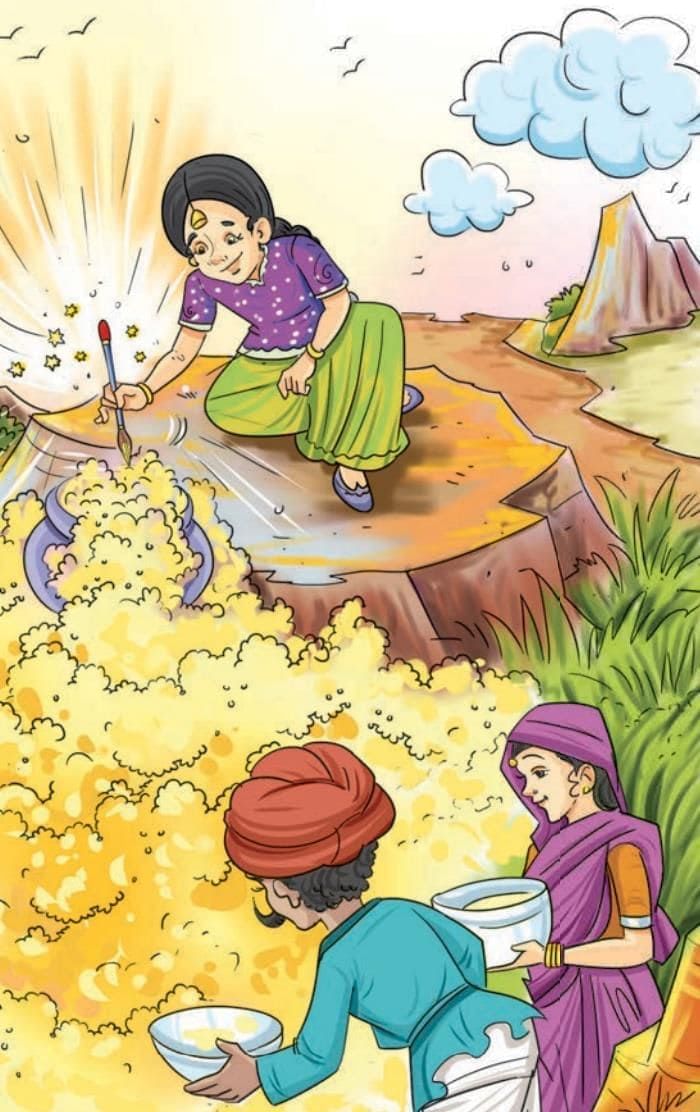
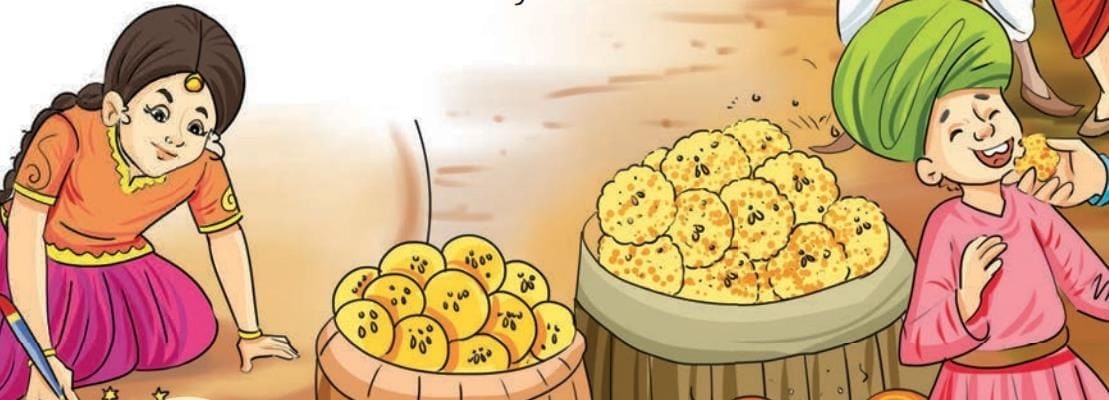
Now Gopi paints for the village folk,
A feast of sweets and tea.
A courtyard bright, a band to play,
And songs of victory.

Explanation:
Back in the village, Gopi paints a big celebration for everyone. She paints sweetstea, music, and joyful things. Everyone celebrates her return and her victory. The ending is happy and festive.
Try yourself:

What is the main focus of the poem?

  • A.Life lessons
  • B.Friendship
  • C.Love
  • D.Nature

View Solution

Theme/MessageTheme

  • The Power of Art: The poem emphasises how art can be magical and transformative. Gopi’s paintings come to life, showing that creativity can change the world around us.

  • Helping Others: Gopi chooses to use her magic brush to help the poor villagers instead of painting for the wealthy. This highlights the importance of generosity and community.
  • Bravery and Resistance: Gopi shows bravery by standing up to the Zamindar. She refuses to give in to pressure and remains committed to her promise to help those in need.
  • Wealth vs. Kindness: The conflict between Gopi and the Zamindar illustrates the struggle between the rich and the poor, and how true value lies in kindness rather than wealth.

Message

  • Use Your Talents Wisely: The poem encourages readers to use their skills for good. Gopi’s magic brush symbolises the power of creativity to bring joy and help others.
  • Stand Up for What is Right: Gopi’s refusal to paint for the wealthy teaches us the importance of standing up for our beliefs, even in difficult situations.
  • Community Matters: The joy and celebration of the villagers show that we are stronger together. Helping one another leads to happiness and unity.
  • True Happiness Comes from Giving: The ending of the poem, where Gopi paints a feast for the villagers, reinforces that true happiness comes from sharing and caring for others.

Difficult Words

  • Zamindar: A landowner or landlord, often with power over the village.

  • Muffler: A piece of clothing worn around the neck for warmth.

  • Plough: A tool used in farming to turn over soil for planting.
  • Emerald: A precious green gemstone.
  • Fortress: A large fortified building or military stronghold.
  • Currents: The flow of water in a river or stream.
  • Feast: A large meal, usually celebrating a special occasion.
  • Chase: To run after someone or something.
  • Grand: Magnificent or impressive in appearance or style.
  • Whispers: To speak very softly.
  • Grins: To smile broadly.
  • Hush: To make someone be quiet.
  • Gains: Acquisitions or benefits, often referring to wealth.

7. The Case of the Fifth Word – Chapter Notes

Introduction

In the quiet town of Idaville lived a boy named Leroy, better known as Encyclopedia Brown because of his sharp memory and vast knowledge. Though only in eighth grade, he had a special talent—he could solve mysteries that even adults found puzzling. Living with his father, the town’s Police Chief, Encyclopedia often helped crack tough cases over dinner conversations. This story takes us into one such mystery involving a dead man, a strange message with four odd words, and a long-missing set of stolen jewellery. With just one clever question, Encyclopedia sees what no one else could and reveals the hidden truth. It is a story of sharp observation, logical thinking, and how even the smallest clue can solve the biggest mystery.

About the Author

Donald J. Sobol was an American author best known for writing the Encyclopedia Brown series. He was born in 1924 and wrote many stories and books for children. His stories are famous for their mystery-solving style, where the reader is invited to think along with the detective. The Encyclopedia Brown books have inspired many young readers to think critically and observe the world.

Donald J. Sobol

Key Points of the Story

  • Encyclopedia Brown is a young boy who lives in Idaville, USA, and is known for solving mysteries.
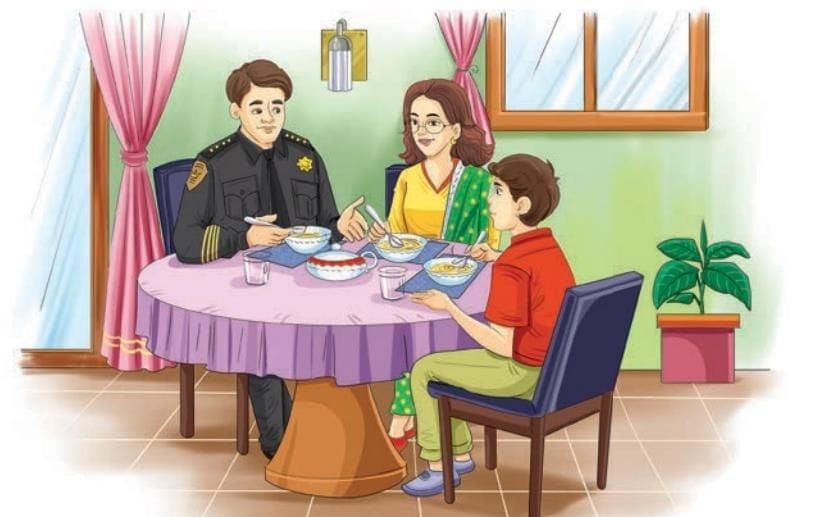
  • His father, Chief Brown, is the Chief of Police, and they often discuss cases at the dinner table.
  • One day, Chief Brown brings up the death of Tim Nolan, who was previously involved in a jewellery robbery.
  • Tim Nolan had a partner named Daniel Davenport, who disappeared after the robbery and was suspected of hiding stolen jewellery.
  • Nolan died of a stroke, and before he passed away, he wrote a will leaving everything to Davenport.
  • A sheet of paper with four strange words was found attached to the will, which intrigued Chief Brown and his family.
  • Encyclopedia Brown deduces that the four words are a code to reveal where the stolen jewelry is hidden.
  • He realises that the words correspond to days of the week, leading him to conclude where the jewellery is located.
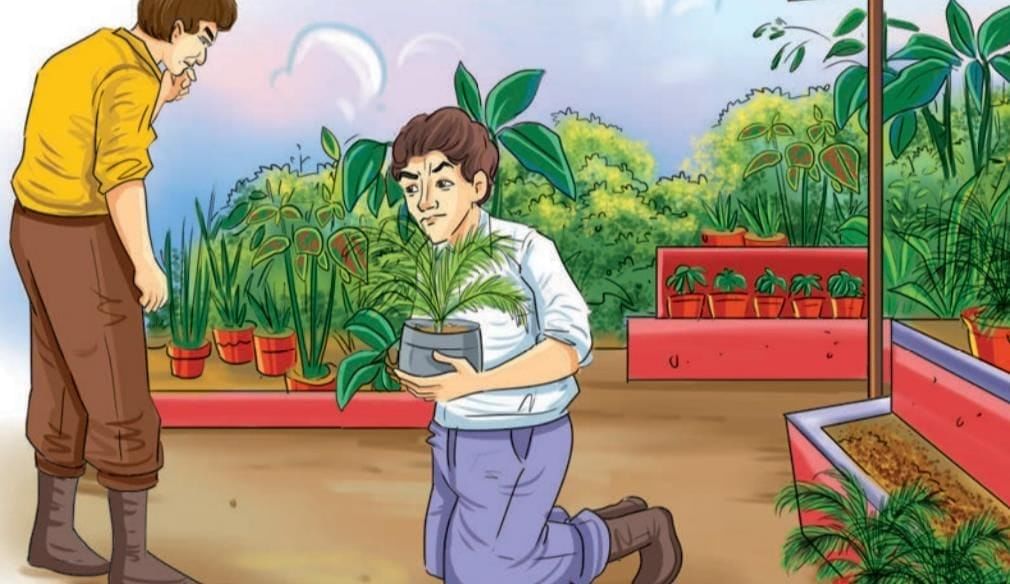
  • The jewellery is ultimately found under a young fir tree in Nolan’s palm-tree nursery, just as Encyclopedia predicted.
  • Through clever thinking and deduction, Encyclopedia helps his father solve the case, showcasing his detective skills.

Try yourself:

What was found attached to Tim Nolan’s will?

  • A.Four strange words
  • B.A picture of a tree
  • C.A treasure map
  • D.A letter from Davenport

View Solution

Detailed Summary

Encyclopedia Brown, a young boy from Idaville, lives with his parents. His father is the Chief of Police. Although Encyclopedia is only in eighth grade, he secretly helps his father solve some of the hardest cases the police face. The Brown family often discusses mysteries at the dinner table, and that’s where the boy solves them before dessert is served.

One evening, Chief Brown comes home looking worried and announces that Tim Nolan has died. Tim Nolan had once been suspected of a jewellery robbery five years ago but was never arrested because there was no proof. Chief Brown always believed that Nolan and his friend Daniel Davenport had committed the crime together.

Nolan and Davenport had met in prison and became friends. Nolan later started a palm-tree nursery in Idaville. A week before the jewellery robbery, Davenport moved in with him. During the robbery, a clerk almost identified Nolan when his mask slipped, but she wasn’t sure enough to testify. After the robbery, Davenport vanished and was never seen again.

Chief Brown says that Nolan died of a stroke. Before dying, he left a will that gave all his property, including the nursery, to Davenport. Along with the will, there was a page from a calendar that had four strange words written on it: “Nom Utes Sweden Hurts.” Chief Brown couldn’t figure out what it meant and brought it to the dinner table for discussion.

Mrs. Brown, who used to be a teacher, tried to guess the meaning of the words but couldn’t solve the puzzle. Encyclopedia read the words carefully, closed his eyes for a moment, and asked a single question: “Is there a young fir tree in Mr. Nolan’s nursery?” Chief Brown was surprised and confirmed that there was just one fir tree near the south side of the house.

Encyclopedia then explained that the four strange words stood for the first four days of the week: Monday, Tuesday, Wednesday, and Thursday. Nolan had dropped the letters “d-a-y” from each word and rearranged the rest to form Nom, Utes, Sweden, and Hurts. That meant the next, or fifth, day was Friday—“Fir” for short.

With that final clue, Chief Brown realised that the stolen jewellery must be hidden under the fir tree. When they searched the spot, they found the missing jewels buried inside a 20-gallon jug of earth from which the tree was growing. Nolan had tried to pass the secret message to Davenport before dying, but Encyclopedia solved the case first.

The jewellery was recovered, and the mystery was finally solved, all thanks to the clever thinking of a young detective before the soup had even gone cold.

Try yourself:

What is the main purpose of a summary?

  • A.To confuse the audience
  • B.To provide a brief overview
  • C.To entertain the reader
  • D.To give detailed information

View Solution

Theme/ MessageTheme

  • The theme of the story highlights the importance of intelligence and critical thinking in solving problems.
  • It also emphasises the value of family discussions and how they can lead to creative ideas and solutions.
  • The relationship between Encyclopedia and his father illustrates a supportive bond that encourages learning and growth.

Message

  • The story conveys that anyone, regardless of age, can be smart and capable of solving complex problems.
  • It teaches readers that observation and reasoning can lead to uncovering hidden truths.
  • Additionally, the story shows that communication and collaboration within a family can enhance understanding and foster creativity.

Difficult Words

  • Detective: A person whose job is to find out information about crimes.
  • Mystery: Something that is difficult to understand or explain; a puzzle.
  • Evidence: Information that helps to prove something is true or false.
  • Suspicious: Having doubts about someone or something; feeling that something is wrong.
  • Clipped: Cut off or removed from something.
  • Deduced: To come to a conclusion based on reasoning; to figure something out.
  • Code: A system of words, letters, or signs used to represent something else, often kept secret.
  • Nursery: A place where plants are grown and cared for before being sold or planted.
  • Stroke: A medical condition in which blood flow to the brain is interrupted, causing serious health problems.
  • Will: A legal document stating how a person’s belongings should be distributed after they die.
  • Robbery: The crime of taking something from someone by force or threat.
  • Testify: To speak or give evidence in court.

6. Verghese Kurien — I Too Had A Dream – Chapter Notes

Introduction

In the letter “To My Grandson,” Dr. Verghese Kurien—fondly known as the “Milkman of India” and the “Father of the White Revolution” in India writes to his young grandson, Siddharth. Through this heartfelt message, Kurien reflects on his life choices, his values, and the journey that led him to serve the farmers of India. He shares the importance of responsibility, hard work, and making meaningful contributions to society. This letter is more than a personal note—it is a guiding light meant to inspire not only his grandson but all young people to build a better future for India.

Key Points of the Story

  • The letter is written by Dr. Verghese Kurien to his grandson Siddharth in 2005.
  • He expresses how letters are more lasting and meaningful than phone conversations.
  • Kurien explains his life choices and why he chose to serve India’s dairy farmers.
  • He gave up attractive career options in the army, metallurgy, and foreign jobs to work in Anand, Gujarat.
  • His wife supported his decision despite the hardships of village life.
  • Kurien highlights the importance of values like integrity, honesty, responsibility, and service to others.
  • He stresses the need to use one’s talents for the common good and help others every day.
  • He explains that real failure is not trying your best, not a lack of success.
  • Kurien shares life lessons about happiness, humility, and being content with what you have.
  • He recalls a special moment when his grandson held his Padma Vibhushan medal, reminding him to earn his recognition through service.
  • The letter ends with a beautiful wish: for Siddharth and his generation to be brave, wise, and generous, and to dedicate their lives to the greater good of the country and humanity.

Try yourself:

What did Kurien give up to work in Anand, Gujarat?

  • A.A job in the army
  • B.A foreign job
  • C.A career in metallurgy
  • D.All of the above

View Solution

Detailed Summary

This story is a real letter written by Dr. Verghese Kurien, the man who helped make India the world’s largest milk producer. He wrote it in 2005 to his grandson, Siddharth, to share his life’s experiences, thoughts, and advice. The tone is warm and loving, and his goal is to pass on wisdom that his grandson might not understand fully now, but might treasure in the future.

At the beginning of the letter, Dr. Kurien explains why writing letters is special. In today’s world, people prefer talking on the phone or using instant messaging. But he says that writing is different; it stays with us. Years later, a letter can be read again and help people understand the past better. He hopes that one day Siddharth will read this letter again and understand why his grandfather chose a life of service to farmers.

Dr. Kurien explains that when he was young, India had just become independent. Many people were trying to build a new and better nation. He too wanted to help India grow stronger and become free from poverty and hunger. Even though he could have taken other careers like becoming a general in the army, a business leader, or even going to the USA for a good life, he chose to work with dairy farmers in Anand, Gujarat. He admits this was not his original plan, but it became the most meaningful path for him.

He also writes about his wife Siddharth’s grandmother, who stood by him even when life in Anand was hard. She gave him the strength to continue his work even in difficult times. He shares that whenever he was praised or given awards for his work, he always remembered that success was possible only because of the people who supported him.

Dr. Kurien strongly believed in values, especially honesty and integrity. He says that being honest with yourself makes it easier to be honest with others. He wants Siddharth to learn that life is a great opportunity, and it should not be wasted. We must take responsibility for our actions, use our talents wisely, and help others.

He explains that failure doesn’t mean you didn’t succeed; it means you didn’t try your best or didn’t do something good for others. He advises Siddharth to look for ways to help others every day. Whether it’s a friend who needs help, a teacher who needs a volunteer, or the community needing support, small acts matter.

He also reminds Siddharth that life isn’t always perfect. Sometimes, things go wrong, and that’s okay. People often think others are happier, but that’s not always true. Everyone has problems, even if they don’t show them. So we should be thankful for what we have instead of comparing ourselves to others.

Dr. Kurien shares a personal memory when Siddharth was young and attended the ceremony where he received the Padma Vibhushan (a top award from the Indian government). Siddharth wore the medal around his neck and asked if he could keep it. Kurien told him that yes, it belonged to him too, but he should aim to earn his reward through his own good work.

Finally, Dr. Kurien ends the letter with a beautiful message: If we are loving, strong, and kind and if we believe there’s enough happiness and success for everyone, then we will have lived a good life. He dedicates the letter not only to Siddharth but to all children of the next generation, hoping they will work hard for the betterment of India and all of humanity.

Theme/Message

  • Service to the Nation: A meaningful life is one lived in service to others, especially for the good of the country and its people.
  • Importance of Values: Integrity, responsibility, and honesty are the foundation of a good and successful life.
  • Making the Right Choices: Choosing a path of service and hard work may not be glamorous, but it is deeply rewarding.
  • True Success: Awards and medals are not the real success—contributing to the common good and trying your best is what really matters.
  • Contentment and Perspective: Real happiness comes from within, not from comparing ourselves with others.
  • Inspiration for the Next Generation: The youth must carry forward the ideals of hard work, courage, and kindness for a better world.

Try yourself:

What is a common theme in many stories?

  • A.Food
  • B.Weather
  • C.Adventure
  • D.Colors

View Solution

Difficult Words

  • Fleeting: Something that lasts for a very short time.
  • Treasure: To value or keep something as very special.
  • Equitable: Fair and equal for everyone.
  • Envisioned: Imagined or thought of for the future.
  • Privileges: Special advantages or rights.
  • Contributions: Something given or done to help a cause or group.
  • Integrity: Being honest and having strong moral principles.
  • Humility: Not thinking you are better than others; being modest.
  • Common Good: Something that helps or benefits everyone.
  • Cherish: To value or hold something dear.
  • Adhered: Followed or stayed loyal to.
  • Modestly: In a simple or humble way.
  • Rejoice: To feel or show great happiness.
  • Periphery: The edge or outside part of something.
  • Luminary: A person who is very important or famous in a particular field.

5. Somebody’s Mother – Chapter Notes

Introduction

Have you ever helped a stranger and felt good about it? 

In “Somebody’s Mother” by Mary Dow Brine, we read about a young boy who shows kindness to an old woman on a cold winter day.  She is alone and afraid to cross the street, but no one helps her until this kind-hearted boy stops. Through this simple and touching story, the poet reminds us that a small act of care can mean a lot, and we should treat others with the same love we would give our own family.

About the Poet

Mary Dow Brine (1816–1913) was an American poet known for writing poems with strong feelings, gentle lessons, and love for family life. Many of her poems talk about kindness, sympathy, and doing the right thing. Her most famous poem is Somebody’s Mother,” which teaches children and adults to be caring and respectful toward the elderly, especially when they are alone and in need of help.

Mary Dow Brine

Try yourself:

What is the main theme of Mary Dow Brine’s poems?

  • A.Kindness
  • B.Nature
  • C.History
  • D.Adventure

View Solution

Key Points of the Poem

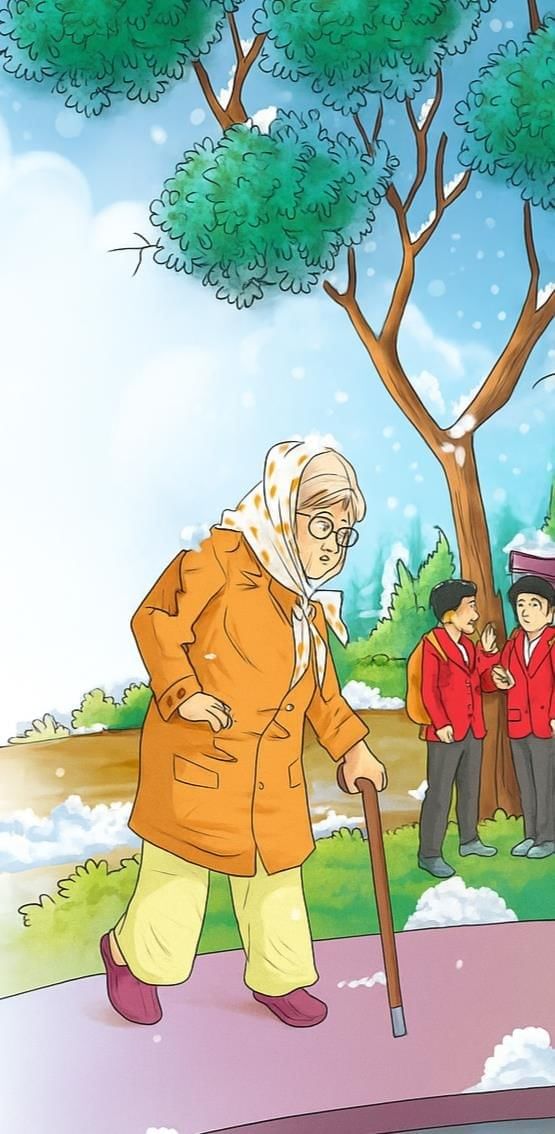
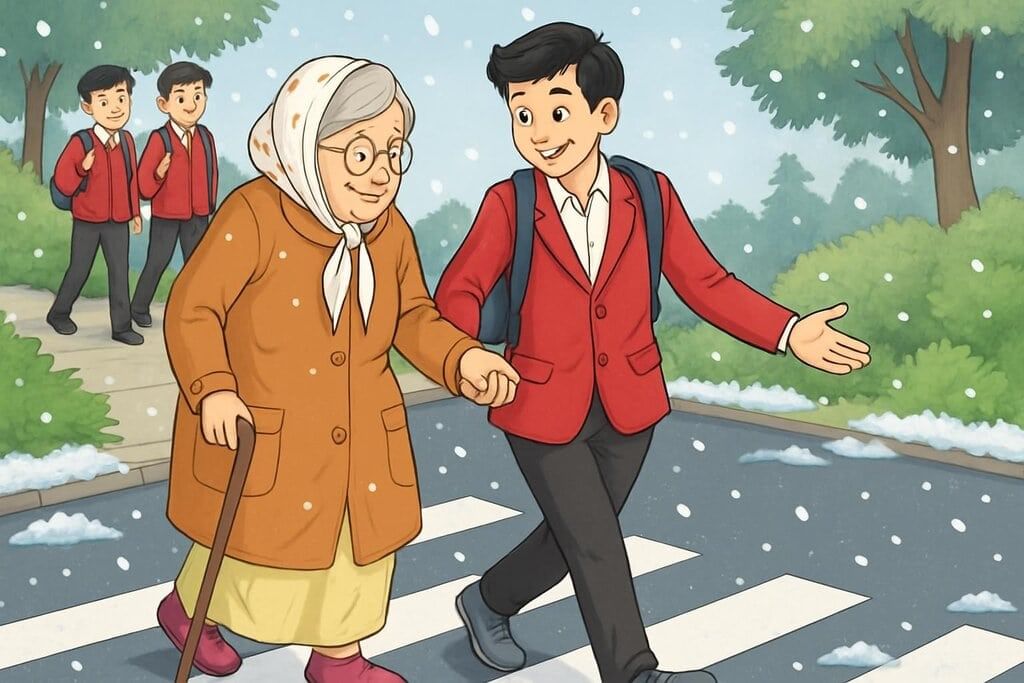
  • The poem “ Somebody’s Mother is about an old woman standing alone at a snowy street crossing.
  • Many people walk by, but no one helps her.
  • A group of schoolboys comes by, happy that school is over.
  • Only one boy stops to help the woman cross the street safely.
  • He thinks of his mother and hopes someone will help her one day, too.
  • The old woman is very touched and prays for the kind boy that night.
  • The poem teaches kindness, empathy, and respect for elders.

Explanation of the Poem

Stanza 1

The woman was old and ragged and grey
And bent with the chill of the Winter’s day.
The street was wet with a recent snow
And the woman’s feet were aged and slow.
She stood at the crossing and waited long,
Alone, uncared for, amid the throng

Explanation:
The poet describes an old woman who looks poor and tired. Her clothes are torn, and her hair is grey. She is feeling very cold because it’s a winter day. The road is slippery with fresh snow, and her feet move slowly. She is standing at the side of the road, waiting to cross. Many people are walking by, but no one notices or cares about her.

Stanza 2

Of human beings who passed her by
Nor heeded the glance of her anxious eyes.
Down the street, with laughter and shout,
Glad in the freedom of “school let out,”
Came the boys like a flock of sheep,
Hailing the snow piled white and deep.

Explanation:
The people who pass by do not pay attention to the old woman or see the worry in her eyes. Then, a group of schoolboys runs down the street, happy because school is over. They laugh and shout as they enjoy the snowy street. The poet compares them to a “flock of sheep” moving together, full of excitement.

Stanza 3

Past the woman so old and grey
Hastened the children on their way.
Nor offered a helping hand to her—
So meek, so timid, afraid to stir
Lest the carriage wheels or the horses’ feet
Should crowd her down in the slippery street.

Explanation:
The boys hurry past the old woman without offering help. She is gentle and shy, afraid to move. She worries that she might fall under the wheels of a carriage or get hurt by horses passing through the street. The road is slippery, and she is too scared to cross by herself.

Stanza 4

At last came one of the merry troop,
The gayest laddie of all the group;
He paused beside her and whispered low,
‘I’ll help you cross, if you wish to go.’
Her aged hand on his strong young arm
She placed, and so, without hurt or harm,

Explanation:
Finally, one of the boys, the happiest and most cheerful one, sees the old woman and stops. He gently asks if she would like help crossing the road. She places her old, weak hand on his strong, young arm. With great care, he helps her cross the street safely, showing his kindness and strength.

Stanza 5

He guided the trembling feet along,
Proud that his own were firm and strong.
Then back again to his friends he went,
His young heart happy and well content.
“She’s somebody’s mother, boys, you know,
For all she’s aged and poor and slow.”

Explanation:
The boy feels proud and happy as he helps the woman walk with her shaky steps. After guiding her across the street, he goes back to his friends. He feels good because he did something kind. He reminds his friends that the woman is someone’s mother—even if she is old and poor now, she was once loved and cared for too.

Stanza 6

“‘And I hope some fellow will lend a hand
To help my mother, you understand,”
“If ever she’s poor and old and grey,
When her own dear boy is far away.”
And “somebody’s mother” bowed low her head
In her home that night, and the prayer she said”

Explanation:
The boy says he hopes that if his mother is ever old and helpless, someone else will help her the way he helped this woman. He understands that kindness can go around what you give may come back. Later that night, the old woman bows her head in prayer at home, touched by the boy’s good deed.

Stanza 7

Was “God be kind to the noble boy,
Who is somebody’s son, and pride and joy!”

Explanation:
The old woman prays to God, asking Him to bless the kind boy who helped her. She calls him a “noble boy” because of his good heart. She knows he is someone’s son and hopes his family is proud of him. Her prayer is full of love and thankfulness.

Try yourself:

What is the main focus of the poem?

  • A.Scientific discoveries
  • B.Historical events
  • C.Personal feelings
  • D.Nature’s beauty

View Solution

Theme/Message

Theme

  • Kindness to strangers: The poem shows that helping someone in need, even a stranger, is a noble act.
  • Respect for the elderly: The boy treats the old woman with care, even when others ignore her.
  • Empathy: The boy imagines how he’d feel if his own mother was in her place.
  • Moral values: It teaches us to be good-hearted, thoughtful, and respectful in everyday life.

Message

  • A small act of kindness can have a big impact.
  • We should treat others the way we would want our loved ones to be treated.
  • Even when others don’t care, doing the right thing matters.
  • Helping others brings true happiness and inner peace.

Difficult Words

  • Ragged: Torn or worn out, showing signs of age.
  • Throng: A large group of people gathered together.
  • Meek: Quiet, gentle, and submissive.
  • Timid: Shy or lacking confidence.
  • Hasten: To move or act quickly.
  • Trembling: Shaking slightly, often due to fear or cold.
  • Proud: Feeling deep pleasure or satisfaction from one’s own achievements.
  • Content: Satisfied; feeling happy with what one has.
  • Bow: To bend the upper part of the body forward as a gesture of respect.
  • Prayer: A request or expression of thanks to a higher power.
  • Noble: Having high moral qualities; honourable.
  • Joy: A feeling of great happiness.
  • Anxious: Feeling worried or nervous.
  • Glance: A brief look.
  • Carriage: A wheeled vehicle for people, often pulled by horses.

4. A Tale of Valour: Major Somnath Sharma and the Battle of Badgam – Chapter Notes

Introduction

This is the inspiring story of Major Somnath Sharma, the first soldier to receive the Param Vir Chakra, India’s highest military award for bravery. He showed great courage and leadership during the Battle of Badgam in 1947, when India was newly independent. Though he lost his life at just 24 years old, his heroic actions helped save the Kashmir Valley and protect India’s borders. His story teaches us about patriotism, sacrifice, and the true meaning of serving the nation.

Key Points of the Story

  • Major Somnath Sharma was a brave soldier and the first person to receive the Param Vir Chakra, India’s highest military honor.
  • He is remembered for his heroism during the battle in the Kashmir Valley on November 3, 1947, while defending the Srinagar airport.
  • In August 1947, Pakistan planned to take over Kashmir through a military operation called Operation Gulmarg, which was against an agreement with the local king.
  • The Pakistani army trained a large number of fighters to invade Kashmir and capture important areas, including the Srinagar airport.
  • On October 27, 1947, Indian troops were sent to protect Kashmir, and Major Somnath Sharma’s company flew in to help defend the area.
  • Despite being injured and having only 90 men, Major Somnath led his soldiers against about 500 enemy fighters.
  • During the battle, Major Somnath called for air support and bravely directed his men, even as they faced heavy enemy fire.
  • He encouraged his soldiers to continue fighting, stating he would not retreat and would fight to the last man and the last bullet.
  • Major Somnath Sharma was killed in battle, but his leadership inspired his men to hold their position for hours, allowing reinforcements to arrive.
  • His actions during the battle ultimately saved Srinagar from being taken by enemy forces, earning him recognition and honour posthumously.

Try yourself:

What was Major Somnath Sharma known for during the battle?

  • A.He called for peace talks
  • B.He retreated quickly
  • C.He encouraged his soldiers to fight
  • D.He was afraid of the enemy

View Solution

Detailed Summary

In 1947, just after India gained independence, a serious threat came from Pakistan. A secret plan called Operation Gulmarg was started to take over Kashmir. Pakistani soldiers trained many invaders and sent them to secretly enter Kashmir, hoping to capture important places like the Srinagar airport. On 26 October 1947, Kashmir joined India, and the Indian Army was sent the next day to protect the region.

Since the road to Kashmir was damaged, Indian soldiers had to be flown to Srinagar. Among them was Major Somnath Sharma, who led D Company of the 4th Kumaon Regiment. Even though his left arm was in plaster, he insisted on going with his men. He said, “If they are going into action, they are not going in without me.”  This showed his deep love and duty towards his soldiers.

The village of Badgam, near Srinagar airport, was at a higher place and very important. Indian troops were sent to check the area because of reports of enemy movement. On 3 November 1947, Major Somnath’s company was the last to remain in the area after others returned. Suddenly, around 500 enemy fighters attacked his group of just 90 soldiers.

At first, the attack looked small, but Major Somnath realised it was just a trick. Soon, a bigger attack came from another direction. Even though they were outnumbered, he stayed calm. He quickly sent a message asking for air support and laid out special ground signs to guide the fighter planes to the enemy.

As the battle grew intense, Major Somnath moved bravely through gunfire. He filled magazines, guided his soldiers, and never stopped encouraging them. Even though he was hurt, he kept fighting. When they began running out of ammunition, his seniors asked him to fall back, but he refused. His final words were, “The enemy is only 50 yards from us… I shall not withdraw an inch but will fight to the last man and the last round.”

While helping a machine gunner in a trench, a mortar shell exploded and killed him instantly. His soldiers were shocked, but his bravery gave them the strength to keep fighting for over six more hours. Their fight slowed down the enemy, which allowed Indian reinforcements to arrive and protect the Srinagar airport.

Thanks to the bravery of Major Somnath and his men, the enemy lost over 300 fighters, and Srinagar was saved. For their sacrifice, the 4 Kumaon Regiment was given the Battle Honour. Major Somnath Sharma was only 24 years old when he died, but he showed the courage of a true hero.

Before this war, Major Somnath had already served in the Second World War in Burma and was known for his bravery. He was born on 31 January 1923 in Dadh, Himachal Pradesh, into a family with a military background. His father was a Major General, and his grandfather taught him stories of heroes from the Mahabharata.

He studied at Sherwood College, Nainital, and trained at the Royal Military College in Sandhurst. He was commissioned in 1942 and served in the 19th Hyderabad Regiment. Though he died young, his life was full of honour, discipline, and courage. The battle of Badgam made him a symbol of bravery for all Indians.

Today, Major Somnath Sharma’s name is written with pride at the National War Memorial. His story continues to inspire soldiers and citizens, reminding us of the price of freedom and the spirit of those who protect our nation. His sacrifice will never be forgotten.

Try yourself:

What do bees make from nectar?

  • A.Honey
  • B.Wax
  • C.Sugar
  • D.Pollen

View Solution

Theme/Message

  • The theme of bravery and sacrifice is central to Major Somnath Sharma’s story. His willingness to fight against overwhelming odds showcases true courage.
  • The story emphasises the importance of duty and loyalty to one’s country. Major Somnath’s commitment to his men and nation is an inspiring example for everyone.
  • The message of the story is that even in the face of danger, standing firm for what is right and protecting others is what true heroism looks like.
  • Major Somnath Sharma’s legacy teaches us that selflessness and dedication to one’s duty can make a significant impact, even if it comes with great personal cost.

Difficult Words

  • Valiant: Brave and courageous.
  • Beacons: Signals of light guiding people; in this case, inspiration.
  • Guerrilla: A member of a small group that fights against a larger force, often in surprise attacks.
  • Infiltrators: People who enter a place secretly to gather information or take control.
  • Contingent: A group of people representing a larger organisation.
  • Aerial: Related to the air, often referring to aircraft or flying.
  • Reinforcements: Additional support or help, usually in a military context.
  • Courage: The ability to face fear or pain bravely.
  • Devastating: Causing severe damage or destruction.
  • Posthumously: Awarded or recognised after someone has died.
  • Legacy: Something handed down from one generation to another; in this case, Major Somnath’s impact on future generations.
  • Integrity: The quality of being honest and having strong moral principles.
  • Patriotism: Love for one’s country and willingness to defend it.
  • Strategic: Carefully planned to achieve a specific goal.
  • Honour: Great respect or esteem; in this case, awarded for bravery in military service.