3. Wisdom Paves the Way – Chapter Notes

Key Points of the Story

  • Four young men—Ram Datt, Shiv Datt, Har Datt, and Dev Datt—travel along a dusty road to Ujjain, determined to find work despite their exhaustion after ten days of travel.
  • They discuss their hope of securing an audience with the King of Ujjain, believing he will recognize their talents and offer them employment.
  • While walking, they notice fresh camel tracks and decide to rest under a tree to share their observations about the tracks.
  • A distressed merchant approaches, seeking his lost camel. The young men surprise him by describing its characteristics—lame in one leg, blind in the right eye, short-tailed, and suffering from stomach pain—despite not having seen it.
  • The merchant, suspicious of their knowledge, accuses them of stealing his camel and insists they face the King.
  • In the King’s court, the merchant presents his accusations, claiming the young men are thieves due to their detailed knowledge of the camel.
  • The King questions each young man, who explains their observations logically: Ram Datt notes the camel’s limp from uneven tracks, Shiv Datt deduces blindness from untouched foliage, Har Datt infers a short tail from blood droplets, and Dev Datt identifies stomach pain from cautious hind leg prints.
  • Impressed by their reasoning, the King dismisses the merchant’s accusations, declaring the young men wise rather than guilty.
  • The King offers the four men positions as his advisers, recognizing their intelligence and observational skills.
  • The young men gratefully accept, achieving not only employment but also a prestigious role in the King’s court.

Detailed Summary

Setting and Characters: The story is set on a dusty road leading to the city of Ujjain. It follows four young men—Ram Datt, Shiv Datt, Har Datt, and Dev Datt—who are traveling to find jobs. They are tired but determined to reach Ujjain, hoping to impress the King with their talents. Other important characters include a merchant who loses his camel and the wise King of Ujjain.

Scene 1: The Road to Ujjain
The story begins with the four young men walking toward Ujjain under the hot sun. They’ve been traveling for ten days and are starting to feel tired and worried about finding work. Ram Datt hopes they can meet the King of Ujjain, believing he will see their skills and give them jobs. Har Datt says meeting the King won’t be easy, and they need a plan. Dev Datt suggests they reach the city first and then decide what to do.

As they walk, they notice fresh camel tracks on the road. They carefully study the tracks and each man notices something special about them. They don’t say much but agree to discuss their findings later. Suddenly, a merchant runs toward them, looking upset. He asks if they’ve seen his lost camel. The young men surprise him by describing the camel perfectly:

  • Ram Datt says it’s lame (limps) in one leg.
  • Shiv Datt says it’s blind in the right eye.
  • Har Datt says it has a short tail.
  • Dev Datt says it has a stomachache.

The merchant is shocked because their descriptions match his camel exactly. But when the young men say they haven’t seen the camel, the merchant gets angry. He thinks they’re lying and accuses them of stealing his camel. He insists they go to the King to settle the matter. The young men agree calmly and follow him to the city.

Scene 2: The King’s Court
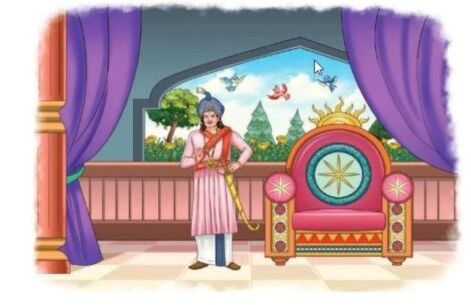
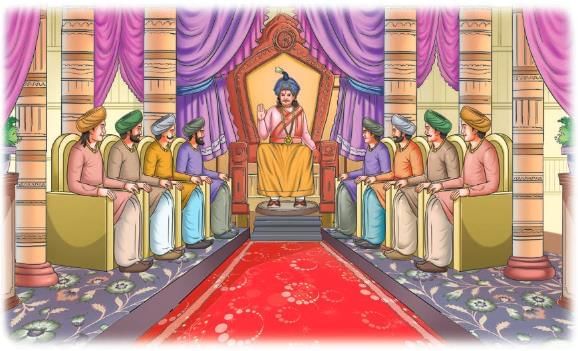
The group arrives at the King’s grand court, which is decorated with beautiful curtains and tall pillars. The merchant tells the King that the young men know too much about his camel, so they must have stolen it. The King listens carefully and asks each young man to explain how they knew these details about the camel.

  • Ram Datt explains he saw uneven footprints—one was faint, showing the camel limped on one leg.
  • Shiv Datt says he noticed the camel ate leaves only on the left side of the road, meaning it couldn’t see with its right eye.
  • Har Datt found small drops of blood on the road, likely from mosquito bites, which meant the camel had a short tail that couldn’t swat the mosquitoes away.
  • Dev Datt noticed the camel’s front footprints were deep, but the back ones were faint, showing it walked carefully because of stomach pain.

The King is amazed by their smart observations and clear thinking. He realizes they didn’t steal the camel—they just used their intelligence to understand the tracks. He tells the merchant his accusations are wrong and sends him away to keep looking for his camel. The merchant leaves, feeling embarrassed.

Impressed by the young men’s wisdom, the King offers them jobs as his advisers. He says their cleverness will help guide his kingdom. The young men are thrilled and humbly accept the offer. The court cheers as the King welcomes his new advisers. The story ends with the young men achieving their dream of finding meaningful work, all because of their sharp minds and teamwork.

Theme/ MessageTheme

  • The theme of wisdom and observation is central to the story. It shows how careful observation can lead to understanding and insight, which is more important than mere luck.
  • The story emphasizes the importance of honesty and integrity. The young men, despite being wrongfully accused, remain truthful and calm, which ultimately leads to their success.
  • The value of teamwork and collaboration is also a key theme. The four friends work together and support each other, demonstrating the strength of friendship and unity.

Message

  • The story teaches us that wisdom comes from careful observation and thinking critically about what we see. It highlights that sometimes, what appears to be obvious may not be the whole truth.
  • It also conveys the message that integrity and honesty are essential virtues. Even when faced with challenges or accusations, staying true to oneself is crucial.
  • Lastly, the story reminds us that working together with friends can lead to great achievements. Supporting one another can help overcome obstacles and reach our goals.

Difficult Words

  • Grievance: A complaint or a feeling of having been treated unfairly.
  • Accuse: To say that someone has done something wrong or illegal.
  • Resolve: To decide firmly on a course of action.
  • Deduce: To reach a conclusion based on reasoning and evidence.
  • Intimidated: Feeling frightened or nervous about something or someone.
  • Observation: The act of watching carefully to learn something.
  • Insight: The ability to understand something clearly and deeply.
  • Chastened: Made to feel sorry or embarrassed, often after doing something wrong.
  • Regal: Suitable for a king; royal or majestic.
  • Counsel: Advice or guidance, especially in legal or serious matters.
  • Impress: To make someone feel admiration or respect.
  • Integrity: The quality of being honest and having strong moral principles.
  • Distressed: Very upset or worried about something.
  • Burdened: Weighed down by a heavy load or problem.
  • Accomplished: Highly skilled or successful in a particular area.
2. A Concrete Example – Chapter Notes

Introduction.                                                          Can a garden made of stones be beautiful?
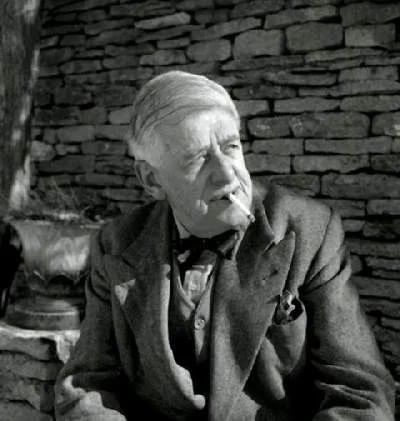
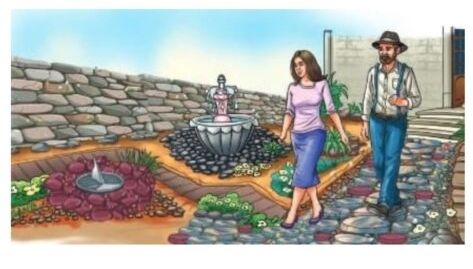
In A Concrete Example” by Reginald Arkell, we meet Mrs. Jones, a cheerful gardener who proudly tends to her unusual stone garden filled with tiny, delicate plants. With gentle humor and sharp observation, the poet invites us to see the world through a different lens—one where even the smallest flower or a funny misunderstanding can reveal beauty, joy, and wisdom.


 About the Poet

Reginald Arkell was a British writer and poet best known for his light verse, humor, and works related to gardening and rural life. He wrote novels, plays, and poetry that often blended wit with gentle observation of everyday life. His most famous work is Old Herbaceous, a charming novel about a gardener’s life, which reflects his deep love for nature and gardens. Arkell’s poetry, like “A Concrete Example,” showcases his playful style and ability to find beauty and humor in simple things.

Reginald Arkell 

Try yourself:What is Reginald Arkell best known for?A.GardeningB.NovelsC.PlaysD.Light verseView SolutionKey Points of the Poem

  • The poem, “A Concrete Example,” is written by Reginald Arkell and consists of three stanzas, each with six lines.
  • It maintains a playful and gently ironic tone, fitting the theme of Wit and Wisdom.
  • The poem describes the unique garden of Mrs. Jones, the speaker’s neighbor, which is filled with stones and tiny plants.
  • Mrs. Jones is portrayed as an enthusiastic gardener who takes pride in her stone garden’s features, such as a path, pond, rockery, and sundial.
  • The speaker is amused by the tiny plants, wondering how they are planted in such small spaces.
  • A humorous and ironic moment occurs when the speaker, while admiring a flower, accidentally steps on it.
  • The poem explores themes of human quirks, perception, joy of gardening, connection with nature, and humor in mistakes.

Explanation of the Poem

Stanza 1

“My next-door neighbour, Mrs. Jones,
has got a garden full of stones:
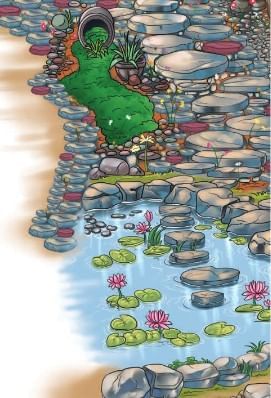
A crazy path, a lily pond,
a rockery and, just beyond
A sundial with a strange device,
which Mrs. Jones thinks rather nice.”

Explanation: In this stanza, the poet introduces us to Mrs. Jones, who lives next door. She has a very unique garden. Instead of flowers and grass, her garden is filled with stones. This makes her garden look different and special. The poet describes her garden as having a “crazy path,” which means the path is not straight and might twist and turn. There is also a “lily pond,” where we can imagine pretty water flowers called lilies. A “rockery” is a special place in the garden where stones are placed beautifully, and it looks nice. Beyond that, Mrs. Jones has something called a “sundial,” which is a tool that tells the time using the sun. The poet mentions that the sundial has a “strange device,” which means it looks unusual or different. Mrs. Jones thinks her garden is lovely, and she takes pride in it. This stanza helps us see how gardens can be different and that people can like different things.

Stanza 2

“My next-door neighbour, Mrs. Jones,
puts little plants between the stones.
They are so delicate and small,
they don’t mean anything at all.
I can’t think how she gets them in,
unless she plants them with a pin.”

In this stanza, the poet tells us more about Mrs. Jones’s garden. He observes that she doesn’t just have stones; she also has tiny plants growing between the stones. These plants are described as “delicate and small,” which means they are very tiny and gentle. The poet feels that these tiny plants are not very important or do not mean much, like they are too small to matter. He wonders how Mrs. Jones manages to plant them in such tight spaces between the stones. This thought is so funny and surprising to him that he imagines she must use a little pin, like a tiny needle, to help her plant them. This shows how special Mrs. Jones’s garden is, and it makes us think about how people can do amazing things to care for their gardens, even if it seems difficult.

Try yourself:What does Mrs. Jones have in her garden besides stones?A.Tiny plantsB.TreesC.FlowersD.VegetablesView Solution

Stanza 3

“My next-door neighbour, Mrs. Jones,
once asked me round to see her stones.
We stood and talked about a flower
for quite a quarter of an hour.
‘Where is this lovely thing?’ I cried.
‘You’re standing on it,’ she replied.”

Sundial

In this stanza, the poet shares a memory of when Mrs. Jones invited him to see her garden. He was excited to visit and talk about the plants. They spent a long time, which is “a quarter of an hour,” or fifteen minutes, talking about a flower. The poet is curious and asks her where this beautiful flower is because he cannot see it. Mrs. Jones gives a surprising answer; she says he is standing on it! This means that the flower is very small and hard to see, maybe one of those tiny plants mentioned earlier. This shows how sometimes we might overlook things that are right in front of us. It also highlights the special bond between the poet and Mrs. Jones, as they enjoy talking about her garden, even if it is a bit different from what most people expect. 

Theme/ MessageTheme

  • The joy of gardening: The poem celebrates the simple pleasures found in gardening, showing how it can bring joy and beauty to everyday life.
  • Perception vs. reality: There is a humorous contrast between how the speaker sees Mrs. Jones’ garden and how she perceives it. This theme suggests that beauty can be subjective.
  • Connection with nature: The poem emphasizes the importance of connecting with nature and finding happiness in small, everyday moments.

Message

  • Beauty is everywhere: The poem conveys the message that beauty can be found in unexpected places, even in a garden full of stones.
  • Encouragement to appreciate the little things: Arkell encourages readers to take a moment to appreciate the small details in life, as they can hold great significance.
  • Humor in daily life: The lighthearted tone of the poem reminds us to find humor in our daily experiences, especially in our interactions with others

Difficult Words

  • Concrete: Something that is real or solid, not abstract.
  • Whimsical: Playful or fanciful, often in an amusing way.
  • Quirk: A peculiar behavior or characteristic.
  • Delicate: Something very fine and easily damaged.
  • Significance: The importance or meaning of something.
  • Perception: The way something is understood or interpreted.
  • Enthusiastic: Showing intense and eager enjoyment or interest.
  • Humorous: Funny or making you laugh.
  • Charming: Delightful or pleasant.
  • Engaging: Attracting interest or attention.
  • Exploration: The act of investigating or examining something.
  • Ordinary: Common or usual, not special.
  • Delight: Great pleasure or joy.
  • Essence: The basic nature or most important quality of something.
  • Interaction: Communication or direct involvement with someone or something.

1. The Wit that Won Hearts – Chapter Notes

Introduction

In the heart of South India once stood a mighty empire—Vijayanagara—renowned for its splendor, strength, and unmatched cultural richness. At its helm was Krishnadeva Raya, a legendary ruler whose reign is celebrated as the Golden Era of the empire. Among his court’s brightest stars was the witty and wise Tenali Ramakrishna, whose cleverness won hearts and solved problems that even kings couldn’t untangle.

This story brings to life a heartwarming episode from Krishnadeva Raya’s court—where a simple yawn, a misunderstood poem, and a clever plan weave together to teach timeless lessons about communication, pride, and the power of wit.

Key Points of the Story

  • The Vijayanagara Empire was a powerful kingdom known for its wealth and culture.
  • King Krishnadeva Raya ruled from 1509 to 1529 and is remembered as a wise and strong king.
  • His reign is often called the Golden Era because art, literature, and architecture flourished during this time.
  • Krishnadeva Raya was not only a warrior but also a patron of learning and a talented poet.
  • The king’s court had eight famous poets known as the Ashtadiggajas, including Allasani Peddana and Tenali Ramakrishna.
  • Tenali Ramakrishna was known for his cleverness and humor, making him a favorite in the king’s court.
  • The king had a disagreement with his queen, Thirumalambal, which caused a rift between them.
  • After weeks of silence, the queen sought help from Tenali Ramakrishna to mend their relationship
  • The queen explained how a misunderstanding occurred when the king thought she disrespected his poem by yawning.
  • Rama agreed to help and planned a clever way to resolve the conflict.
  • During a court meeting, Rama presented a new type of paddy seed that would yield three times more than normal seeds.
  • Some courtiers mocked Rama, but he cleverly turned the conversation around to the importance of care in planting seeds.
  • Rama made the king realize that yawning was a natural action and not a sign of disrespect.
  • The king understood his mistake and apologized to the queen, which restored their bond.
  • Rama was rewarded by the royal couple for his wise intervention, and happiness returned to the palace.

Try yourself:Who helped the queen mend her relationship with the king?            A.Krishnadeva Raya.                                      B.Tenali Ramakrishna.                                           C.A courtier.                                                  D.Allasani Peddana.  

                              ViewSolution

Detailed Summary.                   The Vijayanagara Empire was a grand kingdom famous for its wealth, art, and culture. King Krishnadeva Raya, who ruled from 1509 to 1529, was a wise and kind leader. His time as king was called the Golden Era because the empire grew in art, literature, and architecture during this time.

Krishnadeva Raya was a strong fighter and a talented poet. He wrote famous works like Amuktamalyada and Jambavati Parinayam. He loved learning and supported eight great poets in his court, called the Ashtadiggajas. Two of them were Allasani Peddana and Tenali Ramakrishna. Tenali was special because he was not only a poet but also very clever and funny. He solved tough problems with his smart ideas, making him a favorite in the kingdom.

One day, the king got upset with his queen, Thirumalambal, over a small issue. He wrote a poem about the sun, moon, and stars, but it was hard to understand. When he shared it with his ministers, they made excuses to avoid him. Later, he recited it to the queen, but she was tired and yawned several times. The king thought she was being rude, got angry, and stopped talking to her or visiting her. The palace became quiet and sad.

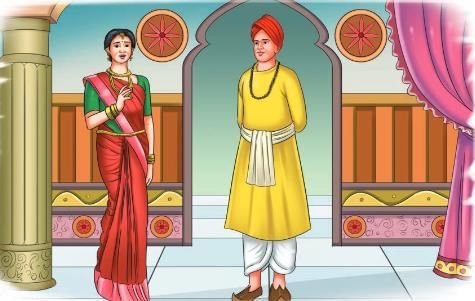
The queen was very upset and tried to fix things, but nothing worked. So, she asked Tenali Ramakrishna for help. She explained how the king got mad because she yawned during his poem. Tenali listened carefully and promised to try his best, but said he needed time to plan.

The next day, the royal court was busy with ministers and scholars talking about how to grow better crops. The king was still upset, and everyone could feel the tension. Ministers suggested ideas like better water systems or manure. Tenali stood quietly, smiling, until the king called him.

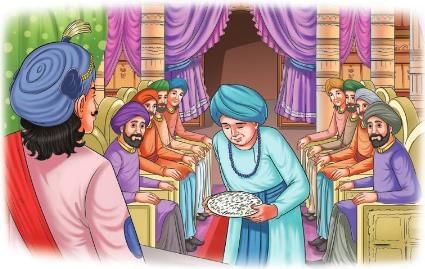
Tenali walked to the throne with a plate of paddy seeds and said, “Your Majesty, these seeds can give three times more crops!” The court whispered and laughed. Some made fun, saying the seeds must be magical or from the moon. The king thought it sounded silly and said growing such crops would need special soil and protection from pests.

Tenali stayed calm and said the problem wasn’t the seeds but the person planting them. He explained that if someone yawns while planting, the seeds would scatter badly. The court burst into laughter, and even the king yawned without thinking. Tenali added, “Everyone yawns, Your Majesty. It’s as normal as breathing.”

The king realized he had been unfair to the queen. He remembered how he got mad when she yawned during his poem. Feeling sorry, he went to her that evening and said, “Thirumalambal, I was wrong to get angry. My pride got in the way. I’m sorry.” The queen smiled and said she wanted to hear his poem and move on.

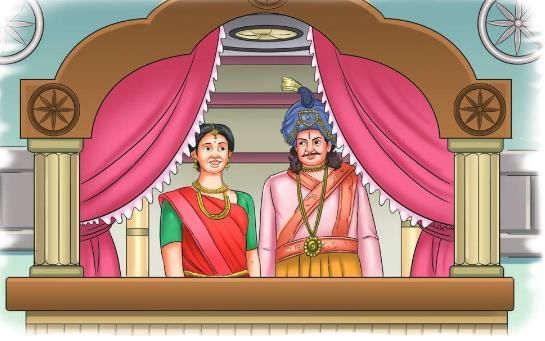
Thanks to Tenali’s clever plan, the king and queen made up. They gave him valuable gifts for his help. The palace became happy again, filled with joy and laughter.

Theme/ Message

  • The main theme of the story is the importance of communication and understanding in relationships. Misunderstandings can lead to conflicts, but with patience and cleverness, they can be resolved.
  • Another key message is that pride can blind people to the truth. The king’s pride prevented him from seeing that the queen’s yawn was not meant to be disrespectful.
  • The story also highlights the value of wisdom and humor in resolving problems. Tenali Ramakrishna used his wit to bring the king and queen back together.
  • Lastly, it teaches that it is important to consider other people’s feelings and actions before jumping to conclusions.

Difficult Words

  • Vijayanagara: A historical empire in South India known for its rich culture and achievements.
  • Patron: A person who supports or helps someone, especially in arts or education.
  • Flourished: To grow or develop in a healthy way, especially in culture or arts.
  • Epic: A long poem that tells the story of heroic deeds and events.
  • Quarrel: A disagreement or fight between people.
  • Disrespect: Lack of respect or courtesy towards someone.
  • Intervention: The action of getting involved in a situation to help or change it.
  • Exquisite: Extremely beautiful and delicate.
  • Yield: To produce or provide something, especially crops.
  • Mocked: To make fun of someone or something in a cruel way.
  • Stern: Serious and strict in manner or appearance.
  • Mend: To repair or fix a broken relationship or situation.
  • Amusement: A feeling of enjoyment or fun.
  • Regret: A feeling of sadness or disappointment over something that has happened.
  • Bond: A strong connection or relationship between people.

09. Rhythms of Nature – Chapter Notes

Saba and Aparna reunite, noticing how they and the world around them have changed! This chapter follows their story, exploring the rhythms of day, night, and seasons in nature. Let’s join them to discover how these changes shape our lives!

Changes around Us in a Day: Day and Night

Saba and Aparna see changes everywhere. Let’s explore how day turns to night!

Observing Daily Changes

  • Saba and Aparna notice changes like growing taller and new trees at school.
  • The world changes daily as day becomes night and night turns to day.
  • The Sun seems to rise in the east and set in the west each day.
  • Things like leaves falling and flowers blooming show nature’s constant change.
  • Fun example: Day and night are like a dance between the Sun and Earth!

Demonstration: Day and Night

A fun activity shows why day and night happen. Let’s try it!

Understanding Earth’s Rotation

  • Step 1: Place a globe on a table and flash a torch on one side of the globe; the torchlight represents the Sun, with the lit side as day and the dark side as night.
  • Step 2: Rotation—Slowly rotate the globe while keeping the torch steady.
  • Step 3: Observe how different parts of the globe face the light as it rotates.
  • The Earth rotates, not the Sun, causing day and night as observed with the torch.
  • Fun example: The globe and torch are like a game showing day and night!

Changes around Us in a Year: Seasons

Saba and Aparna explore how nature changes over a year. Let’s see what they find!

Observing Seasons

  • Saba and Aparna sit in the school garden, looking at their seasons’ journal.
  • Nature changes slowly, with weather getting hot, rainy, cool, then warm again.
  • Plants, animals, air, water, and human activities change throughout the year.
  • These changes follow a pattern that repeats every year, called seasons.
  • Fun example: Seasons are like nature’s calendar, changing pages every few months!

Seasons Journal

  • Students keep a journal to record observations of nature all year.
  • They note changes in plants, animals, air, water, and human activities.
  • Like Saba and Aparna, students share their journal observations.

Classroom Activities: Seasons Chart

Students become nature explorers, creating a chart to track seasonal changes. Let’s join them!

Step 1: Making a Chart for Classroom

  • Make a large wall chart with time periods: April–June, July–September, October–December, January–March.
  • List themes in rows: plant life, birds and animals, air, heat and light, water and water bodies, human activities.
  • The chart helps students see all their journal observations together.
  • Fun example: The chart is like a big map of nature’s yearly adventures!

Step 2: Fill the Chart

  • Students share journal observations for each theme and time period.
  • One student asks the class for observations, like plant life in April–June.
  • The class discusses and writes main observations on the chart.
  • Each student takes turns filling a box, completing the chart for all to see.

Step 3: Tracking Changes in the Year

  • Form five groups, each choosing a theme (e.g., plant life, water and water bodies).
  • Each group studies how their theme changed across the year’s time periods.
  • Groups create posters showing changes, like leaves blooming or rain in ponds.
  • Students present their posters to the class, sharing nature’s patterns.

Step 4: Looking at the Year Together

  • Form four new groups, one for each time period (e.g., April–June).
  • Each group has one student from each theme to analyze all observations.
  • Groups write a short story linking nature and people’s lives for their time period.
  • Stories are read aloud to share how nature changes with human activities.

Discovering Seasons

  • Students learn nature’s changes repeat yearly, forming seasons.
  • India has six seasons: Vasanta (Spring), Grishma (Summer), Varsha (Monsoon), Sharad (Autumn), Hemant (Pre-winter), Shishir (Winter).
  • Seasons depend on regional changes in weather, plants, and animals.
  • Students can find out the names of seasons in their own region.

Celebrating Seasons

Seasons bring special traditions to life. Let’s see how India celebrates them!

Seasonal Crops and Songs

  • Farmers grow different crops in each season, like some in winter and others in summer.
  • Some crops need more water, so they’re planted in the rainy season.
  • With help from teachers and elders, students learn about local summer and winter crops.
  • Many songs in India are connected to seasons, adding joy to these changes.
  • Fun example: Seasons are like a festival parade, with crops and songs for each one!

Festivals and Nature’s Rhythm

  • Festivals like Pongal and Makar Sankranti celebrate spring and harvests.
  • Holi is linked to spring, when flowers bloom, and Diwali to autumn, after crops are harvested.
  • Baisakhi, Gudi Padwa, Vishu, and Rongali Bihu mark the new year and harvest in winter.
  • Seasons shape what we eat, wear, and do, giving rhythm to our lives.

Notes on the Approach

  • Tone: Maintained an engaging, story-driven, and observational storytelling tone, centered on Saba and Aparna’s exploration of nature’s rhythms, connecting seasonal changes to cultural practices like farming and festivals, suitable for Class 5 students.
  • Content Completeness: Included all details from the provided text:
    • Changes around Us in a Day: Day and Night: Saba and Aparna’s reunion, observations (height, hair, guitar, trees), Sun’s apparent movement, nature’s changes.
    • Demonstration: Day and Night: Globe and torch activity, Earth’s rotation.
    • Changes around Us in a Year: Seasons: Saba and Aparna’s seasons journal, nature’s yearly changes, seasons as repeating patterns.
    • Seasons Journal: Journal observations of plants, animals, air, water, human activities.
    • Classroom Activities: Seasons Chart: Chart creation, filling with observations, group posters by theme, stories by time period, India’s six seasons (Vasanta, Grishma, Varsha, Sharad, Hemant, Shishir).
    • Celebrating Seasons: Seasonal crops, songs, festivals (Pongal, Makar Sankranti, Holi, Diwali, Baisakhi, Gudi Padwa, Vishu, Rongali Bihu) and their seasonal connections.
  • Format: Kept the introductory paragraph and your specified headings, with 1–2 subheadings for most sections and the specified steps for Classroom Activities: Seasons Chart, each with 3–5 bullet points in simple language.
  • Character Mentions: Mentioned Saba and Aparna in “Changes around Us in a Day: Day and Night” and “Changes around Us in a Year: Seasons” (including Seasons Journal), students in “Classroom Activities: Seasons Chart,” and teacher and elders in “Celebrating Seasons,” as per the text.
  • Reduced Fun Examples: Included one fun example per main heading (except for the step-based Classroom Activities, where the fun example is under Step 1 to avoid repetition), keeping them concise and engaging.
  • Alignment: Aligned with NCERT Unit 2’s focus on environmental care (e.g., observing seasonal changes in nature) and well-being (e.g., connecting seasons to human activities like farming and festivals).

If you have another chapter to move to or need tweaks to these notes (e.g., adjusting tone, subheadings, or emphasizing specific details), please share the details, including the chapter name, content, and headings/subheadings. If any content is missing or needs clarification, let me know, and I’ll address it promptly!

  • Current date and time: 04:10 PM IST, Saturday, August 02, 2025.

08. Clothes—How Things are Made – Chapter Notes

Dive into the colourful world of clothes, where nature and creativity weave together! This chapter explores how threads become fabrics, from birds’ nests to human designs. Let’s follow this journey to discover how clothes are made with care and skill!

Patterns with Threads

Nature’s artists inspire us to weave beautiful patterns. Let’s explore their creativity!

Nature’s Weavers

  • Birds like the male baya weaver build pouch-shaped nests from grass.
  • These nests hang from tree branches, woven strongly by crossing strands.
  • Expert weaverbirds make fine nests, while young ones make rough ones.
  • Spiders spin webs, showing nature’s skill in weaving designs.
  • Fun example: Baya weaver nests are like tiny hanging homes woven with grass!

Human Weaving

  • People weave threads vertically and horizontally to make fabrics like cloth.
  • Materials like coconut fibre, palm reeds, bamboo, grass, jute, cotton, or silk are used.
  • Weaving creates mats, baskets, or sheets for many uses.
  • Crossing threads carefully forms strong, unified patterns.

Traditions of Weaving

India’s weaving history is ancient and special. Let’s discover its story!

Handloom Weaving

  • People in India wove fabrics 4,000 years ago using a tool called a loom.
  • Handloom fabrics are made by expert weavers using their hands.
  • Weaving keeps traditional skills and designs alive in India.
  • Fun example: Handloom weaving is like painting with threads to create art!

Weaving for Livelihood

  • Weaving provides work for many families across India.
  • It’s special because it supports culture and people’s livelihoods.
  • Textile mills use modern machines to weave cloth in large amounts.

Thread

Threads start as tiny fibres and become strong yarn. Let’s see how they’re made!

Making Threads

  • Spinning twists cotton fibres into thread or yarn using a charkha.
  • The thin, hair-like strands from cotton are called fibres.
  • Spinning is like twisting a pencil to make strong thread.
  • Fun example: Spinning threads is like turning fluffy cotton into strong ropes!

Types of Fibres

  • Silk threads come from cocoons of the silk moth, pulled out in hot water.
  • Synthetic fibres are made by humans using artificial materials.
  • Both natural and synthetic fibres are used in things we wear and use.

Crafting with Needle and Thread

Nature’s tailorbird shows us how to stitch. Let’s explore this clever craft!

The Tailorbird’s Nest

  • The tailorbird, a tiny green bird, stitches big leaves to make a nest.
  • It uses plant fibres or spider silk, poking holes with its beak like a needle.
  • The bird sews leaf edges to form a soft, safe sleeve for its eggs.
  • This green nest protects the tailorbird’s babies.
  • Fun example: The tailorbird is like a tiny tailor sewing a cosy leaf house!

Stitch and Decorate

India’s stitches make clothes beautiful and tell stories. Let’s see how!

Traditional Embroidery

  • Different parts of India use unique stitches to decorate clothes.
  • Each stitch shows the traditions and stories of a place and its people.
  • Examples include Chikan from Lucknow and Phulkari from Punjab.
  • Other embroideries are Banjara and Gota from Rajasthan, Kantha from East India, Toda from Tamil Nadu, Kashmiri from Kashmir, and Khneng from Meghalaya.
  • Fun example: Embroidery is like drawing colourful stories on cloth with threads!

Recycle

Old clothes get a new life in India. Let’s learn how people reuse them!

Reusing Clothes

  • People rarely throw away clothes; they pass them to younger siblings or others.
  • An elder may turn old clothes into something new, like quilts.
  • Beautiful quilts are made by joining small cloth pieces together.
  • This tradition keeps clothes useful and reduces waste.
  • Fun example: Quilts are like cosy puzzles made from old cloth pieces!

Exhibition

Show off your creations in a fun display. Let’s see how it’s done!

Displaying Creations

  • Students display mats, stitched cloth pieces, and leaf cutlery they made.
  • Add name tags and short notes explaining how each item was created.
  • Invite classmates or parents to visit the exhibition.
  • This shows everyone the beauty of weaving and stitching crafts.
  • Fun example: An exhibition is like a museum of your creative treasures!

07. Energy—How Things Work – Chapter Notes

Get ready to explore the exciting world of energy that powers our lives! This chapter follows a classroom adventure, uncovering how energy makes things move, light up, and work. Let’s join the students to discover the magic of energy and its sources!

What is Energy?

The classroom buzzes with curiosity about energy. Let’s see what the students observe!

Energy in Action

  • In a kitchen, food cooks, and things heat up or cool down.
  • The Sun gives light and heat, making plants grow and days bright.
  • Energy makes things move, light up, produce sound, or change temperature.
  • We use energy every day for work, play, and many activities.
  • Fun example: Energy is like a superhero power, making everything happen!

Observing Energy

  • Students observe kitchen activities, like cooking, and wonder how they work.
  • Energy is behind movements, sounds, and changes in nature and society.
  • Simple activities help us understand how energy powers our world.

Sources of Energy

The teacher leads a fun activity to learn where energy comes from. Let’s join in!

Energy from Food

  • The teacher asks if students ate breakfast, then has them stretch, jump, and run.
  • Students feel tired when hungry but active after eating, thanks to the energy from food.
  • Food gives energy to move, play, and work, keeping us strong.
  • Fun example: Food is like a battery charging us up for action!

Energy for Animals

  • Animals, like dogs running or birds flying, need energy to move and survive.
  • They get energy from the food they eat, just like humans.
  • Food is a source of energy for all living things.

Energy from Fuel

Vehicles zoom and stoves cook, all powered by fuels. Let’s explore how!

Fuels in Daily Life

  • Fuels like petrol and diesel give energy to vehicles, making them move.
  • Cooking gas is a fuel used in homes to cook food.
  • Some people use wood or coal for cooking, but these create smoke and pollution.
  • Oil fuels diyas, lighting up homes for special occasions.
  • Fun example: Fuels are like magic potions, giving energy to machines and homes!

Electricity

Electricity lights up our world, but it needs careful use. Let’s find out more!

Uses of Electricity

  • Homes use electricity for fans, lights, TVs, and other things.
  • Electricity helps create movement, sound, light, and heat in our devices.
  • Schools and industries use electricity to run machines for clothes, toys, and books.
  • Electricity makes life easier, but can be dangerous if not used carefully.
  • Fun example: Electricity is like a spark that lights up our homes and schools!

Challenges with Electricity

  • Most electricity comes from burning coal, which creates smoke and harmful gases.
  • This polluted air harms our health and the environment.
  • Other sources can produce electricity without pollution, waiting to be explored.

Generating Energy from Sun, Wind, and Water

The Sun, wind, and water give us clean energy. Let’s see how they work!

Clean Energy Sources

  • Solar panels capture sunlight to make electricity without pollution.
  • Windmills spin with the wind to generate electricity cleanly.
  • Fast-moving rivers or falling water can produce electricity too.
  • These sources, unlike coal, don’t harm the Earth with smoke or waste.

Everyday Examples

  • A damp cloth dries faster in the Sun than in the shade, showing the Sun’s energy.
  • Activities like a spinning pinwheel or water wheel show energy from wind and water.
  • Drying papads or clothes in sunlight uses the Sun’s energy without plugging anything in.
  • Clean energy powers vehicles and homes, keeping our planet healthy.
  • Fun example: Sun, wind, and water are like nature’s superheroes, giving clean energy!

06. Some Unique Places – Chapter Notes

Shanti’s summer adventure takes her across India’s magical places, from islands to forests! She discovers unique plants, animals, and people who live closely with nature. Let’s follow Shanti to explore these special places and learn why we must protect them!

  • Shanti was curious about her family’s summer vacation plans.
  • She wished to visit multiple places instead of staying in one location.
  • Her parents hinted at a special plan, starting from the southernmost tip of India.
  • Shanti assumed this meant Kanyakumari.
  • To her surprise, she discovered from a map that Indira Point is the southernmost point of India.
  • Indira Point is part of the Andaman and Nicobar Islands, a long chain of islands in the southeast.

Islands of India

Shanti’s journey begins in the Andaman and Nicobar Islands, full of wonders. Let’s see what she finds!

Unique Forests and Wildlife

  • Shanti visits Vijaya Puram, the capital of the Andaman and Nicobar Islands.
  • Guide Rani shows forests with unique trees and big, spreading roots.
  • Birds like the Andaman wood pigeon and hornbill live only here, making these forests special.
  • Rani says these rare animals and plants need protection.
  • Fun example: The islands are like a secret garden full of nature’s treasures!

Marine Life and Sentinel Islanders

  • At the Marine Interpretation Centre, Shanti learns corals shelter many sea creatures.
  • Marine life supports the sea and the whole Earth, needing our care.
  • Rani says North Sentinel Island’s people live like ancient hunter-gatherers, avoiding visitors.
  • They survived a 2004 tsunami by reading nature’s signs, like wind and animal behavior.

Sundarbans: Home of the Mangroves

Shanti travels to the Sundarbans, a unique mangrove forest. Let’s explore with her!

Mangrove Magic

  • Amma says the Sundarbans, where the Ganga meets the sea, is the world’s largest mangrove forest.
  • Mangrove trees grow in muddy, salty land with stick-like roots to breathe.
  • Shanti asks Appa about the roots, learning they help mangroves survive.
  • These roots hold soil, stopping waves from washing land away.
  • Fun example: Mangroves are like trees standing tall in water, guarding the land!

Living in Harmony

  • People near the Sundarbans depend on the forest for their daily needs.
  • For generations, they’ve lived in harmony with nature.
  • The forest is a special world where land, water, and wildlife connect.

Northeast India: Green Hills and Great Traditions

Shanti explores Northeast India, a land of hills and culture. Let’s follow her adventure!

The Seven Sisters and Sikkim

  • Appa tells Shanti Northeast India includes seven states, called the Seven Sisters, and Sikkim.
  • The region has lush forests, rivers, and unique animals and birds.
  • People’s lives, from weaving to festivals, connect to the hills and forests.

Protecting the Hargila

  • Shanti sees women teaching kids to protect Hargila bird nests.
  • The Greater Adjutant Stork’s numbers grow with community help.
  • Guide Chandan shows the region’s amazing plants and animals.
  • Fun example: The Northeast is like a vibrant festival of nature and traditions!

Western Ghats

Shanti visits the Western Ghats, a nature hotspot. Let’s explore its wonders with her!

Forests and Rare Life

  • Appa tells Shanti the Western Ghats are forested hills with lion-tailed macaques found only here.
  • Many Indian rivers start in these hills, supporting life across the country.
  • Plants growing only here are used in traditional medicine by tribal communities.
  • These communities depend on the forest for food, medicine, and livelihoods.
  • Fun example: The Western Ghats are like a magical forest library of rare life!

Saving Silent Valley

  • Shanti sees students with notebooks and cameras, guided by researcher Satish.
  • Satish says they recorded over 200 mango types, plus jackfruit and jamun, with help from schools and farmers.
  • Appa explains Silent Valley National Park in Kerala is a quiet rainforest with rare plants and animals.
  • The Save Silent Valley Movement by villagers, students, and scientists stopped a dam, protecting the forest.

A Connected Country

Shanti’s journey ends with a visit to Kanyakumari, reflecting on India’s beauty. Let’s see what she learns!

Nature’s Lessons

  • Shanti and her family head to Kanyakumari, where three seas meet.
  • From coral reefs to root bridges and spice-filled forests, each place has unique wildlife and people.
  • People live differently but depend on and care for nature in their own way.

Protecting Our Land

  • Shanti’s trip shows India’s regions are rich, beautiful, and connected.
  • To keep these wonders for the future, we must learn, respect, and protect nature.
  • Every place, from islands to hills, teaches us to care for our home.
  • Fun example: India is like a colourful quilt, with each region a unique patch sewn together!

05. Our Vibrant Country – Chapter Notes

Join Priya and her classmates as they celebrate Republic Day and discover what makes India so special! This chapter takes us on a journey through our country’s vibrant culture, diverse traditions, and the spirit of togetherness that binds us. Let’s explore India’s colours, symbols, and stories with pride!

A Special Day in School

It’s Republic Day, and school is buzzing with excitement! Let’s see how the day unfolds.

  • It was 26 January, Republic Day.
  • We came to school early and gathered around the flagpole in lines.
  • The folded Indian National Flag was tied at the top.
  • The ground around the flagpole was decorated with flowers.
  • The head teacher pulled the rope, and the tricolour flag unfurled to the sound of drums and claps.
  • Everyone sang the National Anthem loudly, feeling proud and united.

Do you know?
The saffron colour at the top of our National Flag stands for strength and courage. The white stripe in the middle stands for peace and truth. The blue Ashoka Chakra in the centre represents duty (dharma). The green stripe at the bottom stands for growth and prosperity.

Republic Day Celebration at Delhi

We watched the Republic Day parade in New Delhi on TV! Let’s learn why it’s special.

  • Fighter jets flew in the sky during the parade.
  • Different states showed their traditions and culture through colourful floats called tableaux.
  • Indian Defence Forces—the Army, Navy, Air Force, and paramilitary forces—showed their strength and skills.
  • Student Priya asked why Republic Day is celebrated on 26 January.
  • The teacher explained that although Independence Day is on 15 August, India needed rules to run smoothly.
  • On 26 January 1950, India adopted the Constitution as a set of special rules for the country.
  • That is why we celebrate 26 January as Republic Day every year.

Do you know?
India became independent on 15 August 1947. We celebrate Independence Day to remember that day when India became free. Republic Day is celebrated on 26 January because that was the day in 1950 when India adopted the Constitution

Finding India in Currency Notes

A simple currency note holds India’s stories! Let’s explore with Priya’s class.

  • The teacher asked if we have looked carefully at currency notes.
  • We saw that Mahatma Gandhi’s image is on every note.
  • Each note actually has two images of Gandhi—one big and one small visible when held against light.
  • The tiny round spectacles on the notes are a symbol of the ‘Swachh Bharat Abhiyan’ (Clean India Mission).
  • This symbol is based on Gandhi ji’s glasses, as he was strict about cleanliness.
  • Raised prints and symbols help visually impaired people identify different notes.
  • The MANI app can help identify currency notes using sound and vibration.

Do you know?
India created Aadhaar, the world’s largest digital ID system, used by more than 99% of adults.
The National Emblem with three lions and the Ashoka Chakra can be seen on the Aadhaar card.

Symbols that Speak

India’s national symbols remind us of our identity and pride. Let’s learn about them!

  • The National Emblem of India shows three lions standing on a circular platform.
  • The emblem represents strength, courage, and confidence.
  • Below the lions is the Ashoka Chakra.
  • Riddle clues:
    • I have orange and black stripes. I live in forests and roar loudly. (Tiger – National Animal)
    • I have green and blue feathers and dance in the rain. (Peacock – National Bird)

Do you know?
Lions once roamed freely all over India, but now they are found only in the Gir forests of Gujarat. Thanks to conservation efforts, their numbers have grown.

Our Vibrant Culture

India’s culture shines through its languages, food, and traditions. Let’s discover more!

  • India has more than a thousand languages.
  • Each language has its own stories, songs, and history.
  • People wear different types of clothes and enjoy many kinds of music and dances.
  • Traditional Indian musical instruments include mridangam, sitar, and shehnai.
  • Each instrument has a unique sound and is used in different music and dance forms.

Do you know?

There are mobile applications that can translate one language to another. We can use it to learn and understand many languages.

Diversity Everywhere

India’s diversity is like a forest full of life! Let’s explore its vibrant traditions.

  • India is like a forest with many different plants, animals, birds, and insects living together.
  • This diversity makes the country stronger and more beautiful.
  • People wear different kinds of headgear that reflect their culture and traditions:
    • In Rajasthan, men wear colourful saafas or pagris.
    • In Himachal Pradesh, people wear topis.
  • Headgear can show where someone comes from, their beliefs, or their profession.

Do you know?
Headgear is also worn for protection from heat, cold, or injury. Helmets worn by soldiers, construction workers, and people working in mines and tunnels protect them from injury while on duty. Road safety helmets are worn by motorcyclists and cyclists to prevent serious head injuries. Wearing helmets on two-wheelers is compulsory and helps keep us safe.

Do you know?
The world’s tallest statue, the Statue of Unity (182 meters), is in India.
The Narendra Modi Stadium in Gujarat is the largest cricket stadium in the world.

Spirit of Togetherness

India’s strength comes from its unity in diversity. Let’s see how we shine together!

  • India has many languages, religions, clothes, and traditions living together happily.
  • This unity is like many colourful threads woven into one strong cloth.
  • India has a rich history of Ayurveda, yoga, and meditation.
  • At the same time, India is growing with new technology: faster trains, digital payments, space exploration, and more.
  • These changes add new colours to India’s culture without replacing old traditions.
  • As proud citizens, we should all take care of our amazing country.

04. Our School—A Happy Place – Chapter Notes

Aasha and Mohit love their school, a place full of friends, learning, and fun! This chapter follows their journey to make their school a green, safe, and happy place by saving water, managing waste, and being kind. Let’s join them to discover how small actions can make school even better!

Green School

Aasha and Mohit dream of a school that’s green and caring. Let’s see what they learn!

  • Aasha and Mohit love school, where they play, learn, and feel safe.
  • Aasha wants their school to be green, caring for plants and animals.
  • A green school saves water, uses electricity wisely, manages waste, and plants trees.
  • Their teacher Anupam encourages them to explore how to make their school greener.
  • Fun example: A green school is like a happy garden where everyone grows together!

Be a School Explorer

Aasha and Mohit form School Explorer Teams to check their school and make it better. Let’s explore with them!

Electricity Savers

  • Teams check how electricity is used in school, like lights and fans.
  • They look for ways to save energy, like turning off unused lights.
  • Saving electricity helps keep the school green and happy.

Green Guardians

  • Teams observe plants and trees around the school campus.
  • They check if trees are healthy and suggest planting more.
  • Caring for greenery makes the school cool and beautiful.

Water Watchers

  • Teams look for dripping taps or ways water is wasted in school.
  • They suggest fixing leaks to save precious water.
  • Watching water use helps keep enough for everyone.

Traffic Trackers

  • Teams observe traffic around the school, like cars or bikes.
  • They note if people follow rules to keep the area safe.
  • Tracking traffic helps make the school gate safer for all.

Waste Warriors

  • Teams check how waste is managed, like separating wet and dry waste.
  • They see if bins are used properly and suggest improvements.
  • Fighting waste keeps the school clean and green.
  • After exploring: Teams discuss what they found, what surprised or concerned them, and what made them proud.

Waste Management

Managing waste keeps our school clean and happy. Let’s learn how!

  • Reduce waste by using only what we need and reusing items.
  • Separate waste into wet (food peels) and dry (paper) categories for better management.
  • Old newspapers are kept aside for recyclers, not thrown in bins.
  • Different recyclers collect specific items, like paper or plastic, in our area.
  • Fun example: Sorting waste is like organising a messy room to make it neat!

Let Us Be Cool

Some rooms feel cooler than others. Let’s find out why!

  • Trees with shade keep classrooms cool and comfortable.
  • Classrooms with windows let breezes in to lower the temperature.
  • White roofs reflect the sun’s heat, unlike black surfaces that absorb it.
  • These tricks help make our school a cool place to learn.

Dripping Water

Water is precious, but leaks waste it. Let’s see how to save it!

  • Water Watchers check for dripping taps in school.
  • Even small leaks waste a lot of water over time.
  • Fixing leaks helps save water for everyone’s needs.
  • Using water carefully keeps our school green and happy.

Greenery Around

Trees make our school beautiful and healthy. Let’s explore their role!

  • Trees provide homes for birds, insects, and other living beings.
  • They clean the air and give shade to keep the school cool.
  • Planting and caring for trees makes our campus greener.
  • Fun example: Trees are like school superheroes, cooling us and helping animals!

Traffic Signs

Safe roads around school are important. Let’s learn about traffic rules!

  • Many accidents happen because people don’t follow traffic rules.
  • Teams design signboards for the school gate with clear messages.
  • Signs use simple words or symbols to guide drivers, parents, and students.
  • Following the rules keeps the school area safe for everyone.

Fire Safety

Learning about fire safety helps us stay prepared. Let’s see what Mohit’s class learned!

  • Fire safety sessions teach students how to stay safe from fire dangers.
  • Being prepared makes everyone feel confident and secure.
  • Knowing safety steps helps protect us if a fire happens.
  • Mohit’s class attended a session to learn these important rules.

What We Do Matters

Our actions make school a happy place. Let’s see how!

  • Kindness and respect make school peaceful and welcoming.
  • Waiting for our turn, using kind words, and helping others show care.
  • Keeping places clean and behaving well makes everyone happy.
  • Aasha, Mohit, and friends learned their actions help make school the best green place!

03. The Mystery of Food – Chapter Notes

Disha is on a mission to solve food mysteries, from why her uttapam spoiled to how we keep food fresh! This chapter follows her adventure, learning how food changes, how we preserve it, and how it helps our bodies stay healthy. Let’s join Disha and her notebook to crack these tasty cases!

Food Spoilage

Disha’s forgotten tiffin box sparks a mystery about why food goes bad. Let’s follow her clues to find out!

The Forgotten Tiffin Box

  • Disha found her lunch box at school, forgotten since Friday, with uttapam inside.
  • Opening it, she smelled a foul odour and saw colored patches on the uttapam.
  • She wondered what happened to her favourite food, starting a mystery.
  • Disha became Detective Disha, eager to investigate food spoilage.
  • Fun example: Disha’s uttapam turned into a smelly puzzle waiting to be solved!

Mystery #1: What Made My Uttapam Spoil?

  • Disha asked her Anna, Aditya about the colored patches on her uttapam.
  • Anna explained they’re mould, caused by tiny living things called microbes.
  • Microbes are so small you need a microscope to see them, changing food’s taste and smell.
  • Some microbes help make curd, but others spoil food like uttapam.

Finding #1

  • Microbes are everywhere—in soil, water, air, plants, animals, and inside us.
  • They grow on food, forming mould patches like on Disha’s uttapam.
  • A mould patch is a colony of thousands of microbes together.

Mystery #2: Why Do Some Foods Spoil Faster?

  • Disha noticed bread left out for two days had mould, but Paati’s pickles lasted months.
  • Anna said microbes need moisture, air, and warmth to grow quickly.
  • Pickles stay fresh because oil keeps air away, slowing microbes.

Finding #2

  • Keeping air and water away from microbes stops them from spoiling food.
  • This helps food stay fresh for longer.
  • Methods like using oil slow down microbe growth.

Food Preservation

Disha wants to know how to stop food from spoiling. Let’s see what she learns at home!

Mystery #3: How Do We Save Our Food from Spoilage?

  • Disha looked around her house for ways to keep food fresh.
  • Her family used different methods to stop microbes from spoiling food.
  • Each method keeps food safe by stopping microbe growth.

Let Us Observe: Drying and Dehydration

  • Disha saw Amma and Appa drying chillies in the sun on the balcony.
  • Drying removes moisture from chillies, so they last a whole year.
  • Without water, microbes can’t grow and spoil the food.
  • Fun example: Drying chillies is like squeezing out water to keep microbes away!

Finding #3

  • Drying food in the sun removes moisture, stopping microbes.
  • This keeps food like chillies fresh for a long time.
  • It’s a simple way to preserve food.

Let Us Observe: Pickling and Oiling

  • Paati poured mustard oil into a jar of pickled green mangoes.
  • Oil stops air from reaching the pickles, keeping them safe.
  • This prevents microbes from growing and spoiling the food.

Finding #4

  • Adding oil to pickles keeps air out, stopping microbe growth.
  • This helps pickles stay fresh for months.
  • It’s a traditional way to preserve food.

Let Us Observe: Refrigeration and Freezing

  • Disha saw milk, vegetables, butter, and cake stored in the fridge.
  • Appa said fridges make it too cold for microbes to grow fast.
  • Cold temperatures slow down spoilage, keeping food fresh.

Finding #5

  • Cold temperatures in fridges or freezers slow down microbes.
  • This keeps food like milk and butter fresh longer.
  • Butter needs a fridge, but ghee doesn’t due to how it’s made.

Finding #6

  • Many methods preserve food, like using salt, sugar, or spices like pepper.
  • Food factories use airtight cans and packaging to keep microbes out.
  • These methods help food stay fresh for a long time.

How Are Idlis Made?

Disha loves idlis and wants to learn how they’re made. Let’s follow her discoveries!

Making Idlis

  • Disha watched her Amma make idlis with fluffy batter.
  • Microbes in the air help the idli batter rise and get soft.
  • These good microbes make idlis light and tasty.
  • Fun example: Idli batter rises like a fluffy cloud thanks to tiny microbe helpers!

Finding #7

  • Microbes in the air help make idli batter fluffy.
  • These good microbes work to make idlis soft and tasty.
  • This process is part of how idlis are prepared at home.

Indigestion and Home Remedies

  • Aditya Anna had an upset stomach after eating fair food.
  • Curd or buttermilk has good microbes that help digestion.
  • For bad stomach problems, you may need a doctor and medicines.

Finding #8

  • Bad eating habits, like eating too fast, can cause indigestion.
  • Eating right helps keep your stomach healthy.
  • Good microbes in curd help your body feel good.

My Food, My Pride

Disha learns that food connects to family traditions and joy. Let’s check her diary!

A Visit to the Vegetable Market

  • Disha went with Thatha to the vegetable market for fresh fruits and veggies.
  • Thatha carefully checked each fruit and vegetable before buying.
  • The market was full of colours and fresh smells.

The Joy of Eating Seasonal Fruits

  • Appa brought home lychees, a seasonal fruit Disha loves.
  • Seasonal fruits like lychees and mangoes taste best when fresh.
  • Waiting for them makes eating them more special.
  • Fun example: Seasonal fruits are like special treats that arrive at just the right time!

Finding #9

  • Fruits taste best in their season, like lychees in the rains.
  • Local fruits like mangoes are fresh because they don’t travel far.
  • Waiting for seasonal fruits makes them extra special.

Chew Right!

Disha investigates what happens to food in her mouth. Let’s explore with her!

Investigation: What Happens to Food Inside Your Mouth?

  • Disha looked in the mirror, opening her mouth to see what happens to food.
  • Chewing breaks food into smaller pieces for digestion.
  • Saliva comes out when you chew, helping food break down.

Teeth and Chewing

Disha learned from Anna that our teeth have special jobs for chewing food.  Let’s see what Anna said

  • Anna said we have incisors to cut, canines to tear, premolars to crush, and molars to grind.
  • Chewing well releases saliva, which helps digest food.
  • Different teeth do different jobs to prepare food.

Finding #10

  • Chewing properly breaks down food and releases saliva.
  • Saliva helps start digestion right in your mouth.
  • Good chewing makes food easier for your stomach.

Finding #11

  • Different teeth have different uses: cutting, tearing, crushing, and grinding.
  • Each tooth type helps break food into tiny bits.
  • This makes eating and digesting easier.

Oral Hygiene

Disha learns that keeping her mouth clean is important. Let’s see her findings!

Finding #12

  • Disha had a toothache and visited the dentist, who found a cavity.
  • The dentist advised rinsing after eating and brushing regularly.
  • Eating fewer sweets and getting check-ups keeps teeth healthy.
  • Fun example: Brushing is like giving your teeth a daily shine to stay strong!

The Danger of Choking

Disha’s Amma warns her about eating too fast. Let’s learn why!

Finding #13

  • Gulping food can make you choke, which is dangerous.
  • Chewing food slowly and carefully keeps you safe.
  • Eating slowly helps you enjoy food and avoid trouble.

Food in Our Body

Disha solves the final food mystery about how food works in our bodies!

Final Discovery

  • Some microbes spoil food, while others help make idlis and curd.
  • Good microbes in curd help digest food in our stomachs.
  • Eating right, preserving food, and chewing well keep us healthy with good microbes.