04. The Cap-seller and the Monkeys – Textbook Solutions

Let us speak.                                                            Page No. 57A: Answer the following questions.
Q1:  Do you have a cap? What is its colour?
Ans: yes, red.

Q2: Why do you think the monkeys threw the caps in the basket?
Ans: The monkeys copied the man. When he threw his cap, they did the same.

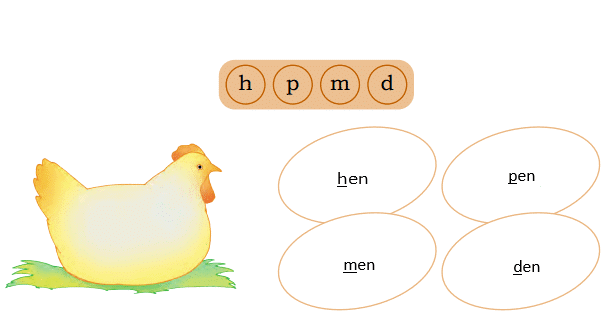
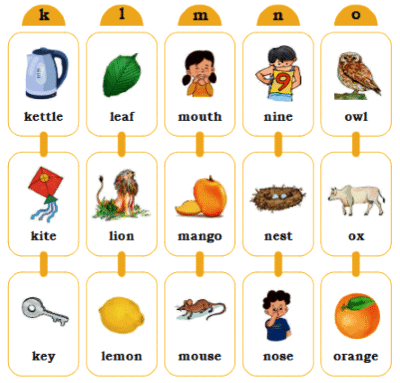
B: What is the first sound of the words in each row?
Ans: The first letter sound is of the words C.

Ans: The first letter sound is of the word M.

Ans: The first letter sound is of the word B.
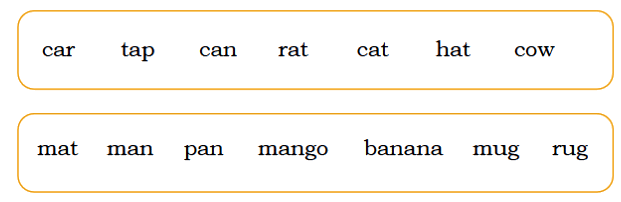
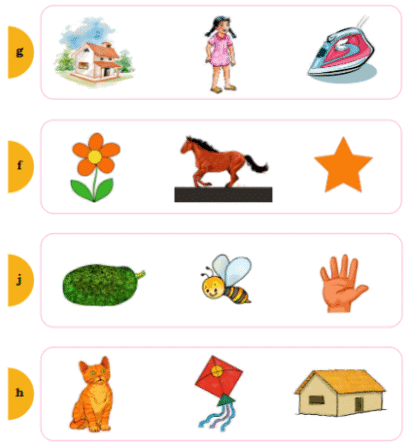
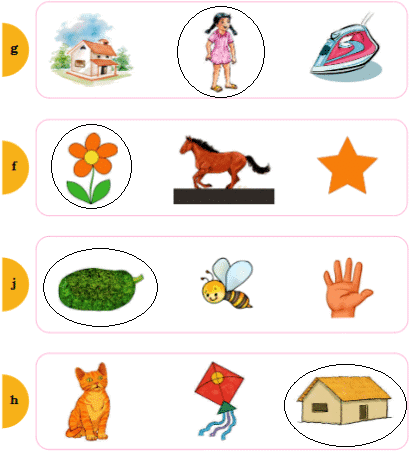
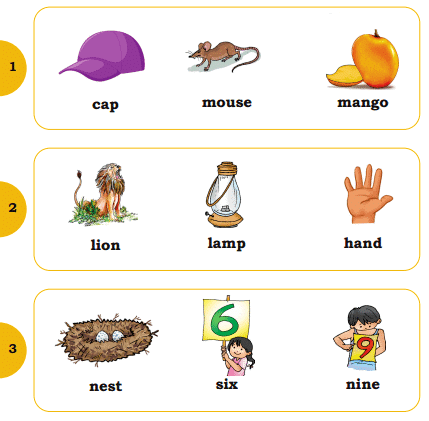
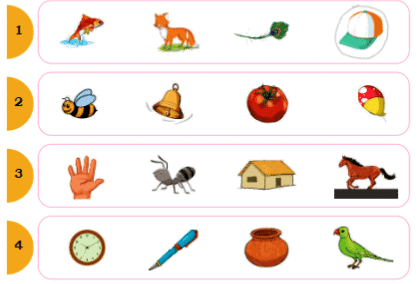
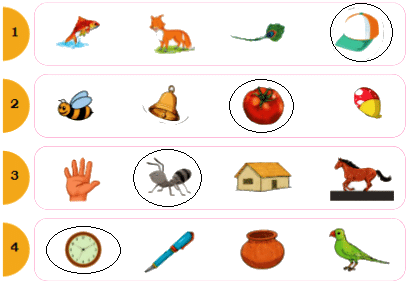
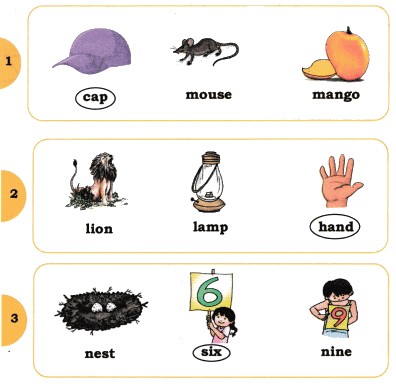
Let us writePage No. 57 to 62A: Circle the words that start with the same sound in each row.
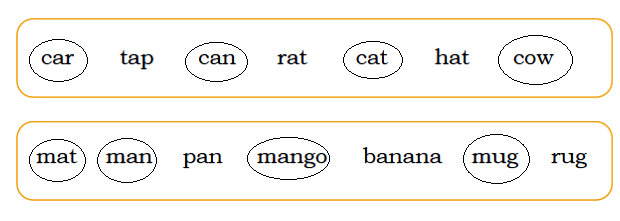
Ans: 
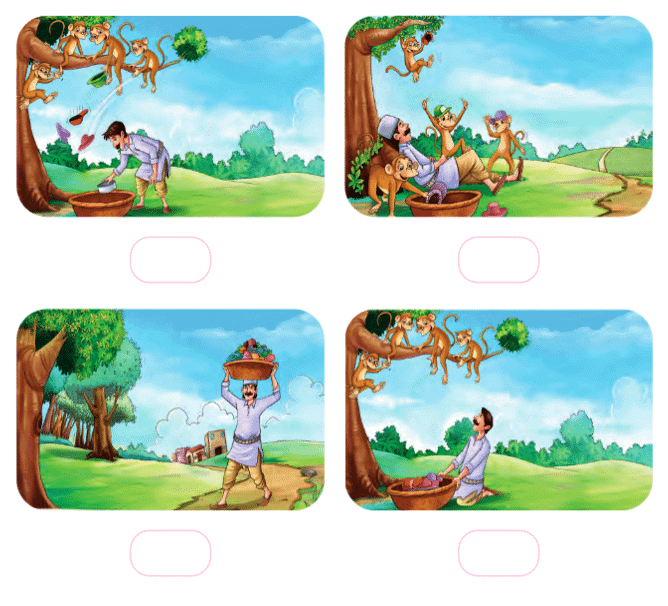
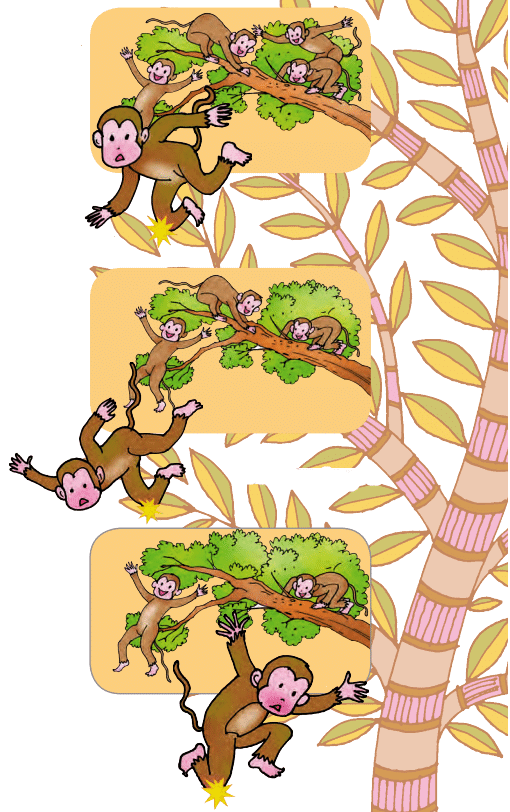
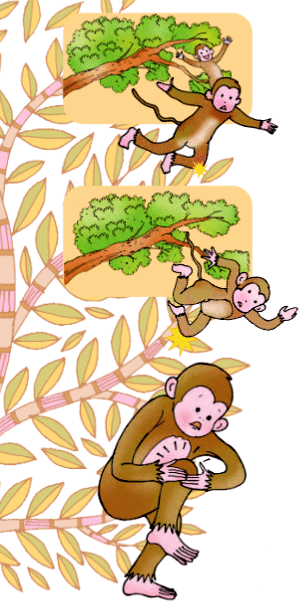
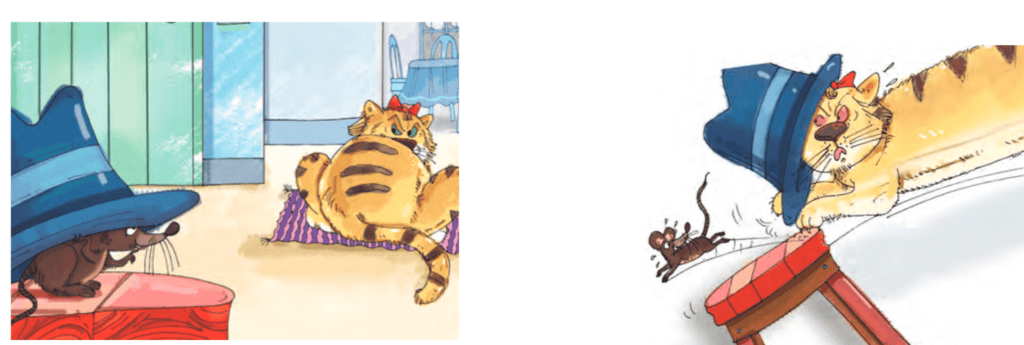
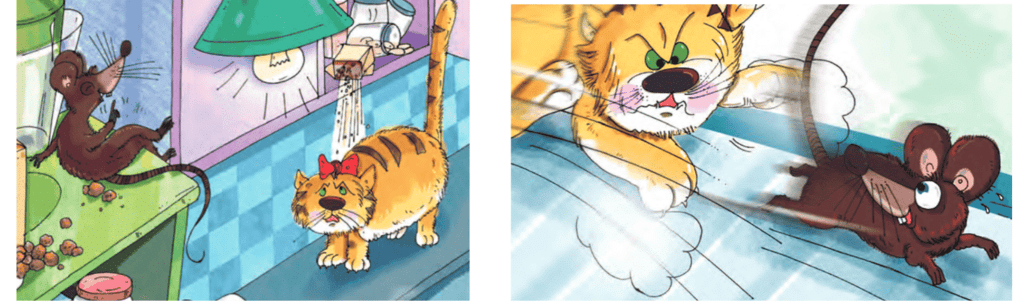
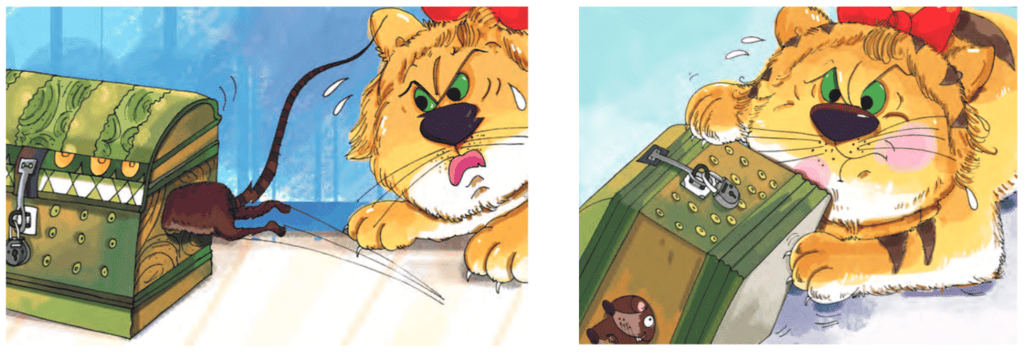
B: Write the numbers (1-4) next to the pictures according to the story.
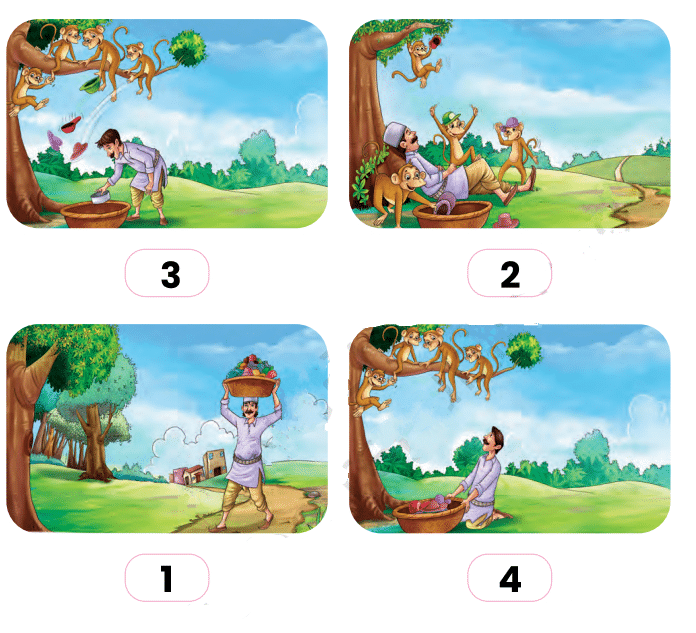
Ans: 
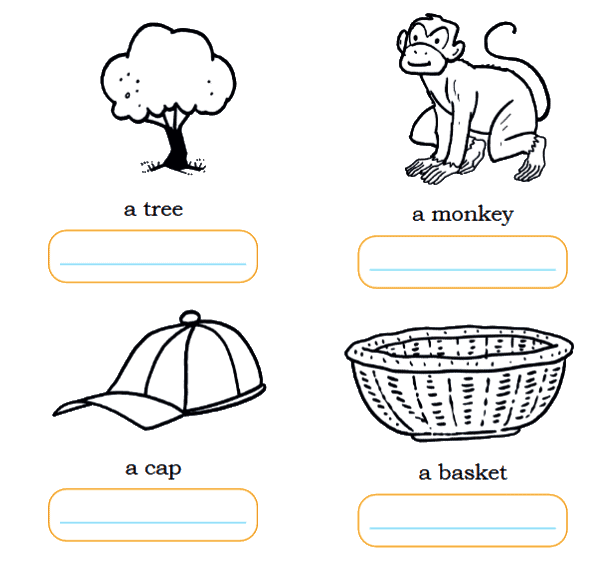
C: Let’s colour and write.
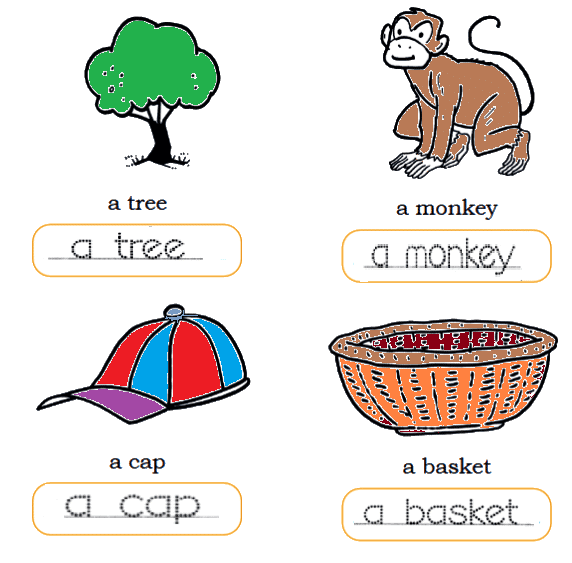
Ans: 
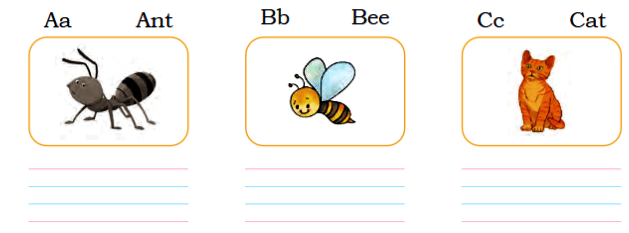
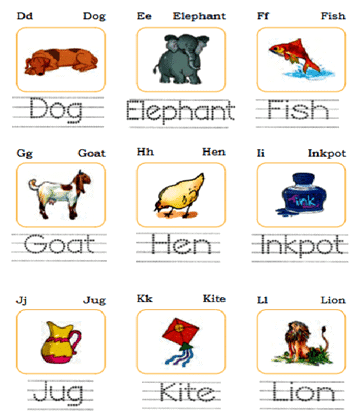
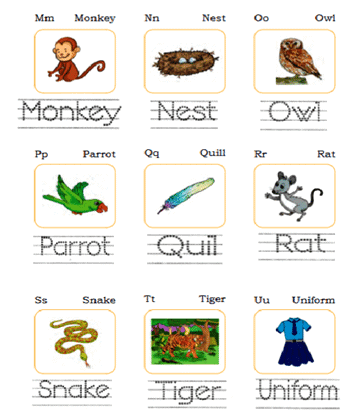
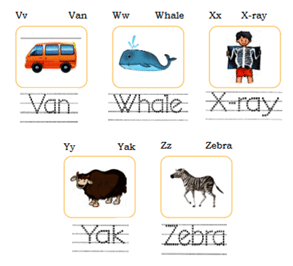
D: Cats, rats, ants and more! Write their names.
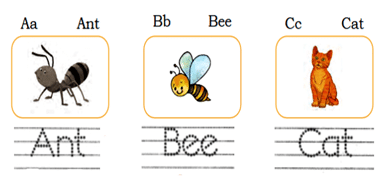
Ans: Trace on their names.

Let us sing
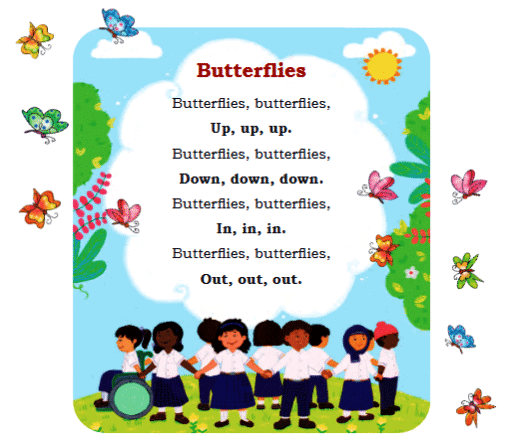
Page No. 63ButterflesButterfles, butterfles,
Up, up, up.
Butterfles, butterfles,
Down, down, down.
Butterfles, butterfles,
In, in, in.
Butterfles, butterfles,
Out, out, out.

Would you like to replace butterflies with anything else? Try.
Ans: Sing the poem aloud.

Let us speakPage No. 64 & 65
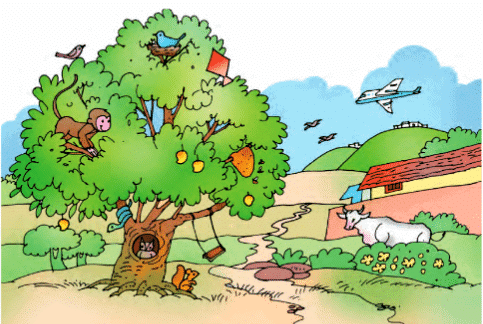
A: Answer the questions.
Teacher: Look up! What do you see on the tree?
Child: I see _____________ on the tree.
Teacher: Look down! What do you see on the ground?
Child: I see ____________________ on the ground.
Teacher: Look up! What do you see in the sky?
Child: I see _____________ in the sky.

Ans: Teacher: Look up! What do you see on the tree?
Child: I see a monkey, a kite, a beehive, two birds, a nest, bees, and mangoes on the tree.
Teacher: Look down! What do you see on the ground?
Child: I see a rabbit, a squirrel, a stream, a cow and a house on the ground.
Teacher: Look up! What do you see in the sky?
Child: I see two birds and an aeroplane are in the sky.
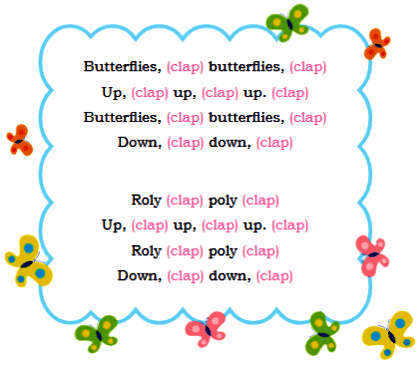
B. Say and Clap
Say aloud each line of both the poems, clapping for every word. For example

Ans: Read aloud and clap after every word.
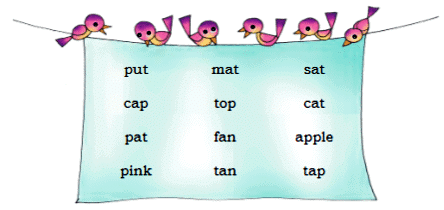
Let us writePage No. 66 & 67A: Encircle the words that have ‘p’ in them.
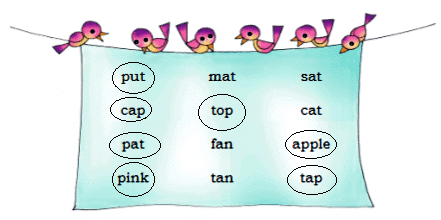
Ans: 
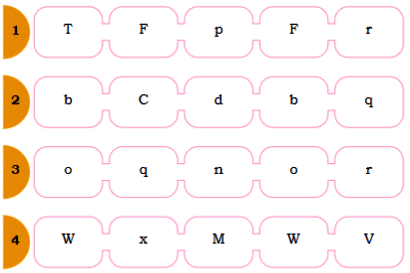
B: Encircle the matching letters in each row.
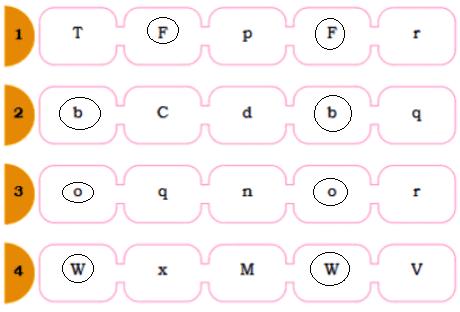
Ans: 
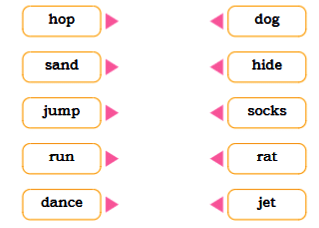
C: Match the words with the same initial syllable.
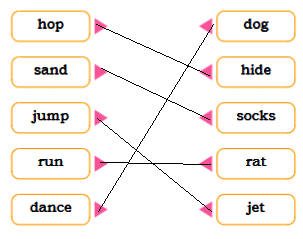
Ans: 
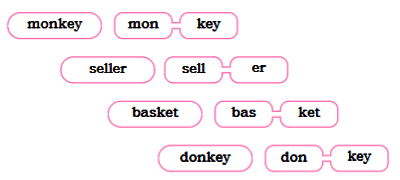
Let us speakPage No. 76Listen and Repeat
Some words have two syllables. Notice the words below:

Ans: Read the words aloud.

Let us ReadPage No. 68
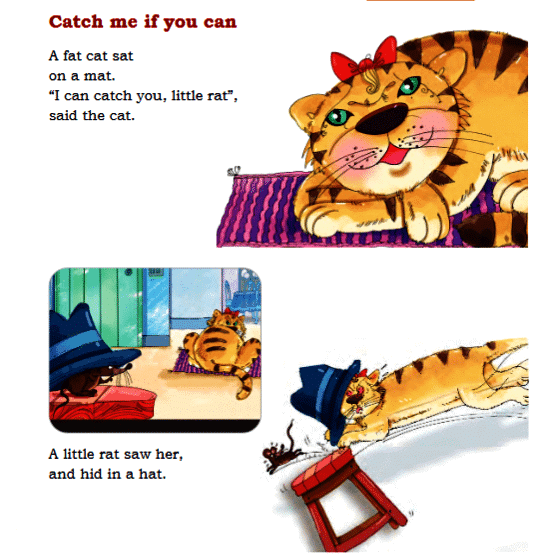
Ans: Read the poem aloud.

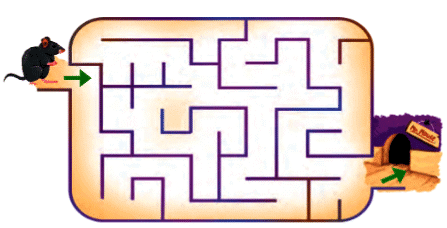
Read the mouse reach its house
Ans: 
Let us listenPage No. 71A: Close your eyes and listen to the words said by your teacher.

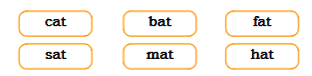
Q1: What is the first sound in each of these words?
Ans: The first sound in ‘cat’ is C, in ‘bať’ is B, in ‘fat’ is F, in ‘sat’ is S, in ‘mat’ is M and in ‘hat ‘is H.

Q2: What is common in all these words?
Ans: All these words have last two letters ‘at’.
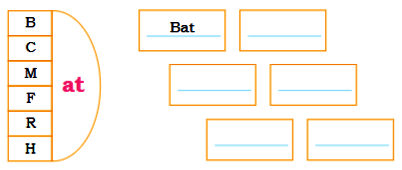
B: Let us make words by adding one letter to ‘at’ as shown. The first has been done for you.
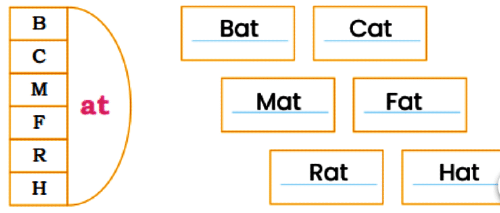
Ans: 

C: Listen and do the actions that your teacher says:

  • Catch the ball.
  • Throw the ball.
  • Hide under a table.
  • Open your pencil box or bag.
  • Close your pencil box or bag.
  • Say hurray!!

Ans: Do the action given for each situation.
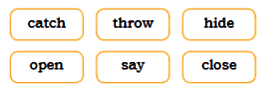
D: Now listen to the following words. Do you know what they mean? Ask your teacher.

Ans: Catch – hold something with hand.
Throw – move something away in the air from your hand.
Hide – keep something at a place where no one can see it.
Open – not surrounded by anything.
Say – speak something to somebody by using words.
Close – put something into a position so that it covers an opening.
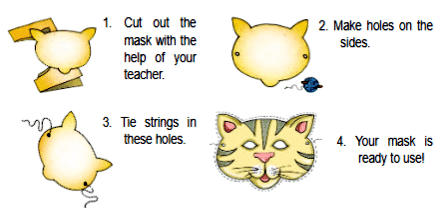
Let us doPage No. 72What shall we make? A cat and a rat?
Look at the mask of a cat from the last page of your book.

  • Now, think about the steps for making a mask of a rat. Tell your friends how to make a mask of a rat.
    Are your masks ready? Enact the story.

Ans: Follow the instructions to make a cat.
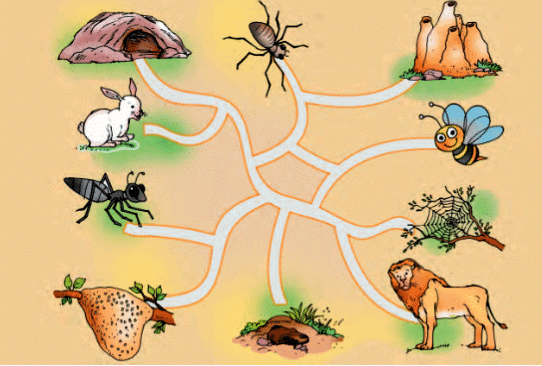
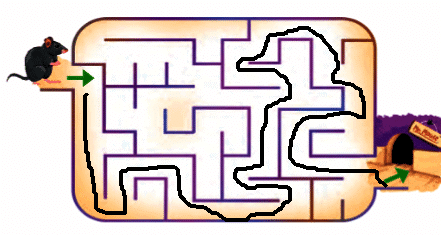
Let us doPage No. 74A: Help these animals find their homes
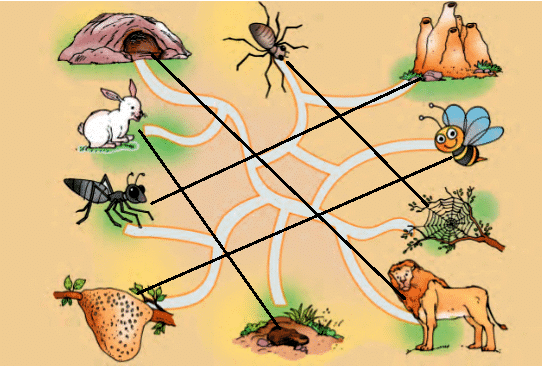
Ans: 

B: Ask anyone in your family to tell you a story about animals. Try to share the story in English in the class. Listen to the stories shared by your friends in class.
Ans: Do it yourself.

C: In small groups, choose any story that you heard or shared in the class. Draw pictures for the story. Present the story in class.
Ans: Do it yourself.
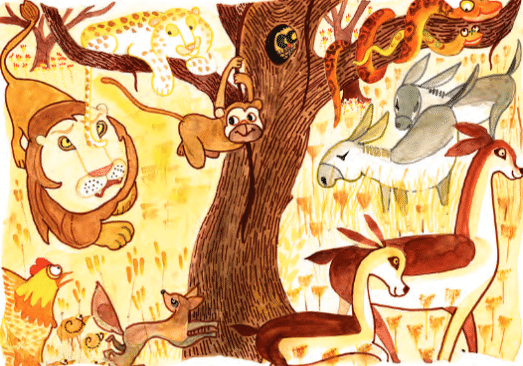
03. Picture Time – Textbook Solutions

Let us speak

Page No. 47Picture Time
Q1: What do you see in this picture?
Ans: There are trees and animals in this picture.

Q2: Can you name these animals?
Ans: The names of these animals are lion, fox, deer, monkey, and jackal.

Q3: Do you know the names of each animal in English?
Ans: Lion, fox, tiger, donkeys, deer, jackal, monkey & snakes, owl, hen.

Q4: Where have you seen them?
Ans: I have seen them in the forest.

Q5: Are there any birds in the picture?
Ans: Yes, there are some birds also in the picture.

Q6: Can you name them?
Ans: The birds depicted in the picture are cock and chicken.

Q7: Can you see the snakes? How many are there?
Ans: Yes, there are two snakes in the picture.

Q8: What is the monkey doing?
Ans: The monkey is hanging on a trunk of the tree.

Let us sing

Page No. 48Fun with Numbers
Ans: Read aloud the poem.

Let us speak

Page No. 49Q1: Have you seen a fish?
Ans: Yes, I have seen a fish.

Q2: Where did you see it?
Ans: I saw it in a river.

Q3: What was its colour?
Ans: Its colour was white.

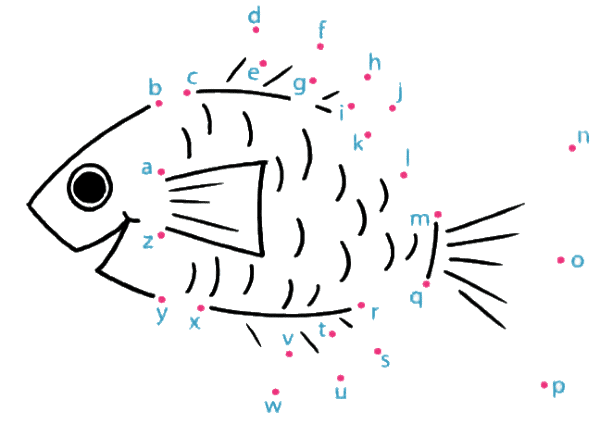
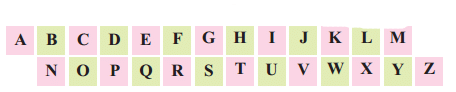
Let us drawJoin the letters in the correct alphabetical order to complete the picture and then colour it.
Ans: Join the letter and colour the picture yourself.

Let us singPage No. 50 & 51
Five Little MonkeysFive little monkeys
jumping on a tree,
One fell down
and bumped his knee.
Ah! Ah! Ah!

Four little monkeys
jumping on a tree,
One fell down
and bumped his knee.
Ah! Ah! Ah!

Three little monkeys
jumping on a tree,
One fell down
and bumped his knee.
Ah! Ah! Ah!
Two little monkeys
jumping on a tree,
One fell down
and bumped his knee.
Ah! Ah! Ah!

One little monkey
jumping on a tree,
One fell down
and bumped his knee.
Ah! Ah! Ah!

Now, no more monkeys
jumping on a tree,
Each of them
is holding his knee!

Ans: Read the poem aloud.

Let us DoPage No. 52 & 53Q1: Circle the word ‘little’ in the poem wherever you find it.
Ans: Circle the word ‘little’ five times in the five stanzas of the poem.

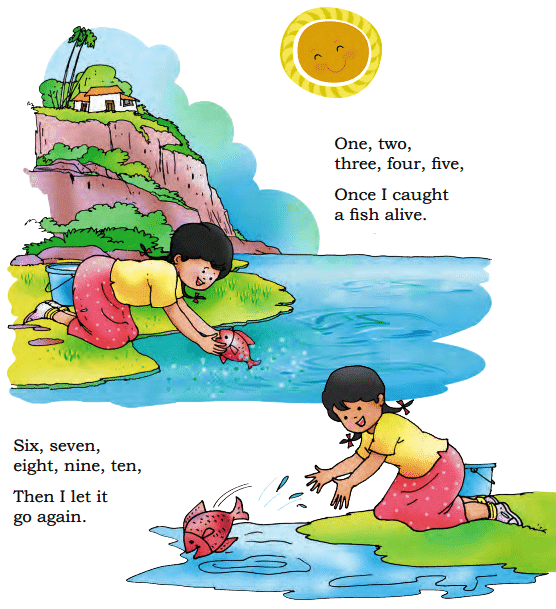
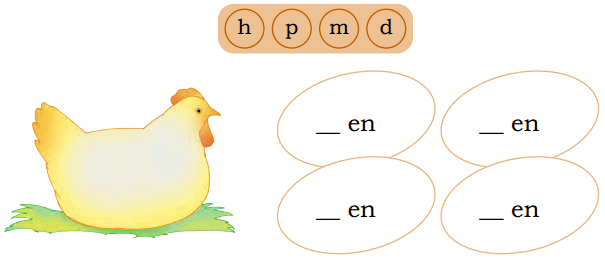
Q2: Notice the rhyming words- five-alive, tree-knee in the two songs you have read. Make rhyming words for Ten by using letters from the help box.

Ans: 

Q3: Do you know any other number rhyme?
Ask your parents or elders at home.
It could be in any language. Share it in class.

Ans: Five – Live, Hive
Nine – Fine, Line
Six – Fix, Mix

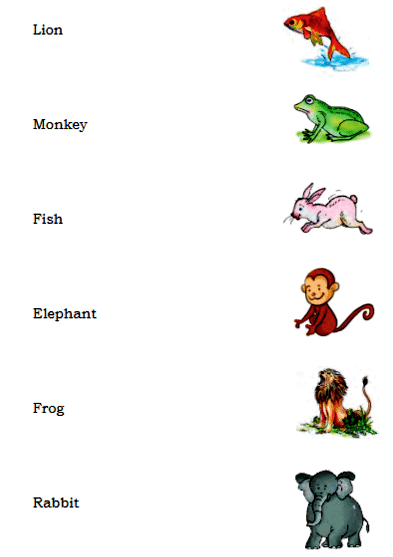
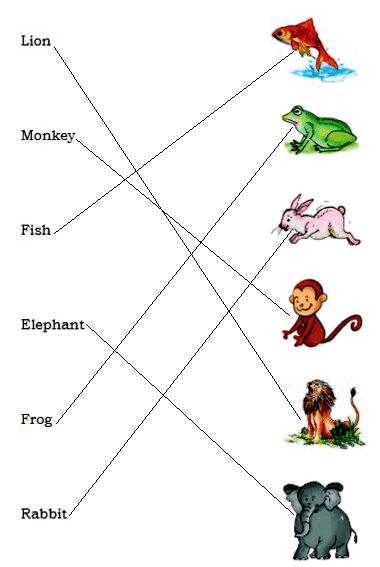
Q4: Match the animals with their names.

Ans: 

02. Greetings – Textbook Solutions

Let us Write

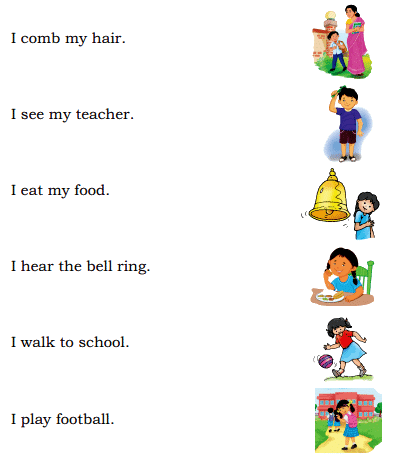
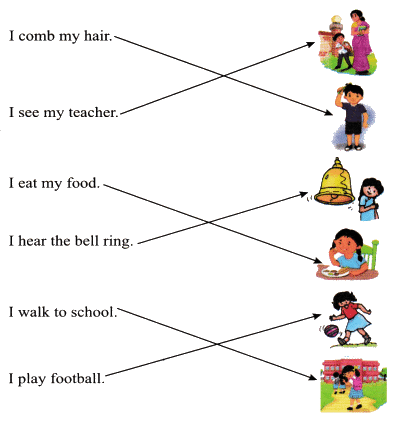
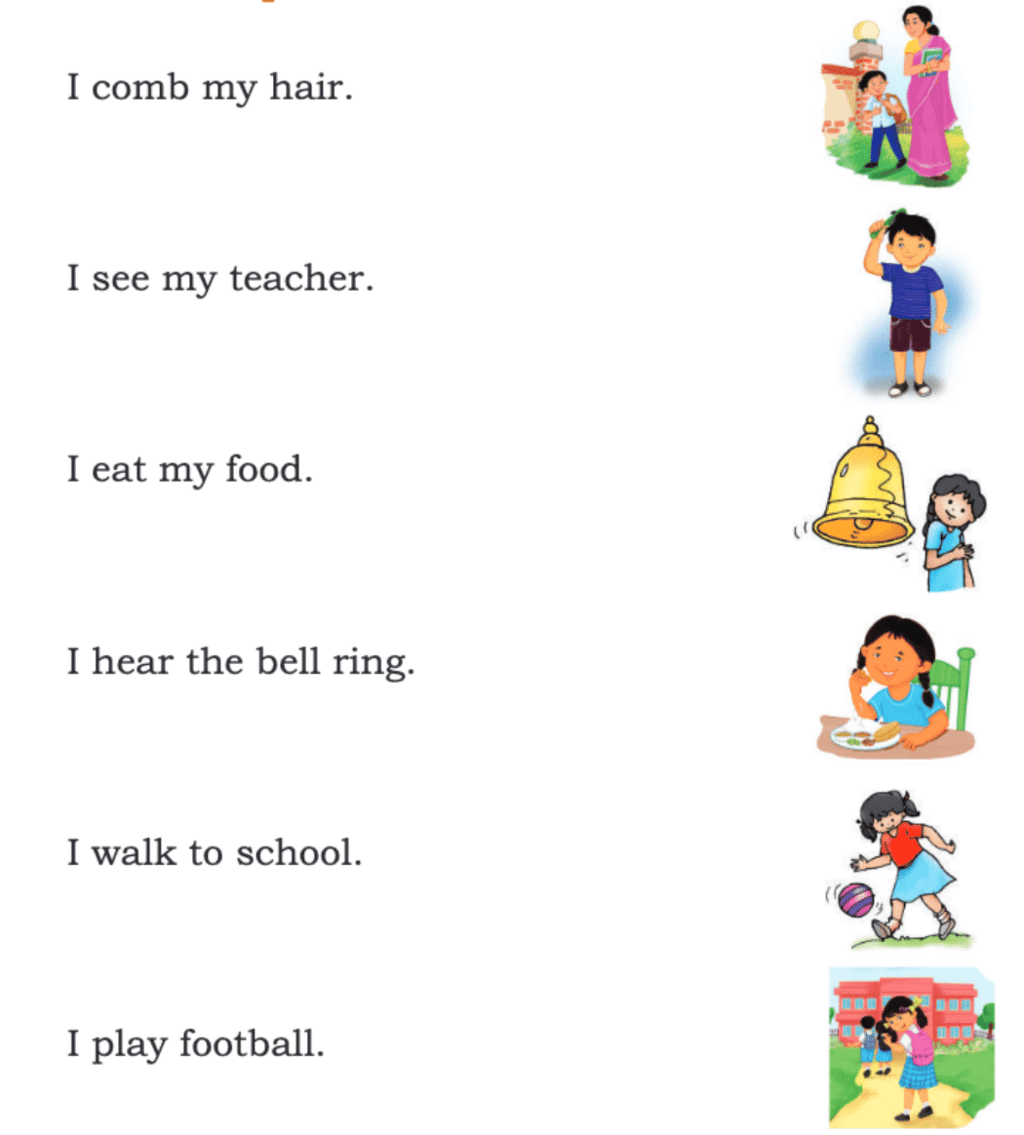
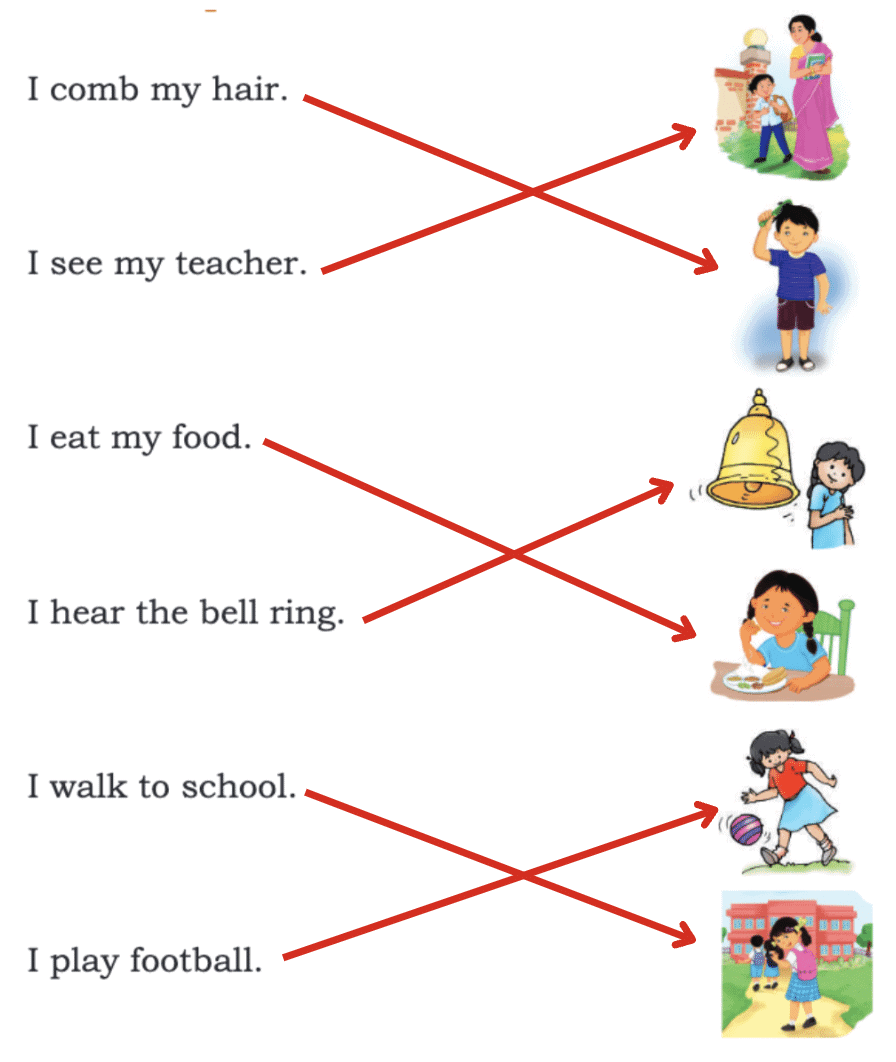
Page No. 16A. Match the pictures with the sentences.

Ans:

Let us write

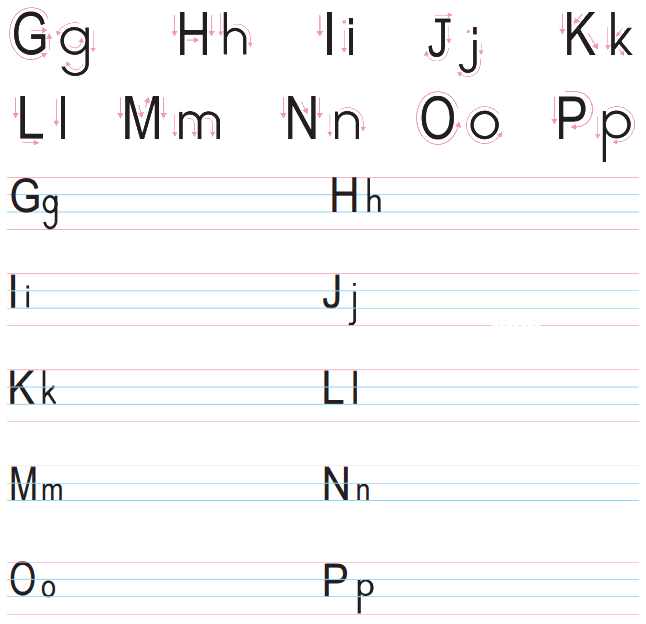
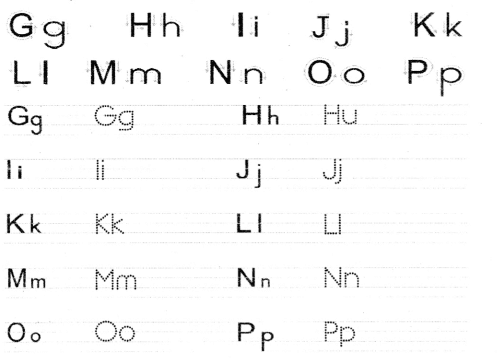
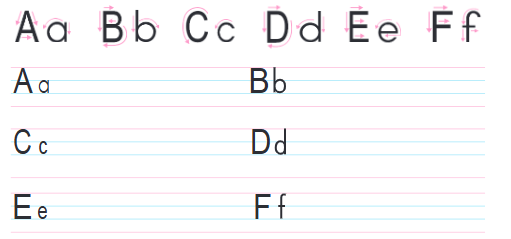
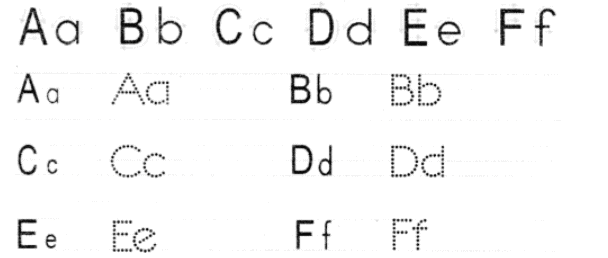
Page No. 17A. Write these letters
Sing the A B C song again.

Ans: Trace on the dotted letters and sing the ABC song.

Let us speak

Page No. 18 & 19Letter sounds

Ans: Read aloud the given words.

A: Say aloud each letter. Then encircle the picture which begins with the same letter sound.

Ans:

Let us Sing

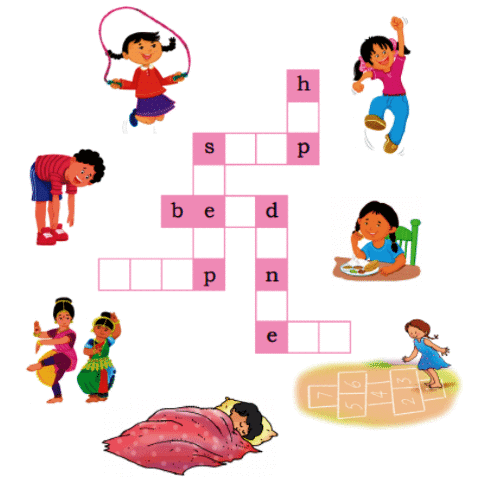
Page No. 20Hope little,
Hop a little,
jump a little.
one two three.
Stamp a little,
skip a little,
tap one knee.
Dance a little,
twist a little,
shake your hand.
Yawn a little,
sleep a little,
in your bed.

Ans: Sing yourself.

Picture TalkPage No. 22 & 23

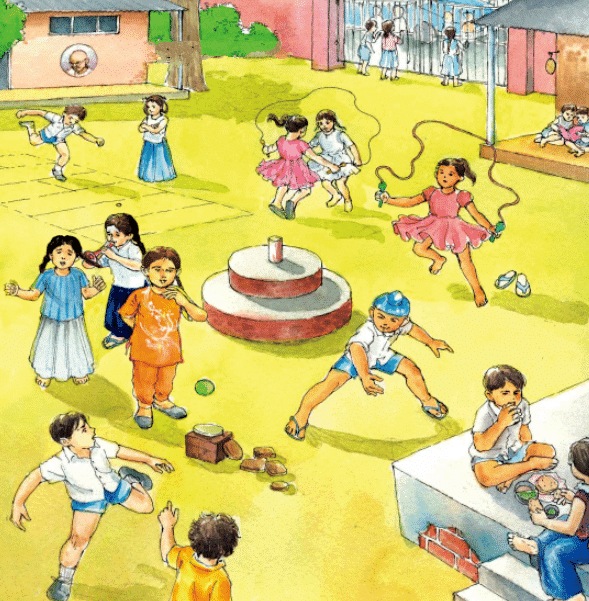
Q1: How many children are there in the picture?
Ans: There are 28 children in the picture.

Q2: What games are they playing?
Ans: Children are swinging on a swing set, rowing boats, playing hopscotch game and skipping.

Q3: Which is your favourite game?
Ans: There are so many games i.e. indoor and outdoor. But I like to play volleyball.

Q4: Some children in the picture are not playing games. What are they doing?
Ans: They are watching games played by other children and enjoying them.

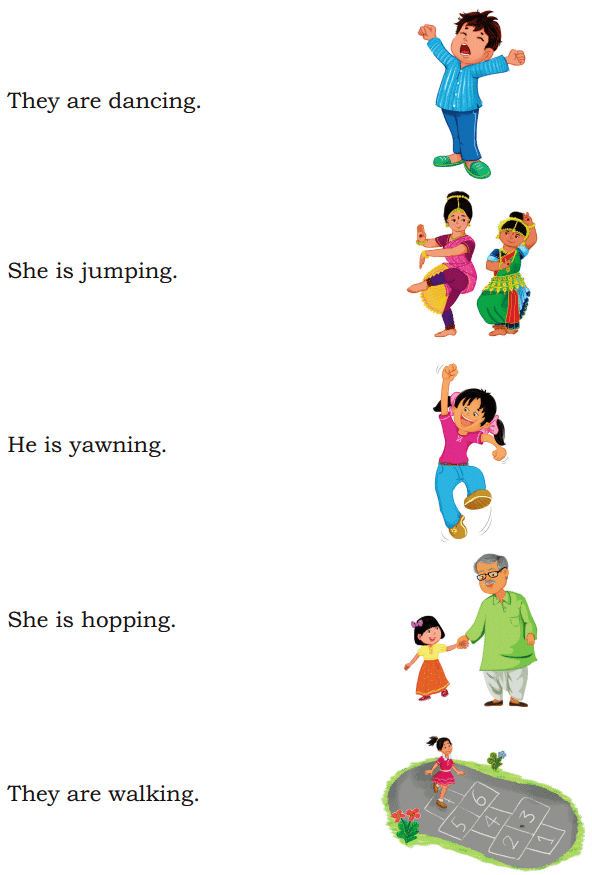
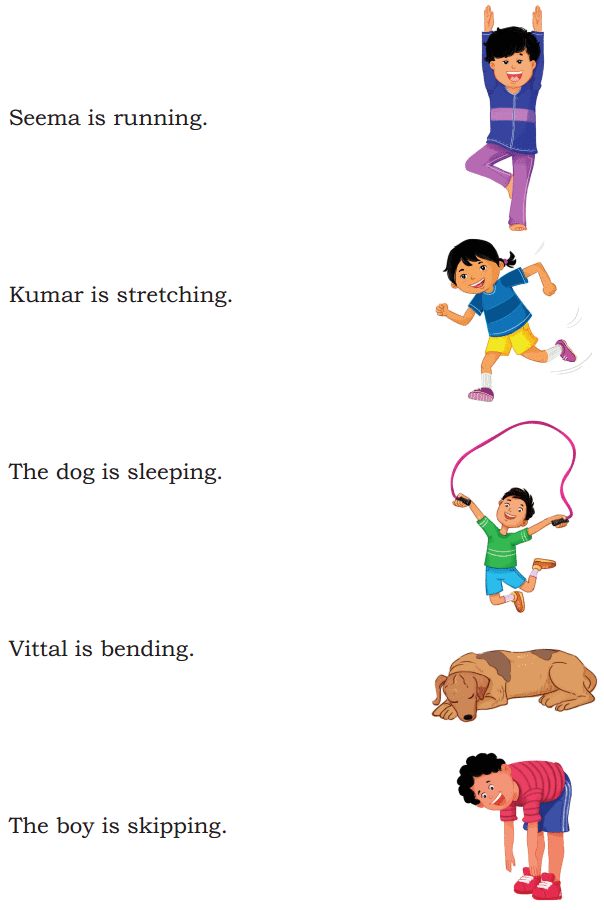
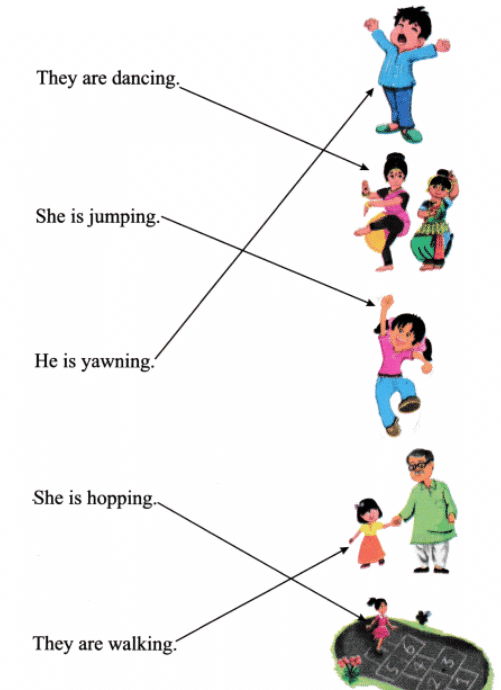
Match the actions with the pictures.

Page No. 24 & 25

Ans: 

Let us play

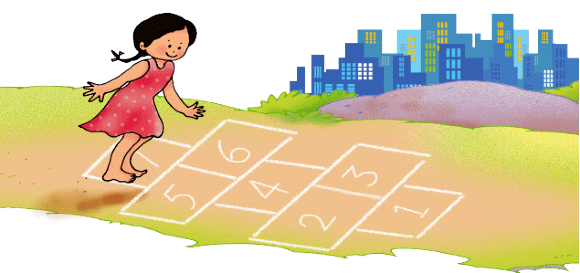
Page No. 26Hopscotch
Your teacher will help you draw the picture on the floor.
You have to take turns to jump and hop. Jump with one foot in each box.
Start with 1. Go till you reach number 7. Then turn around and come back.
If you put your foot outside the box, then you are out! 

When you were playing one round
A: Did you jump?
Ans: Yes

B: Did you hop?
Ans: Yes

C: Did you have fun?
Ans: Yes

D: Did you count the numbers while playing?
Ans: YesLet us write
Page No. 27 & 28

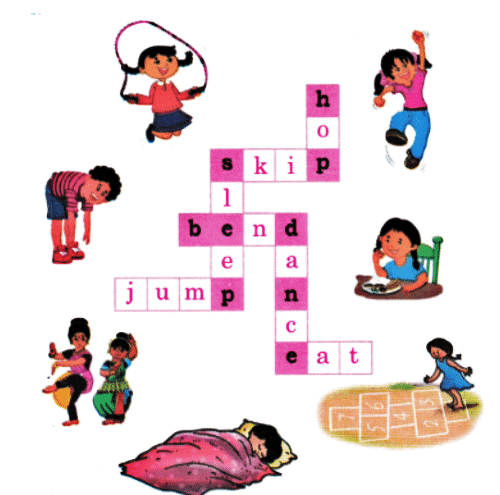
A: Look at the picture and fill in the words from the boxes.

Ans: 

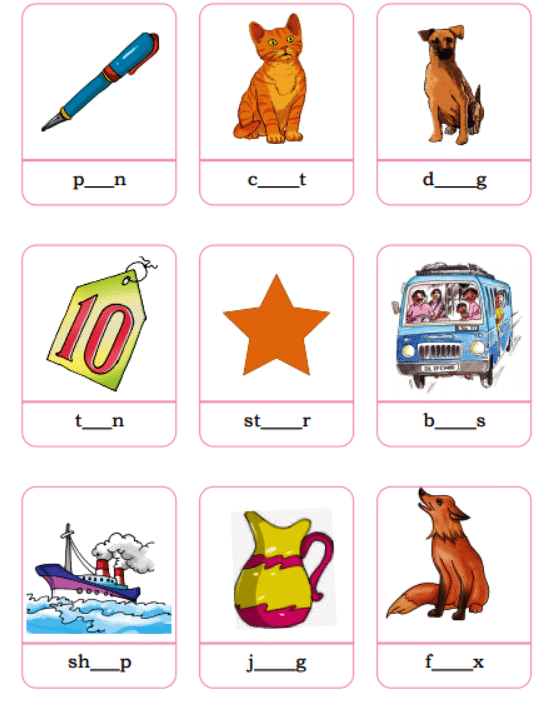
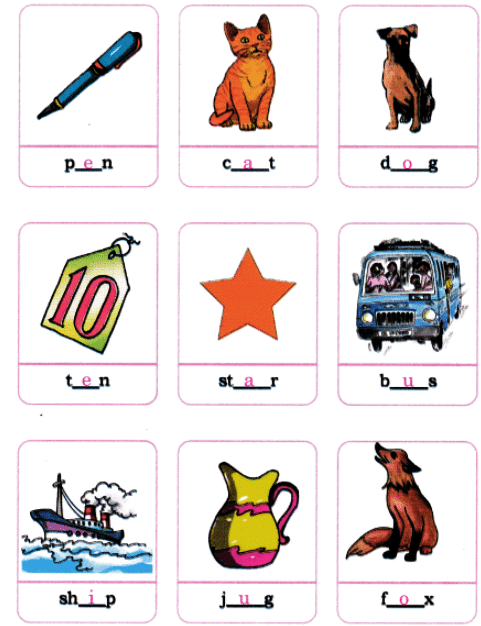
B: Write the missing letter to complete each word.

Ans: 

Let us Speak

Page No. 29 & 30Letter sounds

Ans: Recite the letter sounds yourself.

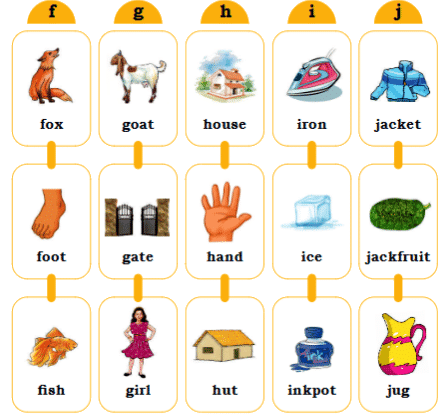
A: Notice the initial sounds of the words in each row.
Find the odd one out.

Ans: Play Time
Q1: Can you do this?
A: Without using your hands turn the pages of your book one by one.

Ans: No.

B: Sit with your partner. Look at each other’s eyes and see who blinks first.
Ans: Do it with your partner.

Let us write

Page No. 31A: Write these letters sing the ABC song again.

Ans: 

Let us Speak

Page No 32 & 33Letter Sound

Ans: Recite the letter sounds yourself.

A: Say the words aloud. Circle the picture with different starting sound. The first one is done for you.

Ans: 

Play time
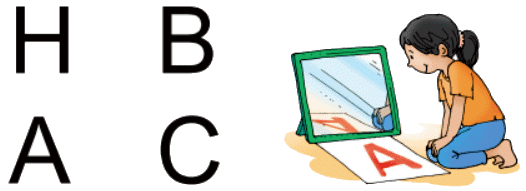
B: Hold this page in front of a mirror. Do they look the same in the mirror?

Ans: No, all letters don’t look the same in the mirror.

Picture Talk

Page No. 34 & 35

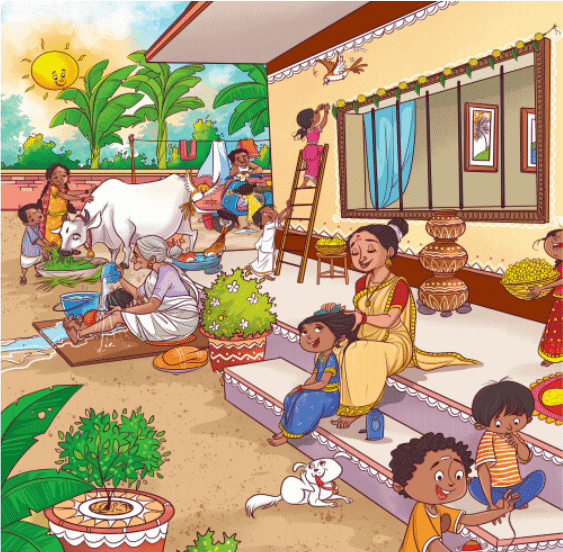
Q1: Who are there in this family?
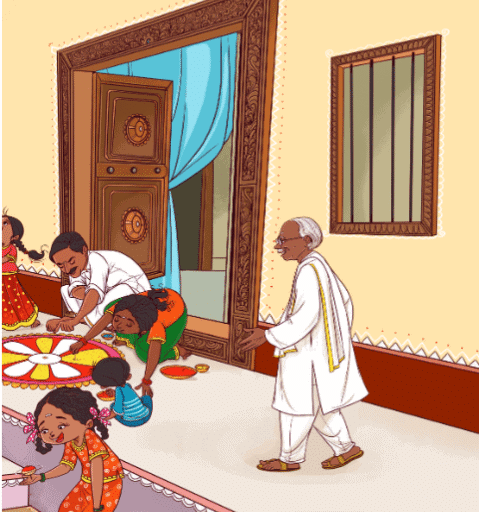
Ans: This is a joint family. There are grandfather, grandmother, mother, father, uncle, aunt, eleven children, a cow, and a pet dog.

Q2: What are they doing?
Ans: A man is making a rangoli, a girl is helping him, and a child is watching. Grandfather is coming. A boy and a girl are playing with a top. A woman is combing a girl’s hair. Grandmother is bathing a child. A girl is tying a vandanvar and a boy is holding the ladder. A lady and a child are feeding the cow. A man and a girl are washing a scooter.

Q3: How do you help your family?
Ans: I help my family by doing household chores.

Q4: What did you like the most in this picture?
Ans: I liked the love and affection of the family.

Let us speak

Page No. 39Q1: Who is there in your family?
Ans: Eg- Father, Mother, siblings.

Q2: How do you help each other?
Ans: E.g.- In all the works.

Q3: What are the names of your grandparents (both paternal and maternal)?
Ans: Students have to add the names of their families.

Q4: Which bird do you see around your house?
Ans: Around my house, I see Peacocks, sparrows, pigeons, and crows.

Q5: If you were the baby sparrow, where would you go flying?
Ans: sky.

Q6: What do you think the baby sparrows saw from the sky?
Ans: Beautiful world.

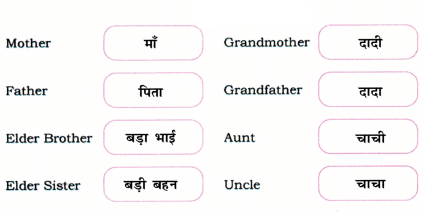
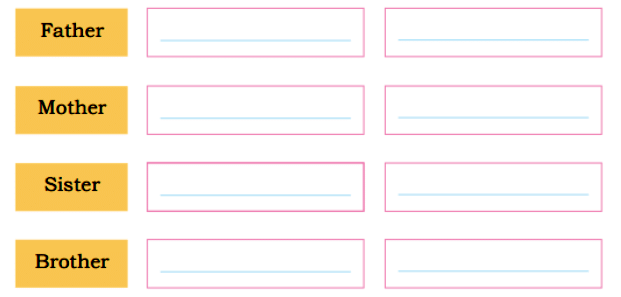
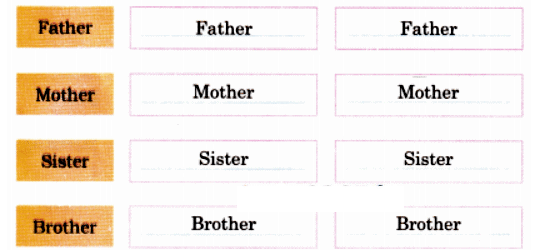
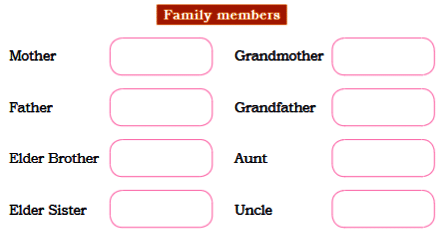
Q7: What do you call the following members in your mother tongue?

Ans: 

Let us draw

Page No. 40A: Draw a picture of your family in the box given.
You may include any interesting thing about your family like pets, your plants, trees in your garden, or any other thing.

Ans: Do it yourself.
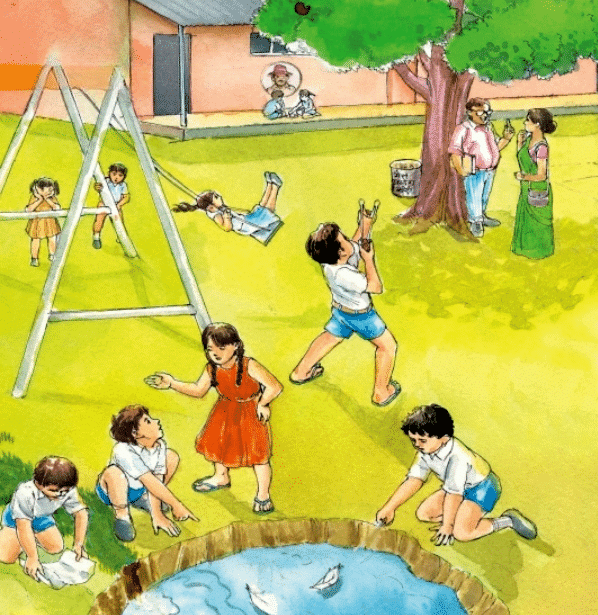
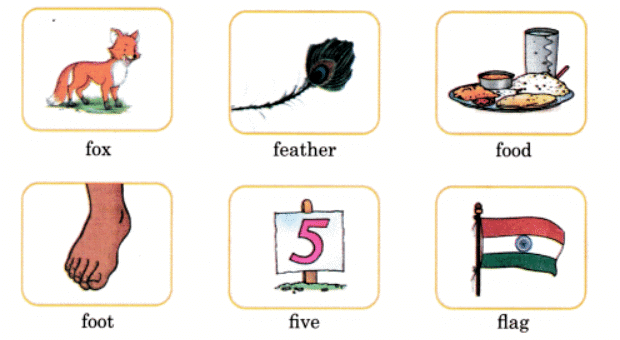
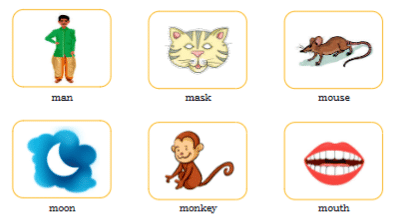
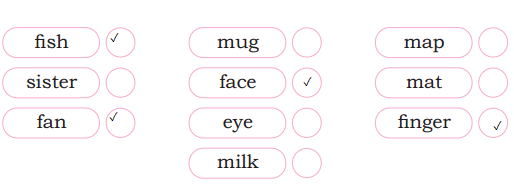
Let us doPage No. 41 & 42The word ‘father’ begins with ‘f sound. Read the following words that begin with ‘f sound.
‘The word ‘mother’ begins with ‘m’ sound. Read the following words that begin with ‘m’ sound.

Ans: Students read and practice.

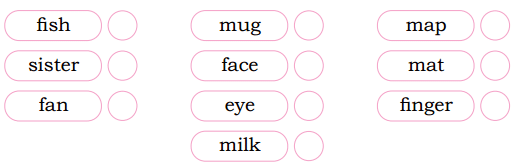
A: Read the words in the box.
Tick the words that begin with f.
Circle the words that begin with m.

Ans: 

B: Write the words.

Ans: 

Picture Talk

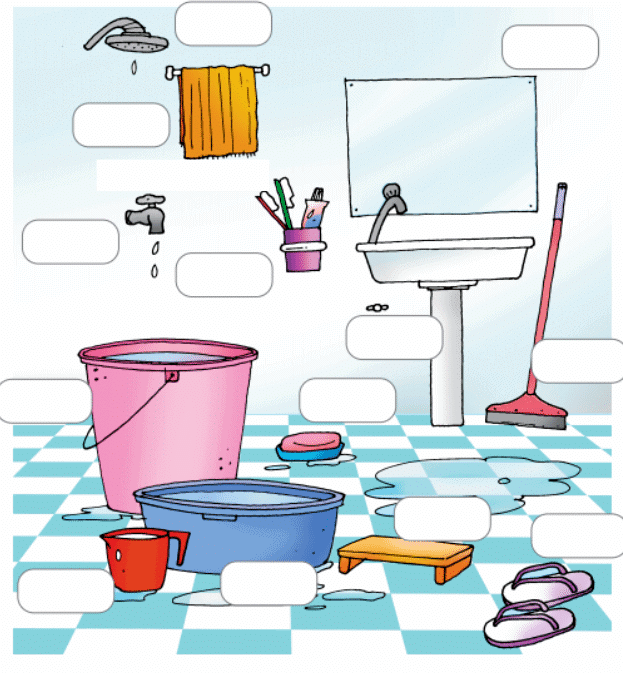
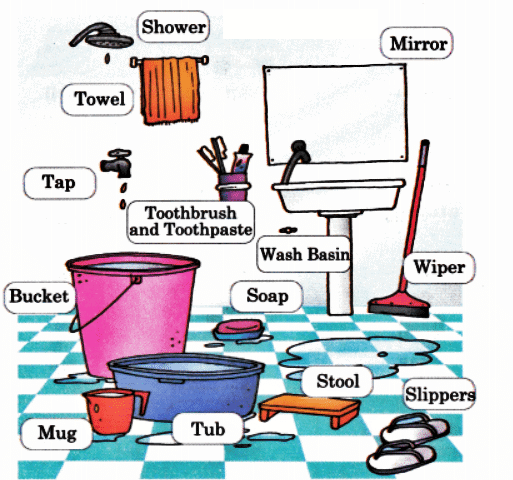
Page No 43Look at the picture of a bathroom. Label the things in it.

Ans: Q1: What things do you see in the picture?
Ans: In the picture, I can see a shower, towel, mirror, tap, toothbrush and toothpaste, wash basin, wiper, bucket, soap, mug, tub, stool, and slippers.

Q2: Do you remember to close the tap when you are not using it?
Ans: Yes, I remember to close the tap when I am not using it.

Q3: Why should we do so?
Ans: We should do so because water is very precious and we should save it.

Letter Sound

Page No. 44

Ans: Recite the letter sounds yourself.
Let us Think

Page No. 46
A. You all know the alphabet song. Let us sing it while reading the letters.

Ans: Sing it with your classmates.

B: Sing it, loudly for the capital letters and softly for the small letters.

Ans: Sing it with your classmates.

01. Two Little Hands – Textbook Solutions

Let us speak

Page No. 4

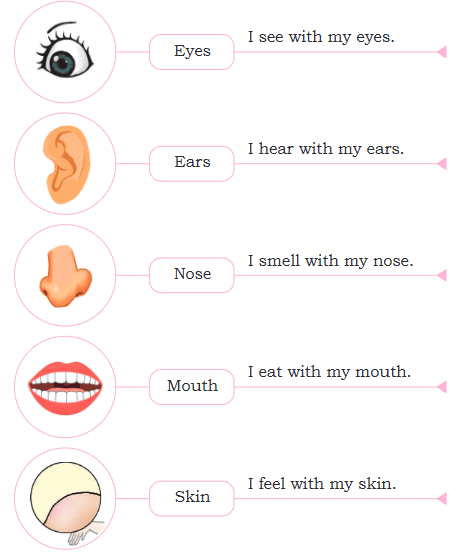
A. Repeat after the teacher
Teacher: I clap with my hands.
Children: I …
I tap with my feet.
I look with my eyes.
I walk with my legs.
Ans:
 Read aloud with teacher.

Page No. 5

B. Talk in pairs
Ask your partner questions such as the ones below.
Nitin: 
What is this?
Neha: This is my nose.
Neha: What are these?
Nitin: These are my shoulders.
Nitin: What is this?
Neha: This is my mouth.
Neha: What are these?
Nitin: These are my ears.
Nitin: What is this?
Neha: This is my mouth.
Neha: What are these?
Nitin: These are my hands.
Nitin: What are these?
Neha: These are my legs.
Ans: 
Read in pairs.

Page No. 6

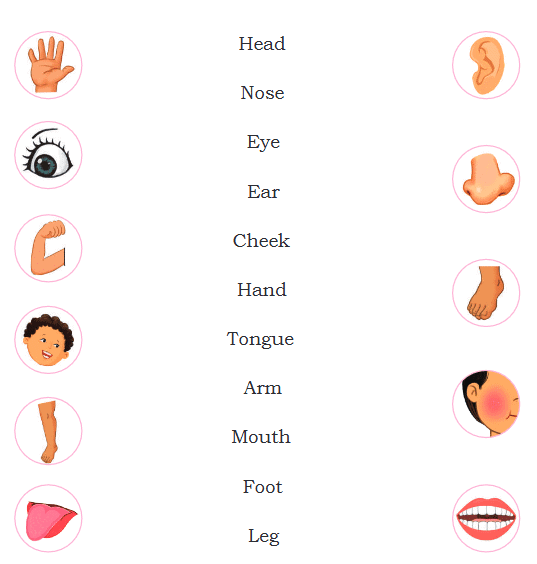
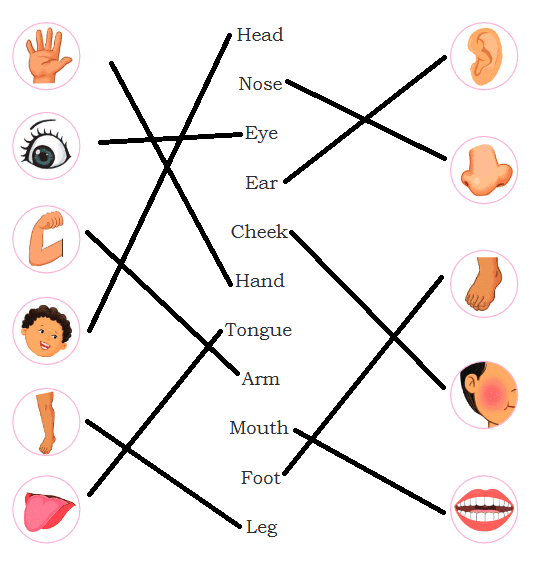
Match the parts of the body with their pictures.

Ans:

Let us read

Page No. 7

Look at the pictures. Read the word, then read the sentence.

Ans: Read the words and sentences.

Let us do

Page No. 8

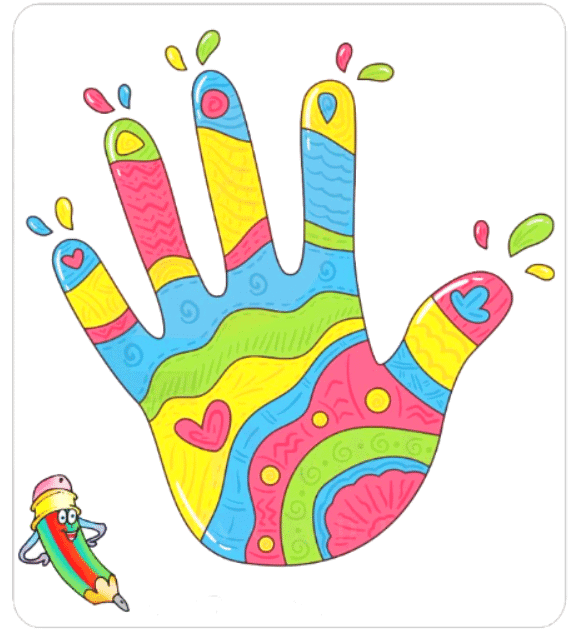
My Hand
Place one palm in the centre of the box given below. With your other hand, outline. Decorate the hand with colours. coloured paper bits. bindis or anything else.
Now compare your drawing with your friend’s drawing.
Ans:

Let us do

Page No. 9

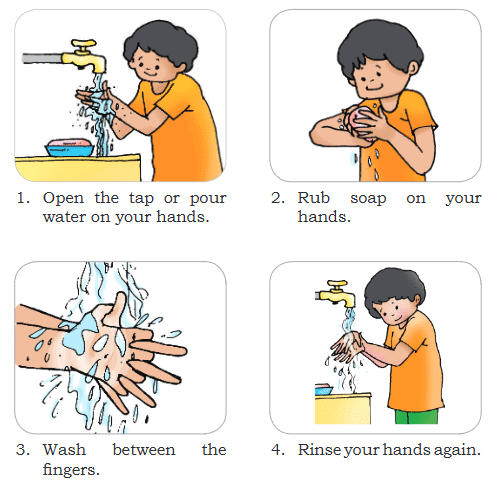
Washing Hands

Ans: This is an activity for students.

Let us sing

Page No. 10

Alphabet song

Ans: Sing the Alphabet song yourself from the textbook.

Let us write

A. Write the letters.

Ans: Trace on the dotted letters.

Let us sing

Page No. 11

A. Sing the alphabet (phonics) song for these letters before you start reading the words.
You may sing it in this way:
Ans: Sing aloud.

Let us speak

Page No. 13-14

Letter Sounds

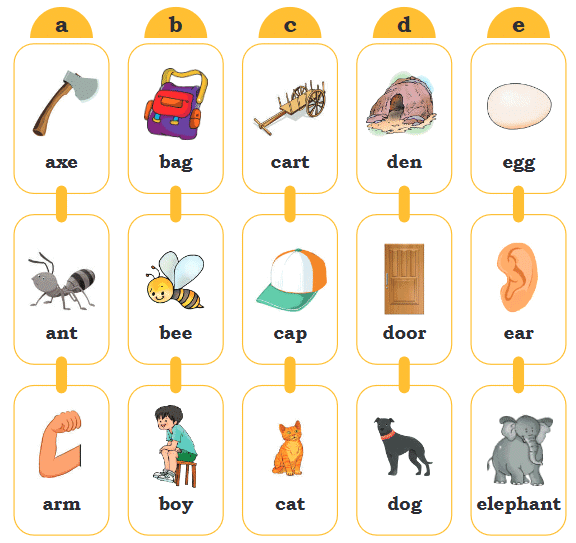
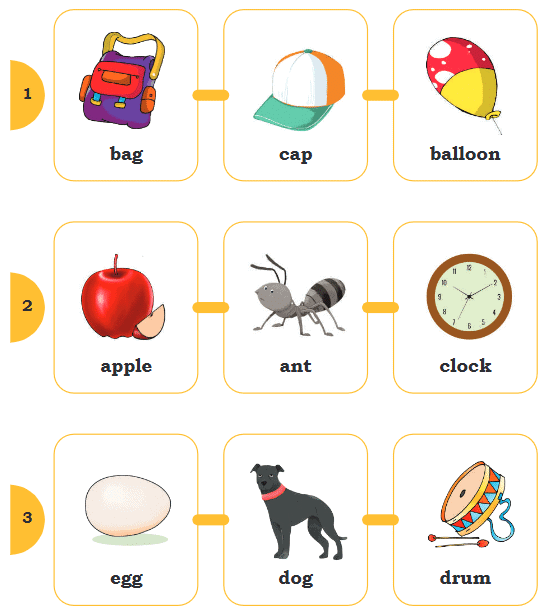
Notice the initial sounds of the words in each row. Find the odd one out.
Ans:
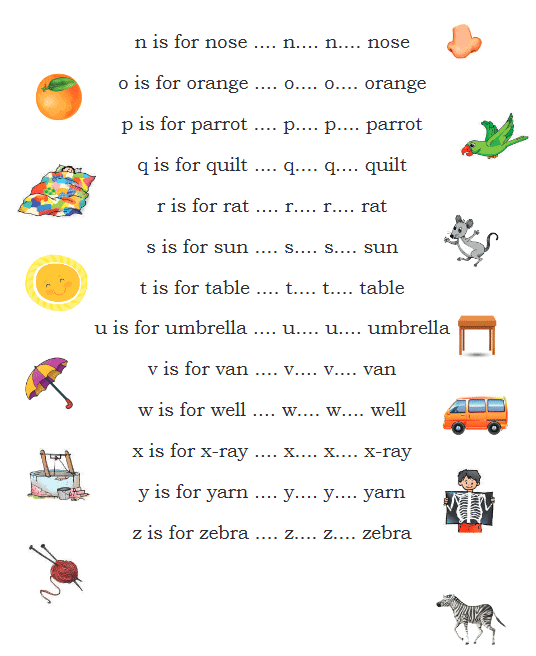
Initial Sounds:

  1. ba, ka, ba
  2. ap, an, cl
  3. eg, do, dr

Odd One Out:

  1. cap
  2. clock
  3. egg

09. Anandi’s Rainbow – Chapter Notes

Introduction

  • This chapter is about a girl named Anandi and her colorful adventure.
  • It teaches us about rainbows, colors, and the beauty of nature.

Chapter Summary:

  • Anandi was sleeping while it was raining outside.
  • She dreamt about rainbows, which are colorful arcs in the sky after rain.

Dreaming of Rainbows:

  • Anandi woke up and saw a big, bright rainbow in the clear blue sky.
  • She got excited and went to her garden with her cat Milli.

Anandi’s Love for Art:

  • Anandi loved to draw and paint.
  • She decided to paint her garden’s flowers with rainbow colors.

Painting the Flowers:

  • Anandi colored the flowers: violet, indigo, blue, green, orange, and red.
  • She left one flower yellow so that the Sun would shine brightly.

The Magical Transformation:

  • Anandi’s garden turned into a beautiful place with colorful flowers.
  • The Sun was shining brightly, adding to the beauty.

The Rainbow Disappears:

  • After coloring the flowers and the Sun, the rainbow disappeared.

Word Meanings:
Rainbow: A colorful arc in the sky after rain.
Violet: A color like purple.
Indigo: A color like deep blue.
Garden: A place with plants and flowers.
Paint: To use colors to make something beautiful.
Shining: Giving bright light.
Glory: Great beauty and happiness.

Theme
The theme of this chapter is about the beauty of nature, colors, and the joy of creativity.

Things in the Sky

  • In the sky, we can see many things like clouds, birds, airplanes, and the Sun.
  • Clouds are fluffy, white things in the sky made of tiny water droplets.
  • The Sun is a big, bright ball of light that gives us warmth and light during the day.
  • Sometimes, we can see colorful rainbows after it rains, like Anandi did in the story.

Key Takeaway
Nature is full of beauty, and we can make it even more beautiful with our creativity, just like Anandi did with her garden.

08. The Four Seasons – Chapter Notes

Introduction

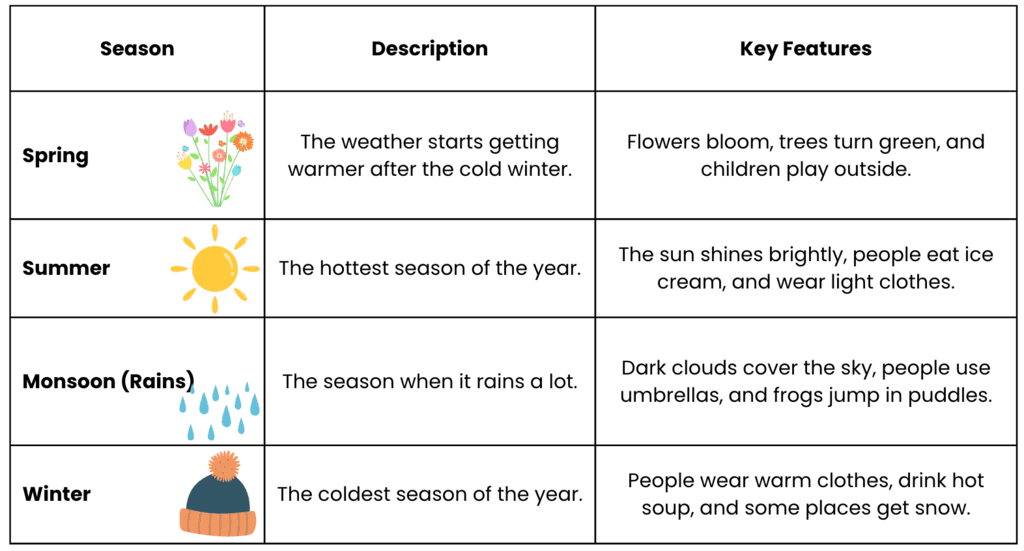
  • Did you know the year is like a big magical story with four different chapters? These chapters are called Seasons!
  • In India, we have four seasonssummer, monsoon (rains), autumn, and winter. But not all countries have all four! Some places are hot all year, while others stay cold and snowy.
  • We will first learn about the four seasons and then read stories about each of them. Let’s explore how our world changes throughout the year!

Spring

  • Description: Spring is a time when the weather starts getting warmer after the cold winter.
  • Key Features: Children play outside, and colourful flowers bloom everywhere.
  • New Words: Bloom (to open and show flowers), Play (to have fun and games)

Word Meanings: Bloom means when flowers open up, and play means having fun with games and friends.

Try yourself:

What is the main characteristic of spring?

  • A.Warm weather and blooming flowers
  • B.Snowfall and cold temperatures
  • C.Hot weather and dry conditions
  • D.Windy weather and falling leaves

View Solution

Summer

  • Description: Summer is the hottest season of the year.
  • Key Features: People try to stay cool and often go for a swim in the pool to beat the heat.
  • New Words: Dip (to go into the water quickly), Pool (a place to swim)

Word Meanings: Dip means going into water for a short time, and pool is a place where you can swim.

Monsoon

  • Description: A monsoon is a season when heavy rain falls.
  • Key Features: Clouds in the sky become dark and filled with rain.
  • New Words: Monsoon (a season of heavy rains)

Word Meanings: Monsoon is a special word for the rainy season.

Winter

  • Description: Winter is the coldest season.
  • Key Features: People enjoy the warmth of the sun on sunny winter days.
  • New Words: Rays (beams of sunlight)

Word Meanings: Rays are the beams of sunlight that make you feel warm.

Summer – Brinda’s Visit to Hyderabad

  • Description: Brinda and her family visit Hyderabad during the hot summer.
  • Clothing: Brinda wears a cotton frock to stay cool.
  • What Others Wear: Brinda’s mother, father, grandfather, grandmother, and brother may wear light and comfortable clothes to beat the heat.

Winter – Prithvi in Shimla

  • Description: Prithvi goes to Shimla, which is a cold place during the winter.
  • Clothing: Prithvi wears warm clothes to stay comfortable in the cold weather.
  • Objects in the Picture: In the picture, you may see snow, people in warm coats, and maybe even a snowman.

Try yourself:

Which season is known for heavy rains?

  • A.Summer
  • B.Monsoon
  • C.Winter
  • D.Spring

View Solution

Pitter Patter 

Monsoon – Picture Hunt

  • Description: Look at the picture and circle the words you see related to the monsoon.
  • New Words: Pitter patter (the sound of light raindrops falling)

Word Meanings: Pitter patter is the sound raindrops make when they fall lightly.

Rain

  • Description: Rain is a part of the monsoon season.
  • Key Features: Rain falls on the green grass, trees, rooftops, and people.

Word Meanings: Rain is water falling from the sky.

In this chapter, we have learned about the four seasons – Spring, Summer, Monsoon, and Winter – and the different weather conditions associated with each. We also discovered how people dress appropriately for the weather in different seasons and how they enjoy the unique characteristics of each season.

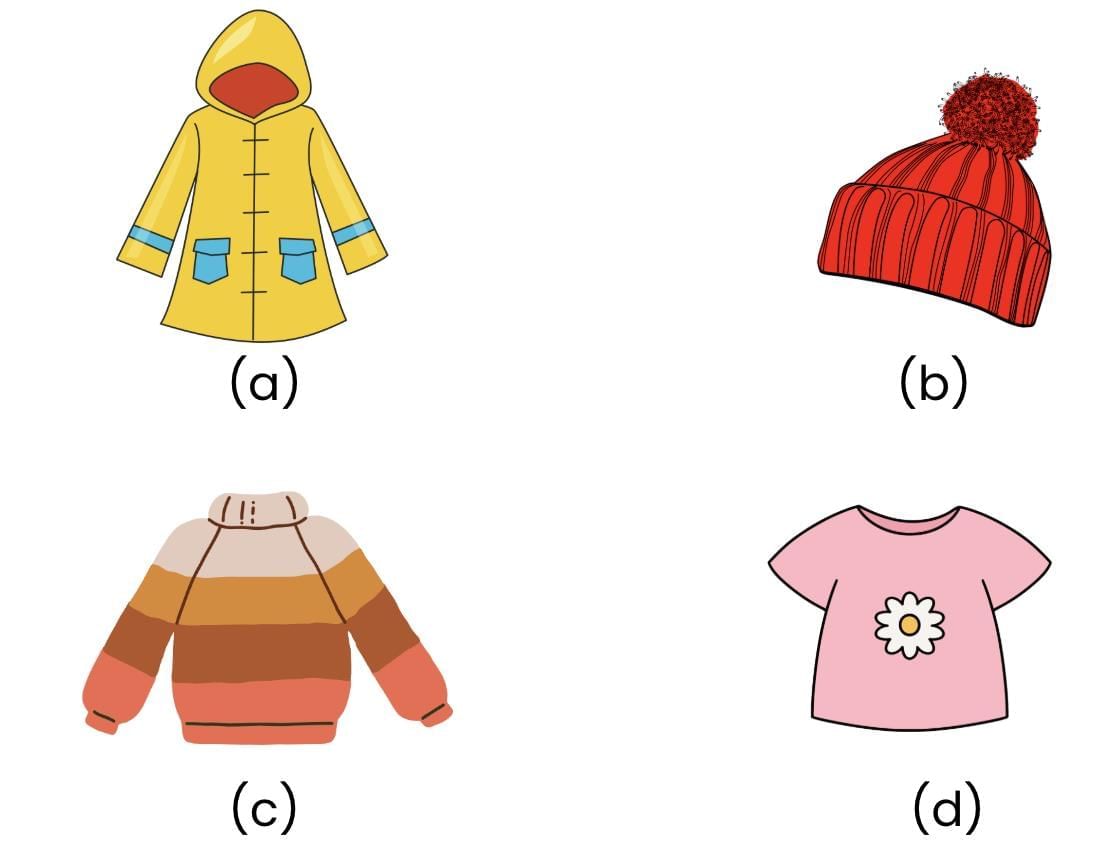
Try yourself:Which of the following would you wear in summer?

  • A.Raincoat
  • B.Beanie cap
  • C.Sweater
  • D.T-shirt

View Solution

07. The Food we Eat – Chapter Notes

Introduction

This chapter is all about the different kinds of food we eat every day. It talks about how we can share our food with our friends and family and why sharing is important.

Types of Food Mentioned

Fruits:

Fruits are delicious and healthy snacks. They come in many shapes, sizes, and colors. Some examples of fruits are apples, bananas, and oranges.

Indian Dishes:

In this chapter, we learn about some tasty Indian dishes:

Poori with Aloo Sabzi:

  • Poori is a round, deep-fried bread that is soft and fluffy.
  • Aloo Sabzi is a yummy potato curry that goes well with poori.

Roti with Sabzi:

  • Roti is another type of Indian bread that is flat and made from wheat flour.
  • Sabzi means vegetables. We can have roti with many different vegetable dishes.

Idli with Chutney:

  • Idli is a soft, white cake made from rice and lentils.
  • It is usually served with chutney, a spicy sauce that adds flavor.

Gobhi Paratha:

  • Gobhi Paratha is a tasty flatbread stuffed with spiced cauliflower.
  • It is often served with yogurt.

Chilla:

  • Chilla is a savory pancake made from gram flour.
  • It can be filled with vegetables and is delicious!

Key ConceptsSharing:

  • Sharing food is a wonderful way to show kindness to our friends.
  • When we share our food, everyone can enjoy different flavors together.
  • You can share your lunch with your classmates, which makes lunchtime more fun!

Gratitude:

  • It is important to say “thank you” for the food we eat.
  • We should also thank the people who grow and prepare our food, like farmers and cooks.

Cultural Diversity:

  • India is a big country with many different cultures.
  • This means we have many types of food from different places.
  • We can learn about the special dishes that families make in different regions of India

New Words and Sight Words

New Words:

  • Share: To give some of what you have to others.
  • Thank You: A polite way to show appreciation.
  • Lunch: The meal we eat in the middle of the day.
  • Sick: When you do not feel well.
  • Fruits: Natural foods that grow on trees or plants and are sweet to eat.

Sight Words:

  • From: Coming out of a place.
  • For: To give something to someone.
  • Them: A word we use to talk about other people.
  • Their: Something that belongs to them.
  • They: A word we use to talk about a group of people.
  • Has: Means something belongs to someone.
  • She: Refers to a girl or woman.
  • Have: Means to possess something.

Conclusion

This chapter teaches us about the wonderful world of food, the importance of sharing, and appreciating the farmers who work hard to provide us with our meals. Let’s remember to enjoy our food, share with our friends, and always say “thank you”!

05. A Farm – Chapter Notes

Overview

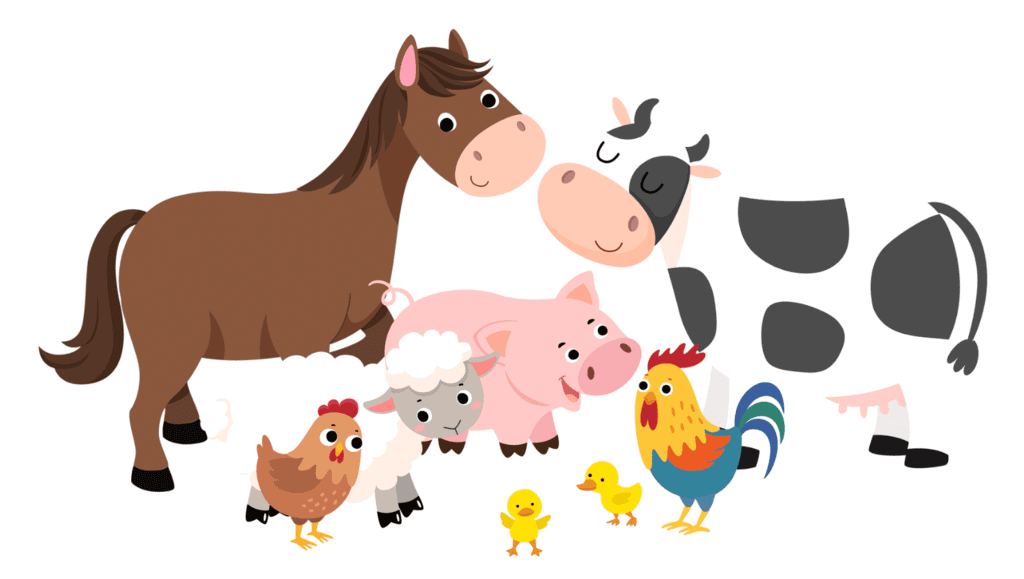
In this chapter, we will explore the various animals and birds that live near Jaggu’s house in Nagpur. Jaggu is our guide, and he will introduce us to his animal and bird friends. We will learn about where they live, what they eat, and some interesting facts about them.

Vocabulary

  1. Animals: Living creatures that can move and are not plants.
  2. Birds: Feathered creatures that can fly.
  3. Cow: A large domesticated animal often raised for milk.
  4. Rat: A small mammal known for its long tail.
  5. Monkeys: Agile animals that swing from trees.
  6. Snakes: Reptiles with long bodies and no legs.
  7. Crow: A black-coloured bird known for its loud cawing.
  8. Pigeon: A grey-coloured bird often found in cities.
  9. Sparrow: A small, common bird with a cheerful chirp.
  10. Parrot: A colourful bird with a beak that can mimic sounds.
  11. Peacock: A bird known for its vibrant and colourful feathers.

Detailed Explanation

1. Dog:

  • Location: Near the gate.
  • Description: A friendly animal that guards the house.

2. Cats:

  • Location: Verandah of Jaggu’s house.
  • Description: Playful animals that love to jump around.

3. Cow:

  • Description: Eats grass and provides milk.

4. Rat:

  • Description: A small creature, often chased by cats.

5. Monkeys:

  • Description: Agile animals that swing and jump in trees.

6. Snakes:

  • Location: In the field beside Jaggu’s house.
  • Note: Be cautious while walking in the field.

Try yourself:

Which animal near Jaggu’s house is known for providing milk?

  • A.Cat
  • B.Dog
  • C.Cow
  • D.Monkey

View Solution

Birds

1. Crow:

  • Description: A black bird with a loud cawing sound.

2. Pigeon:

  • Description: A gray bird often seen in cities.

3. Sparrow:

  • Description: A small bird known for its cheerful chirping.

4. Parrot:

  • Description: A colourful bird with a green body and a red beak that can mimic sounds.

5. Peacock:

  • Description: A bird with beautiful, colourful feathers.

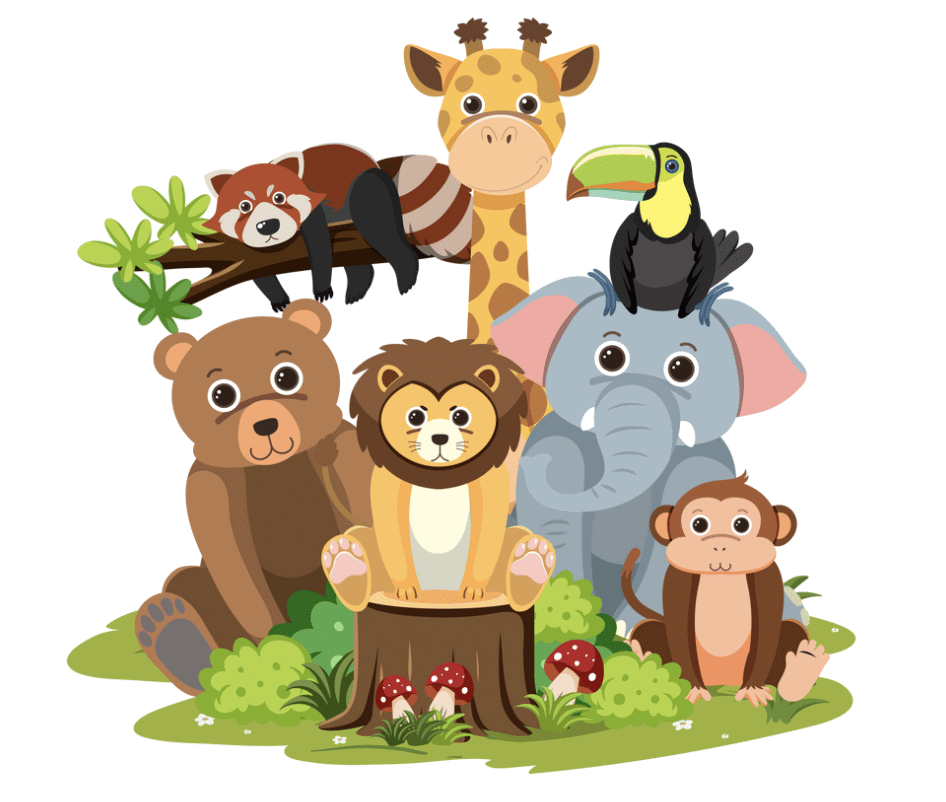
Animals in the Jungle

  • The jungle is a big, green home for many animals. Tall trees, rivers, and plants make it the perfect place for them to live. Some animals, like lions and tigers, are big and strong. Others, like monkeys and parrots, love to jump and climb trees. Elephants, deer, and snakes also live in the jungle.
  • The jungle is full of life, with animals making different sounds all day and night. Let’s explore and learn more about these amazing jungle animals!

Conclusion

In this chapter, we learned about the animals and birds that live near Jaggu’s house. We discovered where they live and some interesting facts about them. It’s wonderful to see how Jaggu loves and appreciates these creatures in his neighbourhood.

Key Takeaways:

  • Dogs are friendly and protect the house.
  • Cats are playful and jump around in the verandah.
  • Cows eat grass and provide milk.
  • Rats are small and often chased by cats.
  • Monkeys swing and jump in trees.
  • Snakes live in the field, so be careful.
  • Birds include crows, pigeons, sparrows, parrots, and peacocks, each with its own unique features and colours.

Activity:
Draw your favourite animal or bird and write a few sentences about it. Share with your classmates.

Try yourself:

Which bird is known for its cheerful chirping?

  • A.Crow
  • B.Pigeon
  • C.Sparrow
  • D.Parrot

View Solution

04. The Cap-seller and the Monkeys – Chapter Notes

The Cap-seller and the Monkeys

Introduction to the Story

This is a simple and fun story about a cap-seller and a group of mischievous monkeys. It teaches a lesson about using your brain to solve problems.

Summary of the Story

  • Main Character:
    The story is about a man who sells caps. He is called the cap-seller. He carries a basket full of caps on his head and goes around selling them.
  • The Problem:
    One day, while the cap-seller was travelling, he felt tired and decided to take a nap under a big tree. While he was sleeping, some naughty monkeys from the tree came down, and each monkey took one of the caps from his basket.
  • The Surprise:
    When the cap-seller woke up, he found his basket empty! He looked around and saw the monkeys sitting on the tree wearing his caps.
  • What Happens Next:
    The cap-seller was angry. He shook his fists at the monkeys, and the monkeys copied him and shook their fists too. Then, he scratched his head, and the monkeys did the same.
  • The Clever Idea:
    The cap-seller thought of a clever idea. He took off his own cap and threw it into the basket. The monkeys, being copycats, also threw their caps into the basket.
  • The Happy Ending:
    The cap-seller got all his caps back and happily went on his way.

Characters

  • The Cap-seller: A man who sells caps and is very smart.
  • The Monkeys: Naughty monkeys who like to copy what the cap-seller does.

Important Lessons from the Story

  • Problem-Solving: The cap-seller used his brain to get his caps back instead of fighting or being sad. This shows us that thinking calmly can help solve problems.
  • Imitation: The monkeys copied everything the cap-seller did, which made it easier for him to trick them and get his caps back.
  • Being Clever: Sometimes, we can solve problems in simple, smart ways rather than using anger.

Key Words

  • Cap-seller: A person who sells caps.
  • Monkeys: Animals that live on trees and love to imitate.
  • Basket: Something used to carry things. The cap-seller carried his caps in a basket.
  • Empty: When nothing is inside something. The basket was empty when the monkeys took the caps.
  • Imitate: To copy someone. The monkeys imitated the cap-seller.

Try yourself:

What did the cap-seller do to trick the monkeys into returning his caps?

  • A.He shouted at the monkeys.
  • B.He ran away from the monkeys.
  • C.He imitated the monkeys.
  • D.He threw his own cap into the basket.

View Solution

Butterflies

Summary

This poem is about butterflies flying around. It describes how they go up, down, in, and out. It’s like a little dance they do in the air. Explanation

The poem talks about butterflies and their movements. It’s like a game of hide-and-seek where the butterflies go up, down, inside something, and outside again. It’s a fun way to imagine how butterflies move around.

New Words and Difficult Word Meanings

  • Butterflies: Colorful insects that fly.
  • Up: Going higher.
  • Down: Going lower.
  • In: Going inside something.
  • Out: Coming outside from something.

Theme

The theme of this poem is the playful and joyful movement of butterflies. It’s like they are playing a game in the sky.

Did You Know?

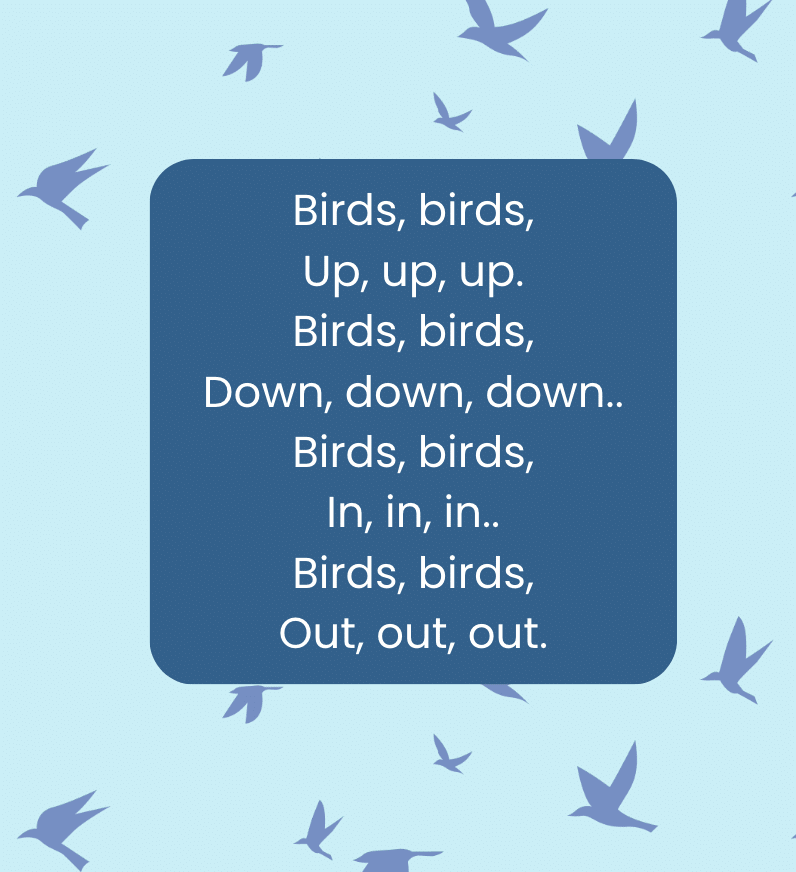
  • ​You can replace the word ‘butterflies’ in the poem above with many other things – like birds, monkeys, and what not! 
  • ​Have a look at the poem below:

Try yourself:

What does the poem describe the butterflies doing in the air?

  • A.Walking on the ground
  • B.Swimming in the water
  • C.Flying around in different directions
  • D.Hiding in the trees

View Solution

Catch Me If You Can

Summary

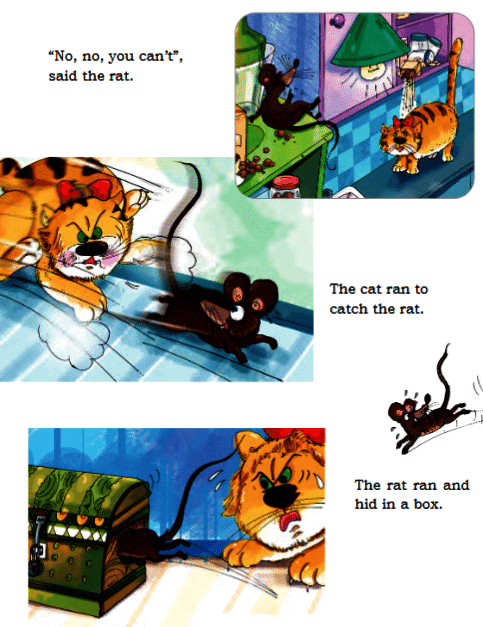
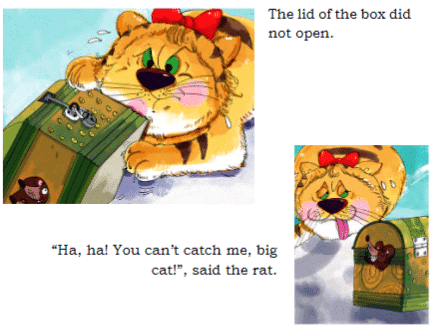
This poem is about a fat cat trying to catch a little rat. The rat cleverly hides in different places, and in the end, the cat can’t catch the rat.

Explanation

In this poem, there’s a cat who wants to catch a rat. But the rat is very smart and hides in different things like a hat and a box. The cat tries to catch the rat but fails, and in the end, the rat laughs at the cat because it couldn’t catch him.

New Words and Difficult Word Meanings

  • Fat: Big and round.
  • Mat: A piece of fabric you put on the floor.
  • Rat: A small animal that looks like a mouse.
  • Hid: Went to a secret place where no one could see.
  • Lid: The cover of a box or container.
  • Cleverly: Doing something smart or tricky.

Theme

The theme of this poem is about being clever and using your wits to outsmart someone who’s trying to catch you. It’s a fun story about a clever little rat.

Try yourself:

What does the rat do to outsmart the cat in the poem?

  • A.Hide in different places like a hat and a box.
  • B.Run away quickly whenever the cat comes close.
  • C.Make loud noises to scare the cat away.
  • D.Play with the cat instead of running away.

View Solution

Learning Basic Concepts – Up and Down, In and Out

Introduction

In our exciting journey of learning, we will explore some simple yet important concepts that will help us understand the world around us better. Today, we will learn about two pairs of opposite concepts: “Up and Down” and “In and Out.”

Up and Down

Up means going higher or towards the sky, while Down means going lower or towards the ground. These words help us understand the direction of things.

Examples:

Up: When you jump off a small step, you go up into the air and then come back down to the ground.

  • Activity: Try jumping up and down on the spot. How high can you go?

Down: When you play with your toys and put them on a shelf, you are putting them up on the shelf. When you take them off the shelf, you bring them down.
  • Activity: Arrange your toys on a shelf and then take them down one by one.

In and Out

In means to go inside or into something, while Out means to come outside or out of something. These words help us understand where things are located.

Examples:

In: When you put your hand inside your pocket, your hand goes into the pocket.

  • Activity: Put a small toy in a box. Can you put your hand in the box to take it out?

Out: When you take your shoes off, you are taking them out of your feet. And when you wear them, you are putting them on your feet.

  • Activity: Practice taking your shoes on and off.
ConclusionUnderstanding the concepts of “Up and Down” and “In and Out” helps us describe where things are and how they move. These are important ideas that will make learning about the world around us more fun and interesting. So keep exploring and learning, little friends!
02. Greetings – Chapter Notes

In this chapter, we will learn how to greet people and be polite when we meet them. Greetings help us show respect and kindness to others and start friendly conversations.

Saying Hello

When we meet someone, we should greet them nicely. One way to do this is by saying “Namaste.” “Namaste” is a greeting from India, and it means “I respect you.” It’s a special way to show we care about the person.

Explanation:

  • “Namaste” is a way to say hello and show respect.
  • It comes from India and means “I respect you.”

More Greetings

  • Hello: A common way to say hi.
  • Hi: A friendly and short way to say hello.
  • How are you?: A way to ask if someone is okay.
  • Bonjour: Hello in French.
  • Hola: Hello in Spanish.
  • Konnichiwa: Hello in Japanese.
  • Ciao: Hello and goodbye in Italian.

Greetings in the Morning

When we wake up and the sun is shining, we say “Good morning” to others. It’s a happy way to start the day and wish people well.

Explanation:

  • “Good morning” is a friendly way to say hello in the morning.
  • It’s like saying, “I hope you have a nice day.”

Greetings in the Afternoon

After the morning, we say “Good afternoon” to others. This greeting is used when it’s no longer morning but not evening yet.

Explanation:

  • “Good afternoon” is used when it’s not morning but not evening.
  • It’s a way to ask how someone is doing in the middle of the day.

Greetings in the Evening

When the sun is setting, we say “Good evening” to greet others. It’s a polite way to wish someone well at the end of the day.

Explanation:

  • “Good evening” is a friendly way to say hello in the evening.
  • It’s like saying, “I hope you have a nice evening.”

Saying Goodnight

When it’s time to sleep, we say “Good night” to wish others sweet dreams. It’s a way to say goodbye for the day and wish them restful sleep.

Explanation:

  • “Good night” is used to say goodbye before sleeping.
  • It’s a way to show we care about their rest.

Try yourself:

Which greeting is commonly used in the morning to wish someone well?

  • A.Namaste
  • B.Good morning
  • C.Hi
  • D.Hola

View Solution

New Words and Meanings:

  • Greet: To say hello to someone.
  • Manners: Being polite and nice.
  • Polite: Being respectful to others.
  • Cheerful: Happy and full of energy.
  • Acknowledge: To notice or recognize something.
  • Pleasant: Nice and enjoyable.
  • Restful: Relaxing and peaceful.

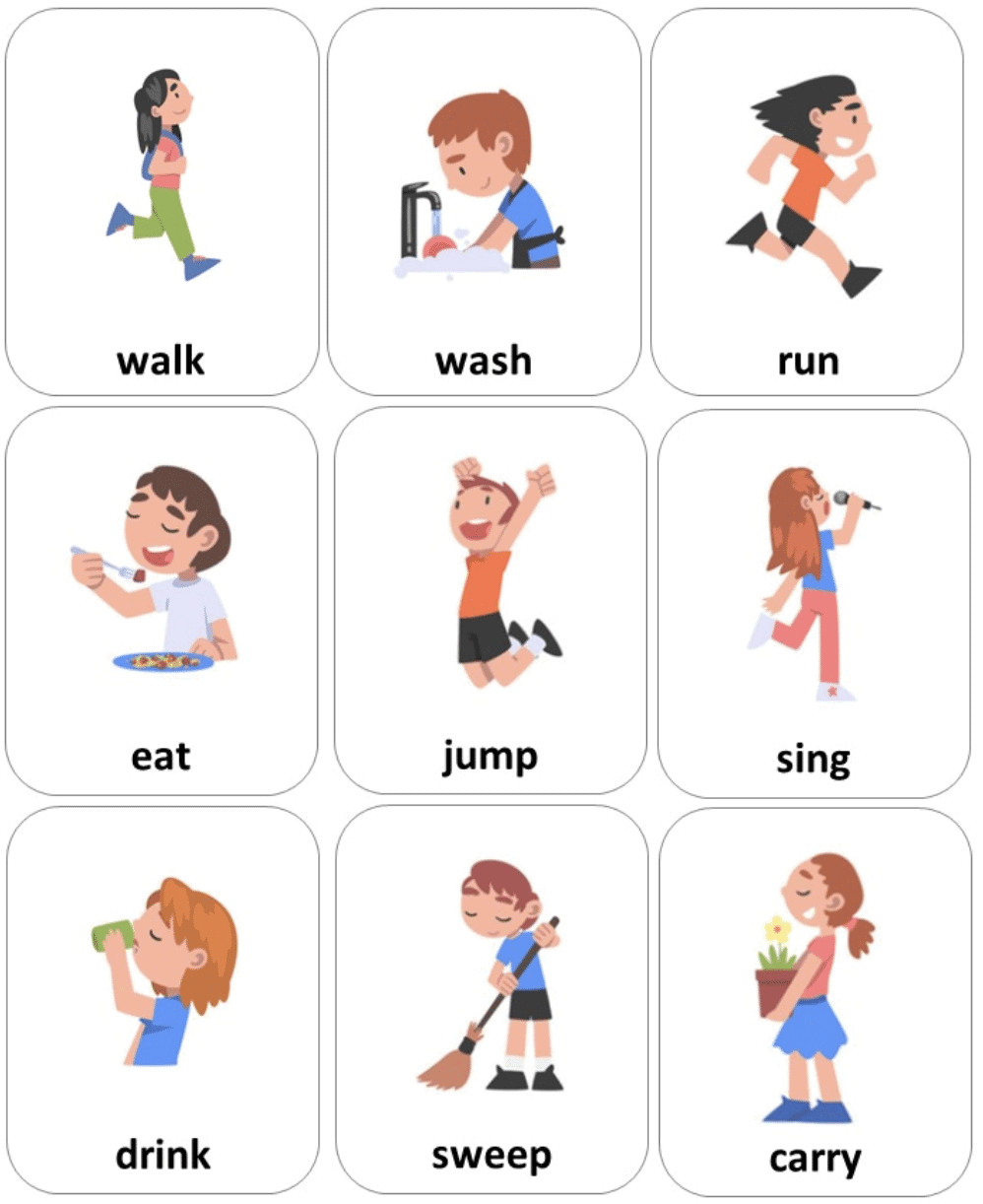
Let’s Learn: Action Words

  • Now, let’s learn about a fun topic: Action Words.
  • Action words tell us what someone or something is doing. They are also called verbs.

Examples of action words:

  • Run – When you move fast with your legs.
  • Write – When you use a pencil to make letters.
  • Smile – When you are happy and show your teeth.
  • Sing – When you make a song with your voice.
  • Clap – When you hit your hands together.

Now try to match the action word with the picture below: 

Letter Sounds

  • Now, let’s learn about some letter sounds. 
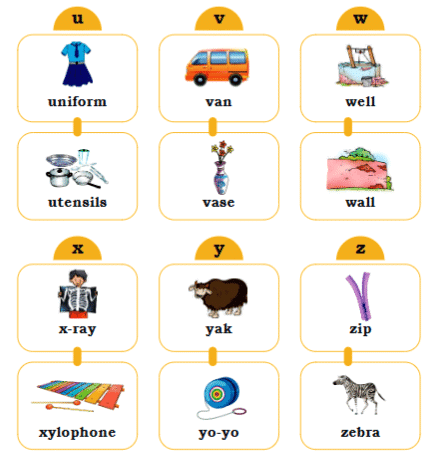
  • Notice the initial sound of the following words: