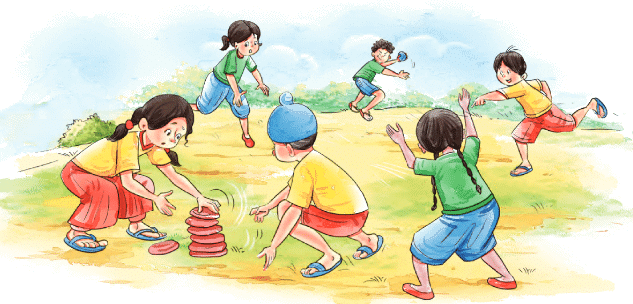
08. Short Answer Questions: The Lagori Champions

Short Answer Questions: The Lagori Champions

Q1. Who joined the group in the end?
Answer: Imran joined the group in the end.

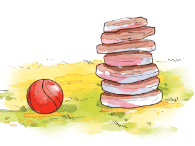
Q2. How many stones are used in the game of Lagori?
Answer: Seven flat stones are used in the game of Lagori.

Q3. What is the other name of Lagori in Rajasthan?
Answer: In Rajasthan, Lagori is known as Satoliya.

Q4. What is the name of the opponent team of Sundarpur Tigers?
Answer: The opponent team of Sundarpur Tigers is called the ‘Green Warriors.’
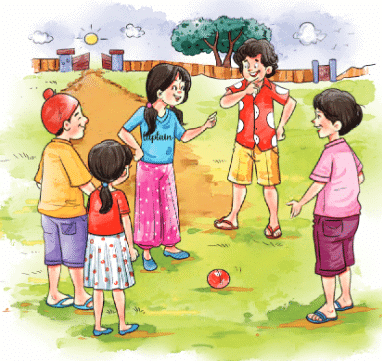
Short Answer Questions: The Lagori Champions

Q5. Who blew the whistle to start the Lagori match?
Answer: The referee blew the whistle to start the Lagori match.

Q6. Why did Prakash ask about the Lagori match?
Answer: Prakash asked about the Lagori match because he didn’t know what the game was. When the other children mentioned the match, he was curious and wanted to learn more about how it is played. His curiosity led the other children, especially Nidhi and Imran, to explain the rules and the excitement of the game.

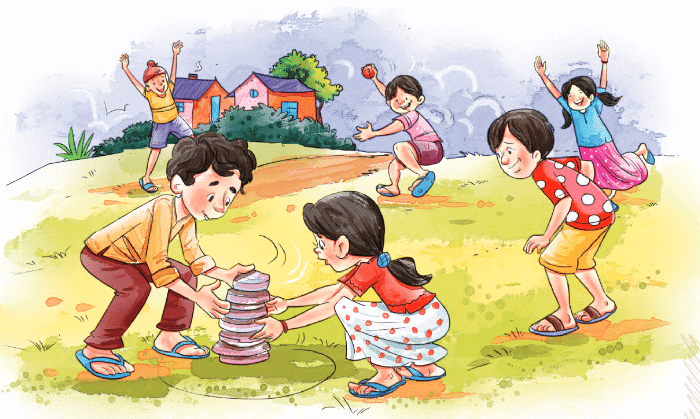
Q7. How does the game of Lagori work with two teams?
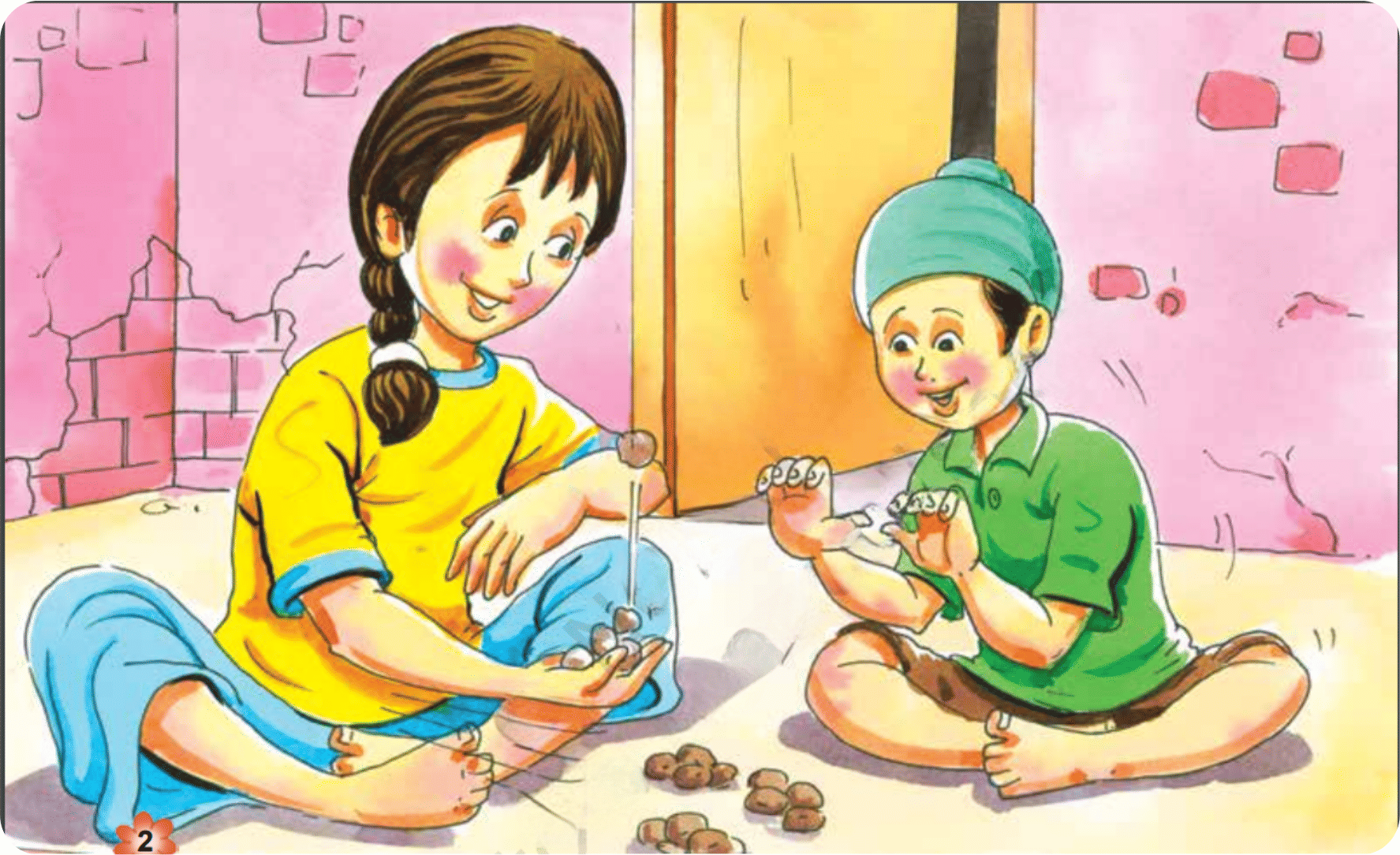
Answer: In Lagori, one team tries to knock down the seven flat stones using a ball, while the other team, which is inside a circle, tries to rebuild the stack of stones. The team that knocks down the stones tries to hit players of the opposite team, and the goal is to either catch the opposing players or rebuild the stack without being hit by the ball.

Q8. Why is Prakash included in the Sundarpur Tigers team?
Answer: Prakash is included in the Sundarpur Tigers team because he is a good runner. His ability to run fast made him a valuable player for the team. Guneet, one of the team members, suggested including Prakash as he would be quick on his feet and help the team win the game.
Short Answer Questions: The Lagori Champions

Q9. What makes Lagori different from other games?
Answer: Lagori is unique because it involves two teams with different roles. One team knocks down a stack of stones, and the other team tries to rebuild the stack while avoiding being hit by the ball. The game requires speed, strategy, and teamwork. Unlike other games, Lagori focuses on both physical action and the cooperation between team members.

Q10. What did Prakash learn about Lagori after listening to Imran?
Answer: After listening to Imran, Prakash learned that Lagori, also called Satoliya in Rajasthan, is a game where one team knocks down a stack of seven stones using a ball, while the other team rebuilds the stack. He understood the rules and the excitement of the game. This helped him become more confident about playing in the match.

Q11. Why do the villagers clap for both teams after the match?
Answer: The villagers clapped for both teams because they appreciated the effort and teamwork shown by both the Sundarpur Tigers and the Green Warriors. The referee also lifted the hands of both captains as a gesture of respect. The villagers celebrated the sportsmanship, unity, and the joy of playing together, regardless of who won or lost.
Short Answer Questions: The Lagori Champions

Q12. How did the game of Lagori bring the villagers together?
Answer: The game of Lagori brought the villagers together because it allowed them to celebrate teamwork and sportsmanship. Everyone participated, cheered for their teams, and had fun, making the event a community celebration. Even after the match, the players shook hands and appreciated each other, strengthening bonds among the villagers through the joy of playing together.

Q13. What role did teamwork play in the Sundarpur Tigers’ victory?
Answer: Teamwork played a key role in the Sundarpur Tigers’ victory. The team worked together by following the rules and helping each other, such as placing stones, dodging the ball, and supporting each other in the game. Their coordination, quick actions, and support for one another helped them win the match against the Green Warriors.
Short Answer Questions: The Lagori Champions

Q14. What did Deepa say about the Lagori match?
Answer: Deepa said that the Lagori match was very exciting and even more fun than video games. She enjoyed playing the game with her friends and felt that the energy, competition, and teamwork made it more thrilling than playing digital games. This shows how traditional games can offer excitement and joy, just like modern ones.

Q15. How did the Green Warriors team play against the Sundarpur Tigers?
Answer: The Green Warriors played actively and tried their best to stop the Sundarpur Tigers from rebuilding the stack of stones. They aimed to hit the players of the opposing team with the ball while trying to avoid being caught. The game involved quick thinking, agility, and strategy, but in the end, the Sundarpur Tigers won the match.
06. Short Answer Questions: Braille

Short Answer Questions: Braille

Q1. Who was Louis Braille?
Answer: Louis Braille was a little boy from France who became blind after an accident with a tool when he was three years old.

Q2. How did Louis Braille become blind?
Answer: Louis Braille became blind after a sharp tool pierced his eye when he was playing outside his home.

Q3. What did Louis Braille invent?
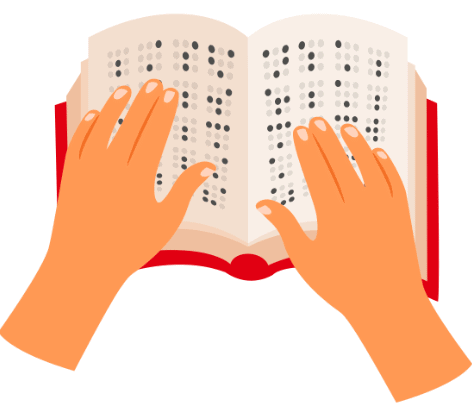
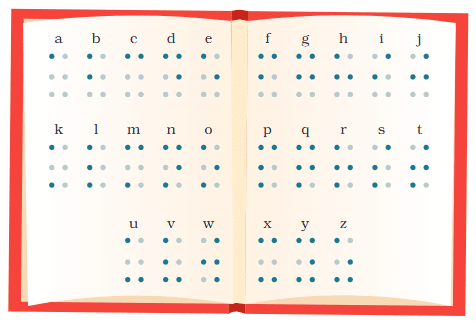
Answer: Louis Braille invented the Braille alphabet, which is a system of raised dots that blind people use to read and write.

Q4. Who invented the ‘Night Writing’ system before Louis Braille?
Answer: Capt. Charles Barbier de la Serre invented the ‘Night Writing’ system, which Louis Braille later simplified.

Q5. What makes Braille books thicker than regular books?
Answer: Braille books are thicker because the letters are spaced farther apart, so they require more space than regular printed letters.

Q6. How did Louis Braille learn to read and write after losing his sight?
Answer: After Louis Braille lost his sight, he learned to read and write using wood, cloth, or pins arranged in pincushions. He practiced different methods to feel the raised patterns of letters. His determination helped him improve, and later, he simplified the ‘Night Writing’ system to create the Braille alphabet, which helped blind people around the world read and write.

Q7. What was the original purpose of the ‘Night Writing’ system?
Answer: The ‘Night Writing’ system was invented by Capt. Charles Barbier to help soldiers read messages in the dark without using light. It used raised dots and dashes, allowing soldiers to feel the letters. However, it was too complex, and Louis Braille later simplified it into the Braille alphabet, making it accessible and easier for blind people to read and write.

Q8. Why is Braille an important invention for blind people?
Answer: Braille is an important invention because it provides a way for blind people to read and write. Before Braille, blind individuals had difficulty accessing written content. Braille uses raised dots to represent letters, allowing blind people to read books, letters, and write their own stories. It opened up opportunities for education, communication, and independence for people with visual impairments.

Q9. How did Louis Braille simplify the ‘Night Writing’ system?
Answer: Louis Braille simplified the ‘Night Writing’ system by reducing the complexity of the raised dots and dashes. He created a system using six dots arranged in a grid, which made it easier for blind people to read and write. This simplified system became the Braille alphabet, which is now used worldwide by blind people to read, write, and communicate.

Q10. What was the significance of the Braille alphabet?
Answer: The Braille alphabet revolutionized the way blind people read and write. It allowed them to access books, education, and written information independently. Before Braille, there were no standardized systems for blind people to read. Louis Braille’s invention opened doors for communication, helping blind people gain knowledge, participate in society, and live more independently.

Q11. How does Braille help both blind and sighted people?
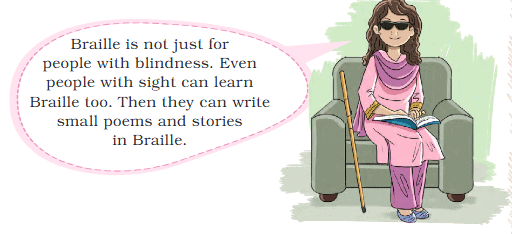
Answer: Braille helps blind people read and write through touch, using raised dots for letters. It allows blind individuals to read books, letters, and other written materials. Interestingly, sighted people can also learn Braille. This helps them write in Braille for blind people, making it easier to communicate and share written content with those who cannot see.

Q12. What materials were used to write the early version of Braille?
Answer: Early versions of Braille were written using materials like wood, cloth, and pins arranged in pincushions. Louis Braille experimented with these materials to create raised dots that could be felt by touch. These simple yet effective tools allowed him to read and write. Later, the Braille alphabet was adapted to more durable materials like paper, making it more practical for widespread use.

Q13. What was the role of the Royal Institute for Young Blind Persons in Louis Braille’s life?
Answer: The Royal Institute for Young Blind Persons in Paris played a crucial role in Louis Braille’s life. It was there that Louis Braille learned to read and write using methods like wooden letters and pins. The institute gave him access to education, which allowed him to develop his skills further and eventually invent the Braille alphabet, which transformed literacy for blind people.

Q14. What challenges did Louis Braille face before inventing Braille?
Answer: Before inventing Braille, Louis Braille faced many challenges due to his blindness. He struggled to read and write using the methods available at the time. He had to experiment with different systems and materials to find an effective way for blind people to read. Despite these challenges, Louis Braille’s determination and creativity led him to invent the Braille alphabet, changing the world for the blind community.

Q15. What is the main message of Louis Braille’s story?
Answer: The main message of Louis Braille’s story is that determination and innovation can overcome challenges. Despite losing his sight at a young age, Louis Braille found a way to read and write through his invention of the Braille alphabet. His story teaches us that creativity, hard work, and a desire to help others can lead to groundbreaking achievements.

13. Chapter Notes: We are all Indians

Key Points of the Poem

In this chapter, we will meet children from different parts of India. They will share interesting things about themselves and their regions. Through their stories, we will learn about India’s diverse cultures, languages, and traditions.

  • In this poem, we meet children from different parts of India. 
  • They talk about their homes and traditions. 
  • Their stories help us learn about India’s cultures and languages.

Detailed Summary

Stanza 1

My name is Meenakshi.
I come from Tamil Nadu.
I speak Tamil.
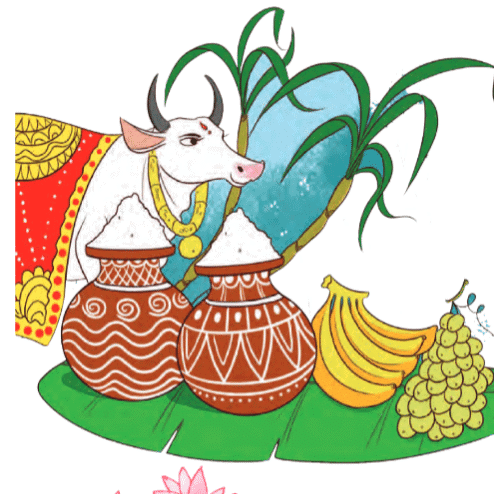
My favourite festival is Pongal.
What is your name?

Meenakshi introduces herself to us. She is from Tamil Nadu and speaks Tamil. Her favourite festival is Pongal, which is a festival celebrated in Tamil Nadu.

Stanza 2

I am Ramu.
I come from Gujarat.
I speak Gujarati.
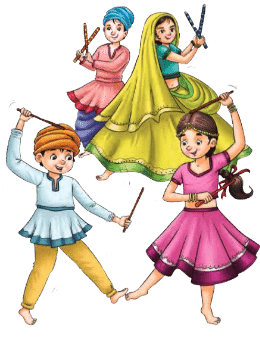
I like to dance the Garba.
I am seven years old.
How old are you?

Ramu is from Gujarat. He speaks Gujarati and loves to dance Garba. Garba is a special dance from Gujarat. Older people teach it to children, and when the children grow up, they teach it to others. Ramu is seven years old.

Stanza 3

My name is Gulabo.
I come from Rajasthan.
I like wearing colourful clothes.
I enjoy seeing puppet shows.
I travel by camel.
How do you travel?

We meet Gulabo. She is from Rajasthan. She likes to wear colorful clothes and watch puppet shows. She travels on a camel.

Stanza 4

I am Badal.
I come from Bengal.
I speak Bengali.
I like painting and music.
I study at Santiniketan.
Where do you study?

After Gulabo, Badal introduces himself. He hails from Bengal and speaks Bengali. Badal loves painting and music and studies at Santiniketan.

Stanza 5

I am Vibha.
I come from Maharashtra.
I speak Marathi.
Once I visited Ellora and
Ajanta caves.
Have you travelled
anywhere?

Vibha is from Maharashtra. She speaks in Marathi. Vibha tells us that she once visited Ellora and Ajanta caves.

Stanza 6

I am Surinder.
I come from Punjab.
I speak Punjabi.
My neighbour Mallika
likes to do Bhangra.
Which dance do you like?

Surinder tells us about his home state Punjab. He speaks Punjabi and tells us about his neighbour Mallika who likes to do Bhangra, the folk dance of Punjab.

Stanza 7

I am Neerja. I come
from Uttar Pradesh.
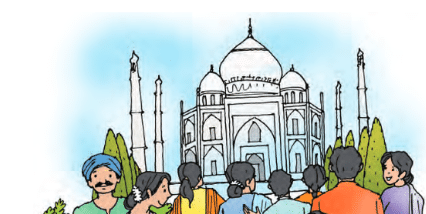
I have seen the Taj
Mahal.
Have you seen any
monument?

Neerja introduces her by telling us that she is from Uttar Pradesh. She has seen the Taj Mahal.

Stanza 8

My name is Nonglik .
I come from Manipur.
I speak Manipuri.
What language do you
speak?

Nonglik is from Manipur and speaks Manipuri.

Stanza 9

My name is Kamala.
I come from Karnataka.
I speak Kannada.
I play the Mridang.
Do you play any musical
instrument?

Kamala is from Karnataka and speaks Kannada. She also plays the Mridang, which is a musical instrument.

Stanza 10

Bharti is my name.
I come from Andhra Pradesh.
I speak Telugu.
During my summer holidays
I go to Kashmir
and stay with my friends
Salma and Suresh.
Where do you go for your holidays?

We are then introduced to Bharti. She hails from Andhra Pradesh and speaks Telugu. She tells us about her summer holidays when she goes to Kashmir and stays with her friends, Salma and Suresh.

Stanza 11

We are two sisters.
We belong to Odisha.
We speak Odia.
We decorate our walls and floors.
Do you have a sister or a
brother?

Two sisters from Odisha tell us that they speak Odia. They also decorate their walls and floors.

Stanza 12

My name is Unni.
I come from Kerala.
I speak Malayalam.
My favourite tree is the coconut tree.
Which tree do you like?

Unni is from Kerala. She speaks Malayalam and coconut tree is her favourite tree.

Stanza 13

But we are
all Indians.
Each of us is
unique.

No matter where we come from, we are all Indians and we are all different in our own beautiful ways.

Message

The poem tells us about children from the many states of India. They speak different languages, have different cultures and traditions but they all belong to one nation, India.

Five Words and Meanings

  • Festival: A special event or celebration with music, dance, and fun.
  • Tradition: Practices that are passed down from one generation to another.
  • Culture: The way of life, including language, clothing, food, and art, of a particular group of people.
  • Monument:A building or structure that is important and historical.
  • Unique:Something that is one-of-a-kind or different from everything else.

11. Chapter Notes: The Smart Monkey

Introduction

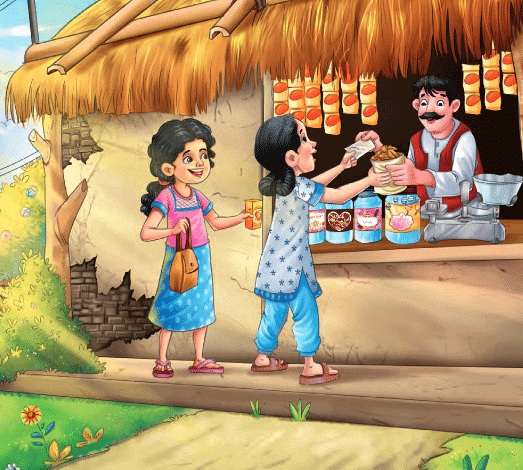
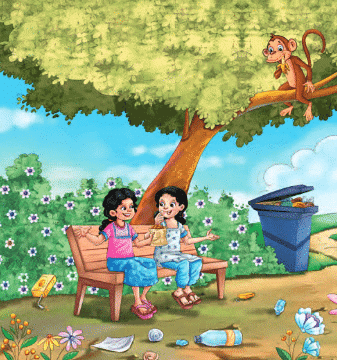
One bright and happy day, Anju and Farida went to the market to buy some things. They were excited and had lots of fun shopping. After buying a bag, a water bottle, some groundnuts, and juice, they felt tired. They found a nice shady tree and sat down on a bench to rest.

But guess what? They were not alone. A little monkey was sitting on a branch above them, watching everything they did. The monkey had a big surprise for them. What did the monkey do? Let’s find out!Introduction

Summary

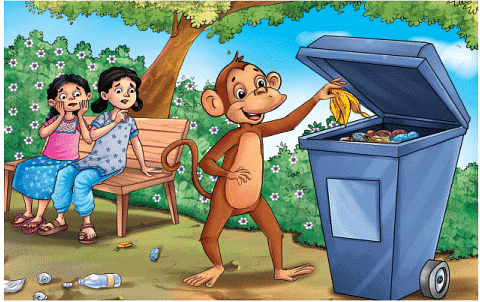
Anju and Farida sat under the tree and took out their food. They started eating groundnuts and threw the empty packet on the ground. After drinking juice, they threw the bottle down too. They were happy and did not think about cleaning up.

Summary

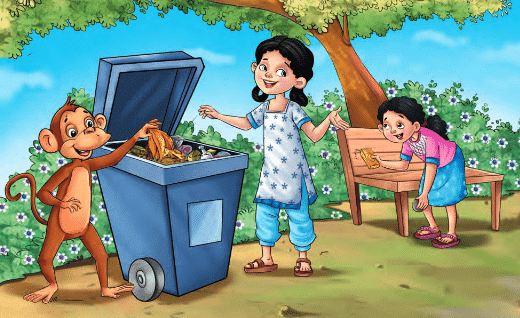
But the clever monkey was watching them! He had a banana. He peeled it, ate it, and then did something very smart—he climbed down the tree and threw the banana peel into the dustbin nearby!

Summary

Anju and Farida saw this and felt ashamed. They realized that if a monkey could throw garbage in the dustbin, they should do the same! They quickly picked up the packet and the bottle and threw them in the dustbin. The monkey had taught them a big lesson!
Summary

Moral of the Story

We must always keep our surroundings clean. Littering makes places dirty, and it is not good. Even a monkey knows that trash should go in the dustbin. If a monkey can do it, so can we! Always throw garbage in the dustbin and keep the world clean.

Try yourself:

What is the moral of the story?

  • A.Always throw garbage on the ground.
  • B.Keep your surroundings clean.
  • C.Feed bananas to monkeys.
  • D.Ignore littering.

Key Words:

  • Market – A place where people buy and sell things.
  • Bench – A long seat where people sit.
  • Branch – A part of a tree where birds and animals sit.
  • Monkey – A clever animal that jumps on trees.
  • Packet – A small cover or bag that holds things.
  • Bottle – A container for holding water or juice.
  • Peel – The outer skin of a fruit, like a banana.
  • Dustbin – A container where we throw trash.
  • Litter – Throwing garbage on the ground instead of the dustbin.
  • Ashamed – Feeling bad when we do something wrong.

10. Chapter Notes: The Crow

Introduction

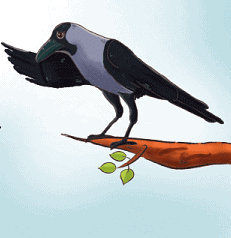
In this story, a crow wanted to be beautiful and have bright, colourful feathers like a peacock. So, the crow started picking up peacock feathers and placed them on its wings, tail, and head. Looking at its reflection, the crow felt proud and thought it looked amazing. But while the crow was happy with its new look, the other crows loved it just the way it was, with its shiny black feathers.

Introduction

Poem Explanation

Stanza 1:

“There once was a crow.
He was black, as you know.
How to be beautiful,
he wanted to know.
Colourful feathers,
he wanted to grow.”

In this stanza, we learn about a crow who is black in color. However, this crow doesn’t like being black and wants to have colorful feathers like other birds. It feels that having colorful feathers will make it more beautiful.

Stanza 2:

“He found one peacock feather.
He stuck it in his tail.
Then he found another,
He picked up all without fail.”

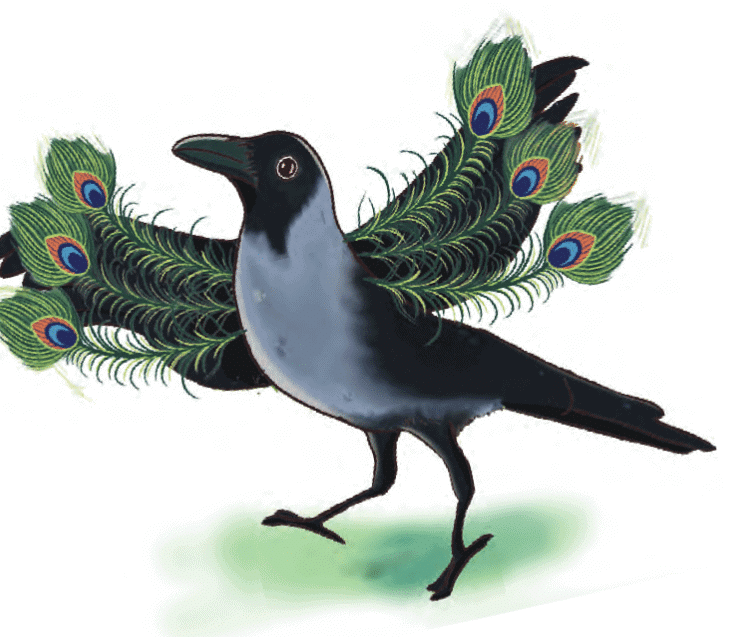
One day, the crow found a peacock feather on the ground. He thought it looked very beautiful and decided to stick it in his tail. Then he found more feathers and picked up each one happily. He believed that if he added many peacock feathers, he would become as beautiful as a peacock.

Stanza 2:

Try yourself:

What did the crow do with the peacock feathers it found?

  • A.Ate them.
  • B.Used them to build a nest.
  • C.Stuck them in its tail.
  • D.Ignored them.

Stanza 3:

“He stuck them in his wings,
Put one on his head.
I am now beautiful,
He danced and said.”

The crow was very excited. He took all the feathers he had collected and stuck them on his wings and even put one on his head. He was very happy with his new look and thought he had finally become beautiful. He started dancing with joy and told himself, “Now I look amazing!”

Stanza 4:

“The other crows laughed at him.
‘Oh, what a fool you are!
You are beautiful in black.
We love you for what you are.’”

When the other crows saw him, they laughed at him. They thought it was funny that he was trying to change himself. They told him that he did not need colourful feathers to be beautiful. They reminded him that he was special just the way he was. They loved him for who he was, not for how he looked.

Moral of the Poem

  • True beauty is being yourself.
  • We should love ourselves the way we are.
  • We don’t need to change to impress others.
  • Everyone is unique and special in their own way.

Try yourself:

What is the moral of the story mentioned in the passage?

  • A.True beauty comes from changing oneself to impress others.
  • B.True beauty lies in having colourful feathers like a peacock.
  • C.True beauty is being yourself and loving yourself the way you are.
  • D.True beauty is only found in outward appearances.

New Words and Meanings

  • Feathers: The light and soft covering on a bird’s body that helps keep it warm and allows it to fly.
  • Peacock: A large bird famous for its bright, colourful feathers and unique tail that spreads out like a fan, often seen as a symbol of beauty.
  • Tail: The back part of a bird’s body that extends beyond its main body, important for helping it fly straight and turn.
  • Wings: The parts of a bird’s body that help it to fly and also assist in keeping it balanced and regulating its temperature.
  • Beautiful: Having qualities that are pleasing to look at, hear, or think about; attractive in appearance.

09. Chapter Notes: My Name

Key Points of the Story

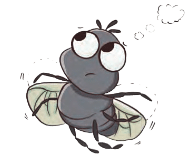
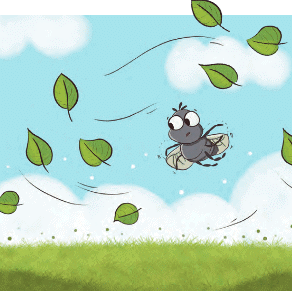
  • This story is about the story of a fly that forgets his name.
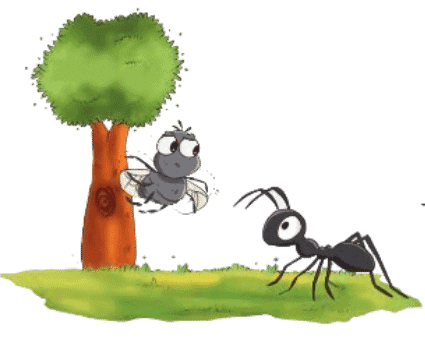
  • The fly goes on to ask an ant, a tree, a cow and a leaf about his name, hoping that they can help him.
  • At the end, the fly remembers his name with the help of the wind.

Detailed Summary

In the first stanza, we meet a little fly who is facing a problem: he has forgotten his name. The fly is determined to remember his name and makes several attempts to do so, but unfortunately, he is not successful.

The fly forgets its name and goes to ask an ant, hoping that the ant can tell him what his name is.

The ant tells the fly that he does not know what the fly’s name is. There is a tree that the ant climbs. The ant asks the fly to ask that tree because he might know his name.

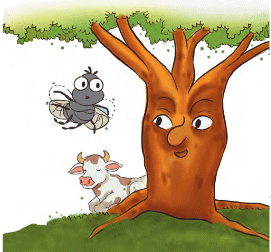
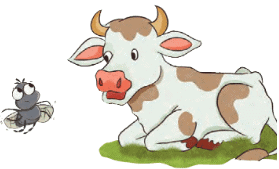
The fly politely asks the tree if he knows his name. The tree replies that he does not know but tells him to ask the cow that is sleeping in his shade. The fly then asks the cow about his name but the cow says that she does not know the fly’s name. The cow tells the fly to ask the grass that she eats.

The fly then goes on to ask a fallen leaf on the grass. The leaf is just about to answer the fly when a wind starts to blow. The leaf begins to fly because of the wind. Seeing the leaf start to fly, the fly suddenly remembers that his name is Fly. He is happy now.

Message

  • The story shows us how different insectsanimals and plants live together in unity.
  • They depend on each other for many needs.
  • The story teaches us to learn from nature and live together with love and care for each other.

Try yourself:

What did the cow suggest the fly ask to find out his name?

  • A.The ant
  • B.The tree
  • C.The grass
  • D.The leaf

New Words and Meanings

  • said – spoke or talked
  • know – to understand or remember
  • climb – to go up
  • forgotten – not remembered
  • name – what someone is called
  • remember – to bring back to mind
  • use – help or benefit

06. Chapter Notes: Between Home and School

Summary

Have you ever gone on an adventure while walking to school?

Ravi and his best friend do every day!

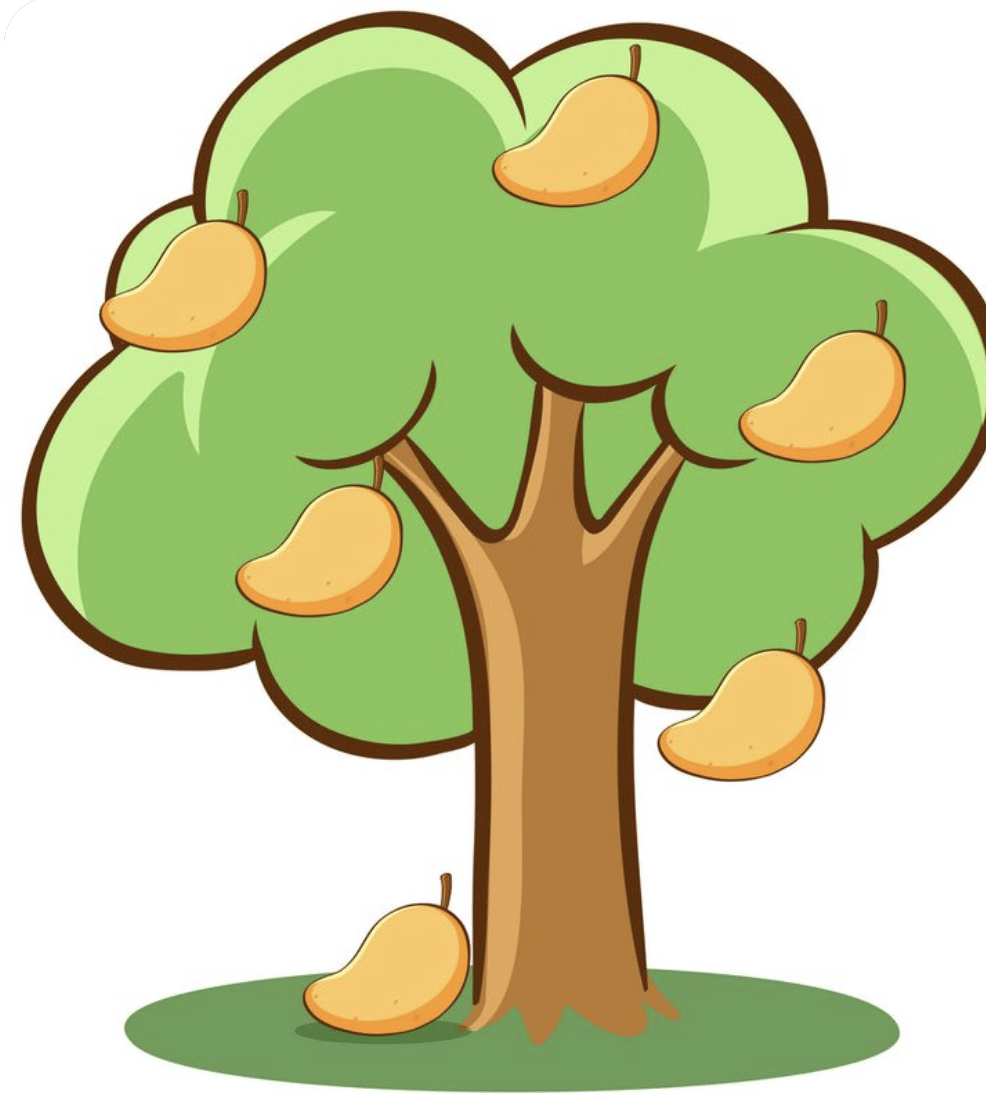
  • Their journey is full of fun and surprises. First, they pass green fields where rice plants grow. Then, they pass a big mango grove filled with tall trees and juicy mangoes.
  • But the most exciting part? They love to play along the way! They jump over small water canals, climb trees, and swing from the branches. They even stop to watch tiny garden lizards running around.
  • Even with all the fun, Ravi and his friend always reach school on time. After all, they are smart and responsible students!

Try yourself:

What do Ravi and his best friend enjoy doing on their way to school?

  • A.Jumping over small water canals
  • B.Climbing trees and swinging from branches
  • C.Watching tiny garden lizards running around
  • D.All of the above

New Words and Meanings

  • Paddy fields: Fields where rice is grown.
    Rice is a tasty grain that many people eat.
  • Mango grove: An area with numerous mango trees.
    Mangoes are sweet and delicious fruits.
  • Main road: The large road where cars and buses travel.
  • Canals: Small, narrow rivers.
  • Reptiles: Animals like garden lizards that have scales and often lay eggs.
  • Responsible: Doing what you should do and being on time for important things.
  • Bicycle: A two-wheeled vehicle that you pedal to move.

04. Chapter Notes: Seeing without Seeing

Introduction

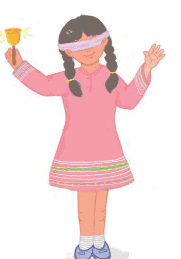
This story is about a girl named Onshangla who learns how people can understand the world without seeing. Her mother plays a blindfold game with her, where Onshangla uses touchsmell, and taste to guess objects. Through this fun game, she learns to be kind and understand others, like the new boy in her class who cannot see.

OnshanglaOnshangla

Key Points 

  • Onshangla tells her mother, Ava, about a new boy in her class who cannot see.
  • Ava plays a game with Onshangla to help her understand life without seeing.
  • Onshangla is blindfolded and identifies objects using touch, smell, and taste.
  • After the game, Onshangla is happy to see her mother again.
  • Ava teaches that there are different ways to understand the world without sight.
  • Onshangla and her friends are encouraged to be kind and make friends with the new boy.

Detailed Explanation

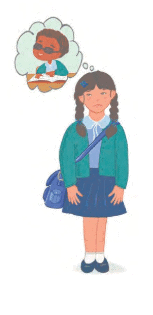
In this chapter, we meet a little girl named Onshangla who comes back home from school. She’s very quiet, and her mother, Ava, notices this and asks her if anything happened at school. Onshangla tells her that a new boy has joined their class who wears black glasses and cannot see. Onshangla is interested about how the new boy will do things since he can’t see like everyone else.

Detailed Explanation

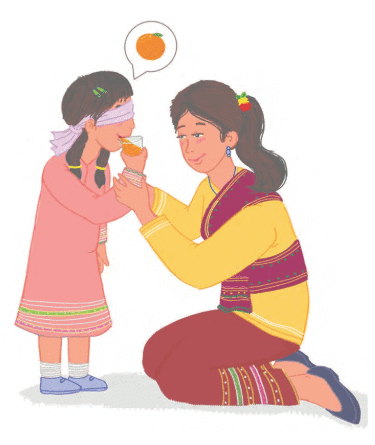
Ava decides to play a special game with Onshangla to help her understand how it feels to do things without seeing. She blindfolds Onshangla with a scarf and then asks her to guess what she’s holding in her hand. Onshangla touches and smells the objects to guess what they are. She correctly identifies a soft object as a rose by smelling it. She also recognizes a small bell by the sound it makes and a glass of orange juice by tasting it.

Detailed Explanation

After these fun games, Ava removes the blindfold, and Onshangla can see again. She is happy to see her mother and thanks her for the game. Ava uses this opportunity to teach Onshangla and her friends that even if someone cannot see, there are other ways to understand the world around them. She encourages Onshangla and her friends to be friends with the new boy who cannot see.

Message:

After the game, Ava removes the blindfold, and Onshangla expresses her happiness and gratitude for the activity. Ava seizes this moment to teach Onshangla and her friends an important lesson: even though someone may not have the ability to see, there are other ways to understand and perceive the world around them. She asks them to make friends with the new boy and be supportive of his special ability.

New Words and Meanings

  • Quiet: Making little or no noise. 
    Meaning: Silent or calm. 
    Example: The library is very quiet
  • Front: The part or side that faces forward. 
     Meaning: The area before something. 
    Example: Please stand in the front of the line. 
  • Sniff: To smell something by inhaling air through the nose. 
     Meaning: To draw air audibly through the nose. 
    Example: The dog began to sniff the flowers. 
  • Remove: To take something away. 
     Meaning: To get rid of or detach. 
    Example: Please remove your shoes before entering. 
  • Joy: A feeling of great happiness. 
     Meaning: Delight or pleasure. 
    Example: She felt pure joy when she saw her baby smile. 
  • Blink: To close and open the eyes quickly. 
     Meaning: A brief shutting and opening of the eyes. 
    Example: The bright light made her blink several times. 
  • Difficulties: Challenges or problems. 
     Meaning: Situations that make something hard to do or understand. 
    Example: He faced difficulties in his studies. 

02. Chapter Notes: OUT! OUT!

What Happens in the Story?

Let’s understand the story, picture by picture.

In this chapter, we meet two friends named Jeet and Babli who are having a fun holiday together.

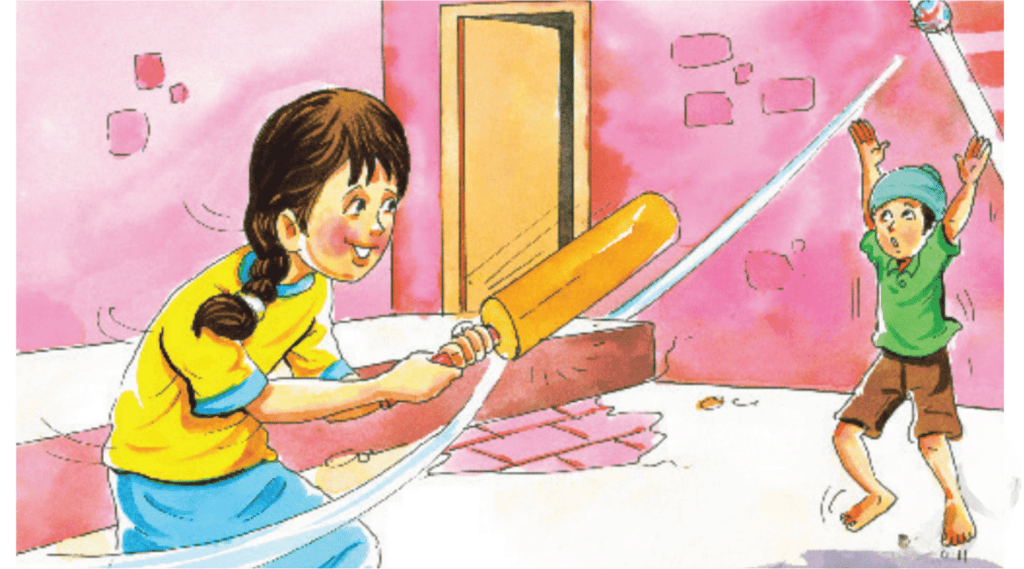
Jeet and Babli were  playing together.Jeet and Babli were  playing together.
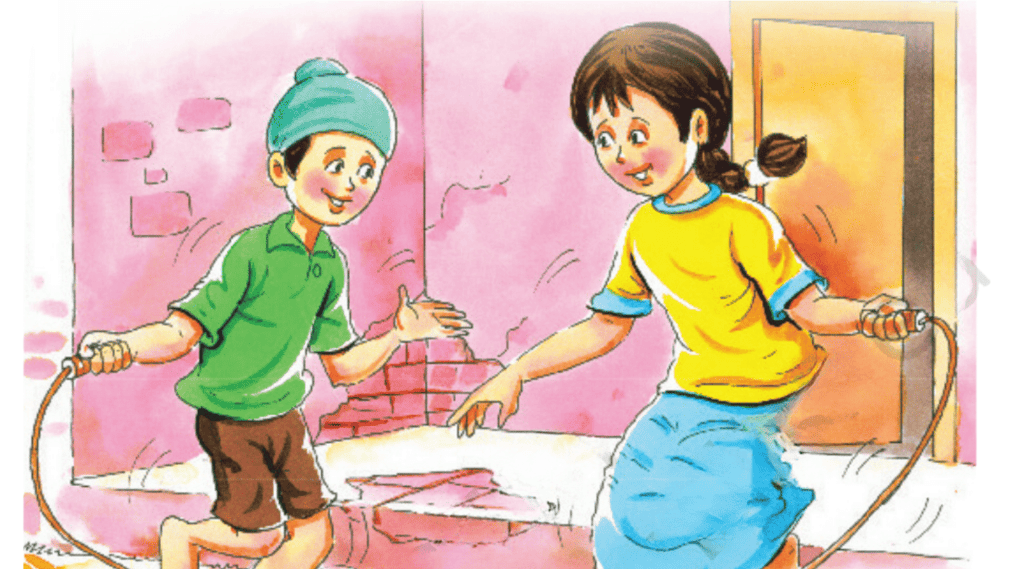
They played many games and skipped the rope.They played many games and skipped the rope.
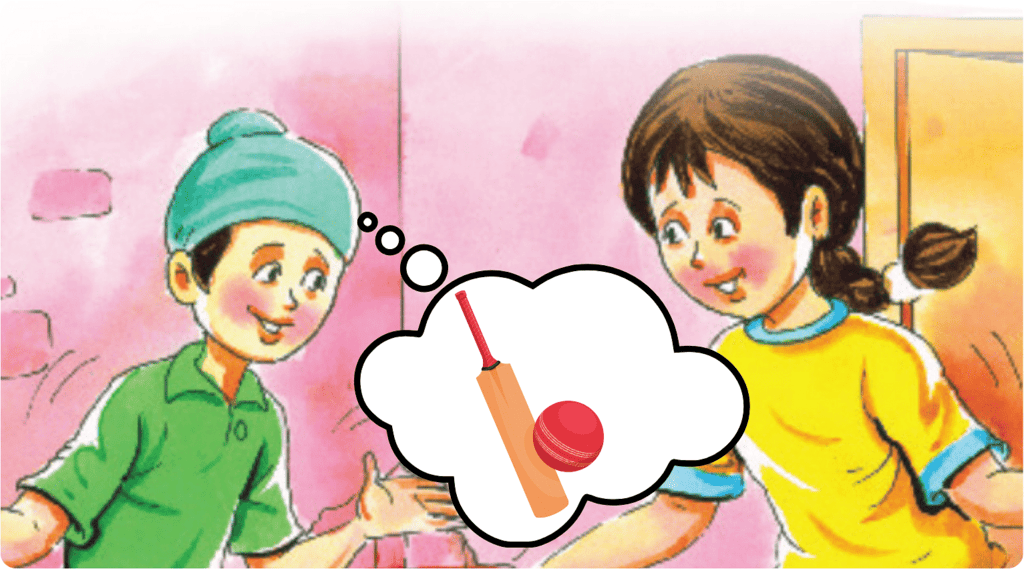
After some time Babli and Jeet decided to play ‘bat and ball’After some time Babli and Jeet decided to play
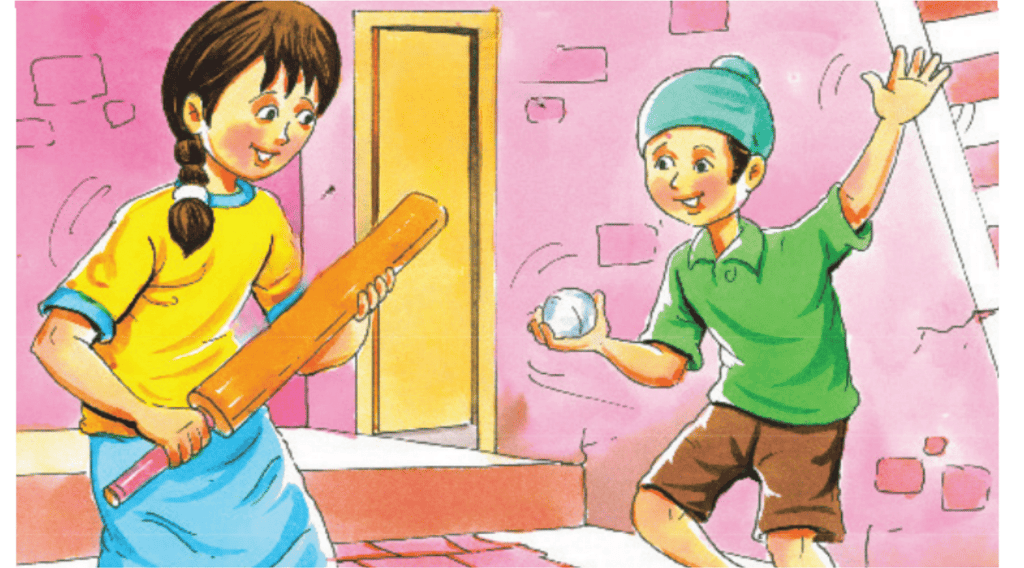
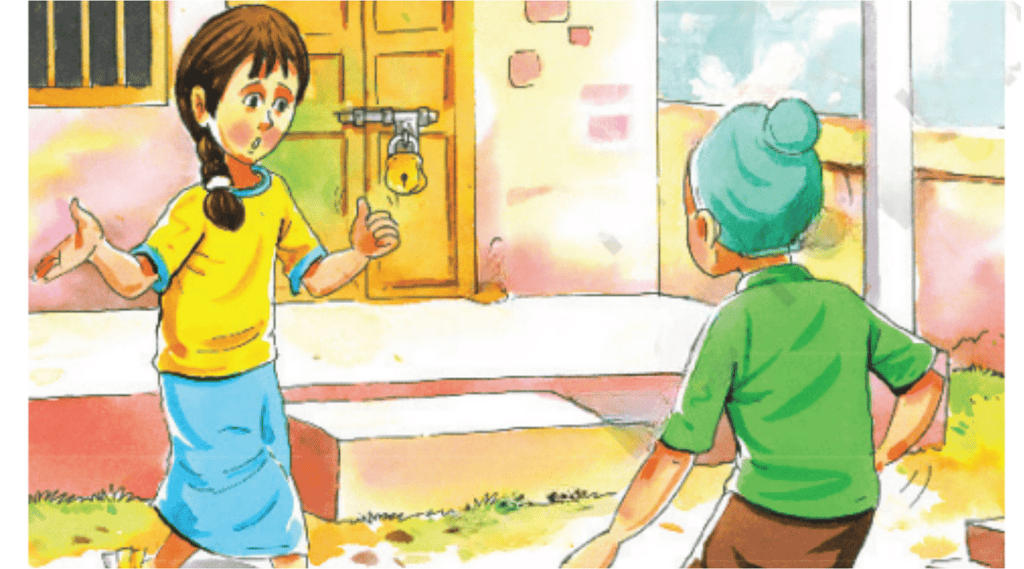
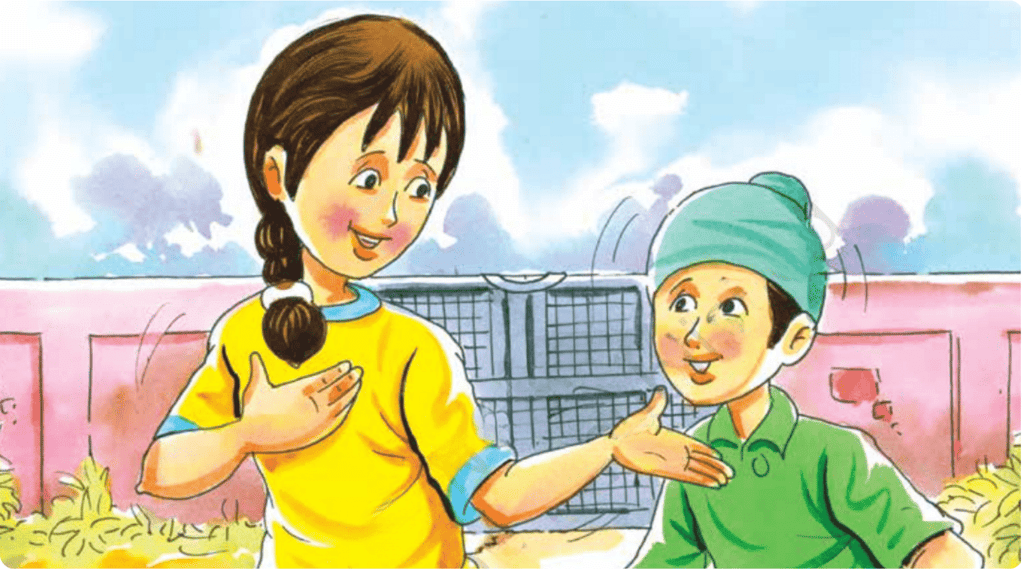
 ‘bat and ball’Jeet got ready to throw the ballJeet got ready to throw the ballJeet threw the ball and Babli hit the ball. The ball went into Mohit’s garden. But his house was locked.Jeet threw the ball and Babli hit the ball. The ball went into Mohit’s garden. But his house was locked.They could not find the ball. So the game stopped. They could not find the ball. So the game stoppedBabli knew how to make a ball. They got a few rags, paper and wool.  Babli also brought a piece of string. She rolled rags, paper and wool together to make a ball. Babli knew how to make a ball. They got a few rags, paper and wool.  Babli also brought a piece of string. She rolled rags, paper and wool together to make a ball. 
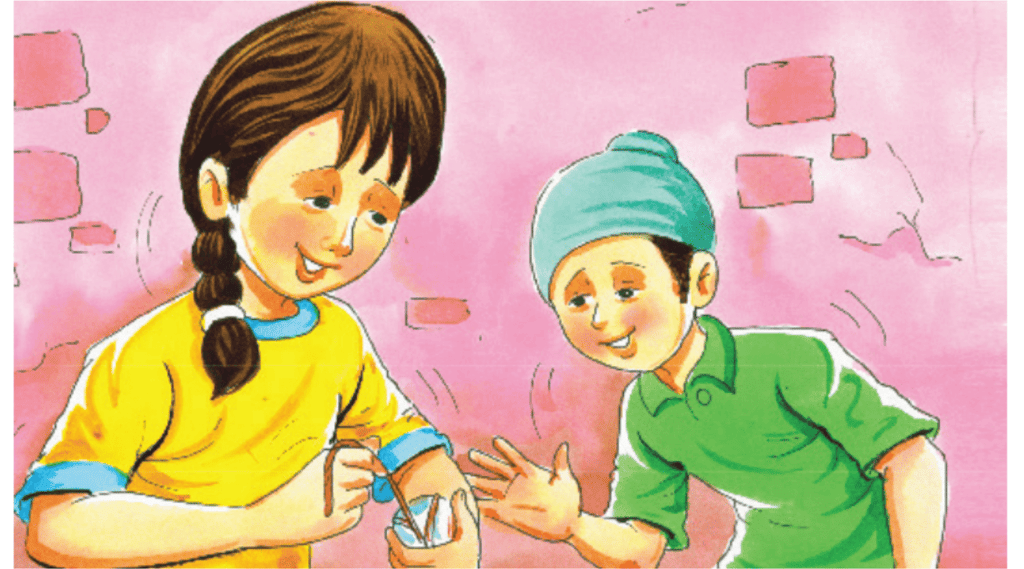
Try yourself:

What materials did Babli use to make a ball in the story?

  • A.Rags, paper, wool, and a piece of string
  • B.Leaves, stones, sticks, and a rubber band
  • C.Plastic, metal, wood, and thread
  • D.Clay, sand, water, and cloth

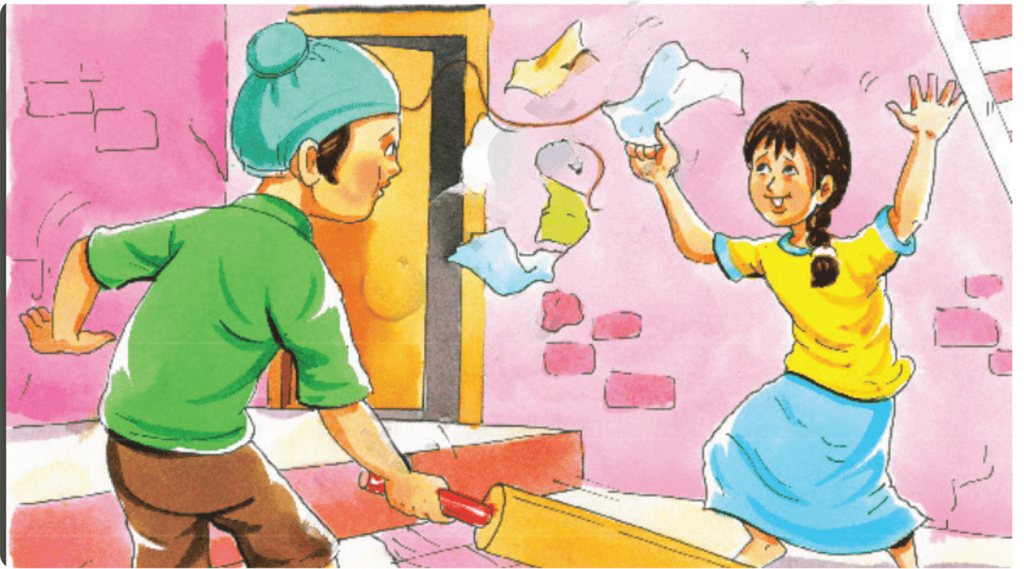
Then Babli tied the ball with a string .Then Babli tied the ball with a string .The game started again. The game started again. Jeet hit the ball hard. Jeet hit the ball hardThe ball opened up and scattered in the air! Babli jumped and caught a piece of rag. She jumped and shouted, “OUT! OUT!”The ball opened up and scattered in the air! Babli jumped and caught a piece of rag. She jumped and shouted, 
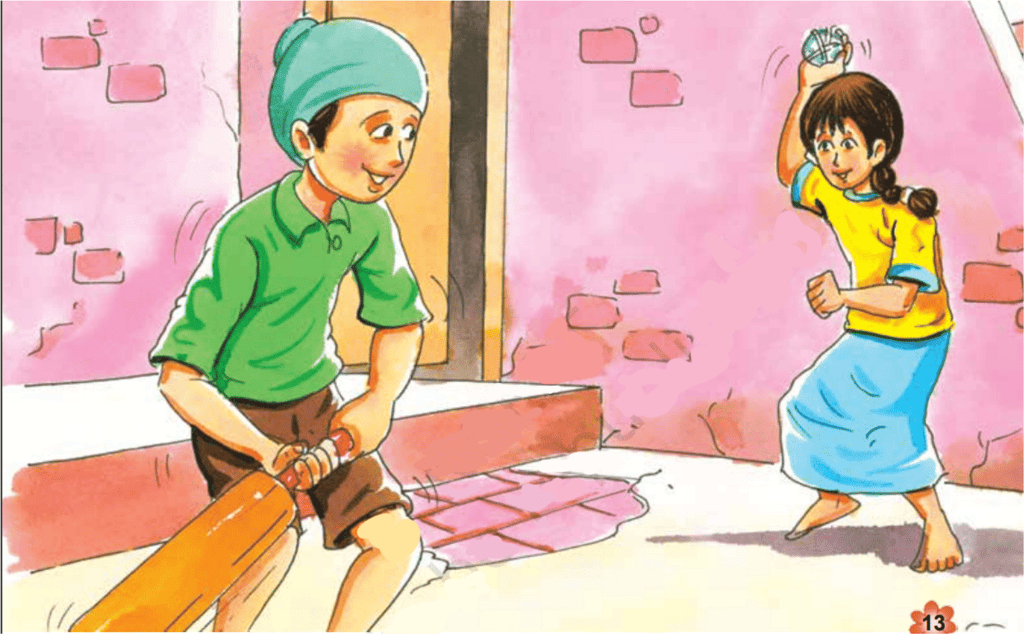
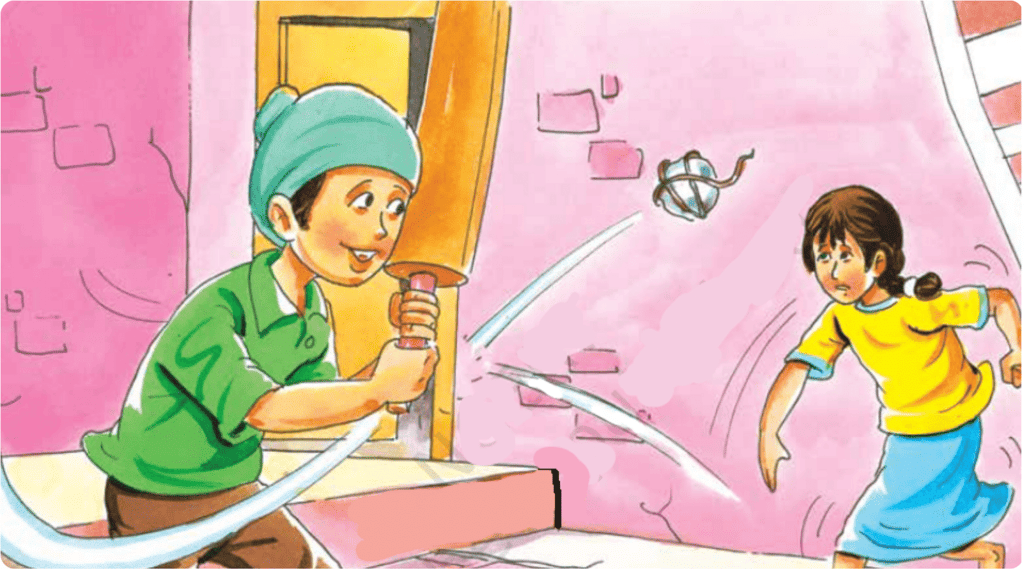
“OUT! OUT!”

Chapter Summary

It was a holiday. Jeet and Babli were playing many games together. They skipped rope and played hide and seek. After some time, they decided to play bat and ball.

Jeet threw the ball, and Babli hit it. The ball flew into Mohit’s garden, but his house was locked, so they could not get the ball back. The game stopped.

Babli knew how to make a ball. She brought rags, paper, wool, and a piece of string. She rolled and tied them to make a new ball. Jeet and Babli liked their new ball and continued their game.

This time, Babli picked the ball, and Jeet picked the bat. Babli threw the ball, and Jeet hit it hard. The ball opened up and scattered in the air! Babli jumped and caught a piece of rag, shouting happily, “OUT! OUT!”

New Words and Meanings

  • Scattered
    Meaning: When things are spread out in many directions.
    Example: The ball opened up and scattered in the air!
  • Locked
    Meaning: Closed tightly with a key and cannot be opened.
    Example: Mohit’s house was locked, so they couldn’t go inside.
  • Clever
    Meaning: Smart and good at solving problems.
    Example: Babli is clever because she made a new ball from old things.
  • Declare
    Meaning: To say something clearly and confidently.
    Example: Babli declared Jeet “OUT!” when she caught the piece of rag.

01. Solutions: A Day at the Beach (Counting in Groups)

NCERT Solutions: A Day at the Beach (Counting in Groups)Page 1

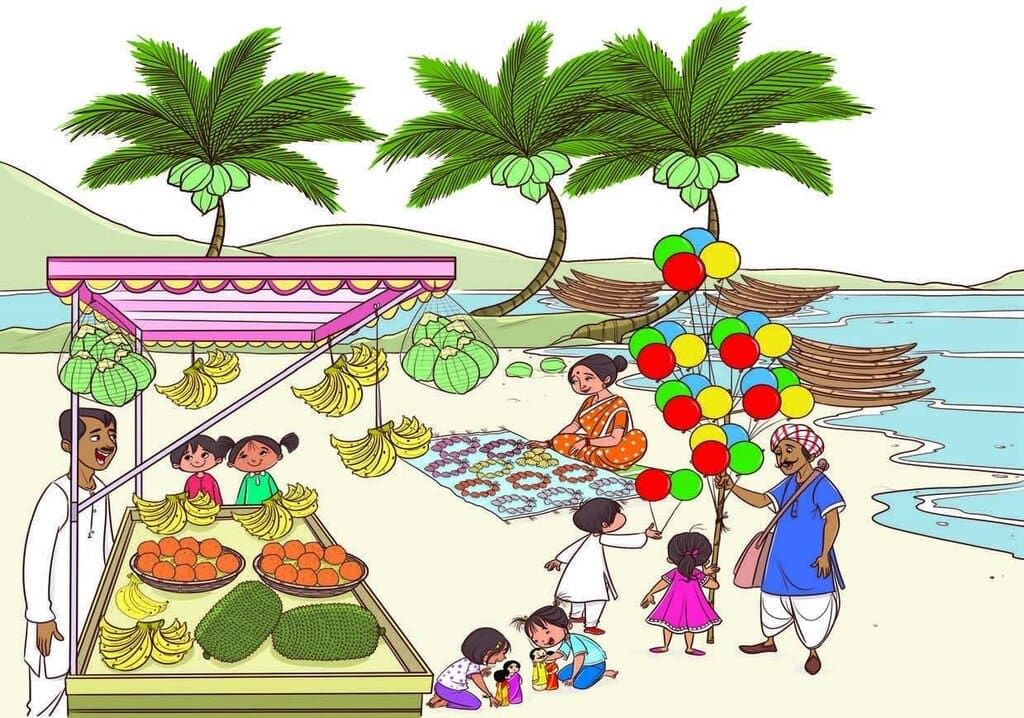
Look at the above picture. Count and write the number of objects given below.

Q1: Coconuts

 Ans: 27

Q2: Boats

Ans: 12

Q3: Children

Ans: 6

Q4: Oranges

Ans: 20

Q5. How did you count them? Did you count them one by one or in bunches or groups?

Ans: Do it yourself.

Let us Do (Page 2)

A. Look at the shops shown in the picture and fill in the blanks.

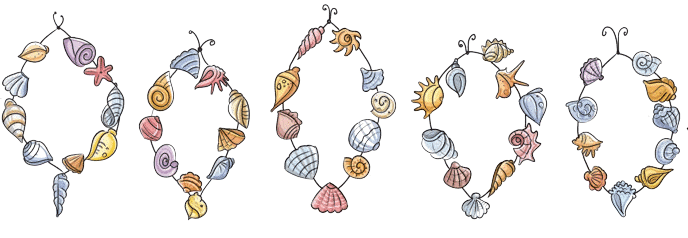
(i) There are ___________ necklaces of shells with 10 shells in each necklace.

Ans: 10

(ii) There are _________ groups of balloons with __________ balloons in each group and __________ loose balloons.

Ans: There are 6 groups of balloons with 4 balloons in each group and 2 loose balloons.

(iii) There are ______ bunches of bananas with _______ bananas in each bunch and ____________ loose bananas.

Ans: There are 6 bunches of bananas with 12 bananas in each bunch and 4 loose bananas.

B. Surbhi has collected some seashells. She wants to help her mother make bracelets and necklaces.Let us Do (Page 2)Let us Do (Page 2)

C. Surbhi has made __________ groups of shells with ______ number of shells in each group for her bracelets.Let us Do (Page 2)Let us Do (Page 2)

Ans: Surbhi has made 10 groups of shells with 5 number of shells in each group for her bracelets.

D. Her mother has made ___________ groups of shells with ___________ number of shells in each group for her necklaces.

Ans: Her mother has made 5 groups of shells with 10 number of shells in each group for her necklaces.

Let us Think (Page 3)

List out the objects that come in packs of ten.

Ans: (a) Pencils 

(b) Biscuits 

(c) Toffees

Tasty Chikoos!

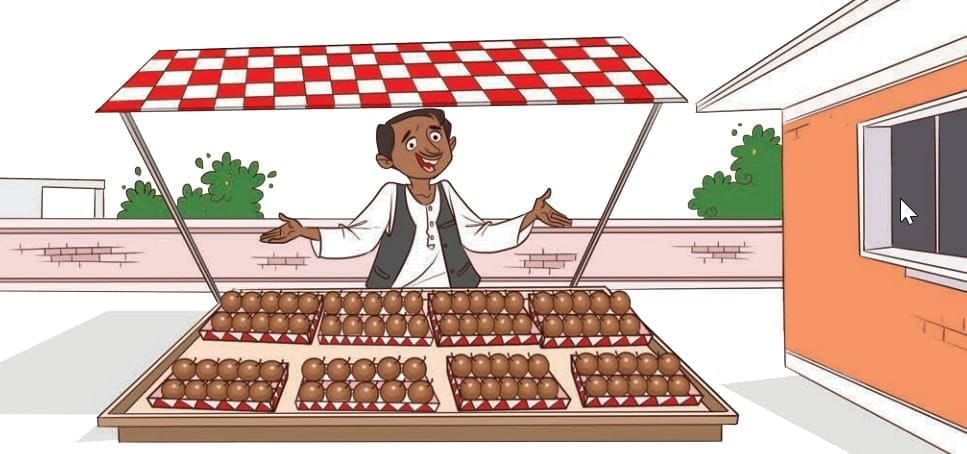
Manoj is helping his father in selling chikoos that he has arranged in the trays.Tasty Chikoos!(i) There are ____________ chikoos in one tray.

Ans: 10

(ii) How many chikoos are there in total? ____________

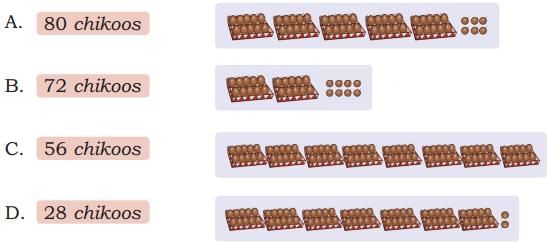
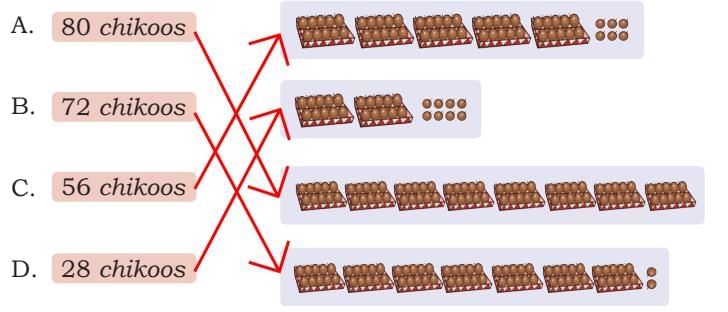
Ans: 80Now help Manoj in placing all the chikoos in the trays for selling.

A. 25 chikoos Tasty Chikoos!Tasty Chikoos!Tasty Chikoos!: ______ trays of ten chikoos and _________ chikoos.

Ans: 2 trays of ten chikoos and 5 chikoos.

B. 43 chikoos Tasty Chikoos!Tasty Chikoos!Tasty Chikoos!Tasty Chikoos!Tasty Chikoos!: ______ trays of ten chikoos and _________ chikoos.

Ans: 4 trays of ten chikoos and 3 chikoos.

C. 35 chikoosTasty Chikoos!: ______ trays of ten chikoos and _________ chikoos.

Ans: 3 trays of ten chikoos and 5 chikoos.

D. 58 chikoos Tasty Chikoos! : ______ trays of ten chikoos and _________ chikoos.

Ans: 5 trays of ten chikoos and 8 chikoos.

Let us Match (Page 4)

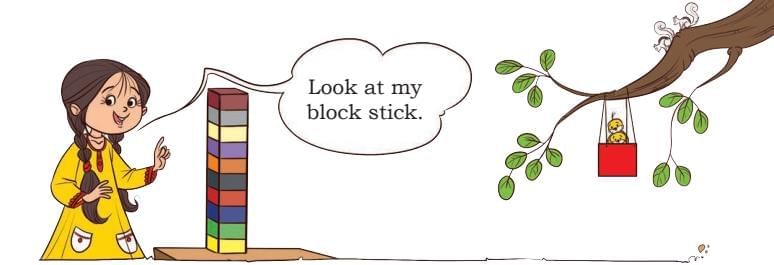
Let us Match (Page 4)Ans:Let us Match (Page 4)Fun with Blocks and StripsLet us Match (Page 4)Can you tell how many blocks are there in this block stick?1 block stick = _______ blocksAns: 1 block stick = 10 blocksLet us Match (Page 4)Can you tell how many units are there in this ten strip?1 ten strip = ________ unitsAns: 1 ten strip = 10 units
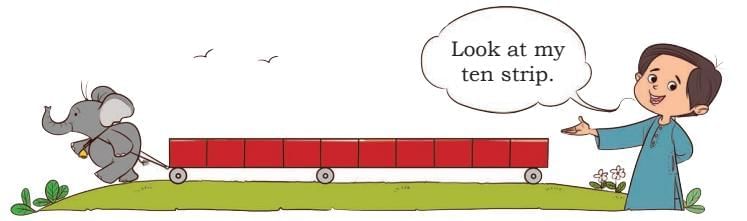
Let us Do (Page 5)

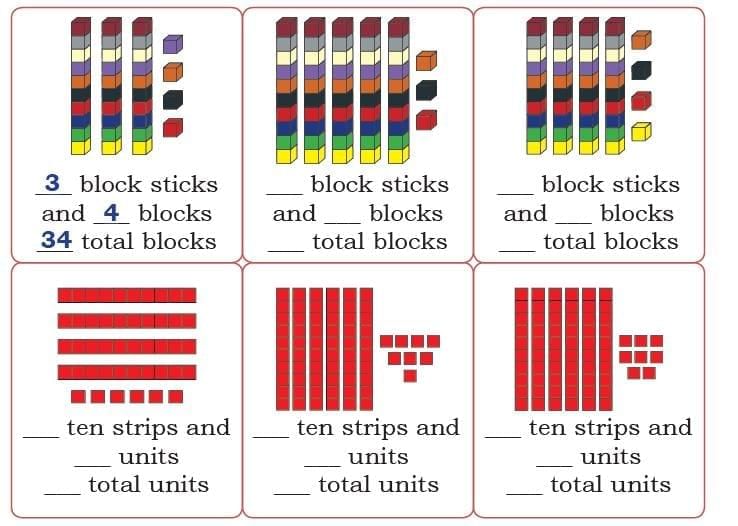
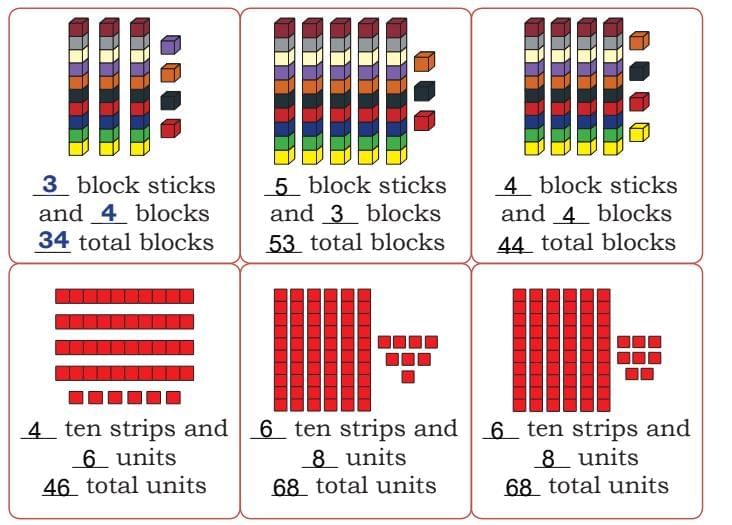
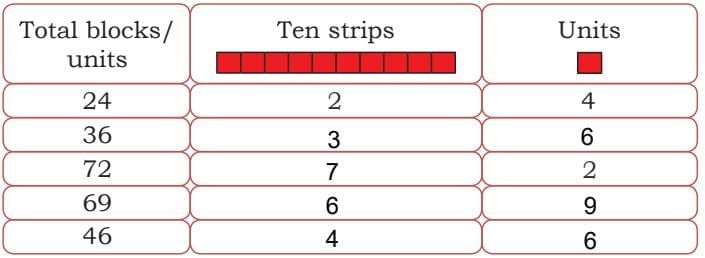
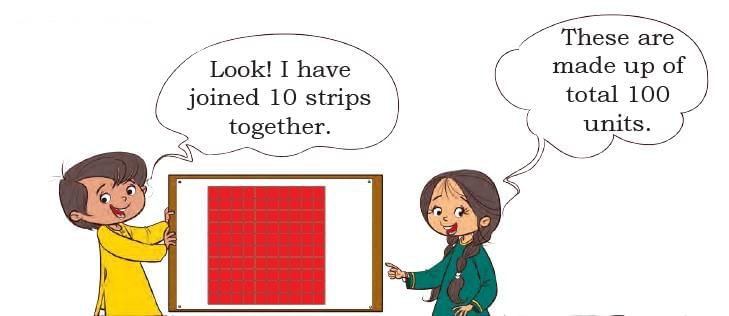
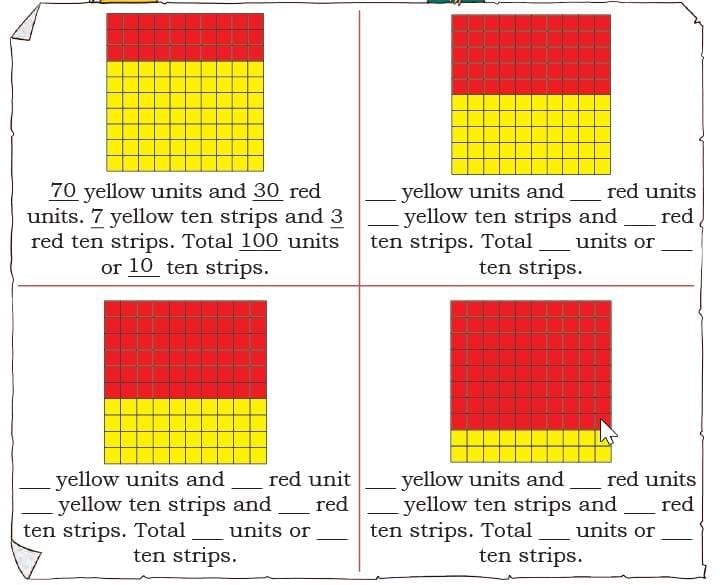
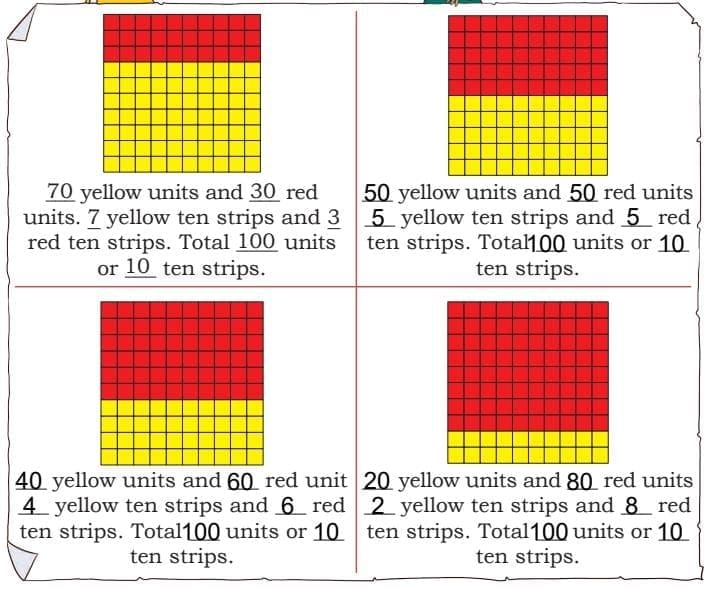
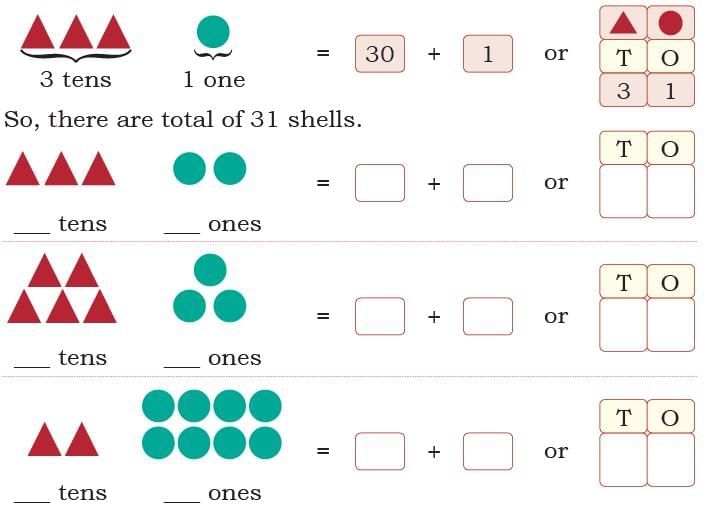
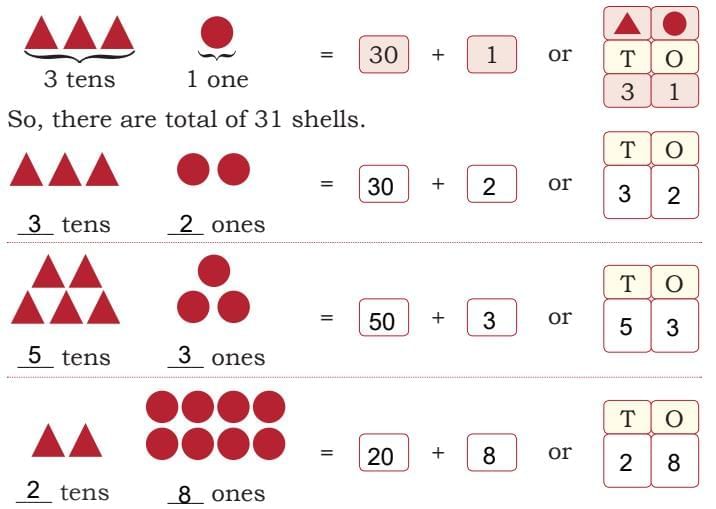
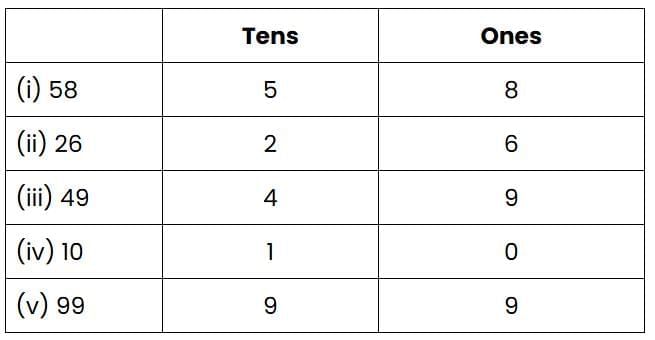
Let us Do (Page 5)Ans:Let us Do (Page 5)Complete the below table.Let us Do (Page 5)Ans: Let us Do (Page 5)Let us Make 100!Let us Do (Page 5)Let us Do (Page 5)Ans:Let us Do (Page 5)

Let us Think (Page 8)

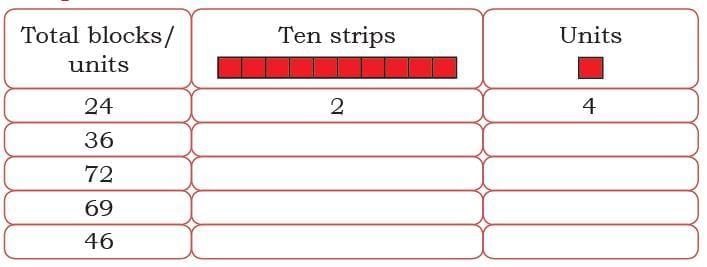
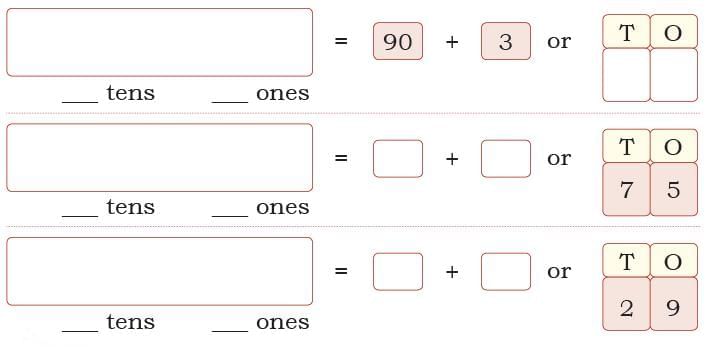
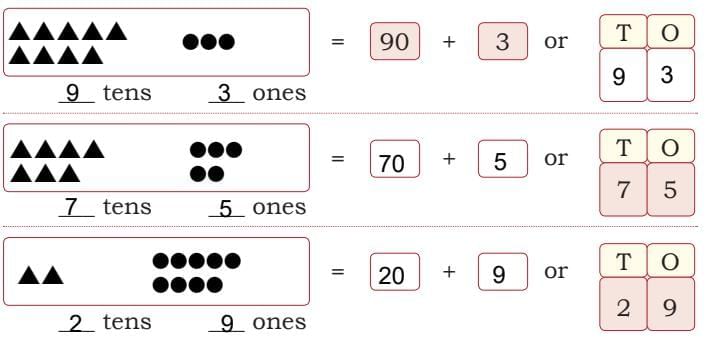
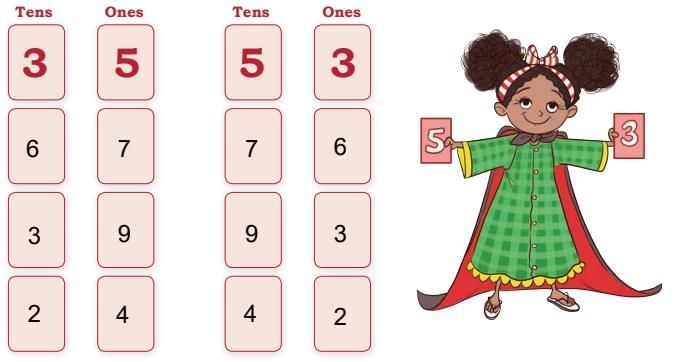
Complete the following.Let us Think (Page 8)Ans:Let us Think (Page 8)Draw tens(Let us Think (Page 8)) and ones (Let us Think (Page 8)) cards and fill in the blanksLet us Think (Page 8)Ans: Let us Think (Page 8)

Let us Do (Page 10 & 11)

Q1. Which is less 27 oranges or 72 oranges? Why?
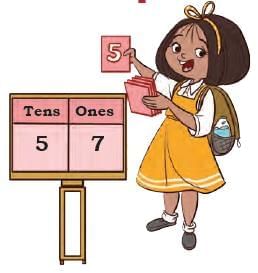
Ans:  27 oranges are less than 72 oranges. This is because 27 is a smaller number than 72. So, if you have 27 oranges, you have fewer oranges compared to having 72 oranges.

Q2. Fill in the blanks with more or less.

A. 67 chikoos are _______ than 76 chikoos.

Ans: 67 chikoos are less than 76 chikoos.

B. 53 shells are _______ than 35 shells.

Ans: 53 shells are more than 35 shells.

Q3. Fill in the blanks.

A. ______ is more than 20.

Ans: 29 is more than 20.

B. _____ is less than 41.

Ans: 39 is less than 41.

C. ______ is less than 76.

Ans: 53 is less than 76.

D. 49 is more than _____.

Ans: 49 is more than 42.

E. 25 is less than _____.

Ans: 25 is less than 29.

F. ______ is less than 2.

Ans: 1 is less than 2.

G. 36 is more than _____.

Ans: 36 is more than 30.

H. _____ is more than ______. 

Ans: 2 is more than 1.

Let us Play (Page 12)

Flash Card Game

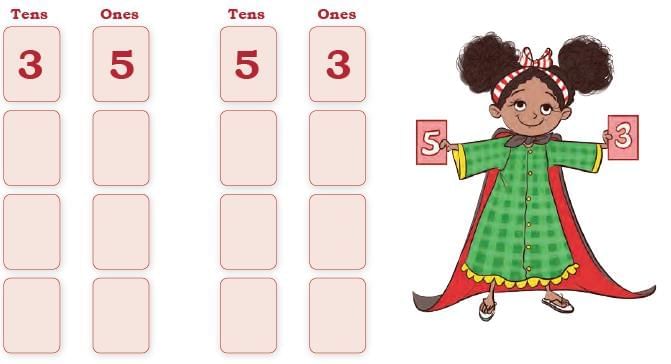
A. Make flash cards of numbers from 0 to 9. Make the desired number according to the rules given below by placing these cards appropriately at tens and ones place.Let us Play (Page 12)(i) A number greater than 50. 

(ii) A number less than 30. 

(iii) A number between 47 and 59.

(iv) Which is the smallest two-digit number you can make?

(v) Which is the largest two-digit number you can make? Why do you think that the number you made is the largest?

Ans: Let us Play (Page 12)B. Choose any two flash cards and make a two-digit number. Now swap these flash cards to get another number and find out whether it is bigger or smaller than the previous number. How will you get the largest number using same digits?Let us Play (Page 12)Ans: Let us Play (Page 12)
Page 13

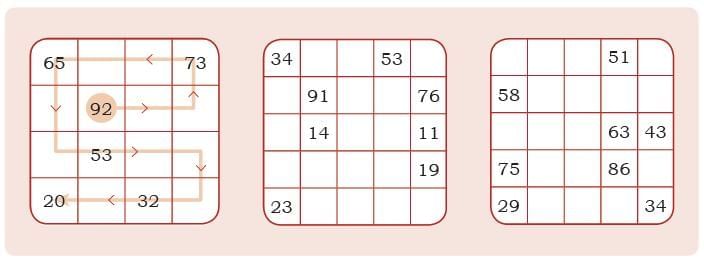
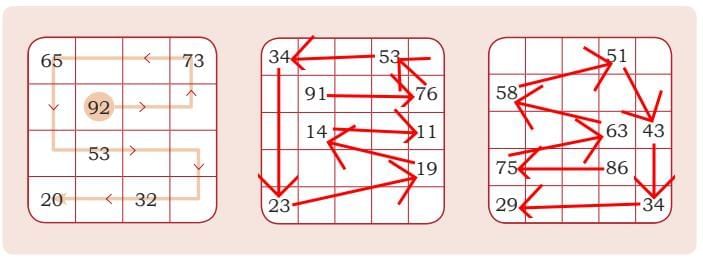
Mark by Passing the PathFrom the largest number, try to reach the smallest one in decreasing order by passing through each and every number at least once.Page 13Ans:Page 13

Play with Numbers

Who am I?

A. I am the largest two-digit number.

Ans: 99

B. I am the largest two-digit number where no digit is repeated.

Ans: 98

C. I am the smallest two-digit number.

Ans: 10

D. I am the smallest two-digit number, my digits are repeated.

Ans: 11

E. I am the smallest two-digit number with 3 at the tens place.

Ans: 30

F. I am the largest two-digit number with 2 at the ones place. 

Ans: 92

Page 14

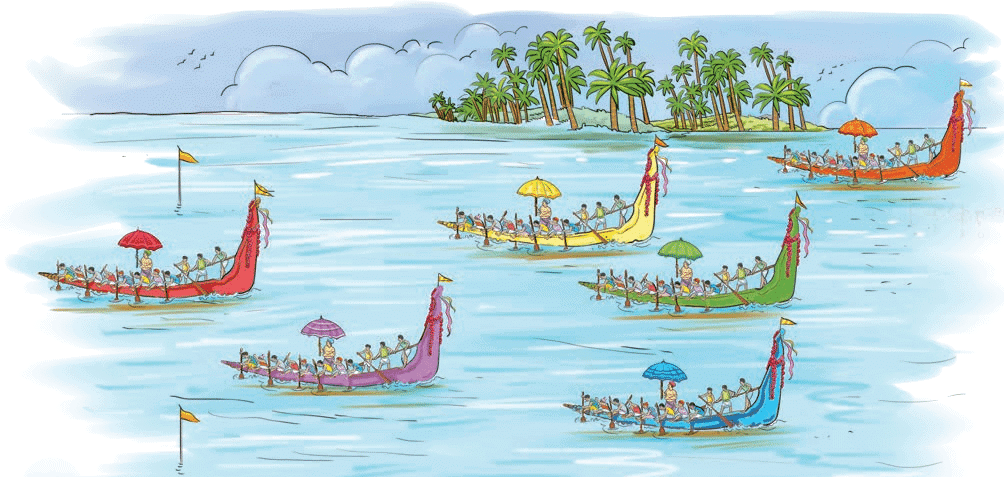
Vallam kaliIn Kerala, Onam is celebrated through a famous snake boat race called as vallam kali. The race has nearly come to an end. Look at the picture and observe the position of each boat.Page 14A. Which colour boat came first in the race? __________ 
Ans: Red

B. Which colour boat is likely to come third? __________

 Ans: Yellow

C. At which positions are blue and green boats? __________ 

Ans: Fourth

D. Write the position of pink and orange boats on the basis of the picture. ____________ ____________

Ans: Second and Fifth

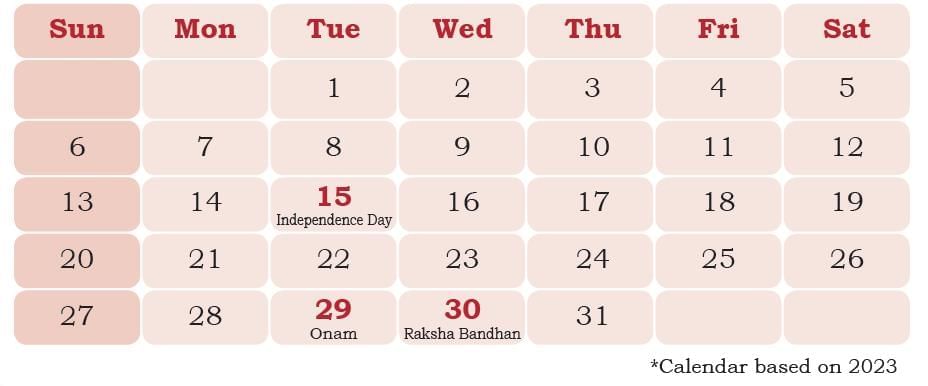
Look at the month of August in the calendar given below.Page 14Read the calendar and answer the following questions.

 A. Onam will be celebrated on which day of the month?_________

Ans: Tuesday

B. When is Independence day celebrated?_________ 

Ans: 15th August

C. Raksha Bandhan is on________ Wednesday of this month.

Ans: Fifth