Q1. Which of the following statements are the characteristics of a physical change?
(i) The state of the substance may or may not change. (ii) A substance with different properties is formed. (iii) No new substance is formed. (iv) The substance undergoes a chemical reaction.
Answer: (c) (i) and (iii) In a physical change, the substance undergoes a change in physical properties such as size, shape, or state (e.g., solid to liquid) but no new substance is formed. No chemical reaction occurs.
Q2. Predict which of the following changes can be reversed and which cannot be reversed. If you are not sure, you may write that down. Why are you not sure about these?
(i) Stitching cloth to a shirt (ii) Twisting of straight string (iii) Making idlis from a batter (iv) Dissolving sugar in water (v) Drawing water from a well (vi) Ripening of fruits (vii) Boiling water in an open pan (viii) Rolling up a mat (ix) Grinding wheat grains to flour (x) Forming of soil from rocks
Answer:
Q3. State whether the following statements are True or False. In case a statement is False, write the correct statement.
(i) Melting of wax is necessary for burning a candle. Answer: True
(ii) Collecting water vapour by condensing involves a chemical change. Answer: False Collecting water vapour by condensing is a physical change.
(iii) The process of converting leaves into compost is a chemical change. Answer: True
(iv) Mixing baking soda with lemon juice is a chemical change. Answer: True
Q4. Fill in the blanks in the following statements:
(i) Nalini observed that the handle of her cycle has got brown deposits. The brown deposits are due to ________, and this is a ________ change. Answer: Rusting, chemical
(ii) Folding a handkerchief is a __________ change and can be ________. Answer: Physical, reversed
(iii) A chemical process in which a substance reacts with oxygen with evolution of heat is called _________, and this is a __________ change. Answer: Combustion, chemical
(iv) Magnesium, when burnt in air, produces a substance called __________. The substance formed is _________ in nature. Burning of magnesium is a _________ change. Answer: Magnesium oxide, basic, chemical
Q5. Are the changes of water to ice and water to steam, physical or chemical? Explain.
Answer: Both are physical changes because no new substances are formed when water changes its state. Water changes from a liquid to a solid (ice) when frozen, and from a liquid to a gas (steam) when heated. In both cases, the molecular structure of water remains the same.
Q6. Is curdling of milk a physical or chemical change? Justify your statement.
Answer: When milk curdles, it changes its chemical structure. The proteins in the milk react with acid (like lemon juice or vinegar) or the natural bacteria (as in the case of yogurt) and form curds. This process is not reversible—once the milk curdles, you cannot change it back to its original form, indicating a chemical change.
In a physical change, the substance’s state or appearance might change, but no new substance is formed. However, curdling results in the formation of new substances , so it is a chemical change.
Q7. Natural factors, such as wind, rain, etc., help in the formation of soil from rocks. Is this change physical or chemical and why?
Answer:The process of soil formation from rocks, influenced by natural factors such as wind, rain, and temperature changes, involves both physical and chemical changes. Here’s why:
Physical Change
The breaking down of rocks into smaller particles due to weathering by wind, rain, and temperature is a physical change. The rock is simply being broken into smaller pieces without any change in its chemical composition.
Chemical Change
Over time, water, air, and other substances can react with the minerals in the rocks, leading to the chemical weathering of rocks. For example, rainwater, which is slightly acidic, can react with minerals like calcium in the rocks to form new compounds, like calcium carbonate, causing a chemical change in the rock.
Q8. Read the following story titled ‘Eco-friendly Prithvi’, and tick the most appropriate option(s) given in the brackets. Provide a suitable title of your choice for the story.
Prithvi is preparing a meal in the kitchen. He chops vegetables, peels potatoes, and cuts fruits (physical changes/chemical changes). He collects the seeds, fruits, and vegetable peels into a clay pot (physical changes/chemical changes). The fruits, vegetable peels, and other materials begin to decompose due to the action of bacteria and fungi, forming compost (physical change/chemical change). He decides to plant seeds in the compost and water them regularly. After a few days, he notices that the seeds begin to germinate and small plants start to grow, eventually blooming into colourful flowers (physical change/chemical change). His efforts are appreciated by all his family members.
Answer:
Chopping vegetables, peeling potatoes, and cutting fruits: Physical changes
Collecting seeds, fruits, and vegetable peels into a clay pot: Physical change
Decomposing and forming compost: Chemical change
Germination and blooming flowers: Chemical change
Q9. Some changes are given here. Write physical changes in the area marked ‘A’ and chemical changes in the area marked ‘B’. Enter the changes which are both physical and chemical in the area marked ‘C’.
Answer:
Q10. The experiments shown in Fig. 5.11a, b, c, and d were performed. Find out in which case(s) did lime water turn milky and why?
Answer:
Vinegar and Baking Soda (a):
When baking soda reacts with vinegar (acetic acid), it produces carbon dioxide gas (CO₂).
The CO₂ will react with the lime water and turn it milky because calcium hydroxide in lime water reacts with CO₂ to form calcium carbonate.
Vinegar and Common Salt (b):
There is no reaction between vinegar and common salt that produces carbon dioxide.
Therefore, lime water will not turn milky in this case.
Lemon Juice and Vinegar (c):
Both lemon juice and vinegar are acids, but they do not produce carbon dioxide when mixed.
Therefore, lime water will not turn milky in this case.
Lemon Juice and Baking Soda (d):
Baking soda reacts with lemon juice (citric acid) to produce carbon dioxide gas.
The CO₂ will react with the lime water, causing it to turn milky.
Conclusion
Lime water turns milky in experiment (a) (Vinegar and Baking Soda) and experiment (d) (Lemon Juice and Baking Soda) because these reactions produce carbon dioxide, which reacts with lime water to form calcium carbonate.
Q1: Which metal is commonly used to make food packaging materials as it is cheaper, and its thin sheets can be folded easily into any shape? (i) Aluminium (ii) Copper (iii) Iron (iv) Gold Ans: (i) Aluminium
Q2: Which of the following metal catches fire when it comes in contact with water? (i) Copper (ii) Aluminium (iii) Zinc (iv) Sodium Ans: (iv) Sodium
Q3: State with reason(s) whether the following statements are True [T] or False [F]. (i) Aluminium and copper are examples of non-metals used for making utensils and statues. Ans: False (ii) Metals form oxides when combined with oxygen, the solution of which turns blue litmus paper to red. Ans: False
(iii) Oxygen is a non-metal essential for respiration. Ans: True (iv) Copper vessels are used for boiling water because they are good conductors of electricity. Ans: False
Q4: Why are only a few metals suitable for making jewellery? Ans: Only a few metals like gold, silver, and platinum are suitable for making jewelry because they have special properties:
Malleability: These metals can be easily shaped into fine designs without breaking.
Ductility: They can be drawn into thin wires, which is important for making delicate jewelry pieces.
Lustrous: These metals have a shiny and attractive appearance, which makes them look beautiful in jewelry.
Resistant to corrosion: They do not rust or tarnish easily, so the jewelry remains durable and keeps its shine over time.
These properties make gold, silver, and platinum perfect choices for creating attractive and long-lasting jewelry.
Q5: Match the uses of metals and non-metals given in Column I with the jumbled names of metals and non-metals given in Column II.
Ans:
Q6: What happens when oxygen reacts with magnesium and sulfur? What are the main differences in the nature of products formed? Ans: 1. Oxygen Reacting with Magnesium
When oxygen reacts with magnesium, it forms magnesium oxide, which is a basic oxide.
Magnesium + Oxygen → Magnesium Oxide
Basic oxides are generally property of metal oxides.
2. Oxygen Reacting with Sulfur:
When oxygen reacts with sulfur, it produces sulfur dioxide, which is an acidic oxide.
Sulfur + Oxygen → Sulfur Dioxide
Acidic oxides are usually associated with non-metal oxides.
The main distinction is that magnesium oxide is basic, while sulfur dioxide is acidic in nature.
Q7: Complete the following flow chart:Ans:
Q8: You are provided with the following materials. Discuss which material would be your choice to make a pan that is most suitable for boiling water and why? Ans: Copper is an excellent conductor of heat, ensuring quick and even heating, which is essential for efficiently boiling water. It is also durable and resistant to corrosion, making it ideal for long-term use in cooking applications where the pan is exposed to high temperatures and water. Iron, while a good conductor, is prone to rusting, requiring maintenance to prevent corrosion, which makes it less suitable. Sulfur, coal, plastic, wood, and cardboard are poor conductors of heat and cannot withstand the high temperatures needed for boiling water, with some being brittle or flammable.
Copper is the optimal material for making a pan suitable for boiling water
Q9: You are provided with three iron nails, each dipped in oil, water, and vinegar. Which iron nail will not rust, and why? Ans: Rusting of iron occurs when it reacts with water and oxygen from the air, forming iron oxide (rust).
Rusting occurs when iron reacts with water and oxygen, forming iron oxide (rust). The oil on the iron nail creates a protective barrier, preventing moisture and oxygen from reaching the iron surface, thus inhibiting rusting. The nail in water will rust because water provides the moisture needed for the reaction. The nail in vinegar will rust faster due to the acetic acid, which accelerates corrosion by enhancing the reaction between iron, water, and oxygen. The iron nail dipped in oil will not rust.
Q10: How do the different properties of metals and non-metals determine their uses in everyday life? Ans: Properties of metals and non-metals directly determine their practical uses in our everyday lives.
Metals
Metals can be hammered into thin sheets without breaking. This property makes metals ideal for making tools and utensils, as they can be shaped into different forms easily.
Metals can be drawn into wires. This is why metals are used to make wires for electrical circuits.
Metals produce a ringing sound when struck, which is why they are used in musical instruments and bells.
Metals like copper and aluminum are excellent conductors of heat and electricity. This makes them ideal for use in wires, cooking utensils, and heating systems.
Non-Metals
Non-metals are generally poor conductors of heat and electricity, which is why they are used in insulation materials (e.g., rubber for insulating wires).
Non-metals like oxygen are highly reactive with substances like fuel, making them essential in respiration (oxygen is used by humans and animals to release energy).
Nitrogen is inert and is used to make fertilizers (reacts with hydrogen to form ammonia), while sulfur is used in making disinfectants and medicines due to its chemical reactivity.
Many non-metals, like oxygen and nitrogen, are gases at room temperature, which makes them essential in various life processes, such as breathing and fertilization.
Q11: One of the methods of protecting iron from getting rusted is to put a thin coating of zinc metal over it. Since sulfur does not react with water, can it be used for this purpose? Justify your answer. Ans: No, sulfur cannot be used to protect iron from rusting because:
Zinc is used for this purpose because it forms a protective coating over the iron. This coating reacts with oxygen in the air to form a layer of zinc oxide, which prevents water and oxygen from reaching the iron and causing rusting.
Sulfur, on the other hand, does not react with water and air in the same way. It does not form a protective barrier around the iron. Since sulfur does not create a coating that blocks moisture and oxygen, it cannot prevent rusting like zinc can.
Q12: An ironsmith heats iron before making tools. Why is heating necessary in this process? Ans: Heating is necessary because it makes the iron more malleable (easier to bend and shape). When the iron is heated, it becomes softer and more flexible, which allows the ironsmith to shape it into tools, such as axes, tongs, and other items.
This process is much easier when the metal is red hot because at this temperature, the iron is softer and can be shaped with less force. Therefore, heating helps the ironsmith shape the iron into the desired tools efficiently.
(i) A switch is the source of electric current in a circuit. Ans: Incorrect.
A switch does not generate electric current; it only controls the flow of current by opening or closing the circuit.
(ii)A switch helps to complete or break the circuit. Ans: Correct.
A switch controls the flow of electricity by either closing or opening a circuit, depending on whether it is in the “ON” or “OFF” position.
(iii)A switch helps us to use electricity as per our requirement. Ans: Correct.
A switch allows us to control the use of electricity by turning devices “ON” or “OFF”.
(iv)When the switch is in ‘OFF’ position, there is an air gap between its terminals. Ans: Correct.
In the ‘OFF’ position, the switch opens the circuit, creating a gap that stops the current from flowing.
Q2. Observe Fig. 3.16. With which material connected between the ends A and B, the lamp will not glow?
Ans: The lamp will not glow if the material between the ends A and B is an insulator (like rubber, plastic, or wood). These materials do not allow electricity to flow through them.
Q3. In Fig. 3.17, if the filament of one of the lamps is broken, will the other glow? Justify your answer.
Ans: No, the other lamp will not glow if the filament of one lamp is broken.
If the filament of one lamp breaks, it creates a gap in the circuit.
This gap means that the path for the electric current is interrupted. When there’s a break in the circuit, the current cannot flow through it anymore.
Even though the other lamp might be perfectly fine, it won’t glow because no electricity is reaching it due to the broken connection.
Q4. A student forgot to remove the insulator covering from the connecting wires while making a circuit. If the lamp and the cell are working properly, will the lamp glow?
Ans: No, the lamp will not glow because the insulator prevents the electric current from passing through the wire, which is necessary for the lamp to glow.
To make the circuit work and the lamp glow, you need to remove the insulation from the parts of the wire that connect to the cell and the lamp. This will allow the electricity to flow and make the lamp light up!
Q5. Draw a circuit diagram for a simple torch using symbols for electric components.
Ans: A simple torch circuit can be represented as:
This is a simple series circuit where the battery provides power, the switch controls the current, and the lamp glows when the current flows.
Q6. In Fig. 3.18:
(i) If S2 is in ‘ON’ position, S1 is in ‘OFF’ position, which lamp(s) will glow? Ans: Neither lamp will glow because both switch 1 is open.
(ii)If S2 is in ‘OFF’ position, S1 is in ‘ON’ position, which lamp(s) will glow? Ans: Neither lamp will glow because both switch 2 is open.
(iii)If S1 and S2 both are in ‘ON’ position, which lamp(s) will glow? Ans: Both Lamp 1 and Lamp 2 will glow, as both switches are closed, allowing current to flow to both lamps.
(iv)If both S1 and S2 are in ‘OFF’ position, which lamp(s) will glow? Ans: Neither lamp will glow because both switches are open, preventing current flow.
Q7. Vidyut has made the circuit as shown in Fig. 3.19. Even after closing the circuit, the lamp does not glow. What can be the possible reasons? List as many possible reasons as you can for this faulty operation. What will you do to find out why the lamp did not glow?
Ans: Possible reasons:
Broken filament in the lamp (if it’s an incandescent lamp).
Loose connections or poor contact in the circuit.
Dead battery or improper placement of battery terminals.
Wires not properly connected to the lamp or battery.
Open circuit due to a faulty switch or a disconnected part of the circuit.
To find out why the lamp did not glow, one should:
Check the lamp for a broken filament.
Ensure all connections are secure.
Test the battery using a simple tester to ensure it is working.
Verify that the switch is in the ‘ON’ position.
Check the wiring to ensure proper electrical contact.
Q8. In Fig. 3.20, in which case(s) the lamp will not glow when the switch is closed?
Ans:Case (a), (b), and (d) will glow when switch will be closed but Case (c) will not glow because the negative terminal of the battery is connected to the positive terminal of the LED, meaning the LED is reverse-connected. In this case, no current will flow through the LED, and it will remain off.
Q9. Suppose the ‘+’ and ‘–’ symbols cannot be read on a battery. Suggest a method to identify the two terminals of this battery.
Ans: To check which end of batter is positive and wgich is negative:
LED Identification: An LED has two leads:
Longer lead: This is the positive terminal (anode).
Shorter lead: This is the negative terminal (cathode).
Connect the Battery: Connect the battery’s terminals to the LED’s leads:
Connect the longer lead of the LED to the one end of the battery and shorter end of LED to the other end.
Observation:
The LED will glow only when the longer lead is connected to the positive terminal of the battery and the shorter lead to the negative terminal.
If the LED doesn’t glow, it means the leads are connected in reverse. You can swap the connections to test.
Q10. You are given six cells marked A, B, C, D, E, and F. Some of these are working and some are not. Design an activity to identify which of them are working.
(i) Items required:
Electric lamp.
Wires.
Cell holders.
Cells A, B, C, D, E, F.
(ii) Procedure:
Connect each cell one by one in the circuit with the lamp.
Observe if the lamp glows.
Record which cells cause the lamp to glow.
(iii) Activity to identify the working cells:
Test each cell individually in the circuit.
Mark the cells that cause the lamp to glow as working, and those that don’t glow the lamp as non-working.
Q11. An LED requires two cells in series to glow. Tanya made the circuit as shown in Fig. 3.21. Will the lamp glow? If not, draw the wires for correct connections.
Ans: No, the LED will not glow if the cells are not connected in the correct polarity. To make the LED glow, the positive terminal of the battery should be connected to the positive terminal of the LED (longer wire), and the negative terminal of the battery should be connected to the negative terminal of the LED (shorter wire).
Q1. A solution turns the red litmus paper to blue. Excess addition of which of the following solution would reverse the change?
(i) Lime water
(ii) Baking soda
(iii) Vinegar
(iv) Common salt solution
Answer: (iii) Vinegar.
Vinegar is acidic and would turn the blue litmus paper back to red, reversing the effect caused by the basic solution.
Q2. You are provided with three unknown solutions labelled A, B, and C, but you do not know which of these are acidic, basic, or neutral. Upon adding a few drops of red litmus solution to solution A, it turns blue. When a few drops of turmeric solution are added to solution B, it turns red. Finally, after adding a few drops of red rose extract to solution C, it turns green.
Based on the observations, which of the following is the correct sequence for the nature of solutions A, B, and C?
(i) Acidic, acidic, and acidic
(ii) Neutral, basic, and basic
(iii) Basic, basic, and acidic
(iv) Basic, basic, and basic Answer: (iv) Basic, basic, and basic.
Solution A: Red litmus turns blue, indicating a basic solution, as bases turn red litmus blue. This is correct.
Solution B: Turmeric solution turns red. Turmeric turns red in basic solutions and remains yellow in acidic or neutral solutions. Solution B must be basic.
Solution C: Red rose extract turns green, indicating an basic solution.Thus, the correct sequence is:
Therefore, Solution A is basic, B is basic and C is also Basic
Q3. Observe and analyse Figs. 2.13, 2.14, and 2.15, in which red rose extract paper strips are used. Label the nature of solutions present in each of the containers.
Answer: Red rose extract turns red in acidic solutions and green in basic solutions.
Fig. 2.13: The red rose extract paper strip turns green in the solution. This indicates that the solution is basic.
Fig. 2.14: The red rose extract paper strip shows no significant color change in the solution. This indicates that the solution is neutral.
Fig. 2.15: The red rose extract paper strip turns red. This indicates that the solution is acidic.
Q4. A liquid sample from the laboratory was tested using various indicators:
Based on the tests, identify the acidic or basic nature of the liquid and justify your answer.
Answer: The liquid is acidic because it turned the blue litmus paper red, which is a clear indication of an acidic solution. Additionally, no change in the turmeric paste further suggests the presence of an acid.
Blue litmus paper turns red in acidic solutions.
Turmeric paste remains unchanged in acidic solutions, as turmeric changes to red in the presence of basic solutions, but stays yellow in acidic solutions.
Therefore, these observations confirm that the liquid is acidic.
Q5. Manya is blindfolded. She is given two unknown solutions to test and determine whether they are acidic or basic. Which indicator should Manya use to test the solutions and why?
Answer: Smelling the solution after adding an olfactory indicator allows Manya to determine whether the solution is acidic or basic based on the change in smell.
Olfactory indicators are useful when visual indicators (like litmus paper) cannot be used, such as when someone is blindfolded.
Vanilla extract:
In an acidic solution, vanilla extract will have a pleasant smell.
In a basic solution, its smell may become fainter or change slightly.
Onion (used in some cases):
Onion and garlic have a strong smell that can sometimes change in the presence of bases, though they are not as commonly used as olfactory indicators.
Q6. Could you suggest various materials which can be used for writing the message on the white sheet of paper (given at the beginning of the chapter) and what could be in the spray bottle? Make a table of various possible combinations and the colour of the writing obtained.
Answer:
Q7. Grape juice was mixed with red rose extract; the mixture got a tint of red colour. What will happen if baking soda is added to this mixture? Justify your answer.
Answer: The color of the solution will change from red to green, as baking soda, a basic substance, neutralizes the acidic grape juice and red rose extract mixture, making it basic, and red rose extract turns green in basic solutions.
Q8. Keerthi wrote a secret message to her grandmother on her birthday using orange juice. Can you assist her grandmother in revealing the message? Which indicator would you use to make it visible?
Answer: Keerthi’s grandmother can use blue litmus paper or red rose extract to detect whether the orange juice is acidic and make the message visible.
Blue Litmus Paper:
Since orange juice is acidic, it will turn the blue litmus paper red.
This indicates the presence of acid, and if the message was written using a substance that is invisible in neutral or basic conditions, it will become visible when the blue litmus paper turns red in the acidic environment.
Red Rose Extract:
Red rose extract is a acid base indicator that turns red in acidic solutions.
Since orange juice is acidic, it will cause the red rose extract to turn red, making the written message visible.
Q9. How can natural indicators be prepared? Explain by giving an example.
Answer: Natural indicators can be prepared by extracting colour pigments from natural substances like flowers, fruits, or vegetables.
For example, Preparation of Red Rose Extract
Red rose extract is prepared by collecting fresh rose petals and washing them properly.
The petals are then crushed and soaked in hot water.
After some time, the mixture is filtered to get a red-colored liquid known as red rose extract.
Q10. Three liquids are given to you. One is vinegar, another is a baking soda solution, and the third is a sugar solution. Can you identify them only using turmeric paper? Explain.
Answer: Yes, you can identify the three liquids (vinegar, baking soda solution, and sugar solution) using turmeric paper, as turmeric acts as a natural pH indicator. Here’s how:
Vinegar (Acidic):
Turmeric paper will remain yellow when dipped in vinegar because turmeric stays yellow in acidic solutions.
So, if the turmeric paper stays yellow, the liquid is vinegar.
Baking Soda Solution (Basic):
Turmeric paper will turn red when dipped in a basic solution.
Since baking soda solution is basic, the turmeric paper will turn red, indicating that the liquid is a baking soda solution.
Sugar Solution (Neutral):
Turmeric paper will stay yellow in a neutral solution (like sugar solution), as it does not react to neutral substances.
If the turmeric paper remains yellow, the liquid is likely a sugar solution.
Q11. The extract of red rose turns the liquid X to green. What will the nature of liquid X be? What will happen when excess of amla juice is added to liquid X?
Answer: Liquid X is basic because the red rose extract turns green in basic solutions. Red rose extract is an indicator, and it turns red in acidic solutions and green in basic solutions.
When excess amla juice (which is acidic) is added to liquid X, the solution will become acidic. The red rose extract will then turn red in the acidic solution, indicating that the solution has now become acidic due to the addition of the amla juice.
Q12. Observe and analyse the information given in the following flowchart. Complete the missing information.
Q1: Tenzin drinks ½ glass of milk every day. How many glasses of milk does he drink in a week? How many glasses of milk did he drink in the month of January? Ans: Number of glasses of milk drunk in a day = 1/2
There are 7 days in a week.
So, number of glasses of milk drunk in 1 week = 7 × (1/2) = 7/2 = 3½
Therefore, Tenzin drinks 3½ glasses of milk in a week.
Also, there are 31 days in January.
So, number of glasses of milk drunk in January = 31 × (1/2) = 31/2 = 15½
Therefore, Tenzin drinks 15½ glasses of milk in January.
Q2: A team of workers can make 1 km of a water canal in 8 days. So, in one day, the team can make ___ km of the water canal. If they work 5 days a week, they can make ___ km of the water canal in a week. Ans: Water canal made by team of workers in 8 days = 1 km So, water canal made by team of workers in 1 day = 1/8 km
The length of the water canal made by the team of workers in 5 days = 5 × (1/8) km = 5/8 km Hence, the team can make 5/8 km of the water canal in one week.
Q3: Manju and two of her neighbours buy 5 litres of oil every week and share it equally among the 3 families. How much oil does each family get in a week? How much oil will one family get in 4 weeks? Ans: The amount of oil each family gets in a week = 5 ÷ 3 = 5/3 litres. The amount of oil one family gets in 4 week = 4 × 5/3 = 20/3 = 6⅔ litres.
Q4: Safia saw the Moon setting on Monday at 10 pm. Her mother, who is a scientist, told her that every day the Moon sets ⅚ hour later than the previous day. How many hours after 10 pm will the moon set on Thursday? Ans: There are 3 days from Monday to Thursday.
Since the Moon sets 5/6 hours later than the previous day,
the number of hours the Moon will set later on Thursday than Monday = 3 × (5/6) hours = 15/6 hours = 5/2 hours
Hence, on Thursday the Moon will set 2 hours 30 minutes after 10 pm.
Q5: Multiply and then convert it into a mixed fraction: (a) 7 × 3/5 Ans: 7 × 3/5 = 21/5 = 4⅕.
(b) 4 × 1/3 Ans: 4 × 1/3 = 4/3 = 1⅓.
(c) 9/7 × 6 Ans: 9/7 × 6 = 54/7 = .
(d)13/11 × 6 Ans: 13/11 × 6 = 78/11 = 7¹/₁₁.
Page No. 180
Figure It Out
Q1: Find the following products. Use a unit square as a whole for representing the fractions: (a) 1/3 × 1/5 Ans: Unit square divided into 3 rows and 5 columns = 15 parts. 1 part shaded = 1/15. Thus, 1/3 × 1/5 = 1/15.
(b)1/4 × 1/3 Ans: Unit square divided into 4 rows and 3 columns = 12 parts. 1 part shaded = 1/12. Thus, 1/4 × 1/3 = 1/12.
(c)1/5 × 1/2 Ans: Unit square divided into 5 rows and 2 columns = 10 parts. 1 part shaded = 1/10. Thus, 1/5 × 1/2 = 1/10.
(d) 1/6 × 1/5 Ans: Unit square divided into 6 rows and 5 columns = 30 parts. 1 part shaded = 1/30. Thus, 1/6 × 1/5 = 1/30. Q2: Find the following products. Use a unit square as a whole for representing the fractions and carrying out the operations. (a) 2/3 × 4/5 Ans: Divide unit square into 3 rows and 5 columns = 15 parts. 2/3 = 10 parts, divide by 5 to get 2 parts per 1/5. 4/5 = 4 columns, so 4 × 2 = 8 parts shaded. Thus, 2/3 × 4/5 = 8/15.
(b)1/4 × 2/3 Ans: Divide unit square into 4 rows and 3 columns = 12 parts. 1/4 = 3 parts, divide by 3 to get 1 part per 1/3. 2/3 = 2 columns, so 2 × 1 = 2 parts shaded. Thus, 1/4 × 2/3 = 2/12 = 1/6.
(c) 3/5 × 1/2 Ans: Divide unit square into 5 rows and 2 columns = 10 parts. 3/5 = 6 parts, divide by 2 to get 3 parts per 1/2. 1/2 = 1 column, so 1 × 3 = 3 parts shaded. Thus, 3/5 × 1/2 = 3/10.
(d) 4/6 × 3/5 Ans: Divide unit square into 6 rows and 5 columns = 30 parts. 4/6 = 20 parts, divide by 5 to get 4 parts per 1/5. 3/5 = 3 columns, so 3 × 4 = 12 parts shaded. Thus, 4/6 × 3/5 = 12/30 = 2/5.
Page No. 183
Figure It Out
Q1: A water tank is filled from a tap. If the tap is open for 1 hour, 7/10 of the tank gets filled. How much of the tank is filled if the tap is open for (a) 1/3 hour ____________ (b) 2/3 hour ____________ (c) 3/4 hour ____________ (d) 7/10 hour ____________ (e) For the tank to be full, how long should the tap be running? Ans: Rate = 7/10 tank per hour. (a) 1/3 hour: 1/3 × 7/10 = 7/30 tank. (b) 2/3 hour: 2/3 × 7/10 = 14/30 = 7/15 tank. (c) 3/4 hour: 3/4 × 7/10 = 21/40 tank. (d) 7/10 hour: 7/10 × 7/10 = 49/100 tank. (e) For full tank (1): 1 ÷ 7/10 = 10/7 hours = hours.
Q2: The government has taken ⅙ of Somu’s land to build a road. What part of the land remains with Somu now? She gives half of the remaining part of the land to her daughter Krishna and ⅓ of it to her son Bora. After giving them their shares, she keeps the remaining land for herself. (a) What part of the original land did Krishna get? (b) What part of the original land did Bora get? (c) What part of the original land did Somu keep for herself? Ans: After the government acquired 1/6 of the land, The land remaining with Somu is 1 – 1/6 = 5/6 parts.
(a) Krishna received half of the remaining land. Since the remaining land is 5/6 of the original land, Krishna received 1/2 × 5/6 = 5/12 of the original land. Thus, Krishna got 5/12 of the original land.
(b) Bora received 1/3 of the remaining land. That is 1/3 × 5/6 = (1×5)/(3×6) = 5/18 Thus, Bora got 5/18 of the original land.
(c) Total share of Bora, Krishna, and the government form the original land =
Now, part of land left with Somu =
Thus, Somu kept of the original land for herself.
Q3: Find the area of a rectangle of sides 3¾ ft and 9⅗ ft. Ans: 3¾ = 15/4 ft, 9⅗ = 48/5 ft. Area = 15/4 × 48/5 = (15 × 48)/(4 × 5) = 720/20 = 36 sq. ft.
Q4: Tsewang plants four saplings in a row in his garden. The distance between two saplings is ¾ m. Find the distance between the first and last sapling. [Hint: Draw a rough diagram with four saplings with distance between two saplings as 3/4 m] Ans:
Four saplings have 3 gaps. Distance = 3 × ¾ = 9/4 = 2¼ m.
Q5: Which is heavier: 12/15 of 500 grams or 3/20 of 4 kg? Ans: 12/15 × 500 = 4/5 × 500 = 400 grams.
3/20 × 4 kg = 3/20 × 4000 g = 600 grams.
∴ 600 g is heavier than 400 g
∴ (3)/(20) of 4 kg is heavier than (12)/(15) of 500 grams.
Page No. 185
Q: What can you conclude about the relationship between the numbers multiplied and the product? Fill in the blanks:
When one of the numbers being multiplied is between 0 and 1, the product is ____________ (greater/less) than the other number.
When one of the numbers being multiplied is greater than 1, the product is _____________ (greater/less) than the other number.
Ans:
When one of the numbers being multiplied is between 0 and 1, the product is less than the other number. Example: 0 < 1/2 < 1, and 1/2 × 100 = 50 < 100
When one of the numbers being multiplied is greater than 1, the product is greater than the other number. Example:1 1/2 > 1 and 1 1/2 × 1/4 = 3/2 × 1/4 = 3/8 Now, 1/4 = 2/8 ⇒ 1/4 < 3/8
Page No. 189
Q: When do you think the quotient is less than the dividend, and when is it greater than the dividend? Is there a similar relationship between the divisor and the quotient? Use your understanding of such relationships in multiplication to answer the questions above.
Ans: When the divisor is between 0 and 1, the quotient is greater than the dividend.
When the divisor is greater than 1, the quotient is less than the dividend.
When the divisor is 1, the quotient is equal to the dividend.
There is no similar relationship between the divisor and the quotient.
Page No. 191
Example 5: This problem was posed by Chaturveda Prithudakasvami (c. 860 CE) in his commentary on Brahmagupta’s book Brahmasphutasiddhanta. Four fountains fill a cistern. The first fountain can fill the cistern in a day. The second can fill it in half a day. The third can fill it in a quarter of a day. The fourth can fill the cistern in one-fifth of a day. If they all flow together, in how much time will they fill the cistern? Let us solve this problem step by step. In a day, the number of times-
The first fountain will fill the cistern in 1 ÷ 1 = 1
The second fountain will fil the cistern is _________
The third fountain will fil the cistern is ________
The fourth fountain will fil the cistern is _________
The number of times the four fountains together will fill the cistern in a day is ___ + ____ + ___ + ____ = 12.
Ans: In a day, the number of times-
The first fountain will fill the cistern in 1 ÷ 1 = 1
The second fountain will fill the cistern is
The third fountain will fill the cistern is
The fourth fountain will fill the cistern, is third fountain will fill the cistern is
The number of times the four fountains together will fill the cistern in a day is 1 + 2 + 4 + 5 = 12.
Page No. 193
Q: In each of the figures given below, find the fraction of the big square that the shaded region occupies. Ans: Consider the following images We can see in image (i) that the top right square occupies 1/4 of the area of the whole square. Now, draw similar squares in the other three corners of the whole square as shown in Figure II. From fig (ii), it is clear that the shaded region is (1/2 + 1/2 + 1/2) of the top right square, that is 3/2 of the top right square. But the top right square occupies 1/4 of the area of the whole square. Therefore, the shaded region occupies 3/2 × 1/4 of the area of the whole square, that is 3/2 × 1/4 = 3/8 of the area of whole square. Now, consider the second given images (Fig. IV)
From figure (iii), it is clear that the top left square shown by the bold line occupies 1/4 of the area of the whole square. Now, from figure (iv) it is clear that the top left square is divided into 8 identical triangles, out of which two are the shaded triangles. So, the shaded region occupies 2/8 of the top left square. But, the top left square occupies 1/4 of the area of the whole. Therefore the shaded region occupies 2/8 × 1/4 of the area of the whole square. That is, 2/8 × 1/4 = 1/16 Thus, the shaded region occupies 1/16 of the area of the whole square.
Page No. 194
If we assume 1 gold dinar = 12 silver drammas, 1 silver dramma = 4 copper panas, 1 copper pana = 6 mashakas, and 1 pana = 30 cowrie shells,
Q2: For each of the questions below, choose the expression that describes the solution. Then simplify it. (a) Maria bought 8 m of lace to decorate the bags she made for school. She used ¼ m for each bag and finished the lace. How many bags did she decorate? (i) 8 × 1/4 (ii) 1/8 × 1/4 (iii) 8 ÷ 1/4 (iv) 1/4 ÷ 8 Ans: To find the total number of bags Maria decorates, we need to divide the total length of lace by the length of the lace required to decorate one bag, i.e., 8 ÷ ¼ = 8 × 4 = 32 bags.
So, Option (iii) is the correct answer.
(b) ½ meter of ribbon is used to make 8 badges. What is the length of the ribbon used for each badge? (i) 8 × 1/2 (ii) 1/2 × 1/8 (iii) 8 ÷ 1/2 (iv) 1/2 ÷ 8 Ans: To find the length of the ribbon required for one badge, we need to divide the total length of the ribbon by the total number of badges made, i.e., ½ ÷ 8 = ½ × 1/8 = 1/16 m.
So, Option (iv) is the correct answer.
(c)A baker needs ⅙ kg of flour to make one loaf of bread. He has 5 kg of flour. How many loaves of bread can he make? (i) 5 × 1/6 (ii)1/6 ÷ 5 (iii) 5 ÷ 1/6 (iv) 5 × 6 Ans:To find the total number of loaves of bread that can be made, we need to divide the total weight of flour by the weight of the flour that is required to make the loaf of bread, i.e., 5 ÷ ⅙ = 5 × 6 = 30 loaves.
So, Option (iii) is the correct answer.
Q3: If ¼ kg of flour is used to make 12 rotis, how much flour is used to make 6 rotis? Ans: Flour for 12 rotis = 1/4 kg. Flour per roti = ¼ ÷ 12 = 1/48 kg. For 6 rotis = 6 × 1/48 = 6/48 = 1/8 kg.
Q4: Pāțiganita, a book written by Sridharacharya in the 9th century CE, mentions this problem: “Friend, after thinking, what sum will be obtained by adding together 1 ÷ 1/6, 1 ÷ 1/10, 1 ÷ 1/13, 1 ÷ 1/9, and 1 ÷ 1/2”. What should the friend say? Ans: Calculate:
1 ÷ ⅙ = 6.
1 ÷ 1/10 = 10.
1 ÷ 1/13 = 13.
1 ÷ 1/9= 9.
1 ÷ ½ = 2.
Sum = 6 + 10 + 13 + 9 + 2 = 40. The friend should say 40.
Q5: Mira is reading a novel that has 400 pages. She read ⅕ of the pages yesterday and 3/10 of the pages today. How many more pages does she need to read to finish the novel? Ans: Pages read:
Yesterday: ⅕ × 400 = 80.
Today: 3/10 × 400 = 120.
∴ Total number of pages read by Mira = 80 + 120 = 200. Thus, the number of papers she needs to read to finish the novel = 400 − 200 = 200 pages.
Q6: A car runs 16 km using 1 litre of petrol. How far will it go using 2¾ litres of petrol? Ans: 2¾ = 11/4 litres. Distance for 1 litre = 16 km. Distance for 11/4 litres = 11/4 × 16 = 11 × 4 = 44 km. The car will go 44 km.
Q7: Amritpal decides on a destination for his vacation. If he takes a train, it will take him 5⅙ hours. If he takes a plane, it will take him ½ hour. How many hours does the plane save? Ans: Train time = 5⅙ = 31/6 hours. Plane time = 1/2 hour. Time saved = 31/6 − ½ = 31/6 − 3/6 = 28/6 = 14/3 = 4⅔ hours.
Q8: Mariam’s grandmother baked a cake. Mariam and her cousins finished ⅘ of the cake. The remaining cake was shared equally by Mariam’s three friends. How much of the cake did each friend get? Ans: Remaining cake = 1 − ⅘ = ⅕.
So, 1/5 of the cake is shared equally by Mariam’s three friends. Each friend’s share = ⅕ ÷ 3 = ⅕ × ⅓ = 1/15 of the cake.
Q9: Choose the option(s) describing the product of (565/465 × 707/676). (a) >565/465 (b) <565/465 (c) >707/676 (d) <707/676 (e) >1 (f) <1 Ans:
Hence, the correct options are (a), (c), and (e).
Q10: What fraction of the whole square is shaded?
Ans:In the given figure, the big square is divided into 4 identical squares.
So, one small square occupies 1/4 of the area of the big square.
Now, consider the smaller square
The square in the above figure is divided into 8 identical triangles, of which 3 are the shaded parts. So, the shaded part is 3/8 of the small square. But the small square is 1/4 of the big square. The shaded part is 1/4 × 3/8 = 3/32 of the big square. Hence, 3/32 of the whole square is shaded.
Q11: A colony of ants set out in search of food. As they search, they keep splitting equally at each point (as shown in the Fig. 8.7) and reach two food sources, one near a mango tree and another near a sugarcane field. What fraction of the original group reached each food source?
Ans: At first point ants split into two ways. So, fraction of ants at each way is 1 ÷ 2 = 1/2.
At the second point, ants split into two ways. So fraction of ants at each way = 1/2 ÷ 2 = 1/2 × 1/2 = 1/4 At the third point, ants split into four ways. So, fraction of ants at each way = 1/4 ÷ 4 = 1/4 × 1/4 = 1/16 At the fourth point, ants split into 2 ways. So fraction of ants at each way = 1/16 ÷ 2 = 1/16 × 1/2 = 1/32 Hence, a fraction of ants at the mango tree is 1/2 + 1/4 + 1/16 + 1/16 + 1/32 = 29/32 Fraction of ants near sugarcane field is 1/32 + 1/16 = 3/32
Q12: What is 1 − ½? (1 − ½) × (1 − ⅓)? (1 − ½) × (1 − ⅓) × (1 − ¼) × (1 − ⅕) ? (1 − ½) × (1 − ⅓) × (1 − ¼) × (1 − ⅕) × (1 − ⅙) × (1 − ⅐) × (1 − ⅛) × (1 − ⅑) × (1 − 1/10) × …? Ans: Here, we observe that in this pattern of product denominator of each term cancels the numerator of the next term, and the final product is the numerator of the first term and the denominator of the last term.
Page No. 199
Q1: Chess is a popular 2-player strategy game. This game has its origins in India. It is played on an 8 × 8 chequered grid. There are 2 sets of pieces — black and white — one set for each player. Find out how each piece should move and the rules of the game. Here is a famous chess-based puzzle. From its current position, a Queen piece can move along the horizontal, vertical or diagonal. Place 4 Queens such that no 2 queens attack each other. For example, the arrangement below is not valid as the queens are in the line of attack of each other. Now, place 8 queens on this 8 × 8 grid so that no 2 queens attack each other! Ans: Four queens are placed on this 4 × 4 chequered grid such that no 2 queens attack each other.
Q: What happens when the three vertices lie on a straight line? Ans: When the three vertices lie on a straight line, they become collinear. This means they no longer form a triangle because the three points do not enclose any area; they simply align along the same straight path.
Page No. 150
Q: Construct triangles having the following sidelengths (all units in cm): (a) 4, 4, 6; (b) 3, 4, 5; (c) 1, 5, 5; (d) 4, 6, 8; (e) 3.5, 3.5, 3.5 Ans:
(a) Steps of Construction: Step 1: Construct the base AB with one of the side lengths. Let us choose AB = 6 cm. Step 2: From A, construct a long arc of radius 4 cm. Step 3: From B, construct an arc of radius 4 cm such that it intersects the first arc. Step 4: The point where both the arcs meet is the required third vertex C. Join AC and BC to get ∆ABC.
(b) Steps of Construction: Step 1: Construct the base AB with one of the side lengths. Let us choose AB = 3 cm. Step 2: From A, construct a sufficiently long arc of radius 4 cm. Step 3: From B, construct an arc of radius 5 cm such that it intersects the first arc. Step 4: The point where both the arcs meet is the required third vertex C. Join AC and BC to get ∆ABC.
(c) Steps of Construction. Do it yourself.
(d) Steps of Construction. Do it yourself.
(e) Steps of Construction: Step 1: Construct the base AB with a side length of 3.5 cm. Step 2: From A, construct a long arc of radius 3.5 cm. Step 3: Construct another arc of radius 3.5 cm from B. Step 4: The point where both the arcs meet is the required third vertex C. Join AC and BC to get ∆ABC.
Figure it Out
Q1: Use the points on the circle and/or the centre to form isosceles triangles.
Ans: Select any two points on the circle and connect them to the centre of the circle. Also, join these points to each other. This will form an isosceles triangle as the two radii are equal in length.
Q2: Use the points on the circles and/or their centres to form isosceles and equilateral triangles. The circles are of the same size.
Ans: An isosceles triangle can be formed by connecting the intersecting points of two circles and the centres of either circle. Here, isosceles triangles are AXY and BXY.
An equilateral triangle can be formed by connecting the centers of the 2 equal circles and one of their intersecting point. Here, triangle AXB or triangle AYB is an equilateral triangle.
Page No. 151
Q: Construct a triangle with sidelengths 3 cm, 4 cm, and 8 cm. What is happening? Are you able to construct the triangle? Ans: Since the arcs from the points A and B do not meet. So, we are not able to construct the triangle with sidelengths 3 cm, 4 cm, and 8 cm.
Q: Here is another set of lengths: 2 cm, 3 cm, and 6 cm. Check if a triangle is possible for these sidelengths. Ans: Check triangle inequality: 2 + 3 < 6. The arcs of 2 cm from A and 6 cm from B (base AB = 3 cm) do not intersect, so no triangle is possible.
Q: Try to find more sets of lengths for which a triangle construction is impossible. See if you can find any pattern in them. Ans: Examples:
1 cm, 2 cm, 4 cm (1 + 2 = 3 < 4).
5 cm, 5 cm, 11 cm (5 + 5 = 10 < 11).
2 cm, 3 cm, 7 cm (2 + 3 = 5 < 7).
Pattern: A triangle is impossible if the sum of the two smaller sides is less than or equal to the largest side.
Q: Can this understanding be used to tell something about the existence of a triangle having sidelengths 10 cm, 15 cm, and 30 cm?
Ans: Check triangle inequality: 10 + 15 = 25 < 30. The direct path CA = 30 cm is longer than the roundabout path CB + BA = 25 cm, violating the triangle inequality, so no triangle exists.
Page No. 153
Q: Can we say anything about the existence of a triangle having sidelengths 3 cm, 3 cm, and 7 cm? Verify your answer by construction. Ans: Here, let us choose the direct path length AB = 7 cm. And, the round about path length = BC + CA = 3 cm + 3 cm = 6 cm. Since the direct path between two vertices is longer than the roundabout path via the third vertex. So, this triangle is not possible. Also, by construction existence of a triangle having side lengths 3 cm, 3 cm, and 7 cm is not possible because if we draw arcs from point A and B then they do not meet.
Q: In the rough diagram in Fig. 7.4, is it possible to assign lengths in a different order such that the direct paths are always shorter than the roundabout paths? If this is possible, then a triangle might exist. Ans: No, for 10 cm, 15 cm, and 30 cm, rearranging doesn’t help. The largest side (30) will always be greater than the sum of the other two (10 + 15 = 25), so a triangle cannot exist.
Q3: Is such rearrangement of lengths possible in the triangle? Ans: No, the lengths 10 cm, 15 cm, and 30 cm cannot be rearranged to form a triangle because 10 + 15 = 25 is less than 30 in any order.
Page No. 154
Figure it Out
Q1: We checked by construction that there are no triangles having sidelengths 3 cm, 4 cm, and 8 cm; and 2 cm, 3 cm, and 6 cm. Check if you could have found this without trying to construct the triangle. Ans: (a) Consider AB = 4 cm, BC = 3 cm and AC = 8 cm. Now, direct path length = BC = 3 cm And, roundabout path length = BA + AC = 4 cm + 8 cm = 12 cm The direct path length is shorter than the roundabout path length. Also, direct path length = AB = 4 cm Roundabout path length = AC + BC = 8 cm + 3 cm = 11 cm The direct path length is shorter than the roundabout path length. Again, direct path length = AC = 8 cm Then, roundabout path length = AB + BC = 4 cm + 3 cm = 7 cm In this case, the direct path is longer than the roundabout path. So, a triangle cannot exist.
(b) Consider AB = 3 cm, BC = 2 cm, AC = 6 cm If we take the direct path = AC = 6 cm. And, roundabout path length = AB + BC = 3 cm + 2 cm = 5 cm Since the direct path is longer than the roundabout path. So, a triangle cannot exist.
Q2: Can we say anything about the existence of a triangle for each of the following sets of lengths? (a) 10 km, 10 km, 25 km
(b) 5 mm, 10 mm, 20 mm
(c) 12 cm, 20 cm, 40 cm You would have realised that using a rough figure and comparing the direct path lengths with their corresponding roundabout path lengths is the same as comparing each length with the sum of the other two lengths. There are three such comparisons to be made.
Ans:
(a) When we take the direct path = 25 km. Then the roundabout path = 10 km + 10 km = 20 km. Since the direct path is longer than the roundabout path. So, the existence of a triangle is not possible.
(b) When we take the direct path = 20 mm. Then the roundabout path = 10 mm + 5 mm = 15 mm. Since the direct path is longer than the roundabout path. So, the existence of a triangle is not possible.
(c) When we take the direct path = 40 cm. Then the roundabout path = 12 cm + 20 cm = 32 cm. Since the direct path is longer than the roundabout path. So, the existence of a triangle is not possible.
Q3: For each set of lengths seen so far, you might have noticed that in at least two of the comparisons, the direct length was less than the sum of the other two (if not, check again!). For example, for the set of lengths 10 cm, 15 cm and 30 cm, there are two comparisons where this happens: 10 < 15 + 30 15 < 10 + 30 But this doesn’t happen for the third length: 30 > 10 + 15. Ans: Yes, this will always happen. When you take any three lengths and arrange them in increasing order (a, b, c where a ≤ b ≤ c), the two smaller lengths (a and b) will always satisfy the comparisons:
a < b + c (because a is the smallest, and b + c is larger).
b < a + c (because b is less than c, so a + c is larger).
The third comparison (c < a + b) may or may not be true. Let’s check with examples: For 3 cm, 4 cm, 5 cm:
3 < 4 + 5 (3 < 9, true).
4 < 3 + 5 (4 < 8, true).
5 < 3 + 4 (5 < 7, true).
All three are true. For 2 cm, 3 cm, 6 cm:
2 < 3 + 6 (2 < 9, true).
3 < 2 + 6 (3 < 8, true).
6 < 2 + 3 (6 < 5, false).
Two comparisons are true. So, in any set of three lengths, at least two comparisons will always hold because the two smaller lengths are naturally less than the sum of the other two.
Q: Will this always happen? That is, for any set of lengths, will there be at least two comparisons where the direct length is less than the sum of the other two? Explore for different sets of lengths. Ans: Yes, in any set of three lengths, if you arrange them in increasing order (a, b, c), the two smaller lengths (a and b) will always have:
a < b + c (true because a is the smallest).
b < a + c (true because b is less than c).
So, at least two comparisons will hold. For example:
Q: Further, for a given set of lengths, is it possible to identify which lengths will immediately be less than the sum of the other two, without calculations? [Hint: Consider the direct lengths in the increasing order.] Ans: Yes, arrange the lengths in increasing order: a, b, c (a ≤ b ≤ c). The two smaller lengths (a and b) will always be less than the sum of the other two:
a < b + c (a is the smallest).
b < a + c (b is less than c).
So, a and b will immediately satisfy the triangle inequality without calculations.
Q: Given three sidelengths, what do we need to compare to check for the existence of a triangle? Ans: Compare each length with the sum of the other two:
a < b + c
b < a + c
c < a + b
If all three conditions are true, a triangle exists. This is called the triangle inequality.
Page 156
Figure it Out
Q1: Which of the following lengths can be the sidelengths of a triangle? Explain your answers. Note that for each set, the three lengths have the same unit of measure. (a) 2, 2, 5 (b) 3, 4, 6 (c) 2, 4, 8 (d) 5, 5, 8 (e) 10, 20, 25 (f) 10, 20, 35 (g) 24, 26, 28 We observe from the previous problems that whenever there is a set of lengths satisfying the triangle inequality (each length < sum of the other two lengths), there is a triangle with those three lengths as sidelengths.
Ans: A set of lengths can be the sidelengths of a triangle if each length < the sum of the other two lengths. (a) 2 < 5 + 2 but 5 > 2 + 2 So, 2, 2, 5 cannot be the sidelengths of a triangle.
(b) 3 < 4 + 6, 4 < 3 + 6, 6 < 4 + 3 So, 3, 4, 6 can be the sidelengths of a triangle.
(c) 2 < 4 + 8, 4 < 2 + 8, but 8 > 4 + 2 So, 2, 4, 8 cannot be the sidelengths of a triangle.
(d) 5 < 5 + 8, 8 < 5 + 5 So, 5, 5, 8 can be the sidelengths of a triangle.
(e) 10 < 20 + 25, 20 < 25 + 10, 25 < 10 + 20 So, 10, 20, 25 can be the sidelengths of a triangle.
(f) 10 < 20 + 35, 20 < 10 + 35, but 35 > 10 + 20 So, 10, 20, 35 cannot be the sidelengths of a triangle.
(g) 24 < 26 + 28, 26 < 24 + 28, 28 < 24 + 26 So, 24, 26, 28 can be the sidelengths of a triangle.
Q: Will triangles always exist when a set of lengths satisfies the triangle inequality? How can we be sure? Ans: Yes, if the lengths satisfy the triangle inequality (each length is less than the sum of the other two), a triangle always exists. We can be sure because when we construct the triangle by drawing the longest side as the base and arcs for the other two sides, the arcs will intersect (since the sum of the two smaller lengths is greater than the longest length), forming the triangle. Page No. 159
Q: How will the two circles turn out for a set of lengths that do not satisfy the triangle inequality? Find 3 examples of sets of lengths for which the circles: (a) touch each other at a point, (b) do not intersect. Ans: (a) Circles touch: Sum of two smaller lengths = longest length. Examples:
2, 2, 4 (2 + 2 = 4).
3, 3, 6 (3 + 3 = 6).
5, 5, 10 (5 + 5 = 10).
(b) Circles do not intersect: Sum of two smaller lengths < longest length. Examples:
2, 3, 6 (2 + 3 < 6).
1, 2, 4 (1 + 2 < 4).
5, 5, 11 (5 + 5 < 11).
Q: Frame a complete procedure that can be used to check the existence of a triangle. Ans:
Take the three lengths and arrange them in increasing order: a, b, c (a ≤ b ≤ c).
Check if the sum of the two smaller lengths is greater than the longest length: a + b > c.
If yes, a triangle exists. If no, a triangle does not exist.
Figure it Out
Q1: Check if a triangle exists for each of the following set of lengths: (a) 1, 100, 100; (b) 3, 6, 9; (c) 1, 1, 5; (d) 5, 10, 12. Ans: We know that when each length is smaller than the sum of the other two, we say that the lengths satisfy the triangle inequality, and when a set of lengths satisfies the triangle inequality, then a triangle exists. (a) Here 1 < 100 + 100, 100 < 100 + 1 So, for sidelengths 1, 100, 100, a triangle exists.
(b) 3 < 6 + 9, 6 < 3 + 9, but 9 = 6 + 3 So, for sidelengths 3, 6, 9, a triangle does not exist.
(c) 1 < 1 + 5, but 5 > 1 + 1 So, for sidelengths 1, 1, 5, a triangle does not exist.
(d) 5 < 10 + 12, 10 < 5 + 12, 12 < 10 + 5 So, for sidelengths 5, 10, and 12, a triangle exists.
Q2: Does there exist an equilateral triangle with sides 50, 50, 50? In general, does there exist an equilateral triangle of any sidelength? Justify your answer. Ans: Yes, an equilateral triangle with sides 50, 50, 50 exists because 50 + 50 = 100 > 50, satisfying the triangle inequality. In general, for any length a, an equilateral triangle with sides a, a, a exists because a + a = 2a > a, always satisfying the triangle inequality.
Q3: For each of the following, give at least 5 possible values for the third length so there exists a triangle having these as sidelengths (decimal values could also be chosen): (a) 1, 100 (b) 5, 5 (c) 3, 7
Ans: (a) 5 possible values for the third length would be 99.5, 99.8, 100, 100.5, 100.9 Since, 100 < 1 + 99.5, 100 < 1 + 99.8, 100 < 1 + 100, 100 < 1 + 100.5, and 100 < 1 + 100.9
(b) 5 possible values for the third length would be 1, 3.5, 5, 7.5, 8.9 Since, 5 < 1 + 5, 5 < 5 + 3.5, 5 < 5 + 5, 5 < 5 + 7.5, and 5 < 5 + 8.9
(c) 5 possible values for the third length would be 4.5, 5, 6.9, 8, 9.8 Since, 7 < 3 + 4.5, 7 < 5 + 3, 7 < 3 + 6.9, 7 < 3 + 8, 7 < 3 + 9.8
Page No. 160
Q: See if you can describe all possible lengths of the third side in each case, so that a triangle exists with those side lengths. For example, in case (a), all numbers strictly between 99 and 101 would be possible.
Ans: When two sides are given, then the third side must lie between the sum and the difference of the two lengths for the existence of a triangle. Therefore, (b) numbers will lie between 0 and 10, and (c) numbers will be between 4 and 10.
Page No. 161
Figure it Out
Q1: Construct triangles for the following measurements where the angle is included between the sides: (a) 3 cm, 75°, 7 cm; (b) 6 cm, 25°, 3 cm; (c) 3 cm, 120°, 8 cm. Ans: (a) Step 1: Construct a side AB of length 7 cm. Step 2: Construct ∠A = 75° by drawing the other arm of the angle. Step 3: Mark the point C on the other arm such that AC = 3 cm. Step 4: Join BC to get the required triangle.
(b) Step 1: Construct a side AB of length 6 cm. Step 2: Construct ∠A = 25° by drawing the other arm of the angle. Step 3: Mark the point C on the other arm such that AC = 3 cm. Step 4: Join BC to get the required triangle.
(c) Step 1: Construct a side AB of length 8 cm. Step 2: Construct ∠A = 120° by drawing the other arm of the angle. Step 3: Mark the point C on the other arm such that AC = 3 cm. Step 4: Join BC to get the required triangle.
Q2: We have seen that triangles do not exist for all sets of sidelengths. Is there a combination of measurements in the case of two sides and the included angle where a triangle is not possible? Justify your answer using what you observe during construction. Ans: A triangle is always possible when given two sides and the included angle. During construction, draw the base (first side), make the given angle at one end, and draw a ray. Then, from the other end of the base, draw an arc of the second side’s length. The arc will always intersect the ray at a point (the third vertex), forming a triangle. This works for any angle and side lengths, so a triangle is always possible.
Page 162
Figure it Out
Q1: Construct triangles for the following measurements: (a) 75°, 5 cm, 75° Ans: Step 1: Draw base AB = 5 cm. Step 2: At point A, use a protractor to draw a ray at 75°. Step 3: At point B, draw a ray at 75°. Step 4: The rays intersect at point C. Join AC and BC to form triangle ABC.
(b) 25°, 3 cm, 60° Ans: Step 1: Draw base AB = 3 cm. Step 2: At point A, use a protractor to draw a ray at 25°. Step 3: At point B, draw a ray at 60°. Step 4: The rays intersect at point C. Join AC and BC to form triangle ABC.
(c) 120°, 6 cm, 30° Ans: Step 1: Draw base AB = 6 cm. Step 2: At point A, use a protractor to draw a ray at 120°. Step 3: At point B, draw a ray at 30°. Step 4: The rays intersect at point C. Join AC and BC to form triangle ABC.
Q: Do triangles always exist? Ans: No, triangles do not always exist for every combination of two angles and their included side. If the sum of the two angles is 180° or more, the rays drawn from the ends of the base will not meet, so no triangle forms. For example:
For 90°, 5 cm, 90°: Sum = 90° + 90° = 180°. The rays are parallel and don’t intersect, so no triangle exists.
For 120°, 5 cm, 70°: Sum = 120° + 70° = 190° > 180°. The rays diverge and don’t intersect, so no triangle exists.
In the given cases: (a) 75° + 75° = 150° < 180°, so a triangle exists. (b) 25° + 60° = 85° < 180°, so a triangle exists. (c) 120° + 30° = 150° < 180°, so a triangle exists. A triangle exists only if the sum of the two angles is less than 180°.
Q: Do triangles exist for every combination of two angles and their included side? Explore. Ans: No, triangles do not exist for every combination. If the sum of the two angles is 180° or more, the rays drawn from the ends of the base will not meet, so no triangle forms. For example, 90° and 90° (sum = 180°) makes the rays parallel, so they don’t intersect.
Q: Find examples of measurements of two angles with the included side where a triangle is not possible. Ans:Examples:
90°, 90°, 5 cm (sum = 180°, rays are parallel).
100°, 80°, 5 cm (sum = 180°, rays are parallel).
120°, 70°, 5 cm (sum = 190°, rays diverge).
In each case, the rays don’t meet, so no triangle forms.
Page No. 163
Figure it Out
1. For each of the following angles, find another angle for which a triangle is (a) possible, (b) not possible. Find at least two different angles for each category: (a) 30° Ans:
Q: Like the triangle inequality, can you form a rule that describes the two angles for which a triangle is possible? Can the sum of the two angles be used for framing this rule? Ans: Yes, the rule is: A triangle is possible if the sum of the two angles is less than 180°. If the sum is 180° or more, no triangle is possible. The sum of the two angles can be used to frame this rule.
Page No. 164
Q: What could the measure of the third angle be? Does this measure change if the base length is changed to some other value, say 7 cm? Construct and find out. Ans: For angles 60° and 70°: Third angle = 180° – (60° + 70°) = 180° – 130° = 50°. Construct with base 5 cm, then with 7 cm. In both cases, the third angle remains 50°, so the base length does not change the third angle.
Q: Try experimenting with different triangles to see if there is a relation between any two angles and the third one. To find this relation, what data will you keep track of and how will you organise the data you collect? Ans:Do it Yourself!
Page No. 165
Figure it Out
Q1: Find the third angle of a triangle (using a parallel line) when two of the angles are: (a) 36°, 72° Ans: (a) Here ∠B = 36° and ∠C = 72°. Since the line BC is parallel to XY. So, ∠XAB = ∠B = 36° [Alternate angles] ….. (i) and ∠YAC = ∠C = 72° [Alternate angles] …… (ii) Also, ∠XAB + ∠BAC + ∠YAC = 180° [∵∠XAY is a straight angle] ⇒ 36° + ∠BAC + 72° = 180° [Using (i) and (ii)] ⇒ ∠BAC = 180°- 108° = 72°.
(b) 150°, 15° Ans: Here ∠B = 150° and ∠C = 15°. Since the line BC is parallel to XY. So, ∠XAB = ∠B = 150° [Alternate angles] ….. (i) and ∠YAC = ∠C = 15° [Alternate angles] …… (ii) Also, ∠XAB + ∠BAC + ∠YAC = 180° [∠XAY is a straight angle] ⇒ 150° + ∠BAC + 15° = 180° [Using (i) and (ii)] ⇒ ∠BAC = 180° – 165° = 15°
(c) 90°, 30° Ans: Here ∠B = 90° and ∠C = 30°. Since the line BC is parallel to XY. So, ∠XAB = ∠B = 90° [Alternate angles] …… (i) and ∠YAC = ∠C = 30° [Alternate angles] …… (ii) Also, ∠XAB + ∠BAC + ∠YAC = 180° [∠XAY is a straight angle] ⇒ 90° + ∠BAC + 30° = 180° [Using (i) and (ii)] ⇒ ∠BAC = 180°- 120° = 60°
(d) 75°, 45° Ans: Here ∠B = 75° and ∠C = 45°. Since the line BC is parallel to XY. So, ∠XAB = ∠B = 75° [Alternate angles] ….. (i) and ∠YAC = ∠C = 45° [Alternate angles] ….. (ii) Also, ∠XAB + ∠BAC + ∠YAC = 180° [∠XAY is a straight angle] ⇒ 75° + ∠BAC + 45° = 180° [Using (i) and (ii)] ⇒ ∠BAC = 180° – 120° = 60°
Q2: Can you construct a triangle all of whose angles are equal to 70°? If two of the angles are 70°, what would the third angle be? If all the angles in a triangle have to be equal, then what must its measure be? Explore and find out. Ans: No, it is not possible to construct a triangle with all angles equal to 70°.
If we take two base angles as 70° that is, ∠B and ∠C = 70°, then we have to find ∠BAC. Since XY is parallel to BC. So, ∠XAB = ∠B = 70° ….. (i) and ∠YAC = ∠C = 70° …… (ii) Also, ∠XAB + ∠BAC + ∠YAC = 180° ⇒ 70° + ∠BAC + 70° = 180° [Using (i) and (ii)] ⇒ ∠BAC = 180° – 140° = 40°. So, the third angle would be 40°. If all the angles in a triangle have to be equal, then each angle must measure 60°. This type of triangle is called an equilateral triangle.
Q3: Here is a triangle in which we know ∠B = ∠C and ∠A = 50°. Can you find ∠B and ∠C? Ans: Given ∠A = 50° and ∠B = ∠C. Draw a line XY that is parallel to BC. Now, ∠XAB = ∠B and ∠YAC = ∠C [Alternate angles] …… (i)
The angle formed between the extension of a side of a triangle and the other side is called an exterior angle of the triangle. In this figure, ∠ACD is an exterior angle.
Q: Find the exterior angle for different measures of ∠A and ∠B. Do you see any relation between the exterior angle and these two angles?
[Hint: From angle sum property, we have ∠A + ∠B + ∠ACB = 180°.] We also have ∠ACD + ∠ACB = 180°, since they form a straight angle. What does this show? Ans: The exterior angle (e.g., ∠ACD) is equal to the sum of the two non-adjacent angles (∠A + ∠B). Example: If ∠A = 50°, ∠B = 60°: ∠ACB = 180° – (50° + 60°) = 70°. ∠ACD = 180° – 70° = 110°. Also, ∠A + ∠B = 50° + 60° = 110°, which matches ∠ACD. This relation holds for any triangle: Exterior angle = sum of the two opposite angles.
Page No. 168
Q: Cut out a paper triangle. Fix one of the sides as the base. Fold it in such a way that the resulting crease is an altitude from the top vertex to the base. Justify why the crease formed should be perpendicular to the base. Ans: The perpendicularity happens because the shortest distance between a point, i.e., a vertex, and a line, i.e., the base is always a perpendicular line. By folding the paper, we construct the shortest distance, ensuring the crease is perpendicular to the base.
Q: What could an acute-angled triangle be? Can we define it as a triangle with one acute angle? Why not? Ans: An acute-angled triangle is a triangle in which all three angles are less than 90°.
We cannot define it as a triangle with only one acute angle, because every triangle must have at least two acute angles (since the sum of all angles in a triangle is always 180°).
If a triangle has:
One right angle → it is a right-angled triangle.
One obtuse angle → it is an obtuse-angled triangle.
So, just having one acute angle does not make a triangle acute-angled. To be called acute-angled, all angles must be acute (less than 90°).
Figure it Out
Q1: Construct a triangle ABC with BC = 5 cm, AB = 6 cm, CA = 5 cm. Construct an altitude from A to BC. Ans: Steps of Construction: Step 1: Draw the base AB = 6 cm. Step 2: Using a compass, construct a sufficiently long arc of radius 5 cm from A. Step 3: Construct another arc of radius 5 cm from B such that it intersects the first arc.
Step 4: The point where both the arcs meet is the required third vertex C. Join AC and BC to get ∆ABC. Step 5: Keep the ruler aligned to BC. Place the set square on the ruler such that one of the edges of the right angle touches the ruler. Step 6: Slide the set square along the ruler till the perpendicular edge of the set square touches the vertex A.
Step 7: Draw the altitude through A to BC using the perpendicular edge of the set square.
Q2: Construct a triangle TRY with RY = 4 cm, TR = 7 cm, ∠R = 140°. Construct an altitude from T to RY. Ans: Steps of Construction: Step 1: Construct a side TR of length 7 cm. Step 2: Construct ∠R = 140° by drawing the other arm of the angle. Step 3: Mark the point Y on the other arm such that RY = 4 cm.
Step 4: Join TY to get the required triangle. Step 5: Keep the ruler aligned to RY. Place the set square on the ruler such that one of the edges of the right angle touches the ruler. Step 6: Slide the set square along the ruler till the perpendicular edge of the set square touches the vertex T. Step 7: Extend the line YR and then draw the altitude through T on YR using the perpendicular edge of the set square.
Q3: Construct a right-angled triangle ABC with ∠B = 90°, AC = 5 cm. How many different triangles exist with these measurements? [Hint: Note that the other measurements can take any values. Take AC as the base. What values can ∠A and ∠C take so that the other angle is 90°?] Ans: Given, ∠B = 90°, and AC = 5 cm (hypotenuse) Since ∠B = 90°, ∠A and ∠C add upto 90°. If we fixed AC = 5 cm and ∠A and ∠C vary, then there are infinitely many triangles possible. Because the shape of the triangle can change with the different values of angles A and C. One such example is given here:
Q4: Through construction, explore if it is possible to construct an equilateral triangle that is (i) right-angled (ii) obtuse-angled. Also construct an isosceles triangle that is (i) right-angled (ii) obtuse-angled. Ans: An equilateral triangle that is right-angled and obtuse-angled is not possible because each angle of an equilateral triangle is always 60°. An isosceles right-angled triangle has one angle of 90° and the other two angles of 45° each. An isosceles obtuse-angled triangle can have one angle as 120° and the other two angles of 30° each.
Page No. 172
Q: There is a spider in a corner of a box. It wants to reach the farthest opposite corner (marked in the figure). Since it cannot fly, it can reach the opposite point only by walking on the surfaces of the box. What is the shortest path it can take? Take a cardboard box and mark the path that you think is the shortest from one corner to its opposite corner. Compare the length of this path with that of the paths made by your friends. Hint: Ans:
Imagine unfolding the box into a flat shape (like opening up a cardboard box). Now, the path becomes a straight line on this flat surface! This helps the spider take the shortest route, just like a straight line is the shortest distance between two points.
The image in the hint shows how the box can be opened to make it flat. The spider’s path is then shown as a red straight line.
So, By unfolding the box and drawing a straight line, you get the shortest path from one corner to the opposite corner on the surfaces.
Q1: What do the numbers in the figure below tell us? Ans: In the figure, the children have numbers above their heads: 0, 1, 0, 2, 2, 2, 1. These numbers might show a pattern or rule. It looks like the numbers are grouping the children. The first and third child have 0, the second child has 1, the next three children have 2, and the last child has 1. The numbers could be telling us how the children are grouped or their positions in a sequence based on a rule.
Q2: What do you think these numbers mean? Ans: In the figure, the children have rearranged themselves, and the numbers above their heads are 0, 0, 1, 2, 2, 5, 6. The numbers seem to show their new positions or a pattern. The first child says 0, the second says 0, the third says 1, the next two say 2, then the sixth says 5, and the last says 6. The numbers might mean the positions of the children in the new arrangement, but they could also follow a rule, like grouping or counting how many children are to their left in a certain way. The numbers 0, 0, 1, 2, 2, 5, 6 show a pattern where some numbers repeat, and then they increase.
Page No. 128
Q1: Write down the number each child should say based on this rule for the arrangement shown below. Ans: Do it Yourself!
Figure it Out
Q1: Arrange the stick figure cutouts given at the end of the book or draw a height arrangement such that the sequence reads:(a) 0, 1, 1, 2, 4, 1, 5 Ans: The required arrangement is FCBGADE.
(b) 0, 0, 0, 0, 0, 0, 0 Ans: The required arrangement is AECGBDF.
(c) 0, 1, 2, 3, 4, 5, 6 Ans: The required arrangement is FDBGCEA.
(d) 0, 1, 0, 1, 0, 1, 0 Ans: The required arrangement is EAGCDBF.
(e) 0, 1, 1, 1, 1, 1, 1 Ans: The required arrangement is FAECGBD.
(f) 0, 0, 0, 3, 3, 3, 3 Ans: The required arrangement is BDFAECG.
Q2: For each of the statements given below, think and identify if it is Always True, Only Sometimes True, or Never True. Share your reasoning. (a) If a person says ‘0’, then they are the tallest in the group. Ans: Only Sometimes True: A person says ‘0’ when they see no one taller than themselves. The tallest person will always say ‘0’, but a shorter person can also say ‘0’ if they are at the front or in a position where no one taller is ahead of them. Thus, the given statement is only sometimes true.
(b) If a person is the tallest, then their number is ‘0’. Ans: Always True: If a person is the tallest, then no one is taller than them, so they will always say ‘0’. So, the given statement is always true.
(c) The first person’s number is ‘0’. Ans: Always True: Each person is assigned a number that represents how many taller people are ahead of them. Since there is no one ahead of the first person, their number will always be ‘0’. Hence, the given statement is always true.
(d) If a person is not first or last in line (i.e., if they are standing somewhere in between), then they cannot say ‘0’. Ans: Only Sometimes True. A person in between can say 0 if no one ahead is taller (e.g., second tallest in second position).
(e) The person who calls out the largest number is the shortest. Ans: Only Sometimes True: The statement is only sometimes true. A person who calls out the largest number has many taller people in front but may not be the shortest overall. For example, if the shortest person is standing at the front, they will call out ‘0’. Meanwhile, the second shortest person could be at the back and might call out the largest number.
(f) What is the largest number possible in a group of 8 people? Ans: If there are 8 people, then the shortest person will see 7 taller people. So the maximum number someone can say is 7.
Page No. 129
Q1: Kishor has some number cards and is working on a puzzle: There are 5 boxes, and each box should contain exactly 1 number card. The numbers in the boxes should sum to 30. Can you help him find a way to do it?
Can you figure out which 5 cards add to 30? Is it possible? Are there many ways of choosing 5 cards from this collection? Is there a way to find a solution without checking all possibilities?
Ans: No, it is not possible, as the sum of 5 odd numbers is always odd and 30 is an even number.
Q2: Add a few even numbers together. What kind of number do you get? Does it matter how many numbers are added?
Ans: When even numbers are added together, the sum will always be an even number, regardless of how many numbers are added.
For example, adding 2 + 4 gives 6, an even number. Similarly, adding 8 + 2 + 4 results in 14, which is still an even number.
Thus, the sum of any even numbers will always be even, no matter how many numbers are added.
Q3: Now, add a few odd numbers together. What kind of number do you get? Does it matter how many odd numbers are added? Ans: When odd numbers are added together, the sum will always be odd if an odd number of odd numbers are added. If an even number of odd numbers are added, the sum will be even. For example:
3 + 5 = 8 (even)
3 + 5 + 7 = 15 (odd) So, adding odd numbers together gives an odd or even result based on the number of odd numbers being added.
Page No. 130
Q1: What about adding 3 odd numbers? Can the resulting sum be arranged in pairs? No. Ans: The sum of 3 odd numbers is odd and cannot be arranged in pairs (e.g., 1 + 3 + 5 = 9).
Q2: Explore what happens to the sum of (a) 4 odd numbers, (b) 5 odd numbers, and (c) 6 odd numbers. Ans: Based on the given examples for number cards 1, 3, 5, 7, 9, 11, 13. (a) Sum of 4 odd numbers = 1 + 3 + 5 + 7 = 16 (even), can be arranged in pairs. (b) Sum of 5 odd numbers = 1 + 3 + 5 + 7 + 9 = 25 (odd), cannot be arranged in pairs. (c) Sum of 6 odd numbers = 1 + 3 + 5 + 7 + 9 + 11 = 36 (even), can be arranged in pairs.
Page No. 131
Figure it Out
Q1: Using your understanding of the pictorial representation of odd and even numbers, find out the parity of the following sums: (a) Sum of 2 even numbers and 2 odd numbers (e.g., even + even + odd + odd) Ans:
Even + Even = Even and Odd + Odd = Even.
Adding the two results, we get Even + Even = Even.
The parity of the result is even.
Example: 2 + 4 + 3 + 5 = 6 + 8 = 14 (Even)
(b) Sum of 2 odd numbers and 3 even numbers Ans:
Two odd numbers: Their sum is even (e.g., 3 + 5 = 8, even), as the extra ones pair up.
Three even numbers: Each is even, so their sum is even (e.g., 2 + 4 + 6 = 12, even).
Sum: (even) + (even) = even. The sum of 2 odd numbers and 3 even numbers is even.
(c) Sum of 5 even numbers Ans:
Each even number is a complete pair. Adding any number of even numbers keeps the sum as pairs.
Example: 2 + 4 + 6 + 8 + 10 = 30, even. The sum of 5 even numbers is even.
(d) Sum of 8 odd numbers Ans: Odd + Odd = Even (4 such pairs). Adding the 4 such results, we get Even + Even + Even + Even = Even The parity of the result is even. Example: 1 + 3 + 5 + 7 + 9 + 11 + 13 + 15 = 64 (Even)
Q2: Lakpa has an odd number of ₹1 coins, an odd number of ₹5 coins, and an even number of ₹10 coins in his piggy bank. He calculated the total and got ₹205. Did he make a mistake? If he did, explain why. If he didn’t, how many coins of each type could he have? Ans: He made a mistake. Odd ₹1 coins give an odd amount; odd ₹5 coins give an odd multiple of 5 (odd); even ₹10 coins give an even amount. Odd + odd + even = odd. Since 205 is an odd number, the total of ₹ 205 is not possible with an odd number of ₹ 1 and ₹ 5 coins and an even number of ₹ 10 coins.
Q3: We know that: (a) even + even = even (b) odd + odd = even (c) even + odd = odd Similarly, find out the parity for the scenarios below: (d) even – even = Ans: Example: 6 – 2 = 4 → even 8 – 4 = 4 → even Parity of result = even ∴ even – even = even
(e) odd – odd = Ans: Example: 7 – 3 = 4 → even 9 – 5 = 4 → even Parity of result = even ∴ odd – odd = even
(f) even – odd = Ans: Example: 8 – 3 = 5 12 – 5 = 7 Parity of result = odd ∴ even – odd = odd
(g) odd – even = Ans: Example: 7 – 2 = 5 9 – 6 = 3 Parity of result = odd ∴ odd – even = odd
Small Squares in Grids
In a 3 × 3 grid, there are 9 small squares, which is an odd number. Meanwhile, in a 3 × 4 grid, there are 12 small squares, which is an even number.
Q1: Given the dimensions of a grid, can you tell the parity of the number of small squares without calculating the product?
Ans: Yes, we can determine the parity of the number of small squares in a grid without directly calculating the full product, simply by observing the parity of the dimensions. Rule: The product of two numbers is:
Even if at least one of the numbers is even.
Odd if both numbers are odd.
Q2: Find the parity of the number of small squares in these grids: (a) 27 × 13 Ans: Both 27 and 13 are odd numbers, and Odd × Odd = Odd. So, the parity of the number of small squares is odd.
(b) 42 × 78 Ans: Both 42 and 78 are even numbers, and Even × Even = Even. So, the parity of the number of small squares is even. Since 3276 is even, the answer is even.
(c) 135 × 654 Ans: 135 is odd, 654 is even, and Odd × Even = Even. So, the parity of the number of small squares is even.
Page No. 132
Parity of ExpressionsConsider the algebraic expression: 3n + 4. For different values of n, the expression has different parity:
Q1: Come up with an expression that always has even parity. Ans: Examples: 2n, 4n + 2, 6n – 4. Any expression of the form 2k or 2k + even.
Q2: Come up with expressions that always have odd parity. Ans: Examples: 2n + 1, 2n – 1, 4n + 3. Any expression of the form 2k + 1.
Q3: Come up with other expressions, like 3n + 4, which could have either odd or even parity. Ans: Examples: 3n, n + 5, 5n + 2. Any expression where the coefficient of n is odd and the constant term affects parity based on n.
Q4: Are there expressions using which we can list all the even numbers? Hint: All even numbers have a factor of 2 Ans: Yes, 2n (n = 1, 2, 3, …) lists all even numbers (2, 4, 6, …).
Q5: Are there expressions using which we can list all odd numbers? Ans: Yes, 2n – 1 (n = 1, 2, 3, …) lists all odd numbers (1, 3, 5, …).
Q6: What would be the nth term for multiples of 2? Or, what is the nth even number? Ans: The nth even number is 2n.
Q7: What is the 100th odd number? Ans: The 100th odd number is 2 × 100 – 1 = 199.
Page No. 133
Q1: Write a formula to find the nth odd number. Ans: The nth odd number is 2n – 1.
Some Explorations in Grids
Observe this 3 × 3 grid. It is filed following a simple rule— use numbers from 1 – 9 without repeating any of them. There are circled numbers outside the grid.
Q2: Are you able to see what the circled numbers represent? Ans: The circled numbers represent the sums of the corresponding rows and columns in the 3×3 grid.
Q3: Fill the grids below based on the rule mentioned above:
Ans:
Page No. 134
Q: Make a couple of questions like this on your own and challenge your peers.
Ans: Do it Yourself!
Q: What can the magic sum be? Can it be any number? Ans: The magic sum cannot be just any number. It is fixed for a 3 x 3 magic square and depends on the numbers being used. For the numbers 1 to 9, the magic sum is 45.
Page No. 136
Q1: Can 1 occur in a corner position? For example, can it be placed as follows? If yes, then there should exist three ways of adding 1 with two other numbers to give 15. We have 1 + 5 + 9 = 15. Is any other combination possible? Ans: Yes, 1 can be in a corner position. In the given example, 1 is in the top-left corner, and we have 1 + 5 + 9 = 15 along the diagonal. Let’s check other ways:
Row: 1 + (second number) + (third number) = 15 1 + 5 + (third number) = 15 1 + 5 = 6, so third number = 15 – 6 = 9. This matches the given grid.
Column: 1 + (second number) + (third number) = 15 1 + (second number) + 9 = 15 1 + 9 = 10, so second number = 15 – 10 = 5. This also matches. Thus, it is possible for 1 to be in a corner.
Q2: Similarly, can 9 can be placed in a corner position? Ans: Do it Yourself!
Q3: Can you find the other possible positions for 1 and 9? Ans:
Figure it Out
Q1: How many different magic squares can be made using the numbers 1-9? Ans: There are 8 distinct 3×3 magic squares using 1-9 (considering rotations and reflections as equivalent).
Q2. Create a magic square using the numbers 2-10. What strategy would you use for this? Compare it with the magic squares made using 1-9. Ans: The numbers 2-10 are 9 consecutive numbers, just like 1-9, but increased by 1.
Strategy: Start with the classic 1-9 magic square, and add 1 to each number. Original: After adding 1 to each:
The magic square for numbers 2-10 would have a different magic sum (18) compared to numbers 1-9 (15). The structure remains similar, but the values are shifted up by 1.
Q3. Take a magic square, and (a) increase each number by 1 Ans: After increasing each number by 1: This is still a magic square. New magic sum = 18
(b) double each number Ans: After doubling each number Still a magic square New magic sum = 30
In each case, is the resulting grid also a magic square? How do the magic sums change in each case?
Ans: In case (a), adding a constant to every number, → magic sum increases by 3 × that constant. In case (b), multiplying all by a constant → magic sum multiplied by that constant.
Q4. What other operations can be performed on a magic square to yield another magic square? Ans: Add a constant, multiply by a constant, or reflect/rotate the grid.
Q5. Discuss ways of creating a magic square using any set of 9 consecutive numbers (like 2-10, 3-11, 9-17, etc.). Ans: The magic square for numbers 2-10 can be seen in solution 2 above.
For the magic square using numbers 3-11, add 2 to each number in the original, and we get the adjoining magic square.
Here, magic sum = 21
For the magic square using numbers 9-17, add 8 to each number in the original, and we get a square as shown below.
Here, magic sum = 39
Page No. 137
Q1: Choose any magic square that you have made so far using consecutive numbers. If m is the letter-number of the number in the centre, express how other numbers are related to m, how much more or less than m.
[Hint: Remember how we described a 2 × 2 grid of a calendar month in the Algebraic Expressions chapter]. Ans: For a magic square with centre m = 5:
Relative to m:
Once the generalised form is obtained, share your observations with the class.
Ans: Do it Yourself!
Figure it Out
Q1: Using this generalised form, find a magic square if the centre number is 25. Ans: Magic sum = 3 × 25 = 75. Example:
Q2: What is the expression obtained by adding the 3 terms of any row, column or diagonal? Ans: Row sum (1st row) = 28 + 21 + 26 = 75 Column sum (1st column) = 28 + 23 + 24 = 75 Diagonal sum (1st column) = 28 + 25 + 22 = 75 The expression obtained = 3 × m where m is the letter-number representing the number in the centre.
Q3: Write the result obtained by- (a) adding 1 to every term in the generalised form.
(b) doubling every term in the generalised form
Ans:
Q4: Create a magic square whose magic sum is 60. Ans: Centre = 60/3 = 20.
To get a magic sum of 60, we will multiply the original magic square by 4, i.e.,
Q5: Is it possible to get a magic square by filling nine non-consecutive numbers? Ans: Yes, it is possible. Justification: Let us consider the two magic squares with a magic sum 45.
The First-ever 4 × 4 Magic Square
The first ever recorded 4 × 4 magic square is found in a 10th century inscription at the Pārśhvanath Jain temple in Khajuraho, India, and is known as the Chautīsā Yantra.
Chautisā means 34. Why do you think they called it the Chautisā Yantra?
Every row, column and diagonal in this magic square adds up to 34.
Can you find other patterns of four numbers in the square that add up to 34? Ans: Yes, we can find different combinations of 4 numbers that add up 34 in the given square.
Sum of 4 comer numbers: 7 + 14 + 4 + 9 = 34
Sum of 4 central numbers: 13 + 8 + 10 + 3 = 34
Sum of 4 numbers in any 2 × 2 squares:
For example, top-left square: 7 + 12 + 13 + 2 = 34
Page No. 141
Q1: Use the systematic method to write down all 6-beat rhythms, i.e., write 6 as the sum of 1’s and 2’s in all possible ways. Did you get 13 ways? Ans: Here n = 6 Write a ‘1+’ in front of all rhythms having 5 beats and then a ‘2+’ in front of all rhythms having 4 beats. This gives us all the rhythms having 6 beats.
Yes, we get a total of 13 ways.
Page No. 142
Q1: Write the next number in the sequence, after 55. Ans: 55 + 34 = 89.
Q2: Write the next 3 numbers in the sequence: 1, 2, 3, 5, 8, 13, 21, 34, 55, 89, _______,_______,_______,… Ans: The next 3 terms in the sequence are: 55 + 89 = 144 89 + 144 = 233 144 + 233 = 377
Q3: If you have to write one more number in the sequence above, can you tell whether it will be an odd number or an even number (without adding the two previous numbers)? Ans: To determine if the next number after 377 is odd or even without adding the previous terms, let’s examine the parity of the sequence. Parity pattern: 1 (odd), 2 (even), 3 (odd), 5 (odd), 8 (even), 13 (odd), 21 (odd), 34 (even), 55 (odd), 89 (odd), 144 (even), 233 (odd), 377 (odd).
Q4: What is the parity of each number in the sequence? Do you notice any pattern in the sequence of parities? Ans: Here, the parity alternates as follows: odd, odd, eve,n i.e., two odd numbers are followed by one even number. So, the next number (after 377) will be even, as per the repeating parity cycle. The pattern of parities: Repeats every 3 terms as Odd, Odd, Even.
Page No. 143
Let us look at one more example shown on the right.
Here, K2 means that the number is a 2-digit number having the digit ‘2’ in the units place and ‘K’ in the tens place. K2 is added to itself to give a 3-digit sum HMM.
What digit should the letter M correspond to? Both the tens place and the units place of the sum have the same digit.
Q: What about H? Can it be 2? Can it be 3? Ans: The possible value of two 2-digit numbers 72 with unit digit 2 is 72 + 72 = 144. M corresponds to 4 and H corresponds 144 to 1. So, H cannot be 2 or 3.
These types of questions can be interesting and fun to solve! Here are some more questions like this for you to try out. Find out what each letter stands for. Share how you thought about each question with your classmates; you may find some new approaches.
These types of questions are called ‘cryptarithms’ or ‘alphametics’.
Ans: YY is a 1 two-digit number where both digits are the same. So it can be 99, 88,….. But, Z is a 1-digit number and ZOO is a 1 3-digit number. So, Y = 9, Z = 1, and O = 0.
Here, 5 + D = 5 ⇒ D = 0 Now, B + 3 = E0 ⇒ B = 7 If B = 7, then E = 1 So, we have B = 7, D = 0, and E = 1
Here, KP is a 2-digit number and PRR is a 3-digit number. Basically, 2 × (KP) = PRR. So, P = 1. If P = 1, then R = 2. Hence, K = 6, P = 1, R = 2.
Here, C + 1 is a two-digit number i.e., 10. So, C = 9 ⇒ F = 0
Figure it Out
Q1: A light bulb is ON. Dorjee toggles its switch 77 times. Will the bulb be on or off? Why? Ans: Dorjee toggles the switch 77 times. Each toggle changes the state of the bulb (ON to OFF or OFF to ON). Starting from ON: An odd number of toggles will leave the bulb OFF, and an even number of toggles will leave the bulb ON. Since 77 is odd, after 77 toggles, the bulb will be OFF.
Q2: Liswini has a large old encyclopaedia. When she opened it, several loose pages fell out of it. She counted 50 sheets in total, each printed on both sides. Can the sum of the page numbers of the loose sheets be 6000? Why or why not? Ans: Suppose there are 50 random sheets from a book. Each sheet has two page numbers, one odd page number on the front in the form 2n – 1, one even page number on the back, in the form 2n. So, the total of both page numbers on one sheet is: (2n – 1) + (2n) = 4n – 1 For 50 sheets, if n1, n2, ….., n50 are the respective sheet numbers (not necessarily consecutive), then the total sum of all 50 sheets is: (4n1 – 1) + (4n2 – 1) + ….. + (4n50 – 1) This can be written as: 4(n1 + n2 + …… + n50) – 50 Now, 4(n1 + n2 + …… + n50) is always divisible by 4 because it is a multiple of 4. But when we subtract 50 from it, the result is not divisible by 4 (because 50 is not a multiple of 4). So, the total sum of the 50 page numbers will not be divisible by 4. Hence, the sum of the page numbers of the loose sheets can never be 6000, because 6000 is divisible by 4 (since 6000 ÷ 4 = 1500)
Q3: Here is a 2 × 3 grid. For each row and column, the parity of the sum is written in the circle: ‘e’ for even and ‘o’ for odd. Fill the 6 boxes with 3 odd numbers (‘o’) and 3 even numbers (‘e’) to satisfy the parity of the row and column sums. Ans: Let’s label the cells as:
So the constraints are:
Row 1 (A, B, C): sum is odd
Row 2 (D, E, F): sum is even
Column 1 (A, D): sum is even
Column 2 (B, E): sum is even
Column 3 (C, F): sum is odd
We’ll track parities only (o or e), not actual numbers. Row 1: A = o, B = e, C = e, then o + e + e = odd Column 1 (A, D) = e means A must be paired with D to get the sum as even. So, if A = o, D = o, then o + o = even Similarly, if B = e, E = e, then e + e = even Again, if C = e, F = o, then e + o = odd So, the 6 boxes with 3 odd numbers and 3 even numbers are as follows:
Q4: Make a 3 × 3 magic square with 0 as the magic sum. All numbers can not be zero. Use negative numbers, as needed. Ans: It is given that
The magic square is 3 × 3.
The magic sum is 0.
All numbers in the square cannot be zero; we can use negative numbers as needed.
So, we will use the numbers (-4) to 4 to create a magic square whose magic sum is 0.
Q5: Fill in the following blanks with ‘odd’ or ‘even’: (a) Sum of an odd number of even numbers is ______ (b) Sum of an even number of odd numbers is ______ (c) Sum of an even number of even numbers is ______ (d) Sum of an odd number of odd numbers is ______ Ans: (a) Sum of odd number of even numbers is even. (b) Sum of even number of odd numbers is even. (c) Sum of even number of even numbers is even. (d) Sum of odd number of odd numbers is odd.
Q6: What is the parity of the sum of the numbers from 1 to 100? Ans: Sum = 1 + 2 + … + 100 = 100 × 101 / 2 = 5050. Even (100 is even). Q7: Two consecutive numbers in the Virahānka sequence are 987 and 1597. What are the next 2 numbers in the sequence? What are the previous 2 numbers in the sequence? Ans: The given numbers are 987 and 1597. In the Virahanka sequence, each number is the sum of the two preceding numbers. The next two numbers are: 987 + 1597 = 2584 1597 + 2584 = 4181 The previous two numbers are: 1597 – 987 = 610 987 – 610 = 377 The sequence is …..,377, 610, 987, 1597, 2584, 4181,…..
Q8: Angaan wants to climb an 8-step staircase. His playful rule is that he can take either 1 step or 2 steps at a time. For example, one of his paths is 1, 2, 2, 1, 2. In how many different ways can he reach the top? Ans: Ways in which Angaan can climb 8 steps with 1 or 2 steps are as follows: For n = 8
So, the total ways in which Angaan reaches the top = 1 + 7 + 15 + 10 + 1 = 34 ways.
Q9: What is the parity of the 20th term of the Virahānka sequence? Ans:Consider the Virahanka sequence given below: 1, 2, 3, 5, 8, 13, 21, 34, 55, 89, 144, 233, 377, 610, 987,….. Let us observe the pattern of odd/even in Virahanka numbers given above: Here 1 → odd 2 → even 3 → odd 5 → odd 8 → even 13 → odd 21 → odd 34 → even So parity cycle is: odd, even, odd, (repeats every 3 terms) So the 20th term of the Virahanka sequence is even.
Q10: Identify the statements that are true. (a) The expression 4m – 1 always gives odd numbers. Ans: Substituting m = 1 in 4m – 1 = 4 × 1 – 1 = 3 (odd). Substituting m = 2 in 4m – 1= 4 × 2 – 1 = 7 (odd). Thus, the expression 4m – 1 always gives odd numbers. This statement is true.
(b) All even numbers can be expressed as 6j – 4. Ans: Substituting j = 1 in 6j – 4 = 6 × 1 – 4 = 2 (even). Substituting j = 2 in 6j – 4 = 6 × 2 – 4 = 8 (even). This expression produces even numbers, but it does not produce all even numbers (for e.g., it skips 4 and 6). This statement is false.
(c) Both expressions 2p + 1 and 2q – 1 describe all odd numbers. Ans: Substituting p = 1, 2, 3,….. in 2p + 1, we get 3, 5, 7,….. Substituting q = 1, 2, 3,…. in 2q + 1, we get 1, 3, 5, 7,……. Here, 2q – 1 describes all the odd numbers but 2p + 1 does not describe 1. Thus, this statement is false.
(d) The expression 2f + 3 gives both even and odd numbers. Ans: Substituting f = 1, 2f + 3 = 2 × 1 + 3 = 5 (odd). Substituting f = 2, 2f + 3 = 2 × 2 + 3 = 7 (odd). The expression 2f + 3 always gives odd numbers because 2f is even and adding 3 makes it odd. This statement is false.
Q11: Solve this cryptarithm: Ans: Here, T is at hundreds place, so T = 1 ⇒ A = 0 and U = 9. So, we have U = 9, T = 1, and A = 0.
Q: Take a piece of square paper and fold it in different ways. Now, on the creases formed by the folds, draw lines using a pencil and a scale. You will notice different lines on the paper. Take any pair of lines and observe their relationship with each other.
Do they meet? If they do not meet within the paper, do you think they would meet if they were extended beyond the paper? Ans: Some pairs of lines meet at a point on the paper, forming intersecting lines. Others do not meet within the paper. If extended beyond the paper, some non-meeting lines may intersect outside the paper, while others, if parallel, will never meet.
Let us observe what happens when two lines intersect.
Q1: How many angles do they form? Ans: When two lines intersect, they form four angles.
Page No. 107
Q2: Can two straight lines intersect at more than one point? Ans: No, two straight lines can only intersect at one point. If they are parallel, they never intersect. But if two lines appear to intersect at more than one point, it means they are the same
Q3: What patterns do you observe among these angles? Ans: The four angles formed by intersecting lines show that opposite angles (vertically opposite) are equal, and adjacent angles (linear pairs) add up to 180°.
Q4: In given figure, if ∠a is 120°, can you figure out the measurements of ∠b, ∠c, and ∠d, without drawing and measuring them? Ans: ∠b = 180° – ∠a = 180° – 120° = 60° (linear pair). ∠c = ∠a = 120° (vertically opposite). ∠d = ∠b = 60° (vertically opposite).
Q5: Is this always true for any pair of intersecting lines? Ans: Yes, for any pair of intersecting lines, vertically opposite angles are equal, and linear pairs add up to 180°.
Page No. 108
Figure it Out
Q1: List all the linear pairs and vertically opposite angles you observe in Fig. 5.3:Ans: Linear Pairs: These are angles that are adjacent and form a straight line (add up to 180°).
∠a and ∠b
∠b and ∠c
∠c and ∠d
∠d and ∠a
Vertically Opposite Angles: These are angles that are opposite each other when two lines intersect (they are equal).
∠b and ∠d (they are opposite each other at the intersection).
∠a and ∠c (they are opposite each other at the intersection).
Page No. 110
Observe Fig. 5.5 and describe the way the line segments meet or cross each other in each case, with appropriate mathematical words (a point, an endpoint, the midpoint, meet, intersect) and the degree measure of each angle.
For example, line segments FG and FH meet at the endpoint F at an angle 115.3°.
Are line segments ST and UV likely to meet if they are extended?
Ans: If the lines are not parallel, they will likely intersect at some point. Thus, line segments ST and UV are likely to meet when extended, as they are not parallel. Are line segments OP and QR likely to meet if they are extended?
Ans: If two lines are parallel, they will never meet, regardless of how far they are extended. Thus, line segments OP and QR didn’t meet when extended, as they are parallel.
Q1: What is common to the lines in the pictures below?Ans: The common thing is that the lines in all the pictures are parallel. They do not intersect each other. For example, the keys on the piano, the bars on the bench, and the layers in the wall are all parallel lines.
Q2: Name some parallel lines you can spot in your classroom.
Ans: Examples include edges of a blackboard, opposite sides of a window frame, or lines on ruled paper.
Q3: Which pairs of lines appear to be parallel in Fig. 5.6 below?Ans: Two lines are said to be parallel when they do not meet at any point. Here, lines a, i, and h are parallel to each other; Line c is parallel to line g; Line d is parallel to line f; Line e is parallel to line b.
Page No. 111
Take a plain square sheet of paper (use a newspaper for this activity).
Q1: How would you describe the opposite edges of the sheet? They are __________to each other. Ans: The opposite edges of the sheet are parallel to each other.
Q2: How would you describe the adjacent edges of the sheet? The adjacent edges are __________ to each other. They meet at a point. They form right angles. Ans: The adjacent edges are perpendicular to each other. They meet at a point and form right angles (90°).
Q3: Fold the sheet horizontally in half. A new line is formed. How many parallel lines do you see now? How does the new line segment relate to the vertical sides? Ans: After folding horizontally, there are two parallel lines (the new crease and one horizontal edge). The new line segment is parallel to the horizontal edges and perpendicular to the vertical sides.
Q4: Make one more horizontal fold in the folded sheet. How many parallel lines do you see now? Ans: After another horizontal fold, there are three parallel lines (two creases and one horizontal edge).
Q5: What will happen if you do it once more? How many parallel lines will you get? Is there a pattern? Check if the pattern extends further, if you make another horizontal fold. Ans: Another fold creates four parallel lines. The pattern is: each horizontal fold adds one more parallel line. With n folds, there are n+1 parallel lines.
Q6: Make a vertical fold in the square sheet. This new vertical line is to the previous horizontal lines. Ans: The new vertical line is perpendicular to the previous horizontal lines.
Q7: Fold the sheet along a diagonal. Can you find a fold that creates a line parallel to the diagonal line? Ans: Folding the sheet parallel to the diagonal (e.g., by aligning edges to the diagonal crease) creates a line parallel to the diagonal.
Page No. 112
Q1: Are a, b, and c parallel to p, q, and r respectively? Why or why not? Ans: Yes, a, b, and c are parallel to p, q, and r respectively because each triangle was folded exactly along the crease lines. Since the folds and the crease lines go in the same direction, they are parallel.
Page No. 113
Figure it Out
Q1: Draw some lines perpendicular to the lines given on the dot paper in Fig. 5.10.Ans: Draw lines that intersect the given lines at 90° angles, using a set square or protractor to ensure right angles. Do it Yourself.
Q2: In Fig. 5.11, mark the parallel lines using the notation given above (single arrow, double arrow etc.). Mark the angle between perpendicular lines with a square symbol.(a) How did you spot the perpendicular lines? Ans: Perpendicular lines form 90° angles, identified by measuring or using a set square. Mark with a square symbol.
(b) How did you spot the parallel lines? Ans: Parallel lines have equal corresponding angles with a transversal or appear equidistant and non-intersecting. Mark with single or double arrows for different sets.
Try to find more parallel lines in the given diagram.
Q3: In the dot paper following, draw different sets of parallel lines. The line segments can be of different lengths but should have dots as endpoints. Ans: Do it yourself.
Page No. 114
Q1: Using your sense of how parallel lines look, try to draw lines parallel to the line segments on this dot paper.(a) Did you find it challenging to draw some of them? (b) Which ones? (c) How did you do it?
Ans:
(a) – (c): Do it Yourself.
Q2: In Fig. 5.13, which line is parallel to line a – line b or line c? How do you decide this?Ans: In the given figure, line a is parallel to line c because these two lines are always the same distance apart and never meet, no matter how far they go.
Page No. 115
In Fig. 5.14, line t intersects lines l and m. t is called a transversal. Notice that 8 angles are formed when a line crosses a pair of lines.
Q1: Is it possible for all the eight angles to have different measurements? Why, why not? Ans: No, all eight angles cannot have different measurements. Vertically opposite angles are equal, so there are at most four distinct angle measures.
Q2: What about five different angles – 6, 5, 4, 3, and 2? Ans: Five different angles are not possible, as vertically opposite angles must be equal, limiting the number of distinct angles to four.
Page No. 117
Q1: Fig. 5.19 has a pair of parallel lines l and m. What is the notation used in the figure to indicate they are parallel? Ans: The notation is a single arrow mark (>) on both lines l and m.
Q2: Are all the corresponding angles equal to each other? Ans: Yes, all corresponding angles are equal when a transversal intersects parallel lines.
Page No. 119 & 120
Q1: Can you draw a line parallel to l, that goes through point A? How will you do it with the tools from your geometry box? Describe your method. Ans:Tools Needed:
Ruler
Set Squares
Pencil
Step-by-Step Procedure:
Place the set square so that one side is along the line l.
Hold the ruler against the other side of the set square (the ruler won’t move).
Slide the set square along the ruler until one side reaches point A.
Draw a line along the edge of the set square through point A.
This new line is parallel to line l and passes through point A.
Let us try to do the same with paper folding. For a line l (given as a crease), how do we make a line parallel to l such that it passes through point A?
We know how to fold a piece of paper to get a line perpendicular to l. Now, try to fold a perpendicular to l such that it passes through point A. Let us call this new crease t.
Now, fold a line perpendicular to t passing through A again. Let us call this line m. The lines l and m are parallel to each other. l
Q: Why are lines l and m parallel to each other?
Ans: Line t is perpendicular to line l; line m is also perpendicular to line t. Thus, if two lines are perpendicular to the same line, they are parallel to each other. Thus, lines l and m are parallel to each other because they share the same perpendicular relationship with line t.
Page 120
Q1: In Fig. 5.25, if ∠f is 120°, what is the measure of its alternate angle ∠d?Ans: ∠d = 120°, because ∠d is the vertically opposite angle to ∠b, which is the corresponding angle to ∠f, and both are equal to 120°.
Page 123 & 124
Figure it Out
Q1: Find the angles marked below.
Ans: (a) Find the angle marked in figure a. Ans: a is equal to 48°. (Alternate angles are equal)
(b) Find the angle marked in figure b. Ans: b is equal to 52°. (Alternate angles are equal)
(c) Find the angle marked in figure c. Ans: In figure c, one angle is 99°. The angles are adjacent on a straight line, so they add up to 180°. The unknown angle is 180° – 99° = 81°. So, the angle is 81°.
(d) Find the angle marked in figure d. Ans: d = 99°. (Alternate angles are equal)
(e) Find the angle marked in figure e. Ans: e = 69°. (Alternate angles are equal)
(f) Find the angle marked in figure f. Ans: In figure f, one angle is 132°. The unknown angle is 180° – 132° = 48°. So, the angle is 48°. ( Co-interior angles)
(g) Find the angle marked in figure g. Ans: g = 122°. (Transversal crossing parallel lines so corresponding angles are equal)
(h) Find the angle marked in figure h. Ans: h = 75°. (Alternate angles are equal)
(i) Find the angle marked in figure i. Ans: Alternate interior angles formed by a transversal intersecting a pair of parallel lines are always equal to each other. Therefore, i = 54°.
(j) Find the angle marked in figure j. Ans: Alternate interior angles formed by a transversal intersecting a pair of parallel lines are always equal to each other. Therefore, j = 97°.
Q2: Find the angle represented by a.Ans:
∠1 = 42° ( Vertically opposite angles)
42° + a° = 180° ( Co-interior angles)
⇒ a° = 180° – 42°
⇒ a° = 138°
∠1 = 62° (Corresponding angles are equal)
∠1 + ∠2 = 180° ( Linear Pair)
⇒ 62° + ∠2 = 180°
⇒ ∠2 = 118°
Now, a° = 118° (Corresponding angles are equal)
Here, lines s and l are intersecting lines. So, ∠1 = 110° [Vertically opposite angles] And ∠1 = ∠2 = 110° because lines l and m are parallel and line s is a transversal. Therefore ∠3 = ∠2 – 35° = 110° – 35° = 75° Also, ∠3 = ∠4 = 75° [Corresponding angles] So, a° = 180° – 75° = 105° [Linear pair angles]
⇒ 67° + aº + 90° = 180° ( Using angles on a straight line)
⇒ a°= 23° ( Also, alternate angles are equal).
Q3: In the figures below, what angles do x and y stand for in Fig. 5.32?Ans:In Fig. 5.32 (left), there is the correction in the image.
∠1 = xº ( Alternate angles)
∠1 + 65° = 90° ( Linear Pair)
⇒ xº + 65° = 90°
⇒ xº = 25°
xº + y = 180° ( Co-interior angles)
⇒ y = 180° – 25° = 155°
In Fig. 5.32 (right),
∠1 = xº ( Vertically opposite angles)
∠2 + 78° = 180° ( Linear Pair)
∠2 = 102°
Now, In triangle ABC,
∠1 + ∠2 + 53° = 180° ( Angle sum property of triangle)
So, ∠ GEH + ∠ HEF + ∠ FED = 180° ( all lie on a straight line)
⇒ 45° +∠ HEF + 78° = 180°
⇒ ∠ HEF = 57°
Page No. 125
Q5: In Fig. 5.34, AB is parallel to CD and CD is parallel to EF. Also, EA is perpendicular to AB. If ∠BEF = 55°, find the values of x and y.Ans: yº + 55° = 180° ( Co-interior angles)
⇒ yº = 180° – 55° = 125°
Also, xº = yº ( Corresponding angles)
⇒ xº = yº = 125°
Q6: What is the measure of angle ∠NOP in Fig. 5.35? [Hint: Draw lines parallel to LM and PQ through points N and O.]Ans: ∠ 1 = 40° ( Alternate angles are equal)
∠2 = 90° – 40° = 56°
∠3 = 56° ( Alternate angles are equal)
∠4 = 52° ( Alternate angles are equal)
So, a = 56° + 52° = 108°
Parallel Illusions
Q1: There do not seem to be any parallel lines here. Or, are there?
What causes these illusions? Ans: (a) At first glance, this image may appear to be a confusing mix of lines going in all directions, giving the impression that nothing is straight or parallel. However, if we take a closer look, we can see that the vertical lines are perfectly straight, evenly spaced, and are parallel. In contrast, the other lines in the image fan out like spokes on a wheel. These lines are not parallel; they are slanted and converge at a central point. Due to their orientation and the way they intersect with the vertical lines, our brains can become misled. This phenomenon is known as an optical illusion. It occurs because the slanted lines create a sensation that everything is angled or distorted. The focal point in the centre draws our attention and makes it difficult to concentrate on the vertical lines.
(b) This pattern appears to be filled with tilted or zigzagging lines, and the black shapes create a confusing background. However, if we look closely at the white spaces in between, we can see that the horizontal white lines are parallel. So why do they not seem that way? The bold, slanted black shapes visually interrupt the lines, causing our eyes to perceive them as slanting or shifting. This phenomenon is known as an optical illusion—our brain interprets the shapes around the lines, leading us to see something that isn’t there.
(c) When you first look at this picture, it appears that nothing is parallel. The lines seem bent, the shape appears to curve inward, and everything feels like it’s being pulled toward the centre. However, the two horizontal lines at the top and bottom of the image are parallel! This is a classic optical illusion. It occurs because of the many diagonal lines radiating from a central point, resembling the spokes of a wheel. These radiating lines distort our perception, leading our brains to interpret the space as curved due to the way the lines fan out from the centre, creating a sense of depth. As a result, the ends of the horizontal lines seem to bend, even though they are perfectly straight. This visual trick deceives our eyes into believing that the horizontal lines are curving inward, but if we measure them or place a ruler along them, we can see that they are straight and parallel.
Example 1: Shabnam is 3 years older than Aftab. When Aftab’s age 10 years, Shabnam’s age will be 13 years. Now Aftab’s age is 18 years, what will Shabnam’s age be? _______
Ans: Shabnam’s age will be 18 + 3 = 21 years
Use this expression to find A’ftab’s age if Shabnam’s age is 20.
Solution:
According to the expression,
Aftab’s age = Shabnam’s Age – 3
∴ Aftab’s age = 20 – 3 = 17 years
Page No. 82
Q: Given the age of Shabnam, write an expression to find Aftab’s age.
Ans: We know that Aftab is 3 years younger than Shabnam. So, Aftab’s age will be 3 less than Shabnam’s. This can be described as
Aftab’s age = Shabnam’s age – 3.
If we again use the letter a to denote Aftab’s age and the letter s to denote Shabnam’s age, then the algebraic expression would be: a = s – 3, meaning 3 less than s.
Q: Use this expression to find Aftab’s age if Shabnam’s age is 20.
Ans: If Shabnam’s age = 20,
Using above expression,
Aftab’s age = Shabnam’s age – 3.
= 20 – 3 = 17
Page No. 83
Example 3: Ketaki prepares and supplies coconut-jaggery laddus. The price of a coconut is ₹35 and the price of 1 kg jaggery is ₹60.
How much should she pay if she buys 10 coconuts and 5 kg jaggery?
Q: Use this expression: c × 35 + j × 60, to find the total amount to be paid for 7 coconuts and 4 kg jaggery.
Here, ‘c’ represents the number of coconuts and ‘j’ represents the number of kgs of jaggery.
Ans: Substitute c = 7 and j = 4 into the expression:
c × 35 + j × 60 = 7 × 35 + 4 × 60Now calculate:7 × 35 = 2454 × 60 = 240Now add them:245 + 240 = 485₹485 is the total amount to be paid. Page No. 84 & 85 Figure it OutQ1: Write formulas for the perimeter of:(a) triangle with all sides equal. (b) a regular pentagon (as we have learnt last year, we use the word ‘regular’ to say that all side lengths and angle measures are equal) (c) a regular hexagonAns:(a) triangle with all sides equal.Perimeter = 3 × s, where s is the length of each side.(b) a regular pentagonPerimeter = 5 × s, where s is the length of each side.(c) a regular hexagonPerimeter = 6 × s, where s is the length of each side.Q2: Munirathna has a 20 m long pipe. However, he wants a longer watering pipe for his garden. He joins another pipe of some length to this one. Give the expression for the combined length of the pipe. Use the letter-number ‘k’ to denote the length in meters of the other pipe.Ans: Combined length = 20 + k, where k is the length of the other pipe in meters.Q3: What is the total amount Krithika has, if she has the following numbers of notes of ₹100, ₹20 and ₹5? Complete the following table:Ans:Q4: Venkatalakshmi owns a flour mill. It takes 10 seconds for the roller mill to start running. Once it is running, each kg of grain takes 8 seconds to grind into powder. Which of the expressions below describes the time taken to complete grind ‘y’ kg of grain, assuming the machine is off initially?(a) 10 + 8 + y(b) (10 + 8) × y(c) 10 × 8 × y(d) 10 + 8 × y(e) 10 × y + 8Ans: (d) 10 + 8 × yExplanation: The total time to grind y kg of grain consists of two parts:The initial 10 seconds for the roller mill to start running. After that, it takes 8 seconds for each kg of grain, so for y kg, it takes 8 × y seconds.Thus, the total time taken is: 10 + 8 × ySo the correct answer is (d) 10 + 8 × y.Q5: Write algebraic expressions using letters of your choice.(a) 5 more than a numberAns: Let the number be represented by x. The expression for 5 more than the number is: x + 5(b) 4 less than a numberAns: Let the number be represented by x. The expression for 4 less than the number is: x – 4(c) 2 less than 13 times a numberAns: Let the number be represented by x. The expression for 2 less than 13 times the number is: 13x – 2(d) 13 less than 2 times a numberAns: Let the number be represented by x. The expression for 13 less than 2 times the number is: 2x – 13Q6: Describe situations corresponding to the following algebraic expressions:(a) 8 × x + 3 × yAns: A shop sells pens at 8 rupees each and notebooks at 3 rupees each. If x pens and y notebooks are bought, the total cost is 8x + 3y rupees.(b) 15 × j – 2 × kAns: A person earns 15 rupees per hour for j hours of work but pays 2 rupees per k units of electricity used. The net income is 15j – 2k rupees.Q7: In a calendar month, if any 2 × 3 grid full of dates is chosen as shown in the picture, write expressions for the dates in the blank cells if the bottom middle cell has date ‘w’.Ans:Page No. 87 Mind the Mistake, Mend the MistakeSome simplifications are shown below where the letter-numbers are replaced by numbers and the value of the expression is obtained.1. Observe each of them and identify if there is a mistake. 2. If you think there is a mistake, try to explain what might have gone wrong. 3. Then, correct it and give the value of the expression. Ans:Page No. 88 & 89Example 5: Here is a table showing the number of pencils and erasers sold in a shop. The price per pencil is c, and the price per eraser is d. Find the total money earned by the shopkeeper during these three days.Let us first find the money earned by the sale of pencils.Q: The money earned by selling pencils on Day 1 is 5c. Similarly, the money earned by selling pencils on Day 2 is _____, and Day 3 is ______.Ans: On Day 2, the money earned = 3c.On Day 3, the money earned = 10c.Q2: If c = ₹50, find the total amount earned by the scale of pencils which is 18c. Ans: 18c = 18 × 50 = ₹900Q3: Write the expression for the total money earned by selling erasers. Then, simplify the expression.Ans: Total money earned by selling erasers will be 4d + 6d + d = 11dThe expression for the total money earned by selling erasers during these three days is: 18c + 11d.Q4: Can the expression 18c + 11d be simplified further? Ans: No, the expression cannot be simplified further because it contains different letter-numbers. It is already in its simplest form.In this problem, we saw the expression 5c + 3c + 10c getting simplified to the expression 18c. Q5: Check that both expressions take the same value when c is replaced by different numbers.Ans: We can check by substituting different values for c and comparing both expressions.For example:If c = 10, then the expression 5c + 3c + 10c simplifies to 5(10) + 3(10) + 10(10) = 50 + 30 + 100 = 180, which is equivalent to 18c = 18(10) = 180.This confirms that both expressions take the same value when c is replaced by different numbers.Page No. 91, 92 & 93Q: Could we have written the initial expression: (40x + 75y) – (6x + 10y) as (40x + 75y) + (– 6x – 10y)?Ans: Yes, the expression (40x + 75y) + (– 6x – 10y) is equivalent to the original expression.We can simplify it as follows: (40x + 75y) + (–6x – 10y) = (40x + 75y) – (6x + 10y)Thus, both forms represent the same expression.Example 8: Charu has been through three rounds of a quiz. Her scores in the three rounds are 7p – 3q, 8p – 4q, and 6p – 2q. Here, p represents the score for a correct answer and q represents the penalty for an incorrect answer. What do each of the expressions mean?Ans: If the score for a correct answer is 4 (p = 4) and the penalty for a wrong answer is 1 (q = 1), find Charu’s score in the first round. Charu’s score is 7 × 4 – 3 × 1. We can evaluate this expression by writing it as a sum of terms. 7 × 4 – 3 × 1 = 7 × 4 + – 3 × 1 = 28 + – 3 = 25 What are her scores in the second and third rounds? What if there is no penalty? What will be the value of q in that situation? What is her final score after the three rounds?Ans: Her final score will be the sum of the three scores: (7p – 3q) + (8p – 4q) + (6p – 2q). Since the terms can be added in any order, we can remove the brackets and write 7p + – 3q + 8p + – 4q + 6p + –2q = 7p + 8p + 6p + – (3q) + – (4q) + – (2q) (by swapping and grouping) = (7 + 8 + 6)p + – (3 + 4 + 2)q = 21p + – 9q = 21p – 9q. Charu’s total score after three rounds is 21p – 9q. Her friend Krishita’s score after three rounds is 23p – 7q.Q: Give some possible scores for Krishita in the three rounds so that they add up to give 23p – 7q.Ans: To find some possible scores for Krishita, we need to break down the expression 23p – 7q into three parts (scores for each round). Here are some possible combinations:Round 1:10p, Round 2: 8p – 3q, Round 3: 5p – 4qThese add up as 10p + (8p – 3q) + (5p – 4q) = 23p – 7q.Round 1: 15p, Round 2: 5p – 2q, Round 3: 3p – 5qThese add up as 15p + (5p – 2q) + (3p – 5q) = 23p – 7q.Round 1: 18p, Round 2: 4p – q, Round 3: p – 6qThese add up as 18p + (4p – q) + (p – 6q) = 23p – 7q.Q3: Can we say who scored more? Can you explain why? How much more has Krishita scored than Charu? This can be found by finding the difference between the two scores. 23p – 7q – (21p – 9q)Ans: To find how much more Krishita has scored than Charu, we subtract Charu’s score from Krishita’s score:23p – 7q – (21p – 9q)Now, simplify the expression:= 23p – 7q – 21p + 9q= (23p – 21p) + (9q – 7q)= 2p + 2q = = 2(p + q)So, Krishita has scored 2(p + q) marks more than Charu.Q4: Fill the blanks below by replacing the letter-numbers by numbers; an example is shown. Then compare the values that 5u and 5 + u take.If the expressions 5u and 5 + u are equal, then they should take the same values for any given value of u. But we can see that they do not. So, these two expressions are not equal.Ans:Q6: Are the expressions 10y – 3 and 10(y – 3) equal?10y – 3, short for 10 × y – 3, means 3 less than 10 times y, 10(y – 3), short for 10 × (y – 3), means 10 times (3 less than y). Are the expressions 10y – 3 and 10(y – 3) equal? 10y – 3, short for 10 × y – 3, means 3 less than 10 times y, 10(y – 3), short for 10 × (y – 3), means 10 times (3 less than y).Let us compare the values that these expressions take for different values of y. Ans:Q7: After filling in the two diagrams, do you think the two expressions are equal?Ans: We see that the values of 10y – 3 and 10(y – 3) are not equal for different values of y. So, the expressions 10y – 3 and 10(y – 3) are not equal.Figure it OutQ1: Add the numbers in each picture below. Write their corresponding expressions and simplify them. Try adding the numbers in each picture in a couple different ways and see that you get the same thing. Ans: Hence, we see that while we add the expressions in different ways but the sums are always the same.Page No. 94Q2: Simplify each of the following expressions:(a) Simplify the expression: p + p + p + p, p + p + p + q, p + q + p – qAns:p + p + p + p = 4pp + p + p + q = 3p + qp + q + p – q = 2pSo, the simplified expressions are 4p, 3p + q and 2p.(b) Simplify the expression: p – q + p – q, p + q – p + qAns:p – q + p – q = (p + p) – (q + q) = 2p – 2qp + q – p + q = (p – p) + (q + q) = 0 + 2q = 2qSo, the simplified expressions are 2p – 2q and 2q.(c) Simplify the expression: p + q – (p + q), p – q – p – qAns:p + q – (p + q) = (p + q) – (p + q) = 0p – q – p – q = (p – p) – (q + q) = 0 – 2q = –2qSo, the simplified expressions are 0 and –2q.(d) Simplify the expression: 2d – d – d – d, 2d – d – d – cAns:2d – d – d – d = 2d – (d + d + d) = 2d – 3d = –d2d – d – d – c = (2d – d – d) – c = (2d – 2d) – c = 0 – c = –cSo, the simplified expressions are –d and –c.(e) Simplify the expression: 2d – d – (d – c), 2d – (d – d) – cAns:2d – d – (d – c) = (2d – d) – (d – c) = d – d + c = 0 + c = c2d – (d – d) – c = 2d – (0) – c = 2d – cSo, the simplified expressions are c and 2d – c.(f) Simplify the expression: 2d – d – c – cAns:2d – d – c – c = (2d – d) – (c + c) = d – 2cSo, the simplified expression is d – 2c.Mind the Mistake, Mend the MistakeSome simplifications of algebraic expressions are done below. The expression on the right-hand side should be in its simplest form. • Observe each of them and see if there is a mistake. • If you think there is a mistake, try to explain what might have gone wrong. • Then, simplify it correctly.Ans: Q3: Take a look at all the corrected simplest forms (i.e. brackets are removed, like terms are added, and terms with only numbers are also added). Is there any relation between the number of terms and the number of letter-numbers these expressions have?Ans: YesIf the expression contains a term having only a number,the number of terms = number of letter-numbers + 1If an expression has no term that has only numbers,then number of terms = number of letter-numbersPage No. 95, 96 & 97Q1: Find out the formula of this number machine.The formula for the number machine above is “two times the first number minus the second number”. When written as an algebraic expression, the formula is 2a – b. The expression for the first set of inputs is 2 × 5 – 2 = 8. Check that the formula holds true for each set of inputs.Ans: Yes, the formula holds for each set of inputs.As, 2 × 8 – 1 = 15; 2 × 9 – 11 = 7; 2 × 10 – 10 = 10; and 2 × 6 – 4 = 8Q2: Find the formulas of the number machines below and write the expression for each set of inputs.Ans: The formula for the number machines in the first row is “sum of first number and second number minus two,” and the expression is a + b – 2.The expression for each set of inputs is:5 + 2 – 2 = 5, 8 + 1 – 2 = 7, 9 + 11 – 2 = 18, 10 + 10 – 2 = 18, and a + b – 2.The formula for the number machines in the second row is “product of first number and second number plus one,” and the expression is a × b + 1.The expression for each set of inputs is:4 × 1 + 1 = 5, 6 × 0 + 1 = 1, 3 × 2 + 1 = 7, 10 × 3 + 1 = 31, and a × b + 1 = ab + 1.Q3: Now, make a formula on your own. Write a few number machines as examples using that formula. Challenge your classmates to figure it out!Ans: Do it Yourself.Example: Somjit noticed a repeating pattern along the border of a saree.Q: Use the table to find what design appears at positions 99, 122, and 148.Ans: Using the table and the remainder rule:Position 99: Remainder is 0 (99 ÷ 3 = 33 remainder 0). Design is C.Position 122: Remainder is 2 (122 ÷ 3 = 40 remainder 2). Design is B.Position 148: Remainder is 1 (148 ÷ 3 = 49 remainder 1). Design is A.Page No. 98Let us extend the numbers in the calendar beyond 30, creating endless rows.Q1: Will the diagonal sums be equal in every 2×2 square in this endless grid? How can we be sure?Ans: Yes, the diagonal sums will be equal in every 2 × 2 square in this endless grid.We can be sure because we checked a 2 × 2 square with the top left number as ‘a’. The numbers in the square are:Top left: aTop right: a + 1Bottom left: a + 7Bottom right: a + 8The diagonal sums are:First diagonal (a + (a + 8)) = 2a + 8Second diagonal ((a + 1) + (a + 7)) = 2a + 8Both sums are the same (2a + 8), and this works for any value of ‘a’. So, the diagonal sums are always equal in any 2 × 2 square.Q2: Given that we know the top left number, how do we find the other numbers in this 2 × 2 square?Ans: If the top left number is ‘a’, we can find the other numbers in the 2×2 square like this:Top right number: a + 1 (1 more than a)Bottom left number: a + 7 (7 more than a)Bottom right number: a + 8 (8 more than a, or diagonal to a)So, the 2×2 square looks like:Top left: aTop right: a + 1Bottom left: a + 7Bottom right: a + 8Page No. 99Verify this expression for diagonal sums by considering any 2 × 2 square and taking its top left number to be ‘a’.Ans: Let a = 2, then Here, the diagonal sums are 2 + 10 = 12 and 9 + 3 = 12And 2a + 8 = 2 × 2 + 8 = 12Hence, the diagonal sum is equal to 2a + 8.Consider a set of numbers from the calendar (having endless rows) forming under the following shape:Q1: Find the sum of all the numbers. Compare it with the number in the centre: 15. Repeat this for another set of numbers that forms this shape. What do you observe?Ans: First, let’s find the sum of the numbers in the given shape: 8, 14, 15, 16, 22.Sum = 8 + 14 + 15 + 16 + 22 = 75.The number in the centre is 15. Compare the sum with the centre: 75 ÷ 15 = 5. The sum is 5 times the centre number.Now, let’s repeat this for another set of numbers with the same shape from the calendar. Let’s take the set with centre 8 (numbers around it: 1, 7, 9, 15).Sum = 1 + 7 + 8 + 9 + 15 = 40.The centre is 8. Compare the sum with the centre: 40 ÷ 8 = 5.The sum is again 5 times the centre number.Observation: The sum of the numbers in this shape is always 5 times the number in the centre.Q2: Will this always happen? How do you show this?Ans: Yes, this will always happen.To show this, let’s take the centre number as ‘a’. The numbers around it in the shape will be:Top: a – 7 (7 less than a, since it’s the previous row)Left: a – 1 (1 less than a, since it’s the previous column)Right: a + 1 (1 more than a, since it’s the next column)Bottom: a + 7 (7 more than a, since it’s the next row)So the numbers are: (a – 7), (a – 1), a, (a + 1), (a + 7).Sum = (a – 7) + (a – 1) + a + (a + 1) + (a + 7)= a – 7 + a – 1 + a + a + 1 + a + 7= (a + a + a + a + a) + (–7 + 7) + (–1 + 1)= 5a + 0 + 0= 5aThe sum is 5a, which is 5 times the centre number ‘a’. This works for any centre number ‘a’, so the sum is always 5 times the centre number.Q: Find other shapes for which the sum of the numbers within the figure is always a multiple of one of the numbers.Ans: Do it Yourself.Page No. 100Matchstick PatternsQ1: How many matchsticks will there be in Step 33, Step 84, and Step 108? Of course, we can draw and count, but is there a quicker way to find the answers using the pattern present here?Ans: Observed Pattern:Step 1: 3 matchsticks (1 triangle)Step 2: 5 matchsticks (2 triangles) → +2 from previousStep 3: 7 matchsticks (3 triangles) → +2 from previous…Each new step adds 2 matchsticks.General Formula:The number of matchsticks (M) for Step n follows an arithmetic sequence:M = 3 + 2(n−1)Simplified:M = 2n + 1(Where n = Step Number)Calculations:Step 33:M = 2 × 33 + 1 = 66 + 1 = 67Step 84:M = 2 × 84 + 1 = 168 + 1 = 169Step 108:M = 2 × 10⁸ + 1 = 216 + 1 = 217Page No. 101 & 102There is a different way to count, or see the pattern. Let us take a look at the picture again.Q1: What are these numbers in Step 3 and Step 4?Ans: In step 3, there are 3 matchsticks placed horizontally and 4 matchsticks placed diagonally.In step 4, there are 4 matchsticks placed horizontally and 5 matchsticks placed diagonallyQ2: How does the number of matchsticks change in each orientation as the steps increase? Write an expression for the number of matchsticks at Step ‘y’ in each orientation. Do the two expressions add up to 2y + 1?Ans: Horizontal: Always 2 matchsticks.Diagonal: 2y – 1 (Step 1: 1, Step 2: 3, Step 3: 5, Step 4: 7, so 2y – 1).Total = 2 + (2y – 1) = 2y + 1. Yes, they add up to 2y + 1.Figure it OutFor the problems asking you to find suitable expression(s), first try to understand the relationship between the different quantities in the situation described. If required, assume some values for the unknowns and try to find the relationship.Q1: One plate of Jowar roti costs 30 and one plate of Pulao costs 20. If x plates of Jowar roti and y plates of pulao were ordered in a day, which expression(s) describe the total amount in rupees earned that day?(a) 30x + 20y(b) (30 + 20) × (x + y)(c) 20x + 30y(d) (30 + 20) × x + y(e) 30x – 20yAns: (a) 30x + 20yExplanation: Cost of one plate of Jowar roti = ₹ 30∴ Cost of x plate of Jowar roti = 30xCost of one plate of Pulao = ₹ 20∴ Cost of y plate of Pulao = 20ySo, the expression for the total amount earned that day = 30x + 20yQ2: Pushpita sells two types of flowers on Independence day: champak and marigold. ‘p’ customers only bought champak, ‘q’ customers only bought marigold, and ‘r’ customers bought both. On the same day, she gave away a tiny national flag to every customer. How many flags did she give away that day?(a) p + q + r(b) p + q + 2r(c) 2 × (p + q + r)(d) p + q + r + 2(e) p + q + r + 1(f) 2 × (p + q)Ans: (a) p + q + rExplanation: Number of customers who bought only champak = pNumber of customers who bought only marigold = qNumber of customers who bought both = rAs Pushpita gave away a tiny national flag to every customer.So, the number of flags she gives away that day = p + q + r.Q3: A snail is trying to climb along the wall of a deep well. During the day it climbs up ‘u’ cm and during the night it slowly slips down ‘d’ cm. This happens for 10 days and 10 nights.(a) Write an expression describing how far away the snail is from its starting position.Ans: During the day, the snail climbs up ‘u’ cm.During the night snail slips down d cm.So, the net distance covered in one day is u-d.So, in 10 days and 10 nights, the net distance covered by the snail = 10(u-d).Hence, the expression describing how far away the snail is from it starting position is 10(u – d) cm.(b) What can we say about the snail’s movement if d > u?Ans: If d > u, the snail moves downward overall, as it slips more than it climbs each day-night cycle.Q4: Radha is preparing for a cycling race and practices daily. The first week she cycles 5 km every day. Every week she increases the daily distance cycled by ‘z’ km. How many kilometers would Radha have cycled after 3 weeks?Ans: Week 1: 5 km/day × 7 days = 35 kmWeek 2: (5 + z) km/day × 7 days = 7(5 + z) = 35 + 7z kmWeek 3: (5 + 2z) km/day × 7 days = 7(5 + 2z) = 35 + 14z kmTotal = 35 + (35 + 7z) + (35 + 14z) = 105 + 21z kmQ5: In the following figure, observe how the expression w + 2 becomes 4w + 20 along one path. Fill in the missing blanks on the remaining paths. The ovals contain expressions and the boxes contain operations.Ans: Top left: (w + 2) → (-5) → (w – 3) → (×3) → 3w – 9.Bottom left: (w + 2) → (-8) → (w – 6) → (-4) → (w – 10).Bottom right: (w + 2) → (+3) → (w + 5) → (×4) → (3w – 6). (which is not possible, there is an error in this part so cannot give the answer).Page No. 103Q6: A local train from Yahapur to Vahapur stops at three stations at equal distances along the way. The time taken in minutes to travel from one station to the next station is the same and is denoted by t. The train stops for 2 minutes at each of the three stations.(a) If t = 4, what is the time taken to travel from Yahapur to Vahapur?Ans: The train from Yahapur to Vahapur stops at 3 stations, and stops for 2 minutes at every station.Time taken in travelling = 4tAt t = 4, time taken in travelling = 4 × 4 = 16 minutesTime taken during stoppages = 3 × 2 = 6 minutesSo, the time taken to travel from Yahapur to Vahapur = 16 + 6 = 22 minutes(b) What is the algebraic expression for the time taken to travel from Yahapur to Vahapur?Ans: Let the time taken to travel from one station to another station = tSo, time taken to travel from Yahanpur to Vahapur = 4tAs there are three stoppages between these two stations, and the train stops for 2 minutes at each stoppage,therefore total time taken during stoppages = 2 × 3 = 6 minutesSo, the algebraic expression for total time taken is 4t + 6.Q7: Simplify the following expressions:(a) 3a + 9b – 6 + 8a – 4b – 7a + 16Ans: (3a + 8a – 7a) + (9b – 4b) + (-6 + 16) = 4a + 5b + 10(b) 3(3a – 3b) – 8a – 4b – 16Ans: 9a – 9b – 8a – 4b – 16 = (9a – 8a) + (-9b – 4b) – 16 = a – 13b – 16(c) 2(2x – 3) + 8x + 12Ans: 4x – 6 + 8x + 12 = (4x + 8x) + (-6 + 12) = 12x + 6(d) 8x – (2x – 3) + 12Ans: 8x – 2x + 3 + 12 = (8x – 2x) + (3 + 12) = 6x + 15(e) 8h – (5 + 7h) + 9Ans: 8h – 5 – 7h + 9 = (8h – 7h) + (-5 + 9) = h + 4(f) 23 + 4(6m – 3n) – 8n – 3m – 18Ans: 23 + 24m – 12n – 8n – 3m – 18 = (24m – 3m) + (-12n – 8n) + (23 – 18) = 21m – 20n + 5Q8: Add the expressions given below:(a) 4d – 7c + 9 and 8c – 11 + 9dAns: (4d + 9d) + (-7c + 8c) + (9 – 11) = 13d + c – 2(b) -6f + 19 – 8s and -23 + 13f + 12sAns: (-6f + 13f) + (-8s + 12s) + (19 – 23) = 7f + 4s – 4(c) 8d – 14c + 9 and 16c – (11 + 9d)Ans: 8d – 14c + 9 + 16c – 11 – 9d = (8d – 9d) + (-14c + 16c) + (9 – 11) = -d + 2c – 2(d) 6f – 20 + 8s and 23 – 13f – 12sAns: (6f – 13f) + (8s – 12s) + (-20 + 23) = -7f – 4s + 3(e) 13m – 12n and 12n – 13mAns: (13m – 13m) + (-12n + 12n) = 0(f) -26m + 24n and 26m – 24nAns: (-26m + 26m) + (24n – 24n) = 0Q9: Subtract the expressions given below:(a) 9a – 6b + 14 from 6a + 9b – 18Ans: (6a + 9b – 18) – (9a – 6b + 14) = (6a – 9a) + (9b – (-6b)) + (-18 – 14) = -3a + 15b – 32(b) -15x + 13 – 9y from 7y – 10 + 3xAns: (7y – 10 + 3x) – (-15x + 13 – 9y) = (3x – (-15x)) + (7y – (-9y)) + (-10 – 13) = 18x + 16y – 23(c) 17g + 9 – 7h from 11 – 10g + 3hAns: (11 – 10g + 3h) – (17g + 9 – 7h) = (-10g – 17g) + (3h – (-7h)) + (11 – 9) = -27g + 10h + 2(d) 9a – 6b + 14 from 6a – (9b + 18)Ans: (6a – 9b – 18) – (9a – 6b + 14) = (6a – 9a) + (-9b – (-6b)) + (-18 – 14) = -3a – 3b – 32(e) 10x + 2 + 10y from -3y + 8 – 3xAns: (-3y + 8 – 3x) – (10x + 2 + 10y) = (-3x – 10x) + (-3y – 10y) + (8 – 2) = -13x – 13y + 6(f) 8g + 4h – 10 from 7h – 8g + 20Ans: (7h – 8g + 20) – (8g + 4h – 10) = (-8g – 8g) + (7h – 4h) + (20 – (-10)) = -16g + 3h + 30Q10: Describe situations corresponding to the following algebraic expressions:(a) 8x + 3yAns: A shop sells pens at 8 rupees each and notebooks at 3 rupees each. If x pens and y notebooks are bought, the total cost is 8x + 3y rupees.(b) 15x – 2xAns: A person earns 15 rupees per hour for x hours but spends 2 rupees per hour for x hours on transport. The net income is 15x – 2x = 13x rupees.Q11: Imagine a straight rope. If it is cut once as shown in the picture, we get 2 pieces. If the rope is folded once and then cut as shown, we get 3 pieces. Observe the pattern and find the number of pieces if the rope is folded 10 times and cut. What is the expression for the number of pieces when the rope is folded r times and cut?Ans: Step 1 (0 fold): We get 0 + 2 = 2 piecesStep 2 (1 fold): We get 1 + 2 = 3 piecesStep 3 (2 folds): We get 2 + 2 = 4 piecesIn the same way, if the rope is folded 10 times and cut, we get 10 + 2 = 12 pieces.In the same way, when the rope is folded r times and cut, we get r + 2 pieces.Page No. 104 & 105Q12: Look at the matchstick pattern below. Observe and identify the pattern. How many matchsticks are required to make 10 such squares. How many are required to make w squares?Ans: For a chain of squares, each square after the first shares a side.1 square: 4 matchsticks2 squares: 4 + 3 = 7 matchsticks3 squares: 7 + 3 = 10 matchsticksPattern: 4 + 3(w – 1) = 3w + 1For 10 squares: 3 × 10 + 1 = 31 matchsticksFor w squares: 3w + 1 matchsticksQ13: Have you noticed how the colours change in a traffic signal? The sequence of colour changes is shown below. Find the colour at positions 90, 190, and 343. Write expressions to describe the positions for each colour.Ans: The sequence of red light: 1, 5, 9, …..In general, 4n – 3 positionsThe sequence of green light: 3, 7, 11,…..In general; 4n – 1 positionsThe sequence of yellow light: 2, 4, 6, …..In general, 2n positionsSince 90 and 190 are even numbers, it will be 2n positions.Now, 343 ÷ 4 = 85 quotient + 3 remainder.So, it matches a 4n-1 position.So, colour at positions 90, 190, and 343 are yellow, yellow, and green, respectively.Q14: Observe the pattern below. How many squares will be there in Step 4, Step 10, Step 50? Write a general formula. How would the formula change if we want to count the number of vertices of all the squares?Ans: Pattern: Step 1: 5 squares, Step 2: 9 squares, Step 3: 13 squaresThe formula for the nth term of an arithmetic sequence is:an = a1+(n−1)dWhere:an = number of squares at step na1=5a1=5 (first term)d=4 (common difference)Substitute these values:an=5+(n−1)×4an=5+4n−4an=4n+1Step 4:a4= 4×4+1=16+1=17Step 10:a10= 4×10+1=40+1=41Step 50:a50= 4×50+1=200+1=201Since 1 square has 4 vertices, the number of vertices (4n + 1) squares have 4(4n + 1) = 16n + 4.Q15: Numbers are written in a particular sequence in this endless 4-column grid.(a) Give expressions to generate all the numbers in a given column (1, 2, 3, 4).Ans: Expression to generate all the numbers in a given column (1, 2, 3, 4)Let r be the row number.Column 1: 1, 5, 9, 13,…… which starts at 1 and adds 4 each row.So, number in the rth row of column 1 = 4 × (r – 1) + 1Column 2: 4 × (r – 1) + 2Column 3: 4 × (r – 1) + 3Column 4: 4 × (r – 1) + 4If c is the column number, then the general formula to generate all numbers is 4 × (r – 1) + c.(b) In which row and column will the following numbers appear:(i) 124Ans: 124 ÷ 4 = 31 remainder 0 → Column 4, Row 31(ii) 147Ans: 147 ÷ 4 = 36 remainder 3 → Column 3, Row 37(iii) 201Ans: 201 ÷ 4 = 50 remainder 1 → Column 1, Row 51(c) What number appears in row r and column c?Ans: Number = 4(r – 1) + c(d) Observe the positions of multiples of 3. Do you see any pattern in it? List other patterns that you see.Ans: Every third number is a multiple of 3.We can observe that even numbers always appear in column 2 and column 4.Odd numbers always appear in column 1 and column 3.Every row has 2 odd and 2 even numbers.The sum of each row increases by 16.(e.g., Row 1: 1 + 2 + 3 + 4 = 10, Row 2: 5 + 6 + 7 + 8 = 26, Row 3: 9 + 10 + 11 + 12 = 42)
In the following figure, screws are placed above a scale. Measure them and write their length in the space provided.
Ans:
Q1: Which scale helped you measure the length of the screws accurately? Why? Ans: The scale that is divided into 10 equal parts between each centimeter mark helped measure the screws accurately. This is because it shows each tenth of a centimeter clearly, helping us measure the screw length precisely.
Q2: What is the meaning of cm (the length of the first screw)? Ans: The number cm means that the screw is 2 centimeters and 7 parts out of 10 of another centimeter. The ruler is divided into 10 equal parts between each number. So, we count 2 full centimeters and then 7 small parts more. We read it as two and seven-tenth centimeters.
Q3: Can you explain why the unit was divided into smaller parts to measure the screws? Ans: The unit was divided into smaller parts (tenths of a centimeter) to measure the screws because their lengths differed by a small amount, not detectable with whole centimeter markings. Smaller units allow for more precise measurements, capturing fine differences.
Q4: Measure the following objects using a scale and write their measurements in centimeters (as shown earlier for the lengths of the screws): pen, sharpener, and any other object of your choice. Ans: (Measurements may vary depending on the actual objects; example answers below)
Pen: 13.4 cm
Sharpener: 3.2 cm
Eraser: 4.7 cm
Q5: Write the measurements of the objects shown in the picture: Ans: The picture, assuming typical objects:
First Image Eraser: 2.4 cm
Second Image Pencil: 4.5 cm
Third Image Chalk: 1.4 cm
Page No. 49
Q2: Arrange these lengths in increasing order: Ans: We convert all the mixed numbers or improper fractions to decimal form:
Q1: Arrange the following lengths in increasing order: Ans: Let’s first convert all numbers into decimal form:
(b) < (a) = (c) < (d)
i.e., 0.4 < 4.1 = 4.1 < 41.1
Q2: The lengths of the body parts of a honeybee are given. Find its total length.
Ans: First, convert all mixed numbers into decimals or like fractions:
Now, add them: 2.3 + 5.4 + 7.5 = 15.2 units Total length of the honeybee = 15.2 units or units
Q3: The length of Shylaja’s hand is units, and her palm is units. What is the length of the longest (middle) finger? Ans: We subtract the length of the palm from the full hand to get the finger length:
Ans: Break the subtraction as:
Since we cannot have a negative fraction, we adjust by borrowing 1 from the whole number (6).
Page No. 52
Q1: Try computing the difference by converting both lengths to tenths.
Ans: Convert the mixed number to improper fraction:
Now subtract:
So, the length of the finger isunits.
Q2: A Celestial Pearl Danio’s length is cm, and the length of a Philippine Goby is 9/10 cm. What is the difference in their lengths? Ans: First, convert the mixed number to decimal: Celestial Pearl Danio = = 2.4 cm Philippine Goby = 9/10 = 0.9 cm Now, subtract: Difference = 2.4 − 0.9 = 1.5 cm So, the difference in their lengths is 1.5 cm or cm.
Q2: How big are these fish compared to your finger? Ans: The Celestial Pearl Danio is about the size of an average adult finger, around 2-2.5 cm long. The Philippine Goby is slightly smaller, about half the length of an average finger, around 1-1.5 cm long.
Q3: Observe the given sequences of numbers. Identify the change after each term and extend the pattern:
Ans:
Page No. 53
Q: How many one-hundredths make one-tenth? Can we also say that the length is 4 units and 45 one-hundredths? Ans: Yes, we can say that. If a length is written as 4.45 units, it means 4 whole units and 45 hundredths (or 45100) of a unit. So, “4 units and 45 one-hundredths” is another way of saying 4.45 units.
Page No. 54
Q1: Observe the figure below. Notice the markings and the corresponding lengths written in the boxes when measured from 0. Fill the lengths in the empty boxes. Ans:
The length of the wire in the first picture is given in three different ways. Can you see how they denote the same length?
Ans:
One and one-tenth and four-hundredths”:
“One and fourteen-hundredths”:
“One Hundred and Fourteen-hundredths”:
Q2: For the lengths shown below write the measurements and read out the measures in words.
Ans:First Image:⁵³⁄₁₀₀ = ⁵³⁄₁₀₀ Five and three-tenths and seven-hundredths Or ⁵³⁄₁₀₀ Five and thirty-seven-hundredths Or ⁵³⁷⁄₁₀₀₀ Five hundred thirty-seven-hundredths Second Image: 15³⁄₁₀₀ Fifteen and three-hundredths Or ¹⁵⁰³⁄₁₀₀ One thousand five hundred three-hundredths Third Image:
7⁵²⁄₁₀₀ Seven and five-tenths and two-hundredths Or 7⁵²⁄₁₀₀ Seven and fifty-two-hundredths Or ⁷⁵²⁄₁₀₀ Seven hundred fifty-two-hundredths Fourth Image:
⁹⁸⁄₁₀ Nine and eight-tenths Or ⁹⁸⁄₁₀₀ Nine and eighty-hundredths Or ⁹⁸⁰⁄₁₀₀ Nine hundred eighty-hundredths
Page No. 55
Q1: In each group, identify the longest and the shortest lengths. Mark each length on the scale.
Ans:
Ans:
Ans:
Ans:
Ans: Longest: Shortest:
Ans: Longest: Shortest:
Ans: Longest:
Shortest:
Page 56 & 57
Q1: What will be the sum of and ? Ans: We add the whole numbers, tenths, and hundredths separately. Whole numbers: 15 + 2 = 17 Tenths: 3/10 + 6/10 = 9/10 Hundredths: 4/100 + 8/100 = 12/100 Now, convert and combine: 12/100 = 1/10 + 2/100 Add 9/10 + 1/10 = 1 Now the total is:
Whole numbers: 17 + 1 = 18
Tenths and hundredths left: 2/100
Final Answer:
Q2: Are both these methods different? Ans: No, both Method 1 and Method 2 are not different in result. They are just two different ways of adding the same numbers.
Method 1 adds the whole numbers, tenths, and hundredths separately using brackets and regrouping.
Method 2 aligns the numbers in columns and adds them directly like we do in usual addition.
In both methods, the final answer is the same:
Q3: What is the difference: Ans: We subtract the whole numbers, tenths, and hundredths step by step. Whole numbers: 25 − 6 = 19 Tenths: 9/10 − 4/10 = 5/10 Hundredths: Since the first number has 0 hundredths, and we subtract 7/100, we need to convert 1/10 = 10/100 So, we take 9/10 = 8/10 + 1/10 = 8/10 + 10/100 Now subtract: 10/100 − 7/100 = 3/100 So the total is: Whole: 19 Tenths: 4/10 Hundredths: 3/100 Final Answer:
Q1: Can we not split a unit into 4 equal parts, 5 equal parts, 8 equal parts, or any other number of equal parts instead? Ans: Yes, a unit can be split into any number of equal parts (e.g., 4, 5, 8) for measurement. For example, splitting into 4 parts gives quarters (1/4), and each quarter can be further divided into 4 for sixteenths (1/16).
Q2: Then why split a unit into 10 parts every time? Ans: Splitting into 10 parts aligns with the Indian place value system, where each place value is 10 times the next (e.g., 10 ones = 1 ten). This consistency extends to fractions (10 tenths = 1 unit, 10 hundredths = 1 tenth), making decimal notation and calculations simpler.
Page No. 60
Q1: Can we extend this further? Ans: Yes, the place value system extends beyond thousandths. Splitting 1/1000 into 10 parts gives 1/10000 (ten-thousandths), and so on, allowing for increasingly precise measurements.
Page No. 61
Q1: We can ask similar questions about fractional parts: (a) How many thousandths make one unit? (b) How many thousandths make one tenth? (c) How many thousandths make one hundredth? (d) How many tenths make one ten? (e) How many hundredths make one ten? Ans: (a) 1000 thousandths make one unit (1 = 1000/1000). (b) 100 thousandths make one tenth (1/10 = 100/1000). (c) 10 thousandths make one hundredth (1/100 = 10/1000). (d) 100 tenths make one ten (10 = 100/10). (e) 1000 hundredths make one ten (10 = 1000/100).
Q2: Make a few more questions of this kind and answer them. Ans:
Q1: How can we write 234 tenths in decimal form? Ans: 234 tenths = 234/10 = 23 4/10 = 23.4.
Q2: Write these quantities in decimal form: (a) 234 hundredths, Ans: 234 hundredths means 234/100. So, the decimal form is 2.34
(b) 105 tenths. Ans: 105 tenths means 105/10. So, the decimal form is 10.5
Q3: How many cm is 1 mm? Ans: 1 mm = 1/10 cm = 0.1 cm.
Q4: How many cm is (a) 5 mm? (b) 12 mm? Ans: (a) 5 mm = 5/10 cm = 0.5 cm. (b) 12 mm = 1 cm + 2/10 cm = 1.2 cm.
Page No. 65
Q1: Fill in the blanks below (mm ↔ cm):
Ans:
Page No. 66
Q1: Fill in the blanks below (cm ↔ m):
Ans:
Q2: How many mm does 1 meter have? Ans: 1 m = 100 cm = 100 × 10 mm = 1000 mm.
Q3: Can we write 1 mm = 1/1000 m? Ans: Yes, 1 mm = 1/1000 m, since 1 m = 1000 mm.
Page No. 67 & 68
Q: Fill in the blanks below (g ↔ kg)
Ans:
Q: Fill in the blanks below (rupee ↔ paise)
Ans:
Page No. 70 & 71
Q1: Name all the divisions between 1 and 1.1 on the number line. Ans: The divisions between 1 and 1.1 are: 1.01, 1.02, 1.03, 1.04, 1.05, 1.06, 1.07, 1.08, 1.09
Q2: Identify and write the decimal numbers against the letters. Ans: A = 5.09 B = 5.13 C = 5.20 D = 5.31
Q3: Sonu says that 0.2 can also be written as 0.20, 0.200; Zara thinks that putting zeros on the right side may alter the value of the decimal number. What do you think? Ans: Sonu is correct. 0.2 = 0.20 = 0.200, as trailing zeros after the decimal point do not change the value (they represent 0 hundredths, 0 thousandths, etc.). Zara is incorrect.
We can see that 0.2, 0.20, and 0.200 are all equal as they represent the same quantity, i.e., 2 tenths. But 0.2, 0.02, and 0.002 are different.
Q4: Can you tell which of these is the smallest and which is the largest? Ans: From the table above: 0.2 = 0.20 = 0.200 (same), 0.02, 0.002. Smallest: 0.002, Largest: 0.2.
Q5: Which of these are the same: 4.5, 4.05, 0.405, 4.050, 4.50, 4.005, 04.50? Ans: 4.5 = 4.50 = 04.50 (trailing zeros). Others (4.05, 0.405, 4.050, 4.005) are distinct. Same: 4.5, 4.50, 04.50.
Q6: (a) Observe the number lines in Figure (a) below. At each level, a particular segment of the number line is magnified to locate the number 4.185. (b) Identify the decimal number in the last number line in Figure (b) denoted by ‘?’. Ans: Q7: Make such number lines for the decimal numbers: (a) 9.876 (b) 0.407. Ans: (a) 9.876: Number line from 9 to 10, divide into 10 parts (tenths: 9.8, 9.9), then 9.8 to 9.9 into 10 parts (hundredths: 9.87, 9.88), then 9.87 to 9.88 into 10 parts (thousandths: 9.876).
Draw a number line on your own.
(b) 0.407: Number line from 0 to 1, divide into 10 parts (tenths: 0.4, 0.5), then 0.4 to 0.5 into 10 parts (hundredths: 0.40, 0.41), then 0.40 to 0.41 into 10 parts (thousandths: 0.407).
Draw a number line on your own.
Q8: In the number line shown below, what decimal numbers do the boxes labelled ‘a’, ‘b’, and ‘c’ denote? Ans: We are given that the number line from 5 to 10 is divided into 10 equal parts. So, each small division
a = 6
b = 7.5
c = 9.5
Page No. 72
Q1: Using similar reasoning find out the decimal numbers in the boxes below. Ans: (Assuming similar scale, 5 to 10, 10 divisions):
d = 8.01
e = 8.05
f = 4.35
g = 4.5
h = 4.85
Q2: Which is larger: 6.456 or 6.465? Ans: Compare digits:
Q1: Why can we stop comparing at this point? Can we be sure that whatever digits are there after this will not affect our conclusion? Ans: We stop when digits differ because subsequent digits represent smaller place values (thousandths, etc.), which cannot overturn the difference in a higher place value (hundredths in this case). Thus, 6.465 > 6.456 regardless of further digits.
Q2: Which decimal number is greater? (a) 1.23 or 1.32 (b) 3.81 or 13.800 (c) 1.009 or 1.090 Ans: (a) Using the decimal place value chart, we find that:
Both numbers have 1 unit, but the first number has 2 tenths, whereas the second number has 3 tenths. Therefore, 1.23 < 1.32.
(b) Using the decimal place value chart, we find that:
Here, the first number has 3 units, whereas the second number has 1 ten and 3 units. Therefore, 3.81 < 13.800.
(c) Using the decimal place value chart, we find that: Both numbers have 1 unit and 0 tenths, but the first number has 0 hundredths, whereas the second number has 9 hundredths. Therefore, 1.009 < 1.090.
Q3: Consider the decimal numbers 0.9, 1.1, 1.01, and 1.11. Identify the decimal number that is closest to 1. Let us compare the decimal numbers. Arranging these in ascending order, we get 0.9 < 1 < 1.01 < 1.1 < 1.11. Among the neighbours of 1, 1.01 is 1/100 away from 1 whereas 0.9 is 10/100 away from 1. Therefore, 1.01 is closest to 1. Which of the above is closest to 1.09? Ans: From 0.9, 1.1, 1.01, 1.11:
|1.09 − 0.9| = 0.19
|1.09 − 1.1| = 0.01
|1.09 − 1.01| = 0.08
|1.09 − 1.11| = 0.02 Closest: 1.1.
Q4: Which among these is closest to 4: 3.56, 3.65, 3.099? Ans:
|4 − 3.56| = 0.44
|4 − 3.65| = 0.35
|4 − 3.099| = 0.901 Closest: 3.65.
Q5: Which among these is closest to 1: 0.8, 0.69, 1.08? Ans:
|1 − 0.8| = 0.2
|1 − 0.69| = 0.31
|1 − 1.08| = 0.08 Closest: 1.08.
Q6: In each case below use the digits 4, 1, 8, 2, and 5 exactly once and try to make a decimal number as close as possible to 25. Ans: We can make a decimal number closest to 25 using the digits 4, 1, 8, 2, and 5 with the given conditions as follows:
Page No. 75
Q1: Write the detailed place value computation for 84.691 − 77.345, and its compact form. Ans: Break the numbers into place values: 84.691
Tens = 80
Units = 4
Tenths = 0.6
Hundredths = 0.09
Thousandths = 0.001
77.345
Tens = 70
Units = 7
Tenths = 0.3
Hundredths = 0.04
Thousandths = 0.005
Now subtract each place value:
Tens: 80 − 70 = 10
Units: 4 − 7 = −3, borrow 1 from tens → 10 − 1 = 9, units become 14 − 7 = 7
Tenths: 0.6 − 0.3 = 0.3
Hundredths: 0.09 − 0.04 = 0.05
Thousandths: 0.001 − 0.005 = Not possible → borrow from hundredths:
Q2: Make your own sequences and challenge your classmates to extend the pattern. Ans: Example: 2.3, 2.9, 3.6 (+0.6, +0.7, increasing by 0.1). Next: 4.4, 5.3, 6.4.
Estimating Sums and Differences
Sonu has observed sums and differences of decimal numbers and says, “If we add two decimal numbers, then the sum will always be greater than the sum of their whole number parts. Also, the sum will always be less than 2 more than the sum of their whole number parts.” Let us use an example to understand what his claim means:
If the two numbers to be added are 25.936 and 8.202, the claim is that their sum will be greater than 25 + 8 (whole number parts) and will be less than 25 + 1 + 8 + 1.
Q3: What do you think about this claim? Verify if this is true for these numbers. Will it work for any 2 decimal numbers? Ans: Sonu’s claim: Sum of decimals > sum of whole parts, < sum of whole parts + 2. For 25.936 + 8.202 = 34.138:
Whole parts: 25 + 8 = 33 < 34.138.
Whole parts + 2: 33 + 2 = 35 > 34.138. True for this case. Generally true, as fractional parts add to less than 2 units.
Q4: What about for the sum of 25.93603259 and 8.202? Ans: 25.93603259 + 8.202 = 34.13803259.
25 + 8 = 33 < 34.13803259.
33 + 2 = 35 > 34.13803259. Claim holds.
Q5: Similarly, come up with a way to narrow down the range of whole numbers within which the difference of two decimal numbers will lie. Ans: Numbers: 25.936 and 8.202
Step 1: Whole number parts: 25 − 8 = 17
Step 2: Full decimal subtraction: 25.936 − 8.202 = 17.734
So the difference:
Is less than 25 − 8 + 1 = 18
Is more than 25 − (8 + 1) = 16
So we can say:
“The difference will always lie between (Whole1 − Whole2 − 1) and (Whole1 − Whole2 + 1)”
For example: If Whole parts are 25 and 8 → Range of difference = Between 16 and 18 → Actual difference = 17.734 lies in the range.
Page No. 78
Q1: Where else can we see such ‘non-decimals’ with a decimal-like notation? Ans: Examples:
Q: Convert the following decimals into a sum of tenths, hundredths, and thousandths: (a) 0.34 (b) 1.02 (c) 0.8 (d) 0.362 Ans: (a) 0.34 = ³⁴⁄₁₀₀ = ³⁰⁄₁₀₀ + ⁴⁄₁₀₀ = ³⁄₁₀ + ⁴⁄₁₀₀ (b) 1.02 = ¹⁰²⁄₁₀₀ = ¹⁰⁰⁄₁₀₀ + ²⁄₁₀₀ (c) 0.8 = ⁸⁄₁₀ (d) 0.362 = ³⁶²⁄₁₀₀₀ = ³⁰⁰⁄₁₀₀₀ + ⁶⁰⁄₁₀₀₀ + ²⁄₁₀₀₀ = ³⁄₁₀ + ⁶⁄₁₀₀ + ²⁄₁₀₀₀
Q: What decimal number does each letter represent in the number line below? Ans: (Here divisions of 0.025):
a: 6.45
b: 6.55
c: 6.525
Q: Arrange the following quantities in descending order: (a) 11.01, 1.011, 1.101, 11.10, 1.01 (b) 2.567, 2.675, 2.768, 2.499, 2.698 (c) 4.678 g, 4.595 g, 4.600 g, 4.656 g, 4.666 g (d) 33.13 m, 33.31 m, 33.133 m, 33.331 m, 33.313 m Ans: (a) 11.01, 1.011, 1.101, 11.10, 1.01: 11.10, 11.01, 1.101, 1.011, 1.01. (b) 2.567, 2.675, 2.768, 2.499, 2.698: 2.768, 2.698, 2.675, 2.567, 2.499. (c) 4.678 g, 4.595 g, 4.600 g, 4.656 g, 4.666 g: 4.678, 4.666, 4.656, 4.600, 4.595. (d) 33.13 m, 33.31 m, 33.133 m, 33.331 m, 33.313 m: 33.331, 33.313, 33.31, 33.133, 33.13.
Q: Using the digits 1, 4, 0, 8, and 6 make: (a) the decimal number closest to 30 (b) the smallest possible decimal number between 100 and 1000. Ans: (a) Closest to 30: 30.146 (|30 − 30.146| = 0.146). (b) Smallest between 100 and 1000: 104.68.
Q: Will a decimal number with more digits be greater than a decimal number with fewer digits? Ans: No, the number of digits doesn’t determine size. Compare: 1.2 (fewer digits) > 0.9999 (more digits). Size depends on place value comparison.
Q: Mahi purchases 0.25 kg of beans, 0.3 kg of carrots, 0.5 kg of potatoes, 0.2 kg of capsicums, and 0.05 kg of ginger. Calculate the total weight of the items she bought. Ans: 0.25 + 0.3 + 0.5 + 0.2 + 0.05 = 1.30 kg. Total: 1.30 kg.
Q: Pinto supplies 3.79 L, 4.2 L, and 4.25 L of milk to a milk dairy in the first three days. In 6 days, he supplies 25 litres of milk. Find the total quantity of milk supplied to the dairy in the last three days. Ans: First 3 days: 3.79 + 4.2 + 4.25 = 12.24 L. Last 3 days: 25 − 12.24 = 12.76 L.
Q: Tinku weighed 35.75 kg in January and 34.50 kg in February. Has he gained or lost weight? How much is the change? Ans: 35.75 − 34.50 = 1.25 kg. Tinku lost 1.25 kg.
Q: How many millimeters make 1 kilometer? Ans: 1 km = 1000 m = 1000 × 1000 mm = 1,000,000 mm.
Q: Indian Railways offers optional travel insurance for passengers who book e-tickets. It costs 45 paise per passenger. If 1 lakh people opt for insurance in a day, what is the total insurance fee paid? Ans: 45 paise = ₹0.45. 1 lakh = 100,000. Total: 100,000 × 0.45 = ₹45,000.
Q: Which is greater? (a) 10/1000 or 1/10? (b) One-hundredth or 90 thousandths? (c) One-thousandth or 90 hundredths? Ans: (a) As ¹⁰⁄₁₀₀₀ = ¹⁄₁₀₀ and ¹⁄₁₀ = ¹⁰⁄₁₀₀, so ¹⁄₁₀ > ¹⁰⁄₁₀₀₀ (b) As one-hundredth = ¹⁄₁₀₀ and 90 thousandths = ⁹⁰⁄₁₀₀₀ = ⁹⁄₁₀₀, so ⁹⁄₁₀₀ > ¹⁄₁₀₀ or 90 thousandths > One-hundredth. (c) As one-thousandth = ¹⁄₁₀₀₀ and 90 hundredths = ⁹⁰⁄₁₀₀ = ⁹⁰⁰⁄₁₀₀₀, so ¹⁄₁₀₀₀ < ⁹⁰⁰⁄₁₀₀₀

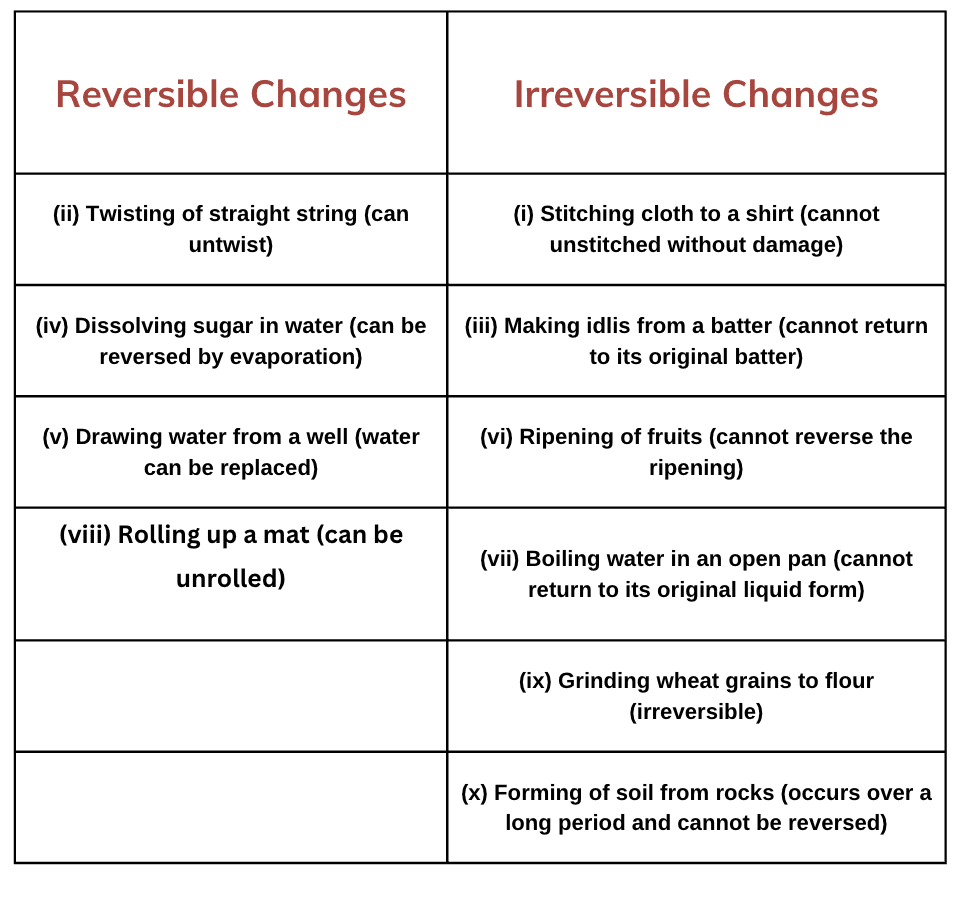
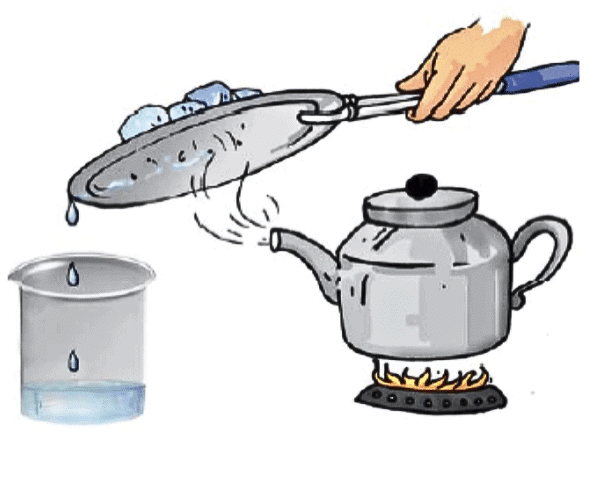
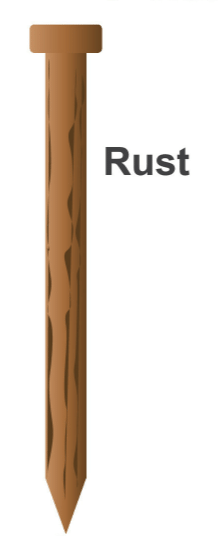

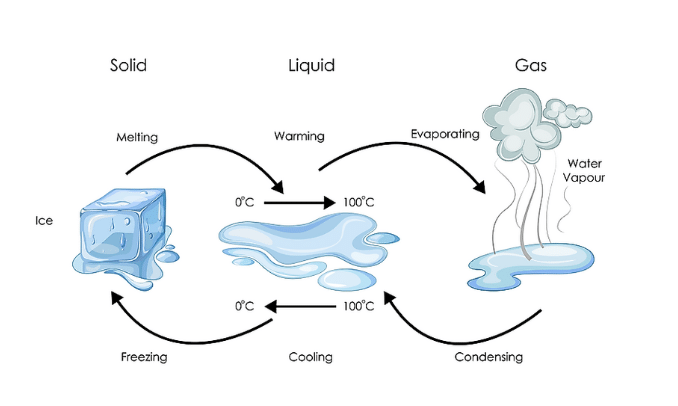

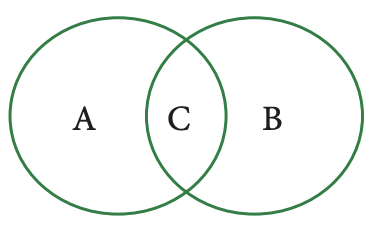
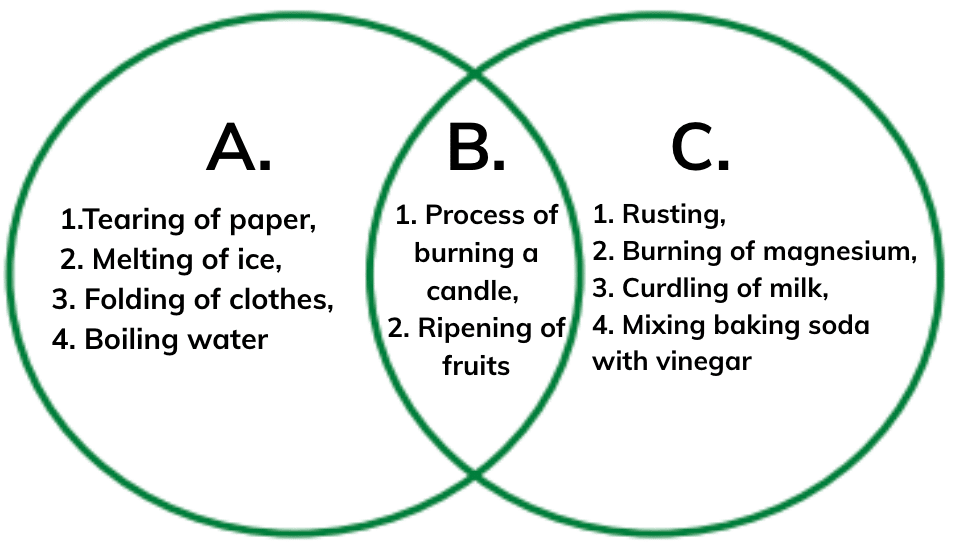
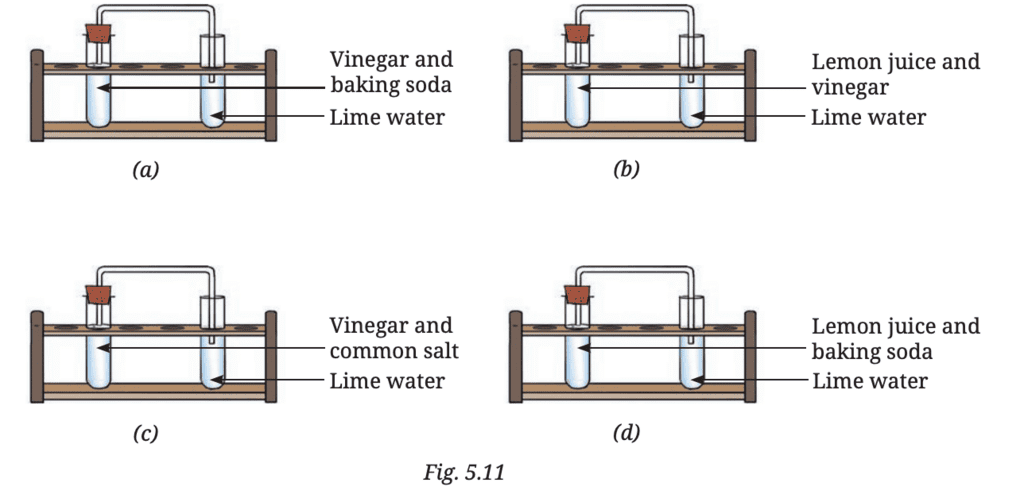
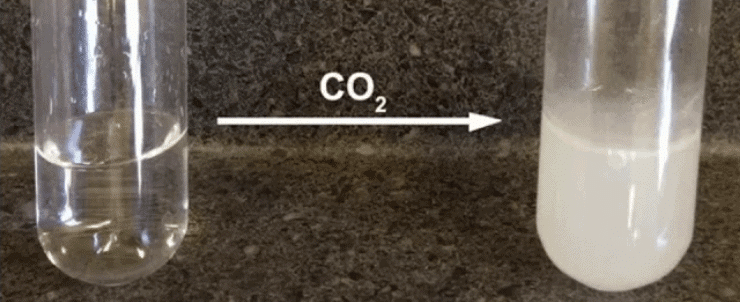

 Resistant to corrosion: They do not rust or tarnish easily, so the jewelry remains durable and keeps its shine over time.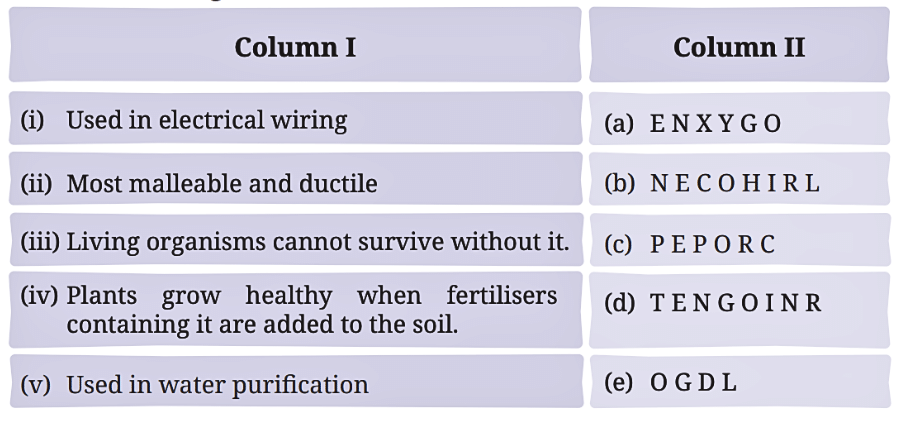
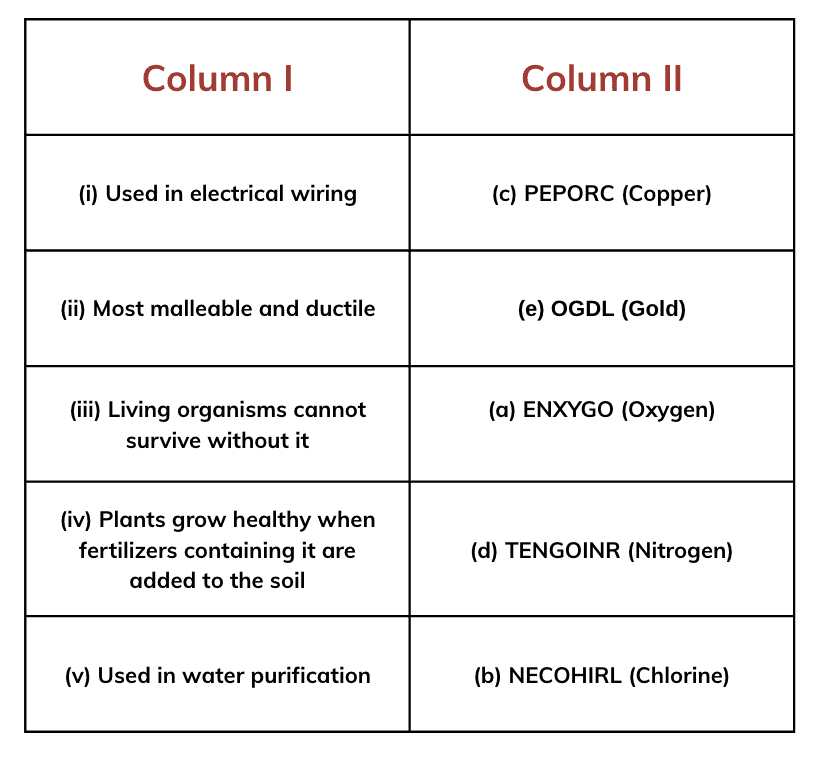
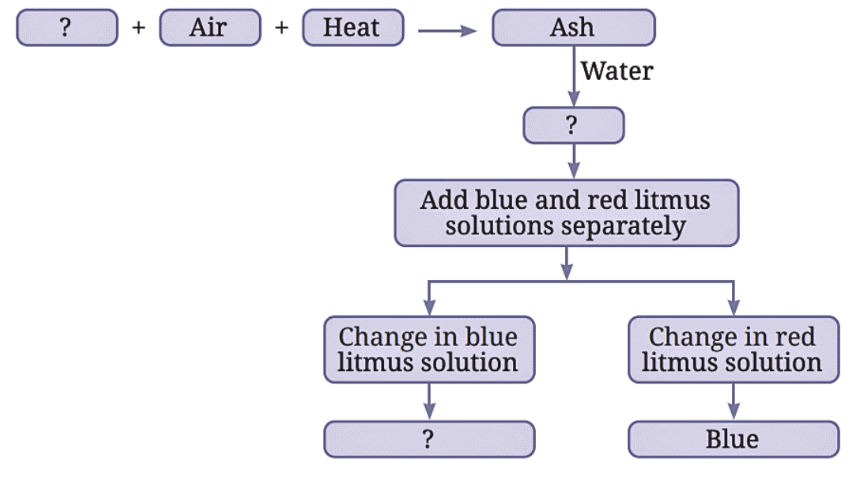
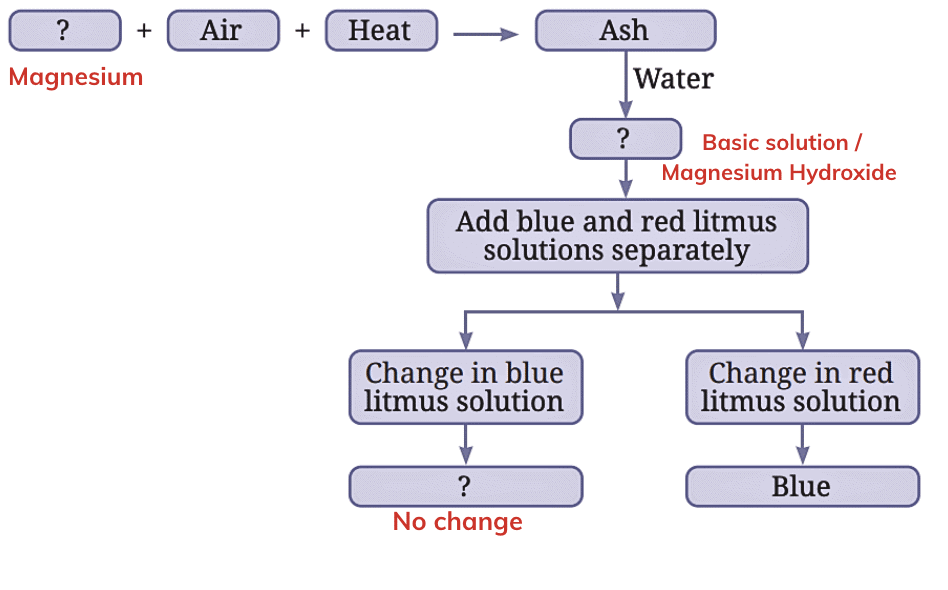


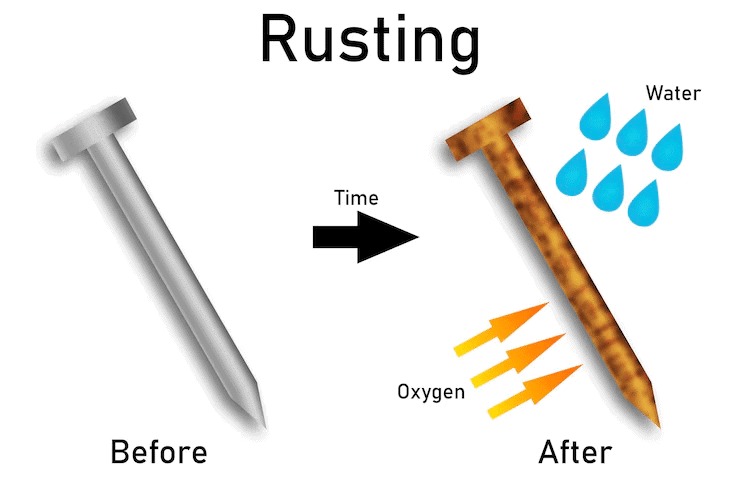
 Metals like copper and aluminum are excellent conductors of heat and electricity. This makes them ideal for use in wires, cooking utensils, and heating systems.

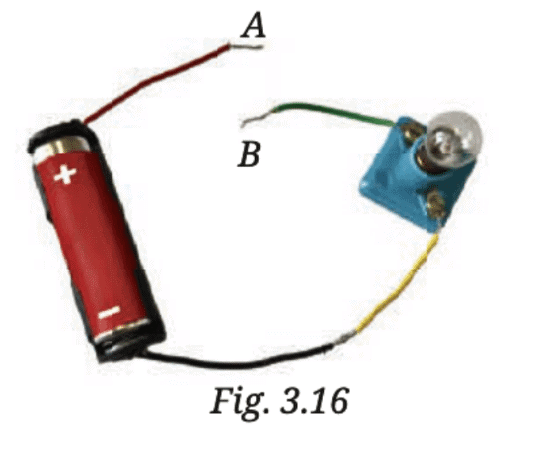
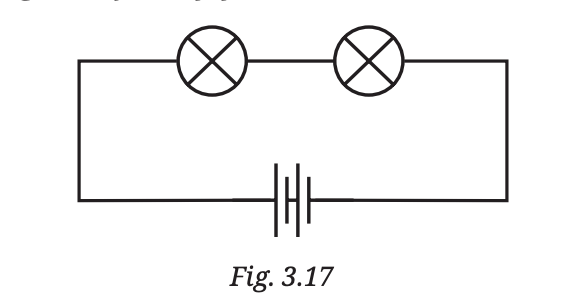
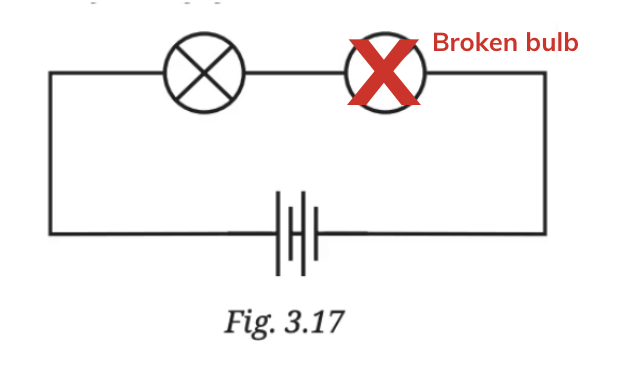 Even though the other lamp might be perfectly fine, it won’t glow because no electricity is reaching it due to the broken connection.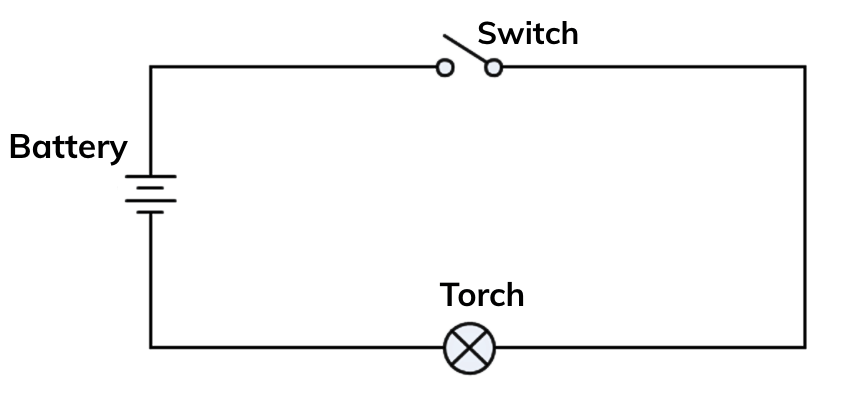
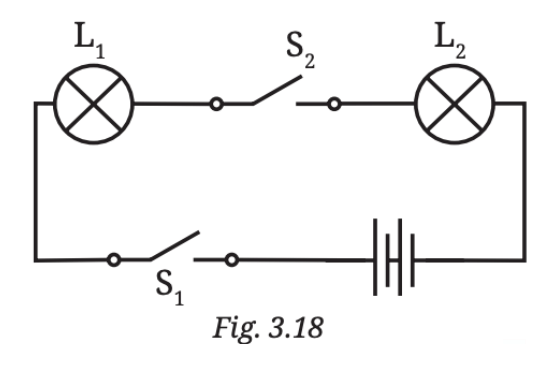
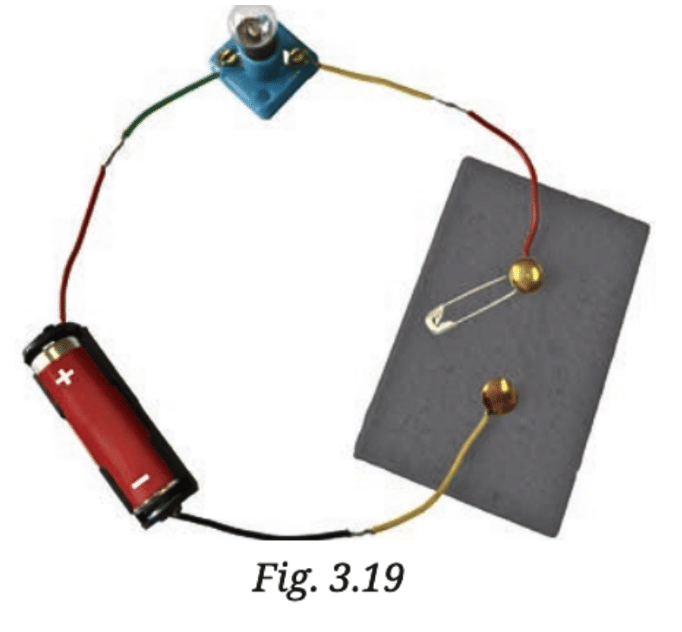
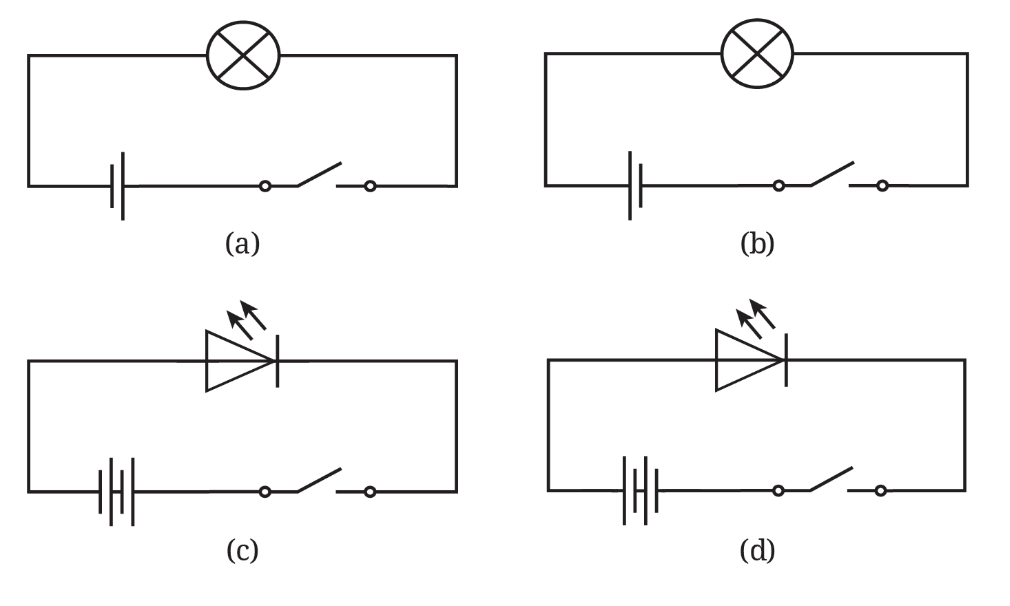
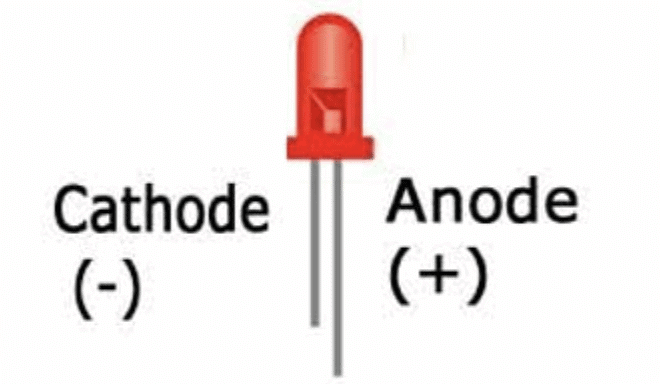 Shorter lead: This is the negative terminal (cathode).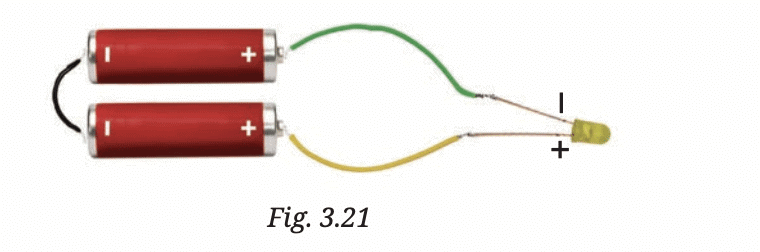
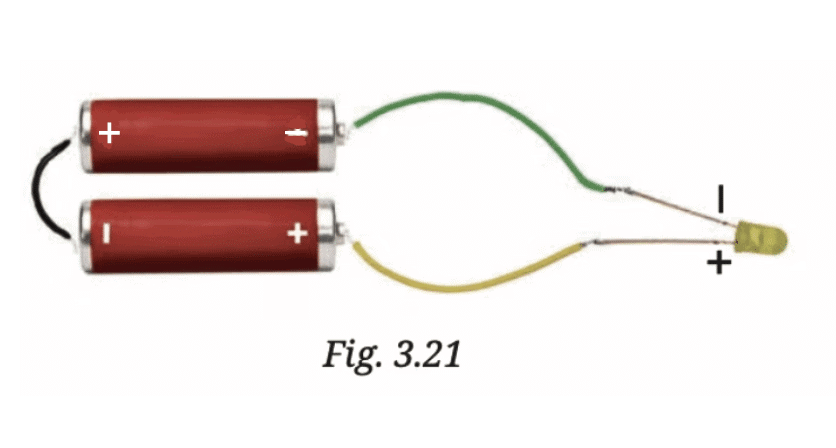
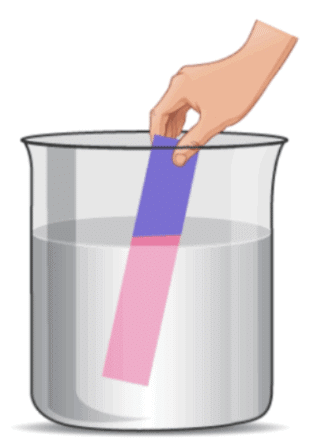
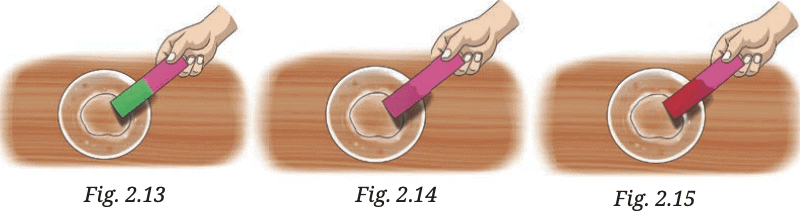

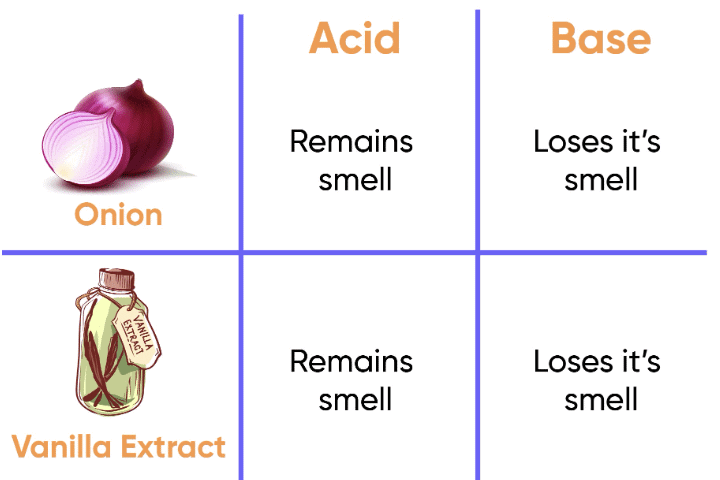 Onion and garlic have a strong smell that can sometimes change in the presence of bases, though they are not as commonly used as olfactory indicators.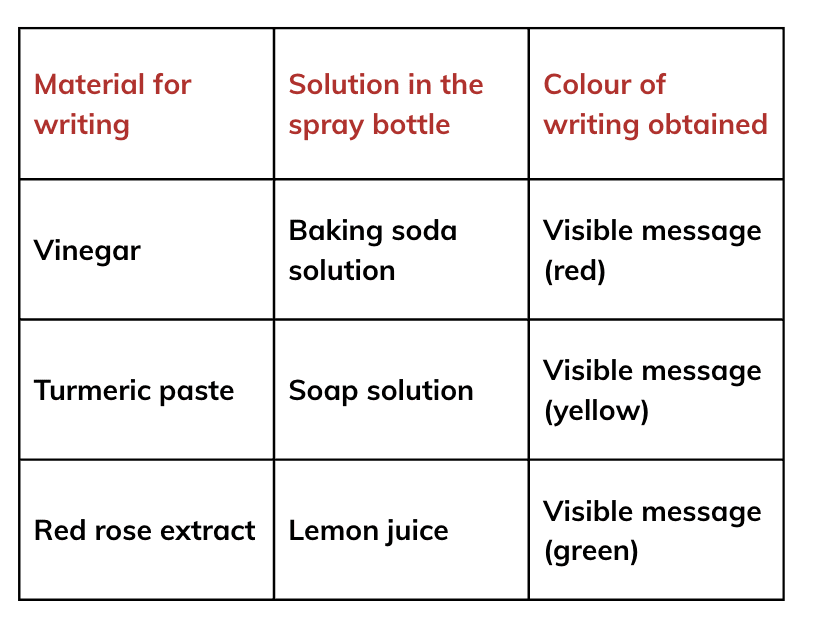
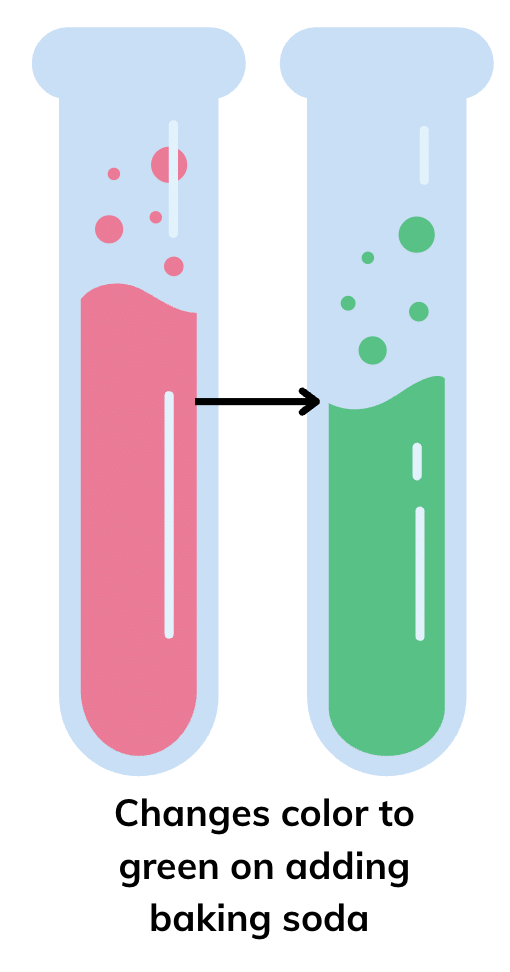
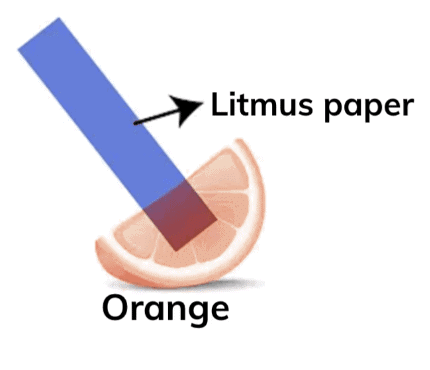


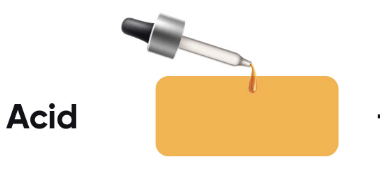 So, if the turmeric paper stays yellow, the liquid is vinegar.
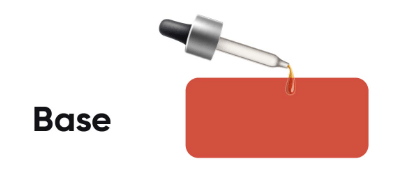 Since baking soda solution is basic, the turmeric paper will turn red, indicating that the liquid is a baking soda solution.
 If the turmeric paper remains yellow, the liquid is likely a sugar solution.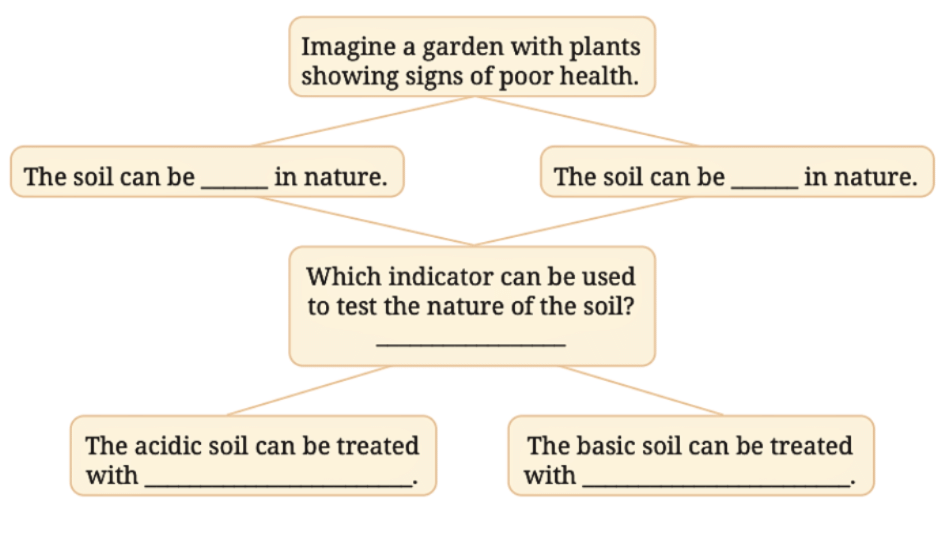
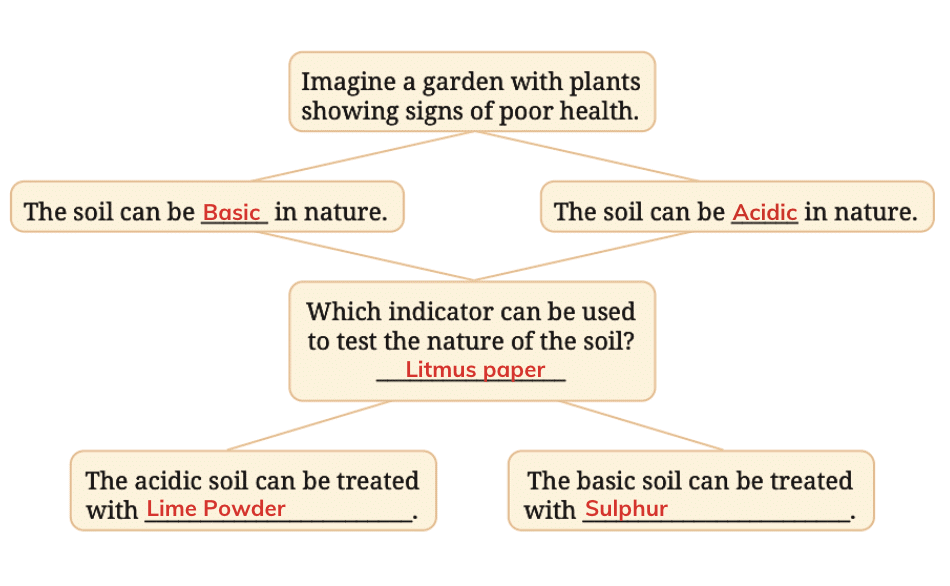

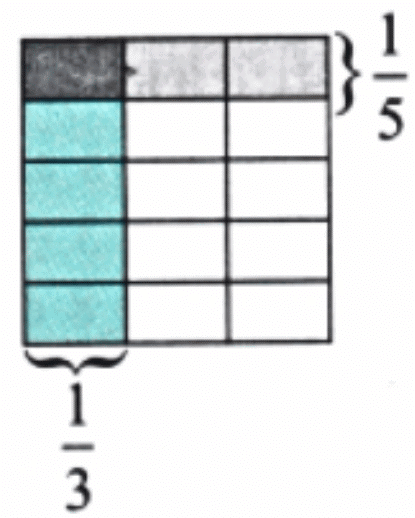
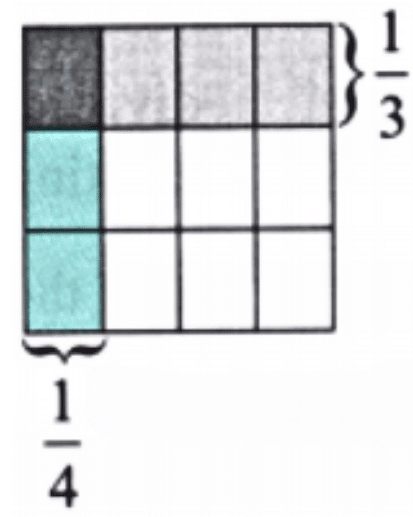
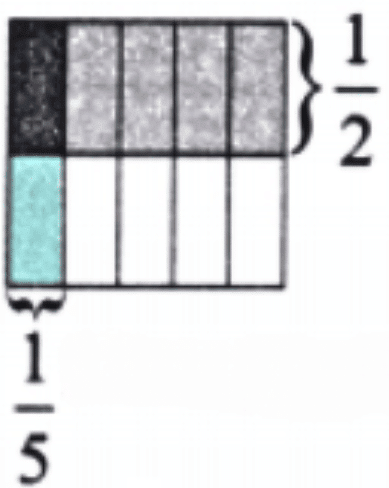
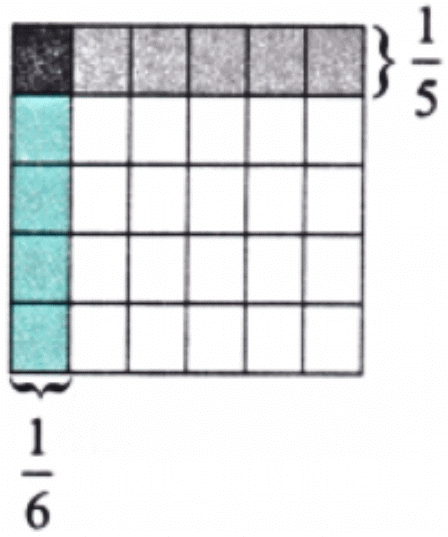







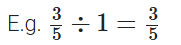
 _________
 ________
 _________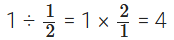
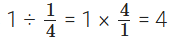

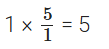
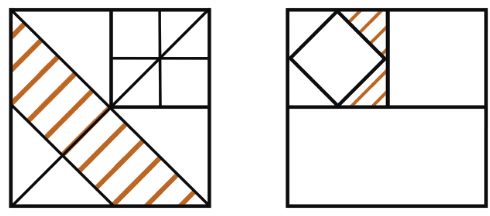
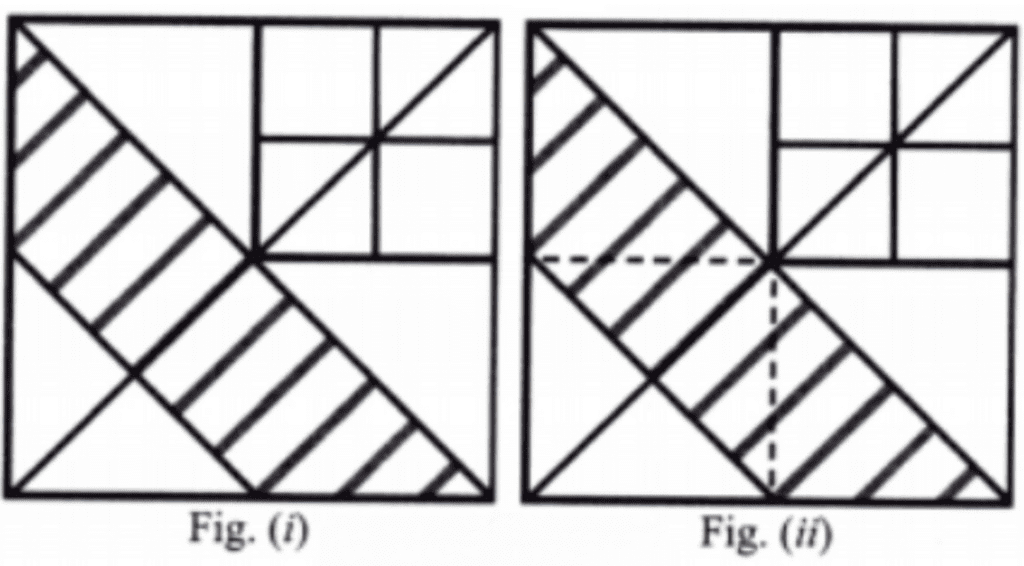
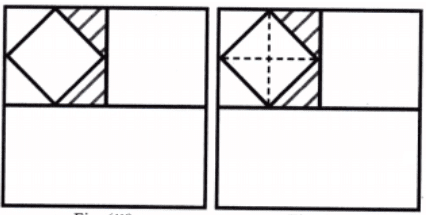

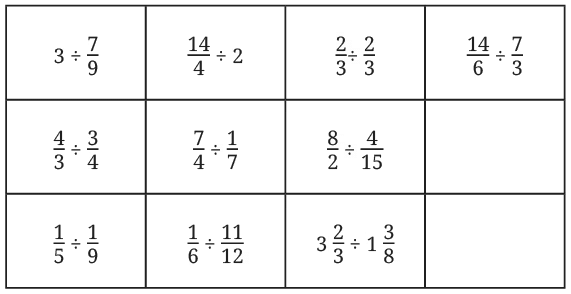

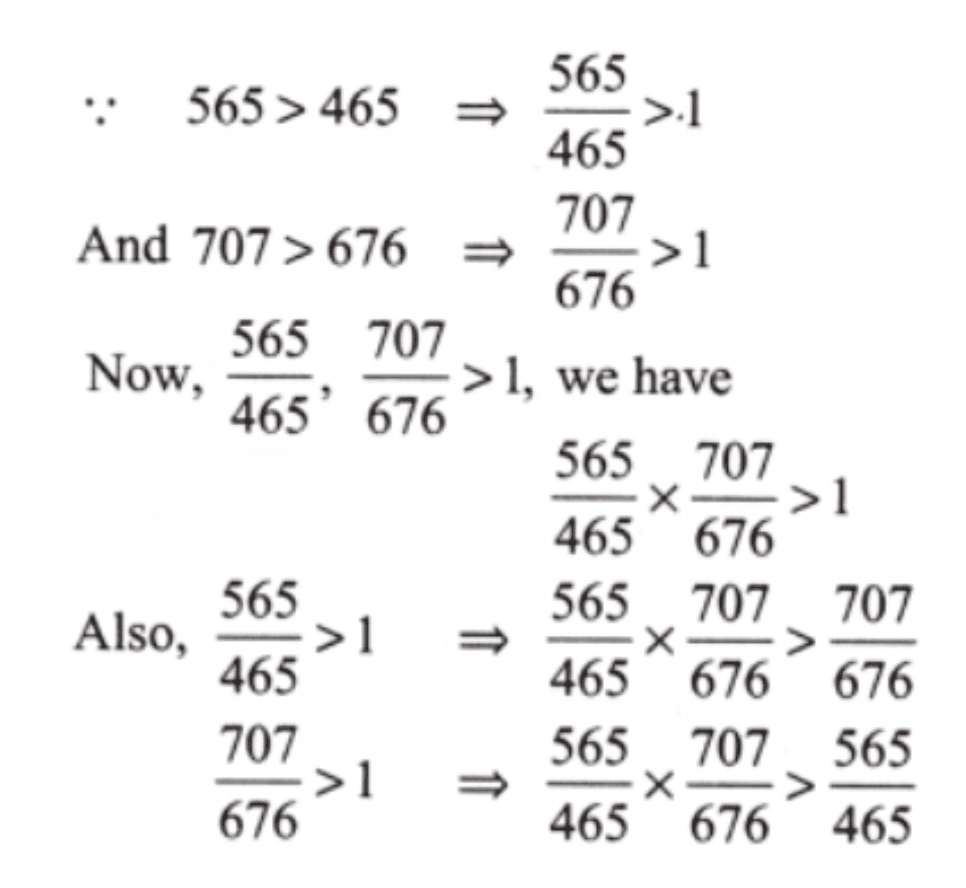
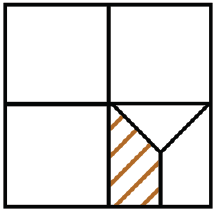
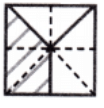
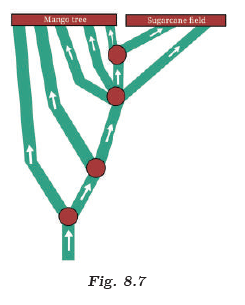
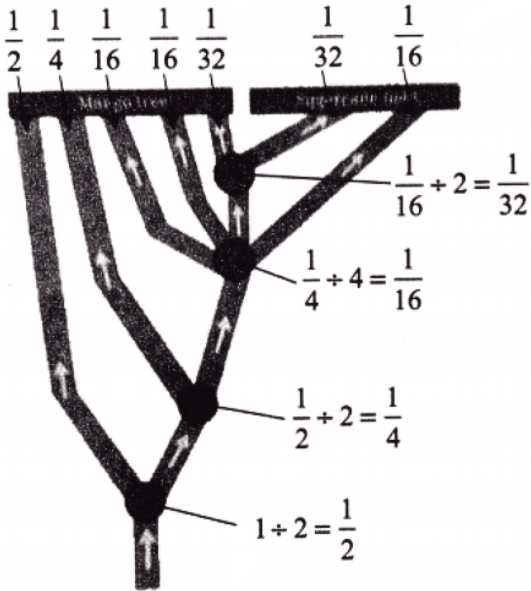

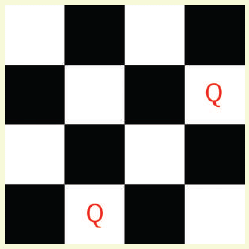
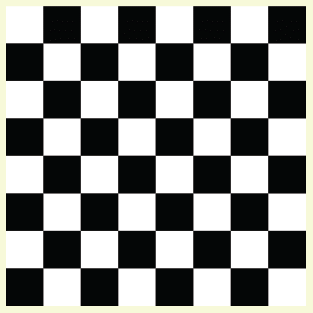
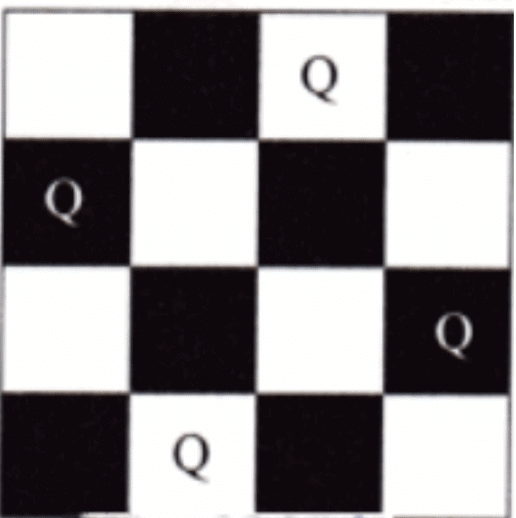
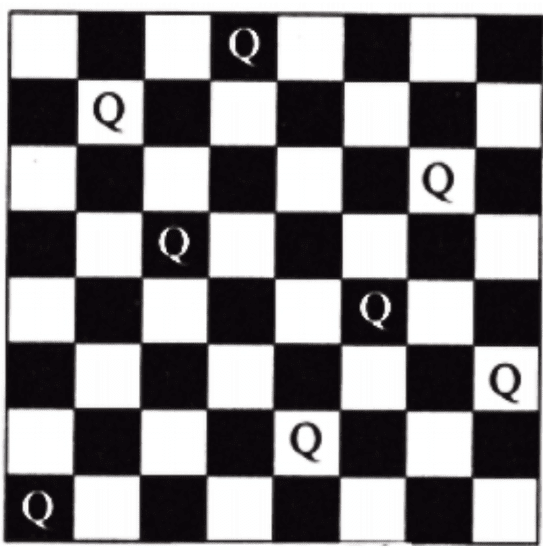
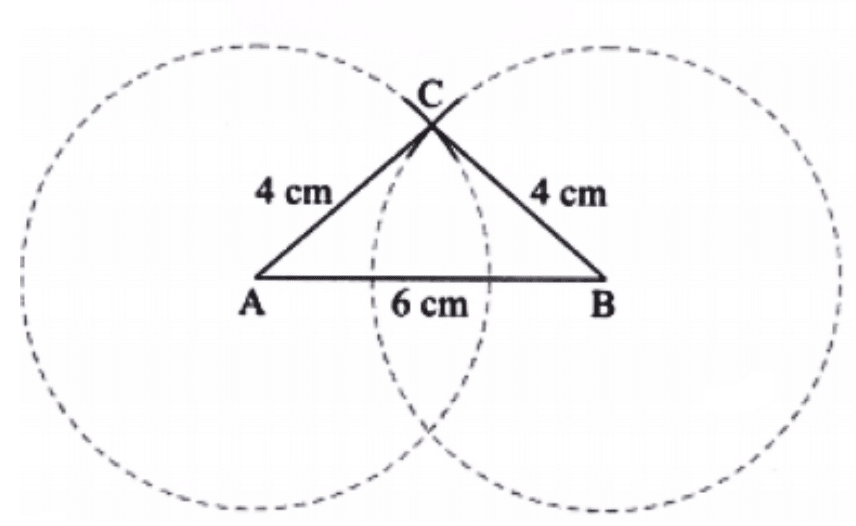
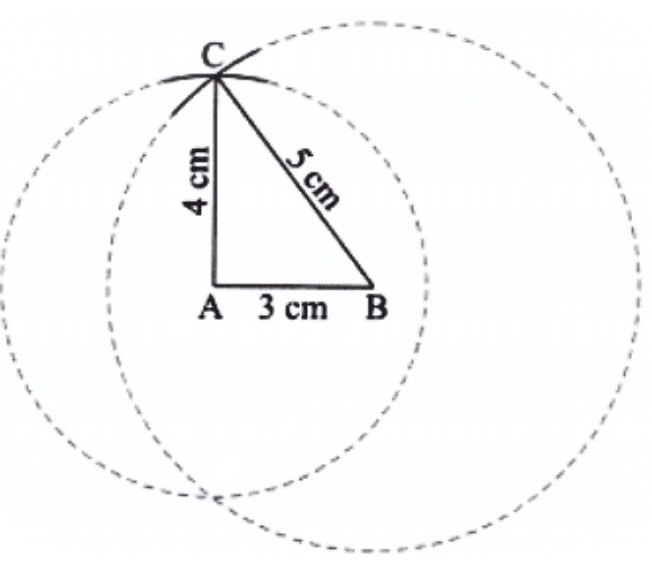
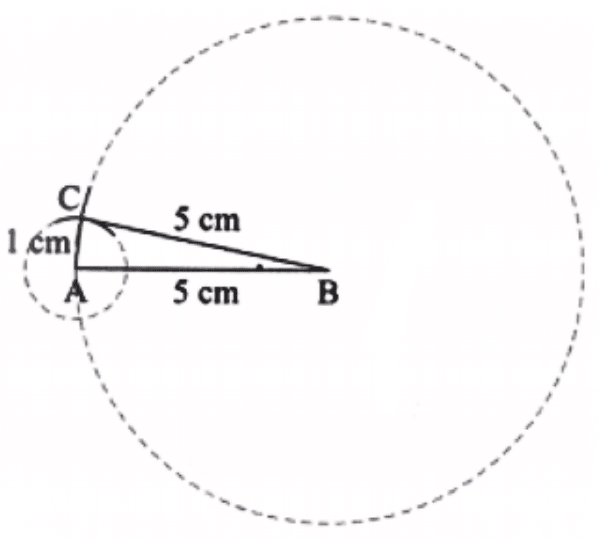
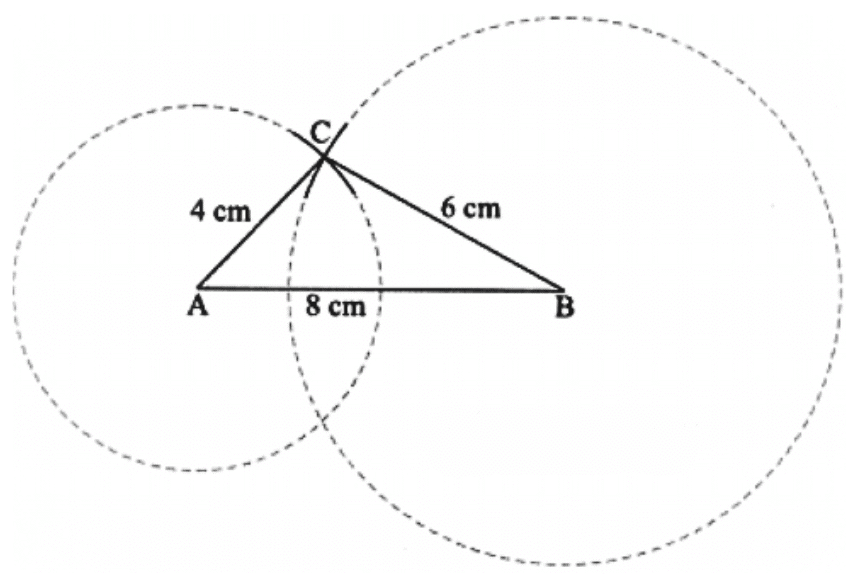
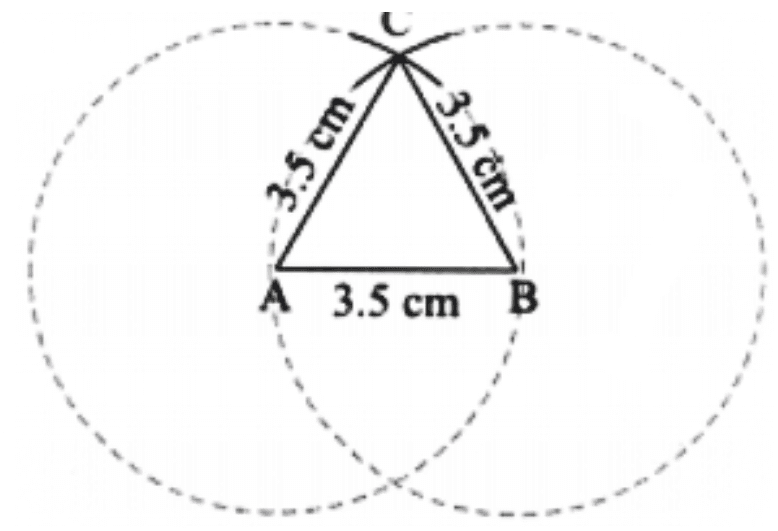

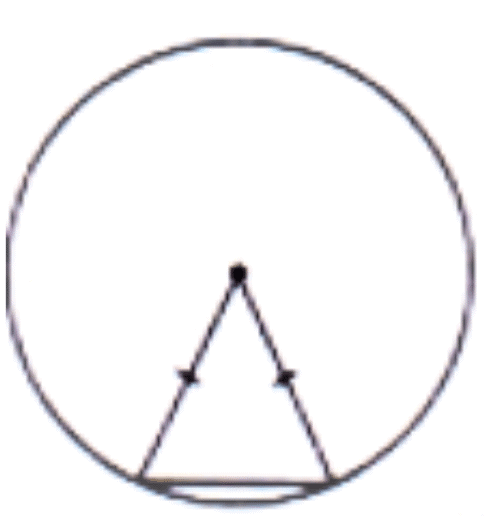
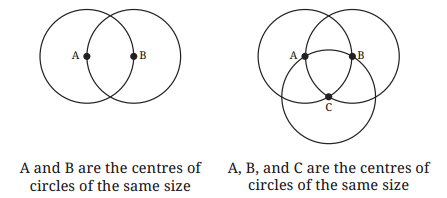
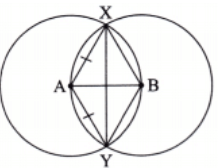
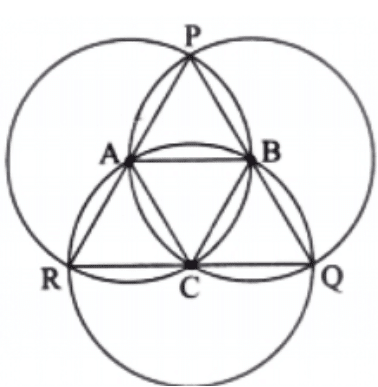
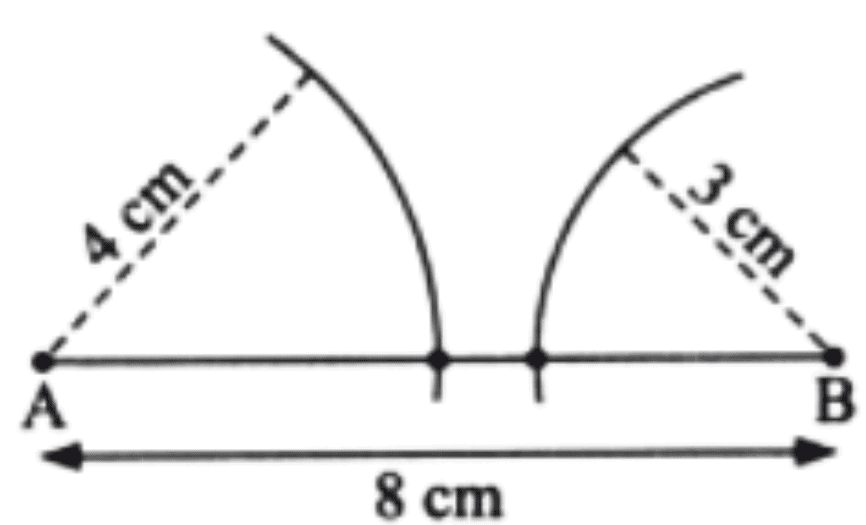
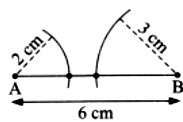
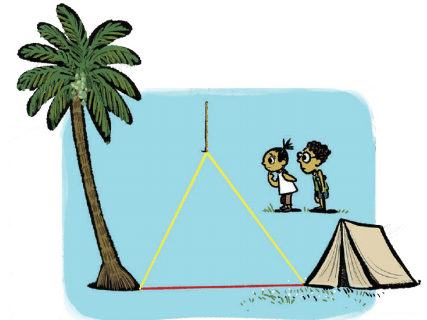
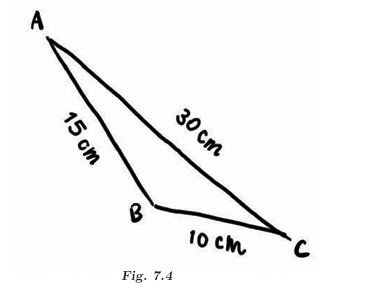
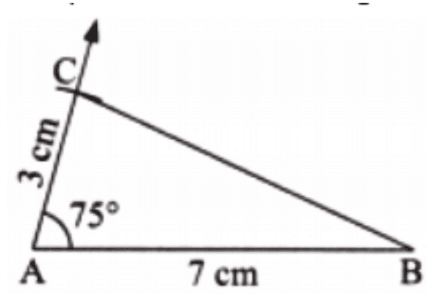
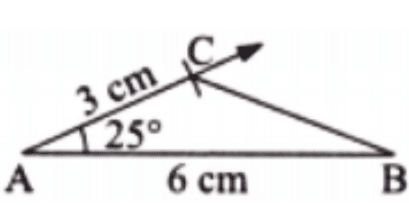
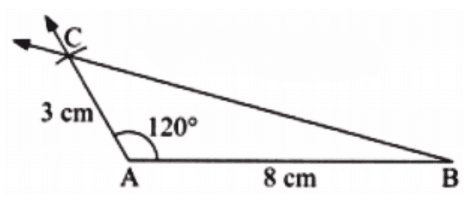
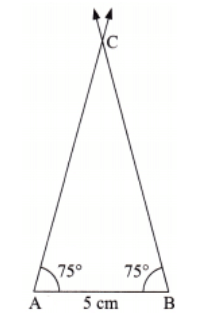
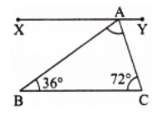
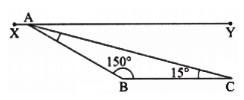
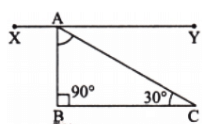
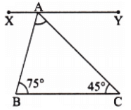
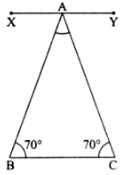
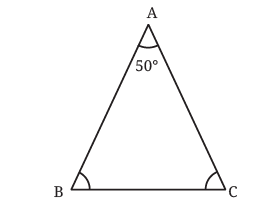
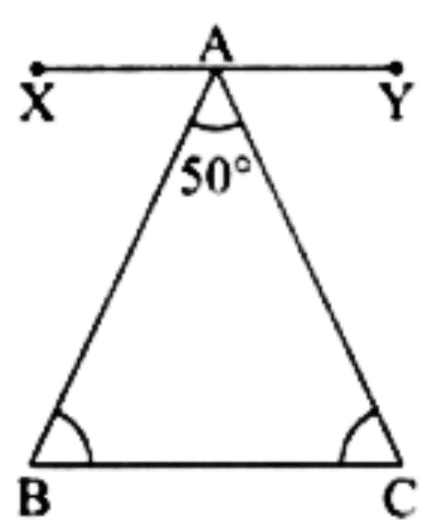
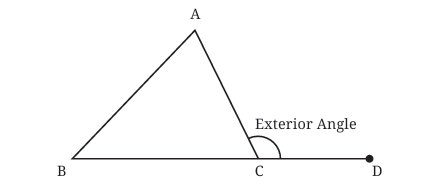
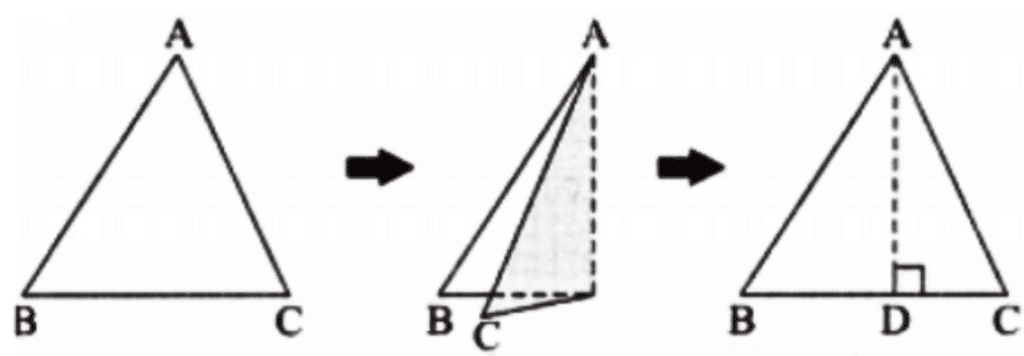
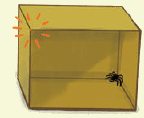
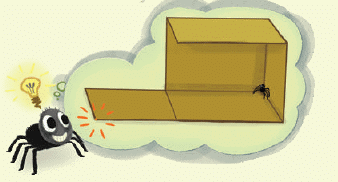
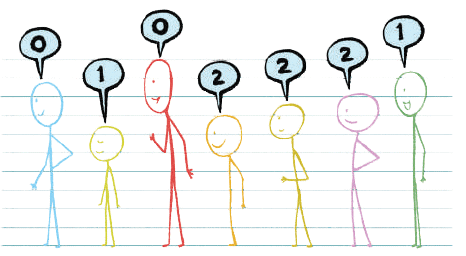
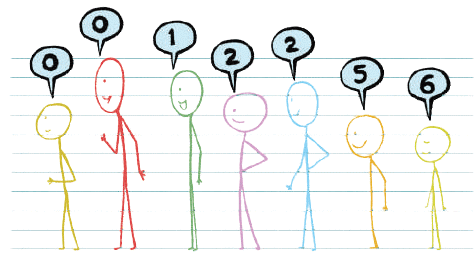

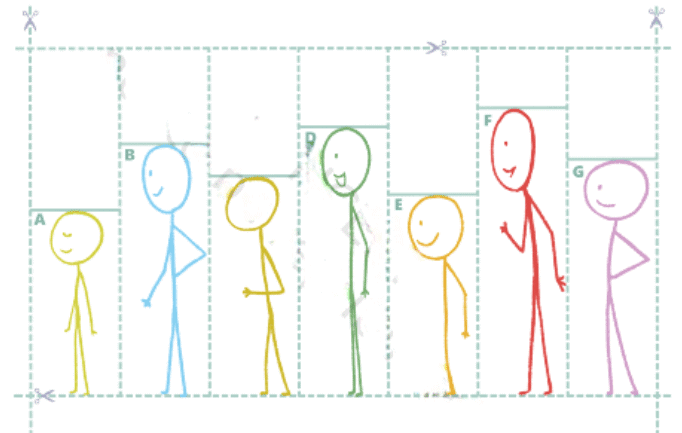
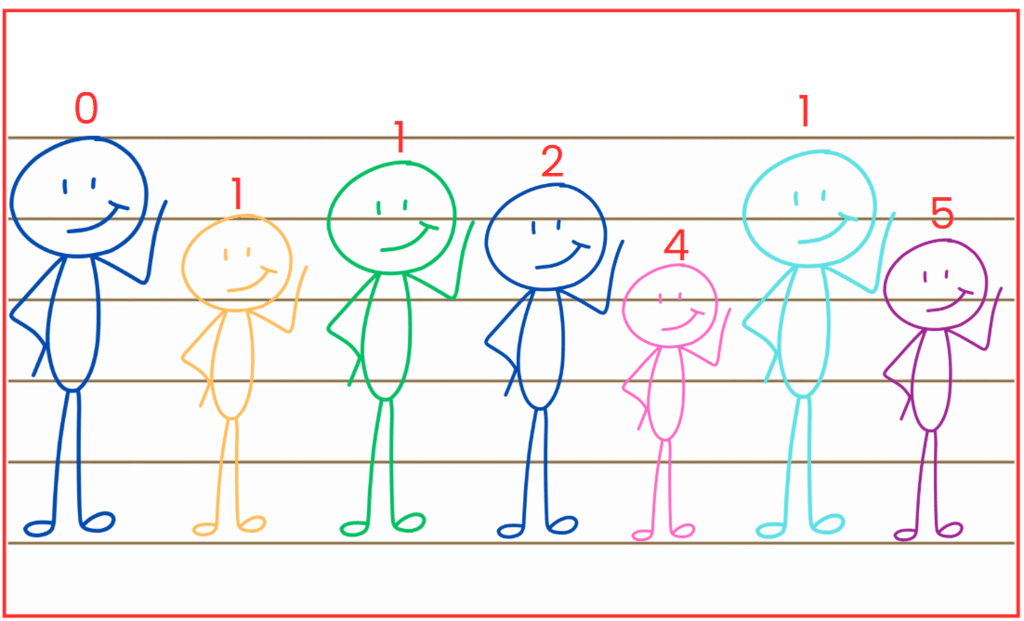
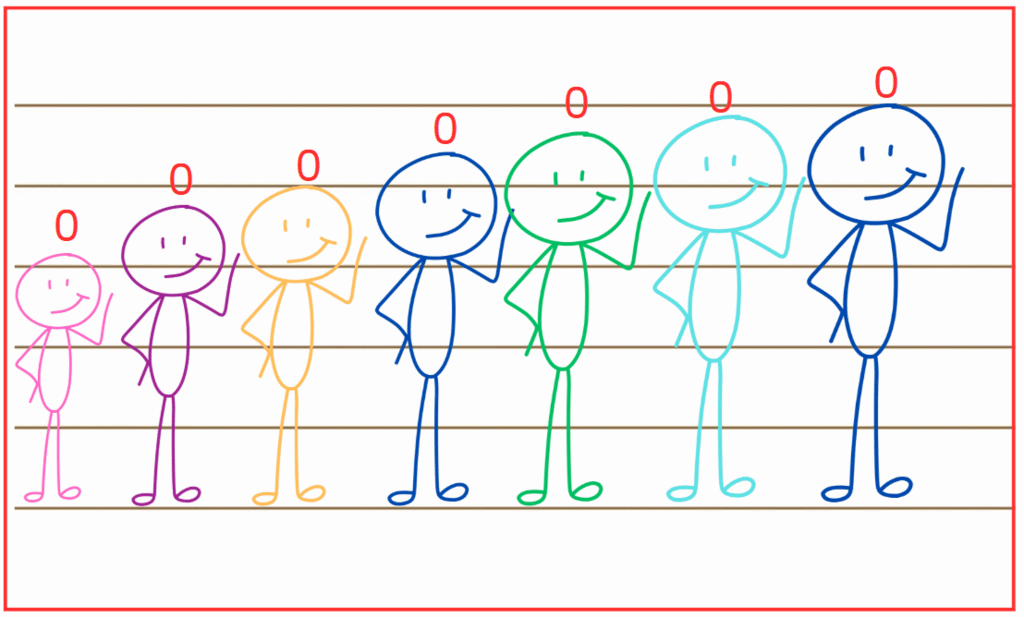
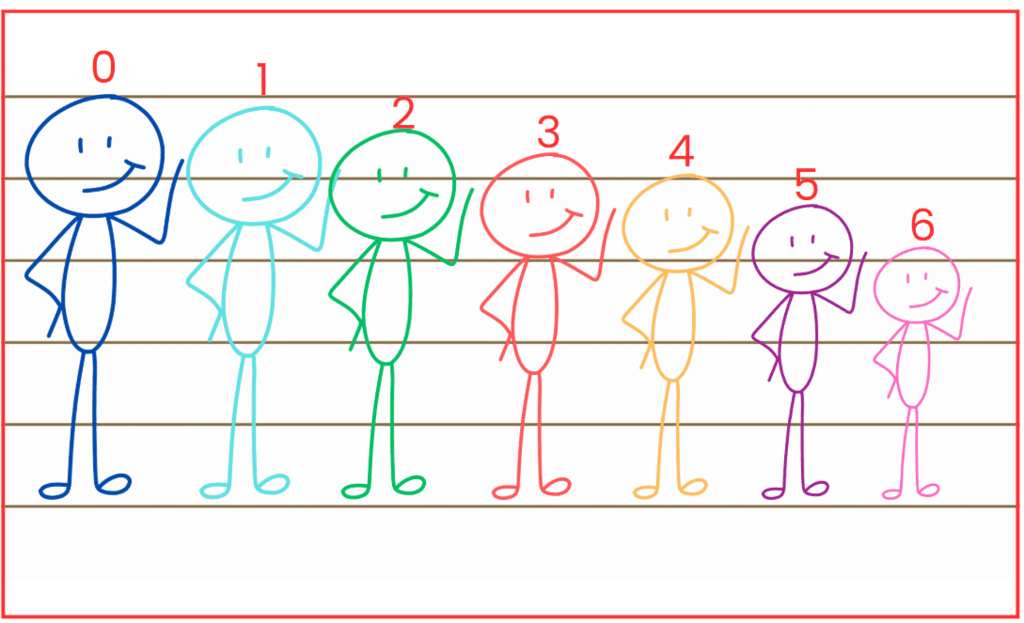
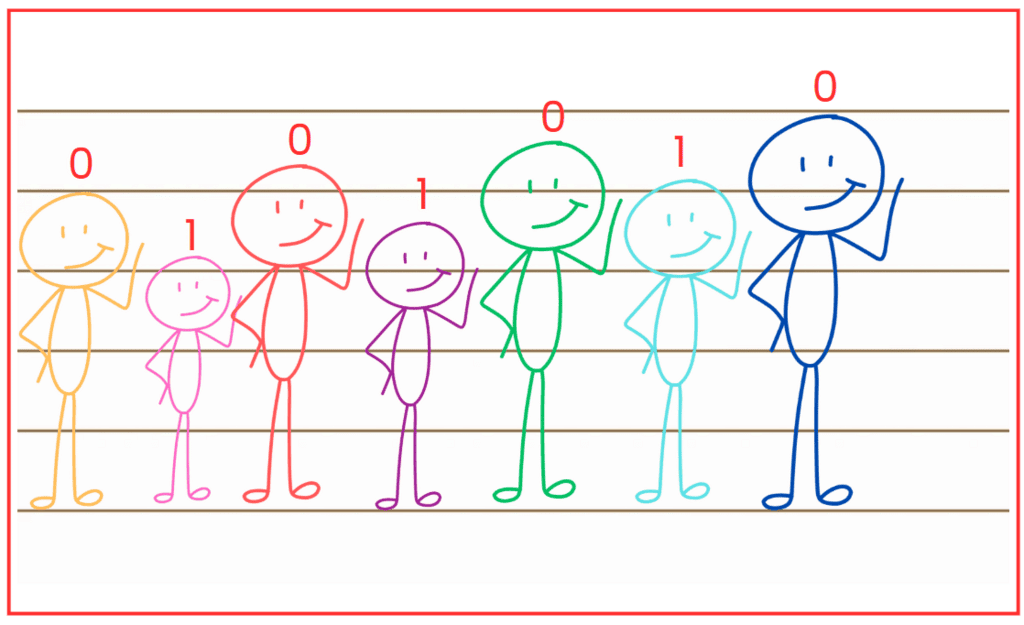
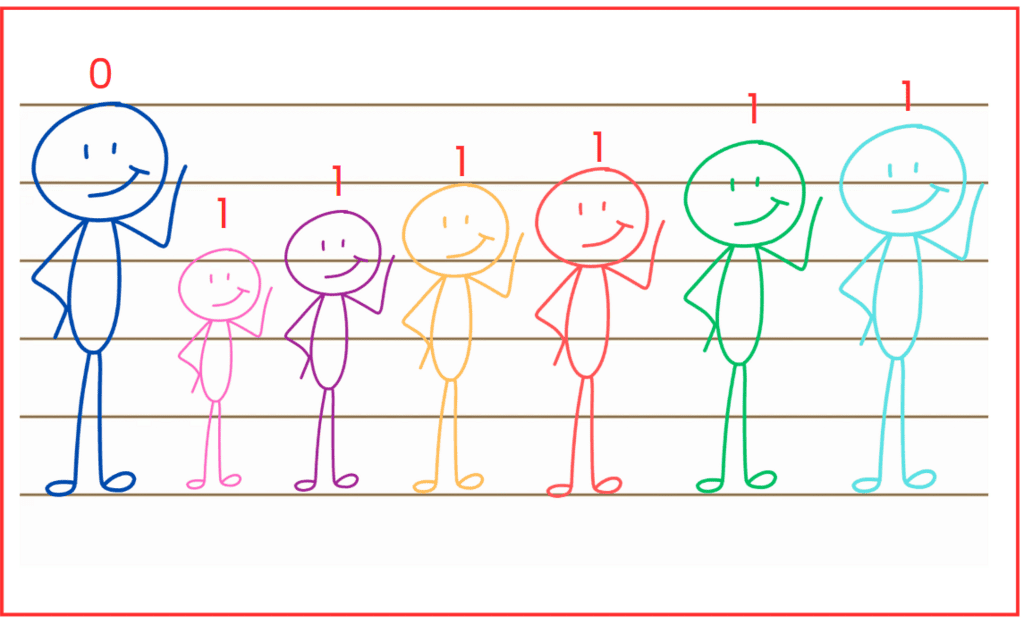
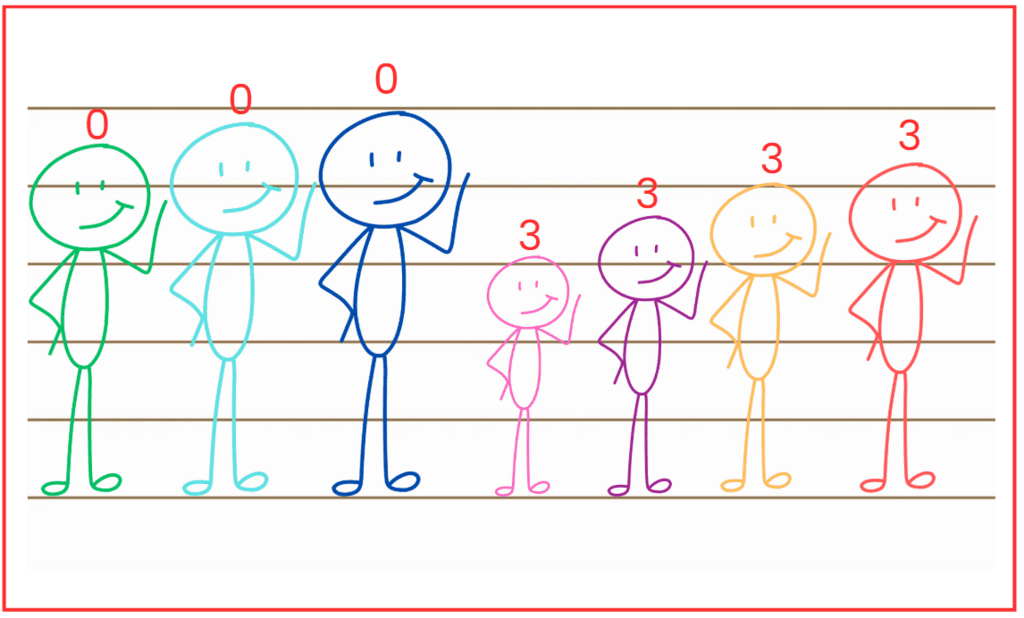
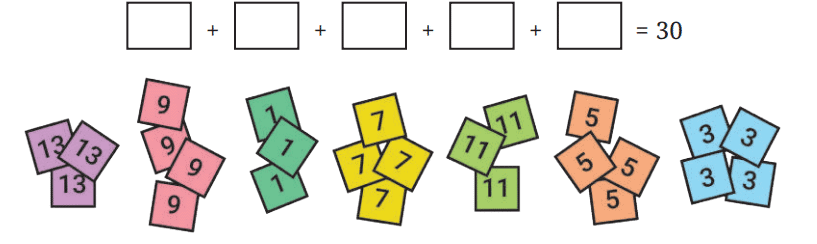


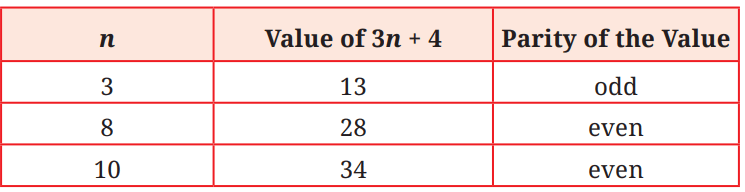
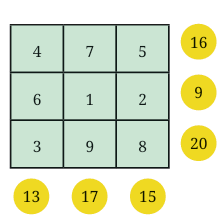
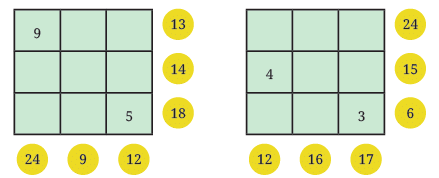
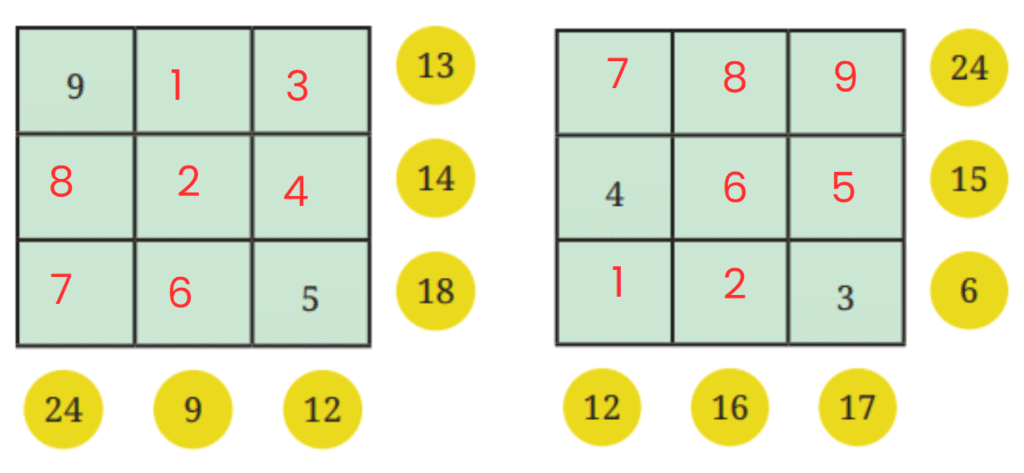
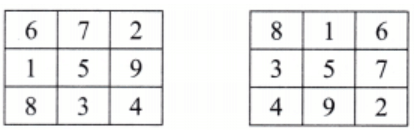
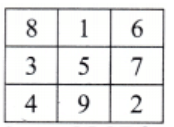
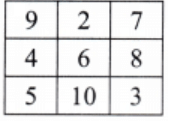
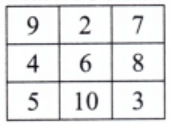
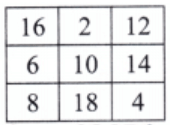
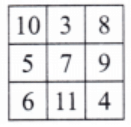
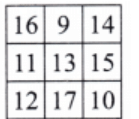
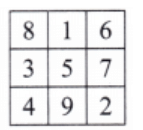
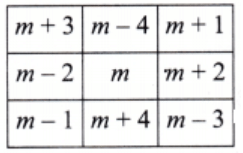
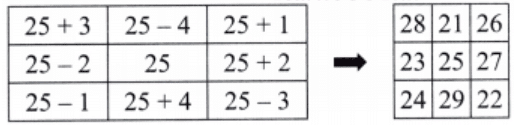
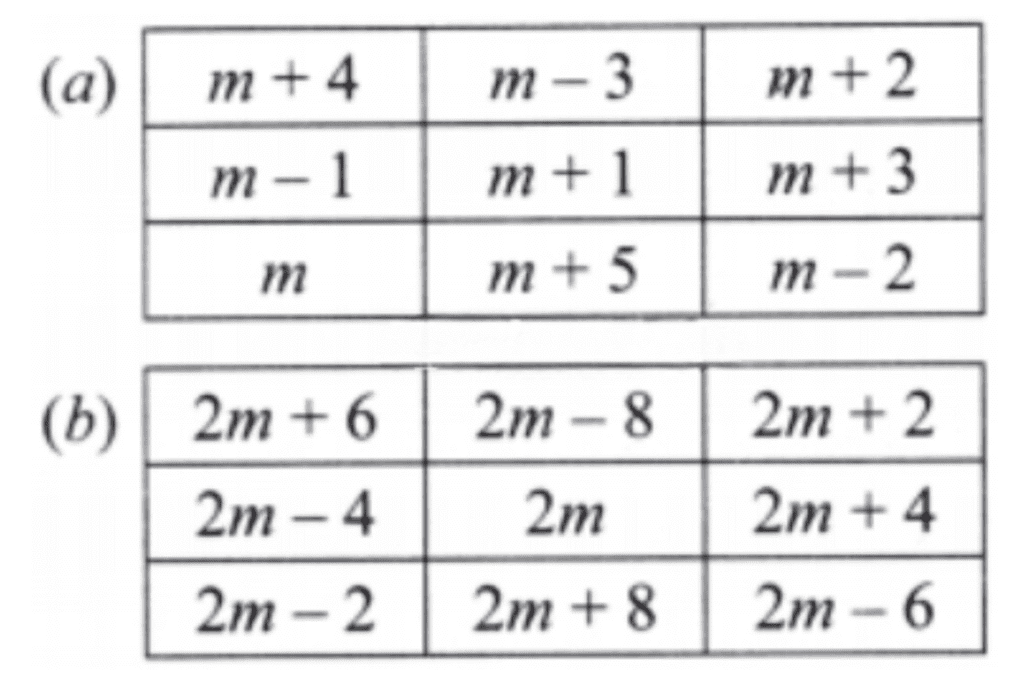
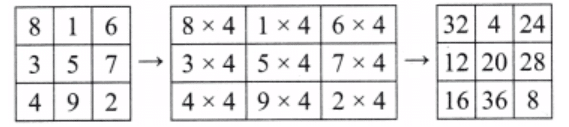
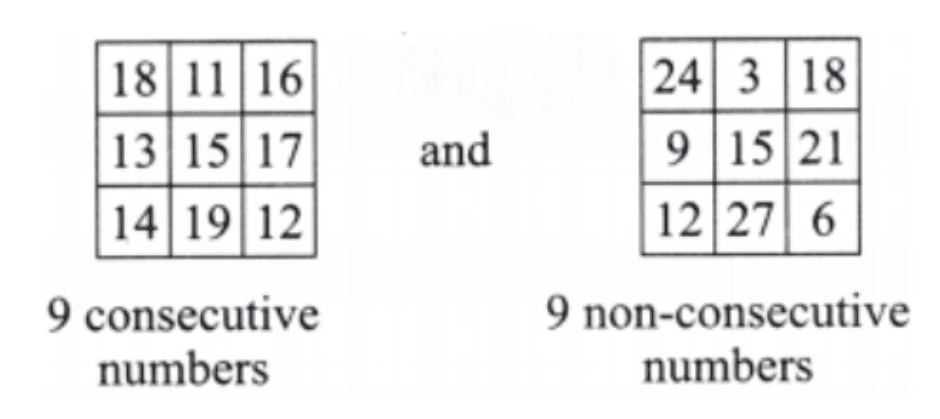
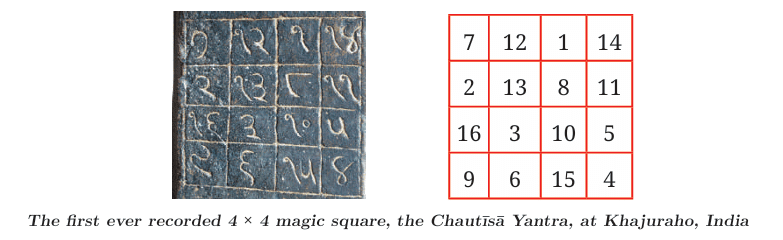
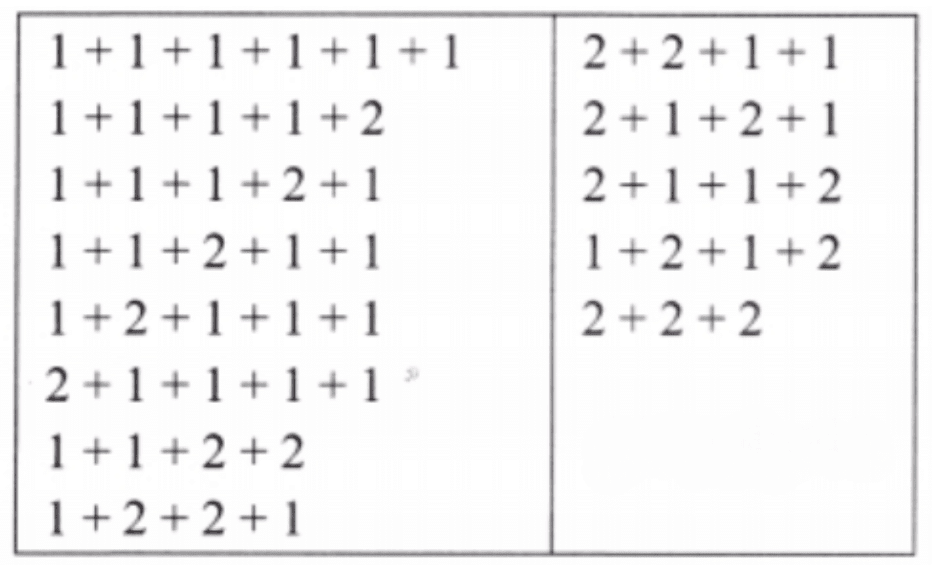
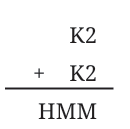
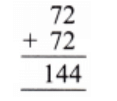

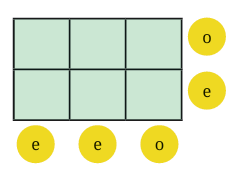
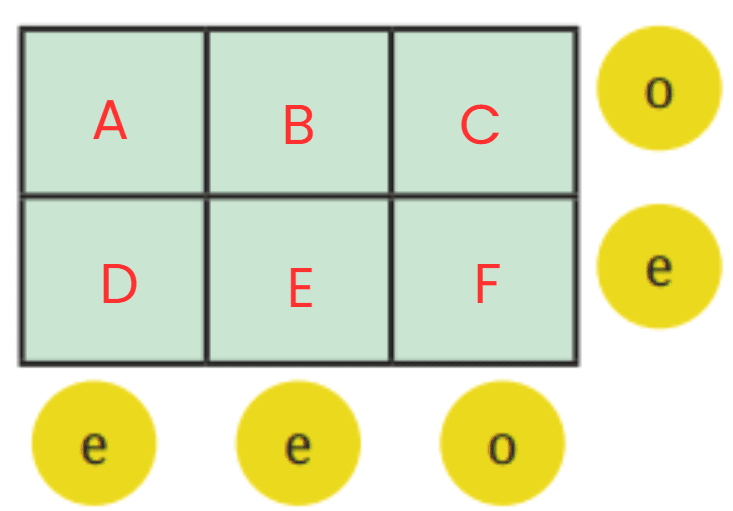
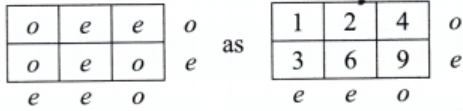
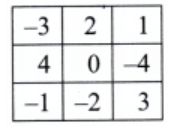
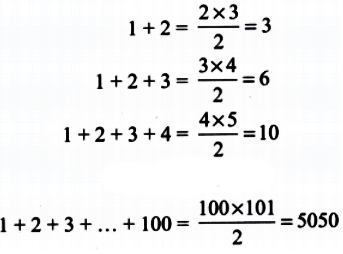
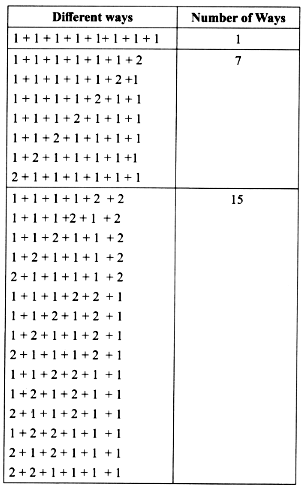
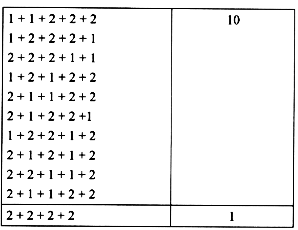
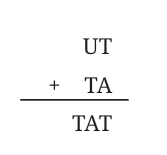
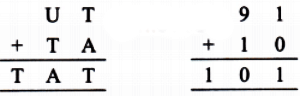
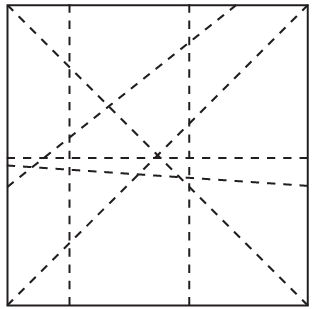
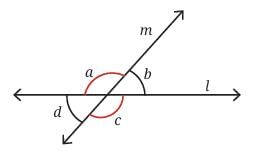
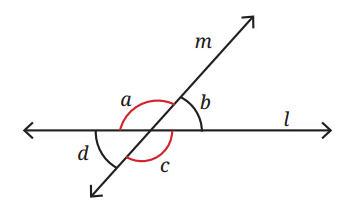
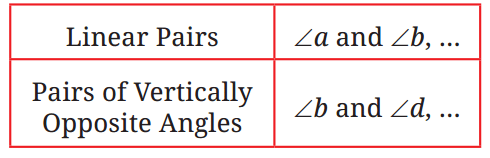
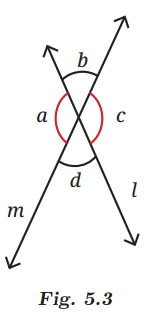
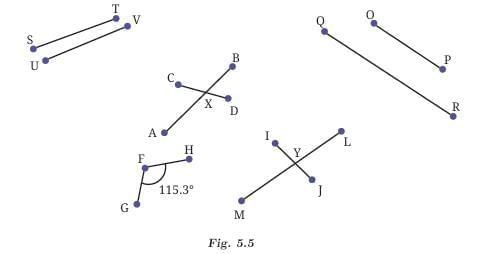
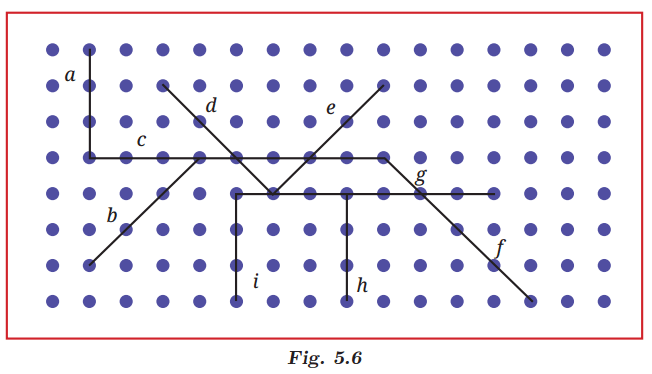
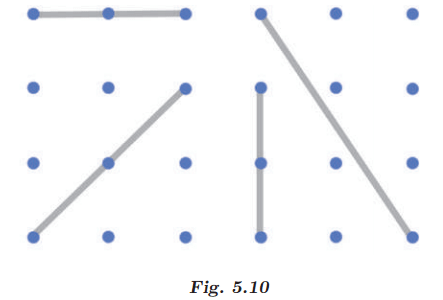
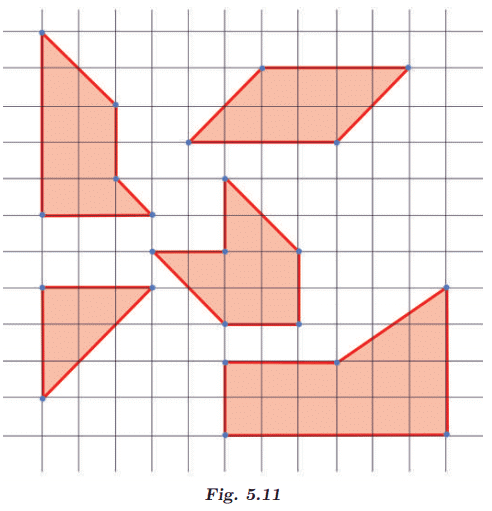
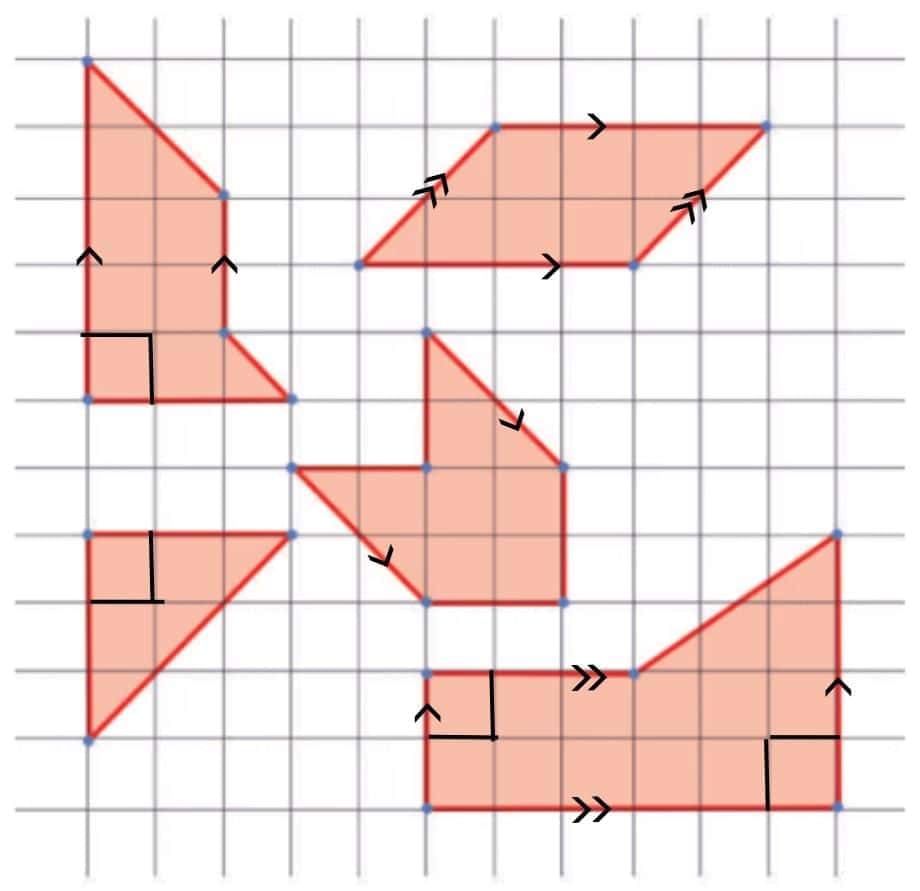
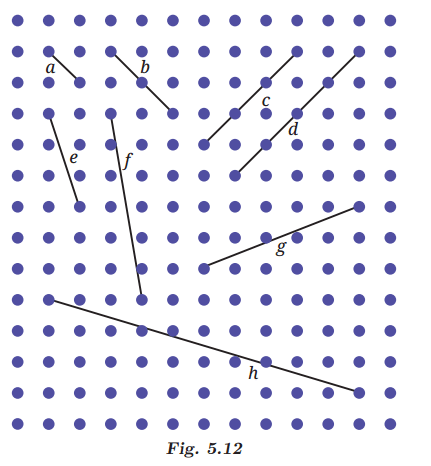
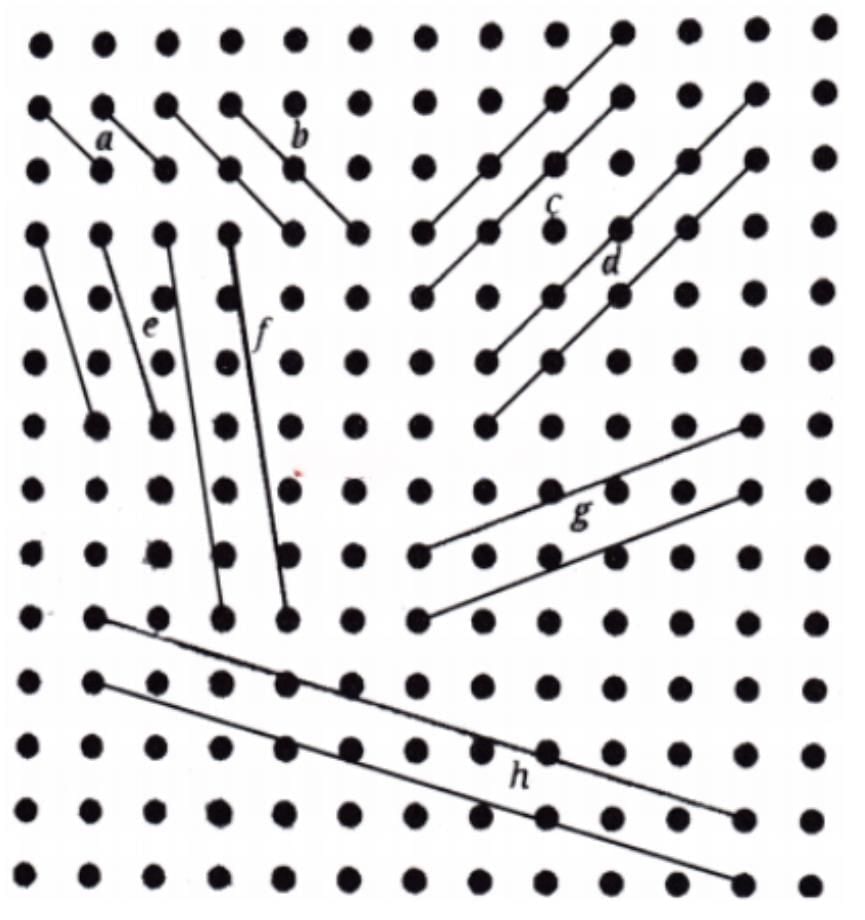
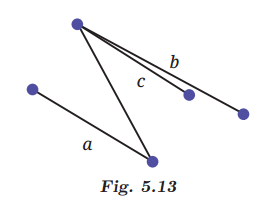
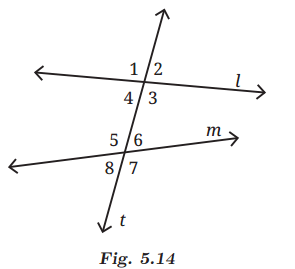
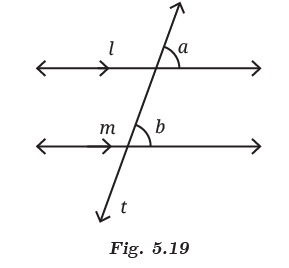
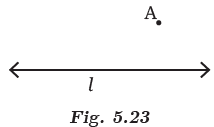
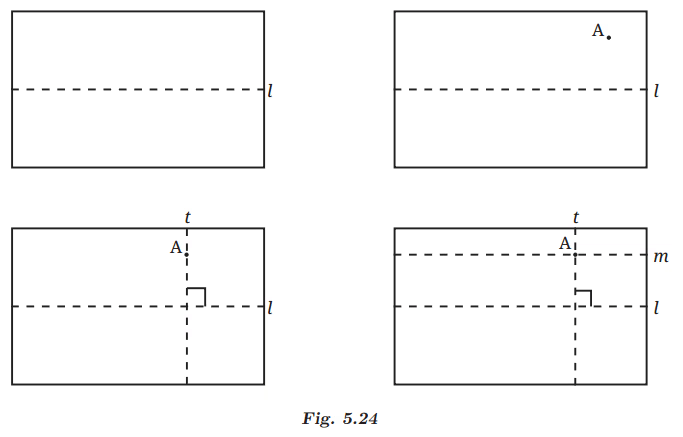
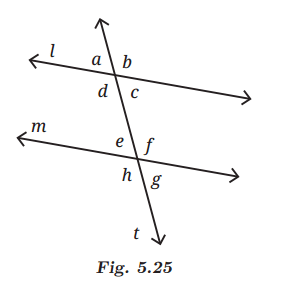
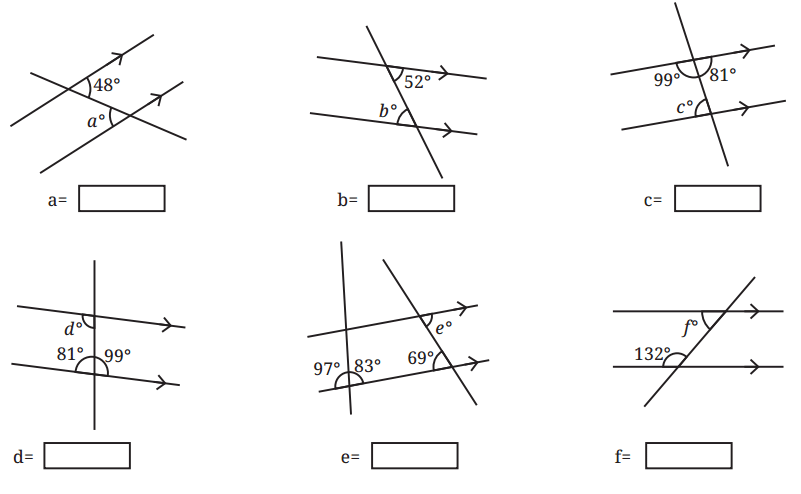
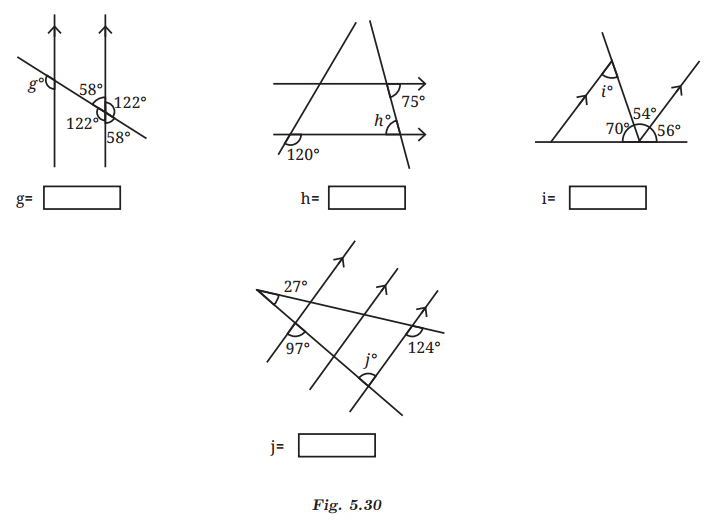
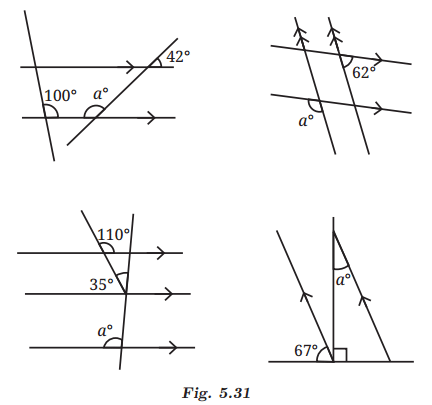
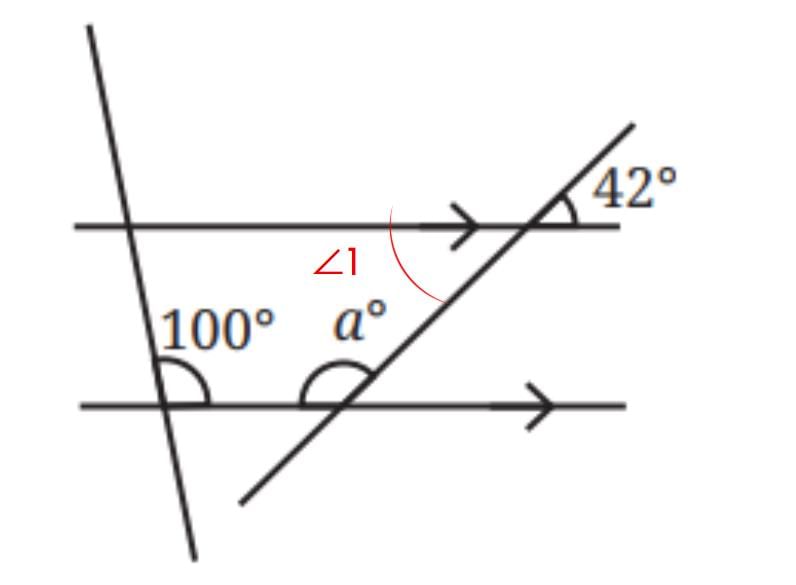
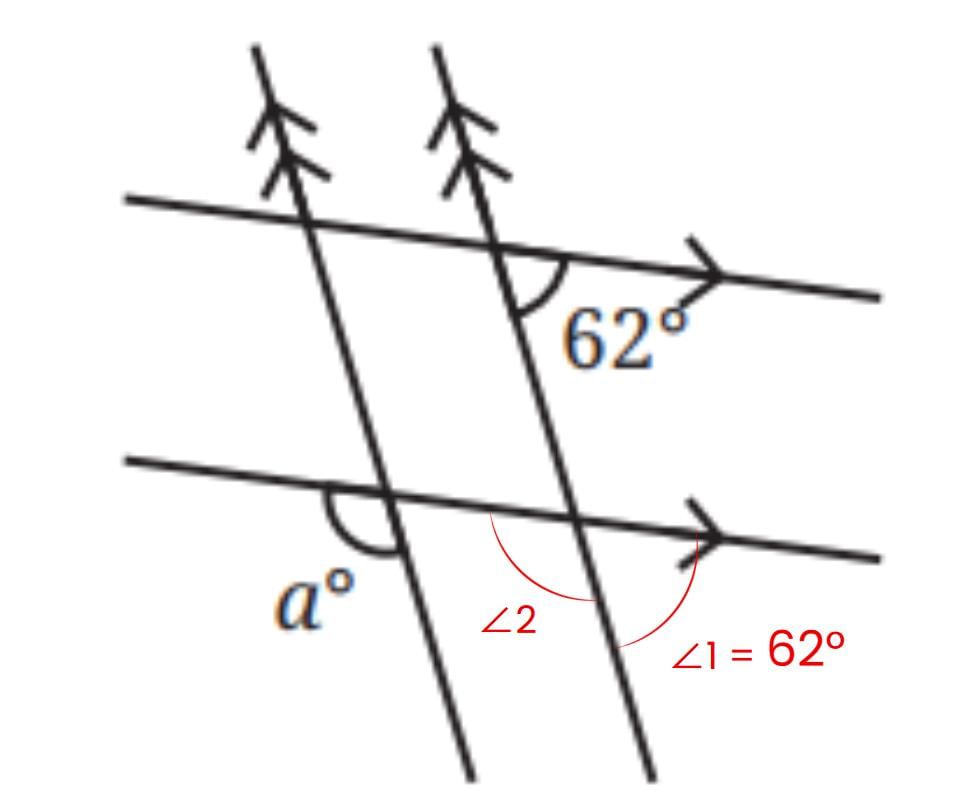
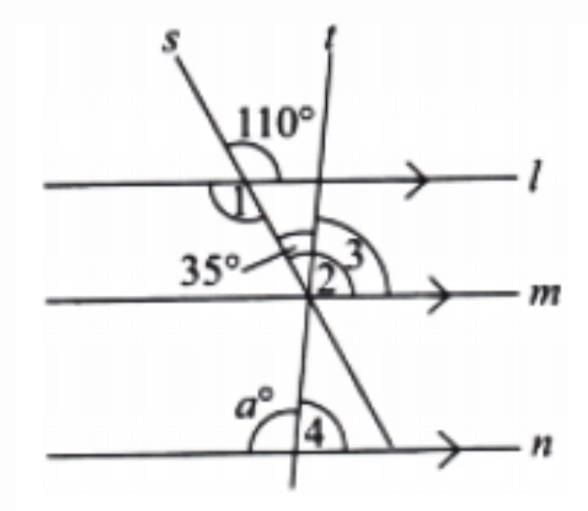
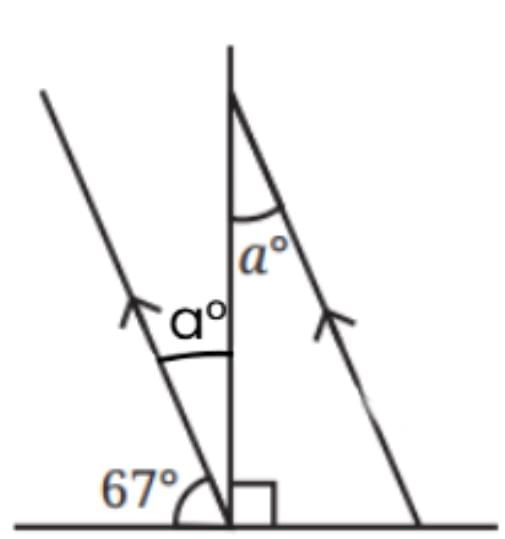
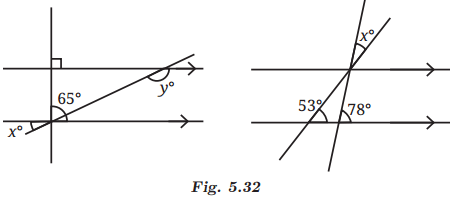
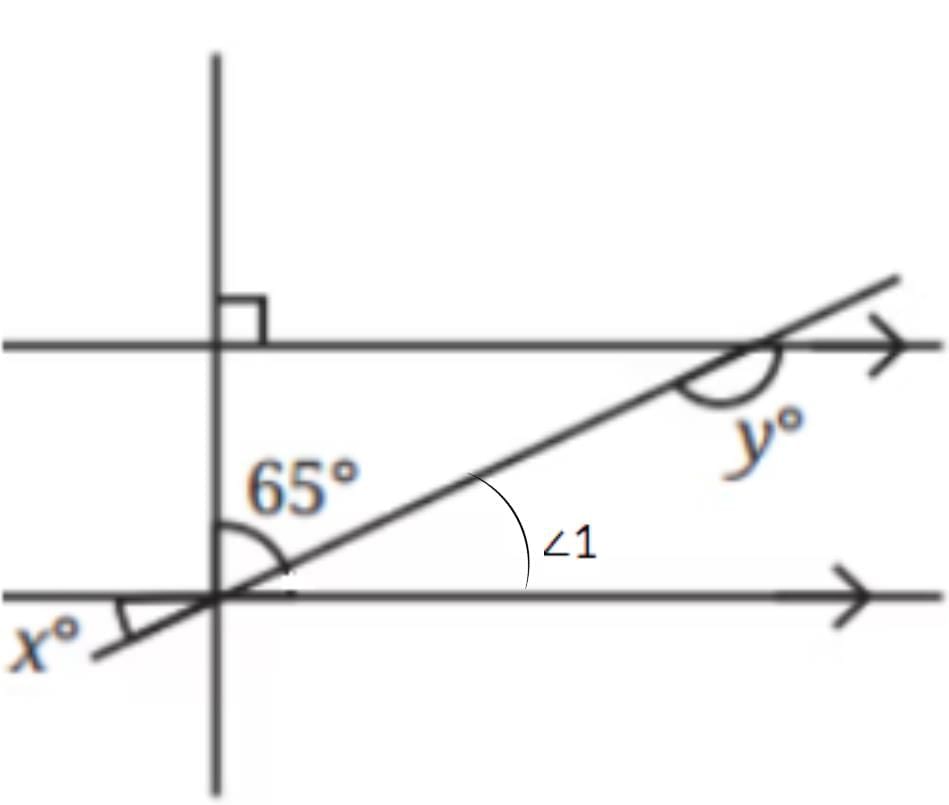
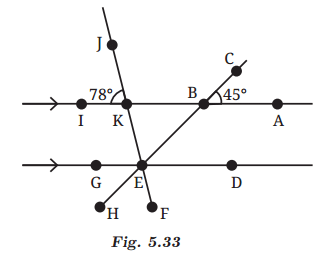
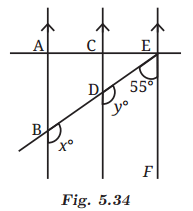
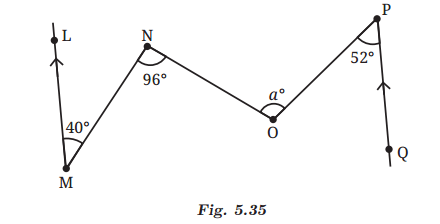
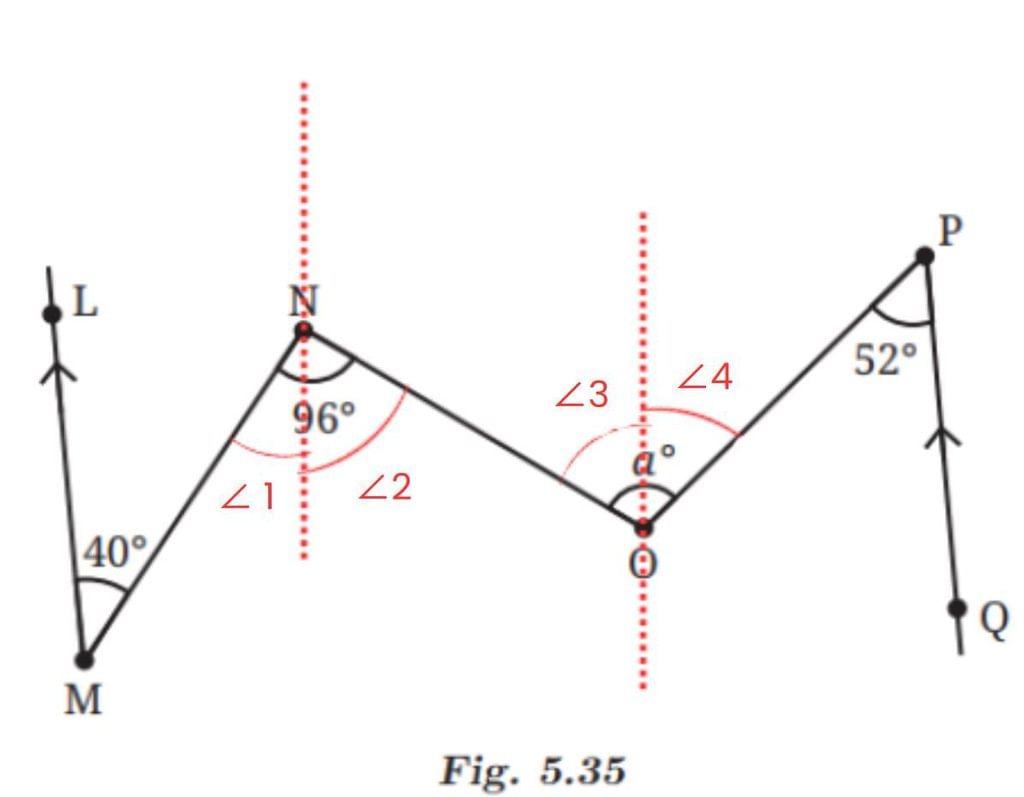
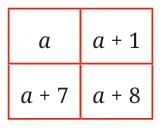
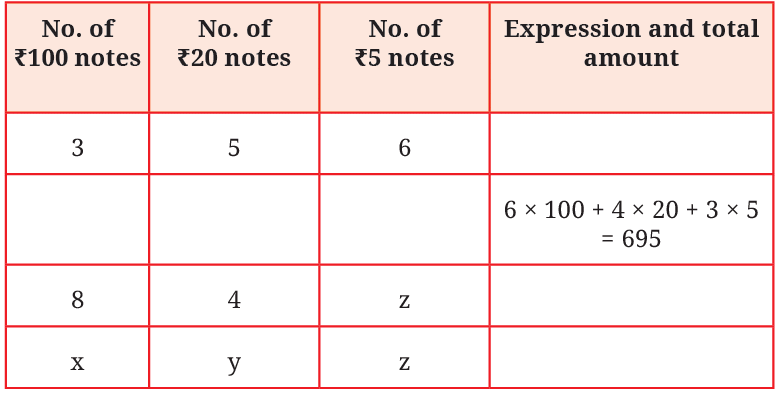 Ans:
Ans: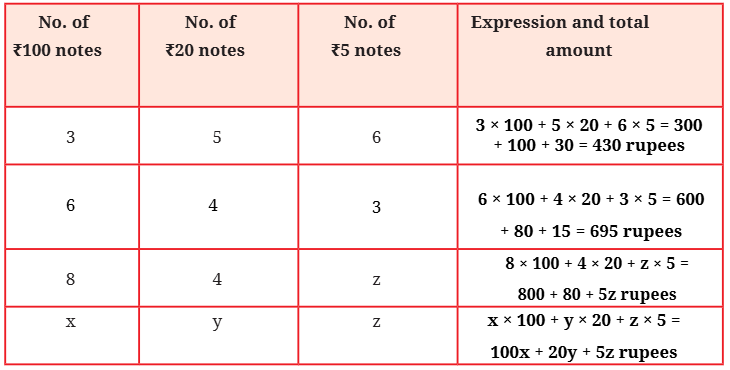 Q4: Venkatalakshmi owns a flour mill. It takes 10 seconds for the roller mill to start running. Once it is running, each kg of grain takes 8 seconds to grind into powder. Which of the expressions below describes the time taken to complete grind ‘y’ kg of grain, assuming the machine is off initially?(a) 10 + 8 + y(b) (10 + 8) × y(c) 10 × 8 × y(d) 10 + 8 × y(e) 10 × y + 8Ans: (d) 10 + 8 × yExplanation: The total time to grind y kg of grain consists of two parts:The initial 10 seconds for the roller mill to start running. After that, it takes 8 seconds for each kg of grain, so for y kg, it takes 8 × y seconds.Thus, the total time taken is: 10 + 8 × ySo the correct answer is (d) 10 + 8 × y.Q5: Write algebraic expressions using letters of your choice.(a) 5 more than a numberAns: Let the number be represented by x. The expression for 5 more than the number is: x + 5(b) 4 less than a numberAns: Let the number be represented by x. The expression for 4 less than the number is: x – 4(c) 2 less than 13 times a numberAns: Let the number be represented by x. The expression for 2 less than 13 times the number is: 13x – 2(d) 13 less than 2 times a numberAns: Let the number be represented by x. The expression for 13 less than 2 times the number is: 2x – 13Q6: Describe situations corresponding to the following algebraic expressions:(a) 8 × x + 3 × yAns: A shop sells pens at 8 rupees each and notebooks at 3 rupees each. If x pens and y notebooks are bought, the total cost is 8x + 3y rupees.(b) 15 × j – 2 × kAns: A person earns 15 rupees per hour for j hours of work but pays 2 rupees per k units of electricity used. The net income is 15j – 2k rupees.Q7: In a calendar month, if any 2 × 3 grid full of dates is chosen as shown in the picture, write expressions for the dates in the blank cells if the bottom middle cell has date ‘w’.
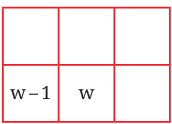 Ans:
Ans: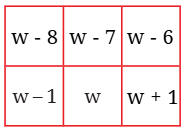 Page No. 87 Mind the Mistake, Mend the MistakeSome simplifications are shown below where the letter-numbers are replaced by numbers and the value of the expression is obtained.1. Observe each of them and identify if there is a mistake. 2. If you think there is a mistake, try to explain what might have gone wrong.
 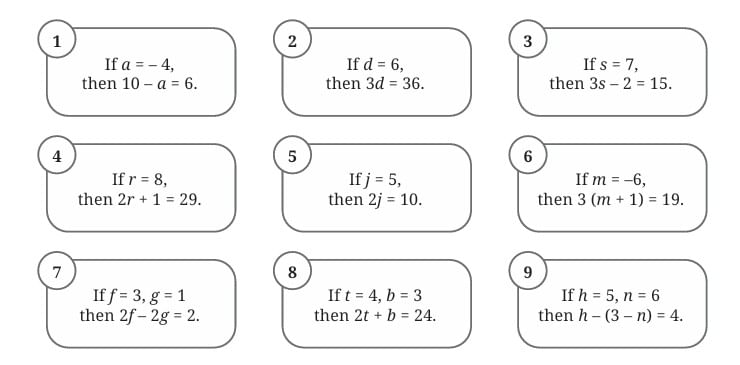 3. Then, correct it and give the value of the expression. Ans:
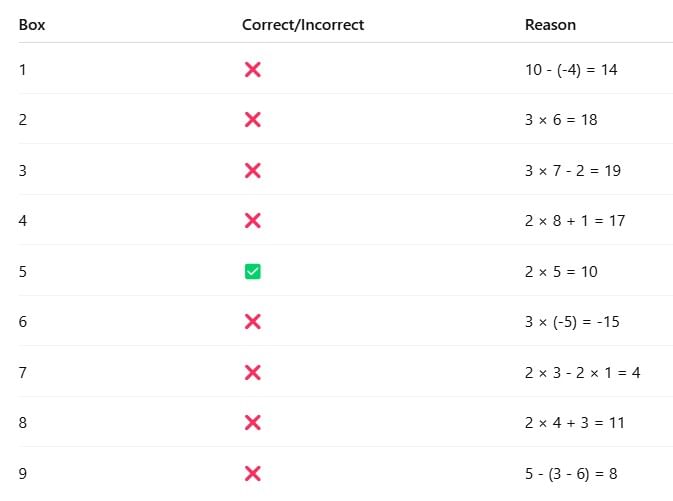 Page No. 88 & 89
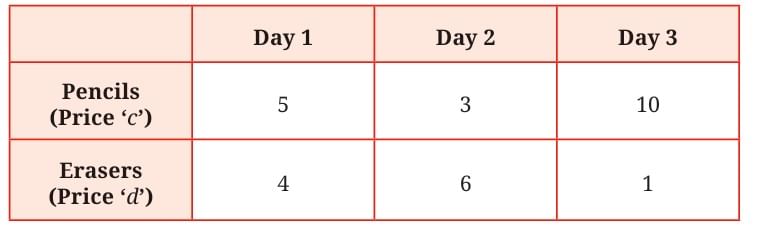 Example 5: Here is a table showing the number of pencils and erasers sold in a shop. The price per pencil is c, and the price per eraser is d. Find the total money earned by the shopkeeper during these three days.Let us first find the money earned by the sale of pencils.Q: The money earned by selling pencils on Day 1 is 5c. Similarly, the money earned by selling pencils on Day 2 is _____, and Day 3 is ______.Ans: On Day 2, the money earned = 3c.On Day 3, the money earned = 10c.Q2: If c = ₹50, find the total amount earned by the scale of pencils which is 18c. Ans: 18c = 18 × 50 = ₹900Q3: Write the expression for the total money earned by selling erasers. Then, simplify the expression.Ans: Total money earned by selling erasers will be 4d + 6d + d = 11dThe expression for the total money earned by selling erasers during these three days is: 18c + 11d.Q4: Can the expression 18c + 11d be simplified further? Ans: No, the expression cannot be simplified further because it contains different letter-numbers. It is already in its simplest form.In this problem, we saw the expression 5c + 3c + 10c getting simplified to the expression 18c. Q5: Check that both expressions take the same value when c is replaced by different numbers.Ans: We can check by substituting different values for c and comparing both expressions.For example:If c = 10, then the expression 5c + 3c + 10c simplifies to 5(10) + 3(10) + 10(10) = 50 + 30 + 100 = 180, which is equivalent to 18c = 18(10) = 180.This confirms that both expressions take the same value when c is replaced by different numbers.Page No. 91, 92 & 93Q: Could we have written the initial expression: (40x + 75y) – (6x + 10y) as (40x + 75y) + (– 6x – 10y)?Ans: Yes, the expression (40x + 75y) + (– 6x – 10y) is equivalent to the original expression.We can simplify it as follows: (40x + 75y) + (–6x – 10y) = (40x + 75y) – (6x + 10y)Thus, both forms represent the same expression.Example 8: Charu has been through three rounds of a quiz. Her scores in the three rounds are 7p – 3q, 8p – 4q, and 6p – 2q. Here, p represents the score for a correct answer and q represents the penalty for an incorrect answer. What do each of the expressions mean?Ans: If the score for a correct answer is 4 (p = 4) and the penalty for a wrong answer is 1 (q = 1), find Charu’s score in the first round. Charu’s score is 7 × 4 – 3 × 1. We can evaluate this expression by writing it as a sum of terms. 7 × 4 – 3 × 1 = 7 × 4 + – 3 × 1 = 28 + – 3 = 25 What are her scores in the second and third rounds? What if there is no penalty? What will be the value of q in that situation? What is her final score after the three rounds?Ans: Her final score will be the sum of the three scores: (7p – 3q) + (8p – 4q) + (6p – 2q). Since the terms can be added in any order, we can remove the brackets and write 7p + – 3q + 8p + – 4q + 6p + –2q = 7p + 8p + 6p + – (3q) + – (4q) + – (2q) (by swapping and grouping) = (7 + 8 + 6)p + – (3 + 4 + 2)q = 21p + – 9q = 21p – 9q. Charu’s total score after three rounds is 21p – 9q. Her friend Krishita’s score after three rounds is 23p – 7q.Q: Give some possible scores for Krishita in the three rounds so that they add up to give 23p – 7q.Ans: To find some possible scores for Krishita, we need to break down the expression 23p – 7q into three parts (scores for each round). Here are some possible combinations:Round 1: 10p, Round 2: 8p – 3q, Round 3: 5p – 4qThese add up as 10p + (8p – 3q) + (5p – 4q) = 23p – 7q.Round 1: 15p, Round 2: 5p – 2q, Round 3: 3p – 5qThese add up as 15p + (5p – 2q) + (3p – 5q) = 23p – 7q.Round 1: 18p, Round 2: 4p – q, Round 3: p – 6qThese add up as 18p + (4p – q) + (p – 6q) = 23p – 7q.Q3: Can we say who scored more? Can you explain why? How much more has Krishita scored than Charu? This can be found by finding the difference between the two scores. 23p – 7q – (21p – 9q)Ans: To find how much more Krishita has scored than Charu, we subtract Charu’s score from Krishita’s score:23p – 7q – (21p – 9q)Now, simplify the expression:= 23p – 7q – 21p + 9q= (23p – 21p) + (9q – 7q)= 2p + 2q = = 2(p + q)So, Krishita has scored 2(p + q) marks more than Charu.Q4: Fill the blanks below by replacing the letter-numbers by numbers; an example is shown. Then compare the values that 5u and 5 + u take.
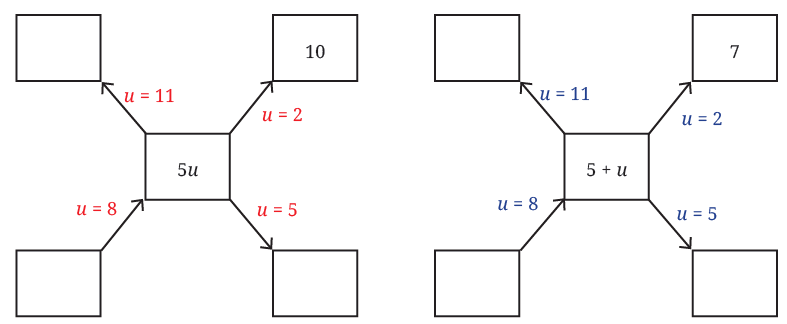 If the expressions 5u and 5 + u are equal, then they should take the same values for any given value of u. But we can see that they do not. So, these two expressions are not equal.Ans:
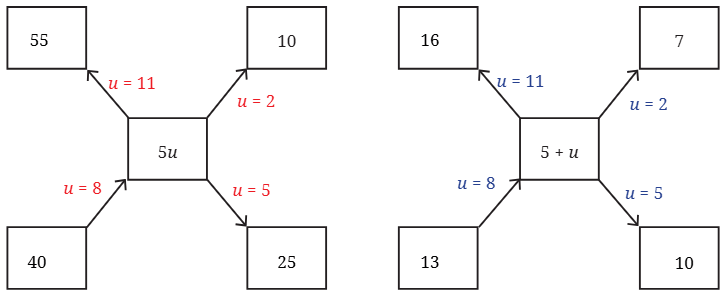 Q6: Are the expressions 10y – 3 and 10(y – 3) equal?10y – 3, short for 10 × y – 3, means 3 less than 10 times y, 10(y – 3), short for 10 × (y – 3), means 10 times (3 less than y). Are the expressions 10y – 3 and 10(y – 3) equal? 10y – 3, short for 10 × y – 3, means 3 less than 10 times y, 10(y – 3), short for 10 × (y – 3), means 10 times (3 less than y).Let us compare the values that these expressions take for different values of y.
 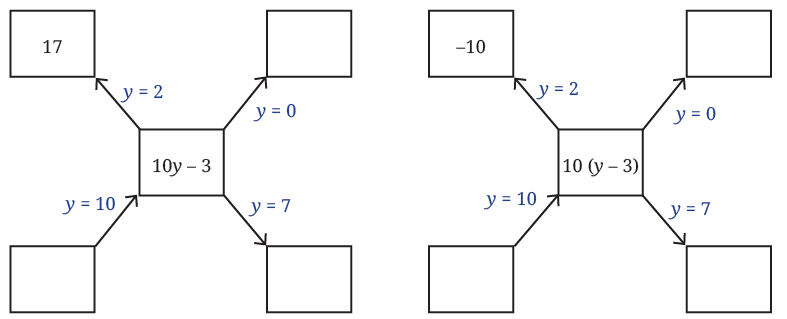 Ans:
Ans: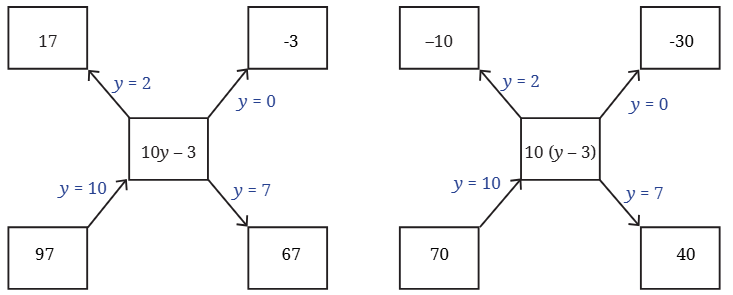 Q7: After filling in the two diagrams, do you think the two expressions are equal?Ans: We see that the values of 10y – 3 and 10(y – 3) are not equal for different values of y. So, the expressions 10y – 3 and 10(y – 3) are not equal.Figure it OutQ1: Add the numbers in each picture below. Write their corresponding expressions and simplify them. Try adding the numbers in each picture in a couple different ways and see that you get the same thing.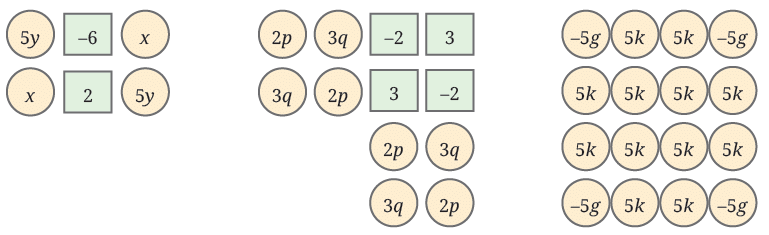
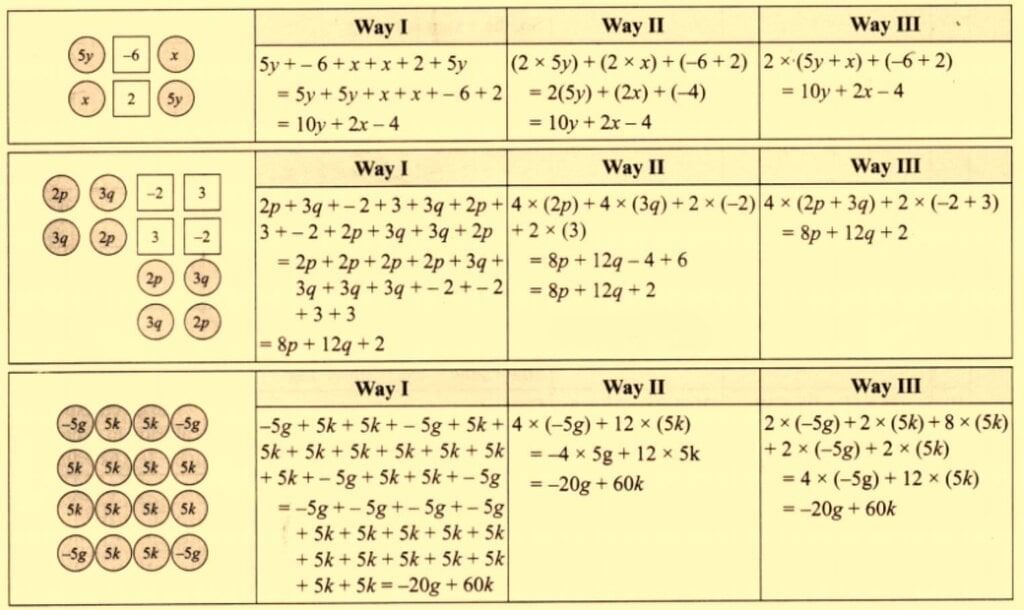 Ans: Hence, we see that while we add the expressions in different ways but the sums are always the same.Page No. 94Q2: Simplify each of the following expressions:(a) Simplify the expression: p + p + p + p, p + p + p + q, p + q + p – qAns:p + p + p + p = 4pp + p + p + q = 3p + qp + q + p – q = 2pSo, the simplified expressions are 4p, 3p + q and 2p.(b) Simplify the expression: p – q + p – q, p + q – p + qAns:p – q + p – q = (p + p) – (q + q) = 2p – 2qp + q – p + q = (p – p) + (q + q) = 0 + 2q = 2qSo, the simplified expressions are 2p – 2q and 2q.(c) Simplify the expression: p + q – (p + q), p – q – p – qAns:p + q – (p + q) = (p + q) – (p + q) = 0p – q – p – q = (p – p) – (q + q) = 0 – 2q = –2qSo, the simplified expressions are 0 and –2q.(d) Simplify the expression: 2d – d – d – d, 2d – d – d – cAns:2d – d – d – d = 2d – (d + d + d) = 2d – 3d = –d2d – d – d – c = (2d – d – d) – c = (2d – 2d) – c = 0 – c = –cSo, the simplified expressions are –d and –c.(e) Simplify the expression: 2d – d – (d – c), 2d – (d – d) – cAns:2d – d – (d – c) = (2d – d) – (d – c) = d – d + c = 0 + c = c2d – (d – d) – c = 2d – (0) – c = 2d – cSo, the simplified expressions are c and 2d – c.(f) Simplify the expression: 2d – d – c – cAns:2d – d – c – c = (2d – d) – (c + c) = d – 2cSo, the simplified expression is d – 2c.Mind the Mistake, Mend the MistakeSome simplifications of algebraic expressions are done below. The expression on the right-hand side should be in its simplest form. • Observe each of them and see if there is a mistake. • If you think there is a mistake, try to explain what might have gone wrong. • Then, simplify it correctly.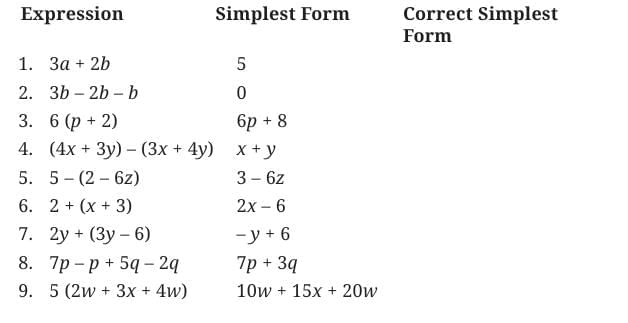

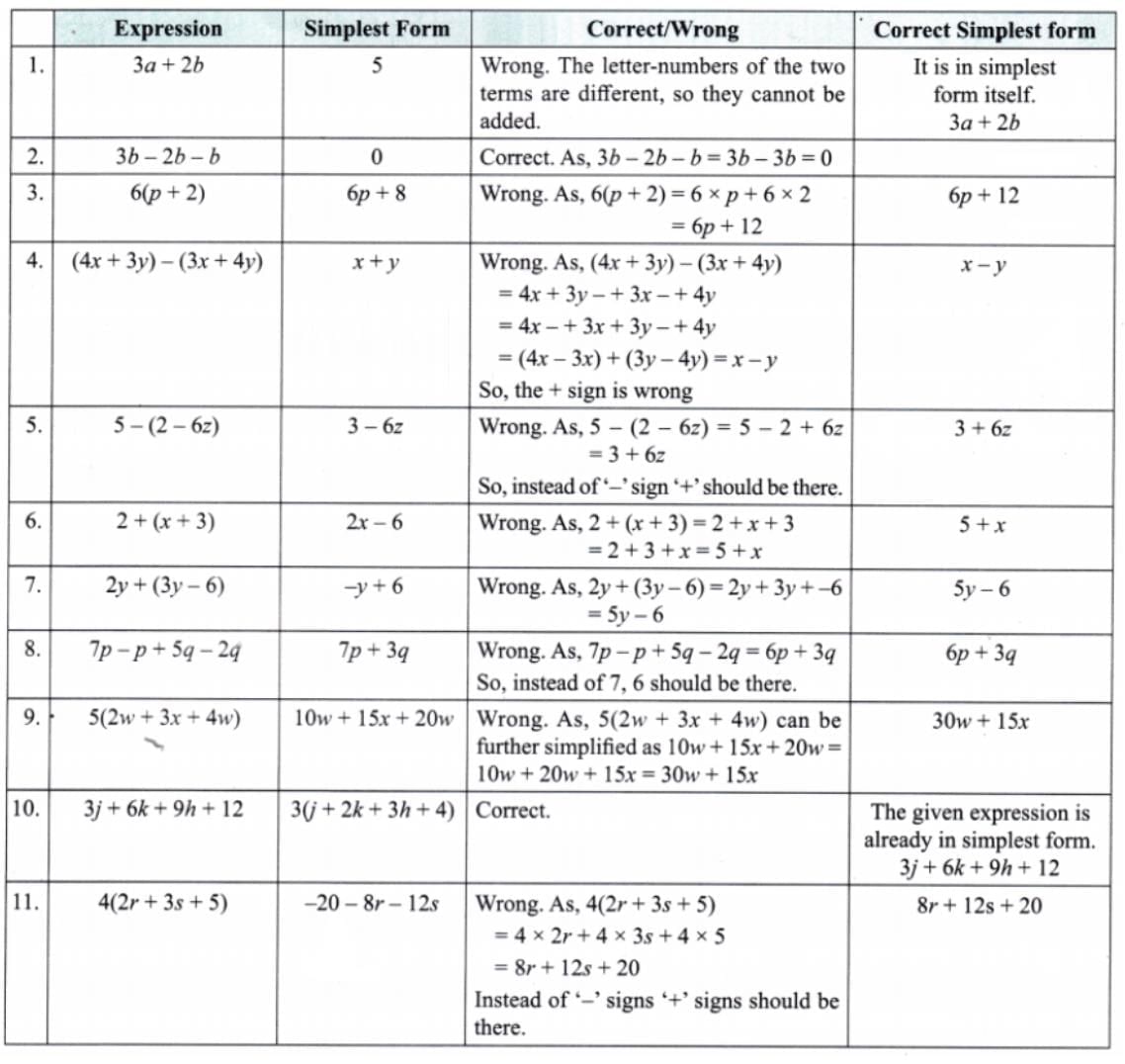 Ans: Q3: Take a look at all the corrected simplest forms (i.e. brackets are removed, like terms are added, and terms with only numbers are also added). Is there any relation between the number of terms and the number of letter-numbers these expressions have?Ans: YesIf the expression contains a term having only a number,the number of terms = number of letter-numbers + 1If an expression has no term that has only numbers,then number of terms = number of letter-numbersPage No. 95, 96 & 97Q1: Find out the formula of this number machine.
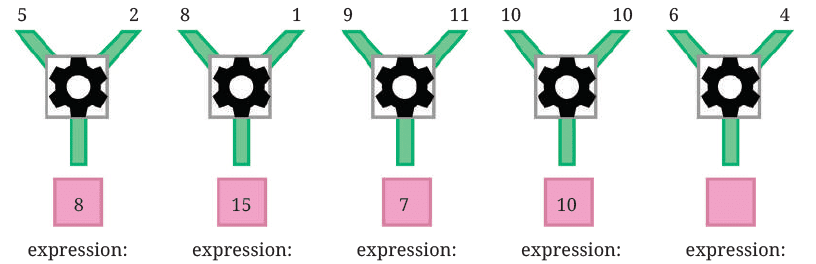 The formula for the number machine above is “two times the first number minus the second number”. When written as an algebraic expression, the formula is 2a – b. The expression for the first set of inputs is 2 × 5 – 2 = 8. Check that the formula holds true for each set of inputs.
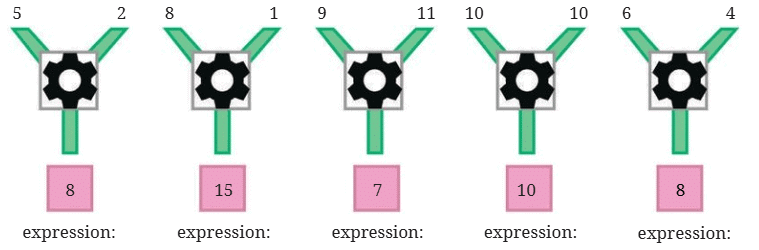 Ans: Yes, the formula holds for each set of inputs.As, 2 × 8 – 1 = 15; 2 × 9 – 11 = 7; 2 × 10 – 10 = 10; and 2 × 6 – 4 = 8Q2: Find the formulas of the number machines below and write the expression for each set of inputs.
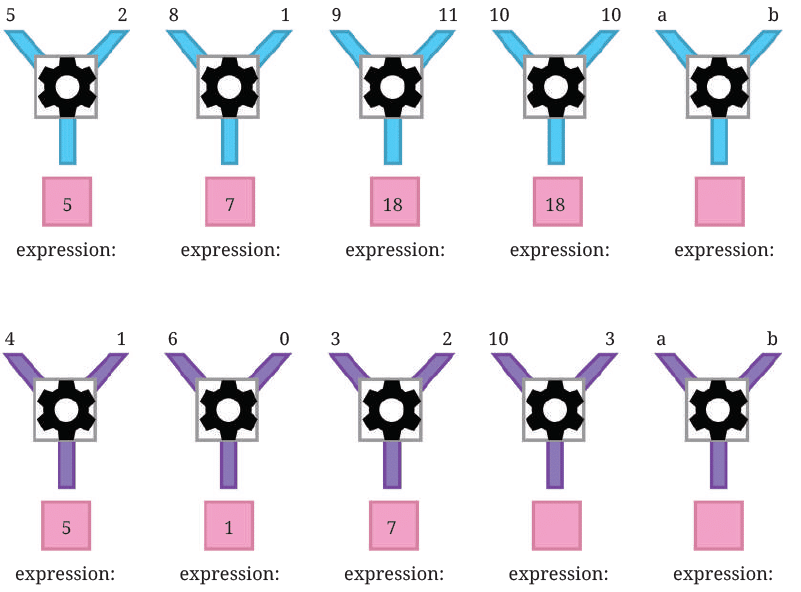 Ans: The formula for the number machines in the first row is “sum of first number and second number minus two,” and the expression is a + b – 2.The expression for each set of inputs is:5 + 2 – 2 = 5, 8 + 1 – 2 = 7, 9 + 11 – 2 = 18, 10 + 10 – 2 = 18, and a + b – 2.The formula for the number machines in the second row is “product of first number and second number plus one,” and the expression is a × b + 1.The expression for each set of inputs is:4 × 1 + 1 = 5, 6 × 0 + 1 = 1, 3 × 2 + 1 = 7, 10 × 3 + 1 = 31, and a × b + 1 = ab + 1.
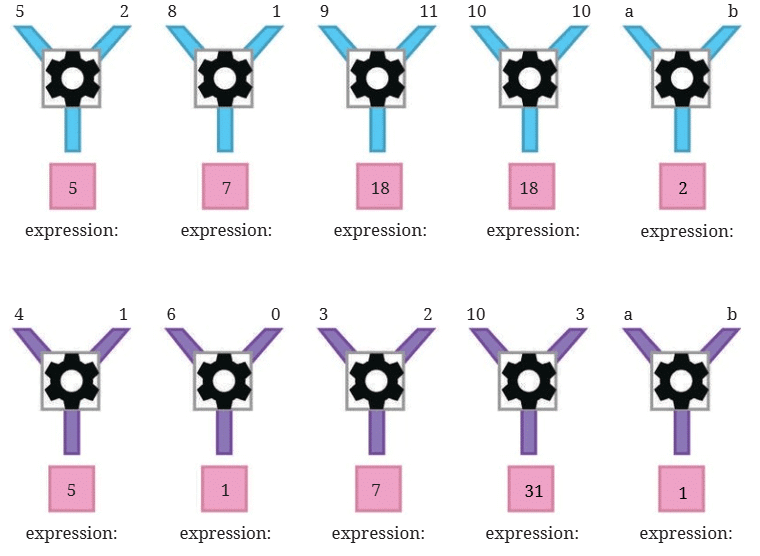 Q3: Now, make a formula on your own. Write a few number machines as examples using that formula. Challenge your classmates to figure it out!Ans: Do it Yourself.
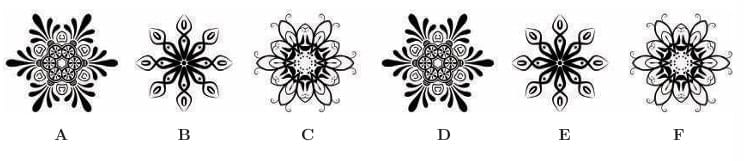 Example: Somjit noticed a repeating pattern along the border of a saree.
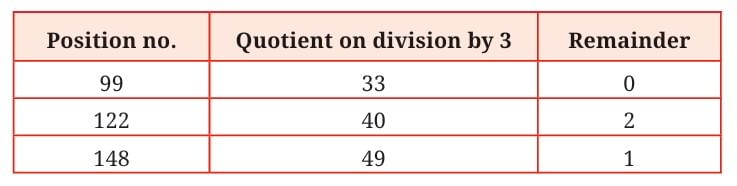 Q: Use the table to find what design appears at positions 99, 122, and 148.Ans: Using the table and the remainder rule:Position 99: Remainder is 0 (99 ÷ 3 = 33 remainder 0). Design is C.Position 122: Remainder is 2 (122 ÷ 3 = 40 remainder 2). Design is B.Position 148: Remainder is 1 (148 ÷ 3 = 49 remainder 1). Design is A.Page No. 98
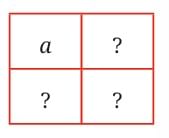 Let us extend the numbers in the calendar beyond 30, creating endless rows.Q1: Will the diagonal sums be equal in every 2×2 square in this endless grid? How can we be sure?Ans: Yes, the diagonal sums will be equal in every 2 × 2 square in this endless grid.We can be sure because we checked a 2 × 2 square with the top left number as ‘a’. The numbers in the square are:Top left: aTop right: a + 1Bottom left: a + 7Bottom right: a + 8The diagonal sums are:First diagonal (a + (a + 8)) = 2a + 8Second diagonal ((a + 1) + (a + 7)) = 2a + 8Both sums are the same (2a + 8), and this works for any value of ‘a’. So, the diagonal sums are always equal in any 2 × 2 square.Q2: Given that we know the top left number, how do we find the other numbers in this 2 × 2 square?Ans: If the top left number is ‘a’, we can find the other numbers in the 2×2 square like this:Top right number: a + 1 (1 more than a)Bottom left number: a + 7 (7 more than a)Bottom right number: a + 8 (8 more than a, or diagonal to a)So, the 2×2 square looks like:Top left: aTop right: a + 1Bottom left: a + 7Bottom right: a + 8Page No. 99Verify this expression for diagonal sums by considering any 2 × 2 square and taking its top left number to be ‘a’.Ans: Let a = 2, then
 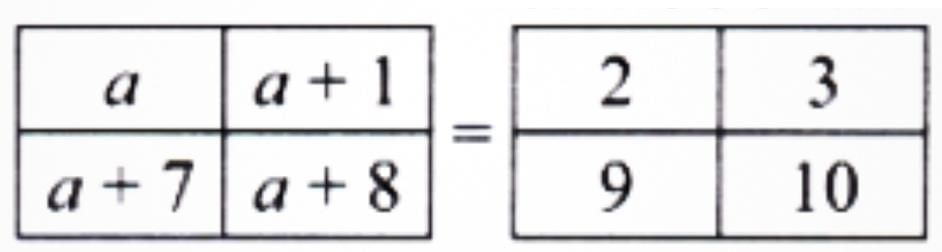 Here, the diagonal sums are 2 + 10 = 12 and 9 + 3 = 12And 2a + 8 = 2 × 2 + 8 = 12Hence, the diagonal sum is equal to 2a + 8.Consider a set of numbers from the calendar (having endless rows) forming under the following shape:
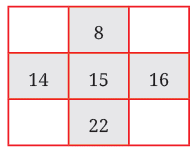 Q1: Find the sum of all the numbers. Compare it with the number in the centre: 15. Repeat this for another set of numbers that forms this shape. What do you observe?Ans: First, let’s find the sum of the numbers in the given shape: 8, 14, 15, 16, 22.Sum = 8 + 14 + 15 + 16 + 22 = 75.The number in the centre is 15. Compare the sum with the centre: 75 ÷ 15 = 5. The sum is 5 times the centre number.Now, let’s repeat this for another set of numbers with the same shape from the calendar. Let’s take the set with centre 8 (numbers around it: 1, 7, 9, 15).
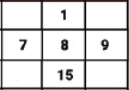 Sum = 1 + 7 + 8 + 9 + 15 = 40.The centre is 8. Compare the sum with the centre: 40 ÷ 8 = 5.The sum is again 5 times the centre number.Observation: The sum of the numbers in this shape is always 5 times the number in the centre.Q2: Will this always happen? How do you show this?Ans: Yes, this will always happen.To show this, let’s take the centre number as ‘a’. The numbers around it in the shape will be:Top: a – 7 (7 less than a, since it’s the previous row)Left: a – 1 (1 less than a, since it’s the previous column)Right: a + 1 (1 more than a, since it’s the next column)Bottom: a + 7 (7 more than a, since it’s the next row)So the numbers are: (a – 7), (a – 1), a, (a + 1), (a + 7).Sum = (a – 7) + (a – 1) + a + (a + 1) + (a + 7)= a – 7 + a – 1 + a + a + 1 + a + 7= (a + a + a + a + a) + (–7 + 7) + (–1 + 1)= 5a + 0 + 0= 5aThe sum is 5a, which is 5 times the centre number ‘a’. This works for any centre number ‘a’, so the sum is always 5 times the centre number.Q: Find other shapes for which the sum of the numbers within the figure is always a multiple of one of the numbers.Ans: Do it Yourself.Page No. 100Matchstick Patterns
 Q1: How many matchsticks will there be in Step 33, Step 84, and Step 108? Of course, we can draw and count, but is there a quicker way to find the answers using the pattern present here?Ans: Observed Pattern:Step 1: 3 matchsticks (1 triangle)Step 2: 5 matchsticks (2 triangles) → +2 from previousStep 3: 7 matchsticks (3 triangles) → +2 from previous…Each new step adds 2 matchsticks.General Formula:The number of matchsticks (M) for Step n follows an arithmetic sequence:M = 3 + 2(n−1)Simplified:M = 2n + 1(Where n = Step Number)Calculations:Step 33:M = 2 × 33 + 1 = 66 + 1 = 67Step 84:M = 2 × 84 + 1 = 168 + 1 = 169Step 108:M = 2 × 10⁸ + 1 = 216 + 1 = 217Page No. 101 & 102
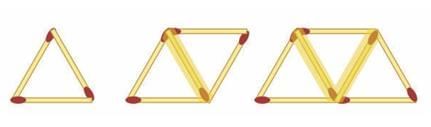 There is a different way to count, or see the pattern. Let us take a look at the picture again.Q1: What are these numbers in Step 3 and Step 4?Ans: In step 3, there are 3 matchsticks placed horizontally and 4 matchsticks placed diagonally.In step 4, there are 4 matchsticks placed horizontally and 5 matchsticks placed diagonallyQ2: How does the number of matchsticks change in each orientation as the steps increase? Write an expression for the number of matchsticks at Step ‘y’ in each orientation. Do the two expressions add up to 2y + 1?Ans: Horizontal: Always 2 matchsticks.Diagonal: 2y – 1 (Step 1: 1, Step 2: 3, Step 3: 5, Step 4: 7, so 2y – 1).Total = 2 + (2y – 1) = 2y + 1. Yes, they add up to 2y + 1.Figure it OutFor the problems asking you to find suitable expression(s), first try to understand the relationship between the different quantities in the situation described. If required, assume some values for the unknowns and try to find the relationship.Q1: One plate of Jowar roti costs 30 and one plate of Pulao costs 20. If x plates of Jowar roti and y plates of pulao were ordered in a day, which expression(s) describe the total amount in rupees earned that day?(a) 30x + 20y(b) (30 + 20) × (x + y)(c) 20x + 30y(d) (30 + 20) × x + y(e) 30x – 20yAns: (a) 30x + 20yExplanation: Cost of one plate of Jowar roti = ₹ 30∴ Cost of x plate of Jowar roti = 30xCost of one plate of Pulao = ₹ 20∴ Cost of y plate of Pulao = 20ySo, the expression for the total amount earned that day = 30x + 20yQ2: Pushpita sells two types of flowers on Independence day: champak and marigold. ‘p’ customers only bought champak, ‘q’ customers only bought marigold, and ‘r’ customers bought both. On the same day, she gave away a tiny national flag to every customer. How many flags did she give away that day?(a) p + q + r(b) p + q + 2r(c) 2 × (p + q + r)(d) p + q + r + 2(e) p + q + r + 1(f) 2 × (p + q)Ans: (a) p + q + rExplanation: Number of customers who bought only champak = pNumber of customers who bought only marigold = qNumber of customers who bought both = rAs Pushpita gave away a tiny national flag to every customer.So, the number of flags she gives away that day = p + q + r.Q3: A snail is trying to climb along the wall of a deep well. During the day it climbs up ‘u’ cm and during the night it slowly slips down ‘d’ cm. This happens for 10 days and 10 nights.(a) Write an expression describing how far away the snail is from its starting position.Ans: During the day, the snail climbs up ‘u’ cm.During the night snail slips down d cm.So, the net distance covered in one day is u-d.So, in 10 days and 10 nights, the net distance covered by the snail = 10(u-d).Hence, the expression describing how far away the snail is from it starting position is 10(u – d) cm.(b) What can we say about the snail’s movement if d > u?Ans: If d > u, the snail moves downward overall, as it slips more than it climbs each day-night cycle.Q4: Radha is preparing for a cycling race and practices daily. The first week she cycles 5 km every day. Every week she increases the daily distance cycled by ‘z’ km. How many kilometers would Radha have cycled after 3 weeks?Ans: Week 1: 5 km/day × 7 days = 35 kmWeek 2: (5 + z) km/day × 7 days = 7(5 + z) = 35 + 7z kmWeek 3: (5 + 2z) km/day × 7 days = 7(5 + 2z) = 35 + 14z kmTotal = 35 + (35 + 7z) + (35 + 14z) = 105 + 21z kmQ5: In the following figure, observe how the expression w + 2 becomes 4w + 20 along one path. Fill in the missing blanks on the remaining paths. The ovals contain expressions and the boxes contain operations.
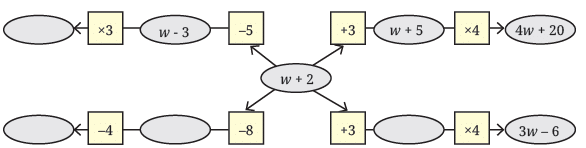 Ans: Top left: (w + 2) → (-5) → (w – 3) → (×3) → 3w – 9.Bottom left: (w + 2) → (-8) → (w – 6) → (-4) → (w – 10).Bottom right: (w + 2) → (+3) → (w + 5) → (×4) → (3w – 6). (which is not possible, there is an error in this part so cannot give the answer).Page No. 103Q6: A local train from Yahapur to Vahapur stops at three stations at equal distances along the way. The time taken in minutes to travel from one station to the next station is the same and is denoted by t. The train stops for 2 minutes at each of the three stations.(a) If t = 4, what is the time taken to travel from Yahapur to Vahapur?Ans: The train from Yahapur to Vahapur stops at 3 stations, and stops for 2 minutes at every station.Time taken in travelling = 4tAt t = 4, time taken in travelling = 4 × 4 = 16 minutesTime taken during stoppages = 3 × 2 = 6 minutesSo, the time taken to travel from Yahapur to Vahapur = 16 + 6 = 22 minutes(b) What is the algebraic expression for the time taken to travel from Yahapur to Vahapur?Ans: Let the time taken to travel from one station to another station = tSo, time taken to travel from Yahanpur to Vahapur = 4tAs there are three stoppages between these two stations, and the train stops for 2 minutes at each stoppage,therefore total time taken during stoppages = 2 × 3 = 6 minutesSo, the algebraic expression for total time taken is 4t + 6.Q7: Simplify the following expressions:(a) 3a + 9b – 6 + 8a – 4b – 7a + 16Ans: (3a + 8a – 7a) + (9b – 4b) + (-6 + 16) = 4a + 5b + 10(b) 3(3a – 3b) – 8a – 4b – 16Ans: 9a – 9b – 8a – 4b – 16 = (9a – 8a) + (-9b – 4b) – 16 = a – 13b – 16(c) 2(2x – 3) + 8x + 12Ans: 4x – 6 + 8x + 12 = (4x + 8x) + (-6 + 12) = 12x + 6(d) 8x – (2x – 3) + 12Ans: 8x – 2x + 3 + 12 = (8x – 2x) + (3 + 12) = 6x + 15(e) 8h – (5 + 7h) + 9Ans: 8h – 5 – 7h + 9 = (8h – 7h) + (-5 + 9) = h + 4(f) 23 + 4(6m – 3n) – 8n – 3m – 18Ans: 23 + 24m – 12n – 8n – 3m – 18 = (24m – 3m) + (-12n – 8n) + (23 – 18) = 21m – 20n + 5Q8: Add the expressions given below:(a) 4d – 7c + 9 and 8c – 11 + 9dAns: (4d + 9d) + (-7c + 8c) + (9 – 11) = 13d + c – 2(b) -6f + 19 – 8s and -23 + 13f + 12sAns: (-6f + 13f) + (-8s + 12s) + (19 – 23) = 7f + 4s – 4(c) 8d – 14c + 9 and 16c – (11 + 9d)Ans: 8d – 14c + 9 + 16c – 11 – 9d = (8d – 9d) + (-14c + 16c) + (9 – 11) = -d + 2c – 2(d) 6f – 20 + 8s and 23 – 13f – 12sAns: (6f – 13f) + (8s – 12s) + (-20 + 23) = -7f – 4s + 3(e) 13m – 12n and 12n – 13mAns: (13m – 13m) + (-12n + 12n) = 0(f) -26m + 24n and 26m – 24nAns: (-26m + 26m) + (24n – 24n) = 0Q9: Subtract the expressions given below:(a) 9a – 6b + 14 from 6a + 9b – 18Ans: (6a + 9b – 18) – (9a – 6b + 14) = (6a – 9a) + (9b – (-6b)) + (-18 – 14) = -3a + 15b – 32(b) -15x + 13 – 9y from 7y – 10 + 3xAns: (7y – 10 + 3x) – (-15x + 13 – 9y) = (3x – (-15x)) + (7y – (-9y)) + (-10 – 13) = 18x + 16y – 23(c) 17g + 9 – 7h from 11 – 10g + 3hAns: (11 – 10g + 3h) – (17g + 9 – 7h) = (-10g – 17g) + (3h – (-7h)) + (11 – 9) = -27g + 10h + 2(d) 9a – 6b + 14 from 6a – (9b + 18)Ans: (6a – 9b – 18) – (9a – 6b + 14) = (6a – 9a) + (-9b – (-6b)) + (-18 – 14) = -3a – 3b – 32(e) 10x + 2 + 10y from -3y + 8 – 3xAns: (-3y + 8 – 3x) – (10x + 2 + 10y) = (-3x – 10x) + (-3y – 10y) + (8 – 2) = -13x – 13y + 6(f) 8g + 4h – 10 from 7h – 8g + 20Ans: (7h – 8g + 20) – (8g + 4h – 10) = (-8g – 8g) + (7h – 4h) + (20 – (-10)) = -16g + 3h + 30Q10: Describe situations corresponding to the following algebraic expressions:(a) 8x + 3yAns: A shop sells pens at 8 rupees each and notebooks at 3 rupees each. If x pens and y notebooks are bought, the total cost is 8x + 3y rupees.(b) 15x – 2xAns: A person earns 15 rupees per hour for x hours but spends 2 rupees per hour for x hours on transport. The net income is 15x – 2x = 13x rupees.Q11: Imagine a straight rope. If it is cut once as shown in the picture, we get 2 pieces. If the rope is folded once and then cut as shown, we get 3 pieces. Observe the pattern and find the number of pieces if the rope is folded 10 times and cut. What is the expression for the number of pieces when the rope is folded r times and cut?
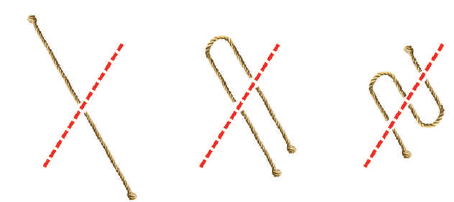 Ans: Step 1 (0 fold): We get 0 + 2 = 2 piecesStep 2 (1 fold): We get 1 + 2 = 3 piecesStep 3 (2 folds): We get 2 + 2 = 4 piecesIn the same way, if the rope is folded 10 times and cut, we get 10 + 2 = 12 pieces.In the same way, when the rope is folded r times and cut, we get r + 2 pieces.Page No. 104 & 105
 Q12: Look at the matchstick pattern below. Observe and identify the pattern. How many matchsticks are required to make 10 such squares. How many are required to make w squares?Ans: For a chain of squares, each square after the first shares a side.1 square: 4 matchsticks2 squares: 4 + 3 = 7 matchsticks3 squares: 7 + 3 = 10 matchsticksPattern: 4 + 3(w – 1) = 3w + 1For 10 squares: 3 × 10 + 1 = 31 matchsticksFor w squares: 3w + 1 matchsticksQ13: Have you noticed how the colours change in a traffic signal? The sequence of colour changes is shown below. Find the colour at positions 90, 190, and 343. Write expressions to describe the positions for each colour.
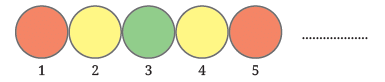 Ans: The sequence of red light: 1, 5, 9, …..In general, 4n – 3 positionsThe sequence of green light: 3, 7, 11,…..In general; 4n – 1 positionsThe sequence of yellow light: 2, 4, 6, …..In general, 2n positionsSince 90 and 190 are even numbers, it will be 2n positions.Now, 343 ÷ 4 = 85 quotient + 3 remainder.So, it matches a 4n-1 position.So, colour at positions 90, 190, and 343 are yellow, yellow, and green, respectively.Q14: Observe the pattern below. How many squares will be there in Step 4, Step 10, Step 50? Write a general formula. How would the formula change if we want to count the number of vertices of all the squares?
 Ans: Pattern: Step 1: 5 squares, Step 2: 9 squares, Step 3: 13 squaresThe formula for the nth term of an arithmetic sequence is:an = a1+(n−1)dWhere:an = number of squares at step na1=5a1=5 (first term)d=4 (common difference)Substitute these values:an=5+(n−1)×4an=5+4n−4an=4n+1Step 4:a4= 4×4+1=16+1=17Step 10:a10= 4×10+1=40+1=41Step 50:a50= 4×50+1=200+1=201Since 1 square has 4 vertices, the number of vertices (4n + 1) squares have 4(4n + 1) = 16n + 4.
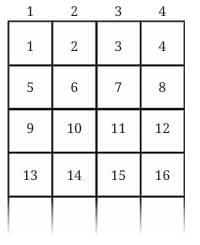 Q15: Numbers are written in a particular sequence in this endless 4-column grid.(a) Give expressions to generate all the numbers in a given column (1, 2, 3, 4).Ans: Expression to generate all the numbers in a given column (1, 2, 3, 4)Let r be the row number.Column 1: 1, 5, 9, 13,…… which starts at 1 and adds 4 each row.So, number in the rth row of column 1 = 4 × (r – 1) + 1Column 2: 4 × (r – 1) + 2Column 3: 4 × (r – 1) + 3Column 4: 4 × (r – 1) + 4If c is the column number, then the general formula to generate all numbers is 4 × (r – 1) + c.(b) In which row and column will the following numbers appear:(i) 124Ans: 124 ÷ 4 = 31 remainder 0 → Column 4, Row 31(ii) 147Ans: 147 ÷ 4 = 36 remainder 3 → Column 3, Row 37(iii) 201Ans: 201 ÷ 4 = 50 remainder 1 → Column 1, Row 51(c) What number appears in row r and column c?Ans: Number = 4(r – 1) + c(d) Observe the positions of multiples of 3. Do you see any pattern in it? List other patterns that you see.Ans: Every third number is a multiple of 3.We can observe that even numbers always appear in column 2 and column 4.Odd numbers always appear in column 1 and column 3.Every row has 2 odd and 2 even numbers.The sum of each row increases by 16.(e.g., Row 1: 1 + 2 + 3 + 4 = 10, Row 2: 5 + 6 + 7 + 8 = 26, Row 3: 9 + 10 + 11 + 12 = 42)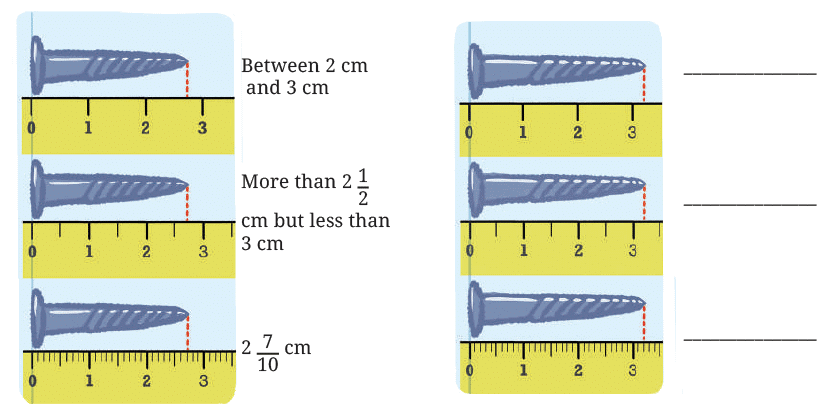
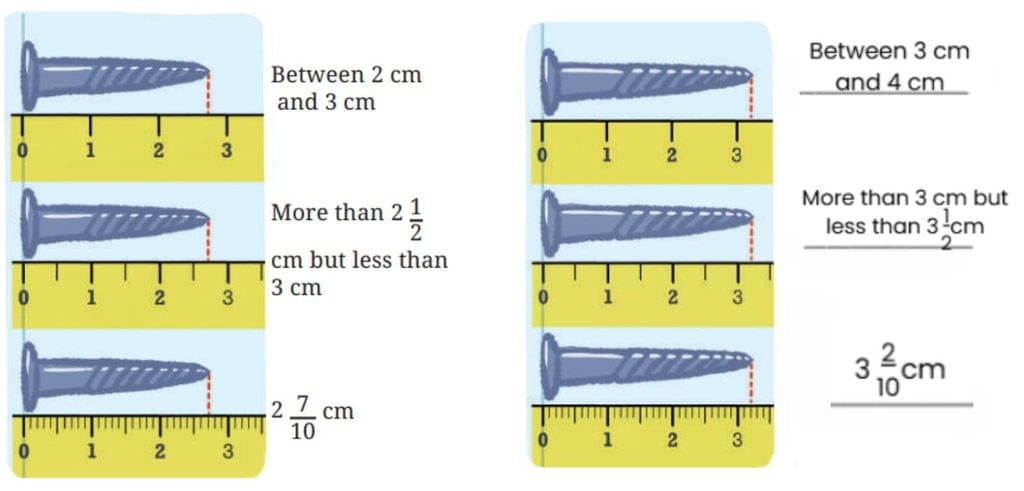


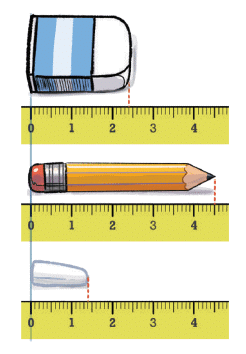

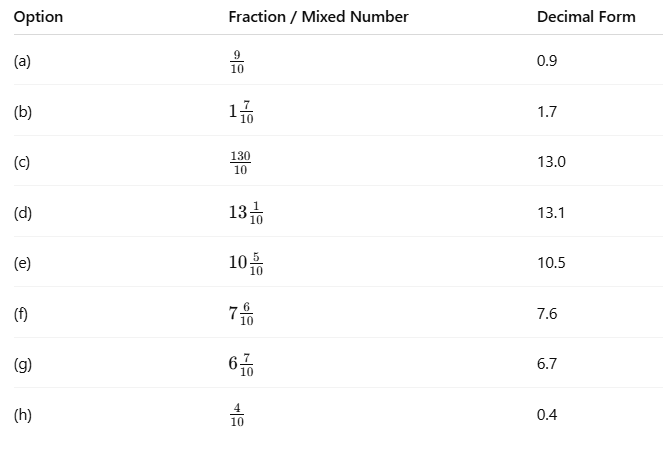
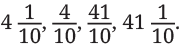
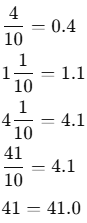
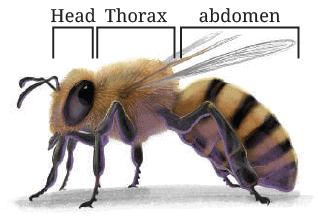
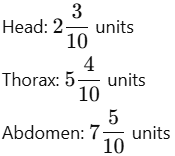
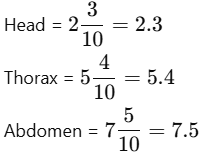


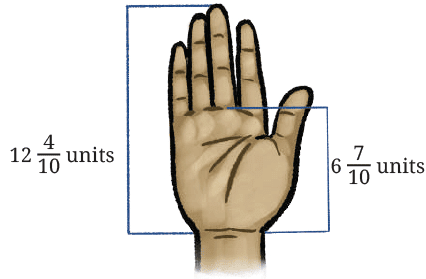

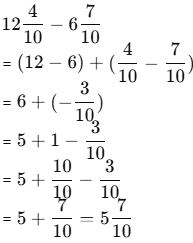
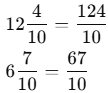
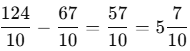



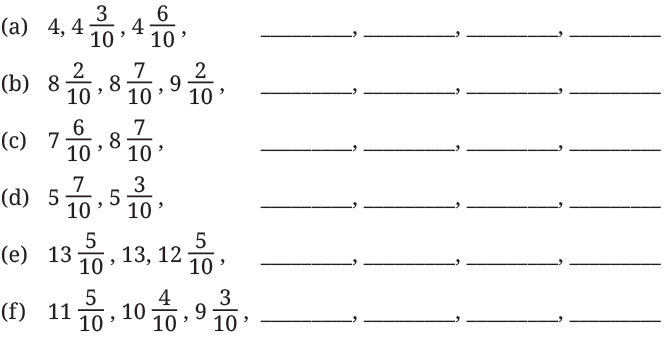
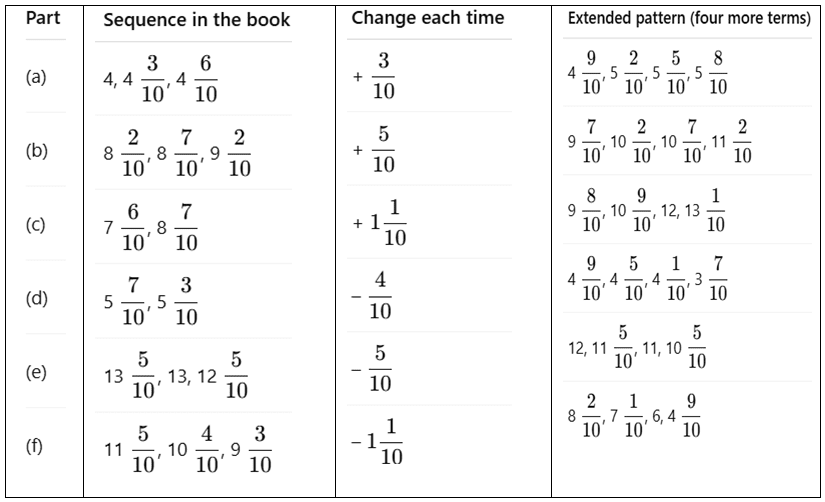


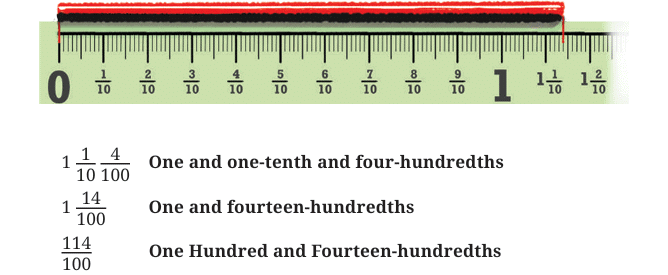
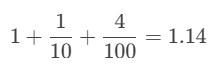 One and one-tenth and four-hundredths”:
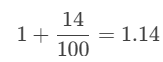 “One and fourteen-hundredths”:
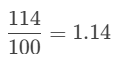 “One Hundred and Fourteen-hundredths”: