07.The Road Not Taken – Summary

About the Poet

Robert Frost was a famous American poet born in San Francisco in 1874. He spent most of his life in New England, which is a beautiful area in the northeastern United States. Frost’s poems often reflect the nature and life in this region. He went to college at Dartmouth and Harvard but did not finish his degree. Instead of focusing on school, he worked on a farm and taught in a school while trying to write poems. At first, many people in America did not want to publish his work, but he did not give up. In 1912, he moved to England with his family to get more attention for his poetry. Soon after, a publisher in London released his first book of poems. After that, he returned to America and gradually became one of the most loved poets in the country. Unlike many poets of his time who tried new styles, Frost chose to use traditional forms of poetry. He believed in using the old ways to create something new. While his poems often sound cheerful and paint beautiful pictures of nature, they also have deeper, darker meanings about life. Frost’s work is special because he makes readers think carefully about the world around them.

Key Points of the Poem

  • The poem is titled “The Road Not Taken.”
  • It consists of four stanzas, each with five lines.
  • The poem describes a moment when the speaker faces a choice between two different paths in a yellow wood.
  • The speaker feels sorry for not being able to travel both paths.
  • He carefully considers each path before making a decision.
  • The poem reflects on the idea of choices and their impact on life.
  • The speaker ultimately chooses the road less traveled, which symbolizes making unique or unconventional choices.
  • The poem concludes with the speaker reflecting on how this choice will shape his future.

Theme/ Message

  • The Importance of Choices: The poem emphasizes that every choice we make in life is significant. The roads symbolize different directions or paths we can take, and each choice can lead to different outcomes.
  • Individuality and Non-Conformity: The speaker’s choice of the road less traveled represents the idea of being unique and making decisions that are not influenced by others.
  • Regret and Reflection: The speaker anticipates that he will look back on this choice with a mix of emotions, suggesting that choices can lead to both satisfaction and regret.
  • The Nature of Life’s Journey: Life is depicted as a journey filled with decisions and paths that shape who we are. The poem reflects on how our choices define our experiences.
  • Uncertainty of the Future: The speaker understands that once a path is chosen, it is difficult to go back. This highlights the uncertainty and permanence of decisions.

The message of the poem can be understood in several layers. First, it teaches us that every choice has consequences. The speaker acknowledges that he cannot take both paths, indicating that life often requires us to make decisions without knowing what the future holds. This uncertainty adds weight to our choices. Second, the poem encourages individuality. The speaker’s decision to take the road less travelled symbolizes the idea of following one’s own path rather than conforming to what others might do. This message is particularly important in a society where people often feel pressured to fit in. Lastly, the poem reflects on the human tendency to look back on choices with a sense of nostalgia or regret. The speaker knows that he will tell the story of this choice later in life, suggesting that our decisions become part of our identity. Overall, the poem beautifully captures the essence of decision-making in life and the importance of embracing our unique journeys.

Detailed Summary

Two roads diverged in a yellow wood,
And sorry I could not travel both
And be one traveller, long I stood
And looked down one as far as I could
To where it bent in the undergrowth;

In this stanza, the poet talks about a beautiful, yellow wood, which means a forest where the leaves are yellow. He sees two different paths in front of him. Imagine if you are at a park and you have to choose between two slides. The poet feels sad because he cannot go on both paths at the same time. He wishes he could be like two people and travel on both roads. So, he stands there for a long time, looking at one path to see how far it goes. He looks down the path until it curves, like when you look down a slide to see where it goes.

Then took the other, as just as fair,
And having perhaps the better claim,
Because it was grassy and wanted wear;
Though as for that the passing there
Had worn them really about the same,

Here, the poet decides to take the second path because it looks just as nice as the first one. He thinks this path might be better because it has grass and looks like not many people have walked on it. It’s like choosing the slide that looks less slippery because it has more grass around it. But he also realizes that both paths have been walked on by people and are actually quite similar. So, even though the second path seemed special at first, he knows that both paths are almost the same because others have used them too.

And both that morning equally lay
In leaves no step had trodden black.
Oh, I kept the first for another day!
Yet knowing how way leads on to way,
I doubted if I should ever come back.

In this part, the poet says that both paths looked fresh and clean in the morning. No one had walked on them enough to make the leaves dark. It’s like when you go to the park, and the grass is still bright and green because it hasn’t been stepped on. He thinks that he will come back to try the first path another day, but deep down, he knows that once he chooses a path, it might be hard to come back. Just like if you go down one slide, you might not want to go back to the other one because you are having fun on the first one.

I shall be telling this with a sigh
Somewhere ages and ages hence:
Two roads diverged in a wood, and II took the one less travelled by,
And that has made all the difference.

In the last part, the poet imagines that many years later, he will tell a story about this moment. He will probably take a deep breath and feel a little sad or thoughtful when he remembers it. He thinks about how he chose one path over the other, and how it was the less popular path—the one that not many people took. This choice has changed his life in some way, just like how choosing a different game to play can change your day. He feels that making that choice was important and has made a big difference in how his life turned out. 

Difficult Words

  • Diverged: Split or separated into different directions.
  • Traveller: A person who goes on a journey or trip.
  • Undergrowth: Dense growth of plants under taller trees in a forest.
  • Claim: A right to something or a reason to choose it.
  • Grassy: Covered with grass.
  • Wanted: Needed or desired.
  • Trodden: Walked on or stepped on.
  • Ages: A long period of time.
  • Sigh: A long, deep breath that shows sadness or relief.
  • Equally: In the same manner or to the same degree.
  • Perhaps: Maybe or possibly.
  • Difference: The way in which two or more things are not the same.
  • Reflect: To think deeply or carefully about something.
  • Regret: A feeling of sadness or disappointment about something that has happened.
  • Journey: The act of travelling from one place to another.

06.The Brook – Summary

About the Poet

Lord Alfred Tennyson was born in Lincolnshire, England, in 1809. He became one of the most famous poets of the Victorian era and served as the Poet Laureate for over 40 years. Tennyson is well-known for his ability to express deep emotions and beautiful imagery through his poetry. His works often reflect noble ideals and the complexities of life, making him a favourite among readers. Some of his most famous poems include “The Lady of Shalott,” “The Princess,” “Ulysses,” and “The Palace of Art.” Tennyson’s poetry is praised for its musical quality and how it paints vivid pictures in the reader’s mind. He had a unique skill in combining sounds with meanings, which made his poems not just words but also an experience for the reader. His contribution to literature helped keep poetry alive in a time when novels were becoming more popular. Tennyson passed away in 1892, but his poetry continues to be celebrated today.

Key Points of the Poem

  • The poem is titled “The Brook” and is written by Alfred Lord Tennyson.
  • It contains a total of 6 stanzas, each describing the journey of a brook.
  • The brook represents the flow of life and nature, constantly moving and changing.
  • The poem emphasizes the idea of permanence versus impermanence, highlighting how while people come and go, nature continues its course.
  • Tennyson uses vivid imagery and sound devices to create a musical quality that reflects the brook’s movement.

Theme/ MessageThemes

  • The Continuity of Nature: The brook flows continuously, symbolizing the unending cycle of nature. It moves through landscapes, overcoming obstacles, and remains a constant presence regardless of human activities.
  • Impermanence of Human Life: The poem contrasts the brook’s eternal journey with the fleeting nature of human existence. People come and go, but the brook continues its path, highlighting how life is temporary.
  • The Beauty of Nature: Tennyson captures the beauty of the natural world through detailed descriptions of the brook’s surroundings, creating a sense of wonder and appreciation for nature.

Message

  • Life Goes On: The repeated lines about men coming and going reinforce the message that life continues. While humans may face challenges and changes, nature remains a steady force.
  • Connection with Nature: The poem encourages readers to connect with nature and appreciate its beauty. It reminds us to take time to observe the world around us and find joy in its simplicity.
  • Resilience: The brook’s journey through various terrains symbolizes resilience and adaptability. It teaches us that, like the brook, we should keep moving forward despite obstacles.

Detailed Summary

I come from haunts of coot and hern;
I make a sudden sally
And sparkle out among the fern,
To bicker down a valley.

In this first part of the poem, the poet tells us about a river. The river says that it comes from places where special birds like “coot” and “hern” (which is another name for a heron) live. Imagine a beautiful place where birds are flying around. The river then suddenly comes out, like when you jump out from behind something to surprise your friend. It shines brightly as it moves through the green ferns (the soft, leafy plants). The river flows down into a valley, which is like a big dip in the land. So, we can picture a lovely scene where the river is happily rushing through a beautiful place, making it feel alive and exciting.

By thirty hills I hurry down,
Or slip between the ridges,
By twenty thorpes, a little town,
And half a hundred bridges.

In the second part, the river continues to describe its journey. It says it moves quickly down thirty hills, which are like small mountains. The river is in a hurry, just like when you want to get to the playground quickly. It also “slips” between ridges, which are the tops of small hills. As it flows, it passes by twenty little villages called “thorpes,” which are cozy places where people live. The river also talks about crossing many bridges, about fifty of them! These bridges help people and cars get across the river. This stanza shows us how the river travels through many different places, meeting lots of things along the way.

Till last by Philip’s farm I flow
To join the brimming river,
For men may come and men may go,
But I go on for ever.

Here, the river tells us that it finally reaches a place by Philip’s farm. A farm is a place where people grow food and take care of animals. The river is getting ready to join another big river. The river then says something very important: people, like men and women, come and go in life; sometimes they stay for a short time and sometimes for a long time. But the river is different; it keeps flowing forever, never stopping. This means the river is always moving and will continue to exist even when people change. It’s like a reminder that nature goes on no matter what happens with people.

I chatter over stony ways,
In little sharps and trebles,
I bubble into eddying bays,
I babble on the pebbles.

In this part, the river describes the sounds it makes while flowing over stones. When it flows over rocks, it makes a “chattering” sound, like when you talk a lot and quickly with your friends. The river makes little musical noises, like “sharps and trebles,” which are high-pitched sounds. It also mentions bubbling into “eddying bays,” which are small areas where the water goes round and round in circles. The river then says it “babble[s] on the pebbles,” which means it makes gentle sounds as it flows over small round stones. This stanza makes us feel the liveliness of the river, as if it’s full of joy and music as it travels along.

With many a curve my banks I fret
By many a field and fallow,
And many a fairy foreland set
With willow-weed and mallow.

Now, the river talks about how it twists and turns, making curves along its banks, which are the sides of the river. It goes by many fields, which are wide-open spaces where crops grow, and “fallow” lands, which are empty fields waiting to be planted again. The river also mentions “fairy forelands,” which are magical-looking places near the river, filled with pretty plants like willow-weed and mallow. This stanza paints a picture of a beautiful landscape, showing us how the river is surrounded by nature and how it makes everything look lovely and special.

I chatter, chatter, as I flow
To join the brimming river
For men may come and men may go,
But I go on for ever.

Here, the river repeats that it keeps chattering as it moves to meet the big river. It reminds us again that while people might come and go in life, the river will keep flowing endlessly. This repetition emphasizes the idea of the river’s eternal journey, making it feel even more important. The river is like a friend who is always there, no matter what life brings.

I wind about, and in and out,
With here a blossom sailing,
And here and there a lusty trout,
And here and there a grayling,

In this stanza, the river describes how it meanders, or moves in a winding way, going in and out through the landscape. It sees flowers floating on the water, which are called blossoms, and it mentions fish like trout and grayling swimming here and there. Trout are strong, lively fish, and grayling are a type of fish that live in clean rivers. This creates a lively image of nature, where everything is busy and happy. The river is full of life, with plants and animals coming together, making it a joyful scene.

And here and there a foamy flake
Upon me, as I travel
With many a silvery waterbreak
Above the golden gravel,

The river continues to describe itself, saying that sometimes it has little white bubbles, called “foamy flakes,” on its surface as it moves. These bubbles appear as it travels along. The river also talks about “silvery waterbreaks,” which are places where the water splashes and shines like silver as it flows over the smooth stones. The “golden gravel” refers to the shiny little rocks at the bottom of the river. This stanza adds to the beauty of the scene, showing us how the river sparkles and shines with the light, making it feel magical.

And draw them all along, and flow
To join the brimming river
For men may come and men may go,
But I go on for ever.

Here, the river says it carries everything along with it as it flows to join the big river. This means it takes all the lovely things like blossoms and fish with it on its journey. The river repeats that while people may come and go in life, it will continue to flow forever. This reinforces the idea of the river’s endless journey, stressing that it is a constant presence in nature.

I steal by lawns and grassy plots,
I slide by hazel covers;
I move the sweet forget-me-nots
That grow for happy lovers.

In this stanza, the river describes how it flows gently by lawns (which are grassy areas) and small grassy places called plots. It slips past hazel bushes, which are plants with soft leaves. The river also talks about moving the forget-me-nots, which are pretty little blue flowers. These flowers are special because they remind lovers of their happy times together. This part of the poem shows us how the river is part of love stories and happy moments, making it feel warm and friendly.

I slip, I slide, I gloom, I glance,
Among my skimming swallows;
I make the netted sunbeam dance
Against my sandy shallows.

Now, the river continues to describe itself, saying it slips and slides around, moving quickly and playfully. It mentions “gloom” and “glance,” which means it can be dark and shiny too, depending on how the light hits it. The river sees swallows, which are birds that fly quickly above the water, skimming just above the surface. The river makes the sunlight dance on it, which means when the sun shines, it creates beautiful sparkles on the water. The sandy shallows are the parts where the water is shallow and has sandy bottoms. This stanza makes the river seem lively and happy, as it plays with the light and the birds around it.

I murmur under moon and stars
In brambly wildernesses;
I linger by my shingly bars;
I loiter round my cresses;

In this final part, the river whispers softly at night, under the moon and stars. It flows gently through wild, untouched places called wildernesses, which are natural areas where people don’t go much. The river takes its time at its “shingly bars,” which are places with small stones along its banks. It also hangs around “cresses,” which are a type of water plant that grows near rivers. This stanza adds a quiet, peaceful feeling to the poem, showing us how the river is calm and beautiful at night, surrounded by nature and stars.

And out again I curve and flow
To join the brimming river,
For men may come and men may go,
But I go on for ever.

Finally, the river says that it curves and flows out again to meet the big river. It repeats once more that while people come and go, it will keep flowing forever. This ending brings the poem full circle, reminding us of the river’s endless journey and its connection to nature. It leaves us with a sense of continuity and the beauty of nature that never stops, even when people change or leave. 

Difficult Words

  • Haunts: Places where animals live or frequent.
  • Sally: A sudden charge or an adventurous journey.
  • Brimming: Filled to the top, overflowing.
  • Eddy: A circular movement of water, creating a small whirlpool.
  • Fret: To move or flow in a way that creates curves or waves.
  • Thorpes: Small villages or hamlets.
  • Willow-weed: A type of plant that often grows near water.
  • Mallow: A flowering plant that grows in moist areas.
  • Glance: To quickly look at something.
  • Murmur: A soft, low sound, like gentle speech or flowing water.
  • Brambly: Covered with thorny bushes or brambles.
  • Shingly: Covered with small stones or gravel.
  • Cresses: Water-loving plants that often grow in shallow water.
  • Silvery: Shiny and light-colored, resembling silver.
  • Forget-me-nots: Small, blue flowers symbolizing true love and remembrance.

05. Best Seller – Summary

Summary

The writer was travelling to Pittsburgh on business. In the compartment, most of the men and women were sitting in their chair-cars, idly gazing here and there. The gentleman sitting in chair No 9, appeared quite familiar and when he turned around, the writer discovered to his delight, that he was an old friend, John A Pescud. Pescud was a travelling salesman for a plate-glass company and the writer had not met him for the last two years.

Pescud was of small built, having a wide smile and he believed that plate-glass was the most important commodity in the world. He told the writer that business was doing well and he was going to get off at Coketown. Pescud was reading the latest bestseller, “The Rose Lady and Trevelyan”. Pointing towards the book, Pescud said that the novel dealt with an American hero who falls in love with a royal princess from Europe. He believed that such romances only happened in novels because, in real life, any sensible fellow will pick out a girl from the same kind of status and family.

Try yourself:

What was John A Pescud’s profession?

  • A.Doctor
  • B.Lawyer
  • C.Salesman
  • D.Teacher

View Solution

After mocking the imaginative content of the novel, talk veers around Pescud’s personal life. Pescud informs the writer that professionally, he was prospering and he had also invested in real estate. On being asked regarding his love-interest, Pescud relates his personal experience. He was going to Cincinnati when he came across a very beautiful girl, whom he wished to marry. He chased her wherever she went, crossing many stations and finally reached Virginia. She was escorted to a palatial mansion by a tall old man. Pescud stayed back in the village and discovered that she was the daughter of Colonel Allyn, who was the biggest and finest man in Virginia. He met the beautiful girl the next day and tried to converse with her.

He discovers that her name was Jessie and her father was the royal descendant of a renowned British family. She had been aware all along that Pescud was following her and warned him that her father would feed him to the hounds if Pescud ever thought of a proposal. Nevertheless, nothing seemed to deter Pescud and with due ceremony, he arrives at the mansion. He was surprised to see that the inside of the palace was very impoverished with very old furniture. Colonel Allyn arrived in great style, despite his shabby clothes. Amidst talking of anecdotes and humorous occurrences, Pescud frankly put forth his proposal, giving all the details of his business and family. He is accepted by Jessie and her family and the marriage had taken place a year ago. Pescud had built a house in the East End and the Colonel was also residing with him. He waited daily at the gate for Pescud to hear a new story. By this time, the train was nearing Coketown. It appeared to be a dull and dreary place and the writer questioned Pescud regarding his purpose of getting down at Coketown.

Try yourself:What profession was Pescud thriving in?

  • A.Real estate business
  • B.Writing novels
  • C.Banking
  • D.Acting

View Solution

Pescud told the writer that he was halting there to get some Petunias which Jessie had seen in one of the houses. Pescud invites the writer to pay a visit and gets down at the station. The train moves forward and the writer discovers that Pescud had left his bestseller behind. He picked it up and smiled to himself because Pescud’s own story was no less than a bestseller.

04. Keeping It From Harold – Summary

Introduction

The story is a humorous one. Harold is a genius and an exception in his family. His parents, uncle, grandparents, a priest at the church and, in fact everyone who meets the family is concerned that the parents must hide the truth of Harold’s father’s profession from him. Everyone thinks that the fact that his father, Bill Bramble is a professional boxer will have a bad effect on Harold and so they insist on telling him that he is a sales representative. Finally, the truth is disclosed to Harold by Bill’s friend and trainer, Jerry Fisher. Everyone is amazed to know that Harold likes the sport and follows it keenly. He asks his father to go ahead with the fight fixed for next week. 

Summary

Mr. Bramble is a famous boxer, popular by the name of ‘Porky’, with a large fan following. But, despite his successful boxing career, he is keen to give it all up because of his son Harold. Harold, a ten-year- old schoolboy, is unaware of his father’s profession and has been told that he is a commercial traveller. Haroldis a constant source of amazement to his parents because of his excellence in studies and his impeccable manners. 

Try yourself:What was the profession of Mr. Bramble according to the passage?

  • A.Commercial traveller
  • B.Professional boxer
  • C.Intellectual
  • D.Model of excellent behavior

View Solution

His mother, Mrs Bramble, is convinced that he is a child prodigy. They fear that such a superior human being might not approve of his father’s profession. Encouraged by his brother-in-law (Mrs Bramble’s brother), Major Percy Stokes, Mr Bramble decides to give up his boxing career and look for a job as a boxing instructor in a school or college. Unfortunately, the decision is taken days before a major boxing event where he stands to win a lot of money and fame. His wife does not appear too happy with this decision as she feels the money he would have won would have helped in their son’s education. Before the discussion can go any further, Mr Fisher, the trainer and promoter of Mr Bramble’s fight, arrives. He is horrified at Mr. Bramble’s decision to give up boxing at such a time and does all he can to make him change his mind. 

Try yourself:

Why is Mrs. Bramble shocked to learn about Bill Bramble’s decision not to fight?

  • A.She is surprised to see her husband and brother in the doorway.
  • B.She does not like her husband’s profession as a boxer.
  • C.Bill was supposed to win a significant amount of money.
  • D.She is worried about Harold discovering the secret.

View Solution

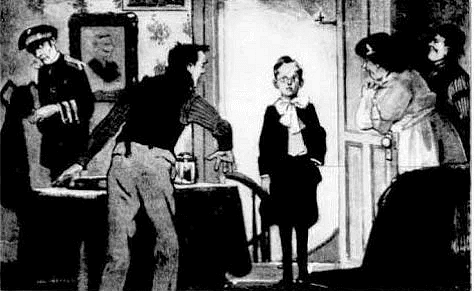
In the middle of all this chaos enters Harold wanting to know why there was so much fighting in the house. Much to the surprise of his parents, he is extremely excited to know that his father is the famous boxing champion ‘Porky’ and surprises everyone with his in-depth knowledge of the boxing world and the fact that he has bet some money on ‘Porky’s’ win. Hence, matters end peacefully, with Mr Fisher taking Mr Bramble to train for the ‘big fight’ and Harold asking his mother to help him with his studies.

03. The Man Who Knew Too Much – Summary

Key Points of the Story

  • The story begins with the introduction of Private Quelch, a new recruit at the training depot, who quickly earns the nickname “the Professor” due to his lanky appearance and extensive knowledge.
  • During a musketry lesson, Private Quelch impresses everyone with his knowledge of the service rifle’s mechanics, correcting the Sergeant and showing his confidence.
  • Private Quelch is ambitious and works hard to gain recognition, studying training manuals and constantly asking questions to the instructors.
  • Although he initially earns respect from his peers, they soon grow to resent him as he constantly tries to outshine them and correct their mistakes.
  • The atmosphere among the recruits becomes tense as Private Quelch’s enthusiasm and need to show off his knowledge creates a divide between him and his fellow soldiers.
  • A turning point occurs during a grenade lesson given by Corporal Turnbull when Private Quelch interrupts to provide additional information, which embarrasses the Corporal.
  • In a surprising twist, Corporal Turnbull allows Private Quelch to give a lecture on grenades, showcasing his knowledge while the other recruits feel inferior.
  • After the lecture, Corporal Turnbull announces that Private Quelch will be assigned to permanent cookhouse duties, which becomes a source of amusement for the other recruits.
  • Later, Private Quelch is seen lecturing the cooks on proper potato peeling methods, demonstrating that his need to prove his knowledge continues even in mundane tasks.
  • The story highlights the tension between ambition, knowledge, and social dynamics in a military setting, where one person’s desire to excel can alienate them from their peers.

Try yourself:

What was Private Quelch’s nickname among his teammates?

  • A.Private Q
  • B.Professor
  • C.Sergeant
  • D.Corporal

View Solution

Detailed Summary

In the story, we meet a character named Private Quelch during his first week of army training. He quickly gets a nickname, “the Professor,” because he is tall and wears glasses. When anyone talks to him, it is easy to see why he is called that. He knows a lot and is always ready to share what he knows. The other soldiers notice this right away.

One day, during a lesson about rifles, a Sergeant, who looks very tough, starts to teach the group about how rifles work. He tells everyone that the bullet comes out of the rifle very fast, at over two thousand feet per second. Just then, Private Quelch interrupts and corrects him, saying it is actually two thousand four hundred and forty feet per second. The Sergeant agrees but does not seem too happy about it. After the lesson, the Sergeant keeps asking questions, and he often turns to Private Quelch because he knows a lot. This makes the other soldiers respect Quelch even more.

Quelch wants to do well in the army. He studies hard and reads all the training manuals. He even stays up late to learn more. During training, he is very active and even tries to make everyone sing after long marches, which annoys the others. They do not like his enthusiasm, especially after walking for thirty miles. He tries very hard to impress the officers, and when they are around, he marches like a really serious soldier, swinging his arms like a Guardsman.

As time goes on, the other soldiers start to feel nervous around Private Quelch. At first, they respect him, but soon they begin to fear him because he always corrects their mistakes in front of everyone. If someone does something well, he tries to do it better. When the officer praises them for cleaning their hut well, Quelch jumps in to say thank you, trying to get attention for himself.

One afternoon, while everyone is relaxing, Corporal Turnbull is giving a lesson about hand grenades. Corporal Turnbull is a younger soldier who is very tough and has a lot of respect from the others because he has been to battle. He explains how a grenade is made and mentions that it has many parts to help it break into pieces when it explodes. Suddenly, Private Quelch interrupts and says there should be five main points to talk about first. This surprises everyone, and Corporal Turnbull, feeling embarrassed, hands the grenade to Quelch and tells him to take over the lesson.

Private Quelch stands up confidently and gives a detailed talk about the grenade. The other soldiers listen quietly, feeling scared. After he finishes, Corporal Turnbull thanks him but does not say much else. Then, he tells the soldiers that he has been asked to choose someone for a special job. Everyone thinks it might be a good job, but then he announces that Private Quelch is chosen for permanent cookhouse duties. This means Quelch will be the one to help in the kitchen, which is not a very exciting job at all. The other soldiers find it very funny and joke about it for days.

A few days later, the narrator and his friend Trower pass by the kitchen and hear Quelch’s familiar voice complaining about how the cooks are preparing potatoes. He is lecturing them about how they are not doing it in a healthy way. Hearing this, they quickly leave because they do not want to hear more of his annoying talk. Private Quelch’s eagerness to show off his knowledge ends up with him in a position that the others find amusing and not at all what he had hoped for.

Theme/ Message

  • The primary theme of the story revolves around ambition and the consequences of trying to outshine others. Private Quelch’s intense ambition leads him to constantly seek approval and recognition, which ultimately alienates him from his peers.
  • Another important theme is the challenge of fitting in. While Private Quelch possesses significant knowledge, his inability to connect with his fellow recruits creates a sense of isolation, highlighting the importance of social relationships in a group setting.
  • The story also conveys a message about humility. Private Quelch’s arrogance and need to display his intelligence often backfire, leading to his humiliation when he is assigned to a less prestigious role despite his impressive knowledge.
  • Finally, the story illustrates that knowledge is valuable, but how one chooses to share that knowledge can affect relationships. It is essential to balance expertise with empathy to avoid creating divisions among peers.

Difficult Words

  • Recruit: A person who has recently joined the military.
  • Musketry: The skill or practice of shooting with a musket or rifle.
  • Mechanism: The parts of a machine or device that work together.
  • Ambition: A strong desire to achieve something, usually requiring hard work.
  • Resent: To feel bitterness or anger about something unfair.
  • Enthusiasm: Intense and eager enjoyment or interest in something.
  • Impassive: Not showing emotion or feeling.
  • Condescending: Showing a feeling of superiority; treating others as if they are less important.
  • Nominate: To formally suggest someone for a position or role.
  • Monotonous: Dull, repetitive, and lacking in variety.
  • Unhygienic: Not clean or sanitary, which can cause health issues.
  • Vitamin: Essential nutrients that are important for health.
  • Droning: Speaking in a dull, monotonous voice.
  • Impudent: Not showing respect for another person; rude.
  • Segmentation: The act of dividing something into parts or sections.

02. A Dog Named Duke – Summary

Summary

  • Duke was a rough-playing Doberman Pinscher, four years old, weighing 23 kilos, with a red coat and a fawn vest. Chuck Hooper had doubts at first about buying him because his wife, Marcy, was not really a dog lover. She’s a tiny blonde; a Pomeranian was her idea of the right-size dog for a colonial house on a small plot. However, Chuck was very impressed with Duke’s energy and agility.
  • Hooper himself had an athletic build and was the Zonal Sales Manager of a chemical company. At the hospital, there were other injured people, but each morning when Marcy quietly went to work, it was a gate slamming down. One unlucky day, Hooper met with an accident and had to be admitted to the hospital due to a haemorrhage in the motor section of his brain, completely paralysing his left side.
  • Hooper remained critical for a month. Exercises, baths, and a wheeled walker did not work. He was discharged from the hospital and became very depressed as he was lonely at home, with Marcy away at work. In his first meeting with Duke after his accident, Duke hit Chuck above the belt, causing him to fight to keep his balance. Perhaps the dog sensed his master’s need, and from that moment, he never left Hooper’s side.

Recovery Journey

  • Hooper remained grim and didn’t reciprocate at all. Secretly, Marcy cried as she watched the big man’s grin fade away. One fine day, Duke seemed to be in no mood to tolerate his master’s indifference. He nudged, needled, poked, and snorted. By chance, Chuck’s right hand hooked onto Duke’s collar to hold him still. Duke pranced, and Chuck asked Marcy to make him stand.
  • He moved his right leg out in front. Straightening his right leg caused the left foot to drag forward, alongside the right. It could be called a step. Chuck was exhausted, but a beginning was made. The next day, Duke walked to the end of the leash and tugged. He managed to take four steps. In two weeks, both of them managed to reach the front porch, and by next month, they were along the sidewalk. Seeing this progress, the doctor prescribed a course of physiotherapy with weights, pulleys, and whirlpool baths.
  • On January 4, Hooper managed to walk to his district office without Duke. But Hooper was not mentally fit to undertake a full day’s work. There was no time for physiotherapy sessions, so Chuck again took Duke’s help, who pulled him along the street faster and faster. Chuck regained his stability and endurance, and the next year, he was promoted as the Regional Manager.
  • Chuck, Marcy, and Duke moved to a new locality in March 1956. But it was not to be. One day on October 12, 1957, after being run over by a car, Duke succumbed to his injuries in a nearby hospital. Duke was drugged and made it until 11 o’clock the next morning, but his injuries were too severe. People who had seen Chuck and Duke walk together sympathised with Chuck, who walked alone now. A few weeks later, the chemical company promoted Charles Hooper to the post of Assistant National Sales Manager. As a special tribute to Duke, they called this promotion as advancing ‘towards our objective, step by step.’

01. How I taught My Grandmother to Read – Summary

Summary

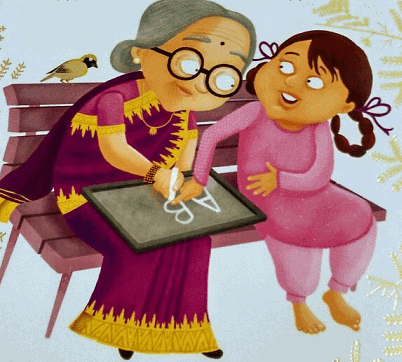
  • The writer was twelve years old and she used to stay with her grandparents in north Karnataka. Since there were very few diversions, the entire family would eagerly wait for a weekly magazine called Karamveera. This magazine published the famous writer Triveni’s novel, ‘Kashi Yatre’, as a serial. 
  • The novel dealt with the protagonist’s struggle to visit Kashi. Since grandmother believed in Kashi-Yatra as a pilgrimage, she could identify with the trials and tribulations of the main characters. 
  • Every Wednesday, the writer would read the next episode of the story to her. The grandmother would not only listen with great attention but also memorise it by heart. Later, she would discuss it with friends in the temple courtyard.

Try yourself:What was the name of the novel that was published in the weekly magazine Karamveera?

  • A.Kashi Yatra
  • B.Karamveera
  • C.Triveni
  • D.None of these

View Solution

  • One day, the writer had to go to the neighbouring village for a cousin’s wedding and stayed there for a week. When she returned, she was surprised to see her grandmother in tears. At night, the grandmother narrated how her past life, feeding and bringing up children, kept her busy, sparing no time for education of any kind.
  • Moreover, education for girls was not considered important in those days. Without the granddaughter, she had a tough time trying to decipher and guess the next episode of ‘Kashi Yatre’. 
  • She felt very desperate and helpless, silently gazing at the pictures, unable to read a single word. This incident fanned the grandmother’s desire to learn the Kannada alphabet, and she vowed to learn it by Dussehra. The granddaughter’s pleas, her mockery of the grandmother’s age, all fell on deaf ears. No wonder the grandmother proved to be an ideal student.

Try yourself:Why was the grandmother unable to read the episodes of ‘Kashi Yatre’?

  • A.She did not have the time to learn how to read.
  • B.She did not have access to the episodes of ‘Kashi Yatre’.
  • C.Education for girls was not considered important in those days.
  • D.She did not have anyone to teach her how to read.

View Solution

  • In no time, she could read, repeat and write Kannada. The writer presented her with a copy of the novel ‘Kashi Yatre’ as a token of appreciation, and her grandmother touched the feet of her granddaughter, her teacher, as a befitting tribute.

09. The Beggar – Short and Long Question answer

Supplementary Reader ‘Moments’ consists of a short story named The Beggar. This is a story of a poor drunkard beggar named Lushkoff who was provided work by Sergie, an advocate. Let’s see some Short & Long Answer Questions of the chapter.

Very Short Answer Type Questions

Q1: What was the name of the beggar?
Ans: The name of the beggar was Lushkoff.

Q2: Who did Lushkoff beg from?
Ans: Lushkoff begged from Sergei.

Q3: What was Sergei’s profession?
Ans: Sergei was an advocate.

Q4: What did Sergei remember about the beggar on seeing him?
Ans: Sergei remembered that he had seen him a couple of days before in Sadovya street.

Q5: What work did Sergei offer the beggar?
Ans: He offered the beggar the work of chopping wood.

Q6: Who was Olga?
Ans: Olga was a maid-servant at Sergei’s home.

Q7: What did Sergei give Lushkoff after the wood was chopped?
Ans: He gave him half a rouble.

Q8: When did Lushkoff use to visit Sergei’s home?
Ans: Lushkoff used to visit Sergei’s home on the first of every month.

Q9: Where did Sergei meet Lushkoff after an interval of two years?
Ans: Sergei met Lushkoff at the ticket window of a theatre.

Q10: What did Lushkoff tell Sergei about his profession when he met him after two years?
Ans: He told him that now he was a notary and was paid thirty-five roubles a month.

Short Answer Type Questions

Q1: How did Sergei recognise the beggar?

Ans: Sergei looked at the beggar. His face appeared familiar to him. He tried to recollect where he had seen him. Suddenly, his eyes fell on the beggar’s shoes. One shoe was high and the other was low. Now he clearly remembered where he had seen the beggar before. He had seen the beggar in Sadovya Street.


Q2: The beggar was a liar. What two lies did he tell Sergei?

Ans: Two lies told by begger to Sergei were:

  • When the beggar met Sergei for the first time, he told him that he was a student and had been expelled from the college. 
  • When he met Sergei, for the second time, he told him that he had been offered a position in Kaluga, but he had no money for the fare to get there.

Q3: What kind of work was given to Lushkoff initially? Why did he agree to do it?
Ans: Sergei refused to give alms to Lushkolf, the beggar, instead offered to give him work. He took him home and gave him the work of chopping wood. 

Lushkoff agreed to do this work, not because he was hungry and scanted work. He agreed to do it because of pride and shame and because he had been trapped by his own words.


Q4: How did Olga treat Lushkoff in the beginning? Why did she do this?
Ans: In the beginning, Olga treated Lushkoff callously. She called him a drunkard. She rebuked him. Then she would sit before him and grow sad. She looked into his face and wept. Then she chopped wood for him.  She did so because she felt pity for him. Secondly, she wanted to put him on the right path.


Q5: Where did Sergei send Lushkoff? What advice did he give him?
Ans: Sergei wanted to give Lushkoff better, cleaner employment. His friend needed a copywriter. As Lushkoff was able to write, so Sergei sent him to his friend. Sergei advised him to work hard and not to drink. He asked him not to forget his advice.

Q6: Where did Sergei see Lushkoff after two years? What work was he doing then?
Ans: One day, after two years, Sergei came across Lushkoff standing at the ticket window of a theatre, paying for a seat. He was wearing a coat collar of curly fur and a sealskin cap. Sergei recognized him. Lushkoff told him that now he was a notary and was paid thirty-five roubles a month.

Q7: Was Lushkoff not good at chopping wood?
Ans: No, Lushkoff was not good at chopping wood. He pulled a piece of wood towards him, put it between his legs, and hit the wood feebly with the axe. The piece of wood became unsteady and fell down. He again pulled it and struck it. The piece of wood again fell down. This shows that Lushkoff did not know how to chop wood.

Q8: Write a brief character sketch of Olga.

Ans: Olga was the maidservant of Sergei. She was stem-looking, but she was kind at heart. She rebuked Lushkoff. But then she took pity on him as he was weak and hungry. She did the chopping work for Lushkoff. Olga’s kindness had a great effect on Lushkoff. He gave up drinking and started taking interest in work. Thus Olga’s kindness saved Lushkoff’s life. 


Q9: What plea does Lushkoff make to Sergei when he appears at his yard?
Ans: Lushkoff pleads to Sergei to have pity on him. He says that he has not eaten anything for three days and does not have five copecks for lodging. He further tells Sergei that he had been a village school teacher for eight years and had lost his job due to scheming and lies.

Q10: Describe the physical appearance of Lushkoff when Sergei observes him in his yard.
Ans: Sergei observed Lushkoff closely when the latter came to his yard asking for alms. At that time, Lushkoff had a ragged appearance. He had worn a fawn-coloured overcoat and his eyes were dull and drunken. There was a red spot on either cheek. He looked every bit a disgusting beggar.

Q11: Why does Lushkoff want to go to Kaluga?
Ans: Lushkoff wants to go to Kaluga because he claims that he has an offer of a position in this province, after having lived without work for nearly a year. However, he cannot go there because he does not have any money.

Q12: Has Lushkoff become a beggar by circumstance or by choice?
Ans: Lushkoff has become a beggar not by choice but by circumstance. He was a singer in a Russian choir but was sent away for his drunkenness. Alcoholism had made him weak and he could not toil, so he took to begging for survival.

Q13: Why was the beggar taken aback when Sergei asked if he remembered having met him earlier?
Ans: The beggar was taken aback because he knew that his lies were going to be caught soon. The repercussions of extracting money by exploiting the sympathy of people could be very harsh for him. He could even be handed over to the police.

Q14: What reason does Lushkoff give Sergei for telling lies? 
Ans: Lushkoff tells Sergei that he was telling lies because no one would help him if he told the truth about his drunkenness. Instead, lies helped him get both sympathy and money that he required desperately to keep himself alive.

Q15: Is Lushkoff a willing worker? Why, then, does he agree to chop wood for Sergei?
Ans: Luskhoff is not a willing worker since alcohol has made him very weak, both physically and emotionally. Still, he agrees to do the menial job of chopping wood because of his pride and shame. Earlier he had expressed his willingness to do any work provided he was offered one and now he could not go back on his words.


Q16: Who was Olga? What task did Sergei assign to her?
Ans: Olga was Sergei’s cook. She appeared to be ill-tempered but eventually played an instrumental role in reforming Lushkoff with her words and noble deeds. Sergei told her to take Lushkoff to the woodshed and make him chop wood for them.

Q17: How did Lushkoff follow Olga to the woodshed? What did this reveal about his willingness to work?
Ans: Lushkoff followed Olga in a gait that showed his reluctance to work. It was obvious that his strength had been destroyed by ‘vodka’ and he was too weak to do any type of hard physical labour.

Q18: Why did Sergei hurry into the dining room? What did he see from there?
Ans: Sergei hurried into the dining room because he wanted to check the beggar’s behaviour while chopping wood. He saw both Olga and Lushkoff walking towards the shed. He also saw Olga’s expression of wrath towards the beggar and the manner in which he struggled to chop wood in the acute cold.

Q19: Who was the ‘pseudo teacher and why did he sit on a log?
Ans: The ‘pseudo teacher was the beggar Lushkoff. He sat on a log, lost in his thought as his frail health did not allow him to undertake the hard task of chopping wood but he could not get away from it either.

Q20: How did Sergei feel after he saw Lushkoff chopping wood?
Ans: Sergei didn’t feel angry anymore after he saw Lushkoff chopping wood. Instead, he felt a little sorry and ashamed at having given the tough task of wood-chopping to Lushkoff who seemed to him a spoiled, drunkard and probably a sick man. It was difficult for him to do such a menial task in the severe cold.

Q21: What remuneration was paid to Lushkoff for chopping wood for the first time? What additional offer was made at this time?
Ans: Sergei paid a rouble as remuneration to the beggar for chopping wood and instructed Olga to tell him that if he wanted, he could come back and chop wood on the first day of each month.

Q22: When and why did Sergei hire Lushkoff? How did he appear at this time?
Ans: Sergei hired Lushkoff when he moved into another house. He hired him to help in packing and hauling the furniture. This time Lushkoff appeared sober but gloomy and silent.

Q23: Sergei says, “I am happy that my words have taken effect.” Why does he say so? Is he right in saying this?
Ans: Sergei says so because Lushkoff looked sober and seemed to have helped in the packing and hauling of furniture. He is partially right in saying this because his constant support had at least given Lushkoff an option to quit his disgusting life as a beggar

Q24: What revelation was made by Lushkoff to Sergei at the theatre?
Ans: Lushkoff revealed to Sergei that he did not chop even a single stick of wood at his yard. All the toil was done by the good and noble cook, Olga, who tried to help him and underwent misery and shed tears for his sake.

Q25: “Thank you, too”. Why does Lushkoff say this to Sergei?
Ans: Lushkoff says this to Sergei because although Olga was the one who had actually reformed him but Sergei’s contribution too was important. He had taken interest in the life of a disgusting beggar and helped him drag himself out of the mess he was in.

Q26: How and why did Sergei express his pleasure before parting from Lushkoff?
Ans: Sergei expressed his pleasure by tapping Lushkoff gently on the shoulder and shaking hands with him at parting. He expressed pleasure in this manner because he was convinced that the beggar was now a reformed person and deserved respect and honour.

Q27: How did Sergei help Lushkoff to live respectfully?
Ans: Sergei helped Lushkoff to live respectfully by giving him odd jobs every time he came to the yard. Now Lushkoff did not need to beg alms since he got money for all the little tasks that he was given by Sergei. Lastly, Sergei sent Lushkoff to his friend with a letter of recommendation for cleaner employment as a copier.

Q28: Lushkoff is earning thirty-five roubles a month. How is he obliged to Sergei for this? 
Ans: Lushkoff is obliged to Sergei for earning thirty-five roubles a month because the latter had paved the way for this achievement. He had recommended Lushkoff to his friend and arranged the job of a copier for him.

Q29: Why did Sergei call Lushkoff his ‘godson’?
Ans: Sergei called Lushkoff his ‘godson’ because he had given him a push along the right path and his efforts had lifted him out of the pit of begging. He had shown interest in Lushkoff’s life and had felt happy to see him reformed.

Q30: Who does Lushkoff give the credit for reforming him? Why?
Ans: Lushkoff is grateful to Sergei for employment but he gives true credit for his reformation to Olga, Sergei’s cook. Outwardly Olga is full of anger and spite, but her heart is full of human sympathy and kindness. While she severely scolds Lushkoff for being a miserable drunkard, she weeps for him and chops wood for him. She is the chief reason why Lushkoff gives up his bad habits and transforms into a hardworking man.

Also Check at EduRev: 

Long Answer Type Questions

Q1: Describe the first meeting between Sergei and Lushkoff. How did Sergei take pity on Lushkofl?

Ans: One day, advocate Sergei met a beggar dressed in very shabby clothes. The beggar was crying and asked Sergei to have mercy on him. He said he had a job offer in Katuga but didn’t have money for the fare, so he needed some money. Sergei looked at him closely and suddenly remembered seeing him the day before on Sadovya Street. Then, the beggar had claimed he was a student expelled for not paying his fees.

At first, the beggar denied this accusation. But after Sergei scolded him, he admitted that he survived by lying. He said his name was Lushkoff and that he was out of work. Sergei refused to give him money but offered him work chopping wood instead. He brought Lushkoff home and told his maid, Olga, to take him to the woodshed to chop some wood. Sergei watched from a room and saw that Lushkoff was weak and unwilling to do the work. However, after an hour, Olga told Sergei that the wood had been chopped. Sergei then gave Lushkoff half a rouble.

Q2: Sergei brought Lushkoff home to get some wood chopped. flow did he help Afterthought?

Ans:  Lushkoff chopped the wood, Sergei felt happy that he had helped someone in need. He believed he had managed to reform a beggar. Sergei told Lushkoff that he could come on the first of every month to chop wood for money. So, Lushkoff came every month, even though he was very weak and could barely stand. There was always work for him to do, and he did it. Sometimes, he chopped wood.

Other times, he shoveled snow, organized the woodshed, or beat the dust out of mattresses and rugs. Each time, he was paid between twenty to forty kopecks. One day, when Sergei moved to a new house, he hired Lushkoff to help with packing and moving furniture. During this time, Lushkoff was quiet and serious. After the job was done, Sergei offered to help Lushkoff find a better job. He wrote a letter of recommendation to a friend and gave it to Lushkoff, telling him it would help him get a job copying documents. Sergei felt satisfied, believing he had helped Lushkoff get on the right track in life.

Q3: Describe the last meeting between Sergei and Luslikoff. How did Olga help Lushkoff to be a real man?

Ans: Two years later, Sergei saw Lushkoff at a theater, buying a ticket. Lushkoff was dressed in a coat with a fur collar and a sealskin hat. Sergei recognized him and learned that Lushkoff was now a notary, earning thirty-five roubles a month. Sergei was happy for him and congratulated him on his success. However, Lushkoff revealed that it wasn’t Sergei but his maidservant, Olga, who had helped him change. When he used to come to chop wood, he couldn’t do it because he was weak and unskilled. Olga felt sorry for him and did the chopping for him. Lushkoff admitted that he never chopped any wood himself; it was all Olga’s doing. Her kindness inspired him to stop drinking and start working hard to earn a living. Thus, it was Olga’s kindness that changed his life.

Q4: During their conversation, Lushkoff reveals that Sergei’s cook, Olga, is responsible for the positive change in him. How has Olga saved Lushkoff?

Ans: Olga, Sergei’s seemingly ill-tempered cook, had been the main motivating factor behind Lushkoff’s positive change. She saved him by rousing the positivity in him that had got suppressed due to his alcoholism. She scolded him, cursed him but also shed tears for him and suffered misery for his sake.

Outwardly she expressed disgust for Lushkoff but went out of her way to help him reform himself. She risked the displeasure of her master, Sergei, by hiding the truth about the odd jobs assigned to Lushk off. She gave true humane affection to him and showed both pity and concern. Her affection is exhibited by the fact that she chops wood for him so that he can earn some money to feed himself and stay alive. It is Olga’s sincere and selfless efforts that finally give Lushk off a lease of life. Lushk off too remembers her with gratitude for her kind words and her noble deeds.

08. A House is not a Home – Short and Long Question answer

Very Short Answer Type Important QuestionsQ1: How was the author’s first year in High School?
Ans: The author’s first year in high school was marked by an awkward transition.

Q2: What did the author notice one Sunday afternoon?
Ans: One Sunday afternoon, the author noticed smoke seeping in through the ceiling seams.

Q3: What did the author’s mother carry out of the house first of all?
Ans:  In the midst of the chaos, the author’s mother rushed out of the house with a small metal box containing important documents.

Q4: What had happened to the author’s father?
Ans:  The author’s father had passed away when he was young.

Q5: Why did the author’s mother run into the house for the second time?
Ans: The author’s mother went back inside the burning house to retrieve her husband’s letters and pictures.

Q6: Who stopped the author to run into the house?
Ans: The author was prevented from entering the house by a firefighter.

Q7: What was the author worried about after the fire tragedy?
Ans: After the fire tragedy, the author’s greatest concern was the whereabouts of his missing cat.

Q8: Where did the author and his mother spend their night after the fire tragedy? 
Ans: The author and his mother spent the night after the fire at his grandparents’ house.

Q9: Why did they have to borrow money?
Ans: They had to borrow money since their credit cards, cash, and identification were destroyed in the fire.

Q10: How did the students help the author at school?
Ans: The author’s classmates showed support by collecting money to help him purchase school supplies, clothing, and other necessities.

Short Answer Questions

Q1: Why did Zan feel awkward and isolated during his first year of high school?
Ans: Zan’s position during his first year of high school as the junior most class made him feel awkward. The big size of the new school and the separation from his closest friends made him feel isolated.

Q2: Why did the author miss his old teachers?
Ans: The author missed his old teachers because they would encourage him to get involved in school activities so that he could meet new people. They also assured him that he would soon adjust to his new school. Their affection, warmth, and cooperation in making him feel special made the author miss them.

Q3: What kind of day it was when a fire broke out in the author’s house? What were the author and his cat doing at that time?
Ans: It was a Sunday afternoon of a cold and windy winter when the fire broke out. The author was at the dining-room table doing homework with the fire burning in the fireplace. His red tabby cat was lying over his papers, purring loudly and sometimes swatting at his pen.

Q4: What does the author notice one Sunday afternoon? What is his mother’s reaction? What does she do? 
Ans: One Sunday afternoon, the author smelled something strange and noticed smoke pouring in through the seams of the ceiling of his house. His mother reacted promptly and the two of them ran out into the front yard. However, she ran back into the house and brought out a small metal box full of important documents.

Q5: What happened to the narrator’s mother when she had run into the burning house?
Ans: The author’s mother inhaled a little smoke when she ran into the burning house. She was rescued by the firemen who put an oxygen mask on her after bringing her out. However, she was fine soon.

Q6: How did Zan’s mother save important documents from the burning house?
Ans: Zan’s mother saved important documents from the burning house by courageously rushing inside the house on fire and bringing out a small metal box that contained those documents. She thus risked her life but eventually succeeded in her mission.


Q7: Why did Zan try to run after his mother and why did the fireman hold him back?
Ans: Zan tried to run after his mother because he was afraid of losing her. He was afraid that she might get burnt in the fire. The fireman held him back because Zan’s act was very rash and illogical. the lie could not have saved his mother and would have risked his life as well.

Q8: When did the author realise that his cat was missing?
Ans: After five hours of a raging fire that burnt down the author’s house almost completely, he realised that his cat was missing. He had not seen her all this while and realised to his horror that she was nowhere to be found.

Q9: Why does the narrator say, “I was suffering loss, big time”?
Ans: The author feels that he was suffering loss, big time because he had lost his old dear school and teachers, he had lost his house to the fire, and now he had lost his dear cat whom he loved dearly.

Q10: In what condition does the author go to school after the fire incident?
Ans: After the fire incident, the author goes to school wearing the dress that he had worn to church on Sunday morning and the tennis shoes that he had borrowed from his aunt. His shoes, clothes, books, homework, and backpack had been destroyed in the fire.

Q11: Why is the author deeply embarrassed the next day in school? Which words show his fear and insecurity?
Ans: The author is embarrassed because he feels that his appearance is weird without uniform, books and a backpack. His fear and insecurity are shown by the words: “Was I destined to be an outcast and geek all my life?”.

Q12: Why did the author dislike growing up?
Ans: The author disliked growing up because he felt that growing up had brought so many losses with it. He had lost his old school, his friends, his house and most of all his dear pet cat.

Q13: What is surreal? Why does the author feel that everything was surreal?
Ans: Surreal means something strange or unreal. The author felt that everything was surreal because too many unfortunate things had happened to him – his house was burnt down, his cat was lost, his mother was left with no money and he had no books, shoes, clothes and school uniform. His secure zone had been ripped away suddenly and the changes were too much and too many for him to handle.

Q14: What was the extent of the damage caused by the fire?
Ans: All belongings except photo albums, documents and some personal items had got burnt in the fire. Whatever remained had been destroyed by the water and chemicals that had been used to put out the fire.

Q15: Why did Zan’s mother have to borrow money from his grandparents?
Ans: Zan’s mother had to borrow money from his grandparents because her credit cards, cash and even identification that was needed to draw money from the bank had gotten burnt up in the fire. She had to rent a new place, buy new clothes for Zan and resettle quickly. She did not have time to wait for the recovery of her lost documents till then.

Q16: Why did the narrator go over to his burnt house even though they had rented an apartment nearby?
Ans: The narrator went over to his burnt house even though they had rented an apartment nearby because he hoped that his cat would be found somewhere. He would watch the clearing away of the debris expecting to see his cat.

Q17: How and why were people acting stranger than usual at Zan’s school?
Ans: When Zan was getting ready for gym class at his locker, people were gathering around him asking him to hurry up. This was stranger than usual as they almost seemed to shove him into the gym. They behaved so because they had put up a surprise collection of school supplies and clothes etc for Zan in the gym.

Q18: Why was the author overcome by emotions when he got help from his schoolmates?
Ans: The author was overcome by emotions when he got help from his schoolmates because they had gone out of their way to bring him the things he needed. He was touched by their genuine outpouring of concern.

Q19: When does the author say “It was like Christmas”? Why?
Ans: The author says this when he gets inside the gym to see the surprise load of school supplies and different clothes on the big table only for him. This seemed like Christmas because these assorted gifts were similar to the surprise gifts that one gets from loved ones on Christmas.

Q20: Why was it different for Zan to see his house getting rebuilt? How did the fire help him?
Ans: It was different to see his house getting rebuilt because Zan wasn’t alone this time. Two of his new friends from school were with him. The fire had helped him by diverting his mind away from his feelings of insecurity. He now opened up to the wonderful people around.

Q21: How did the author’s feelings of loss and tragedy seem to diminish?
Ans:  The author felt gratitude for life, his new friends, the kindness of the woman who had rescued his cat, and certainly for the life of his beautiful cat. This gratitude diminished his feelings of loss and tragedy.

Q22: Why is the author deeply embarrassed the next day in school? Which words show his fear and insecurity?
Ans: The author was full of remorse as he was left with nothing. He didn’t have proper dress and study material. He had no backpack. He had a feeling of insecurity. All things appeared strange to him. He was shocked deeply and seemed frustrated. The words uttered by him “Was I destined to be an outcast and a geek all my life? I didn’t want to grow up, change or have to handle life, if it was going to be this way. I just wanted to curl up and die”. These words reveal his fear and insecurity.

Q23: What was the author’s mother doing on a Sunday afternoon?
Ans: It was blowing cold on that Sunday afternoon. And the author was doing homework at the dining table. His mother was fuelling the fire at the fireplace to keep the room warm.

 Q24: Which three things made the author’s house a home?
Ans: The fire tragedy changed the author’s life. He was so depressed that he did not want to grow up and wanted to die. But his reunion with his cat, his new friends in the school and his new house made his house ‘a home’ where he could live.

Q25: Why did the author, Zan, love his cat so much?
Ans: He had a pet cat which was his constant companion and source of entertainment. He was fond of her and could never think of living away from her. He had a special bond with her because he had rescued her when she was a small kitten.

Long Answer QuestionsQ1: The cat and the author are very fond of each other. How has this been shown in the story?
Ans: The red tabby cat had been rescued by the author when she was a helpless kitten. She would never be far from him and knew that he was the one responsible for giving her a good life. He would get up early in the morning and teasingly disturb her. She would then tag along after him, climb up his robe and crawl into his pocket to fall asleep. Zan loved her so much that he would allow the cat to sit over his papers and swat at his pen while he did his homework. He missed her terribly after losing her and would go over to watch the clearing of debris with the hope to find her somewhere. When she was restored back to Zan, the cat purred as happily as the author felt elated to get her back. Even the woman who rescued the cat knew that she was loved and sorely missed.

Q2: What actions of the schoolmates change the author’s understanding of life and people, and comfort him emotionally? How does his loneliness vanish and how does he start participating in life?
Or
What role did Zan’s school play in normalising his life after the fire accident?
Ans: After the loss of all his belongings in the fire that ravaged his house, Zan, the narrator, started feeling depressed and embarrassed. At this time, the friendly and helpful actions of his schoolmates changed his understanding of life and people and comforted him emotionally. His schoolmates took up a collection and bought him school supplies, notebooks, and all kinds of clothes – jeans, tops, and sweats. Those who had never spoken to him before came up to him and introduced themselves. Many invited him to their houses. Their genuine concern touched Zan. He felt relieved and began to believe that everything would be okay. He stopped focussing on his feelings of insecurity and opened up to all the wonderful people around him. The company of his new friends and sharing joys with them made his loneliness vanish and reconnected him to live.

Q3: What is the meaning of “My cat was back and so was I”? Had the author gone anywhere? Why does he say that he is also back? 
Ans: Zan’s cat was brought back home after more than a month of absence. She had run away due to fear of fire and could not be brought back early as her collar had those phone numbers that had got disconnected due to the fire. Zan too was back to his normal cheerful life. His absence was emotional unlike the physical absence of his cat. Zan says that he is also back since he wants to point out the return of his faith in the goodness of life. He had drifted away from joys of friendship and comfort of familiarity on moving to a new school. By the time his cat returned, his gratitude for life had also returned in the company of new friends.

Q4: Describe the fire tragedy that struck Zan’s house?
Ans:  What was stoked to keep the house nice and warm, triggered a major fire break out that turned Zan’s house to cinders and left him and his mother devastated.
At first, Zan only smelled something strange but soon noticed smoke pouring in through the seams of the ceiling. The smoke filled the room quickly and Zan and his mother could barely see. Somehow, they groped their way to the front door and ran out into the front yard.
No sooner had they made their way outside than the whole roof was engulfed in flames, and the fire spread quickly. Zan ran to his neighbours to call the fire department and his mother ran back into the house and soon came out carrying a small metal box full of important documents. She rushed back into the house to retrieve his husband’s pictures and letters – the only things she had to remember him by.
Zan tried to run after her but was stopped by a fireman. The fire truck had already arrived and was busy dousing the fire. Some firefighters ran into the house and safely brought out Zan’s mother and gave her an oxygen mask because she had inhaled smoke.
It took five hours to finally put out the fire but the house was almost completely burnt and there was the sign of Zan’s pet cat. Zan feared that she was burnt alive.

Q5: What values in Zan’s mother endeared him to her? Zan’s mother was his sole support after the death of his father. She carried out her responsibilities as a single parent with complete devotion. Zan loved her a lot and obeyed all that she
Ans:  asked him to do because he respected her for her value of devotion towards him. He willingly changed school and tried to adjust to the new environment because he knew his mother was doing everything for his good. She valued memories and knew the significance of the letters and pictures of her late husband. She risked her life to recover these things and thus displayed the value of courage. Her son, Zan, acknowledged this value when he evaluated the few things that could be saved from the fire, all because of his mother’s courage. She possessed the value of emotional strength and hence quickly brought back normalcy to Zan’s life by sending him to school the next day after the fire incident. Zan admired her because of her positive values both as a mother and as a human being. That is why he rushed after her to save her from the fire, without worrying about his own safety, because he did not want to lose her at any cost.

Also Check at EduRev

Q6: Describe the author’s experience at school after the fire tragedy.
Ans: The author had just joined a new school. He was facing a big problem to make himself fit in the new school. Just after a couple of days in his house caught fire. His school bag and shoes had burnt in a fire.
The next day he went to school. He was around school like a wanderer. Everything appeared to him strange. He did not know what was going to happen him. He returned home with a broken heart. He was experiencing terrible developments in his life.
The next day when he went to school; he found a strange atmosphere all around. People were getting together all around him. They had collected money for him and arranged school supplies and clothing for him. This changed his vision for life once again.

Q7: How is a Home different from a House? Explain with reference to the lesson ‘A House Is Not a Home’.
Ans: Life without love is not life. Human relationship is based on love. The title itself indicates it clearly that a house is not a home without love. The author had to face adverse circumstances in his life. He was a fatherless boy. He led a satisfactory life with his old friends and teachers. But when he changed his schools, he could not adjust to the new environment. He felt alienated. Later, his house caught fire and he lost all the things including his cat. He started feeling dejected and isolated. Life had no interest in him anymore. He started building a new house. But it was not home, as a house is a home only when there is love and happiness. The author did not have any attachment to the new house. His reunion with his cat, his new friends, and the new house made his house a home.

07. The Last Leaf – Short and Long Question answer

Very Short Answer Type Important Questions

Q1. Who were Sue and Johnsy?
Ans: Sue and Johnsy were two artists.

Q2. What happened to Johnsy?
Ans: Johnsy became severely ill in November.

Q3. What fear did Johnsy have in her mind?
Ans: Johnsy had a fear in her mind that she would pass away on the day when the last leaf on the creeper fell.

Q4. Why was the doctor confused about Johnsy’s illness?
Ans: The doctor was perplexed because none of the medicines were proving effective on Johnsy’s illness.

Q5. What was happening to the leaves on the creeper outside Johnsy’s window?
Ans: The leaves were falling due to the combination of extreme cold and strong wind outside Johnsy’s window.

Q6. Who was Behrman?
Ans. Behrman was an old painter.

Q7. What did Behrman do?
Ans: Behrman painted a picture of a creeper with a single leaf on the wall.

Q8. What happened to Behrman?
Ans: Behrman passed away due to pneumonia.

Q9. Who saved Johnsy’s life?
Ans: Behrman, the old painter, saved Johnsy’s life.

Q10. What was Behrman’s masterpiece?
Ans: Behrman’s masterpiece was the painting of a creeper with a single leaf on it.

Short Answer Type Important Questions

Q1. Who were Sue and Johnsy? Where did they live?
Ans: Sue and Johnsy were young artist friends who were struggling to establish themselves in the world of art. Both lived in a small flat which was on the third floor of an old house. They shared this place. 

Q2. Why was Sue worried when Johnsy got sick?
Ans: Sue was worried because Johnsy was lying in bed without moving and only staring out the window. Although Johnsy had pneumonia, which could be cured, her condition was not improving. This made Sue concerned about Johnsy’s health.

Q3Why was Johnsy’s condition worrisome according to the doctor?
Ans: According to the doctor, Johnsy’s condition was worrisome because she did not show any signs of improvement despite good treatment. He thought that perhaps she had lost her will to live and no medicine could help her in this negative state of mind.

Q4. How did Johnsy associate herself with the falling leaves?
Ans: It was autumn and the ivy creeper leaves were falling gradually. This depressed an already ill Johnsy and strangely enough, she associated her falling health with the leaves. She believed that she would die when the last leaf fell. 

Q5. How did Sue try to revive Johnsy’s interest in things around her?
Ans: Sue talked about clothes and fashions to draw Johnsy’s interest in things around her. She also moved her drawing board to Johnsy’s room and whistled as she painted, to keep Johnsy’s mind off her illness.

Q6. How did Sue help Johnsy during her illness?
Ans: Sue helped Johnsy by looking after all her needs. She would give her hot soup from time to time and sit by her side and talk to her. She called the doctor and even sought help from their neighbour Behrman.

Q7. Why was Johnsy counting backwards while looking out of the window?
Ans: Johnsy kept looking out of the window and counted backwards to note the number of leaves left on the ivy creeper. She believed that she would die when the last leaf fell whereas the leaves were falling in a normal process of nature during the autumn season.

Q8. What quality of friendship do you find in Sue as a friend? 
Ans: Sue was a loving and earing friend of Johnsy. She was her best friend as Sue always provided her with mental support. When her friend was obsessed with the thought of dying with the fall of the last leaf on the ivy creeper, she tried to look at the positive side of things. She always convinced her friend to think positively and never think about death. Obviously, she represents true friendships and sacrifice in the story.

Q9. How did Sue try to convince Johnsy that her belief about dying with the last leaf was nonsense?
Ans: Sue immediately rubbished Johnsy’s belief as nonsense. She tried to convince her by telling her that old ivy leaves had nothing to do with her illness. The doctor too was confident that she would get better.

Q10. Why did Sue seek the promise from Johnsy not to look out of the window while she completed her painting?
Ans: Sue sought this promise because she did not want Johnsy to go deeper into the depression on see the ivy leaves fall. Moreover, she could not even pull the curtains to stop Johnsy from looking out as she needed the incoming light to complete her painting and get money for the two of them by selling it.

Q11. Who was Behrman? Why did Sue share her worry with him?
Ans: Behrman was a sixty-year-old painter who lived on the ground floor of the same building as Sue and Johnsy. Sue shared her worry with him because Behrman was an elderly person and his vast experience of life could be of great help.

Q12. Behrman has a dream. What is it? Does it come true? (Textual)
Ans: Behrman dreamt of painting a masterpiece someday. His dream did come true when he painted a leaf that was a near replica of a real leaf. This masterpiece saved a young life and fulfilled Behrman’s ambition too. Unfortunately, it cost him his life.

Q13. ‘I’m tired of waiting.’ Why did Johnsy say so to Sue?
Ans: Johnsy wanted Sue to finish her painting quickly so that she could see the last leaf fall. She believed that she would die with it but this was taking too long. She became tired of waiting for the last leaf to fall.

Q14. What did Sue and Behrman see from the window of the room next to Johnsy’s?
Ans: Sue and Behrman saw that only one leaf was left on the ivy creeper that was fluttering in the icy cold wind accompanied by heavy rain. Under such conditions, it was bound to fall anytime soon.

Q15. Why was Sue nervous and reluctant while drawing the curtains on the morning after the storm?
Ans: Sue was nervous because she was certain that the last leaf had fallen at night. This could make Johnsy quit all hope of survival as she had associated her death with the falling leaves of the ivy creeper.

Q16. What made Sue exclaim about looking out of the window on the morning after the storm?
Ans: Sue exclaimed in amazement and delight because the last leaf was still there on the ivy creeper. She pointed out to Johnsy that the leaf looked quite green and healthy. It had not fallen despite the fierce winds and rain. This meant that Johnsy, too, could recover.

Q17. What revived Johnsy’s will to live?
Ans: Johnsy had developed a superstition that she would die with the fall of the last leaf. A severe attack of pneumonia had left her mind morbid. When she saw the last leaf surviving after the windy wet night, her will to live revived. It made her realise that it was really a sin to want to die.

Q18. When did Johnsy realize her mistake?
Ans: When Johnsy saw the last leaf intact, she admitted that Sue had looked after her so lovingly and she, in turn, had been a bad, wicked, gloomy, and non-cooperative girl. She had now realized that it was a sin to want to die.

Q19. When and why was the doctor’s report encouraging about Johnsy’s condition?
Ans: The doctor gave an encouraging report about Johnsy’s condition after examining her in the afternoon a day after the storm. He believed that the report was encouraging because now Johnsy had regained her will to live.

Q20. What news about Behrman did the doctor convey to Sue when he came to examine Johnsy?
Ans: When the doctor came to examine Johnsy, he told Sue that Behrman, too, was suffering from pneumonia. He said that he was confident of Johnsy’s recovery but feared that there was no hope for Behrman.

Q21. What led to Behrman’s unfortunate death?
Ans: Behrman died because he had spent the entire stormy night painting a replica of the last leaf on the ivy creeper and had caught pneumonia as a result. He did this to save Johnsy’s life. He did not want her to see the creeper without its last leaf and lose the will to live

Q22. Which items were found near Behrman when he died? What did this signify?
Ans: A ladder and a lighted lantern were found near Behrman’s bed when he died. There were also some brushes and green and yellow AT paints on the floor near the ladder. This signified that the last green and fresh leaf had been painted by Behrman all through the stormy night.

Q23. What is Behrman’s masterpiece? What makes Sue say so? (Textual)
Ans: Behrman’s masterpiece was the leaf that he painted on the wall opposite Johnsy’s window. He had braved icy winds and rains at night while painting the leaf. Sue called it a masterpiece as it was green and healthy like a real leaf. Besides, it saved Johnsy’; life by reviving her will to live. Thus, Behrman’s painting was a masterpiece in the sense that it saved a precious life and was able to be an artist.

Q24. What saved Johnsy’s life? 
Ans: The last half of the painting created by Behrman on the wall opposite Johnsy’s window saved her life. This leaf was a perfect imitation of the last leaf hanging on the ivy creeper. Johnsy believed it to be a real leaf, which made her realise that wanting to die was a sin and that she had been foolish for thinking she would die when the last leaf fell.

Q25. “It looks quite green and healthy”. What was the cause of the leaf’s colour and freshness?
Ans: The last leaf on the ivy creeper looked quite green and healthy because it was not a real leaf, but a painted one. Behrman had painted it overnight to help save Johnsy’s life.

Q26. Why did Johnsy keep looking out of the window?
Ans: Johnsy frequently looked out of the window because there was a creeper on the wall opposite her. She believed that she would die when the last leaf of the creeper fell. As it was autumn, the leaves were falling, which made her anxious. This is why she kept gazing out of the window.

Q27. How did Sue try to keep Johnsy cheerful?
Ans: The doctor had said that Johnsy’s chances of recovery were only one out of ten. Sue became sad and cried bitterly. But she wanted to cheer up Johnsy. So she entered her room, whistling a cheerful tune.

Q28. How did Behrman react to Johnsy’s fancy?
Ans: Behrman reacted negatively to Johnsy’s belief that she would die when the last leaf fell. He considered her thoughts to be nonsense and questioned her foolishness. Behrman expressed concern for her well-being, stating that she should not entertain such absurd ideas.

Q29. What did Johnsy believe about the falling leaves? Did Sue believe the same?
Ans: Johnsy got a fancy that she would die with the fall of the last leaf. But, Sue considered it a foolish idea. She said that there could be no relationship between the last leaf and somebody’s life.  

Q30. How did old Behrman die?
Ans: Behrman knew about Johnsy’s fancy about the falling leaves. He went out in the cold and snow and painted a leaf on the wall. l le caught pneumonia and died.

Q31. How did Johnsy realize her mistake?
Ans: Johnsy was suffering from pneumonia and believed she would die when the last leaf fell from the creeper outside her window. One night, only one leaf remained, and she felt certain it would fall, taking her life with it. However, that night, Behrman painted a leaf in its place, ensuring it stayed on the vine. This act made Johnsy realise that it was a sin to wish for death. She understood that she had been foolish in her thoughts and decided to fight for her life.

Q32. What kind of a friend was Sue to Johnsy?
Ans: Sue and Johnsy were close friends. Both were painters. Apart from that, their tastes and views were similar. They lived in the same small flat. When Johnsy suffered from pneumonia, Sue looked after her with love and care. It was largely because of her care that Johnsy’s life was saved.

Q33. Describe in your own words the colony where the artists lived.
Ans: The artists’ colony grew in the old village named Greenwich. It was to the west of Washington Square., Its streets were winding. These streets had strange angles and curves.

Q34. What is Johnsy’s illness? What can cure her, the medicine or the willingness to live?
Ans: Johnsy, a young artist, was ill. She was suffering from pneumonia. But later on, she suffered from a misconception that she would die as soon as the last leaf on the creeper fell. The medicine did not affect her. Her willingness to live could only cure her.

Q35. Do you think the feeling of depression Johnsy has is common among teenagers? 
Ans: Life has two aspects i.e. positive and negative. It depends upon us how we take it. Nowadays, it is very common that teenagers are getting depressed because of cut-throat competition. On the other hand, a majority of teenagers who take life positively and face difficulties boldly never lose hope and proceed further.

Also Check at EduRev: 

Long Answer Type Important Questions

Q1. What is Johnsy’s illness? What can cure her – the medicine or her willingness to live?
Ans: Johnsy suffered an attack of pneumonia in the cold winter month of November. Her illness made her so weak that she went into depression. She would lie still on her bed and keep gazing out of the window. The autumn added to her gloom when she saw the trees shedding leaves. She began to associate her death with the falling leaves and this negative thought deteriorated her health. When she gave up all hope in life, she refused to eat anything and medicines lost their effect. According to the doctor, her recovery depended on her willingness to live. In the absence of determination to get well soon, even the medicines failed to affect positively. 

Q2. Sue is a true and faithful friend. Comment.
Ans: Sue displays the virtues of a true and faithful friend. She and Johnsy were young artist friends who shared a small flat. When Johnsy fell ill, Sue did not spare any effort to nurse her back to health. She exhibited the values of sincerity and commitment to her friend by calling the doctor who would visit them daily to review Johnsy’s condition. She tried to lift Johnsy’s spirits by talking cheerfully to her thus exemplifying the value of unwavering support to a depressed friend.
She would sit beside Johnsy’s bed and paint so that she could earn for herself and Johnsy. She comforted Johnsy and dealt with her cranky behaviour very patiently. With her cheerful disposition and her optimism, she tried her best to reassure Johnsy that the old ivy leaves had nothing to do with her illness. Sensing the seriousness of Johnsy’s health and her state of mind, she at once sought Behrman’s help. Thus, Sue proves to be a compassionate human being and a true friend.

Q3. Do you think the feeling of depression Johnsy has is common among teenagers?
Ans: Yes, the feeling of depression Johnsy has is common among teenagers. It is so because, like Johnsy, they, too, lack emotional maturity. They fail to understand that sorrows are as much a part of our lives as joys are. Certain situations in life are unpredictable as well as unavoidable. Teenagers become nervous while encountering such situations. They begin to gather negative thoughts and have a fear of failure. It becomes a vicious cycle, and their weak health aggravates emotional instability. Pessimism begins to destroy their willpower.
Another problem is that like Johnsy, teenagers take a lot of time to get convinced. They are difficult to counsel and try their loved one’s patience a lot. The absence of a healthy lifestyle pushes them further into negativity and depression becomes deep-rooted.  Therefore, teenagers should inculcate positive values like optimism, strong willpower, and faith through meditation and regular exercise in order to enjoy the blessings of a sound mind in a robust body.

Q4. How did Behrman save Johnsy’s life?
Ans: Behrman saved Johnsy’s life by sacrificing himself at the altar of art. “The Last Leaf” is about his extreme sacrifice that infuses life in a young, depressed woman. Johnsy’s illness was serious but could be cured if she had the will to live. Her falling health was more due to her state of depression than pneumonia. The sixty-year-old painter Behrman took upon himself the difficult responsibility of saving Johnsy. He made a single-handed effort to brave the icy winds and rain to reach the window by climbing a ladder and finally painting a fresh and green leaf that looked natural and real. The readiness with which he gave up his life shows art’s unparalleled commitment to talent. He painted the leaf with such passion that it revived the sinking breath of Johnsy. He thus saved Johnsy’s life by sacrificing his own.

Q5. Imagine Behrman survives the attack of pneumonia. His family takes him back to his native countryside in order to serve the old man and nurse him back to health. As Johnsy, write a letter to Behrman expressing your gratitude.
Ans:-
(Date)
2-111 Floor Ivy Apartments
London
Dear Mr. Behrman
Trust your health is improving with each day. Sue and I think of you all the time and miss you a lot. We have always looked up to you as a friendly neighbour and a kind gentleman artist. Words fail me when I express gratitude for the extraordinary help extended by you during our moments of crisis.  Shivers run down my spine when I recall the time you risked your life to save a silly girl like me. You are a very brave person and a true artist. Your masterpiece reflects your passion and dedication and it has made me realize that my whims were utterly senseless.
Your life is an inspiration for young people like me. I have learned from you that the worthiest thing is being alive. I promise that I shall never let pessimism overshadow me again. Sue and I wish you a speedy recovery and hope to see you soon. We expect to have you back here and wish that you may paint many more masterpieces.
With warm regards
Johnsy

Q6. Describe briefly how Behrman saved Johnsy’s life.
Ans: Sue and Johnsy were two young girl artists. They lived together in the artists’ colony. Once Johnsy caught pneumonia. She developed a fancy that she would die when the last leaf on the I y creeper fell. The doctor said that she should take an interest in life and wish to live. Only then could she be saved. Behrman was an old painter. He lived on the ground floor beneath them. He was a failure in art. For forty years, he had been trying to paint a masterpiece, but he had not yet started h. He came to know of Johnsy’s fancy. The night the last leaf fell, he painted a leaf on the wall. He worked all night in the air and snow and painted the leaf. The next morning, Johnsy saw the leaf on the wall: Her will to live returned. Her life was saved. But Behrman caught pneumonia and died. Thus, he sacrificed his life and saved Johnsy’s life. The last leaf painted on the wall was his masterpiece.


Q7. In “The Last Leaf” why did Sue cry bitterly when the doctor had gone? Later she walked into Johnsy’s room whistling a cheerful tune. Why?
Ans: Sue and Johnsy were two young girls. They were painters. They lived like sisters. The studio is in an artists’ colony. One day, Johnsy had an attack of pneumonia. Her condition worsened. Shhaedloasitctihnet will live. One day, the doctor told Sue that Johnsy’s disease was psychological too. She did not want to live. In such a condition, no medicine could work. If she did not get back the will to live, her chances of recovery were only one out of ten. When Sue heard this, she felt very sad. She cried bitterly as soon as the doctor had gone. But the next moment, she entered Johnsy’s room, whistling. Sue did so because she wanted to cheer up Johnsy.

Q8. What did Johnsy believe about the falling leaves? Did Sue believe the same thing?
Ans: Sue and Johnsy were two young artist girls. They had a joint studio. They loved each other like sisters. One day, Johnsy caught pneumonia. There was an ivy creeper on the back wall of the next house. Johnsy could see it through her window. The leaves of this creeper were falling fast in the cold winds. Johnsy developed a fancy that she would also die when the last leaf of the creeper fell. She lost the will to live. Sue came to know of Johnsy’s fancy. She tried her best to cheer up Johnsy. She told her that there was no link between the falling of leaves and her death. She nursed Johnsy with love and care. She told Behrman about Johnsy’s fancy. Behrman was a painter. He painted a leaf on the wall when the last leaf fell. This saved Johnsy’s life. Thus, Sue played an important role in saving Johnsy’s life.

Q9. Write a brief character sketch of old Behrman.
Ans: Old Behrman was a painter. He was past sixty. But he was a failure in art. He earned very little through his paintings. He always said that he was going to paint a masterpiece. But for the last forty years, he had not even begun it. Behrman was a drunkard. His beard was long and curling. It gave him the look of an imp. He was a tough fellow. He hated weakness in a man. He lived on the ground floor beneath Sue and Johnsy. He considered himself their guardian. He was very kind and helpful at heart. When he came to know of Johnsy’s fancy, he decided to help her. He went out in the rain and snow and painted a leaf on the wall. It saved Johnsy’s life. But he caught pneumonia and died. Thus, Behrman plays a very important role in the story. He sacrificed his life and saved Johnsy’s life.

Q10. Justify the title of the story ‘The Last Leaf ‘.
Ans: This is a psychological story. The whole story is based on the last leaf. Johnsy was a young artist girl. She and her friend Sue lived together. One day, Johnny caught pneumonia. There was an ivy creeper on the back wall of the next house. From her window, Johnsy watched that creeper. Its leaves were falling fast in the cold winds. Johnsy got a fancy that she would also die when the last leaf of the creeper fell. She lost the will to live. Her condition became worse. Barman, an old painter, came to know of this fancy of Johnsy. The next night, the last leaf fell. But the same night, Hellman painted a leaf on the wall. It looked like a real leaf. When Johnsy saw that leaf, her will to live returned. That painted leaf saved Johnsy’s life. Thus the leaf plays an important role in the story. So the title of the story ‘The Last Leaf’ is justified.

Q11. Draw a brief character sketch of Sue. 
Ans: She is an important character in the story ‘The Last Lear. She is an artist girl. She and Johnsy have a joint studio in the artists’ colony. She is kind and noble at heart. She has the qualities of a true friend. Johnsy gets an attack of pneumonia. Sue nurses her with love and care. She works day and night to earn enough money. With this money, she buys medicines and a good diet for her friend. She feels shocked when the doctor says that Johnsy doesn’t have many chances of recovery. Johnsy has a fancy that she will die when the last leaf of the creeper falls. She tries her best to cheer her up. She says that her fancy is foolish and baseless. She tells of John’s fancy of old Behrman. He paints the last leaf on the wall and saves Johnsy. Thus, Sue is a kind and noble girl. She is a true friend.

Q12. Behrman’s masterpiece helped Johnsy to survive. Explain how the last leaf influenced Johnsy.
Ans: The story reveals Behrman’s sacrifice. He was a poor old artist. He had a dream to paint a masterpiece. Once Johnsy fell ill and established a bond of her life with the ivy leaves. One day, Sue found her whispering this. Sue looked after Johnsy and she informed Behrman about her condition. It was a stormy night and there was a single leaf on the creeper. Behrman thought that the leaf would fall that stormy night. So he decided to paint the leaf on the wall. He painted the leaf so beautifully that it looked natural. But he got pneumonia that night and died two days after his painting. Hence, this story becomes the story of supreme sacrifice.

Q13. Johnsy felt her survival was related to the falling ivy leaves. Explain how blind beliefs can cause harm to us.
Ans: Johnsy was seriously ill with pneumonia. She was highly depressed and lay in bed looking vacantly out of the window. She would keep watching for hours the creeper up the opposite wall shedding its leaves. She would count the number of leaves left on the creeper. She was obsessed with a foolish superstition. She would die with the fall of the last leaf. The doctor said that she would not recover unless she had a wish to live. It seemed to the doctor that Johnsy had no willingness to live in a state of depression. In such a state, no medicine could save her life. So, the doctor advised Sue to try her best to take her friend out of that state.

Q14. Sue played a very important role in saving her friend Johnsy. Explain how she played the role of a trusted friend.
Ans: Sue and Johnsy were good friends. Both of them were artists. They loved each other and shared the same room. One day, Johnsy fell ill. She was suffering from pneumonia. She believed that she would die with the falling of the last leaf on the ivy creeper. Sue looked after her like a mother. She tried to instil in her a desire to live a happy life. She kept whistling in order to make her happy and break her calmness. When her condition started deteriorating, she became anxious and informed Behrman about her condition. Behrman took it seriously. He painted the leaf on the wall to save her life. So, Sue succeeds in saving her life.

Q15. “A friend in need is a friend indeed”. Do you think the story “The Last Leaf” supports this statement? 
Ans: A friend plays a very important role in one’s life. A true friend supports one in every step. A friend is a person who stands with you in happiness or crises. In the story,
In “The Last Leaf” when Johnsy was suffering from Pneumonia, she was not getting well because she was the victim of negative feelings. She attached her life to the falling of leaves from a creeper outside the window. She had thought she would die the moment when the last leaf of the creeper fell. Sue tried her best to cheer her up when she learned Johnsy’s foolish belief. She shared her concern with Behrman. Behrman went out on a rainy night and painted a leaf on the ivy, which looked like a real leaf. Sue helped Johnsy to recover. She gave her a lot of courage. In reality, she was a kind girl and a friend indeed.

Q16. “You have to live for your friends.” How far do you agree with this advice given by Sue to her friend Johnsy? 
Ans: The doctor said that she would not recover unless she had a wish to live. It seemed to the doctor that Johnsy had no willingness to live in a state of depression. In such a state, no medicine could save her life. So, the doctor advised Sue to try her best to take her friend out of that state. Behrman had a dream to paint a masterpiece in his life. He kept waiting for the opportunity to give it a practical shape. Yes, he could materialize his dream when he painted the last leaf of the ivy creeper.

Q17. What is the need to maintain a positive attitude in life? Comment with reference to Johnsy’s attitude to life. 
Ans: Johnsy was a young girl and lived with one of her friends. They were artists. She was suffering from pneumonia. Her friend Sue looked after her. She loved her very much. The doctor kept visiting Johnsy and had regular check-ups. But there was no improvement in her condition. Her condition went from bad to worse. Both the doctor and Sue were worried. Later on, it was found that she was depressed. In that state of mind, she lost her interest in everything. She kept lying calm, gazing through the window. She did not like to live and suffered from the misconception that she would die with the last leaf of the creeper. They tried to convince her but in vain. She had lost her will to live. In this mental condition, only God could save her.

Q18. The story ‘The Last Leaf is a story of supreme sacrifice by an old artist. Do you agree?
Ans: Firm determination and strong willpower are the tools of success in life. A person who has a firm determination and strong willpower can never feel depressed on small losses in life and God blesses such a person with success. In the story, The Last Leaf, it is the determination and strong willpower that help a patient, Johnsy to recover fast. Johnsy, who felt dejected and depressed, had lost the will to live. Medicine was ineffective. She thought that she would die with the fall of the last leaf on the ivy. But Behrman and Sue brought her out of this fanciful idea and convinced her that there was no relationship between her life and the falling of a leaf. Gradually, with the efforts of Sue and Behrman, she regained willpower, and thus her willingness to live saved her.