05. The Happy Prince – Short Answer Questions

Q1. Describe the statue of the Happy Prince.
Ans: The statue of the Happy Prince stood tall on a high column, entirely covered in thin layers of gold. His eyes were made of bright sapphires, and a large red ruby adorned the hilt of his sword.

Q2. What made the statue of the Happy Prince cry?
Ans: The statue of the Happy Prince cried because it could see the misery and suffering of the people below. From its high position, it witnessed a seamstress who had nothing to offer her sick son except river water. This sight deeply moved the Happy Prince, prompting its tears.

Q3. Why was the statue called the Happy Prince?
Ans: The statue was named the Happy Prince because it symbolised a prince who lived a life free from sorrow and tears. He resided in a palace and died feeling content, which is why he earned this joyful title.

Q4. Why did the Happy Prince request the swallow to stay with him for the night?
Ans: The Happy Prince asked the swallow to stay with him for the night because he wanted to send the ruby from his sword hilt to a seamstress in need. This seamstress had a sick son, and since the Prince was a statue, he could not deliver the ruby himself. The swallow could assist by carrying it to her, thus providing much-needed help.

Q5. How did the swallow give comfort to the son of the seamstress?
Ans: The swallow provided comfort to the son of the seamstress by gently fanning him with its wings. This soothing action helped to cool his fever and allowed him to fall asleep peacefully. The swallow acted out of kindness and compassion, deeply moved by the struggles faced by the boy and his mother.

Q6. What was the last wish of the swallow?
Ans: The swallow understood that her time was up. She flew to the shoulder of the Happy Prince and said, “I wish to kiss your hand.” The Happy Prince replied, “Kiss me on the lips, for I love you.” The swallow then kissed him on the lips and fell dead at his feet.

Q7. Describe the statue of the Happy Prince as depicted at the beginning of the story.
Ans: The statue of the Happy Prince stood high on a tall column, overlooking the city. It was covered in thin leaves of fine gold, which gave it a shimmering appearance. The statue’s eyes were made of two bright sapphires, and a large red ruby adorned the hilt of its sword.

Q8. Where was the swallow going? Why did he decide not to go there?
Ans: The swallow was heading to Egypt to reunite with his friends, who had arrived there six weeks earlier. Initially, he had planned to stop for just one night to rest during his long journey. However, he became so attached to the Happy Prince that he couldn’t bear to see him in distress. As a result, he chose to stay and act as his messenger.

Q9. Why did the swallow stop in the city? Where did he put up for the night?
Ans: The swallow stopped in the city to rest during his long journey to Egypt, as his friends had already arrived there. He chose to spend the night between the feet of the Happy Prince, finding a suitable spot for his stay.

Q10. What happened when the little swallow was getting ready to sleep?
Ans: As the little swallow was preparing to sleep, a large drop of water fell on him. He found this curious because the night was clear, bright, and filled with stars, showing no signs of rain. This unexpected occurrence made him wonder about the statue he was resting on, questioning its purpose if it couldn’t keep the rain off.

Q11. What were the drops of rain actually? Why did they fall?
Ans: The drops of rain were actually the tears from the Happy Prince’s sapphire eyes. He shed these tears because he felt sad witnessing the poverty and misery of the city’s inhabitants.

Q12. What made the statue of the Happy Prince cry?
Ans: The Happy Prince had never experienced sorrow during his life. However, after his death, he was placed on a high pedestal, which allowed him to see the ugliness and misery of his city. This sight filled him with deep sorrow, causing him to weep.

Q13. When did the Prince first ask the swallow to stay on? Why?
Ans: The Prince first asked the swallow to stay for the night after he saw a poor seamstress and her sick son. Since the Prince’s feet were fastened to the pedestal, he could not move. He needed the swallow’s help to bring relief and joy to the seamstress and her hungry child.

Q14. Why did the swallow refuse to carry ruby to the seamstress? Why did he finally agree to do it?
Ans: The swallow initially refused to carry the ruby to the seamstress because he wanted to join his friends in Egypt. He also expressed a dislike for boys when the Happy Prince asked for help for the seamstress’s little boy. However, upon seeing the Happy Prince’s sorrowful state, the swallow changed his mind and agreed to stay for the night.

Q15. How did the swallow reach the seamstress’s house?
Ans: The swallow flew over the town’s roofs, passing the cathedral tower adorned with white marble angels. He glided over the palace and the river before finally reaching the seamstress’s house

As he flew, he noticed the lanterns hanging from the ships’ masts. Upon arriving, he saw a boy tossing in bed with a fever, while his exhausted mother slept nearby. The swallow hopped in and placed a great ruby beside the woman’s thimble. He then gently fanned the boy’s forehead with his wings, bringing him relief. The boy remarked, “How cool I feel! I must be getting better,” before drifting into a peaceful slumber. Afterwards, the swallow returned to the Happy Prince and shared what he had done. The Prince noted, “It is curious, but I feel quite warm now, although it is so cold,” highlighting the warmth of doing good deeds.

Q16. What did the swallow overhear while going to the seamstress’s house?
Ans: As the swallow flew past the palace, he noticed a beautiful girl on the balcony. She expressed her hope that her dress would be ready for the upcoming state ball. She mentioned that she had ordered flowers to be embroidered on it but complained that the seamstresses were quite lazy.

Q17. Why and how did the Happy Prince help the seamstress?
Ans: The Happy Prince chose to help a poor seamstress who was exhausted and had a sick son. The woman struggled to afford food and medicine for her child, providing him only with water. To alleviate her suffering, the Prince asked the swallow to take the ruby from his sword hilt. This would enable the seamstress to escape her poverty and purchase the necessary supplies for her son.

Q18. Why does the Happy Prince send a ruby for the seamstress? What does the swallow do in the seamstress’s house? (Textual)
Ans: The Happy Prince sends a ruby to the seamstress to alleviate her poverty, enabling her to purchase food and medicine for her sick son. The swallow places the ruby on the table next to the woman’s thimble. Then, he gently flies around the boy’s bed, using his wings to fan the boy’s forehead.

Q19. Why couldn’t the poor seamstress sit beside her ailing son?
Ans: The poor seamstress had to work tirelessly to finish a gown for the Queen’s most beautiful maid of honour, which was needed for the upcoming court ball. Exhausted and hungry, she eventually fell asleep at her table, leaving her ailing son alone in bed, tossing and turning with fever.

Q20. What change came over the bird on his return from the seamstress’s house? Why?
Ans: After returning from the seamstress’s house, the swallow felt a sense of warmth despite the cold weather. The Happy Prince explained that this warmth resulted from his good deed.

Q21. What did the swallow do before planning for his flight towards Egypt on the second night?
Ans: The swallow bathed in the river at dawn and spent the day exploring the city’s monuments. He rested for a long time on top of the church steeple. Later, he approached the Prince to ask if he had any commissions for Egypt. The Prince, who had gone blind, instructed the swallow to remove the gold from his body, leaf by leaf, and give it to the poor and needy.

Q22. How did the swallow become the Prince’s eyes?
Ans: The swallow chose to stay with the blind Prince instead of leaving for Egypt. He flew over the city, observing its people and their struggles. The swallow reported their misery to the Prince, who instructed him to take the golden leaves from his statue to help those in need. This act of kindness allowed the swallow to become the Prince’s eyes, enabling him to see the world and its suffering.

Q23. The little Swallow grew colder and colder but kept up his determination. How did the bird show his great strength and courage?
Ans: The little swallow grew colder due to the snow and frost, yet he remained by the Happy Prince because of his deep love for him. To stay warm, he picked up crumbs from outside the baker’s shop and flapped his wings. His strength and courage were evident as he chose to stay beside the Prince despite the harsh cold, risking his own life in the process.

Q24. What did the swallow do when he realised that he was going to die? How did the Prince respond?
Ans: Upon realizing he was nearing death, the swallow summoned his remaining strength and flew to the Prince’s shoulder. He bid farewell and asked to kiss the Prince’s hand. The Prince, believing the swallow was departing for Egypt, welcomed this request and asked for a kiss on his lips instead, expressing his love.

The swallow clarified, “I am not going to Egypt; I am heading to the House of Death. Death is the brother of Sleep, isn’t it?” He then kissed the Happy Prince on the lips and fell dead at his feet.

Q25. Why was a cracking sound heard when the swallow died? OR What happened when the little swallow fell down dead at the feet of the Happy Prince?
Ans: The Happy Prince loved the swallow deeply. When the bird kissed the Prince and fell dead at his feet, the Prince’s leaden heart broke with a curious cracking sound. This moment marked a profound loss, as the heart shattered into two pieces.

Q26. What happened to the Prince’s heart? Why?
Ans: As the swallow fell dead at the feet of the Prince, the latter’s lead heart broke into two. This occurred because the Prince loved the bird dearly. Despite the harsh winter, the heart shattered due to its deep sorrow.

Q27. What made the Happy Prince look shabby and beggarly? OR Why did the Mayor and Town Councillors comment that the Prince looked ‘little better than a beggar’?
Ans: The gold leaves that adorned the statue of the Happy Prince were gradually given away in charity. In addition to this, his sapphire eyes and the red ruby from his sword hilt were also donated. As a result, the statue appeared shabby and beggarly.

Q28. Why did the Town Councillors decide to pull down the statue of the Happy Prince? OR How did the Mayor and his Councillors react to seeing the statue of the Happy Prince?
Ans: The Mayor and the Town Councillors were shocked to see the statue of the Happy Prince, which had become dull and shabby. The statue was missing its sapphire eyes and the ruby from its sword hilt, and its gold leaves had faded. They decided to pull it down because it looked too beggarly and was no longer beautiful or useful.

Q29. What strange thing was observed by the overseer?
Ans: The statue of the Happy Prince was taken down and sent to be melted in a furnace. At that moment, the overseer at the foundry noticed something unusual: the broken lead heart of the Prince did not melt and had to be discarded with the dust.

Q30. What happened to the leaden heart of the Happy Prince after it was thrown away?
Ans: After the Happy Prince’s leaden heart was thrown away, it did not melt in the foundry. Instead, it was discarded on a dust-heap alongside the dead swallow. Later, God’s Angels chose both the heart and the swallow as the most precious items in the city.

Q31. What are the two most precious things mentioned in the story? Why are they precious? OR What did the Angel consider the two most precious things in the city? Why?
Ans: The two most precious things mentioned in the story are the lead heart of the Happy Prince and the dead swallow. They are considered precious because the Angel selects them for their virtues and noble deeds. God rewards them by granting them a place in His garden of Paradise.

Q32. What is the moral of the story “The Happy Prince”?
Ans: The moral of the story is that charity and compassion bring us closer to God. The virtues of lovesacrifice, and pity should guide humanity. True beauty lies not in outward appearances but in a heart that cares for others.

Q33. What made the Happy Prince cry?
Ans: The Happy Prince cried because he could see the misery in the city. His heart, made of lead, felt heavy as he witnessed the sorrows of the poor people around him. Despite being a beautiful statue covered in gold, he was deeply affected by the pain and suffering he observed, which led him to weep.

Q34. To whom did the prince send his ruby and why?
Ans: The prince sent his ruby to a poor seamstress because her son was ill and longed for oranges. Lacking money, the mother could only provide him with river water. The prince wished to help her by sending the ruby.

Q35. How did the prince and the swallow enable the playwright to finish his work?
Ans: The playwright was cold and hungry, which prevented him from finishing his play. The Prince asked the swallow to deliver one of his sapphires to the playwright. This act of kindness enabled the playwright to sell the sapphire, buy firewood, and complete his work.

Q36. How did the prince help the match-girl? What was the result?
Ans: The prince sent a sapphire to the match-girl, which made her very happy. As a result, she ran home, laughing.

Q37. Why did the swallow decide not to leave the prince?
Ans: The swallow chose to stay with the prince because he had given away the sapphires from his eyes to help the poor, leaving him completely blind. Moved by the prince’s selflessness, the swallow decided to remain by his side.

Q38. How did the prince and the swallow help the poor?
Ans: The swallow informed the Prince about the suffering of the people in his city. In response, the Prince asked the swallow to remove gold and jewels from his body. He instructed the swallow to give these precious items to the poor, helping them in their time of need.

Q39. What did the angel consider ‘the two most precious things in the city’?
Ans: The angel considered the lead heart and the dead swallow to be the two most precious things in the city.

Q40. When the prince was alive, he did not know what tears were. Why?
Ans: The prince lived in a palace where no sorrow was allowed. Because he was shielded from sadness, he never experienced it and, therefore, did not know what tears were.

Q41. What was the boy’s mother doing when the swallow flew into the room? Where did he put the ruby? Why did the boy feel cool?
Ans: The boy’s mother had fallen asleep due to exhaustion. The swallow placed the ruby on a table next to her thimble. He then gently fanned the boy with his wings, making him feel cool and comfortable.

Q42. What made the playwright happy?
Ans: The playwright was filled with happiness upon discovering a sapphire on the table beside him. He believed it had been sent by a great admirer, which brought him immense joy. This newfound appreciation inspired him to continue working on his play.

Q43. Describe the sufferings of poor people in the city. How did the Happy Prince help them?
Ans: The poor people in the city endured a miserable existence. One such individual was a seamstress who had nothing to give her sick son. In response, the Happy Prince sent her a ruby. Another was a playwright who lacked firewood to stay warm; the prince sent him a sapphire. There was also a match-girl without shoes or stockings, whose matches had fallen into the gutter, leaving her in tears. The prince sent her his second sapphire. Additionally, there were hungry and homeless children, to whom the prince gave all the gold leaves from his body.

Q44. Give a brief character sketch of the Happy Prince.
Ans: The Happy Prince was a striking statue, adorned with gold and embellished with sapphires for eyes and a ruby in his sword. Despite his beautiful appearance, he was deeply aware of the suffering of the poor people in his city. His heart ached for them, and he shed tears for their misery. In his desire to help, he selflessly gave away his precious gems and gold, becoming blind and losing his beauty. However, he found true happiness in serving others. The Happy Prince realised that genuine joy comes from helping those in need. In recognition of his kindness, God blessed him and kept him in his city of gold.

Q45. Give a brief character sketch of the swallow.
Ans: The swallow was very much like the Happy Prince, possessing a kind heart. It noticed the tears in the prince’s eyes, and its heart filled with pity. Wanting to help, the swallow abandoned its plans to fly to Egypt and chose to stay with the prince on cold nights. When the prince lost his sight, the swallow decided to remain with him forever. Eventually, it died, but even in death, it could not be separated from the prince, as both were taken to heaven together.

04. In the Kingdom of Fools – Short Answer Questions

Q1. On what condition did the guru and his disciple agree to rule the kingdom?

Ans: The guru and his disciple agreed to rule the kingdom on the condition that they could change all the existing laws. They aimed to restore normalcy by reversing the order of night and day and adjusting the prices of goods, ensuring that everything returned to a more reasonable state.

Q2. Why did the guru want to leave the kingdom quickly? Why did the disciple stay on?

Ans: The guru, being wise, sensed danger in remaining in the kingdom of fools and wanted to leave quickly. In contrast, the disciple chose to stay because everything was incredibly cheap, and he was primarily interested in enjoying good food at low prices. Despite the guru’s warnings about the foolishness of the people, the disciple’s desire for affordable meals kept him from leaving.

Q3. What was foolish about the king’s trial of the merchant?

Ans: The king’s decision to execute the merchant for the accidental death of a thief was foolish. The thief died when a wall collapsed on him, yet the king held the merchant responsible, demonstrating a lack of reason and justice.

Q4. Who was finally blamed for the crime and why?

Ans: The rich merchant was ultimately blamed for the crime because his deceased father had ordered faulty jewellery. Since his father was no longer alive, the merchant was held accountable in his place.

Q5. Now justice had come full circle, thought the king. What argument did the merchant come up with? What counter-argument did the king give?

Ans: The merchant argued that he should not be punished because it was his father who had ordered the jewellery, not him. He claimed innocence, stating, “He’s dead! I’m innocent!” However, the king responded by saying that the merchant had inherited both his father’s wealth and his sins, making him equally responsible for the crime.

Q6. Why was it decided to execute the disciple?

Ans: The king decided to execute the disciple because the rich merchant was too thin to be properly executed on the stake. The king ordered his servants to find a man who was fat enough to fit the stake. They soon found the disciple, who had become overweight from indulging in food.

When the disciple protested his innocence, claiming to be a sanyasi, the guards replied that it was the royal decree to find a suitable man for execution. As he awaited his fate, he remembered his guru’s warning about the foolishness of the city. Ultimately, the king and his minister decided that someone must be punished, and despite the disciple’s innocence, he was chosen for execution.

Q7. How did the kingdom become normal again?

Ans: The people of the kingdom sought the guru and his disciples to take on the roles of king and minister. They agreed, but only if they could change the old laws. Once they took charge, they restored order, ensuring that night was night and day was day, bringing the kingdom back to normal.

Q8. How did the guru get rid of the foolish king?

Ans: The guru outsmarted the foolish king by persuading him that whoever died first on the stake would be reborn as the king. The gullible king believed this and chose to have himself executed, thinking it would guarantee his return as the ruler.

Q9. What did the dancing girl say in her defense?

Ans: The dancing girl defended herself by stating that she had given gold to the goldsmith to create jewellery. However, the goldsmith delayed the work, causing her to walk back and forth in front of his house multiple times.

Q10. How did the guru come to know that his disciple was in trouble?

Ans: The guru, endowed with magical powers, had a vision that revealed his disciple was in danger. This ability allowed him to see not only the present but also the future. Upon realising his disciple’s plight, he arrived swiftly to offer assistance, having been alerted by his vision.

Q11. What did the king and his minister do at night?

Ans: At night, the king and his minister secretly freed the guru and the disciple from prison. They disguised themselves as the two prisoners and were executed in their place, following a plan they had arranged with loyal servants.

Q12. Who were the people questioned during the course of the trial, and what was each person’s defense?

Ans: The first person questioned was the house owner, who claimed that the bricklayer was responsible for constructing a faulty wall. The bricklayer then shifted the blame to the dancing girl, stating that her presence distracted him while he worked. In response, the dancing girl pointed to the goldsmith, saying he delayed her jewellery order. The goldsmith explained that he was under pressure to complete jewellery for a wealthy man’s wedding, which turned out to be the original house owner.

Q13. Why did the guru want him and his disciple to die first?

Ans: The guru suggested that whoever died first on the stake would be reborn as a king and minister. He feigned weariness from his ascetic lifestyle and expressed a desire to die first, hoping to enjoy the privileges of rulership in his next life.

Q14. Who became the king and the minister of the kingdom in the end? Why?

Ans: The guru and his disciple became the king and minister after the foolish king and his minister died. The people, worried about the future of their kingdom, urged them to take on these roles. They agreed, but only if they could change the old laws.

From that point on, the natural order was restored: night was night, and day was day, making the kingdom more like any other place.

Q15. How did the king and his minister die in place of the guru and his disciple?

Ans: The king ordered the executioners to kill the first two men they sent the next morning. That night, he and his minister secretly freed the guru and his disciple, disguising themselves as them. The following morning, the king and minister were executed in their place.

Q16. How was the Kingdom of Fools different from any other place?

Ans: The Kingdom of Fools was unique because it was governed by a foolish king and minister. In this kingdom, the people worked at night and slept during the day. Surprisingly, all goods, regardless of their value, were priced the same—only one duddu.

Q17. What are the two strange things the guru and his disciple found in the Kingdom of Fools?

Ans: The two strange things observed by the guru and his disciple in the Kingdom of Fools were that people and cattle worked at night and slept during the day. Additionally, everything, regardless of its actual value, was sold for just one duddu. This unusual system amazed the visitors, as they could buy all the food they wanted for a single rupee.

Q18. Why didn’t the people go against the order of the king and minister?

Ans: The people feared disobeying the king and minister because they were warned that anyone who did would face the death penalty.

Q19. Why did the guru not want to stay in the Kingdom of Fools?

Ans: The guru, being wise, recognised that living among fools was perilous due to their unpredictability. He understood that their foolish system of governance would not endure for long.

Q20. Why did the disciple not want to leave the Kingdom of Fools?

Ans: The disciple did not want to leave the Kingdom of Fools because he enjoyed the cheap food available there. In this peculiar place, everything cost just one duddu, whether it was a measure of rice or a bunch of bananas. This made it easy for him to eat well without spending much money.

Q21. Why did the thief’s brother accuse the rich merchant?

Ans: The thief’s brother accused the rich merchant because the thief was killed when a wall in the merchant’s old house collapsed. The brother believed this was due to poor construction and held the merchant responsible for his brother’s death.

Q22. Who was blamed by the merchant for the death of the thief?

Ans: The merchant held the bricklayer responsible for the death of the thief. He claimed that the bricklayer had constructed a faulty wall during the time of the merchant’s father, which ultimately led to the thief’s demise.

Q23. Why was the bricklayer found not guilty?

Ans: The bricklayer was found not guilty because he explained that he was distracted by a dancing girl. She was walking up and down the street, jingling her anklets, which made it difficult for him to focus on his work.

Q24. What was ironic about the king’s judgment holding the dancing girl as the culprit?

Ans: The irony in the king’s judgment is that he called the thief “innocent” and expressed sympathy for him, while blaming the dancing girl for the death of a lawbreaker. This reflects a complete lack of reason in his decision-making process.

Q25. How did the goldsmith escape punishment?

Ans: The goldsmith escaped punishment by claiming he had delayed the dancing girl‘s jewellery because he was busy fulfilling an urgent order for a wealthy merchant preparing for a wedding. He explained that the merchant’s impatience had forced him to prioritise that order over the dancer’s request.

Q26. Why were the people of the kingdom confused when they saw the dead bodies of the king and his minister?

Ans: The people were confused upon seeing the dead bodies of the king and his minister because they were unaware of the secret plan devised by the two leaders. This left them without a ruler and uncertain about how to proceed.

Q27. Who was the real culprit according to the king? Why did he escape punishment?

Ans: The king concluded that the real culprit was the rich merchant’s father, who had constructed the wall. However, since the father had already passed away, the king decided that the punishment should fall on his son.

Q28. What problem arose before the final execution of the criminal?

Ans: Before the merchant’s execution, it was revealed that he was too thin to fit on the stake. This created a significant problem, as the execution orders could not be fulfilled.

Q29. Why did the king’s servants catch the disciple?

Ans: The king’s servants captured the disciple because they needed a fat man for the execution. The disciple had become overweight after indulging in cheap food for several months.

Q30. What was the fight between the guru and his disciple about? Why?

Ans: The guru and his disciple argued over who should be the first to die at the stake. This was part of a clever plan to deceive the king into believing that the one who died first would become the next ruler. The disciple, motivated by his desire for food, initially found himself in this predicament, but the guru intervened to save him.

When the guru insisted on being executed first, the disciple protested, leading to a chaotic scene that confused the king. The guru explained that they sought to die together, as they had never encountered a city or king like this one. Ultimately, they managed to trick the king and escape their fate.

03. Iswaran the Storyteller – Short Answer Questions

Q1: What was Mahendra’s profession, and what were his responsibilities at work?

Ans: Mahendra worked as a junior supervisor in a company that specialized in providing supervisors for various construction projects. His main responsibility was to oversee and monitor the activities happening at different construction sites, which included factories, bridges, and dams. He was required to frequently move from one worksite to another based on instructions from his head office, ensuring that everything was running smoothly and according to the company’s standards.

Q2: Describe Iswaran’s role in Mahendra’s daily life and work routine.

Ans: Iswaran played a vital role in Mahendra’s life, not only as his cook but also as his companion. He accompanied Mahendra to every worksite, taking care of his daily needs, which included cooking meals, washing clothes, and maintaining the household. Apart from his domestic duties, Iswaran entertained Mahendra by narrating captivating stories filled with drama, suspense, and unexpected twists. His ability to make even the most mundane tasks seem interesting made him an indispensable part of Mahendra’s life.

Q3: How did Iswaran narrate stories, and what impact did his storytelling have on Mahendra?

Ans: Iswaran had a unique way of telling stories, often building up suspense and concluding with surprise endings. His style was heavily influenced by Tamil authors, and he would bring dramatic expressions, sound effects, and theatrical pauses into his narratives. Mahendra was deeply captivated by Iswaran’s storytelling. He would listen to these stories with complete fascination, without questioning their authenticity. Iswaran’s vivid imagination and skillful narration made a significant impact on Mahendra, as he eagerly anticipated each new tale.

Q4: What incident caused Mahendra to decide to leave the haunted place?

Ans: One night, Mahendra was woken by an eerie moaning sound. When he looked out of his window, he saw a dark, cloudy figure clutching a bundle, which resembled the ghost that Iswaran had described in one of his stories. This terrifying sight deeply disturbed Mahendra, and he was convinced that the place was haunted. The fear and anxiety from this experience made Mahendra decide to resign from his job and leave the site immediately.

Q5: How did Mahendra react when Iswaran revealed his own sighting of the female ghost?

Ans: When Iswaran casually mentioned that he had heard the same moaning sound from Mahendra’s room and implied that Mahendra had seen the ghost, Mahendra was overcome with fear. The realization that Iswaran’s ghost story might be true chilled him to the core. The combination of the terrifying sighting and Iswaran’s confirmation led Mahendra to hastily submit his resignation and make plans to leave the place, as he could no longer bear to stay in such a haunted location.

Q6: Describe Iswaran’s ability to produce vegetables and other ingredients in remote locations.

Ans: Iswaran possessed an extraordinary skill of producing fresh vegetables and other cooking ingredients, even in remote locations where there were no shops or markets for miles around. This “magical” ability amazed Mahendra, as Iswaran could whip up delicious meals within a short time after arriving at any new worksite, seemingly out of thin air. His resourcefulness added to the mystique of his character.

Q7: What chaos did the elephant cause before Iswaran was able to control it?

Ans: The elephant, a wild tusker, had escaped from a timber yard and wandered into a nearby town, causing panic and chaos. It roamed the streets, scaring people and destroying property. Eventually, the elephant entered the grounds of a school, where children were playing. In its rage, the tusker uprooted the football goalpost, tore down the volleyball net, and smashed a large water drum. The frightened schoolchildren rushed into their classrooms and bolted the doors, while the townspeople watched helplessly, unsure how to stop the rampaging elephant.

Q8: Do you believe the ghost that Mahendra saw was just a trick played by Iswaran? Provide reasons for your answer.

Ans: It is highly possible that the ghost Mahendra saw was part of an elaborate trick played by Iswaran. First, Iswaran had set the stage by telling Mahendra that the site they lived on was a former burial ground. Then, he narrated a story about a female ghost to fuel Mahendra’s imagination. On the night in question, Mahendra saw a figure resembling the ghost Iswaran had described. The following morning, Iswaran confirmed that Mahendra had indeed seen the ghost, further cementing the idea in his mind. These events suggest that Iswaran may have orchestrated the entire scenario to play a trick on his master.

Q9: What was Iswaran’s usual routine after Mahendra left for work?

Ans: After Mahendra left for work each day, Iswaran would start his routine by tidying up the living quarters and washing Mahendra’s clothes. He would then take a bath and prepare his lunch. After finishing his meal, Iswaran would often indulge in reading for a while before taking a nap. His ability to vividly describe what he read added flair to his otherwise simple routine, making it seem more engaging and creative.

Q10: Although Mahendra believed that ghosts were a figment of the imagination, what happened to him on a full moon night?

Ans: Mahendra was a firm skeptic and often dismissed the idea of ghosts or spirits as nothing more than figments of the imagination. However, one day Iswaran told him about a female ghost carrying a foetus in her arms, which had supposedly been sighted in the area. On a full moon night, Mahendra woke up from his sleep to the sound of moaning. When he looked outside his window, he was shocked and terrified to see a figure resembling the ghost that Iswaran had described. This experience caused him to break into a cold sweat and question his previous disbelief.

Q11: Describe Mahendra’s character in about 30-40 words.

Ans: Mahendra was a simple and hardworking man who led a modest life. He worked as a junior supervisor in a construction firm, frequently relocating to different sites as per his job’s demands. He was sincere, dedicated to his work, and kind-hearted toward Iswaran, his loyal companion and cook.

Q12: What destruction did the elephant cause in the schoolyard?

Ans: In its rampage, the elephant broke through the brick wall of the schoolyard. It pulled out the football goalpost, tore down the volleyball net, and trampled the water drum placed in the yard. The tusker also uprooted several shrubs, leaving the schoolyard in ruins.

Q13: Why did Iswaran request permission to cook a special dinner?

Ans: Iswaran asked Mahendra for permission to prepare a special dinner because it was an auspicious day when, according to tradition, people cooked special dishes to offer to the spirits of their ancestors. However, Iswaran had another motive: he was setting the stage for one of his ghost stories by creating a spooky atmosphere.

Q14: What did Iswaran tell Mahendra about the factory area where they were staying?

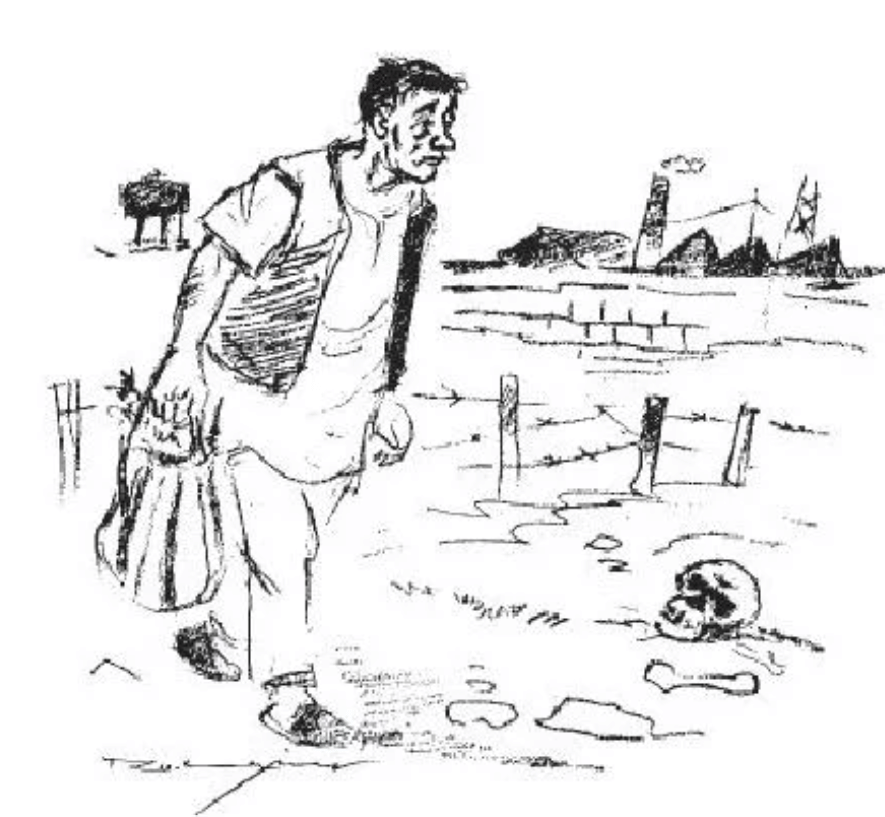
Ans: Iswaran informed Mahendra that the area around the factory where they were staying had once been a burial ground. He claimed to have found bones and human skulls scattered along the paths and even mentioned that he had seen a female ghost in the area. This story served to add a sense of eeriness to their surroundings.

Q15: Can you suggest an alternate ending for the story?

Ans: An alternative ending could be that Mahendra realizes Iswaran played a trick on him with the ghost story. Instead of resigning from his job, Mahendra confronts Iswaran and uncovers the truth behind the supposed haunting. Iswaran, feeling guilty, apologizes for his actions and promises to stop telling such stories in the future. They continue to live together peacefully, with Iswaran focusing more on his culinary talents rather than storytelling.

02. The Adventures of Toto – Short Answer Questions

Q1. Why did Toto throw a plate at Grandmother?

Ans: Toto, the monkey, saw a large plate of pulao on the dining table and began to eat it. When Grandmother entered and noticed him, she screamed in surprise. Upset by her reaction, Toto threw the plate at her, causing it to shatter into pieces.

Q2. “Toto was a pretty monkey”. In what sense was Toto pretty?

Ans: Toto was a pretty monkey due to his adorable appearance. His bright, sparkling eyes and deep-set eyebrows added to his charm. His pearly white teeth often showed in a smile that could surprise anyone. Additionally, his long tail enhanced his overall good looks.

Q3. How did Toto use his body parts to his advantage?

Ans: Toto cleverly utilised his bright eyes to display a mischievous glint. His pearly white teeth often formed a smile that frightened elderly Anglo-Indian ladies. With his quick, mischievous fingers, he could snatch items swiftly. Additionally, his tail acted as a third hand, enabling him to hang from branches or retrieve objects that were out of reach.

Q4. Why was Toto sold back to the tonga-driver?

Ans: Grandfather realised that Toto could not be kept in the house for long. The family faced constant losses of dishes, clothes, curtains, and wallpaper due to Toto’s mischievous behaviour. Ultimately, Grandfather decided to sell Toto back to the tonga-driver for just three rupees.

Q5. How does Toto come to Grandfather’s private zoo?

Ans: Grandfather, who had a fondness for pets, saw a red monkey tied up by a tonga driver. Feeling pity for the monkey, he decided to buy him for five rupees to include him in his private zoo, which housed various birds and animals.

Q6. What did Toto do in the author’s room?

Ans: Toto created chaos in the author’s room by tearing down the ornamental paper on the walls, exposing the bare bricks. He managed to pull the peg he was tied to from the wall, freeing himself. In his frenzy, he also shredded the author’s school blazer, leaving the room in a mess.

Q7. Where was Toto transferred from the author’s bedroom? Did he remain peaceful there?

Ans:  Toto was transferred to a large cage in the servants’ quarters, where Grandfather kept other animals from his private zoo, including a tortoise, a pair of rabbits, a pet squirrel, and the narrator’s goat. However, Toto’s mischievous behaviour disturbed the peace of the other pets, prompting Grandfather to take him to Saharanpur instead.

Q8. Describe how Grandfather took Toto with him to Saharanpur.

Ans: Grandfather travelled to Saharanpur to collect his pension, taking Toto along because it was hard to keep him hidden from Grandmother, and he was disruptive at night. Toto was concealed in a large black canvas bag lined with straw, which served as his temporary home during the train journey. Despite being confined, Toto’s attempts to escape caused the bag to roll and jump, attracting the attention of curious onlookers at the Dehra Dun railway station. While Grandfather was showing his ticket at the railway turnstile, Toto unexpectedly poked his head out, surprising the ticket collector. Although Grandfather tried to explain that Toto was not a dog, the collector insisted on charging a fare for him. In a humorous twist, Grandfather asked about the fare for a tortoise he had, which the collector deemed free. Ultimately, after the trip, Grandfather sold Toto back to the tonga-driver for just three rupees.

Q9. How many pets did the author’s grandfather have? Where were they kept?

Ans: The author’s grandfather had a total of six pets, which he kept in his own little zoo at home. This collection included a tortoise, a pair of rabbits, a tame squirrel, and the narrator’s pet goat. The latest addition was Toto, the monkey, and he also had a donkey.

Q10. How did Toto behave with Nana, the donkey?

Ans: Toto was a mischievous monkey who caused quite a bit of trouble for both the animals and the family. On his first night with Nana, the donkey, chaos ensued. When Grandfather checked on them, he found that Toto had bitten Nana’s long ears with his sharp teeth. This incident clearly showed that they would never become friends.

Q11. Why did Grandfather hide Toto for some time when he brought him home?

Ans: Grandfather, who had a fondness for pets, often encountered opposition from Grandmother whenever he brought new animals home. To prevent any conflict, he chose to keep Toto hidden for a time, waiting for a moment when Grandmother would be in a better mood to reveal his arrival.

Q12. Where was Toto kept immediately after Grandfather got him? Why?

Ans: Toto was kept in a closet that opened into the narrator’s bedroom wall. He was tied securely to a peg attached to the wall. This was done secretly because Grandmother would create a fuss whenever a new pet was brought into the house.

Q13. What destruction was caused by Toto to the narrator’s room?

Ans: Toto caused considerable damage in the narrator’s room. He ripped the ornamental paper from the walls, exposing the bare brick and plaster underneath. Furthermore, he forcefully pulled the peg from its socket, which was meant to secure him, and he also shredded the narrator’s blazer, leaving it in tatters.

Q14. How did Grandfather react when Toto destroyed things on his first day in the house?

Ans: Grandfather reacted positively to the chaos caused by Toto on his first day in the house. Instead of being angry, he found the damage amusing and admired the monkey’s cleverness. He joked that if he had more time, Toto could have tied the torn pieces of the blazer into a rope and escaped through the window. Grandfather’s light-hearted attitude showed that he appreciated Toto’s mischievous nature.

Q15. How did Toto behave when he was kept with the other pets of Grandfather?

Ans: Toto, the mischievous monkey, created chaos among the other pets in Grandfather’s care. He disturbed their sleep at night and even bit the donkey, Nana, when they were placed together in the stable. This behaviour made it clear that Toto was not a suitable companion for the other animals.

Q16. Where and why was Grandfather going the next day?

Ans: Grandfather lived in Dehra Dun and was travelling to Saharanpur the next day. As a retired man, he was going there to collect his pension.

Q17. Why did Grandfather decide to take Toto with him to Saharanpur?

Ans: Grandfather decided to take Toto with him to Saharanpur to keep his presence a secret from Grandmother. He feared that if Toto was left behind, he would likely create chaos, as he had done before when confined in a closet and with other pets.

Q18. How did Grandfather decide to carry Toto to Saharanpur? Why?

Ans: Grandfather decided to carry Toto to Saharanpur in a large black canvas kit bag because Toto was a very mischievous monkey. If he had not been securely zipped up, he would have certainly caused trouble. Additionally, the railway authorities prohibited carrying animals without permission.

Q19. How did Grandfather try to keep the presence of his travelling-mate a secret?

Ans: Grandfather took Toto, his monkey companion, on the journey to Saharanpur. To keep Toto’s presence a secret, he placed him in a large canvas kit bag filled with straw. The thick canvas prevented Toto from biting through it, and the tightly closed bag left no way for him to escape. Despite his efforts to get out, which caused the bag to roll around and attract attention, Toto remained hidden until they reached their destination.

Q20. “An exhibition attracted a curious crowd of onlookers at the Dehra Dun railway platform”. What was the cause of this exhibition?

Ans: The exhibition that attracted a curious crowd at the Dehra Dun railway platform was due to the antics of Toto, the mischievous monkey. He was packed inside a large black canvas kit-bag by the narrator’s grandfather. As Toto jumped and rolled around inside the bag, he created a commotion that caught the attention of passersby, leading to the gathering of onlookers.

Q21. How did the ticket collector learn about the presence of Toto?

Ans: Toto’s presence in the bag was unnoticed until the journey to Saharanpur. While Grandfather was having his ticket checked at the railway turnstile, Toto suddenly poked his head out and grinned at the ticket collector. This unexpected sight startled the collector, who, with quick thinking, informed Grandfather that he would need to pay for the monkey, mistaking him for a dog. Despite Grandfather’s attempts to clarify that Toto was a monkey and not a dog, the ticket collector insisted on classifying him as a dog, resulting in a fare of three rupees. In a humorous turn, Grandfather then took out their pet tortoise and asked what the fare would be for it, to which the ticket collector replied, “No charge. It is not a dog.”

Q22. What did the ticket collector classify Toto as? Why did he do so?

Ans: The railway ticket collector classified Toto as a dog because he unexpectedly poked his head out of the bag and grinned at him. According to the rules, only dogs were permitted to travel on the train, and they were required to pay a fare. Consequently, the ticket collector labelled Toto as a dog, resulting in a fare of three rupees.

Q23. Why did Grandfather get annoyed at the Saharanpur station?

Ans: Grandfather became annoyed at the Saharanpur station because the ticket collector insisted on calling Toto a dog. Despite Grandfather’s attempts to explain that Toto was a monkey and not a quadruped, the ticket collector classified him as a dog. Consequently, Grandfather had to pay a fare of three rupees for Toto.

Q24. Why did Grandfather show his tortoise to the ticket collector?

Ans: Grandfather was frustrated when the ticket collector insisted on calling Toto a dog and demanded a fare. In a moment of sarcasm, he took out the tortoise from his pocket and asked the ticket collector how much he should pay for it, since all animals were being charged. The ticket collector examined the tortoise closely, poked it with his finger, and, after a brief pause, declared there was no charge as it was not a dog.

Q25. Why didn’t the ticket collector charge for the tortoise?

Ans: The ticket collector did not charge for the tortoise because he concluded it was not a dog. According to railway rules, only dogs require a fee. This situation was amusing, especially since even Toto, the monkey, was mistaken for a dog by the collector.

Q26. When and where was Toto given a comfortable home?

Ans: When Toto was accepted by Grandmother, he was given a comfortable home in the stable. There, he had the family donkey, Nana, as his companion. On his first night, Grandfather visited to check on Toto’s comfort. To his surprise, he found Nana pulling away from a bundle of hay, with Toto clinging to her long ears. Despite their close quarters, Toto and Nana never became friends.

On cold winter evenings, Grandmother treated Toto to a large bowl of warm water for his bath. He would carefully test the temperature, stepping in gradually until he was submerged up to his neck.

Q27. Who was Nana? How did Toto trouble him?

Ans: Nana was the narrator’s family donkey. On his first night in the stable, Toto, the new monkey, caused trouble by biting Nana’s long ears with his sharp teeth. This behaviour startled Nana, making it hard for her to settle down.

Q28. Why couldn’t Toto and Nana become friends?

Ans: Toto and Nana could not become friends because Toto troubled Nana by clinging to her long ears with his sharp teeth. This behaviour upset the donkey, preventing any chance of friendship between them.

Q29. Describe Toto’s bath ritual. 
OR 
How did Toto take a bath during winter? How did he learn to bathe in that manner?

Ans: Toto enjoyed a warm bath during the cold winter evenings. His grandmother would provide a large bowl of warm water for him. He would carefully test the water’s temperature with his hand before stepping in, one foot at a time, just as he had seen the narrator do. Once comfortable, he would rub soap all over his body using his hands or feet. When the water cooled down, he would quickly jump out and rush to the kitchen fire to dry himself.

Q30. When and why would Toto refuse to take a bath?

Ans: Toto would refuse to take a bath if someone laughed at him while he was trying to dry himself by the kitchen fire. This mockery would hurt his feelings, making him unwilling to continue with his bath.

Q31. How did Toto’s love for warm baths almost lead to his being half-boiled?

Ans: One day, Toto found a large kitchen kettle left on the fire for tea. Curious, he removed the lid and discovered the water was warm enough for a bath. He climbed in, leaving only his head above the surface. At first, this was enjoyable, but soon the water began to boil. Toto hopped up and down, trying to escape the heat, until Grandmother arrived and rescued him, pulling out a half-boiled Toto from the kettle.

Q32. “The brain part devoted to mischief was far more developed in Toto”. Do you agree with this observation of the narrator? Support your answer with instances from the text.

Ans: Toto, an intelligent monkey, often directed his energy towards mischief, frequently causing destruction. His actions, such as tearing apart items and annoying those around him, support the narrator’s observation about Toto’s brain being more developed for mischief. For instance, he threw a plate at Grandmother during lunch and tore at the wallpaper, demonstrating his inclination towards chaos. These instances highlight how Toto’s behaviour aligns with the idea that a part of his brain was indeed dedicated to mischief.

Q33. What incident led to Grandfather’s decision not to keep Toto as a pet?

Ans: Toto once created a scene during lunchtime by gorging on pulao. When Grandmother and the narrator’s aunt shouted at him, Toto retaliated by throwing a plate and splashing a glass of water at them. He then escaped through a window, clutching the dish, and climbed a jackfruit tree. There, he savoured every grain of rice before tossing the dish down, shattering it on the ground. This incident made Grandfather realise that Toto was not a suitable pet, as they could not afford the constant damage he caused. Consequently, Grandfather sold Toto back to the tonga-driver for just three rupees.

Q34. Where did Grandfather finally send Toto, and what did it cost him?

Ans: Grandfather ultimately sold Toto back to the same tonga driver from whom he had originally purchased him. He had bought Toto for five rupees but could only sell him back for three rupees.

Q35. Why did Grandfather give away Toto, the monkey? 
OR
Why does the author say, “Toto was not the sort of pet we could keep for long”?

Ans: Toto could not be kept as a pet for long due to his hyperactive and mischievous nature. He was hard to train and frequently caused damage around the house. His antics resulted in the loss of dishes, clothes, curtains, and wallpaper, which the family could not afford. As a result, Grandfather decided to give him away to the tonga-driver for just three rupees.

Q36. Toto was not an animal that could be trained into a pet. Why?

Ans: Toto was a wild monkey, which explains why the tonga-driver kept him tied up. At Grandfather’s house, Toto caused so much mischief that it became clear he was destructive and could not be trained as a pet. His behaviour demonstrated that he was not suited for domestic life.

Q37. Where was Toto transferred to after he wrenched the peg from the wall?

Ans: Toto was transferred to a large cage in the servants’ quarters, where he lived with several of Grandfather’s pets, including a tortoise, a pair of rabbits, and a tame squirrel. However, Toto was quite disruptive at night, preventing his companions from sleeping. As a result, Grandfather decided to take him along to Saharanpur the next day.

01. The Lost Child – Short Answer Questions

Q1. Where did the child go with his parents? What did he want there?

Ans: The child went to a fair with his parents to celebrate the festival of spring. At the fair, he wanted:

  • Sweets, especially burfi
  • Garlands of flowers
  • Balloons in various colours
  • To see the snake charmer’s show
  • To ride on a roundabout

Despite his wishes, he knew his parents would not buy these items for him.

Q2. Was the fair popular with people in general? Give reasons.

Ans: The fair was very popular with people for several reasons:

  • Visitors left their daily routines to enjoy the spring festival.
  • Many dressed in their best clothes, adding to the festive atmosphere.
  • Families gathered together, creating a sense of community.
  • The stalls and rides attracted large crowds, enhancing the overall experience.

Q3. Parents were in a hurry to reach the fair, but the child was delaying them. How?

Ans: The child was easily distracted on the way to the fair. His behaviour included:

  • Stopping at toy shops to admire the toys.
  • Chasing after butterflies and insects.
  • Gathering flowers that fell around him.

As a result, his parents had to frequently pause and call him to walk alongside them.

Q4. What are the things that the child sees on his way to the fair? Why does he lag behind?

Ans: The child sees several things on his way to the fair:

  • Toys
  • Insects
  • Worms
  • Flowers

He is captivated by these items and often stops to admire them. As a result, he struggles to keep up with his parents and ends up lagging behind.

Q5. How did the child’s father react to hearing the child say, “I want that toy.”?

Ans: The child was accustomed to his parents, particularly his father, often denying his wishes. When he expressed his desire for a toy, his father responded with a red-eyed glare, resembling a tyrant. This look conveyed a clear and rude ‘no’.

Q6. How can you say that the child was scared of his father?

Ans: The child showed signs of being scared of his father through his behaviour. Although he desired many things, he expressed his wishes in slow murmurs. This indicates that he felt intimidated and unable to voice his demands confidently, unlike other children.

Q7. How did the mother distract the child’s mind from the toy seller?

Ans: The child’s mother redirected his attention to the flowering mustard field to distract him from the toy seller. In this vibrant setting, he noticed:

  • Colourful dragonflies with striking purple wings
  • Black bees and butterflies fluttering around

He watched them as they danced in the air, captivated by their movements.

Q8. How did the child enjoy the beauty of nature on his way to the fair?

Ans: On his way to the fair, the child enjoyed the beauty of nature by:

  • Stopping to admire a flowering mustard field.
  • Watching insects and worms emerge from their hiding spots.
  • Gathering the petals of falling flowers.
  • Running joyfully in circles around a banyan tree.

Q9. Why did the child stop to watch the insects and what were his parents doing at that time?

Ans: The child stopped to watch the insects and worms along the footpath because they were coming out to enjoy the warmth of the sun. Meanwhile, his parents were resting under the shade of the trees.

Q10. What happened when the little child entered the grove? How did he enjoy it there?

Ans: Upon entering the grove, a shower of young flowers fell on the child. He became so enchanted that he forgot about his parents and started gathering the petals.

As he played, he heard the cooing of doves and excitedly ran back to his parents, dropping the flowers he had collected.

His parents called out to him, and he joyfully ran around the banyan tree, continuing to gather the petals that had fallen.

Q11. Why did the child feel both repelled and fascinated by the fair?

Ans: The child felt both repelled and fascinated by the fair for several reasons:

  • The large crowd at the fair made him feel confused and slightly afraid.
  • He was captivated by the natural sights, food stalls, rides, games, and toys.
  • The vibrant atmosphere created a mix of emotions, drawing him in while also overwhelming him.

Q12. What did the child see at the sweetmeat shop? How did he react to this sight?

Ans: At the sweetmeat shop at the fair’s entrance, the child saw a stunning display of colourful sweets that made his eyes widen and his mouth water. He craved his favourite burfi but instinctively knew his parents would not buy it for him. So, he moved on without waiting for a response.

Q13. Why didn’t the child wait for an answer after he had pleaded for sweets?

Ans: The child saw his favourite sweet, burfi, and eagerly murmured, “I want that burfi.” However, he did not wait for a response because:

  • He anticipated his parents would refuse.
  • He feared they would call him greedy.

Thus, he moved on without expecting an answer.

Q14. Why couldn’t the child get a garland of flowers for himself?

Ans: The child wanted a garland of Gulmohar flowers but spoke in a half-murmur. He was aware that his parents would likely refuse, claiming the flowers were cheap.

Q15. How did balloons fascinate the child? Was he able to buy any? Why/Why not?

Ans: The child was captivated by the sight of colourful balloons soaring from a vendor’s pole. His heart swelled with a strong desire to own them all. However, he refrained from asking his parents to buy any because he feared they would say he was too old for such things.

  • The balloons mesmerised him with their vibrant colours.
  • He felt a deep longing to possess them.
  • He did not ask his parents due to the fear of a negative response.
  • His parents would likely deem him too old for balloons.

Q16. How did the sight of a snake-charmer leave the child spellbound?

Ans: As the child walked away from the balloon-seller, he spotted a snake-charmer playing a flute to a snake. He was captivated by the snake’s hood, which swayed gracefully like a swan’s neck. The enchanting music mesmerised both the snake and the boy.

Q17. Why didn’t the child ask his parents to show him the snake charmer’s act even though he wanted to?

Ans: The child did not ask his parents to see the snake charmer because he was aware that they considered the charmer’s music to be coarse. He felt there was no point in requesting something he knew they would refuse.

Q18. In the fair, the child wants many things. What are they? Why does he move on without waiting for an answer?

Ans: The boy desires several things at the fair:

  • Toys
  • Burfi (a type of sweet)
  • garland of flowers
  • Balloons
  • To hear the snake charmer’s music
  • To ride on the roundabout

He moves on without waiting for an answer because he anticipates that his parents will refuse his requests, citing various reasons.

Q19. What did the child find difficult to resist? What did he do?

Ans: The child found it difficult to resist the roundabout, where men, women, and children were whirling around, shrieking with excitement. He watched them closely and, unable to hold back, made a bold request to his parents:

  • “I want to go on the roundabout, please, Father, Mother.”

Q20. What plea did the child finally make to his parents? Was his plea heard?

Ans: The child finally pleaded with his parents to let him go on a ride on the roundabout. Unfortunately, his plea went unheard because his parents were not nearby at that moment. He had become separated from them, which meant they could not hear him.

Q21. The fair lost all its charm and attraction for the child. When did this happen?

Ans: Tempted by the sights of a sweetmeat seller, a balloon-seller, a flower-seller, a snake-charmer, and finally the roundabout, the child became distracted and lost track of his parents. This separation filled him with panic, leading him to lose interest in the fair.

Q22. Where did the lost child meet a kind-hearted person at the fair?

Ans: The lost child met a kind-hearted person near the shrine. The man noticed the child in the crowd, who was at risk of being trampled. Hearing the child’s cries, he quickly came to help and lifted him up.

Q23. How did the child react when there was no sign of his parents?

Ans: Upon realising he had lost his parents, the child felt confused and panicked. Unable to find them in the large crowd, he:

  • Ran around, calling out for his mother and father.
  • Felt lonely and afraid, leading him to cry inconsolably.
  • Experienced tears rolling down his flushed face, overwhelmed by fear.

His distress escalated as he searched in every direction, feeling lost and desperate.

Q24. What happened when the lost child reached the temple door?

Ans: Upon reaching the temple door, the lost child found himself caught in the crowd. The people were jostling to enter the shrine, and he was knocked down.

He would have been trampled if a kind man had not heard his loud cry and rescued him.

Q25. Who rescued the lost child? What did he offer to buy?

Ans: A kind man in the shrine heard the child’s cry and lifted him into his arms. To comfort the distressed child, he offered to buy:

  • sweets from the sweet shop
  • balloons in bright colours
  • flowers to make a garland

However, the child only wanted his mother and father.

Q26. Why did the man offer to buy things for the child?

Ans: The child was crying uncontrollably in the arms of the man who had rescued him from being trampled at the shrine. The man offered to buy him things to:

  • Calm the child down.
  • Make him feel secure.
  • Inquire about his parents and home.

Q27. Why did the lost child refuse to take his favourite things in the fair after losing his parents? OR Why does the lost child lose interest in the things that he had wanted earlier?

Ans: The child refused to take his favourite things at the fair after losing his parents because he was overwhelmed with fear and panic. His mind was solely focused on finding his parents, causing him to lose interest in everything else, including the items he had previously wanted.

Q28. What was the child’s response to the many offers made by the man?

Ans: The child’s response to the man’s offers was one of deep distress:

  • He wailed inconsolably, unable to be comforted.
  • Amidst his sobs, he repeatedly cried, “I want my mother, I want my father!”
  • He refused to look at the various items the man presented, showing no interest in them.

Q29. What kind of person was the man who rescued the child?

Ans: The man who rescued the child was a kind-hearted individual. His actions were a blessing in disguise for the lost child. Without his help, the vulnerable child could have been trampled and seriously harmed.

Q30. What do you think happens in the end? Does the child find his parents?

Ans: The lost child was lucky to be found by a kind stranger. This man made a special effort to locate the child’s parents and successfully reunited them.

Q31. How can you say that the child was an obedient boy?

Ans: The child was captivated by the fair, showing interest in many attractions. However, he did not pressure his parents to buy anything. Instead, he followed them closely, demonstrating his obedience. Although he desired various items, he refrained from voicing his wishes, knowing his parents would likely refuse.

Q32. Where did the child’s parents stop and why?

Ans: The child’s parents stopped under the shade of a grove to rest for a while during their journey to the fair.

Q33. How did the father try to distract the child’s mind from the toy seller?

Ans: The child saw a toy-seller at the fair and expressed his desire to buy toys. However, his father, known for his strictness, looked at him with anger. Understanding his father’s usual refusal, the child refrained from insisting on buying the toys.

Q34. Why did the parents forbid the child from listening to the snake charmer’s music?

Ans: The parents forbade the child from listening to the snake charmer’s music because they deemed it coarse. Despite his desire to hear the flute, the child suppressed his feelings and continued on his way.

Q35. How did the child react to seeing the sweet-seller?

Ans: At the fair, a man was selling a variety of sweets, including Gulab-JamunRasgullaBurfi, and Jalebi. The display was enticing, and when the child saw the sweets, his mouth began to water.

His favourite sweet was Burfi, so he expressed his desire to his parents, saying he wanted it. However, he knew they might not agree, as they often thought he was being greedy.

09. The Beggar – Very Short Questions answer

Q1. What was the name of the beggar?
Ans: The name of the beggar was Lushkoff.

Q2. Who did Lushkoff beg from?
Ans: He begged from Sergei.

Q3. What was Sergei’s profession?
Ans: Sergei was an advocate.

Q4. What did Sergei remind about the beggar on seeing him?
Ans: Sergei reminded that he had seen him the previous day in Sadovya street.

Q5. What work did Sergei offer the beggar?
Ans: He offered the beggar the work of chopping wood.

Q6. Who was Olga?
Ans: Olga was a maid-servant at Sergei’s home.

Q7. What did Sergei give Lushkoff after the wood was chopped?
Ans: He gave him half a dollar.

Q8. When did Lushkoff used to visit Sergei’s home?
Ans: Lushkoff used to visit Sergei’s home on the first of every month.

Q9. Where did Sergei meet Lushkoff after an interval of two years?
Ans: He met him at the ticket window of a theatre.

Q10. What did Lushkoff tell Sergei about his profession when he met him after two years?
Ans: He told him that now he was a notary and was paid thirty-five roubles a month.

Q11. Who would chop woods for Lushkoff ?
Ans: Olga would chop woods for Lushkoff.

Q12. What changed Lushkoff’s life?
Ans: Olga’s kindness towards Lushkoff changed her life.

Q13. How did Sergei recognise the beggar?

Ans: Sergei looked at the beggar. His face appeared familiar to him. He tried to recollect where he had seen him. Suddenly, his eyes fell on the beggar’s shoes. 

Q14. What kind of work was given to Lushkoff initially? 
Ans: Sergei refused to give alms to Lushkolf, the beggar. lie offered to give him work. He took him home and gave him the work of chopping wood. 

Q15. How did Olga treat Lushkoff in the beginning? 
Ans: In the beginning, Olga treated Lushkoff callously. She called him a drunkard. She rebuked him. Then she would sit before him and grow sad. She looked into his face and wept. 

08. A House is not a Home – Very Short Questions answer

Q1: What was the narrator doing on one Sunday afternoon after he had started high school?
Ans: 
The narrator was sitting at the dining table and doing his homework on one Sunday afternoon after he had started high school.

Q2: What was the narrator’s red tabby cat doing?
Ans:
 The narrator’s red tabby cat was lying on top of all his papers, making loud sounds, and hitting at his pen for entertainment.

Q3: When did the narrator rescue his pet cat?
Ans: 
The narrator rescued his pet cat when she was a kitten.

Q4: When did the narrator’s father die?
Ans: 
The narrator’s father died when he was young.

Q5: What were the things the narrator’s mother trying to save from the fire?
Ans:
 The narrator’s mother was trying to save important documents, pictures, and letters of his father to keep his memories.

Q6: Who stopped the narrator from entering the house after his mother?
Ans:
 A fireman stopped the narrator from entering the house after his mother.

Q7: What was done with the narrator?
Ans: 
The narrator was wrapped in a blanket and made to sit inside the car by a fireman.

Q8: What had the fireman put on the narrator’s mother?
Ans: 
The fireman put an oxygen mask on the narrator’s mother.

Q9: What happened to the narrator’s mother?
Ans: 
She was caught in the fire and had inhaled a little smoke.

Q10: Why did the narrator go to school with tennis shoes?
Ans: 
While doing homework, he had kicked his shoe off at the time of the incident. Now he had no shoes left because all were damaged in the fire. That is why he went to school wearing tennis shoes borrowed from his aunt.

Q11: Why did the narrator feel embarrassed?
Ans:
 After the incident, the narrator had no clothes left. He had lost all his books, bags, and belongings for school. Going to school without having anything was a big embarrassment for him.

Q12: Why did they have to borrow money from the narrator’s grandparents?
Ans: 
They had to borrow money from the narrator’s grandparents as all the documents needed to withdraw money from the bank were destroyed due to the fire.

Q13: What kind of attention was the narrator not looking for?
Ans: 
After the burning incident, everyone in the narrator’s school was sympathetic towards him. They all were giving special attention that the narrator was not actually looking for.

Q14: “Does this belong to you?” – Who was the speaker, and what was the thing the speaker was talking about?
Ans:
 Here, a woman was offering the narrator’s lost pet cat to him.

07. The Last Leaf – Very Short Questions answer

Q1: What were the names of the two young artists?
Ans: 
The names of the two young artists were Sue and Johnsy.

Q2: What happened to Johnsy?
Ans: 
Johnsy got pneumonia and was unable to move from her bed.

Q3: Which plant was there outside of their window?
Ans:
 There was an ivy creeper plant outside of their window.

Q4: How many leaves were there on the tree three days ago?
Ans:
 There were almost a hundred leaves on the tree three days ago.

Q5: What was Johnsy watching through the window?
Ans:
 Johnsy was watching the falling leaves from the ivy creeper tree through the window.

Q6: Why was it natural for the creeper to shed its leaves?
Ans: 
It was Autumn, and it was natural for the creeper to shed its leaves during that season.

Q7: What was Johnsy’s thought?
Ans: 
Johnsy believed that she would die after the fall of the last leaf of the tree

Q8: What would Sue do with her painting?
Ans:
 Sue would sell her painting to get money for them.

Q9: What was Sue painting?
Ans: 
Sue was painting an old miner.

Q10: Who was his model?
Ans: 
Their neighbor Behrman was her model.

Q11: Who was Behrman?
Ans:
 Behrman was a 60-year-old painter who had aspired to paint a masterpiece. He was also a neighbor of Sue and Johnsy, living on the ground floor of their house.

Q12: “I heard the wind last night – I thought it would have fallen.” – Who was the speaker, and what is “it” referred to here?
Ans: 
Johnsy had uttered these words. Here, “it” referred to the last leaf of the ivy creeper tree.

Q13: What was Behrman’s masterpiece?
Ans:
 The last leaf that Behrman painted on the wall, in order to give hope to Johnsy, was his masterpiece.

Q14: What had made Johnsy realize her mistake?
Ans:
 The sight of the last leaf that had not fallen, which Behrman had painted, made Johnsy realize her mistake and changed her perspective.

06. Weathering the Storm in Ersama – Very Short Questions answer

Q1: Who is the main character of the story?
Ans: 
The main character of the story is Prashant.

Q2: Where did Prashant go to spend the day with a friend?
Ans:
 Prashant went to the block headquarters of Ersama, a small town in coastal Orissa, to spend the day with a friend.

Q3: What was the speed of the wind during the storm?
Ans: 
The speed of the wind during the storm was 350 km/hr.

Q4: Why was Prashant’s friend’s family terrorised?
Ans: 
They were terrorized as fallen trees had damaged the roof and walls of their building during the middle of the storm night.

Q5: Where did the family take shelter?
Ans:
 Prashant, his friends, along with their family took shelter on the roof.

Q6: How were the two coconut trees a blessing in disguise for the family?
Ans: 
At first, the family thought that the two coconut trees were a curse as they had damaged their roof, but later they were beneficial as they used their fruits for eating.

Q7: Describe the water-covered everywhere after the storm?
Ans: 
The water was raging, deadly, and brown in color as it had destroyed everything and carried mud along with it.

Q8: Why did Prashant want to leave the place without further delay?
Ans:
 Prashant wanted to leave the place without further delays as he was too worried about his family members after that devastating cyclone.

Q9: Why did Prashant’s friend and his family members not want Prashant to leave that place?
Ans:
 Prashant’s friend and his family members did not want him to leave that place as the situation was still dangerous.

Q10: What was Prashant carrying with him on his way back to his village?
Ans:
 Prashant was carrying a long sturdy stick with him on his way back to his village.

Q11: When did Prashant feel relieved?
Ans:
 After seeing the two friends of his uncle, Prashant felt relieved.

Q12: What was the name of Prashant’s village?
Ans: 
The name of Prashant’s village was Kalikuda.

Q13: Where did Prashant decide to go to look for his family?
Ans: 
Prashant decided to go to the Red Cross shelter to look for his family.

Q14: What happened to the house of Prashant?
Ans: 
Nothing was left in Prashant’s house except the roof. All the belongings were hanging on the branches of the trees.

Q15: How many people died due to this cyclone?
Ans:
 86 people died due to this cyclone.

Q16: What was the program started by the NGO?
Ans:
 The program started by the NGO was called “Food for Work.”

Q17: What did Prashant do to make the children happy?
Ans:
 Prashant engaged them in different sports events to make the children happy.

05. The Happy Prince – Very Short Questions answer

Q1: Where was the statue of the Happy Prince made?
Ans: 
The statue of the Happy Prince was made on a tall column in the centre of the city.

Q2: Why was the Prince called the Happy Prince?
Ans: 
When the Prince was alive, he always remained happy, so he was named the Happy Prince.

Q3: What was used to make the eyes of the statue of the Happy Prince?
Ans: 
Two bright, shining sapphire stones were used to make the eyes of the statue of the Happy Prince.

Q4: Where was the swallow going?
Ans:
 The little swallow was going to Egypt.

Q5: Where did the bird take shelter for a night on the way to Egypt?
Ans: 
The bird took shelter between the feet of the statue of the Happy Prince.

Q6: Where did the bird think to change his shelter from the feet of the statue?
Ans: 
The bird decided to take a new shelter in the chimney of a house.

Q7: What did the swallow see after the third drop fell on it?
Ans: 
The swallow saw tears in the eyes of the Happy Prince.

Q8: The heart of the Happy Prince was made with what?
Ans: 
The heart of the Happy Prince was made with lead.

Q9. What did the statue suggest the swallow to offer to the poor woman?
Ans: 
The statue suggested the swallow offer the ruby from his sword to the poor woman.

Q10: Why were the hands of the woman red?
Ans:
 The hands of the woman became red as they were all pricked by the needle.

Q11: What was the poor woman doing?
Ans: 
The poor woman was embroidering flowers on the gown of the Queen’s maid, who would wear it at the next court ball with the Queen.

Q12: What were the things seen by the Swallow on the way to the poor woman’s house?
Ans: 
The Swallow saw the cathedral, the palace of the city, a beautiful girl with her lover on the balcony, and lanterns hanging on the masts of the ships.

Q13: What kind of warmth was felt by the little swallow?
Ans: 
The little swallow felt the warmth of humanity, the warmth of positivity, which one can get after helping others.

Q14: Whose story was told next by the statue to the swallow?
Ans:
 The story of a young writer was told next to the swallow by the statue.

Q15: What was offered to the young writer to heal his problem?
Ans:
 The Happy Prince offered one of his sapphires from his eyes to the young writer.

Q16: Where did the writer find the beautiful sapphire?
Ans: 
The writer found the beautiful sapphire lying on the withered violets.

Q17: What reason was given by the swallow for the third time to go to Egypt?
Ans: 
The swallow said that the weather in Egypt was warmer than that place, and the place was soon going to face snowfall. So, it was better to leave the place now, according to the swallow.

Q18: Whose pain was explained next by the statue to the swallow?
Ans: 
The statue next explained the pain of a match girl to the swallow.

Q19: What happened to the matchsticks of the match girl?
Ans: 
All the matches had fallen in the gutter and spoiled.

Q20: Why did the swallow decide to stay with the Happy Prince?
Ans: 
As the Happy Prince had become blind after giving the two stones from his eyes, the swallow decided to stay with the Happy Prince.