What are Quadrilaterals?
Quadrilaterals are shapes with four sides.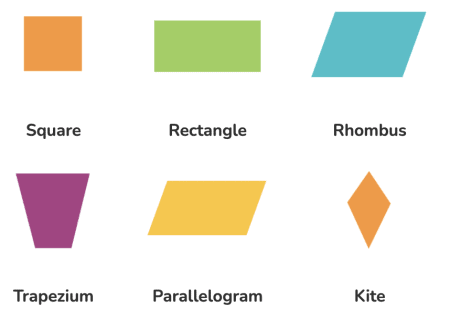 QuadrilateralsImagine the following examples:
- Square: All four sides are equal, and all angles are right angles.
- Rectangle: Opposite sides are equal, and all angles are right angles.
- Parallelogram: Opposite sides are parallel and equal in length.
- Rhombus: All four sides are equal, but angles are not necessarily right angles.
- Examples of Quadrilaterals in Daily Life: Windows, Blackboard, Study table top, Computer screens, Mobile phone screens, Pages in a book
Definition
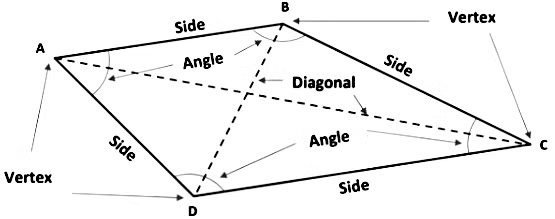
A quadrilateral is a closed, two-dimensional figure formed by four line segments. For instance, in quadrilateral , the line segments are , , , and .
The term “quadrilateral” comes from Latin, where “quad” means “four” and “lateral” means “side.”
- Sides: Four segments (e.g., , , , )
- Angles: Four angles (e.g., , , , )
- Vertices: Four points (e.g., , , , )
- Diagonals: Two segments that connect opposite vertices (e.g., and )
Properties of a Parallelogram
In geometry, a quadrilateral is a four-sided polygon with four angles and four vertices. A specific type of quadrilateral is a parallelogram, characterized by having both pairs of opposite sides parallel. Let’s explore some properties of parallelograms.
Theorem 1: A diagonal of a parallelogram divides it into two congruent triangles.
Proof: Consider parallelogram ABCD with diagonal AC. Diagonal AC divides the parallelogram into triangles ∆ABC and ∆CDA. By the alternate interior angles, we have ∠BCA = ∠DAC and ∠BAC = ∠DCA. Also, AC = AC (common side).
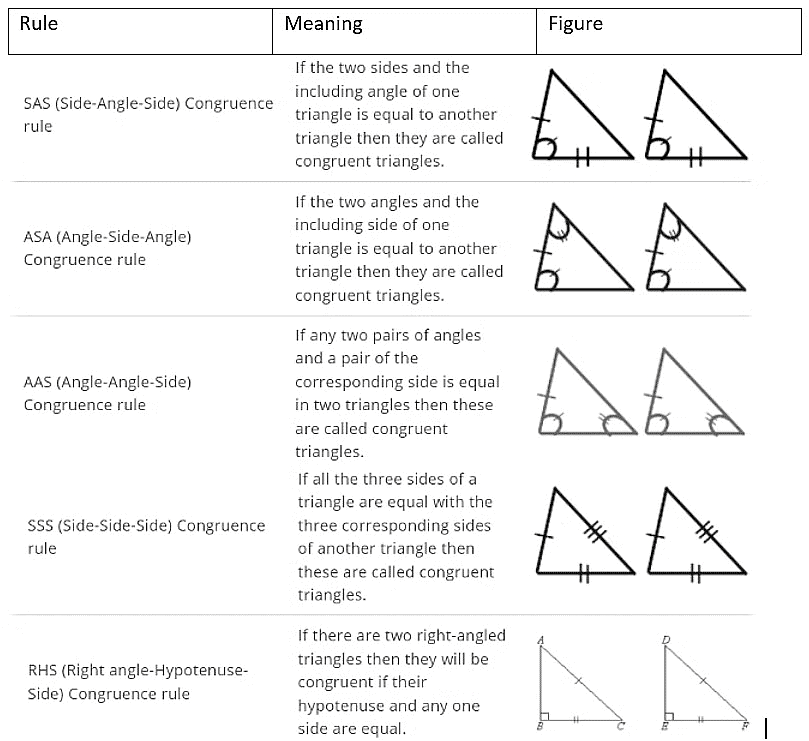
Therefore, by the ASA rule, ∆ABC ≅ ∆CDA, and the diagonal AC divides the parallelogram into congruent triangles.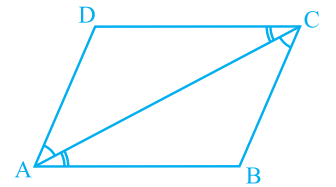
Example: In the figure, quadrilateral ABCD is a rectangle in which BD is diagonal. Show that ∆ ABD ≅ ∆ CDB.
Given: ABCD is a rectangle in which BD is diagonal.
To prove: ∆ ABD ≅ ∆ CDB.
Proof: Quadrilateral ABCD is a rectangle. Therefore, ABCD is also a parallelogram.
Since a diagonal of a parallelogram divides it into two congruent triangles.
Hence, ∆ ABD ≅ ∆ CDB.
Try yourself:
Which of the following shapes is NOT a quadrilateral?
- A.Square
- B.Triangle
- C.Rhombus
- D.Parallelogram
Theorem 2: In a parallelogram, opposite sides are equal.
Proof: Measure the opposite sides AB and DC of parallelogram ABCD. You will find AB = DC. 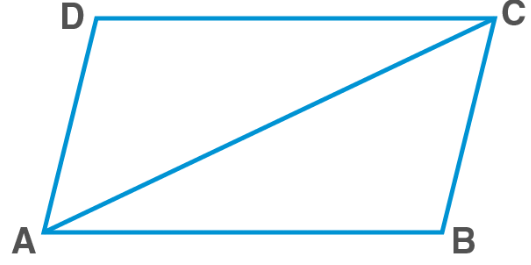
In ΔABC and ΔCDA
AC=AC [Common/transversal]
∠BCA=∠DAC [alternate angles]
∠BAC=∠DCA [alternate angles]
ΔABC≅ΔCDA [ASA rule]
Hence, AB=DC and AD=BC [ C.P.C.T.C]
Theorem 3: If each pair of opposite sides of a quadrilateral is equal, then it is a parallelogram.
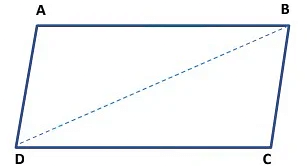
Given: ABCD is a parallelogram.
To prove: AB = CD and AD = CB.
Construction: Join BD.
Proof:
Since ABCD is a parallelogram. Therefore, AB ∥ DC and BC ∥ AD.
Now, AB ∥ DC and transversal BD intersects them at B and D respectively.
∴ ∠ ABD = ∠ CDB ……………… (I) [Alternate interior angles]
Again, BC ∥ AD and transversal BD intersects them at B and D respectively.
∴ ∠ ADB = ∠ DBC ……………… (II) [Alternate interior angles]
Now, in ∆ ABD and ∆ BDC, we have
∠ ABD = ∠ CDB [From (I)]
BD = DB [Common side]
∠ ADB = ∠ DBC [From (II)]
Therefore, ∆ ABD ≅ ∆ CDB (By ASA-criterion of congruence)
By using corresponding parts of congruent triangles
⇒ AB = CD and AD = CB.
Theorem 4: In a parallelogram, opposite angles are equal.
Proof: Measure the angles of a parallelogram; you will find that each pair of opposite angles is equal.
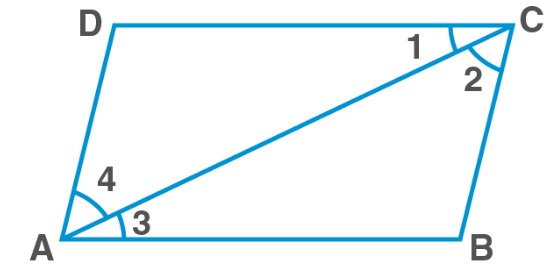
In parallelogram ABCD
AB‖CD; and AC is the transversal
Hence, ∠1=∠3….(1) (alternate interior angles)
BC‖DA; and AC is the transversal
Hence, ∠2=∠4….(2) (alternate interior angles)
Adding (1) and (2)
∠1+∠2=∠3+∠4
∠BAD=∠BCD
Similarly,
∠ADC=∠ABC
Theorem 5: If in a quadrilateral, each pair of opposite angles is equal, then it is a parallelogram.
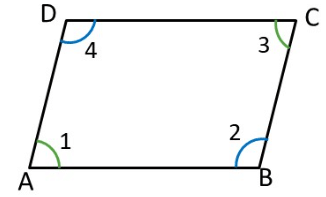
Given: In the quadrilateral, the opposite angles are equal. Let the quadrilateral be , where and .
- Verification of Parallel Sides:
- Since (sum of angles in a quadrilateral equals , and opposite pairs add up), the adjacent angles are supplementary.
- This implies that and due to the converse of the consecutive angles property.
Conclusion: If both pairs of opposite sides of a quadrilateral are parallel, it is a parallelogram.
Theorem 6: The diagonals of a parallelogram bisect each other.
Proof: Draw diagonals AC and BD of parallelogram ABCD. Measure the lengths of OA, OB, OC, and OD. You will observe that OA = OC and OB = OD, or O is the midpoint of both diagonals. 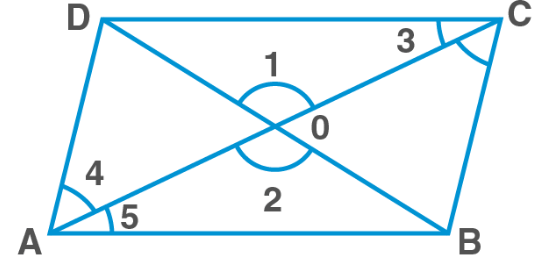
In ΔAOB and ΔCOD,
∠3=∠5 [alternate interior angles]
∠1=∠2 [vertically opposite angles]
AB=CD [opp. Sides of parallelogram]
ΔAOB≅ΔCOD [AAS rule]
OB=OD and OA=OC [C.P.C.T]
Hence, proved
Conversely,
If the diagonals of a quadrilateral bisect each other, then it is a parallelogram.
Theorem 7: If the diagonals of a quadrilateral bisect each other, then it is a parallelogram.
Example 1: Show that each angle of a rectangle is a right angle.
Solution: Consider rectangle ABCD with ∠A = 90°. By proving that ∠B = ∠C = ∠D = 90°, it establishes that each angle of a rectangle is a right angle.
Example 2: Prove that the diagonals of a rhombus bisect each other at right angles.
Solution: Consider rhombus ABCD. Let AC and BD be the diagonals, intersecting at point E. In triangles ABE and CDE, we observe that AE = CE (since ABCD is a rhombus).
Similarly, BE = DE (opposite sides of a rhombus are equal). Thus, triangles ABE and CDE are congruent by the Side-Side-Side congruence criterion. Therefore, ∠AEB = ∠CED. Now, ∠AEB + ∠CED = 180° (linear pair on straight line AECD). So, each angle measures 90°.
Hence, the diagonals AC and BD bisect each other at right angles.
Try yourself:Which statement is true about a parallelogram?
- A.A parallelogram has all sides equal.
- B.A parallelogram has opposite sides parallel.
- C.A parallelogram has all angles equal.
- D.A parallelogram has all diagonals equal.
The Mid-point Theorem
In geometry, the Mid-point Theorem relates to the midpoints of the sides of a triangle. The theorem establishes a relationship between the line segment joining the midpoints of two sides of a triangle and the third side.
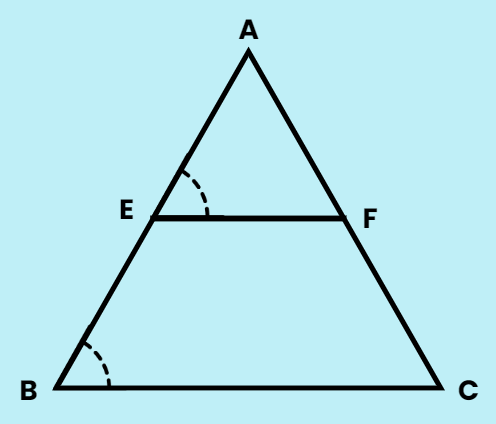
The Midpoint Theorem of a triangle states that if you connect the midpoints of two sides of a triangle with a line segment, that line segment will be parallel to the third side of the triangle, and its length will be half the length of the third side.
Let’s explore this theorem and its converse.
Theorem 8: The line segment joining the mid-points of two sides of a triangle is parallel to the third side.
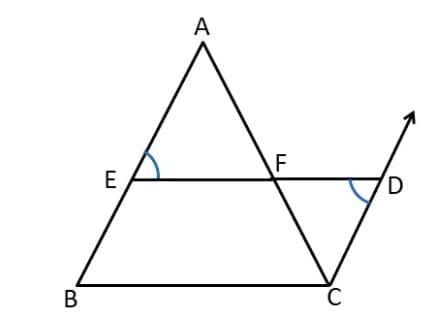
Activity Observation:
- Draw a triangle and mark mid-points E and F of two sides.
- Join E and F to form line segment EF.
- Measure EF and BC. You will observe that EF = 1/2 BC.
- Measure ∠AEF and ∠ABC. You will find that ∠AEF = ∠ABC.
- Therefore, EF is parallel to BC.
Proof: Consider triangle ABC with midpoints E and F of sides AB and AC, respectively. Draw CD parallel to BA. By the ASA rule, ∆AEF ≅ ∆CDF. This implies EF = DF and BE = AE = DC. Hence, BCDE is a parallelogram, leading to EF || BC.
Theorem 9: The line drawn through the mid-point of one side of a triangle, parallel to another side, bisects the third side.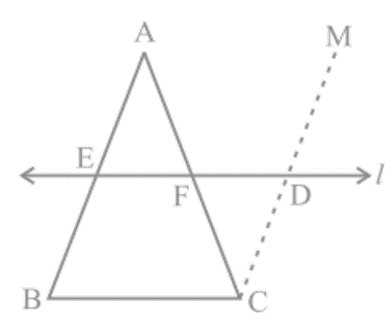
Proof: E is the mid-point of AB, and line l is parallel to BC with CM || BA. Prove AF = CF using the congruence of ∆AEF and ∆CDF.
Conclusion:
- The Mid-point Theorem and its converse provide a useful geometric relationship involving midpoints and parallel lines in triangles.
- These theorems are valuable tools for proving various properties and relationships within triangles.
Some Solved Examples:
Q.1. If the diagonals of a parallelogram are equal, then show that it is a rectangle.
Solution: Given that, AC = BD
To show that ABCD is a rectangle if the diagonals of a parallelogram are equal
To show ABCD is a rectangle, we have to prove that one of its interior angles is right-angled.
Proof,
In ΔABC and ΔBAD,
AB = BA (Common)
BC = AD (Opposite sides of a parallelogram are equal)
AC = BD (Given)
Therefore, ΔABC ≅ ΔBAD [SSS congruency]
∠A = ∠B [Corresponding parts of Congruent Triangles]
also, ∠A+∠B = 180° (Sum of the angles on the same side of the transversal)
⇒ 2∠A = 180°
⇒ ∠A = 90° = ∠B
Therefore, ABCD is a rectangle.
Hence Proved.
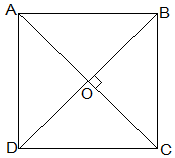
Q.2. Show that the diagonals of a square are equal and bisect each other at right angles.
Solution: Let ABCD be a square and its diagonals AC and BD intersect each other at O.
To show that, AC = BD
AO = OC and ∠AOB = 90°
Proof,
In ΔABC and ΔBAD, AB = BA (Common)
∠ABC = ∠BAD = 90°
BC = AD (Given)
ΔABC ≅ ΔBAD [SAS congruency]
Thus, AC = BD [CPCT] diagonals are equal.
Now, In ΔAOB and ΔCOD, ∠BAO = ∠DCO (Alternate interior angles)
∠AOB = ∠COD (Vertically opposite)
AB = CD (Given)
ΔAOB ≅ ΔCOD [AAS congruency]
Thus, AO = CO [CPCT].
Diagonal bisect each other.
Now, In ΔAOB and ΔCOB,
OB = OB (Given)
AO = CO (diagonals are bisected)
AB = CB (Sides of the square)
ΔAOB ≅ ΔCOB [SSS congruency]
also, ∠AOB = ∠COB
∠AOB+∠COB = 180° (Linear pair)
Thus, ∠AOB = ∠COB = 90°
Diagonals bisect each other at right angles
Q.3. ABCD is a rhombus. Show that diagonal AC bisects ∠A as well as ∠C and diagonal BD bisects ∠B as well as ∠D.
Solution:
Given that, ABCD is a rhombus.
AC and BD are its diagonals.
Proof,
AD = CD (Sides of a rhombus)
∠DAC = ∠DCA (Angles opposite of equal sides of a triangle are equal.)
also, AB || CD
⇒∠DAC = ∠BCA (Alternate interior angles)
⇒∠DCA = ∠BCA
AC bisects ∠C.
Similarly, We can prove that diagonal AC bisects ∠A.
Following the same method,
We can prove that the diagonal BD bisects ∠B and ∠D.
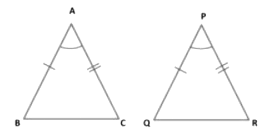
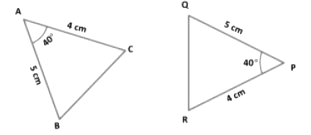
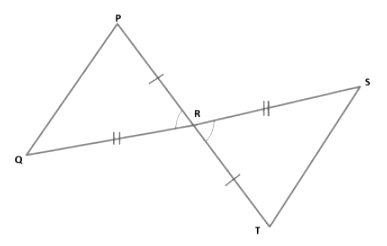
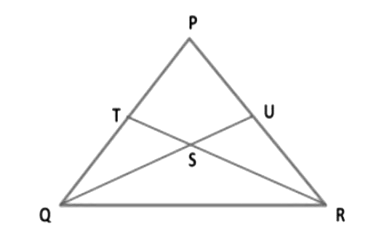
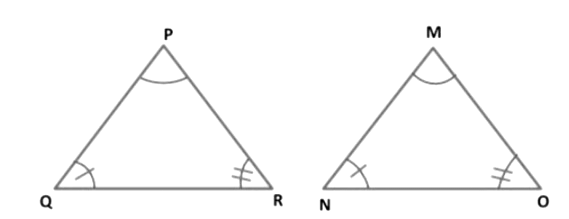
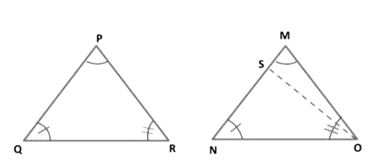
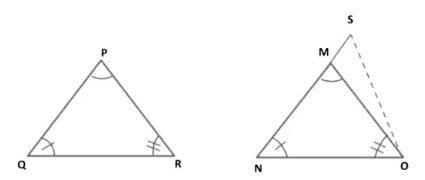
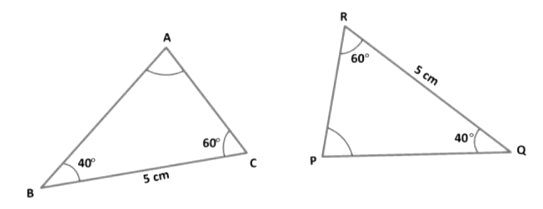
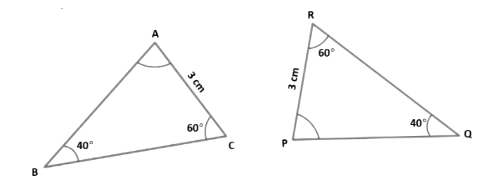
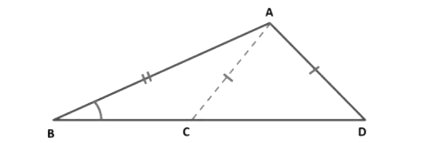
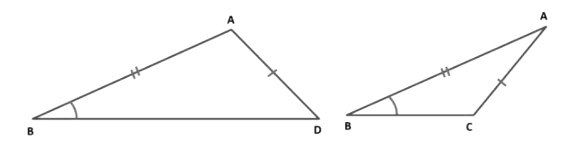
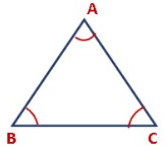
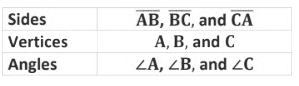
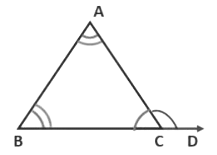
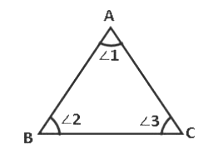
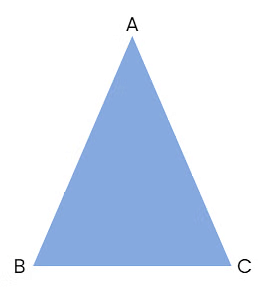 The term ‘triangle’ is derived from ‘tri,’ signifying ‘three.’ For instance, in triangle ABC (denoted as ∆ ABC), AB, BC, and CA represent the three sides, while ∠ A, ∠ B, ∠ C are the corresponding angles, and A, B, and C are the vertices.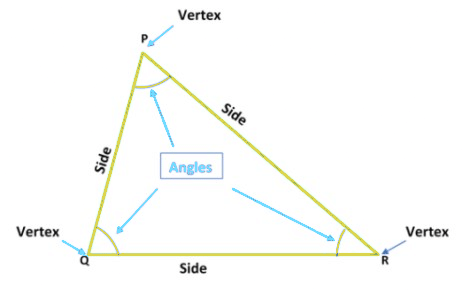
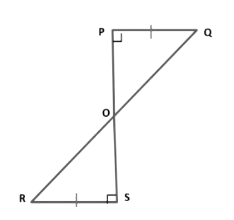
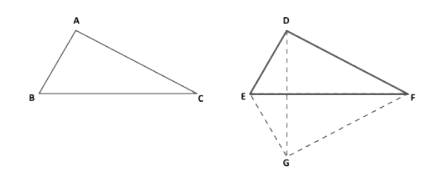
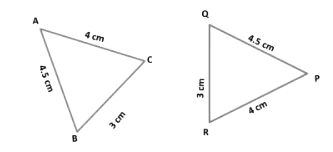
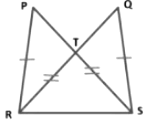





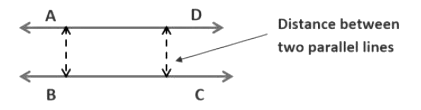
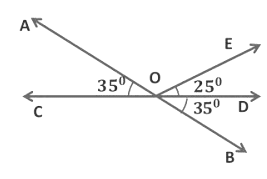
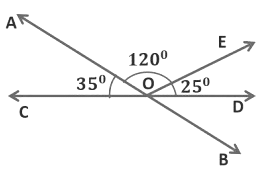
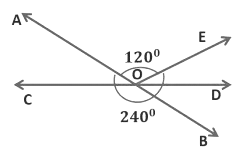
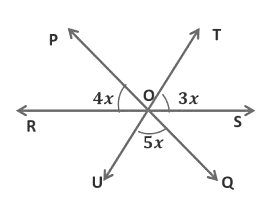
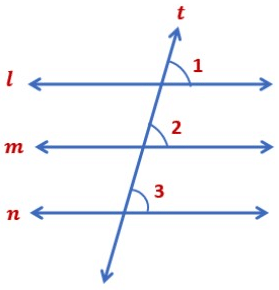
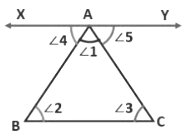
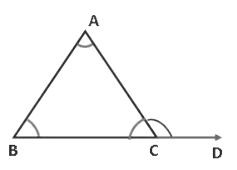
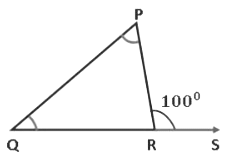
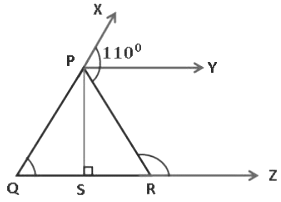
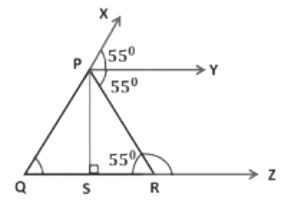
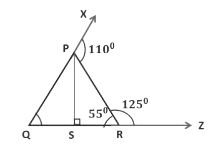
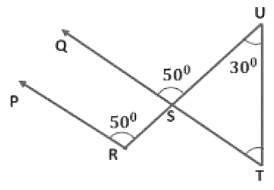
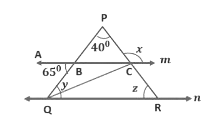
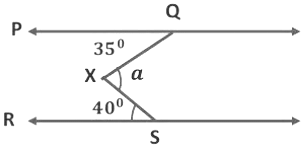
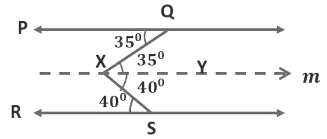
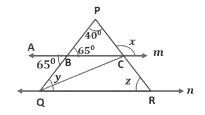 Line m || line n.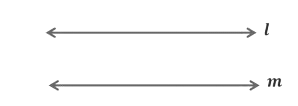
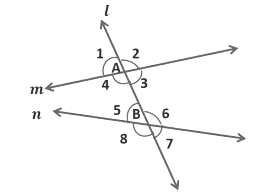

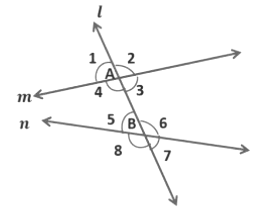
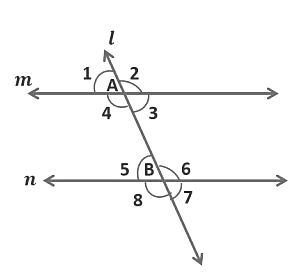
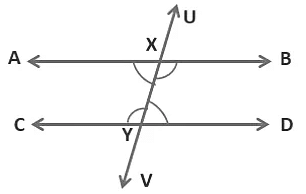
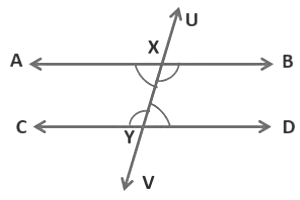
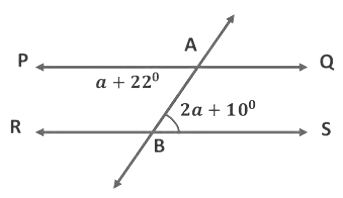
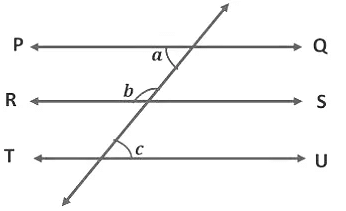


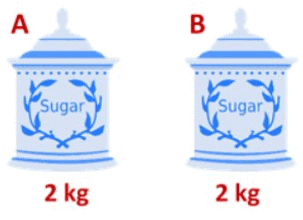
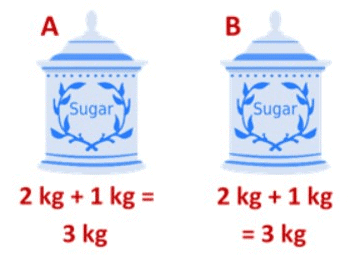
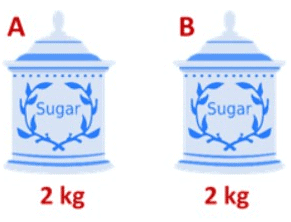
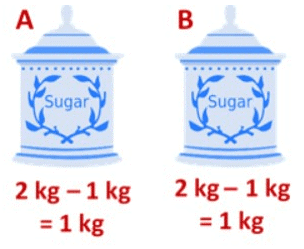



 So, we see that the quantity of sugar in jar A and B is equal to twice the quantity of sugar in jar C or we can also say that both the jars A and B, have the same quantity of sugar as their quantities are also equal to twice the quantity of sugar in jar C.
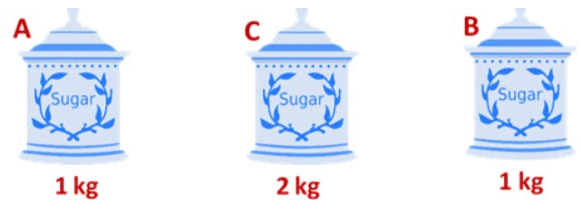 So, we see that the quantity of sugar in jar A and B is equal to half the quantity of sugar in jar C or we can also say that both the jars A and B, have the same quantity of sugar as their quantities are also equal to half the quantity of sugar in jar C.
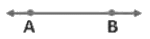
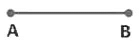
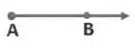
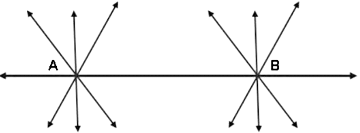 Here, we see that only one line, AB is passing through A and also through B. Now can you tell how many lines are passing through B and also through A?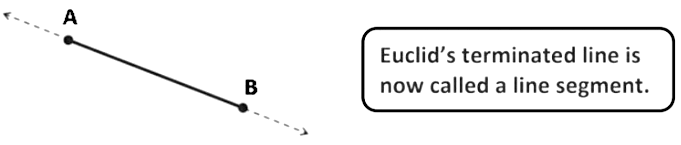
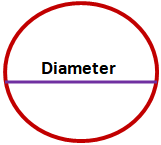
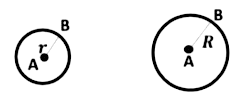
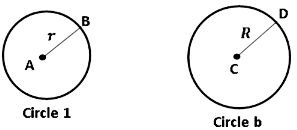 Here, AB = r is the radius of circle 1 and CD = R is the radius of circle 2.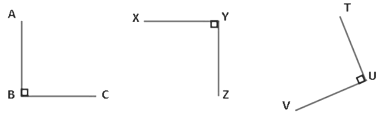
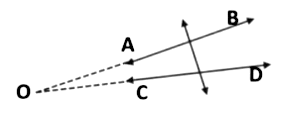
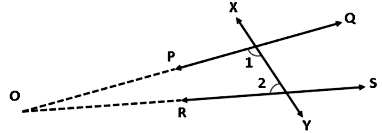 Suppose a straight line XY falls on two straight lines, PQ and RS in such a way that the interior angles ∠1 + ∠2 <180° on the left side of XY. The two lines PQ and RS, when produced indefinitely, will eventually intersect at point O on the left side of PQ.
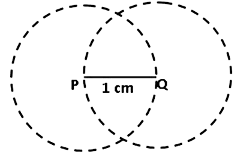 (4) The two circles meet at point R. Now draw the line segments, RP and RQ to form the ∆ RPQ.
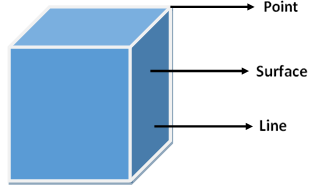
 A line is a breadthless length. The ends of a line are points and the straight line is a line which lies evenly with the points on itself.
 A surface is that which has length and breadth only. The edges of a surface are lines.Euclid’s axiom
 =
=  and
and  =
=  , then
  =
= 
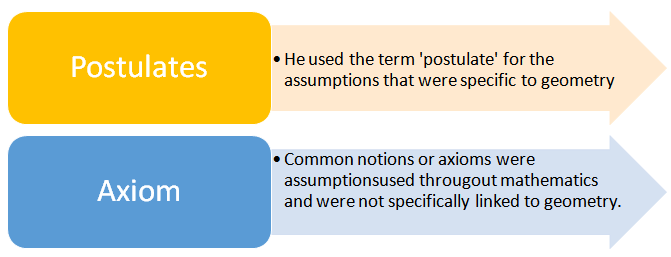
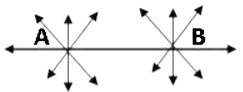 Postulate 2: A terminated line can be produced indefinitely.
 Postulate 3: A circle can be drawn with any centre and any radius.
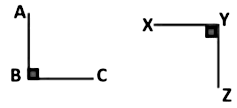
 Postulate 4: All right angles are equal.
 Postulate 5: If a straight line falling on two straight lines makes the interior angles on the same side of it taken together less than two right angles (180°), then the two straight lines, if produced indefinitely, meet on that side on which the sum of angles is less than two right angles
 Equivalent Versions of Euclid’s Fifth Postulate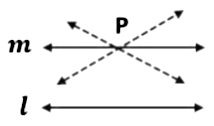
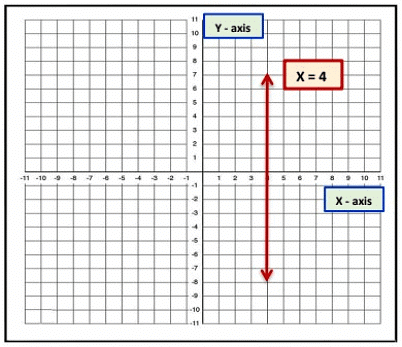
 The linear equation in one variable has a unique solution. Also, it gives a straight line when plotted on a graph.
 In this chapter, we recall our previous knowledge and extend it to that of the linear equation in two variables.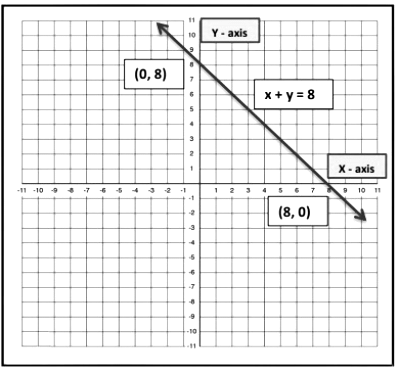
 Now, you are able to see the dot but, can you tell me the exact position of the dot?
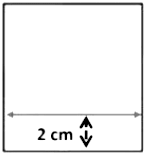 Therefore, to fix the position of the dot we have to specify its distance from two fixed lines, the right edge and the bottom line of the paper. Therefore, if I say that the dot is also 1 cm away from the right edge of the paper, then we can easily fix the position of the dot.
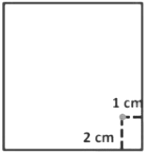 We see that position of any object lying in a plane can be represented with the help of two perpendicular lines.
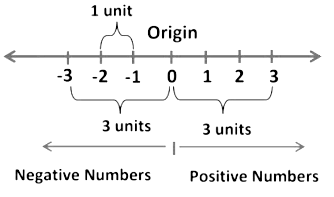

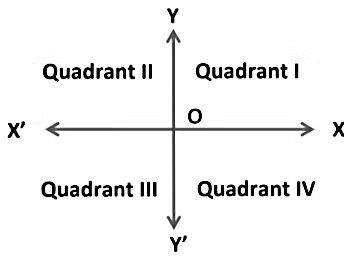
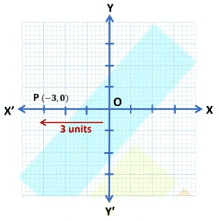 Coordinates of point P are (-3, 0).
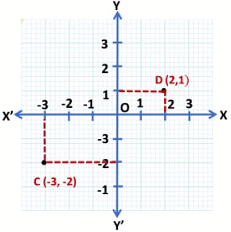 D (2, 1)

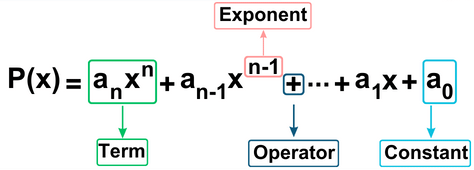
 , where are constants and
 and an

 is a rational number lying between a and b
 is a rational number lying between a and b.
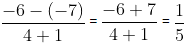
 and
and 
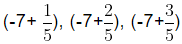
 and
and 
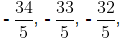 and
and 

 On dividing
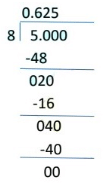
  we get exact value 0.625 and remainder is zero.
 is a terminating decimal expansion.
 we get exact value 0.625 and remainder is zero. So, we say that
  is a terminating decimal expansion.
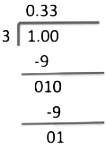
 = 0.333… . . or
  = 0. 3= [The block of repeated digits is denoted by bar ‘– ‘over it]
 we get the repeated number 3 and remainder never becomes zero. Hence, 1 by 3 has a non – terminating repeating decimal expansion.
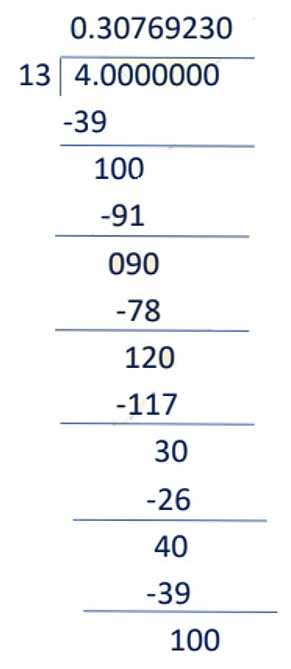
 = 0.
= 0. On dividing 4 by 13 we get the repeated numbers 0.30769230 again and again, and remainder never becomes zero. Hence, 4 by 13 has a non – terminating repeating decimal expansion.
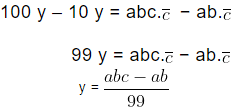
 ( and we have to convert the given number in the form of p by q. Follow the following steps:
 . (In the above expression we see that one digit “b” exist between decimal point and repeating number. Hence,we multiply both side by 101. We get,
 Step II: Count the number of digits in repeating number and then multiply equation (1) by that power of 10 and the equation becomes
 Step III: Subtract equation (1) from equation (2) we get,
 Example (i): Express in the form of p by q


 ……(i)
……(i)


 Thus,
Thus, 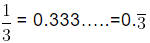
 and
and  . Also, we know that the irrational numbers have non-terminating non-recurring decimals. Hence, one irrational number between
  and
and  is 0.20101001000… . .
 = 0.333 (Given)
 = 0.333 (Given)
 = 2 ×
= 2 ×  = 2 × 0.333 = 0.666
 and
and  may be 0.357643… and 0.43216 (In this solution we can write infinite number of such irrational numbers)
 (rational) and b =
  (rational),


 (rational number)
 (rational) and b =
  (rational)

 (rational number)
 (rational) and b =
  (rational)
 ×
×  =
=  (rational)
 (rational) and b =
  (rational)
 divided by
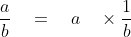
 ÷
÷  =
=  x
x  =
=  x 3
x 3 
 (rational) and b = √3 (irrational) then,
 + √3 =
 (irrational)
 − √3 =
 (irrational)
 (rational) and b = √2 (irrational) then,
 × √2 =
 (irrational)
 =
=  =
=  ×
×  =
= (irrational)
 ) – (
) – ( +
+  )
)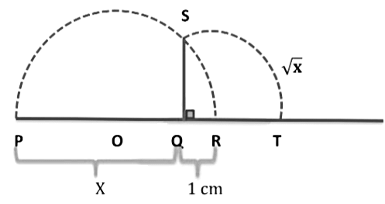
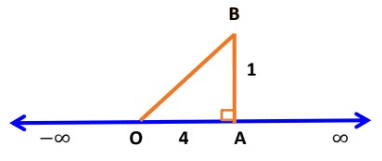
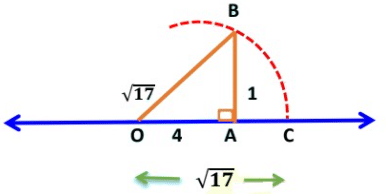
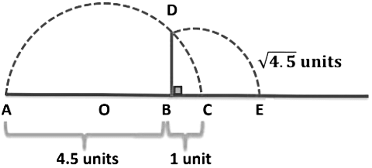 Hence, the distance BD represents √4.5 ≈ 2.121 geometrically. Now take BC as a number line, draw an arc with centre B and radius BD from point BD, meeting AC produced at E. So, point E represents √4.5 on the number line.
 =
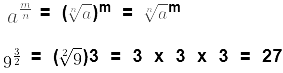
=  is a real number, then n is called exponent, and a is called radical and “√ ” is called radical sign.
 is called surd.
 =
=  is called square root of 2.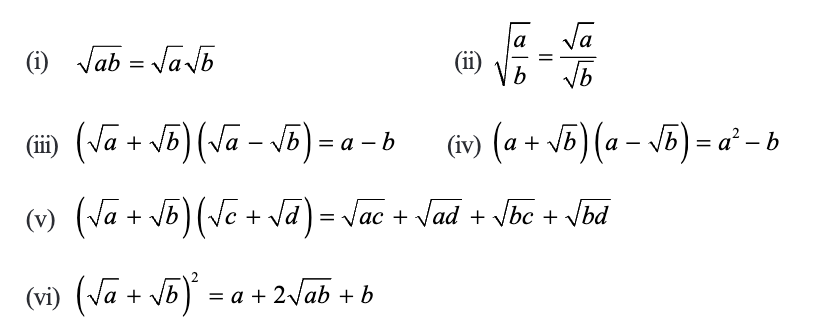
 x
x  =
= 

 =
=  2
2 =
= 

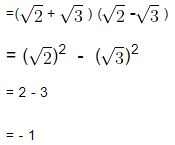
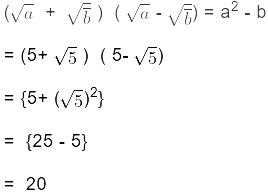
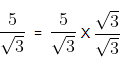
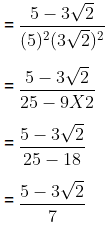
 can you tell where this value will lie on the number line? It is a little bit difficult. Because the value containing square roots in their denominators and division is not easy as addition, subtraction, multiplication and division are convenient if their denominators are free from square roots. To make the denominators free from square roots i.e. they are whole numbers, we multiply the numerator and denominators by an irrational number. Such a number is called a rationalizing factor.
 is ,
is ,  and conjugate of ,


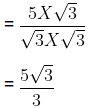
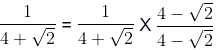
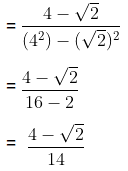

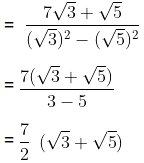


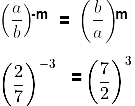
 ) -m = (
 )m
)m

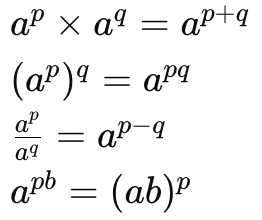
 = 53-2 = 51