03. The Sound of Music – Important Question

Short Answer Type Questions.                             Q1. When was Evelyn’s deafness first noticed? When was it confirmed?
Ans: Evelyn’s hearing difficulties were first noticed by her mother when she was eight years old. During a moment when Evelyn was waiting to play the piano, she did not respond when her name was called, leading Isabel to suspect something was wrong. This concern was confirmed when Evelyn was eleven years old, after a visit to a specialist revealed that her hearing was severely impaired due to gradual nerve damage.

Q2. When and how did Evelyn lose her power of hearing?
Ans: Evelyn lost her power of hearing due to gradual nerve damage. This issue was first noticed when she was eight years old while waiting to play the piano. By the age of eleven, it was confirmed that she had completely lost her hearing ability.

Q3. Why was Evelyn nervous while going to the Royal Academy of Music?
Ans: Evelyn felt nervous about attending the Royal Academy of Music because she was only 16 years old and had just come from the Scottish farms. This transition to a prestigious institution added to her anxiety.

Q4. How did Evelyn’s deafness come to light? 
OR
 When did Evelyn’s mother notice that something was wrong with her hearing?
Ans: At the age of eight, Evelyn’s mother noticed something was wrong when she did not respond to her name being called to play the piano. By eleven, her academic performance had declined, leading her headmistress to recommend a visit to a specialist. It was then confirmed that Evelyn had a severe hearing impairment.

Q5. Who helped Evelyn to continue with music? What did he do and say?
Ans: When Evelyn decided to pursue her music career, she faced discouragement from many. However, percussionist Ron Forbes recognised her potential and offered his support. He encouraged her to listen to music in a different way, saying, “Don’t listen through your ears; try to sense it some other way.” This guidance helped Evelyn realise that she could feel the music through her body, discovering vibrations in different parts of her physique. With Forbes’ encouragement, she learned to open her mind and body to the sounds and vibrations of music, which became the foundation for her determination and hard work.

Q6. How did Evelyn hear music despite being deaf?
Ans: Evelyn hears music by sensing vibrations throughout her body. When she plays the xylophone, she feels the sound in her fingertips. By leaning against drums, she can perceive the resonances flowing into her body. On wooden floors, she removes her shoes to allow vibrations to travel through her bare feet and up her legs.

Q7. What is Evelyn’s secret of success and what message does she give to achievers?
Ans: Evelyn’s secret to success is her unwavering determination and hard work. She encourages achievers with her message: work hard to reach your goals. Believe in yourself, no matter the challenges you face. Stay focused and committed to your passion. Her journey demonstrates that with effort and perseverance, success is within reach.

Q8. How has Evelyn Glennie inspired handicapped people?
Ans: Evelyn Glennie has inspired many individuals with disabilities through her incredible achievements. Her success serves as a powerful reminder that with determination, challenges can be overcome. By bringing percussion to the forefront of music, she has shown that it can evoke deep emotions. Glennie’s journey encourages those facing difficulties to follow their dreams, illustrating that limitations can be surpassed.

Long Answer Type QuestionsQ1. How did Evelyn Glennie fight with her physical disability?
Ans: Evelyn Glennie faced her physical disability with remarkable courage. She learned to connect with sounds and vibrations through her body, allowing her to feel music deeply. This passion led her to join an orchestra, attend the Royal Academy of Music, and perform solo on stages worldwide. Her determination ensured she never missed out on the joy of music, ultimately making her a renowned musician.

Q2. In spite of her towering success, Evelyn Glennie does not accept any hint of heroic achievement. Explain?
Ans: Evelyn Glennie faced significant challenges due to her hearing loss, which was initially discouraged by her teachers. However, she persevered with the help of Ron Forbes, who taught her to listen through her body rather than her ears. Through determination, Evelyn learned to connect with sound and vibrations, ultimately achieving remarkable success. She earned the highest marks in the history of the Royal Academy of Music and received numerous prestigious awards. She brought percussion to the forefront of orchestras and has inspired millions with her music. Despite her extraordinary achievements, Evelyn remains humble and does not view herself as a hero. She believes that with hard work and a clear direction, anyone can succeed. Evelyn’s journey demonstrates that personal effort and resilience can lead to success, regardless of the obstacles one may face.

Q3. Evelyn’s determination to overcome her disability has made her a source of inspiration for deaf children. Comment?
Ans: Evelyn’s journey as a deaf musician is truly inspiring. After losing her hearing, she was determined to lead a normal life and pursue her passion for music. With encouragement from her percussion teacher, she learned to sense music through her body. Evelyn discovered that she could feel different instruments: the higher drum from the waist up and the xylophone through her fingertips. By removing her shoes on wooden floors, she enhanced her ability to feel vibrations. Through sheer determination and hard work, Evelyn became a master of many instruments and is now a highly sought-after multi-percussionist. Her achievements have made her a role model for deaf children, demonstrating that they can achieve their dreams despite challenges. Evelyn’s story shows that with perseverance, anything is possible.

Q4. How is Evelyn Glennie helping others with her popularity and skill?
Ans: Evelyn Glennie has made remarkable contributions to society despite her deafness. After attending the Royal Academy of Music, she won the prestigious Soloist of the Year award. Evelyn dedicated extensive time to learning languages, including Japanese and French. She has performed free concerts in prisons and hospitals, sharing her talent with those in need. As a role model, she inspires many, particularly deaf children, demonstrating that they can achieve their dreams. Evelyn has elevated percussion to a prominent position in orchestras, showcasing its emotional depth. Her journey encourages countless individuals, proving that with determination and hard work, anything is possible.

Q5. How did Evelyn succeed in pursuing her interest in music?
Ans: Evelyn succeeded in pursuing her interest in music through her determination and the support of Ron Forbes, a percussionist who recognised her potential. He encouraged her to focus on vibrations instead of sound. He advised her to feel the higher drum from the waist up and the lower drum from the waist down, helping her to open her mind and body to different notes. With practice, Evelyn learned to sense music in various parts of her body. This unique approach enabled her to embrace her passion for music despite her challenges.

Value-Based Question

Q1. “A problem is only as big as we make it.” This thought has been very beautifully brought out in the lesson. Discuss?
Ans: Evelyn Glennie is a remarkable example of overcoming challenges. Despite being profoundly deaf, she learned to experience music through her body. She achieved the highest marks in the history of the Royal Academy of Music, showcasing her dedication and talent. Evelyn has become a renowned musician and an inspiration to many, demonstrating that no problem is too great to overcome. Her journey illustrates that challenges can be transformed into opportunities. With the guidance of percussionist Ron Forbes, she discovered how to feel music through vibrations, allowing her to connect with sound in a unique way. This ability not only propelled her career but also inspired countless individuals facing their own difficulties. Evelyn’s story is a testament to the idea that a problem is only as big as we make it. By embracing her circumstances and working tirelessly, she has brought percussion to the forefront of orchestras, proving that determination can lead to extraordinary achievements. Evelyn’s success serves as a powerful reminder that with hard work and resilience, we can overcome even the most daunting obstacles.

Part II- The Shehnai of Bismillah Khan

Short Answer Type QuestionsQ1. How did ‘pungi’ transform into a Shehnai?
Ans: The pungi was a musical instrument that faced a ban due to its shrill and unpleasant sound. A barber, who belonged to a family of musicians, sought to enhance its tonal quality. He crafted a new instrument with a longer and broader pipe, adding seven holes to create a more melodious sound. When he played this improved version in the Shah’s chamber, it captivated the audience. As it was first performed in the royal setting by a nai (barber), the instrument was named the shehnai. Over time, the shehnai became associated with auspicious occasions, such as weddings and temple ceremonies, and gained popularity as a vital part of North Indian music.

Q2. Who had brought shehnai to the classical Stage? What was he honoured with?
Ans: Shehnai was introduced to the classical stage by Ustad Bismillah Khan. Under the guidance of his maternal uncle, Ali Bux, he began to master the intricate finger techniques of the shehnai. His dedication and talent earned him several prestigious awards, including the Padma BhushanPadma Shri, and Padma Vibhushan.

Q3. Why did Bismillah Khan refuse to start a shehnai school in the U.S.A.?
Ans: Bismillah Khan declined to establish a shehnai school in the U.S.A. because he felt unable to live outside of India. His deep affection for Benares and Dumraon made him miss these places whenever he was abroad.

Q4. Why did emperor Aurangazeb ban the playing of Pungi in the royal residence?
Ans: Aurangzeb banned the playing of the Pungi in the royal residence due to its shrill and unpleasant sound. It was perceived more as a noisemaker than a true musical instrument, leading to its prohibition.

Q5. What is the difference between a Pungi and a Shehnai?
Ans: The Pungi and Shehnai differ in both shape and sound. The Shehnai is longer than the Pungi, which contributes to its unique sound. The Pungi produces a shrill and often unpleasant noise, while the Shehnai is known for its soft and melodious tones, making it more suitable for traditional ceremonies.

Q6. How do we know that the sound of Shehnai is considered auspicious?
Ans: The sound of the shehnai is considered auspicious because it is traditionally played in temples and is essential for joyous occasions, such as weddings. Historically, the shehnai was part of the naubat, a group of nine instruments used in royal courts. Its significance has persisted, as it continues to be a vital element of North Indian celebrations. The shehnai gained prominence largely due to Ustad Bismillah Khan, who transformed it into a classical instrument. His early experiences in temples and his dedication to the craft helped elevate the shehnai’s status. Today, it remains a symbol of good fortune and is indispensable in cultural festivities.

Q7. What were the recurring themes of Bismillah Khan’s music?
Ans: The recurring theme in Bismillah Khan‘s music is the deep connection between human beings and the flowing waters of the Ganga. He regarded Benares and Dumraon as the most beautiful towns in the world, reflecting his profound appreciation for these places.

Q8. What place did Shehnai have in the past? What place has it now?
Ans: In the past, the Shehnai was part of a traditional ensemble of nine instruments used in royal courts. It was primarily played in temples and during weddings. Today, it has gained wider recognition and is also featured in classical concerts.

Q9. When and how did Bismillah Khan get the break?
Ans: Bismillah Khan received his big break at the age of 14 when he accompanied his uncle to the Allahabad Music Conference. After his performance, renowned musician Ustad Faiyaz Khan encouraged him by saying, “Work hard and you shall make it.” This encouragement motivated Bismillah to dedicate himself to music. His significant opportunity came with the launch of All India Radio in Lucknow in 1938, where he became a prominent shehnai player.

Q10. Where did Bismillah Khan play the Shehnai on 15th Aug 1947? Why was the event historic?
Ans: Bismillah Khan was the first Indian to greet the nation with his shehnai on 15 August 1947, performing Raag Kafi from the Red Fort. This event was historic as it occurred during India’s independence, with an audience that included Pandit Jawaharlal Nehru.

Q11. Why did Bismillah Khan regularly go to the nearby Bihariji temple in his childhood, and what did he earn?
Ans: At the age of five, Bismillah Khan frequently visited the nearby Bihariji temple to sing the Bhojpuri ‘Chaita’. For his melodious singing, he earned a laddu weighing 1.25 kg, a prize awarded by the local Maharaja. This early experience marked the beginning of his musical journey.

Long Answer Type QuestionsQ1. “There is always a teacher to bring out the latent potential of a pupil/’ Justify with reference to the role played by Ron Forbes and Ustad Faiyaz Khan in the lives of Evelyn Glennie and Bismillah Khan?
Ans: Teachers play a crucial role in unlocking the hidden potential of their students. Ron Forbes recognised Evelyn Glennie‘s passion for music and taught her to perceive sound differently. Instead of relying on her ears, he guided her to feel music through the vibrations in her hands and legs. This innovative approach helped Evelyn grow more confident and expressive in her musical abilities. Similarly, Bismillah Khan was profoundly influenced by his maternal uncle, Ali Bux. As a child, Bismillah was captivated by Ali Bux’s Shehnai performances at the Vishnu Temple in Benares. Accompanying his uncle, he absorbed the intricate details of playing the Shehnai and dedicated countless hours to practice by the banks of the Ganga. His uncle’s mentorship was instrumental in Bismillah’s journey to mastery, showcasing how a teacher can shape a pupil’s future.

Q2. Give a brief character sketch of Ustad Bismillah Khan?
Ans: Ustad Bismillah Khan was a renowned Shehnai master, celebrated both nationally and internationally. He was a gifted musician, trained by his maternal uncle, Ali Bux, who refined his skills. Ustad Bismillah Khan was instrumental in bringing the shehnai to the classical music stage, dedicating countless hours to practice in pursuit of perfection. His melodious performance marked the first Indian greeting to independent India on 15 August 1947, where he played Raag Kafi from the Red Fort, captivating an audience that included Pandit Jawaharlal Nehru. Throughout his career, he created numerous new rags and received prestigious awards, including the Bharat Ratna. A true patriot, he turned down many opportunities to settle abroad, valuing his roots and the essence of Hindustani Classical Music. Despite his fame, he remained a humble and simple man.

Q3. How did the young Bismillah develop his interest in Shehnai?
Ans: Bismillah Khan developed a strong interest in the shehnai at a very young age. His fascination began when he was just three years old, watching his uncle, Ali Bux, practice the instrument. This early exposure to the music captivated him deeply. Bismillah soon began accompanying his uncle to the Vishnu Temple in Benares, where Ali Bux was employed to play the shehnai. There, Bismillah would sit for hours, absorbing the music and gradually learning to play himself. As he practiced along the banks of the Ganga, the sounds of the flowing water inspired him to create new raagas that were previously thought to be unattainable for the shehnai. By the age of 14, Bismillah attended the Allahabad Music Conference with his uncle, where he received encouragement from the renowned Ustad Faiyaz Khan, who told him to work hard. This moment motivated Bismillah to pursue his passion for music even more fervently.

Q4. How was Bismillah Khan’s music recognized internationally?
Ans: Bismillah Khan gained international recognition for his exceptional talent and contributions to music. He played a significant role in promoting the shehnai globally, participating in prestigious events such as the World Exposition in Montreal, the Cannes Art Festival, and the Osaka Trade Fair. Notably, he became the first Indian to perform at the esteemed Lincoln Centre Hall in the United States. His fame was so widespread that an auditorium in Tehran was named in his honour, Tahar Mosiquee Ustaad Bismillah Khan.

Q5:  Why did Bismillah Khan refuse to start a Shehnai school in the U.S.A.?
Ans. Bismillah Khan was exceedingly fond of Benares and Dumraon. They were the most wonderful towns of the world for him. The students promised to recreate the atmosphere of Benares, but he asked if they would be able to transport River Ganga as well. Whenever he was in a foreign country he yearned for Hindustan. In Mumbai also he thought of only Benares and the holy Ganga. Thus, he refused to start a Shehnai School in the U.S.A.

Value-Based Question

Q1. Do you think Bismillah Khan had very pure and deep feelings for India?
Ans: Yes, Bismillah Khan had very pure and deep-rooted feelings for India, particularly for the banks of the River Ganga and Benares. His love for his homeland was so profound that he declined an opportunity to establish a school in the U.S.A.. He found life in Mumbai to be artificial and preferred the authenticity of his surroundings. His connection to the banks of the Ganga and Benares was a significant part of his identity.
02. Poem – The Road Not Taken – Important Question

Short Answer Type Questions

Q1. Why will the choice between two roads that seem very much alike make such a big difference many years later in the life of the poet?

Ans: A choice between two roads that appear similar can significantly impact the poet’s life many years later. This decision leads to various opportunities in the future. Key points include:

  • The chosen path influences future decisions and directions.
  • Although the roads look alike, they offer different experiences and outcomes.
  • Each decision shapes the poet’s journey and life overall.

Ultimately, the poet reflects on this choice, recognising its lasting significance.

Q2. Does the speaker feel that he has made the wrong choice in taking the road “less travelled by”? If not, why does he “sigh”? What does he regret?

Ans:

No, the speaker does not believe he made a wrong decision by taking the road less travelled. He wanted to explore both paths but acknowledges:

  • He tells himself he will try one road and return to the other.
  • However, he understands that he may never come back.

The sigh he gives reflects a sense of regret about the choices he cannot revisit, indicating:

  • A recognition that every choice leads to different outcomes.
  • A bittersweet acceptance of the path he has taken.

Q3. And that has made all the difference. What is your opinion of the difference- was it for the better or the worse? Substantiate your answer. 

Ans: The poem does not explicitly state whether the poet feels happy or sad about his choice. However, we can infer from the world around us that those who achieve recognition and fame often take the less conventional path. Thus, it is reasonable to conclude that the poet, as a traveller, found joy in choosing the less travelled road rather than the common one. The final line, “And that has made all the difference,” suggests a sense of contentment with his decision.

Q4. After reading the poem, can you detail the tone of the entire poem?

Ans: The overall tone of the poem is one of regret. The speaker reflects on his choices, believing that in the future, he will still think about the two paths he could have taken “with a sigh.”

  • He does not expect to feel any less conflicted or more satisfied with his decision.
  • He understands that his choice will make “all the difference” in his life.
  • However, he is currently uncertain about what that difference will be.

Q5. Was the poet doubtful or clear that he would return to take the other path, which he could not do earlier?

Ans: The poet experiences an archetypal dilemma throughout his journey. He is uncertain whether he will ever return to take the other path, which could have offered him different opportunities in life. Key points include:

  • He acknowledges that one road often leads to another.
  • Returning to the original path is challenging.
  • His choice reflects a deeper contemplation about life’s decisions.

Ultimately, the poet’s doubt suggests that he may not have the chance to revisit that alternative path.

Long Answer Type Questions

Q1. Does the poem, ‘The Road Not Taken’, symbolize or reveal a meaning or aspect of freedom or responsibility?

Ans: The poem reveals the complex nature of a seemingly simple decision. The narrator faces a dilemma about which road to take:

  • He reflects on his choices, noting that he “had worn them really about the same.”
  • Despite his deliberation, he wonders if he will ever return to make a different choice.
  • He tries to convince himself that he made the best choice, believing that in the future he will say it “has made all the difference.”

This poem highlights that freedom of choice comes with its own responsibilities. It also suggests the futility of overthinking decisions:

  • If trivial choices require so much thought, how can one make significant life-changing decisions?
  • For the narrator, this choice feels life-changing, but at least it is his to make.

Q2. What do the two roads symbolize in the passage 1? What is the significance of choosing a road?

Ans: The two roads the poet-traveller encounters represent the choices we face in life. The journey itself serves as a metaphor for the great journey of life. After careful consideration, the poet chooses the road less travelled, embracing its challenges and uncertainties.

  • The decision is final and cannot be reversed.
  • Each choice has its own consequences, which can be either positive or negative.
  • In life, we often confront critical situations with life-altering options.
  • It is essential to contemplate our priorities before making a decision.
  • Once a choice is made, we cannot go back; life takes its own course.

Thus, it is crucial to decide wisely.

Q3. What is the theme of the poem “The Road Not Taken’?

Ans: The poem The Road Not Taken explores the theme of decision-making. The traveller at the crossroads represents an individual facing a significant choice in life. This decision is crucial as it shapes their future. Robert Frost emphasises the importance of making the right choice at the right time.

  • Life often requires us to make choices without complete understanding.
  • It is essential to consider all available options before deciding.
  • We may feel regret or excitement about our choices.
  • Ultimately, the decisions we make during pivotal moments can change the course of our lives.

Thus, the poem highlights the need for careful analysis before making life-changing decisions.

Q4. Discuss the anticipation or remorse in The Road Not Taken.

Ans: The poem is rich in irony and reflects a sense of anticipation for future remorse. Its title, “The Road Not Taken,” suggests that the speaker will reflect on his choice with a sense of loss. Although he must choose a path to avoid remaining indecisive in the woods, he is aware that he will likely question his decision later. This is due to the unknowable nature of the path he did not take.

Key points include:

  • The speaker acknowledges that there is no truly right path, only the one chosen and the one left behind.
  • The idea of “The Road Less Travelled” is a narrative the speaker creates later, giving him a sense of control over his past choices.
  • The real source of remorse lies not in the decisions made, but in the moments of decision-making that define one’s life.

Q5. What appeals to you in the poem? 

Ans: The poem The Road Not Taken by Robert Frost is appealing because it highlights the significance of making careful decisions during crucial moments in our lives. Key points include:

  • Life presents us with choices, often without full knowledge of the outcomes.
  • We should make decisions after thoroughly considering all available options.
  • Our choices can lead to regret or satisfaction, but they ultimately shape our life’s path.
  • The poem stresses the importance of thoughtful reasoning before making transformative decisions.

01.  The Fun they had  – Important Question

Q1. How was the book that Tommy found different from his own books ?

Ans: The book that Tommy found was an old, real book that belonged to his grandfather’s grandfather. It had crinkly, yellow pages, while Tommy’s books were tale books created by mechanical teachers and computers.

Q2. What kind of book did Tommy show to Margie?

Ans: The book Tommy showed to Margie was an old book that belonged to his grandfather. It had crinkly yellow pages with stories printed on paper, where the words remained still instead of moving on a screen.

Q3. Why did Margie hope that the County Inspector would take away her mechanical teacher?

Ans: Margie hoped that the County Inspector would take away her mechanical teacher because she had been struggling with her geography tests. Her poor performance led to a growing dislike for school, making her wish for a change.

Q4. Tommy thought the old books were funny and a big waste. Why?

Ans: Tommy found the old books to be a waste because the words remained still, unlike the moving text on the screens. He believed they were inefficient since, once read, they could not be reused like the television screen of their mechanical teacher.

Q5. What did County Inspector do to improve Margie’s performance?

Ans: The County Inspector discovered that the geography sector was set too fast for Margie. He adjusted it to a more suitable pace, aligning it with an average ten-year level. Overall, he found Margie’s progress to be quite satisfactory.

Q6. What kind of teachers did Margie and Tommy have?

Ans: Margie and Tommy had mechanical teachers, which were essentially computers, along with telebooks. Their school did not have a separate building; instead, they learned at home. The robotic teachers provided lessons and graded their work, always ready for them.

Q7. Why did Margie hate school?

Ans: Margie hated school because it was just a room in her house, and her teacher was a mechanical one. This teacher constantly gave her tests in geography, which she found frustrating. The answers had to be written in a punch code, and although the results were given immediately, Margie was doing worse each time. This made her dislike school even more.

Q8. What differences do you find in present school and the school described in the lesson ‘The Fun They Had’ ?

Ans: In present-day schools, students learn together in a physical building, and teachers are real people. In contrast, the school described in ‘The Fun They Had’ takes place at home, where the teacher is a mechanical device. This highlights a significant shift in the educational experience.

Q9. How does Tommy describe the old kind of teachers?

Ans: Tommy describes the old teachers as non-mechanical educators who taught in a dedicated building where all children gathered to learn. These teachers engaged with students by asking questions and assigning homework.

Q10. Why did Margie find the book strange?

Ans: The book seemed strange to Margie because it had yellow and crinkly pages. Unlike the words on a screen that moved, the words in the book stood still. When they flipped back to previous pages, the words were exactly the same as when they first read them. All these features were unusual for her.

Q11. Why did Margie’s mother sent for the County Inspector? What did he do?

Ans: Margie’s mother called for the County Inspector because Margie was struggling with her geography tests. The inspector, a small man with a red face, arrived with tools to examine the mechanical teacher.

He took the teacher apart and discovered that the geography section was set to a level that was too advanced for Margie. After adjusting it to a more suitable pace, he reassured her mother that Margie’s overall progress was satisfactory. This adjustment helped Margie feel more comfortable with her studies.

Q12. In spite of all the comforts and luxuries in today’s world, our grandparents still cherish their own time when life was quite tough. Give your own views regarding this in 80-100 words.

Ans: Our grandparents grew up between the 1950s and 1970s, a time when life was both simple and challenging. They had the opportunity to explore their surroundings, enjoying parks with less pollution. While mechanical gadgets existed, they were used sparingly for essential tasks. They could picnic by rivers without worrying about allergies. School was a place of fun, where friendships flourished without the pressure of competition. Togetherness was valued over rivalry. In contrast, today’s world is filled with competition, despite having numerous facilities. We often find ourselves playing on computers instead of spending quality time with family and friends.

Q13. How was Margie’s school different from the schools that existed hundreds of years ago?

Ans: Margie’s school was quite different from schools of the past. She studied at home with a mechanical teacher and used telebooks. There were no other students, and her lessons were delivered through punch codes. In contrast, traditional schools had physical buildings, many students, and human teachers who assigned homework and engaged in discussions. Everyone learned the same subjects, and books were made of paper. This stark difference highlights how Margie’s school experience was unlike the schools that existed hundreds of years ago.

Q14. How is Margie’s school different from a normal school ?

Ans: Margie’s school was quite different from a normal school. She learned from a computer in a room designed for her lessons. There were no teachers present to guide the students, and no homework was assigned. The computer-administered tests and provided results immediately. Additionally, there was no one to correct mistakes or assist with problems, and Margie had no classmates to interact with. Overall, Margie’s school experience was very unlike that of a traditional school.

Q15. ‘Machines can’t replace human beings.’ Explain this in 80-100 words with reference to the Lesson ‘The Fun They Had’.

Ans: A teacher’s role extends beyond simply delivering lessons; they must also understand their students’ mindsets. Unlike a computer instructor, a human teacher can connect emotionally with students, creating a comfortable learning environment. This emotional connection is essential for addressing individual challenges and fostering a supportive atmosphere. While machines can provide information, they lack the ability to impart values and lessons effectively. Therefore, teaching is best accomplished by a person who can engage with students on a deeper level.

17. If I were you – Long Answer Type Questions

Q1. Gerrard talks pleasantly with the intruder. Was he really pleased to see the criminal?

Ans: 

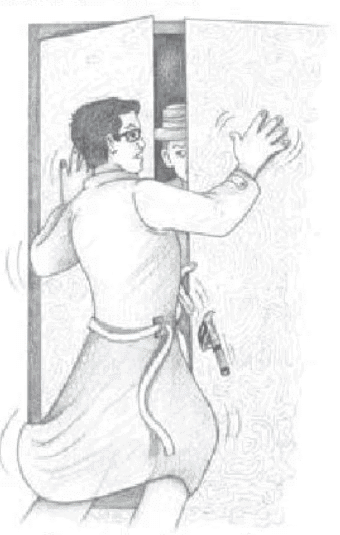
  • Gerrard, who lives alone, remains remarkably calm when an intruder breaks into his home and threatens him with a gun. Rather than being pleased, Gerrard is actually shrewd and perceptive. 
  • He quickly understands that the intruder has malicious intentions and that confronting him directly could be fatal. Instead, Gerrard engages in polite conversation to buy time. 
  • His calm and pleasant demeanor confuses the intruder and delays his plan to kill Gerrard. Through their conversation, Gerrard exposes the intruder’s lack of intelligence and successfully manipulates him. 
  • Ultimately, he traps the intruder in a cupboard and calls the police. His outward calmness and cordiality were strategic moves rather than genuine pleasure.

Q2. The intruder is boastful. He threatens Gerrard, “I’ll make you crawl” Was he able to carry out his threat? What happened to him?
Ans: 

  • The intruder, armed with a revolver, initially threatens Gerrard and boasts about his plans. However, instead of making Gerrard ‘crawl’, the intruder’s scheme backfires. 
  • Gerrard remains calm and engages the intruder in conversation, which leads him to reveal more about himself. The intruder, a criminal on the run, is cleverly tricked by Gerrard. 
  • Gerrard convinces him that he is also a criminal and persuades him to look into a cupboard, claiming it is an escape route. Once the intruder is inside, Gerrard locks him in and calls the police. Thus, the intruder’s boastful threat is never realised, and he is ultimately captured.

Q3. Gerrard says, “In most melodramas, the villain is foolish enough to delay his killing long enough to be frustrated. Does this statement hold good for the play ‘If I Were You’?
Ans: 

  • The playwright of most melodramas aims for the hero’s success. In the play If I Were You, the villain intends to kill the hero, Gerrard, but appears foolish as he continually delays his plan. 
  • Ultimately, his schemes fail, allowing Gerrard to emerge victorious. The intruder, who resembles Gerrard, wants to murder him and assume his identity. 
  • He has gathered extensive information about Gerrard but does not realise that Gerrard is a skilled actor. When Gerrard encounters the intruder, he remains calm and friendly, engaging him in conversation. 
  • This tactic leads the intruder to reveal more about himself, further postponing his deadly intentions. This delay gives Gerrard the opportunity to devise a counter-strategy. 
  • In the climax, Gerrard cleverly pushes the intruder into a cupboard, disarming him and locking him inside. Thus, the intruder’s attempt to kill Gerrard is thwarted, and he is captured.

Q4. The best way to deal with a crisis is not to lose your calm. Discuss this statement with reference to the behaviour of Gerrard in the play.
Ans: 

  • Remaining calm during a crisis is vital for success, as shown by Gerrard in the play. When faced with an armed intruder, he maintains his composure instead of panicking. 
  • Most people would react with fear, but Gerrard cleverly pretends to be pleased to see the intruder and greets him warmly. This unexpected reaction catches the intruder off guard, allowing Gerrard to gain the upper hand. 
  • By encouraging the intruder to talk about himself, Gerrard buys precious time to devise a plan. His calmness is crucial in this tense moment, enabling him to think clearly and outsmart the intruder. 
  • Ultimately, Gerrard’s ability to remain unflustered leads to his escape. Through his actions, Gerrard exemplifies that maintaining serenity can be a powerful strategy in overcoming dangerous situations. His quick thinking and composed demeanor highlight the importance of staying calm in the face of adversity.

Q5. Why was Gerrard packing a bag at the beginning of the play? How did it help him to outwit and trap the intruder?
Ans: 

  • At the beginning of the play, Gerrard was packing a bag to deliver items to a theatre group for practice. When an intruder burst into his cottage and threatened him, Gerrard remained calm. 
  • He quickly fabricated a story about being a criminal trying to escape from the police. The contents of the bag, which included a gun, disguised clothing, and fake moustaches, supported his tale. 
  • This convincing act led the intruder to believe Gerrard was telling the truth. The intruder, now convinced, agreed to flee with Gerrard, unwittingly following his instructions. 
  • Consequently, the bag played a crucial role in deceiving the intruder into thinking Gerrard was also a criminal, which ultimately led to the intruder’s capture.

Q6. Bring out Gerrard’s intelligence, the presence of mind and sense of humour. How did these traits help him outwit the intruder?
Ans: 

  • Gerrard displayed exceptional intelligence and a quick presence of mind when faced with the armed intruder. Instead of panicking, he remained calm, which not only helped him control the situation but also unsettled the intruder, who was likely feeling anxious himself. 
  • Gerrard cleverly invented a story about his own criminal past, using his sense of humour to lighten the mood and distract the intruder. He convinced the intruder that the police would arrive shortly, urging him to flee quickly. 
  • Gerrard then deceived the intruder into looking inside a cupboard, claiming it was an escape route. As the intruder leaned in, Gerrard pushed him inside, causing the revolver to fall from his hand. 
  • He promptly locked the cupboard door, effectively reversing their roles. Through his wit, humour, and foresight, Gerrard successfully outsmarted the threat he faced.

Q7. Why did the intruder find Gerrard’s cooked up the story of his criminal background convincing?
Ans: 

  • The intruder, rather than being naive, was suspicious of Gerrard’s every move. When Gerrard tried to talk to him about his identity, the intruder dismissed him, insisting on answering only direct questions. 
  • This played into Gerrard’s hands. By staying calm, Gerrard cleverly fabricated a story claiming he was also wanted by the police. He backed up his story by showing a bag filled with disguise costumes and fake moustaches, among other items. 
  • Unaware of Gerrard’s background in theatre, the intruder found this tale convincing, believing Gerrard was attempting to evade the authorities. As a result, the intruder fell into Gerrard’s trap. 
  • This shows that, despite thinking he was the smartest person in the room, he was outsmarted by Gerrard, who successfully thwarted his malicious plan.

Q8. Imagine you are Gerrard. Write a letter to your friend describing what happened when the intruder broke into your house.
You may describe:

  •  the intruder’s appearance
  •  his way of speaking, mannerism and movement 
  •  his plan to evade the law 
  •  your success in outwitting him

Ans.
(Address)
(Date)
Dear ……….
Today I am feeling extremely excited to share with you a very interesting experience which I think may form the plot for my next play.
It so happened that today, in the afternoon, when I was about to leave my cottage with my bag to supply props and make-up at the Globe Theatre, I heard somebody hit against the table in my room. On turning, I saw a man with a physique like mine, wearing a very gaudy overcoat. Aiming his gun at me, he told me in an uncultured manner to put my “paws up”. He did not. Shoot me at once because he needed some information about me. He told me that he had killed a cop and was having a difficult time dodging the police. He wanted to kill me and take up my identity to escape arrest.
But will you believe it that I foiled his plan by outwitting him through a concocted story? I maintained my cool and told him that I myself was a criminal charged with murder. I warned him that if he assumed my identity after killing me, he would still be arrested and executed. I told him that I was expecting an alert call from one of my friends, and just then, the phone rang. Actually, the call was from one of my clients at the theatre who wanted confirmation about the props that I had assured to supply.
My story worked perfectly and when I offered the man to escape with me in my car, he agreed readily. I asked him to peep into the cupboard which I claimed was connected to the garage and the secret escape route. When he learned to peep, I pushed him in the cupboard, snatched his gun, and locked him.
I then answered the phone and asked the caller to send the sergeant to arrest the criminal.
I’m sure you too will find this a smart enough act to be used as a plot for the next play. We can plan the details when we meet on Sunday.
Your loving friend
Gerrard

Q9. The intruder’s plan was clever but not feasible. Do you agree? Give reasons in support of your answer.
Ans.
 

  • The intruder’s plan to assassinate Gerrard and assume his identity appeared to be very sophisticated on the surface. However, carrying it out was not a viable option. 
  • First and foremost, if Gerrard had been killed, the intruder would have had issues disposing of his body, and there is a likelihood that his crime would have been discovered and he would have been apprehended.
  • If he had been able to deal with this aspect of the play, his theatre clients’ concerns would have grown as a result of his inability to reach Gerrard. They would have definitely sought police assistance in this matter, and the invader would have been apprehended soon.
  • As a result, the intruder’s plan, however wonderful it seemed to him, was not practical. It appeared straightforward and fool-proof in theory, but in practise, it was far too sophisticated to be carried out properly.

| 16. Poem – A Slumber Did My Spirit Seal – Long Answer Type Questions

Q1: How does the poet react to the untimely, sudden and shocking death of his beloved? What does he imagine her to be after her death?
Ans: 
The sudden and untimely death of his beloved leaves the poet stunned. It is not easy to express the poet’s feelings in words. Actually, a deep slumber ‘sealed’ his spirit. He fell as if he were in deep sleep. This deep sleep seems to have closed off his body and soul. She is no more and will not be affected by the earthly years as well as by the touch of five physical senses. 

She will feel no motion, movement or force. Nor will be able to hear or see. Yet she will become an inseparable part of nature. Physical death doesn’t mean that will be condemned to an everlasting death. No, she will roll round in earth’s diurnal course. She will become one with rocks, stones and trees.

Q2: Give a brief analysis of the poem ‘A Slumber Did My Spirit Seal’ in your own words.
Ans:
 In the poem ‘A Slumber Did My Spirit Seal’ the poet describes his beloved after her death. In the first stanza, the poet says that the death of his beloved made him very depressed. He says that his beloved has now become a non-living thing that cannot feel the touch of anything on the earth. In the second stanza, he says that his beloved has no motion. She can neither hear any sound nor can she see any thing. She is trapped under the earth and revolves with rocks, stones and trees.

Q3:  All of us know that nothing is ours permanently, then why do we suffer so much to have more and more?
Ans: 
It is true that nothing belongs to us permanently because one day we have to leave all the things on the earth. Nevertheless, people crave for more wealth, fame, knowledge, and beauty and even commit crimes, because this is human nature. We cannot separate ourselves from such things. If we give up our greed to have more and more, the world will be a much better place to live in. People would not go to extremes to achieve something.

15. Kathmandu – Long Answer Type Questions

Q1. How does the author describe the flute seller? What does he say about the flute music?
Ans: The author encounters a flute seller in a corner of the square near his hotel. He holds a pole with an attachment at the top, from which about fifty or sixty flutes are displayed, protruding in all directions like the quills of a porcupine. These flutes are made of bamboo and include various types such as cross-flutes and recorders. Occasionally, he stands the pole on the ground, selects a flute, and plays it for a few minutes. The sound rises clearly above the noise of traffic and the cries of hawkers. He plays slowly and thoughtfully, without shouting about his wares. Although he makes an occasional sale, his attitude remains carefree, suggesting this has been his way of life for years. The author finds it hard to leave, as he has always been drawn to flute music. He notes that the flute is a common instrument across cultures, serving as a link among all of humanity.

Q2. Compare and contrast the atmosphere in and around the Baudhnath shrine with that in the Pashupatinath Temple.

Ans: The Pashupatinath Temple and the Baudhnath Stupa offer very different experiences. The Pashupatinath Temple is crowded and lively, filled with worshippers trying to get close to the priest and the deity. The scene is chaotic, with priests, vendors, devotees, and tourists moving about, along with animals like cows, dogs, and monkeys. The noise and activity make the place feel disorderly, especially when Western visitors attempt to enter, adding to the commotion.

In contrast, the Baudhnath stupa is peaceful and calm. Although Tibetan-run shops line the road around it, the atmosphere remains quiet and still. The author describes it as a place of peace, offering a break from the busy streets. Unlike the bustling Pashupatinath Temple, the Baudhnath stupa provides a quiet space for reflection and serenity.

Q3. How does the author describe Kathmandu’s busiest streets?
Ans: The author describes Kathmandu’s busiest streets as vividmercenary, and religious. The landscape is beautiful and lively, filled with constant religious activity. Notable sites like the Pashupatinath temple and the Baudhnath stupa coexist with numerous small shrines and deities. The streets are mercenary due to the thriving tourist trade, featuring narrow pathways bustling with fruit sellers, flute vendors, and hawkers offering postcards. Shops line the streets, selling a variety of items such as Western cosmetics, film rolls, chocolates, and traditional Nepalese antiques like copper pots. The atmosphere is filled with a cacophony of sounds: radios blaring film songs, car horns honking, bicycle bells ringing, and vendors calling out to attract customers. Additionally, the lowing of cows adds to the din as they react to the noise of passing motorcycles. Overall, Kathmandu’s streets are a vibrant mix of noise and activity.

Q4. “To hear any flute is to be drawn into the commonality of all mankind.” Why does the author say this?
Ans: The author reflects on the music of a flute played by a seller in a square near his hotel in Kathmandu. This experience reminds him of the many types of flutes found in different cultures. The flute is a universal instrument, present in nearly every culture, each with its unique tone and pitch. For instance, the Japanese shakuhachi and the Indian bansuri have distinct fingering techniques and sound ranges. The Indian bansuri produces a deep sound, while South American flutes create clear, breathy tones, and Chinese flutes deliver loud, high-pitched melodies. Despite these differences, the author notes that the music from all flutes closely resembles the human voice. Each flute requires pauses and breaths, akin to how we speak in phrases and sentences. These pauses are created by the fingering of the flute’s holes. This shared characteristic evokes a sense of being drawn into the commonality of mankind, instilling a feeling of universality and harmony.

Q5. What ideas do you get about the author from the extract “Kathmandu”?
Ans: The extract “Kathmandu” from Vikram Seth’s travelogue, ‘Heavenly Lake’, reveals several aspects of his personality. As a traveller, Seth demonstrates a strong sense of observation, vividly capturing the essence of Kathmandu’s temples and bustling streets. His descriptions bring these places to life, showcasing his fine aesthetic sense. Indirectly, he expresses a love for serenity when he describes the stupa as a ‘haven of quietness’. Additionally, Seth’s environmental awareness is evident as he critiques the pollution along the Bagmati river. His passion for travel shines through, as he considers taking a longer route back to Delhi despite feeling tired. Seth’s appreciation for music is highlighted when he becomes enchanted by the sound of a flute, reluctant to leave the square where it is played. His reading preferences also reflect his personality; when fatigued, he opts for light, popular literature. Like many travellers, he indulges in local delicacies found in Kathmandu’s bazaars. Overall, Vikram Seth emerges as a person with a deep love for travel, a passion for music, a keen observer, and a reflective mind, capable of portraying places and people with remarkable detail.

Q6. The author has drawn powerful images and pictures. Pick out three examples each of 
(i) the atmosphere of febrile confusion outside the temple of Pashupatinath 
(ii) the things he sees 
(iii) the sounds he hears
Ans: (i) Some examples of the atmosphere of ‘febrile confusion’ outside the Pashupatinath Temple:  

  •  A huge crowd outside the temple that includes human beings, animals and birds 
  •  Some Westerners in the saffron attire like Hindus trying to intrude into the temple and the policeman opposing them
  •  Two monkeys fighting, one chasing the other and jumping on a Shivalinga and then running to the river Bagmati 

(ii) Some examples of the things that the writer sees:

  • Women washing clothes on the banks of Bagmati river
  • Children bathing in the river 
  • A corpse being cremated at the banks of the Bagmati
  • A basket with withered flowers, leaves and old offerings being dropped into the river 
  • The Tibetan immigrants selling things on the road around the Baudhnath stupa
  • The hawkers selling the postcards and other wares in the streets 

(iii) Some examples of the sounds that the writer hears:

  • The blaring horns of the traffic
  • The sweet and hypnotic sounds of the flute 
  • The loud voices of the hawkers.
  • The mooing of stray cows 
  • The film songs blaring out from the radios
  • The sound of car horns 
  • The ringing of bicycle bells

Q7. Where does the author find the flute seller and what are his observations about him? What draws the author to the music of the flute?
Ans: The author discovers a flute seller in a corner of the square near his hotel in Kathmandu, amidst various other hawkers. Unlike the other vendors, the flute seller does not shout to attract customers or display any desperation to sell. He carries a pole with about fifty to sixty flutes attached at the top, which protrude in all directions, resembling the sharp quills of a porcupine. Most of these flutes are bamboo varieties, including cross-flutes and recorders. Instead of hawking loudly, he places the pole on the ground at intervals, selects a flute, and plays it slowly and meditatively. The sound of the flute is distinct and clear, rising above the noise of traffic and the cries of other hawkers. Although he does not seem to run a brisk business, it appears that playing the flute is his primary activity, with selling the flutes being incidental. The author is captivated by the mesmerising music of the flute, feeling spellbound by its hypnotic notes. The experience is so profound that he struggles to leave the square, and the music remains etched in his memory, accompanying him back to India.

14. Poem – On Killing a Tree – Long Answer Type Questions

Q1. How does a tree grow up?

Ans: A tree takes many years to reach its full size. It begins as a small seed that pushes up from the ground. Its roots absorb nutrients from deep in the soil, while sunlight, air, and water support its growth. As it matures, small green branches and leaves emerge from its bark. Over time, the tree becomes resilient enough to survive cuts. Even if it is chopped, it can heal, with new branches sprouting from the stump, eventually returning to its original size. As long as the roots remain healthy underground, the tree will continue to grow.

Q2. What relationship does the tree have with the earth?

Ans: A tree has a deep relationship with the earth, as it relies on the earth for its very existence. The seed germinates within the earth, and the young plant emerges above the surface. The tree absorbs nutrients from the soil, which supports its growth and stability. The earth provides a firm grip for the roots, allowing the tree to grow tall and strong. Moreover, the earth protects the roots from sunlight and air, which could harm the tree. This support is crucial for the tree’s survival, even allowing a chopped tree to regrow from its stump, regaining its original size thanks to the earth’s nurturing presence.

Q3. What does the root of the tree look like when it is pulled out of the earth-cave? What happens to it when it is left exposed?

Ans: The root of the tree, when pulled out of its earth-cave, appears moist and white. It is tender and delicate, having been hidden away for many years, shielded from sunlight and air. This root is not able to withstand the light and heat of the sun. When exposed, it begins to feel scorched and choked. Initially, its colour changes to a brownish hue, and it starts to lose its tenderness. Over time, it hardens, losing its suppleness, and eventually becomes gnarled and twisted. As this process continues, the root withers away, leading to the complete draining of life from the roots, which ultimately results in the death of the entire tree. Thus, exposure gradually robs both the root and the tree of their vitality.

Q4. What would happen if the tree is hacked and chopped?

Ans: If a tree is hacked and chopped but its roots remain intact, the roots will continue to nourish the stump. This stump will eventually sprout tender twigs. If these twigs are not cut back, they will grow and, over time, the tree can return to its original size. The damaged bark will heal, allowing the tree to regain its former strength. Thus, the tree’s life is not threatened, as the healthy roots can restore it to its previous glory.

Q5. Suppose you are a tree. Write a diary entry in about 150 words describing how you were hacked and chopped and your root was pulled out and how you are inching towards your end.

Ans: Dear Diary,

Today, my heart is heavy with pain inflicted by cruel men. Just two days ago, I was enjoying the fresh air and warm sunlight when suddenly, I felt the harsh blow of an axe against my trunk. A man struck me repeatedly, wounding my bark and causing my sap to ooze. My leaves and branches fell lifelessly, and the sharp pain was almost unbearable. When the man finally left for the night, I was relieved that my root remained unharmed, believing I could heal and grow again.

However, the next day, five men arrived. The first chopped large chunks from my trunk, then they tied a rope around me and pulled with force, uprooting my delicate root from the earth. Now, my exposed root lies in the sunlight, turning brown and hardening. Slowly, it will wither away, and I will die. I wish these ignorant people understood that I provided them with fresh oxygen and shade. Sadly, I must say goodbye to this beautiful world due to their insensitivity.

Q6. Trees are our lifeline. So they must not be killed. Write your suggestions on how trees can be protected.

Ans: To protect trees, it is essential to educate the public about their importance in our ecosystem and their role in sustaining a healthy environment. Implementing strict rules against illegal logging and deforestation is crucial. Designating forests as protected areas can help limit harmful human activities.

Supporting afforestation and reforestation initiatives through incentives and resources is vital. Additionally, promoting sustainable and eco-friendly alternatives to wood and paper products can reduce the demand for tree cutting. Regular tree-planting drives and campaigns, especially involving schools, can engage communities in conservation efforts. Developing urban green spaces, such as parks and gardens, will enhance the green cover in cities. Finally, fostering a love for trees by celebrating events like World Environment Day and Arbor Day can inspire people to participate in tree-related activities.

Q7. Describe the growth of a tree in detail with reference to the poem.

Ans: The poet, Gieve Patel, illustrates the growth of a tree in his poem “On Killing a Tree”. He describes how a tree grows slowly, firmly consuming the earth. Over the years, it absorbs sunlightair, and water from nature to produce food. Even when harmed, a tree can heal its wounds; it can regenerate by sprouting new branches. Thus, a tree’s growth is a gradual process, relying on years of nourishment from its environment.

13. Reach for the Top – Long Answer Type Questions

Part 1: Santosh YadavQ1. Write a brief character sketch of Santosh Yadav.
Ans: 

  • Santosh Yadav is a brave and strong-willed woman from a small village in Haryana, who became the first woman to climb Mount Everest twice. Born as the only girl among five brothers in a society that valued boys more, Santosh refused to follow traditional rules. 
  • Her name means “contentment,” but she was never satisfied with a simple life. Instead of wearing traditional clothes, she chose shorts, and she refused to marry early to focus on her studies.
  • Santosh’s determination led her to leave home for school in Delhi, where she worked part-time to pay her fees when her wealthy parents didn’t support her at first. 
  • At college in Jaipur, she saw people climbing the Aravalli Hills and decided to try mountaineering. She joined a training institute in Uttarkashi and quickly became skilled, strong, and mentally tough. 
  • At just 20 years old, in 1992, she climbed Mount Everest, becoming the youngest woman to do so. A year later, she climbed it again, setting a world record. 
  • Santosh was kind-hearted, helping climbers in danger during her Everest trip by sharing her oxygen, saving one life. She also cared for the environment, cleaning up 500 kg of garbage from the Himalayas. 
  • Her love for India showed when she proudly raised the Indian flag on Everest. Santosh’s courage, hard work, and kindness make her a true role model.

Q2. How did Santosh carve her own destiny?
Ans: 

  • Santosh Yadav was born into a conservative and patriarchal society, yet she refused to let outdated traditions dictate her life. She believed that by choosing a rational and correct path, others would eventually have to adapt to her decisions. 
  • This belief guided her actions throughout her life. At the age of sixteen, when most girls in her village were being married off, Santosh resisted this pressure. 
  • She firmly stated that she would not marry unless she received a proper education. Despite her parents’ opposition, she enrolled in a school in Delhi
  • When her parents refused to finance her education, she took the initiative to work part-time to support her studies, which eventually led her parents to relent. 
  • Santosh’s choice to pursue a career in mountaineering further exemplified her defiance of convention. She joined the Nehru Institute of Mountaineering in Uttarkashi without seeking her father’s permission, demonstrating her willingness to take risks to follow her passion.
  • Her actions consistently reflected her belief that others needed to adapt to her choices, not the other way around.

Q3. Santosh had all the qualities of a good mountaineer. Comment.
Ans: 

  • Santosh Yadav demonstrated all the essential qualities of a good mountaineer. Mountaineering demands couragedetermination, and physical endurance, alongside a strong sense of teamwork. 
  • Santosh excelled in these areas. Within just four years of her training, she successfully scaled Mt. Everest twice, becoming the first woman in the world to achieve this remarkable feat. 
  • Her exceptional physical fitness and mental toughness were key to her success. Santosh’s ability to withstand cold temperatures and high altitudes gave her a significant advantage. Moreover, her outstanding teamwork skills were evident as she consistently showed concern for her fellow climbers. 
  • A notable instance of her selflessness was when she shared her oxygen with a climber in distress, showcasing her composure and dedication even in dire situations. 
  • These qualities not only made Santosh an extraordinary mountaineer but also earned her respect and admiration among her peers.

Q4. Santosh is not only a good mountaineer but also a genuinely good human being. Discuss.
Ans: 

  • Santosh Yadav was an extraordinary mountaineer whose achievements were complemented by her compassion and selflessness. 
  • Her care for others was evident when she tended to a climber at the South Col, despite being unable to save him. In another instance, she shared her own oxygen supply with Mohan Singh, a fellow climber, which ultimately saved his life. 
  • These acts of kindness highlight her deep sense of empathy and concern for others. Furthermore, Santosh’s commitment to preserving the environment showcases her noble character. 
  • She was dedicated to keeping the mountains clean and even brought down 500 kilograms of garbage from Mt. Everest. This demonstrates her sense of responsibility towards both her fellow climbers and the natural world. 
  • Santosh’s blend of courage, compassion, and environmental awareness illustrates that she was not only a skilled mountaineer but also a person of great moral character.

Q5. Imagine you are Santosh Yaday. You are feeling uncomfortable about enrolling yourself for climbing without seeking your father’s permission. Write a letter of apology to your father politely explaining your situation.
Ans: 

Kasturba Hostel
Maharani College
Jaipur
17th May 1988

Dear Father,

I hope you are well. I am writing to say sorry for joining the mountaineering course at Uttarkashi without asking your permission. I feel bad about my mistake and want to explain why I did it.

I love climbing and always wanted to learn it properly. When I saw a chance to join the Nehru Institute of Mountaineering, I got so excited that I signed up without thinking. I know I should have talked to you first because you always guide me. My excitement made me act quickly, but I didn’t mean to disrespect you.

I promise to be more careful and ask you before making big decisions. I hope you forgive me and support my dream to climb mountains. I want to make you proud.

Thank you for understanding.

Your loving daughter,
Santosh Yadav

Part 2: Maria Sharapova 

Q1. Explain the early challenges Maria Sharapova faced on her journey to becoming the world’s number one tennis player. How did her determination and mental toughness help her overcome these obstacles?Maria SharapovaAns: 

  • Maria Sharapova’s journey to success was filled with numerous challenges. Her rise in women’s tennis began in childhood, and by the age of 18, she had become the world’s number one player. 
  • This achievement came after years of sacrifice and dedication. At just nine years old, Maria moved to the United States to train, marking the start of her professional career. 
  • The separation from her mother for two years was heart-wrenching, yet it did not weaken her spirit. Instead, she developed mental toughness, which became one of her greatest strengths. 
  • Maria faced difficult living conditions and intense training, which only fueled her determination. Her perseverance paid off when she won the Wimbledon women’s singles title in 2004, launching her into the spotlight. 
  • Her ability to remain calm under pressure and maintain a focused mindset were crucial in her rapid ascent to the top, achieving the world number one ranking in just four years as a professional. 
  • Reflecting on her early experiences, Maria noted that the loneliness and challenges she faced taught her resilience. She embraced her struggles, stating, “When you come from nothing, it makes you very hungry and determined.” 
  • This determination and her competitive nature were key to her success, proving that her sacrifices were worthwhile.

Q2. Discuss the sacrifices Maria Sharapova and her family had to make in order for her to pursue her tennis career. How did these sacrifices contribute to her eventual success, both emotionally and professionally?
Ans: 

  • Sacrifice played a crucial role in Maria Sharapova’s journey to becoming a top tennis player. At just nine years old, she left her home in Russia to move to the United States with her father, Yuri, for training. 
  • This decision meant a painful two-year separation from her mother, Yelena, due to visa restrictions. This long absence was emotionally challenging for Maria, but she recognised that achieving excellence in tennis required significant sacrifices. 
  • Yuri worked tirelessly to support Maria’s training while living apart from his wife. In the U.S., Maria faced loneliness and the harsh realities of a training academy. 
  • She often dealt with older players who would disturb her sleep and demand chores. Instead of letting these experiences discourage her, Maria grew more determined and mentally strong. 
  • She learned to take care of herself and never considered quitting, driven by her desire to succeed. These sacrifices, along with her family’s unwavering support, propelled Maria to her dream of becoming the world’s number one tennis player. 
  • Her story highlights the importance of resilience and the willingness to endure hardship to achieve one’s goals.

Maria Sharapova won the women’s singles at Wimbledon in 2004

Q3. How did Maria Sharapova’s early experiences in the United States, including her loneliness and separation from her mother, shape her mental toughness and resolve? Provide examples from the text to support your answer.
Ans: 

  • Maria Sharapova faced significant challenges during her early years in the United States, which greatly contributed to her mental toughness and determination. 
  • At just nine years old, she moved to Florida to train, enduring a painful two-year separation from her mother, Yelena, who could not join her due to visa issues. This emotional distance left Maria feeling lonely, as her father, Yuri, was busy working to support her training. 
  • Despite her young age, Maria learned to cope with her situation. She recalled feeling so lonely that she went to bed early, only to be woken by other tennis players who would ask her to tidy up. 
  • Rather than allowing this to discourage her, she became more determined and resilient. She developed self-reliance and never considered quitting, driven by her desire to succeed. 
  • Maria’s experiences taught her that coming from nothing instilled a fierce hunger to achieve her dreams. This determination was evident in her later success, including winning the women’s singles title at Wimbledon in 2004 and reaching the world number one ranking shortly thereafter. 
  • Her journey from Siberia to the top of women’s tennis reflects her unwavering commitment and the sacrifices she made, which she believes were worth it.

Q4. Despite living and training in the United States, Maria Sharapova strongly identifies as Russian. Discuss how she balances her national identity with her professional life. How does this reflect her ambition and focus?
Ans: 

  • Maria Sharapova identifies strongly with her Russian heritage, despite living and training in the United States for much of her life. Although she speaks with an American accent and has developed her career in the U.S., Maria maintains her Russian citizenship and expresses pride in her roots. 
  • She has stated, “My blood is totally Russian,” and has shown her willingness to represent Russia in the Olympics. This balance between her national identity and professional life highlights her clarity of purpose and focus. 
  • Maria acknowledges the significant role the U.S. has played in her tennis training, yet she remains committed to her origins. This determination reflects the same ambition that fuels her drive to excel in tennis. 
  • Maria’s aspiration to be the best transcends nationality, demonstrating that while her heritage is important, her ambition motivates her to strive for success. 
  • She works diligently to achieve her goals and has made numerous sacrifices along the way. Her Russian background is a source of pride, but her relentless pursuit of excellence in tennis is what truly drives her forward.

Q5. How does Maria Sharapova view her success and monetary gains in tennis? Explain how her ambition and desire to be the best in the world motivated her to work hard and achieve success.
Ans: 

  • Maria Sharapova views her success in tennis as a result of her strong ambition and desire to be the best. While she admits that money is a motivating factor, it is not her main goal. 
  • For Maria, the ultimate aim has always been to become the world’s number one tennis player. This focus on achieving excellence has driven her through challenging times in her career. 
  • Maria recognises that tennis is both a business and a sport. Although financial rewards are part of the equation, they take a back seat to her ambition for success. 
  • She has worked tirelessly, faced numerous challenges, and made significant sacrifices to reach the top of women’s tennis. Her determination and focus have enabled her to overcome obstacles, making her one of the best players in the world. Her attitude towards success and money showcases her professionalism and dedication. 
  • Achievements like winning the Wimbledon women’s singles title in 2004 and reaching the world number one ranking are testaments to her hard work and commitment to her dreams. Maria’s story serves as an inspiring example of how ambition and perseverance can lead to remarkable success.

12. Poem – No Men are Foreign – Long Answer Type Questions

Q1. How does the poem justify that people in all countries of the world are essentially the same?

Ans: The poet justifies that people in different countries are essentially the same by highlighting the unity in human nature worldwide. The poem begins with the assertion that “no men are strange” and “no countries foreign,” suggesting that all individuals, regardless of nationality, share fundamental experiences and emotions. Every human body functions similarly, needing basic elements like airwater, and sunlight to survive. We all work for a living, using our hands to labour for our daily sustenance. The poet notes that all humans perceive the world through their eyes, which wake and sleep just like ours. Furthermore, emotions such as love are universal and have the power to connect humanity. In peaceful times, all humans thrive, while war brings starvation, destruction, and devastation. Hatred leads us away from peace, and engaging in warfare only pollutes the earth. The poet emphasises that despite the superficial differences that may separate people from different nations, there is a deeper unity that binds us all. Thus, the poet concludes that people around the world are fundamentally the same. We should embrace our shared humanity rather than focus on divisions that separate us.

Q2. ‘Wars have always brought total ruin in this world, yet they are fought repeatedly.’ Discuss.
Ans: Wars have always caused significant destruction and suffering in the world. They are fought repeatedly because of the ambitions and greed of certain leaders who prioritise their own desires for power, territory, or resources. This hunger for domination often leads to conflicts that can engulf entire nations or even the globe. The poet highlights that wars result in complete ruin for both the victor and the vanquished. They devastate economies, destroy infrastructures, and inflict immense human suffering. Historically, wars were often localised; however, in the modern era, they have become global, making them even more destructive and dangerous. The poet reminds us of the horrific consequences of the First and Second World Wars, which left a lasting impact on the world. The bombings of Hiroshima and Nagasaki in 1945 serve as a chilling reminder of the potential for destruction that modern warfare holds. The possibility of another war always looms, and the world remains on edge due to the existence of divisive forces and the ongoing arms race. The poet urges ordinary people to recognise their power and resist manipulation by unscrupulous leaders. The hope for peace lies in the hands of the common people, who must unite to foster a sense of global unity and peaceful coexistence. By viewing the world as a global village, individuals can collaborate to create a harmonious and prosperous future for all.

Wars have always brought total ruin in this world

Q3. How does the poet James Kirkup prove that no men are foreign? How far is he able to convince his reader about it?
Ans: In the poem ‘No Men are Foreign’, James Kirkup illustrates that no men are foreign by using both logical and emotional arguments to highlight our shared humanity. The title itself challenges the idea of ‘foreigners’, suggesting that no one is truly strange or different. The poet seeks to dismantle the barriers that divide us, urging readers to see people from other countries as equals. Kirkup points out our common experiences, reminding us that we all share the same earth, breathe the same air, drink the same water, and are nourished by the same sunlight. These basic needs are universal, transcending nationality. Furthermore, all humans experience similar emotions, such as love and the desire for peace. The poet notes that people from various nations work hard to support their families, just as we do. The poem also addresses the devastating consequences of war, which impacts everyone, regardless of their side. War leads to starvation, suffering, and environmental destruction, affecting the planet we all depend on. By viewing others as foreigners, we create divisions that breed conflict and ultimately harm ourselves. Kirkup makes a compelling case for unity and brotherhood, encouraging readers to recognise the shared humanity that connects us all. The poem calls us to reject the notion of ‘others’ and embrace a sense of global kinship that transcends national borders. Through his arguments, Kirkup effectively convinces the reader of our interconnectedness and the importance of seeing beyond superficial differences.

Q4. How, according to the poet, the human earth is ‘defiled’ and the innocence of air ‘outraged’?
Ans: According to the poet, the human earth is defiled and the innocence of air is outraged primarily due to the destructive impacts of war. The word defiled indicates the pollution and degradation of the earth caused by human actions, especially the devastation from conflict. When nations go to war, they unleash a torrent of weapons that ravage the natural environment, turning once fertile land into barren wasteland. The explosive force of bombs and other munitions obliterates the land, rendering it unfit for agriculture and causing irreversible damage to ecosystems. The poet highlights the environmental consequences of warfare, noting that explosions and fires release clouds of smoke and ash into the atmosphere. This pollution makes the air difficult to breathe, thus violating its purity, or outraging it, as it becomes tainted with the toxic remnants of war. Once clean and life-sustaining, the air transforms into a medium for disease and death. The harmful gases emitted during conflicts contribute to the spread of illnesses, further endangering the health of survivors. The poet’s use of the words defiled and outraged conveys a deep sense of violation, as war strips both the earth and air of their innocence and purity. In the aftermath of conflict, both victors and the defeated must confront the environmental devastation, as the once nurturing earth becomes barren and lifeless.

Q5. A great persons tell us to live cordially and as brothers. But we people tend to fight over trivial issues. Why don’t we live with others harmoniously? What makes us fight and hurt others?
Ans: It is true that many great individuals have encouraged us to live harmoniously and peacefully with one another, as brothers and sisters. These teachings have persisted through the ages, urging humanity to embrace lovetolerance, and unity. Yet, despite these messages, we often struggle to follow their guidance. One major reason for this struggle is our insatiable greed—the relentless pursuit of wealth, power, and status. This desire disrupts our inner peace and leads us away from harmony. However, the root of this disharmony goes beyond greed. Deep-seated social issues, such as discrimination based on castereligionethnicity, and wealth, create unnecessary divisions among people. These divisions are artificial, arising from selfish motives and a need to assert superiority over others. Despite knowing that all human beings are fundamentally equal—after all, we are all creations of the same God—we allow our ego and pride to dictate our actions. This ego-driven mindset often leads us to create distinctions even among family members, allowing petty disagreements and power struggles to drive wedges between us. Consequently, we risk losing the respect and love of those around us. Instead of fostering hatred, we should aim to live together in harmony, embracing tolerance, forgiveness, and a spirit of compromise. By doing so, we can cultivate a peaceful and fulfilling life for ourselves and those in our community.

Q6. How are we responsible for war? Explain with reference to the poem No Men are Foreign.
Ans: According to the poem No Men are Foreign, every individual shares some responsibility for war. War does not arise solely from the actions of political leaders or military forces; it stems from the hatred and divisions that develop among ordinary people. When we begin to hate our fellow humans—viewing them as strangers, enemies, or ‘foreigners’—we contribute to an atmosphere of tension and conflict. This tension can gradually escalate into war if left unchecked. The poet highlights that our negative thoughts and actions towards others lay the foundation for violence and destruction. By dehumanising others or treating them with contempt, we plant the seeds of conflict. Our biased and impolite behaviour, whether driven by prejudice, greed, or a thirst for power, creates a breeding ground for war. If we allow these attitudes to thrive, we directly contribute to the chaos and devastation that war brings. Thus, the poem serves as a reminder that peace begins with each individual. By treating others with respect, kindness, and equality, we can prevent the spread of hatred and stop wars before they start.

Q7. The land our brothers walk upon. Is earth like this, in which we all shall lie!’ What does the poet mean to say the above lines? Explain.
Ans: The poet conveys that the land we walk on is the same earth where we will eventually lie after death. This highlights the idea that we engage in all our activities on this shared land. We obtain food, build our homes, and derive many resources from it. Therefore, the poet questions why we label some people as ‘others’. In reality, we all inhabit the same universe, akin to a family. The poet urges us to reflect on the discrimination we create against others and the conflicts that arise from our greed for wealth and power. This desire leads to fighting and harming one another. Ultimately, the poet reminds us that death is a shared fate; nothing we possess will remain ours. In the end, we will all return to the same earth.

Q8. How are we alike? Explain in context with the poem.
Ans: We are all alike in many ways. Our bodies have the same structure, and we all need the same air to breathe, sunlight for warmth, and water for various needs. Our daily routines are quite similar; we wake up in the morning, bathe, have breakfast, and go to work or school. Each of us longs for love and rest at night, waking up to a new day. Since our needs and feelings are the same, it is essential to treat everyone equally, regardless of their colour, caste, region, or gender. We should see each person as our brother or sister. Unfortunately, some self-centred individuals engage in conflict and create divisions that undermine this unity.

11. My Childhood – Long Answer Type Questions

Q1. How did Abdul Kalam earn his ‘first wages’? How did he feel at that time?

  • Abdul Kalam’s cousin, Samsuddin, used to distribute newspapers in Rameswaram.
  • The Second World War broke out in 1939. Now, the train’s halt at Rameswaram was suspended. 
  • The bundles of newspapers were thrown out from the moving train on the Rameswaram road between Rameswaram and Dhanuskodi
  • Now, Samsuddin needed a helping hand to catch the bundles that were thrown out of the moving train. 
  • He employed Abdul Kalam to do this job. Thus, Abdul Kalam earned his first wages. This was a great moment for him. 
  • He felt a great wave of joy and pride in earning his own money for the first time. Even after many years, Abdul Kalam clearly remembers that day.

Dr A.P.J Abdul Kalam

Q2. “Once you decide to change the system, such problems have to be confronted.” What ‘system’ is this sentence referring to? What are ‘such problems’? Does the text suggest that the problems have been tackled?

  • The above sentence refers to religious differences between people. A.P.J. Abdul Kalam belonged to Rameswaram. 
  • At that time, the small society of that town was rigid in terms of the segregation of different social groups
  • This system was prevalent throughout the country. The high-caste people did not like to eat or drink with the people of low castes. 
  • The new teacher in Abdul Kalam’s class could not tolerate that a Muslim boy should sit with the son of a Hindu priest
  • He sent Abdul Kalam to the backbench. But some people have tried to fight these problems. 
  • Abdul Kalam’s teacher, Sivasubramania Iyer, served Abdul Kalam with his own hands. He sat down beside him to eat. Later, his wife realized her mistake. The next week, she served Abdul Kalam in her kitchen. 
  • Yet, these problems are deep-rooted in India. These have not been tackled even now.

Q3. What does Abdul Kalam say about his parents in the lesson ‘My Childhood’?

  • Abdul Kalam is full of praise for his parents. He was born into a middle-class family in Rameswaram. His father was Jainulabdeen
  • He was neither educated nor rich. Yet he had plenty of natural wisdom. He was also very generous. 
  • Abdul Kalam’s mother was Ashiamma. She was a kind and helpful lady. 
  • Kalam’s parents were known for their generosity. Every day, more outsiders dined with the family than the number of family members themselves.
  • Abdul Kalam was greatly influenced by his parents. His father taught him the value of self-discipline and honesty. 
  • From his mother, he inherited faith in goodness and deep kindness. His parents were not rich, but they provided their children with all the basic necessities of life, like food, clothes, and medicines. 
  • Thus, Abdul Kalam’s parents greatly influenced him.

Q4. How does Abdul Kalam describe his three close friends?

  • Abdul Kalam says that in his childhood, he had three close friends. Their names were Ramanadha Sastry, Aravindan, and Sivaprakasan
  • All these boys were from orthodox Hindu Brahmin families. Ramanadha Sastry was the son of Pakshi Lakshmana Sastry
  • He was the high priest of the Rameswaram temple. When Ramanadha grew up, he took over the priesthood of the temple from his father. 
  • Aravindan went into the business of arranging transport for the pilgrims who visited Rameswaram. 
  • The third friend, Sivaprakasan, became a catering contractor for the Southern Railways. 
  • Abdul Kalam says that although they were from different religions, none of them ever felt any difference among themselves because of different religious backgrounds. 
  • Their parents were also liberal and generous. Ramanadha’s father rebuked the new teacher for spreading the poison of social inequality in the minds of innocent children.

Q5. In this chapter, A.P.J. Abdul Kalam describes two of his teachers. What is the difference in the outlooks of these two teachers?

  • Abdul Kalam describes two teachers from his school days. When he was in the fifth standard, a new teacher came to the class. 
  • Abdul Kalam was sitting in the front row next to his close friend Ramanadha Sastry. The teacher could not tolerate that a Muslim boy should sit with a Brahmin boy
  • He sent Abdul Kalam to the backbench. It made both Abdul Kalam and Ramanadha very sad. Later, however, the teacher realized his mistake.
  • The attitude of Abdul Kalam’s science teacher was quite different. His name was Sivasubramania Iyer. 
  • He did not believe in social barriers and tried his best to break them. 
  • One day, he invited Abdul Kalam home for a meal. His wife was a traditional lady. She refused to serve a Muslim boy in her kitchen. But Iyer served Abdul Kalam with his own hands. Then he sat down beside him to eat his meal. 
  • There was a clear contrast in the outlooks of the two teachers.

Q6. Describe the incident at Kalam’s school days when a new teacher shifted him to the back row. What followed this incident?
OR
What mistake did the new teacher in Kalam’s elementary school commit one day? How was he reformed? 

  • Abdul Kalam was in the fifth standard at the Rameswaram Elementary School when a new teacher came to their class. 
  • Kalam used to wear a cap, which marked him as a Muslim. He always sat in the front row next to his Brahmin friend, Ramanadha Sastry. 
  • This new teacher could not tolerate a Muslim boy sitting with the son of a Hindu priest. So, he asked Kalam to go and sit on the backbench, which, according to this new teacher, was in accordance with the social ranking. 
  • This incident made both the boys very sad and brought tears to Ramanadha’s eyes. They reported this incident to their respective parents. 
  • Lakshmana Sastry, Ramanadha’s father, sent for the teacher and reprimanded him for spreading the poison of social inequality and communal intolerance in the minds of innocent children. He asked him to either apologize or quit school. The teacher not only regretted his unbecoming behavior but also reformed himself.

Q7. Kalam says, On the whole, the small society of Rameswaram was very rigid in terms of segregation of different social groups”. Were they aware of their differences only, or did they also naturally share friendships and experiences?

  • Although the small society of Rameswaram was very rigid in terms of segregation of different social groups, Kalam and his family were very broadminded as far as religious tolerance was concerned. 
  • His mother and grandmother used to tell him bedtime stories both from the life of the Prophet and Ramayana. Kalam had three close friends and all of them were Hindu orthodox Brahmins. 
  • Besides, his family used to arrange boats with a special platform during the annual Shri Sita Rama Kalyanam ceremony
  • The platform was used to carry idols of the Lord from the temple to the marriage site, Rama Tirtha, which was in the middle of a pond close to Kalam’s house. 
  • Hence, Kalam and his family did not let the difference in religious faith affect their behavior. They were as much at ease with non-Muslims as with those from their own religion.

Q8. The author speaks both of people who were very aware of the differences among them and those who tried to bridge these differences. Which incidents help us to identify such people in the text? 

  • The incident when Kalam’s new teacher shifted him from the first row, where he used to sit with the Hindu priest so Ramanadha Sastry, to the last row helps to identify a person who was intolerant to differences.
  • The incident, when the wife of Sivasubramania Iyer, Kalam’s science teacher, refused to serve food to Kalam, a Muslim boy, in her ritually pure kitchen, helps to identify yet another person who was intolerant to differences.
  • However, the incident when Lakshmana Sastry, an orthodox Brahmin priest, reprimanded the new teacher for spreading the poison of social inequality and communal intolerance helps to identify a person who tried to bridge the differences. 
  • Also, when Sivasubramania Iyer, an orthodox Brahmin, set an example for his conservative wife by not only serving food to Kalam but also sitting beside him to have his meal, he helped to identify another person who tried to bridge differences.

Q9. Who was Sivasubramania Iyer? What sort of relationship did Kalam’ share with him?

  • Sivasubramania Iyer was Kalam’s science teacher. He wanted to break social barriers so that people of different backgrounds could live in harmony with each other. 
  • While trying to change the system, he was mentally prepared to confront many problems. He was very fond of Kalam and used to guide and encourage him to be on par with the highly educated people of big cities.
  • Once, he invited Kalam to his place to share food with him. When his conservative wife refused to serve food to Kalam, a Muslim boy in her ritually pure kitchen, Iyer not only served Kalam himself but also sat with him to have his meal. 
  • He again invited Kalam for dinner the following weekend. However, this time his wife served Kalam as her husband’s example had reformed her. 
  • Thus, Sivasubramania Iyer and Kalam shared a strong bond of love, which was nurtured by the teacher’s progressive vision and his concern for his students.

Q.10. Teachers can either ‘make’ or ‘break’ their students’ lives. Cite two incidents from “My Childhood” to prove the truth of this statement. 

  • Abdul Kalam’s life was influenced in a major way by some experiences that he had during his school days. They were instrumental in shaping his character and later on his career.
  • Once, when he was in the fifth standard, a new teacher came to his class. He did not like Kalam, a Muslim boy, sitting next to Ramanadha Sastry, a Brahmin. 
  • So, he shifted Kalam to the back seat simply because it was in accordance with the social ranking of that time. This was a heart-breaking experience for Kalam. 
  • This poison of social inequality and communal intolerance could have demoralized the young Kalam if his friend’s father, Lakshmana Sastry, had not intervened. He ensured that the teacher not only regretted his action but also reformed himself.
  • Another experience that made Kalam a stronger and wiser person was when his science teacher, Sivasubramania Iyer, invited him to his house for a meal.
  •  During the meal, Iyer noticed that Kalam was upset at his wife’s attitude, so he invited Kalam to another dinner the following weekend, saying, “Once you decide to change the system, such problems have to be confronted”.
  • These two experiences could have had disastrous consequences for Kalam in particular and Rameswaram society in general had they not been dealt with farsight and wisdom by Kalam’s teachers. 
  • Thus, from these incidents, it is clear that teachers can ‘make’ or ‘break’ their students’ lives.

Q11. Suppose you are the new teacher who had sent Kalam to the last row in the class. You realise your mistake after the Hindu priest Lakshmana Sastry reprimanded you. Write a diary entry in about 150 words expressing your regret at your behaviour.

(Day and Date)
(Time)
Dear Diary
My first day at Rameswaram Elementary School was very eventful. Although I was supposed to teach, I actually learned a valuable lesson myself.
On entering the fifth standard, I noticed a boy in a Muslim cap sitting in the front row next to a Brahmin boy wearing the sacred thread. I did not tolerate this, and I asked the Muslim boy, whose name was Abdul Kalam, to go to the last row. The boy and his friend both looked sad, but my order was followed.
In the evening, Lakshmana Sastry, the high priest of the Rameswaram temple and the Brahmin boy’s father, sent for me. He reprimanded me for poisoning young and innocent minds about the differences based on class and community. He asked me to either apologize or quit the school and the island. I was shaken as the warning had come from none other than the high priest himself.
I was totally ashamed of my biased behavior. I regretted having victimized an innocent boy and belittling his religion. I offered my sincere regret and resolved never to let any such prejudice influence my decisions. I am grateful to Lakshmana Sastry for showing me the right path.