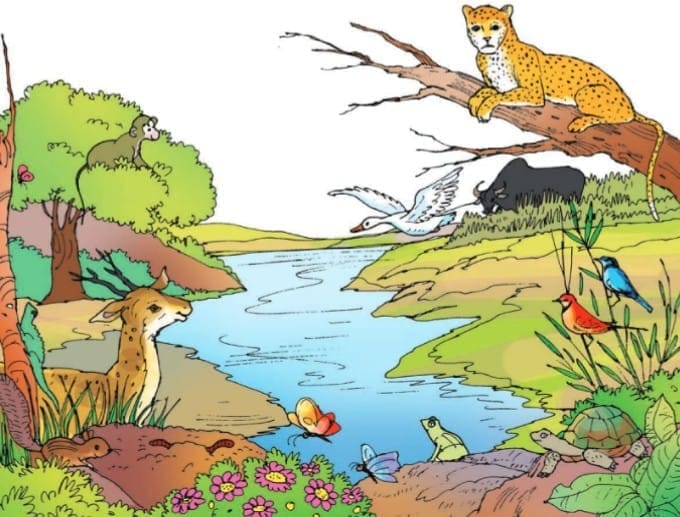
Q1: Why do animals live near plants?
Ans: Animals live near plants because plants give them food, shelter, and a safe place to live.
Q2: How do plants help animals get food?
Ans: Plants provide food such as leaves, fruits, nectar, seeds, and grass for animals.
Q3: How do plants provide shelter to animals?
Ans: Animals use tree branches, leaves, and hollows as shelters to rest and raise their young.
Q4: Why are insects often found on leaves and flowers?
Ans: Insects are found on leaves and flowers because they eat them and also rest on them.
Q5: Name some insects found on the top layer of soil.
Ans: Ants, termites, small beetles and grasshoppers are found on the top layer of soil. They move around the grass and leaves.
Q6: Why is soil important for plants and animals?
Ans: Soil helps plants grow and provides a home for many insects and small animals.
Q7: What changes do we notice in the soil after rain?
Ans: After rain, the soil becomes wet and soft, and more insects and earthworms come out.
Q8: Why do more plants and animals appear during the monsoon?
Ans: During the monsoon, seeds get water and grow into plants, and insects come out from the soil.
Q9: How do birds use different parts of plants?
Ans: Birds use twigs and leaves to build nests and tree hollows to protect their young ones.
Q10: How do animals help plants?
Ans: Animals help plants by spreading seeds and helping flowers grow into fruits.
Q11: Why do butterflies and bees visit flowers?
Ans: Butterflies and bees visit flowers to drink nectar and help in pollination.
Q12: Why should we observe animals and plants?
Ans: Observing animals and plants helps us understand how they depend on each other.
Q13: How are birds’ sounds helpful to us?
Ans: Birds’ sounds help us know that birds are around and make the environment lively.
Q14: What happens if plants are destroyed?
Ans: If plants are destroyed, animals lose food and shelter, and life on Earth is affected.
Q15: What values do we learn from plants and animals living together?
Ans: We learn sharing, cooperation, and the importance of living in harmony with nature.