We see lines and angles all around us in different objects. In our daily life, we come across different types of angles formed between the edges of different surfaces.
An architect applies the knowledge of lines and angles for drawing a plan of a multi-storied building. In science, lines are extensively used to represent the properties of light using the ray diagrams. We can easily find the height of a tower or a tall building if we know the angle formed between the horizontal line and the line of sight.
Basic Terms and Definitions
Line: It is a collection of points which has only length, no breadth or thickness and is endless in both directions. Line AB is denoted by
Line segment: A portion of a line with two endpoints is called a line segment. Line segment AB is denoted by
Ray: A part of a line with one endpoint is called a ray. Ray AB is represented by
Collinear Points: If three or more points lie on the same line, they are called collinear points otherwise they are called non-collinear points.
Angle: When two rays originate from the same endpoint, they form an angle. The rays making an angle are called the arms and the endpoint is called the vertex of the angle.
Try yourself:
Which of the following correctly defines a line?
A.A portion of a line with two endpoints.
B.A part of a line with one endpoint.
C.A collection of points which has only length, no breadth or thickness and is endless in both directions.
D.If three or more points lie on the same line, they are called collinear points.
Types of Angles
Acute Angle is an angle whose measure is more than 0°but less than 90° 0° < x < 90°
A right angle is an angle whose measure is90°. y = 90°
An obtuse angle is an angle whose measure is greater than 90° but less than 180°. 90° < z < 180°
A straight angle is an angle whose measure is 180°. Thus, a straight angle looks like a straight line. u = 180°
A reflex angle is an angle whose measure is more than 180° but less than 360° 180° < v < 360°
Complementary and Supplementary Angles
A pair of angles are said to be complementary if the sum of the angles is equal to 90°
∠AOB + ∠BOC =50° + 40° = 90° ∠AOB + ∠BOC =90° ∴∠AOB and ∠BOC are complementary angles. A pair of angles are said to be supplementary if the sum of the angles is equal to 180°
∠AOB + ∠BOC = 135° + 45° = 180° ∠AOB + ∠BOC= 180° ∴ ∠AOB and ∠BOC are supplementary angles.
Example 1: If (2x − 20°) and (x + 5°) are complementary angles, find the angles.
A pair of angles is said to be complementary if the sum of the angles is equal to 90°. If (2x − 20°)and (x + 5°) are complementary angles then their sum will be equal to 90°. (2x − 20°) + (x + 5°) = 90° 2x − 20° + x + 5° = 90° 2x + x − 20° + 5° = 90 3x − 15° = 90° ⇒ 3x = 15° + 90° 3x = 105° ⇒ x = 105°/3 = 35° (2x − 20°) = (2 × 35° − 20°) ⇒ 70° − 20° = 50° (2x − 20°) = 50° (x + 5°) = 35° + 5° = 40° (x + 5°) = 40°
Example 2: Two supplementary are in the ratio 3: 6, find the angles.
Let the two supplementary angles be 3x and 6x, 3x + 6x = 180°
A pair of angles are said to be supplementary if the sum of the angles is equal to 180° 9x = 180°⇒ x = 180/9 = 20° x = 20° 3x = 3 × 20 = 60° 6x = 6 × 20° = 120°
Adjacent Angles
Two angles are adjacent if (i) they have a common vertex (ii) they have a common arm (iii) their non-common arms are on different sides of the common arm.
Here, ∠AOB and ∠BOC are adjacent angles because these angles have a common vertex O. Ray OB is the common arm. Rays AO and CO are the non-common arms. When two angles are adjacent, then their sum is always equal to the angle formed by the two non–common arms.
Therefore, ∠AOC = ∠AOB + ∠BOC We see that ∠AOC and ∠AOB are not adjacent as their non-common arms OB and OC are on the same side of the common arm AO.
Also read: Short Answer Type Questions: Lines & Angles
Linear pair of Angles
If the non-common arms of two adjacent angles are two opposite rays, then these angles are called linear pairs of angles.
Here, OA and OB are two opposite rays and ∠AOC, ∠BOC are adjacent angles. Therefore, ∠AOC and ∠BOC form a linear pair.
Vertically Opposite Angles
When two lines AB and CD intersect each other at point O, then there are two pairs of vertically opposite angles.
Here, (i) ∠ AOC and ∠ BOD are vertically opposite angles. (ii) ∠ AOD and ∠ BOC are vertically opposite angles
Intersecting and non-intersecting lines
Intersecting Lines: Two lines are said to be intersecting when the perpendicular distance between the two lines is not the same everywhere and they intersect at one point.
Here, lines AB and CD are intersecting lines. Non-Intersecting Lines
Two lines are said to be non–intersecting when the perpendicular distance between them is the same everywhere and they do not meet.
The lengths of the common perpendiculars at different points on these lines are the same and so these lines are parallel. This equal length is called the distance between two parallel lines. Two lines in a plane will either intersect at one point or do not intersect at all, that is they are parallel.
Pairs of Angles
Axiom 1: If a ray stands on a line, then the sum of two adjacent angles so formed is 180°.
Here, ray OC stands on line AB, then ∠AOC and ∠COB are adjacent angles. Therefore, ∠AOC + ∠COB = 180° In Axiom 1, it is given that a ray stands on a line and we concluded that the sum of two adjacent angles so formed is 180°. Now, if we do the reverse and take the ‘conclusion’ of Axiom 1 as ‘given’ and ‘given’ as ‘conclusion’ then it becomes:
Statement A: If the sum of two adjacent angles is 180° then a ray stands on a line.
We see that Axiom 1 and Statement A are converse of each other. If we place a ruler along with one of the non-common arms we see that the other non-common arm also lies along the ruler. Therefore, points A, O and B lie on the same line and ray OC stands on it. ∠ AOC + ∠COB = 115°+ 65°= 180° Therefore, statement A is true. The given statement can be stated in the form of an axiom as follows:
Axiom 2: If the sum of two adjacent angles is 180°, then the non-common arms of the angles form a line. Axiom 1 and 2, together are called the linear pair axiom. Theorem 1: If two lines intersect each other, then the vertically opposite angles are equal.
Given: Lines AB and CD intersect each other at point O. So, two pairs of vertically opposite angles are formed, i) ∠ AOC and ∠BOD ii) ∠ AOD and ∠COB To prove: ∠AOC = ∠BOD and ∠AOD=∠COB Proof: Here, ray AO stands on line CD. ∴ ∠AOC +∠AOD = 180° (by Linear Pair axiom) ….. (1) Similarly, ray DO stands on line AB. ∴ ∠AOD+∠BOD = 180° (by Linear Pair axiom) ….. (2) Using Eq 1 and 2 we get, ∠AOC +∠AOD = ∠AOD+∠BOD
Subtracting ∠AOD from both sides we get, ∠AOC +∠AOD – ∠AOD = ∠AOD+∠BOD – ∠AOD (Euclid’s axiom 3 states that if equals are subtracted from equals, the remainders are equal) ∠AOC +∠AOD – ∠AOD = ∠BOD + ∠AOD – ∠AOD ∴ ∠ AOC = ∠ BOD Now, we know ray AO stands on line CD. ∴ ∠AOC +∠AOD = 180° (by Linear Pair axiom) ….. (1) Similarly, ray CO stands on line AB. ∴ ∠AOC+∠BOC = 180° (by Linear Pair axiom) ….. (2) Using Eq 1 and 2 we get, ∠AOC +∠AOD = ∠AOC+∠BOC Subtracting ∠AOC from both sides we get, ∠AOC +∠AOD – ∠AOC = ∠AOC+∠BOC – ∠AOC (Using Euclid’s axiom 3 states which that if equals are subtracted from equals, the remainders are equal) ∠AOD + ∠AOC – ∠AOC = ∠BOC + ∠AOC- ∠AOC
∴ ∠ AOD = ∠ BOC We see that two pairs of vertically opposite angles are equal.
Example 1: In the given figure AB and CD intersect at O. If ∠AOC+∠DOE = 60° and ∠BOD = 35°, find ∠DOE and reflex ∠AOE.
We know, (i) ∠AOC + ∠DOE = 60° (ii) ∠BOD = 35° Here, lines AB and CD intersect each other at O. So, ∠AOC = ∠BOD = 35° (If two lines intersect each other, then the vertically opposite angles are equal) ∠AOC + ∠DOE = 60° 35° + ∠DOE = 60° (∵ ∠AOC = 35°) ∠DOE = 60° − 35° = 25° ∠DOE = 25°
We see that COD is a straight line, that is the measure of the ∠COD is equal to 180°. ∠AOC+ ∠AOE +∠EOD = 180° ∠AOE + (∠AOC+ ∠EOD) = 180° ∠AOE + 60°= 180° (∵ ∠AOC + ∠DOE = 60°) ∠AOE = 180° – 60° ∠AOE =120°
Reflex ∠ AOE = 360°- 120°= 240° (reflex angle is an angle whose measure is greater than 180° but less than 360°)
Example 2: In the figure given below, lines PQ, RS and TU meet at point O. Find the value of x, hence find all the three indicated angles.
Here, lines PQ and TU intersect each other at O. So, ∠POT = ∠UOQ = 5x (If two lines intersect each other, then the vertically opposite angles are equal)
We see that ROS is a straight line, that is the measure of the ∠ROS is equal to 180°. ∠ROP+ ∠POT +∠TOS = 180° 4x + 5x + 3x = 180° 12x = 180° x = 180°/12 x = 15° ∠POR = 4x = 4 × 15° = 60° ∠UOQ = 5x = 5 × 15° = 75° ∠TOS = 3x = 3 × 15° = 45°
Example 3: Lines AB and CD intersect each other at O. If ∠AOD:∠AOC = 2: 4, find all the angles x, y and z .
We know, ∠AOD : ∠AOC = 2 : 4 Let, ∠AOD = 2a and ∠AOC = 4a Ray AO stands on line CD. ∠AOD +∠AOC = 180°
(If a ray stands on a line, then the sum of two adjacent angles so formed is 1800 ) 2a + 4a = 180° 6a = 180° a = 180°/6 = 30° ∠ AOD = x = 2a = 2 × 30°= 60° ∠ AOC = z = 4a = 4 × 30°= 120° x = y = 60° (Vertically opposite angles are equal) So, x = 60°, y = 60° and z = 120°
Lines parallel to the same line
If two lines are parallel to the same line then they are parallel to each other.
We draw a transversal t for the lines l, m and n, where line l is parallel to line n and line m is parallel to line n. Now, ∠1 = ∠3(corresponding angles axiom) → Eq 1 Similarly, ∠2 = ∠3 (corresponding angles axiom) → Eq 2 Using Eq 1 and 2 we get, ∠1 = ∠2 ∠1 and ∠2 are corresponding angles. The converse of corresponding angles axiom states that if a transversal intersects two lines such that a pair of corresponding angles are equal, then the two lines are parallel to each other Therefore, line l is parallel to line m ( l || m )
Example 1: In the given figure, show that AB || CD.
∠BCD = ∠BCE + ∠ECD ∠BCD = 25° + 55° = 80° We see that ∠ABC and ∠BCD are alternate interior angles. ∠ABC = ∠BCD = 80° If a transversal intersects two lines such that a pair of alternate interior angles are equal, then the two lines are parallel. ∴ AB ||CD OR ∠ FEC + ∠ECD = 125° + 55° = 180° If a transversal intersects two lines, in such a way that each pair of interior angles on the same side of the transversal is supplementary, then the lines are parallel. ∴ CD ||EF……… (1) Now let us extend EF till it intersects BC at M and extend it till M’. Then since CD ||EF We can find the remaining angles. The remaining angles are as shown:
Now, ∠ CMM’ = ∠ DCM = 80° – (Interior alternate angles) ∠ BMM’ + ∠ CMM’ = 18° – Linear Pair of angles ∠ BMM’ = 100° ∠ BMM’ + ∠MBA = 100° + 80° = 180° If a transversal intersects two lines, in such a way that each pair of interior angles on the same side of the transversal is supplementary, then the lines are parallel. ∴ AB ||EF……… (2) From eq (1) and (2), we get AB ||CD
Example 2: In the figure p||q||r. From the figure, find the ratio of (a + b): (b − a).
50° + b + 30° = 180° b + (50° + 30°) = 180° b + 80° = 180° b = 180° − 80° b = 100° We know that p||q .
If a transversal intersects two parallel lines, then each pair of interior angles on the same side of the transversal is supplementary.
So, 110° + a = 180° a = 180° − 110° = 70° a = 70° a + b = 70° + 100° = 170° b − a = 100° − 70° = 30° (a + b) : ( b − a) = 170°: 30°= 17°∶ 3°
Example 3: In the figure, PQ||RS, RS||TU, and TP⊥ PQ. If ∠STU = 65°, find the value of a, b and c.
We know, PQ||RS, RS||TU, and TP⊥ PQ. ∠ STU = 65° b + 65° = 180° (If a transversal intersects two parallel lines, then each pair of interior angles on the same side of the transversal is supplementary) b = 180° − 65° = 115° b = c = 115° (corresponding angles) a + 65° = 90° (∵ TP⊥ PQ) a = 90° − 65° = 25° So,a = 25°, b = c = 115°
Angle sum property of a triangle (Old Syllabus)
We know that the sum of all the angles of a triangle is 180°.
A triangle is a plane figure formed by three intersecting lines.
∠A, ∠B, and ∠C are called interior angles of the triangle.
When side BC is produced to D then we get an exterior angle,∠ACD.
∠BAC and ∠ABC are called its interior opposite angles.
Theorem 1: The sum of the angles of a triangle is 180°
Here, ∠1, ∠2 and ∠3 are the angles of ∆ABC. To prove: ∠1 + ∠2 + ∠3 = 180°
Construction: We draw a line XAY parallel to BC through the vertex A. (If we draw parallel lines then we can use the properties of parallel lines)
Here, XAY is a straight line. ∴ ∠4 + ∠1 + ∠5 = 180° → Eq 1 We see that XAY is parallel to BC, so, AB and AC are transversals. So, ∠4 = ∠2 (Alternate Angles) ∠3 = ∠5 (Alternate Angles) Putting∠4 = ∠2, and ∠3 = ∠5 in Eq 1 we get, ∠2 + ∠1 + ∠3 = 180° → Eq 2 ∠1 + ∠2 + ∠3 = 180° Thus, the sum of three angles of a triangle is 180°.
Theorem 2: If a side of a triangle is produced, then the exterior angle so formed is equal to the sum of the two interior opposite angles.
In ∆ABC, side BC is produced to D to form the exterior angle, ∠ACD.
To prove: ∠A + ∠B = ∠ACD In ∆ABC, ∠A + ∠B + ∠ACB = 180° (Angle sum property of triangle) → Eq 1 Here, BCD is a straight line. ∴ ∠ACB + ∠ACD = 180° → Eq 2 From Eq 1 and 2 we get, ∠A + ∠B + ∠ACB = ∠ACB + ∠ACD Subtracting ∠ACB from both sides we get, ∠A + ∠B + ∠ACB – ∠ACB = ∠ACB + ∠ACD – ∠ACB ∠A + ∠B + ∠ACB – ∠ACB = ∠ACB – ∠ACB+ ∠ACD ∠A + ∠B = ∠ACD Thus, the exterior angle is equal to the sum of the two interior opposite angles.
Example 1: The measure of the exterior angle, ∠PRS of ∆PQR is 100°.If one of the interior angles is 20°, find the measure of the other two angles of ∆PQR.
Exterior angle, ∠PRS = 100° One of the interior angles = 20° Let ∠Q = 20° then the other interior opposite angle will be ∠P. So,∠PRS = ∠Q + ∠P (exterior angle of a triangle is equal to the sum of the two interior opposite angles) 100° = 20° + ∠P ∠P = 100° − 20° = 80° Now, ∠P + ∠Q + ∠PRQ = 180° (Angle sum property of triangle states that the sum of the angles of a triangle is 180°) 80° + 20° + ∠PRQ = 180° 100° + ∠PRQ = 180° ∠PRQ = 180° − 100° ∠PRQ = 80° Therefore, the measures of the three angles of ∆PQR are ∠P = 80° ∠Q = 20° ∠PRQ = 80°
Example 2: In the figure given below, PY || SZ, PS ⊥ QR, and PY bisect∠XPR. If ∠XPR = 110° then find the measure of ∠PQR and ∠PRZ.
Now, ∠XPR = 110° ∠XPY = ∠YPR (∵ PY is the bisector which bisects ∠XPR) ∴ ∠XPY = ∠YPR = 110°/2 = 55°
We know that PY is parallel to SZ. ∠YPR = ∠PRS = 55° (alternate angles) Here, SRZ is a straight line. ∴ ∠ PRS + ∠PRZ = 180° 55°+ ∠PRZ = 180° ∠PRZ = 180°- 55° ∠PRZ = 125°
Now, ∠ XPR = ∠PRQ + ∠PQR (exterior angle of a triangle is equal to the sum of the two interior opposite angles) 110° = 55° + ∠PQR ∠PQR = 110° − 55° = 55° ∠PQR = 55° and ∠PRZ = 125°
Example 3: In the figure given below, PR || QS. If ∠PRS = 50° and ∠SUT = 30° then find ∠STU.
We know, PR||QS and so ∠PRQ and ∠QSU are a pair of corresponding angles. ∴ ∠PRQ = ∠QSU =50°
We see that ∠QSU is an exterior angle of the ∆ STU. ∠QSU = ∠SUT + ∠STU (exterior angle of a triangle is equal to the sum of the two interior opposite angles) 50° = 30° + ∠STU ∠STU = 50° − 30° = 20° ∠STU = 20°
Example 4: In the figure, ∠BPC = 40°, ∠ABQ = 65° and lines m and n are parallel to each other. Find x, y, and z.
∠ABQ = ∠PBC = 65° (Vertically opposite angle) Here, x is an exterior angle of ∆PBC. ∴ x = ∠PBC + ∠BPC x = 65° + 40° = 105° Line m || line n. So, ∠ABQ = ∠BQC = y = 65° (Alternate angles) In ∆ PQR, ∠P + ∠ Q + ∠R = 180°(Angle sum property of triangle states that the sum of the angles of a triangle is 180°) 40° + y + z = 180° 40° + 65° + z = 180° 105° + z = 180° z = 180° − 105°= 75° x = 105°, y = 65° and z = 75°
Parallel Lines and Transversal Lines (Old Syllabus)
If two lines in the same plane do not intersect, when produced on either side, then such lines are said to be parallel to each other.
Here, lines l and m are parallel to each other. A line that intersects two or more straight lines at distinct points is called a transversal line.
Here, line l intersects lines m and n at points A and B respectively. We see that four angles are formed at each point A and B, namely ∠1, ∠2, ∠3, ∠4, ∠5, ∠6, ∠7 and ∠8.
The pairs of angles formed, when a transversal intersects two lines are as follows:
Corresponding Angles: The angles on the same side of a transversal are known as corresponding angles if both lies either above or below the lines. ∠1 & ∠5 ∠2 & ∠6 ∠4 & ∠8 ∠3 & ∠7
Alternate Interior Angles: The pairs of interior angles on opposite sides of the transversal are called alternate interior angles. ∠4 & ∠6 ∠3 & ∠5
Alternate Exterior Angles: The pairs of exterior angles on opposite sides of the transversal are called alternate exterior angles. ∠1 & ∠7 ∠2 & ∠8
Interior angles on the same side of the transversal: They are also referred to as consecutive interior angles or allied angles or co-interior angles. ∠4 & ∠5 ∠3 & ∠6
Here, we see that the lines m and n are not parallel. Can you tell what will happen if line l intersects two parallel lines m and n? When a transversal l intersects two parallel lines m and n, then the relation between angles formed are obtained as axioms and theorems.
Axiom 1: If a transversal intersects two parallel lines, then each pair of corresponding angles is equal. This axiom is known as a corresponding angle axiom.
When line l intersects two parallel lines m and n, then we see that each pair of corresponding angles is equal. ∴ ∠ 1 = ∠5, ∠2 = ∠6, ∠4 = ∠8 and ∠3 = ∠7 The converse of this axiom is as follows: Axiom 2 (Converse of axiom 1): If a transversal intersects two lines such that a pair of corresponding angles are equal, then the two lines are parallel to each other. Theorem 1: If a transversal intersects two parallel lines, then each pair of alternate angles is equal.
Here, line VW intersects two parallel lines RS and TU at points A and B respectively. The two pairs of alternate interior angles are∠SAB and ∠TBA, ∠RAB and ∠ABU To prove: (i) ∠SAB = ∠TBA (ii) ∠RAB = ∠ABU We know, ∠VAR = ∠SAB (Vertically opposite angles) → Eq 1 ∠VAR = ∠TBA (Corresponding angles axiom) Eq → 2 Using Eq 1 and 2 we see that, ∠VAR = ∠SAB and∠VAR = ∠TBA. Therefore, ∠SAB = ∠TBA Similarly, ∠SAV = ∠RAB (Vertically opposite angles) Eq → 3 ∠SAV = ∠ABU (Corresponding angles axiom) Eq → 4 Using Eq 3 and 4 we get, ∠SAV = ∠RAB and ∠SAV = ∠ABU. Therefore, ∠RAB = ∠ABU So,∠SAB = ∠TBA and ∠RAB = ∠ABU
Therefore, the pairs of alternate interior angles are equal.
Theorem 2 (Converse of theorem 1): If a transversal intersects two lines such that a pair of alternate interior angles are equal, then the two lines are parallel.
Here, line VW intersects two parallel lines RS and TU at points A and B respectively in such a way that,∠SAB = ∠TBA and ∠RAB = ∠ABU. To prove: RS is parallel to TU We know, ∠SAB = ∠TBA (alternate interior angles) Eq → 1 ∠SAB = ∠RAV (vertically opposite angles) Eq → 2 Using Eq 1 and 2 we see that, ∠SAB = ∠TBA and ∠SAB = ∠RAV. Therefore, ∠TBA = ∠RAV. We know that∠TBA and ∠RAV are corresponding angles.
According to the converse of corresponding angles axiom, if a transversal intersects two lines such that a pair of corresponding angles are equal, then the two lines are parallel to each other. So, RS and TU are parallel lines, that are RS || TU.
Theorem 3: If a transversal intersects two parallel lines, then each pair of interior angles on the same side of the transversal is supplementary.
Here, line UV intersects two parallel lines AB and CD at points X and Y respectively. So, two pairs of interior angles are formed; ∠AXY and ∠CYX, ∠BXY and ∠XYD.To prove: ∠AXY + ∠CYX = 180° and ∠BXY + ∠XYD = 180° (pair of interior angles on the same side of the transversal is supplementary) Here, ray XY stands on line AB. Therefore, ∠AXY and ∠BXY are adjacent angles. So, ∠AXY + ∠BXY = 180° → Eq 1 (linear pair axiom states that if a ray stands on a line, then the sum of two adjacent angles so formed is 180°) Now, ∠BXY = ∠CYX (alternate interior angles) → Eq 2 On putting ∠BXY = ∠CYX in Eq 1 we get, ∠AXY + ∠CYX = 180° Similarly, ray XY stands on line CD. Therefore, ∠CYX and ∠XYD are adjacent angles. So, ∠CYX + ∠XYD = 180° (linear pair axiom) Eq → 3 But, ∠CYX = ∠BXY (alternate interior angles) Eq → 4 On putting ∠CYX = ∠BXY in Eq 1 we get, ∠BXY + ∠XYD = 180° Therefore, ∠AXY + ∠CYX = 180° ∠BXY + ∠XYD = 180°
Theorem 4 (Converse of theorem 4): If a transversal intersects two lines, in such a way that each pair of interior angles on the same side of the transversal is supplementary, then the lines are parallel.
Here, line UV intersects two parallel lines AB and CD at points X and Y respectively in such a way that two pairs of interior angles on the same side of the transversal are ∠AXY and ∠CYX, ∠BXY and ∠XYD. We know, ∠AXY + ∠CYX = 180° ∠BXY + ∠XYD = 180° To prove: AB || CD Here, ray XB stands on line UV. Therefore, ∠BXU and ∠BXY are adjacent angles. So, ∠BXU + ∠BXY = 180° (linear pair axiom) → Eq 3 (linear pair axiom states that if a ray stands on a line, then the sum of two adjacent angles so formed is 180°) It is given that, ∠BXY + ∠XYD = 180° → Eq 4 Using Eq 3 and 4 we get, ∠BXU + ∠BXY = ∠BXY + ∠XYD On subtracting ∠BXY from both sides we get, ∠BXU + ∠BXY – ∠BXY = ∠BXY + ∠XYD – ∠BXY ∠BXU + ∠BXY – ∠BXY = ∠BXY – ∠BXY + ∠XYD So, ∠BXU = ∠XYD Now, ∠BXU and ∠XYD are corresponding angles.
Try yourself:According to the angle sum property of a triangle, what is the sum of the interior angles of a triangle?
A.90º
B.120º
C.180º
D.360º
According to the converse of corresponding angles axiom, if a transversal intersects two lines such that a pair of corresponding angles are equal, then the two lines are parallel to each other. So, AB || CD.
Example 1: In the figure given below, PQ ||RS, find the value of a and ∠PAB and ∠ABR.
Now, ∠PAB = ∠ABS (Alternate interior angles) a + 220 = 2a + 10° 22° − 10° = 2a − a a = 12° ∠PAB = a + 22° ∠PAB = 12° + 22°(∵ a = 12°)
∠PAB = 34° We know, ∠PAB = ∠ABS = 34° Ray AB stands on line RS. Therefore, ∠ABR and ∠ABS are adjacent angles. So, ∠ABR + ∠ABS = 18° (linear pair axiom) ∠ABR +34° = 180°(∵ ∠PAB = 34°) ∠ABR = 180° − 34°= 126° ∠ABR = 126°
Example 2: In the figure, PQ ||RS ||TU and a ∶ b = 1 : 2, find c.
Let, a = 1x and b = 2x Now, a and b are interior angles on the same side of the transversal.
If a transversal intersects two parallel lines, then each pair of interior angles on the same side of the transversal is supplementary. Therefore, a + b = 180° x + 2x = 180° (∵ a = 3x, b = 2x) 3x = 180° x = 180°/3 = 60° Now, a = x = 60° b = 2x = 2 × 60° = 120° a = c = 60° (Alternate interior angle) c = 60°
Example 3: In the figure PQ || RS, ∠PQX = 35° and ∠RSX = 40°, find a.
The word ‘geometry’ comes from the Greek word ‘geo’, meaning the ‘earth’, and ‘metron’, meaning ‘to measure’. Thus, the word ‘geometry’ means ‘earth measurement’.
Geometry seems to have started from the need to measure land and was explored in various ways by ancient civilisations, including Egypt.
The Egyptians created several geometric methods and rules to calculate simple areas and to perform basic constructions. They used geometry to calculate the volumes of granaries and for building canals and pyramids.
Excavations in the Indian subcontinent, such as in Harappa and Mohenjo-Daro, show that the Indus Valley Civilization (around 3000 BC) made extensive use of geometry. This society was highly organised, with well-planned cities featuring parallel roads and an underground drainage system.
Thales, a Greek mathematician, is known for providing the first proof that a circle is bisected by its diameter.
Around 300 BC, Euclid, a mathematics teacher in Alexandria, Egypt, compiled all existing knowledge into his well-known work, called ‘Elements’. He organised it into thirteen chapters, referred to as books.
Euclid’s Definitions, Axioms and Postulates
In Euclid’s era, mathematicians developed the concepts of a point, line, and plane from observing the space and solids around them. This led to a more abstract understanding of solid objects.
A solid has a shape, size, and position, and can be moved about. Therefore, a solid has three dimensions.
Its edges are called surfaces.
These surfaces separate different parts of space and are considered to have no thickness.
The edges of the surfaces consist of curves or straight lines, which end in points.
Try yourself:
What is the meaning of the word ‘geometry’?
A.The study of shapes and figures
B.The measurement of the earth
C.The study of ancient civilizations
D.The development of mathematical techniques
Some of the other assumptions or definitions listed by Euclid’s are:
(i) A point is that which has no part.
(ii) A line is a breadthless length.
(iii) The ends of a line are points.
(iv) A straight line is a line which lies evenly with the points on itself.
(v) A surface is that which has length and breadth only.
(vi) The edges of a surface are lines.
(vii) A plane surface is a surface which lies evenly with the straight lines on itself.
Now, let’s look at the first definition of a point. Here, we need to explain what a ‘part’ is. If we say that a ‘part’ occupies ‘area’, then we must also explain what ‘area’ means. This leads to a never-ending series of definitions. For this reason, mathematicians decide to leave some geometric terms undefined. However, we have a basic understanding of what a point is, even if the definition doesn’t fully capture it. We often represent a point as a dot, even though a dot has some size.
Similarly, the second definition of a line talks about length and width, which are also not defined. Because of this, some terms remain undefined as a study progresses. In geometry, we consider a point, a line, and a plane (which Euclid calls a plane surface) as undefined terms. The important thing is that we can represent them in a straightforward way or describe them using ‘physical models’.
Starting from his definitions, Euclid made certain assumptions that were not meant to be proven. These assumptions are called ‘obvious universal truths’. He categorised them into two types: axioms and postulates. Common notions, often known as axioms, are used throughout mathematics and are not specifically related to geometry. For these reasons, mathematicians agree to leave some geometric terms undefined.
He divided them into two types:
Some Euclid’s axioms
(1) Things which are equal to the same thing are equal.
So,
If line segment PQ is equal to line segment RS and line segment RS is equal to line segment TU, then line segment PQ is equal to line segment TU.
(2) If equals are added to equals, the wholes are equal. Two jars, A and B have the same quantity of sugar, which is 2 kg. Now, we add 1 kg of sugar to both the jars, A and B.
We see that the final quantity of sugar is the same in both the jars.
(3) If equals are subtracted from equals, the remainders are equal. We again take the example of two jars having the same quantity of sugar (2 kg).
In this case, we remove 1 kg of sugar from both the jars, A and B.
We see that the final quantity of sugar in both the jars remains the same.
(4) Things which coincide with one another are equal. Two pages of the same book coincide with each other and hence are equal.
(5) The whole is greater than the part.
Here, we see that a whole cake is greater than a slice (part) of the cake.
(6) Things which are double of the same things are equal. If x = 2y and z = 2y then x = z . Suppose there are three jars of sugar, A, B, and C. Jars, A and B have an equal quantity of sugar, that is 2 kg and jar C has 1 kg of sugar. So, we see that the quantity of sugar in jar A and B is equal to twice the quantity of sugar in jar C or we can also say that both the jars A and B, have the same quantity of sugar as their quantities are also equal to twice the quantity of sugar in jar C.
(7) Things that are halves of the same things are equal. If x = y/2 and z = y/2 then x = z. Suppose there are three jars of sugar, A, B, and C. Jars, A and B have an equal quantity of sugar, that is 1 kg and jar C has 2 kg of sugar. So, we see that the quantity of sugar in jar A and B is equal to half the quantity of sugar in jar C or we can also say that both the jars A and B, have the same quantity of sugar as their quantities are also equal to half the quantity of sugar in jar C.
Example 1: Solve the equation y − 10 = 13 and state Euclid’s axioms used here.
y − 10 = 13 Adding 10 to both sides, y − 10 + 10 = 13 + 10 y = 23 Here we have used Euclid’s axiom 2 which states that if equals are added to equals, the wholes are equals.
Example 2: In the given figure PT = QT, TR = TS, show that PR = QS. Write Euclid’s axiom to support this.
It is given that, PT = QT Eq → 1 TR = TS Eq → 2 To show, PR = QS Adding Eq 1 and Eq 2 we get, PT + TR = QT + TS PR = QS Here, we have used Euclid’s axiom 2 which states that if equals are added to equals, the wholes are equals.
Example 3: In the given figure, we have BD = BC and AC = BC. State Euclid’s axiom to support this.
If BD = BC and AC = BC, then BD = AC Here, we have used Euclid’s axiom 1 which states that things which are equal to the same thing are equal.
Example: Eric and David have the same weight. If both of them lose 5 kg weight, how will you compare their new weights?
Let x kg be the initial weight of both Eric and David. On losing 5 kg, the weight of Eric and David will be (x − 5) kg. According to Euclid’s axiom 3, if equals are subtracted from equals, the remainders are equal. So, even after losing 5 kg, both Eric and David will have the same weight as their initial weights are also equal.
Try yourself:
Which Euclid’s axiom states that if equals are added to equals, the wholes are equal?
A.Axiom 1
B.Axiom 2
C.Axiom 3
D.Axiom 4
Euclid’s Five Postulates
Postulate 1: A straight line may be drawn from any one point to any other point
This postulate states that at least one straight line passes through two distinct points, but it does not say that there cannot be more than one such line. However, Euclid has frequently assumed that there is a unique line joining two distinct points. This result can be stated as an axiom given below: Axiom: Given two distinct points, there is a unique line that passes through them. Here, we see that only one line, AB is passing through A and also through B. Now can you tell how many lines are passing through B and also through A? We see that the same line, i.e. AB is passing through B and A. The above statement is self-evident and so, it is called an axiom.
Postulate 2: A terminated line can be produced indefinitely.
Postulate 2 states that a line segment can be extended on either side to form a line.
Postulate 3: A circle can be drawn with any center and any radius. Here, AB = r is the radius of circle 1 and CD = R is the radius of circle 2.
Postulate 4: All right angles are equal. Here, ∠ABC = 90° ∠XYZ = 90° ∠TUV = 90° So, all the right angles are equal.
Postulate 5: If a straight line falling on two straight lines makes the interior angles on the same side of it taken together less than two right angles (180°), then the two straight lines, if produced indefinitely, meet on that side on which the sum of angles is less than two right angles. Suppose a straight line XY falls on two straight lines, PQ and RS in such a way that the interior angles ∠1 + ∠2 <180° on the left side of XY. The two lines PQ and RS, when produced indefinitely, will eventually intersect at point O on the left side of PQ. If we see the five postulates, we notice that postulate 5 is more complex than any other postulate. The postulates 1 through 4 are so simple and obvious that these are taken as ‘self – evident truths’. As it is not possible to prove these statements, they are accepted without any proof. Euclid used his postulates and axioms to prove other results. Then using these results, he proved some more results by applying deductive reasoning. The statements that were proved are called propositions or theorem. Euclid deduced 465 propositions in a logical chain using his axioms, postulates, definitions, and theorems proved earlier in the chain.
Example: If S, T, and U are three points on a line, and T lies between S and U, then prove that ST + TU = SU.
We see that SU coincides with ST + TU. According to Euclid’s axiom 4, things that coincide with one another are equal. Therefore, SU = ST + TU Now, in this solution, it has been assumed that there is a unique line passing through two points.
Example: Prove that an equilateral triangle can be constructed on any given line segment. (1) We first draw a line segment PQ of length 1 cm. (2) Next, we draw a circle with point Q as center and QP as the radius. (Using Euclid’s postulate 3 – A circle can be drawn with any center and any radius) (3) Similarly, we draw another circle with P as center and radius equal to PQ. (4) The two circles meet at point R. Now draw the line segments, RP and RQ to form the ∆ RPQ. To prove:∆ RPQ is an equilateral triangle Here, PQ = PR = 1 cm (Radii of the same circle) PQ = QR = 1 cm (Radii of the same circle) Using these two facts and Euclid’s axiom 1 (things which are equal to the same thing are equal) we conclude that, PQ = PR = QR = 1 cm Therefore, ∆ RPQ is an equilateral triangle as all the sides are equal. Here, we see that Euclid has assumed that the two circles drawn with centers P and Q will meet each other at a point.
Theorem Two distinct lines cannot have more than one point in common. To prove: Lines l and m have only one point in common. Proof: Let us suppose that the two lines intersect at two distinct points A and B which means that two lines are passing through two distinct points A and B. According to the axiom, only one line can pass through two distinct points. Therefore, the assumption that the two lines can pass through two distinct points is wrong. So, two distinct lines cannot have more than one point in common.
Try yourself:
Which postulate states that a straight line can be extended indefinitely?
A.Postulate 1
B.Postulate 2
C.Postulate 3
D.Postulate 4
Summary
Euclid’s definition A point is that which has no part.
A line is a breadthless length. The ends of a line are points and the straight line is a line which lies evenly with the points on itself.
A surface is that which has length and breadth only. The edges of a surface are lines.Euclid’s axiom (i) Things which are equal to the same thing are equal.
Example: If = and = , then =
(ii) If equals are added to equals, the wholes are equal.
Example: If x = y then x + z = y + z
(iii) If equals are subtracted from equals, the remainders are equal.
Example: If x = y then x − z = y − z
(iv) Things which coincide with one another are equal.
Example: Two pages of the same book
(v) The whole is greater than the part.
Example: A whole cake is greater than a slice (part) of the cake.
(vi) Things which are double of the same things are equal to one another.
Example: If x = 2y and z = 2y then x = z
(vii) Things which are halves of the same things are equal to one another.
Example: If x = y/2 and z = y/2 then x = z.
In geometry, a point, a line and a plane (or a plane surface) are considered as undefined terms.
Euclid used the term ‘postulate’ for the assumptions that were specific to geometry.
Common notions or axioms were assumptions used throughout mathematics and were not specifically linked to geometry.
Euclid’s postulate Postulate 1: A straight line may be drawn from any one point to any other point. Postulate 2: A terminated line can be produced indefinitely. Postulate 3: A circle can be drawn with any centre and any radius. Postulate 4: All right angles are equal. Postulate 5: If a straight line falling on two straight lines makes the interior angles on the same side of it taken together less than two right angles (180°), then the two straight lines, if produced indefinitely, meet on that side on which the sum of angles is less than two right angles Equivalent Versions of Euclid’s Fifth Postulate ‘For every line l and for every point P not lying on l, there exist a unique line m passing through P and parallel to l.
In Euclid’s era, mathematicians developed the concepts of a point, line, and plane from observing the space and solids around them. This led to a more abstract understanding of solid objects.
A solid has a shape, size, and position, and can be moved about. Therefore, a solid has three dimensions.
We know that a linear equation in one variable x is an equation in the form of ax + b = 0, where a, b are real numbers such that a ≠ 0.
The value of the variable which satisfies a given linear equation is known as its solution.
The solution of a linear equation is also known as its root.
If ax – b = 0 is a linear equation, then x = b/a is its solution or root.
The linear equation in one variable has a unique solution. Also, it gives a straight line when plotted on a graph.
Let us consider a simple example of a linear equation in one variable (i) 2x = 8 Here, x = 8/2 = 4 (Unique solution) If we plot the solution of this equation on the graph we get a straight line.
In this chapter, we recall our previous knowledge and extend it to that of the linear equation in two variables.
Try yourself:What is the solution to the linear equation 3x + 5 = 14?
A.x = 3
B.x = 4
C.x = 7
D.x = 9
Linear Equations
An equation in which the maximum power of the variable is one is called a linear equation.
Example: x – 2 = 5, x + y = 15 and 3x – 3y = 5 are some linear equations.
Linear equations can be used to solve real-life problems such as (i) To know the cost of five pencils if the cost of one pencil is known. (ii) Weather predictions (iii) To express cricket score (iv) To know how many chocolates and balloons we can buy for the money we have (v) Government surveys.
(1) Linear Equation in one variable
The equation of the form ax + b = 0, where a and b are real numbers such that a ≠ 0 and x is a variable, is called a linear equation in one variable. Example:
(i) 3x + 3 = 12, (ii) t + 2t = 7 – t
(2) Linear Equation in two variables
An equation of the form ax + by + c = 0, where a, b and c are real numbers, such that, (a and b are not both zero), and x and y are the two variables, is called as a linear equation in two variables. Example:
(i) 3x + 2y − 5 = 0, (ii) x − 4 = √3y
Let us consider another example of linear equation in two variables,
One day, Richa and Pranita went to Mango orchard. They both started collecting mangoes, after two hours they got tired and sat under a tree. After some time they started counting the number of mangoes collected and found that they have collected 79 mangoes in 2 hours. If we have to represent a situation in the form of an equation it is written as x + y = 79 Here, x: Number of mangoes collected by Richa y: Number of mangoes collected by Pranita We don’t know how many mangoes are collected by each one of them i.e., there are two unknown quantities. Hence, we used x and y to denote them. So, x + y = 79 This is the required equation.
The solution of a linear equation is not affected when: (i) The same number is added (or subtracted) from both sides of the equation. Example: (i) 4 + 2 = 2 × 3
When we subtract 5 from both sides of the given equation we get; (4 + 2) − 5 = (2 × 3) − 5 6 − 5 = 6 − 5 1 = 1 LHS = RHS Hence, we can conclude that the solution of a linear equation is not affected when the same number is subtracted from both sides of the equation.
Example: (ii) 4 + 2 = 2 × 3
Added 5 to both sides of given equation and we get; (4 + 2) + 5 = (2 × 3) + 5 6 + 5 = 6 + 5 11 = 11 LHS = RHS Hence, we can conclude that the solution of a linear equation is not affected when the same number is added to both sides of the equation.
(ii) The same non-zero number is multiplied or divided both sides of the equation.
Example: (i) 4 + 2 = 9 − 3
Multiplied by 5 to the both sides of given equation and we get; (4 + 2) × 5 = (9 − 3) × 5 ⇒ 6 × 5 = 6 × 5 30 = 30 LHS = RHS Hence, we can conclude that the solution of a linear equation is not affected when we multiply both sides of the equation by the same non-zero number.
Example: (ii) 4 + 2 = 9 − 3
Divide by 3 to both sides of the given equation and we get; (4 + 2) / 3 = (9 – 3) / 3 (6) / 3 = (6) / 3 2 = 2 LHS = RHS Hence, we can conclude that the solution of a linear equation is not affected when we divide both sides of the equation by the same non- zero number.
Let’s solve some examples on Linear equations: Example: Write each of the following equations in the form ax + by + c = 0 and indicate the values of a, b and c in each case. (i) 3x + 4y = 7, (ii) 2x – 8 = √3y,
(i) 3x + 4y = 7
The above equation can be re-written as 3x + 4y − 7 = 0 On comparing with ax + by + c = 0, we get a = 3, b = 4, and c = −7
(ii) 2x – 8 = √3y
The above equation can be re-written as 2x – √3y − 8 = 0 On comparing with ax + by + c = 0, we get a = 2, b = −√3, , and c = − 8
Example: Write each of the following as an equation in two variables x and y (i) x = −5 (ii) 7y = 2
(i) x = −5
x + 5 = 0 1 x + 0 y + 5 = 0
(ii) 7y = 2
7y – 2 = 0 0x + 7y – 2 = 0
Example: The cost of one book is thrice the cost of a pencil. Write the linear equation in two variables to represent this statement.
Let the cost of a book be Rs. x and that of a pen to be Rs.y.
Then according to the given statement, we have x = 3y [OR] 1x – 3y + 0 = 0
Example: The bus fare is as follows: For the first kilometre the fare is Rs. 6 and for the subsequent distance it is Rs. 4 per km. Taking the distance covered as m km and total
fare is Rs. n. Write a linear equation for this information.
Total distance covered = m km Fare for the first km = 6 Rs. Fare for rest of the distance = Rs. (m – 1)4 We already know the total fare given is n Total fare = [6 + (m – 1)4] n = 6 + 4m – 4 n = 4m + 6 – 4 n = 4m + 2 4m – n + 2 = 0 This is the linear equation for this information.
Example: John and Jimmi are two friends they are studying in class 9. Together they contributed 8 dollars for flood victims. Write a linear equation that satisfies the given data. Also, draw a graph for that.
Let the amount that John and Jimmi contributed to be x and y respectively. Amount contributed by John + Amount contributed by Jimmi = 8.
So, x + y = 8 This is a linear equation that satisfies the data. To draw a graph we need to find a x and y co-ordinate which satisfy the equation x + y = 8 ……….(1) Put y = 0 in the equation (1) x + 0 = 8 x = 8 x + y = 8……….(1) Put x = 0 in the equation (1) 0 + y = 8 y = 8 So, it can be observed that (8, 0), (0, 8) satisfy the equation 1. Therefore these are the solution of the above equation. The graph is constructed as follow:
Solution of a Linear Equation
“The values of variable involved in a linear equation which satisfy the equation i.e., the equation of LHS and RHS are equal, is called the solution of the linear equation.”
1. Solution of Linear Equations in One Variable
“Any value of the variable that satisfies the given equation in x is called a solution or roots of the equation. We know the Linear equation in one variable has a unique solution. Example: (i) 3x + 3 = 12
3x = 12 – 3 3x = 9 x = 9/3 x = 3 is a solution of the given equation, which is unique.
(ii) 2x – 7 = 0
i. e. , 2x = 7 x = 7/2 is a solution of the given equation, which is unique.
2. Solution of Linear Equations in two Variables
There are two variables in the equation, a solution means a pair of values, one for x and one for y which satisfy the given equation. A linear equation in two variables has infinitely many solutions. Example: x + 3y = 5
LHS = x + 3y If we put x = 2 and y = 1 in the LHS of the equation we get, LHS = x + 2y = 3 + 3(1) = 5 Here, LHS = RHS So, we can say that x = 2 and y = 1 is a solution of the equation x + 3y = 5
Let us consider one more value of x and y.
Putting x = 1 and y = 2 in the LHS of the equation we get, LHS = x + 3y LHS = x + 3y = 1 + 3(2) = 7 Now, LHS ≠ RHS Therefore, we can say that x = 1 and y = 2 is not a solution of the equation x + 3y = 5.
Write Find the value of k in the following case, if x = 2, y = 1 is a solution of the equations: (i) 3x + 2y = k
Put x = 2, y = 1,then 3(2) + 2(1) = k 6 + 2 = k k = 8
(ii) x4 + y3 = 5k
Put x = 2, y = 1, then
24 + 13 = 5k
2 × 3 + 1 × 44 × 3 = 5k
6 + 412 = 5k
1012 = 5k
56 = 5k
5k1 = 56
k = 16
Conclusion
A linear equation in two variables is an equation that can be written in the form ax + by + c = 0, where a, b, and c are real numbers, and a and b are not both zero.
A linear equation in two variables does not have just one solution, but infinitely many solutions. This is because there are countless combinations of x and y values that can satisfy the equation.
Every point that lies on the graph of a linear equation in two variables is a solution to that equation. Conversely, every solution of the equation corresponds to a point on its graph. This means that the graph visually represents all possible solutions to the equation.
Suppose I put a small dot on a sheet of paper with a pen. Can you locate this dot on the paper if I tell you that the dot is at the lower right corner of the paper?
Now, you are able to see the dot but, can you tell me the exact position of the dot? You will see that the information given above is not sufficient to fix the position of the dot.
Now, if I tell you that the point is nearly 2 cm away from the bottom line of the paper then this will give some idea but still is not sufficient because this would mean that the point could be anywhere, which is 2 cm away from the bottom line. Therefore, to fix the position of the dot we have to specify its distance from two fixed lines, the right edge and the bottom line of the paper. Therefore, if I say that the dot is also 1 cm away from the right edge of the paper, then we can easily fix the position of the dot. We see that position of any object lying in a plane can be represented with the help of two perpendicular lines.
Coordinate geometry is the branch of mathematics where we study the position of an object on a plane with reference to two mutually perpendicular lines in the same plane.
Cartesian System
Number Line
The number line is used to represent the numbers by marking points on a line at equal distances.
On a number line distances from the fixed point are marked in equal units positively in one direction and negatively in the other.
This fixed point from which the distances are marked is called the origin. In the figure 0 denotes the origin.
3 on number line is located at a distance of 3 units on the right side of origin 0. Similarly, -3 is located at the same distance from origin but on its left side.
In Cartesian system, two perpendicular lines are used, one of them is horizontal (XX’) and the other is vertical (YY’).
The horizontal line X’X is called the x — axis and the vertical line Y’Y is called the y — axis.
The point where X’X and Y’Y intersect is called the origin (denoted by O).
Directions OX and OY are the positive directions of X – axis and Y – axis, respectively.
Similarly, directions OX’ and OY’ are the negative directions of X -axis and Y – axis, respectively.
Quadrant
The axes (plural of the word ‘axis’) divide the plane into four parts. These four parts are called the quadrants (1/4), numbered I, II, III and IV anticlockwise from OX.
The plane consists of the axes and the four quadrants. We call the plane, the Cartesian plane, or the coordinate plane, or the xy-plane. The axes are called the coordinate axes. A plane is a flat surface that goes infinitely in both directions.
Try yourself:Which statement is true about the number line?
A. It represents only positive numbers.
B. It is a horizontal line with evenly spaced points.
C.Numbers to the left are greater than numbers to the right.
D. It represents only integers.
Also read: NCERT Exemplar Solutions: Coordinate Geometry
Coordinates of a Point in Cartesian Plane
The coordinates of a point are written as (x, y)
The perpendicular distance of a point from the y axis measured along the x-axis is called its x coordinate, or abscissa. For point A (3,-10) and point B (-1,5) value of abscissa is +3 and for B, it is -1.
The perpendicular distance of a point from the x axis measured along the y axis is called its y coordinate, or ordinate. For point A (3,-10) and point B (-1,5) value of ordinate is -10 and for B, it is 5 .
In stating the coordinates of a point in the coordinate plane, the x -coordinate comes first, and then the y – coordinate. We place the coordinates in brackets. Therefore, coordinates of A are (3,2) and B are (-1, -2).
Example 1: Point P is on the x-axis and is at a distance of 3 units from the y-axis to its left. Write the coordinates of point P.
Sol: Point P is at a distance of 3 units towards left, from y-axis. Coordinates of point P are (-3, 0).
Example 2: Find distances of points C (-3, -2) and D (2, 1) from x-axis and y-axis.
C (-3, -2)
Sol: Distance from x − axis = 2 units Distance from y − axis = 3 units D (2, 1) Distance from x − axis = 1 units Distance from y-axis = 2 unit
Example 3: Locate and write the coordinates of a point: (a) lying on the x-axis to the left of origin at a distance of 4 units. b) above x-axis lying on the y-axis at a distance of 4 units from the origin. b) above x- axis lying on y- axis at a distance of 4 units from origin.
Sol: (a) The given point is at a distance of 4 units towards left from the y-axis and at a zero distance from the x-axis. Therefore, the x − coordinate of the point is -4 and the y − coordinate is 0. Hence, the coordinates of the given point are (-4, 0). Coordinates of a point on the x-axis are of the form (x, 0) as every point on the x-axis has zero perpendicular distance from the x-axis. (b) The given point is at a zero distance from the y-axis at a distance of 4 units from the x-axis. Therefore, the x − coordinate of the point is 0 and the y − coordinate is 4. Hence, the coordinates of the given point are (0, -4). Coordinates of a point on the y-axis are of the form (0, y) as every point on the y-axis has zero perpendicular distance from the y-axis.
Signs of Coordinates in different Quadrants
Example 4: Write the quadrant in which each of the following points lie: (i) (-2, -4) (ii) (1, -4) (iii) (-3, 2)
Sol: (i) (-2, -4)
Here, x coordinate = -2 and y coordinate = -4 As x coordinate and y coordinate both are negative (x < 0, y < 0) ,the given point lies in III quadrant.
(ii) (1, -4)
Here, x coordinate = 1 and y coordinate = -4 As x coordinate is positive and y coordinate is negative (x > 0, y < 0 ) the given point lies in IV quadrant.
(iii) (-3, 2)
Here, x coordinate = -3 and y coordinate = 2 As x coordinate is negative and y coordinate is positive (x < 0, y < 0 ) the given point lies in II quadrant.
Example 5: If the coordinates of a point M are (-2, 9) which can also be expressed as (1 + x, y2) and y > 0, then find in which quadrant do the following points lie: P(y, x), Q(2, x), R(x2, y − 1), S(2x,−3y)
Sol: We know, (-2, 9) = (1 + x , y2) ∴ -2 = 1 + x ⇒ x = -2 – 1 x = -3 9 = y2 ⇒ y = ± 3 Now, it is given that y > 0, so we choose the positive value of y. So, y = 3 Therefore, x = -3 and y = 3 (i) P (y, x) P (y, x) = P (3, -3) (∵ y = 3 and x = -3) As x coordinate is positive and y coordinate is negative (x > 0, y < 0 ) the given point lies in IV quadrant. (ii) Q (2, x) Q (2, x) = Q (2, -3) (∵ x = -3) The x coordinate is positive and y coordinate is negative (x > 0, y < 0 ) so the given point lies in IV quadrant. (iii) R (x2, y −1) x2 = (−3)2 = 9; y −1 = 3 – 1 = 2 R (x2, y −1) = (9, 2) As x coordinate and y coordinate both are positive (x > 0, y > 0) ,the given point lies in I quadrant. (iv) S (2x, −3y) 2x =2 × (-3) = -6; -3y = -3 × 3 = -9 S (2x, −3y)= S (-6, -9) As x coordinate and y coordinate both are negative (x < 0, y < 0),the given point lies in III quadrant.
Try yourself:n the Cartesian coordinate system, which of the following points lies in the first quadrant?
A.(3, -2)
B.(-3, -2)
C. (-3, 2)
D.(3, 2)
Summary
Coordinate System Basics: To determine the position of a point in a plane, two perpendicular lines are necessary: one horizontal and one vertical.
Cartesian Plane: The plane defined by these two lines is known as the Cartesian or coordinate plane. The lines themselves are referred to as the coordinate axes.
Axes Names: The horizontal line is called the x-axis, and the vertical line is called the y-axis.
Quadrants: The coordinate axes divide the plane into four sections, each called a quadrant.
Origin: The point where the x-axis and y-axis intersect is known as the origin.
Coordinates Definition: The distance of a point from the y-axis is called its x-coordinate, or abscissa. The distance from the x-axis is called its y-coordinate, or ordinate.
Coordinate Notation: The coordinates of a point are denoted as where is the abscissa and is the ordinate.
Axis Points: Points on the x-axis have coordinates of the form and points on the y-axis have coordinates .
Origin Coordinates: The coordinates of the origin are .
Quadrant Coordinates: Points in the first quadrant have coordinates , in the second quadrant , in the third quadrant , and in the fourth quadrant , where and denote positive and negative real numbers, respectively.
Coordinate Uniqueness: If , then the coordinates are not equal to . However, if , then .
Welcome to the intriguing world of polynomials! These mathematical expressions, made up of numbers and variables, are essential in algebra and help us model real-life situations.
In this chapter, we’ll explore what polynomials are, their different types, and their significance. You’ll learn how to add, subtract, and multiply them, as well as how to factor them.
Get ready to discover the power of polynomials and how they can enhance your understanding of mathematics!
A polynomial is made up of one or more terms. Each term typically includes:
A coefficient (a numerical value),
A variable (like x, y, etc.),
And an exponent (a power of the variable).
For example, in the polynomial:
4x3 – 3x2 + 2x -5
The terms are 4x3 3x2 + 2x -5
Variable is denoted by a symbol that can take any real value, often represented by letters such as x, y, z, etc
Coefficient: the coefficient is simply the number that multiplies the variable in any given term of a polynomial. Each term of the polynomial has a coefficient.
Algebraic expressions are the mathematical equations consisting of variables, constants, terms and coefficients.
Expressions like 2x, 3x, -x, and -½ x are examples of algebraic expressions. Specifically in the form (a constant) x. When the constant is unknown, it is denoted as a, b, c, etc.
Polynomial
A polynomial is an algebraic expression consisting of variables, coefficients, and exponents, combined using addition, subtraction, and multiplication operations.
Example:2�3−5�2+3�−72x3−5x 2+ 3x −7 is a polynomial.
“The expression which contains one or more terms with non – zero coefficient is called polynomial”
Understanding Expressions with Examples
Consider a square of side 3 units, where the perimeter is given by the sum of the lengths of its four sides.
If each side is x units, the perimeter is expressed as 4x units, showcasing how the value of the variable influences the result.
The area of the square, denoted as x² square units, is an example of an algebraic expression.
Try yourself:Which of the following is an example of a polynomial expression in one variable ?
A.2x + 3y
B.5xy – 7
C.3x2 + 2x – 5
D.x + 4 + y
Polynomials in One Variable
Polynomials are algebraic expressions with variables, coefficients, and exponents. When the exponents are whole numbers, the expressions are termed polynomials in one variable.
Example: x³ – x² + 4x + 7 and 3y² + 5y.
Terms and Coefficients
In a polynomial like x² + 2x, x² and 2x are referred to as terms. Each term has a coefficient—in -x³ + 4x² + 7x – 2, coefficients are -1, 4, 7, and -2. The term x⁰ (where x⁰ = 1) is also present.
Constant Polynomials and Zero Polynomials
Constants like 2, -5, and 7 are examples of constant polynomials. The constant polynomial 0 is termed the zero polynomial, a significant concept in polynomial theory.
Non-Polynomial Expressions
Expressions like x + 2/x, x⁻¹, and x + 3√(x) aren’t polynomials due to non-whole number exponents.
Notation for Polynomials
Polynomials can be denoted by symbols like p(x), q(x), or r(x), where the variable is x. Examples include:
�(�)=2�2+5�−3p(x) = 2x 2+ 5x−3
�(�)=�3−1q(x) = x 3−1
�(�)=�3+�+1r(y) = y 3+ y + 1
�(�)=2−�−�2+6�5s(u) = 2−u −u 2+ 6u 5
Degree of a Polynomial
The degree of a polynomial is the highest power of its variable. For example, in 3x⁷ – 4x⁶ + x + 9, the degree is 7. Constant polynomials have a degree of 0.
Examples:
�(�)=�5−�4+3
Try yourself:
What is a polynomial?
A.An algebraic expression consisting of variables, coefficients, and exponents, combined using addition, subtraction, and multiplication operations.
B.An algebraic expression consisting of variables and constants, combined using addition, subtraction, and division operations.
C.An algebraic expression consisting of variables, coefficients, and exponents, combined using addition, subtraction, and division operations.
D.An algebraic expression consisting of variables and constants, combined using addition, subtraction, and multiplication operations.
Linear, Quadratic, and Cubic Polynomials
Linear Polynomial: Degree 1, written as ��+�ax+b where �≠0a is not equal to 0.
Examples:2�−12x−1, 2�+12y+1, 2−�2−u
Quadratic Polynomial: Degree 2, expressed as ��2+��+�ax2+bx+c where �≠0a is not equal to 0.
Examples: 5−�25−y2, 4�+5�24y+5y2, 6−�−�26−y−y2
Cubic Polynomial: Degree 3, in the form ��3+��2+��+�ax3+bx2+cx+d where �≠0a is not equal to zero 0.
Examples: 4�34x3, 2�3+12x3+1, 5�3+�25x3+x2
General Form of a Polynomial
A polynomial in one variable x of degree n is an expression of the form
Also read: Worksheet: Polynomials
Zero Polynomial and Beyond
The zero polynomial, denoted as 0, has an undefined degree. Polynomials can extend to more than one variable,
like �2+�2+���x2+y2+xyz in three variables.
Zeroes of a Polynomial
Consider the polynomial �(�)=5�3−2�2+3�−2p(x)=5x3 − 2x2 + 3x −2. To find the value of �(�)p(x) at different points, we substitute the given values for �x.
In summary, for the given polynomial �(�)=5�3−2�2+3�−2p(x)=5x3−2x2+3x−2:
�(1)=4p(1)=4
�(0)=−2p(0)=−2
�(−1)=−12p(−1)=−12
These values are found by substituting the respective values of �x into the polynomial expression.
Example: Value of Polynomials at Given Points
(i) For �(�)=5�2−3�+7p(x)=5x2−3x+7 at �=1x=1: �(1)=5(1)2−3(1)+7=9p(1)=5(1)2−3(1)+7=9
(ii) For �(�)=3�3−4�+11q(y)=3y3−4y+11 at �=2y=2: �(2)=3(2)3−4(2)+11=27−8+11=30q(2)=3(2)3−4(2)+11=27−8+11=30
(iii) For �(�)=4�4+5�3−�2+6p(t)=4t4+5t3−t2+6 at �=�t=a: �(�)=4�4+5�3−�2+6p(a)=4a4+5a3−a2+6
Identifying Zeros of Polynomials
When evaluating �(�)=�−1p(x)=x−1 at �=1x=1, we find that �(1)=0p(1)=0. In general, if �(�)=0p(c)=0, we say that �c is a zero of the polynomial �(�)p(x). For example, for �(�)=�−1p(x)=x−1, �=1x=1 is a zero.
Zero Polynomial and Constant Polynomials
Constant polynomials like 55 have no zeros since replacing �x by any number in 5�05x0 still gives 55. The zero polynomial, denoted by 00, has every real number as its zero by convention.
Try yourself:What is the degree of the polynomial 3x4 – 2x2 + 5?
A.Degree 0
B.Degree 2
C.Degree 3
D.Degree 4
Factorization of Polynomials
Factor Theorem
If p(x) is a polynomial of degree �>1n>1 and �a is any real number, then (i) �−�x−a is a factor of �(�)p(x) if �(�)=0p(a)=0, and (ii) �(�)=0p(a)=0 if �−�x−a is a factor of �(�)p(x).
Proof: By the Remainder Theorem, �(�)=(�−�)�(�)+�(�)p(x)=(x−a)q(x)+p(a).
(i) If �(�)=0p(a)=0, then �(�)=(�−�)�(�)p(x)=(x−a)q(x), showing that �−�x−a is a factor.
(ii) Since �−�x−a is a factor of �(�)p(x), �(�)=(�−�)�(�)p(x)=(x−a)g(x) for some polynomial �(�)g(x). In this case, �(�)=(�−�)�(�)=0p(a)=(a−a)g(a)=0.
Example: Examining Factors
Examine whether �+2x+2 is a factor of �3+3�2+5�+6x3+3x2+5x+6 and of 2�+42x+4. Let �(�)=�3+3�2+5�+6p(x)=x3+3x2+5x+6 and �(�)=2�+4s(x)=2x+4.
Solution: For �(−2)p(−2): �(−2)=(−2)3+3(−2)2+5(−2)+6=0p(−2)=(−2)3+3(−2)2+5(−2)+6=0, so �+2x+2 is a factor.
For �(−2)s(−2): �(−2)=2(−2)+4=0s(−2)=2(−2)+4=0, so �+2x+2 is a factor.
In fact, 2�+4=2(�+2)2x+4=2(x+2), confirming the result without the Factor Theorem
Also read: Worksheet: Polynomials
Algebraic Identities
Algebraic identities are equations that hold true for all values of the variables involved. You may be familiar with several identities from earlier classes:
The identity �3+�3+�3−3���=(�+�+�)(�2+�2+�2−��−��−��)x3+y3+z3−3xyz=(x+y+z)(x2+y2+z2−xy−yz−zx) expresses a factorization involving the sum and product of cubes.
Example: Factorization of 8�3+�3+27�3−18���8x3+y3+27z3−18xyz
Given the expression 8�3+�3+27�3−18���8x3+y3+27z3−18xyz, we can factorize it using Identity VIII:
Try yourself:Which of the following identities represents the cube of a binomial?
A.Identity VI
B.Identity IV
C.Identity VII
D.Identity VIII
Summary
1. Definition of a Polynomial:
A polynomial p(x) in one variable x is an algebraic expression written as, , where are constants andand an The term an is the leading coefficient and n is the degree of the polynomial.
2. Types of Polynomials:
Monomial: A polynomial with one term.
Binomial: A polynomial with two terms.
Trinomial: A polynomial with three terms.
Linear Polynomial: A polynomial of degree one.
Quadratic Polynomial: A polynomial of degree two.
Cubic Polynomial: A polynomial of degree three.
3. Zeros of Polynomials:
A real number a is a zero of a polynomial p(x) if p(a) = 0. Such a number is also called a root of the equation p(x) = 0.
4. Uniqueness and Existence of Zeros:
Every linear polynomial has a unique zero.
A non-zero constant polynomial has no zeros.
Every real number is a zero of the zero polynomial (polynomial where all coefficients are zero).
5. Factor Theorem:
x – a is a factor of the polynomial p(x) if p(a) = 0. Conversely, if x – a is a factor of p(x), then p(a) = 0.
Number system is a writing system used for expressing numbers. A number is a mathematical object used to count, label and measure.
Types of Numbers
Natural numbers: All counting numbers are called natural numbers. It is denoted by “N”.
Example: N = {1, 2, 3, 4 … .}
Natural numbers are represented on the number line as follows:
Whole numbers: The group of natural numbers including zero is called whole numbers. It is denoted by “W”. Zero is a very powerful number because if we multiply any number with zero it becomes zero. All natural numbers along with zero are called whole numbers.
Example: W = {0, 1, 2, 3, 4 … .}
Whole numbers are represented on number line as follows:
Integers: The collection of all whole numbers and negatives of all natural numbers or counting numbers are called integers. They are denoted by “Z” or “I”. All whole numbers are integers, but all integers are not whole numbers
Example: Z or I = {… − 3, −2, −1, 0, 1, 2, 3 … . .}
Integers represented on number line as follow:
Real numbers
The collection of rational & irrational numbers together forms real numbers. The set of real numbers is denoted by symbol R. How do you know whether any number is real number or not?
If that number can be shown on number line then that number is a real number. So, any number which can be shown on the number line is real number.
Example: √2 , √3, −5, 0 , 1/5 5 etc…. All rational numbers are real numbers but all the real numbers are not rational numbers. Also, all irrational numbers are real numbers, but the reverse is not true
Rational numbers: Numbers that can be represented in the form of p/q where p & q are integers & q ≠ 0 are called rational numbers. The word rational came from the word ‘ratio’. It is denoted by letter Q and Q is taken from the word quotient. All integers are rational numbers.
Example: Q ={1/2, 3, -4, 3/2 etc ….}
Rational numbers also include natural numbers, whole numbers and integers. This can be explained using following example:
Example: –16 can also be written as -16/1 Here p = – 16 and q = 1. Therefore, the rational numbers also include the natural numbers, whole numbers and integers.
Equivalent rational numbers: The equivalent rational numbers are numbers that have same value but are represented differently.
Example: If a/b is equivalent to c/d and a/b = x then c/d = x
Also, if a/b = c/d, then a x d = b x c.
Irrational numbers: A number which can’t be expressed in the form of p/q and its decimal representation is non-terminating and non-repeating is known as irrational numbers. It is denoted by “S”.
Methods to determine rational number between two numbers
We know that there are infinitely many rational numbers between any given rational numbers. Hence, for determining one or more than one rational number between two given rational numbers we use the following methods
(i) When one rational number is to be determined: Let a and b be two rational numbers, such that b > a. Then, is a rational number lying between a and b
Example: Find a rational number between 4 and 5 Here, 5 > 4
We know that, if a and b are two rational numbers, such that b > a. Then, is a rational number lying between a and b. So, a rational number between 4 and 5 =
(ii) When more than one rational number are to be determined: Let a and b be two rational numbers, such that b > a and we want to find n rational numbers between a and b. Then, n rational numbers lying between a and b are (a + b), (a + 2d ), (a + 3d), ……….(a + nd), where, d = ( b -a ) / (n + 1) Here, a and b are two rational numbers n is the number of rational numbers between a and b
Example (i): Find six rational numbers between 3 and 4
Here, 4 > 3 So, let a = 3 and b = 4 and n = 6 Since, d = b -a / n + 1 Now, Hence, the required six rational numbers lying between 3 and 4 are
Example (ii): Find four rational numbers between − 6 and– 7.
Here, −6 > −7 Let a = − 7, b = − 6 and n = 4 Now, d = b -a / n + 1 = So, four rational numbers between – 6 and − 7 are (a + d), (a + 2d), (a + 3d) and (a + 4d) i.e., and = and = and The above rational numbers are the rational numbers which lie between – 6 and – 7.
Try yourself:Which of the following is an example of a rational number?
A.π
B.√2
C. 3/4
D.e
Irrational number
A number which can’t be expressed in the form of p/q and its decimal representation is non-terminating and non-repeating is known as irrational numbers. The set of irrational numbers is denoted by “S”.
Example: S = √2 ,√3 , π, etc. ..
Locate an irrational number on the number line: We see how to locate an irrational number on number line with the help of following example:
Example: Locate √17 on the number line
Here, 17 = 16 + 1 = (4)2 + (1)2 (Sum of squares of two natural numbers) So, we take a = 4 and b = 1 Now, draw OA = 4 units on the number line and then draw AB = 1 join OB.
By using Pythagoras theorem, in ∆OAB Taking O as the centre and radius equal to OB, draw an arc, which cuts the number line at C. Hence, OC represents √17.
Real Numbers and their Decimal Expansion
Real numbers: The collections of rational & irrational numbers together form real numbers. They are denoted by R. Every point on the number line is a real number.
Rational and Irrational numbers are Subsets of Real Numbers
Example: √2, √3, −5, 0, 1/5, 5 etc…. All rational numbers are real number but all real numbers are not rational numbers. Also, all irrational numbers are real number, but the reverse case is not true.
Real numbers and their decimal expansion: The decimal expansion of real numbers can be either terminating or non – terminating, repeating or non – terminating non – repeating. With the help of decimal expansion of real numbers, we can check whether it is rational or irrational. (i) Decimal expansion of rational numbers: Rational numbers are present in the form of p/q, where q ≠ 0, on dividing p by q, two main cases occur, (a) Either the remainder becomes zero after few steps (b) The remainder never becomes zero and gets repeating numbers.
Case I: Remainder becomes zero On dividing p by q, if remainder becomes zero after few steps, and then the decimal expansion terminates or ends after few steps. Such decimal expansion is called terminating decimal expansion.
Example:
On dividing we get exact value 0.625 and remainder is zero. So, we say that is a terminating decimal expansion. On dividing we get exact value 0.625 and remainder is zero. So, we say that is a terminating decimal expansion.
Case II: Remainder never becomes zero On diving p by q, if remainder never becomes zero and the sets of digits repeats periodically or in the same interval, then the decimal expansion is called non – terminating repeating decimal expansion. It is also called non – terminating recurring decimal expansion. Example (i):
= 0.333… . . or = 0. 3= [The block of repeated digits is denoted by bar ‘– ‘over it] On dividing we get the repeated number 3 and remainder never becomes zero. Hence, 1 by 3 has a non – terminating repeating decimal expansion.
Example (ii):
Hence, = 0.On dividing 4 by 13 we get the repeated numbers 0.30769230 again and again, and remainder never becomes zero. Hence, 4 by 13 has a non – terminating repeating decimal expansion.
Methods to Convert Non – Terminating Repeating Decimal Expansion in the form of p by q
Suppose the number is in the form of ( and we have to convert the given number in the form of p by q. Follow the following steps: Step I: Firstly, transform the non – repeated digits between decimal point and repeating number to left side of decimal by multiplying both sides by 10n Where n = number of digits between decimal points and repeating numbers. i.e., . (In the above expression we see that one digit “b” exist between decimal point and repeating number. Hence,we multiply both side by 101. We get, Step II: Count the number of digits in repeating number and then multiply equation (1) by that power of 10 and the equation becomes
Step III: Subtract equation (1) from equation (2) we get,
Example (i): Express in the form of p by q
Assume the given decimal expansion as x Let, x = x = 0.666 … … . . (i) Here, only 1 digit is repeating. Hence, multiplying both side of equation (i) by 10 we get, 10x = 6.66… … … (ii) Subtracting equation (i) from (ii) we get, 10x – x = 6.66 – 0.66 9x = 6.66 – 0.66 9x = 6 x = 6/9 = 2/3 Hence,
Example (ii): Express 0.4 in the form, where p and q are integers and q ≠ 0
Let, x = 0.43535 ……(i) Here, we see that one digit exit between decimal point and recurring number So, we multiply both sides of equation (i) by 10, we get 10x = 4.3535 …… (ii) Here we see that two digits are repeated in the recurring number So, we multiply equation (ii) by 100, we get 1000x = 435.3535 …… (iii) Subtracting equation (ii) from equation (iii), we get 1000x − 10x = 435.3535 − 4.3535 990x = 431 x = Hence,
Example (iii): Express 0.00232323…. in the form, where p and q are integers and q ≠ 0
Let, x = 0.00232323 = 0.00 ……(i) Here, we see that two digits exist between decimal point and recurring number So, we multiply both sides of equation (i) by 100, 100x = 0.232323…… (ii) Here we see that two digits are repeated in the recurring number So, we multiply equation (ii) by 100, we get 10000x = 23.2323 …… (iii) Subtracting equation (ii) from equation (iii), we get 10000x − 100x = 23.2323 − 0.232329 990x = 23 x = Hence, 0.002323 =
Decimal Expansion of Irrational Numbers
The decimal expansion of an irrational numbers is non-terminating non-recurring or a number whose decimal expansion is non – terminating and non-recurring is called irrational. Example: √3 and π are the examples of irrational numbers because, the values of √3 = 1.7320508075688772…. and π = 3.14592653589793 are non-terminating non-recurring.
Example (i): Find the irrational number between and
∴ Now, Thus, It means that the required rational numbers will lie between and . Also, we know that the irrational numbers have non-terminating non-recurring decimals. Hence, one irrational number between and is 0.20101001000… . .
Example (ii): Find the two irrational numbers between and
If = 0.333 (Given) We have, = 0.333 (Given) Hence, = 2 × = 2 × 0.333 = 0.666 So, the two rational numbers between and may be 0.357643… and 0.43216 (In this solution we can write infinite number of such irrational numbers)
Example (iii): Find two irrational numbers between √2 and √3 .
We know that, the value of √2 = 1. 41421356237606 and √3 = 1.7320508075688772 From the above value we clearly say that √2 and √3 are two irrational numbers because the decimal representations are non-terminating non-recurring. Also, √3 > √2 Hence, the two irrational numbers may be 1.501001612 and 1.602019
Try yourself: Which of the following numbers is an irrational number?
A.0.121212…
B.0.3333…
C.√9
D.√5
Operations on Real Numbers
We know that, “The collection of rational & irrational numbers together forms Real numbers”.
Both Rational & irrational numbers satisfy commutative law, associative law, and distributive law for addition and multiplication. However, the sum, difference, quotients and products of irrational numbers are not always irrational. If we add, subtract, multiply or divide (except by zero) two rational numbers, we still get a rational number. But this statement is not true for irrational numbers. We can see the example of this one by one
Rational Number + Rational Number = Rational Number
Let, a = (rational) and b = (rational), = = = = (rational number)
Rational Number – Rational Number = Rational Number
Let, a = (rational) and b = (rational) = = = (rational number)
Rational Number X Rational Number = Rational Number
Example:
Let, a = (rational) and b = (rational) Hence, × = (rational)
Rational Number / Rational Number = Rational Number
Let, a = (rational) and b = (rational) divided by i.e., Hence, ÷ = x = x 3
The sum and difference of a rational number and an irrational number is an irrational number.
Example:
Let, a = (rational) and b = √3 (irrational) then, a + b = + √3 = (irrational) a − b = − √3 = (irrational)
The multiplication or division of a non-zero rational number with an irrational number is an irrational number.
Example:
Let, a = (rational) and b = √2 (irrational) then,
ab = × √2 = (irrational)
= = × = (irrational)
If we add, subtract, multiply or divide two irrational numbers, we may get an irrational number or rational number.
Example:
Let two irrational numbers be a = 3 + √2 and b = 3 − √2 then a + b = ( 3 + √2 ) + ( 3 − √2 ) = 3 + √2 + 3 − √2 = 3 + 3 = 6 (rational) Let two irrational numbers be a = √3 + 1 and b = √3 − 1 then A + b = (√3 + 1 ) + (√3 − 1) = √3 + 1 + √3 − 1 = 2√3 (irrational)
Examples: Write which of the following numbers are rational or irrational.
(a) π − 2
(b) (3 + √27 ) − (√12 + √3) (c)
(a) π − 2
We know that the value of the π = 3.1415 Hence, 3.1415 – 2 = 1.1415 This number is non-terminating non-recurring decimals.
(b) (3 + √27 ) − (√12 + √3)
On simplification, we get ( 3+ ) – ( + ) = 3 + 3√3 − 2√3 − √3 = 3 + √3 − √3 = 3, which is a rational number.
(c)
Here, 4 is a rational number and √5 is an irrational number. Now, we know that division of rational number and irrational number is always an irrational number.
Try yourself:What is the value of the product of two irrational numbers?
A. Always irrational
B.Always rational
C.Can be rational or irrational
D. None of the above
Representation of √x for any positive integer x on the number line geometrically
We understand this method with the help of following steps. This construction shows that √x exists for all real numbers x > 0
Step I: Firstly mark the distance x from fixed point on the number line i.e. PQ = x
Step II: Mark a point R at a distance 1 cm from point Q and take the mid-point of PR.
Step III: Draw a semicircle, taking O as centre and OP as a radius.
Step IV: Draw a perpendicular line from Q to cut the semi-circle to find √x
Step V: Take the line QR as a number line with Q as zero.
Step VI: Draw an arc having centre Q and radius QS to represent √x on number line.
We can see this method with the help of example
Example: let us find it for x = 4.5, i.e., we find √4.5
(i) Firstly, draw a line segment AB = 4.5 units and then extend it to C such that BC = 1 unit. (ii) Let O be the Centre of AC. Now draw the semi- circle with centre O and radius OA. (iii) Let us draw BD from point B, perpendicular to AC which intersects semi-circle at point D. Hence, the distance BD represents √4.5 ≈ 2.121 geometrically. Now take BC as a number line, draw an arc with centre B and radius BD from point BD, meeting AC produced at E. So, point E represents √4.5 on the number line.
Radical Sign: Let a > 0 be a real number and n be a positive integer, such that
(a) = is a real number, then n is called exponent, and a is called radical and “√ ” is called radical sign. The expression is called surd.
Example: If n = 2 then (4) = is called square root of 2.
Identities
Now we will list some identities which are related to square roots. You are familiar with these identities, which hold good for positive real number a and b. Let a and b be positive real numbers. Then,
Let’s solve some examples on the basis some of identities:
Looking at the value can you tell where this value will lie on the number line? It is a little bit difficult. Because the value containing square roots in their denominators and division is not easy as addition, subtraction, multiplication and division are convenient if their denominators are free from square roots. To make the denominators free from square roots i.e. they are whole numbers, we multiply the numerator and denominators by an irrational number. Such a number is called a rationalizing factor.
Note: Conjugate of is , and conjugate of ,
Let’s solve some examples on rationalizing the denominators:
Examples: Rationalise the denominator of the following
(a)
(b)
(c)
(d)
(a)
Rationalization factor for Here, we need to rationalise the denominator i.e., remove root from the denominator. Hence, multiplying and dividing by ∴
(b)
We know that the conjugate of 4 + √2 = 4 – √2 ∴
(c)
We know that the conjugate of √3 – √5 = √3 + √5 ∴
(d)
We know that the conjugate of 5 + 3√2 = 5 – 3√2
Laws of Exponent for Real Numbers
Now we will list some laws of exponents, out of these some you have learnt in your earlier classes. Let a (> 0) be a real number and m, n be rational numbers.
(i) am X an = am+n
(ii) (am)n = amn
(iii) = am-n
(iv) am X bm = (ab)m
(v)a-m =
(vi) () -m = ()m
Note: The value of zero exponent i.e. a° =1
Let us now discuss the application of these laws in simplifying expression involving rational exponents of real numbers. Examples: Simplify each of the following (i) (2)5 x (2)3 (ii) (43)2 (iii) (iv) 72 × 62 (v) 6-2 (vi) (vii) 33/2
(i) (2)5 x (2)3
We know that, am x an = am+n Hence, (2)5 × (2)3 = (2)5+3 = (2)8
(ii) (43)2
We know that, (am)n = amn (43)2 = (4)3 ×2 = (4)6
(iii)
We know that, am/an = am-n = = 53-2 = 51
(iv) 72 × 62
We know that, am x bm = (ab)m (7)2 × (6)2 = (7 × 6)2 = (42)2
(v) 6-2
We know that, a-m =1/am 6-2 = 1/62 = 1/36
(vi)
We know that
(vii) 33/2
We know that
Try yourself:Which of the following best describes a number with a decimal representation like 0.3333…?
A.Finite decimal
B.Non-terminating non-repeating decimal
C. Terminating decimal
D.Non-terminating repeating decimal
Summary
1. Rational Numbers:
A number is classified as rational if it can be expressed as a fraction p/q where p and q are integers and q ≠ 0.
The decimal expansion of a rational number is either terminating or non-terminating but recurring.
2. Irrational Numbers:
A number is classified as irrational if it cannot be expressed as p/q, where both p and q are integers and q ≠ 0.
The decimal expansion of an irrational number is non-terminating and non-recurring.
3. Real Numbers:
The set of all rational and irrational numbers combined forms the collection of real numbers.
4. Operations with Rational and Irrational Numbers:
If r is rational and s is irrational, then:
r + s and r – s are irrational.
r × s and r / s (given r≠ 0) are irrational.
5. Identities for Positive Real Numbers:
For any positive real numbers a and b:
6. Rationalizing the Denominator:
To rationalize the denominator in terms like 1 / a + b multiply by the conjugate a – b / a – b.
7. Exponential Properties:
Let a > 0 be a real number and p and q be rational numbers. Then:
Ques 1: Name any two fodder crops. Ans: Berseem, oats or sudan grass are raised as food for the livestock, called fodder crops.
Ques 2: What do you understand b.y photoperiod of sunlight? Ans: Photoperiod are related to the duration of sunlight required for plant growth.
Ques 3: Name two kharif crops. Ans: Paddy and soyabean.
Ques 4: Name two rabi crops. Ans: Wheat and gram.
Ques 5: Define hybridisation. Ans: Hybridisation refers to crossing between genetically dissimilar plants, to obtain, better variety of crops.
Ques 6: What are genetically modified crops? Ans: By introducing a gene with required characters into a crop for its improvement is called genetically modified crop.
Ques 7: “Shorter the duration of the crop from sowing to harvesting, the more economical is the variety”. Give reason for this. Ans: Due to short duration of crop growth, farmers can grow more crops in a year, and reduce the cost of drop production.
Ques 8: Name different types of crop production practices involved in India. Ans: They are (a) no cost production (b) low cost production (c) high cost production.
Ques 9: Who provides nutrients to plants? Ans: Nutrients to plants are provided by air, water and soil.
Ques 10: What are macro-nutrients? Ans: The nutrients required by plants in larger quantity is called macro-nutrients. They are nitrogen, phosphorus, potassium, calcium, magnesium and sulphur.
Ques 11: Name the nutrients that plant obtain from air and water. Ans: Air – Carbon and oxygen Water- Hydrogen and oxygen
Ques 12: State the difference between compost and vermi-compost. Ans: The compost is obtained by decomposition of organic waste like animal excreta, plant waste etc. naturally due to decomposition by bacteria. Vermi-compost: To hasten the process of decomposition redworms are added to this organic matter to obtain compost.
Ques 13: Name any two weeds. Ans: Parthenium and Xanthium.
Ques 14: What causes disease in plants? Ans: It is caused by pathogens such as bacteria, fungi and viruses.
Ques 15: Name two Indian cattle. Ans: Bos indicus – cows 4 Bos bubalis – buffaloes.
Ques 16: Name two exotic breeds of cattle. Ans: Jersey and Brown Swiss
Ques 17: Name two variety of food required for milch animals. Ans: • Maintenance requirement – food required to keep animal healthy • Milk producing requirement – food required for increased lactation Animal food includes roughage and concentrate also.
Ques 18: State the meaning of capture fishing and culture fishing. Ans: Capture fishing: It is done from natural resources. Culture fishing: It is done by fish farming.
Ques 19: Name four marine fish varieties. Ans: Pomphret, mackerel, tuna and sardines.
Ques 20: What is apiculture? Ans: Keeping bee for obtaining honey commercially is called apiculture.
Ques 21: Name the products obtained from apiculture. Ans: Honey and wax both are obtained from apiculture.
Short Answers Type Questions
Ques 1: What are the major group of activities involved for improving of crop yields? Ans: • Crop variety improvement • Crop production improvement • Crop protection improvement
Ques 2: What are the different ways/ methods of hybridisation? Ans: Hybridisation can be • Intervarietal – between different varieties of crops • Interspecific – between two species of same genus • Intergeneric – between two different genera
Ques 3: What are the main characters required in a crop during its improvement practices? Ans: The useful characters that are required in a crop during its improvement: (a) Disease resistance (b) Response to fertilizer (c) Product quality (d) High yield.
Ques 4: State the difference between macro-nutrients and micro-nutrients. Ans:
Macro-nutrients
Micro-nutrients
These are required by crops in larger quantity.
These are required by crops in very small quantity.
Six macro-nutriets are: Nitrogen, phosphorus, potassium, calcium, magnesium and sulphus.
Ques 5: How do deficiency of nutrients affect the crop? Ans: Deficiency of any nutrient affects physiological processes in plants including reproduction, growth and susceptibility to diseases.
Ques 6: State the difference between manure and fertilizer. Ans:
Manure
Fertilizer
It consists of organic matter.
It consists of inorganic matter.
Prepared from animal excreta and plant waste.
It is prepared commercially from chemicals.
Its use causes no pollution.
It caused pollution in soil and water.
Ques 7: What are the harmful effects of fertilizer? . Ans: It causes soil and water pollution. Continuous use can also destroy soil fertility.
Ques 8: What is organic farming? Ans: It is the farming in which no chemical fertilizers, pesticides or herbicides are used. But uses all organic matter for its growth like manure, neem leaves as pesticides and for grain storage.
Ques 9: State the preventive and control measures used before grains are stored. Ans: • Cleaning of the grains • Proper drying of the produce in sunlight, there should be no moisture. • Fumigation of produce using chemicals that kills pest.
Ques 10: Name few varieties of bees used for commercial honey production. Ans: Apis cerana indica – Indian bee A. dorsata – rock bee (local varieties) A. florae – the little bee A. mellifera – Italian bee variety
Ques 11: What decide the quantity and quality of honey production in apiary? Ans: For quality of honey: The pasturage, f.e., the kind of flowers available to the bees for nectar and pollen collection will determine the taste of the honey. For quantity of honey: Variety of bee used for the collection of honey. For example, A. mellifera is used to increase yield of honey.
Ques 12: How are crops useful to us? What do they provide? Ans: Crops provide us food for our daily body nutrient. Carbohydrate for energy requirement – Cereals such as wheat, rice, maize. Protein for body building — Pulses like gram, lentil Fats for energy — Oil seed like mustard, sunflower Vitamins and minerals — From vegetables, spices and fruits Fodder crops — For livestocks
Ques 13: What are the factors for which variety improvement of crop is done? Ans: (a) Higher yield: It increases production of crop. (b) Biotic and abiotic resistance: Crop should be resistant to biotic factors like diseases, insects, pests and abiotic factor like drought, salinity, heat, cold, frost and water logging. (c) Change in maturity duration: Short-duration maturity allows farmer to grow more crops in a year and reduces the cost of crop production. (d) Wider adaptability: Crop’should be able to adapt to changing environmental conditions. (e) Desirable agronomic characteristics: The tallness and dwarfness of crop. Dwarfness is required for cereals, so that less nutrients are consumed.
Ques 14: Name the sources and the nutrients supplied by them to the plants. Ans:
Ques 15: What are manures? Give its classification. Ans: Manures contain large ‘ quantities of organic matter and supplies small quantities of nutrients to the soil. It is prepared naturally by the decomposition of animal waste, excreta and plant waste. • It helps in the soil enrichment with nutrients. • It helps in improving the soil structure. • It helps in increasing the water holding capacity in sandy soils. • In clayey soils it helps in the water drainage and prevent water logging. Manure is classified based on the kind of biological material used to make it as : (i) Compost (ii) Vermi-compost (iii) Green manure (i) Compost: The farm waste and livestock excreta, along with vegetable waste, sewage waste, weeds, straws etc. are allowed to decompose in a pit is called compost. The compost is rich in nutrients. (ii) Vermi-compost: When the above given matter is allowed to decompose in the pit along with some earthworms, the decomposition speeds up and is called vermi-composting. (iii) Green manure: Some plants like sun-hemp or guar are grown and then mulched by ploughing them into the soil. This is done before the sowing of crop seeds into the field. These green plants present in the soil acts as green manure which enriches the soil in nitrogen and phosphorus.
Ques 16: What are fertilizers? Excess use of fertilizers is not advisable, explain? Ans: Fertilizers are obtained artificially on commercial basis. It is a chemical which contains the nutrients required for the crop to grow. Fertilizers supply various nutrients as they are nutrient specific e.g.-urea provides nitrogen. Mixed fertilizer provides any two mixture of nutrients. They are expensive but their use yield large production hence are a factor of high cost farming. Excessive use of fertilizers are not advisable as: (a) It leads to soil and water pollution. (b) It can destroy the fertility of soil. As the soil is not replenished, micro¬organisms in the soil are harmed by fertilizers.
Ques 17: What are the different patterns of cropping? Or What are the different cropping systems? Ans: Different ways/patterns / systems of growing crop’s are: (a) Mixed cropping (b) Inter-cropping (c) Crop rotation. Mixed cropping: It is a method in which two or more crops grow simultaneously on the same piece of land. Example, Wheat + grain, wheat + mustard or groundnut + sunflower. This helps in the reduction of risk factor and provides insurance against failure of one of the crops. Inter-cropping: It is a method of growing two or more crops simultaneously on the same field in a definite patterns. A few row of one crop alternate with a few rows of second crop. Example, soyabean + maize or bajra + lobia Crop rotation: The growing of different crops on a piece of land in a pre¬planned succession is known as crop rotation. The availability of moisture and irrigation facility decides the choice of crop to be cultivated after one harvest.
Ques 18: How does insect pests attack the plant and affect it? Ans: Insect pests attack the plants in three ways: 1. They cut the root, stem and leaf. 2. They suck the cell sap from various parts of the plant. 3.They bore into stem and fruits. This way they affect the health of the crop and reduces yield.
Ques 19: Give different methods of weed control. Ans: Weeds can be controlled by different methods: (a) Weedicides: These are the chemicals sprayed on the weeds to kill them. Excessive use is poisonous and causes environmental pollution. (b) Mechanical removal: In this method weeds are uprooted by removing manually or by machines. (c) Preventive methods: Proper seed bed preparation, timely sowing of crops, intercropping and crop rotation helps in weed control.
Ques 20: What are the new variety/traits obtained by cross breeding of Indian and exotic breeds of poultry? Ans: The new variety/traits obtained by cross breeding of Indian and exotic breeds of poultry are: 1. Number and quality of chicks 2. Dwarf broiler parent for commercial chick production 3. Summer adaptation capacity/tolerance to high temperature 4. Low maintenance requirements 5. Reduction in the size of the egg-laying bird with ability to utilise more fibrous and cheaper diet, formulated using agricultural by-products
Ques 21: State the difference between egg-layers and broiler. Ans:
Egg-layers
Broiler
They are fed on protein-rich feed.
They are fed on vitamin-rich supplementary feed for good growth rate.
Used for laying eggs.
Used for meat purposes. Lot of protein included in the diet.
Also read: NCERT Exemplar: Improvement in Food Resources
Long Answers Type Questions
Ques 1: What are the various methods of irrigation in India? Ans: Most of agriculture in India is rain-fed, several different kinds of irrigation system are adopted to supply water to agricultural lands. The resources are- wells, canals, rivers and tanks. • Wells: Dug wells and tube wells. In dug wells water is collected from water— bearing strata. • Tubewells: Can tap water from deeper strata. • Canals: Most extensive irrigation system. Canals receive water from reservoirs or rivers. The main canal is divided into branch canals having further distributaries to irrigate fields. • River lift system: Water is directly drawn from the river for supplementing irrigation in areas close to rivers. • Tanks: These are small storage reservoirs, which intercept and store the run-off of smaller catchment areas.
Ques 2: Large amount of food grains get spoiled every year in India due to improper storage of food grains. How can this be avoided? Ans: Food grains get spoiled by insects, fungi, rodents, bacteria, moisture, temperature in the place of storage. Storage losses can be minimised by following preventive and control measures. 1. The seeds/grains that are to be stored should be dry, with no moisture in it. 2. The grains should be cleaned. 3. The grains should be fumigated using chemicals that kills pest. 4. The storage houses should be water proof. 5. The grains should be stored in sealed gunny bags or metal containers. 6. The bags should be stacked in order i.e. in pile for proper fumigation, and should be kept few centimetres away from the wall. 7. The ventilators if any should be closed tightly, to avoid birds visiting the storage house and destroying the grains. 8.The walls and the floor should be water-proof with no holes in it, to avoid rodents, pests.
Ques 3: Explain different types of fisheries. Ans: The different types of fisheries are marine fisheries, inland fisheries, capture fishing, mariculture and aquaculture. • Marine fisheries: Marine fishes are caught using fishing nets. Large schools of fishes is located by satellites. Some are farmed in sea water. • Mariculture: Marine fishes are cultured in seawater this culture of fisheries is called mariculture. • Inland fisheries: The fisheries done in fresh water resources like canals, ponds, reservoirs and rivers is called inland fisheries. • Capture fishing: It is done in sea-water, estuaries and lagoons. • Aquaculture: Culture of fish done in different water bodies is called aquaculture.
Ques 4: What are the practices used for dairy industry? Ans: The practices required for raising daily animals to get the optimum yield are: (i) Shelter. (ii) feeding. (iii) rearing of animals. (iv) breeding. (i) Shelter: The shelter should be clean, spacious and airy. (ii) Feeding: Proper food is essential for dairy animals, two types of food are roughage and concentrates. Proper feed at proper time is required for dairy animals. (iii) Rearing of animals: Providing them proper health care and protection from pathogens, diseases and proper vaccination. (iv) Breeding: The crossing of different variety of milch animals to obtain a breed that can produce more yield of milk.
Value-based Questions
Ques 1: A group of Eco Club students made a compost pit in the school, they collected all bio-degradable waste from the school canteen and used it to prepare the compost. (a) Name two waste that can be used for the compost and two wastes obtained from canteen which cannot be used for the compost making? (b) What is the other important component required for making the compost? (c) What values of Eco Club students are reflected in this act? Ans: (a) Two waste used for compost are vegetable peels and fruit peels. Two waste material that cannot be used as compost are polythene bags and plastic items. (b) Bacteria and fungi present in soil are the other important component for making compost. (c) Eco Club students reflect the value of group work, responsible citizens.
Ques 2: Surjeet read an article in the newspaper that prolonged and excess use of pesticides and fertilizers leads to cancer in human beings. He also saw the increased number of cancer patients in his town. He started educating the farmers in his town to minimize or stop the use of chemicals in farming and adopt the organic farming. (a) What is the most common pesticide used in our country? (b) Give one difference in organic farming and chemical farming. (c) What value of Surjeet is seen in the above act? Ans: (a) The common pesticide is DDT. (b) Organic farming: It is a farming system with minimal or no use of chemicals as fertilizers, herbicides, pesticides etc. Chemical farming: Generally, chemicals are used as fertilizers, herbicides, pesticides etc. to increase crop yield. (c) Surjeet showed the value of responsible person, leadership quality, initiative taker and a concerned citizen
Ques 3: Large number of Bhetki fish died and got crushed in the turbines of hydroelectric power stations while they migrated from river to sea. The environmentalist gave power plant the solution to this problem. Now all Bhetki fish is removed with the help of special technique and hence do not enter the turbines to crush and die. (a) What is pisciculture? (b) Suggest two different varieties of fish. (c) What value of environmentalist is reflected in the above case? Ans: (a) The rearing of fish on large scale is called pisciculture. (b) Two varieties of fish are bony and cartilaginous. (c) Environmentalist showed the value of concerned and caring individuals.
Ques 4: A group of gardening club students prepared a kitchen garden in the school campus and did organic farming to grow the vegetables. Then the students presented their group work in the assembly to spread the awareness and make students understand the importance of organic products. (a) What is horticulture? (b) What is green manure? (c) State the values of gardening club students. Ans: (a) Production of vegetables and fruits commercially is called horticulture. (b) The green plants like guar or sun hemp are turned into the soil which enriches the soil with nitrogen and phosphorus and is called green manure. (c) Values of gardening club students are aware individuals and responsible behaviour.
Ques 1: Is sound wave longitudinal or transverse? Ans: Sound wave is longitudinal in nature.
Ques 2: What is the relation between frequency (v) and time period of a sound wave? Ans: v = 1/T Frequency is inversely proportional to time period.
Ques 3: In which of the three media air, water or steel does sound travel the fastest? Ans: Sound travels fastest in steel.
Ques 4: Which has a higher pitch—the sound of a whistle or that of a drum? Ans: The sound of whistle has higher pitch.
Ques 5: What is pitch? Ans: The way our brain interprets the frequency of an emitted sound is called the pitch.
Ques 6: How can we distinguish one sound from another having the same pitch and loudness? Ans: The quality or timber of sound helps us to distinguish one sound from another having the same pitch and loudness.
Ques 7: What is the audible range of frequency for human beings? Ans: The audible range of frequencies for human beings is 20 Hz to 20,000 Hz.
Ques 8: What is one Hz? Ans: Hz is the unit of frequency, called as Hertz. One Hertz is equal to one cycle per second.
Ques 9: Define speed of sound. Ans: The speed of sound is defined as the distance travelled per unit time by compression or rarefaction.
Ques 10: Find the frequency of a wave whose time period is 0.002 second. Ans: Frequency = 1/ Time preiod Frequency = 1/0.002 = 500 Hz
Short Answer Type Questions
Ques 1: What is a medium? Give two examples. Ans: The matter or substance through which sound is transmitted is called a medium. It can be solid, liquid or gas. Example, air, water, metals.
Ques 2: Define wave-motion. Ans: A wave is a disturbance that moves through a medium when the particles of the medium set neighbouring particles into motion. The particles of the medium do not move forward but the disturbance is carried forward.
Ques 3: What is ‘sonic boom’? Ans: When an object just attains a supersonic speed, it causes shock waves in air. As a result there is large change in air pressure. This results in sonic boom.
Ques 4: Why does sound become faint with distance? Ans: Sound is a form of energy. As it moves away from the source its amplitude as well as its loudness decreases. The energy also get transformed in vibration of the particles of the medium.
Ques 5: Why do we say that sound waves are longitudinal? Ans: Longitudinal waves need medium for propagation. The sound energy travel in the same line as the particles oscillate. It forms compression and rarefaction for the longitudinal wave motion. Sound wave shows all the characteristics of longitudinal wave so it is called as longitudinal wave.
Ques 6: Differentiate between longitudinal wave and transverse wave. Ans:
Ques 7: What is crest and trough? Ans: When a wave is propagated as represented below. A peak is called the crest and a valley is called the trough of a wave.
Ques 8: The maximum oscillation disturbance of particles of air forms crest and trough. What is echo? Why don’t we get echo in small room? Ans: The distinct sound heard after reflection of sound from the source is called echo. For echo, the distance of reflecting surface from the source should be more than 17.2 m.
Ques 9: What is velocity of sound? Why does sound travel faster in summer season than in winter? Ans: Velocity of sound is- the speed of sound in a given medium at a given temperature. As the temperature increases the speed of sound also increases, hence in summer the sound travels faster than in winter.
Ques 10: Draw a graphical representation of the wave shape for (a) low pitched sound (b) a high pitched sound. Ans:
Ques 11: Give two applications of echo/reflection of sound. Ans: (i) Ships use reflection of sound technique “SONAR” which helps in locating the depth, distance, direction and speed of underwater objects. (ii) Ceilings of concert halls are curved so that sound after reflection reaches all comers of the hall.
Ques 12: Define amplitude time period and frequency of sound wave. Ans: Amplitude: The magnitude of the maximum disturbance in the medium on either side of the mean value is called amplitude of the wave. Its unit is meter. Time Period: The time taken by two consecutive compressions or rarefactions to cross a fixed point is called the time period of the wave. Frequency: The number of oscillation, occurring per unit time is called the frequency of sound wave.
Ques 13: A sound wave causes the density of air at a place to oscillate 1200 times in 2 minutes. Find the time period and frequency of the wave. Ans: Frequency = 1200/2 × 60 = 10Hz Time period = ? Frequency = 1/T ∴ T = 1/Frequency = 1/10 = 0.1 s.
Ques 14: Give 3 uses of ultrasound. Ans: Use of ultrasound: 1. Ultrasound is used to detect cracks and flaws in metal blocks. 2. It is used in ‘echo-cardiography’, the ultrasonic waves are made to reflect from various parts of the heart and form the image of the heart. 3. It is used in ‘ultrasonography’, to detect the image of organs or to detect the abnormalities in the organs. It is also used to examine the foetus during pregnancy to detect congenital defects.
Ques 15: What is the function of middle ear? Ans: Middle ear consist of three small bones called hammer, anvil and stirrup. These three bones receive the sound vibrations and increase the strength of these vibrations to amplify the vibrations received by ear-drum. These amplified vibrations are furthgr passed to the inner ear. A ship sends out ultrasound that return from the seabed and is detected after 3.42 s.
Ques 16: If the speed of ultrasound through seawater is 1531 m/s. What is the distance of the seabed from the ship?- Ans: Time between transmission and detection t = 342 s. Speed of ultrasound in seawater = 1531 m/s. Distance travelled by the ultra sound = 2 × deoth of sea = 2d 2d = speed of sound × time = 1531 × 3.42 = 5236 m ∴ 2d = 5236 m ∴ d = 5236/2 = 2618 m. The distance of the seabed from the ship is 2618 m.
Ques 17: Distinguish between tone, note and noise. Ans: Tone: A sound of single frequency is called a tone. Note: The sound which is produced due to a mixture of several frequencies is called a note. Noise: The sound which is produced due to a mixture of several frequencies but is unpleasant to the ear is called noise.
Ques 18: Establish the relationship between speed, wavelength and frequency of sound. Ans: Speed of sound —» The distance travelled by a wave or a point on a wave (compression or rarefaction) per unit time. Speed v = Distance/Time v = λ/T Distance = wavelength of the sound wave, it is the distance travelled by the sound wave in one time period (T) of the wave. ∴ v = λ/T (as v = 1/T) ∴ v = λv, Frequency = 1/Time period Speed = Wavelength * Frequency.
Ques 19: Which wave property determines (a) loudness? (b) pitch? Name the characteristic of the sound which help you to distinguish your friend’s voice while talking in a dark room. Ans: (a) Loudness is determined by amplitude. (b) Pitch is determined by frequency. The quality or timber of sound helps us to distinguish our friend’s voice while talking in a dark room.
Ques 20: A sound produces 13 crests and 15 troughs in 3 seconds. When the second crest is produced the first is 2 cm away from the source? Calculate. (a) the wavelength (b) the frequency (c) the wave speed. Ans:
(a) Wavelength = distance between two consecutive crests or troughs is 2 cm. (b) Frequency = Number of troughs/Time = 15/3 =5 Hz (c) Wave speed = Distance/Time Distance travelled by weve = 15 * 2 = 30cm Time = 3 seconds ∴ Wave speed = 30/3 = 10 cm/s.
Long Answer Type Questions
Ques 1: Sound cannot travel in a vacuum. Describe an experiment to demonstrate this. Ans: Sound is a mechanical wave and needs a material medium to propagate. It cannot travel in a vacuum and can be shown by the following experiment. • Take an electric bell and an airtight glass bell jar. The electric bell is suspended inside the airtight bell jar. Switch ‘ON’ the electric bell. • Now, connect the bell jar to the vacuum pump. • Pump out the air from the jar, the sound becomes fainter, although the same current passes through the bell. • Pump out some more air from the jar, a very feeble sound is heard. • When the air is completely removed from the jar, no sound is heard.
Ques 2: Given that sound travels in air at 340 m/sec, find the wavelength of the waves in air produced by 20 kHz sound source. If the same source is put in a water tank, what would be the wavelength of the sound waves in water? (Speed of sound in water = 1480 m/s.) Ans: Speed of sound in air = 340 m/s. Frequency = 20 kHz = 20* 103 Hz Wavelength = ? ∴ Speed = Wavelength × Frequency v = λv Speed of sound in water = 1480 m/s Frequency = 20 × 103 Hz Wavelength = ? ∴ Speed = Wavelength × Frequency Wavelength = Speed /Frequency = 1480/20 103 = 0.074 m.
Ques 3: A child watching Dussehra celebration from a distance sees the effigy of Ravana burst into flames and hears the explosion associated with it 2 sec after that. How far was he from the effigy if the speed of sound in air that night was 335 m/sec? Ans: Speed of sound in air = 335 m/s. time required to reach the sound = 2 sec distance of the source of sound = ? ∴ Speed = Distance/Time ∴ Distance = Speed × Time = 335 × 2 sec = 670 m.
ACTIVITY-BASED QUESTIONS Ques 1: • Take a tuning fork and set it vibrating by striking its prong on a rubber pad. Bring it near your ear. • Do you hear any sound? • Touch one of the prongs of the vibrating tuning fork with your finger and share your experience with your friends. • Now, suspend a table tennis ball or a small plastic ball by a thread from a support. Touch the ball gently with the prong of a vibrating tuning fork. • Observe what happens and discuss with your friends.
Ans: • Yes, we heard sound. • If we touch the ball with tuning fork set into vibration, the ball gets displaced from its mean position and starts moving.
Ques 2: • Fill water in a beaker or a glass up to the brim. Gently touch the water surface with one of the prongs of the vibrating tuning fork. • Next dip the prongs of the vibrating tuning fork in water. . • Observe what happens in both the cases. • Discuss with your friends why this happens. • Arrange them on a table near a wall. • Keep a clock near the open end of one of the pipes and try to hear the sound of the clock through the other pipe. • Adjust the position of the pipes, so that you can best hear the sound of the clock. • Now, measure the angles of incidence and reflection and see the relationship between the angles.
Ans: In both the cases, sound will be produced by the tuning fork which produces ripples. But in case (1) ripples are produced which will move up and down and in case (2) ripples are produced which will move in sideways.
Ques 3: • Take a slinky. Ask your friend to hold one end. You hold the other end. Now stretch the slinky and give it a sharp push towards your friend. • What do you notice? If you move your hand pushing and pulling the slinky alternatively, what will you observe? • If you mark a dot on the slinky, you’ll observe that the dot on the slinky will move back and forth parallel to the direction of propagation of the disturbance.
Ans: When we give a small jerk a hump is produced and this travels forward. When we give a sharp push continuous disturbance is produced. When we give a push or pull to the slinky, slinky starts moving in the forward and backward direction parallel to the direction of propagation of the disturbance.
Ques 4: • Take two identical pipes. The length of the pipes should be sufficiently long.
• Lift the pipes on the right .vertically to a small height and observe what happens. Ans: (i) Reflection of sound is similar to reflection of light i.e. Angle of incidence = Angle of reflection. (ii) If we lift the pipe vertically to a small height, well not be able to hear the sound through the other end of the pipe because Angle of incidence * Angle of reflection. Therefore the reflected ray will not travel through the pipe B.
VALUE-BASED QUESTIONS Ques 1: Raj noticed that his pet dog was frightened and trying to hide in safe place in his house when some crackers were burst in the neighbourhood. He realized the problem and he decided not to burst crackers during diwali or for any other celebrations. (a) What must be the range of crackers sound? (b) Name two diseases that can be caused due to noise pollution. (c) Name the values of Raj reflected in above act. Answer: (a) The range of crackers sound must be between 20 Hz to 20 kHz. (b) Two diseases that can occur due to noise pollution are heart attack and high blood pressure. (c) Raj reflects the value of respecting sensitivity for animals and caring for animals.
Ques 2: It is not advisable to construct houses near airports, in spite of that many new residential apartments are constructed near airports. Sumit files RTI and also complains the municipal office about the same. (a) Why one should not reside near airport? (b) Name other two places where there is noise-pollution. (c) What value of Sumit is reflected in this act? Ans: (a) The landing and taking off of the air-planes causes lot of noise pollution which may lead to deafness, high blood pressure and other health problems. (b) The other two places where there is noise-pollution is, residing near the heavy traffic routes and railway stations or lines. (c) Sumit shows participating citizen and moral responsibility values.
Q1: When the work is said to be done? Ans: When a force acts on an object and moves it in the same direction that of force then work is said to be done.
Q2: What will be the expression for the work done when a force acts on an object in the direction of its motion. Ans: Work done = Force × Displacement If W is the work done, F is the force applied on object and d is the displacement, then the expression of work done will be W = F × d
Q3: Explain 1 joule of work done. Ans: When a force of 1 N (Newton) is applied on an object and that object displaces upto a distance of 1 m (meter) in the same direction of its displacement, then 1 joule (J) of work is done on the object.
Q4: How much work is done in ploughing a 15 m long field when a pair of bullocks applies a force of 140 N on the plough? Ans: Since Work done (W) = Force (F) × Displacement (d) Hence, Work done in ploughing (W) = 140 N × 15 m = 2100 J
Q5: The force acting on the object is 7 N, and the displacement of the object occurs in the direction of the force is 8 m. Suppose that force acts on the object through displacement, then how much work was done in this case? Ans: As we know, Work done (W) = Force (F) × Displacement (d) Thus, Work done in the given case (W) = 7 N × 8 m = 56 J
Q6: Define kinetic energy of an object. Ans: The kinetic energy of an object is a kind of mechanical energy that exists in the object due to its state of motion (movement).
Q7: Write down the kinetic energy expression of an object. Ans: If m is the mass of an moving object and v is its velocity, then the expression of its kinetic energy (KE) will be K.E = 1/2mv2
Q8: Define power. Ans: The rate by which work is done refers to power. It is expressed by P. Power = Work done/Time P = W/t
Q9: What is 1 watt of power? Ans: When an object is doing work at the rate of 1 J/s, then the power of that body or object is 1 watt (where watt is the unit of power).
Q10: An object is thrown at an angle to the ground, moves along a curve and falls back to the ground. The start and end points of the object path are on the same horizontal line. How much work is done by the gravity on that object? Ans: There must be a displacement to calculate the work, but since the vertical displacement in this case is zero (because the start and end points are on the same horizontal line), the work done by gravity is zero.
Q11: How does the state of energy get changed when a battery lights up a bulb? Ans: The chemical energy of the battery is converted into heat and light energy of the bulb in the given case.
Q12: Calculate the work done by the force that changes the velocity of a moving body from 5 ms-1 to 2 ms-1. The body has a mass of 20 kg. Ans: Since work done by force = Change in the kinetic energy of the moving body Therefore, Work done by force =
= 1/2 x 20 ( 5 2– 22) = 10 x (25-4) = 10 x 21 = 210 J
Q13: An object having 10 kg weight is moved from point A to point B on the table. If the distance between A and B is horizontal, what work does gravity do to the object? Give the reason for the answer. Ans: Since the work done by gravity on the object depends on the change in the vertical height of the object, the vertical height of the object will not change. Because the connection level of A and B is at the same height, the work done is zero.
Q14: The potential energy of an object decreases gradually in a free fall. How does this violate the law of conservation of energy? Ans: This does not violate the law of conservation of energy, because the potential energy of an object in free fall gradually decreases with gradual changes until the kinetic energy of the object maintains the state of free fall, that is, the total energy of the object remains conserved.
Q15: What energy conversion occurs when riding a bicycle? Ans: Our muscle energy is converted into mechanical energy while riding a bicycle.
Q16: Does energy transfer occur when you push a huge rock with all your strength without moving it? Where did the energy you applied go? Ans: As long as you push a big rock with all your strength and do not move it, energy transfer will not occur, because cell energy is only used for muscle contraction and relaxation, and also for releasing heat (sweating).
Q17:A household uses 250 units of energy in a month. How much energy is used by that house in joules? Ans: Energy consumption by a house = 250 kWh Since, 1 kWh = 3.6 × 10⁶ J hence, 250kWh= 250 × 3.6 × 106 = 9 × 10⁸ J
Q18: The output power of the electric heater is 1500 watts. How much energy does it consume in 10 hours? Ans: Power of electric heater (p) = 1500W = 1.5kW Energy = Power × Time = 1.5kW × 10 hours = 15 kWh
Q19: An object of mass m moves at a constant speed v. How much work does the subject need to do to make it stable? Ans: For an object to be stationary, the work done must be equal to the kinetic energy of the moving object. The kinetic energy of any object is equal to K.E=1/2mv2, where m is the mass of the body and v is its velocity.
Q20: Sony said that even if different forces act on the object, the acceleration of the object can be zero. Do you agree with her, if yes, why? Ans: Yes, we agree with Soni, because the displacement of an object becomes zero when many balancing forces act on that object.
Q21: Calculate the energy (in kilowatt hours) consumed by four 500 W devices in 10 hours. Ans: Since, Energy = Power × Time Hence, Energy consumed by four 500 W devices in 10 hours = 4 × 500 × 10 = 20000 Wh = 20 kWh
Q22: Free-falling objects will eventually stop when they hit the ground. What will happen to their kinetic energy? Ans: The object will eventually stop after it hits the ground in free fall, because its kinetic energy will be transferred to the ground when it hits the ground.
Q23: A large force acting on an object, and the displacement of that object is zero, what will be the work done? Ans: The work done on the body is defined as the force exerted on the body that causes a net displacement of the body. Work done = Force x Displacement If the force does not cause any displacement, the work done to the object is zero.
Q24: Write some differences between kinetic and potential energy. Ans: Differences between kinetic and potential energy:
Q25: Describe the law of conservation of energy. Ans: The law of conservation of energy says that:
Energy cannot be produced or destroyed. It can only be transformed from one form to another.
The energy of the universe is constant.
Q26: A person weighing 50 kg climbs the stairs with a height difference of 5 meters, within 4 seconds. (a) What kind of work is done by that person? (b) What is the average power of that person? Ans: Mass of the man = 50 Kg Distance moved by that man = 5 meter Time taken to cover the given distance = 4s (a) Work Done = Force Acceleration In this case, the increase in Potential energy = Work done =Mgh =50×10×5 =2500 J (b) Power = Work Done /Time Taken =2500/ 4=625 Watts
Q27: Write differences between power and energy. Ans: Differences between power and energy are given below:
Q28: Write down the expressions for (a) Potential energy of an object (b) Kinetic energy of an object Ans: (a) The expression for Potential energy of an object = P.E = mgh Where, m = Mass of Body g = Acceleration due to gravity h = Height (b) The expression for Kinetic energy of an object = 1/2mv2 Where, m = Mass of body v = Velocity of body
Q29: If a force of 12.5 N is applied to complete a work of 100 J, what is the distance covered by the force? Ans: W = Work = 100 J F = Force = 12.5 N And S is the distance moved or displacement Since, Work done = Force Displacement W = FS 100 =12.5 × S 100/12.5 = S 8 m=S (Displacement)
Q30: A car weighing 1800 kg is moving at a speed of 30 m/s when braking. If the average braking force is 6000 N, it is determined that the vehicle has traveled to a standstill distance. What is the distance at which it becomes stable? Ans: M = Mass of the car = 1800 Kg V = Velocity of the car = 30 m/s F = Force applied while braking = 6000 N KE=1/2mv2 KE =121800×900 KE=810000 J KE of car = Work done by the car = Force Displacement 810000=6000× Displacement 810000/6000= Displacement 135 m= Displacement
Q31: What do you understand about average power? Ans: The agent may not always be able to complete the same amount of work in a given time period. In other words, the power of this work will change over time. Therefore, in this case, we can take the average power of the work done by the body per unit time (that is, the total energy consumed divided by the total time).
Q32: Take a look at the steps below. Based on your understanding of the word “work”, prove whether the work will proceed.
Suma swims in the pond.
The donkey carries a heavy load.
The windmill draws water from the well.
Green plants perform photosynthesis.
The trains are pulled by engines.
Drying food grains in the sun.
Sailing boats are powered by wind.
Ans: The work is said to be done when a force acts on an object and moves in the direction of the force. According to this explanation, the following activities were taken in which work will be proceeded:
Suma swims in the pond.
The donkey carries a heavy load.
The windmill draws water from the well.
The trains are pulled by engines.
Sailing boats are powered by wind.
Q33: The law of conservation of energy is explained by discussing the energy changes that occur when we move the pendulum laterally and swing it. Why does the pendulum eventually stop? What happens to the energy and does it violate energy conservation law? Ans: Bob will eventually stop due to the friction created by the air and the rigid support that holds the thread in place. This does not violate the law of conservation of energy, because mechanical energy can be converted into another unusable form of energy for some useful work. This energy loss is called energy dissipation.
Q34: Get the expression of the potential energy of an object. Calculate PE for a body of 10 kg which is resting at a height of 10 m. Ans: The potential energy of an object with mass = m kg, at height above the ground =h m Gravitational force of attraction on that body = mgN To lift that body to B height at h m above the ground. Force applied to lift this body with a constant velocity =mgN Distance moved by the body after applying force = hm Work done in lifting the body from a to B distance = Force × Distance Energy cannot be destroyed, hence, this energy is stored as potential energy in the stone. m = 10Kg g = 10 m/s2 h = 10 m PE = mgh PE = mgh = 10 × 10 × 10 = 1000Joules
Q2: What is the S.I. unit of pressure? Ans: The S.I. unit of pressure = N/m2 = Pascal.
Q3: Define thrust. Ans: The net force exerted by a body in a particular direction is called thrust.
Q4: Define pressure. Ans: The force exerted per unit area is called pressure.
Q5: Why is it easier to swim in seawater than in river water? Ans: The density of seawater is more due to dissolved salts in it as compared to the density of river water. Hence the buoyant force exerted on the swimmer by the sea water is more which helps in floating and makes swimming easier.
Q6: Why a truck or a motorbike has much wider tyres? Ans: The pressure exerted by it can be distributed to more area, and avoid the wear and tear of tyres.
Q7: Why are knives sharp? Ans: To increase the pressure, area is reduced, As pressure ∝ 1/Area hence the pressure or force exerted on a body increases.
Q8: Why is the wall of dam reservoir thicker at the bottom? Ans: The pressure of water in dams at the bottom is more, to withstand this pressure the dams have wider walls.
Q9: Why do nails have pointed tips? Ans: The force exerted when acts on a smaller area, it exerts larger pressure. So the nails have pointed tips.
Q10: While swimming why do we feel light? Ans: The swimmer is exerted by an upward force by water, this phenomenon is called buoyancy and it makes the swimmer feel light.
Q11: Define density and give its unit. Ans: The density of a substance is defined as mass per unit volume. Its unit is kg/m3.
Q12: What is relative density? Ans: The relative density of a substance is the ratio of its density to that of water. Relative density = density of a substance/density of water
Short Answer Type Questions Q1: A ship made of iron does not sink but the iron rod sinks in water, why? Ans: The iron rod sinks due to high density and less buoyant force exerted by the water on it, but in case of ship the surface area is increased, the upthrust experienced by the body is greater. So it floats on water.
Q2: Camels can walk easily on desert sand but we are not comfortable walking on the sand. State reason. Ans: Camels feet are broad and the larger area of the feet reduces the force/ pressure exerted by the body on the sand. But when we have to walk on the same sand, we sink because the pressure exerted by our body is not distributed but is directional.
Q3: What is lactometer and hydrometer? Ans: Lactometer is a device used to find the purity of a given sample of milk. Hydrometer is a device used to find the density of liquids.
Q4: The relative density of silver is 10.8. What does this mean? Ans: It means that the density of silver is 10.8 times more than that of water.
Q5: The relative density of gold is 19.3. The density of water is 103 kg/m3? What is the density of gold in S.I. unit? Ans: Relative density of gold = 19.3 Relative density of gold = Density of gold/Density of water ∴ Density of gold = Relative density of gold x Density of water = 19.3 x 10³ Kg/m3 =19300 Kg/m3
Q6: State Archimedes’ principle. Ans: Archimedes’ principle—When a body is immersed fully or partially in a fluid, it experiences an upward force that is equal to the weight of the fluid displaced by it. It is used in designing of ships and submarines.
Q7: Two cork pieces of same size and mass are dipped in two beakers containing water and oil. One cork floats on water but another sinks in oil. Why? Ans The cork floats on water because the density of cork is less than the density of water, and another cork sinks in the oil because the density of cork is more than the oil.
Q8: What are fluids? Why is Archimedes’ principle applicable only for fluids? Give the application of Archimedes’ principle. Ans: Fluids are the substances which can flow e.g., gases and liquids are fluids. Archimedes’ principle is based on the upward force exerted by fluids on any object immersed in the fluid. Hence it is applicable only for fluids. Applications of Archimedes’ principle: 1. It is used in designing ships and submarines. 2. It is used in designing a lactometer, used to determine the purity of milk. 3. To make hydrometers, used to determine the density of liquids.
Long Answer Type Questions
Q1: With the help of an activity prove that the force acting on a smaller area exerts a larger pressure. Ans: Consider a block of wood kept on a tabletop. The mass of the wooden block is 5 kg. Its dimension is 40 cm x 20 cm x 10 cm. Now, we have to find the pressure exerted by the wooden block on the tabletop by keeping it vertically and horizontally. The mass of the wooden block = 5 kg The weight of the wooden block applies a thrust on the tabletop ∴ Thrust = F = m * g = 5 kg * 9.8 m/s2 = 49 N ( case a ) — when the wooden box is kept vertically with sides 20 cm * 10 cm. Area of a side = length * breadth = 20 cm * 10 cm = 200 cm2 = 0.02 m2 (case b) — When the block is kept horizontally with side 40 cm * 20 cm Area = length * breadth = 40 cm * 20 cm = 800 cm2 = 0.08 m2 ∴ The pressure exerted by the box in case (a) is more as compared to the pressure exerted in case (b).The area is reduced and the pressure exerted is more. This shows that pressure ∝ 1/area. Pressure will be larger if the area is reduced. Application: • Nails have pointed tips. • Knives have sharp edges. • Needles have pointed tips.
Also read: NCERT Solutions: Gravitation
Activity-Based Questions
Q1: • Take an empty plastic bottle. Close the mouth of the bottle with an airtight stopper. Put it in a bucket filled with water. You see that the bottle floats. • Push the bottle into the water. You feel an upward push. Try to push it further down. You will find it difficult to push deeper and deeper. This indicates that water exerts a force on the bottle in the upward direction. The upward force exerted by the water goes on increasing as the bottle is pushed deeper till it is completely immersed. • Now, release the bottle. It bounces back to the surface. • Does the force due to the gravitational attraction of the earth act on this bottle? If so, why doesn’t the bottle stay immersed in water after it is released? How can you immerse the bottle in water? Ans: Yes, the bottle is attracted downwards by the earth’s gravitational force. On pushing the bottle with force in the water it does not remain there but comes up because of the upward force exerted by water on the bottle. This upward force is called upthrust or buoyant force. When the upward force or buoyant force is greater than the downward force ‘g’ the bottle will float. But if downward force is greater than upward force, the bottle will sink. The upward force (buoyant force) acting on the bottle can be reduced by increasing the force on the bottle or by filling the bottle with sand, water, etc.
Q2:• Take a beaker filled with water. • Take an iron nail and place it on the surface of the water. • Observe what happens. Ans: The iron nail sinks as the density of nail is more and the downward force exerted on nail is more than the buoyant force.
Q3: • Take a beaker filled with water. • Take a piece of cork and an iron nail of equal mass. • Place them on the surface of the water. • Observe what happens. Ans: The iron nail sinks as the density of nail is more and the downward force exerted on nail is more than the buoyant force. The cork floats as the density of cork is less and the buoyant force exerted on it is more than the downward force.
Q4: • Take a piece of stone and tie it to one end of a rubber string or a spring balance. • Suspend the stone by holding the balance or the string as shown in figure (a). • Note the elongation of the string or the reading on the spring balance due to the weight of the stone. • Now, slowly dip the stone in the water in a container as shown in Fig. (b). • Observe what happens to the elongation of the string or the reading on the balance. Observations : • In Fig. (a) the elongation of the string is 6 cm. • In Fig. (b) when the stone is dipped in water the length of the string is reduced to 5 cm. • The length of the string in case (b) decreases due to the upward force exerted by water on the stone called buoyant force.
Value-Based Questions
Q 1: A milkman sold his milk in the city and always carried a lactometer with him. The customers trusted him and his business flourished. (a) What is a lactometer? (b) What is the principle of working of a lactometer? (c) What value of milkman is seen in this case? Ans:
(a) A lactometer is an instrument used to measure the purity of milk. It helps determine the specific gravity of milk, which can indicate whether it has been diluted with water or not.
(b) The principle of working of the lactometer is based on Archimedes’ Principle. The lactometer floats in milk, and the level at which it floats depends on the density or specific gravity of the milk. If the milk is pure, the lactometer will float at a certain level. If the milk is diluted with water, the specific gravity decreases, and the lactometer will float higher in the liquid.
(c) The value of the milkman reflected in this case is honesty and integrity. He uses the lactometer to ensure that the milk he sells is pure, earning the trust of his customers and helping his business grow.
Q 2: Reeta was wearing a high heel shoes for a beach party, her friend told her to wear flat shoes as she will be tired soon with high heels and would not feel comfortable, (a) Why would one feel tired with high-heeled shoes on the beach? (b) Give the unit of pressure. (c) What value of Reeta’s friend is seen in the above act? Ans:
(a) One would feel tired with high-heeled shoes on the beach because high heels concentrate the weight on a small area of the feet. On a soft surface like sand, the high heel does not distribute the body weight evenly, leading to more pressure on the feet. This makes it harder to walk and causes discomfort and fatigue.
(b) The unit of pressure is the Pascal (Pa). It is defined as one newton per square meter (N/m²).
(c) The value of Reeta’s friend reflected in this case is concern and care. Her friend is looking out for Reeta’s comfort and well-being by advising her to wear flat shoes that would be more suitable for walking on the beach, helping to avoid unnecessary discomfort.
Q 3: In the school fair, there was a game in which one need to find the heaviest ball without holding them in hand. Three balls were given and few disposable glasses were kept. Tarun saw his friend struggling to win the game but he was unable to find the heaviest ball. Tarun helped him by dipping the three balls one by one in the glasses full of water upto the brim and finally they won the game. (a) Why did Tarun told his friend to dip the balls one by one in completely filled glass of water? (b) Name the principle used here. (c) What value of Tarun is reflected in this case? Ans:
(a) Tarun told his friend to dip the balls one by one in completely filled glasses of water because the heaviest ball would displace more water due to its greater volume. The one that displaces the most water is the heaviest.
(b) The principle used here is Archimedes’ Principle, which states that the upward buoyant force exerted on a body submerged in a fluid is equal to the weight of the fluid displaced by the body.
(c) The value of Tarun reflected in this case is helpfulness and problem-solving ability. He used his knowledge to assist his friend and help them win the game.
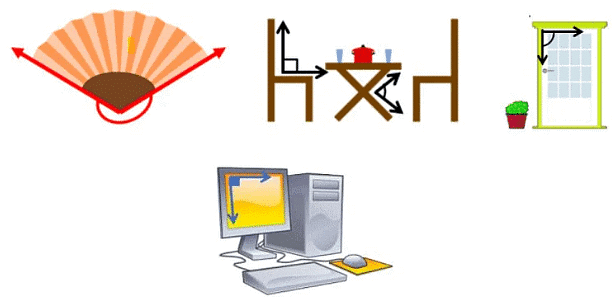
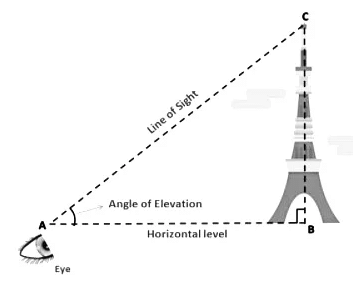

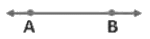

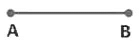

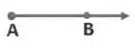
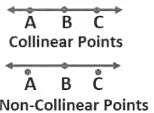
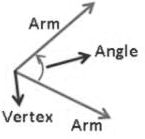
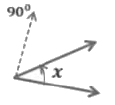

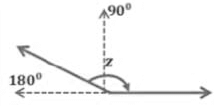
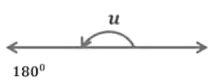
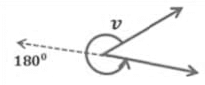
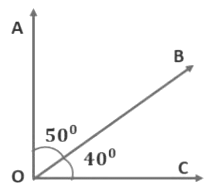
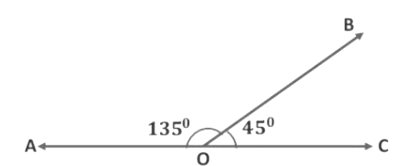
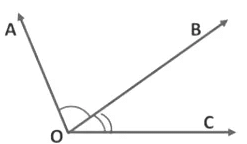
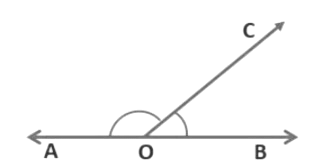
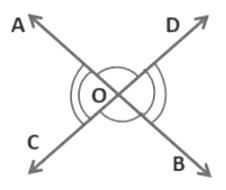
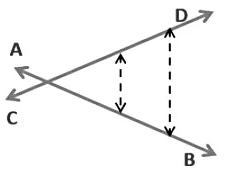
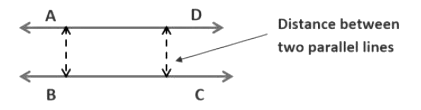
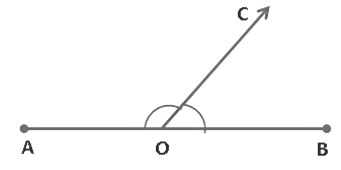
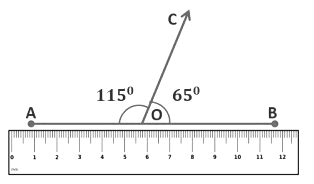
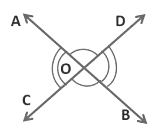
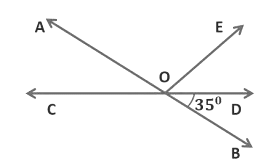
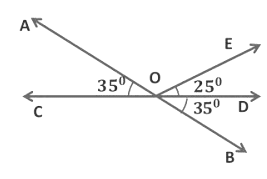
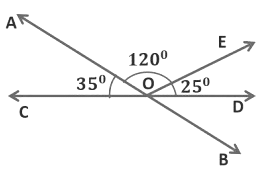
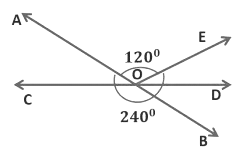
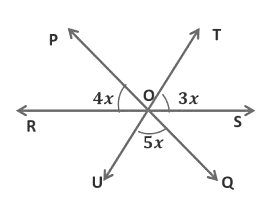
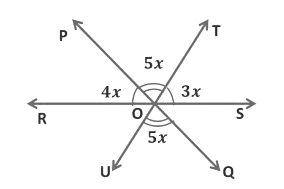
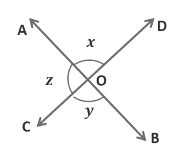
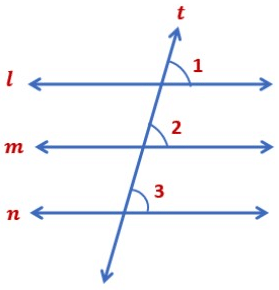
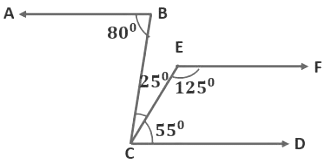
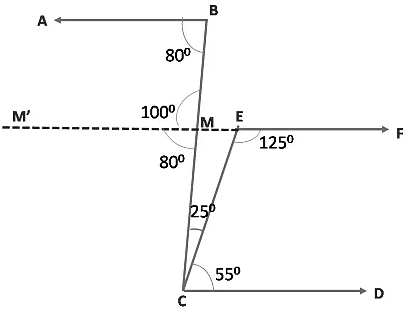
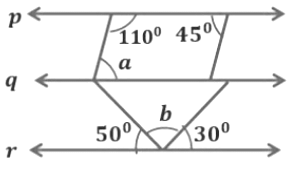
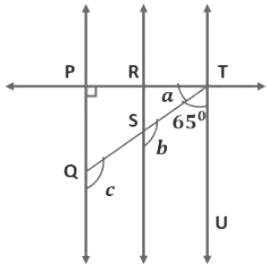
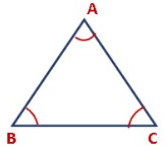
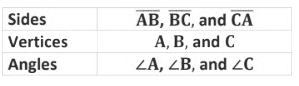
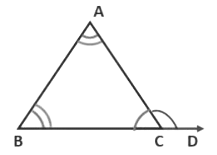
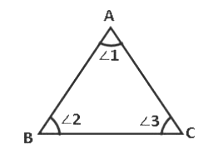
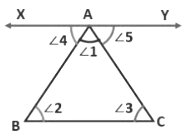
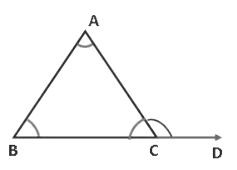
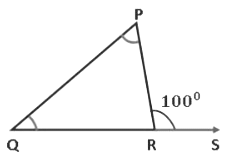
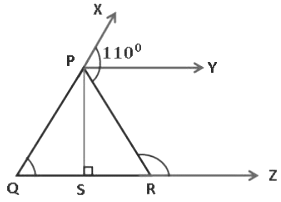
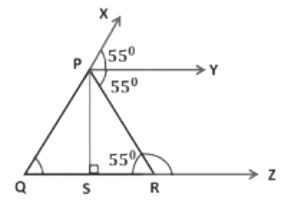
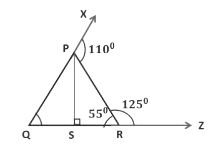
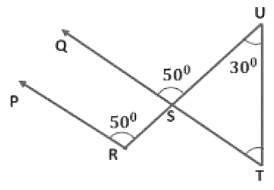
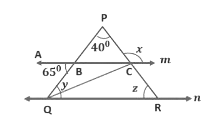
Line m || line n.
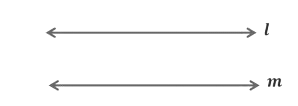
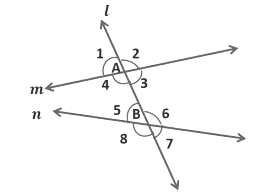

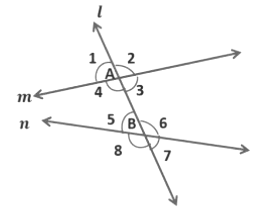
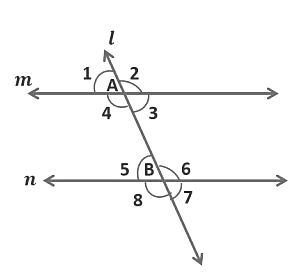
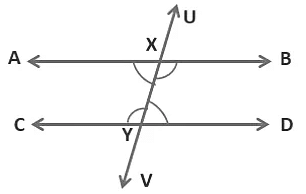
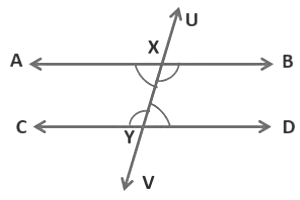
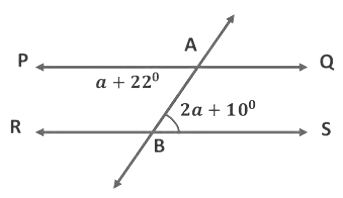
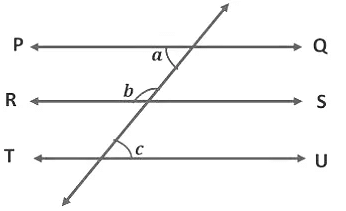
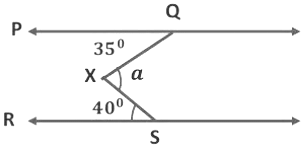
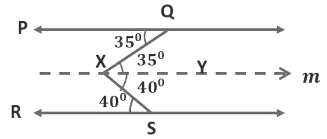
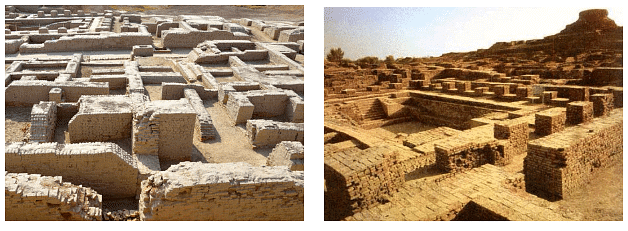
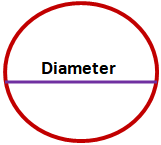
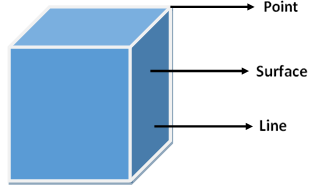

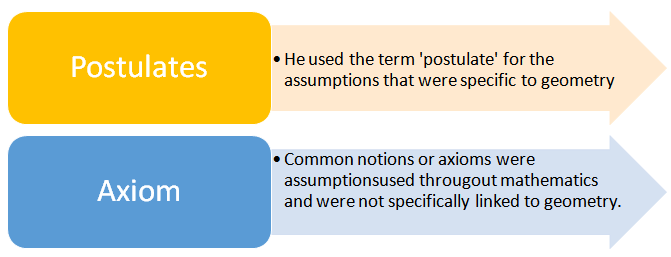

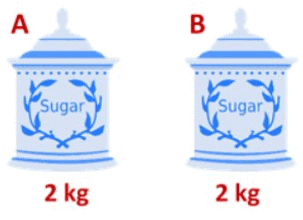
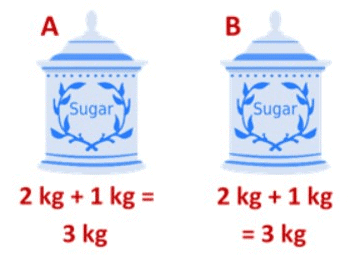
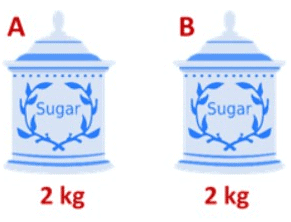
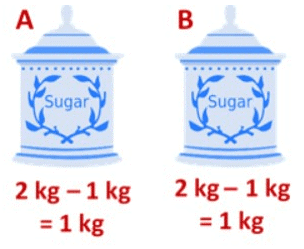



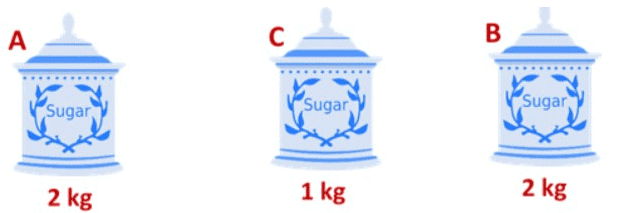 So, we see that the quantity of sugar in jar A and B is equal to twice the quantity of sugar in jar C or we can also say that both the jars A and B, have the same quantity of sugar as their quantities are also equal to twice the quantity of sugar in jar C.
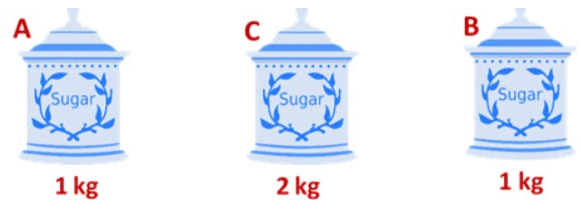 So, we see that the quantity of sugar in jar A and B is equal to half the quantity of sugar in jar C or we can also say that both the jars A and B, have the same quantity of sugar as their quantities are also equal to half the quantity of sugar in jar C.
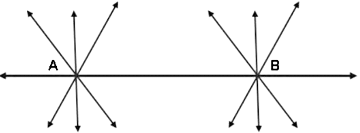 Here, we see that only one line, AB is passing through A and also through B. Now can you tell how many lines are passing through B and also through A?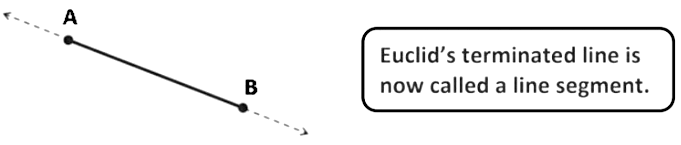
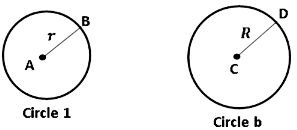 Here, AB = r is the radius of circle 1 and CD = R is the radius of circle 2.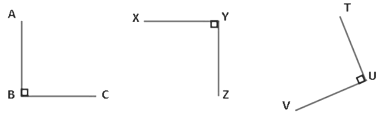
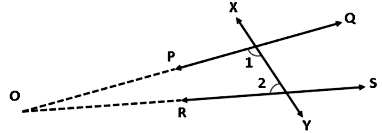 Suppose a straight line XY falls on two straight lines, PQ and RS in such a way that the interior angles ∠1 + ∠2 <180° on the left side of XY. The two lines PQ and RS, when produced indefinitely, will eventually intersect at point O on the left side of PQ.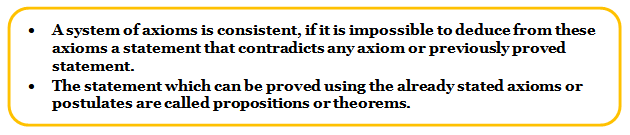
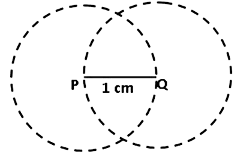 (4) The two circles meet at point R. Now draw the line segments, RP and RQ to form the ∆ RPQ.
 A line is a breadthless length. The ends of a line are points and the straight line is a line which lies evenly with the points on itself.
 A surface is that which has length and breadth only. The edges of a surface are lines.Euclid’s axiom
 =
=  and
and  =
=  , then
  =
= 
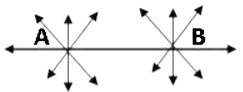 Postulate 2: A terminated line can be produced indefinitely.
 Postulate 3: A circle can be drawn with any centre and any radius.
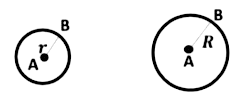 Postulate 4: All right angles are equal.
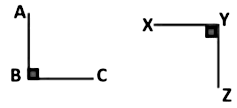 Postulate 5: If a straight line falling on two straight lines makes the interior angles on the same side of it taken together less than two right angles (180°), then the two straight lines, if produced indefinitely, meet on that side on which the sum of angles is less than two right angles
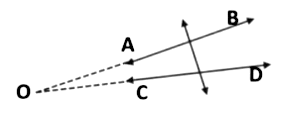 Equivalent Versions of Euclid’s Fifth Postulate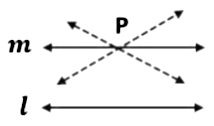
 The linear equation in one variable has a unique solution. Also, it gives a straight line when plotted on a graph.
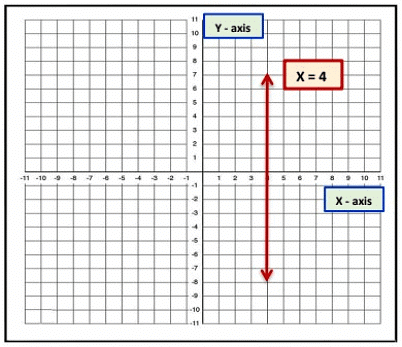 In this chapter, we recall our previous knowledge and extend it to that of the linear equation in two variables.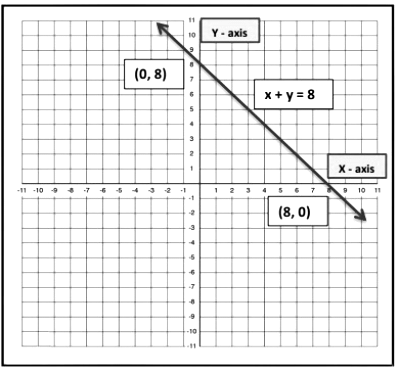
 Now, you are able to see the dot but, can you tell me the exact position of the dot?
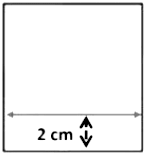 Therefore, to fix the position of the dot we have to specify its distance from two fixed lines, the right edge and the bottom line of the paper. Therefore, if I say that the dot is also 1 cm away from the right edge of the paper, then we can easily fix the position of the dot.
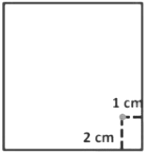 We see that position of any object lying in a plane can be represented with the help of two perpendicular lines.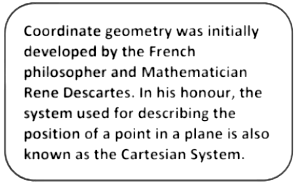
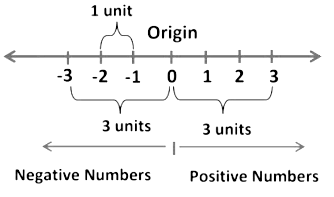

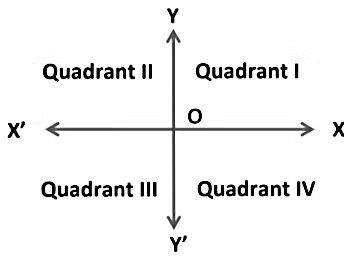
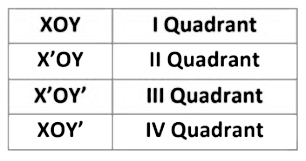
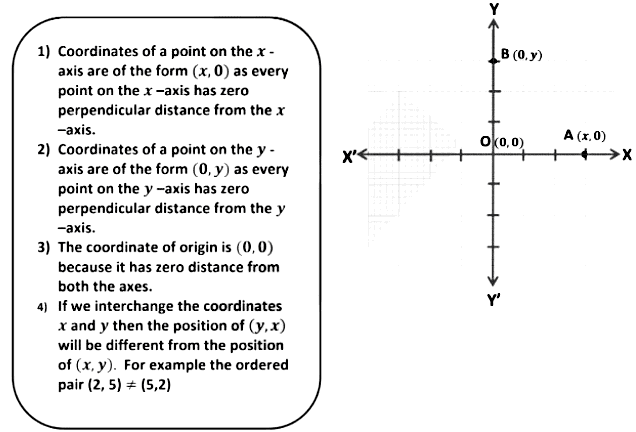
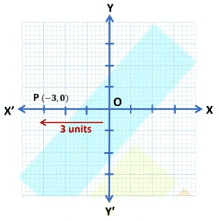 Coordinates of point P are (-3, 0).
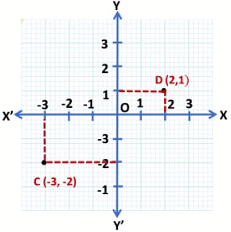 D (2, 1)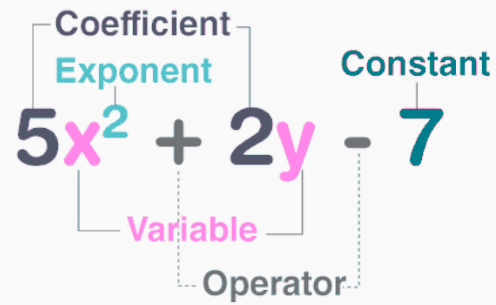

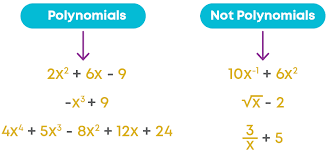
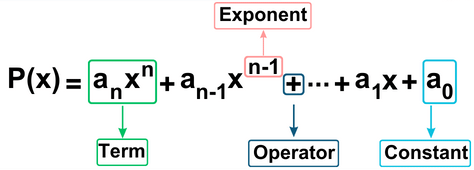
 , where are constants and
 and an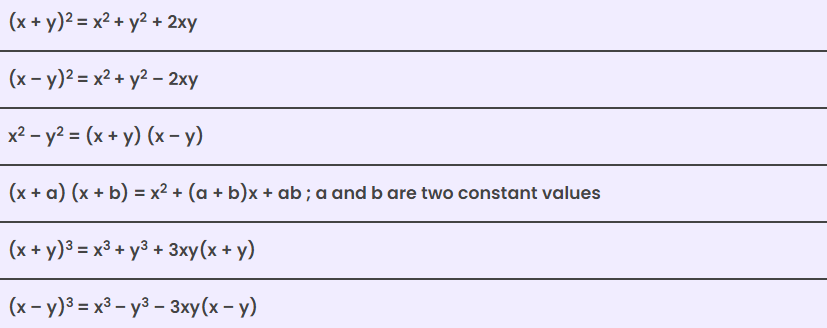

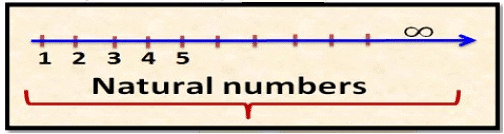
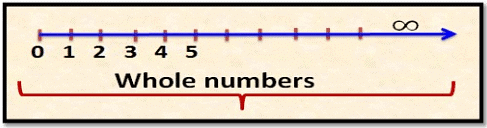
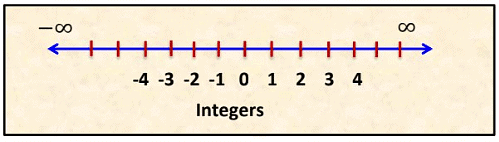
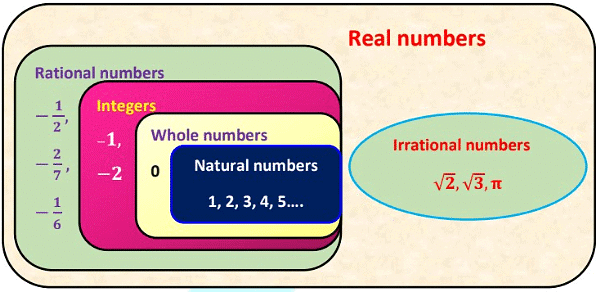
 is a rational number lying between a and b
 is a rational number lying between a and b.
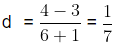
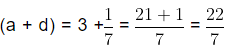
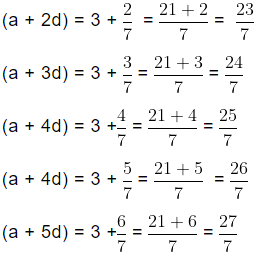
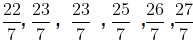
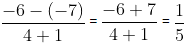
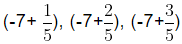 and
and 
 and
and 
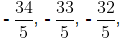 and
and 
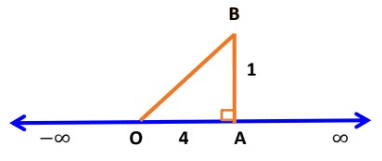
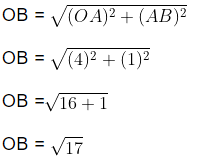
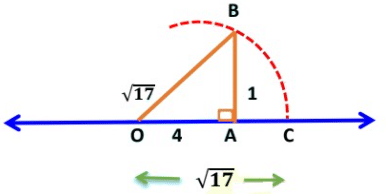
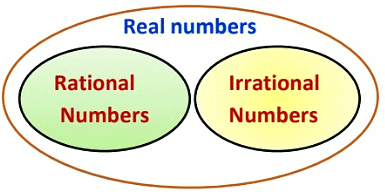

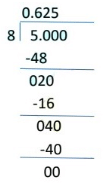 On dividing
  we get exact value 0.625 and remainder is zero.
 is a terminating decimal expansion.
 we get exact value 0.625 and remainder is zero. So, we say that
  is a terminating decimal expansion.
 = 0.333… . . or
  = 0. 3= [The block of repeated digits is denoted by bar ‘– ‘over it]
 we get the repeated number 3 and remainder never becomes zero. Hence, 1 by 3 has a non – terminating repeating decimal expansion.
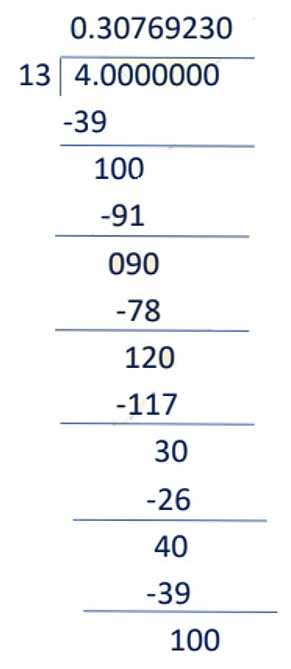
 = 0.
= 0. On dividing 4 by 13 we get the repeated numbers 0.30769230 again and again, and remainder never becomes zero. Hence, 4 by 13 has a non – terminating repeating decimal expansion.
 ( and we have to convert the given number in the form of p by q. Follow the following steps:
 . (In the above expression we see that one digit “b” exist between decimal point and repeating number. Hence,we multiply both side by 101. We get,
 Step II: Count the number of digits in repeating number and then multiply equation (1) by that power of 10 and the equation becomes
 Step III: Subtract equation (1) from equation (2) we get,
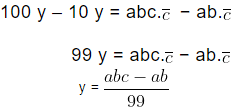 Example (i): Express in the form of p by q


 ……(i)
……(i)


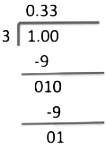 Thus,
Thus, 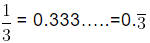
 and
and  . Also, we know that the irrational numbers have non-terminating non-recurring decimals. Hence, one irrational number between
  and
and  is 0.20101001000… . .
 = 0.333 (Given)
 = 0.333 (Given)
 = 2 ×
= 2 ×  = 2 × 0.333 = 0.666
 and
and  may be 0.357643… and 0.43216 (In this solution we can write infinite number of such irrational numbers)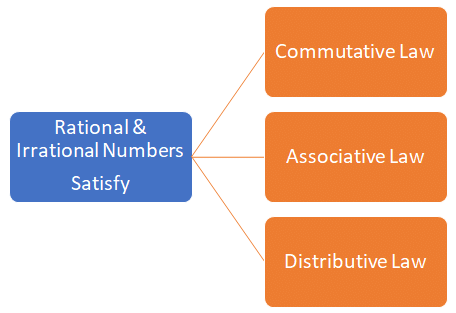
 (rational) and b =
  (rational),


 (rational number)
 (rational) and b =
  (rational)

 (rational number)
 (rational) and b =
  (rational)
 ×
×  =
=  (rational)
 (rational) and b =
  (rational)
 divided by
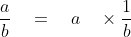
 ÷
÷  =
=  x
x  =
=  x 3
x 3 
 (rational) and b = √3 (irrational) then,
 + √3 =
 (irrational)
 − √3 =
 (irrational)
 (rational) and b = √2 (irrational) then,
 × √2 =
 (irrational)
 =
=  =
=  ×
×  =
= (irrational)
 ) – (
) – ( +
+  )
)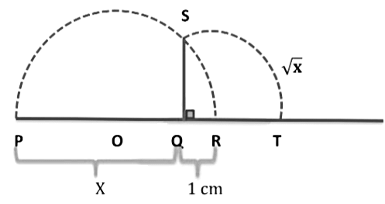
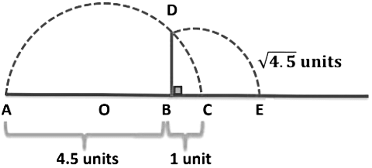 Hence, the distance BD represents √4.5 ≈ 2.121 geometrically. Now take BC as a number line, draw an arc with centre B and radius BD from point BD, meeting AC produced at E. So, point E represents √4.5 on the number line.
 =
=  is a real number, then n is called exponent, and a is called radical and “√ ” is called radical sign.
 is called surd.
 =
=  is called square root of 2.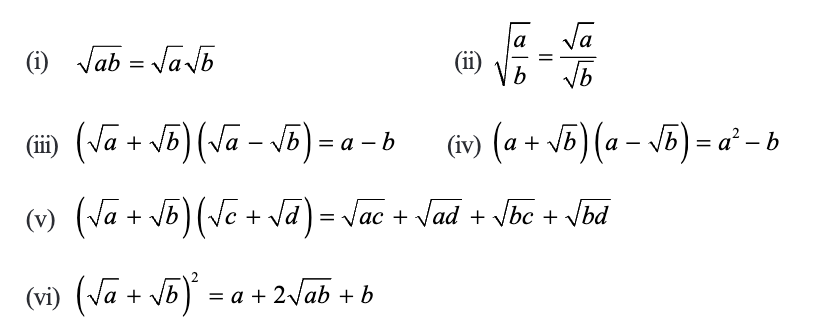
 x
x  =
= 

 =
=  2
2 =
= 

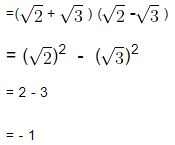
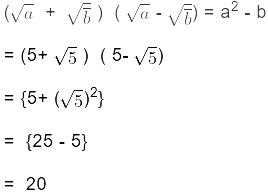
 can you tell where this value will lie on the number line? It is a little bit difficult. Because the value containing square roots in their denominators and division is not easy as addition, subtraction, multiplication and division are convenient if their denominators are free from square roots. To make the denominators free from square roots i.e. they are whole numbers, we multiply the numerator and denominators by an irrational number. Such a number is called a rationalizing factor.
 is ,
is ,  and conjugate of ,


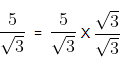
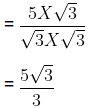
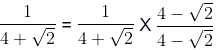
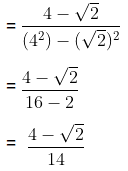

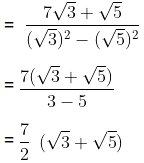

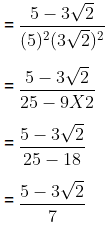

 ) -m = (
 )m
)m

 = 53-2 = 51