08. Summary: A Show of Clouds

Introduction

The poem A Show of Clouds is about a kid lying on the ground, looking up at the sky, and imagining different shapes in the clouds. The poet has beautifully described the shapes of the clouds and how they can look like different objects. The poem is a great way to encourage children to use their imagination and creativity.

Detailed Summary

Stanza 1:

As I lie on my back,
Looking up at the sky.
I see a big white bear, 
Looking down at me.

Imagine you are lying on the grass, looking up at the sky. The clouds above you start to form different shapes—just like when you see pictures in fluffy cotton candy! In this stanza, the person sees a big white bear in the clouds. It looks like the bear is watching over them, like a kind and gentle giant. This shows how exciting and magical it can be to use our imagination while looking at the sky!

Stanza 2:

As I lie on my back,
Looking up at the sky.
I see a ship sailing,
On a white sea.

Imagine you are lying on the grass, looking up at the big, open sky. The soft, white clouds start to take different shapes. In this stanza, the person sees a cloud shaped like a ship sailing across a sea of white. The sky feels like a huge ocean, and the clouds look like gentle waves. This shows how using our imagination can make the sky feel like a magical place full of adventure!

Stanza 3 

As I lie on my back,
Looking up at the sky.
I see an elephant,
Waving its trunk at me.

Imagine you’re lying on the ground, looking up at the sky. The clouds start to look like different shapes. In this poem, the person sees a cloud shaped like an elephant waving its trunk, almost like it’s saying hello!

Stanza 4

As I lie on my back,
Looking up at the sky.
Oh! It’s fun, it’s fun to me,
To see whatever I want to see.

Imagine you’re lying on your back, looking up at the sky. The clouds can turn into anything you imagine—a bear, a ship, or even an elephant! In this poem, the person feels happy and excited because they can see whatever they want in the clouds. It shows how fun it is to use your imagination and make the sky your own picture book!

Try yourself:

What does the person in the poem see when looking up at the sky that resembles an animal waving its trunk?

  • A.A bear watching over them.
  • B.A ship sailing on a sea of white.
  • C.An elephant waving its trunk.
  • D.A cloud shaped like a big white bear.

Summary of all the Stanzas:

In this poem, the speaker is lying on their back and gazing at the sky. They imagine shapes in the clouds and describe what they see.

  • The speaker is lying on their back and looking at the sky. This means they are lying down and watching the clouds above.
  • They see a big white bear in the clouds. This bear seems to be looking back at the speaker.
  • Next, the speaker sees a ship that looks like it’s sailing on a sea made of white clouds.
  • They also imagine an elephant in the sky, and it looks like the elephant is waving its trunk at them.
  • The speaker finds this activity very enjoyable. They can use their imagination to see anything they want in the clouds.

New Words and Meanings

  • Gaze: To look at something for a long time, like when you stare at the sky or a beautiful view.
  • Imagine: To create pictures or ideas in your mind, even if they are not real.
  • Shapes: Different forms or outlines of things, like the shapes of clouds in the sky.
  • Sailing: When a boat or ship moves on the water using the wind to push it forward.
  • Elephant: A big animal with a long trunk and large ears, often found in some parts of the world.
  • Trunk: The long, flexible nose of an elephant.
  • Enjoyable: When something is fun or makes you happy.

07. Summary: This is My Town

Introduction

Let’s go on a super fun adventure through your very own town! This poem is like a treasure hunt where we start with the big town and find all the amazing things in it—like streetshouses, and even flowers in a basket! It’s a journey that shows how everything around us, no matter how big or small, is connected and part of something bigger.

Ready to explore? Let’s go!

Introduction

Stanza-by-Stanza Explanation

Stanza-by-Stanza Explanation

First Stanza:

This is my town.
In my town, 
There are streets.
In my street, 
There are houses.
In my house,
There are rooms.

  • This part tells us where the poet lives.
  • First, we start with the big town, then move to the streets where people live.
  • After that, we go inside the house and see there are many rooms.
  • The poet is showing how everything in life is connected, starting from the town and going down to the smallest details.

Second Stanza:

In my room,

There is a bed.
On the bed, 
There is a basket.
In the basket, There are some flowers.
 

  • Now, the poet takes us inside the room.
  • There’s a bed in the room, and on the bed, there is a basket.
  • Inside the basket, we find some beautiful flowers.
  • The poet is showing how the small things in the room are important and are part of the bigger picture of the house.

Third Stanza:

Flowers in a basket.
Basket on the bed.
Bed in the room.
Room in the house.
House in the street.
Street in the town.

  • In this part, the poet repeats what we’ve already learned but in a fun way!
  • The flowers are in the basket, the basket is on the bed, and so on.
  • It shows how everything is connected, starting from the flowers to the whole town.
  • Everything fits in its place, and together they make a beautiful world.

Try yourself:

What is found in the basket on the bed?

  • A.Books
  • B.Clothes
  • C.Flowers
  • D.Toys

Overall Explanation

  • This poem shows us how everything around us is connected.
  • It starts with the big town and goes all the way to the small flowers in a basket.
  • It reminds us that the smallest things, like flowers, are just as important as the big things, like houses or streets.
  • When we look at all the things in the world, we see how they fit together to make our lives beautiful!

Moral of the Poem

  • The moral of the poem is that everything, big or small, has its special place.
  • Whether it’s a big town or a tiny flower, everything is important and fits together in the world.
  • We should appreciate how even the little things make life special!

Key Words

  • Town – A place where people live.
  • Street – A road where houses are built.
  • House – A building where people live.
  • Room – A space inside the house, like a bedroom.
  • Bed – A piece of furniture where we sleep.
  • Basket – A container to hold things, like flowers.
  • Flowers – Pretty plants with colorful leaves.
  • Connected – Things that are joined together.
  • Place – A specific spot or location.
  • World – Everything around us, including towns, streets, and houses.

05. Summary: Come Back Soon

Key Points of the Poem

  • The poem is about the poet telling the reader to go on fun trips and adventures.
  • They could travel by bus, train, boat, plane, taxi, or even take a rocket to the moon. 
  • The person may go near or far. 
  • But the speaker wants to make sure that the person always remembers to come back home soon.

Detailed Summary

Stanza 1:

Take a bus,
Or take a train
Take a boat
Or take a plane.

The poet tells the reader to go on fun adventures and explore the world. They can travel in different ways, like by bus, train, boat, or plane.

Stanza 2:

Take a taxi,
Take a car
Maybe near
Or maybe far.

They could take a taxi or go by a car. It could be near to where they live or it could be far away.

Stanza 3:

Take a rocket,
To the moon,
But be sure
To come back soon.

The readers may even go to the moon on a rocket. But the poet asks them to be sure to return home soon.

Message

The poem encourages us to go out and explore the world. There are multiple ways through which we can go to a lot of places, near or far. But it is important for us to remember to come back home and always remember where we are from.

New Words and Meanings

  • Train: A vehicle on tracks that carries people or goods.
  • Boat: A vehicle that travels on water.
  • Plane: A flying vehicle used for air travel.
  • Taxi: A car you pay to travel in.
  • Near: Something that is close to you or not far away.
  • Rocket: A vehicle that flies into space.
  • Encourage: To support someone by telling them to do something

03. Summary: It is Fun

Introduction 

This poem is about having fun by acting like different animals! It shows how we can play and do things like jump, run, or fly like animals. The poem teaches us that using our imagination makes playtime exciting and fun.

Introduction 

Detailed Summary

Stanza 1:

It’s fun to be this,
It’s fun to be that,
To leap like a lamb,
To climb like a cat.

The poet says it is fun to pretend to be animals.

  • We can leap (jump) like a little lamb.
  • We can climb like a cat.
    Playing like animals is exciting!
Stanza 1:

Stanza 2:

To hop like a frog,
To swim like a fish,
To trot like a horse,
To fly like a bird.

The poet talks about more fun animal actions.

  • Hop like a frog (jump like a frog).
  • Swim like a fish (move in water).
  • Trot like a horse (run slowly like a horse).
  • Fly like a bird (move arms like flying).
    It feels fun to move like animals!
Stanza 2:

Stanza 3:

I can act
Just like them all,
It’s fun to be this,
It’s fun to be that.

  • The poet says, “I can act like all animals!”
  • It’s fun to play and copy animals.
  • We can use our body and mind to have fun!

Try yourself:Which fun activity is not mentioned in the poem?

  • A.Jumping like a lamb
  • B.Climbing like a cat
  • C.Dancing like a monkey
  • D.Swimming like a fish

Summary

The poem “It is Fun” shows how fun it is to play and imagine being different animals and enjoying their actions. The poet says it’s fun to jump like a lamb, climb like a cat, hop like a frog, swim like a fish, trot like a horse, and fly like a bird. In the end, the poet says they can act like all these animals and have fun doing it. The poem shows that using our imagination and playing like animals is joyful and exciting.

Summary

Message

The lesson is that using our imagination is a fun way to play and learn. When we pretend to be different things, we can enjoy all kinds of fun adventures.

New Word and Meanings

  • Fun – Something that makes you happy and excited.
  • Jump – To leap up in the air.
  • Climb – To go up, like a cat on a tree.
  • Hop – To jump on one foot, like a frog.
  • Swim – To move in water, like a fish.
  • Walk – To move on your feet, like a horse.
  • Fly – To go up in the air, like a bird.
  • Play – To have fun, doing things with friends or by yourself.
  • Animal – Living creatures like dogs, cats, birds, etc.
  • Imagination – Using your mind to think of things that aren’t real, like pretending to be an animal.

01. Summary: My Bicycle

Key Points of the Poem

  • The poem is about a child who loves to ride their bicycle.
  • The poem describes how the bicycle looks.
  • The poem encourages us to stay healthy, step out and play. 
Key Points of the Poem

Summary

Stanza 1:

I have a red bicycle.
I pedal and I ride.
Trin… trin… trin… goes the bell.
Makes my friends move aside.

This stanza tells us that the speaker has a bicycle, and it is red in color. The speaker is telling us that they ride their bicycle by pedaling (pushing the pedals with their feet). The bicycle has a bell that makes a sound like “trin trin” when it rings. It’s used to let people know the bicycle is coming. When the bell rings, it makes the speaker’s friends move out of the way to let the bicycle pass.

Stanza 2:

The seat is blue in colour,
The tyres and pedals are black.
Sometimes fast, sometimes slow,
But my bicycle is always on track.

The seat of the bicycle is blue. The tires (the round rubber parts) and pedals (where the feet go) of the bicycle are black. Sometimes the bicycle goes fast, and sometimes it goes slow, depending on how fast the rider is pedaling. This line tells us that the bicycle always stays on the path or road it is supposed to be on and doesn’t go off course.

Stanza 2:

Stanza 3:

To keep my bicycle moving,
All I need is some air.
I put on my little helmet,
And go happily everywhere.

To make sure the bicycle continues to move, all the speaker needs to do is fill air in the tires to keep the bicycle working properly. The speaker wears a helmet, when riding their bicycle to stay safe. A helmet is something that a person wears on the head to avoid injuries. The speaker enjoys riding their bicycle and goes to many places with joy.

Message

The poem teaches us about the fun in playing with our friends and riding a bicycle, which is also a good exercise.

New Words and Meanings

  • Bicycle – A vehicle with two wheels that a person can ride by pedaling.
  • Pedal – To push the foot levers on a bicycle to make it move.
  • Bell – A device on a bicycle that makes a sound when rung to alert others.
  • Tyres – The rubber outer part of a bicycle wheel.
  • Seat – The part of the bicycle where the rider sits.
  • Helmet – A protective head covering that helps keep the head safe.
  • Track – The path or route where something moves, in this case, the path the bicycle follows.

13. Chapter Notes: So Many Toys

Introduction

  • The information that we collect is called Data.
  • Data Handling is a process of collecting organising and representing data in various form like graphe, tables, pictographs etc.                       
  • Let us see an example to understand better the concept of data collecting.
  • Look at the table. This table shows the number of fruits sold in a day by a fruit seller.
    Introduction

Do you know?

  • Data handling represents data in the form of pictures (called pictograph). These pictographs used by various news channels to display weather report on news.

Real Life Example

  • Data Handling is widely used in collection of scores of students in various exams.
  • Data handling helps the doctors to keep records of their patients.
  • Once we have information data, the next step is to get result from it.
  • The information we get from the above data is that Mangoes are sold the most. Apples are sold the least.

Sort and organise

Sort and organise

Look at the picture of two rooms, room A and room B.

Which room looks neat and clean?

Room B looks neat and clean as things are properly organised in Room B.
Let us understand how to sort and organise things.

  • Sorting: Grouping objects on the basis of common features is called Sorting’.
  • Organising: Arranging objects in a proper or systematic manner is called organising.

An organised room or display looks neat and clean. For example room B in above example.
Ramu has opened a new stationery shop. It has pens, pencils, erasers, books, notepads, envelopes, coloured chalks, papers and stickers at one place. How can he neatly arrange everything?
He can sort things and organise them on the basis of their size, shape, colour etc.
We can make a table to help us to sort our things.
Annie and her friends wants to celebrate Christmas. They want to purchase some items to decorate their Christmas tree. They prepare a list of various items, which are required to decorate the tree. The table given below shows the list of items and the number of items. This list will help Annie and her friends to remember the items to be purchased and their numbers.

Which room looks neat and clean?

Presenting Data

We can present data in the form of table, pictures, graph, bar graphs, etc. Let us understand with the help of an example. We will study graphs, bar graph in the next classes.

This is a collections of Naina’s toys.
Presenting Data

The data for Naina’s toys can be represented as follows.

Presenting Data

It is easier to know from data representation that there are more number of toy dogs than teddy bears and Barbie dolls.

Greater Than Sign 

  • The greater than symbol in maths is placed between two values in which the first number is greater than the second number. For example 10 > 5. Here 10 is greater than 5. 
  • In inequality, greater than symbol is always pointed to the greater value and the symbol consists of two equal length strokes connecting at an acute angle at the right. ( >). 

Less Than Sign

  • Similarly, a less than symbol is placed between two numbers where the first number is less than the second number. An example for less than the inequality symbol is 5 < 10. It means that 5 is less than 10. 
  • In inequality, less than symbol points to the smaller value where the two equal length strokes connect at an acute angle at the left (<).
  • This greater than less than symbol reduces the time complexity and it makes an easy way for the reader to understand.

Equal To Sign

  • The ‘equal to’ sign is used to show the equality between two numbers or values. This sign contradicts both the greater than and less than sign. Even in terms of writing the equations, we use equal to sign. It is denoted by ‘=’.
    Example: If a = 10 and b = 10, then a = b.

Summary – All the Symbols

Here, given the list of frequently used symbols in Maths explained along with the examples
Summary – All the Symbols

12. Chapter Notes: How Much Can We Spend?

Introduction

Ravi and Reena are buying ice creams at an ice cream parlour. What do they have to give in return to the ice cream vendor?

Introduction

The answer is money!

  • Money is used to buy things at a shop, online or in the market.
  • In India, money or currency is in the form of rupees and paise.
  • We use the symbol ‘‘ for rupee or rupees and ‘p’ for paisa or paise.

What Does Money Look Like?

  • Money can look different in many ways! In India, we have shiny coins and colourful notes.
  • Coins can be small and round, like the ₹1 or ₹2 coin.
  • Notes, like ₹10, ₹50, or ₹100, are made of paper and have bright colours, pictures of famous people, and designs of animals or places.
  • Isn’t it fun to see how each coin and note is special?
What Does Money Look Like?

Coins

  • Coins are small, shiny, and made of metal.
  • They come in different sizes and shapes, like round ₹1 and ₹2 coins or even a ₹5 coin.
  • Each coin has a number on it to tell us its value, like “1” for ₹1 or “10” for ₹10.
  • Coins are fun to collect because some have pictures of famous peopleanimals, or special events.
  • They’re also easy to carry in your pocket!
Coins

Notes

  • Notes are colourful pieces of paper that show different amounts of money.
  • They come in many sizes, like ₹10₹20₹50, and even ₹2000!
  • Each note has a special design with pictures of famous peoplebuildings, and nature.
  • You can also find big numbers on them to tell you their value.
  • Unlike coins, notes are light and easy to fold, so you can keep them in your wallet or bag.
Notes

Let Us Count Money

  • Counting money is like solving a fun puzzle!
  • First, look at the coins and notes you have.
  • Add up the values of each one.
  • For example, if you have a ₹10 note and a ₹5 coin, you have ₹15 in total.
  • Counting money helps you know how much you can spend or save.
  • It’s an exciting way to learn math and feel like a grown-up!

Going to the Bookstore

Neerav and Nisha went to a shop to buy a book. It cost ₹ 30. They did not have an exact ₹ 30 to pay. They paid a ₹ 50 note to the shopkeeper. The shopkeeper returned ₹ 20 in the form of coins and notes of smaller values (denomination) as ₹ 10 + ₹ 5 + ₹ 5.

EduRev Tip: Notes and coins of higher denominations can be exchanged for smaller denominations.

Going to the Bookstore

Money Stories in Real-Life Situations

Example 1: Somya bought a pizza for ₹ 70. She also bought popcorn for ₹ 25. How much did she pay for both? Somya paid ₹ 95 for both items.
Ans:

Money Stories in Real-Life Situations


Example 2: A chocolate costs ₹ 18 but I have only ₹ 15. How much more money do I need to buy the chocolate? I need ₹ 3 more to buy the chocolate.
Ans:

Money Stories in Real-Life Situations

Activity

Learning Objective: Understanding and practising handling notes and coins up to rupees 20 in daily life

Activity

Preparation:

  • The teacher arranges play money and some wrappers of chocolates, wafers, empty pencil boxes, etc. (The teacher can ask the students to bring real small eatable packets.)
  • The teacher prepares price tags for items with the
  • Sets up real shopping scenarios with the help of volunteer students.

Working:

  • Divide the students into groups of four.
  • Give play money to all groups. Display items with their price tags.
  • Let one group enact as sellers and other group as buyers.
  • Pose a situation like- I want to buy a pencil box which costs say, ₹ 19.
  • Check how do they do simple addition and subtraction of money by using different combinations of coins and notes (up to rupees 20 only).
  • Repeat the activity with other groups and have fun.

11. Chapter Notes: How Many Times?

Multiplication as Repeated Addition

Two elephant families are going for a jungle walk.
Multiplication as Repeated AdditionEach family has 4 elephants.We say, there are 4 + 4 = 8 elephants going for a jungle walk.
Or
There are 2 groups of elephants and there are 4 elephants in each group.
4 + 4 = 8 is called repeated addition expression for 2 (equal sized) groups of 4 elephants each. 

Adding the same number over and over again is called repeated addition.

Tips: 4 + 4 = 8 is called repeated addition because 4 is added repeatedly.

Another Way of Writing Repeated Addition

Look at the repeated addition expression in the picture.
Another Way of Writing Repeated Addition5 + 5 + 5 + 5 = 20Instead of adding the same number 5 over and over again 4 times, an easier way to get the answer is 4 x 5 = 20.4 x 5 = 20 is read as 4 times 5 is equal to 20. 
Or
4 multiplied by 5 is equal to 20.

Edurev Tips: ‘x’ is the sign of multiplication.
4 x 5 is the multiplication expression instead of repeated addition expression
5 + 5 + 5 + 5 = 20.

Multiplication on a Number Line

Multiplication can also be shown on a number line.
3 x 5 = 15 is represented below on the number line.
Multiplication on a Number LineStarting from 0, there are 3 jumps and each jump covers 5 units (steps) on the number line.Or3 times 5 units covered.
Or
3 x 5 = 15 (There are 3 jumps. Each jump is of 5 units,)

Multiplication Using an Array

Let us understand another way of multiplication— by using an array. Array is an arrangement of numbers or objects in rows and columns.
Look at the picture of 15 children sitting in 3 rows and 5 columns:
Multiplication Using an ArrayHere, there are 3 equal groups of 5 children.OrThere are 3 x 5 = 15 children in all.

Number of groups x Equal number of objects in each group = Number of objects

Edurev Tips: Array tells us how many groups of equals are there.

Building Multiplication Tables or “Times Tables”

Multiplication tables can be formed by repeated addition. 

  • Multiplication Table of 1
    Building Multiplication Tables or “Times Tables”
  • Multiplication Table of 2
    Building Multiplication Tables or “Times Tables”
  • Multiplication Table of 5
    Building Multiplication Tables or “Times Tables”
  • Multiplication Table of 10
    Building Multiplication Tables or “Times Tables”

Edurev Tips:

  • One multiplied by any number gives the number itself.
  • In multiplication table of 5 we have either 5 or 0 in the ones place.

10. Chapter Notes: How do I Spend my Day? (Time)

What is Time?

  • Do you think why we wake up in the morning, go to school or play with friends during the day, and sleep at night?
  • It’s all because of time
  • Time helps us understand when to do different activities throughout the day.
  • So, let’s learn more about time and the different activities we do throughout the day!

Morning

  • In the morning, we wake up and get ready for the day. 
  • We brush our teeth, take a bath, and have breakfast. 
  • We do these activities in the morning because it’s the beginning of the day, and we need to prepare ourselves for what’s to come.
  • After breakfast, we go to school or do other activities like playing with friends or helping our parents. We do these things during the daytime when the sun is up and it’s bright outside.

We wake up in the morning

Afternoon

  • In the afternoon, we take a nap or have lunch. 
  • We do these activities in the afternoon because it’s the time when we feel a little tired and need a break.

We have lunch in the Afternoon

Evening

  • As the day goes on, we might do other activities like homework, playing sports or games, or watching TV. 
  • We do these things during the evening, which is when the sun is setting, and the day is coming to an end.

We play in the Evening

Night

  • Finally, at night, we get ready for bed. We brush our teeth, change into our night suits, and go to sleep. 
  • We do these activities at night because it’s the end of the day, and we need to rest and recharge for the next day.

We sleep at Night

So, different activities are done at different times of the day, which helps us understand the concept of time. 

Activities take Shorter or Longer Time

  • Time is something we use to know how long it takes to do different things. 
  • Some things take a short time, like brushing our teeth, while other things take a long time, like eating a meal.
  • When we brush our teeth, it doesn’t take us very long, maybe only a minute or two. 
  • But when we eat a meal, it can take us a longer time, maybe around 20-30 minutes.
  • Similarly, taking a bath or shower can take us a longer time, around 10-15 minutes, while brushing our teeth only takes us a short time.

So, time helps us understand how long it takes to do different things.

Clock

We can also use clocks and watches to keep track of time and ensure that we do all our activities on time.

  • This is a clock.
  • It tells us the time.
  • The face of the clock is called its dial.

How many hands do we see on this clock?

We see two hands on this clock. The long hand is called the minute hand and the short hand is called the hour hand.

How many numbers do we see on this clock?
We see numbers from 1 to 12 on the face of a clock.

Activity 

Observe the movement of the hour hand and minute hand and find which hand move faster.
Observation: The minute hand moves faster than the hour hand.

Note:

  • When the minute hand points to the number 12 and the hour hand points to any number on the face ofa  clock, the time is read as 0’ clock. Example: 7 o’clock, 4 o’ clock etc.
  • 1 hour = 60 minutes.

A clock has 12 numbers which stand for hours and minutes.

The long hand of the clock tells us the minutes. The shorthand of the clock tells us the hours.

Seasons

  • Time keeps changing, and so does the world around us! As the months go by, we feel different kinds of weather—sometimes it’s hot, sometimes it’s cold, and sometimes it rains
  • These changes happen because of the seasons!
  • Each season brings something special.

There are four seasons:

1. Summer Season: It is hot, and the sun shines brightly. People eat ice cream and play outside.

2. Rainy Season: The rain falls, and we use umbrellas and raincoats. Frogs and flowers love the rain!

3. Winter Season: It is cold, and we wear warm clothes. Some places even have snow!

4. Spring Season: The weather is nice, and flowers bloom everywhere. Butterflies fly around.

Match the following

Match the following objects with the suitable season:

​​​​

09. Chapter Notes: Utsav (Patterns)

What is a Sequence?

  • A sequence is a list of things that come in a particular order.
  • For example, the letters in the alphabet are in a sequence from A to Z.
What is a Sequence?

Let’s look at another example. 

  • Have you ever counted numbers before?
  • Counting is a sequence of numbers that go in order. 
  • It starts with the number one and goes up to higher numbers like two, three, four, and so on.
What is a Sequence?

Extend the Sequence

Are you ready to learn about a fun concept called “sequence”? It’s all about putting things in the right order, just like when we line up for lunch or get dressed in the morning!

Example 1:  Let’s take a look at this pattern I have on the board. Do you see the arrows? The first box has an arrow pointing up, like this ↑. In the second box, the arrow is pointing towards the right, like this →. And then in the third box, it’s again pointing upwards.

Extend the Sequence

Do you notice anything? That’s right – the direction of the arrow keeps changing! Up, then right, then again up. But can you guess what comes next? Let’s think about it together.

We see that the arrow in the third box is pointing upwards. So if we follow the pattern, the next arrow should point towards the right again!

Ans: The next will be arrows pointing towards our right.

Extend the Sequence

Let’s play another little game to understand it better. 

Example 2: I will tell you a sequence of fruits – a mango, then an apple, and then another mango. Can you guess what comes next?

Extend the Sequence

Ans: That’s right, we will follow the same sequence and place another fruit after the second mango. But what fruit should we choose? Well, let’s look at the sequence again – it goes mango, apple, mango. So after the second mango, we need to put an apple, just like before!

Extend the Sequence

Now, let’s keep going. After the apple, what should we put next? You got it – another mango! So the sequence goes like this – mango, apple, mango, apple, mango, and we can keep going and going.

Extend the Sequence

Patters in Shape

Let’s take a look at the shapes in this sequence and see what we can find out!

Patters in ShapeIn the first box, we see a rectangle. In the second box, we see a triangle. And in the third box, we see a circle. 

What do you think will come next? 
Let’s look at the pattern so far. It goes rectangle, triangle, circle. Do you see it? It’s like a little dance of shapes, moving from one to the next!
Now, let’s look at the fourth box. What shape is there? A rectangle!
So what shape do you think will come next? That’s right, a triangle!

Patters in Shape

And what about the sixth box? There’s a circle there.
So what comes next? You got it – a rectangle!GivePatters in Shape

Study the pattern and fill in the missing numbers

Given below is a caterpillar carrying numbers. Look, the first number on the caterpillar is 2, and the next one is 4. But then, we see a missing number! Oh no, where did it go? Don’t worry, we can solve this mystery!Study the pattern and fill in the missing numbersSo by looking at the numbers we see that 2 is followed by 4, then there is a missing number which is followed by 8. So what do we get to know about this sequence? We see that 2+2 = 4, 4+2 = 6, 6+2 = 8. So we can see that the missing number is 6. That’s where the missing number went!Study the pattern and fill in the missing numbers

Now let’s keep counting with the caterpillar. We add 2 to 6, and we get 8. And then, we add 2 to 8, and we get 10! But wait, we have another missing number! So we add 2 to 10, and we get 12! And the next number on the caterpillar is 14!Study the pattern and fill in the missing numbers

But wait, there’s more missing numbers! How many are there? Three! So we add 2 to 14, and we get 16. And then, we add 2 to 16, and we get 18! And finally, we add 2 to 18, and we get 20!

When objects or shapes are placed in an order, they form a pattern. A pattern follows a rule that allows us determine to what comes next in the sequence.

What is a Pattern?

  • A pattern is a repeated sequence or design that happens over and over again.
  • Patterns can be found in many things around us, such as in shapes, colors, and sounds.

Let us take an example:

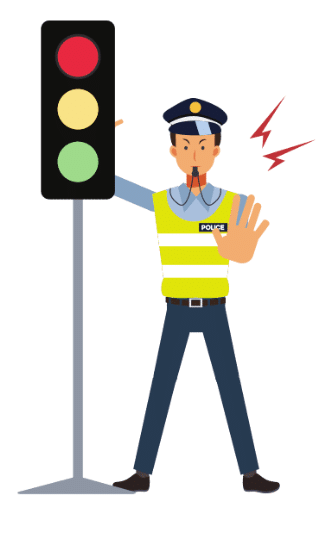
  • Have you ever noticed the pattern in a traffic light? 
  • The traffic light goes from red to green to yellow, and then back to red again. 
  • This is a pattern that repeats over and over again.

What is a Pattern?Traffic Lights

Complete the Pattern

Look at the matchsticks in front of us. In the first box, we see one matchstick facing upward at an angle. In the second box, we see two matchsticks, with the second one facing downward. And in the third box, we see three matchsticks, with the third one facing upward again.Complete the PatternNow, we need to complete the pattern for the next three empty boxes.
Ans:

Complete the Pattern