Q1: Two statements are given below. They are Assertion (A) and Reason (R). Read both the statements carefully and choose the correct option: (1 Mark) Assertion (A): Minerals are an indispensable part of our lives. Reason (R): All living things need minerals. Options: (a) Both (A) and (R) are true and (R) is the correct explanation of (A). (b) Both (A) and (R) are true, but (R) is not the correct explanation of (A). (c) (A) is true, but (R) is false. (d) (A) is false, but (R) is true.
Minerals are indeed indispensable to our lives because everything we use — from buildings to vehicles and even the food we eat — contains minerals. Moreover, all living things need minerals for vital life processes, making the reason a correct explanation of the assertion.
Q2: Match Column I with Column II and choose the correct option: (1 Mark)Options: (a) a-iii, b-i, c-iv, d-ii (b) a-iii, b-i, c-ii, d-iv (c) a-ii, b-iii, c-i, d-iv (d) a-ii, b-iii, c-iv, d-i
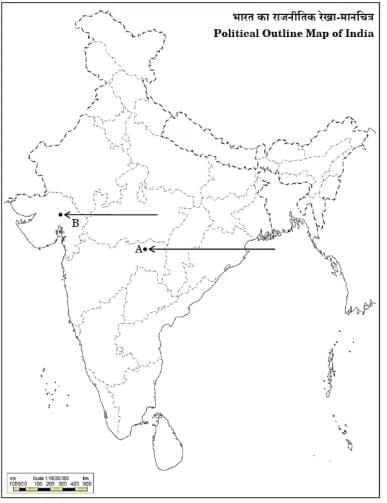
Talcher → Odisha (ii) — an important thermal power plant located in Odisha.
Ramagundam → Telangana (i) — one of India’s largest thermal power stations.
Bhusawal → Maharashtra (iv) — located in Jalgaon district, Maharashtra.
Vijayawada → Andhra Pradesh (iii) — a major thermal power station in Andhra Pradesh.
Q4:Read the given source and answer the questions that follow: (4 Marks) Iron Ore Iron ore is the basic mineral and the backbone of industrial development. India is endowed with fairly abundant resources of iron ore. India is rich in good quality iron ores. Magnetite is the finest iron ore with a very high content of iron up to 70 per cent. It has excellent magnetic qualities, especially valuable in the electrical industry. Hematite ore is the most important industrial iron ore in terms of the quantity used, but has a slightly lower iron content than magnetite (50 – 60 per cent). In 2018 – 19, almost the entire production of iron ore (97%) accrued from Odisha, Chhattisgarh, Karnataka, and Jharkhand. The remaining production (3%) was from other states.
(i) In which iron ore is the maximum iron content found? (1 Mark)
Ans:Iron ore is a basic mineral because it forms the backbone of industrial development. It is the raw material for producing steel, which is essential for manufacturing machinery, tools, vehicles, buildings, railways, and other industrial goods. Thus, iron ore supports the growth of almost all major industries in India.
Q5:Match Column I with Column II and choose the correct option: (1 Mark)
Copper → (ii) Used in electric cables and utensils because it is a good conductor of electricity and heat.
Bauxite → (iv) Used in aluminium production as aluminium is extracted from bauxite ore.
Mica → (iii) Used in electric and electronic industries due to its insulating properties and heat resistance.
Manganese → (i) Used in manufacturing of steel and paints and also for making ferro-manganese alloys.
Q6: “It would be beneficial to develop sustainable ways to meet the growing energy demand in India.” Support the statement by giving suitable arguments. (5 Marks)
Ans: Yes, it is beneficial to develop sustainable waysto meet the growing energy demand in India because of the following reasons:
Limited and Exhaustible Conventional Resources: Most of India’s energy resources like coal, petroleum, and natural gas are non-renewable and getting depleted rapidly. The geological formation of these resources takes millions of years, but they are being consumed much faster.
Environmental Concerns: Burning fossil fuels causes air pollution, global warming, and acid rain, leading to serious environmental problems. Sustainable energy sources like solar, wind, and biogas are clean and eco-friendly.
Energy Security and Self-Reliance: India imports a large amount of petroleum and natural gas. Developing renewable sources will reduce dependence on imports and strengthen the country’s energy security.
Economic Development: Non-conventional sources such as solar and wind energy have low recurring costs once established. Promoting these will create new employment opportunities and support rural electrification.
Future Sustainability: Using renewable energy ensures that future generations also have access to energy resources. Energy saved is energy produced, so promoting energy conservation and efficient use supports sustainable development.
Conclusion: Therefore, developing sustainable and renewable energy sources is essential to ensure environmental protection, economic stability, and long-term energy security for India.
Q7: “We have to use a planned and sustainable manner to conserve our minerals.” Support the statement by giving suitable arguments. (5 Marks)
Ans: Yes, it is essential to use our minerals in a planned and sustainable manner, because mineral resources are finite and non-renewable. The following points support this statement:
Limited Availability: The total volume of workable mineral deposits is only about 1% of the Earth’s crust. Minerals take millions of years to form, but they are being extracted and consumed rapidly, making them exhaustible resources.
Slow Rate of Formation: The geological processes of mineral formation are extremely slow, so replenishment cannot match the present rate of consumption. Once exhausted, these resources cannot be replaced easily.
Increasing Extraction Costs: Continuous mining leads to the depletion of high-grade ores, forcing extraction from greater depths or lower-grade deposits, which increases costs and environmental degradation.
Environmental Impact: Mining causes land degradation, deforestation, water pollution, and air contamination. Sustainable use helps reduce environmental damage and maintain ecological balance.
Need for Future Generations: To ensure that future generations also benefit from these valuable resources, we must recycle metals, use scrap, and develop substitute materials where possible.
Q8:Study the given table and answer the question that follows: (1 Mark) CRUDE OIL RESERVES
Read the following possible outcomes from the table and choose the correct option: I. If crude oil continues to be extracted at the present pace, it would be exhausted in about 50 years. II. In Middle Eastern Countries it may take longer than average of the world. III. To ensure the availability of crude oil in future, its reuse and recycle policy should be adopted. IV. In United States of America, Crude oil is likely to run out in just about 10 years. (a) Only I, III and IV are correct. (b) Only I, II and III are correct. (c) Only II, III and IV are correct. (d) Only I, II and IV are correct.
Statement I is correct — The world average shows crude oil reserves will last about 50 years.
Statement II is correct — The Middle East has reserves lasting 70 years, which is longer than the world average.
Statement III is correct — To ensure future availability, a reuse and recycle policy should be adopted.
Statement IV is incorrect — Though the USA’s reserves may last about 10 years, the statement says “just about 10 years” without context, and the focus of the question is on sustainability and average trends.
Q9: Two statements are given below. They are Assertion (A) and Reason (R). Read both the statements and choose the correct option: Assertion (A): Certain minerals may occur as alluvial deposits in sands of valley floors and the base of hills. Reason (R): These are usually minerals, that are not corroded by water. (1 Mark) (A) Both (A) and (R) are true and (R) is the correct explanation of (A). (B) Both (A) and (R) are true but (R) is not the correct explanation of (A). (C) (A) is true but (R) is false. (D) (A) is false but (R) is true.
Ans: (A) Both (A) and (R) are true and (R) is the correct explanation of (A).
Certain minerals occur as alluvial or placer deposits in the sands of valley floors and at the base of hills. These minerals, such as gold, silver, tin, and platinum, are not corroded by water, which explains why they accumulate in such deposits. Hence, both the Assertion and the Reason are true, and the Reason correctly explains the Assertion.
Therefore, option (A) is correct.
Q10:Match Column I with Column II and choose the correct option: (1 Mark)
The table below shows the correct matching of atomic power plants with their states:
Thus, option (C) is correct.
Q11: Read the characteristics given in the box and identify the type of coal from the options given below: (1 Mark) This is low grade brown coal. The principal reserves are in Neyveli in Tamil Nadu. It is soft with high moisture content. (A) Pit Coal (B) Anthracite Coal (C) Lignite Coal (D) Bituminous Coal
According to the chapter, Lignite is a low-grade brown coal, soft in texture, and has a high moisture content. Its principal reserves are found in Neyveli, Tamil Nadu, where it is mainly used for electricity generation.
Q12: Why is the conservation of conventional sources of energy significant? Explain any two reasons. (2 Marks)
Ans: The conservation of conventional sources of energy is significant because:
They are non-renewable and exhaustible: Conventional sources like coal, petroleum, and natural gas take millions of years to form. Their reserves are limited and may get exhausted soon if overused.
They cause environmental pollution: Excessive use of these fuels leads to air pollution, global warming, and ecological imbalance. Conserving them reduces environmental damage and helps maintain a clean and sustainable environment.
Q13: Why is it necessary to adopt non-conventional sources of energy? Explain. (2 Marks)
Ans: It is necessary to adopt non-conventional sources of energy because:
Exhaustion of conventional resources: Conventional energy sources like coal, petroleum, and natural gas are limited and non-renewable. To meet the growing energy demand sustainably, we must use renewable alternatives such as solar, wind, and biogas.
Environment-friendly and sustainable: Non-conventional sources are clean and pollution-free, reducing problems like air pollution and global warming. They ensure a sustainable and eco-friendly supply of energy for the future.
Q14: Suggest any two ways for the conservation of minerals. (2 Marks)
Ans: Two ways for the conservation of minerals are:
Recycling and reuse of metals: Scrap metals and used materials should be recycled and reused to reduce the need for new mineral extraction.
Use of substitutes and improved technology: Developing substitute materials and using improved mining technologies help in reducing wastage and allow the use of low-grade ores efficiently.
Previous Year Questions 2024
Q1: Match Column-I with Column-II and choose the correct option. (CBSE 2024) (a) (A)-(II), (B)-(IV), (C)-(III), (D)-(I) (b) (A)-(IV), (B)-(III), (C)-(II), (D)-(I) (c) (A)-(I), (B)-(II), (C)-(IV), (D)-(III) (d) (A)-(III), (B)-(IV), (C)-(II), (D)-(I)
(A) Ferrous matches with (IV) Cobalt, as ferrous materials are related to iron and cobalt is a metal used in various alloys.
(B) Non-Ferrous matches with (III) Bauxite, since bauxite is a non-ferrous ore primarily used to produce aluminum.
(C) Non-Metallic matches with (II) Granite, because granite is a type of rock and not a metal.
(D) Energy matches with (I) Coal, as coal is a major source of energy.
Q2: (A) How is energy a basic requirement for economic development? Explain. (CBSE 2024) OR (B) How are conventional sources of energy different from non- conventional sources? Explain.
Ans: (A) Energy is a fundamental requirement for economic development because it powers industries, transportation, communication, and daily life. Here’s how energy drives economic growth:
Industrial Growth: Industries rely on energy to operate machinery, manufacture goods, and process raw materials. Without a stable energy supply, industrial productivity declines, hindering economic growth.
Infrastructure Development: Energy is essential for building and maintaining infrastructure such as roads, bridges, and buildings. Construction equipment and materials production depend heavily on energy.
Transportation and Trade: Energy fuels transportation systems, including cars, trucks, ships, and airplanes, enabling the movement of goods and people. Efficient transportation networks are vital for trade and commerce, which are key components of economic development.
Technological Advancement: Modern technologies, including computers, telecommunications, and medical equipment, require energy to function. Technological innovation drives productivity and economic growth, making energy indispensable.
Agriculture and Food Production: Energy is crucial for agricultural activities, such as irrigation, harvesting, and food processing. It also powers the transportation and storage of food, ensuring food security and supporting rural economies.
Employment and Income Generation: The energy sector itself creates jobs in production, distribution, and maintenance. Additionally, reliable energy access enables the growth of other sectors, leading to increased employment opportunities and income generation.
Quality of Life: Energy improves the quality of life by powering homes, schools, hospitals, and public services. Access to electricity enhances education, healthcare, and overall well-being, which are essential for a productive workforce.
In summary, energy is a cornerstone of economic development as it supports industrial activities, infrastructure, transportation, technology, agriculture, employment, and quality of life. Without adequate and reliable energy, economic progress would be severely constrained. OR (B) Conventional sources of energy and non-conventional sources of energy are different in the following ways: 1. Source:
Conventional Sources: These are traditional sources of energy that have been used for a long time, such as coal, petroleum (oil), natural gas, and hydropower.
Non-Conventional Sources: These are newer or alternative sources of energy that are not widely used yet, like solar energy, wind energy, biomass, tidal energy, and geothermal energy.
2. Renewability:
Conventional Sources: These sources are mostly non-renewable, meaning they are finite and can run out over time. For example, coal and petroleum are limited and take millions of years to form.
Non-Conventional Sources: These are usually renewable, meaning they can be replenished naturally and are not likely to run out, like solar and wind energy.
3. Environmental Impact:
Conventional Sources: They often cause pollution and harm the environment. Burning fossil fuels like coal and petroleum releases harmful gases, contributing to air pollution and climate change.
Non-Conventional Sources: These sources are generally cleaner and have less impact on the environment. Solar and wind energy, for example, produce little to no pollution.
4. Availability:
Conventional Sources: These sources are available in specific regions. For example, coal is found in large quantities in some countries, while oil is concentrated in others.
Non-Conventional Sources: These sources can be found anywhere, as long as the natural conditions are right, like sunlight for solar energy or wind for wind energy.
5. Cost:
Conventional Sources: They tend to be cheaper initially but can lead to higher long-term costs due to pollution, health effects, and resource depletion.
Non-Conventional Sources: They may be expensive to set up initially (like installing solar panels or wind turbines), but they have lower operational costs and are more sustainable in the long run.
In summary, conventional sources are traditional, non-renewable, and polluting, while non-conventional sources are modern, renewable, and environmentally friendly.
Sustainable Energy
Get additional INR 200 off today with EDUREV200 coupon.
Previous Year Questions 2023
Q3: Which one of the following is an example of the Ferrous Metal? (CBSE 2023) (a) Copper (b) Tin (c) Bauxite (d) Nickel
Ans: (d) Nickel is considered a ferrous metal because it is often used in the production of alloys with iron, which enhances the strength and resistance of steel. In contrast, copper and tin are non-ferrous metals, and bauxite is an ore of aluminum, not a metal itself.
Q4: Read the given case and answer the questions that follow: (2023) CONSERVATION OF ENERGY RESOURCES Energy is a basic requirement for economic development. Every sector of the national economy – agriculture, industry, transport, commercial and domestic – needs inputs of energy. The economic development plans implemented since independence necessarily required increasing amounts of energy to remain operational. As a result, consumption of energy In all forms has been steadily rising all over the country. In this background, there is an urgent need to develop a sustainable path of energy development. Promotion of energy conservation and increased use of renewable energy sources are the twin planks of sustainable energy. India is presently one of the least energy-efficient countries in the world. We have to adopt a cautious approach for the judicious use of our limited energy resources. For example, as concerned citizens, we can do our bit by using public transport systems instead of individual vehicles; switching off electricity when not in use, using power-saving devices and using non-conventional sources of energy. At last “Energy Saved is energy produced”. (i) Why is sustainable energy a key to sustainable development? (ii) Why is consumption of energy rising in all over India? (iii) Explain ‘Energy saved is energy produced.’
Ans: (i) Sustainable energy is a key to sustainable development, as sustainability demands that resource reserves including exhaustible, natural and environmental resources, be maintained. (ii)After getting independence development of all sectors like agriculture, industry, transport, domestic needs etc. necessarily required to remain in operation, hence consumption of energy in all forms has increased all over India. (iii) Energy saved is energy produced. We cannot keep on producing non-renewable energy like petrol, diesel and electricity. So the need of the hour is the better utilisation of existing resources. We have to adopt cautions approach for the judicious use of our limited energy resources.
Previous Year Questions 2020
Q5: Classify metallic minerals with an example of each. (2020 C)
Ans: (d) The Kalpakkam nuclear power plant is located in Tamil Nadu, near the town of Kalpakkam, which is close to Chennai. This plant is significant as it contributes to India’s energy needs by generating electricity through nuclear power.
Q10: In which of the following States is Narora Nuclear Power Plant located? (2020) (a) Karnataka (b) Kerala (c) Tamil Nadu (d) Uttar Pradesh
Ans: (d) The Narora Nuclear Power Plant is located in Uttar Pradesh, near the town of Narora, which is about 200 kilometers from Delhi. This plant plays an important role in generating nuclear energy to meet the electricity demands of the region.
Q11: Fill in the blank: ________ is well known for effective use of wind energy in Rajasthan. (2020)
Ans:Use of natural gas: Making people aware about the importance of using this clean energy resources because this gas is considered environment friendly.
Q13: Fill in the blanks: ‘Gobar gas plants’ provide twin benefits to the farmers in the form of_______and________ (2020)
Ans: (d) The Narora Nuclear Power Plant is located in the state of Uttar Pradesh in India. It is situated on the banks of the Ganges River in the Bulandshahr district. This plant is one of India’s key nuclear power facilities, generating electricity through nuclear energy. Thus, the correct answer is (d) Uttar Pradesh.
Q16: “India has fairly rich and varied mineral resources across different regions”. Support the statement with examples. (CBSE 2019) OR “Minerals occur in various forms.” Support this statement with examples. (CBSE 2019)
Ans: (1) Minerals occur in the cracks, crevices, faults or joints in igneous rocks and metamorphic rocks in the form of small occurrences of veins and large occurrences called lodes. Tin and zinc are obtained from veins and lodes. (2) Sedimentary Rocks are found in nodes and layers. Minerals like gypsum, coal, iron ore are formed. (3) Minerals are also formed by decomposition of surface rocks, and the removal of soluble constituents, leaving a residual mass of weathered material containing ores. For example, bauxite
Q17: ‘Energy saved is energy produced.’ Assess the statement. (CBSE 2019, 17)
Ans: This statement can be supported in the following ways: (1) Promotion of energy conservation and increased use of renewable energy sources is an important measure to save resources for the upcoming generations. (2) A judicious use in using our limited energy resources is of utmost significance to encourage development without any threat to survival in the future generations. (3) Public transport systems can help save fuel and other important energy resources. Fuel will last for a longer time. (4) Using power-saving devices and using nonconventional sources of energy helps in preventing excessive usage of conventional energy resources.
Ans: It is necessary to conserve mineral resources because they are limited in availability and the process of mineral formation is slow. Additionally, minerals are non-renewable and exhaustible. Four ways to conserve mineral resources are: 1. Using minerals in a planned and sustainable manner. 2. Evolving improved technology to allow the use of low-grade ore at a low cost. 3. Practicing recycling of minerals. 4. Using alternative renewable substitutes.
Q22: ‘Energy saved is energy produced.’ Assess the statement. (2017)
Ans: The statement “Energy saved is energy produced” emphasizes the importance of conserving energy. By reducing energy wastage and using energy-efficient practices, we can save energy and reduce the need for additional energy production. This approach is beneficial for the environment as it reduces the consumption of fossil fuels and decreases greenhouse gas emissions.
Q23: Why should we use renewable energy resources? Explain with arguments. (Foreign 2017)
Ans: There are several reasons why we should use renewable energy resources: 1. Non-renewable resources are limited and will eventually get exhausted. In contrast, renewable energy resources such as solar power and wind energy are inexhaustible, making them a sustainable choice for long-term energy needs. 2. The depletion of non-renewable resources like coal and petroleum has taken millions of years to occur. By using renewable energy resources, we can avoid further depletion and preserve these non-renewable resources for future generations. 3. Fossil fuels, which are non-renewable resources, contribute to pollution and environmental degradation. Renewable energy sources, on the other hand, are cleaner and emit fewer greenhouse gases, thus mitigating the impact of climate change. 4. The cost of extracting and using non-renewable resources is increasing as these resources become harder to find. In contrast, the cost of renewable energy technologies, such as solar panels and wind turbines, has been decreasing over time. Investing in renewable energy can help reduce energy costs in the long run.
Q24: Why is energy needed? Write one reason. (CBSE 2017)
Ans: Energy is required for all kinds of activities like cooking, lighting and heating, propelling vehicles and enabling smooth working of machinery in industries.
Q25: “Natural gas is an important source of energy.” Support the statement. (CBSE 2017)
Ans: Natural gas is an important source of energy because: (1) It is an industrial raw material in the petrochemical industry. (2) It helps build fertiliser plants and encourages the use of fertilisers. It can boost agricultural production. (3) It can be easily transported through pipelines
Q26: Which state is the largest producer of manganese in India? Mention any two uses of manganese. (CBSE 2017)
Ans: The nation’s top producer of manganese is Madhya Pradesh. (1) Manganese manufactures steel and ferro-manganese alloy. Nearly 10 kgs of manganese is used in manufacturing one tonne of steel. (2) It is used in the production of bleaching powder, insecticides and paints
Q27: “Minerals are an indispensable part of our lives.” Support the statement with examples. (CBSE 2017)
Ans: (1) Minerals are used to create or produce almost everything we use everyday. This includes our technology, equipment etc., which are made of steel, silicon, aluminium, copper, gold, silver. Needles, Utensils, Clothes, Jewellery, and containers are all made of minerals. (2) Transportation was made possible because of minerals. The railway lines and tarmac (paving) of the roads, cars, buses, trains, airplanes are manufactured from minerals. (3) Even the food that we eat contains minerals. Minerals are produced when we digest it and even when we excrete it.
Q28: “There is a pressing need for using renewable energy sources in India.” Justify the statement. (CBSE 2017)
Ans: There is a pressing need to use renewable energy resources because: (1) The growing consumption of energy has resulted in the country becoming increasingly dependent on fossil fuels such as coal, oil and gas. (2) The rising prices of oil and gas and their potential shortages have raised uncertainties about the security of energy supply in future. (3) It has serious repercussions on the growth of the national economy. (4) The increasing use of fossil fuels also causes serious environmental problems. (5) Non-renewable energy resources take millions of years to regenerate.
Previous Year Questions 2016
Q29: Why are there a wide range of colours, hardness, crystal forms, lustre and density found in minerals? (Delhi 2016)
Ans: The varied colours, hardness, crystal forms, lustre, and density found in minerals are due to their chemical composition and the parameters such as temperature, pressure, rate of cooling, etc., present during their formation.
Q30: How is iron-ore transported from Kudremukh mines to a port near Mangaluru? (CBSE 2016)
Ans: The use of cattle cake as fuel should be discouraged because it creates pollution and by burning it, a valuable manure resource is destroyed, which could otherwise improve soil fertility.
Q32: How are ‘Gobar Gas Plants’ beneficial to the farmers? (CBSE 2016)
Ans: ‘Gobar Gas Plants’ are beneficial to the farmers in two ways. Firstly, they provide a clean fuel for domestic cooking and lighting. Secondly, they produce high-quality manure that can be used to enhance soil fertility.
Q33: “India is an important iron and steel producing country in the world. Yet we are not able to perform to our full potential.” Suggest and explain any three measures to reach our full potential. (Foreign 2016)
Modernizing technology and machinery in the iron and steel industry to improve efficiency and productivity.
Streamlining the supply of inputs such as iron ore and coke to ensure a steady and sufficient availability.
Developing a supportive infrastructure, such as adequate electricity capacity, to meet the demands of the industry.
Implementing effective customer demand and supply management strategies to optimize production and distribution.
Q34: ‘Consumption of energy in all forms has been rising all over the country. There is an urgent need to develop a sustainable path of energy development and energy saving.’ Suggest and explain any three measures to solve this burning problem. (AI 2016)
Increase the use of renewable energy resources like solar power, wind power, biogas, tidal energy, and geothermal energy. This will reduce dependence on non-renewable sources and promote sustainable energy development.
Promote energy conservation by encouraging the judicious use of energy resources. This can be achieved through awareness campaigns, energy-efficient practices, and the use of power-saving devices.
Improve energy efficiency in industries, transportation, and buildings by adopting energy-saving technologies and practices. This can be done through government regulations, incentives, and public-private partnerships.
Q35: “There is a pressing need to use renewable energy resources.” Justify the statement with suitable arguments. (AI 2016)
The growing consumption of energy has led to increased dependence on fossil fuels like coal, oil, and gas, which are finite resources. The use of renewable energy resources can help reduce this dependence and ensure a sustainable energy future.
Rising prices and potential shortages of fossil fuels have raised concerns about the security of energy supply. Renewable energy resources are more abundant and can provide a more reliable and secure source of energy.
The use of renewable energy resources can help mitigate the adverse environmental impacts of fossil fuel use, such as air pollution and greenhouse gas emissions. Renewable energy sources like solar, wind, and hydroelectric power are cleaner and have a lower carbon footprint.
Investing in renewable energy technologies can stimulate economic growth and create jobs in sectors like manufacturing, installation, and maintenance.
Q36: Which minerals are used to obtain nuclear energy? Name all the six nuclear power stations of India. (AI 2016)
The minerals used to obtain nuclear energy are uranium and thorium.
The six nuclear power stations in India are: Narora Nuclear Power Station, Kakrapara Nuclear Power Station, Tarapur Nuclear Power Station, Kaiga Nuclear Power Station, Rawat Bhata Nuclear Power Station, and Kalpakkam Nuclear Power Station.
Q37: Explain the importance of conservation of minerals. Highlight any three measures to conserve them. (AI2016)
Ans: Conservation of minerals is important for the following reasons: 1. Minerals are the backbone of the economy and are essential for various industries. 2. The total volume of workable mineral deposits is very limited, representing only 1% of the Earth’s crust. 3. Mineral resources are being consumed at a rapid rate, while the geological processes of mineral formation are slow. This means that the rate of consumption far exceeds the rate of replenishment. Three measures to conserve minerals are: 1. Using minerals in a sustainable manner by planning their extraction and usage. 2. Developing improved technologies that allow the use of low-grade ore at a lower cost. 3. Promoting recycling and reuse of minerals to reduce the demand for new extraction.
Q38: Highlight the importance of petroleum. Explain the occurrence of petroleum in India. (CBSE 2016)
Ans: The importance of petroleum can be highlighted as follows: 1. Petroleum is a major source of energy in India, providing fuel for heat, lighting, and transportation. 2. It serves as a lubricant for machinery, ensuring their smooth operation. 3. Petroleum is a crucial raw material for various manufacturing industries. 4. Petroleum refineries play a significant role in supporting industries such as synthetic, textile, fertilizer, and chemical industries. In India, petroleum occurs in the following ways: 1. Most petroleum reserves in India are associated with anticlines and fault traps. 2. In regions of folding anticlines or domes, petroleum is trapped in the crust of the upfold. 3. Petroleum is also found in fault traps between porous and non-porous rocks.
Q39: Suggest and explain any three measures through which every citizen can help to conserve energy resources. (CBSE 2016)
Ans: Three ways in which citizens can help conserve energy resources are: (1) Reduction in usage of individual vehicles. (2) Minimisation of electricity usage. (3) Reduction in usage of water resources
Also read: Infographics: Rocks and Minerals
Previous Year Questions 2015
Q40: Why does aluminium metal have great importance? (2015)
Natural gas is considered an environment-friendly fuel because it causes less pollution compared to other fossil fuels like coal and oil. It has a lower carbon content and emits fewer greenhouse gases when burned, reducing the impact on climate change.
Natural gas is a clean-burning fuel that produces fewer air pollutants such as sulfur dioxide, nitrogen oxide, and particulate matter. This improves air quality and reduces the health risks associated with pollution.
Q42: How is geothermal energy produced? Explain. (AI 2015)
Biogas can solve the energy problem in rural India by providing a renewable source of energy that is readily available.
The raw materials for biogas production, such as agricultural waste, animal manure, and kitchen waste, are abundant in rural areas.
By promoting the use of biogas plants, rural communities can generate their own energy for cooking, lighting, and other domestic uses, reducing their dependence on traditional sources like firewood and kerosene.
Biogas production also has environmental benefits, as it helps in waste management by converting organic waste into a useful energy resource and reducing greenhouse gas emissions.
Biogas Energy
Q44: Describe any three features of ferrous minerals found in India. (Foreign 2015)
Ans: Solar energy can contribute to solving the energy problem in India in the following ways: 1. India receives abundant sunlight throughout the year, especially in rural and remote areas. Harnessing solar energy through solar panels and solar power plants can provide a reliable source of electricity in these areas. 2. Establishing solar plants in rural and remote areas can help minimize the dependence on traditional sources of energy such as firewood and dung cakes. This, in turn, contributes to environmental conservation and reduces indoor air pollution. 3. Solar energy can provide electricity for various applications, including lighting, cooking, and powering electronic devices. By utilizing solar energy, India can reduce its reliance on fossil fuels and decrease greenhouse gas emissions, thereby mitigating climate change.
Q1: Imagine you are travelling from Delhi to Chandigarh to attend a wedding, by road in January. Which of the following crops will you notice prominently in the fields during the journey? (1 Mark) (a) Paddy (b) Maize (c) Wheat (d) Jowar
Ans: (c) Wheat In January, the rabi crops are growing in the fields. Wheat is a major rabi crop cultivated in Punjab and Haryana, the region between Delhi and Chandigarh.
Q2: Read the story of Rinjha and answer the question that follows: (3 Mark)
Rinjha lived with her family in a small village at the outskirts of Diph in Assam. She enjoys watching her family members clearing, slashing and burning a patch of land for cultivation. She often helps them in irrigating the fields with water running through a bamboo canal from the nearby spring. She loves the surroundings and wants to stay here as long as she can, but this little girl has no idea about the declining fertility of the soil and her family’s search for a fresh patch of land in the next season.
What type of farming is Rinjha’s family doing? Describe any two of its characteristics.
Ans: Rinjha’s family is practising Primitive Subsistence Farming, also known as ‘slash and burn’ agriculture or Jhumming in Assam.
Two characteristics:
Use of primitive tools: It is practised with the help of simple tools like hoe, dao, and digging sticks using family or community labour.
Shifting cultivation: Farmers clear a patch of land, burn it, and grow crops for some time. When the soil fertility decreases, they shift to a new patch of land, allowing the old one to regain fertility naturally.
Q3: Mrs. Monica, along with her family, clears a piece of land and grows grain and other food crops to feed her family. When the soil’s fertility decreases, she prepares another piece of land for agriculture. Which of the following methods of agriculture does she use? (1 Mark) (a) Plantation farming (b) Slash and burn farming (c) Intensive subsistence farming (d) Commercial farming
Mrs. Monica practises Primitive Subsistence Farming, also called ‘slash and burn’ agriculture, in which farmers clear a patch of land, grow food mainly for their family, and when the soil loses fertility, they shift to a new patch for cultivation.
Q4: Read the given source and answer the questions that follow: (4 Marks) Primitive Subsistence Farming It is a ‘slash and burn’ agriculture. Farmers clear a patch of land and produce cereals and other food crops to sustain their family. When the soil fertility decreases, the farmers shift and clear a fresh patch of land for cultivation. This type of shifting allows Nature to replenish the fertility of the soil through natural processes; land productivity in this type of agriculture is low as the farmer does not use fertilisers or other modern inputs. It is known by different names in different parts of the country. It is jhumming in north-eastern states like Assam, Meghalaya, Mizoram, and Nagaland; Pamlou in Manipur, Dipa in Bastar district of Chhattisgarh, and in Andaman and Nicobar Islands.
(i) ‘Slash and Burn’ system of agriculture comes under which type of farming? (ii) Why is productivity low in ‘Slash and Burn’ system? (iii) Describe any two features of ‘Slash and Burn’ system of agriculture.
(i) The ‘Slash and Burn’ system of agriculture comes under Primitive Subsistence Farming. (ii) Productivity is low in this system because farmers do not use fertilizers or modern inputs, and the land is cultivated only for a short period before shifting. (iii) Two features of this system are:
Farmers clear and burn a patch of land to grow cereals and food crops for their family’s use.
When soil fertility decreases, they shift to a new patch of land, allowing the old one to regain fertility naturally.
Q5: Swapna is a small farmer. Swapna wants to cultivate cotton. What kind of geographical conditions will be suitable for this? Choose the most appropriate option. (1 Mark) (a) Laterite soil, Moderate rainfall, Low temperature and Bright sunshine (b) Black soil, Light rainfall, High temperature and Bright sunshine (c) Laterite soil, Light rainfall, High temperature and Moderate sunshine (d) Black soil, High rainfall, Low temperature and Moderate sunshine
Ans: (b) Black soil, Light rainfall, High temperature and Bright sunshine
Cotton grows well in the drier parts of the black cotton soil of the Deccan Plateau and requires high temperature, light rainfall or irrigation, and bright sunshine for its growth.
Q6: Identify the crop with the help of the below information: (1 Mark)
– This crop is a major cash crop in India. – It is cultivated mainly in the states of Karnataka and Tamil Nadu. – It is known for its aroma. (a) Tea (b) Coffee (c) Jute (d) Cotton
Coffee is a major cash crop grown mainly in Karnataka and Tamil Nadu, known for its aroma and high-quality Arabica variety originally brought from Yemen.
Q7: With the help of following information identify the agricultural crop from the given options: (1 Mark) I. It requires more than 200 cm rainfall and temperature above 25°C. II. It is mainly used as raw material in industries. III. It is primarily a crop of the equatorial region. (a) Cotton (b) Rubber (c) Groundnut (d) Mustard
Rubber is an equatorial crop that requires a moist and humid climate, rainfall above 200 cm, and temperature above 25°C, and it serves as an important industrial raw material.
Q8: Which among the following crop is known as ‘Golden Fibre’? (1 Mark) (a) Cotton (b) Wool (c) Jute (d) Silk
Jute is called the ‘Golden Fibre’ because of its shiny appearance and high economic value. It is used to make gunny bags, ropes, mats, carpets, and other artefacts.
Q9: Examine the measures taken by the government to make agriculture profitable in India. (3 Marks)
Ans: The government has taken several measures to make agriculture more profitable in India. These include:
Institutional Reforms: Steps like abolition of zamindari, consolidation of holdings, and promotion of cooperative societies and Grameen banks to support farmers.
Technological Reforms: Introduction of the Green Revolution and White Revolution (Operation Flood) to increase production.
Farmer Welfare Schemes: Launch of Kisan Credit Card (KCC), Personal Accident Insurance Scheme (PAIS), crop insurance, and announcement of minimum support prices to protect farmers from exploitation and losses.
Q10: Explain any three features of intensive subsistence farming. (3 Marks)
Ans: Three features of Intensive Subsistence Farmingare:
It is labour-intensive farming, where a large amount of human labour is used to cultivate small plots of land.
High doses of biochemical inputs such as fertilisers and irrigation are used to obtain higher productivity.
Due to high population pressure on land and lack of alternative livelihoods, farmers try to produce maximum output from their small holdings, even though the land size is uneconomical.
Q11: Mention any three features of commercial farming. (3 Marks)
Ans: Three features of Plantation Agriculture are:
It involves the cultivation of a single crop on a large area, such as tea, coffee, rubber, sugarcane, or banana.
It uses capital-intensive inputs and migrant labourers, showing an interface between agriculture and industry.
The entire produce is used as raw material in industries, and a well-developed network of transport and communication connects plantations with processing units and markets.
Q13: The Government of India has invited some suggestions for institutional reforms in agriculture. Propose any five institutional reforms to the Government for the betterment of agriculture. (5 Marks)
Ans: Some important institutional reforms that can help improve agriculture in India are as follows:
The government should ensure proper land reforms so that land is fairly distributed and small fragmented holdings are consolidated, allowing farmers to use their land more efficiently.
The abolition of the zamindari system should be strictly implemented so that farmers become the real owners of the land they cultivate and can get the full benefit of their work.
More cooperative societies and Grameen banks should be established to provide farmers with easy loans at low interest rates, reducing their dependence on moneylenders.
The minimum support price (MSP) and procurement system should be strengthened so that farmers always get fair and guaranteed prices for their crops.
Farmers should be given better insurance and credit facilities, such as Kisan Credit Cards (KCC) and Personal Accident Insurance Scheme (PAIS), to protect them from losses caused by droughts, floods, or other natural disasters.
Q14: Suppose you are a farmer. You want to cultivate rice in India. Describe any three geographical conditions which will be suitable for rice cultivation in India and write the names of two leading rice-producing states of India. (5 Marks)
Ans: Rice is the staple food crop of most Indians and requires specific geographical conditions for its cultivation.
Rice needs a high temperature of more than 25°C throughout its growing season for proper growth.
It requires high humidity and heavy rainfall of more than 100 cm annually, though in areas with less rainfall, it can be grown with the help of irrigation.
Rice grows well in alluvial soil found in the plains and deltaic regions, and it also needs standing water during its early stages of growth.
The two leading rice-producing states in India are West Bengal and Uttar Pradesh.
Q15: The Government of India has invited some suggestions for technological reforms in agriculture. Propose any five technological reforms to the Government for the betterment of agriculture. (5 Marks)
Ans: Some important technological reforms that can improve agriculture in India are as follows:
The government should promote the use of High Yielding Variety (HYV) seeds to increase the production of food grains and ensure better productivity.
Greater use of chemical fertilisers, insecticides, and pesticides should be encouraged to protect crops and enhance yield, while maintaining soil health carefully.
Expansion of irrigation facilities such as canals and tube wells should be prioritised so that farmers are not fully dependent on the monsoon.
More awareness and access to modern agricultural equipment and machinery, like tractors, threshers, and harvesters, should be provided to reduce labour and increase efficiency.
The government should continue to support programmes like the Green Revolution and White Revolution (Operation Flood) to raise both crop and milk production, ensuring food security and rural income growth.
Q16: Suppose you are a farmer. You want to cultivate rice in India. Describe any three geographical conditions which will be suitable for rice cultivation in India and write the names of two leading rice producing states of India. (5 Marks)
Ans: Rice is the most important food crop of India and needs specific natural conditions for its successful cultivation.
It requires a high temperature of above 25°C throughout the growing period, as rice is a crop of warm and humid regions.
The crop grows best in areas of high humidity and heavy rainfall, receiving more than 100 cm of annual rainfall. In regions of lesser rainfall, rice is grown with the help of irrigation.
Rice grows well in fertile alluvial soil found in plains and deltaic regions and needs standing water during the early stages of its growth.
The two leading rice-producing states in India are West Bengal and Uttar Pradesh.
Q17: Describe the features of cropping patterns in India. (5 Marks)
Ans: India has diverse physical conditions and cultural practices, which are reflected in its cropping patterns. The main features of cropping patterns in India are as follows:
India has three main cropping seasons — Rabi, Kharif, and Zaid, based on temperature and rainfall conditions.
Rabi crops like wheat, gram, barley, and mustard are sown in winter (October–December) and harvested in summer (April–June), mainly in Punjab, Haryana, and Uttar Pradesh.
Kharif crops like paddy, maize, jowar, bajra, cotton, and soyabean are sown with the onset of monsoon and harvested around September–October.
The Zaid season falls between the rabi and kharif seasons, during summer months, when crops like watermelon, cucumber, and fodder crops are grown.
The variety in soil, climate, and rainfall across India leads to regional diversity in crops, making India one of the world’s largest producers of both food and cash crops.
Q18: Describe the main characteristics of major millet crops grown in India. (5 Marks)
Ans: Millets are important coarse grains grown in India and are known for their high nutritional value. The main millet crops are jowar, bajra, and ragi, and their main characteristics are as follows:
Jowar is the third most important food crop in India. It is a rain-fed crop grown mostly in moist areas and does not require irrigation. The major jowar-producing states are Maharashtra, Karnataka, Andhra Pradesh, and Madhya Pradesh.
Bajra grows well on sandy soils and shallow black soils. It is mainly cultivated in Rajasthan, Uttar Pradesh, Maharashtra, Gujarat, and Haryana.
Ragi is a crop of dry regions and grows well on red, black, sandy, loamy, and shallow black soils. It is rich in iron, calcium, and roughage, making it a very nutritious food. The major producing states are Karnataka, Tamil Nadu, Himachal Pradesh, Uttarakhand, and Jharkhand.
Millets are known as coarse grains, but they are extremely valuable for health and play a vital role in ensuring food security in dry and semi-arid regions.
Previous Year Questions 2024
Q1: Read the following information and identify the crop. (I) It is the staple food crop of majority of people in India. (II) India is the second largest producer of this crop. (III) It is a Kharif crop. (IV) It requires high humidity with 100 cm of annual rainfall. (CBSE 2024) Crops: (a) Ragi (b) Bajra (c) Wheat (d) Rice
Ans: (d) Rice is the staple food for most people in India, making it essential for daily meals. India is the second-largest producer of rice in the world, and it is classified as a Kharif crop, which means it is grown during the monsoon season when conditions are humid and rainfall is abundant.Rice Farming
Q2: Explain the initiation taken by the government to ensure the increase in agriculture production. (CBSE 2024)
Ans: India is essentially an agricultural country where two-third of its total population are engaged in agricultural activities. Considering, the importance of agriculture in India, following steps have been taken by the government to increase its production: (1) Governments has established Indian Council of Agricultural Research. (2) The government has founded veterinary clinics, animal breeding facilities, and agricultural universities. (3) It has prioritised the advancement of meteorology and weather forecasting research and development. (4) The infrastructure in rural areas has been enhanced. (5) Indian farmers now have access to lowcost finance to purchase essential inputs like machinery, fertiliser, seeds, etc.
Get additional INR 200 off today with EDUREV200 coupon.
Previous Year Questions 2023
Q3: Explain any two features of Intensive Subsistence farming. (2023)
Ans: Two features of Intensive Subsistence farming are: (i) It is practiced in densely populated area. (ii) It involves high degree of use of bio-chemical inputs and irrigation.
Q4: Identify the crop with the help of the following information and choose the correct option. (2023)
This is the second most important Cereal Crop.
This a Rabi crop.
It requires a cool growing season and bright sunshine at the time of ripening.
Ans: (a) Wheat is the second most important cereal crop in India, following rice. It is classified as a Rabi crop, which means it is sown in the winter and harvested in the spring. Wheat thrives in a cool growing season and needs plenty of sunshine during ripening, along with an annual rainfall of 50 to 75 cm for optimal growth.
Q5: Explain any three institutional reforms taken for the development of Indian agriculture. (CBSE 2023)
Ans: The institutional reforms introduced by the Government, to help the farmers are given below. (i) Crop insurance was provided for disease, fire, cyclone, flood, and drought. (ii) To provide loans to farmers at low interest rates, banks, cooperative societies, grameen banks were established. (iii) For the benefit of farmers, some of the schemes introduced were the Personal Accident Insurance Scheme (PAIS), Kissan Credit Card (KCC). (iv) To help the farmers, special agricultural programmes and special weather bulletins were introduced on television and radio. (v) To check exploitation of farmers by middlemen and speculators, procurement and remunerative prices, minimum support price was introduced by the Government for many important crops
Previous Year Questions 2021
Q6: Which of the following is not a characteristic of ‘Intensive Subsistence Farming’? (2021) (a) This is practised in areas of high population. (b) It is an example of labour-intensive farming. (c) High doses of biochemical inputs are used, (d) It is an example of commercial farming
Ans: (d) Intensive subsistence farming is not considered commercial farming because it primarily focuses on producing enough food for the farmer’s family rather than for sale. This type of farming typically occurs in densely populated areas and relies heavily on labor and biochemical inputs to maximize crop yields.
Q7: Read the following passages and answer the questions that follow: Jhumming : The ‘slash and burn’ agriculture is known as ‘Milpa’ in Mexico and Central America, ‘Conuco’ in Venezuela, ‘Roca’ in Brazil, ‘Masole’ in Central Africa, ‘Ladang’ in Indonesia, ‘Ray’ in Vietnam. In India, this primitive form of cultivation is called ‘Bewar’ or ‘Dahiya’ in Madhya Pradesh, ‘Podu’ or ‘Penda’ in Andhra Pradesh, ‘Pama Dabi’ or ‘Koman’ or ‘Bringa’ in Odisha, ‘Kumari’ in Western Ghats, ‘Valre’ or ‘Waltre’ in South-eastern Rajasthan, ‘Khil’ in the Himalayan belt, ‘Kuruwa’ in Jharkhand, and ‘Jhumming’ in the North-eastern region. (i) How is Primitive Subsistence Agriculture related to Jhumming? (a) It is based on shifting cultivation. (b) It is intensive in nature. (c) It is based on plantation cultivation. (d) It depends upon the cash crop. (CBSE 2021)
Ans: (a) Primitive Subsistence Agriculture, also known as shifting cultivation, is a type of farming where farmers clear a patch of land, cultivate it for a few years, and then move to a new area once the soil fertility declines. Jhumming is a traditional form of shifting cultivation practiced in various parts of India, especially in the northeastern states. In this method, a piece of land is cleared by cutting and burning vegetation, crops are grown for a few seasons, and then the land is left fallow to regain fertility. Thus, the correct answer is (a) It is based on shifting cultivation.
(ii) Identify the major problem of Jhumming cultivation. (a) Single crop dominance (b) Modern inputs (c) High cost (d) Low production
Ans: (d) Jhumming Cultivation or the primitive subsistence agriculture is practised on small patches of land with the help of primitive tools like hoe, dao and digging sticks, and family/community labour. This type of farming depends upon monsoon, natural fertility of the soil and suitability of other environmental conditions to the crops grown. Hence, the crop production is low.
(iii) In India ‘slash and burn’ agriculture is known as ‘Bewar’, in which one of the following States? (a) Andhra Pradesh (b) Madhya Pradesh (c) Rajasthan (d) Jharkhand
Ans: (b) In India, slash and burn agriculture is known by different names in various regions. In Madhya Pradesh, this form of agriculture is called Bewar (or sometimes Dahiya). It involves clearing a patch of land by cutting and burning vegetation, then cultivating it for a few seasons before moving to a new plot when the soil loses fertility. Thus, the correct answer is (b) Madhya Pradesh.
(iv) Match Column (A) with Column (B) and choose the correct options :
Ans: (a) The practice of slash and burn agriculture is given different names as mentioned in the question. Apart from them, this practice of farming is also known as jhumming in north-eastern states like Assam, Meghalaya, Mizoram and Nagaland; Pamlou in Manipur, Dipa in Bastar district of Chhattisgarh, and in Andaman and Nicobar Islands.
Also read: Mind Map: Agriculture
Previous Year Questions 2020
Q8: Describe any three main features of ‘Rabi crop season.’ (Delhi 2020, 2019)
Ans: (a) Rabi crops are also known as winter crops. They are sown from October to December and harvested from April to June. (b) Wheat, barley, pea, gram and mustard are the important rabi crops. Punjab, Haryana, Himachal Pradesh, Jammu & Kashmir, Uttarakhand and Uttar Pradesh are the important producers of rabi crops. (c) Availability of precipitation during winter months due to the western disturbances helps in the success i of these crops. However, the success of the green revolution in Punjab, Haryana, western Uttar Pradesh ; and parts of Rajasthan has also been an important factor in the growth of the above mentioned rabi crops.
Rabi Crops Q9: Analyse any five features of Commercial Farming. (2020)
Ans: (i) In commercial farming, most of the produce is sold in the market to earn money (as opposed to subsistence farming). (ii) In this system, farmers use inputs like irrigation, chemical fertilisers, insecticides, pesticides, and high yielding varieties of seeds, etc. (iii) Some of the major commercial crops grown in different parts of India are cotton, jute, sugarcane, groundnut, etc. (iv) Rice farming in Haryana is mainly for commercial purpose as people of this area are predominantly wheat eaters. (v) However, in East and North-Eastern states of India, rice cultivation would be largely of subsistence type.
Q10: Write the temperature requirement of Maize crop. (CBSE 2020)
Ans: Agriculture is called the backbone of the Indian economy due to the following reasons:
It is the main occupation of the majority of people in India, providing employment to a significant portion of the population.
Agriculture provides raw materials to the manufacturing sector, supporting industrial development.
It ensures food security by producing food grains for the growing population.
Agriculture contributes to the development of the tertiary sector, as it requires services like transportation, storage, and marketing of agricultural produce.
It is the main source of the country’s national income, contributing to the GDP.
Agriculture also plays a crucial role in the country’s export sector, earning foreign exchange.
It helps in the overall development of rural areas and contributes to poverty alleviation.
Q13: There are two statements marked as Assertion (A) and Reason (R). Mark your answer as per the codes provided below: Assertion (A): The Government of India buys wheat and rice from farmers at a fair price. Reason ( R): The public sector contributes to economic development. (a) Both (A) and (R) are true and (R) is the correct explanation of (A). (b) Both (A) and (R) are true but (R) is not the correct explanation of (A). (c) (A) is correct but (R) is wrong. (d) (A) is wrong but (R) is correct. (CBSE 2020)
Ans: (b) Assertion (A): The statement is true. The Government of India buys wheat and rice from farmers at a fair price, known as the Minimum Support Price (MSP), to ensure farmers get a stable income and are protected from market fluctuations. Reason (R): This statement is also true. The public sector contributes to economic development by providing essential services, stabilizing prices, and supporting various sectors, including agriculture. However, (R) is not the correct explanation of (A). The government’s action of buying wheat and rice at a fair price is more specifically aimed at supporting farmers and ensuring food security, rather than being solely about the public sector’s contribution to economic development. Thus, the correct answer is (b) Both (A) and (R) are true but (R) is not the correct explanation of (A).
Q14: Write the amount of annual rainfall required for the cultivation of wheat. (CBSE 2020, 11)
Ans: To improve the Indian agriculture, the government of India began introducing technological reforms in the 1960s. Some of them have been listed below: (1) Widespread use of radio and television for providing knowledge to farmers about new and improved techniques of cultivation and introduction of special weather bulletins. (2) The Green Revolution based on the use of package technology was one of the best strategies of government to improve agriculture sector. (3) The White Revolution with some technical innovation increased the production in dairy industry which somehow give a direct boost to the Indian agriculture sector.
Q16: Describe any five features of primitive subsistence farming. (CBSE 2020, 12)
Ans: The features of primitive subsistence farming are: (1) Primitive subsistence farming is a type of farming practice in which the farmer and his family raise crops for home consumption and not trade. (2) This is practiced with the help of primitive tools like hoe, dao and digging sticks. The farming totally depends on the monsoon and natural fertility of the soil. (3) It is done on small areas of land and is labour intensive. (4) It is practiced as a ‘slash and burn’ agriculture. Farmers clear a patch of land and produce crops for their sustenance. (5) Land productivity is low. No artificial fertilisers are used.
Previous Year Questions 2019
Q17: Describe any three main features of ‘Rabi crop season.’ (Delhi 2020, 2019)
Ans: (a) Rabi crops are also known as winter crops. They are sown from October to December and harvested from April to June. (b) Wheat, barley, pea, gram and mustard are the important rabi crops. Punjab, Haryana, Himachal Pradesh, Jammu & Kashmir, Uttarakhand and Uttar Pradesh are the important producers of rabi crops. (c) Availability of precipitation during winter months due to the western disturbances helps in the success i of these crops. However, the success of the green revolution in Punjab, Haryana, western Uttar Pradesh ; and parts of Rajasthan has also been an important factor in the growth of the above mentioned rabi crops.
Q18: Describe any three main features of ‘Kharif crop season.’ (Delhi 2019)
Ans:(i) Kharif crops are also known as summer crops. They are sown at the beginning of monsoon and harvested in September-October. (ii)Paddy, maize, jowar, bajra, tur, moong, urad, cotton, jute, groundnut and soybean are important kharif crops. Assam, West Bengal, coastal regions of Odisha, Andhra Pradesh, Tamil Nadu, Kerala, Maharashtra, Uttar Pradesh and Bihar are important rice growing states. (iii) In Assam, West Bengal and Odisha; three crops of paddy are grown in a year. These are called Aus, Aman and Boro.
Q19: Describe the geographical conditions required for rubber cultivation. (2019 C)
Ans: Rubber is a crop that is primarily grown in equatorial regions, but it can also be cultivated in tropical and subtropical regions. The geographical conditions required for rubber cultivation are as follows:
Moist and humid climate: Rubber plants thrive in areas with high humidity and abundant rainfall. The annual rainfall should be more than 200 cm.
Temperature: Rubber cultivation requires a temperature range above 25°C. It cannot withstand extreme cold temperatures.
Soil: Rubber plants prefer well-drained, fertile soil. Sandy loam and laterite soils are suitable for rubber cultivation.
Growing regions in India: Rubber is mainly grown in Kerala, Tamil Nadu, Karnataka, and Andaman & Nicobar Islands. The Garo hills of Meghalaya also have rubber plantations.
Q20: Categorise the following as ‘Rabi crops’ and ‘Zaid crops’: (Al 2019)
Ans: The geographical conditions required for tea cultivation are as follows: (a) Temperature: Tea bushes require a hot and wet climate. The ideal temperature range for their growth is between 20°C to 30°C. Extreme temperatures below 10°C and above 35°C can be harmful to the plants. (b) Rainfall: Tea plants need a good amount of rainfall ranging between 150-300 cm. The annual rainfall should be well-distributed throughout the year, as long dry spells can be detrimental to tea cultivation (c) Soil: Tea bushes thrive in well-drained, deep, and loamy soil. The presence of humus and iron content in the soil is beneficial for tea cultivation. Shady areas with trees are preferred for tea plantations.
Q22: Describe the geographical conditions required for the growth of ‘wheat’ in India. (2019 C, 2014)
Ans: The geographical conditions required for the growth of wheat in India are as follows:
Cool growing season: Wheat requires a cool growing season and bright sunshine during the ripening period.
Rainfall: Wheat cultivation requires an annual rainfall of 50 to 75 cm, which should be evenly distributed throughout the growing season.
Soil: Wheat grows well in fertile alluvial soil or mixed soil. Well-drained plain lands or gentle slopes are ideal for wheat cultivation.
Growing regions in India: The major wheat-producing regions in India are the Ganga-Satluj plains in the northwest and the black soil region of the Deccan. The states of Punjab, Haryana, Uttar Pradesh, Bihar, Rajasthan, and parts of Madhya Pradesh are the main wheat-producing states.
Q23: Name the two major beverage crops grown in India. Describe their growing areas. (2019)
Ans:The two major beverage crops grown in India are tea and coffee. Tea cultivation is mainly done in Assam, West Bengal, Tamil Nadu, and Kerala. Himachal Pradesh, Uttarakhand, Meghalaya, Andhra Pradesh, and Tripura are also tea-producing states in the country. India is the second-largest producer of tea after China. Coffee cultivation is confined to the Nilgiri in Karnataka, Kerala, and Tamil Nadu. Karnataka accounts for 70% of the coffee produced in India.
Q24: Name the two major fibre crops grown in India. Describe the conditions required for the growth of these two crops with their growing areas. (2019)
Q26: The government of India has introduced various institutional and technological reforms to improve agriculture in the 1980s and 1990s. Support this statement with examples. (Delhi 2018)
Ans: The government of India introduced various institutional and technological reforms to improve agriculture in the 1980s and 1990s. Some examples of these reforms are:
Provision for crop insurance against drought, flood, cyclone, and disease to protect farmers from crop losses.
Establishment of Grameen banks, cooperative societies, and banks for providing loan facilities to farmers at lower interest rates.
Introduction of Kisan Credit Card (KCC) and Personal Accident Insurance Scheme (PAIS) to provide financial support and insurance coverage to farmers.
Special weather bulletins and agricultural programs for farmers on radio and television to provide them with timely information and guidance.
Announcement of minimum support price (MSP) and remunerative prices for important crops to ensure fair prices for farmers’ produce and protect them from exploitation by intermediaries.
Promotion of technological advancements in agriculture, such as the use of improved seeds, fertilizers, pesticides, and irrigation techniques to increase productivity.
Q27: Explain any three steps for agriculture reforms taken by the Government of India, after the independence. (Delhi 2018)
Ans: Three steps taken for agriculture reforms by the Government of India after independence are as follows: (i) From the earliest days, agriculture was given great importance in the “five year plans”. Other important steps included: (ii) Abolishment of zamindari system. The right to own the land was given to the actual cultivators which then led to an increase in the production. (iii) Cooperative societies were formed which provided quality seeds and fertilizers to farmers at a low price. (iv) Another act called ‘land ceiling act’ was passed, according to which the land could not be held by a person beyond a defined limit.
Q28: Compare ‘intensive subsistence farming’ with that of ‘commercial farming’ practiced in India. (CBSE 2018)
Ans: ‘Intensive Subsistence farming’ and ‘Commercial farming’ can be compared and described using these points: (1) In regions of intensive subsistence farming, pressure of population on land is high whereas in commercial farming, population density is low. (2) In intensive subsistence farming, farming is labour-intensive whereas in commercial farming, mechanised form of farming is used. (3) In intensive subsistence farming, there is low capital investment whereas in commercial farming, high capital investment is seen. (4) In intensive subsistence farming, farmers produce for their own consumption whereas in commercial farming, production is mainly for the market. (5) In intensive subsistence farming, processing industries are not associated with farms whereas in commercial farming, processing industries are associated with plantations.
Previous Year Questions 2017
Q29: By which name is specialised cultivation of fruits and vegetables known? (2017)
Ans: Jhumming cultivation, also known as the slash and burn agriculture, is the process of growing crops by first clearing the land of trees and vegetation and burning them thereafter.
Q31: Which factors has helped Punjab and Haryana to grow more and more of rice? (2017)
Ans: Pulses hold great importance in our country due to the following reasons:
Protein source: Pulses are rich in proteins and serve as a significant source of protein in the Indian diet. They are the second most important constituent after cereals.
Soil fertility: Pulses are grown as rotation crops because they help in restoring soil fertility. Being leguminous crops, they have the ability to fix nitrogen from the air, which improves soil health.
Water requirement: Pulses require less moisture compared to other crops, making them suitable for dry conditions.
Major pulse-producing states: Madhya Pradesh and Uttar Pradesh are the major pulse-producing states in India.
Q33: Name any four oilseeds produced in India. Explain the importance of oilseeds in our day to day life. (CBSE 2017)
Ans: Millets are coarse grains that have high nutritional value, such as ragi, which is rich in iron and calcium.
(i) Jowar: It is a rain-fed crop that mostly grows in moist areas. It is grown in states like Rajasthan, Maharashtra, Gujarat, Haryana, and Uttar Pradesh.
(ii) Bajra: It grows well on sandy soils and shallow black soil. It is grown in states like Rajasthan, Maharashtra, Gujarat, Haryana, and Uttar Pradesh.
(iii) Ragi: It grows well in dry regions on red, black, sandy, and loamy soils. It is grown in states like Tamil Nadu, Himachal Pradesh, Uttarakhand, and Sikkim.
Q35: Explain any five initiatives taken by the government to ensure an increase in agricultural production. (2017)
Ans: Five initiatives taken by the government to ensure an increase in agricultural production are:
Land reforms: The government implemented collectivization, consolidation of land holdings, cooperation, and abolition of zamindari to improve land productivity and reduce inequalities.
Agricultural reforms: The introduction of the Green Revolution and White Revolution (Operation Flood) aimed at increasing agricultural productivity and promoting dairy farming.
Land development programs: The government provided crop insurance against drought, flood, cyclone, etc., and established Grameen banks, cooperative societies, and banks to provide financial support and loans to farmers.
Introduction of schemes like Kisan Credit Card (KCC) and Personal Accident Insurance Scheme (PAIS) to provide financial assistance and insurance coverage to farmers.
Promotion of modern agricultural practices and technologies such as soil testing facilities, cold storage, and transportation to improve agricultural productivity and reduce post-harvest losses.
Also read: Mind Map: Agriculture
Previous Year Questions 2016
Q36: Which is the leading coffee producing state in India? (2016)
Ans: In addition to their good nutritional value, an important feature of these crops is that they require much less water to grow than rice and wheat. They can be successfully cultivated in semi-arid tropics and on poor soils
Q38: Which crop is known as the ‘golden fibre’? Explain any two geographical conditions essential for the cultivation of this crop. Mention its any four uses. (2016)
Ans: The main staple food crop of India is rice. The growing conditions required for rice cultivation are as follows: (a) High temperature: Rice is a Kharif crop and requires high temperatures above 25°C for its growth. (b) High humidity and rainfall: Rice cultivation requires high humidity and an annual rainfall of over 100 cm. It thrives in areas with a high water table or near river valleys. (c) Main growing regions: Rice is grown in various regions of India, including the northern plains, northeastern India, coastal areas, deltaic plains, and river valleys.
Q40: How many cropping seasons are found in India? Name them and write a short note on each. (CBSE 2015, 2014)
Ans: India has three cropping seasons, namely: (i) Rabi: The rabi season begins with the onset of winter in October-November and lasts until March-April. It is characterized by low-temperature conditions, which are suitable for the cultivation of temperate and subtropical crops. Major rabi crops include wheat, gram, and mustard. (ii) Kharif: The kharif season largely coincides with the southwest monsoon, which provides the necessary water for cultivation. It is suitable for the cultivation of tropical crops such as rice, cotton, jute, jowar, bajra, and tur. (iii) Zaid: The zaid season is a short-duration summer cropping season that begins after the harvesting of rabi crops. It includes crops such as watermelon, cucumber, and other vegetables that can be grown during the summer months.
Q41: Mention any two geographical conditions required for the growth of the maize crop in India. Describe any three factors that have contributed to an increase in maize production. (2015)
Ans: Geographical conditions required for the growth of the maize crop in India:
It is a kharif crop that requires a temperature between 21°C to 27°C.
It grows well in alluvial soil.
Factors contributing to the increase in maize production:
Use of modern inputs such as high-yielding variety (HYV) seeds, fertilizers, and irrigation.
Adoption of improved farming techniques and practices.
Government support through subsidies and incentives to maize farmers.
Q42: Explain any three geographical conditions required for the growth of rice in India. How is it possible to grow rice in areas of less rainfall? Explain with examples. (2015)
Ans: Three geographical conditions required for the growth of rice in India:
High temperature (above 25°C)
Annual rainfall above 100 cm
High humidity
Rice can be grown in areas of less rainfall with the help of irrigation. For example, in Punjab and Haryana, rice cultivation is possible despite receiving less rainfall because these states have a well-developed canal irrigation system. Water is supplied to the fields through canals, ensuring sufficient moisture for rice cultivation.
Ans: (c) a-iv, b-i, c-ii, d-iii The table below shows the correct matching of dams with their respective rivers:
Correct Matches:
a-iv (Hirakud – Mahanadi)
b-i (Gandhi Sagar – Chambal)
c-ii (Nagarjuna Sagar – Krishna)
d-iii (Mettur – Kaveri)
Thus, option (C) is correct.
Q2: Choose the correct option regarding major states involved in the Krishna-Godavari issue: (1 Mark) (a) Karnataka, Kerala, and Tamil Nadu (b) Maharashtra, Karnataka, and Andhra Pradesh (c) Gujarat, Maharashtra, and Madhya Pradesh (d) Jharkhand, Andhra Pradesh, and Odisha
Ans: (b) Maharashtra, Karnataka, and Andhra Pradesh
The Krishna–Godavari dispute arose because Maharashtra diverted more water at Koyna for a multipurpose project, to which Karnataka and Andhra Pradesh raised objections.
Q3:Match Column I with Column II and choose the correct option: (1 Mark)
The table below shows the correct matching of rivers with their respective dams:
Correct Matches:
a-iii (Chambal – Gandhi Sagar)
b-iv (Ganga – Tehri)
c-i (Chenab – Salal)
d-ii (Satluj – Bhakra Nangal)
Thus, option (C) is correct.
Q4: Choose the correct option of the states that have been majorly benefitted by the Sardar Sarovar Dam. (1 Mark) Options: (a) Rajasthan, Gujarat, Punjab, and Haryana (b) Maharashtra, Madhya Pradesh, Gujarat, and Rajasthan (c) Maharashtra, Madhya Pradesh, Telangana, and Andhra Pradesh (d) Madhya Pradesh, Rajasthan, Karnataka, and Chhattisgarh
Ans: (b) Maharashtra, Madhya Pradesh, Gujarat, and Rajasthan
The Sardar Sarovar Dam is built on the Narmada River in Gujarat. It covers four states — Maharashtra, Madhya Pradesh, Gujarat, and Rajasthan — providing irrigation facilities, drinking water, and drought-proofing especially in arid regions like Barmer and Jalore in Rajasthan.
Q5: How has the overuse of underground water created a serious crisis in many parts of India? Explain with examples in the context of sustainable development. (5 Marks)
The overuse of underground water has created a serious problem in many parts of India:
Declining Water Table – Farmers use their own wells and tube-wells to irrigate crops. This has caused the groundwater level to fall rapidly.
Food Security at Risk – Over-exploitation of water for irrigation reduces availability in the future and may threaten food production.
Urban Areas – In many cities, housing societies depend on private pumps. This leads to depletion of fragile water resources.
Industrialisation – Industries use huge amounts of water and also pollute it, further reducing usable freshwater.
Need for Sustainable Use – Government programmes like Jal Jeevan Mission and Atal Bhujal Yojana promote conservation and smart management to protect this resource.
Hence, overuse of groundwater has caused a serious water crisis and can only be solved through conservation and sustainable development.
Q6:How have industrialization and urbanization impacted water supply? Explain. (3 Marks)
Industrialisation and urbanisation have put immense pressure on water supply in India:
Industrial Use – Industries are heavy users of water and also need large amounts of power, much of which comes from hydroelectric sources.
Pollution of Water – Many industries discharge wastes, chemicals, and effluents, making freshwater hazardous for use.
Urban Overuse – Rapid growth of cities with dense populations has increased demand. Most colonies have their own pumps, leading to over-exploitation and depletion of fragile groundwater resources.
Thus, industrialisation and urbanisation have worsened the problem of water scarcity.
Q7:Explain any three aims of Jal Jeevan Mission (JJM). (3 Marks)
Ans: The Jal Jeevan Mission (JJM) was started by the Government of India with the goal of providing safe water in rural areas. Its aims are:
Assured Water Supply – To provide every rural household with a regular supply of potable piped water.
Service Level – To ensure at least 55 litres per person per day is available.
Long-term Functionality – To make sure tap connections remain functional on a long-term basis.
Thus, JJM focuses on improving the quality of life and ensuring safe drinking water for all rural households.
Q8:Choose the correct option to fill the blank. An artificial lake built in the 11th century for water conservation is: (1 Mark) (a) Sambhar Lake (b) Wular Lake (c) Bhopal Lake (d) Chilka Lake
The table below shows the correct matching of dams with their respective rivers:
Thus, option (C) is correct.
Previous Year Questions 2024
Q1: Which one of the following is the irrigation system in Meghalaya? (CBSE 2024) (a) To irrigate land only during rainy season. (b) To use large volumes of water for irrigation. (c) To remove water from soil. (d) To use bamboo drip irrigation system.
Ans: (d) In Meghalaya, farmers use a unique method called bamboo drip irrigation, which involves directing water through bamboo tubes to irrigate their fields. This traditional system is efficient and well-suited to the hilly terrain of the region, allowing for sustainable agriculture even in areas with limited water resources.
Get additional INR 200 off today with EDUREV200 coupon.
Previous Year Questions 2023
Q2: In which of the following States Tungabhadra Dam is located? (2023) (a) Tamil Nadu (b) Kerala (c) Andhra Pradesh (d) Karnataka
Ans: (d) The Tungabhadra Dam is located in the state of Karnataka. Therefore, the correct answer is (d) Karnataka.
Q3: Read the given source and answer the questions that follow: (2023) RAINWATER HARVESTING Many thought that, given the disadvantages and rising resistance against the multi-purpose projects, the water harvesting system was a viable alternative, both socio-economically and environmentally. In ancient India, along with the sophisticated hydraulic structures, there existed an extraordinary tradition of water harvesting systems. People had in-depth knowledge of rainfall regimes and soil types and developed wide-ranging techniques to harvest rainwater, groundwater, river water and flood water in keeping with the local ecological conditions and their water needs. In hill and mountainous regions, people built diversion channels like the ‘guls’ or ‘kuls’ of the Western Himalayas for agriculture. ‘Rooftop rainwater harvesting’ was commonly practised to store drinking water, particularly in Rajasthan. In the floodplains of Bengal, people developed inundation channels to irrigate their fields. In arid and semi-arid regions, agricultural fields were converted into rain-fed storage structures that allowed the water to stand and moisten the soil like the ‘khadins’ in Jaisalmer and ‘Johads’ in other parts of Rajasthan. (i) Why is water harvesting system a viable alternative? (ii) Describe the process of ‘rooftop rainwater harvesting.’ (iii) Mention any two methods adopted by ancient India for water conservation.
Ans:(i) The water harvesting system emerges as a viable alternative due to its dual benefits—socio-economic and environmental friendliness. (ii) ‘Rooftop Rainwater Harvesting’ involves capturing rainwater from the roof, storing it in reservoirs, and providing a sustainable source of drinking water, especially notable in Rajasthan. (iii) Ancient India employed diverse water conservation methods, such as building diversion channels like ‘guls’ or ‘kuls’ in the Western Himalayas for agriculture and creating rainfed storage structures like ‘Khadins’ in Jaisalmer and ‘Johads’ in Rajasthan’s other regions.
Previous Year Questions 2022
Q4: Which one of the following factors is mainly responsible for declining water level in India? (2022) (a) Irrigation (b) Industrialisation (c) Urbanisation (d) Over-utilisation
Ans: (d) Over-utilisation is mainly responsible for declining water level in India. A s the population increases, the consumption of water also increases.
Also watch: Quick Revision: Water Resources
Previous Year Questions 2019
Q5: How are traditional rainwater harvesting methods being carried out to conserve water resources in different regions? Explain with examples. (2019 C)
Ans:(i) In hilly regions, people engineered diversion channels like ‘guls’ or ‘kuls’ in the Western Himalayas to support agriculture.
(ii) ‘Rooftop rainwater harvesting’ was a common practice in Rajasthan for storing drinking water.
(iii) In Bengal’s floodplains, people ingeniously developed inundation channels for field irrigation.
(iv) Arid and semi-arid regions transformed agricultural fields into rainfed storage structures like ‘Khadins’ in Jaisalmer and ‘Johads’ in Rajasthan, while regions like Bikaner, Phalodi, and Barmer adopted underground tanks for drinking water.
Q6: “Archaeological and historical records show that from ancient times we have been constructing sophisticated hydraulic structures in India.” Substantiate the statement by giving three pieces of evidence. (2019 C)
Ans: Archaeological and historical records reveal India’s rich tradition of sophisticated hydraulic structures:
In the 1st century B.C., Sringaverapura near Allahabad showcased advanced water harvesting, channeling Ganga’s floodwaters.
During Chandragupta Maurya’s rule, extensive construction of dams, lakes, and irrigation systems occurred.
Evidence of sophisticated irrigation works is found in places like Kalinga, Nagarjunakonda, Bennur, and Kolhapur. In the 11th century, the construction of Bhopal Lake and the 14th-century tank in Hauz Khas, Delhi, further demonstrates India’s historical prowess in hydraulic engineering.
Q7: “Water scarcity may be an outcome of large and growing population in India.” Analyse the statement. (Delhi 2019)
Ans: Resistance to these projects (Narmada Bachao Andolan and Tehri Dam Andolan) has primarily been due to the large-scale displacement of local communities. So, if the local people are not benefiting from such projects then who is benefited? With abundance of water many farmers shifting to water intensive and commercial crops. This has great ecological consequences like salinization of the soil. It has transformed the social landscape i.e. increasing the social gap between the richer landowners and the landless poor.
Q9: “Urbanisation has added to water scarcity.” Support the statement with arguments. (Al 2019)
Ans: Damming of rivers affects their natural flow causing poor sediment flow and excessive sedimentation at the bottom of the reservoir, and poorer habitat for the rivers’ aquatic life. Dams also fragment rivers making it difficult for aquatic fauna to migrate, especially for spawning. Reservoirs created on the floodplains also submerge the existing vegetation and soil leading to its decomposition.
Q11: “Water harvesting system is an effective measure to reduce the problem of water scarcity.” Justify the statement. (Al 2019)
Ans: A large amount of this precious water just drains away. The only way to save this water from wastage is by rainwater harvesting. In its simplest form it involves storing the rainwater in tanks, or by making embankments etc. The different methods of rainwater harvesting used in India have been as follows: (a) Guls or Kuls in the Western Himalayas. (b) Rooftop rainwater harvesting in Rajasthan associated with tankas. Khadins in Jaisalmer and Johads in other parts of Rajasthan were also popular. (c) Inundation channels in West Bengal (d) In Meghalaya which gets copious rain, rainwater harvesting is commonly practiced. (e) In modern civil construction and housing societies provision for rainwater harvesting.
Q12: How has Shillong solved the problem of acute shortage of water ? (2019)
Ans: In Meghalaya, a system of tapping stream and spring water by using bamboo pipes is prevalent. This system solved the problem of acute shortage of water, to some extent.
Q13: How has Tamil Nadu solved the problem of acute shortage of water ? (2019)
Ans: Tamil Nadu has made roof top rainwater harvesting structure compulsory to all the houses across the state. This provision helped the state Tamil Nadu to solve the problem of acute shortage of water.
Previous Year Questions 2018
Q14: Explain any three reasons for which the multi-purpose projects and large dams have come under great scrutiny and opposition in the recent years. (CBSE 2018)
Ans: (a) Regulating and damming of rivers affect their natural flow causing poor sediment flow and excessive sedimentation at the bottom of the reservoir, resulting in rockier stream beds and poorer habitats for the rivers’ aquatic life. (b) Dams also fragment rivers making it difficult for aquatic fauna to migrate, especially for spawning. (c) The reservoirs that are created on the floodplains also submerge the existing vegetation and soil leading to its decomposition over a period of time.
Q15: Water scarcity in most cases is caused by over-exploitation, excessive use and unequal access to water among different social groups.” Explain the meaning of statement with the help of examples. (CBSE 2016-17)
Ans:(a) Rainwater harvesting is a technique of increasing the recharge of groundwater by capturing and storing rainwater by constructing structures, such as dugwells, percolation pits, checkdams. (b) (i) In arid and semi-arid regions, agricultural fields were converted into rain fed storage structures that allowed the water to stand and moisten the soil like the ‘Khadins’ in Jaisalmer and ‘Johads’ in other parts of Rajasthan. (ii) In Bikaner, Phalodi and Banner, almost all the houses had underground tanks for storing drinking water.
Previous Year Questions 2015
Q17: “India has a monsoon type of climate, even then it faces water scarcity in many parts of the country”. Elucidate the given sentence by providing some examples. OR
What is water scarcity? Write the main reasons for water scarcity. (CBSE 2015)
Ans: Water scarcity means shortage of water. It is usually associated with regions having low ground water but it can also be about inferior quality of the water available. There are many other reasons which can cause scarcity of water. India has a monsoon type of climate which guarantees appropriate rainfall, yet it has water scarcity because: (1) The availability of water resources varies over space and time, mainly due to the variations in seasonal and annual precipitation. (2) Over-exploitation, excessive use and unequal access to water among different social groups of citizens also causes scarcity. (3) Water scarcity may be an outcome of a large and growing population and consequent greater demand for water. (4) Most farmers have their personal wells and tubewells in their farms for irrigation to increase their production. Excessive exploitation of groundwater can cause water scarcity. (5) Water scarcity can also be caused due to availability of inferior quality of water. This happens because industrial and domestic waste are released into water bodies making them unfit for use.
Also watch: Quick Revision: Water Resources
Previous Year Questions 2012
Q18: How has intensive industrialisation and urbanisation posed a great pressure on existing fresh water resources in India? Explain with two examples for each. (CBSE 2012)
Ans: Intensive industrialisation and urbanisation has put greater pressure on existing fresh water resources as: (1) With the rising number of industries, the demand for water, as a consequence, has grown tremendously. (2) Industries are heavy users of fresh water as water is required for cooling the machines and processing of goods. (3) The untreated industrial effluents which are discharged into water bodies pollute the water making it hazardous for human consumption causing qualitative scarcity. (4) Urban lifestyles have further aggravated the problem. Urban population overdraws the groundwater by using their own groundwater pumping devices. (5) Large populations have greater demand of water for consumption and domestic purposes which in turn has increased the stress on water bodies in regions surrounding them.
Q1: Which of the following characteristics of the Indian Wild Life (Protection) Act are correct? (1 Mark) Characteristics: I. To make provisions for habitat for wild animals. II. To publish list of protected species. III. To ban hunting to save endangered species. IV. To include important subjects like forests and wildlife in the Union List. (a) Only I, II and III are correct. (b) Only I, II and IV are correct. (c) Only II, III and IV are correct. (d) Only I, III and IV are correct.
Ans: (a) Only I, II and III are correct. The Indian Wildlife (Protection) Act, 1972 provided provisions for protecting habitats, published an all-India list of protected species, and banned hunting to save endangered species. But forests and wildlife are not mentioned in the Act as Union List subjects in the chapter.
Q2:Choose the correctly matched pair from the following: (1 Mark)
Ans: (b) a-ii, b-iii, c-iv, d-i The table below shows the correct matching of each national park or wildlife sanctuary with its respective state:
The correct mapping is:
a-ii (Sariska – Rajasthan)
b-iii (Manas – Assam)
c-iv (Periyar – Kerala)
d-i (Corbett – Uttarakhand)
Thus, option (b) is correct.
Q4:Read the given source and answer the questions that follow: (4 Marks) Sacred Groves – a wealth of diverse and rare species Nature worship is an age-old tribal belief based on the premise that all creations of nature have to be protected. Such beliefs have preserved several virgin forests in pristine form called Sacred Groves (the forests of God and Goddesses). These patches of forest or parts of large forests have been left untouched by the local people and any interference with them is banned. Certain societies revere a particular tree which they have preserved from time immemorial. The Mundas and the Santhal of Chota Nagpur region worship mahua (Bassia latifolia) and kadamba (Anthocaphalus cadamba) trees, and the tribals of Odisha and Bihar worship the tamarind (Tamarindus indica) and mango (Mangifera indica) trees during weddings. To many of us, peepal and banyan trees are considered sacred. Indian society comprises several cultures, each with its own set of traditional methods of conserving nature and its creations. Sacred qualities are often ascribed to springs, mountain peaks, plants, and animals which are closely protected. You will find troops of macaques and langurs around many temples. They are fed daily and treated as a part of temple devotees. In and around Bishnoi villages in Rajasthan, herds of blackbuck (chinkara), nilgai, and peacocks can be seen as an integral part of the community and nobody harms them.
(i) How do sacred groves show the inter-connectivity of spirituality and ecology? (1 Mark)
(i) Sacred groves show the inter-connectivity of spirituality and ecology because nature is worshipped as divine, leading to protection of forests, trees, springs, plants, and animals.
(ii) How do tribal practices promote conservation of forests? (1 Mark)
Ans: (ii) Tribal practices promote conservation as communities like Mundas, Santhals, and tribals of Odisha and Bihar preserve and worship trees like mahua, kadamba, tamarind, and mango, leaving forests untouched and banning interference.
(iii) Why is conservation of wildlife important for all of us? Explain. (2 Marks)
Ans: Conservation of wildlife is important because it preserves ecological diversity and life-support systems (water, air, soil). It also maintains genetic diversity of plants and animals, supporting agriculture, fisheries, and overall human survival.
Q5:Which state of India has the maximum area under permanent forest? (1 Mark) (a) Haryana (b) Himachal Pradesh (c) Punjab (d) Madhya Pradesh
Madhya Pradesh has the largest area under permanent forests, constituting about 75% of its total forest area.
Previous Year Questions 2024
Q1: Read the following passages and answer the questions that follow: (CBSE 2024) Nature worship is an age-old tribal belief based on the premise that all creations of nature have to be protected. Such beliefs have preserved several virgin forests in pristine form called Sacred Groves (the forests of God and Goddesses). These patches of forest or parts of large forests have been left untouched by the local people and any interference with them is banned. Certain societies revere a particular tree which they have preserved from time immemorial. The Mundas and the Santhal of Chota Nagpur region worship mahua (Bassia latifolia) and kadamba (Anthocaphalus cadamba) trees, and the tribals of Odisha and Bihar worship the tamarind (Tamarindus indica) and mango (Mangifera indica) trees during weddings. To many of us, peepal and banyan trees are considered sacred. Indian society comprises several cultures, each with its own set of traditional methods of conserving nature and its creations. Sacred qualities are often ascribed to springs, mountain peaks, plants and animals which are closely protected. You will find troops of macaques and langurs around many temples. They are fed daily and treated as a part of temple devotees. In and around Bishnoi villages in Rajasthan, herds of blackbuck, (chinkara), nilgai and peacocks can be seen as an integral part of the community and nobody harms them.
(i) How does the sacred grove relate to the belief in nature worship?
Ans: Many cultures, especially Indian tribal communities, hold sacred groves in high regard as places where the natural world’s divinity is recognised and honored. These groves serve as physical representations of the idea that all natural objects are sacred and deserve preservation.
(ii) How do communities incorporate trees into their cultural practices? Explain with an example.
Ans: Communities include trees in their cultural practices in a variety of ways, primarily by giving sacred or symbolic meaning. For example, certain trees, like the tamarind, mango, kadamba, and mahua, have great significance and are worshipped during weddings and other ceremonies in many Indian tribal communities. Similarly, sacred trees like banyan and peepal are frequently connected to places of worship like temples.
(iii) Explain the cultural values that contribute to the coexistence of nature.
Ans:(1) Numerous societies have customs regarding the preservation of particular natural regions, like sacred woods, where particular species of trees or ecosystems are respected. These places hold rituals and ceremonies that uphold the cultural value of honoring and protecting the natural world. (2) Natural elements such as trees, animals, and other features are frequently symbolic in cultural belief systems. For instance, groups of macaques and langurs that surround numerous temples receive daily food and are regarded as members of the temple community. Herds of blackbuck, nilgai, and peacocks are regarded as essential members of the community in certain villages of Rajasthan. This perspective demonstrates a shared understanding of how crucial it is to coexist with nature.
Get additional INR 200 off today with EDUREV200 coupon.
Previous Year Questions 2023
Q2: Which of the following options represent potential measures that can be taken to mitigate the threats posed on the tiger population and biodiversity? (I) Banning hunting, giving legal protection to their habitats, and restricting trade in wildlife. (II) Prohibiting the visit of public into forest area. (III) Establishing wildlife sanctuaries and National Parks. (IV) Converting forests into Reserved and Protected forests. (CBSE SQP 2023) Options: (a) Statements (I) and (II) are correct. (b) Statements (II), (III) and (IV) are correct. (c) Statement (II) is correct. (d) Statements (I), (III), and (IV) are correct.
Statement (I) suggests banning hunting and protecting tiger habitats, which helps in conserving the tiger population and maintaining biodiversity. Statement (III) about establishing wildlife sanctuaries and national parks provides safe areas for tigers and other wildlife to thrive, promoting biodiversity. Statement (IV) on converting forests into reserved and protected forests ensures that these areas are safeguarded from exploitation and development. Statement (II), which proposes prohibiting public visits to forest areas, might not be practical or beneficial for conservation efforts. Allowing controlled visits can raise awareness and support for wildlife protection.
Previous Year Questions 2022
Q3: Which of the following descriptions of forest is NOT correct? (2022) (a) Reserved Forest – Reservation of more than half of forests (b) Protected Forest – Reservation of 1/3 of the forests (c) Unclassed Forest – Reservation of forest under government and private individuals. (d) Permanent Forest – Reserved and unclassed forest for the production of timber.
Ans: (d) Reserved and protected forests are referred to as permanent forest. It is maintained for the purpose of prod ucing ti mber and ot her forest product.
Q4: Match the items in Column A with those of Column B. (Delhi Gov. SQP 2022) (a) (A)-(III), (B)-(I), (C)-(IV), (D)-(II) (b) (A)-(II), (B)-(III), (C)-(IV), (D)-(I) (c) (A)-(II), (B)-(IV), (C)-(I), (D)-(III) (d) (A)-(III), (B)-(IV), (C)-(II), (D)-(I)
Ans: A protected area set aside for the preservation and conservation of wildlife and their habitats is known as a wildlife sanctuary. Governments or private organisations created these areas with the intention of protecting biodiversity, fostering ecological balance, and offering refuge to threatened or endangered species. The difference between wildlife sanctuaries and national parks are:
Q7: The destruction of forests and wildlife is not just a biological issue. The biological loss is strongly correlated with the loss of cultural diversity.” Explain the statement by giving relevant examples. (Delhi Gov. SQP 2022)
Ans: The destruction of forests and wildlife is not just a biological issue. The biological loss is strongly correlated with the loss of cultural diversity.
This can be proved using the following points:
Marginalisation: The loss of biological diversity has pushed many native and forest communities into poverty, as they rely on forests for food, shelter, and livelihoods.
Cultural Impact: These communities have lifestyles and cultures that are deeply tied to the forests. When forests disappear, their cultures are directly affected.
Gender Disparity: Women, who are primarily responsible for gathering produce, fuel, fodder, and water, face greater challenges. Their increased workload affects their health and family roles.
Generational Loss: As women struggle, they may neglect their children, leading to a loss of cultural transmission and values.
Traditional Practices: Many communities have unique rituals linked to forests, such as worship and marriage ceremonies. The loss of forests can mean the disappearance of these important traditions.
Also read: Mnemonics: Forest and Wildlife Resources
Previous Year Questions 2017
Q8: In which year was the ‘Indian Wildlife Protection Act’ implemented in India? Describe the main thrust area of this program. (2017)
Ans: (i) In the 1960s and 1970s, the conservationists demanded some rules to protect the wildlife. Conceding to their demand, the government enacted the Indian Wildlife (Protection) Act 1972. Under this act, an all-India list of protected species was published. (ii)Hunting was banned to protect the remaining population of some endangered species. (iii)Trade in wildlife was restricted and the habitats of wildlife were given legal protection. Many national parks and wildlife sanctuaries were established by central state governments and the state governments. (iv) Several projects were announced for protecting specific animals, e.g. Project Tiger. Project Tiger was launched in 1973 to protect tigers from becoming extinct.
Q9: What is biodiversity? Why is biodiversity important for human lives? Analyse. (2017)
Ans: Biodiversity refers to diverse flora and fauna that exist in a given area. Plants, animals and human beings are interdependent. It is necessary for human beings as we get fresh air, water, food etc., from them. Thus, the existence of human beings depends on them. Biodiversity boosts ecosystem productivity where each species, no matter how small, all have an important role to play. For example, a larger number of plant species means a greater variety of crops. Greater species diversity ensures natural sustainability for all life forms. Healthy ecosystems can better withstand and recover from a variety of disasters. And so, while we dominate this planet, we still need to preserve the diversity in wildlife. Each species depends on the services provided by other species to ensure survival. It is a type of cooperation based on mutual survival that is provided by a balanced eco system. That is why when the ecosystem is disturbed survival of the species becomes difficult.
Ans: Forests and wildlife are vital to the quality of life and environment. This is because the destruction of forests and wildlife leads to:
Loss of cultural diversity: Communities relying on forest products suffer greatly due to the decline of flora and fauna.
Impact on women: In rural areas, women are responsible for gathering firewood, fodder, and water. The depletion of these resources increases their workload and can lead to health issues.
Poverty: When tribal populations cannot access basic supplies, they must purchase them, creating greater economic strain.
Q11: ‘Large-scale development projects have also contributed significantly to the loss of forests’. Justify this statement with relevant examples. (2016)
Ans: (i) Since 1951, over 5000 sq km of forest was cleared for River Valley Projects. (ii) Clearing of forests is still continuing with projects like the Narmada Sagar Project in Madhya Pradesh which would inundate 40,000 hectares of forest. (iii) Mining is another important factor behind deforestation.
Previous Year Questions 2015
Q12: Analyse any four reasons for the depletion of forest resources in India. (2015)
Ans: Reasons for the depletion of forest resources in India are: (i) Extensive use of forest products such as wood, barks, leaves, rubber, medicines, dyes, food, fuel, fodder, manure etc. (ii) Agricultural expansion, development of railways, mining, commercial and social forestry. (iii) Substantial forests in the tribal belts of northeastern states have been degraded by shifting cultivation (Jhumming) or slash and burn agriculture. (iv) Large scale developmental projects like Narmada Sagar Project of Madhya Pradesh which would inundate 40,000 hectares of forests. (v) Mining is another important factor, as in the Buxa Tiger Reserve in West Bengal is seriously threatened by dolomite mining. It has disturbed the natural habitat of many species and migration route of animals, especially the great Indian elephant.
Q13: Describe the steps taken to conserve the flora and fauna of the country. (2015,2014)
Ans: Three major reasons which are responsible for the depletion of flora and fauna in India:
(i)Agricultural expansion: After Independence agricultural expansion became the major cause of depletion of forest resources. Between 1951 and 1980, according to the Forest Survey of India, over 26,200 sq. km of fore are was converted into agricultural land all over India (ii)Mining: It is another major factor responsible for deforestation, eg. dolomite mining has been seriously three attended the Buxa Tiger Reserve in West Bengal. This ongoing mining has disturbed the natural habitat and blocked the migration route of a great Indian elephant. (iii)Large-scale development projects: Since 1951, over 5000 sq km of forest was cleared for River Valley Projects Large hydro projects have inundated large forest areas.
Ans: The development goals of different categories of people may differ because:
Different needs: A rich farmer may want better irrigation, electricity and fair prices for crops, while a landless labourer may need more days of work and higher wages.
Different occupations: An industrialist may aim for more profits and cheap raw materials, but factory workers may want better working conditions and higher income.
Economic status: Rich people may focus on expanding their wealth, while poor people may aim to fulfil basic needs like food, clothing, shelter and education.
Living conditions: Urban people may demand better transport, education and health facilities, while rural people may focus on land, water and agricultural development.
Social position: Different social groups also set different goals depending on their culture, traditions and opportunities available to them.
Thus, development has different meanings for different people according to their situation.
Q3:Why is planning necessary for judicious use of resources? Explain. (2 Marks)
Ans: Planning is necessary for judicious use of resources because resources are unevenly distributed in our country, some regions have plenty while others face shortages. Proper planning helps in balanced development, avoids over-exploitation, and ensures resources are used carefully to meet present as well as future needs.
Or
“Planning is the widely accepted strategy for judicious use of resources.” Explain the statement. (2 Marks)
Ans: Planning is the widely accepted strategy for judicious use of resources because it helps in proper utilisation of resources according to the needs of different regions. Some areas are rich in certain resources while others face shortages, so planning ensures balanced development, prevents wastage and over-exploitation, and supports sustainable growth.
Q4. Describe any two measures to solve the problem of land degradation. (2 Marks)
Ans: Two measures to solve the problem of land degradation are:
Afforestation and proper management of grazing can help to restore the land and check further damage.
Control of mining activities and proper disposal of industrial effluents after treatment can reduce land and water pollution.
Q5: Two statements are given below. They are Assertion (a) and Reason (R). Read both the statements and choose the correct option: Assertion (a): India has enormous possibilities of production of solar energy. Reason (R): Most of the land area of India falls under the cold zone. (1 Mark) (a) Both (a) and (R) are true and (R) is the correct explanation of (a). (b) Both (a) and (R) are true, but (R) is not the correct explanation of (a). (c) (a) is true, but (R) is false. (d) (a) is false, but (R) is true.
They are found in hilly and mountainous areas and their texture varies – loamy and silty in valleys, coarse grained on upper slopes.
In snow-covered areas of Himalayas, these soils are acidic with low humus, but in river terraces and alluvial fans they are fertile.
Q8: A researcher is examining a soil type which is formed by the weathering of volcanic rock and is rich in minerals. Which one of the following soils is it? (1 Mark) (a) Laterite soil (b) Alluvial soil (c) Black soil (d) Desert soil
Ans: An equitable distribution of resources is essential because if resources are used only by a few individuals or countries, it leads to division of society into rich and poor and causes over-exploitation. Fair sharing of resources ensures a sustained quality of life for all and maintains global peace and environmental balance.
Q10: Describe two main characteristics of ‘Alluvial Soil’. (2 Marks)
Widespread distribution: Alluvial soil is the most important and widely spread soil in India. It is mainly found in the northern plains, Rajasthan and Gujarat, and in the deltas of rivers like the Mahanadi, Godavari, Krishna and Kaveri.
Composition: It is made up of sand, silt and clay in varying proportions. Coarse particles are found near river valleys, while fine particles are found in the plains.
Classification by age: It is divided into Bangar (old alluvial) and Khadar (new alluvial). Bangar has more kankar nodules and is less fertile, while Khadar is finer and more fertile.
Fertility: It is very fertile and rich in potash, phosphoric acid and lime, which makes it suitable for crops like sugarcane, paddy, wheat and pulses.
Cultivation and population: Due to its high fertility, areas with alluvial soils are densely populated and intensively cultivated.
Thus, alluvial soil is the backbone of Indian agriculture.
Q12: Describe any two characteristics of laterite soil. (2 Marks)
Need of Resource Planning in India: Resources in India are not evenly distributed. Some states like Jharkhand and Chhattisgarh are rich in minerals, while Rajasthan has solar and wind energy but lacks water. Arunachal Pradesh has water resources but poor infrastructure. Hence, resource planning is needed to ensure balanced development and sustainable use of resources.
Stages of Resource Planning:
Identification and inventory of resources – This includes surveying, mapping, and qualitative and quantitative estimation of resources in different regions.
Evolving a planning structure – Developing a framework with appropriate technology, skill and institutions to implement resource development plans.
Matching with national plans – The resource development plans must be linked with the overall national development goals for effective use.
Thus, resource planning in India is essential to avoid resource misuse, achieve balanced growth, and secure resources for future generations.
Previous Year Questions 2024
Q1: Choose the correctly matched pair. (CBSE 2024) (a) Ferrous – Natural Gas (b) Non-Ferrous – Nickel (c) Non-Metallic Minerals – Limestone (d) Energy Minerals – Cobalt
Ans: (b) Non-Ferrous – Nickel (a) Ferrous – Natural Gas: This is incorrect. Ferrous refers to metals that contain iron, such as iron and steel. Natural gas is a fossil fuel, not a metal, so this pair is not correctly matched. (b) Non-Ferrous – Nickel: This is correct. Non-ferrous metals are those that do not contain iron. Nickel is a non-ferrous metal, often used in making alloys like stainless steel, so this is the correctly matched pair. (c) Non-Metallic Minerals – Limestone: This is incorrect. Non-metallic minerals are minerals that do not have metallic properties. Limestone is indeed a non-metallic mineral, but it’s typically classified under building materials rather than a generic category like non-metallic minerals. However, it’s not the best answer in this list. (d) Energy Minerals – Cobalt: This is incorrect. Energy minerals are minerals used for energy production, like coal, oil, and natural gas. Cobalt is a metal used in alloys and electronics, not primarily as an energy mineral. So, the correct pair is (b) Non-Ferrous – Nickel.
Q2: Suggest any two ways to solve the problem of land degradation. (CBSE 2024)
Ans: There are two ways to address the issue of land degradation: (1) Planting more trees and managing grazing activity can both help to some extent. (2) In arid regions, planting plant shelter belts and stabilising sand dunes with thorny bushes are two of the most effective techniques. (3) In industrial and suburban areas, wasteland management, control of mining activity, and control of industrial effluent disposal and discharge will all help to lessen land degradation.
Previous Year Questions 2023
Q3: Match the column – 1 with column – 2 and choose the correct option: (2023) (a) I,1 – II,3 – III,2 (b) I,3 – II,2 – III,1 (c) I,2 – II,3 – III,1 (d) I,1 – II,2 – III,3
(I) Biological matches with 2. Wildlife because wildlife includes living organisms, which are biological resources.
(II) Renewable matches with 3. Solar Energy since solar energy can be replenished naturally and is sustainable.
(III) Non-renewable matches with 1. Coal because coal is a fossil fuel that cannot be replaced once used.
Q4: Which of the following is correctly matched? (2023) (a) Alluvial Soil – Gangetic plain (b) Black Soil – Himalayan Region (c) Arid Soil – Western Ghats (d) Laterite Soil – Desert Area
Ans: (a) Alluvial soil is formed by the deposition of fine particles such as silt, clay, and sand carried by rivers and streams. The Gangetic plain, which includes regions around the Ganges and its tributaries, is known for having extensive deposits of alluvial soil. This type of soil is fertile and supports agriculture, making it suitable for the cultivation of various crops. On the other hand, the other options do not represent accurate soil-geography matches: (b) Black Soil is commonly found in the Deccan Plateau, not the Himalayan Region. (c) Arid Soil is typically found in arid and semi-arid regions, not in the Western Ghats. (d) Laterite Soil is often found in tropical regions with high rainfall and temperature, such as parts of the Western Ghats, but it is not associated with desert areas. Therefore, the correct answer is (a) Alluvial Soil – Gangetic plain.
Q5: Which of the following is correctly matched? (CBSE 2023) (a) Alluvial Soil – Consists of sand and silt (b) Black Soil – Salt content is high (c) Arid Soil – Diffusion of iron in crystalline (d) Laterite Soil – Made up of Lava flows
Ans: (a) (a) Alluvial Soil consists of sand, silt, and clay, as it is formed by the deposition of sediments carried by rivers and streams. This type of soil is typically fertile and well-drained, making it suitable for agriculture. (b) Black Soil is characterised by its high clay content, not high salt content. It is known for its moisture retention and nutrient richness, including calcium carbonate and potash. (c) Arid Soil is associated with arid and semi-arid regions and is characterized by low organic content and high salinity, but the diffusion of iron in crystalline is not a defining characteristic of arid soil. (d) Laterite Soil is formed through the weathering of rocks and typically contains high amounts of iron and aluminum oxides. It is not directly made up of lava flows. Therefore, the correct answer is (a) Alluvial Soil – Consist of sand and silt.
Get additional INR 200 off today with EDUREV200 coupon.
Previous Year Questions 2022
Q6: Which among the following is NOT a problem of resource development? (2022) [Old NCERT] (a) Depletion of resources to satisfy the greed of a few individuals (b) Accumulation of resources in a few hands (c) Indiscriminate exploitation of resources (d) An equitable distribution of resources
Equitable distribution of resources is essential for effective resource development.
It ensures that all communities benefit from available resources.
Without equity, some regions may remain underdeveloped despite having resources.
Fair distribution helps in reducing economic disparities.
Q7: In which one of the following states overgrazing is the main reason for land degradation? (2022) (a) Maharashtra (b) Punjab (c) Haryana (d) Uttar Pradesh
Ans: (a) Overgrazing is the main cause of land degradation in states like, Maharashtra, Madhya Pradesh, Rajasthan and Gujarat
Q8: Deforestation due to mining has caused severe land degradation in which one of the following states? (2022) (a) Odisha (b) Tamil Nadu (c) Kerala (d) Gujarat
Ans: (a) Mining sites are abandoned after excavation work is complete leaving deep scars and traces of overburdening. This is a major cause of land degradation in Odisha.
Q9: Which one of the following human activities has contributed most in land degradation? (2022) (a) Deforestation (b) Overgrazing (c) Mining (d) Over-irrigation
Ans: (a) Deforestation has contributed most in land degradation. It makes the soil infertile for any use therefore it causes droughts and land pollutions.
Q10: Two statements are given below as Assertion (A) and Reason (R). Read the statements and choose the most appropriate option. (2022) Assertion (A): Indian farmers should diversify their cropping pattern from cereals to high-value crops. Reason (R): This will increase income and reduce environmental degradation simultaneously. (a) Both A and R are correct, and R is the correct explanation of the A. (b) Both A and R are correct, but R is not the correct explanation of the A. (c) A is correct, but R is incorrect. (d) A is incorrect, but R is correct.
Ans: (a) Indian farmers should diversify their cropping pattern from cereals to high-value crops. This will increase income and reduce environmental degradation simultaneously. Because fruits, medicinal herbs, flowers, vegetables, bio-diesel crops like jatropha and jojoba need much less irrigation than rice or sugarcane. India’s diverse climate can be harnessed to grow ranges of high-value crops.
Q11: Identify the soil which ranges from red to brown in colour and saline in nature. (2022) (a) Red soil (b) Laterite soil (c) Arid soil (d) Alluvial soil
Ans: (c) Running water leads to the maximum soil erosion in plains. It is of different types like gully erosion and sheet erosion.
Previous Year Questions 2021
Q13: Read the source given below and answer the questions that follow: (2021 C) Mining sites are abandoned after excavation work is complete leaving deep scars and traces of overburdening. In states like Jharkhand, Chhattisgarh, Madhya Pradesh and Odisha, deforestation due to mining have caused severe land degradation. In states like Gujarat, Rajasthan, Madhya Pradesh and Maharashtra, overgrazing is one of the main reasons for land degradation. In the states of Punjab, Haryana, Western Uttar Pradesh, over-irrigation is responsible for land degradation due to water logging leading to increase in salinity and alkalinity in the soil. The mineral processing like grinding of limestone for cement industry and calcite and soapstone for ceramic industry generates huge quantity of dust in the atmosphere. It retards the process of infiltration of water into the soil after it settles down on the land. In recent years, industrial effluents as waste have become a major source of land and water pollution in many parts of the country. Answer the following MCQs by choosing the most appropriate option: (i) In which one of the following states is over grazing the main reason for ‘land degradation’? (a) Gujarat (b) Himachal Pradesh (c) Punjab (d) Madhya Pradesh
Ans: (d) Industrial waste Industrial waste is a significant contributor to water pollution. It introduces harmful substances into water bodies through improper disposal.
(iii) Why is ‘over-irrigation’ responsible for land degradation? (a) Increases the salinity of soil (b) Decreases the water absorption capacity of soil (c) Increases landslides (d) Decreases the fertility of soil
Ans: (d) Decreases the fertility of soil Over-irrigation leads to land degradation by (d) decreasing the fertility of soil through leaching away essential nutrients.
(iv) Which one of the following is the main reason of ‘land degradation’ in Jharkhand? (a) Overgrazing (b) Over-irrigation (c) Industrial waste (d) Mining
Ans: (d) Mining The main reason for ‘land degradation’ in Jharkhand is (d) Mining.
Q14: Which among the following is not a problem of resource development ? (a) Depletion of resources for satisfying the greed of few individuals (b) Accumulation of resources in few hands (c) Indiscriminate exploitation of resources (d) An equitable distribution of resources (CBSE Term-1 2021) [Old NCERT]
Ans: (d) The problems of resource development include: (a)Depletion of resources for satisfying the greed of a few individuals: This leads to unsustainable resource use. (b) Accumulation of resources in a few hands: This creates inequality and limits access for the broader population. (c) Indiscriminate exploitation of resources: This results in environmental degradation and resource depletion. However, (d) An equitable distribution of resources is not a problem; rather, it is a solution or goal for fair and sustainable resource development. Equitable distribution ensures that resources are accessible to all and are used responsibly. Thus, the correct answer is (d) An equitable distribution of resources.
Also read: Worksheet: Resources and Development
Previous Year Questions 2020
Q15: Fill in the blanks of the following table with suitable information: (2020) Resource on the basis of exhaustibility
Ans: The different steps of resource planning are: (i) Identification and inventory of resources across the regions of the country. (ii) Evolving a planning structure endowed with appropriate technology, skill and institutional set-up. (iii) Matching the resource development plans with overall national development plans.
Q20: “Resource Planning is essential for the sustainable existence of all forms of life.” Support the statement with examples. (2020 C)
Ans: Resource planning is crucial for the sustainable existence of all forms of life. It plays a key role in managing resources effectively. Here are some important points:
Identification of Resources: Resource planning helps to identify various resources available in different regions.
Reducing Waste: It aids in minimising the wastage of resources, ensuring they are used efficiently.
Equal Distribution: It promotes fair distribution of resources, especially in areas facing shortages.
Q21: How much percentage of forest area is desired in a geographical area to maintain ecological balance as outlined in the National Forest Policy? (2020 C)
According to India’s National Forest Policy, it is desirable to have 33% of the geographical area under forest cover to maintain ecological balance. This target aims to ensure environmental stability, preserve biodiversity, and support sustainable development.
Q22: Explain with examples, the ways to solve the problem of land degradation in the Himalayan region. (2020 C)
Ans: Ways to solve the problem of land degradation in Himalayan region. (i) Afforestation is the solution for any kind of land degradation. (ii) Proper management of grazing. It is the one of the main reasons of land degradation in hilly areas. (iii) Adopting terrace farming in hilly areas, as it increase water retention capacity of soil.
Q23: Read the following features of a soil and name the related soil: (2020) (a) Develops in high rainfall area (b) Intense leaching process takes place. (c) Humus content is low.
Develops in high rainfall areas: Laterite soil forms in regions with heavy rainfall and high temperatures, which accelerate the process of leaching.
Intense leaching process takes place: Due to heavy rainfall, soluble minerals are washed away, leaving the soil poor in essential nutrients.
Humus content is low: The leaching process also reduces the organic content in the soil, resulting in low humus.
These characteristics are typical of Laterite soil, which is commonly found in parts of India with tropical monsoon climates, such as Kerala, Karnataka, and parts of Maharashtra.
Q24: Give one example of the main commercial crop cultivable in laterite soil. (2020)
Ans: Sustainable economic development means development that is viable keeping the requirements of both the present and future generations in mind. (1) It is a development that doesn’t compromise with the environment, provides equal opportunities to grow, utilise resources for both the present and upcoming generations. (2) The issue of sustainability is important for development because without the same, man will use resources without care, destroying the environment, preventing all chances of survival and development in future. (3) If not for sustainability, people would start exploiting finitely available resources and end up finishing them soon, thus destroying Earth’s balance
Q26: Describe the importance of judicious use of resources. (CBSE 2020)
Ans:The importance of judicious use of resources are : (1) Multiple environmental and socioeconomic problems may arise if resources are used in an indiscriminate manner. (2) Most of the resources are non-renewable. The continuous usage of these resources may result in exhaustion of the resources. This may stunt development and growth of the people. (3) It will enhance the status of a person and would not impede development in general for future generations. They have to be used with caution.
Q27: Read the features of a soil and name the related soil: (1) This soil ranges from red to brown in colour. (2) It is generally sandy in texture and is saline. (3) It lacks humus and moisture. (CBSE 2020, 14)
Ans: Grinding and crushing of limestone for the cement industry generate a large amount of dust. As the dust settles down on the soil it reduces the process of infiltration of water into the soil.
Q30: Highlight the importance of contour ploughing. (AI 2019)
Ans: Contour ploughing is a vital agricultural practice that involves tilling sloped land along lines of consistent elevation. Its importance includes:
Water conservation: Helps to retain rainwater, reducing runoff.
Soil erosion reduction: Minimises soil loss from surface erosion.
By following the natural contours of the land, contour ploughing effectively slows down water flow, preventing erosion and promoting sustainable farming.
Q31: Which type of soil is most suitable for growing the crop of cashew nut? (2019)
Ans:Alluvial soil is a significant type of soil found in India, characterised by the following features:
Widespread Presence: Alluvial soil is the most important and widely distributed soil type across India.
Fertility: It contains essential nutrients like potash, phosphoric acid, and lime, making it ideal for crops such as sugarcane, paddy, and wheat.
High Productivity: Regions with alluvial soil are highly fertile, leading to intensive cultivation and dense populations. In drier areas, the soil can be treated and irrigated to enhance productivity.
Q34: Describe any three main features of the black soil. (CBSE 2019, 32/2/3)
Composition: It consists of very fine, clayey material.
Moisture retention: This soil is known for its ability to hold moisture effectively.
Nutrient-rich: It contains essential nutrients like calcium carbonate, magnesium, potash, and lime.
Aeration: During hot weather, it develops deep cracks, which aids in soil aeration.
Q35: Which one of the following is an example of Cultivable Wasteland? (a) Gross cropped Area (b) Uncultivable Land (c) Barren Wasteland (d) Current fallow Land (CBSE 2019)
Ans:The importance of judicious use of resources are: (1) Multiple environmental and socioeconomic problems may arise if resources are used in an indiscriminate manner. (2) Most of the resources are non-renewable. The continuous usage of these resources may result in exhaustion of the resources. This may stunt development and growth of the people. (3) It will enhance the status of a person and would not impede development in general for future generations. They have to be used with caution.
Previous Year Questions 2018
Q39: Classify resources based on origin. [2018,2015,2014]
Ans: Sustainable development is crucial for development of a country as it: (1) Promotes use of renewable resources like solar energy, tidal energy, etc. (2) Puts a check on over usage of resources. (3) Promotes protection and conservation of resources for future generation
Ans: Three stages of Resource Planning in India are as given below: (a) Identification and inventory of resources across the regions of the country. This involves surveying, mapping and qualitative and quantitative estimation and measurement of resources. (b) Evolving a planning structure endowed with appropriate technology, skill and institutional set up for implementing resource development plans. (c) Matching the resource development plans with overall national development plans.
Q42: What are the three stages of resource planning in India? Why is it essential to have resource planning? (2017,2014)
The three stages of resource planning in India are:
Identification and inventory of resources: This includes surveying, mapping, and estimating the resources available across the country.
Planning structure: Developing a framework that incorporates appropriate technology, skills, and institutions to implement resource development plans.
Matching plans: Aligning resource development strategies with national development goals.
Resource planning is essential because:
Resources are limited, so planning ensures their proper use and conservation for future generations.
Resources are unevenly distributed across the country, necessitating careful planning.
It helps in the production of resources and protects them from over-exploitation.
Q43: Name the soil type which is widely found in western Rajasthan. Explain two important characteristics of the soil type which makes it unsuitable for cultivation. (CBSE 2017)
Ans: Agenda 21 was adopted at first International Earth Summit held in 1992 at Rio de Janeiro, Brazil. The two principles are as follows: (i) Combat environmental damage, poverty, and disease through global cooperation, focusing on common interests and shared responsibilities. (ii) Each local government should create its own local Agenda 21.
Q46: Classify the resources on the basis of exhaustibility. State two characteristics of each. (2016)
Ans:(i) Renewable Resources: Resources that can be replenished after a short period of time are called renewable resources. For example: agricultural crops, wind energy, water, forest, wildlife, etc. (ii) Non-renewable Resources: Resources which take million years of time to replenish are called non-renewable resources. For example: fossil fuels. We must remember that some resources like metals are recyclable.
Q47: “In India, some regions are rich in certain types of resources but deficient in some other resources”. Do you agree with the statement? Support your answer with any three examples. (CBSE 2016)
Ans: Yes, there are regions which are rich in certain types of resources but are deficient in some other resources. (i) Jharkhand, Chhattisgarh and Madhya Pradesh are rich in minerals and coal deposits. (ii) Arunachal Pradesh has abundance of water resources but lacks in infrastructural development. (iii) Rajasthan is endowed with solar and wind energy but lacks in water resources. (iv) Ladakh has rich cultural heritage but lacks in water resources and infrastructure.
Q48: Explain the two types of soil erosion mostly observed in India. Explain three human activities responsible for soil erosion. (CBSE 2016)
Gully erosion: This occurs when running water cuts through clayey soil, forming deep channels known as gullies. The affected land becomes unfit for cultivation and is referred to as badland or ravines.
Sheet erosion: In this type, water flows as a sheet over large areas, washing away the topsoil.
Human activities causing soil erosion:
Deforestation: The removal of trees leads to a loss of soil stability.
Over-grazing: Excessive grazing by livestock can strip the land of vegetation.
Mining: Excavation activities disturb the soil and leave it vulnerable to erosion.
Important Questions (1 Mark): Resources & Development
Previous Year Questions 2015
Q49: Which is the most widespread relief feature of India? (CBSE 2015)
Ans: The important factors responsible for land degradation in India are as follows: (i) Deforestation: By an estimate over one million hectares of forest is lost every year in India. (ii) Erosion: Loss of vegetation cover makes land more susceptible to erosion. Wind and water have left vast tracts of land barren. Water erodes top soil to an extent of around 12,000 million tons per annum (iii) Over-irrigation : Successive cropping and overirrigation, leads to water-logging and consequent salinisation and alkalisation. This situation mainly arises due to poor drainage. (iv) Floods and Droughts : Drought is both man-made and environment-induced. Man has played a key role in the creation of drought-prone areas by over-exploitation of natural resources like forests, degradation by grazing, excessive withdrawal of ground water, silting of tanks, rivers, etc. Floods, on the other hand, are caused by heavy rains in a very short period. Each situation could have been altered had there been good vegetation cover. Vegetation helps in reducing run-off, increasing infiltration and reducing soil erosion. (v) Over-grazing : India has the worlds largest cattle population, but not enough pasture land. This has led to serious problems as animals have encroached into forest lands and even agricultural lands. Land degradation due to over-grazing leads to desert like conditions. (vi) Pollution : Pollution of land is caused by disposal of solid waste, leftover from domestic, industrial and agricultural sectors. Another major source of land pollution is the creation of derelict land due to mining particularly due to surface and underground mining activities.
Q52: Consequences of environmental degradation do not respect national or state boundaries. Support the statements with examples. (CBSE 2015)
Ans: Environmental degradation has far-reaching consequences that cross national and state boundaries. Here are some examples:
Air Pollution: Emissions from factories in one country can affect air quality in neighbouring countries, leading to health issues.
Water Contamination: Rivers that flow across borders can carry pollutants from one nation to another, impacting the health of communities downstream.
Climate Change: Greenhouse gas emissions from one country contribute to global warming, affecting weather patterns and ecosystems worldwide.
Deforestation: Logging activities in one region can lead to loss of biodiversity and disrupt ecosystems in adjacent areas, impacting wildlife and local communities.
These examples illustrate how environmental issues are interconnected and require cooperative international efforts for effective management.
Q53: Describe any five distinct characteristics of ‘Arid soils. (CBSE 2015)
Q1: Read the following characteristics of ‘Jikji’ of Korea carefully and choose the correct option: (1 Mark) I. It is one of the oldest existing printed books in the world. II. It contains the main beliefs of Christianity. III. Its second volume is available in the National Library of France. IV. It was inscribed on the UNESCO Memory of the World Register in 2001. (a) Only I, II, and III are correct. (b) Only II, III, and IV are correct. (c) Only I, III, and IV are correct. (d) Only I, II, and IV are correct.
Jikji of Korea is among the world’s oldest existing books printed with movable metal type (I – correct).
It contains the essential features of Zen Buddhism, not Christianity (II – incorrect).
Its second volume is available in the National Library of France (III – correct).
It was inscribed on the UNESCO Memory of the World Register in 2001 (IV – correct).
Q2: Read the given source and answer the questions that follow: (4 marks) Print Culture and the French Revolution
Many historians have argued that print culture created the conditions within which French Revolution occurred. Some arguments have been usually put forward in this context. First: print popularised the ideas of the Enlightenment thinkers. Collectively, their writings provided a critical commentary on tradition, superstition and despotism. They argued for the rule of reason rather than custom, and demanded that everything be judged through the application of reason and rationality. They attacked the sacred authority of the Church and the despotic power of the state, thus eroding the legitimacy of a social order based on tradition. The writings of Voltaire and Rousseau were read widely; and those who read these books saw the world through new eyes, eyes that were questioning, critical and rational. Second: print created a new culture of dialogue and debate. All values, norms and institutions were re-evaluated and discussed by a public that had become aware of the power of reason, and recognised the need to question existing ideas and beliefs. Within this public culture, new ideas of social revolution came into being. (i) What impact did the ideas of Enlightenment thinkers have on society? (1 Mark)
Ans: Their writings provided a critical commentary on tradition, superstition and despotism, encouraging people to use reason and rationality instead of custom, and to question the authority of the Church and the state.
(ii) How did print culture affect religion in France? (1 Mark)
Ans: Print created a culture of dialogue and debate where people re-evaluated all norms, values and institutions. This public culture made people aware of the power of reason and questioning, which gave rise to new ideas of social revolution and helped prepare the ground for the French Revolution.
Q3: “Not everyone welcomed the printed book.” Explain the statement with examples from sixteenth century Europe. (5 Marks)
Ans: Not everyone in sixteenth-century Europe welcomed the printed book. While many saw it as a means of spreading knowledge, others feared its consequences.
Apprehension of authorities and elites: Religious leaders, monarchs, writers and artists worried that uncontrolled printing would spread rebellious and irreligious ideas, weakening the authority of valuable literature.
Fear of spreading dissent: In 1517, Martin Luther’s Ninety Five Theses against the practices of the Roman Catholic Church spread rapidly due to print, leading to the Protestant Reformation. The Church feared further divisions and loss of control.
The case of Menocchio: A miller in Italy, Menocchio, used printed books to reinterpret the Bible and form his own views of God and Creation. The Church saw this as dangerous and eventually executed him for heresy.
Strict controls by the Roman Church: To repress heretical ideas, the Church maintained an Index of Prohibited Books from 1558, restricting what people could read.
Scholars’ anxieties: Erasmus, a Catholic reformer, warned that the glut of printed books included many “ignorant, scandalous, irreligious and seditious” writings, which could harm true scholarship.
Thus, the arrival of print provoked deep anxieties, as people feared it could spread dissenting, heretical and subversive ideas, undermining existing authorities and traditions.
Q4: “By the seventeenth century, the flourishing of urban culture in China also led to diversity in the use of printing.” Explain the statement with examples. (5 Marks)
Ans: By the seventeenth century, China’s urban culture flourished and this led to greater diversity in the use of printing:
Beyond scholars and officials: Earlier, print was mainly used by scholar-officials for civil service examinations. But with urban growth, its use spread widely.
Merchants and trade: Merchants began using printed material for collecting trade information in their everyday business.
Leisure reading: Reading turned into a popular leisure activity. People read fictional narratives, poetry, autobiographies, anthologies of literary works, and romantic plays.
Women as readers and writers: Rich women started reading, and many published their own poetry and plays. Wives of scholar-officials and even courtesans wrote about their lives.
Technological advancement: This cultural change was accompanied by new printing technology — in the late nineteenth century, Western mechanical presses were imported, and Shanghai became the hub of new print culture.
Thus, urbanisation in China gave rise to a vibrant print culture, where printing served trade, entertainment, personal expression, and women’s voices, beyond its earlier official role.
Q5: Explain the measures taken by the colonial government to censor the press in India and analyse their effects on the nationalist movement. (5 Marks)
Ans: The colonial government in India imposed strict censorship on the press, especially when it criticised British rule.
Early phase: Before 1798, censorship was directed at Englishmen in India who attacked the Company’s misrule. By the 1820s, laws were passed to restrict press freedom, though Macaulay’s rules of 1835 briefly restored it.
After 1857: The government grew harsher. The Vernacular Press Act of 1878 gave officials power to warn newspapers, seize presses, and confiscate printing machinery if reports were judged “seditious.”
20th century controls: During World War I and II, under the Defence of India Acts, many newspapers were forced to shut down and reports on nationalist movements like Quit India (1942) were heavily censored.
Effects: Despite restrictions, nationalist newspapers expanded, reported colonial misrule, and mobilised opinion. Repressive laws provoked stronger protests, such as Tilak’s imprisonment in 1908, and Gandhi in 1922 declared that the fight for Swaraj was also a fight for liberty of speech, press and association. Thus, censorship could not silence nationalism; instead, it strengthened the struggle for freedom.
Q6: “How did easy access to books develop a new culture of reading during the 18th century?” Analyse. (5 Marks)
Ans: During the eighteenth century, easy access to books created a new culture of reading:
Cheaper books: With printing, the cost of books reduced. Multiple copies could be produced quickly, making them available to larger sections of society.
Shift from oral to reading culture: Earlier, knowledge was shared orally through recitations, ballads and performances. Now, books reached common people and a reading public emerged alongside the older hearing public.
Blurring oral and print traditions: Since literacy rates were still low, printers produced ballads, folk tales and illustrated books that could be read aloud in villages and taverns. Thus, oral culture entered print, and both traditions overlapped.
Wider audiences: Pedlars carried books to villages, and gatherings where books were read aloud helped even the illiterate enjoy printed material.
Resulting change: Reading became a collective as well as individual activity. It created curiosity, dialogue, and wider participation in cultural life.
Hence, the easy availability of books transformed people’s relationship with knowledge, giving rise to a vibrant new reading culture in eighteenth-century Europe.
Q7: Analyse the contribution of Johann Gutenberg in the development of the printing press. (5 Marks)
Ans: Johann Gutenberg made a revolutionary contribution to the development of the printing press in the 1430s at Strasbourg, Germany.
Background and skills: He was the son of a merchant and grew up on an agricultural estate. He had seen wine and olive presses, learnt polishing stones, became a master goldsmith, and could make lead moulds.
Innovation: Drawing on these experiences, he designed the first printing press. The olive press inspired the press mechanism, and moulds were used to cast metal types for letters.
Moveable type machine: Gutenberg developed metal types for each of the 26 Roman alphabet characters. These could be rearranged to compose words, making printing flexible and efficient.
First printed book: By 1448, he perfected the system. His first major printed work was the Bible (about 180 copies), which took only three years to produce — fast by the standards of that time.
Impact: His press could print 250 sheets per hour. Between 1450 and 1550, printing presses spread across Europe, producing millions of books. This marked the beginning of the print revolution.
Thus, Gutenberg’s innovations in adapting existing technology and inventing moveable type laid the foundation of modern printing.
Q8: Analyse the development journey of print culture in India. (5 Marks)
Ans: The development of print culture in India passed through several stages:
Manuscripts before print: India had a rich tradition of handwritten manuscripts in Sanskrit, Persian, Arabic and vernacular languages, written on palm leaves or handmade paper. These were expensive, fragile, and not easy to use.
Arrival of print: The first printing press came with Portuguese missionaries to Goa in the mid-sixteenth century. They printed in Konkani, Kanara, Tamil and Malayalam. By 1710, Dutch missionaries had also printed many Tamil texts.
English press: From 1780, James Augustus Hickey started the Bengal Gazette, the first English weekly. It published advertisements and gossip about Company officials but faced persecution by Governor-General Hastings.
Indian language press: Soon, Indian newspapers appeared. Gangadhar Bhattacharya brought out an Indian Bengal Gazette. By the early nineteenth century, newspapers in Persian, Gujarati and other languages were also published.
19th century onwards: Print expanded rapidly, used in religious reform debates, nationalist struggles, and social reforms. Cheap lithographic presses printed religious texts, newspapers, novels, tracts, cartoons and calendars, reaching wider audiences.
Thus, print culture in India grew from fragile manuscripts to a vibrant, diverse print world that shaped public opinion, reform, and nationalism.
Q9: How did the British East India Company use Print Culture to promote its interests in India? Choose the correct option from the following: (1 Mark) (a) By censoring the Indian newspapers, (b) By funding the regional language newspapers, (c) By encouraging the development of independent Press, (d) By using print media to spread eastern culture
Ans: (a) By censoring the Indian newspapers The East India Company encouraged only officially sanctioned newspapers that praised British rule and imposed press regulations to control criticism. Later, strict censorship laws like the Vernacular Press Act (1878) were used to suppress Indian newspapers that opposed colonial policies.
Q10: Read the source given below and answer the questions that follow: (4 marks) New Forms of Publication By the end of the nineteenth century, a new visual culture was taking shape. With the setting up of an increasing number of printing presses, visual images could be easily reproduced in multiple copies. Painters like Raja Ravi Varma produced images for mass circulation. Poor wood engravers who made woodblocks set up shop near the letterpresses, and were employed by print shops. Cheap prints and calendars, easily available in the bazaar, could be bought even by the poor to decorate the walls of their homes or places of work. These prints began shaping popular ideas about modernity and tradition, religion and politics, and society and culture. By the 1870s, caricatures and cartoons were being published in journals and newspapers, commenting on social and political issues. Some caricatures ridiculed the educated Indians’ fascination with Western tastes and clothes, while others expressed the fear of social change. There were imperial caricatures lampooning nationalists, as well as nationalist cartoons criticising imperial rule.
(i) How did the development of printing technology impact visual culture? (1 Mark)
Ans: He produced mythological paintings which were printed at the Ravi Varma Press and circulated widely as cheap prints and calendars, reaching even the poor.
(iii) How did visual culture shape the memory of the 19th century social landscape? Explain. (2 Mark)
Ans: Cheap prints, calendars, caricatures, and cartoons influenced people’s ideas about modernity, tradition, religion, politics, and culture. They commented on social issues, ridiculed Westernised tastes, expressed fears of social change, and even criticised imperial rule. This visual culture reflected and shaped the 19th-century social and political landscape.
Q11: Identify the appropriate reason for the slow growth of the English Language Press during the 18th century from the following options: (1 Mark) (a) Restriction of British government on the regional press, (b) English Press worked on commercial perspectives, (c) Increase in the demand for the regional press in the market, (d) Reason and rationality were not prominent in press
Ans: (b) English Press worked on commercial perspectives. Although the East India Company imported presses in the late seventeenth century, the English language press did not grow rapidly in the eighteenth century because it focused mainly on commercial purposes and remained limited, while regional and missionary presses were more active.
Q12: Read the given source and answer the questions that follow: (4 Marks) Pages of Gutenberg’s Bible, the first printed book in Europe. Gutenberg printed about 180 copies, of which no more than 50 have survived. Look at these pages of Gutenberg’s Bible carefully. They were not just products of new technology. The text was printed in the new Gutenberg press with metal type, but the borders were carefully designed, painted and illuminated by hand by artists. No two copies were the same. Every page of each copy was different. Even when two copies look similar, a careful comparison will reveal differences. Elites everywhere preferred this lack of uniformity: what they possessed then could be claimed as unique, for no one else owned a copy that was exactly the same. In the text you will notice the use of colour within the letters in various places. This had two functions: it added colour to the page, and highlighted all the holy words to emphasise their significance. But the colour on every page of the text was added by hand. Gutenberg printed the text in black, leaving spaces where the colour could be filled in later.
(i) Mention the contribution of Gutenberg in the field of printing. (1 Mark)
Ans: Gutenberg developed the first moveable type printing press in the 1430s and printed the Bible, marking the beginning of the print revolution in Europe.
(ii) How were the books borders painted and illuminated? (1 Mark)
Ans: The nineteenth century witnessed major innovations in printing technology that transformed the speed and scale of production:
Metal presses: By the late eighteenth century, presses began to be made of metal, improving durability and efficiency compared to wooden ones.
Power-driven cylindrical press: Richard M. Hoe of New York perfected this press by the mid-nineteenth century. It could print about 8,000 sheets per hour, making it especially useful for newspapers.
Offset press: Developed in the late nineteenth century, it could print in multiple colours (up to six at a time), enhancing visual quality.
Electrically operated presses: From the early twentieth century, electrically driven machines further accelerated printing operations, replacing manual labour.
Other improvements: Automatic paper reels, better quality plates, and photoelectric controls of colour register increased accuracy and speed.
These changes made books, newspapers, and periodicals cheaper, faster to produce, and widely available, thereby deepening mass literacy and expanding reading audiences globally.
Q15: How did printing technology affect the lives of Indian women? Analyse. (5 Marks)
Ans: Printing technology had a deep impact on the lives of Indian women in the nineteenth and early twentieth centuries:
Access to education: Liberal families began educating women at home, and journals published reading material and syllabi for women’s schooling.
Autobiographies and writings: Women themselves started writing. For example, Rashsundari Debi wrote Amar Jiban (1876), the first full-length autobiography in Bengali, while writers like Kailashbashini Debi, Tarabai Shinde, and Pandita Ramabai highlighted women’s hardships and social injustices.
Journals and magazines: Many journals carried writings by women and discussed issues such as education, widowhood, and remarriage. In the early twentieth century, women edited their own journals, making their voices more visible.
Conservative resistance: Some orthodox families opposed women’s literacy, fearing it would corrupt them or bring misfortune. Yet, many women defied restrictions and learnt secretly, showing the empowering effect of print.
Cultural influence: Through novels, tracts, and periodicals, women’s experiences, emotions, and social concerns entered public debate, shaping the discourse on reform and gender roles.
Thus, print culture opened new avenues for women’s education, expression, and participation in social reform, despite opposition from conservative sections of society.
Q16: Explain the features of manuscripts found in India before the advent of printing culture. (5 Marks)
Ans: Before the advent of printing, India had a long tradition of producing manuscripts with distinctive features:
Languages: Manuscripts were written in Sanskrit, Persian, Arabic and various regional vernaculars.
Materials used: They were copied on palm leaves or handmade paper, often pressed between wooden covers or sewn together for preservation.
Illustrations and calligraphy: Many manuscripts were beautifully illustrated and decorated with fine calligraphy and artistic designs.
Expensive and fragile: Manuscripts were highly costly, delicate, and had to be handled with care. They were not easily accessible to ordinary people.
Limited use in education: Since scripts differed in styles and were hard to read, manuscripts were not widely used in everyday teaching. In Bengal, for example, teachers often dictated from memory while students wrote, meaning many became literate without reading printed texts.
Thus, manuscripts preserved India’s rich literary and cultural heritage, but their fragility, cost, and limited accessibility created barriers that print later helped to overcome.
Q17: How did the advent of print culture affect the poor people in India? Explain. (5 marks)
Ans: The advent of print culture had a significant effect on the poor people in India in the nineteenth and early twentieth centuries:
Access to cheap books: Very small, inexpensive books were sold at crossroads and in markets, especially in towns like Madras. This allowed even poor travellers and villagers to buy reading material.
Public libraries: From the early twentieth century, public libraries were set up in towns and prosperous villages. For poor people, these libraries provided free access to books and knowledge.
Social protest: Print gave voice to movements against caste discrimination. Writers like Jyotiba Phule (Gulamgiri, 1871), B.R. Ambedkar, and E.V. Ramaswamy Naicker (Periyar) used print to highlight injustices, and their writings were widely read by poor and marginalised groups.
Workers’ expression: Some factory workers began to write about their own struggles. For example, Kashibaba, a Kanpur millworker, wrote Chhote Aur Bade Ka Sawal (1938), linking caste and class exploitation. Others like Sudarshan Chakr composed poems later collected as Sacchi Kavitayan.
Self-improvement and literacy: Workers and reformers set up libraries (e.g., in Bombay and Bangalore) to spread literacy, discourage drinking, and promote nationalism among the poor.
Thus, print culture gave the poor access to knowledge, tools for social protest, and opportunities for self-expression, helping them participate in debates about justice and reform.
Previous Year Questions 2024
Q1: Who among the following published ‘Samvad Kaumudi’? (1 Mark) (CBSE 2024) (a) Rashsundari Debi (b) Tarabai Shinde (c) Raja Rammohan Roy (d) Ram Chaddha
Ans: (c) ‘Samvad Kaumudi’ was published by Raja Ram Mohan Roy. Ram Mohan Roy started publishing the Bengali weekly newspaper Samvad Kaumudi in Kolkata around the beginning of the nineteenth century.
Q2: Read the following passages and answer the questions that follow: (4 & 5 marks )(CBSE 2024) WHY NEWSPAPERS? ‘Krishnaji Trimbuck Ranade, inhabitant of Poona, intends to publish a News Paper in the Marathi Language with a view of affording useful information on every topic of local interest. It will be open for free discussion on subjects of general utility, scientific investigation and the speculations connected with the antiquities, statistics, curiosities, history and geography of the country and of the Deccan especially… the patronage and support of all interested in the diffusion of knowledge and Welfare of the People is earnestly solicited.’ Bombay Telegraph and Courier, 6 January, 1849 “The task of the native newspapers and political associations is identical to the role of the Opposition in the House of Commons in Parliament in England. That is of critically examining government policy to suggest improvements, by removing those parts that will not be to the benefit of the people, and also by ensuring speedy implementation. These associations ought to carefully study the particular issues, gather diverse relevant information on the nation as well as on what are the possible and desirable improvements, and this will surely earn it considerable influence. Native Opinion, 3 April, 1870
(i) Analyse the primary objective proposed by Ranade for publishing Marathi Language newspaper.
Ans: In order to educate the people, Krishnaji intended to publish important information regarding developments in society in the fields of science, politics, and other subjects.
(ii) Why did the Bombay Telegraph emphasize the role of newspaper in promoting welfare of Deccan region?
Ans: The deccan region is geographically separated from Bombay by western ghats so, Bombay telegraph could have acted as a bridge, informing the people of the deccan about relevant developments and bring attention to the specific problems faced by deccan people.
(iii) What were the key responsibilies attributed to native newspapers? Mention any two.
Ans: The following were the key responsibilities attributed to newspapers during 19th-century: (1) Newspapers were instrumental in shaping public opinion and creating a sense of shared identity which was important during the rise of the Indian national movement. (2)Newspapers often serves as a watcher on the british colonial government, criticise policies, exxposed corruptions and highlight injustice faced by Indians.
Get additional INR 200 off today with EDUREV200 coupon.
Previous Year Questions 2023
Q3: “The shift from hand printing to mechanical printing led to the print revolution in Europe.” Explain the statement with examples. (3 Marks) (2023)
Ans: The shift from hand printing to mechanical printing brought about the print revolution in Europe. This revolution was characterized by the following:
With the invention of the printing press, books started to be printed on a large scale, reaching wider sections of people. This led to the emergence of a new reading public.
The printing press enabled the production of books in larger numbers and at a faster pace, making them more accessible and affordable.
Publishers began printing popular ballads and folk tales, accompanied by beautiful pictures and illustrations, further attracting readers.
The spread of new ideas and knowledge became easier with the print revolution. For example, Martin Luther’s translation of the New Testament sold thousands of copies within a short period, contributing to the spread of the Protestant Reformation.
Ans: Menocchio was an Italian miller and self-educated philosopher who was put on trial by the Inquisition for his unorthodox beliefs and interpretations of religious texts.
Q5: Which one of the following aspects was common between the writings of B.R. Ambedkar and E.V. Ramaswamy Naicker? (1 Mark) (2023) (a) Wrote on the caste system in India (b) Highlighted the experiences of woman (c) Raised awareness about cultural heritage (d) Motivated Indians for their national freedom
Ans: (a) Both B.R. Ambedkar and E.V. Ramaswamy Naicker (also known as Periyar) focused on the issues related to the caste system in India. They criticized the discrimination faced by lower castes and worked towards social justice and equality for all.
Q6: Which one of the following aspects was common among the writings of Kailashbashini Debi, Tarabai Shinde and Pandita Ramabai? (1 Mark) (2023) (a) Demanded economic equality for masses (b) Highlighted the experiences of women (c) Raised awareness about cultural heritage (d) Motivated Indians for their national freedom
Ans: (b) Kailashbashini Debi, Tarabai Shinde, and Pandita Ramabai all wrote about the struggles and experiences of women in society. They focused on issues like women’s rights, education, and social reform, advocating for better treatment and opportunities for women in India.
Previous Year Questions 2020
Q7: Fill in the blank. Buddhist missionaries from China introduced hand printing technology into ______ around A.D. 768-770. (2020)
Ans: Japan Buddhist missionaries from China brought hand printing technology to Japan around A.D. 768-770. This technology allowed for the production of printed texts, which helped spread Buddhist teachings and literature throughout Japan.
Ancient printing techniques Q8: ‘Vellum’ is (a) Printing on palm leaves (b) Printing on paper (c) A parchment made from the skin of animals (d) Printing on cloth.
Ans: (c) ‘Vellum’ is a high-quality writing material made from the prepared skin of animals, usually calves or goats. It was commonly used in the past for important documents, manuscripts, and books because of its durability and smooth surface for writing.
Ans: (d) ‘Chapmen’ were itinerant traders or peddlers who sold cheap books known as chapbooks, often for just a penny. These chapbooks included stories, poems, and other entertaining content, making literature accessible to a wider audience in earlier times.
Q15: Which one of the following was NOT the reason for the popularity of scientific ideas among the common people in eighteenth century Europe? (2020) (a) Printing of ideas of Isaac Newton (b) Development of printing press (c) Interest of people in science and reason (d) Traditional aristocratic groups supported it
Ans: (d) In the eighteenth century, traditional aristocratic groups often resisted scientific ideas because they threatened their authority and long-standing beliefs. Instead, the popularity of scientific ideas among common people was mainly driven by the printing press, the works of thinkers like Isaac Newton, and a growing interest in science and reason.
Q16: Why was reading of manuscript not easy in India ? Choose the appropriate reason from the following options: (CBSE 2020, 15) (a) Manuscripts were highly cheap (b) Manuscripts were widely spread out (c) Manuscripts were written in English and Hindi (d) Manuscripts were fragile.
Ans: (d) Manuscripts in India were often made from materials like palm leaves or handmade paper, which made them delicate and prone to damage. This fragility made it difficult to read and handle them frequently, limiting access for many people.
Q17: Select the correct pair from the following Column A and Column B. (2020)
This newspaper played a crucial role in the reform movements of the time.
Q18: Read the source given below and answer the questions that follow: From the early nineteenth century, there were intense debates around religious issues. Different groups confronted the changes happening within colonial society in different ways, and offered a variety of new interpretations of the beliefs of different religions. Some criticised existing practices and campaigned for reform, while others countered the arguments of reformers. These debates were carried out in public and in print. Printed tracts and newspapers not only spread the new ideas, but they shaped the nature of the debate. A wider public could bow participate in these public discussions and express their views. New ideas emerged through these clashes of opinions. This was a time of intense controversies between social and religious reformers and the Hindu orthodoxy over matters like widow immolation, monotheism, Brahmanical priesthood and idolatry. In Bengal, as the debate developed, tracts and newspapers proliferated, circulating a variety; of arguments. To reach a wider audience, the ideas were printed in the everyday, spoken language of ordinary people. (2020) (i) Analyse any one issue of intense debate around religious issues. (1 mark) (ii) Examine the role of print media in these debates. (2 marks)
Ans: (i) Issue of intense debate around religious issues – widow immolation. (ii) Role of print media: (a) Print spread the new ideas as well as shaped these ideas. (b) It increased public participation in public discussions. (c) Public discussions and expression of views (d) Argumentative ideas were circulated
Q19: Read the sources given below and answer the questions that follows: (2020) Source – (i): Religious Reform and Public Debates There were intense controversies between social and religious reformers and the Hindu orthodoxy over matters like widow immolation, monotheism, brahmanical priesthood and idolatry. In Bengal, as the debate developed, tracts and newspapers proliferated, circulating a variety of argument. Source – (ii): New Forms of Publication New literary forms also entered the world of reading lyrics, short stories, essays about social and political matters. In different ways, they reinforced the new emphasis on human lives and intimate feelings, about the political and social rules that shaped such things. Source – (iii): Women and Print Since social reforms and novels had already created a great interest in women’s lives and emotions, there was also an interest in what women would have to say about their own lives.
Ans: Source – (i): Religious Reform and Public Debates (i) Evaluate how did the print shape the nature of the debate in the early nineteenth century in India. Ans: Print played a significant role in shaping the nature of debate in early 19th century India. Here are some points to consider:
The print culture facilitated intense controversies between social and religious reformers and the Hindu orthodoxy on various issues like widow immolation, monotheism, brahmanical priesthood, and idolatry.
Tracts and newspapers proliferated, circulating a variety of arguments and allowing for a wider dissemination of ideas.
The print medium provided a platform for individuals and groups to express their opinions and challenge established authorities.
The emergence of new literary forms, such as lyrics, short stories, and essays about social and political matters, reinforced the new emphasis on human lives, intimate feelings, and the rules that shaped them.
The print culture also reflected a great interest in women’s lives and emotions, giving them a voice to express their own experiences and perspectives.
Source – (ii): New Forms of Publication (ii) To what extent do you agree that print opened up new worlds of experience and gave a vivid sense of diversity of human lives? Ans: Print indeed opened up new worlds of experience and provided a vivid sense of diversity of human lives. Here’s why:
The print revolution enabled the wide circulation of ideas and knowledge, allowing people to gain exposure to different perspectives and experiences.
Through printed literature, individuals were exposed to various cultures, societies, and historical events, expanding their understanding of the world.
The emergence of new literary forms, such as lyrics, short stories, and essays, explored diverse themes and provided insights into different aspects of human lives.
Print publications portrayed the political and social rules that shaped human lives, shedding light on various social issues and inequalities.
By printing popular ballads, folk tales, and illustrations, publishers catered to a diverse readership, engaging them in different narratives and experiences.
Source – (iii): Women and Print (iii) To what extent did the print culture reflect a great interest in women’s lives and emotions? Explain. Ans: The print culture did reflect a great interest in women’s lives and emotions. Here’s why:
Social reforms and novels had already created a significant interest in women’s lives and emotions, and the print culture further amplified this interest.
With the emergence of the print medium, women were given a platform to express their own experiences, thoughts, and emotions.
Women’s issues and perspectives were addressed and discussed in newspapers, tracts, and novels.
Female authors emerged during this period, writing about women’s lives and advocating for their rights and empowerment.
The print culture allowed women to voice their concerns, challenge societal norms, and contribute to public debates on various topics.
This reflected a growing recognition of women’s agency and their role in shaping society.
Q20: Why was ‘Gulamgiri’ book written by Jyotiba Phule in 1871? (2020)
Ans: The book ‘Gulamgiri’ was written by Jyotiba Phule in 1871 to criticize the caste system and advocate for the rights and upliftment of lower-caste and oppressed individuals in Indian society.
Q21: Name the book published by Raja Ram Mohan Roy. (2020)
Ans: The Vernacular Press Act was passed in 1878 by the British colonial government in India to control and regulate the vernacular press, which was seen as a threat to their rule and criticized British policies.
Q24: Examine the steps taken by the British under the Vernacular Press Act, 1878. (2020 C)
Ans: (b) The Diamond Sutra is considered the oldest known printed book, dated to 868 AD. It is a Buddhist scripture and was printed in China using woodblock printing techniques. Although it is a Chinese text, the Diamond Sutra is significant in Japanese and East Asian Buddhism as well. The book is recognized for its historical importance as an early example of printed literature. Thus, the correct answer is (b) Diamond Sutra.
Japanese BooksQ26: Which one of the following was NOT the reason for thepopularityofscientificideasamong the common people in eighteenth-century Europe? (a) Printing ideas of Isaac Newton (b) Development of printing press (c) Interest of people in science and reason (d) Traditional aristocratic group supported it (CBSE 2019)
Ans: (d) In eighteenth-century Europe, scientific ideas became popular among the common people due to several factors: (a) Printing ideas of Isaac Newton: The spread of Newton’s ideas through printed materials made scientific knowledge more accessible. (b) Development of printing press: The printing press played a crucial role in distributing scientific ideas widely and quickly. (c) Interest of people in science and reason: The Enlightenment period sparked curiosity and an interest in science, logic, and rational thought among the general populace. Thus, the correct answer is (d) Traditional aristocratic group supported it.
Q27: Explain the meaning of the term ‘Calligraphy’. (Al 2019,2014)
Ans: The Imperial State in China had been the major producer of printed material for a long time due to the following reasons:
China had a large bureaucracy, and the Chinese civil services examinations required the use of a large number of textbooks for preparation. These textbooks were printed under the sponsorship of the Imperial state.
The production of books and study materials increased as the number of examination candidates went up. This led to the rapid printing of books all over the nation.
Authors and rich merchants also sponsored the printing of books, further contributing to the production of printed material.
Q29: “Print Revolution in the sixteenth-century Europe transformed the lives of people.” Support the statement with suitable arguments. (AI 2019)
Ans: The Print Revolution in sixteenth-century Europe had a significant impact on the lives of people. The following arguments support this statement:
Access to printed books became easier and more affordable, leading to the emergence of a new reading public. Previously, reading was restricted to the elites, while the common people relied on oral culture. The print revolution enabled a wider section of the society to access and engage with written texts, thereby transforming their relationship to information and knowledge.
The print revolution facilitated the spread and dissemination of ideas, leading to the questioning of traditional beliefs and practices. This led to social and intellectual transformations, such as the Protestant Reformation, which challenged the authority of the Catholic Church.
Printing helped in the preservation and transmission of knowledge. It ensured the accuracy and uniformity of texts, reducing errors and variations that were common in handwritten manuscripts.
The print revolution also contributed to the growth of literacy rates as more people learned to read and write. This, in turn, led to increased social mobility and the democratization of knowledge.
Q30: How had a large number of new readers among children, women and workers increased in nineteenth century Europe? Explain with examples. (CBSE 2019)
Ans: Primary education was made compulsory in the 19th century. (1) In 1857, a children’s press was set up in France. (2) One such publishing company was the Grimm Brothers who collected several folktales and poems and eventually edited them which proved unsuitable for the readers and thus published in 1812. (3) For women many penny magazines were being written. (4) For workers libraries were devoted where the tired workers from their daily chores can come and even write about their life. (5) They wrote political tract and autobiographies too.
Q31: ‘‘Printing brought the reading public and hearing public closer.’’ Substantiate the statement with appropriate argument. (CBSE 2019)
Ans: New reading and hearing public intermingled because: (1)Large numbers of books were printed and available. These books were written with every class and group in mind and hence it attracted every section. (2)Books were available at ease and at cheap cost. (3) Text was recited and narrated which made the illiterate interested in knowing the subject and matter of the books. (4)Knowledge was transferred orally or through performances. The books were filled with pictures for the hearing public to relate to. (5)The hearing public began formally educating themselves through schools to read these books.
Ans: The Roman Catholic church imposed control over publishers and booksellers to maintain control over the spread of information and to ensure that religious teachings were not challenged or misrepresented.
Q33: Print created the possibility of wide circulation of ideas and introduced a new world of debate and discussion.” Analyse the statement in the context of religion in Europe. (CBSE 2018)
Ans: Print created the possibility of wide circulation of ideas and introduced a new world of debate and discussion. (1) Even the dissenting authors could now publish and present their ideas. This would further lead to debates and discussions. (2) Through the printed message, they could persuade people to think differently, and move them to action. (3) Various ideas could be widely accessed by common people which made them consider other options as this widened their perspectives.
Q34: Why could not manuscripts satisfy the increasing demand of books in Europe during the fourteenth century? (CBSE 2018)
Ans: Manuscripts could not satisfy the increasing demand for books in Europe during the fourteenth century because they were fragile, difficult to handle and could not be carried around or read easily.
Previous Year Questions 2017
Q35: Mention any three reasons for the limited circulation of manuscripts in Europe before Marco Polo introduced the printing technology. (2017)
Ans: The reading mania in the seventeenth and eighteenth centuries in Europe can be attributed to the following factors:
The demand for books increased significantly as literacy spread among peasants and artisans. In some parts of Europe, the literacy rate rose as high as 60 to 80 percent. This created a need for more books, leading to a reading frenzy.
The belief that books were a means of spreading progress and enlightenment became widespread. Many people believed that books could bring about positive social change and liberation from despotism and tyranny.
The power of print to disseminate ideas and knowledge was recognized and appreciated. People started to realize the potential of books in shaping public opinion and influencing society.
The availability of a wide range of books on various subjects and genres further fueled the reading mania. The publishing industry flourished, catering to the diverse interests of readers.
Also read: Mnemonics: Print Culture and the Modern World
Previous Year Questions 2016
Q37: What is a manuscript? Mention any two limitations of it during the nineteenth century. (2016)
Ans: A manuscript is a handwritten document, typically written on palm leaves or handmade paper. During the nineteenth century, manuscripts had the following limitations:
Manuscripts were highly expensive and fragile, making them inaccessible to the common people.
The script used in manuscripts was written in different styles, making it difficult to read and understand.
Q38: How had the earliest printing technology developed in the world? Explain with an example. (2016)
Ans: The earliest printing technology in the world developed in China, Japan, and Korea. In China, woodblocks were used for hand printing. This technology was initially used exclusively by scholar officials. However, it later became common and widespread. The Buddhist missionaries introduced hand printing technology from China to Japan, and Marco Polo brought the knowledge of woodblock printing from China to Italy.
Q39: How did a new reading public emerge with the printing press? Explain. (2016) OR ‘With the printing press, a new public emerged in Europe.’ Justify the statement.
Ans: The printing press played a crucial role in the emergence of a new reading public in Europe. The following points explain how this happened:
The printing press reduced the cost of producing books, making them more affordable and accessible to a wider section of society. As a result, a larger number of people could afford to purchase and own books, leading to an increase in the reading public.
The availability of printed books in larger numbers and at a faster pace allowed for a greater dissemination of knowledge and information. This led to the spread of literacy and the growth of reading habits among the common people.
The printing press enabled the production of books in various languages, catering to the linguistic diversity of Europe. This further expanded the reading public as people could now read in their native languages.
The printing press also facilitated the standardization of texts, ensuring accuracy and consistency in the content of books. This made reading and understanding easier for the new reading public.
Q40: Why did British Government curb the freedom of the Indian press after the revolt of 1857? (2016)
Ans: After the revolt of 1857, the attitude towards freedom of the press changed. Enraged English officials clamped down on the Indian press because of their nationalist activities. In 1887, the Vernacular Press Act was passed, providing the government with extensive rights to censor reports. The government kept regular track of the Vernacular newspapers, and when a report was judged as seditious, the newspaper was warned. If the warning was ignored, the press was liable to be seized and the machinery could be confiscated.
Q41: Print culture created the conditions within which the French Revolution occurred. Give any three suitable arguments to support the statement. (2016)
Ans: Print culture played a significant role in creating the conditions for the French Revolution. The following arguments support this statement:
Print culture popularized the ideas of enlightened thinkers who advocated reason and criticized traditional beliefs, superstitions, and despotism. Writers such as Voltaire and Rousseau disseminated their ideas through printed works, influencing public opinion and creating a sense of intellectual awakening.
Print culture facilitated dialogue and debate among the people. It provided a platform for the exchange of ideas and the dissemination of revolutionary thoughts. Newspapers, pamphlets, and other printed materials became mediums for political discussions and the questioning of authority.
Print literature mocked the royalty and exposed the corruption and inequalities of the Ancient Régime. Underground publications circulated widely, creating awareness and mobilizing the masses against the existing social and political order. This contributed to the revolutionary sentiment that eventually led to the French Revolution.
Q42: Describe the impact of the print revolution in Europe during the 15th and 16th century. (2016)
Ans: The impact of the print revolution in Europe during the 15th and 16th century was significant. Here are some key points:
Printing reduced the cost of books, making them more affordable and accessible to a larger population.
The time and labor required to produce each book decreased, allowing for multiple copies to be produced with greater ease.
Books flooded the market, reaching out to an ever-growing readership.
Publishers started printing popular ballads and folk tales with beautiful pictures and illustrations, making them more visually appealing.
Print created the possibility of wide circulation of ideas, introducing a new world of debate and discussion.
Even those who disagreed with established authorities could now print and circulate their ideas, leading to the emergence of new perspectives and challenging existing beliefs.
One notable example is Martin Luther, a German monk, priest, professor, and church reformer, who challenged the Church and sparked the Protestant Reformation.
Q43: Explain with example how print culture catered to the requirement of children. (2016)
Ans: Print culture catered to the requirement of children by producing literature specifically for them. Here is an example:
In Europe, primary education became compulsory in the late 19th century, resulting in children becoming an important category of readers.
The publishing industry recognized this demand and started producing textbooks for schools.
In France, a children’s press devoted solely to literature for children was established in 1857.
This press published new works as well as old fairy tales and folktales, providing children with a variety of reading material.
The Grimm brothers in Germany spent years compiling traditional folk tales gathered from peasants, which were edited and published in a collection in 1812.
The published versions of these tales excluded anything considered unsuitable or vulgar for children, ensuring their appropriateness.
The print culture not only recorded old tales but also transformed them, giving children access to stories that entertained and educated them.
Q44: Explain briefly the initial efforts made by foreigners to introduce printing press in India. (2016)
Ans: Foreigners made initial efforts to introduce the printing press in India. Here are some key points:
The Portuguese missionaries were the first to introduce the printing press in India in the mid-16th century.
Jesuit priests learned local languages such as Konkani and printed several texts in those languages.
By 1674, about 50 books had been printed in Konkani and Kannada languages.
Catholic priests published the first printed books in Tamil in Cochin, and in 1713, the first Malayalam book was printed.
Dutch Protestant missionaries also printed around 32 texts in Tamil, which were later translated.
The English language press did not grow in India until much later, despite the East India Company importing presses from the late 17th century.
In 1780, James Augustus Hickey started editing the Bengal Gazette, a weekly magazine that was a private English enterprise free from colonial influence.
Hickey’s publication included various advertisements, including those related to the import and sale of slaves.
By the end of the 18th century, several newspapers and journals appeared in print, contributing to the growth of print culture in India.
Q45: “Print not only stimulated the publication of conflicting opinions amongst communities but it also connected communities and people in different parts of India”. Examine the statement. (2016)
Ans: The statement is accurate as print indeed stimulated the publication of conflicting opinions and connected communities and people across different parts of India. Here’s an examination of the statement:
Publication of conflicting opinions: The print revolution provided a platform for individuals and groups to express their opinions freely and without censorship. This led to the proliferation of newspapers, tracts, and other printed materials that presented diverse viewpoints and perspectives. Conflicting opinions on social, religious, and political matters were published, sparking debates and discussions among communities.
Connection between communities: The wide circulation of printed materials facilitated the exchange of ideas and information between communities in different parts of India. People could access and read publications from various regions, fostering a sense of interconnectedness. This helped in disseminating knowledge, promoting cultural exchange, and creating awareness about social issues and reform movements across the country.
Bridging regional and linguistic barriers: Print played a crucial role in bridging regional and linguistic barriers by enabling the translation and dissemination of texts in different languages. Publications in regional languages reached a wider audience, allowing for the sharing of ideas and experiences among communities speaking different languages.
Strengthening national consciousness: The print culture played a significant role in fostering national consciousness and unity. Nationalist newspapers and publications grew in numbers, reporting on colonial misrule and advocating for independence. These publications connected people from different regions of India, fostering a shared sense of identity and purpose.
In conclusion, the print revolution in India not only provided a platform for conflicting opinions to be published but also connected communities and people across different parts of the country, contributing to the growth of knowledge, awareness, and national consciousness.
Ans: (a) James Watt improved the steam engine in the late 18th century by making it more efficient, which played a crucial role in the Industrial Revolution by powering machines and factories.
Q2: Who of the following set up the first Iron and Steel industry in India? [2023] (a) J.R.D. Tata (b) Purushotam Das (c) R.G. Saraiya (d) Thakur Das
Ans: (a) J.R.D. Tata established the first iron and steel industry in India, called Tata Steel, in 1907 at Jamshedpur. This industry was a significant step in India’s industrial development and marked the beginning of large-scale steel production in the country.
Q3: Read the given case and answer the questions that follow. [2023] Market for Goods One way in which new consumers are created is through advertisements. As you know, advertisements make products appear desirable and necessary. They try to shape the minds of people and create new needs. Today we live in a world where advertisements surround us. They appear in newspapers, magazines, hoardings, street walls, television screens. But if we look back into history, we find that from the very beginning of the industrial age, advertisements have played a part in expanding the markets for products, and in shaping a new consumer culture. When Manchester industrialists began selling cloth in India, they put labels ‘MADE IN MANCHESTER’ on the cloth bundles. The label was needed to make the place of manufacture and the name of the company familiar to the buyer. The label was also to be a mark of quality. When buyers saw written in bold on the label, they were expected to feel confident about buying the cloth.
(i) How was the marketing of goods done in India by the British?
Ans: Advertisements through newspapers, magazines, hoarding were the most important method used by the producers to expand the market. It played a major role in expanding the markets and shaping a new consumer culture. Advertisements make products appear desirable and necessary.
(iii) Identify the messages conveyed through advertisements during industrialization.
Ans: During industrialization, advertisements conveyed messages of modernity, convenience, quality, patriotism, and social status of consumers. These messages helped to promote and sell products to a growing consumer market and also shape up minds of people and create new needs in them.
Get additional INR 200 off today with EDUREV200 coupon.
Previous Year Questions 2022
Q4: Read the following extract and answer the questions that follow: Will Thorne Is one of those who went In search of j seasonal work, loading bricks and doing odd jobs. He describes how job-seekers walked to London in search of work: I had always wanted to go to London, and my desire …… was stimulated by letters from an old workmate ….. who was now working at the Old Kent Road Gas Works …. I finally decided to go … In November, 1881. With two friends I started out to walk the Journey, j filled with the hope that we would he able to obtain j employment, when we gel there, with the kind assistance nee of my friend… we had little money when we i started, not enough to pay for our food and lodgings j each night until we arrived in London. Some days we walked as much as twenty miles, and other days less, Our money was gone at the end of the third day…… For two nights we slept out – once under a haystack, and once in an old farm shed … On arrival in London we tried to find … my friend … but… were unsuccessful. Our money was gone, so there was nothing far us to do but to walk around until late at night, and then try to find some place to sleep. We found an old building and slept In it that night. The next day, Sunday, late in the afternoon, we got lo the Old Kent Gas Works, and applied for work. To my great surprise, the man we had been looking for was working aL the lime. He spoke lo the foreman and I was given a job.’ Quoted in Raphael Samuel. ‘Comer* and Goers’, in HJ. Dyosand Michael Wolff, eds, The Victorian City: Images and Realities, 1973. (i) Analyse the major factor which led London become an a ttractive pi ace for the j ob see kers. (ii) Analyse the reason for the appointment of Will Thorne by the Old Kent Gas works. (iii) Examine the preference of hand labour over machines by the industrialists of the Victorian Britain. (CBSE SQ 2022-23)
Ans: (i) Due to the industrial revolution and availability of job opportunities in factories of London. (ii) Gas work was the seasonal Industry and they were In need to low wage workers. (iii) (a) Machines needed huge capital investments. (b) Machines were costly, ineffective, difficult to repair. (c) Labour was available at low wages. (d) In seasonal industries, only seasonal labour was required.
Also read: Unit Test: The Age of Industrialisation
Ans: Dinshaw Petit and Jamsetjee Nusserwanjee Tata were two prominent industrialists from Bombay who established significant industrial empires during the nineteenth century.
Q7: Why did the elite of Britain prefer hand-made goods in the mid-nineteenth century? Explain. [2020]
Ans: The export of Indian textiles declined at the beginning of the nineteenth century for several reasons:
Duties on Cotton Textiles: The British government imposed duties on Indian cotton textiles, making them more expensive and less competitive in the export market.
Increased British Imports: The influx of cheap, machine-made goods from Britain flooded Indian markets, significantly reducing demand for Indian textiles.
Decline of Weaving Regions: By the mid-nineteenth century, many traditional weaving areas in India struggled to compete with the lower prices and efficiency of British textiles, leading to a sharp decline in exports.
Q9: Explain the impact of Industrialisation on the Indian weavers during the eighteenth century. [2020 C]
Ans: The impact of industrialisation on Indian weavers during the eighteenth century was largely negative, resulting in significant changes to their lives and livelihoods:
Loss of bargaining power: Weavers could no longer negotiate prices for their goods, forcing them to sell at lower rates. This led to a decline in their income.
Clashes with gomasthas: Gomasthas, who were agents hired to manage weavers, often exploited them, causing conflicts and disputes.
Protests and punishment: Many weavers protested against the British government’s detrimental policies, facing punishment for delays or other issues.
Migration and desertion: In regions like Carnatic and Bengal, weavers left their villages, some closing their workshops and refusing to work for the British.
Overall decline: The industry faced a steep decline, leading to economic hardships and a loss of traditional livelihoods.
Q10: Explain the ways through which British manufacturers attempted to take over the Indian market. [2020]
Ans: British manufacturers made several attempts to take over the Indian market during the colonial period. Some of the methods they employed include:
Imposition of import duties: British manufacturers pressured the government to impose import duties on Indian cotton textiles. This made Indian products relatively more expensive in comparison to British goods.
Influence on the East India Company: British manufacturers convinced the East India Company to sell British manufactured goods in the Indian market. This gave them a significant advantage over Indian producers.
Advertisement: British manufacturers used advertisements to create interest in their products among Indian consumers. They employed various strategies to promote their goods and establish their brands.
Use of labels: When Manchester industrialists started selling cloth in India, they put labels on the cloth bundles. These labels helped in branding and marketing their products as well as differentiating them from Indian textiles.
Cultural appropriation: British manufacturers sometimes used images of Indian Gods and Goddesses in their advertisements and packaging to appeal to the religious sentiments of Indian consumers.
Ans:The decline of Indian cotton textiles in the early nineteenth century can be attributed to several causes:
Introduction of cheaper British textiles: British machine-made cotton goods were cheaper, making it hard for Indian hand-made cotton textiles to compete in price. As a result, British products flooded the Indian market, causing a drop in demand for Indian textiles.
Disruption in cotton supply: When the American Civil War broke out, the supply of raw cotton from the US to Britain was interrupted. This forced Britain to buy cotton from India, which created a shortage of cotton for Indian weavers.
Growth of cotton factories in India: By the end of the nineteenth century, cotton factories were set up in India, which further hurt traditional handloom cotton textiles.
Q12: “Series of changes affected the pattern of industrialisation in India by the early twentieth century.” Analyse the statement. [Delhi 2019]
Ans: The statement highlights that a series of changes influenced the pattern of industrialisation in India by the early twentieth century. These changes can be analyzed as follows:
Shift to heavy industries: In the early twentieth century, India began focusing more on heavy industries. Sectors like steel, chemicals, and machinery grew significantly with more investment.
Infrastructure development: This period also saw the development of key infrastructure like railways, ports, and power plants. These improvements were important for industrial growth and helped industries expand.
Impact of World War I: World War I had a big impact on industrialisation in India. The war created new demands for industrial goods, leading to higher production and the expansion of industries.
Role of Indian entrepreneurs: Indian business owners played an important role in this industrial growth. They started businesses in different sectors and helped industries grow successfully.
Rise of national movements: The early twentieth century also saw the rise of movements for self-rule in India. These movements influenced industrialisation by shaping policies and creating a sense of unity, which helped industries grow.
Q13: Explain any five factors responsible for the decline of the cotton textile industry in India in the mid-nineteenth century. [2019 C]
Ans: The cotton textile industry in India witnessed a decline in the mid-nineteenth century due to the following factors:
Imposition of duties: The British government put taxes on Indian exports to Britain, under pressure from British manufacturers. This made Indian textiles more expensive and less competitive in the international market.
East India Company’s influence: The East India Company, influenced by British manufacturers, started selling British-made goods in India. This led to a drop in demand for Indian textiles.
Competition from machine-made textiles: British machine-made cotton textiles were cheaper than hand-made Indian textiles. As a result, Indian weavers lost a large share of the market.
Raw cotton shortage: When the Civil War broke out in the United States in the 1860s, cotton supplies from the US to Britain were cut off. Britain turned to India for cotton, creating a shortage of raw cotton for Indian weavers.
Rise of Indian cotton factories: By the end of the nineteenth century, cotton factories began to appear in India. This further weakened the traditional handloom industry as machine-made textiles became more popular.
Q14: Describe the role of early entrepreneurs of India in the development of industries. [2019]
Ans: Early entrepreneurs in India played a significant role in the development of industries. Some examples of their contributions include:
Dwarkanath Tagore: Dwarkanath Tagore was one of the first people to start industries in India in the 1830s and 1840s. While his business faced difficulties and closure in the 1840s, he laid the groundwork for future industrial development.
Parsi industrialists: In the late nineteenth century, Parsi businessmen like Dinshaw Petit and Jamsetjee Nusserwanjee Tata became successful industrialists. They built large industrial empires and made money by exporting goods to China and sending raw cotton to England.
Seth Hukumchand: Seth Hukumchand, a Marwari businessman, set up the first Indian jute mill in Calcutta in 1917. This marked the beginning of the jute industry in India.
Birla Group: The Birla Group, founded by successful traders from China, also played an important role in India’s industrial development. They expanded into various industries and became well-known industrialists.
Q15: Describe the conditions of workers in Europe after the Industrial Revolution. [Al 2019]
Ans: The conditions of workers in Europe after the Industrial Revolution were generally poor and marked by several challenges:
Long working hours: Workers had to work for 12 to 16 hours a day, six days a week. They had very little free time and were often tired because of the heavy workload.
Low wages: Women and children earned much lower wages than men. This created unfair pay differences and inequality in the workforce.
Lack of job security: Finding a job was tough, and workers without employment often had to sleep on bridges or in shelters. Many industries were seasonal, which led to periods of unemployment and financial instability.
Poor working conditions: Factories were dusty, dirty, and lacked proper lighting. They only had sunlight through a few windows. The machines ran on steam, creating smoke-filled air and health risks for workers.
Lack of safety regulations: There were no safety rules or measures, and accidents happened often. Workers faced the risk of injuries and illnesses due to the absence of protective equipment.
Housing and living conditions: Workers lived in small, crowded homes with poor sanitation and hygiene. They struggled to access basic services and had poor living conditions.
Assertion & Reason Test: The Age of Industrialisation
2018 & Rest of Years Questions
Q16: Why were merchants from towns in Europe began to move to countryside in seventeenth and eighteenth century? [2018]
Ans: Merchants from towns in Europe began to move to the countryside in the seventeenth and eighteenth centuries because they wanted to expand their production for the international market. However, they were unable to do so within the towns due to the power of urban crafts and trade guilds, which prevented the entry of merchants. Moving to the countryside allowed them to supply money to peasants and artisans and persuade them to produce goods for the growing demand.
Q17: What is proto-industrialisation? Explain the conditions in 18th century English countryside that created conditions for proto-industrialisation. [2017]
Ans: Proto-industrialisation refers to the early phase of industrialisation in Europe, before the establishment of factories. In the eighteenth century English countryside, certain conditions created favorable circumstances for proto-industrialisation. These conditions include the expansion of world trade and the acquisition of colonies, which led to an increased demand for goods. Merchants from towns in Europe began moving to the countryside, providing financial support to peasants and artisans and encouraging them to produce for the international market. This shift allowed for large-scale production and the emergence of a proto-industrial system.
Q18: How did the East India Company procure regular supplies of cotton and silk textiles from Indian weavers? [2017]
Ans: The East India Company procured regular supplies of cotton and silk textiles from Indian weavers by implementing certain strategies:
Elimination of existing traders: The East India Company removed the middlemen and appointed “Gomasthas” as supervisors. These Gomasthas were in charge of overseeing the production of textiles and making sure the company received regular supplies.
System of advances: The company introduced a system where they gave money in advance to the weavers. In exchange, the weavers had to agree to produce textiles only for the company. This gave the company more control over the weavers and helped ensure a constant supply of textiles.
Control over prices: The weavers were forced to accept the prices set by the company. This allowed the company to control both the pricing and the production of textiles.
Q19: In the eighteenth century Europe, why did the peasants and artisans in the countryside readily agree to work for the merchants? Explain any three reasons. [2016]
Ans: In the eighteenth century Europe, peasants and artisans in the countryside readily agreed to work for merchants for several reasons:
Loss of open fields and limited income: In the eighteenth century, the closure of open fields and common lands meant that peasants had fewer ways to earn money. Merchants offered them work, which provided an extra source of income to help make up for the lower earnings from farming.
Small plots of land: Many peasants had small pieces of land that couldn’t provide enough work for the entire family. Working for merchants allowed them to use their skills and labor to earn money.
Advance payments from merchants: Merchants offered financial support to the peasants and artisans by giving them advances. This allowed the peasants to produce goods since they lacked the money to expand their production on their own.
Q20: Describe any three conditions that were favorable for the continuing growth of industries in 18th-century India. [2016]
Ans: Three conditions that were favorable for the continuing growth of industries in 18th-century India are as follows:
Abundant natural resources: India had a lot of coal and iron-ore, which are key resources needed for industrial production.
Presence of perennial rivers: Many rivers that flow throughout the year made transportation easier and supported irrigation, which helped industries grow.
Access to raw materials: India had a large supply of raw materials like cotton, silk, and spices. These were in high demand both in India and abroad.
Infrastructure and large market: A vast network of roads and railways, along with a large market, also helped industries develop in 18th-century India.
Q21: Industrialization gave birth to imperialism. Justify the statement with three arguments. [2016]
Ans: The statement that industrialization gave birth to imperialism can be justified with the following arguments:
Need for raw materials: Industrialization created a constant demand for raw materials to keep production going. Industrialized countries like Britain looked for new sources of raw materials, which led to the colonization of resource-rich areas.
Protective tariffs and new markets: To protect their own industries, industrialized nations imposed high import duties on goods. This made it necessary for them to find new markets for their products, which led to colonizing regions that hadn’t industrialized yet.
Colonies as sources and markets: Colonies became important both as suppliers of cheap raw materials and as easy markets for the finished goods from industrialized countries. The economic need for raw materials and markets drove the race for colonies, making imperialism a direct result of industrialization.
Q22: How was foreign trade from India conducted before the age of machine industries? Explain. [2016]
Ans: Before the age of machine industries, foreign trade from India was conducted through several key methods:
Textile Dominance: India was renowned for its silk and cotton goods, which were highly sought after in the international market. While coarser cotton was made in various countries, India’s finer varieties were preferred.
Merchant Networks: Merchants, including Armenian and Persian traders, transported goods from regions like Punjab to Afghanistan, Eastern Persia, and Central Asia.
Land Transport: Bales of fine textiles were carried on camelback through mountain passes and across deserts, linking different areas.
Sea Trade: A vibrant maritime trade flourished through major pre-colonial ports such as Surat, Masulipatnam, and Hooghly, connecting India to the Gulf, Red Sea, and Southeast Asian ports.
These trade routes and networks facilitated the exchange of goods and helped establish strong commercial ties with various regions.
Q23: Explain any three reasons for the clashes between the weavers and the gomasthas. [2016]
Ans: Clashes between the weavers and the gomasthas, who were appointed supervisors by the East India Company, arose from several key issues:
Local Relationships: Weavers had previously worked with local merchants, creating strong community ties. The introduction of gomasthas, who were outsiders, disrupted these relationships and led to conflict.
Authoritarian Behaviour: Gomasthas often entered villages with sepoys and peons, using intimidation and punishment against weavers for any delays or mistakes, which escalated tensions.
Restricted Bargaining: The Company limited weavers’ ability to negotiate prices or sell to other buyers. Low wages and lack of alternatives caused significant discontent, resulting in clashes and revolts.
Q24: How did the abundance of labor in the market affect the lives of the workers in the nineteenth century? Explain with examples. [2017]
Ans: The abundance of labour in the market during the nineteenth century significantly impacted workers’ lives:
Lower wages: With many workers available, employers could pay lower wages. This reduced workers’ purchasing power and worsened their economic conditions.
Unemployment and job insecurity: High competition for jobs led to increased unemployment. Many workers waited weeks for employment and often took odd jobs to survive.
Increased exploitation: Employers exploited the surplus of labour by paying less and demanding longer hours, further deteriorating workers’ living conditions.
Social unrest and protests: The situation led to social unrest, with workers organising strikes and movements to demand better wages and working conditions.
Migration and displacement: Many workers migrated to cities for jobs, but the surplus often left them unemployed, forcing some to return to their villages.
Q25: What was ‘Proto-industrialisation’? Explain the importance of proto-industrialisation. [2016]
Ans: Proto-industrialisation refers to the system of industries that existed in Europe before modern factories emerged. This system involved large-scale production aimed at an international market, primarily based in rural areas rather than urban factories.
The significance of proto-industrialisation can be summarised as follows:
Alternative income: It provided rural populations with a way to earn money, especially as agricultural incomes declined. Cottage industries allowed families to supplement their earnings.
Workforce development: Proto-industrialisation created a skilled workforce and fostered a culture of entrepreneurship, laying the groundwork for the later industrial revolution.
Technological innovation: It spurred the development of new technologies and production methods, contributing to the growth and diversification of various industries.
Trade expansion: The system enhanced trade and commerce, both locally and internationally, establishing a network of merchants, traders, and producers.
Social changes: It altered social structures and labour divisions, allowing women and children to participate in production, which challenged traditional gender roles.
Q26: Why were the British industrialists not keen to introduce modern machinery in the nineteenth century? Explain any five reasons. [2016]
Ans: British industrialists in the nineteenth century were hesitant to adopt modern machinery for several reasons:
Seasonal demandfor labour: Many industries experienced fluctuating demand, making a constant workforce costly during off-peak times.
Product variety: Some goods could only be made using traditional hand techniques, which modern machinery could not replicate, limiting product diversity.
Skill requirements: Certain products needed specific human skills that machines could not mimic. Handmade items were often viewed as superior in quality.
Upper-class preferences: The upper class favoured handmade goods, associating them with refinement and quality, while machine-made items were seen as cheap.
Cultural resistance: There was significant opposition to modern machinery due to fears of job losses and the decline of traditional crafts, threatening workers’ livelihoods.
Q27: Explain with examples the importance of advertisement in the marketing of goods. [2016]
Ans: Advertisement plays a crucial role in the marketing of goods. Some examples highlighting its importance include:
Creating awareness: Advertisement helps in creating awareness about products or services among potential consumers. It provides information about the features, benefits, and availability of the goods, attracting the attention of the target audience.
Brand promotion: Advertisement plays a vital role in promoting brands and establishing their identity in the market. Companies use various advertising techniques to differentiate their products from competitors and build brand recognition.
Influencing consumer behavior: Effective advertisement campaigns can influence consumer behavior and generate demand for specific products. By highlighting the unique selling points and benefits, advertisements can persuade consumers to make a purchase.
Expanding market reach: Advertisement enables companies to reach a wider audience and expand their market reach. Through various media channels, companies can target different demographics and geographical areas, increasing their customer base.
Enhancing sales: Well-executed advertisement campaigns can lead to increased sales and revenue. By attracting customers and persuading them to buy products, advertisements contribute to the overall success of businesses.
People from Europe migrated to America in the nineteenth century mainly because of poverty and hunger (I) and religious conflicts and persecution (IV). They were also escaping widespread diseases (III). But slaves for sale (II) refers to Africans being taken forcibly to America, not Europeans migrating voluntarily.
Q2: The author of ‘Book of Marvels’ is: (1 Mark) (a) Marco Polo, (b) Columbus, (c) Vasco da Gama, (d) Alfred Crosby
Book of Marvels was written by Marco Polo in the fifteenth century, describing trade exchanges between Venice and the Orient.
Q3: Two statements are given below. Read both the statements carefully and choose the correct option: (1 Mark) Statement I: Rapid improvement in technology has been one major factor to stimulate the globalisation process. Statement II: This has made much faster delivery of goods across long distances possible at lower costs. (a) Both statements I and II are correct and statement II is the correct explanation of statement I. (b) Both statements I and II are correct, but statement II is not the correct explanation of statement I. (c) Statement I is correct, but statement II is incorrect. (d) Statement I is incorrect, but statement II is correct.
Ans: (a) Both statements I and II are correct and statement II is the correct explanation of statement I.
Technological improvements such as railways, steamships, and refrigerated ships reduced costs and allowed faster, long-distance transport of goods, directly stimulating globalisation.
Q4: ‘Potato famine’ was related to which of the following countries? (1 Mark) (a) England, (b) Ireland, (c) Finland, (d) Scotland
Ans: (b) Ireland In the mid-1840s, a disease destroyed potato crops in Ireland, leading to the Great Irish Potato Famine in which around one million people died of starvation and many emigrated.
Q5: In the mid-16th century, diseases like smallpox reached America through which of the following? (1 Mark) (a) Spanish soldiers, (b) French merchants, (c) Portuguese sailors, (d) British tourists
In the mid-16th century, Spanish conquerors carried germs such as smallpox to America. The native population, with no immunity, was devastated by the disease.
Q6: The germs of which disease paved the way for Europe’s conquest of America in the later half of the sixteenth century? (1 Mark) (a) Cholera, (b) Smallpox, (c) Jaundice, (d) Malaria
Ans: Globalisation is the process in which countries become more connected with each other through trade, movement of people, and sharing of ideas and culture. For example, the Silk Routes joined Asia, Europe and Africa, carrying goods like silk, spices, gold and even religions like Buddhism. Later, new foods such as potatoes, maize and chillies travelled from the Americas to Europe and Asia, which changed the way people lived and ate.
Q8: Why was the silk route considered a good example of vibrant pre-modern trade? Choose the most appropriate option from the following: (1 Mark) (a) Due to movement of silk cargoes, (b) Due to flow of silver and gold, (c) Due to linkage of China with Australia, (d) Due to trade and cultural exchange
Ans: (d) Due to trade and cultural exchange The silk routes carried not only silk, pottery, spices, gold and silver but also spread religions and ideas, making them a good example of vibrant pre-modern trade and cultural exchange.
Q9: Why was the Indian subcontinent significant to trade networks before European intervention? Explain. (2 Marks)
Ans: The Indian subcontinent was central to trade networks before European intervention because it was the hub of the Indian Ocean trade. Goods, people, customs and knowledge regularly moved through its ports. India exported textiles and spices, and in return received precious metals like gold and silver, making it a crucial point in global trade flows.
Q10: For which of the following markets were cotton and sugar primarily exported from America in the 18th Century? (1 Mark) (a) For American Market, (b) For European Market, (c) For Asian Market, (d) For Australian Market
By the eighteenth century, plantations in America, worked by African slaves, produced cotton and sugar mainly for export to European markets.
Q11: In the early years of the 19th century the production of which of the following food items brought about a fundamental change in the lives of poor people in Europe? (1 Mark) (a) Tomato, (b) Potato, (c) Soya, (d) Groundnut
The potato became a staple food for Europe’s poor, helping them eat better and live longer, but over-dependence led to disaster during the Irish Potato Famine.
Q12: In the 17th century the city El Dorado in South America became famous as which one of the following? (1 Mark) (a) City of Diversity, (b) City of Gold, (c) Smallpox City, (d) Trading City
In the seventeenth century, legends spread in Europe about South America’s fabled wealth, and expeditions set out in search of El Dorado, the mythical city of gold.
Previous Year Questions 2024
Q1: “Buddhism emerged from eastern India and spread in several directions.” Read the following reasons for its spread and choose the correct option. (I) Due to Cultural exchange (II) Due to Silk route (III) Due to trade & travellers (IV) Due to European efforts (CBSE 2024)
Options:
(a) Only (I) (II) and (IV ) are correct. (b) Only (II) (III) and (IV ) are correct. (c) Only (I) (II) and (III) are correct. (d) Only (I) (III) and (IV ) are correct.
Buddhism spread due to cultural exchange, connecting with various cultures and belief systems.
The Silk Route facilitated the sharing of ideas and practices across different regions.
Trade and travellers played a significant role in propagating Buddhism, carrying its teachings to distant places.
Thus, the correct option is (c): Only (I), (II), and (III) are correct.
Q2: How did Europeans help in the expansion of trade, knowledge and customs across European countries during mid-sixteenth century? Explain. (CBSE 2024)
Ans: Europeans helped in the expansion of trade, knowledge and customs across European countries during mid-sixteenth century in the following ways:
(1) New wealth sources: In an effort to discover new wealth sources, nations engaged in mercantilism and colonialism.
(2) Discovery and colonisation: The 16thcentury discovery and colonisation of the Americas generated an era of economic growth known as the Commercial Revolution.
(3) Sea routes: European traders found a sea-route to Asia and an ocean-route to the Americas in the 16th century. South American mines producing silver and other precious metals made Europe’s trade with Asia feasible.
(4) New trade routes: Trade shifted from the Mediterranean and Italy to the nations bordering Europe’s Atlantic coast as trade routes between the colonies of the New World and Old World Europe expanded.
Get additional INR 200 off today with EDUREV200 coupon.
Previous Year Questions 2023
Q3: How did the ‘smallpox’ prove as the most powerful weapon of the Spanish conquerors in the mid-sixteenth century? Explain. (CBSE 2023)
Ans:Smallpox proved to be a deadly weapon for the Spanish conquerors in the mid-sixteenth century. This can be highlighted through the following points:
Once introduced, smallpox spread rapidly across the continent.
It decimated entire communities, making it easier for the Spanish to conquer.
Q4: There were three important developments that greatly shrank the pre-modern world. Identify the incorrect one from the following options: (2023) (a) The flow of trade (b)The flow of labour (c) The flow of capital (d) The flow of technology
In the pre-modern world, the main factors that connected different regions were the flow of trade, labor, and capital. Technology was not yet a major global influence in shrinking distances and connecting the world at that time. Hence, the flow of technology is the incorrect option.
Q5: State the names and countries of the two hostile groups that turned against each other in the First World War. (2023)
Ans:The two hostile groups in the First World War were:
Allies: This group included Britain, France, and Russia.
Central Powers: This group consisted of Germany, Austria-Hungary, and Ottoman Turkey.
Q6: Arrange the following in chronological order and choose the correct option.
I. The Bretton Woods conference established the International Monetary Fund. II. The Second World War broke out between the Axis and Allied groups. III. A car manufacturer Henry Ford adopted the ‘Assembly Line Method’ for production. IV. The Western economic organised themselves as a group – “The Group of 77”. (2023) (a) III, II, I and IV (b) I, II, III and IV (c) IV, III, II and I (d) IV, II, III and I
Ans: Fixed exchange rates mean that two currencies will always be exchanged at the same price, while floating exchange rates mean that the prices between each currency can change depending on market factors, primarily supply and demand.
Previous Year Questions 2020
Q8: Explain any three effects of population growth in England in the later eighteenth century. (2020)
Ans: The Great Depression had a profound impact on Indian weavers in the early twentieth century.
Key effects included:
Increased conflict between weavers and Gomasthas (agents of British companies), as weavers protested against unfair practices and sought improved working conditions.
Weavers faced punishments for delays in delivering goods, which included fines and other penalties, worsening their financial struggles.
They lost the ability to bargain for prices and sell to various buyers, becoming more reliant on British companies that exploited their situation by offering low prices.
The prices paid by British companies for weavers’ products were extremely low, leading to a significant decline in their income and worsening economic conditions.
Many weavers, particularly in regions like Carnatic and Bengal, left their villages in search of better job opportunities.
Some weavers, along with local traders, revolted against the exploitative practices of British companies.
Due to these economic hardships, many weavers had to close their workshops, contributing to the decline of the traditional handloom industry.
Overall, the Great Depression severely impacted Indian weavers, intensifying their economic difficulties and leading to a decline in their industry.
Q10: Explain the role of Bretton Woods institutions in the post-Second World War settlement. (2020)
Ans: The Bretton Woods institutions, including the International Monetary Fund (IMF) and the World Bank, played a crucial role in the post-Second World War settlement.
Some key roles of these institutions are:
The Bretton Woods conference, held in 1944, aimed to establish a stable international monetary system after the war. The IMF and the World Bank were created as part of this effort.
The IMF was tasked with promoting global monetary cooperation, exchange rate stability, and providing financial assistance to member countries facing balance of payment problems.
The World Bank, officially known as the International Bank for Reconstruction and Development (IBRD), was established to provide financial and technical assistance for the reconstruction and development of war-torn countries.
The IMF and the World Bank provided financial support to war-devastated countries, helping them rebuild their economies and infrastructure.
These institutions played a crucial role in facilitating international trade and economic growth by providing financial stability and promoting cooperation among member countries.
The IMF, through its surveillance and lending programs, helped stabilize exchange rates and provided financial assistance to member countries facing economic crises.
The World Bank provided long-term loans and technical assistance for infrastructure development, agriculture, and industrial projects in developing countries, contributing to their economic development.
Overall, the Bretton Woods institutions played a vital role in post-World War II settlement, supporting economic reconstruction, stability, and development in member countries.
Also read: NCERT Summary: The Making of Global World
Previous Year Questions 2019
Q11: Explain any five effects of the abolition of the Corn Laws. (2019C)
Ans: The abolition of the Corn Laws in Britain led to significant changes in the economy.
Here are five key effects:
It resulted in cheaper grain imports, making food more affordable for consumers.
British farmers struggled to compete with these low-cost imports, leading to large areas of land becoming uncultivated and many people losing their jobs.
Increased industrialisation in Britain boosted food imports, with production rising in regions like Eastern Europe, Russia, America, and Australia.
The demand for food imports enhanced revenues and political power associated with land ownership.
As food prices fell, overall consumption in Britain increased, contributing to economic growth.
Q12: Indian trade had played a crucial role in the late nineteenth-century world economy.” Analyze the statement. (2019)
Ans: Indian trade indeed played a crucial role in the late nineteenth-century world economy. Some key points to consider are:
India was a major exporter of raw materials to Britain, such as cotton, spices, and indigo. This trade helped fuel the British Industrial Revolution and supported the growth of British industries.
British companies flooded the Indian markets with their manufactured goods, leading to huge profits for the British. This trade relationship created a trade surplus for Britain while trading with India.
The trade surplus was used by Britain to pay for private remittances by British officials and to fund their colonial administration in India.
India also had significant trade with China, mainly in opium. This trade contributed to the global economy and played a role in the Opium Wars between Britain and China.
Additionally, thousands of Indian laborers migrated as indentured laborers to work on plantations, mines, and construction projects around the world. Their labor contributed to the economic development of various countries.
Overall, Indian trade had a significant impact on the global economy during the late nineteenth century, benefiting Britain and other countries involved in trade with India.
Q13: Describe the impact of ‘Rinderpest’ in Africa in the 1890s. (AI 2019)
Ans: Rinderpest, also known as cattle plague, had a devastating impact on Africa in the 1890s. Some key impacts of Rinderpest in Africa are:
Rinderpest arrived in Africa in the late 1880s, carried by infected cattle imported from British Asia to feed Italian soldiers invading East Africa.
The disease spread rapidly across Africa, moving from east to west like a forest fire. By 1892, it had reached Africa’s Atlantic coast.
Rinderpest killed approximately 90% of the cattle it infected. This led to a massive loss of cattle, which was a vital source of livelihood for many Africans.
The loss of cattle destroyed African livelihoods, as people who relied on cattle for milk, meat, and transportation were left without these essential resources.
As a result of the loss of their cattle-based livelihoods, many Africans were forced to work for wages in order to survive. This had a significant impact on the economy and labor dynamics in Africa.
The colonial government took advantage of the situation and forced Africans into the labor market, providing cheap labor for colonial needs.
In summary, Rinderpest had a devastating impact on Africa, leading to the loss of cattle-based livelihoods and the forced entry of Africans into the labor market.
Q14: Describe the condition of indentured labour that migrated from India during the nineteenth century. (2019)
Ans: The condition of indentured laborers who migrated from India during the nineteenth century was characterized by various hardships and exploitative practices. Some key aspects of their conditions are:
Indentured laborers were often recruited through deceptive practices. Agents would provide false information about the nature of work, living conditions, final destinations, and modes of travel, tempting poor individuals into migrating.
In some cases, less willing workers were forcibly abducted by the agents and taken to the plantations against their will.
Once on the plantations, the working conditions were harsh, and the laborers had few legal rights. They were subjected to long working hours, physical labor, and poor living conditions.
Punishments, including beatings and imprisonment, were common for laborers who failed to meet the demanding tasks or attempted to escape their jobs.
Medical attention provided to the laborers was often nominal, and wages were deducted for absences or failure to fulfill tasks.
The laborers faced various forms of exploitation, including low wages, debt bondage, and limited opportunities for social mobility.
Overall, the indentured laborers faced challenging conditions characterized by exploitation, deception, and harsh working and living conditions.
Previous Year Questions 2018
Q15: Why did big European powers meet in Berlin in 1885? (2018)
Travellers and traders introduced new crops to the lands they travelled. For example, noodles travelled west from China to become spaghetti.
Arab traders took pasta to fifth century Sicily (Italy). Similar foods were known to the Indians and Japanese people. Thus, there was long-distance cultural contact even in the premodern world.
Potatoes, maize, tomatoes, chillies etc., were not known in India until about five centuries ago. These were introduced in Europe and Asia after the discovery of the Americas by Christopher Columbus.
Agricultural overproduction remained a problem, which was made worse by falling agricultural prices.
As prices slumped and agricultural incomes declined, farmers tried to expand production, leading to a large volume of produce flooding the market and pushing down prices.
Many countries financed their investments through loans from the US in the mid-1920s, but the withdrawal of these loans led to a crisis, including the failure of small major banks and the collapse of currencies such as the British Pound Sterling.
Q19: Describe the contribution of indentured labourers towards the cultural fusion in the emerging global world. (2017, 2014)
Indentured laborers made significant contributions towards cultural fusion in the emerging global world. Their experiences and interactions with different cultures led to the blending of various cultural forms. Some examples of their contributions are:
Indentured laborers lived and worked in harsh conditions, which forced them to seek avenues of comfort and relaxation. This resulted in the blending of different cultural forms, creating new cultural expressions.
In Trinidad, for example, the annual Muharram procession was transformed into a riotous carnival called ‘Hosay,’ in which workers of all races and religions participated.
The development of “Chutney music” in Trinidad and Guyana is another creative expression of the post-indenture experience, blending Indian musical traditions with Caribbean influences.
The protest religion of Rastafarianism is also said to reflect social and cultural links with Indian migrants to the Caribbean, suggesting a fusion of Indian and Afro-Caribbean cultural elements.
These examples highlight how the indentured laborers’ experiences and interactions contributed to the fusion of different cultural forms in the emerging global world.
Previous Year Questions 2016
Q20: Why did Europeans flee to America in the 19th century? Give three reasons. (CBSE 2016)
Ans: Europeans fled to America in the 19th century because:
(1) Europeans were facing problems of poverty and hunger. Economic opportunities were limited to a very high population. America had lesser competition.
(2) Hunger, deadly diseases and religious conflicts were causing a lot of deaths. Europeans fled to America to save their lives.
(3) Since America was not developed by the time, hungry Europeans fled to assert their power over Americans to earn more money.
Q21: Explain the three impacts of the First World War on the British economy. (2016)
After the war, Britain found it difficult to recapture its earlier position of dominance in the colonial market.
The war resulted in huge external debts for Britain as it had borrowed money from the US to finance its war expenditures.
The increase in demand, production, and employment during the war was followed by a reduction in bloated war expenditures, leading to job losses. In 1921, one in every five British workers was unemployed.
Q22: Why do multinational companies (MNCs) choose China as an alternative location for investment? Explain the statement. (2016)
Since the revolution in 1949, China gradually emerged in the field of world economy and attracted foreign MNCs due to its economic structure.
Wages in China are relatively low compared to other countries, making it an attractive location for investment.
China has the largest population, providing a larger consumer base for multinational companies.
Q23: Why did the industrialists and people living in cities of Britain force the government to abolish Corn Laws in the 18th century? Give two reasons. (AI 2016)
Most industrialists and landlords did not support Corn Laws as they hindered free trade.
The population in Britain was growing, leading to increased demand for food grains. The rising food prices caused social unrest and forced the government to abolish the Corn Laws.
Q24: “Trade and cultural exchange always went hand in hand.” Explain the statement in the light of silk routes. (2016)
The silk routes are a good example of vibrant premodern trade and cultural links between distant parts of the world.
The name ‘silk routes’ points to the importance of west-bound Chinese silk cargoes along this route, as well as the flow of precious metals from Europe to Asia.
Chinese potteries, textiles from China, and spices from India were traded along the silk routes.
Various food items also offer very good examples of long-distance cultural exchanges, as Christian missionaries, Muslim preachers, and Buddhist monks traveled through this route.
Q25: After the 19th century, how did the indentured labourers discover their own ways of survival? Explain. (2016)
Ans: Several factors contributed to the end of the Bretton Woods System and the beginning of globalization.
Here are five key factors:
Decline in the economic power of the United States: The US dollar, which was central to the Bretton Woods System, lost its value in relation to gold. This decline eroded confidence in the US dollar and the fixed exchange rate system, leading to the collapse of fixed exchange rates and the shift towards floating exchange rates.
Change in international finance: The creation of the International Monetary Fund (IMF) and the World Bank under the Bretton Woods System significantly transformed the international financial system. However, by the 1970s, the international financial landscape had changed, and developing countries were increasingly forced to borrow from western commercial banks rather than relying solely on the IMF and World Bank. This shift in international finance had implications for the Bretton Woods System.
Unemployment in industrialized countries: Industrialized countries faced a rise in unemployment during the 1970s. This increased unemployment led to social and economic problems and contributed to a loss of confidence in the Bretton Woods System.
Shifting production enterprises: Multinational corporations (MNCs) began shifting their production units to Asian countries, attracted by abundant labor and low wages. This shift in production contributed to the decline of industrialized countries’ economies and the emergence of new economic centers in Asia.
Changes in China: China’s economic reforms and opening up to the global market had a profound impact on the global economy. China became an attractive destination for foreign investment, and its economic rise contributed to the transformation of the global economic landscape.
These factors, among others, led to the end of the Bretton Woods System and marked the beginning of globalization, characterized by a shift in economic power, changing financial dynamics, and the emergence of new global economic players.
Also read: NCERT Summary: The Making of Global World
Previous Year Questions 2015
Q27: The Spanish conquest and colonisation in America were decisively underway by the mid-sixteenth century. Explain with examples. (CBSE 2015)
People from Europe migrated to America in the nineteenth century mainly because of poverty and hunger (I) and religious conflicts and persecution (IV). They were also escaping widespread diseases (III). But slaves for sale (II) refers to Africans being taken forcibly to America, not Europeans migrating voluntarily.
Q2: The author of ‘Book of Marvels’ is: (1 Mark) (a) Marco Polo, (b) Columbus, (c) Vasco da Gama, (d) Alfred Crosby
Book of Marvels was written by Marco Polo in the fifteenth century, describing trade exchanges between Venice and the Orient.
Q3: Two statements are given below. Read both the statements carefully and choose the correct option: (1 Mark) Statement I: Rapid improvement in technology has been one major factor to stimulate the globalisation process. Statement II: This has made much faster delivery of goods across long distances possible at lower costs. (a) Both statements I and II are correct and statement II is the correct explanation of statement I. (b) Both statements I and II are correct, but statement II is not the correct explanation of statement I. (c) Statement I is correct, but statement II is incorrect. (d) Statement I is incorrect, but statement II is correct.
Ans: (a) Both statements I and II are correct and statement II is the correct explanation of statement I.
Technological improvements such as railways, steamships, and refrigerated ships reduced costs and allowed faster, long-distance transport of goods, directly stimulating globalisation.
Q4: ‘Potato famine’ was related to which of the following countries? (1 Mark) (a) England, (b) Ireland, (c) Finland, (d) Scotland
Ans: (b) Ireland In the mid-1840s, a disease destroyed potato crops in Ireland, leading to the Great Irish Potato Famine in which around one million people died of starvation and many emigrated.
Q5: In the mid-16th century, diseases like smallpox reached America through which of the following? (1 Mark) (a) Spanish soldiers, (b) French merchants, (c) Portuguese sailors, (d) British tourists
In the mid-16th century, Spanish conquerors carried germs such as smallpox to America. The native population, with no immunity, was devastated by the disease.
Q6: The germs of which disease paved the way for Europe’s conquest of America in the later half of the sixteenth century? (1 Mark) (a) Cholera, (b) Smallpox, (c) Jaundice, (d) Malaria
Ans: Globalisation is the process in which countries become more connected with each other through trade, movement of people, and sharing of ideas and culture. For example, the Silk Routes joined Asia, Europe and Africa, carrying goods like silk, spices, gold and even religions like Buddhism. Later, new foods such as potatoes, maize and chillies travelled from the Americas to Europe and Asia, which changed the way people lived and ate.
Q8: Why was the silk route considered a good example of vibrant pre-modern trade? Choose the most appropriate option from the following: (1 Mark) (a) Due to movement of silk cargoes, (b) Due to flow of silver and gold, (c) Due to linkage of China with Australia, (d) Due to trade and cultural exchange
Ans: (d) Due to trade and cultural exchange The silk routes carried not only silk, pottery, spices, gold and silver but also spread religions and ideas, making them a good example of vibrant pre-modern trade and cultural exchange.
Q9: Why was the Indian subcontinent significant to trade networks before European intervention? Explain. (2 Marks)
Ans: The Indian subcontinent was central to trade networks before European intervention because it was the hub of the Indian Ocean trade. Goods, people, customs and knowledge regularly moved through its ports. India exported textiles and spices, and in return received precious metals like gold and silver, making it a crucial point in global trade flows.
Q10: For which of the following markets were cotton and sugar primarily exported from America in the 18th Century? (1 Mark) (a) For American Market, (b) For European Market, (c) For Asian Market, (d) For Australian Market
By the eighteenth century, plantations in America, worked by African slaves, produced cotton and sugar mainly for export to European markets.
Q11: In the early years of the 19th century the production of which of the following food items brought about a fundamental change in the lives of poor people in Europe? (1 Mark) (a) Tomato, (b) Potato, (c) Soya, (d) Groundnut
The potato became a staple food for Europe’s poor, helping them eat better and live longer, but over-dependence led to disaster during the Irish Potato Famine.
Q12: In the 17th century the city El Dorado in South America became famous as which one of the following? (1 Mark) (a) City of Diversity, (b) City of Gold, (c) Smallpox City, (d) Trading City
In the seventeenth century, legends spread in Europe about South America’s fabled wealth, and expeditions set out in search of El Dorado, the mythical city of gold.
Previous Year Questions 2024
Q1: “Buddhism emerged from eastern India and spread in several directions.” Read the following reasons for its spread and choose the correct option. (I) Due to Cultural exchange (II) Due to Silk route (III) Due to trade & travellers (IV) Due to European efforts (CBSE 2024)
Options:
(a) Only (I) (II) and (IV ) are correct. (b) Only (II) (III) and (IV ) are correct. (c) Only (I) (II) and (III) are correct. (d) Only (I) (III) and (IV ) are correct.
Buddhism spread due to cultural exchange, connecting with various cultures and belief systems.
The Silk Route facilitated the sharing of ideas and practices across different regions.
Trade and travellers played a significant role in propagating Buddhism, carrying its teachings to distant places.
Thus, the correct option is (c): Only (I), (II), and (III) are correct.
Q2: How did Europeans help in the expansion of trade, knowledge and customs across European countries during mid-sixteenth century? Explain. (CBSE 2024)
Ans: Europeans helped in the expansion of trade, knowledge and customs across European countries during mid-sixteenth century in the following ways:
(1) New wealth sources: In an effort to discover new wealth sources, nations engaged in mercantilism and colonialism.
(2) Discovery and colonisation: The 16thcentury discovery and colonisation of the Americas generated an era of economic growth known as the Commercial Revolution.
(3) Sea routes: European traders found a sea-route to Asia and an ocean-route to the Americas in the 16th century. South American mines producing silver and other precious metals made Europe’s trade with Asia feasible.
(4) New trade routes: Trade shifted from the Mediterranean and Italy to the nations bordering Europe’s Atlantic coast as trade routes between the colonies of the New World and Old World Europe expanded.
Get additional INR 200 off today with EDUREV200 coupon.
Previous Year Questions 2023
Q3: How did the ‘smallpox’ prove as the most powerful weapon of the Spanish conquerors in the mid-sixteenth century? Explain. (CBSE 2023)
Ans:Smallpox proved to be a deadly weapon for the Spanish conquerors in the mid-sixteenth century. This can be highlighted through the following points:
Once introduced, smallpox spread rapidly across the continent.
It decimated entire communities, making it easier for the Spanish to conquer.
Q4: There were three important developments that greatly shrank the pre-modern world. Identify the incorrect one from the following options: (2023) (a) The flow of trade (b)The flow of labour (c) The flow of capital (d) The flow of technology
In the pre-modern world, the main factors that connected different regions were the flow of trade, labor, and capital. Technology was not yet a major global influence in shrinking distances and connecting the world at that time. Hence, the flow of technology is the incorrect option.
Q5: State the names and countries of the two hostile groups that turned against each other in the First World War. (2023)
Ans:The two hostile groups in the First World War were:
Allies: This group included Britain, France, and Russia.
Central Powers: This group consisted of Germany, Austria-Hungary, and Ottoman Turkey.
Q6: Arrange the following in chronological order and choose the correct option.
I. The Bretton Woods conference established the International Monetary Fund. II. The Second World War broke out between the Axis and Allied groups. III. A car manufacturer Henry Ford adopted the ‘Assembly Line Method’ for production. IV. The Western economic organised themselves as a group – “The Group of 77”. (2023) (a) III, II, I and IV (b) I, II, III and IV (c) IV, III, II and I (d) IV, II, III and I
Ans: Fixed exchange rates mean that two currencies will always be exchanged at the same price, while floating exchange rates mean that the prices between each currency can change depending on market factors, primarily supply and demand.
Previous Year Questions 2020
Q8: Explain any three effects of population growth in England in the later eighteenth century. (2020)
Ans: The Great Depression had a profound impact on Indian weavers in the early twentieth century.
Key effects included:
Increased conflict between weavers and Gomasthas (agents of British companies), as weavers protested against unfair practices and sought improved working conditions.
Weavers faced punishments for delays in delivering goods, which included fines and other penalties, worsening their financial struggles.
They lost the ability to bargain for prices and sell to various buyers, becoming more reliant on British companies that exploited their situation by offering low prices.
The prices paid by British companies for weavers’ products were extremely low, leading to a significant decline in their income and worsening economic conditions.
Many weavers, particularly in regions like Carnatic and Bengal, left their villages in search of better job opportunities.
Some weavers, along with local traders, revolted against the exploitative practices of British companies.
Due to these economic hardships, many weavers had to close their workshops, contributing to the decline of the traditional handloom industry.
Overall, the Great Depression severely impacted Indian weavers, intensifying their economic difficulties and leading to a decline in their industry.
Q10: Explain the role of Bretton Woods institutions in the post-Second World War settlement. (2020)
Ans: The Bretton Woods institutions, including the International Monetary Fund (IMF) and the World Bank, played a crucial role in the post-Second World War settlement.
Some key roles of these institutions are:
The Bretton Woods conference, held in 1944, aimed to establish a stable international monetary system after the war. The IMF and the World Bank were created as part of this effort.
The IMF was tasked with promoting global monetary cooperation, exchange rate stability, and providing financial assistance to member countries facing balance of payment problems.
The World Bank, officially known as the International Bank for Reconstruction and Development (IBRD), was established to provide financial and technical assistance for the reconstruction and development of war-torn countries.
The IMF and the World Bank provided financial support to war-devastated countries, helping them rebuild their economies and infrastructure.
These institutions played a crucial role in facilitating international trade and economic growth by providing financial stability and promoting cooperation among member countries.
The IMF, through its surveillance and lending programs, helped stabilize exchange rates and provided financial assistance to member countries facing economic crises.
The World Bank provided long-term loans and technical assistance for infrastructure development, agriculture, and industrial projects in developing countries, contributing to their economic development.
Overall, the Bretton Woods institutions played a vital role in post-World War II settlement, supporting economic reconstruction, stability, and development in member countries.
Also read: NCERT Summary: The Making of Global World
Previous Year Questions 2019
Q11: Explain any five effects of the abolition of the Corn Laws. (2019C)
Ans: The abolition of the Corn Laws in Britain led to significant changes in the economy.
Here are five key effects:
It resulted in cheaper grain imports, making food more affordable for consumers.
British farmers struggled to compete with these low-cost imports, leading to large areas of land becoming uncultivated and many people losing their jobs.
Increased industrialisation in Britain boosted food imports, with production rising in regions like Eastern Europe, Russia, America, and Australia.
The demand for food imports enhanced revenues and political power associated with land ownership.
As food prices fell, overall consumption in Britain increased, contributing to economic growth.
Q12: Indian trade had played a crucial role in the late nineteenth-century world economy.” Analyze the statement. (2019)
Ans: Indian trade indeed played a crucial role in the late nineteenth-century world economy. Some key points to consider are:
India was a major exporter of raw materials to Britain, such as cotton, spices, and indigo. This trade helped fuel the British Industrial Revolution and supported the growth of British industries.
British companies flooded the Indian markets with their manufactured goods, leading to huge profits for the British. This trade relationship created a trade surplus for Britain while trading with India.
The trade surplus was used by Britain to pay for private remittances by British officials and to fund their colonial administration in India.
India also had significant trade with China, mainly in opium. This trade contributed to the global economy and played a role in the Opium Wars between Britain and China.
Additionally, thousands of Indian laborers migrated as indentured laborers to work on plantations, mines, and construction projects around the world. Their labor contributed to the economic development of various countries.
Overall, Indian trade had a significant impact on the global economy during the late nineteenth century, benefiting Britain and other countries involved in trade with India.
Q13: Describe the impact of ‘Rinderpest’ in Africa in the 1890s. (AI 2019)
Ans: Rinderpest, also known as cattle plague, had a devastating impact on Africa in the 1890s. Some key impacts of Rinderpest in Africa are:
Rinderpest arrived in Africa in the late 1880s, carried by infected cattle imported from British Asia to feed Italian soldiers invading East Africa.
The disease spread rapidly across Africa, moving from east to west like a forest fire. By 1892, it had reached Africa’s Atlantic coast.
Rinderpest killed approximately 90% of the cattle it infected. This led to a massive loss of cattle, which was a vital source of livelihood for many Africans.
The loss of cattle destroyed African livelihoods, as people who relied on cattle for milk, meat, and transportation were left without these essential resources.
As a result of the loss of their cattle-based livelihoods, many Africans were forced to work for wages in order to survive. This had a significant impact on the economy and labor dynamics in Africa.
The colonial government took advantage of the situation and forced Africans into the labor market, providing cheap labor for colonial needs.
In summary, Rinderpest had a devastating impact on Africa, leading to the loss of cattle-based livelihoods and the forced entry of Africans into the labor market.
Q14: Describe the condition of indentured labour that migrated from India during the nineteenth century. (2019)
Ans: The condition of indentured laborers who migrated from India during the nineteenth century was characterized by various hardships and exploitative practices. Some key aspects of their conditions are:
Indentured laborers were often recruited through deceptive practices. Agents would provide false information about the nature of work, living conditions, final destinations, and modes of travel, tempting poor individuals into migrating.
In some cases, less willing workers were forcibly abducted by the agents and taken to the plantations against their will.
Once on the plantations, the working conditions were harsh, and the laborers had few legal rights. They were subjected to long working hours, physical labor, and poor living conditions.
Punishments, including beatings and imprisonment, were common for laborers who failed to meet the demanding tasks or attempted to escape their jobs.
Medical attention provided to the laborers was often nominal, and wages were deducted for absences or failure to fulfill tasks.
The laborers faced various forms of exploitation, including low wages, debt bondage, and limited opportunities for social mobility.
Overall, the indentured laborers faced challenging conditions characterized by exploitation, deception, and harsh working and living conditions.
Previous Year Questions 2018
Q15: Why did big European powers meet in Berlin in 1885? (2018)
Travellers and traders introduced new crops to the lands they travelled. For example, noodles travelled west from China to become spaghetti.
Arab traders took pasta to fifth century Sicily (Italy). Similar foods were known to the Indians and Japanese people. Thus, there was long-distance cultural contact even in the premodern world.
Potatoes, maize, tomatoes, chillies etc., were not known in India until about five centuries ago. These were introduced in Europe and Asia after the discovery of the Americas by Christopher Columbus.
Agricultural overproduction remained a problem, which was made worse by falling agricultural prices.
As prices slumped and agricultural incomes declined, farmers tried to expand production, leading to a large volume of produce flooding the market and pushing down prices.
Many countries financed their investments through loans from the US in the mid-1920s, but the withdrawal of these loans led to a crisis, including the failure of small major banks and the collapse of currencies such as the British Pound Sterling.
Q19: Describe the contribution of indentured labourers towards the cultural fusion in the emerging global world. (2017, 2014)
Indentured laborers made significant contributions towards cultural fusion in the emerging global world. Their experiences and interactions with different cultures led to the blending of various cultural forms. Some examples of their contributions are:
Indentured laborers lived and worked in harsh conditions, which forced them to seek avenues of comfort and relaxation. This resulted in the blending of different cultural forms, creating new cultural expressions.
In Trinidad, for example, the annual Muharram procession was transformed into a riotous carnival called ‘Hosay,’ in which workers of all races and religions participated.
The development of “Chutney music” in Trinidad and Guyana is another creative expression of the post-indenture experience, blending Indian musical traditions with Caribbean influences.
The protest religion of Rastafarianism is also said to reflect social and cultural links with Indian migrants to the Caribbean, suggesting a fusion of Indian and Afro-Caribbean cultural elements.
These examples highlight how the indentured laborers’ experiences and interactions contributed to the fusion of different cultural forms in the emerging global world.
Previous Year Questions 2016
Q20: Why did Europeans flee to America in the 19th century? Give three reasons. (CBSE 2016)
Ans: Europeans fled to America in the 19th century because:
(1) Europeans were facing problems of poverty and hunger. Economic opportunities were limited to a very high population. America had lesser competition.
(2) Hunger, deadly diseases and religious conflicts were causing a lot of deaths. Europeans fled to America to save their lives.
(3) Since America was not developed by the time, hungry Europeans fled to assert their power over Americans to earn more money.
Q21: Explain the three impacts of the First World War on the British economy. (2016)
After the war, Britain found it difficult to recapture its earlier position of dominance in the colonial market.
The war resulted in huge external debts for Britain as it had borrowed money from the US to finance its war expenditures.
The increase in demand, production, and employment during the war was followed by a reduction in bloated war expenditures, leading to job losses. In 1921, one in every five British workers was unemployed.
Q22: Why do multinational companies (MNCs) choose China as an alternative location for investment? Explain the statement. (2016)
Since the revolution in 1949, China gradually emerged in the field of world economy and attracted foreign MNCs due to its economic structure.
Wages in China are relatively low compared to other countries, making it an attractive location for investment.
China has the largest population, providing a larger consumer base for multinational companies.
Q23: Why did the industrialists and people living in cities of Britain force the government to abolish Corn Laws in the 18th century? Give two reasons. (AI 2016)
Most industrialists and landlords did not support Corn Laws as they hindered free trade.
The population in Britain was growing, leading to increased demand for food grains. The rising food prices caused social unrest and forced the government to abolish the Corn Laws.
Q24: “Trade and cultural exchange always went hand in hand.” Explain the statement in the light of silk routes. (2016)
The silk routes are a good example of vibrant premodern trade and cultural links between distant parts of the world.
The name ‘silk routes’ points to the importance of west-bound Chinese silk cargoes along this route, as well as the flow of precious metals from Europe to Asia.
Chinese potteries, textiles from China, and spices from India were traded along the silk routes.
Various food items also offer very good examples of long-distance cultural exchanges, as Christian missionaries, Muslim preachers, and Buddhist monks traveled through this route.
Q25: After the 19th century, how did the indentured labourers discover their own ways of survival? Explain. (2016)
Ans: Several factors contributed to the end of the Bretton Woods System and the beginning of globalization.
Here are five key factors:
Decline in the economic power of the United States: The US dollar, which was central to the Bretton Woods System, lost its value in relation to gold. This decline eroded confidence in the US dollar and the fixed exchange rate system, leading to the collapse of fixed exchange rates and the shift towards floating exchange rates.
Change in international finance: The creation of the International Monetary Fund (IMF) and the World Bank under the Bretton Woods System significantly transformed the international financial system. However, by the 1970s, the international financial landscape had changed, and developing countries were increasingly forced to borrow from western commercial banks rather than relying solely on the IMF and World Bank. This shift in international finance had implications for the Bretton Woods System.
Unemployment in industrialized countries: Industrialized countries faced a rise in unemployment during the 1970s. This increased unemployment led to social and economic problems and contributed to a loss of confidence in the Bretton Woods System.
Shifting production enterprises: Multinational corporations (MNCs) began shifting their production units to Asian countries, attracted by abundant labor and low wages. This shift in production contributed to the decline of industrialized countries’ economies and the emergence of new economic centers in Asia.
Changes in China: China’s economic reforms and opening up to the global market had a profound impact on the global economy. China became an attractive destination for foreign investment, and its economic rise contributed to the transformation of the global economic landscape.
These factors, among others, led to the end of the Bretton Woods System and marked the beginning of globalization, characterized by a shift in economic power, changing financial dynamics, and the emergence of new global economic players.
Also read: NCERT Summary: The Making of Global World
Previous Year Questions 2015
Q27: The Spanish conquest and colonisation in America were decisively underway by the mid-sixteenth century. Explain with examples. (CBSE 2015)
People from Europe migrated to America in the nineteenth century mainly because of poverty and hunger (I) and religious conflicts and persecution (IV). They were also escaping widespread diseases (III). But slaves for sale (II) refers to Africans being taken forcibly to America, not Europeans migrating voluntarily.
Q2: The author of ‘Book of Marvels’ is: (1 Mark) (a) Marco Polo, (b) Columbus, (c) Vasco da Gama, (d) Alfred Crosby
Book of Marvels was written by Marco Polo in the fifteenth century, describing trade exchanges between Venice and the Orient.
Q3: Two statements are given below. Read both the statements carefully and choose the correct option: (1 Mark) Statement I: Rapid improvement in technology has been one major factor to stimulate the globalisation process. Statement II: This has made much faster delivery of goods across long distances possible at lower costs. (a) Both statements I and II are correct and statement II is the correct explanation of statement I. (b) Both statements I and II are correct, but statement II is not the correct explanation of statement I. (c) Statement I is correct, but statement II is incorrect. (d) Statement I is incorrect, but statement II is correct.
Ans: (a) Both statements I and II are correct and statement II is the correct explanation of statement I.
Technological improvements such as railways, steamships, and refrigerated ships reduced costs and allowed faster, long-distance transport of goods, directly stimulating globalisation.
Q4: ‘Potato famine’ was related to which of the following countries? (1 Mark) (a) England, (b) Ireland, (c) Finland, (d) Scotland
Ans: (b) Ireland In the mid-1840s, a disease destroyed potato crops in Ireland, leading to the Great Irish Potato Famine in which around one million people died of starvation and many emigrated.
Q5: In the mid-16th century, diseases like smallpox reached America through which of the following? (1 Mark) (a) Spanish soldiers, (b) French merchants, (c) Portuguese sailors, (d) British tourists
In the mid-16th century, Spanish conquerors carried germs such as smallpox to America. The native population, with no immunity, was devastated by the disease.
Q6: The germs of which disease paved the way for Europe’s conquest of America in the later half of the sixteenth century? (1 Mark) (a) Cholera, (b) Smallpox, (c) Jaundice, (d) Malaria
Ans: Globalisation is the process in which countries become more connected with each other through trade, movement of people, and sharing of ideas and culture. For example, the Silk Routes joined Asia, Europe and Africa, carrying goods like silk, spices, gold and even religions like Buddhism. Later, new foods such as potatoes, maize and chillies travelled from the Americas to Europe and Asia, which changed the way people lived and ate.
Q8: Why was the silk route considered a good example of vibrant pre-modern trade? Choose the most appropriate option from the following: (1 Mark) (a) Due to movement of silk cargoes, (b) Due to flow of silver and gold, (c) Due to linkage of China with Australia, (d) Due to trade and cultural exchange
Ans: (d) Due to trade and cultural exchange The silk routes carried not only silk, pottery, spices, gold and silver but also spread religions and ideas, making them a good example of vibrant pre-modern trade and cultural exchange.
Q9: Why was the Indian subcontinent significant to trade networks before European intervention? Explain. (2 Marks)
Ans: The Indian subcontinent was central to trade networks before European intervention because it was the hub of the Indian Ocean trade. Goods, people, customs and knowledge regularly moved through its ports. India exported textiles and spices, and in return received precious metals like gold and silver, making it a crucial point in global trade flows.
Q10: For which of the following markets were cotton and sugar primarily exported from America in the 18th Century? (1 Mark) (a) For American Market, (b) For European Market, (c) For Asian Market, (d) For Australian Market
By the eighteenth century, plantations in America, worked by African slaves, produced cotton and sugar mainly for export to European markets.
Q11: In the early years of the 19th century the production of which of the following food items brought about a fundamental change in the lives of poor people in Europe? (1 Mark) (a) Tomato, (b) Potato, (c) Soya, (d) Groundnut
The potato became a staple food for Europe’s poor, helping them eat better and live longer, but over-dependence led to disaster during the Irish Potato Famine.
Q12: In the 17th century the city El Dorado in South America became famous as which one of the following? (1 Mark) (a) City of Diversity, (b) City of Gold, (c) Smallpox City, (d) Trading City
In the seventeenth century, legends spread in Europe about South America’s fabled wealth, and expeditions set out in search of El Dorado, the mythical city of gold.
Previous Year Questions 2024
Q1: “Buddhism emerged from eastern India and spread in several directions.” Read the following reasons for its spread and choose the correct option. (I) Due to Cultural exchange (II) Due to Silk route (III) Due to trade & travellers (IV) Due to European efforts (CBSE 2024)
Options:
(a) Only (I) (II) and (IV ) are correct. (b) Only (II) (III) and (IV ) are correct. (c) Only (I) (II) and (III) are correct. (d) Only (I) (III) and (IV ) are correct.
Buddhism spread due to cultural exchange, connecting with various cultures and belief systems.
The Silk Route facilitated the sharing of ideas and practices across different regions.
Trade and travellers played a significant role in propagating Buddhism, carrying its teachings to distant places.
Thus, the correct option is (c): Only (I), (II), and (III) are correct.
Q2: How did Europeans help in the expansion of trade, knowledge and customs across European countries during mid-sixteenth century? Explain. (CBSE 2024)
Ans: Europeans helped in the expansion of trade, knowledge and customs across European countries during mid-sixteenth century in the following ways:
(1) New wealth sources: In an effort to discover new wealth sources, nations engaged in mercantilism and colonialism.
(2) Discovery and colonisation: The 16thcentury discovery and colonisation of the Americas generated an era of economic growth known as the Commercial Revolution.
(3) Sea routes: European traders found a sea-route to Asia and an ocean-route to the Americas in the 16th century. South American mines producing silver and other precious metals made Europe’s trade with Asia feasible.
(4) New trade routes: Trade shifted from the Mediterranean and Italy to the nations bordering Europe’s Atlantic coast as trade routes between the colonies of the New World and Old World Europe expanded.
Get additional INR 200 off today with EDUREV200 coupon.
Previous Year Questions 2023
Q3: How did the ‘smallpox’ prove as the most powerful weapon of the Spanish conquerors in the mid-sixteenth century? Explain. (CBSE 2023)
Ans:Smallpox proved to be a deadly weapon for the Spanish conquerors in the mid-sixteenth century. This can be highlighted through the following points:
Once introduced, smallpox spread rapidly across the continent.
It decimated entire communities, making it easier for the Spanish to conquer.
Q4: There were three important developments that greatly shrank the pre-modern world. Identify the incorrect one from the following options: (2023) (a) The flow of trade (b)The flow of labour (c) The flow of capital (d) The flow of technology
In the pre-modern world, the main factors that connected different regions were the flow of trade, labor, and capital. Technology was not yet a major global influence in shrinking distances and connecting the world at that time. Hence, the flow of technology is the incorrect option.
Q5: State the names and countries of the two hostile groups that turned against each other in the First World War. (2023)
Ans:The two hostile groups in the First World War were:
Allies: This group included Britain, France, and Russia.
Central Powers: This group consisted of Germany, Austria-Hungary, and Ottoman Turkey.
Q6: Arrange the following in chronological order and choose the correct option.
I. The Bretton Woods conference established the International Monetary Fund. II. The Second World War broke out between the Axis and Allied groups. III. A car manufacturer Henry Ford adopted the ‘Assembly Line Method’ for production. IV. The Western economic organised themselves as a group – “The Group of 77”. (2023) (a) III, II, I and IV (b) I, II, III and IV (c) IV, III, II and I (d) IV, II, III and I
Ans: Fixed exchange rates mean that two currencies will always be exchanged at the same price, while floating exchange rates mean that the prices between each currency can change depending on market factors, primarily supply and demand.
Previous Year Questions 2020
Q8: Explain any three effects of population growth in England in the later eighteenth century. (2020)
Ans: The Great Depression had a profound impact on Indian weavers in the early twentieth century.
Key effects included:
Increased conflict between weavers and Gomasthas (agents of British companies), as weavers protested against unfair practices and sought improved working conditions.
Weavers faced punishments for delays in delivering goods, which included fines and other penalties, worsening their financial struggles.
They lost the ability to bargain for prices and sell to various buyers, becoming more reliant on British companies that exploited their situation by offering low prices.
The prices paid by British companies for weavers’ products were extremely low, leading to a significant decline in their income and worsening economic conditions.
Many weavers, particularly in regions like Carnatic and Bengal, left their villages in search of better job opportunities.
Some weavers, along with local traders, revolted against the exploitative practices of British companies.
Due to these economic hardships, many weavers had to close their workshops, contributing to the decline of the traditional handloom industry.
Overall, the Great Depression severely impacted Indian weavers, intensifying their economic difficulties and leading to a decline in their industry.
Q10: Explain the role of Bretton Woods institutions in the post-Second World War settlement. (2020)
Ans: The Bretton Woods institutions, including the International Monetary Fund (IMF) and the World Bank, played a crucial role in the post-Second World War settlement.
Some key roles of these institutions are:
The Bretton Woods conference, held in 1944, aimed to establish a stable international monetary system after the war. The IMF and the World Bank were created as part of this effort.
The IMF was tasked with promoting global monetary cooperation, exchange rate stability, and providing financial assistance to member countries facing balance of payment problems.
The World Bank, officially known as the International Bank for Reconstruction and Development (IBRD), was established to provide financial and technical assistance for the reconstruction and development of war-torn countries.
The IMF and the World Bank provided financial support to war-devastated countries, helping them rebuild their economies and infrastructure.
These institutions played a crucial role in facilitating international trade and economic growth by providing financial stability and promoting cooperation among member countries.
The IMF, through its surveillance and lending programs, helped stabilize exchange rates and provided financial assistance to member countries facing economic crises.
The World Bank provided long-term loans and technical assistance for infrastructure development, agriculture, and industrial projects in developing countries, contributing to their economic development.
Overall, the Bretton Woods institutions played a vital role in post-World War II settlement, supporting economic reconstruction, stability, and development in member countries.
Also read: NCERT Summary: The Making of Global World
Previous Year Questions 2019
Q11: Explain any five effects of the abolition of the Corn Laws. (2019C)
Ans: The abolition of the Corn Laws in Britain led to significant changes in the economy.
Here are five key effects:
It resulted in cheaper grain imports, making food more affordable for consumers.
British farmers struggled to compete with these low-cost imports, leading to large areas of land becoming uncultivated and many people losing their jobs.
Increased industrialisation in Britain boosted food imports, with production rising in regions like Eastern Europe, Russia, America, and Australia.
The demand for food imports enhanced revenues and political power associated with land ownership.
As food prices fell, overall consumption in Britain increased, contributing to economic growth.
Q12: Indian trade had played a crucial role in the late nineteenth-century world economy.” Analyze the statement. (2019)
Ans: Indian trade indeed played a crucial role in the late nineteenth-century world economy. Some key points to consider are:
India was a major exporter of raw materials to Britain, such as cotton, spices, and indigo. This trade helped fuel the British Industrial Revolution and supported the growth of British industries.
British companies flooded the Indian markets with their manufactured goods, leading to huge profits for the British. This trade relationship created a trade surplus for Britain while trading with India.
The trade surplus was used by Britain to pay for private remittances by British officials and to fund their colonial administration in India.
India also had significant trade with China, mainly in opium. This trade contributed to the global economy and played a role in the Opium Wars between Britain and China.
Additionally, thousands of Indian laborers migrated as indentured laborers to work on plantations, mines, and construction projects around the world. Their labor contributed to the economic development of various countries.
Overall, Indian trade had a significant impact on the global economy during the late nineteenth century, benefiting Britain and other countries involved in trade with India.
Q13: Describe the impact of ‘Rinderpest’ in Africa in the 1890s. (AI 2019)
Ans: Rinderpest, also known as cattle plague, had a devastating impact on Africa in the 1890s. Some key impacts of Rinderpest in Africa are:
Rinderpest arrived in Africa in the late 1880s, carried by infected cattle imported from British Asia to feed Italian soldiers invading East Africa.
The disease spread rapidly across Africa, moving from east to west like a forest fire. By 1892, it had reached Africa’s Atlantic coast.
Rinderpest killed approximately 90% of the cattle it infected. This led to a massive loss of cattle, which was a vital source of livelihood for many Africans.
The loss of cattle destroyed African livelihoods, as people who relied on cattle for milk, meat, and transportation were left without these essential resources.
As a result of the loss of their cattle-based livelihoods, many Africans were forced to work for wages in order to survive. This had a significant impact on the economy and labor dynamics in Africa.
The colonial government took advantage of the situation and forced Africans into the labor market, providing cheap labor for colonial needs.
In summary, Rinderpest had a devastating impact on Africa, leading to the loss of cattle-based livelihoods and the forced entry of Africans into the labor market.
Q14: Describe the condition of indentured labour that migrated from India during the nineteenth century. (2019)
Ans: The condition of indentured laborers who migrated from India during the nineteenth century was characterized by various hardships and exploitative practices. Some key aspects of their conditions are:
Indentured laborers were often recruited through deceptive practices. Agents would provide false information about the nature of work, living conditions, final destinations, and modes of travel, tempting poor individuals into migrating.
In some cases, less willing workers were forcibly abducted by the agents and taken to the plantations against their will.
Once on the plantations, the working conditions were harsh, and the laborers had few legal rights. They were subjected to long working hours, physical labor, and poor living conditions.
Punishments, including beatings and imprisonment, were common for laborers who failed to meet the demanding tasks or attempted to escape their jobs.
Medical attention provided to the laborers was often nominal, and wages were deducted for absences or failure to fulfill tasks.
The laborers faced various forms of exploitation, including low wages, debt bondage, and limited opportunities for social mobility.
Overall, the indentured laborers faced challenging conditions characterized by exploitation, deception, and harsh working and living conditions.
Previous Year Questions 2018
Q15: Why did big European powers meet in Berlin in 1885? (2018)
Travellers and traders introduced new crops to the lands they travelled. For example, noodles travelled west from China to become spaghetti.
Arab traders took pasta to fifth century Sicily (Italy). Similar foods were known to the Indians and Japanese people. Thus, there was long-distance cultural contact even in the premodern world.
Potatoes, maize, tomatoes, chillies etc., were not known in India until about five centuries ago. These were introduced in Europe and Asia after the discovery of the Americas by Christopher Columbus.
Agricultural overproduction remained a problem, which was made worse by falling agricultural prices.
As prices slumped and agricultural incomes declined, farmers tried to expand production, leading to a large volume of produce flooding the market and pushing down prices.
Many countries financed their investments through loans from the US in the mid-1920s, but the withdrawal of these loans led to a crisis, including the failure of small major banks and the collapse of currencies such as the British Pound Sterling.
Q19: Describe the contribution of indentured labourers towards the cultural fusion in the emerging global world. (2017, 2014)
Indentured laborers made significant contributions towards cultural fusion in the emerging global world. Their experiences and interactions with different cultures led to the blending of various cultural forms. Some examples of their contributions are:
Indentured laborers lived and worked in harsh conditions, which forced them to seek avenues of comfort and relaxation. This resulted in the blending of different cultural forms, creating new cultural expressions.
In Trinidad, for example, the annual Muharram procession was transformed into a riotous carnival called ‘Hosay,’ in which workers of all races and religions participated.
The development of “Chutney music” in Trinidad and Guyana is another creative expression of the post-indenture experience, blending Indian musical traditions with Caribbean influences.
The protest religion of Rastafarianism is also said to reflect social and cultural links with Indian migrants to the Caribbean, suggesting a fusion of Indian and Afro-Caribbean cultural elements.
These examples highlight how the indentured laborers’ experiences and interactions contributed to the fusion of different cultural forms in the emerging global world.
Previous Year Questions 2016
Q20: Why did Europeans flee to America in the 19th century? Give three reasons. (CBSE 2016)
Ans: Europeans fled to America in the 19th century because:
(1) Europeans were facing problems of poverty and hunger. Economic opportunities were limited to a very high population. America had lesser competition.
(2) Hunger, deadly diseases and religious conflicts were causing a lot of deaths. Europeans fled to America to save their lives.
(3) Since America was not developed by the time, hungry Europeans fled to assert their power over Americans to earn more money.
Q21: Explain the three impacts of the First World War on the British economy. (2016)
After the war, Britain found it difficult to recapture its earlier position of dominance in the colonial market.
The war resulted in huge external debts for Britain as it had borrowed money from the US to finance its war expenditures.
The increase in demand, production, and employment during the war was followed by a reduction in bloated war expenditures, leading to job losses. In 1921, one in every five British workers was unemployed.
Q22: Why do multinational companies (MNCs) choose China as an alternative location for investment? Explain the statement. (2016)
Since the revolution in 1949, China gradually emerged in the field of world economy and attracted foreign MNCs due to its economic structure.
Wages in China are relatively low compared to other countries, making it an attractive location for investment.
China has the largest population, providing a larger consumer base for multinational companies.
Q23: Why did the industrialists and people living in cities of Britain force the government to abolish Corn Laws in the 18th century? Give two reasons. (AI 2016)
Most industrialists and landlords did not support Corn Laws as they hindered free trade.
The population in Britain was growing, leading to increased demand for food grains. The rising food prices caused social unrest and forced the government to abolish the Corn Laws.
Q24: “Trade and cultural exchange always went hand in hand.” Explain the statement in the light of silk routes. (2016)
The silk routes are a good example of vibrant premodern trade and cultural links between distant parts of the world.
The name ‘silk routes’ points to the importance of west-bound Chinese silk cargoes along this route, as well as the flow of precious metals from Europe to Asia.
Chinese potteries, textiles from China, and spices from India were traded along the silk routes.
Various food items also offer very good examples of long-distance cultural exchanges, as Christian missionaries, Muslim preachers, and Buddhist monks traveled through this route.
Q25: After the 19th century, how did the indentured labourers discover their own ways of survival? Explain. (2016)
Ans: Several factors contributed to the end of the Bretton Woods System and the beginning of globalization.
Here are five key factors:
Decline in the economic power of the United States: The US dollar, which was central to the Bretton Woods System, lost its value in relation to gold. This decline eroded confidence in the US dollar and the fixed exchange rate system, leading to the collapse of fixed exchange rates and the shift towards floating exchange rates.
Change in international finance: The creation of the International Monetary Fund (IMF) and the World Bank under the Bretton Woods System significantly transformed the international financial system. However, by the 1970s, the international financial landscape had changed, and developing countries were increasingly forced to borrow from western commercial banks rather than relying solely on the IMF and World Bank. This shift in international finance had implications for the Bretton Woods System.
Unemployment in industrialized countries: Industrialized countries faced a rise in unemployment during the 1970s. This increased unemployment led to social and economic problems and contributed to a loss of confidence in the Bretton Woods System.
Shifting production enterprises: Multinational corporations (MNCs) began shifting their production units to Asian countries, attracted by abundant labor and low wages. This shift in production contributed to the decline of industrialized countries’ economies and the emergence of new economic centers in Asia.
Changes in China: China’s economic reforms and opening up to the global market had a profound impact on the global economy. China became an attractive destination for foreign investment, and its economic rise contributed to the transformation of the global economic landscape.
These factors, among others, led to the end of the Bretton Woods System and marked the beginning of globalization, characterized by a shift in economic power, changing financial dynamics, and the emergence of new global economic players.
Also read: NCERT Summary: The Making of Global World
Previous Year Questions 2015
Q27: The Spanish conquest and colonisation in America were decisively underway by the mid-sixteenth century. Explain with examples. (CBSE 2015)
People from Europe migrated to America in the nineteenth century mainly because of poverty and hunger (I) and religious conflicts and persecution (IV). They were also escaping widespread diseases (III). But slaves for sale (II) refers to Africans being taken forcibly to America, not Europeans migrating voluntarily.
Q2: The author of ‘Book of Marvels’ is: (1 Mark) (a) Marco Polo, (b) Columbus, (c) Vasco da Gama, (d) Alfred Crosby
Book of Marvels was written by Marco Polo in the fifteenth century, describing trade exchanges between Venice and the Orient.
Q3: Two statements are given below. Read both the statements carefully and choose the correct option: (1 Mark) Statement I: Rapid improvement in technology has been one major factor to stimulate the globalisation process. Statement II: This has made much faster delivery of goods across long distances possible at lower costs. (a) Both statements I and II are correct and statement II is the correct explanation of statement I. (b) Both statements I and II are correct, but statement II is not the correct explanation of statement I. (c) Statement I is correct, but statement II is incorrect. (d) Statement I is incorrect, but statement II is correct.
Ans: (a) Both statements I and II are correct and statement II is the correct explanation of statement I.
Technological improvements such as railways, steamships, and refrigerated ships reduced costs and allowed faster, long-distance transport of goods, directly stimulating globalisation.
Q4: ‘Potato famine’ was related to which of the following countries? (1 Mark) (a) England, (b) Ireland, (c) Finland, (d) Scotland
Ans: (b) Ireland In the mid-1840s, a disease destroyed potato crops in Ireland, leading to the Great Irish Potato Famine in which around one million people died of starvation and many emigrated.
Q5: In the mid-16th century, diseases like smallpox reached America through which of the following? (1 Mark) (a) Spanish soldiers, (b) French merchants, (c) Portuguese sailors, (d) British tourists
In the mid-16th century, Spanish conquerors carried germs such as smallpox to America. The native population, with no immunity, was devastated by the disease.
Q6: The germs of which disease paved the way for Europe’s conquest of America in the later half of the sixteenth century? (1 Mark) (a) Cholera, (b) Smallpox, (c) Jaundice, (d) Malaria
Ans: Globalisation is the process in which countries become more connected with each other through trade, movement of people, and sharing of ideas and culture. For example, the Silk Routes joined Asia, Europe and Africa, carrying goods like silk, spices, gold and even religions like Buddhism. Later, new foods such as potatoes, maize and chillies travelled from the Americas to Europe and Asia, which changed the way people lived and ate.
Q8: Why was the silk route considered a good example of vibrant pre-modern trade? Choose the most appropriate option from the following: (1 Mark) (a) Due to movement of silk cargoes, (b) Due to flow of silver and gold, (c) Due to linkage of China with Australia, (d) Due to trade and cultural exchange
Ans: (d) Due to trade and cultural exchange The silk routes carried not only silk, pottery, spices, gold and silver but also spread religions and ideas, making them a good example of vibrant pre-modern trade and cultural exchange.
Q9: Why was the Indian subcontinent significant to trade networks before European intervention? Explain. (2 Marks)
Ans: The Indian subcontinent was central to trade networks before European intervention because it was the hub of the Indian Ocean trade. Goods, people, customs and knowledge regularly moved through its ports. India exported textiles and spices, and in return received precious metals like gold and silver, making it a crucial point in global trade flows.
Q10: For which of the following markets were cotton and sugar primarily exported from America in the 18th Century? (1 Mark) (a) For American Market, (b) For European Market, (c) For Asian Market, (d) For Australian Market
By the eighteenth century, plantations in America, worked by African slaves, produced cotton and sugar mainly for export to European markets.
Q11: In the early years of the 19th century the production of which of the following food items brought about a fundamental change in the lives of poor people in Europe? (1 Mark) (a) Tomato, (b) Potato, (c) Soya, (d) Groundnut
The potato became a staple food for Europe’s poor, helping them eat better and live longer, but over-dependence led to disaster during the Irish Potato Famine.
Q12: In the 17th century the city El Dorado in South America became famous as which one of the following? (1 Mark) (a) City of Diversity, (b) City of Gold, (c) Smallpox City, (d) Trading City
In the seventeenth century, legends spread in Europe about South America’s fabled wealth, and expeditions set out in search of El Dorado, the mythical city of gold.
Previous Year Questions 2024
Q1: “Buddhism emerged from eastern India and spread in several directions.” Read the following reasons for its spread and choose the correct option. (I) Due to Cultural exchange (II) Due to Silk route (III) Due to trade & travellers (IV) Due to European efforts (CBSE 2024)
Options:
(a) Only (I) (II) and (IV ) are correct. (b) Only (II) (III) and (IV ) are correct. (c) Only (I) (II) and (III) are correct. (d) Only (I) (III) and (IV ) are correct.
Buddhism spread due to cultural exchange, connecting with various cultures and belief systems.
The Silk Route facilitated the sharing of ideas and practices across different regions.
Trade and travellers played a significant role in propagating Buddhism, carrying its teachings to distant places.
Thus, the correct option is (c): Only (I), (II), and (III) are correct.
Q2: How did Europeans help in the expansion of trade, knowledge and customs across European countries during mid-sixteenth century? Explain. (CBSE 2024)
Ans: Europeans helped in the expansion of trade, knowledge and customs across European countries during mid-sixteenth century in the following ways:
(1) New wealth sources: In an effort to discover new wealth sources, nations engaged in mercantilism and colonialism.
(2) Discovery and colonisation: The 16thcentury discovery and colonisation of the Americas generated an era of economic growth known as the Commercial Revolution.
(3) Sea routes: European traders found a sea-route to Asia and an ocean-route to the Americas in the 16th century. South American mines producing silver and other precious metals made Europe’s trade with Asia feasible.
(4) New trade routes: Trade shifted from the Mediterranean and Italy to the nations bordering Europe’s Atlantic coast as trade routes between the colonies of the New World and Old World Europe expanded.
Get additional INR 200 off today with EDUREV200 coupon.
Previous Year Questions 2023
Q3: How did the ‘smallpox’ prove as the most powerful weapon of the Spanish conquerors in the mid-sixteenth century? Explain. (CBSE 2023)
Ans:Smallpox proved to be a deadly weapon for the Spanish conquerors in the mid-sixteenth century. This can be highlighted through the following points:
Once introduced, smallpox spread rapidly across the continent.
It decimated entire communities, making it easier for the Spanish to conquer.
Q4: There were three important developments that greatly shrank the pre-modern world. Identify the incorrect one from the following options: (2023) (a) The flow of trade (b)The flow of labour (c) The flow of capital (d) The flow of technology
In the pre-modern world, the main factors that connected different regions were the flow of trade, labor, and capital. Technology was not yet a major global influence in shrinking distances and connecting the world at that time. Hence, the flow of technology is the incorrect option.
Q5: State the names and countries of the two hostile groups that turned against each other in the First World War. (2023)
Ans:The two hostile groups in the First World War were:
Allies: This group included Britain, France, and Russia.
Central Powers: This group consisted of Germany, Austria-Hungary, and Ottoman Turkey.
Q6: Arrange the following in chronological order and choose the correct option.
I. The Bretton Woods conference established the International Monetary Fund. II. The Second World War broke out between the Axis and Allied groups. III. A car manufacturer Henry Ford adopted the ‘Assembly Line Method’ for production. IV. The Western economic organised themselves as a group – “The Group of 77”. (2023) (a) III, II, I and IV (b) I, II, III and IV (c) IV, III, II and I (d) IV, II, III and I
Ans: Fixed exchange rates mean that two currencies will always be exchanged at the same price, while floating exchange rates mean that the prices between each currency can change depending on market factors, primarily supply and demand.
Previous Year Questions 2020
Q8: Explain any three effects of population growth in England in the later eighteenth century. (2020)
Ans: The Great Depression had a profound impact on Indian weavers in the early twentieth century.
Key effects included:
Increased conflict between weavers and Gomasthas (agents of British companies), as weavers protested against unfair practices and sought improved working conditions.
Weavers faced punishments for delays in delivering goods, which included fines and other penalties, worsening their financial struggles.
They lost the ability to bargain for prices and sell to various buyers, becoming more reliant on British companies that exploited their situation by offering low prices.
The prices paid by British companies for weavers’ products were extremely low, leading to a significant decline in their income and worsening economic conditions.
Many weavers, particularly in regions like Carnatic and Bengal, left their villages in search of better job opportunities.
Some weavers, along with local traders, revolted against the exploitative practices of British companies.
Due to these economic hardships, many weavers had to close their workshops, contributing to the decline of the traditional handloom industry.
Overall, the Great Depression severely impacted Indian weavers, intensifying their economic difficulties and leading to a decline in their industry.
Q10: Explain the role of Bretton Woods institutions in the post-Second World War settlement. (2020)
Ans: The Bretton Woods institutions, including the International Monetary Fund (IMF) and the World Bank, played a crucial role in the post-Second World War settlement.
Some key roles of these institutions are:
The Bretton Woods conference, held in 1944, aimed to establish a stable international monetary system after the war. The IMF and the World Bank were created as part of this effort.
The IMF was tasked with promoting global monetary cooperation, exchange rate stability, and providing financial assistance to member countries facing balance of payment problems.
The World Bank, officially known as the International Bank for Reconstruction and Development (IBRD), was established to provide financial and technical assistance for the reconstruction and development of war-torn countries.
The IMF and the World Bank provided financial support to war-devastated countries, helping them rebuild their economies and infrastructure.
These institutions played a crucial role in facilitating international trade and economic growth by providing financial stability and promoting cooperation among member countries.
The IMF, through its surveillance and lending programs, helped stabilize exchange rates and provided financial assistance to member countries facing economic crises.
The World Bank provided long-term loans and technical assistance for infrastructure development, agriculture, and industrial projects in developing countries, contributing to their economic development.
Overall, the Bretton Woods institutions played a vital role in post-World War II settlement, supporting economic reconstruction, stability, and development in member countries.
Also read: NCERT Summary: The Making of Global World
Previous Year Questions 2019
Q11: Explain any five effects of the abolition of the Corn Laws. (2019C)
Ans: The abolition of the Corn Laws in Britain led to significant changes in the economy.
Here are five key effects:
It resulted in cheaper grain imports, making food more affordable for consumers.
British farmers struggled to compete with these low-cost imports, leading to large areas of land becoming uncultivated and many people losing their jobs.
Increased industrialisation in Britain boosted food imports, with production rising in regions like Eastern Europe, Russia, America, and Australia.
The demand for food imports enhanced revenues and political power associated with land ownership.
As food prices fell, overall consumption in Britain increased, contributing to economic growth.
Q12: Indian trade had played a crucial role in the late nineteenth-century world economy.” Analyze the statement. (2019)
Ans: Indian trade indeed played a crucial role in the late nineteenth-century world economy. Some key points to consider are:
India was a major exporter of raw materials to Britain, such as cotton, spices, and indigo. This trade helped fuel the British Industrial Revolution and supported the growth of British industries.
British companies flooded the Indian markets with their manufactured goods, leading to huge profits for the British. This trade relationship created a trade surplus for Britain while trading with India.
The trade surplus was used by Britain to pay for private remittances by British officials and to fund their colonial administration in India.
India also had significant trade with China, mainly in opium. This trade contributed to the global economy and played a role in the Opium Wars between Britain and China.
Additionally, thousands of Indian laborers migrated as indentured laborers to work on plantations, mines, and construction projects around the world. Their labor contributed to the economic development of various countries.
Overall, Indian trade had a significant impact on the global economy during the late nineteenth century, benefiting Britain and other countries involved in trade with India.
Q13: Describe the impact of ‘Rinderpest’ in Africa in the 1890s. (AI 2019)
Ans: Rinderpest, also known as cattle plague, had a devastating impact on Africa in the 1890s. Some key impacts of Rinderpest in Africa are:
Rinderpest arrived in Africa in the late 1880s, carried by infected cattle imported from British Asia to feed Italian soldiers invading East Africa.
The disease spread rapidly across Africa, moving from east to west like a forest fire. By 1892, it had reached Africa’s Atlantic coast.
Rinderpest killed approximately 90% of the cattle it infected. This led to a massive loss of cattle, which was a vital source of livelihood for many Africans.
The loss of cattle destroyed African livelihoods, as people who relied on cattle for milk, meat, and transportation were left without these essential resources.
As a result of the loss of their cattle-based livelihoods, many Africans were forced to work for wages in order to survive. This had a significant impact on the economy and labor dynamics in Africa.
The colonial government took advantage of the situation and forced Africans into the labor market, providing cheap labor for colonial needs.
In summary, Rinderpest had a devastating impact on Africa, leading to the loss of cattle-based livelihoods and the forced entry of Africans into the labor market.
Q14: Describe the condition of indentured labour that migrated from India during the nineteenth century. (2019)
Ans: The condition of indentured laborers who migrated from India during the nineteenth century was characterized by various hardships and exploitative practices. Some key aspects of their conditions are:
Indentured laborers were often recruited through deceptive practices. Agents would provide false information about the nature of work, living conditions, final destinations, and modes of travel, tempting poor individuals into migrating.
In some cases, less willing workers were forcibly abducted by the agents and taken to the plantations against their will.
Once on the plantations, the working conditions were harsh, and the laborers had few legal rights. They were subjected to long working hours, physical labor, and poor living conditions.
Punishments, including beatings and imprisonment, were common for laborers who failed to meet the demanding tasks or attempted to escape their jobs.
Medical attention provided to the laborers was often nominal, and wages were deducted for absences or failure to fulfill tasks.
The laborers faced various forms of exploitation, including low wages, debt bondage, and limited opportunities for social mobility.
Overall, the indentured laborers faced challenging conditions characterized by exploitation, deception, and harsh working and living conditions.
Previous Year Questions 2018
Q15: Why did big European powers meet in Berlin in 1885? (2018)
Travellers and traders introduced new crops to the lands they travelled. For example, noodles travelled west from China to become spaghetti.
Arab traders took pasta to fifth century Sicily (Italy). Similar foods were known to the Indians and Japanese people. Thus, there was long-distance cultural contact even in the premodern world.
Potatoes, maize, tomatoes, chillies etc., were not known in India until about five centuries ago. These were introduced in Europe and Asia after the discovery of the Americas by Christopher Columbus.
Agricultural overproduction remained a problem, which was made worse by falling agricultural prices.
As prices slumped and agricultural incomes declined, farmers tried to expand production, leading to a large volume of produce flooding the market and pushing down prices.
Many countries financed their investments through loans from the US in the mid-1920s, but the withdrawal of these loans led to a crisis, including the failure of small major banks and the collapse of currencies such as the British Pound Sterling.
Q19: Describe the contribution of indentured labourers towards the cultural fusion in the emerging global world. (2017, 2014)
Indentured laborers made significant contributions towards cultural fusion in the emerging global world. Their experiences and interactions with different cultures led to the blending of various cultural forms. Some examples of their contributions are:
Indentured laborers lived and worked in harsh conditions, which forced them to seek avenues of comfort and relaxation. This resulted in the blending of different cultural forms, creating new cultural expressions.
In Trinidad, for example, the annual Muharram procession was transformed into a riotous carnival called ‘Hosay,’ in which workers of all races and religions participated.
The development of “Chutney music” in Trinidad and Guyana is another creative expression of the post-indenture experience, blending Indian musical traditions with Caribbean influences.
The protest religion of Rastafarianism is also said to reflect social and cultural links with Indian migrants to the Caribbean, suggesting a fusion of Indian and Afro-Caribbean cultural elements.
These examples highlight how the indentured laborers’ experiences and interactions contributed to the fusion of different cultural forms in the emerging global world.
Previous Year Questions 2016
Q20: Why did Europeans flee to America in the 19th century? Give three reasons. (CBSE 2016)
Ans: Europeans fled to America in the 19th century because:
(1) Europeans were facing problems of poverty and hunger. Economic opportunities were limited to a very high population. America had lesser competition.
(2) Hunger, deadly diseases and religious conflicts were causing a lot of deaths. Europeans fled to America to save their lives.
(3) Since America was not developed by the time, hungry Europeans fled to assert their power over Americans to earn more money.
Q21: Explain the three impacts of the First World War on the British economy. (2016)
After the war, Britain found it difficult to recapture its earlier position of dominance in the colonial market.
The war resulted in huge external debts for Britain as it had borrowed money from the US to finance its war expenditures.
The increase in demand, production, and employment during the war was followed by a reduction in bloated war expenditures, leading to job losses. In 1921, one in every five British workers was unemployed.
Q22: Why do multinational companies (MNCs) choose China as an alternative location for investment? Explain the statement. (2016)
Since the revolution in 1949, China gradually emerged in the field of world economy and attracted foreign MNCs due to its economic structure.
Wages in China are relatively low compared to other countries, making it an attractive location for investment.
China has the largest population, providing a larger consumer base for multinational companies.
Q23: Why did the industrialists and people living in cities of Britain force the government to abolish Corn Laws in the 18th century? Give two reasons. (AI 2016)
Most industrialists and landlords did not support Corn Laws as they hindered free trade.
The population in Britain was growing, leading to increased demand for food grains. The rising food prices caused social unrest and forced the government to abolish the Corn Laws.
Q24: “Trade and cultural exchange always went hand in hand.” Explain the statement in the light of silk routes. (2016)
The silk routes are a good example of vibrant premodern trade and cultural links between distant parts of the world.
The name ‘silk routes’ points to the importance of west-bound Chinese silk cargoes along this route, as well as the flow of precious metals from Europe to Asia.
Chinese potteries, textiles from China, and spices from India were traded along the silk routes.
Various food items also offer very good examples of long-distance cultural exchanges, as Christian missionaries, Muslim preachers, and Buddhist monks traveled through this route.
Q25: After the 19th century, how did the indentured labourers discover their own ways of survival? Explain. (2016)
Ans: Several factors contributed to the end of the Bretton Woods System and the beginning of globalization.
Here are five key factors:
Decline in the economic power of the United States: The US dollar, which was central to the Bretton Woods System, lost its value in relation to gold. This decline eroded confidence in the US dollar and the fixed exchange rate system, leading to the collapse of fixed exchange rates and the shift towards floating exchange rates.
Change in international finance: The creation of the International Monetary Fund (IMF) and the World Bank under the Bretton Woods System significantly transformed the international financial system. However, by the 1970s, the international financial landscape had changed, and developing countries were increasingly forced to borrow from western commercial banks rather than relying solely on the IMF and World Bank. This shift in international finance had implications for the Bretton Woods System.
Unemployment in industrialized countries: Industrialized countries faced a rise in unemployment during the 1970s. This increased unemployment led to social and economic problems and contributed to a loss of confidence in the Bretton Woods System.
Shifting production enterprises: Multinational corporations (MNCs) began shifting their production units to Asian countries, attracted by abundant labor and low wages. This shift in production contributed to the decline of industrialized countries’ economies and the emergence of new economic centers in Asia.
Changes in China: China’s economic reforms and opening up to the global market had a profound impact on the global economy. China became an attractive destination for foreign investment, and its economic rise contributed to the transformation of the global economic landscape.
These factors, among others, led to the end of the Bretton Woods System and marked the beginning of globalization, characterized by a shift in economic power, changing financial dynamics, and the emergence of new global economic players.
Also read: NCERT Summary: The Making of Global World
Previous Year Questions 2015
Q27: The Spanish conquest and colonisation in America were decisively underway by the mid-sixteenth century. Explain with examples. (CBSE 2015)
Ans: The rise of modern nationalism in India was linked to the anti-colonial movement, as people discovered their unity in the struggle against British oppression. The shared sense of being exploited tied many diverse groups together, and though their experiences and ideas of freedom were different, this collective struggle gave birth to the feeling of nationalism.
Q2: Why did Gandhiji say ‘Satyagraha is pure soul-force’? Explain by giving two arguments. (2 Marks)
Ans: Gandhiji said “Satyagraha is pure soul-force” because it emphasised the power of truth and non-violence. First, a satyagrahi does not use physical force or seek to harm the adversary but appeals to the conscience of the oppressor. Second, it is based on truth, love and non-violence, which Gandhiji believed was the supreme dharma that could unite all Indians.
Q3: “Tribal peasants interpreted the message of Mahatma Gandhi and the idea of ‘Swaraj’ in yet another way.” Explain the statement in the context of Non-Cooperation Movement. (3 Marks)
Ans: Tribal peasants interpreted Gandhiji’s message of swaraj in their own way during the Non-Cooperation Movement:
In the Gudem Hills of Andhra Pradesh, they opposed restrictions on entering forests, grazing cattle, and collecting fuelwood and fruits, and resisted begar for road building.
Alluri Sitaram Raju led them, claiming divine powers, and inspired people to wear khadi and give up drinking, but he believed swaraj could only be achieved through force.
The tribals carried out guerrilla warfare, attacking police stations and officials, showing that for them swaraj meant regaining their traditional rights and livelihoods, not strictly Gandhiji’s non-violence.
Q4: “Workers too had their own understanding of Mahatma Gandhi and the notion of Swaraj.” Support the statement in context of plantation workers of Assam. (3 Marks)
Ans: Plantation workers in Assam understood Gandhiji and swaraj in their own way:
For them, freedom meant the right to move freely in and out of the plantations and to keep contact with their villages.
Bound by the Inland Emigration Act of 1859, they were not allowed to leave without permission, which was rarely granted.
When they heard of the Non-Cooperation Movement, thousands left the plantations believing that Gandhi Raj was coming and they would get land in their villages, but most were stranded, caught by the police, and beaten up.
Q5: Two places ‘A’ and ‘B’ have been marked on the given political outline map of India. Identify them with the help of the following information and write their correct names on the lines drawn near them: (2 Marks)
A. The place where the session of Indian National Congress was held in 1920.
The Indian National Congress held its session in Nagpur in December 1920, where the Non-Cooperation Movement was formally adopted, and Gandhi’s resolution for Swaraj was passed.
Ans: B is Sabarmati (Ahmedabad) Gandhi began the Dandi Salt March on March 12, 1930, from his Sabarmati Ashram in Ahmedabad, Gujarat, to protest the British salt monopoly by marching to Dandi to make salt.
Q6: How did reinterpretation of history become a means of creating a sense of nationalism by the end of the 19th century in India? Explain. (2 Marks)
Ans: By the end of the nineteenth century, Indians began to reinterpret history to instill pride and a sense of nationalism. They highlighted India’s glorious achievements in ancient times in fields like art, science, religion and trade, and contrasted this with the decline under colonial rule. This reinterpretation helped people see themselves as part of a great civilisation and inspired them to struggle against British domination.
Q7: How did symbols and icons contribute to creating a feeling of nationalism among the people in the national movement of India? Explain. (2 Marks)
Ans: Symbols and icons helped people identify with the nation and feel united. The image of Bharat Mata, created first by Bankim Chandra Chattopadhyay and later painted by Abanindranath Tagore, became a symbol of devotion to the motherland. Similarly, the tricolour flag with the spinning wheel designed by Gandhiji represented self-help and defiance. Carrying these symbols in processions inspired collective belonging and strengthened the feeling of nationalism.
Q8: Why did Mahatma Gandhi decide to withdraw the Non-Cooperation Movement? Analyse any three reasons. (3 Marks)
Ans: Women played an active role in the Civil Disobedience Movement:
During Gandhiji’s Salt March, thousands of women came out of their homes, joined protest marches, manufactured salt, and picketed foreign cloth and liquor shops.
Many women, both from high-caste urban families and rich peasant households in rural areas, went to jail for participating.
They viewed service to the nation as a sacred duty, though the Congress largely limited their role to symbolic presence and did not allow them positions of real authority.
Q10: Analyse the role of peasant communities in the ‘Civil Disobedience Movement’. (3 Marks)
Ans: Peasant communities played a significant role in the Civil Disobedience Movement:
Rich peasants like the Patidars of Gujarat and Jats of Uttar Pradesh supported it enthusiastically, as they were badly hit by the Depression and unable to pay high revenue demands.
They organised their communities and joined boycott programmes, but were disappointed when revenue rates were not revised, so many withdrew when the movement restarted in 1932.
Poorer peasants, mostly small tenants, wanted unpaid rent to landlords remitted; they often joined radical movements, but the Congress avoided full support to ‘no rent’ campaigns, leading to an uncertain relationship with them.
Q11: “The ideas of nationalism developed through a movement to revive Indian folklore.” Explain the statement in the context of the national movement. (3 Marks)
Ans: The ideas of nationalism were strengthened through the revival of Indian folklore:
Nationalists believed that folk tales, songs, and legends reflected the true culture of the people, which had been corrupted by foreign rule.
Leaders like Rabindranath Tagore collected ballads, nursery rhymes and myths in Bengal, while Natesa Sastri in Madras published The Folklore of Southern India, preserving Tamil tales.
This revival helped restore pride in India’s past, created a sense of shared culture, and inspired unity in the struggle for freedom.
Q12: Arrange the following historical events in chronological order and choose the correct option: (1 Marks) I. Bardoli Satyagraha, II. Rowlatt Satyagraha, III. Champaran Satyagraha, IV. Kheda Satyagraha. (a) I, II, III, IV, (b) III, II, I, IV, (c) II, I, IV, III, (d) III, IV, II, I
Ans: The Gandhi-Irwin Pact of 1931 had important impacts on the freedom struggle:
Gandhiji agreed to participate in the Round Table Conference in London, ending the boycott of constitutional discussions by the Congress.
The government, in return, released political prisoners and relaxed certain restrictions, giving temporary relief to the national movement.
However, the negotiations in London broke down, and on returning, Gandhiji found renewed repression; though the pact gave recognition to Congress, it also showed the limits of British willingness to grant real concessions.
Q15: Analyse the role of Alluri Sitaram Raju in the Indian National Movement. (3 Marks)
Ans: Alluri Sitaram Raju played a remarkable role in mobilising tribal peasants during the Non-Cooperation Movement:
He led the Gudem Hills tribal revolt in Andhra Pradesh against forest restrictions and forced begar for road building.
Raju inspired the tribals by claiming special powers like healing, predicting, and surviving bullet shots, and was seen as an incarnation of God.
While he praised Gandhiji and urged people to wear khadi and give up drinking, he believed swaraj could only be achieved by armed struggle. He led guerrilla warfare, attacking police stations and officials, before being captured and executed in 1924, becoming a folk hero.
(The Following Question is for Visually Impaired Candidates) Q16: Who amongst the following organised the ‘Depressed Class Association’ in 1930? (1 Mark) (a) B.L. Yadav, (b) C.R. Das, (c) M.R. Jayeker, (d) B.R. Ambedkar
Ans: The Non-Cooperation Movement (1920–22) was highly significant in the Indian national movement as it marked the first mass struggle under Gandhiji’s leadership and brought diverse groups together.
Mass participation in towns: Students left government schools, teachers resigned, lawyers gave up practice, and foreign cloth was boycotted. The import of foreign cloth fell drastically, and Indian production increased.
Peasant struggles: In Awadh, peasants led by Baba Ramchandra demanded reduction of rent, abolition of begar, and attacked landlords. The Oudh Kisan Sabha was formed under Jawaharlal Nehru and Baba Ramchandra to channelise their grievances.
Tribal revolts: In the Gudem Hills, Alluri Sitaram Raju mobilised tribals against forest restrictions and forced labour, blending Gandhiji’s message with guerrilla warfare.
Plantation workers: In Assam, workers defied the Inland Emigration Act, left plantations, and believed Gandhi Raj would give them land and freedom.
National impact: Though Gandhiji withdrew the movement after Chauri Chaura violence, it had already spread nationalism to the countryside, involving peasants, tribals, workers and urban middle classes, making the struggle against British rule truly broad-based.
Thus, the Non-Cooperation Movement united Indians from different sections of society and gave the national movement its first real mass character.
Q18: How did the Civil Disobedience Movement become a mass movement? Explain with examples. (5 Marks)
Ans: The Civil Disobedience Movement (1930) became a mass movement as it drew participation from different social groups across the country, each linking their struggles to the larger cause of swaraj.
Salt March and breaking of colonial laws: Gandhi’s Dandi March turned salt into a symbol of resistance. People across India broke the salt law, boycotted foreign cloth, picketed liquor shops, and refused to pay revenue and chaukidari taxes.
Rich peasants: Communities like the Patidars of Gujarat and Jats of Uttar Pradesh, badly hit by the Depression and unable to pay high revenue, became enthusiastic supporters and organised their communities.
Poor peasants: Small tenants demanded the remission of unpaid rent to landlords. Although Congress did not fully support them, many joined radical movements during the campaign.
Business classes: Industrialists like G.D. Birla and Purshottamdas Thakurdas supported the movement, providing funds and backing the boycott of foreign goods, hoping for protection from colonial restrictions.
Women’s participation: Thousands of women came out of homes for the first time, joined marches, manufactured salt, picketed foreign shops, and many went to jail, seeing service to the nation as a sacred duty.
Thus, the Civil Disobedience Movement became a truly mass movement by uniting peasants, workers, women, and business groups in the fight against colonial rule.
Q19: Explain the role of Gandhiji in the Non-Cooperation Movement with examples. (5 Marks)
Ans: Mahatma Gandhi played the central role in shaping and leading the Non-Cooperation Movement, making it the first nationwide mass struggle.
Introduction of Satyagraha: After returning from South Africa, Gandhiji introduced satyagraha, emphasising truth and non-violence as powerful weapons against injustice. He had already led successful movements at Champaran (1917) for indigo peasants, Kheda (1917) for revenue reduction, and Ahmedabad (1918) among mill workers, which gave him credibility.
Rowlatt Satyagraha: In 1919, Gandhiji organised a satyagraha against the Rowlatt Act, which led to protests and culminated in the Jallianwala Bagh massacre. This convinced him of the need for a broader movement.
Alliance with Khilafat Movement: Gandhiji saw the Khilafat issue as an opportunity to unite Hindus and Muslims, and at the Calcutta Session of Congress in 1920, he convinced leaders to adopt Non-Cooperation.
Programme of Non-Cooperation: Gandhiji urged surrender of titles, boycott of foreign goods, schools, law courts, legislative councils, and government institutions, while promoting swadeshi, khadi, and village industries.
Leadership during unrest: When violence broke out, such as at Chauri Chaura (1922) where protesters burnt a police station, Gandhiji immediately withdrew the movement, showing his commitment to non-violence.
Thus, Gandhiji’s vision of non-violent struggle, his ability to mobilise diverse groups, and his insistence on discipline made him the guiding force of the Non-Cooperation Movement.
Q20: How did the Civil Disobedience Movement able to bring all communities together in India? Explain with examples. (5 Marks)
Ans: The Civil Disobedience Movement became a broad-based struggle that drew in different communities, each relating swaraj to their own needs, thereby creating a united national movement.
Salt March as a unifying symbol: Gandhiji chose salt, an item used by both rich and poor, to launch the movement, making it a powerful symbol of resistance against British rule.
Peasants: Rich peasants like the Patidars of Gujarat and Jats of Uttar Pradesh supported the movement against high revenue demands, while poorer peasants wanted remission of rent to landlords.
Business classes: Industrialists such as G.D. Birla and Purshottamdas Thakurdas backed the movement, hoping swaraj would end colonial restrictions on trade and industry.
Women: Thousands of women, both from urban high-caste families and rural peasant households, came out in large numbers, joining marches, manufacturing salt, picketing shops, and even going to jail.
Workers and tribals: Though industrial workers did not participate in large numbers, some joined strikes and protests. Tribals and forest people broke forest laws, relating swaraj to regaining traditional rights.
Thus, by addressing the grievances of peasants, workers, business groups, women and tribals, the Civil Disobedience Movement was able to bring all communities together into a common struggle against colonial rule.
Q21: How did Gandhiji’s Salt March mobilize people across different strata against British rule? Explain with examples. (5 Marks)
Ans: Gandhiji’s Salt March of 1930 turned into a powerful movement that mobilised Indians from diverse social backgrounds against British rule.
Symbol of salt: By choosing salt, a basic necessity consumed by all, Gandhiji made the struggle relatable to both the rich and the poor, showing the most oppressive face of colonialism.
Mass participation: After Gandhiji’s symbolic act of making salt at Dandi, thousands across India broke the salt law, manufactured salt, and demonstrated before government salt depots.
Peasants: Many refused to pay revenue and chaukidari taxes, while village officials resigned, linking their economic hardships to the demand for swaraj.
Workers and tribals: Forest people violated forest laws by entering Reserved Forests to collect wood and graze cattle; in cities like Sholapur, workers attacked symbols of British authority after Gandhiji’s arrest.
Women: Thousands of women came out of their homes for the first time, joined marches, made salt, and picketed foreign cloth and liquor shops, seeing participation as a sacred duty.
Thus, the Salt March successfully united people across different strata of society—peasants, tribals, workers, women, and business classes—making the Civil Disobedience Movement a truly nationwide struggle against British rule.
Q22: “History, fiction, folklore, songs, popular prints and symbols developed the sense of collective belonging in Indians during the 19th century.” Explain the statement with examples. (5 Marks)
Ans: In the 19th century, Indians began to feel a sense of unity and belonging through history, songs, stories, symbols and prints which made them think of themselves as one nation.
Bharat Mata: Bankim Chandra wrote Vande Mataram and Abanindranath Tagore painted Bharat Mata as a mother figure. Later, many prints showed her with symbols of power, and people saw devotion to her as proof of nationalism.
Folk traditions: Leaders collected folk tales, songs and legends to protect Indian culture. Rabindranath Tagore collected ballads in Bengal, and Natesa Sastri published The Folklore of Southern India.
Nationalist flag: During the Swadeshi movement a tricolour flag was designed, and later Gandhiji made another flag with a spinning wheel to show self-reliance.
History writing: Indians rewrote their history to highlight the greatness of ancient India in art, science and trade, and to oppose the British view that Indians were backward.
Popular prints and songs: Pictures of leaders like Tilak and Nehru with Bharat Mata and patriotic songs helped spread nationalist feelings among ordinary people.
So, through history, folklore, songs, symbols and images, Indians developed a common feeling of belonging to one nation.
Q23: How did ‘salt’ become a powerful weapon to unite the country in the ‘Civil Disobedience Movement’? Explain any two causes. (2 Marks)
Ans: Salt became a powerful weapon in the Civil Disobedience Movement because:
Common need: Salt was used by everyone, rich or poor, so the tax on it showed the unfairness of British rule and touched all sections of society.
Symbol of oppression: The government’s monopoly on salt production and its tax became a clear sign of colonial exploitation, making it an easy symbol to unite people against the British.
Q24: Analyse three main impacts of Non-Cooperation Movement on the economic front. (3 Marks)
Ans: The Non-Cooperation Movement had important effects on the economic front:
Boycott of foreign goods: People stopped using foreign cloth, liquor shops were picketed, and foreign goods were burnt in public bonfires.
Fall in imports: The import of foreign cloth was reduced by half, from Rs. 102 crore to Rs. 57 crore between 1921 and 1922.
Rise in Indian production: As people shifted to Indian products, the demand for khadi, handloom and Indian mill cloth increased, boosting local industries.
Q25: Why did the Non-Cooperation Movement start slowing down in the cities? Analyse three causes. (3 Marks)
Ans: The Non-Cooperation Movement in cities began to slow down because:
High price of khadi: Khadi cloth was costlier than mill cloth, so poor people could not afford it for long.
Lack of alternatives: To replace British institutions, new Indian schools and courts were needed, but these came up very slowly, making it hard for students and lawyers to continue the boycott.
Return to government institutions: As a result, many students and teachers went back to government schools and lawyers resumed work in British courts.
Q26: Arrange the following historical events in chronological order and choose the correct option: (1 Mark) I. Second Round Table Conference, II. Simon Commission arrives in India, III. Beginning of Dandi March, IV. Incident of Chauri-Chaura. (a) I, II, III, IV, (b) IV, II, III, I, (c) IV, II, I, III, (d) I, II, IV, III
Ans: The Jallianwala Bagh massacre shocked and angered Indians deeply. People came out on the streets in many north Indian towns, went on strikes, clashed with police, and attacked government buildings. The British replied with brutal repression—satyagrahis were humiliated, flogged, and villages near Gujranwala were even bombed—showing how the massacre turned public resentment into widespread protest against colonial rule.
Q28: Read the following source and answer the questions that follow: (4 Marks) The Independence Day Pledge, 26 January 1930 “We believe that it is the inalienable right of the Indian people, as of any other people, to have freedom and to enjoy the fruits of their toil and have the necessities of life, so that they may have full opportunities of growth. We also believe that if any government deprives people of these rights and oppresses them, the people have a further right to alter it or abolish it. The British Government in India has not only deprived the Indian people of their freedom but based itself on the exploitation of the masses, and has ruined India economically, politically, culturally and spiritually. We believe, therefore, that India must sever the British connection and attain Purna Swaraj or Complete Independence.”
(i) Why was Swaraj considered as an inalienable right of the India? (1 Mark)
Ans: Swaraj was considered an inalienable right because Indians, like all people, had the natural right to enjoy freedom, the fruits of their labour, and opportunities for growth.
(ii) Which type of government is supported in the source? (1 Mark)
Ans: The Rowlatt Act (1919) was opposed because it gave the government enormous powers to repress political activities and allowed detention of political prisoners without trial for two years. Indians saw it as unjust and repressive, and Gandhiji called for a non-violent satyagraha against it.
Previous Year Questions 2024
Q1: Arrange the following events of Indian National Movement in chronological order and choose the correct option.
(I) Formation of Swaraj Party
(II) Lahore Session of the Indian National Congress
(III) Gandhi-Irwin Pact
(IV) Formation of Depressed Class Association (CBSE 2024)
(2) Lahore Session of the Indian National Congress: 31 December 1929
(3) Formation of Depressed Class Association: August 1930
(4) Gandhi-Irwin Pact: 5 March 1931
Q2: “There were variety of cultural processes through which Indian Nationalism captured people’s imagination.” Explain the statement with examples. (CBSE 2024)
Ans: Many cultural developments that caught the Indian people’s attention had an impact on the rise of Indian Nationalism in the late 19th and early 20th centuries were:
(1) Cultural Renaissance Movements: In an effort to challenge colonial cultural hegemony, a number of cultural revival movements have developed throughout India to support indigenous customs, languages, and creations of art.
(2) Poetry and Writing: Indian poetry and writing contributed significantly to the uprising against colonial rule and the advancement of nationalist ideas. Poets and writers like Subramania Bharati, Rabindranath Tagore, and Bankim Chandra Chattopadhyay used their writing to encourage a sense of solidarity among Indians as well as sentiments of patriotism and pride in Indian culture. For example, the song “Vande Mataram”.
(3) Historical Narratives:In an effort to invalidate colonial narratives that depicted Indians as inferior and backward, historians and intellectuals reinterpreted Indian history to emphasise the accomplishments and contributions of Indian civilisation.
(4) Popular Culture and Mass Mobilisation: Famous nationalists such as Bal Gangadhar Tilak and Mahatma Gandhi used public speeches, cultural events, and large-scale gatherings to gain popular support for their cause and stoke opposition to colonial rule.
(5) Religious and Social Reform Movements: The ideas of social equality, religious tolerance, and human dignity were highlighted by religious and social reform movements like the Arya Samaj, Brahmo Samaj, and the movements headed by personalities like Raja Ram Mohan Roy and Mahatma Gandhi.
Previous Year Questions 2023
Q3: Explain the implications of the ‘First World War’ on the economic and political situation of India. (2023, Al 2019)
Ans: The First World War had significant implications for India’s economic and political landscape:
Increased defence budget: The war led to higher defence spending, which was financed through loans.
Rising prices: Shortages caused prices to double between 1913 and 1918, resulting in hardship for many.
Higher taxes: Customs duties and taxes were raised, contributing to the cost of living.
Forced recruitment: Many were compelled to join the army, leading to widespread discontent.
Food shortages: Crop failures resulted in acute shortages of food items.
Epidemic spread: An influenza epidemic caused the death of millions.
These factors fostered a sense of anger and frustration among the Indian populace, setting the stage for future movements for independence.
Q4: “Mahatma Gandhi found in salt a powerful symbol that could unite the nation.” Examine the statement in the context of the Civil Disobedience Movement. (2023)
Mahatma Gandhi found salt a powerful symbol that could unite the nation. On 31st January 1930, he sent a letter to Viceroy Irwin stating wide-ranging eleven demands.
All classes of Indian society identified with the broad-ranging demands. The most stirring of all was the demand to abolish the salt tax.
Salt was something consumed by the rich and the poor alike, and it was one of the most essential items of food. The tax on salt and the government monopoly over its production revealed the most oppressive face of British rule.
In the Dandi march, the volunteers walked for 24 days, about 10 miles a day. Thousands came to hear Mahatma Gandhi wherever he stopped, and he told them what he meant by swaraj and urged them to peacefully defy the British.
On 6th April, he reached Dandi and ceremonially violated the law by manufacturing salt from boiling seawater. This marked the beginning of the Civil Disobedience Movement.
People were now asked not only to refuse cooperation with the British, as they had done in 1921-22, but also to break colonial laws.
Thousands of people broke the salt law in different parts of the country, manufactured salt, and demonstrated in front of government salt factories.
As the movement spread, foreign cloth was boycotted, and liquor shops were picketed. Peasants refused to pay revenue and chaukidari taxes, village officials resigned, and in many places, forest people violated forest laws.
Q5: Examine the progress of the Civil Disobedience Movement among different strata of society. (2023)
Ans: The following points analyse the progress made by different strata of society in the civil disobedience movement:
Rich Peasants: Their demand for a reduction in revenue was refused. For them, the fight for Swaraj was the fight against high revenue.
Poor Peasants: Economic depression made it very difficult for them to pay rent to the landlords. Congress did not support them in the rent campaign fearing that it would upset the rich farmers.
Business Community: Their demand was for protection against exports and a fixed exchange ratio. To protect their business interests, they formed the Indian Industrial and Commercial Congress in 1920 and the Federation of the Indian Chamber of Commerce and Industries (FICCI) in 1927.
Workers: As the Congress was seen as close to the industrialists, the workers did not participate in the movement except in Nagpur.
Women: There was large-scale participation of women in the Civil Disobedience Movement. They participated in the Salt March and other protest marches. They participated in picketing of foreign cloth and liquor shops.
Q6: Analyse the role of folklore and symbols in the revival of nationalism in India during the late 19th century. (2023)
Ans: The role of folklore and symbols played a significant role in the revival of nationalism in India during the late 19th century.
Folklore, songs, popular prints, and symbols served as powerful tools to mobilize and unite the Indian masses against British colonial rule. They helped in creating a sense of collective identity, pride, and resistance among the people.
Folklore, which includes folk tales, legends, and myths, played a crucial role in shaping the nationalist sentiment. These stories often highlighted the valour, bravery, and sacrifice of Indian heroes and warriors, instilling a sense of pride and nationalism among the people.
They also emphasized the rich cultural heritage and history of India, reinforcing the idea of an independent and glorious past.
Songs and ballads, another form of folklore, were widely used to spread nationalist ideas and mobilize the masses.
Nationalist poets and musicians composed songs that expressed the aspirations and struggles of the Indian people. These songs not only served as a medium of protest but also helped in creating a sense of unity and solidarity among the diverse Indian population.
Popular prints, such as posters and images, also played a significant role in shaping nationalist sentiment. These prints depicted iconic figures like Rani Lakshmibai, Bhagat Singh, and Mahatma Gandhi, who became symbols of resistance and inspiration for the people. They were widely circulated and displayed, serving as visual reminders of the nationalist struggle and invoking a sense of pride and determination.
Symbols, such as the national flag, the spinning wheel, and the slogan “Vande Mataram,” became powerful representations of the nationalist movement. They were used to rally support and create a sense of collective identity among the people. The national flag, with its tricolour and the charkha, became a symbol of unity and freedom, while “Vande Mataram” became a rallying cry for the nationalist cause.
In conclusion, folklore and symbols played a crucial role in the revival of nationalism in India during the late 19th century. They helped in creating a sense of collective identity, pride, and resistance among the Indian masses, mobilizing them against British colonial rule. Folklore, songs, popular prints, and symbols served as powerful tools to spread nationalist ideas and inspire the people to fight for their independence.
Q7: Analyse the ways through which people of different communities developed a sense of collective belonging in India. (CBSE 2023)
Ans: People belonging to different communities, region and language groups in India develop a sense of collective belonging by the following ways:
(1) The identity of the nation was allegorised and symbolised with the image of Bharat Mata.
(2) Bankim Chandra Chattopadhyay wrote ‘Vande Mataram’ as a hymn to the motherland and was included in his novel Ananda Math.
(3) Moved by the Swadeshi movement, Abanindranath Tagore painted Bharat Mata and portrayed it as an ascetic figure; in which she is calm, composed, divine and spiritual.
(4) Ideas of nationalism also developed through a movement to revive Indian folklore.
(5) Icons and literary symbols played a significant role in unifying people and inspired them with a feeling of nationalism.
Get additional INR 200 off today with EDUREV200 coupon.
Previous Year Questions 2022
Q8: Mention any two causes that led to the Civil Disobedience Movement. (Term-ll, 2021-22 C)
Ans: The Civil Disobedience Movement was sparked by several key events.
Two significant causes include:
Simon Commission: The formation of the Simon Commission, which had no Indian members, was seen as a direct insult to the Indian people and their aspirations for self-governance.
Lala Lajpat Rai’s Death: The brutal beating of Lala Lajpat Rai by police during a protest against the Simon Commission led to widespread outrage and intensified calls for mass civil disobedience.
Q9: “Mahatma Gandhi launched a more broad-based movement in India by joining Khilafat Andolan.” Explain the statement with any three arguments in the context of the Non-Cooperation Movement. (Term-ll, 2021-22)
Ans: Mahatma Gandhi’s decision to join the Khilafat Andolan played a crucial role in broadening the scope and appeal of the Non-Cooperation Movement in India. Here are three arguments explaining this statement:
Unity among different religious communities: The Khilafat Andolan was launched by Indian Muslims to protest against the British government’s treatment of the Caliphate in Turkey. By supporting this movement, Gandhi aimed to create a united front of Hindus and Muslims against British rule. This helped in fostering communal harmony and strengthening the non-cooperation movement.
Expansion of the movement to rural areas: The Khilafat Andolan had a significant impact in rural areas, where the influence of religious leaders was strong. By aligning with the Khilafat cause, Gandhi was able to mobilize support and participation from the rural population, thus expanding the reach of the non-cooperation movement beyond urban centres.
Increased participation of youth and students: The Khilafat Andolan resonated strongly with the youth and students of India, who were deeply concerned about the fate of their fellow Muslims in Turkey. Gandhi’s association with the Khilafat cause attracted a large number of young people to join the non-cooperation movement, bringing fresh energy and enthusiasm to the protests.
Q10: “The effects of the Non-Cooperation Movement on the economic front were more dramatic’’. Support the statement with examples. (Term-ll, 2021-22)
Ans: The Non-Cooperation Movement had significant effects on the economic front in India. The statement that the effects were more dramatic can be supported by the following examples:
Boycott of foreign goods: As part of the non-cooperation movement, there was a widespread boycott of foreign goods. This led to a significant decrease in the import of foreign clothes between 1921 and 1922. The value of imported foreign clothes dropped from Rs. 102 crores to Rs. 57 crores during this period.
Picketing of liquor shops: The movement also involved the picketing of liquor shops, which were seen as symbols of British influence and exploitation. This led to a decrease in the consumption of foreign liquor, affecting the revenue generated from its sales.
Promotion of Indian textiles and handlooms: As people boycotted foreign clothes, there was a shift towards the use of Indian textiles and handloom products. The production of Indian textiles and handlooms increased, providing a boost to the domestic economy and empowering local artisans.
These examples demonstrate that the Non-Cooperation Movement had a significant impact on the economic front, leading to a reduction in the consumption of foreign goods and the promotion of Indian industries.
Q11: Read the following source carefully and answer the questions that follow. (Term-ll, 2021-22)
Modern nationalism in Europe came to be associated with the formation of nation-states. It also meant a change in people’s understanding of who they were and what defined their identity and sense of belonging. New symbols and icons, new songs and ideas forged new links and redefined the boundaries of communities. In most countries, the making of this new national identity was a long process. How did this consciousness emerge in India?
In India and as in many other colonies, the growth of modern nationalism is intimately connected to the anti-colonial movement. People began discovering their unity in the process of their struggles with colonialism. The sense of being oppressed under colonialism provided a shared bond that tied many different groups together. But each class and group felt the effects of colonialism differently, their experiences were varied, and their notions of freedom were not always the same. The Congress under Mahatma Gandhi tried to forge these groups together within one movement. But the unity did not emerge without conflict.
(i) What was people’s understanding of the nation?
Ans: The growth of modern nationalism in India was intimately connected to the anti-colonial movement. The sense of being oppressed under colonialism provided a shared bond that tied different groups together. The Congress under Mahatma Gandhi tried to unite these groups within one movement.
(iii) How did people in India develop a sense of collective belonging? Explain.
Ans: People in India developed a sense of collective belonging through their shared experiences and struggles with colonialism. The anti-colonial movement brought different groups together, despite their varied experiences and notions of freedom. The Congress under Mahatma Gandhi played a crucial role in forging these groups together within one movement, although there were conflicts along the way. Additionally, history, folklore, and new symbols and icons helped redefine the boundaries of communities and create a sense of collective belonging.
Q12: Describe the spread of the Non-Cooperation Movement in the countryside. (Term-ll, 2021-22 C, 2015)
Ans: The Civil Disobedience Movement was one of the most significant movements launched by Mahatma Gandhi in the course of India’s freedom struggle in 1930. The two main causes of the civil disobedience movement are:
The constitution of Simon’s commission with no Indians and the death of Lala Lajpat rai while protesting against the commission enraged the entire nation.
In the Lahore session, the demand of Purna Swaraj was declared, thus the civil disobedience movement was launched as the first step to fulfil this goal.
Q14: Why did Mahatma Gandhi decide to call off the Civil Disobedience Movement in 1931? (Term-ll, 2021-22)
Ans: Mahatma Gandhi decided to call off the Civil Disobedience Movement in 1931 because he reached a pact, known as the Gandhi-Irwin Pact, with the British Viceroy, Lord Irwin. As part of this pact, the British agreed to release political prisoners, allow the participation of Congress in the Second Round Table Conference, and lift the ban on the salt satyagraha. Gandhi believed that this was a significant step forward and decided to suspend the movement to give negotiations a chance.
Q15: Read the given source below carefully and answer the questions that follow: (Term-II, 2021-22)
The Independence Day Pledge, 26 January, 1930
‘We believe that it is the inalienable right of the Indian people, as of any other people, to have freedom and to enjoy the fruits of their toil and have the necessities of life, so that they may have full opportunities of growth. We believe also that if any government deprives people of these rights and oppresses them, the people have a further right to alter it or to abolish it. The British Government in India has not only deprived the Indian people of their freedom but has based itself on the exploitation of the masses, and has ruined India economically, politically, culturally and spiritually. We believe, therefore, that India must sever the British connection and attain Purna Swaraj or Complete Independence.’
(i) Why was freedom considered an inalienable right of the Indian people?
Ans: Freedom was considered an inalienable right of the Indian people because, like any other people, they believed they had the right to enjoy the fruits of their labour, have the necessities of life, and have full opportunities for growth. They believed that if any government deprived them of these rights and oppressed them, they had the right to alter or abolish it.
(ii) Why was Purna Swaraj considered essential by the people of India?
Ans: Purna Swaraj, or Complete Independence, was considered essential by the people of India because they believed that the British government in India had not only deprived them of their freedom but also based itself on the exploitation of the masses. They saw complete independence as the only way to free themselves from economic, political, cultural, and spiritual ruin caused by British rule.
(iii) Explain the significance of the Lahore Session of Congress (1930).
Ans: The Lahore Session of Congress (1930) was significant because, during this session, the Congress decided to observe 26th January 1930 as the Purna Swaraj Day or the day of Complete Independence. This declaration marked a significant milestone in the Indian freedom struggle and set the stage for the future demand for complete independence from British rule.
Q16: “It was essential to preserve folk tradition in order to discover one’s national identity and restore a sense of pride in one’s past.” Support the statement in reference to India. (Term-ll, 2021-22)
(i) The nationalist histories urged the readers to take pride in India’s great achievements in the past and struggle to change the miserable conditions of life under British rule.
(ii) In the nineteenth century the Indian nationalists began recording folk songs sung by bards and they toured different villages to gather folk songs and legends.
(iii) They believe that tales give a true picture of traditional culture that has been corrupted and damaged by outsiders.
(iv) Indians began to look into the past to discover India’s greatest achievements.
(v) They wrote about the glorious developments in ancient times when art and architecture, science and mathematics, religion and culture, law and philosophy, crafts and trade flourished.
Q17: Read the case given below carefully and answer the questions that follow: (Term-ll, 2021-22)
The Sense of Collective Belonging
This sense of collective belonging came partly through the experience of united struggles. But there were also a variety of cultural processes through which nationalism captured people’s imagination. History and fiction, folklore and songs, and popular prints and symbols, all played a part in the making of nationalism. The identity of the nation, as you know, is most often symbolised in a figure or image. This helps create an image with which people can identify the nation. It was in the twentieth century, with the growth of nationalism, that the identity of India came to be visually associated with the image of Bharat Mata. The image was first created by Bankim Chandra Chattopadhyay. In the 1870s he wrote ‘Vande Mataram’ as a hymn to the motherland. Later it was included in his novel Anandamath and widely sung during the Swadeshi movement in Bengal. Moved by the Swadeshi movement, Rabindranath Tagore painted his famous image of Bharat Mata. In this painting. Bharat Mata is portrayed as an ascetic figure; she is calm, composed, diving and spiritual. In subsequent years, the image of Bharat Mata acquired many different forms, as it circulated in popular prints, and was painted by different artists. Devotion to this mother figure came to be seen as evidence of one’s nationalism.
(i) How did the ‘nation’ become a reality in the minds of people?
Ans: The ‘nation’ became a reality in the minds of people through united struggles and various cultural processes. The experience of united struggles helped people develop a sense of collective belonging and identify themselves as part of a nation. Additionally, history, fiction, folklore, songs, popular prints, and symbols played a significant role in shaping the idea of the nation and capturing people’s imagination.
(ii) How did nationalism capture the people’s imagination?
Ans: Nationalism captured the people’s imagination through cultural processes such as history, fiction, folklore, songs, popular prints, and symbols. These cultural elements created a sense of identity and pride in one’s nation. Nationalist leaders used these cultural tools to evoke emotions, inspire unity, and mobilize people for the cause of nationalism.
(iii) How did people belonging to different groups develop a sense of collective belonging?
Ans: People belonging to different groups developed a sense of collective belonging through shared experiences of united struggles and cultural processes. The use of folklore, songs, popular prints, symbols, and other cultural elements helped bridge the gaps between different groups and create a sense of unity and belonging. These cultural expressions provided a common ground for people from diverse backgrounds to connect and identify themselves as part of a larger collective.
Previous Year Questions 2021
Q18: Describe any two Satyagraha movements launched by Gandhiji just after his return to India from South Africa. (2021C)
Ans: After returning to India, Mahatma Gandhi initiated several satyagraha movements:
Champaran Movement (1917): Gandhi travelled to Champaran in Bihar to support peasants protesting against the harsh plantation system.
Kheda Movement (1918): In Gujarat’s Kheda district, he organised a satyagraha for peasants affected by crop failure and a plague epidemic, who were unable to pay their taxes.
Ahemdabad Movement (1918): Gandhi also led a satyagraha among cotton mill workers in Ahmedabad to address their grievances.
Also watch: Audio Notes: Nationalism in India
Previous Year Questions 2020
Q19: Why did Gandhiji support the ‘Khilafat’ issue? Write the main reason. (2020)
Ans: Gandhiji supported the ‘Khilafat’ issue as he saw it as an opportunity to bring Muslims under the umbrella of a unified national movement. He believed that by supporting the Khilafat cause, which aimed to protect the political and territorial rights of the Ottoman Caliphate, he could build a strong alliance between Hindus and Muslims and strengthen the fight for India’s independence.
Q20: Name the two main leaders of the ‘Khilafat Committee’ formed in the year 1919. (2020)
Ans: The two main leaders of the ‘Khilafat Committee’ formed in 1919 were Muhammad Ali and Shaukat Ali.
Q21: Read the source given below and answer the questions that follow: (2020)
Why Non-cooperation?
In his famous book Hind Swaraj (1909), Mahatma Gandhi declared that British rule was established in India with the cooperation of Indians and had survived only because of this cooperation. If Indians refused to cooperate, British rule in India would collapse within a year, and Swaraj would come.
How could non-cooperation become a movement? Gandhiji proposed that the movement should unfold in stages. It should begin with the surrender of titles that the government awarded and a boycott of civil services, the army, police, courts and legislative councils, schools, and foreign goods.
Then, in case the government used repression, a full civil disobedience campaign would be launched. Through the summer of 1920, Mahatma Gandhi and Shaukat Ali toured extensively, mobilizing popular support for the movement.
(i) What was the weapon of Gandhiji to fight against the British Empire in India?
Ans: According to Mahatma Gandhi’s book Hind Swaraj, British rule in India was established with the cooperation of Indians and survived only because of this cooperation.
(iii) Explain Gandhiji’s idea for making non-cooperation a movement.
Ans: Gandhiji proposed that non-cooperation should unfold in stages. It should start with the surrender of titles awarded by the government and a boycott of civil services, the army, police, courts, legislative councils, schools, and foreign goods. If the government responded with repression, a full civil disobedience campaign would be launched. This idea aimed to mobilize popular support and escalate the movement gradually.
Q22: Certain events are given below. Choose the appropriate chronological order: (2020)
I. Coming of Simon Commission to India
II. Demand of Purna Swaraj in Lahore Session of INC.
III. Government of India Act, 1919
IV. Champaran Satyagraha Choose the correct option:
Ans: The association formed by Dr. B.R. Ambedkar for Dalits in 1930 is the Depressed Class Association.
Q25: Read the extract given below and answer the questions that follow: (2020)
Source – Swaraj in the Plantations
Workers too had their own understanding of Mahatma Gandhi and the notion of Swaraj. For plantation workers in Assam, freedom meant the right to move freely in and out of the confined space in which they were enclosed, and it meant retaining a link with the village from which they had come. Under the Inland Emigration Act of 1859, plantation workers were not permitted to leave the tea gardens without permission, and in fact, they were rarely given such permission. When they heard of the Non-Cooperation Movement, thousands of workers defied the authorities, left the plantations, and headed home. They believed that Gandhi Raj was coming, and everyone would be given land in their own villages. They, however, never reached their destination. Stranded on the way by a railway and steamer strike, they were caught by the police and brutally beaten up.
(i) Explain the understanding of Swaraj for plantation workers in Assam.
Ans: For plantation workers in Assam, Swaraj (freedom) meant the right to move freely in and out of the confined space of the tea gardens where they were enclosed. It also meant retaining a link with their native village. These workers were restricted by the Inland Emigration Act of 1859, which prohibited them from leaving the tea gardens without permission. However, upon hearing about the Non-Cooperation Movement, thousands of workers defied the authorities, left the plantations, and headed home with the belief that Gandhi Raj (rule) was coming and everyone would be given land in their own villages.
(ii) Explain the Inland Emigration Act of 1859 as a barrier to the freedom of plantation workers.
Ans: The Inland Emigration Act of 1859 served as a barrier to the freedom of plantation workers in Assam. This act prohibited them from leaving the tea gardens without permission, which was rarely granted. It confined the workers to the plantations and restricted their movement, denying them the freedom to return to their native villages or explore opportunities outside the gardens.
(iii) Explain the main outcome of the participation of workers in the Non-Cooperation Movement.
Ans:The participation of workers in the Non-Cooperation Movement had a significant outcome:
Thousands of plantation workers in Assam defied colonial authorities.
They left the tea gardens, believing that Gandhi Raj would grant them land in their villages.
However, their journey was interrupted by a railway and steamer strike.
Many were arrested by the police and faced brutal beatings.
Despite not reaching their destination, their actions demonstrated their defiance against colonial rule.
This participation reflected their aspirations for a better future.
Q26: Identify the appropriate reason from the following options, for the non-participation of industrial workers in the Civil Disobedience Movement. (2020)
(a) Industrialists were close to the Congress
(b) Britishers offered them good salaries
(c) They were reluctant towards the boycott of foreign goods
Industrialists had a good relationship with the Congress and did not support the strike or protests that could harm their businesses. As a result, many industrial workers did not actively participate in the Civil Disobedience Movement.
Q27: Why did the Simon Commission come to India? Identify the correct reason from the following options. (2020)
(a) To control the campaign against the British in cities
(b) To look into the functioning of the British
(c) To initiate salt law in India
(d) To suggest changes in the functioning of the constitutional system in India
The Simon Commission was established to examine the functioning of the constitutional system in India and to suggest necessary changes. Its primary aim was to address the growing demands for political reform in response to the nationalist movement.
Q28: Read the sources given below and answer the questions that follow: (2020)
A. The Salt March and The Civil Disobedience Movement Mahatma Gandhi found in salt a powerful symbol that could unite the nation. On 31st January 1930, he sent a letter to Viceroy Irwin stating eleven demands. Some of these were of general interest; while others were specific demands of different classes, from industrialists to peasants.
B. In the countryside, rich peasant communities – like the Patidars of Gujarat and Jats of Uttar Pradesh – were active in the movement. Being producers of commercial crops, they were very hard hit by the trade depression and falling prices.
C. The limits of Civil Disobedience Movement – When the Civil Disobedience Movement started there was an atmosphere of suspicion and distrust between communities.
Ans: Gandhiji opposed the British salt tax and its monopoly over its production. He demanded the abolition of the salt tax. To protest against this unjust law, he organized the famous Dandi March, where he and his followers marched to the Arabian Sea and made their own salt by evaporating seawater.
(ii) Why did the rich peasants become supporters of the Civil Disobedience Movement?
Ans: The Civil Disobedience Movement had certain limitations, including:
(a) Lack of industrialists’ participation: The industrialists did not actively participate in the movement, which affected its economic impact.
(b) Limited demands of workers: The Congress was reluctant to include the demands of workers as part of its program of struggle, which limited the scope of the movement.
Q29: Who among the following wrote the Vande Mataram? (2020)
Bankim Chandra Chattopadhyay wrote the patriotic song Vande Mataram, which became a symbol of India’s struggle for independence. It was included in his novel Anandamath.
Q30: Read the following passages and answer the questions that follow:
Case: The Movement in the Towns
The movement started with the participation of the middle-class in the cities. Thousands of students left government-controlled schools and colleges, headmasters and teachers resigned, and lawyers gave up their legal practices. The council elections were boycotted in most provinces except Madras, where the Justice Party, the party of the non-Brahmins, felt that entering the council was one way of gaining some power something that usually only Brahmins had access to.
The effects of Non-cooperation movement on the economic front were more dramatic. Foreign goods were boycotted, liquor shops picketed, and foreign cloth burnt in huge bonfires. The import of foreign cloth halved between 1921 and 1922, its value dropping from Rs. 102 crore to Rs. 57 crore. In many places merchants and traders refused to trade in foreign goods or finance foreign trade. As the boycott movement spread, and people began discarding imported clothes and wearing only Indian ones, production of Indian textile mills and handlooms went up.
(i) Explain the role of the Justice Party in boycotting council elections.
Ans: The Justice Party in Madras (Chennai) wanted to contest the council elections to gain power and authority which was only available to Brahmans till then
(ii) How were the effects of ‘Non-cooperation movement on the economic front’ dramatic?
Ans: Merchants burnt foreign clothes in huge bonfires, refusing to buy foreign goods completely and even picketed liquor shops. Import of foreign goods reduced to half due to their dramatic reaction.
(iii) Explain the effect of the ‘boycott’ movement on ‘foreign textile trade’. (CBSE 2020)
Ans: Peasants affected from crop failure and plague epidemic wanted relaxation in revenue collection. Mahatma Gandhi organised a Satyagraha with these peasants against revenue collectors for the same in 1917.
Q32: Describe the implication of the First World War on the economic and political situation of India. (CBSE 2020)
Ans:Dr. B.R. Ambedkar was instrumental in organising the Dalits into the Depressed Classes Association in 1930. His achievements include:
Ambedkar was a member of the Mahar caste, one of the untouchable or Dalit castes in India.
He became a strong advocate against oppression, using both politics and writing to uplift the Dalits.
His notable work, The Annihilation of Caste, was a powerful critique of the caste system.
At the second Round Table Conference, he demanded separate electorates for Dalits, which led to a significant clash with Mahatma Gandhi.
When the British government agreed to his demand, Gandhi began a fast, believing that separate electorates would hinder Dalit integration into society.
Ultimately, Ambedkar accepted Gandhi’s position, resulting in the Poona Pact of September 1932.
This pact provided reserved seats for the Depressed Classes (later known as the Scheduled Castes) in legislative councils, although they were to be voted in by the general electorate.
Ambedkar believed in political empowerment as a solution to the issues faced by Dalits, contrasting Gandhi’s approach of seeking a change of heart among upper castes.
Ambedkar’s efforts were crucial in raising awareness and advocating for the rights of the Dalit community, laying the groundwork for future movements.
Q35: “Plantation workers had their own understanding of Mahatma Gandhi’s ideas and the notion of ‘Swaraj’.” Support the statement. (2019 C, Delhi 2017, Al 2016)
Ans: (i) Plantation workers had their own understanding of Mahatma Gandhi and the notion of Swaraj. For plantation workers, freedom meant the right to move freely in and out of the confined space in which they were enclosed, and it meant retaining a link with the village from which they had come.
(ii) Under the Inland Emigration Act of 1859, plantation workers were not permitted to leave the tea gardens without permission, and in fact they were rarely given such permission.
(iii) When they heard of the Non-Cooperation Movement, thousands of workers defied the authorities, left the plantations and headed home.
(iv) They believed that Gandhi Raj was coming and everyone would be given land in their own villages.
Q36: Define the term ‘Civil Disobedience Movement.’ Describe the participation of rich and poor peasant communities in the ‘Civil Disobedience Movement.’ (Delhi 2019)
Ans: Civil Disobedience is the active, professed refusal of a citizen to obey certain laws, demands, orders or commands of a government. In India, it refers to the movement led by Gandhiji against the British rule.
Both the rich and the poor peasants did not participate in the Civil Disobedience movement because of varying reasons. Their reasons were as follows
Rich Peasants:
(i) They were hit by depressed prices of the food grains.
(ii) They were unable to pay the land revenue. Their demand for a reduction in revenue was refused.
(iii) For them fighting for Swaraj was the fight against high revenue.
(iv) They were disappointed with the calling off of the civil disobedience movement and were reluctant to join it back upon its relaunch.
Poor Peasants:
(i) Economic depression made it very difficult for them to pay rent to the landlords
(ii) Congress did not support their no-rent campaign fearing that it would upset the rich farmers.
Q37: Explain the limitations of the ‘Civil Disobedience Movement’. (AI 2019)
Ans:The limitations of the Civil Disobedience Movement included:
Neglect of Dalits: The Congress overlooked the needs of the Dalits and depressed classes to appease high-caste Hindus, resulting in limited participation from these groups.
Muslim Participation: The Congress’s ties with Hindu nationalist groups led to reduced involvement from Muslims, who felt alienated.
Community Distrust: Distrust between communities grew, causing many Muslims to refrain from joining the movement.
Discontent Among Peasants: Wealthy peasants were dissatisfied when the movement ended in 1931 without changes to revenue rates, leading to poor participation from landless peasants.
Industrial Workers: The Congress’s close relationship with the business class alienated the industrial working class, resulting in minimal involvement in the movement.
Q38: Identify the appropriate reason for the formation of the Swaraj party from the options given below.
(a) Wanted members of Congress to return to Council Politics.
(b) Wanted members of Congress to ask for Poorna Swaraj for Indians.
(c) Wanted members of Congress to ask Dominion State for India.
(d) Wanted members of Congress to oppose Simon Commission. (CBSE 2019)
The Swaraj Party was formed in 1923 by prominent leaders like C.R. Das and Motilal Nehru. They believed that it was important for Congress members to participate in the legislative councils established by the British in order to voice Indian interests and obstruct colonial policies from within. This approach, called “Council Entry,” aimed to use the councils as a platform to demand reforms and fight colonial policies.
Thus, the correct answer is (a) Wanted members of Congress to return to Council Politics.
Q39: Why was Congress reluctant to allow women to hold any position of authority within the organisation? How did women participate in the Civil Disobedience Movement? Explain. (CBSE 2018)
Congress’s reluctance to allow women in authority:
For a long time, Congress believed that women’s primary role was to care for the home and family.
Gandhiji viewed women as essential as mothers and wives, limiting their roles in leadership.
Congress was mainly interested in having women present for symbolic purposes.
Women’s participation in the Civil Disobedience Movement:
During the Salt March, many women left their homes to listen to Gandhiji.
Women took part in protest marches, made salt, and picketed foreign cloth and liquor shops.
Some women even faced imprisonment for their involvement.
Q40: How did the Non-Cooperation Movement spread to the countryside and drew into its fold the struggles of peasants and tribal communities? Elaborate. (CBSE 2018)
(i) They participated under the leadership of Baba Ramchandra – a Sanyasi.
(ii) Their demands were reduction of revenue, and abolition of begar.
(iii) Activities: Nai-dhobi bandhs were organised. Oudh Kisan Sabha was formed.
(iv) Results: As the struggle became violent, the Congress was unhappy
(b) Tribals in Gudem Hills of Andhra Pradesh:
(i) The causes were the closure of forest areas, restrictions on livelihoods, and begar.
(ii) Activities: They attacked police stations and killed British officials. They carried guerrilla warfare.
(iii) Their leader was Alluri Sitaram Raju. He was captured and executed in 1924.
(iv) Importance: Tribal people could not achieve their objectives as their violent activities were disapproved by Congress.
Q41: How did Non-Cooperation Movement start with the participation of middle-class people in the cities? Explain its impact on the economic front. (CBSE 2018)
Q46: Under which agreement did the Indian ‘Depressed Classes’ get reserved seats in the Provincial and Central Legislative Councils in 1932? (CBSE Delhi 2017)
Ans: The Poona Pact was an agreement reached in September 1932, which provided reserved seats for the Depressed Classes (now known as Scheduled Castes) in both provincial and central legislative councils.
Key points include:
Dr. B.R. Ambedkar initially demanded separate electorates for dalits.
Mahatma Gandhi opposed this, fearing it would hinder integration into society.
After negotiations, Ambedkar accepted Gandhi’s position, leading to the Poona Pact.
Reserved seats were to be filled by votes from the general electorate.
This pact was significant in the political empowerment of the dalit community, although apprehensions about the Congress-led national movement persisted.
Q47: Who wrote the song ‘Vande Mataram? (CBSE (F) 2017)
Ans: Reasons for the launching of the Non-Cooperation Movement:
(i) To support Khilafat agitation.
(ii) To protest against the Rowlatt Act.
(iii) To redress the wrong done in Punjab.
(iv) The dissatisfaction with the Government of India act of 1919.
(v) Demand for Swaraj
Q51: “Gandhiji’s idea of Satyagraha emphasized the Power of truth and the need to search for truth.” In light of this statement assess the contribution of Gandhiji towards Satyagraha. (CBSE (Comp.) 2017)
Ans:A sense of collective belonging developed during the freedom movement through various means:
It emerged from the experience of united struggles against colonial rule.
Cultural processes, such as history, fiction, folklore, and songs, played a significant role in shaping nationalism.
Popular prints and symbols contributed to the creation of a national identity.
The figure of Bharat Mata symbolised the identity of the nation.
The song Vande Mataram became popular during the Swadeshi movement in Bengal.
Icons and symbols helped unify people and foster a sense of nationalism.
Reviving Indian folklore also contributed to the development of nationalist ideas.
Folk tales sung by bards in villages depicted traditional culture, enhancing national pride.
Reinterpretation of history instilled a sense of nationalism.
Nationalist histories encouraged pride in India’s past achievements and motivated the struggle against British oppression.
Q53: Why did Gandhiji decide to launch a nationwide Satyagraha against the proposed Rowlatt Act 1919? Explain any three reasons. (CBSE (Delhi) 2017, 2016)
Ans: Reasons for Gandhiji relaunching of Civil Disobedience Movement
(i) The negotiations with regard to India’s freedom broke down in the Second Round Table Conference held in London.
(ii) Back in India, he discovered that the government had begun a new cycle of repression.
(iii) Ghaffar Khan and Jawaharlal Nehru were put to jail.
(iv) The Congress had been declared illegal.
(v) A series of measures had been imposed to prevent meetings, demonstrations and boycotts. In such a situation he decided to relaunch the Civil Disobedience Movement.
Q56: Evaluate the ‘Satyagraha Movement’ of Gandhiji against the proposed Rowlatt Act, 1919. (CBSE (F) 2017)
(i) Gandhiji in 1919 decided to launch a nationwide satyagraha against the proposed Rowlatt Act (1919).
(ii) Mahatma Gandhi wanted non-violent civil disobedience against such unjust laws, which would start with a hartal on 6 April.
(iii) Rallies were organised in various cities.
(iv) Workers went on strike in railway workshops, and shops closed down.
(v) lines of communication such as the railways and telegraph would be disrupted.
(vi) The British administration decided to clamp down on nationalists.
(vii) Local leaders were put to jail.
(viii) On 13 April the Jallianwalla Bagh incident took place.
(ix) Crowds took to the streets in many towns.
(x) The government started brutal repression.
(xi) At the Calcutta session of the Congress in September 1920, he felt the need to start a Non- non-cooperation movement in support of Khilafat as well as for Swaraj.
Q57: Evaluate the contribution of folklore, songs, popular prints etc., in shaping the nationalism during freedom struggle. (CBSE Delhi 2017)
Folklore, songs, and popular prints significantly contributed to the rise of nationalism.
The identity of India became closely linked with the image of Bharat Mata.
In the 1870s, Bankim Chandra Chattopadhyay wrote ‘Vande Mataram’, a hymn celebrating the motherland.
Nationalists sought to revive Indian folklore to strengthen national identity.
These elements helped foster a sense of pride and unity among the people during the freedom struggle.
Q58: How did the salt Satyagraha become an effective tool of resistance against British colonialism in India during 1930? Explain. (CBSE Sample Question 2017)
Ans:Role of business classes in the ‘Civil Disobedience Movement’:
(i) The business classes reacted against colonial policies that restricted business activities.
(ii) They wanted protection against imports of foreign goods and a rupee sterling foreign exchange ratio that would discourage imports.
(iii) In order to organise business interests, they formed the Indian Industrial and Commercial Congress in 1920 and the Federation of the Indian Chamber of Commerce and Industries (FICCI) in 1927.
(iv) They gave financial assistance for the movement.
(v) They refused to buy and sell imported goods.
Q60: What action did the British government take after the famous Dandi March?
OR How did the Colonial Government repress the ‘Civil Disobedience Movement’? Explain. (CBSE (AI) 2017)
Ans:The effects of the Non-cooperation Movement on the economic front were significant:
Foreign goods were boycotted, liquor shops were picketed, and foreign cloth was burned in large bonfires.
The import of foreign cloth halved between 1921 and 1922, with its value dropping from Rs 102 crore to Rs 57 crore.
In many areas, merchants and traders refused to trade in foreign goods.
As the boycott spread, people began to discard imported clothes and wear only Indian ones, leading to an increase in production at Indian textile mills and handlooms.
Q64: Why were men from Indian villages forcefully recruited to the British army during the first world war? (CBSE 2017)
Ans: (A) (i) They did not participate in the movement in large numbers except in the Nagpur region.
(ii) As the industrialists came closer to Congress, the workers stayed aloof.
(iii) Some workers did participate in the Civil Disobedience Movement in the following activities :
(а) Boycott of foreign goods as part of their own movements against low wages and poor working conditions.
(b) Railway strikes in 1930.
(c) Dock workers strike in 1932.
Q71: “The plantation workers in Assam had their own understanding of Mahatma Gandhi and the notion of Swaraj”. Support the statement with arguments. (CBSE (AI) 2016)
Ans: The plantation workers in Assam had their own understanding of Mahatma Gandhi and the notion of Swaraj.
(i) For plantation workers in Assam, freedom meant the right to move freely in and out of the confined space in which they were enclosed.
(ii) Swaraj meant relating a link with the village from which they had come.
(iii) Under the Inland Emigration Act of 1859 plantation workers were not permitted to leave the Tea Gardens without permission.
(iv) When they heard of the Non-Cooperation movement thousands of workers defined the authorities, left plantations and headed home.
(v) They believed that Gandhi Raj was coming and everyone would be given land in their own village.
Q72: How did people belonging to different communities, regions or language groups develop a sense of collective belonging? (CBSE Sample Question 2016)
Ans: (i) This sense of collective belonging came partly through the experience of united struggles and growing anger among people against the colonial government.
(ii) But there were also a variety of cultural processes through which nationalism captured people’s imagination:
(a) The identity of the nation is symbolised in a figure or image of Bharat Mata created through literature, songs, paintings, etc.
(b) Movement to revive Indian folklore to enhance nationalist sentiments.
(c) Role of icons and symbols in unifying people and inspiring in them a feeling of nationalism.
(d) Creating a feeling of nationalism was through reinterpretation of history.
Q73: Why did Gandhiji decide to launch a nationwide satyagraha against the proposed Rowlatt Act 1919? How was it organised? Explain. (CBSE Delhi 2016)
Ans: Mahatma Gandhi viewed salt as a powerful symbol to unite the nation. On 31 January 1930, he wrote to Viceroy Irwin, outlining eleven demands, with the most significant being the abolition of the salt tax.
Salt was a basic necessity for both the rich and the poor.
The tax on salt represented the oppressive nature of British rule.
Irwin refused to negotiate, prompting Gandhi to initiate the famous salt march.
The march covered over 240 miles from Sabarmati to Dandi.
Gandhi was joined by 78 volunteers and thousands of supporters along the way.
On 6 April, he reached Dandi and publicly defied the law by making salt from seawater.
This act marked the beginning of the Civil Disobedience Movement, encouraging widespread participation in resisting British laws.
Q75: How did a variety of cultural processes play an important role in the making of nationalism in India? Explain with examples. (CBSE Delhi 2016)
Ans: Mahatma Gandhi decided to call off the civil Disobedience Movement because:
(i) Worried by the development of the civil Disobedience movement the colonial government began arresting the congress leaders one by one.
(ii) This led to violent clashes in many places.
(iii) When Khan Abdul Ghaffar Khan, a devoted disciple of Mahatma Gandhi was arrested (April 1930) angry crowds demonstrated in the street of Peshawar, facing armoured cars and police firing. Many were killed.
(iv) A month later, when Mahatma Gandhi was arrested, industrial workers in Sholapur attacked police force municipal buildings, law courts, railway stations and all other structures that symbolised British rule.
(v) A frightened government responded with the policy of brutal repression.
(vi) The peaceful satyagrahi were attacked, women and children were beaten and about 1 lakh people were arrested.
Under these circumstances, Mahatma Gandhi called off the Civil Disobedience Movement.
Q77: Why did Mahatma Gandhi relaunch the Civil Disobedience Movement with great apprehension? Explain. (CBSE (Al) 2016)
(i) The movement started with middle-class participation in the cities.
(ii) Thousands of students left government-controlled schools and colleges, headmasters and teachers resigned, and lawyers gave up their legal practices.
(iii) The council elections were boycotted in most provinces except Madras.
(iv) Foreign goods were boycotted, liquor shops picketed, and foreign cloth burnt in huge bonfires. The import of foreign cloth halved.
(v) In many places, merchants and traders refused to trade in foreign goods or finance foreign trade.
(vi) As the boycott movement spread, and people began discarding imported clothes and wearing only Indian ones, production of Indian textile mills and handlooms went up.
Q79: How did the ‘First World War’ create a new economic and political situations in India? Explain with examples. (CBSE (F) 2016)
OR
How had the ‘First World War’ created economic problems in India? Explain with examples.
Ans: First World War created a new economic and political situation in India
(i) It led to huge increases in defence expenditure which was financed by war loans and increasing taxes.
(ii) Custom duties were raised
(iii) Income tax introduced.
(iv) Through the war years prices increased-doubling between 1913 and 1918 – leading to extreme hardship for the common people.
(v) Villagers were called upon to supply soldiers.
(vi) Forced recruitment in rural areas caused widespread anger.
(vii) Crops failed in many parts of India resulting in an acute shortage of food. This was accompanied by influenced evidence.
Q80: “The plantation workers in Assam had their own understanding of Mahatma Gandhi and the nation of Swaraj.” Support the statement with arguments. (CBSE 2016)
Or
How did the plantation workers of Assam interpret Mahatma Gandhi’s notion of Swaraj?
Or
Why did plantation workers join the Non-Cooperation Movement? What were its results?
(i) Under the Inland Emigration Act of 1859, plantation workers in Assam were not permitted to leave the tea gardens without permission. So they wanted freedom to move freely.
(ii) To retain a link with their village.
(iii) To own land in their own village.
(b) Events:
(i) During the non-cooperation movement, thousands of workers defied the authorities. They left the plantations and headed home.
(ii) They, however, never reached their destination. Stranded on the way by a railway and steamer strike, they were caught by the police and brutally beaten up.
(c) Interpretation of Swaraj:
(i) The workers of Assam interpreted Swaraj in their own manner for them it was to break the ties of British bondage.
(ii) For them it also meant, freedom of movement from plantation areas of their own villages.
Q81: Simon Commission was greeted with the slogan “Go Back Simon” at arrival in India. Support this reaction of Indians with arguments. (CBSE 2016)
Ans: (a) In 1928, the Simon Commission under Sir John Simon was constituted by the Tory government in Britain in response to the nationalist movement.
(b) The main aim of the Commission was to look into the functioning of the constitutional system in India and suggest changes.
(c) Arguments in favour of Indian reaction:
(i) The commission did not have a single Indian member.
(ii) All members were British.
(iii) Not to include an Indian was against the spirit of nationalists in India. Hence demonstration against the commission was justified.
Q82: Describe the various activities that took place during the first phase of the Civil Disobedience Movement. Why was it withdrawn in March 1931? (CBSE 2016)
Ans: (a) The various activities that took place during the first phase of the movement were as mentioned below:
(i) Violation of salt laws by manufacturing salt.
(ii) Boycott of foreign cloth.
(iii) Picketing of liquor shops.
(iv) Refusal of peasants to pay revenue and chaukidari taxes.
(v) Resignation of village officials.
(vi) Violation of forest laws and going to Reserved forests to collect wood and grazing cattle.
(b) Policy of the government:
(i) The government adopted a repressive policy.
(ii) It arrested the Congress leaders.
(iii) Abdul Gaffar Khan, a devout disciple of Gandhiji, was arrested in April 1930.
(iv) In police firing many people were killed.
(v) In Sholapur, people attacked lawcourts, railway stations and the structures that symbolised British rule.
(vi) About 100,000 people were arrested.
(c) As a result of the government’s repressive policy, Gandhiji once again decided to call off the movement. Gandhi-Irwin Pact was signed on 5th March 1931.
Q83: Why did the different social groups join the Civil Disobedience Movement? (CBSE 2016)
(i) The rich communities like the Fatidars of Gujarat and the Jats of Uttar Pradesh were producers of commercial crops. They were very hard hit by the trade depression and falling prices.
(ii) They were not in a position to pay revenue to the government. They joined the movement in order to reduce revenue.
(b)Poor peasantry: Poor peasantry joined the movement in the hope that their unpaid rent to the landlord would be remitted because due to the Depression, they were not in a position to pay the rent.
(c) Business classes:
(i) They wanted protection against imports of foreign goods and a rupee-sterling foreign exchange ratio that would discourage imports.
(ii) They formed the Indian Industrial and Commercial Congress in 1920 and the Federation of the Indian Chamber of Commerce and Industries (FICCI) in 1927.
(iii) They refused to sell or buy imported goods.
(d) Workers:
(i) The participation by the workers in Civil Disobedience was limited. They participated in the Civil Disobedience Movement against low wages and deplorable working conditions.
(ii) There were strikes by railway workers, dock workers and mine workers in the Chota Nagpur regions.
(iii) Women: They participated in Protest Marches, manufactured salt and picketed foreign cloth and liquor shops.
Q84: State the slogan with which Simon Commission was greeted in 1928 in India. (CBSE 2016)
Ans: It is true to say that nationalism spreads when people begin to believe that they are all part of the same nation when they discover some unity that binds them together. In India sense of collective belonging came through the experience of united struggles. Cultural processes history, fiction, folklore and songs, popular prints and symbols all played a part in the making of nationalism as mentioned below:
(i) Symbol of a figure or image:
(a) The identity of India was visualised with the image of Bharat Mata.
(b) The image was first created by Bankim Chandra Chattopadhyay.
(c) Abinindranath Tagore painted his famous image of Bharat Mata.
(ii) Revival of Indian folklore: In the late nineteenth century, the revival of folklore helped in the development of nationalism. Folk songs and legends gave a true picture of traditional culture. It helped in discovering national identity and restoring a sense of pride. Rabindra Nath Tagore collected ballads, nursery rhymes and Myths. Similarly, Natesa Sastri wrote folklore of Southern India.
(iii) Icons and symbols: The design of a tricolour flag during Swadeshi, swaraj flag by Gandhiji in 1921 helped in unifying people and inspire a feeling of nationalism. During demonstrations, the carrying of a Swaraj flag became a symbol of defiance.
(iv) Interpretation of history: The interpretation of history also helped in raising the sense of nationalism among the Indians. Nationalist history drew the attention of the Indians to the great achievements of the past as was done by the extremists like Lok Manya Tilak.
Q87: Evaluate the Satyagraha movement of Mahatma Gandhi against the proposed Rowlatt Act, 1919. (CBSE 2015, 14, 10)
Q1: Which one of the following regions became a part of unified Italy in 1866? (1 Mark) (a) Sardinia-Piedmont, (b) Venetia, (c) Sicily, (d) Papal State
Ans: The Napoleonic Code of 1804 played a crucial role in making the administrative system more rational and efficient.
It abolished privileges based on birth, thus promoting equality before the law.
It established the right to property, giving security to individuals and encouraging economic activity.
The Code was exported to regions under French control such as the Dutch Republic, Switzerland, Italy, and Germany.
Napoleon simplified administrative divisions, abolished feudalism, and freed peasants from serfdom and manorial dues.
In towns, guild restrictions were removed, and transport and communication were improved. Significance: These measures brought uniformity and efficiency in governance. They created conditions for economic growth and allowed peasants, artisans, workers, and businessmen to enjoy new freedoms, realising that a uniform system of laws, measures, and currency facilitated trade and exchange. Thus, the Napoleonic Code laid the foundation of a modern, rational, and efficient administrative system in Europe.
Q3: How was liberalism allied to national unity in Europe in the early decades of the 19th century? Analyse. (5 Marks)
Ans: In the early 19th century, liberalism was closely allied to the idea of national unity in Europe.
Meaning of Liberalism: Derived from the Latin word liber (free), liberalism stood for freedom of the individual and equality before the law. Politically, it meant government by consent, a constitution, and a representative government.
Link to National Unity: The educated middle classes believed that aristocratic privileges and numerous political divisions were obstacles to national unification. They demanded the end of autocracy and clerical privileges, and wanted a nation governed by laws made by representatives.
Economic Liberalism: Liberals also supported freedom of markets and removal of customs duties. For example, the Zollverein (1834) abolished tariff barriers in German states and reduced currencies, facilitating trade. This created a sense of economic nationalism, strengthening wider nationalist feelings.
Exclusion: However, political rights were often limited to propertied men, with women and non-propertied men excluded. Still, liberal movements generated demands for a unified national community based on shared laws and institutions.
Analysis:
Thus, liberalism provided both political ideals (constitutionalism, equality before law) and economic measures (free markets, customs union) that promoted the vision of national unity in 19th-century Europe.
Q4: Analyse the role of Giuseppe Mazzini in the unification of Italy. (5 Marks)
Ans: Giuseppe Mazzini played a pioneering role in the unification of Italy:
Early Revolutionary Activities: Born in Genoa in 1805, he joined the secret society of the Carbonari. At 24, he was exiled for attempting a revolution in Liguria (1831).
Formation of Secret Societies: He founded Young Italy in Marseilles and later Young Europe in Berne, which included members from Poland, France, Italy, and German states. These groups spread ideas of liberty, democracy, and nationalism.
Vision: Mazzini believed that God intended nations to be natural units of mankind. Italy, divided into small states and under foreign domination, had to be forged into a single unified republic.
Influence: His ideas inspired secret societies in other parts of Europe (Germany, Switzerland, Poland). He linked Italian unification with a wider alliance of nations.
Impact: Though his revolutions failed, Mazzini’s relentless opposition to monarchy and his dream of a democratic republic laid the ideological foundation for Italian unification. Even conservative leaders like Cavour and monarchs later carried forward the cause.
Analysis:
Mazzini gave intellectual and revolutionary direction to the Italian unification movement. Metternich even called him “the most dangerous enemy of our social order.” Thus, Mazzini’s role was crucial in spreading nationalist ideas and inspiring movements, making him a key figure in the unification of Italy.
Q5: “The 1830s were considered the beginning of great difficulties in Europe.” Analyse the statement. (5 Marks)
Ans: The 1830s were marked by hunger, hardship, and popular revolt, making them a period of great difficulties in Europe.
Population Pressure: There was an enormous increase in population, which created more job seekers than employment opportunities.
Rural to Urban Migration: Many migrated from villages to cities, leading to overcrowded slums.
Competition from Industrial Goods: Small producers in towns suffered due to cheap machine-made goods from England, especially in textiles.
Peasant Hardships: In regions where aristocracy still held power, peasants remained burdened with feudal dues and obligations.
Food Crisis: The rise in food prices and bad harvests created pauperism (extreme poverty) in both towns and villages.
Popular Revolts: Economic distress led to revolts such as the Silesian weavers’ uprising (1845) against contractors who exploited them by cutting wages.
Analysis: Thus, the 1830s exposed Europe to serious social, economic, and political difficulties, where widespread poverty and unemployment led to unrest and revolts. These conditions prepared the ground for larger revolutionary movements in the 1840s.
Q6: “Culture played an important role in creating the idea of the nation in 19th century Europe.” Evaluate the statement in the context of romanticism. (5 Marks)
Ans: Culture, especially Romanticism, played a key role in shaping nationalist feelings in 19th-century Europe.
Reaction against Reason and Science: Romantic artists and poets criticised the glorification of reason. They stressed emotions, intuition, and mystical feelings to evoke national unity.
Shared Collective Heritage: Their effort was to create a sense of common cultural past and shared heritage as the basis of a nation.
Volksgeist (National Spirit): The German philosopher Johann Gottfried Herder argued that true German culture was found among the common people (das volk). Folk songs, dances, and poetry were seen as expressions of the nation’s true spirit.
Grimm Brothers’ Folktales: They collected and published German folktales, seeing them as symbols of authentic German culture and resistance to French domination.
Language and Music: Vernacular languages and folk traditions became tools to spread nationalist ideas to largely illiterate populations. For example, in Poland, folk dances like the polonaise and mazurka and use of the Polish language in Church helped preserve national identity.
Evaluation: Romanticism thus used art, language, music, and folklore to popularise nationalism. It gave the abstract idea of a nation a cultural and emotional foundation, mobilising people beyond politics and wars.
Q7: “The most serious source of nationalist tension in Europe after 1871 was the area called the Balkans.” Evaluate the statement in context of Slavic Movement. (5 Marks)
Ans: The Balkans became the most serious source of nationalist tension in Europe after 1871, closely linked to the Slavic movement.
Ethnic Diversity: The Balkans comprised modern-day Romania, Bulgaria, Albania, Greece, Macedonia, Croatia, Bosnia-Herzegovina, Slovenia, Serbia, and Montenegro, inhabited broadly by Slavs.
Decline of Ottoman Empire: Much of the Balkans was under Ottoman control. As the empire weakened, different Slavic groups aspired to independence.
Use of National History: Balkan peoples based their claims on the idea that they had once been independent but later subjugated by foreign powers, so their struggles were seen as attempts to regain lost independence.
Conflicting Aspirations: The Balkan states were jealous of each other, each seeking to expand its territory at the expense of others. This made the region intensely unstable.
Big Power Rivalry: European powers like Russia, Germany, England, and Austro-Hungary interfered in Balkan affairs to expand influence. Their rivalries deepened tensions.
Outcome: These conflicts, fuelled by Slavic nationalism, escalated into wars in the region and ultimately contributed to the outbreak of the First World War (1914).
Evaluation: Thus, the Slavic movement for independence combined with imperialist rivalries made the Balkans the “most explosive” area of nationalist tension in Europe after 1871.
Q8: Arrange the following events in chronological order and choose the correct option: (1 Mark) I. Defeat of Napoleon in the battle of Leipzig, II. Beginning of struggle for Greek independence, III. Formation of customs union Zollverein, IV. Signing of Treaty of Vienna. (a) I, II, III, IV, (b) I, VI, II, III, (c) II, I, III, IV, (d) II, I, IV, III
Ans: The French Revolution of 1789 was the first clear expression of nationalism and it spread the spirit of nationalism across Europe in the following ways:
Transfer of Sovereignty: Sovereignty shifted from the monarch to a body of French citizens, proclaiming that the people would shape the destiny of the nation.
Symbols of Unity: The ideas of la patrie (the fatherland) and le citoyen (the citizen) created a sense of collective identity. The tricolour flag replaced the royal standard.
Uniform Reforms: A centralised administrative system, uniform laws, abolition of internal customs duties, and adoption of common weights and measures strengthened national unity.
Language and Culture: Regional dialects were discouraged; French (Paris style) became the national language. New hymns, oaths, and commemorations honoured the nation.
Mission to Liberate Europe: Revolutionaries declared that it was the destiny of France to liberate other nations from despotism. French armies carried the ideas of nationalism abroad, influencing Holland, Belgium, Switzerland, Italy, and German regions.
Jacobin Clubs: Students and educated middle classes in Europe set up clubs inspired by the French model, spreading revolutionary and nationalist ideas.
Conclusion: Thus, the French Revolution spread nationalism through political, cultural, and administrative reforms at home and by inspiring movements abroad with its ideals of liberty, equality, and fraternity.
Q10: How did the Greek freedom struggle arouse nationalist sentiments in Europe? Explain with suitable arguments. (5 Marks)
Ans: The Greek war of independence (1821) played an important role in arousing nationalist sentiments across Europe:
Background: Greece had been part of the Ottoman Empire since the 15th century. Inspired by revolutionary nationalism, Greeks began their struggle for independence in 1821.
Support from Exiled Greeks: Nationalists in Greece received help from Greeks living in exile, who actively supported the struggle.
European Sympathy: Educated elites across Europe sympathised with Greece because of their admiration for ancient Greek culture, regarded as the cradle of European civilisation.
Role of Poets and Artists: Poets and artists glorified Greece’s struggle. For instance, Lord Byron, the English poet, collected funds, joined the war, and even died in Greece in 1824. Painters like Delacroix depicted Greek suffering to mobilise support.
Public Opinion: Such cultural and artistic efforts stirred public opinion in favour of Greece, turning the war into a symbol of the wider struggle between nationalism and foreign domination.
Outcome: With continuous support, the struggle succeeded and the Treaty of Constantinople (1832) recognised Greece as an independent nation.
Conclusion: The Greek freedom struggle linked nationalism with culture, art, and history, and inspired nationalist sentiments all over Europe, strengthening the broader movement against imperial rule.
Q11: In reference to the Germania allegory, the “olive branch around the sword” symbolizes which one of the following? (1 Mark) (a) Being freed, (b) Heroism and strength, (c) Willingness to make peace, (d) Beginning of a new era
Germania allegory: Represents German nationhood, with the olive branch symbolizing peace and reconciliation, paired with the sword for strength.
Other Being freed (A) relates to broken chains, heroism (B) to the sword alone, and new era (D) is not specifically symbolized.
Q12: Read the given source and answer the questions that follow: (4 marks) The Revolutionaries During the years following 1815, the fear of repression drove many liberal-nationalists underground. Secret societies sprang up in many European states to train revolutionaries and spread their ideas. To be revolutionary at this time meant a commitment to oppose monarchical forms that had been established after the Vienna Congress, and to fight for liberty and freedom. Most of these revolutionaries also saw the creation of nation-states as a necessary part of this struggle for freedom. (i) Mention any one political demand of the liberals.
The main cause for the rise of secret societies was the fear of repression under conservative, autocratic regimes established after the Vienna Congress of 1815.
(iii) Analyse the reasons for many liberal-nationalists going underground after 1815.
Ans: After 1815, conservative governments tried to suppress criticism and dissent. They imposed censorship laws and restored monarchies, rejecting liberal ideas of freedom and equality. This repression forced many liberal-nationalists to go underground, where they organised secret societies to continue spreading their ideas of liberty, freedom, and creation of nation-states.
Q13: Arrange the following events in the chronological order and choose the correct option: (1 Mark) I. The Treaty of Vienna, II. The beginning of Napoleonic wars, III. Proclamation of the Prussian King William I as German Emperor, IV. Proclamation of Victor Emmanuel II as the King of Italy. (a) I, III, IV, and II, (b) II, IV, I, and III, (c) II, I, IV, and III, (d) III, II, IV, and I
Ans: The French revolutionaries took several steps to create a sense of national unity and belonging:
Introduced the ideas of la patrie (the fatherland) and le citoyen (the citizen), emphasising a united community enjoying equal rights under a constitution.
Adopted a new national flag, the tricolour, to replace the royal standard.
Transformed the Estates General into the National Assembly, elected by active citizens.
Composed new hymns, took oaths, and commemorated martyrs in the name of the nation.
Established a centralised administrative system, framing uniform laws for all citizens.
Abolished internal customs duties and adopted a uniform system of weights and measures.
Discouraged regional dialects and promoted French (as spoken in Paris) as the common national language.
These measures helped forge a collective identity among the French people and spread the spirit of nationalism.
Q15: Describe the historical factors that contributed to the emergence of nationalist tensions in the Balkans. (3 Marks)
Ans: The emergence of nationalist tensions in the Balkans was due to several historical factors:
The decline of the Ottoman Empire encouraged different nationalities to demand independence.
The Balkans was a region of ethnic diversity – Serbs, Bulgarians, Croats, Greeks, Romanians, and others – each seeking to assert their own identity.
Slavic nationalities based their claims on the idea that they had once been independent but were later subjugated, so they saw their struggles as a way to regain lost independence.
Rivalries among the Balkan states and the interference of big European powers (Russia, Germany, England, Austro-Hungary) further intensified tensions.
Q16: Read the following facts related to ‘Napoleonic Code’ carefully and choose the correct option: (1 Mark) I. Abolition of privileges based on birth. II. Establishing equality before the law. III. Securing property rights. IV. Imposing manorial dues on the peasants. (a) only I, II, and III are correct. (b) only II, III, and IV are correct. (c) only I, II, and IV are correct. (d) only I, III, and IV are correct.
Ans: (a) only I, II, and III are correct. The Napoleonic Code (1804) abolished privileges based on birth, established equality before law, and secured property rights. It removed manorial dues instead of imposing them.
Q17: “The political and constitutional changes that came in the wake of the French Revolution led to the transfer of sovereignty from monarchy to a body of French Citizens.” Explain the statement. (5 Marks)
Ans: The French Revolution of 1789 marked a decisive shift of sovereignty from the monarchy to the people of France.
End of Absolutism: Before 1789, France was ruled by an absolute monarch, but the Revolution declared that sovereignty would lie with the citizens.
Nation as the Source of Power: The revolution proclaimed that it was the people who would constitute the nation and shape its destiny, not the king.
Symbols of Unity: Concepts of la patrie (the fatherland) and le citoyen (the citizen) created a sense of collective belonging.
Institutional Changes: The Estates General was transformed into the National Assembly, elected by active citizens, symbolising power in the hands of the people.
Legal and Administrative Reforms: A centralised administrative system with uniform laws, abolition of internal duties, and standardisation of weights and measures promoted equality.
Cultural Measures: Regional dialects were discouraged and French (Paris style) was adopted as the common national language to unify citizens.
Thus, the Revolution shifted sovereignty from the king to a nation of citizens, laying the foundation for modern nationalism.
Q18: “During 19th century, in the economic sphere, liberalisation stood for the freedom of markets and the abolition of state-imposed restrictions on the movement of goods and capital.” Explain the statement. (5 Marks)
Ans: In the 19th century, liberalism in the economic sphere was closely connected with the rise of the middle classes and their demand for free markets.
Meaning of Economic Liberalism: It stood for the freedom of markets and the removal of state-imposed restrictions on trade, goods, and capital.
Obstacles to Trade: In German-speaking regions, there were 39 states, each with its own currency, weights, and measures. Merchants faced multiple customs barriers. For example, in 1833 a merchant travelling from Hamburg to Nuremberg had to cross 11 customs barriers, paying duties at each point.
Inconveniences of Local Measures: Duties were calculated differently in each region. Even the elle (measure of cloth) varied from place to place (54.7 cm in Frankfurt, 55.1 cm in Mainz, 65.6 cm in Nuremberg). This delayed trade and increased costs.
Demand for Unification: The new commercial classes saw these restrictions as obstacles to economic growth and demanded a unified economic territory.
Zollverein (1834): Prussia initiated a customs union that abolished tariff barriers and reduced currencies from over 30 to 2, facilitating trade. Railways further enhanced mobility, strengthening economic nationalism.
Thus, in the 19th century, economic liberalisation meant removing restrictions to create free, unified markets, which also fostered nationalist sentiments.
Q19: How did the tension in the Balkans region in 1871 become the major cause of the First World War? Explain. (5 Marks)
Ans: The Balkans region after 1871 became the most explosive part of Europe and a key cause of the First World War.
Ethnic Diversity: The Balkans comprised Slavic nationalities like Serbs, Bulgarians, Croats, Greeks, and others, each demanding independence or expansion of their territories.
Decline of Ottoman Empire: As Ottoman control weakened, these groups based their claims on the idea that they had once been independent and wanted to regain lost independence.
Mutual Rivalry: Balkan states were jealous of each other and competed to expand their boundaries at the expense of neighbours, making the region unstable.
Great Power Rivalry: The Balkans became the focus of big power rivalries. Russia, Germany, England, and Austro-Hungary all tried to increase influence and counter each other’s hold in the region.
Wars and Escalation: These rivalries fuelled a series of wars in the Balkans, where the conflict between Slavic nationalism and imperial ambitions escalated.
Outcome: This atmosphere of hostility and competition directly contributed to the outbreak of the First World War in 1914.
Thus, nationalist tensions in the Balkans, combined with the interference of European powers, transformed the region into a “powder keg of Europe,” whose explosion led to the First World War.
Q20: Explain the programme for a unified Italian republic put forward by Giuseppe Mazzini in the decade of 1830. (5 Marks)
Ans: Giuseppe Mazzini put forward a clear programme for a unified Italian republic in the 1830s:
Vision of National Unity: Mazzini believed that God had intended nations to be the natural units of mankind, so Italy could not remain divided into small states and kingdoms. It had to be united into a single republic.
Secret Societies: He founded Young Italy (1831) in Marseilles to spread the idea of Italian unification through education and revolutionary activities. Later, he established Young Europe (1833) in Berne with members from Italy, Germany, France, and Poland.
Republican Ideals: His programme was based on the creation of a democratic republic, not a monarchy, as the only path to Italian liberty.
National and International Goal: He saw Italian unification as part of a wider alliance of nations, where free republics across Europe would cooperate for liberty.
Influence: His ideas inspired revolts in Italy (1831 and 1848) and influenced nationalist movements in other countries, though his revolutions were suppressed.
Thus, Mazzini’s programme in the 1830s provided the ideological foundation of Italian nationalism and kept alive the dream of a united republican Italy.
Q21: Arrange the following regions of Italy in the order of their inclusion in the Unified Italy and choose the correct option: (1 Mark) I. Venetia, II. Savoy Sardinia, III. Sicilies. (a) I, II, and III, (b) II, III, and I, (c) I, III, and II, (d) II, I, and III
Ans: Italy was unified after numerous struggles and movements as described below: (1) Italy had a long history of political fragmentation among various dynastic states. Sardinia-Piedmont was the only one of seven states ruled by an Italian princely house. (2) Other regions were ruled by non-Italian rulers. The Italian language had multiple regional and local variations. (3) In 1830, Giuseppe Mazzini established a secret society called Young Italy and tried to bring about a revolutionary uprising but failed. Thereafter, war was the only resort left. (4) Chief Minister Cavour led the movement of unification and diplomatically joined Sardinia-Piedmont, in an alliance with France after defeating the Austrian forces in 1859. (5) Armed volunteers led by Giuseppe Garibaldi also supported the troops and they marched into South Italy and the Kingdom of Two Sicilies. They were supported by peasants in driving out Spanish rulers. (6) After continuous struggles, Victor Emmanuel II was finally declared the king of unified Italy in 1861.
Q2: Analyse the process of German unification. (CBSE 2024)
Ans: The process of nation state building in Germany took place in the following manner: (1) Nationalist feelings were widespread among middle class Germans who tried to unite the different regions of the German confederation into a nation state governed by an elected parliament. (2)This liberal movement faced repression from the monarchy and military, supported by the large landowners known as Junkers. (3) Prussia took on the leadership of the movement for national unification. Its Chief Minister, Otto von Bismarck was the architect of this process, which was carried out with the help of the Prussian Army and bureaucracy. (4) Over seven years, three wars against Austria, Denmark, and France resulted in Prussian victories, culminating in the unification of Germany. (5) On 18 January 1871, the Prussian King, William I, was declared the German Emperor in a ceremony at Versailles.
Q3: There are two statements marked as Assertion (A) and Reason (R). Mark your answer as per the codes provided below: (a) Both (A) and (R) are true and (R) is the correct explanation of (A). (b) Both (A) and (R) are true but (R) is not the correct explanation of (A). (c) (A) is correct but (R) is wrong. (d) (A) is wrong but (R) is correct. Assertion (A): On Prussian initiative ‘Zollverein’ Custom Union was formed. Reason (R): It was to create unified economic territory allowing the unhindered movement of goods, people and capital. (CBSE 2024)
Ans: (a) Assertion (A): On Prussian initiative ‘Zollverein’ Customs Union was formed. This statement is true. The Zollverein was indeed initiated by Prussia in the early 19th century, with the purpose of consolidating the fragmented German states economically. Reason (R): It was to create a unified economic territory allowing the unhindered movement of goods, people, and capital. This statement is also true. The primary aim of the Zollverein was to eliminate internal tariffs and barriers among the German states, fostering an integrated economic zone where goods, people, and capital could move freely. This economic integration was seen as a step toward political unity in Germany. Since both statements are true and the reason correctly explains the purpose behind the formation of the Zollverein Customs Union, the correct answer is (a): Both (A) and (R) are true, and (R) is the correct explanation of (A).
Q4: From which of the following countries Giuseppe Garibaldi belonged to? (CBSE 2024) (a) Austria (b) Italy (c) Greece (d) Spain
Ans: (b) Italy Giuseppe Garibaldi was a key figure in the unification of Italy . He was an Italian general, politician, and revolutionary who played a major role in the Risorgimento , the movement for Italian unification.
Q5: Two statements are given below. They are Assertion (A) and Reason (R). Read both the statements and choose the correct option. (CBSE 2024) Assertion (A): The most serious source of nationalist tension in Europe after 1871 was Balkan. Reason (R): A large part of the Balkan was under the control of Ottoman Empire. (a) Both, (A) and (R) are true and (R) is the correct explanation of (A). (b) Both, (A) and (R) are true but (R) is not the correct explanation of (A). (c) (A) is true but (R) is false. (d) (A) is false but (R) is true.
Ans: (a) Both (A) and (R) are true and (R) is correct explanation of (A).
Assertion (A): The most serious source of nationalist tension in Europe after 1871 was the Balkans. This is true because the Balkans were a region of intense nationalist movements and conflicts, particularly between the different ethnic groups and empires.
Reason (R): A large part of the Balkans was under the control of the Ottoman Empire. This is also true. The Ottoman Empire controlled much of the Balkan region, which contributed to nationalist tensions as various groups in the Balkans sought independence or autonomy.
The reason correctly explains the assertion, as the control of the Ottoman Empire over the Balkans was one of the key factors that led to nationalist tensions.
Q6: Arrange the following events in chronological order and choose the correct option from the following: (2024) I. Treaty of Constantinople II. Unification of Italy III. Defeat of Napoleon IV. Unification of Germany (a) I, II, IV and III (b) II, III, I and IV (c) III, I, II and IIV (d) IV, I, III and II
Ans:(c) III, I, II and IIV 1. Defeat of Napoleon (III): Napoleon Bonaparte was defeated at the Battle of Waterloo in 1815 , marking the end of the Napoleonic Wars. This is the earliest event in the list. 2. Treaty of Constantinople (I): The Treaty of Constantinople was signed in 1832 . It recognized Greece as an independent nation after the Greek War of Independence (1821–1832). This event occurred after the defeat of Napoleon. 3. Unification of Italy (II): The unification of Italy (also known as the Risorgimento) was completed in 1870 when Rome became the capital of Italy, following the capture of the Papal States. This happened just before the unification of Germany. The unification of Germany occurred in 1871 after the Franco-Prussian War. This marked the formation of the German Empire under Prussian leadership. 4. Unification of Germany (IV): The unification of Germany occurred in 1871 after the Franco-Prussian War. This marked the formation of the German Empire under Prussian leadership. Chronological Order: III → I → II → IV (Defeat of Napoleon → Treaty of Constantinople → Unification of Italy → Unification of Germany) Correct Option: (c) II, I, IV and III
Get additional INR 200 off today with EDUREV200 coupon.
Previous Year Questions 2023
Q7: Arrange the following in chronological order and choose the correct option: (I) Napoleonic wars (II) The Treaty of Vienna (III) Greek Struggle for Independence (IV) Slav Nationalism in the Ottoman Empire (2023) (a) III, II, I and IV (b) I, II, III and IV (c) IV, III, II and I (d) IV, II, III and I
Ans: (b) The following events took place in the following sequence: (1) Napoleonic wars- 1797 (2) The Treaty of Vienna- 1814-1815 (3) Greek Struggle for Independence- 1821 (4) Slav Nationalism in Ottoman Empire-1905
Q8: Explain Romanticism as a cultural movement in Europe. (2023)
Ans: Frédéric Sorrieu was a French artist who, in 1848, created a series of four prints. These prints depicted his vision of a world composed of democratic and social republics.
The first print shows people from Europe and America, of all ages and backgrounds, marching towards the Statue of Liberty.
Liberty is represented as a female figure, holding the torch of Enlightenment and the Charter of the Rights of Man.
Above them, figures like Christ and angels symbolise fraternity among nations.
Sorrieu’s work reflects the hopes for unity and democracy during a time of significant political change.
Q10: “Ideas of national unity in the early nineteenth-century Europe were closely allied to the ideology of liberalism.” Examine the statement. (CBSE 2023)
Ans: The ideas of national unity were closely allied to the ideology of liberalism in Europe during the nineteenth century. This can be asserted by the following statements: (1) The term liberalism is derived from the Latin word ‘liber’ which means free. Revolutionaries stood for the freedom of individuals and equality of all before the law. (2) Liberals began a revolution in 1848. They began many national movements pioneered by the educated middle class to fight for the cause of liberty, freedom and unification for their nation. (3) Politically, the idea of liberalism advocated for a constitutional and represented government through Parliament. Hence, the ideologies of liberalism and nationalism were closely allied.
Previous Year Questions 2022
Q11: Which type of governments were mainly driven in Europe after the defeat of Napoleon in 1815? (2022) (a) Conservative (b) Liberal (c) Federal (d) Feudal
After the defeat of Napoleon in 1815, European governments were primarily influenced by conservatism. Key characteristics included:
Emphasis on preserving traditional institutions such as the monarchy, the Church, and social hierarchies.
A recognition that modernisation could strengthen these institutions.
Formation of conservative regimes that were largely autocratic and intolerant of dissent.
Implementation of censorship laws to control public discourse.
The Congress of Vienna in 1815 aimed to restore the monarchies overthrown by Napoleon and establish a new conservative order in Europe.
Q12: Which one of the following groups of countries collectively defeated Napoleon in 1815? (2022) (a) Britain, Russia, Prussia, and Austria (b) Britain, Russia, Prussia, and Australia (c) Britain, Russia, Netherlands and Germany (d) Britain, Luxembourg, Germany and Italy
Ans: (a) ln 1815, European powers like Britain, Russia; Prussia, and Austria collectively defeated Napoleon.
Q13: Industrialisation began in which one of the following European countries in the second half of the eighteenth century? (2022) (a) Germany (b) France (c) Italy (d) England
Industrialization began in England during the second half of the eighteenth century.
Other countries, such as France, Germany, and Italy, started industrialising later, mainly in the late nineteenth century.
This early industrialisation in England led to the rise of new social groups, including a working class and a middle class of industrialists and professionals.
Q14: In which one of the following countries did the first liberalist-nationalist upheaval take place in July 1830? (2022) (a) France (b) Germany (c) England (d) Italy
In July 1830, the first liberalist-nationalist upheaval occurred in France.
The Bourbon kings, restored to power after 1815, were overthrown.
Liberal revolutionaries established a constitutional monarchy.
Louis Philippe became the head of this new government.
This revolution inspired further uprisings, including one in Brussels, leading to Belgium’s independence.
Q15: Who among the following remarked “When France sneezes, the rest of Europe catches cold”? (2022) (a) Lord Byron (b) Metternich (c) Johann Herder (d) Napoleon
Metternich remarked, “When France sneezes, the rest of Europe catches a cold.” This statement was made in the context of the July Revolution in France, which ignited uprisings across Europe.
The July Revolution led to a constitutional monarchy with Louis Philippe as its head.
This event sparked an uprising in Brussels, contributing to Belgium’s independence from the United Kingdom of the Netherlands.
Metternich’s observation reflected the influence of France on the political landscape of Europe.
Q16: Read the facts regarding the Revolution of the Liberals in Europe during 1848 and choose the correct option: I. Abdication of the monarch II. Universal male suffrage had been proclaimed III. Political Rights for women were given IV. Freedom of the press has been asked for (2022) (a) Only I and II are correct. (b) Only I, II, and III are correct. (c) Only I and IV are correct. (d) only I, II, and IV are correct.
Ans: (b) The United Kingdom (UK) is made up of England, Scotland, Wales, and Northern Ireland. Poland is not part of the UK, as it is a separate country in Europe. Hence, the correct answer is (b) Poland.
Q18: Who among the following was the architect of the unification of Germany? (2022) (a) Otto Von Bismarck (b) William I (c) Frederick III (d) William II
Otto Von Bismarck was the key figure in the unification of Germany.
He played a pivotal role in the process, which culminated in 1871.
Bismarck is often referred to as the architect of German unification.
His leadership involved strategic wars with Austria, Denmark, and France.
These conflicts ultimately led to Prussian victories and the formation of the German Empire.
In January 1871, the Prussian king, William I, was declared the German Emperor at Versailles.
Q19: Who among the following together a coherent programme Italian Republic during the 1830s? (2022) (a) Victor Emmanuel I (b) Victor Emmanuel II (c) Giuseppe Mazzini (d) Count Cavour
Giuseppe Mazzini aimed to create a clear plan for a unified Italian Republic during the 1830s. He established a secret society called Young Italy to promote his vision.
Mazzini believed that Italy should not remain a collection of small states.
He envisioned a single, unified republic as essential for Italian freedom.
His ideas inspired similar secret societies across Europe.
Despite his efforts, revolutionary movements in 1831 and 1848 failed.
As a result, the task of unifying Italy fell to King Victor Emmanuel II of Sardinia-Piedmont.
Q20: Who among the following was proclaimed King of united Italy in 1861? (2022) (a) Charles I (b) Victor Emmanuel II (c) Giuseppe Garibaldi (d) Nero
Ans: (b) In 1861, Victor Emmanuel II was proclaimed the king of united Italy.
Q21: On which of the following modern aspects did the new Germany place a strong emphasis? (2022) I. Currency II. Banking III. Legal system IV. Demography (a) Only I and II are correct. (b) Only II and III are correct. (c) Only III and IV are correct. (d) Only I, II, and III are correct.
Ans: (d) The new German state placed a strong emphasis on modernizing the currency, banking, legal, and judicial systems.
Q22: Which one of the following Italian states was ruled by an Italian princely house? (2022) (a) Papal State (b) Lombardy (c) Venetia (d) Sardinia-Piedmont
Sardinia-Piedmont was the only Italian state ruled by an Italian princely house during the mid-nineteenth century.
Italy was divided into seven states at that time.
The northern regions were under the control of the Austrian Habsburgs.
The central area was governed by the Pope.
The southern parts were dominated by the Bourbon kings of Spain.
This division highlighted the political fragmentation of Italy before its unification.
Q23: Identify the characteristics of Cavour among the following and choose the correct option: I. He was an Italian statesman. II. He spoke French much better than Italian. III. He was a tactful diplomat. IV. He belonged to a Royal family. (2022) (a) Only I and II are correct. (b) Only I, II, and III are correct. (c) Only II, III, and IV are correct. (d) Only I, II, and IV are correct.
Ans: The major outcomes of the French Revolution of 1789 are as follows:
It resulted in the transfer of power from King Louis XVI to the National Assembly.
A collective identity of the people developed.
The Estate General was elected by the body of active citizens and renamed the National Assembly.
Jacobin clubs were set up for the propagation of liberal thoughts.
A new French Flag, the tricolour, was chosen to replace the former royal standard.
Regional dialects were discouraged and French became the common language of the nation.
Q25: Which type of governments were mainly driven in Europe after the defeat of Napoleon in 1815? (a) Conservative (b) Liberal (c) Federal (d) Feudal (CBSE Term-1 2021)
Ans: (a) After the defeat of Napoleon in 1815, European governments were primarily conservative. The Congress of Vienna, held in 1815, aimed to restore pre-Napoleonic order and reinforce monarchical and aristocratic rule. The conservatives, led by figures like Austria’s Prince Metternich, sought to suppress revolutionary ideas, maintain traditional power structures, and resist liberal and nationalist movements. This conservative dominance aimed to prevent the spread of the democratic and nationalist ideals that had emerged during the French Revolution and Napoleonic Wars. Thus, the correct answer is (a) Conservative.
Q26: Who among the following was the architect for the unification of Germany ? (a) Otto von Bismarck (b) William I (c) Frederick III (d) William II (CBSE Term-1 2021)
Ans: (a) Otto von Bismarck, the Prime Minister of Prussia, was the key architect behind the unification of Germany. Through his policies of “blood and iron” and strategic wars (such as the Danish War, Austro-Prussian War, and Franco-Prussian War), Bismarck unified the various German states under Prussian leadership. His diplomatic skills and military strategies played a crucial role in consolidating the German Empire, which was officially declared in 1871 with the proclamation of the German Empire in the Hall of Mirrors at Versailles. Thus, the correct answer is (a) Otto von Bismarck.
Previous Year Questions 2020
Q27: Describe the unification process by which Germany unified as a nation state. (CBSE 2016, 15)
Ans: The process of nation state building in Germany took place in the following manner: (1) Nationalist feelings were widespread among middle class Germans who tried to unite the different regions of the German confederation into a nation state governed by an elected parliament. (2) The liberal initiative of nation building was repressed by the combined forces of the monarchy and the military. (3) Prussia took on the leadership of the movement for national unification. Its Chief Minister, Otto von Bismarck was the architect of this process, which was carried out with the help of the Prussian Army and bureaucracy. (4) Three wars for over seven years ended in Prussian victory and completed the process of unification. (5) In January 1871, the Prussian King, William-I, was proclaimed the German emperor in a ceremony held at Versailles.
Q28: Which of the following revolutions is called the first expression of ‘Nationalism’? (2020) (a) French Revolution (b) Russian Revolution (c) Glorious Revolution (d) The Revolution of the Liberals
The French Revolution of 1789 is regarded as the first clear expression of nationalism. It marked a significant shift in power from the monarchy to the people, establishing the idea that:
The nation is formed by its citizens.
People should unite for equality and self-governance.
The revolution inspired similar movements across Europe.
Therefore, the correct answer is (a) French Revolution.
Q29: Examine the significance of the Statue of Liberty in Frederic Sorrieu’s paintings, ‘The Dream of Worldwide Democratic and Social Republics’. (2020)
Ans: The Statue of Liberty is depicted as a female figure holding the Torch of Enlightenment in one hand and the Charter of Rights in the other.
In the foreground, the shattered symbols of absolutist institutions represent the end of oppressive rule.
Sorrieu’s vision portrays:
People from various nations, identifiable by their flags and national costumes.
The United States and Switzerland leading the procession, symbolising established nation-states.
A call for unity among nations, with a hopeful outlook for democracy.
Q30: Who among the following remarked “When France sneezes, the rest of Europe catches cold”? (2020) (a) Lord Byron (b) Metternich (c) Johann Herder (d) Napoleon
Metternich remarked, “When France sneezes, the rest of Europe catches cold.” This statement followed the July Revolution in France, which ignited uprisings in various parts of Europe.
The revolution led to the establishment of a constitutional monarchy with Louis Philippe as its head.
It also sparked a rebellion in Brussels, contributing to Belgium’s independence from the Netherlands.
Q31: How did the Greek War of Independence mobilize nationalist feelings among the educated elite across Europe? Explain (2020)
Ans: Greek War of Independence mobilized the nationalist feelings in Europe in the following ways: (i) Greece was viewed as a part of Europe that had been annexed by Ottomans and now needed to be liberated. (ii) Greece was perceived as the foundation and cradle of civilization in Europe by poets and artists and this led to nationalist consciousness. (iii) Greek nationalists received support from other Greeks living in exile. (iv) Many Europeans had a natural sympathy for the ancient Greek civilization. (v) Europeans and Greek nationalists were against the Muslim Empire.
Q32: Who among the following leaders formed a secret society called ‘Young Italy’? (2020) (a) Victor Emmanuel II (b) Giuseppe Mazzini (c) Count Cavour (d) Giuseppe Garibaldi.
Giuseppe Mazzini formed a secret society called Young Italy in 1831. This society aimed to promote the idea of a united and independent Italian republic. Mazzini believed that:
Italy should be unified and free from foreign control.
National unity was essential for Italian liberty.
God intended nations to be the natural units of mankind.
Thus, the correct answer is (b) Giuseppe Mazzini.
Q33: Why was Otto Von Bismarck considered the chief architect of German unification? Choose the correct option from the following: (2020) (a) He allied with Italy and France for the unification process. (b) He granted autonomy to Prussia with the Conservatives. (c) He carried the nation-building process with the army and the bureaucracy. (d) He carried liberal and Romantic scholars for cultural movement.
Ans: Victor Emmanuel II was proclaimed king of united Italy in 1861.
Despite this significant event:
Many Italians were unaware of the concept of a united Italy.
High illiteracy rates contributed to a lack of understanding of liberal-nationalist ideas.
Some peasants believed that “Italia” referred to Victor Emmanuel’s wife.
Q35: Choose the correctly matched pair from the following: (a) Otto von Bismarck – Germany (b) Napoleon – Spain (c) Giuseppe Garibaldi – France (d) Bourbon Kings – Italy (CBSE 2020)
Ans: (a) (a) Otto von Bismarck – Germany: Correct. Otto von Bismarck was the Prussian statesman who played a leading role in the unification of Germany in 1871, making him closely associated with German history. (b) Napoleon – Spain: Incorrect. Napoleon Bonaparte was the Emperor of France, not Spain. Although he invaded and occupied parts of Spain, he is historically associated with France. (c) Giuseppe Garibaldi – France: Incorrect. Giuseppe Garibaldi was an Italian nationalist and revolutionary leader who played a key role in the unification of Italy, not France. (d) Bourbon Kings – Italy: Incorrect. The Bourbon dynasty primarily ruled France and Spain. Although a branch of the Bourbon family did rule the Kingdom of the Two Sicilies in southern Italy, they are not associated with Italy as a whole. Therefore, the correctly matched pair is (a) Otto von Bismarck – Germany.
Q36: Ideas of national unity in the early nineteenth century Europe allied to the ideology of liberalism. Examine this statement. (CBSE 2020)
Ans: The ideas of national unity in the early nineteenth century Europe allied to the ideology of liberalism in various ways: (1) With the invention of railway, mobility was stimulated resulting in harnessing economic interest for national unification. (2) The concept of government by consent was emphasised by liberals. (3)Liberals supported the creation of a unified economic territory. (4) Liberals stood for individual freedom and equality of all before law for the new middle class. (5) Liberalism stood for the end of autocracy and special privileges.
Ans: The Napoleonic Code was drafted by a commission of four eminent jurists and entered into force in 1804.
The Code was a major step in replacing the previous patchwork of feudal laws. It has a special place as it is one of the few documents that have influenced the whole world.
The Napoleonic Code was not the first legal code to be established in a European country with a civil legal system; it was preceded by many but it was, however, the first modern legal code to be adopted with a pan-European scope, and it strongly influenced the law of many of the countries formed during and after the Napoleonic Wars.
The Napoleonic Code influenced developing countries outside Europe, especially in the Middle East, attempting to modernize their countries through legal reforms.
Q38: Describe the role of Otto von Bismarck in the making of Germany. (2019)
Ans: After Napoleon’s defeat in 1815, many Germans desired an independent Germany. The King of Prussia, Kaiser William I, appointed Chief Minister Bismarck to unify Germany under Prussian rule.
Bismarck was a determined leader who recognised the urgent need for unification. He began by modernising the army, even defying parliament to collect taxes. This approach became known as the “Blood and Iron” policy, earning him the title of the “Iron Chancellor”.
He significantly improved the army and encouraged the German populations of Schleswig and Holstein to revolt against Denmark. In 1864, Bismarck allied with Austria to defeat Denmark. Later, he also defeated Austria, leading to the formation of the North German Confederation.
Through skilled diplomacy, Bismarck managed to keep Italy, Russia, and Napoleon III of France from engaging in war.
The unification of Germany was completed under Kaiser William I in 1871. Germany then emerged as a leading power in Europe, expanding its colonial empire to enhance its economic interests and global influence.
Q39: Why was Otto von Bismarck considered as the architect of the unified Germany? (CBSE 2019)
Ans: Otto von Bismarck is regarded as the architect of a unified Germany due to his strategic leadership and military prowess. Key points include:
Bismarck utilised the Prussian army and bureaucracy to achieve unification.
He orchestrated three significant wars over seven years against Austria, Denmark, and France, all of which ended in Prussian victories.
In January 1871, the Prussian king, William I, was declared the German Emperor in a ceremony at Versailles, marking the completion of unification.
Previous Year Questions 2018
Q40: What do you understand by Liberalism? Describe their ideas in the political, social, and economic spheres. Ideas of national unity in early-nineteenth-century Europe were closely allied to the ideology of liberalism. What did it mean for the middle class in France? Explain. (2018)
Ans: (1) The term ‘liberalism’ is derived from the Latin word liber, meaning free. Thus, for the new middle classes, liberalism stood for freedom for the individual and equality of all before the law.
(2) (a) Political ideas (i) It emphasized the concept of government by consent. (ii) Since the French Revolution, liberalism stood for the end of autocracy and clerical privileges, a constitution and representative government through Parliament. (iii) It did not necessarily stand for universal suffrage. Thus in the 19th and 20th centuries, movements were demanding equal political rights. (b) Social ideas: The liberals supported the abolition of discrimination based on birth. (c) Economic ideas: It supported the freedom of markets and the abolition of state-imposed restrictions on the movement of goods and capital. During the 19th Century, this was a strong demand for the emerging middle classes.
Q41: Which power dominated the nation-building process in Germany? (2018)
Ans: During the 1830s, Giuseppe Mazzini had sought to put together a coherent program for a unitary Italian Republic. He formed a secret society called Young Italy.
Q43: Describe any three conditions that led to the formation of the British Nation-State. [CBSE Foreign-2017]
OR
In Britain, the formation of the nation-state was not the result of a sudden upheaval or revolution. Validate the statement with relevant arguments. (CBSE Foreign-2017)
Ans: The conditions that led to the formation of the British Nation State were: (a) The primary identities of the people who inhabited the British Isles were ethnic ones – such as English, Welsh, Scot, or Irish. All of these ethnic groups had their own cultural and political traditions. But as the English nation steadily grew in wealth, importance, and power, it was able to extend its influence over the other nations of the islands. (b) The English Parliament, which had seized power from the monarchy in 1688 at the end of a protracted conflict, was the instrument through which a nation-state, with England at its centre, came to be forged. (c) The Act of Union (1707) between England and Scotland that resulted in the formation of the ‘United Kingdom of Great Britain’ meant, in effect, that England was able to impose its influence on Scotland. The British parliament was henceforth dominated by its English members.
Q44: ‘Ideas of national unity in early nineteenth-century Europe was closely allied to the ideology of liberalism’. Support the statement with arguments. (CBSE Sample Paper-2017, CBSE (Comp) 2017)
Ans: Liberalism stood for freedom for the individual and equality of all before the law. Politically, it emphasized the concept of government by consent. (a) Derived from’ liber’ means free. (b) Stood for freedom for all and equality for all before the law. (c) Politically -Government by consent. (d) Universal suffrage, the right to vote for all. (e) The French Revolution stood for the end of autocracy and clerical privileges, a constitution, and a representative government through parliament. (f) Struggles for equal political rights. (g) It stressed on inviolability of private property. (h) Freedom of markets and abolition of state restrictions.
Q45: Describe any three Economic hardships faced by Europe in the 1930s.
OR
Describe the great economic hardship that prevailed in Europe during the 1830s.
OR
The 1830s were years of great economic hardship in Europe. Explain how?
OR
“The decade of 1830 had brought great economic hardship in Europe”. Support the statement with arguments. (CBSE (A1) 2017)
Ans: Economic hardships faced by Europe in the 1830s : (a) There was an enormous increase in population all over Europe. In most countries, there were more seekers of jobs than employment. (b) Population from rural areas migrated to the cities to live in overcrowded slums. (c) Small producers in towns were often faced with stiff competition from imports of cheap machine-made goods from England. (d) In those regions of Europe where the aristocracy still enjoyed power, peasants struggled under the burden of feudal dues and obligations. (e) The rise of food prices or a year of bad harvest led to widespread pauperism in towns and countries.
Q46: ‘The idealistic liberal-democratic sentiment of nationalism became a narrow creed with limited ends.’ Support the statement in the context of Balkan nationalism in the early 19th century. (CBSE Sample Paper-2017)
Ans: The Balkans, which include modern-day Romania, Bulgaria, Albania, Greece, Macedonia, Croatia, Bosnia-Herzegovina, Slovenia, Serbia, and Montenegro, experienced significant turmoil in the early 19th century due to various factors:
The disintegration of the Ottoman Empire and the rise of romantic nationalism created a volatile environment.
European nationalities began to break free from Ottoman control, seeking independence.
Balkan revolutionaries aimed to reclaim their long-lost independence.
Intense rivalry existed among Balkan states, each wanting to expand their territory at the expense of others.
Major European powers, including Russia, Germany, England, and Austro-Hungary, competed for influence in the region.
These tensions ultimately contributed to the outbreak of the First World War in 1914.
Q47: To which country did the artist Frederic Sorrieu belong? (CBSE (Comptt.) 2017)
Ans: Frédéric Sorrieu created a series of prints in 1848 to illustrate his vision of a world composed of democratic and socialist republics. His prints aimed to:
Show the peoples of the world as distinct nations.
Highlight their identities through flags and national costumes.
Pay homage to the Statue of Liberty, symbolising freedom and enlightenment.
In this way, Sorrieu expressed his hope for a united and peaceful world.
Q49: Analyse the measures and practices introduced by the French Revolution to create a sense of collective identity amongst the French people. Or Describe any five steps that were taken by the French Revolutionaries to create a sense of collective identity among the French people. (CBSE 2017)
Ans: The French revolutionaries implemented several measures to foster a sense of collective identity among the French people:
The concepts of la Patrie (the fatherland) and le citoyen (the citizen) were introduced, promoting unity and equal rights.
A new national flag, the tricolour, replaced the royal standard.
The Estates-General was renamed the National Assembly, representing the active citizens.
New hymns were composed, oaths were taken, and martyrs were commemorated in the name of the nation.
A centralised administrative system was established, creating uniform laws for all citizens.
Internal customs duties were abolished, facilitating trade.
A uniform system of weights and measures was adopted.
The French language, as spoken in Paris, became the common language, discouraging regional dialects.
The revolutionaries aimed to liberate other European peoples from despotism, promoting the idea of nationhood.
These steps not only unified the French people but also inspired movements across Europe.
Q50: Who hosted the ‘Vienna Congress’ in 1815? Analyze the main changes brought by the ‘Vienna Treaty.’ OR Describe the main clauses of the Treaty of Vienna of 1815. (CBSE Delhi 2017)
Ans: The main clauses of the Treaty of Vienna signed in 1815 were: Vienna Congress: The Congress was hosted by the Austrian Chancellor “Duke Metternich”. (a) The Bourbon dynasty which had been deposed during the French Revolution was restored to power. (b) France lost the territories it had annexed under Napoleon. (c) A series of states were set up on the boundaries of France to prevent French extension in the future. (d) Kingdom of the Netherlands including Belgium was set up. (e) Prussia was given important new territories on its western frontiers.
Q51: Explain the nation-building process of Germany. OR Examine the Nation-State Building process in Germany after 1848. (CBSE 2017, CBSE Sample Paper 2017)
Ans: German Unification (a) After 1848, nationalism in Europe moved away from its association with democracy and revolution. (b) Nationalist sentiments were often mobilized by conservatives for promoting state power and achieving political domination over Europe. (c) Nationalist feelings were widespread among middle-class Germans in the 19th Century. (d) In 1848 they tried to unite the different regions of the German confederation into a nation-state governed by an elected parliament. (e) This liberal initiative to nation-building was repressed by the combined forces of the monarchy and the military, supported by the large landowners (called Junkers) of Prussia. (f) Prussia took on the leadership of Otto von Bismarck, who became the architect of this process. (g) Three wars over seven years – with Austria, Denmark, and France – ended in Prussian victory and completed the process of unification. (h) On 18 January 1871, the Prussian king, William I, was declared the German Emperor in a ceremony at Versailles.
Previous Year Questions 2016
Q52: What was the main aim of revolutionaries of Europe during the years following 1815? (2016)
Ans: The term liberalism is derived from the Latin word liber meaning free. Thus for the new middle classes, liberalism stood for freedom for the individual and equality of all before the law. Politically, it emphasized the concept of government by consent.
Q59: What does Metternich remark about events in France? (CBSE 2016)
Ans: Allegory: An allegory is a way of expressing an abstract idea through a person or object. It conveys deeper meanings beyond the literal interpretation.
Examples:
The Statue of Liberty represents freedom.
Marianne symbolises the French Republic.
Germania embodies the German nation.
Q65: Who remarked, “When France sneezes the rest of Europe catches a cold”. (CBSE (AI) 2016)
Ans: Metternich remarked, “When France sneezes, the rest of Europe catches a cold.” This statement highlights the significant influence of France on European affairs.
Q66: Who was proclaimed German Emperor in a ceremony held at Versailles in January 1871? (CBSE (AI) 2016)
Ans: Kaiser William I of Prussia was proclaimed German Emperor during a ceremony held at the Palace of Versailles on 18 January 1871.
Key points about the event:
The ceremony took place in the Hall of Mirrors, attended by princes of German states and military representatives.
This event marked the establishment of the new German Empire, highlighting Prussian dominance in the nation-building process.
Otto von Bismarck, the chief minister of Prussia, played a crucial role in orchestrating this unification.
Q67: Explain the role of romanticism in the national feeling. OR “The development of nationalism did not come about only through wars and territorial expansion. Culture played an important role in creating the idea of the nation.” Elaborate upon the statement. (CBSE Sample Paper-2016)
Ans: Culture played an important role in creating the idea of the nation; art and poetry, stories and music. They all helped express and shape nationalist feelings. (a) Romantic artists and poets created a sense of shared collective heritage, a common cultural past, as the basis of a nation. (b) It was through folk songs, folk poetry, and folk dances that the true spirit of the nation was popularised. (c) Emphasis was given to the vernacular language and the collection of folklore to carry the modern nationalist message to large audiences.
Q68: How had the female figures become an allegory of the nation during the nineteenth century in Europe? Analyze. (CBSE Delhi 2016)
Ans: The female figures became a powerful allegory of the nation during the nineteenth century in Europe. This transformation can be understood through the following points:
Representation: Artists depicted nations as female figures, allowing a country to be visualised as a person.
Symbolism: The female figure did not represent any specific woman but embodied the abstract idea of the nation.
Concrete Form: This personification provided a tangible representation of the nation.
Historical Context: During the French Revolution, artists used female allegories to express concepts like Liberty, Justice, and the Republic.
For instance, in France, the female figure known as Marianne symbolised the nation, drawing characteristics from Liberty and the Republic, such as the red cap and tricolour. Statues of Marianne were placed in public spaces to remind citizens of their national identity.
Q69: “Culture had played an important role in the development of nationalism in Europe during the eighteenth and nineteenth centuries.” Support the statement with examples. (CBSE (F) 2016)
Ans: The 1830s were the years of great economic hardship in Europe due to the following reasons; (a) There was an enormous increase in population all over Europe. (b) There were more seekers of jobs than employment. (c) People migrated from rural areas to the cities to live in overcrowded slums. (d) There was stiff competition between the products of small producers and machine-made products imported from England. (e) Peasants’ condition was bad due to the burden of feudal dues and obligations. (f) The prices of food had risen due to a bad harvest. This resulted in widespread pauperism in town and country.
Q71: Analyze the measures and practices introduced by the French revolutionaries to create a sense of collective identity amongst the French people. (CBSE Delhi 2016)
Ans: Measures and practices introduced by the French revolutionaries for collective identity: (a) The ideas of la Patrie and le citoyen are emphasized. (b) A new French flag, the tri-color was chosen. (c) The Estate General was elected by the active citizens. (d) The elected body of active citizens renamed as National Assembly. (e) New hymns were composed. (f) Oaths were taken (g) Martyrs commemorated. (h) A centralized administrative system was implemented. (i) Formulated uniform laws. (j) A uniform system of weights and measures was adopted. (k) French became the common language of the nation.
Q72: “Napoleon had destroyed democracy in France but in the administrative field he had incorporated revolutionary principles in order to make the whole system more rational and efficient.” Analyze the statement with arguments. (CBSE (AI) 2016)
Ans: Napoleon had destroyed democracy in France but in the administrative field, he had incorporated revolutionary principles to make the whole system more rational and efficient. (a) All privileges based on birth were removed. (b) He had established equality before the law. (c) Right to property was given. (d) Simplified administrative divisions were made. (e) The feudal system was abolished and freed peasants from serfdom and manorial dues. (f) Guild restrictions were removed. (g) Transport and communication systems were improved.
Q73: “Nationalism no longer retained its idealistic liberal democratic sentiment by the last quarter of the nineteenth century in Europe.” Analyze the statement with examples. (CBSE (F) 2016)
Ans: Nationalism in Europe- The Balkans: (a) During this period, nationalist groups become increasingly intolerant of each other. (b) Manipulations of the nationalist aspirations were there. (c) The Balkan was under the control of the Ottoman Empire. (d) Ideas of romantic nationalism spread in the Balkan. (e) They claimed independence or political rights on nationality and used history to prove that they had once been independent but had subsequently been subjugated by foreign domination. (f) Russia, Germany, England, Austria-hungry were keen on countering the hold of other powers over the Balkans. (g) This led to a series of wars in the region and finally the First World War.
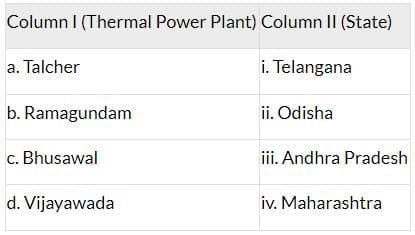
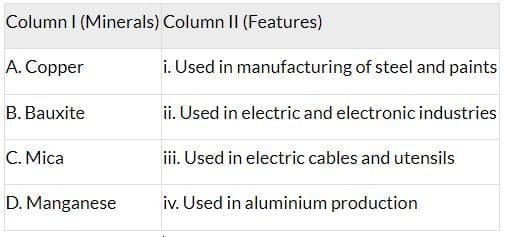
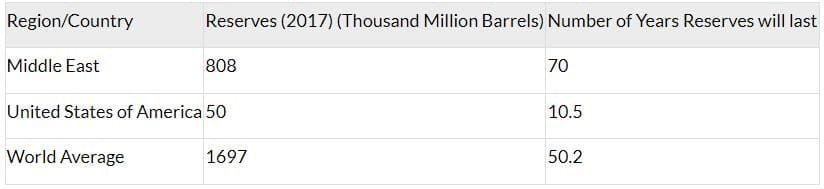
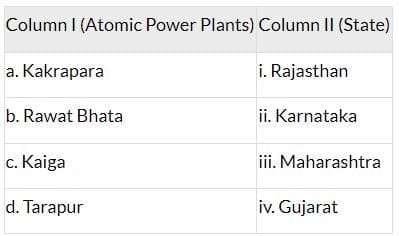
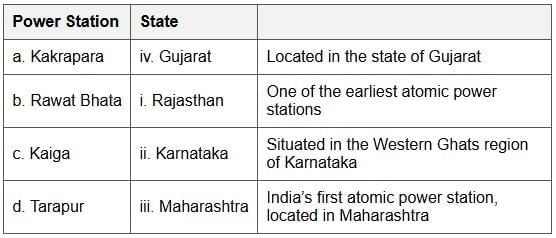
 Sustainable Energy
 Minerals
 Biogas Energy
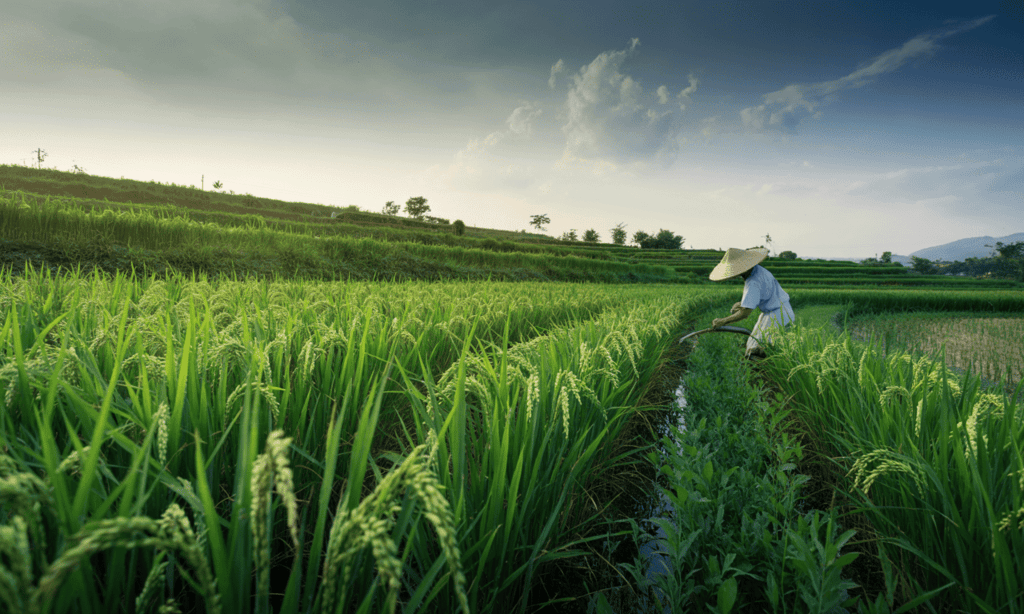 Rice Farming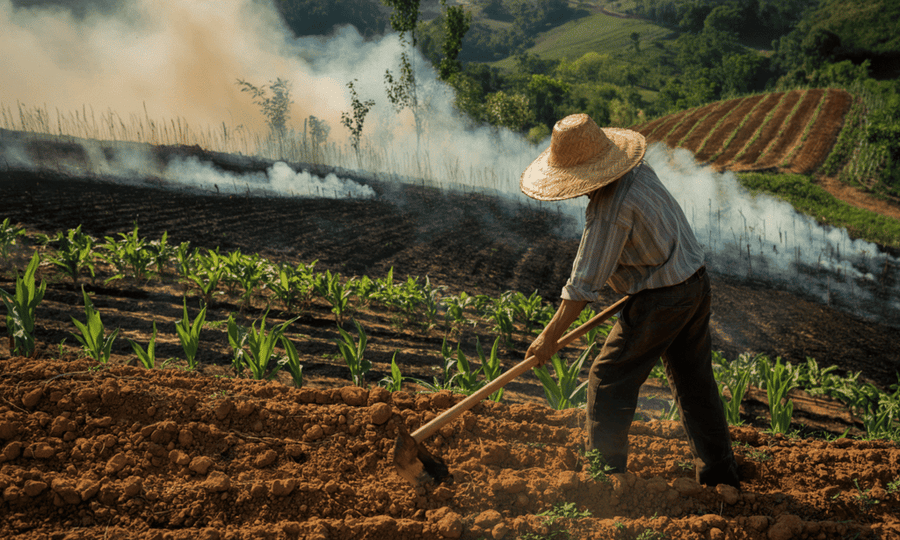
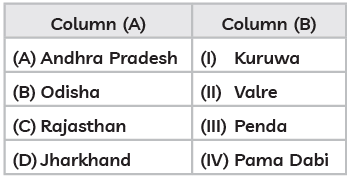
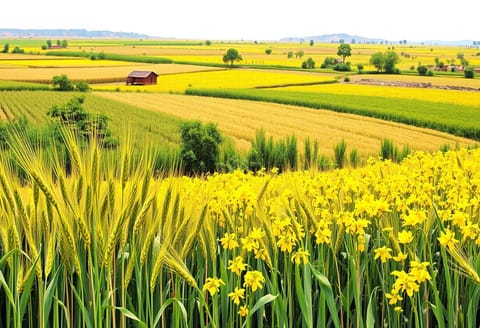 Rabi Crops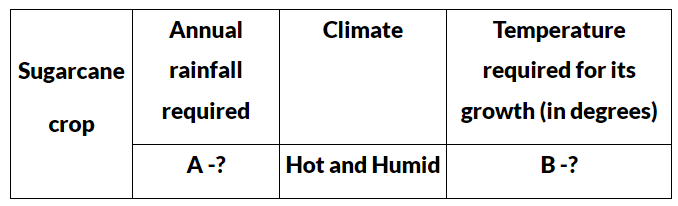
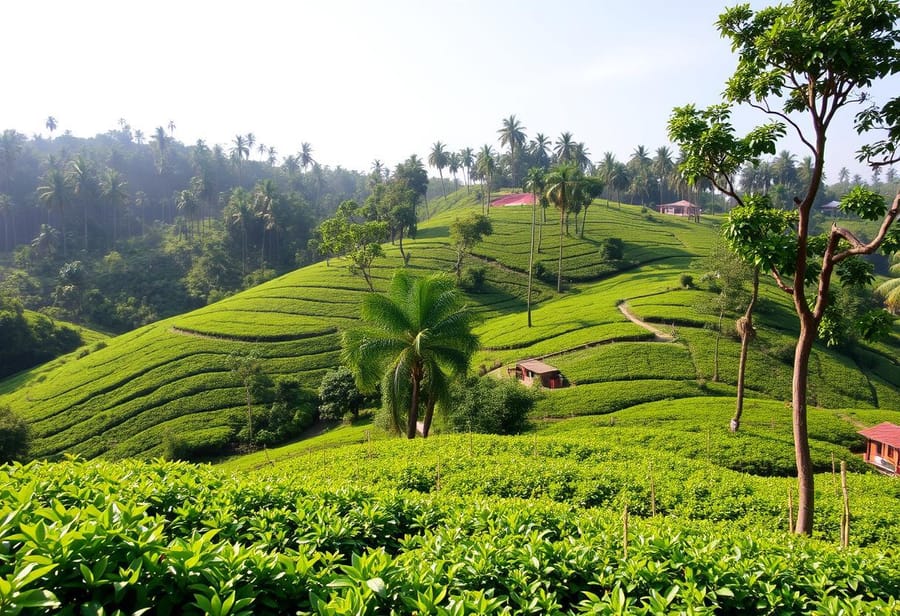

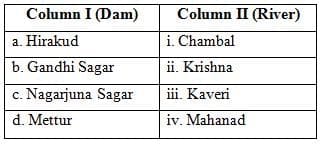
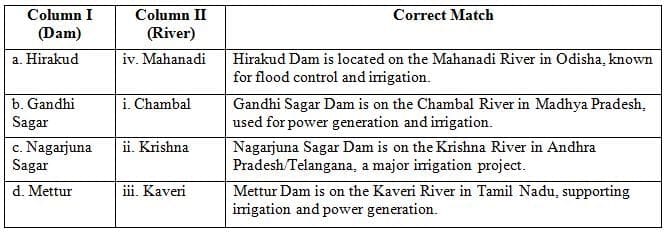
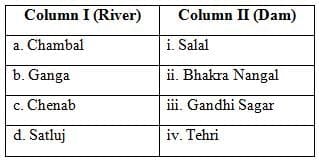
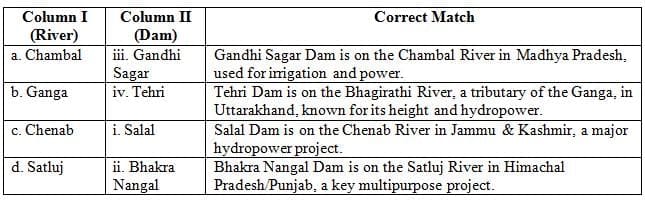
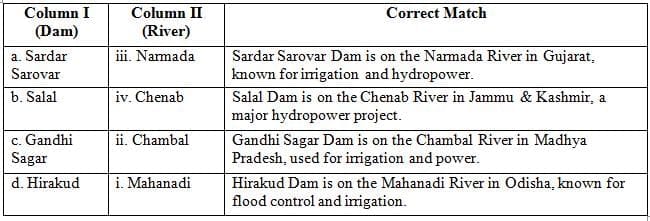
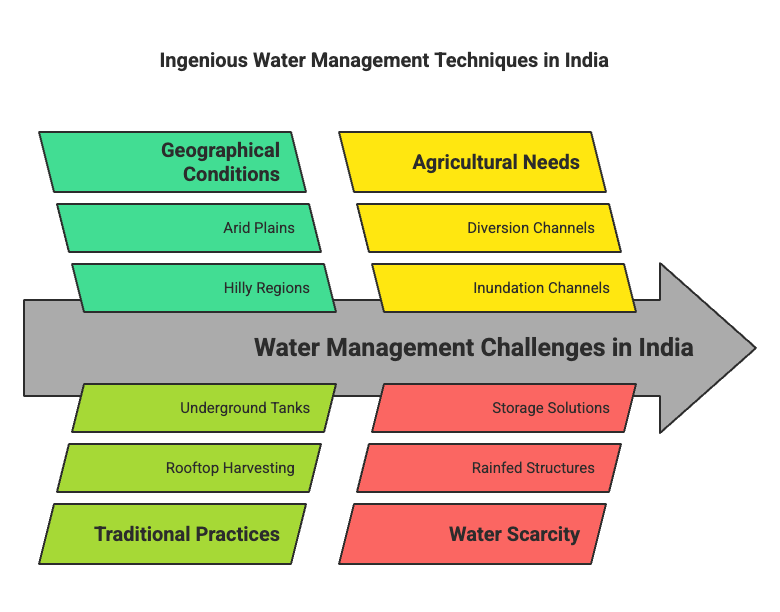
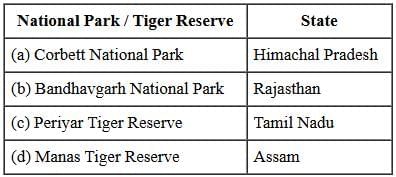
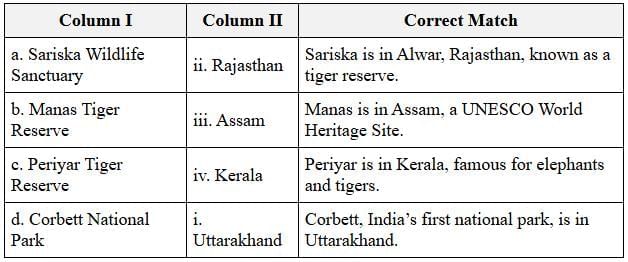


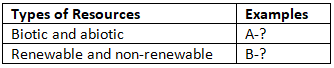

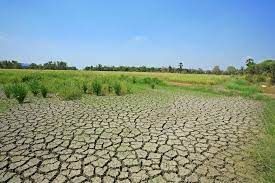 Land Degradation
 Ancient printing techniques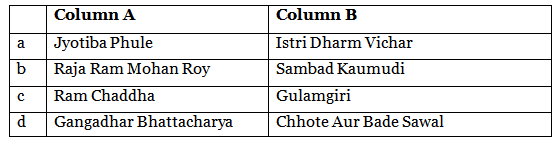
 Japanese BooksQ26: Which one of the following was NOT the reason for the popularity of scientific ideas among the common people in eighteenth-century Europe?