03. Short Answer Questions: Celebrating Festivals

Q1: Why do people travel to visit relatives during festivals?
Ans: People travel during festivals to meet relatives, spend time together, and celebrate happiness as a family.

Q2: What safety measures should we follow while travelling in a bus?
Ans: We should sit properly, keep our hands and head inside the bus, and follow instructions given by the elders.

Q3: Why are road signboards important?
Ans: Road signboards give instructions and warnings. They help people travel safely on roads.

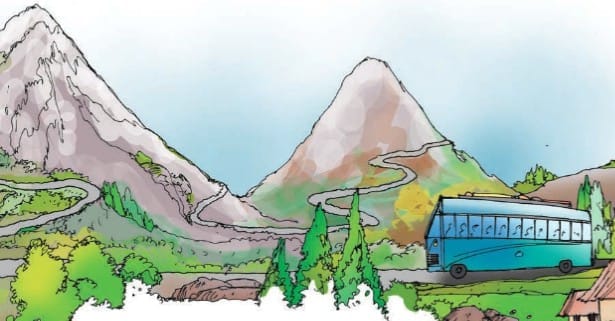
Q4: What kinds of natural things can we see while travelling?
Ans: We can see hills, trees, flowers, rivers, and beautiful landscapes while travelling.
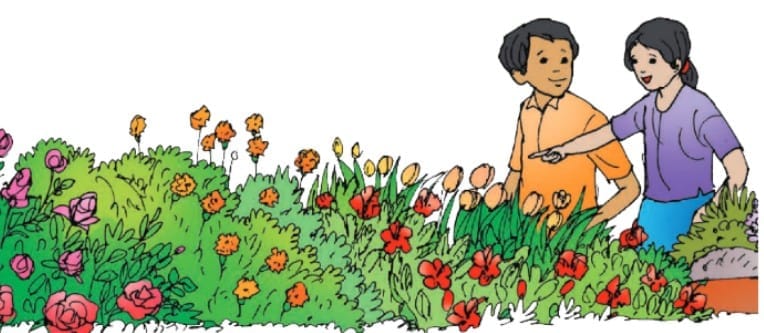
Q5: Why do people decorate their homes with flowers during festivals?
Ans: Flowers make homes look beautiful and fresh. They show happiness and respect for nature.

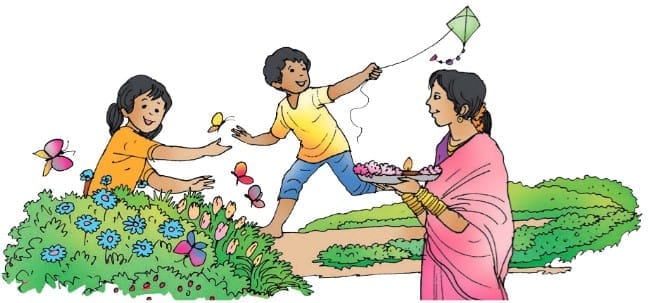
Q6: Why is spring called a celebration of nature?
Ans: Spring is called a celebration of nature because flowers bloom, trees get new leaves, and the weather becomes pleasant.
Q7: What special food is prepared during festivals?
Ans: Different festivals have special food like sweets, rice dishes, and traditional meals prepared at home.

Q8: Why do people wear special clothes during festivals?
Ans: People wear special clothes to celebrate festivals with joy and to show respect for traditions.

Q9: How do festivals bring people together?
Ans: Festivals bring people together by helping them share food, meet relatives, and celebrate as a community.

Q10: Why is it important to respect different festivals?
Ans: Respecting different festivals teaches us unity, understanding, and love for all cultures.

Q11: How do festivals help children learn about their culture?
Ans: Festivals teach children about traditions, special food, clothes, and customs of their culture.

Q12: Why should we keep nature clean during celebrations?
Ans: Keeping nature clean protects plants and animals and helps everyone enjoy a healthy environment.

Q13: What do we learn from celebrating festivals with family?
Ans: We learn sharing, caring, togetherness, and respect for elders and relatives.

Q14: How does spending time in nature make us feel?
Ans: Spending time in nature makes us feel happy, peaceful, and refreshed.

Q15: What values do festivals teach us?
Ans: Festivals teach us love, unity, respect for nature, and happiness in being together.
02. Short Answer Questions: Going to the Mela

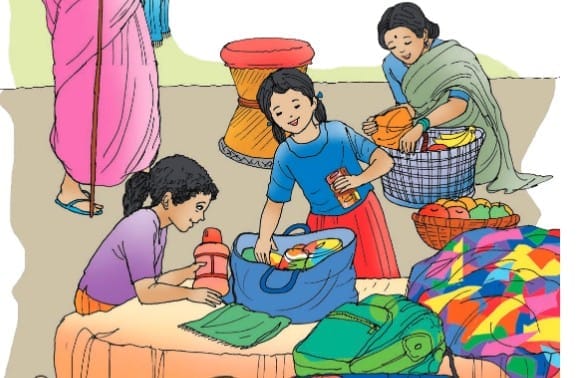
Q1: How can we prepare ourselves before going on a trip?
Ans: We can prepare by packing necessary items, filling water bottles, and wearing comfortable clothes.Short Answer Questions: Going to the Mela

Q2: Why is it important to travel together with family or elders?
Ans: Travelling together keeps everyone safe and helps us take care of each other during the journey.

Q3: What kinds of vehicles do we see around us?
Ans: We see vehicles like buses, cars, autorickshaws, bicycles, police jeeps, and ambulances around us.

Q4: How can we ensure safety while walking on the road?
Ans: We should walk carefully, look at vehicles on both sides, and follow traffic rules.

Q5: Why are seats reserved for elderly people in buses?
Ans: Seats are reserved for elderly people so they can sit comfortably and travel safely.

Q6: What safety rules should children follow while travelling in a bus?
Ans: Children should sit properly, not jump around, and should not put their hands or head outside the window.

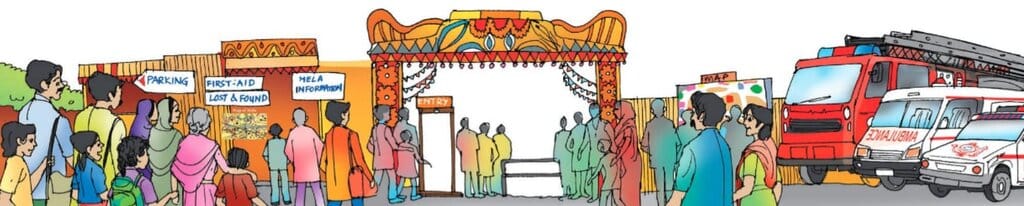
Q7: Why are maps helpful at large public places?
Ans: Maps help people find different places easily and know where things are located.

Q8: Why are police, fire engines, and ambulances present at crowded places?
Ans: They are present to help people during emergencies and keep everyone safe.Short Answer Questions: Going to the Mela

Q9: What is the purpose of a ‘Lost and Found’ booth?
Ans: The ‘Lost and Found’ booth helps lost people meet their family members again.

Q10: Why should we wash our hands before eating?
Ans: Washing hands before eating keeps us clean and protects us from germs.

Q11: Why should waste be thrown only in dustbins?
Ans: Throwing waste in dustbins keeps the place clean and helps protect the environment.

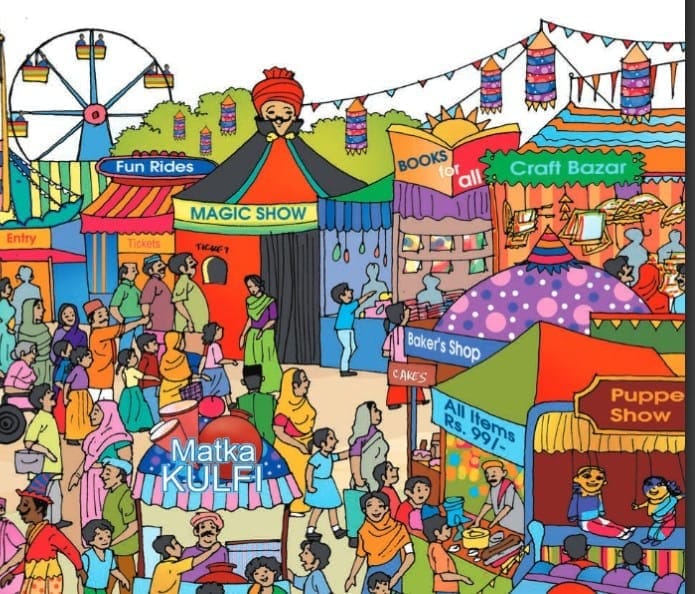
Q12: How do melas help people enjoy and learn together?
Ans: Melas bring people together to enjoy games, food, rides, and learn how to behave in public places.Short Answer Questions: Going to the Mela

Q13: What kinds of work do people do at a mela?
Ans: People work as shopkeepers, toy sellers, food sellers, volunteers, police officers, and helpers.

Q14: Why is it important to follow rules in public places?
Ans: Following the rules keeps everyone safe and helps avoid accidents.

Q15: What do we learn by visiting places like a mela?
Ans: We learn about safety, cleanliness, cooperation, and respecting others in public places.

01. Short Answer Questions: Family and Friends

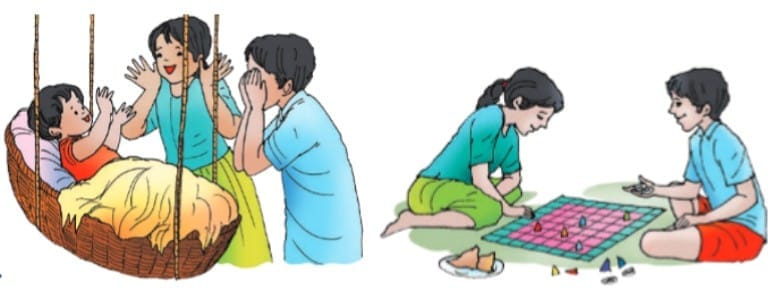
Q1: Why is playing together important for family members?
Ans: Playing together helps family members enjoy each other’s company. It makes everyone happy and strengthens love and bonding.

Q2: How does spending time together in the evening help a family?
Ans: Spending time together in the evening helps family members relax. They talk, laugh, and share their day with each other.

Q3: What can children learn by watching elders at home?
Ans: Children learn good habits, manners, and skills from elders. They also learn how to care for others and work together.

Q4: Why do families enjoy sitting and talking together during free time?
Ans: Families enjoy sitting together because it gives them time to talk, share jokes, and feel close to each other.

Q5: How do songs, games, and stories make family time enjoyable?
Ans: Songs, games, and stories bring joy to the family. They make family time fun and help everyone feel relaxed and happy.

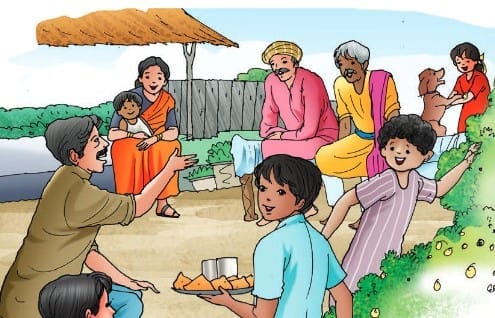
Q6: Why is it good when grandparents spend time with children?
Ans: Grandparents share stories and teach games they played when they were young. Spending time with them helps children learn and feel loved.

Q7: How should family members treat pets at home?
Ans: Family members should treat pets with care and kindness. They should not hurt them and should share food and love with them.

Q8: What do we learn about different types of families?
Ans: Families can be big or small. Every family is different, but all families love, care for, and support each other.

Q9: Why is sharing food and work important in a family?
Ans: Sharing food and work helps family members support each other. It makes the family strong and happy.

Q10: How do family members help each other at home?
Ans: Family members help each other by cooking, cleaning, shopping, and doing other housework. Children also help elders with small tasks.

Q11: What kind of household work can children help with?
Ans: Children can help in cleaning, watering plants, and gardening. Helping makes them responsible.

Q12: Why should family members take care of elders and small children?
Ans: Elders and small children need special care and support. Taking care of them shows love and respect.

Q13: How do friends and neighbours make family life happier?
Ans: Friends and neighbours visit each other and join in festivals. They share food, help one another, and celebrate together.

Q14: What values do children learn when they play and work together?
Ans: Children learn sharing, cooperation, kindness, and teamwork. They also learn to help and care for others.

Q15: How does living together in a family help people feel safe and loved?
Ans: Living together helps people feel safe because family members care for each other. It gives love, support, and happiness.

14. Short Answer Questions: The Surajkund Fair

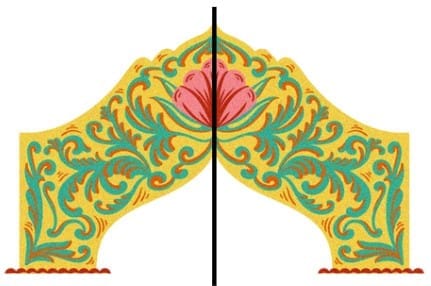
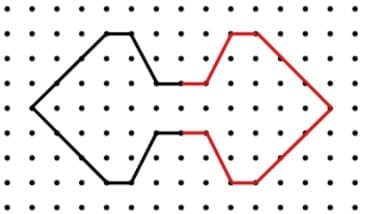
Q1: Look at the design shown. Does the design show symmetry? If yes, describe where the line of symmetry will be.

Ans: Yes, the design shows symmetry. A line of symmetry can be drawn in the middle, dividing the design into two equal left and right parts.

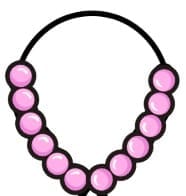
Q2: A necklace is made using 12 beads. How many beads should be placed on each side of the centre to make the necklace symmetrical? Explain.
Ans: To make the necklace symmetrical, the beads must be equally placed on both sides of the centre. So, 6 beads should be placed on each side.

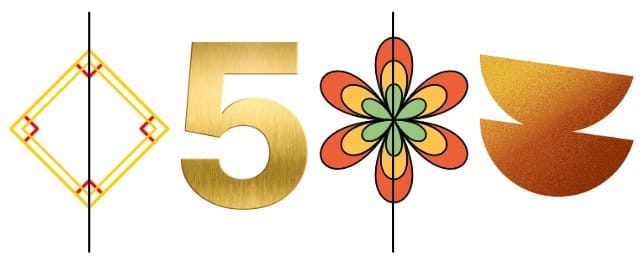
Q3: Four patterns are shown. Only two of the patterns are symmetrical. Identify them and give one reason for each.

Ans: The first design and the third design are symmetrical.

Q4: A design is symmetrical along a vertical line. Which part of the design must be repeated on the other side to complete it?
Ans: The same shapes, colours, and positions on one side of the vertical line must be repeated on the other side in the same order.

Q5: Look at the shapes placed on a dot grid. Which of these shapes can be completed to make a symmetrical figure?

Ans: The shapes that can be divided into two halves along a line can be completed to make symmetrical figures.

Q6: Two masks are shown. A child says both masks are symmetrical because they look similar. Do you agree? Give a mathematical reason.

Ans: No, both masks are not symmetrical. A mask is symmetrical only if both sides are exactly the same in shape and size. Looking similar is not enough for symmetry.

Q7: Objects are placed on one side of a line. Where should the objects be placed on the other side so that the arrangement becomes a mirror image?

Ans: The objects should be placed at the same distance from the line on the opposite side, in exactly opposite positions, to form a mirror image.

Q8: Some tiles are missing from the floor pattern. Choose the correct shape of tile to fill the gaps so that the pattern is completed without gaps or overlaps. Explain your choice.

Ans: The correct tile is the one that fits exactly into the gap without leaving spaces or overlapping other tiles and follows the pattern.

Q9: Look at the following signs. Guess what each sign means and write one place where you might see it.

Ans: These signs give information about the Parking and Hospital

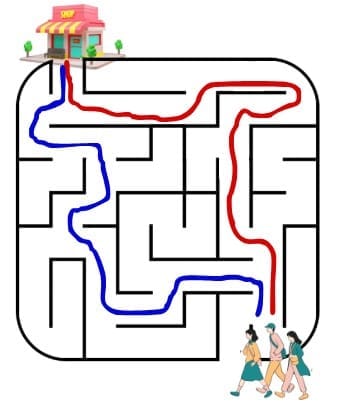
Q10: Two different paths can be used to reach the same shop. How can both paths be correct? What does this tell you about finding routes?

Ans: Both paths are correct because they lead to the same place, even though they are different. This shows that there can be more than one way to reach a place.

13. Short Answer Questions: Time Goes On

Q1: Look at the calendar shown(a) How many Sundays are there in this month?
(b) Which date comes just before the 18th?

Ans:
(a) There are 4 Sundays in this month.
(b) The date just before the 18th is the 17th.

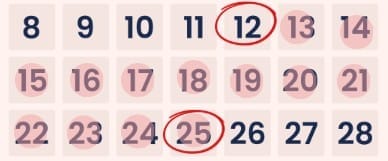
Q2: Rina’s birthday is on 12 March. Her brother’s birthday is on 25 March. How many days after Rina’s birthday is her brother’s birthday?

Ans: From 12 March to 25 March, there are 13 days.
So, her brother’s birthday is 13 days after Rina’s birthday.

Q3: Study the clocks shown. Which clock shows a later time? Write the time shown on both clocks.
Ans:
The clocks show 3:00 and 5:00.
5:00 is the later time.

Q4: Look at the clock carefully.(a) What time is shown?
(b) What will be the time after 30 minutes?

Ans:
(a) The time shown is 7:30.
(b) After 30 minutes, the time will be 8:00.

Q5: The pictures show different activities. Write a suitable time of day for each activity.
Ans:
Sleeping – Night
School – Morning
Playing – Evening
Eating dinner – Night

Q6: A school starts at 9:00 am and ends at 2:00 pm. How long does the school remain open?
Ans:
From 9:00 am to 2:00 pm is 5 hours.
So, the school remains open for 5 hours.

Q7: Look at the timeline of a day.Morning → Afternoon → Evening → Night

Arrange the following activities in the order they usually happen: Dinner, School, Breakfast, Sleeping
Ans:Breakfast → School → Dinner → Sleeping

Q8: Meena is 8 years old. Her mother is 32 years old.(a) Who is older?
(b) How many years older is Meena’s mother?

Ans:
(a) Meena’s mother is older.
(b) 32 − 8 = 24 years.
Meena’s mother is 24 years older.

Q9: Two activities are shown below.Brushing Teeth and Watching a Movie(a) Which activity takes more time?
(b) Write a suitable unit of time for each activity.

Ans:
(a) Watching a movie takes more time.
(b) Brushing teeth – minutes; Watching a movie – hours

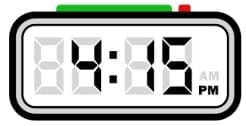
Q10: Look at the clock shown.(a) Write the time shown on the clock.
(b) Write the same time in digital form.

Ans:
(a) The time shown is quarter past 4.


(b) The digital time is 4:15.

12. Short Answer Questions: Give and Take

Q1: Look at the number grid and answer the questions.

461462463
471472473
481482483

(a) What is the difference between 462 and 472?
(b) What number will come just below 463?

Ans:
(a) The difference between 462 and 472 is 10.
(b) The number just below 463 is 473.

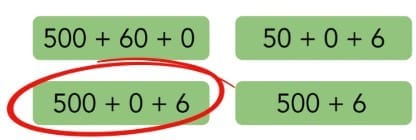
Q2: Write the expanded form of 506 and explain why.

Ans: 506 = 500 + 0 + 6. There is no tens value because the tens digit is 0. 

Q3: Complete the table to show different ways of making the same amount.

Total AmountOne WayAnother Way
₹100₹50 + ₹50?

Ans: ₹100 can also be made using ₹20 + ₹20 + ₹20 + ₹20 + ₹20.

Q4: Fill the table and answer the question.

NumberAfter adding 10After adding 100
375385475

Ans: Adding 10 increases the tens place, and adding 100 increases the hundreds place.

Q5: Arrange the following numbers from smallest to greatest using place value reasoning: 709, 790, 700, 770.
Ans: 700, 709, 770, 790.

Q6: With ₹100, Riya can buy 2 packets of biscuits. With the same ₹100, Aman can buy 5 pencils.(a) Which item costs more: one packet of biscuits or one pencil?
(b) Explain your answer using numbers.

Ans:
(a) One packet of biscuits costs 50 rupees so it costs more.
(b) ₹100 buys only 2 biscuit packets, but it buys 5 pencils. So, each biscuit packet costs more than one pencil.

Q7: Estimate the answer to the nearest hundred: 456 + 138.
Ans: 456 ≈ 500 and 138 ≈ 100. Estimated answer = 600.

Q8: Without calculating, find which is more and explain: 500 − 48 or 500 − 52.
Ans: 500 − 48 is more because a smaller number is being subtracted.

Q9: Fill the table and answer.

Amount in the morningAmount in the eveningMoney earned
₹ 385₹ 620?

Ans: Money earned = 620 − 385 = ₹235.

Q10: Using the digits 2, 5, and 8 only once, make two 3-digit numbers such that their difference is the smallest.
Ans: 258 and 285 give the smallest difference of 27.

11. Short Answer Questions: Filling and Lifting

Q1: A jug fills 6 identical glasses. Another jug fills 9 of the same glasses. Which jug has greater capacity? How much greater is it in terms of glasses?
Ans: Jug B has greater capacity. It holds the amount of 3 more glasses than Jug A.

JugNumber of Glasses Filled
Jug A6
Jug B9

Q2: Look at the balance and answer. Which object is heavier and why? 

Ans: The book is heavier because its side of the balance goes down.

Q3: Three children use different glasses to drink milk. After pouring each glass into the same measuring cup, the amounts are equal. What does this show about the glasses?

Ans: This shows that even though the glasses look different, they all have the same capacity.

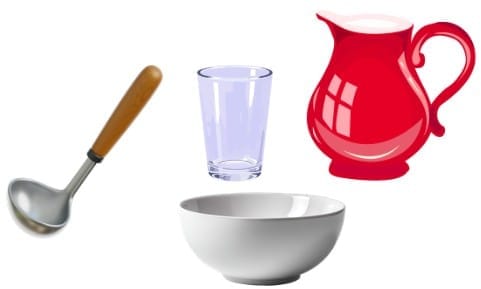
Q4: Look at the table and answer: Which vessel has the least capacity?

VesselNumber of Ladles Needed
Jug14
Bowl7
Glass4

Ans: The glass has the least capacity because it needs the fewest ladles.

Q5: A container holds exactly 1 litre of water. Which of the following must be true: a mug that fills it twice or a mug that fills it four times? Explain.
Ans: If a mug fills the container four times, the mug has a smaller capacity. If it fills it twice, the mug has larger capacity. So, the mug that fills it four times is smaller.

Q6: A bucket is filled using two different mugs. Mug A fills it in 8 pours. Mug B fills it in 12 pours. Which mug has greater capacity? Give a reason.

Ans: Mug A has a greater capacity because fewer pours are needed to fill the bucket.

Q7: A bowl fills 4 glasses. A bottle fills 2 bowls. How many glasses will the bottle fill?
Ans: Total glasses = 2 × 4 = 8 glasses.

RelationValue
1 bowl = glasses4
1 bottle = bowls2

Q8: An object balances with 6 identical coins. Another object balances with 9 of the same coins. Which object is heavier? How do you know?
Ans: The object that balances with 9 coins is heavier because it needs more coins to balance.

Q9: Arrange the objects from lightest to heaviest.

ObjectNumber of Erasers Used to Balance
Sharpener2
Pencil box5
School bag11

Ans: Sharpener → Pencil box → School bag.

Q10: A shopkeeper uses a 1-litre measuring cup. He pours water into a vessel and needs the cup exactly 3 times. What is the capacity of the vessel? Write the answer with unit.
Ans: The capacity of the vessel is 3 litres.

10. Short Answer Questions: Fun at Class Party!

Q1: Two ribbons are placed side by side. Ribbon A is longer than Ribbon B. How can you clearly show which ribbon is longer without measuring with numbers?
Ans: I will keep both ribbons together from one end. The ribbon which goes farther is the longer one.

Q2: Riya measures a table using her handspan and gets 8 handspans. Aman measures the same table and gets 10 handspans. Will both measurements be correct? Give a reason.

Ans: Yes, both can be correct because Riya’s handspan and Aman’s handspan are not the same size.

Q3: Which tool is most suitable to measure the length of a classroom wall: pencil, handspan, metre rope, or eraser? Explain why.
Ans: A metre rope is best because the wall is long and the rope can measure it easily.

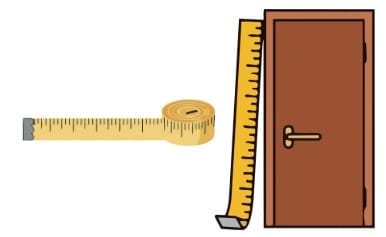
Q4: A table is too heavy to move near the classroom door. How can you check whether the table can pass through the door without lifting it?
Ans: I can measure the table and the door with the same rope and then see if the table is wider than the door.

Q5: Measuring a saree with a pencil takes a long time. Why is a metre rod or metre rope better?
Ans: A metre rod is longer than a pencil, so we can measure big things faster.

Q6: A rope is exactly one metre long. (a) What will be its length if folded into two equal parts? (b) What will be the length of each part if folded into four equal parts?
Ans: (a) Each part will be half a metre. (b) Each part will be a quarter metre.

Q7: Write the names of two objects for each category.
Ans:
Less than 1 metre: pencil, book
Equal to 1 metre: metre rope, table height
More than 1 metre: door, blackboard

Q8: Estimate the length of your classroom desk in metres. How will you check whether your estimate is close?
Ans: First, I will guess the length. Then I will measure it using a metre rope to check my guess.

Q9: “All children have the same height as the length of their arms stretched out.” True or False. Give a reason.
Ans: False, because every child is different in height and arm length.

Q10: Four children jumped from a start line. A jumped more than half a metre, B less than half a metre, C more than one metre, and D less than a quarter metre. Who jumped the farthest and who jumped the shortest?
Ans: Child C jumped the farthest and child D jumped the shortest.

09. Short Answer Questions: House of Hundreds – II

Q1: Write the number shown by the place value blocks.

HundredsTensOnes
527

Ans: The number formed is 527.

Q2: Write the expanded form of the number 684.
Ans:

Place ValueValue
Hundreds600
Tens80
Ones4

So, 684 = 600 + 80 + 4.

Q3: Between which two hundreds does the number 742 lie?
Ans:

Lower HundredNumberHigher Hundred
700742800

So, 742 lies between 700 and 800.

Q4: Write the neighbouring tens of the number 395.
Ans:

Previous TenNumberNext Ten
390395400

The neighbouring tens are 390 and 400.

Q5: Which number is greater: 608 or 680? Give a reason using place value.
Ans:

NumberHundredsTensOnes
608608
680680

Both numbers have 6 hundreds, but 680 has more tens. So, 680 is greater.

Q6: Arrange the following numbers from smallest to greatest: 845, 804, 840, 815.
Ans:

NumberHundredsTensOnes
804804
815815
840840
845845

So, the order is: 804, 815, 840, 845.

Q7: What is Bhutasankhya and how is it used to show numbers?
Ans: Bhutasankhya is a way of showing numbers using words or objects that represent numbers.

Q8: How many tens are there in the number 430?
Ans:

Total NumberNumber of Tens
43043

There are 43 tens in 430.

Q9: Add 50 to the number 368 and write the answer.

Starting NumberAddResult
368+50___

Ans: 418

Q10: Write any one number that lies between 599 and 610.

Lower NumberChosen NumberHigher Number
599____610


Ans: 605 lies between 599 and 610.

Lower NumberChosen NumberHigher Number
599605610

08. Short Answer Questions: Fair Share

Q1: A square is divided into two equal parts. What fraction of the square is one part? 
Ans: One part is one-half because the whole square is divided into two equal parts.

Q2: A shape is divided into two parts, but one part is bigger than the other. Can any part be called a half? 
Ans: No, a part can be called a half only when both parts are equal in size.

Q3: Two identical pieces are joined together to form one shape. What can each piece be called?
Ans: Each piece can be called a half because two halves make one whole.

Q4: A rectangle is divided into four equal parts. What fraction does one part represent?Ans: One part represents one quarter because the whole is divided into four equal parts.

Q5: One quarter of a shape is shaded. How many such quarters are needed to make the whole shape?Ans: Four quarters are needed to make one whole.

Q6: Which is larger: one-half or one quarter of the same whole? Give a mathematical reason. Ans: One half is larger because a whole is divided into only two equal parts for halves, but into four equal parts for quarters.

Q7: A rope is cut into two equal pieces. What fraction of the rope is one piece?Ans: One piece is one-half of the rope because it is one of two equal parts.

Q8: Four equal pieces together make one whole. What is each piece called? 
Ans: Each piece is called one quarter because four equal parts make one whole.

Q9: One child has 3 pencils and another child has 6 pencils. How are these two numbers related?Ans: 3 is half of 6 and 6 is double of 3.

Q10: If a number is doubled and becomes 16, what was the original number? Explain. 
Ans: The original number was 8 because doubling 8 gives 16, and half of 16 is 8.