07. Short Answer Questions: Raksha Bandhan

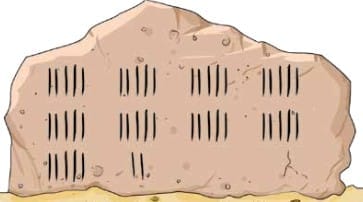
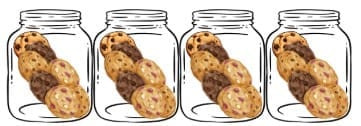
Q1: Without counting one by one, find the total number of pens. Write one multiplication sentence. Ans: There are 4 boxes with 5 pens in each box.
5 + 5 + 5 + 5 = 20
So, the multiplication sentence is 4 × 5 = 20 pens.

Q2: A student wrote 5 + 5 + 5 + 5 + 5 = 25 for the given picture. Is this correct? Write the correct repeated addition and multiplication sentence.Ans: This is not correct because 5 shows the number of bags, not the number of apples in each bag.
If each bag has 3 apples, the repeated addition is:
3 + 3 + 3 + 3 + 3 = 15
So, the correct multiplication sentence is 5 × 3 = 15.

Q3: Each decorative band needs 5 beads. How many beads are needed to make 9 such bands? Ans: One band uses 5 beads.
For 9 bands: 5 + 5 + 5 + 5 + 5 + 5 + 5 + 5 + 5 = 45
So, the multiplication sentence is 9 × 5 = 45 beads.

Q4: If 28 biscuits are packed equally with 7 biscuits in each box, how many boxes will be needed? Ans: There are 28 biscuits in total.
28 ÷ 7 = 4
So, 4 boxes will be needed.
Q5: 20 mangoes are shared equally among 4 children. How many mangoes will each child get? Will any mangoes be left?Ans: 20 mangoes are shared among 4 children.
20 ÷ 4 = 5
Each child will get 5 mangoes and no mango will be left.
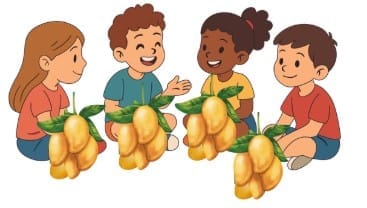
Q6: The items in the picture are meant to be shared equally. Is the sharing correct? Give one reason. 
Ans: No, the sharing is not correct.
This is because all the plates do not have the same number of items, so the sharing is not equal.

Q7: Four children are sitting in each row. There are 6 such rows. How many children are there in total? Write one multiplication sentence. 
Ans: There are 6 rows and each row has 4 children.
So, repeated addition is 4 + 4 + 4 + 4 + 4 + 4 = 24.
The multiplication sentence is 6 × 4 = 24 children.

Q8: Complete the number pattern and name the multiplication table it belongs to.Ans: The completed pattern is 5, 10, 15, 20, 25.
This pattern belongs to the 5 times table.

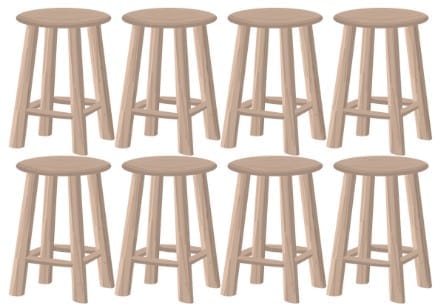
Q9: There are 32 legs in total. How many stools are there? Which operation will you use?Ans: Each stool has 4 legs.
32 ÷ 4 = 8
So, there are 8 stools.
Division is used because the total number of legs is divided into equal groups of 4.
Q10: Rina says that 6 × 4 and 4 × 6 give the same answer. Is she correct? Explain your answer.
Ans: Yes, Rina is correct.
6 × 4 means 6 groups of 4 and 4 × 6 means 4 groups of 6.
Both give the same total, which is 24.
06. Short Answer Questions: House of Hundreds – I

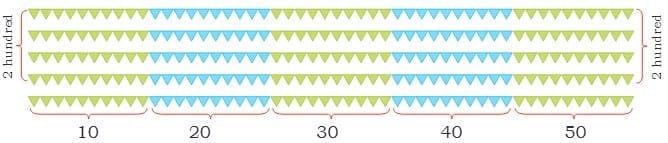
Q1: Look at the rows of triangular torans. Each row has 50 triangles. How many triangles are there in 5 rows?
Ans: In 1 row there are 50 triangles. In 5 rows, there are 50 × 5 = 250 triangles.

Q2: There are 200 bangles and 80 more bangles. Write the total number of bangles.
Ans: 200 bangles and 80 more make 280 bangles.

Q3: Jojo has 298 toffees. He gets 2 more. Write how he reaches 300 step by step.
Ans: 298 + 1 = 299 and 299 + 1 = 300. So, Jojo has 300 toffees.

Q4: Fill in the missing numbers while counting.
Ans:

CountingMissing Number
211, 212, ___, ___, 216213, 214, 215
227, ___, 230228, 229

Q5: Write the number sentence for 235 in two different ways.
Ans: 235 can be written as 200 + 35 and also as 250 − 15.

Q6: Why is counting in tens easier than counting one by one for big numbers?
Ans: 
Counting in tens is quicker and helps us count large numbers correctly.

Q7: Increase or decrease the numbers as given.

NumberWhat to doAnswer
285Increase by 1___
147Increase by 10___
289Decrease by 10___

Ans:

NumberWhat to doAnswer
285Increase by 1286
147Increase by 10157
289Decrease by 10279

Q8: Look at the number 321 and 231. Which number is bigger? Write the reason.
Ans: 321 is bigger because it has 3 hundreds and 231 has only 2 hundreds.

Q9: Compare using >, < or = : 
285 ____ 275
199 ____ 201

Ans: 285 > 275
199 < 201

Q10: Make 3-digit numbers using digits 3, 2 and 4 without repeating any digit. Write the greatest number.
Ans: The greatest number that can be made is 432.

05. Short Answer Questions: Fun with Shapes

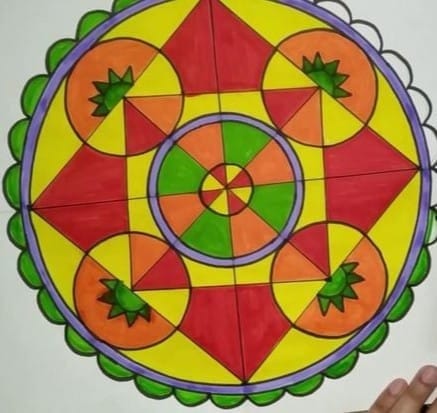
Q1: Name any four shapes that you can see in a rangoli design.
Ans: Some shapes seen in a rangoli design are circle, square, triangle and rectangle.

Q2: Look at the rangoli carefully. Which shapes are made using only straight lines and Curved lines?

Ans: Squares and triangles are made using only straight lines. Circles are made using only curved lines.

Q3: Look at the objects around you. Write the names of two objects that have rectangular faces.
Ans: A book and a box have rectangular faces.

Q4: Write the number of sides and corners of each shape.

ShapeNumber of SidesNumber of Corners
Square____
Rectangle____
Triangle____
Circle____


Ans:

ShapeNumber of SidesNumber of Corners
Square44
Rectangle44
Triangle33
Circle00

Q5: Look at a square and a rectangle. What is common between a square and a rectangle?Ans: Both have four sides, four corners and all their corners are square corners.

Q6:  Look at a square and a rectangle. How is a square different from a rectangle?
Ans: In a square, all sides are equal in length. In a rectangle, only the opposite sides are equal.

Q7: How many sides and corners does a square have?
Ans: A square has 4 sides and 4 corners.

Q8: Look at a triangle and tell how many sides and corners does a triangle have?
Ans: A triangle has 3 sides and 3 corners.

Q9: What is a square corner?
Ans: A square corner is a corner where two straight lines meet to make a right angle.

Q10: Look at the given shapes. Each shape can be the odd one out. Explain how each shape is different.
Ans: Each shape can be odd for a different reason. 
The circle is odd because it has no corners. 
The triangle is odd because it has only three sides. 
The square is odd because all its sides are equal. 
The rectangle is odd because only its opposite sides are equal.

04. Short Answer Questions: Vacation with My Nani Maa

Q1: If the total number of objects is 15 and 12 objects are visible, how many objects are hidden?
Ans: Number of hidden objects = 15 − 12 = 3.

Q2: Find the number of hidden objects in each case.

Total ObjectsVisible ObjectsHidden Objects
1710__
209__
2712__


Ans:

Total ObjectsVisible ObjectsHidden Objects
17107
20911
271215

Q3: Add the following numbers.

AdditionAnswer
7 + 5__
9 + 7__

Ans:

AdditionAnswer
7 + 512
9 + 716

Q4: Subtract the smaller number from the larger number.

SubtractionAnswer
7 − 5__
18 − 9__


Ans:

SubtractionAnswer
7 − 52
18 − 99

Q5: Fill in the table to make 100.

Number SentenceAnswer
60 + ___ = 100__
___ + 25 = 100__
___ + 85 = 100__


Ans:

Number SentenceAnswer
60 + ___ = 10040
___ + 25 = 10075
___ + 85 = 10015

Q6: How many jumps of 10 are needed to go from 22 to 52?
Ans: From 22 to 52 is a difference of 30. So, 3 jumps of 10 are needed.

Q7: Who has more stamps: A has 52 stamps, and B has 37 stamps. How many more does A have?
Ans: 52 − 37 = 15. 
A has 15 more stamps.

Q8: Start at 7 on a number line and jump forward by 10 two times. Write the numbers you land on.
Ans: The numbers are 17 and 27.

Q9: Decide without calculating exactly: Will 68 − 26 be more than or less than 50?
Ans: 68 − 26 = 42, which is less than 50. So, the answer is less than 50.

Q10: Estimate and say whether the answer is more than or less than 100: 85 + 67.
Ans: The answer is more than 100 because 80 + 60 = 140.

03. Short Answer Questions: Double Century

Q1: What is 100? Write two ways to show 100.
Ans: 
100 means one hundred. For example It can be shown as 10 bundles of 10 sticks or as 100 loose objects.

Q2: How many tens are there in 100?
Ans: There are 10 tens in 100.

Q3: Write the next number for each.

NumberNext Number
39__
63__
99__


Ans:

NumberNext Number
3940
6364
99100

Q4: Write two different ways to make 100.
Ans:

WayNumber Sentence
160 + 40 = 100
270 + 30 = 100

Q5: Fill in the blanks to make 100.
Ans:

Number SentenceAnswer
45 + ___ = 10055
___ + 25 = 10075
___ + 85 = 10015

Q6: Write the numbers from 101 to 105 in figures and words.
Ans:

NumberNumber Name
101One hundred one
102One hundred two
103One hundred three
104One hundred four
105One hundred five

Q7: Write the number made by 1 bundle of 100, 2 tens and 3 ones.
Ans: 
1 hundred, 2 tens and 3 ones make the number 123.

Q8: Write one more and one less than each number.

NumberOne LessOne More
___159___
___128___
___186___


Ans:

NumberOne LessOne More
160159161
129128130
187186188

Q9: Arrange the numbers in increasing order: 158, 150, 163.
Ans: 150, 158, 163.

Q10: Mark the numbers 110, 135 and 180 on a number line.
Ans: The numbers 110, 135 and 180 are placed correctly between 100 and 200 on the number line according to their values.

02. Short Answer Questions: Toy Joy

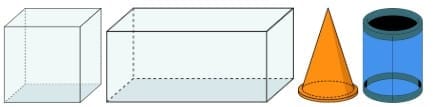
Q1: Name any four 3D shapes.
Ans: Four 3D shapes are cube, cuboid, cone and cylinder.

Q2: Write the name of the shape of each object.
Ans:

ObjectShape
DiceCube
MatchboxCuboid
Water bottleCylinder
Ice-cream coneCone

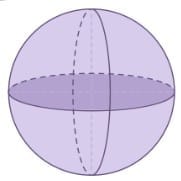
Q3: Which 3D shape has no edges and no corners?
Ans: A sphere has no edges and no corners.

Q4: Which 3D shapes have only flat faces?
Ans: Cube and cuboid have only flat faces.

Q5: Which 3D shapes have curved faces?
Ans: Cone, cylinder and sphere have curved faces.

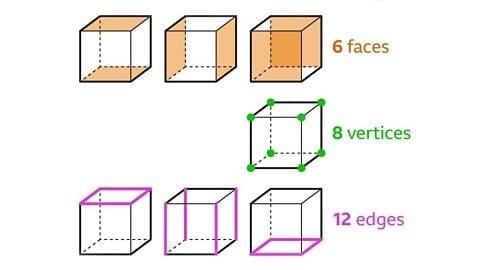
Q6: Count the faces, edges and corners of a cube.
Ans:

PartNumber
Faces6
Edges12
Corners8

Note: Corners are also known as vertices.

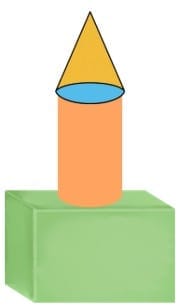
Q7: A cone is placed on a cylinder, and the cylinder is placed on a cuboid. Write the position of each shape.
Ans: The cone is on top.
The cylinder is in the middle. 
The cuboid is at the bottom.

Q8: Name one 3D shape that is found the most in a classroom.
Ans: Cuboid is found the most because desks, books and cupboards are cuboid-shaped.

Q9: Look at a dice. What number is on the face opposite to 1?
Ans: The number opposite to 1 is 6 because the sum of opposite faces always equals 7 (1+6=7, 2+5=7, 3+4=7).

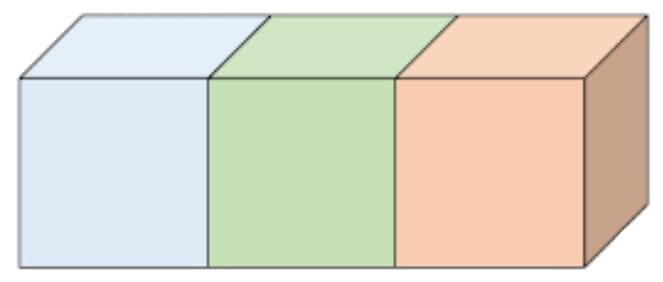
Q10: Join three cubes. Write the different shapes that can be made.
Ans: Three cubes can be joined to make a cuboid.

O1. Short Answer Questions: What’s in a Name?

Q1: How does making marks help while counting objects?
Ans: Making marks helps us count each object one by one. It ensures that no object is missed or counted more than once.

Q2: Why do we group objects while learning mathematics?
Ans: We group objects to understand them better by their common features. Grouping also makes counting and learning easier.

Q3: How can counting letters help us decide which name is longer? Explain with one example.
Ans: By counting the letters in each name, we can compare them. For example, “Elephant” is longer than “Ox” because it has more letters.

Q4: Write the names of five classmates. Find the longest and the shortest name.
Ans:

NameNumber of Letters
Riya4
Amit4
Rahul5
Sneha5
Priyanka8

Conclusion: Priyanka is the longest name. Riya and Amit are the shortest names.

Q5: Write the starting letters of your classmates’ names. Which starting letter is used the most?
Ans:

Starting LetterNumber of Names
R3
A2
S1

Conclusion: The letter R is used the most.

Q6: Write the number name of 56. How many letters does it have?
Ans: The number name of 56 is fifty-six. It has eight letters.

Q7: Find a number between 1 and 99 whose number name has two words and is close to 100. Write its number name.
Ans: The number is 99. Its number name is ninety-nine.

Q8: From the numbers 63 to 78, which number has the shortest number name?
Ans: Sixty-six has the shortest number name among these numbers.

Q9: Write the number names of 45, 58 and 62. Arrange these numbers in order from the shortest number name to the longest number name.
Ans:

NumberNumber NameNumber of Letters
45forty-five9
58fifty-eight10
62sixty-two8

Order: 62, 45, 58

Reason: The numbers are arranged by comparing the number of letters in their number names.

Q10: Make a table to show different hairstyles in your class. Which hairstyle is the most common?
Ans:

Hair StyleNumber of Children
Single plait6
Two ponytails5
Short hair7

Conclusion: Short hair is the most common hairstyle in the class.

20. Short Answer Questions: Invention of Wheel

Q1. What is a wheel?

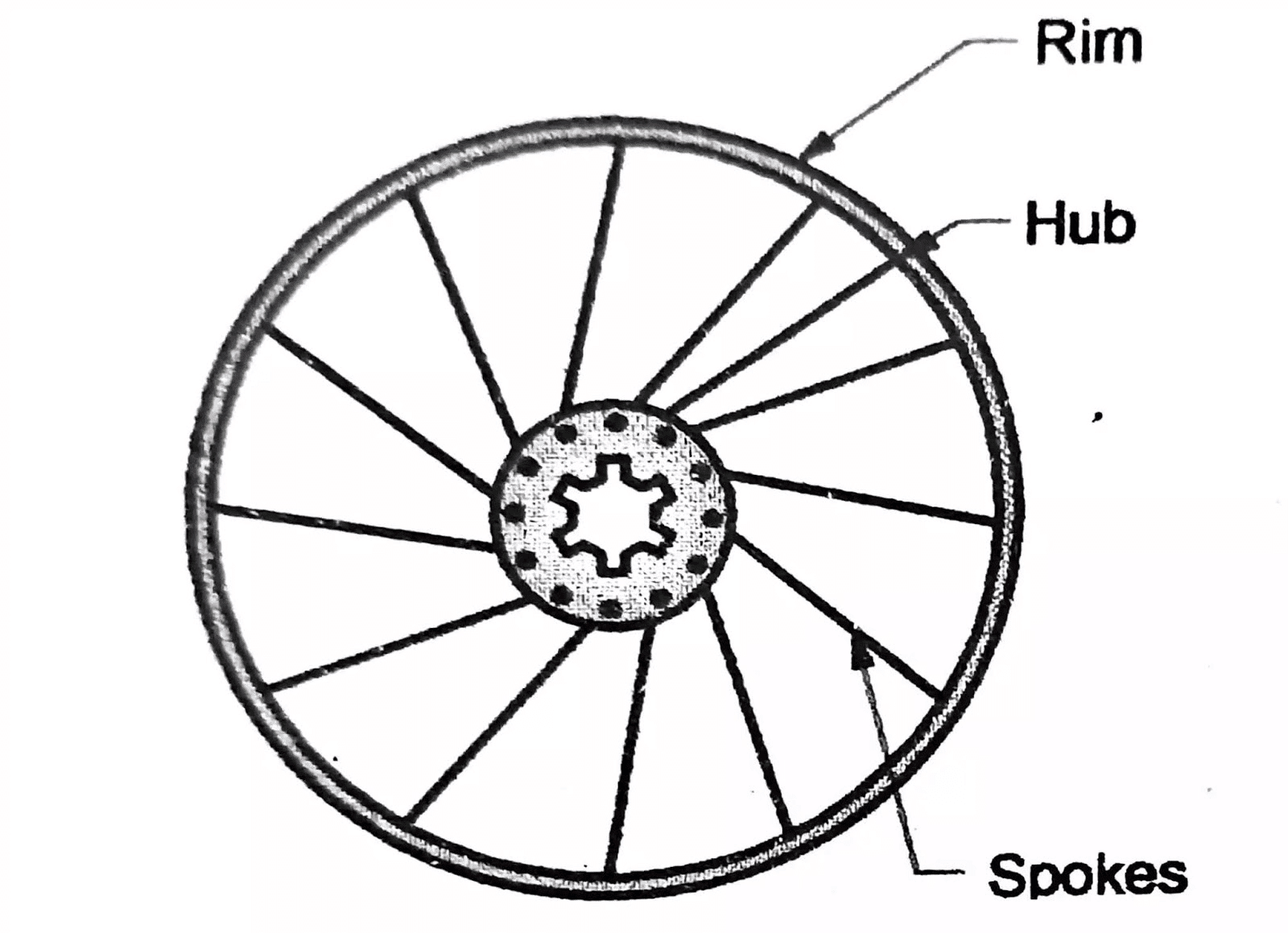
Ans: A wheel is a round object that helps things move easily across the ground.

WheelsWheels

Q2. Why is the invention of the wheel important?

Ans: The wheel made it easier to travel and carry heavy things, helping people move faster and trade more.

Q3. Name two things we use today that have wheels.

Ans: Cars and bicycles have wheels.

Q4. How did people move heavy things before wheels were invented?

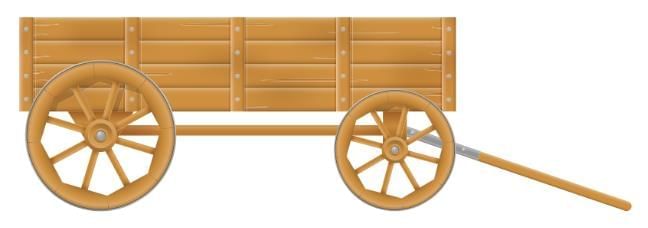
Ans: People rolled logs under items, used wooden carts, or dragged things on the ground.

Wooden CartWooden Cart

Q5. What were the first wheels used for?

Ans: The first wheels were used for making pottery.

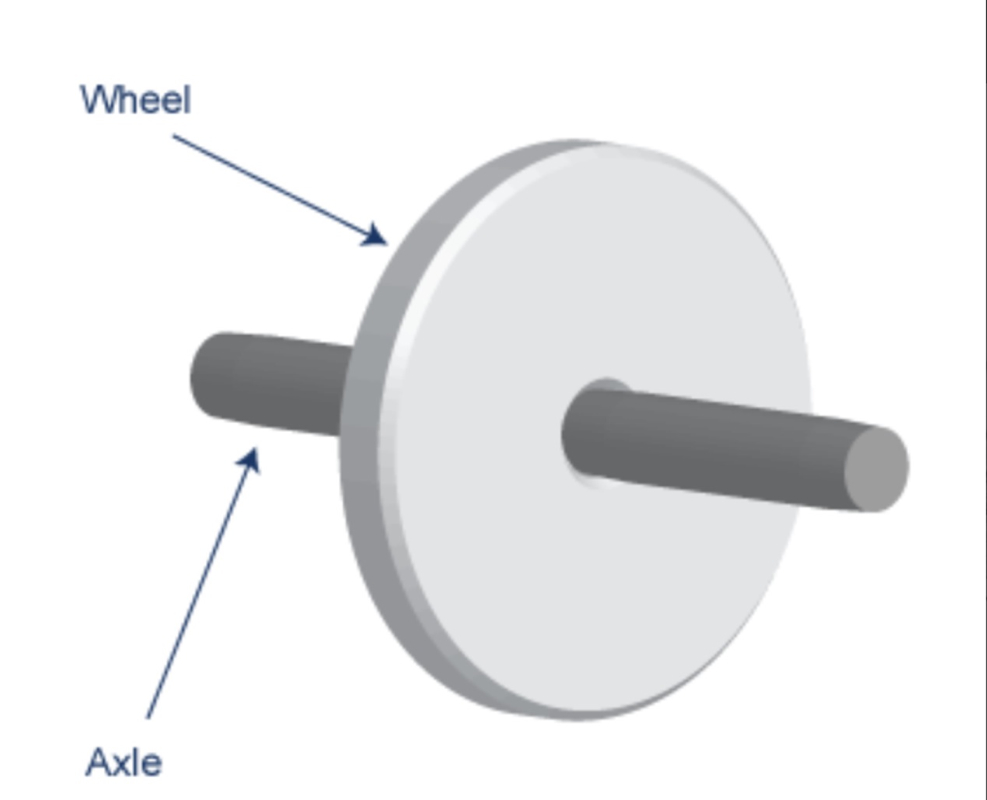
Q6. What is the use of an axle in a wheel?

Ans: An axle is a rod that holds the wheel and helps it rotate smoothly.

Short Answer Questions: Invention of Wheel

Q7. Why is the wheel round in shape?

Ans: The round shape helps the wheel roll easily and saves energy.

Q8. How did wheels help in trade?

Ans: Wheels made it easier to carry goods over long distances, which helped people trade with others.

Q9. What kind of wheels did early people use?

Ans: They used heavy wheels made of solid wood.

Q10. What improvements were made to early wheels?

Ans: Spokes were added to make the wheels lighter and stronger.

Short Answer Questions: Invention of Wheel

Q11. How are modern wheels different from early wheels?

Ans: Modern wheels are smooth, light, and used in many things like toys, cars, and machines.

Q12. What is easier—rolling or sliding? Why?

Ans: Rolling is easier because it needs less effort and helps things move faster.

Q13. What new things were made after the wheel was invented?

Ans: Carts, cars, and bicycles were made after the invention of the wheel.

Q14. How do wheels help in building better cities?

Ans: Wheels helped people travel, trade, and connect, which made cities grow and improve.

Q15. Write one sentence to describe the importance of the wheel.

Ans: The wheel is one of the most important inventions that made life easier for everyone.

19. Short Answer Questions: Safety & First Aid

Q1. Why is knowing first aid important?
Ans: First aid helps us take care of small injuries quickly and make others feel better before they get full medical help.
First AidFirst Aid

Q2. Why is safety important?
Ans: Safety protects us from danger and accidents. It helps keep us and others safe and healthy.

Q3. Name two safety rules to follow at home.
Ans: Never play with fire or electric plugs, and be careful around the stove and sharp objects like knives and scissors.

Q4. What safety tips should you follow at school?
Ans: Don’t run inside the classroom, be careful on the stairs, and never touch things in the science lab without permission.

Q5. Why is it important to have a first aid kit at school?
Ans: A first aid kit helps treat small injuries like cuts or bruises right away.

Q6. How can you stay safe on the road?
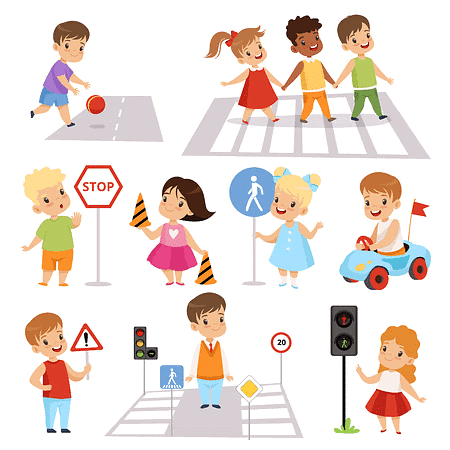
Ans: Walk on footpaths, ride bicycles on the left side, wear helmets, and cross roads only at zebra crossings after looking carefully.
Safety on RoadSafety on Road

Q7. What should you do when playing games in the playground?
Ans: Follow the rules, don’t push or trip others, and play safely so everyone can have fun without getting hurt.

Q8. What are the first things to do when someone is injured?
Ans: Stay calm, find an adult, don’t move the injured person if you think they are badly hurt, and make them comfortable.

Q9. How do you treat a bleeding wound?
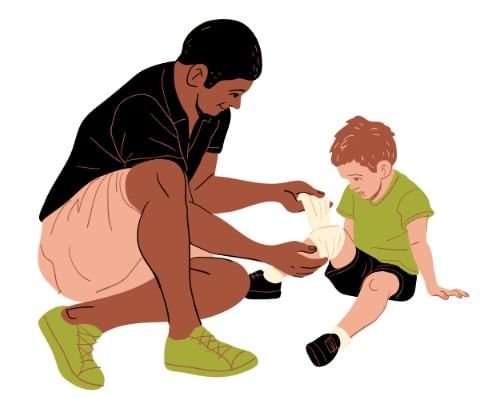
Ans: Wash the wound with clean water and put a bandage on it to stop the bleeding.

Bleeding woundBleeding wound

Q10. What should you do if someone has a burn?
Ans: Hold the burned area under cold running water to cool it down.

Q11. Why is sunlight important in a home?
Ans: Sunlight kills germs and helps keep the house clean and healthy.

Q12. How do windows and ventilators help in a house?
Ans: They let fresh air and sunlight come in, which keeps the air clean and healthy to breathe.

Q13. Why should rubbish bins be covered?
Ans: Covered bins keep flies and insects away, which helps stop the spread of germs and diseases.

Q14. What can happen if the kitchen and bathroom are not cleaned properly?
Ans: Germs can grow and cause sickness, so these places should always be kept clean.

Q15. What is the most important thing to remember about safety?
Ans: Safety should always be the top priority to protect ourselves and others from harm.

18. Short Answer Questions: World Around Me

Q1. Why does the sky look bright and blue in the morning?
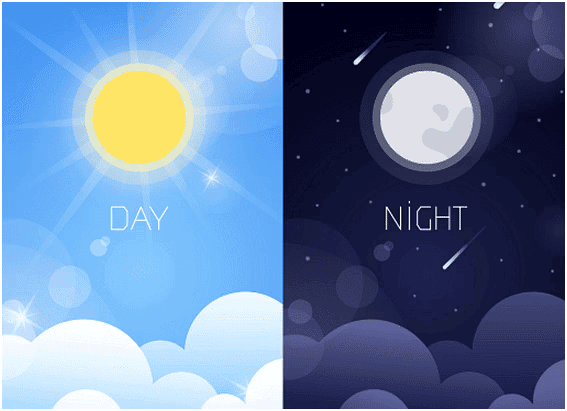
Ans: The sky looks bright and blue because the sun is shining and sending light and warmth to the Earth. This light makes the sky appear blue during the day.

Day and Night SkyDay and Night Sky

Q2. What can you see in the sky at night?
Ans: At night, the sky becomes dark because the sun is not shining on our side of the Earth. We can see the moon and many tiny lights called stars shining in the dark sky.

Q3. How does the sky change on sunny and rainy days?
Ans: On sunny days, the sky is clear and blue, and the sun shines brightly. On rainy days, dark clouds cover the sky, making it look gray, and the sun hides behind the clouds while it rains.

Rainy and Sunny DaysRainy and Sunny Days

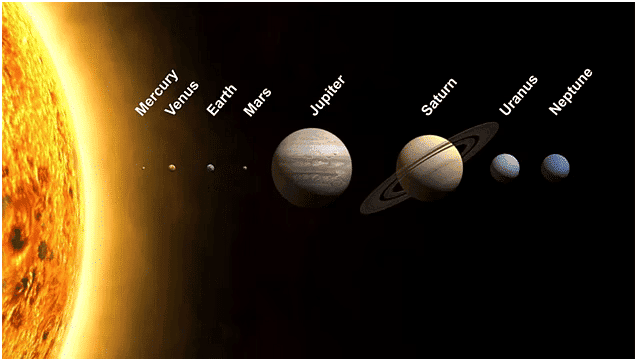
Q4. What is the solar system?
Ans: The solar system is like a big family where the sun is the center, and eight planets, along with moons and other objects, move around the sun in paths called orbits.

Q5. Can you name the eight planets in our solar system?
Ans: The eight planets are Mercury, Venus, Earth, Mars, Jupiter, Saturn, Uranus, and Neptune. They all orbit around the sun.

Solar SystemSolar System

Q6. Why is Earth special?
Ans: Earth is special because it is the only planet we know that has life like plants, animals, and people. It has water and air, which are important for living things.

Q7. What does the sun do for us?
Ans: The sun gives us warmth and light. Without the sun, it would be too cold for plants and animals to live, and there would be no daylight.

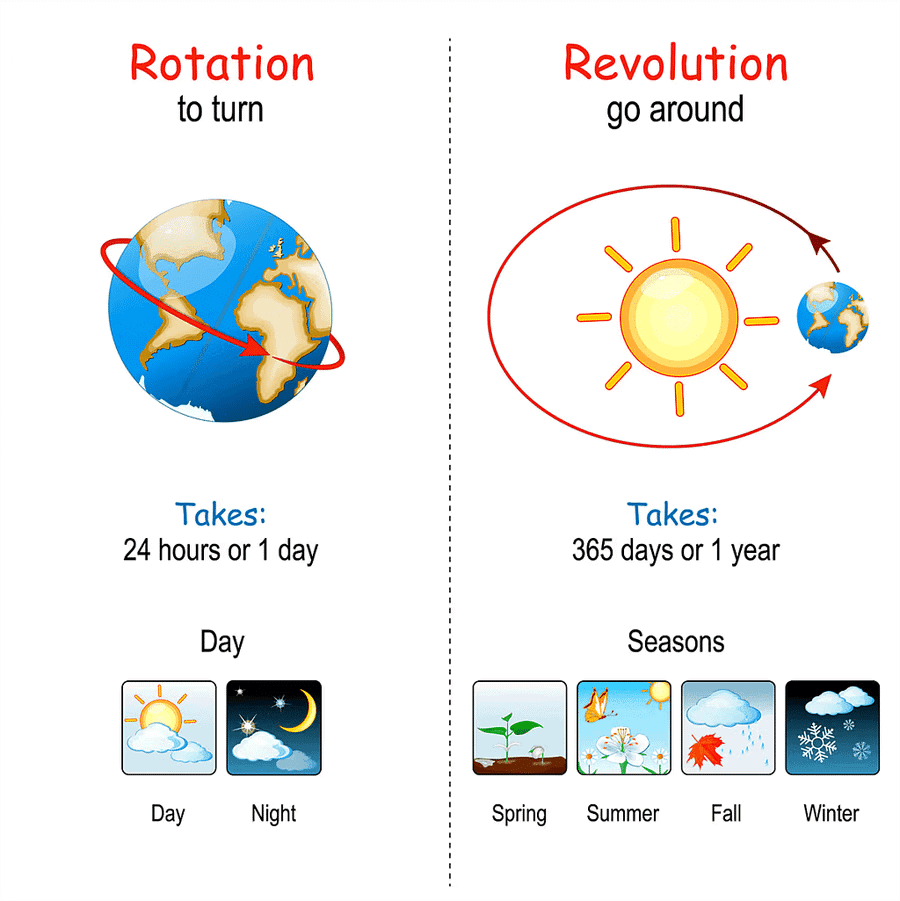
Q8. What is rotation?
Ans: Rotation means the Earth spins around like a top. This spinning takes about 24 hours and causes day and night because different parts of Earth face toward or away from the sun.

Rotation and RevolutionRotation and Revolution

Q9. What causes day and night on Earth?
Ans: When your part of Earth faces the sun, it is daytime and bright outside. When it turns away from the sun, it becomes night and dark.

Q10. What is revolution?
Ans: Revolution is when the Earth moves around the sun in a big circle. It takes about one year, or 365 days, for Earth to complete this trip.

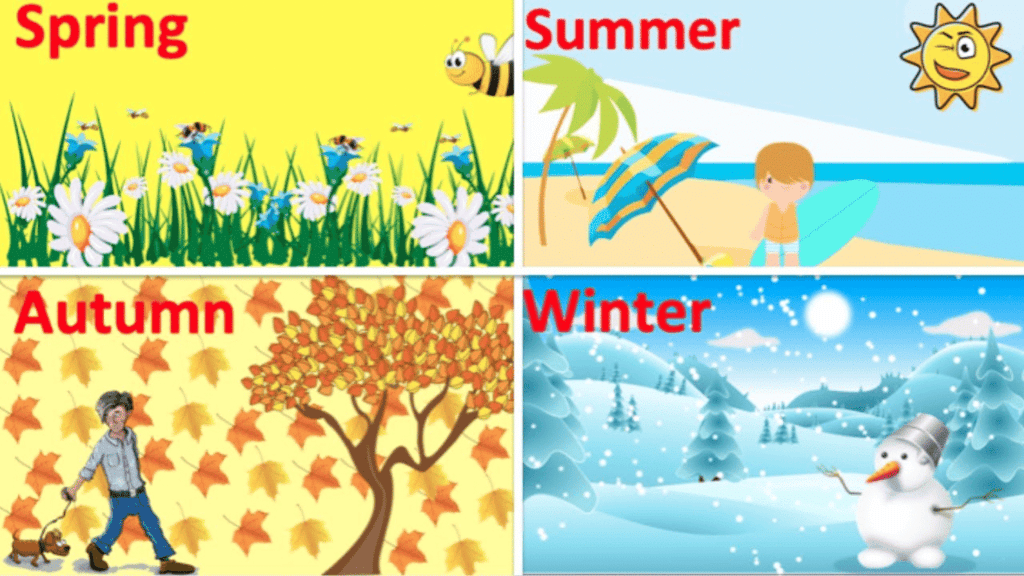
Q11. Why do we have different seasons?
Ans: We have different seasons because as the Earth travels around the sun, the angle of sunlight changes, making some parts warmer or cooler at different times of the year.

SeasonsSeasons

Q12. What are the four main directions?
Ans: The four main directions are north, south, east, and west. They help us know which way to go and find places.

Q13. If you face the sun in the morning, which direction are you looking?
Ans: If you face the sun in the morning, you are looking east because the sun rises in the east.

Q14. When facing east in the morning, which directions are behind you, to your right, and to your left?
Ans: Behind you is west, your right side points to the south, and your left side points to the north.

Q15. What should you always do to learn more about the world?
Ans: You should always stay curious and keep exploring new things. This helps you learn and discover the many wonders around you.